


Blog Detail
Pharmaceutical Cold Chain Packaging Market Expands Driven by Biologics and Compliance Demand
Morningstar / Future Market Insights
Pharmaceutical Cold Chain Packaging Expands as Compliance Becomes Core Infrastructure
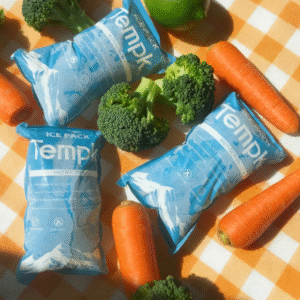
What Happened
The global pharmaceutical cold chain packaging sector is experiencing sustained growth, driven by increasing demand for biologics, vaccines, and temperature-sensitive therapies.
Recent market analysis indicates that the temperature-controlled packaging industry is on a strong upward trajectory, with significant expansion projected over the next decade. This growth is closely linked to stricter regulatory requirements and rising expectations for validated cold chain integrity across global healthcare supply networks.
Unlike earlier cycles where packaging was considered a supporting function, it is now positioned as a core component of pharmaceutical logistics infrastructure.
How It Works
Modern cold chain packaging systems include insulated shippers, phase change materials (PCM), active cooling systems, and increasingly IoT-enabled monitoring devices.
These systems are designed to maintain strict temperature ranges such as 2–8°C, -20°C frozen distribution, or deep-frozen biologics lanes.
Key technological shifts include:
- Integration of real-time temperature data loggers
- Use of validated thermal profiles for lane qualification
- Smart packaging with GPS and cloud monitoring
- Increased use of reusable insulated shipper systems
Pharmaceutical companies are now required to demonstrate not only transport capability, but full temperature mapping validation, packaging qualification, and deviation response documentation.
This shifts cold chain packaging from passive protection to an active compliance-driven system.
Why It Matters
The expansion of biologics and advanced therapies has increased the sensitivity of global pharmaceutical supply chains.
Even brief temperature excursions can compromise product stability, leading to:
- Batch rejection
- Regulatory investigation
- Patient safety risks
- Financial losses in high-value biologics
As a result, packaging is no longer a cost center—it is part of regulatory compliance architecture.
The growth of this market also reflects a broader trend: pharmaceutical logistics is becoming increasingly data-driven and validation-heavy.
B2B Impact
For cold chain logistics providers:
- Higher demand for validated packaging systems
- Increased integration with digital monitoring platforms
- Stronger focus on lane qualification and thermal performance testing
For manufacturers:
- Packaging design must align with regulatory expectations
- Increased investment in stability data and simulation testing
For 3PL and distribution networks:
- Packaging is now directly tied to service-level compliance
- Cold chain failures are increasingly traceable to packaging design, not transport alone
Overall, packaging is becoming a strategic control point in pharmaceutical supply chains.




