Medicine cold chain packaging must control two opposite risks at the same time: warming and freezing. Many refrigerated medicines, vaccines, biologics, and clinical materials are labeled for 2-8°C storage. A shipment that gets too warm may be rejected. A shipment that touches frozen gel packs directly may also be damaged by freezing.
This article explains how to design a no-freeze 2-8°C packout for medicine shipping. It uses official vaccine storage ranges from CDC as a reference point, but every pharma shipment must follow the specific product label, stability data, quality agreement, and applicable regulations.
The 2-8°C reference range
CDC vaccine storage guidance gives refrigerator storage at 2°C to 8°C / 36°F to 46°F. It also gives freezer storage at -50°C to -15°C and ultra-cold storage at -90°C to -60°C for products requiring those conditions. These ranges show why pharmaceutical packaging must start with the exact product requirement rather than a generic “cold” request.
For a medicine labeled 2-8°C, the packout should not be designed as a frozen shipment. The objective is controlled refrigeration without direct freeze exposure.
Pharma temperature planning table
| Shipment type | Typical reference range | Main packaging concern | Design response |
|---|---|---|---|
| Refrigerated medicine or vaccine | 2°C to 8°C / 36°F to 46°F, when supported by product label and CDC reference for vaccines. | Warming during transit and freezing from frozen coolant contact. | No-freeze chamber, PCM or conditioned coolant, data logger, validated instruction. |
| Frozen pharmaceutical product | CDC vaccine toolkit references -50°C to -15°C freezer storage for some vaccine storage conditions. | Maintaining frozen range without uncontrolled thawing. | Frozen packout, freezer-compatible shipper, route-specific validation. |
| Ultra-cold product | CDC vaccine toolkit references -90°C to -60°C for ultra-cold storage conditions. | Specialized cold source and strict handling. | Use product-specific ultra-cold packaging and trained process. |
| Clinical sample or biologic | Range depends on test, sample, or biologic requirement. | Sample integrity, chain of custody, delay risk. | Follow laboratory protocol and validated packout. |
Why medicines freeze in “cold” shipments
A common mistake is placing frozen gel packs directly against medicine. The air inside the box may average within range while the product surface next to the gel pack drops below the allowed minimum. This is a local freeze exposure problem. It may not be visible unless data logger placement captures it.
Another risk occurs during winter shipping. A package can be exposed to cold outdoor temperatures, unheated vehicles, or long dock dwell. A packout designed only for summer warming may fail by freezing in winter.
No-freeze packout design principles
| Design principle | Why it matters |
|---|---|
| Separate coolant from product | Prevents direct frozen contact and local cold spots. |
| Use a defined product chamber | Keeps the payload in a controlled zone instead of touching walls or coolant. |
| Select PCM or conditioned coolant carefully | PCM can help control temperature near a chosen phase range when properly specified. |
| Use dividers, sleeves, or buffers | Reduces temperature extremes near the medicine. |
| Precondition all components | Incorrect coolant conditioning can create freezing or warming risk. |
| Place data loggers intelligently | Capture product-risk points, not only the warmest air space. |
| Document the pack sequence | Warehouse staff must repeat the tested layout exactly. |
Gel packs, PCM packs, and ice bricks for medicine
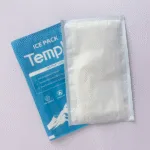
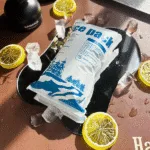
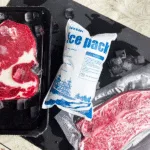
Standard frozen gel packs may be suitable for some medical shipments only if the packout prevents direct freeze exposure and the test data supports the design. FedEx notes that coolants can also be used as heat sinks at room temperature to prevent products from freezing. This is a useful reminder: not every coolant in a medicine packout should be frozen solid. Some packouts use conditioned coolants, staged buffers, or PCM packs to reduce freeze risk.
PCM packs are often used in pharma designs because phase change materials absorb and release heat during phase change. When the PCM transition temperature and conditioning process match the product requirement, the packout may maintain a narrower range than a simple frozen gel pack system. However, PCM is not automatically safe. Incorrect conditioning or a wrong phase-change point can still fail.
Helpful decision tools
Check the details before you choose packaging
These quick tools can help you compare route risk, sizing needs, coolant choices, and packaging details before you request a quote.
Dry Ice Calculator
Estimate dry ice needs for frozen or ultra-cold shipments before packing.
Estimate dry iceRoute Risk Checker
Review lane conditions before selecting packaging for real operating requirements.
Check route riskIce Pack Calculator
Estimate gel ice pack quantity for chilled shipments and practical route planning.
Estimate ice packsDocumentation buyers should request
| Document or control | Purpose |
|---|---|
| Packout instruction | Shows exact coolant conditioning, order of packing, product position, and closure method. |
| Temperature test report or curve | Provides evidence that the packout stayed within the intended range under stated conditions. |
| Data logger placement plan | Shows where temperature evidence is collected. |
| Material SDS or declaration | Supports quality and regulatory review of gel packs, PCM packs, liners, and shipper materials. |
| Receiving checklist | Helps the receiver decide whether the shipment should be accepted, quarantined, or reviewed. |
| Change-control rule | Prevents unapproved changes in box size, coolant quantity, liner, or pack sequence. |
How to test a 2-8°C packout
The test should use the final product load or a realistic thermal mass substitute, final packaging components, conditioned coolant, final box size, and the intended pack sequence. Data loggers should be placed where risk is meaningful: near the product, near likely cold spots, and sometimes in the air space. A test that only measures ambient air in the box can miss direct contact freeze risk.
Before routine use, CDC vaccine storage guidance recommends checking and recording minimum and maximum temperatures for temperature-controlled units over multiple days until stable. For shipping packaging, the same mindset applies: do not rely on assumptions. Verify that the system is stable and repeatable before live product shipments.
ISTA Standard 20 and 7E may be considered when a customer needs standardized thermal transport testing. ISTA 7E profiles are based on real-world transport temperature data and include heat and cold exposure profiles. This can be useful for documented pharma packaging development, but product-specific requirements always come first.
FAQ
Can I ship medicine with frozen gel packs?
Only if the tested packout prevents direct freeze exposure and keeps the product within its required range. Many 2-8°C products can be damaged by local freezing.
Are PCM packs required for 2-8°C medicine shipping?
Not always. PCM packs are useful when a narrow temperature range or no-freeze design is needed, but the final decision depends on product label, route, hold time, and validation.
Where should the temperature logger be placed?
Place it where it reflects product risk. For no-freeze designs, at least one logger should help detect cold spots near coolant or product surfaces, not only warm air near the lid.
Can a food packout be reused for pharma shipments?
Usually not without review. Pharma shipments require product-specific temperature control, documentation, no-freeze analysis, and a validated packing instruction.
Final takeaway
A 2-8°C medicine shipment should be designed to prevent both warming and freezing. Use the product label as the controlling requirement, separate coolant from the payload, consider PCM or conditioned coolant when needed, document the pack sequence, and validate the complete packout with appropriate temperature monitoring.