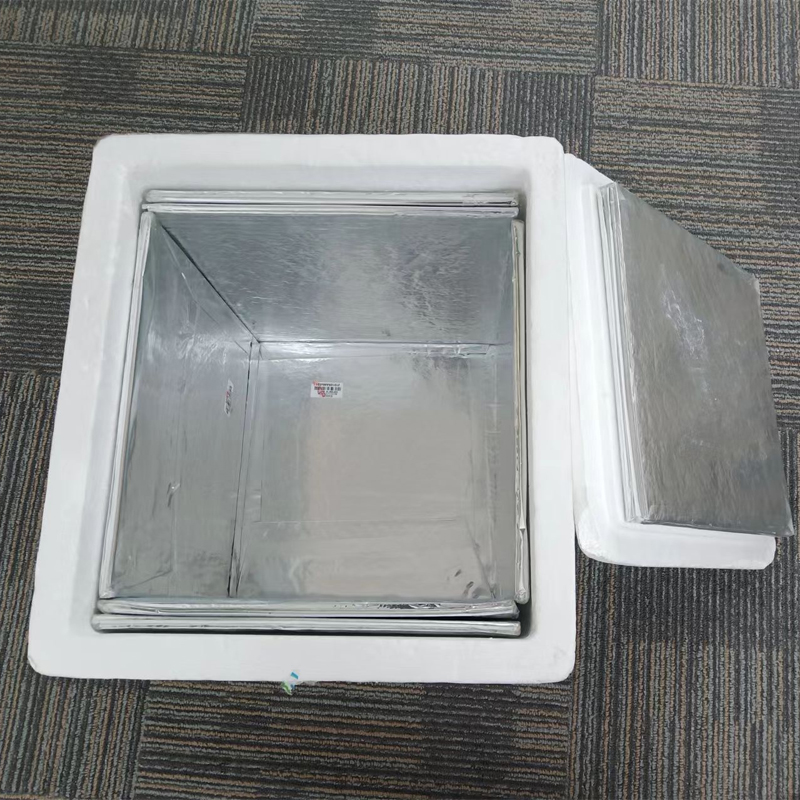
Selecting a 20 Liter Vaccine Ice Box Supplier With Evidence
A credible 20 liter vaccine ice box supplier should be able to turn five inputs into a controlled proposal: product temperature requirements, actual payload dimensions, route exposure, preparation resources, and quality documentation needs. “20 liters” is only a starting category. The decisive figure is usable payload space after coolant and protective components are installed. The decisive performance claim is not a generic number of hours, but evidence tied to the exact box, load, coolant, ambient profile, and operating procedure you intend to use.
Begin With Five Non-Negotiable Inputs
Supplier comparisons become confusing when each vendor fills missing information with a different assumption. Issue one common request brief so proposals share a boundary.
First, state the product’s approved transport condition. Do not assign a generic refrigerated range merely because the payload is a vaccine. Freeze sensitivity, stability, packaging, and program rules can differ by product.
Second, provide payload details. Include the count, external carton dimensions, starting condition, approximate mass, orientation limits, and whether the quantity varies. Third, map the lane. Note total duration, transfers, staging, vehicle types, hot and cold seasons, and credible delay scenarios.
Fourth, describe operational resources. Can staff freeze, refrigerate, or otherwise condition coolant under controlled conditions? Is there space to stage packs? Who packs and checks the box? Finally, identify evidence and documentation expectations. These may include a controlled packout, thermal report, component traceability, change notification, and receiving records.
| Input | Minimum information | Why it changes the design |
|---|---|---|
| Product | Approved temperature condition and sensitivity | Defines acceptance limits and freeze/heat risk |
| Payload | Carton size, count, mass, and variation | Determines usable envelope and thermal mass |
| Route | Duration, ambient exposure, transfers, delays | Establishes the challenge the system must manage |
| Operations | Conditioning equipment, labor, staging, reuse | Determines whether the packout can be executed reliably |
| Quality | Test, records, traceability, and change needs | Defines the evidence required for approval |
This five-input brief also exposes when a different product class is needed. If loaded weight, duration, or payload geometry is unsuitable, moving away from a nominal 20 L request is better than forcing the shipment into it.
Capacity: Resolve the Definition Before the Drawing
Three suppliers can quote a 20 L box with three different interpretations. One may calculate the empty cavity. Another may use a rounded model name. A third may refer to a nominal family. None necessarily describes the vaccine space available after side packs, top packs, dividers, and a monitoring device are present.
Request external dimensions, internal contours, and a dimensioned payload envelope for the proposed packout. Check tapered walls, rounded corners, lid recesses, ribs, and protruding hardware. Then conduct a physical fit trial with production-equivalent cartons. Volume arithmetic cannot show whether a required carton orientation clears the lid or whether staff can remove a carton without disturbing coolant.
Minimum payload is as important as maximum payload. An underfilled box may have less thermal mass and more free air than the tested arrangement. If shipment quantity varies, ask whether multiple approved packouts, dummy loads, or a smaller format is more appropriate. Any filler must be compatible with the system and controlled in the instructions.
Total loaded mass completes the capacity definition. Weigh the shell, insulation, coolant, payload, logger, seals, and documents. Use that result for manual handling, vehicle payload, freight, and storage planning.
Draw a Line Between Product Features and Thermal Proof
A robust shell, thick insulation, tight lid, and premium coolant may all be useful. They remain design features until the assembled configuration is evaluated. Product approval should keep four layers separate:
Container construction: shell, insulation, lid, hardware, and internal geometry
Thermal components: coolant type, quantity, condition, and placement
Operating method: payload preparation, loading sequence, closure, and opening rules
Evidence: protocol and results under defined ambient and payload conditions
This separation prevents overstatement. A plastic outer shell does not make a box temperature controlled. VIP material does not qualify a route. A temperature logger does not protect the product. A test standard named on a brochure does not establish that the exact offered configuration met the relevant acceptance criteria.
WHO publishes performance specifications and type-testing approaches for defined vaccine cold-box categories. ISTA provides standards and profiles for evaluating thermal transport packaging in parcel environments. These can inform a program, but requirements depend on the application. Verify whether a product is formally listed or independently tested when that status matters. If a supplier uses a standard as a reference, ask precisely which method, edition, profile, configuration, and result apply.
Read a Thermal Report Like a Decision Record
The report should answer three questions: What was tested? Under what challenge? What passed?
For “what,” confirm the model, materials, component revisions, coolant, packout, payload, logger and sensor positions. For “challenge,” review ambient temperature versus time, preconditioning, starting temperatures, duration, openings, and any handling simulation. For “passed,” identify the acceptance range, the sensor or condition that governed the result, deviations, and approval.
Do not reduce the report to its headline duration. A 48-hour test and a 48-hour route are not equivalent simply because the numbers match. Route exposure may begin before dispatch, include a severe ramp or delay, and continue during receiving. The test payload may also have different thermal mass. Your quality process should determine how the evidence applies and what margin is needed.
Sensor placement deserves scrutiny. Cold points may occur near frozen coolant; warm points may occur near a lid or thermal bridge. Air readings can respond differently from a product-simulating load. The report should explain why locations represent the intended risk. Calibrated instrumentation and intact data records support confidence, but no sensor layout proves unmonitored locations without a sound study design.
A practical review sequence
- Match every tested component to the offered bill of materials.
- Reconstruct the packout from the instructions.
- Compare tested payload with planned minimum and maximum loads.
- Compare the ambient profile with route risk, including staging.
- Check both warm and cold acceptance where relevant.
- Record gaps as actions, not assumptions.
Design Out Operator Variation
Passive packaging depends on people. A design that works only when an expert adjusts every pack is difficult to scale. The supplier should help create a repeatable sequence with clear component identities, defined coolant condition, loading order, placement, closure check, and maximum allowed preparation time if relevant.
Use fitted components or visual cues where they reduce ambiguity. A base pack should not be interchangeable with a side spacer unless the design truly permits it. Instructions should show the correct final state, including the top layer that operators often forget. Component count can be recorded before closure.
Coolant conditioning is a major variation source. Freezer temperature, pack stacking, equipment loading, and time outside controlled storage can affect condition. Instructions should specify an objective state or validated procedure appropriate to the coolant. For freeze-sensitive vaccines, the packout should control direct contact and local cold risk rather than relying on general caution.
Imagine two warehouse shifts using the same box. One shift stages every component in order and closes the lid immediately; the other brings coolant to the bench early and searches for missing spacers while the box remains open. Even if both use the correct parts, starting conditions differ. A kitted packout, pre-use checklist, and staging limit can reduce that variation.
Monitoring and Excursion Response
Monitoring is the evidence layer during shipment. Select a logger based on the product and process: appropriate measuring range, accuracy, calibration status, interval, duration, alarm logic, data access, and record retention. Verify specific parameters from current device documentation rather than assuming all pharmaceutical loggers are interchangeable.
Helpful decision tools
Check the details before you choose packaging
These quick tools can help you compare route risk, sizing needs, coolant choices, and packaging details before you request a quote.
Ice Pack Calculator
Estimate gel ice pack quantity for chilled shipments and practical route planning.
Estimate ice packsInsulation Material Reference
Compare insulation material choices for different cold chain packaging needs.
Compare materialsPackaging Selector
Compare insulated packaging options by product, route, and temperature need.
Find packagingPlace the sensor according to the qualification rationale. Avoid casual placement next to a frozen pack, in an empty corner, or directly under the lid unless that point is intentionally monitored. Train receiving staff to stop and retrieve the record without losing custody information.
An alarm is not an automatic release or discard decision. Define who reviews the time-temperature history, what supporting shipment information is collected, where product is held during assessment, and who has authority for disposition. The packaging supplier may explain the box and test, but product stability decisions belong to the responsible quality and health functions.
Production Approval Is Part of Thermal Control
After qualification, the supplier must repeatedly manufacture the approved design. Create a specification that identifies critical materials, dimensions, component interfaces, coolant characteristics, and functional checks. Link the specification to a controlled reference sample and current drawings.
Potentially meaningful changes include resin or colorant, foam formulation or density, insulation supplier, VIP geometry, adhesive, gasket, coolant film or fill, molding tool, and production location. Not every change requires a new thermal study, but each should pass a documented impact assessment. Agree on notification rules before ordering.
Receiving inspection should verify identity and visible condition, not attempt to repeat qualification on every unit. Appropriate checks can include model marking, component count, dimensions, lid or latch function, gasket condition, coolant seal quality, label accuracy, and shipping damage. Trend failures and link them back to supplier corrective action.
For reusable units, inspection continues after every return according to risk. Cracks, warping, damaged insulation, odors, contamination, missing components, or unreliable closure may trigger cleaning, repair, investigation, or retirement. Set rules before boxes accumulate in the warehouse.
Compare Total Cost at the Same Configuration
Price comparison should begin only after configuration normalization. Identify whether each quote includes the shell, insulation, coolant, spacer set, dividers, logger accessories, seals, artwork, export carton, technical documents, and spare parts. Separate tooling, sample work, testing, and freight.
For one-way distribution, calculate landed cost and dimensional freight, then account for packout labor and disposal obligations. For reuse, model cost per successful completed cycle, including reverse transport, cleaning, inspection, storage, tracking, loss, damage, and replacement. Avoid treating an unverified maximum reuse claim as a financial fact.
Sustainability comparisons require the same discipline. Consider material input, freight in both directions, cleaning, service life, loss, and end-of-life routes. A reusable box may fit a dense closed loop; a right-sized limited-use shipper may fit a remote one-way lane. Choose according to system boundaries and support public claims with evidence.
Supplier Shortlist: Ten Decisive Questions
How is the 20 L capacity defined?
What is the exact usable payload envelope in the proposed packout?
Which product temperature condition and route assumptions guided the design?
What coolant, conditioning process, and separation method are specified?
Which report supports the exact offered configuration?
What ambient profile, payload, sensors, and acceptance criteria were used?
How are critical materials and production processes controlled?
Which changes trigger customer notification?
What documents and samples are delivered with approval?
How are reusable units inspected, cleaned, repaired, and retired?
These questions favor transparent suppliers without demanding unsupported certainty. A supplier that identifies a data gap and proposes a test is often safer than one that claims every route is already covered.
Frequently Asked Questions
Is the usable vaccine space always smaller than 20 liters?
Often it is smaller than the empty stated cavity because coolant, spacers, and dividers occupy space, but definitions vary. Some models use 20 L only as a category. Ask for the supplier’s measurement method and a dimensioned payload envelope. Confirm fit using actual cartons and the complete proposed packout.
Which insulation is best for a vaccine ice box?
No material is universally best. EPP, foam-core plastic constructions, and VIP-enhanced systems offer different balances of thermal resistance, wall thickness, durability, damage sensitivity, weight, and cost. Evaluate the finished configuration, production controls, route, and test evidence rather than choosing by material name alone.
Can one packout work in summer and winter?
Possibly, but it should not be assumed. Warm and cold exposures can create different failure risks, including overheating and overcooling. Review evidence for the intended seasonal range. Some programs use seasonal packouts; others support one configuration across defined conditions. The decision must follow test data and route assessment.
What happens if the payload quantity changes?
Changing payload quantity can alter thermal mass, airflow, and coolant-to-product relationships. Use only a payload range supported by assessment. If partial loads are routine, develop an approved arrangement using a justified smaller system, controlled filler, or alternative packout rather than allowing operators to improvise.
Does WHO or ISTA reference guarantee acceptance?
No. A reference may describe a method, profile, or product category, but acceptance depends on completing applicable requirements and matching the tested product to the intended use. Verify exact listing or certification claims where required, review the report, and confirm any local tender, regulatory, or quality-system obligations.
Conclusion
A 20 liter vaccine ice box supplier should be selected through a chain of evidence, not a catalog comparison. Define the product, payload, route, operations, and documentation first. Resolve usable volume and loaded mass. Assess insulation and coolant within the complete packout. Read thermal reports against actual lane risk, then control the qualified construction through production, receiving, and reuse. Normalize configuration before comparing cost. This framework gives procurement, logistics, and quality teams a common basis for approval.
About Tempk
Tempk, part of Shanghai Tempk, offers cold-chain packaging categories that include medical cooler boxes, EPP formats, VIP-related insulated solutions, plastic boxes, and coolant options. These categories provide design choices for different payload, handling, and route needs; they do not remove the need for configuration-specific review. A productive inquiry describes the intended product condition, actual payload geometry, ambient challenge, operating resources, and required evidence so the available packaging direction can be assessed against clear boundaries.
Contact Tempk with your route brief and payload layout to discuss sample options, packout components, and the documentation needed for the next evaluation step.