


Nordic Launches GLP-1 Packaging Innovation Lab for Small-Format Cold Chain Shipping
Nordic Launches GLP-1 Packaging Innovation Lab for Small-Format Cold Chain Shipping

Nordic Cold Chain Solutions has introduced a new GLP-1 & Small-Format Packaging Innovation Lab, targeting one of the fastest-growing segments in temperature-sensitive healthcare logistics. According to the company’s March 26 announcement, the new lab is designed to support specialty pharmacies, pharmaceutical manufacturers, and e-commerce operators handling parcel-based shipments of GLP-1 therapies and other small-format cold chain products.
What makes this development commercially important is its focus on small-format shipping, a segment that is becoming more demanding as direct-to-patient fulfillment and specialty pharmacy distribution continue to expand. Nordic says the lab brings customers into the packaging design process earlier, with work centered on mailers, compact shippers, packout design, testing, and faster scale-up into production. That means the launch is not just another corporate facility update. It is a direct response to the need for more specialized cold chain packaging built for parcel networks and high-velocity healthcare fulfillment.
For B2B buyers, the practical takeaway is clear. As GLP-1 and other temperature-sensitive therapies move through smaller, faster distribution channels, packaging requirements become more complex. Companies need systems that do more than hold temperature. They also need solutions that support repeatable packout, operational consistency, test-backed performance, and smoother movement from development to commercial deployment. Nordic’s announcement also highlights the company’s broader capabilities in engineered packaging, refrigerants, and ISTA-certified laboratory testing, which reinforces the market trend toward integrated cold chain development support rather than simple box-and-coolant supply.
From an industry-news perspective, this is a more useful signal than a generic logistics expansion story because it points to a very specific area of product and packaging demand: cold chain systems tailored to parcel-scale healthcare shipping. For packaging suppliers, component makers, and validation partners, the message is that the market is moving toward smaller-format, test-driven, customer-specific cold chain packaging programs, especially in therapy categories where shipping design directly affects compliance, product protection, and patient delivery performance.
Cold Chain Packaging Market Forecast Highlights Long-Term Growth in Biologics and Thermal Shipping
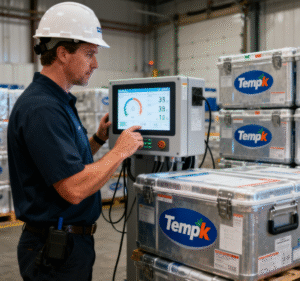
A newly published market forecast from MarketGenics says the global cold chain packaging market is valued at about USD 30.2 billion in 2025 and could reach USD 67.6 billion by 2035, expanding at a projected 8.4% CAGR. The release links that growth to rising demand for temperature-sensitive pharmaceuticals, biologics, vaccines, and perishable foods, along with continued investment in cold chain infrastructure.
This item is not a straight event-driven news report, so under your new rule set it fits as a Fallback rather than a Standard article. Still, it has practical value because it reinforces where the market is moving: toward higher-performance thermal packaging, greater use of smart monitoring, and stronger demand from healthcare and food cold chains.
For packaging manufacturers and solution providers, the commercial meaning is straightforward. Long-term demand growth in biologics and perishable distribution usually translates into more pressure on insulated shippers, coolant media, validation support, and packaging systems that can maintain performance under stricter compliance and wider geographic distribution needs.
In other words, even though this piece is forecast-led rather than event-led, it still adds usable context for B2B decision-makers. It supports the view that cold chain packaging is becoming more strategically important as supply chains become more temperature-sensitive, more monitored, and more dependent on reliable thermal performance
Nordic Launches GLP-1 Packaging Innovation Lab for Small-Format Cold Chain Shipping

Nordic Cold Chain Solutions has launched a new GLP-1 & Small-Format Packaging Innovation Lab, expanding its support for specialty pharmacies, pharmaceutical manufacturers, and e-commerce operators handling temperature-sensitive shipments. According to the company’s March 26 announcement, the new lab is designed to help customers manage the speed and complexity of shipping GLP-1 therapies and other cold-chain payloads through parcel and small-format distribution channels.
The new initiative is commercially important because it focuses on an increasingly difficult part of the market: high-volume, small-format cold chain fulfillment. Nordic says the lab is meant to bring customers into the design process earlier, with work centered on mailers and compact shippers, packout design, product testing, and faster movement from concept to scalable production. That makes the launch more than a branding update; it signals deeper demand for fit-for-purpose packaging in the fast-growing GLP-1 shipping segment.
For B2B buyers, the practical takeaway is clear. As demand rises for direct-to-patient delivery, specialty pharmacy distribution, and parcel-based temperature control, packaging systems need to do more than hold temperature. They also need to support packout consistency, regulatory expectations, documentation discipline, and scale-up into repeatable operations. Nordic explicitly connects the lab to regulated healthcare environments and says the model aligns with URAC- and AIChE-related operational expectations.
This is also relevant from a sourcing perspective because Nordic frames the lab as part of a broader cold chain offering that spans engineered packaging, refrigerants, and ISTA-certified laboratory testing. That combination suggests customers are looking not only for materials, but for integrated cold chain packaging development support that can shorten validation cycles and improve shipping reliability for temperature-sensitive therapies
Cold Chain Packaging Market Expected to Reach USD 67.6 Billion by 2035

The global cold chain packaging market is projected to experience strong long-term growth, with recent industry analysis estimating its value will reach approximately USD 67.6 billion by 2035, up from around USD 30.2 billion in 2025.
This expansion is being driven by several key factors, including the rapid growth of biologics, vaccines, and temperature-sensitive pharmaceuticals, as well as increasing demand for fresh and frozen food distribution. As supply chains become more complex and globalized, maintaining temperature integrity has become a critical requirement across multiple industries.
In terms of product trends, insulated shippers, PCM-based packaging, gel packs, and dry ice solutions continue to play a central role in ensuring thermal stability during transportation. At the same time, the integration of smart monitoring technologies is becoming more common, enabling real-time temperature tracking and improved shipment visibility.
Regionally, North America remains a dominant market due to its advanced cold chain infrastructure and strong pharmaceutical sector. Meanwhile, Asia-Pacific is expected to show the fastest growth, supported by expanding healthcare systems, e-commerce food delivery, and increasing investment in cold chain logistics.
For packaging manufacturers and solution providers, the report highlights a clear opportunity: demand is shifting toward higher-performance, longer-duration, and more sustainable thermal packaging solutions. Reusable systems, recyclable materials, and temperature-validated packaging are becoming increasingly important as companies seek to balance performance with environmental goals.
Although this content is based on market analysis rather than a single new event, it still provides valuable industry context. For B2B buyers and suppliers, it reinforces the long-term growth potential of cold chain packaging and the importance of innovation in materials, design, and thermal performance.
Wireless IoT Power Solutions Expand Cold Chain Monitoring Capabilities in Retail and Logistics

Energous is accelerating the development of wireless power solutions for IoT-enabled cold chain monitoring, highlighting a growing shift toward smarter and more scalable compliance tracking in temperature-sensitive logistics.
According to its latest business update, the company is conducting a large-scale proof of concept with a Fortune 10 retail organization, where wireless-powered IoT sensors are deployed to monitor pallet movement across warehouse environments. One of the key applications focuses on cold chain compliance, tracking how long products remain at dock doors before entering refrigerated or frozen storage zones.
This type of monitoring is critical for maintaining temperature integrity in pharmaceutical, food, and grocery supply chains. Delays at transfer points can expose products to temperature excursions, making real-time tracking and automated alerts increasingly important for operational control.
Unlike traditional battery-based sensors, Energous’ wireless power approach enables continuous operation without manual battery replacement. This significantly reduces maintenance costs while allowing for denser sensor deployment across cold chain facilities, improving data visibility and traceability.
From a B2B perspective, this development signals a broader industry trend: cold chain monitoring is evolving from passive tracking to active, data-driven control. For companies involved in temperature-controlled packaging, validation services, and cold chain solutions, integrating monitoring technology with packaging and logistics systems is becoming a key differentiator.
As regulatory requirements tighten and product value increases, especially in biologics and specialty foods, demand is expected to grow for integrated solutions that combine packaging performance, monitoring technology, and operational intelligence.
Middle East Conflict Disrupts Pharma Cold Chain and Increases Demand for Thermal Packaging Solutions
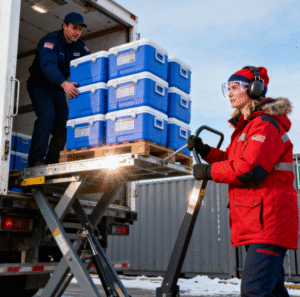
Recent geopolitical tensions in the Middle East are creating new challenges for pharmaceutical cold chain logistics, with industry coverage highlighting growing risks to temperature-sensitive medicine transport across affected regions.
According to recent trade reporting, disruptions to regional airspace and transport routes are forcing pharmaceutical shipments to take longer and more complex paths. This is particularly critical for biologics, vaccines, and specialty medicines that require strict temperature control during transit.
From a temperature-controlled packaging perspective, the situation is increasing reliance on passive cooling solutions such as insulated shipping boxes, dry ice packs, and temperature-controlled packaging systems. As transit times extend, the performance of packaging becomes a key factor in maintaining product integrity.
The report also indicates rising pressure on dry ice availability and cold chain capacity, as longer routes require higher coolant usage and more robust thermal protection. This adds both cost and operational complexity for pharmaceutical logistics providers and distributors.
For B2B buyers and packaging suppliers, this development highlights a clear trend: cold chain resilience is shifting toward packaging-driven solutions. Demand is likely to grow for insulated boxes, PCM-based systems, gel packs, and validated thermal packaging capable of maintaining performance under extended and unpredictable shipping conditions.
From a market perspective, the situation reinforces the importance of long-duration thermal packaging, route-specific packaging design, and integrated cold chain planning. As disruptions continue, packaging performance will remain a critical factor in ensuring safe and compliant pharmaceutical delivery.
Middle East Conflict Raises New Risks for Pharma Cold Chain and Thermal Packaging Demand
Ongoing geopolitical tensions in the Middle East are creating new challenges for pharmaceutical cold chain logistics, with recent industry reporting highlighting increased risks to medicine supply routes and temperature-controlled transport stability.
According to the latest trade coverage, disruptions to airspace and regional logistics networks are forcing pharmaceutical shipments to take longer and more complex routes. This is directly impacting the reliability of temperature-sensitive transport, especially for biologics, vaccines, and specialty medicines that require strict thermal control throughout transit.
From a cold chain packaging perspective, the situation is driving greater reliance on passive thermal packaging solutions, including insulated shipping boxes, dry ice packs, and temperature-controlled packaging systems. As transit times increase, maintaining product integrity becomes more dependent on packaging performance rather than transport predictability alone.
The report also notes growing pressure on dry ice supply and cold chain capacity, as longer routes require more coolant media and higher thermal endurance. This creates additional cost and operational complexity for pharmaceutical distributors, logistics providers, and packaging suppliers.
For B2B stakeholders, this development highlights an important shift: cold chain resilience is no longer only about logistics networks, but increasingly about packaging capability. Suppliers of insulated boxes, PCM solutions, gel packs, and validated packaging systems are likely to see rising demand as companies seek more robust solutions to manage transport uncertainty.
From a market perspective, the situation reinforces the need for longer-duration thermal packaging, route-specific packaging design, and better integration between packaging systems and cold chain planning. As disruptions continue, packaging performance will remain a critical factor in ensuring safe and compliant pharmaceutical delivery.
CCT to Debut MedAssure at LogiPharma 2026, Expanding Pharma Cold Chain Packaging Intelligence
Cold Chain Technologies (CCT) is set to introduce its new MedAssure orchestration platform at LogiPharma 2026, where the company will exhibit at Stand 83–85 and container areas C24–C25. Trade coverage published on March 17 and March 20, 2026 presents the launch as a new step in CCT’s broader cold chain offering for life sciences logistics.
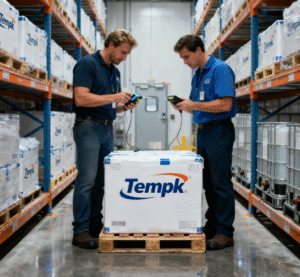
According to the launch coverage, MedAssure is designed to provide proactive, data-driven intelligence for cold chain operations, with CCT positioning it as something that goes beyond basic shipment visibility. The reported focus is on reducing logistics risk, controlling cost, and improving sustainability, which aligns with the market’s growing demand for more predictive and integrated cold chain management tools.
For the temperature-controlled packaging sector, the news matters because it shows how thermal packaging is increasingly being linked to digital decision-making rather than treated as a standalone shipping component. CCT’s official site describes the company as a provider of advanced thermal packaging and digital monitoring solutions for temperature-sensitive life sciences products, while its monitoring and smart-solution pages emphasize real-time tracking, data logging, optimization, compliance, and logistics improvement across the full shipment cycle. That suggests MedAssure is being positioned not only as software, but as a commercial layer that can strengthen how packaging, monitoring, and cold chain execution work together.
From an industry news perspective, this is a meaningful signal for suppliers and buyers in biologics shipping packaging, pharmaceutical shipment packaging, temperature-controlled boxes, and packaging validation services. The move indicates that the market is shifting toward more connected solutions in which shipper selection, monitoring data, lane risk, and thermal performance are managed as one system. For exporters, packaging manufacturers, and cold chain solution providers, that trend points to stronger demand for packaging products that can integrate more effectively with monitoring platforms and performance-driven cold chain workflows.
Low-GWP Reefer Technology Gains Momentum in Temperature-Controlled Shipping
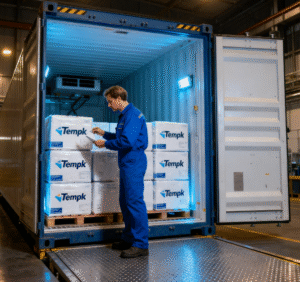
Carrier Transicold has secured an order from TITAN Containers in the Netherlands for OptimaLINE units using low-global-warming-potential refrigerant R-1234yf, alongside NaturaLINE units that use carbon dioxide as the refrigerant. The announcement directly links the order to the refrigeration sector’s shift toward lower-GWP technologies and more sustainable refrigerated container operations.
This development matters because the transition is no longer only about product messaging. It is now influencing real equipment purchasing decisions in temperature-controlled shipping. Carrier positioned OptimaLINE as a triple-refrigerant-ready platform and tied the solution to the industry’s movement toward EU F-Gas compliance. The company also noted that the units will be delivered fully charged from its Singapore facility, which supports faster deployment and smoother commissioning for operators.
For reefer fleet owners, container lessors, and temperature-sensitive logistics providers, the broader signal is clear: equipment strategy is becoming more compliance-driven, more sustainability-focused, and more operationally technical at the same time. With NaturaLINE also using CO2 as a natural refrigerant, this order shows how low-GWP and natural refrigerant pathways are both gaining importance in pharmaceutical, food, and other cold chain applications.
Cold Chain Capacity Expansion in Rhode Island Signals Stronger Frozen Distribution Demand

Cold-Link Logistics has announced a major expansion of its Providence-area tri-temperature facility in North Kingstown, Rhode Island. The project will add 65,000 square feet of freezer space. Once completed, the site is expected to reach 129,000 square feet, add 13,500 frozen pallet positions, and increase total onsite capacity to 18,000 pallet positions.
For cold chain operators and food industry buyers, this is more than a facility growth story. It points to a continued focus on usable freezer capacity, pallet density, and regional cold storage availability. In practical terms, expansions like this can help reduce slot pressure during peak demand periods and improve distribution flexibility for frozen and refrigerated food shipments that depend on stable temperature control.
From a market perspective, the announcement also reinforces a broader commercial message: cold chain customers continue to value scalable, energy-conscious, food-grade infrastructure close to major demand centers. For B2B readers, that makes cold storage expansion an important indicator of where frozen food logistics capacity is still tightening and where new service opportunities are emerging