


DHL and RLCold Target Next Generation Food & Beverage Cold Chain Infrastructure
DHL and RLCold Target Next Generation Food & Beverage Cold Chain Infrastructure
Next Generation Cold Storage Infrastructure Targets Aging Food Supply Chains
What Happened
DHL Supply Chain and RLCold have announced a strategic collaboration to accelerate development of advanced temperature-controlled infrastructure across North America.
The partnership aims to develop more than five million square feet of modern cold storage facilities designed for food and beverage supply chains.
The planned facilities focus on:
- multi-temperature distribution
- automation readiness
- modern warehouse design
- improved operational efficiency
The initiative addresses a major challenge in North American cold chain logistics: much of the existing refrigerated warehouse infrastructure is aging and requires modernization.
How It Works
Modern food cold chain facilities require more than refrigerated storage rooms.
A next-generation cold distribution center typically integrates:
Multi-Temperature Zones
Supporting:
- frozen products
- chilled food
- controlled-temperature products
Different products require different:
- temperature ranges
- humidity conditions
- airflow patterns
Automation Systems
Automation can improve:
- pallet movement
- inventory accuracy
- warehouse throughput
Examples include:
- automated storage and retrieval systems
- robotics
- warehouse control systems
Digital Visibility
Modern facilities increasingly combine:
- warehouse management systems
- temperature monitoring
- inventory tracking
- predictive analytics
This allows operators to understand both:
- where inventory is located
- whether products remain within required conditions
Why It Matters
Food supply chains are becoming more complex.
Drivers include:
- growth of frozen food
- e-commerce grocery
- private-label products
- consumer demand for freshness
At the same time, many traditional cold warehouses were built decades ago.
Older facilities often face:
- lower energy efficiency
- limited automation capability
- outdated layouts
- higher operating costs
Modern cold storage infrastructure can improve:
- product availability
- labor efficiency
- energy performance
- supply chain resilience
B2B Impact
For food manufacturers:
Modern cold storage improves access to:
- scalable capacity
- better inventory control
- regional distribution
For retailers:
Benefits include:
- more reliable replenishment
- improved freshness
- reduced inventory risk
For cold storage developers:
Future facilities will increasingly require:
- automation-ready designs
- energy-efficient refrigeration
- digital monitoring
For refrigeration suppliers:
Demand will increase for:
- high-efficiency systems
- smart controls
- low-GWP refrigerants
For technology companies:
Opportunities include:
- AI warehouse optimization
- predictive maintenance
- temperature analytics
The broader trend:
Cold storage is evolving from passive warehousing into intelligent supply chain infrastructure.
Freeze-to-Store Workflows Reshape the Future of Biopharmaceutical Cold Chain
Freeze-to-Store Integration Becomes a New Direction for Biopharmaceutical Cold Chain Operations
What Happened
The biopharmaceutical industry is increasingly moving toward integrated Freeze-to-Store workflows that connect controlled-rate freezing, ultra-low-temperature storage, automated handling and digital process monitoring.
Recent industry analysis highlights that traditional biopharmaceutical manufacturing often treats freezing and storage as separate operations.
This separation can create:
- additional product transfers
- manual handling risks
- fragmented data records
- inefficient freezer utilization
For biologics, cell therapies and advanced medicines, these issues become increasingly important as production volumes increase and product value rises.
How It Works
A modern Freeze-to-Store workflow integrates several cold chain stages:
Controlled-Rate Freezing
Biological materials require carefully controlled freezing conditions.
The freezing profile affects:
- product stability
- ice formation
- recovery performance
- batch consistency
Ultra-Low Temperature Storage
After freezing, products move into:
- -80°C storage
- cryogenic environments
- qualified biological storage systems
The storage system must maintain:
- temperature uniformity
- alarm management
- inventory traceability
Automated Handling
Automation reduces manual movement between:
- filling
- freezing
- storage
- thawing
This can reduce:
- handling errors
- exposure time
- batch identification risks
Digital Records
Modern systems increasingly integrate:
- batch records
- equipment data
- temperature history
- operator actions
21 CFR Part 11-compatible electronic records help support regulated manufacturing environments.
Why It Matters
Biopharmaceutical manufacturing is becoming more complex.
Growth in:
- monoclonal antibodies
- cell therapies
- gene therapies
- personalized medicines
requires more sophisticated cold chain infrastructure.
Unlike traditional pharmaceuticals, many advanced therapies have:
- limited replacement availability
- high production cost
- strict handling requirements
A failure during freezing or storage may result in:
- batch loss
- manufacturing delay
- clinical impact
Therefore, cold chain performance must begin inside the manufacturing facility, not only during transportation.
B2B Impact
For pharmaceutical manufacturers:
Integrated workflows can improve:
- batch consistency
- storage utilization
- process visibility
For CDMOs:
Flexible Freeze-to-Store platforms may improve support for multiple customers and product formats.
For cold storage providers:
Demand will increase for:
- ultra-low temperature facilities
- automated storage
- digital monitoring
For equipment suppliers:
Future systems will require:
- high-efficiency ULT refrigeration
- automated handling
- validated monitoring
For software providers:
The market opportunity includes:
- digital batch tracking
- temperature analytics
- predictive failure detection
The broader trend:
Pharmaceutical cold chain is moving from isolated equipment toward integrated manufacturing-to-storage ecosystems.
Integrated Freeze-to-Store Workflows Reshape Biopharma Cold Chain Operations
Source: BioPharma APAC
Integrated Freeze-to-Store Workflows Could Remove a Critical Bottleneck in Biopharma Cold Chains

What Happened
BioPharma APAC has published a new expert interview examining how biopharmaceutical manufacturers can integrate controlled-rate freezing, ultra-low-temperature storage, automated material handling and digital process monitoring into a continuous freeze-to-store workflow.
The discussion focuses on a growing manufacturing problem: biologics, biosimilars and advanced therapies are moving toward larger batch sizes, while freezer capacity, ultra-low-temperature storage space and facility footprints often remain fixed.
According to expert contributor Markus Fürhapter, many manufacturers and contract development and manufacturing organizations still operate freezing and ULT storage as separate processes. This can create repeated transfers, fragmented material flow, batch splitting and additional manual handling before frozen drug substance reaches long-term storage.
The article presents the RoSS.BLST controlled-rate blast freezer and RoSS.ULTF storage platform as components of a wider workflow that may include automated aseptic filling, freezing, ULT storage, thawing and standardized transport between process stages.
The source says the proposed workflow is designed to accommodate full batches exceeding 200 liters and multiple bottle and bag formats. It also reports that the RoSS.BLST platform provides approximately 30% more usable chamber capacity than comparable blast-freezer configurations. These are supplier statements presented through an expert interview and should be verified through application-specific technical qualification before procurement.
How It Works
Controlled-rate freezing is a critical transition between biopharmaceutical production and frozen storage.
Bulk drug substance cannot simply be placed into a low-temperature room without considering the speed, uniformity and reproducibility of the freezing process. Variations in airflow, container position, fill volume, freezing duration and thermal history can create different conditions across the same batch.
An integrated freeze-to-store model begins by matching the output of the filling operation with the capacity of the freezing and storage systems. Instead of dividing a batch into smaller groups because the freezer or storage racks cannot accept the complete volume, the equipment and material-flow system are designed around a common batch architecture.
The approach described in the BioPharma APAC interview uses harmonized dollies, racks and loading systems to move containers between filling, freezing, storage and thawing. Maintaining a common handling concept can reduce repacking, container redistribution and manual intervention between process stages.
The freezing platform uses recipe-driven protocols and controlled airflow to improve temperature distribution and batch-to-batch consistency. A validated recipe can define parameters such as loading configuration, target temperature, ramp profile, hold time and completion criteria.
The storage stage must then be aligned with the freezing stage. A high-capacity blast freezer creates limited value if the ULT warehouse cannot immediately receive the finished batch, or if frozen containers must wait in an uncontrolled transfer area.
A complete workflow therefore needs coordinated freezer capacity, storage positions, transport equipment, loading interfaces and operating schedules.
Container compatibility is another important factor. CDMOs may process different bottle sizes, single-use bags and customer-specific packaging formats. A container-agnostic handling system can reduce the need to design a different internal logistics process for every product.
Digital process control connects the physical workflow with the quality record.
The interview states that the freezing platforms use recipe-driven protocols designed to support 21 CFR Part 11 requirements. Connected systems may capture the selected recipe, operator activity, batch identity, equipment status, freezing conditions, alarm history and process completion data.
Electronic records are most valuable when they remain associated with the correct batch throughout freezing, ULT storage, thawing and downstream shipment. A temperature record without a reliable batch relationship may be difficult to use during release review or deviation investigation.
Why It Matters
Biopharmaceutical cold chains begin before the product enters a transport shipper.
If bulk drug substance is frozen inconsistently, moved through too many manual handoffs or stored in an unsuitable configuration, downstream logistics cannot correct the original process variation. The transport cold chain may perform perfectly while the material has already experienced unnecessary risk inside the manufacturing facility.
This is especially important for biologics and advanced therapies, where batch value can be high and replacement may require substantial manufacturing time.
An integrated workflow can reduce the number of custody transfers between filling, freezing and storage. Fewer interventions may lower the probability of container damage, labeling errors, incorrect rack placement and incomplete batch records.
The approach also addresses facility utilization.
Adding ultra-low-temperature storage is capital-intensive. It may require specialized insulation, refrigeration equipment, backup power, alarm systems and environmental monitoring. Manufacturers operating in established facilities may have little physical space available for additional freezer rooms.
Higher-density storage and better coordination between freezing and storage can help increase effective capacity without expanding the building at the same rate as production volume.
Energy and sustainability are also becoming part of ULT infrastructure decisions.
The expert interview notes that natural-refrigerant and air-cooled technologies can reduce the global-warming impact associated with refrigeration. It also argues that higher storage density, fewer handling steps and lower maintenance requirements can improve both environmental performance and total cost of ownership.
These benefits should be assessed through actual operating data. Energy performance will depend on setpoint, room conditions, loading frequency, insulation, equipment utilization and the complete refrigeration architecture.
The broader technical shift is from optimizing individual machines to optimizing the full material journey.
A faster blast freezer is not necessarily the best solution if it creates a queue at storage. A larger ULT room is not enough if containers cannot be moved into it safely and quickly. The strongest performance comes from balancing filling rate, freezing capacity, storage density, thawing demand and internal logistics.
B2B Impact
For biopharmaceutical manufacturers, freeze-to-store design should begin with a complete process map.
The assessment should identify every container movement from filling through freezing, storage, sampling, thawing and distribution. Each manual transfer should be evaluated for time, temperature exposure, contamination control, ergonomic risk and documentation requirements.
Manufacturers should also compare nominal freezer capacity with usable qualified capacity. Internal racks, airflow requirements, container spacing and validated loading patterns can reduce the volume available in routine production.
For CDMOs, flexibility is particularly important.
A facility may need to support multiple customers, batch sizes and primary-container formats. Standardized transport racks and container-agnostic handling can simplify operations, but each product still requires validated freezing and thawing conditions.
A common platform must not be interpreted as a universal process recipe. Protein concentration, formulation, container geometry, fill volume and product stability can all affect suitable freeze-thaw parameters.
For quality and validation teams, the complete workflow should be qualified rather than treating the freezer and storage room as unrelated assets.
Relevant work may include equipment qualification, loaded temperature mapping, airflow studies, recipe verification, alarm challenges, power-failure testing, transfer-time studies and confirmation that electronic records remain attributable to the correct batch.
Data integrity controls should cover user access, recipe approval, audit trails, time synchronization, record retention, backup and recovery. Integration with manufacturing execution, laboratory and warehouse systems should be tested rather than assumed.
For facility engineers, capacity matching is central to the investment decision.
The freezing system, ULT storage, backup equipment and emergency-transfer capacity should be sized around credible production scenarios. A single point of failure may create a larger risk when the workflow becomes more centralized.
Redundancy plans should define what happens if the blast freezer, ULT room, automated handling system or digital platform becomes unavailable. Manual recovery procedures must remain usable even when normal automation is offline.
For cold chain equipment suppliers, customers will increasingly evaluate workflow compatibility rather than machine specifications alone.
Suppliers may need to demonstrate how racks, dollies, containers, software and monitoring interfaces operate together. Service response, replacement parts, remote support and preventive maintenance are also part of the cold chain design.
For pharmaceutical logistics providers, greater integration inside manufacturing facilities can improve outbound shipment readiness.
A batch that has been frozen, stored and released through a standardized process may be easier to transfer into a validated transport system. However, the interface between plant storage and external logistics still needs controlled staging, shipper preparation, chain of custody and shipment-level monitoring.
The main lesson is that biopharmaceutical cold chain performance is determined by the continuity of the process.
Freezing, ULT storage and transport should not be designed as isolated technical functions. They should operate as one traceable system that protects product integrity from the end of manufacturing through final distribution.
M&S Expands Electric Fleet to Reduce Carbon Impact in Food Cold Chain Delivery
M&S Electric Fleet Expansion Highlights the Future of Low-Carbon Food Cold Chain Transport

What Happened
Marks & Spencer (M&S) has expanded its electric vehicle deployment across its food logistics network as part of its wider sustainability strategy.
The initiative focuses on reducing emissions from food distribution operations while maintaining the reliability required for temperature-controlled retail supply chains.
For food retailers, transport represents a significant part of cold chain environmental impact.
Refrigerated delivery vehicles must maintain product temperatures while operating across:
- urban delivery routes
- store replenishment networks
- distribution center connections
The transition toward electric transport introduces new opportunities and challenges for refrigerated logistics.
How It Works
Traditional refrigerated delivery vehicles typically combine:
- diesel-powered vehicle engines
- transport refrigeration units
- fuel-based energy systems
Electric cold chain vehicles introduce a different operating model.
The vehicle powertrain and refrigeration system can potentially operate with lower emissions, especially when electricity comes from renewable sources.
Key technology areas include:
Electric Vehicle Platform
Provides:
- zero tailpipe emissions
- quieter urban operation
- lower fuel dependency
Refrigeration System Integration
The refrigeration unit must maintain:
- chilled temperatures
- frozen conditions where required
- stable operation during delivery stops
Route Optimization
Electric refrigerated vehicles require careful planning around:
- driving distance
- charging availability
- delivery density
- refrigeration energy demand
Cold chain delivery is more challenging than ordinary transport because energy is consumed not only for movement but also for maintaining product temperature.
Why It Matters
Food retailers operate some of the most complex cold chain networks.
A single distribution system may include:
- chilled food
- frozen products
- fresh produce
- dairy
- prepared meals
The logistics network must balance:
- delivery frequency
- product freshness
- energy consumption
- customer expectations
Reducing transport emissions without affecting temperature performance is therefore a major industry challenge.
Electric refrigerated transport can help address:
- urban air pollution
- carbon emissions
- fuel cost volatility
However, successful deployment requires more than replacing diesel trucks.
Companies must also consider:
- charging infrastructure
- vehicle range
- refrigeration energy demand
- route planning
B2B Impact
For food retailers:
Electric cold chain vehicles can support sustainability targets while maintaining customer service levels.
Important evaluation factors include:
- route suitability
- charging infrastructure
- refrigeration reliability
For logistics providers:
Fleet electrification creates demand for:
- electric refrigerated trucks
- efficient refrigeration systems
- digital fleet management
For refrigeration suppliers:
Future systems will require:
- low-energy transport refrigeration units
- battery integration
- intelligent energy management
For technology providers:
The combination of:
- vehicle telematics
- temperature monitoring
- energy tracking
will become increasingly important.
For packaging suppliers:
More efficient transport does not eliminate the need for thermal protection.
Packaging solutions will continue supporting:
- delivery temperature stability
- reduced refrigeration load
- last-mile resilience
Final Insight
The future of food cold chain transportation will not be defined only by keeping products cold.
It will require balancing:
- temperature integrity
- operational reliability
- energy efficiency
- carbon reduction
Electric refrigerated fleets represent a major step toward a lower-carbon cold chain ecosystem.
Maersk Integrates Chile–US East Coast Reefer Supply Chain with Port and Cold Storage Services
Maersk Builds Integrated Cold Chain Route for Chilean Produce Exports to the US East Coast
What Happened
A.P. Moller – Maersk has launched an integrated cold chain solution connecting Chilean origin operations with US East Coast import infrastructure.
The solution was developed together with fresh produce supplier Oppy and the Port of Wilmington, creating a coordinated model covering:
- origin handling in Chile
- ocean transportation
- US port operations
- fumigation
- inland transportation
- cold storage
The initiative addresses a long-standing challenge for regulated produce entering the United States: limited fumigation capacity at key gateways.
For commodities such as Chilean grapes, regulatory treatment requirements can create delays that reduce remaining shelf life and increase supply chain uncertainty.
By integrating multiple logistics steps into one coordinated solution, Maersk aims to improve speed-to-market, transparency and reliability for temperature-sensitive agricultural cargo.
How It Works
Fresh produce cold chains involve far more than refrigerated transportation.
A typical export journey includes:
- harvesting
- packing
- pre-cooling
- inland movement
- port handling
- ocean reefer transport
- customs procedures
- inspection or fumigation
- final distribution
Each stage affects product quality.
For regulated products, fumigation can become a major bottleneck.
Even if the reefer container maintains temperature correctly, cargo may lose commercial value if it waits too long for required regulatory treatment.
The Maersk solution integrates these steps into a coordinated workflow.
The model combines:
Origin Management
Ensuring produce enters the cold chain correctly after harvest.
Key controls include:
- product temperature
- packaging condition
- loading schedule
- container preparation
Ocean Reefer Transport
Maintaining controlled temperature during international shipping.
Important factors include:
- reefer equipment reliability
- temperature monitoring
- power availability
- transit planning
Port and Inland Integration
Coordinating:
- container discharge
- regulatory processes
- fumigation
- trucking
- cold storage
This reduces unnecessary waiting between logistics providers.
Why It Matters
Fresh produce supply chains are highly time-sensitive.
A shipment can technically remain within temperature limits but still lose market value because:
- shelf life decreases
- arrival timing changes
- retail promotions are missed
- quality expectations are not met
For premium fruits such as grapes, berries and stone fruit, speed and predictability are critical.
The challenge is increasing because global produce networks are becoming more complex.
Exporters must manage:
- climate variability
- port congestion
- regulatory requirements
- changing consumer demand
An integrated cold chain model helps reduce uncertainty by connecting multiple operational steps.
The value is not simply faster transportation.
It is better coordination between:
- growers
- exporters
- ports
- carriers
- customs services
- cold storage operators
B2B Impact
For produce exporters:
The solution can improve:
- export reliability
- inventory planning
- customer confidence
However, exporters still need strong control over:
- harvest timing
- pre-cooling
- packaging
- container loading
For shipping companies:
The competitive advantage is shifting from vessel capacity toward integrated logistics solutions.
Customers increasingly expect:
- visibility
- coordinated inland services
- exception management
For ports:
Cold chain capability becomes an important differentiator.
Ports supporting agricultural exports need:
- reefer plug capacity
- cold storage
- inspection infrastructure
- rapid handling procedures
For cold storage operators:
Integrated routes increase demand for:
- import staging
- temporary storage
- quality inspection
- redistribution services
For technology providers:
Future produce logistics will increasingly combine:
- IoT monitoring
- shipment visibility
- predictive analytics
- digital documentation
The broader trend:
Global reefer logistics is evolving from transportation services into integrated temperature-controlled supply chain management.
Maersk Develops Integrated Reefer Solution for Chile–US East Coast Trade Lane
Maersk’s Integrated Reefer Solution Targets More Reliable Chile–US Produce Supply Chains
What Happened
Maersk has introduced an integrated cold chain solution connecting Chilean exporters with customers on the US East Coast.
The initiative focuses on improving the movement of temperature-sensitive cargo by coordinating multiple logistics stages, including ocean transportation, inland connections, terminal operations and digital shipment visibility.
The solution targets one of the most important challenges in fresh produce exports: maintaining product quality across long international supply chains.
Chile is a major exporter of temperature-sensitive agricultural products, including:
- cherries
- grapes
- blueberries
- stone fruits
- other fresh produce
These products depend heavily on reliable reefer logistics because shelf life decreases rapidly when temperature control is interrupted.
How It Works
A modern reefer export chain involves multiple connected stages:
- farm harvesting
- packing facility operations
- pre-cooling
- refrigerated inland transport
- port handling
- ocean reefer shipment
- destination delivery
Failures often occur not during the main transportation leg, but during transitions between these stages.
For example:
- delayed container loading
- extended terminal dwell
- insufficient reefer plug availability
- customs delays
- inland transport disruption
can reduce remaining shelf life even when the container refrigeration system operates correctly.
The integrated solution approach focuses on coordinating these handoffs.
Key elements include:
Reefer Equipment Management
Ensuring refrigerated containers maintain required conditions during ocean transport.
Inland Logistics Coordination
Connecting farm, packhouse, port and destination distribution operations.
Digital Visibility
Providing better information about shipment location, status and potential delays.
The objective is to allow supply chain participants to react earlier when risks appear.
Why It Matters
Fresh produce logistics is becoming increasingly demanding.
Exporters face pressure from:
- shorter customer delivery windows
- higher quality expectations
- increased competition
- climate variability
A shipment arriving several days late may still technically be refrigerated, but the commercial value may decline because remaining shelf life has been reduced.
For premium fruits such as cherries and berries, timing is critical.
The value of an integrated cold chain approach is therefore not only preventing temperature excursions.
It is protecting:
- freshness
- market timing
- customer satisfaction
- export value
B2B Impact
For agricultural exporters:
Integrated reefer solutions can improve:
- export reliability
- shipment visibility
- customer confidence
However, exporters still need strong control over:
- harvest timing
- pre-cooling
- packaging
- container loading
For shipping companies:
Cold chain capability becomes a service differentiator.
Customers increasingly expect:
- real-time visibility
- proactive alerts
- coordinated inland services
For cold storage operators:
Export growth creates demand for:
- pre-cooling facilities
- consolidation centers
- temperature-controlled staging
For packaging suppliers:
Long-distance produce exports require:
- ventilation control
- moisture management
- pallet stability
- thermal protection
For technology providers:
Future reefer networks will combine:
- IoT monitoring
- AI prediction
- route optimization
- digital documentation
The broader trend:
Ocean cold chain is moving from container transportation toward integrated supply chain management.
AI and Predictive Analytics Transform Pharmaceutical Cold Chain Management
AI Is Moving Pharmaceutical Cold Chains from Monitoring to Prediction
What Happened
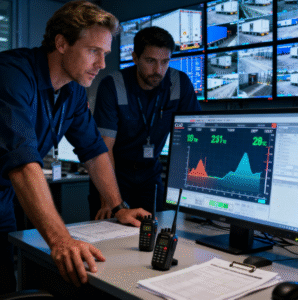
Pharmaceutical cold chain logistics is undergoing a transformation as companies move beyond traditional temperature recording toward predictive analytics, automation and real-time decision-making.
Recent industry analysis highlights that modern pharmaceutical supply chains increasingly require continuous in-transit monitoring, predictive risk identification, automated warehouse operations and stronger digital connectivity between logistics partners.
The shift reflects a fundamental change in cold chain management.
Historically, companies focused on proving that products remained within temperature limits after delivery.
The emerging model focuses on identifying risks before product integrity is compromised.
How It Works
Traditional cold chain monitoring typically relies on:
- temperature loggers
- shipment records
- manual review after delivery
While these systems remain important, they provide limited ability to prevent failures during transportation.
Modern digital cold chains combine multiple data sources:
- real-time temperature sensors
- GPS location data
- shipment milestones
- weather information
- customs delays
- warehouse conditions
AI-based systems analyze these inputs to identify potential problems.
Examples include:
- predicting temperature excursion risk
- identifying high-risk transportation lanes
- recommending alternative routes
- prioritizing delayed shipments
- triggering intervention before failure occurs
For example, if a pharmaceutical shipment experiences unexpected airport delays in a high-temperature environment, predictive systems can estimate whether the passive packaging system still has enough thermal protection time remaining.
The system can then recommend actions:
- expedited handling
- alternate routing
- coolant replacement
- priority unloading
This changes cold chain management from reactive response into proactive control.
Why It Matters
Pharmaceutical products are becoming increasingly sensitive.
The growth of:
- biologics
- vaccines
- cell and gene therapies
- specialty medicines
creates greater requirements for:
- temperature precision
- traceability
- documentation
- intervention capability
A single excursion may result in:
- product quarantine
- regulatory investigation
- financial loss
- patient treatment delays
At the same time, global pharmaceutical supply chains are becoming more complex.
A shipment may involve:
- multiple countries
- multiple logistics providers
- air and ground transportation
- different regulatory environments
This makes manual monitoring increasingly difficult.
Digital platforms provide a way to manage complexity.
B2B Impact
For pharmaceutical manufacturers:
Cold chain strategy should increasingly include:
- predictive analytics
- digital shipment visibility
- automated exception management
For logistics providers:
Competitive advantage will move beyond transportation capacity.
Customers will expect:
- real-time monitoring
- proactive alerts
- documented intervention processes
For warehouse operators:
Automation can reduce:
- manual handling errors
- door-open exposure
- inventory mistakes
AI systems can also improve:
- storage allocation
- workflow planning
- labor efficiency
For packaging suppliers:
Digital visibility can improve packaging design.
Companies can understand:
- where thermal failures occur
- actual shipment exposure
- required protection duration
For technology providers:
Future platforms will likely integrate:
- IoT sensors
- AI prediction
- digital twins
- regulatory documentation
The broader industry trend:
The pharmaceutical cold chain is evolving from a temperature-control system into an intelligent risk-management network.
StoreLogs Tests Lower-Carbon Refrigerated Trailer Technology with GreenChill Systems
StoreLogs and GreenChill Systems Demonstrate New Path for Lower-Carbon Reefer Operations
What Happened
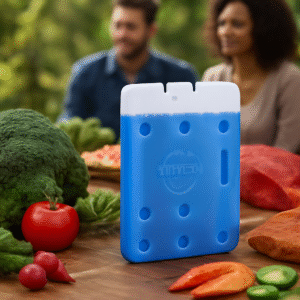
StoreLogs has announced the successful completion of a collaborative trial with GreenChill Systems focused on reducing emissions from refrigerated trailer operations.
The project evaluated a new refrigeration technology approach under real operating conditions, demonstrating the potential for lower-carbon performance in temperature-controlled transport.
The trial is significant because refrigerated transport remains one of the most energy-intensive parts of the cold chain.
While cold storage facilities have increasingly adopted energy-efficient refrigeration and renewable power solutions, transport refrigeration units continue to represent a major challenge due to mobile operation requirements.
How It Works
Refrigerated trailers rely on transport refrigeration units (TRUs) to maintain product temperature during movement.
Unlike stationary cold storage systems, trailer refrigeration faces several additional challenges:
- limited energy availability
- changing ambient temperatures
- frequent door openings
- variable driving conditions
- strict temperature requirements
A refrigerated trailer may operate in:
- summer heat
- winter conditions
- urban delivery environments
- long-distance highway routes
The refrigeration system must continuously adjust to maintain the cargo setpoint.
Newer technologies aim to improve efficiency through:
- improved refrigeration cycles
- lower energy consumption
- reduced emissions
- smarter control systems
The StoreLogs and GreenChill trial evaluated performance under practical operating conditions rather than only laboratory testing.
This is important because refrigeration efficiency in real logistics depends on:
- loading patterns
- route conditions
- ambient temperature
- driver behavior
- delivery frequency
A technology that performs well in controlled testing may produce different results in daily fleet operations.
Why It Matters
Cold chain transportation creates a unique sustainability challenge.
Food and pharmaceutical logistics cannot simply reduce cooling demand because product integrity must be protected.
The industry therefore needs solutions that reduce environmental impact while maintaining:
- temperature stability
- delivery reliability
- product safety
Transport refrigeration is particularly important because vehicles often operate continuously across large geographic areas.
A small improvement in energy efficiency across thousands of trailers can create significant cumulative benefits.
The transition toward lower-carbon refrigeration is also being accelerated by:
- stricter emissions regulations
- customer sustainability requirements
- rising fuel costs
- corporate carbon reduction targets
For logistics companies, improving refrigeration efficiency can reduce both emissions and operating expenses.
B2B Impact
For refrigerated carriers:
New refrigeration technologies may provide opportunities to reduce:
- fuel consumption
- maintenance costs
- carbon emissions
However, fleet operators must evaluate:
- reliability
- service availability
- lifecycle cost
- spare parts support
For food manufacturers and retailers:
Lower-carbon transportation options can help meet sustainability goals without changing product temperature requirements.
However, sustainability improvements must not compromise:
- shelf life
- delivery consistency
- food safety
For refrigeration equipment suppliers:
Demand is increasing for:
- high-efficiency TRUs
- alternative refrigerants
- smart controls
- remote monitoring systems
For fleet management platforms:
Future refrigerated fleets will increasingly combine:
- refrigeration data
- vehicle telematics
- route information
- energy consumption data
This enables operators to optimize both logistics performance and environmental impact.
The broader industry trend:
The next generation of refrigerated transport will be measured not only by temperature performance, but also by energy efficiency and carbon intensity.
Prestwick Airport Strengthens Regional Cold Chain Cargo Role Through Continued Growth
Regional Airports Become Strategic Nodes for Temperature-Controlled Cargo Networks
What Happened
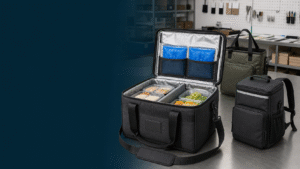
Glasgow Prestwick Airport has reported its seventh consecutive year of profitability, highlighting continued development of its cargo and logistics capabilities.
The airport recorded £3.9 million in profit for the year ended March 2026, reflecting stronger operational performance and continued demand for specialized logistics services. The airport is increasingly positioned as a regional cargo hub supporting industrial, food and temperature-sensitive supply chains.
For cold chain operators, the development is significant because regional airports are becoming increasingly important alternatives within temperature-controlled logistics networks.
Traditionally, pharmaceutical and perishable air cargo has concentrated around major international gateways. However, regional cargo airports can provide additional flexibility by reducing congestion, improving handling speed and supporting specialized supply chains closer to production areas.
How It Works
Air cargo cold chains depend on multiple controlled transfer points.
A temperature-sensitive shipment may move through:
- production facility
- refrigerated truck
- airport cargo terminal
- security screening
- aircraft loading
- destination handling center
Each stage creates potential exposure risk.
Regional airports with suitable infrastructure can provide:
- temperature-controlled storage
- faster cargo handling
- reduced terminal congestion
- shorter ground transportation routes
For perishable products such as seafood, fresh food and specialty agricultural goods, reducing time between refrigerated transport and aircraft loading can help protect product quality.
The airport environment must also support operational coordination.
Cold chain cargo requires:
- controlled storage areas
- trained handling personnel
- temperature monitoring
- rapid transfer procedures
- reliable documentation
A cargo terminal without appropriate cold chain procedures can become a weak point even when upstream production and packaging are well controlled.
Why It Matters
Global cold chains are becoming more distributed.
Companies increasingly need multiple logistics options because of:
- port congestion
- air capacity changes
- seasonal demand
- geopolitical disruption
- extreme weather
Regional airports can provide resilience by adding alternative routes.
For food exporters, this can improve access to international markets.
For pharmaceutical logistics, regional gateways can reduce unnecessary handling and shorten the distance between manufacturing sites and qualified transport infrastructure.
The value of a regional airport is therefore not only cargo volume.
It is the ability to provide reliable, specialized handling for products where timing and temperature directly affect product value.
B2B Impact
For food exporters:
Regional airports can provide additional options for:
- seafood exports
- fresh produce
- chilled products
- specialty foods
However, exporters should evaluate:
- cold storage availability
- cargo handling procedures
- airline connectivity
- temperature monitoring capability
For pharmaceutical companies:
Airport selection should consider:
- GDP compliance
- temperature-controlled staging
- emergency procedures
- shipment visibility
For freight forwarders:
Regional airport growth creates opportunities for specialized cold chain services combining:
- refrigerated pickup
- airport handling
- documentation
- final-mile delivery
For cold chain technology suppliers:
Demand may increase for:
- airport cold rooms
- IoT monitoring
- temperature alarms
- cargo tracking platforms
The broader trend:
Cold chain networks are moving from single-gateway dependence toward more flexible regional logistics ecosystems.
Nichirei Cyberattack Reveals New Digital Risks Across Frozen Food Cold Chains
Nichirei Cyberattack Shows Why Cold Chain Security Must Include Digital Infrastructure
What Happened
A cyberattack affecting Nichirei Co., one of Japan’s largest frozen food manufacturers and cold chain operators, has highlighted a growing vulnerability in modern temperature-controlled supply chains.
The incident disrupted parts of Nichirei’s IT systems, affecting refrigerated warehouse operations, frozen food distribution processes and customer supply activities.
KFC Japan was among the companies reporting supply impacts linked to the disruption, with potential menu restrictions and operational challenges caused by reduced availability of certain products.
Nichirei stated that no customer or personal information leakage had been confirmed, but the company did not disclose detailed technical information regarding the attack.
The event demonstrates that cold chain reliability now depends on both physical refrigeration systems and digital operational infrastructure.
How It Works
Modern cold chain networks are increasingly software-driven.
Large refrigerated logistics operations rely on interconnected systems including:
- Warehouse Management Systems (WMS)
- Transportation Management Systems (TMS)
- Inventory databases
- Automated storage systems
- Customer ordering platforms
- Refrigeration monitoring systems
These systems coordinate:
- product location
- inventory availability
- order release
- warehouse picking
- transportation scheduling
- customer communication
A cyberattack does not necessarily need to damage refrigeration equipment to disrupt cold chain operations.
A warehouse freezer may continue maintaining temperature, but operators may lose the ability to:
- locate inventory
- release shipments
- update stock availability
- coordinate deliveries
- communicate accurate supply information
This creates a different type of cold chain failure.
The product may remain physically protected while the logistics system supporting that product becomes unavailable.
Why It Matters
Historically, cold chain risk management focused mainly on:
- refrigeration reliability
- temperature excursions
- transportation delays
- packaging failures
However, digitalization has changed the risk landscape.
A modern refrigerated warehouse is effectively a combination of:
- Thermal infrastructure
- Logistics software
- Data systems
- Automated operations
Failure of any one layer can affect supply continuity.
This is particularly important for frozen food networks because many customers operate with limited inventory buffers.
Restaurants, retailers and foodservice companies often depend on predictable replenishment schedules. A disruption lasting several days can create:
- product shortages
- menu limitations
- emergency sourcing
- customer dissatisfaction
The Nichirei incident shows that cybersecurity should now be considered part of cold chain integrity.
A cold chain is not fully resilient if it can maintain temperature but cannot control inventory movement.
B2B Impact
For cold storage operators:
Cybersecurity should become part of facility risk management.
Important measures include:
- network segmentation
- system backups
- access management
- employee cybersecurity training
- disaster recovery procedures
For food manufacturers:
Supplier qualification should include digital resilience.
Companies should evaluate whether logistics partners have:
- backup operating procedures
- cybersecurity controls
- recovery plans
- alternative communication methods
For 3PL providers:
Customers increasingly expect both physical and digital reliability.
A modern cold chain provider must protect:
- product temperature
- inventory accuracy
- shipment visibility
- operational data
For automation suppliers:
Connected warehouses create new cybersecurity requirements.
Automation systems, sensors and warehouse robots must be protected against unauthorized access because they directly affect physical operations.
For cold chain software companies:
Future platforms will need:
- encrypted communication
- cybersecurity monitoring
- backup systems
- automated recovery functions