


Pharmaceutical Cold Chain Packaging Market Expands Driven by Biologics and Compliance Demand
Pharmaceutical Cold Chain Packaging Market Expands Driven by Biologics and Compliance Demand
Morningstar / Future Market Insights
Pharmaceutical Cold Chain Packaging Expands as Compliance Becomes Core Infrastructure
What Happened
The global pharmaceutical cold chain packaging sector is experiencing sustained growth, driven by increasing demand for biologics, vaccines, and temperature-sensitive therapies.
Recent market analysis indicates that the temperature-controlled packaging industry is on a strong upward trajectory, with significant expansion projected over the next decade. This growth is closely linked to stricter regulatory requirements and rising expectations for validated cold chain integrity across global healthcare supply networks.
Unlike earlier cycles where packaging was considered a supporting function, it is now positioned as a core component of pharmaceutical logistics infrastructure.
How It Works
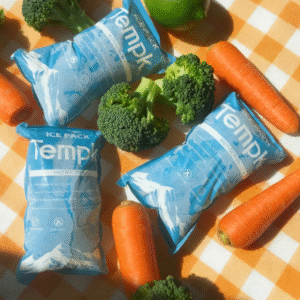
Modern cold chain packaging systems include insulated shippers, phase change materials (PCM), active cooling systems, and increasingly IoT-enabled monitoring devices.
These systems are designed to maintain strict temperature ranges such as 2–8°C, -20°C frozen distribution, or deep-frozen biologics lanes.
Key technological shifts include:
- Integration of real-time temperature data loggers
- Use of validated thermal profiles for lane qualification
- Smart packaging with GPS and cloud monitoring
- Increased use of reusable insulated shipper systems
Pharmaceutical companies are now required to demonstrate not only transport capability, but full temperature mapping validation, packaging qualification, and deviation response documentation.
This shifts cold chain packaging from passive protection to an active compliance-driven system.
Why It Matters
The expansion of biologics and advanced therapies has increased the sensitivity of global pharmaceutical supply chains.
Even brief temperature excursions can compromise product stability, leading to:
- Batch rejection
- Regulatory investigation
- Patient safety risks
- Financial losses in high-value biologics
As a result, packaging is no longer a cost center—it is part of regulatory compliance architecture.
The growth of this market also reflects a broader trend: pharmaceutical logistics is becoming increasingly data-driven and validation-heavy.
B2B Impact
For cold chain logistics providers:
- Higher demand for validated packaging systems
- Increased integration with digital monitoring platforms
- Stronger focus on lane qualification and thermal performance testing
For manufacturers:
- Packaging design must align with regulatory expectations
- Increased investment in stability data and simulation testing
For 3PL and distribution networks:
- Packaging is now directly tied to service-level compliance
- Cold chain failures are increasingly traceable to packaging design, not transport alone
Overall, packaging is becoming a strategic control point in pharmaceutical supply chains.
Stablepharma and AFT Target Fridge-Free Vaccine Distribution Across Major Markets
Source:Stablepharma
Stablepharma and AFT’s Fridge-Free Vaccine Plan Could Reshape Parts of the Vaccine Cold Chain
What Happened
Stablepharma Limited has signed a Letter of Intent with AFT Pharmaceuticals for the proposed distribution of SPVX02, Stablepharma’s lead fridge-free tetanus-diphtheria vaccine candidate. The proposed territories include the United Kingdom, Canada, Australia and New Zealand, with an option to extend into Singapore and Hong Kong.
The announcement is relevant to cold chain and temperature-controlled logistics because SPVX02 is designed to reduce dependence on conventional refrigerated vaccine distribution. According to the source announcement, the candidate has generated clinical and stability data that support the next stage of development, including advancement toward pivotal Phase 2b clinical trials.
For cold chain professionals, this is not simply a biotechnology story. It points to a broader shift in healthcare logistics: some temperature-sensitive medicines may gradually move from strict refrigerated handling toward more flexible, stability-driven distribution models. That could affect validated storage requirements, shipment design, inventory positioning and last-mile healthcare access.
How It Works
SPVX02 is based on Stablepharma’s thermostable formulation approach. The company says its StablevaX platform reformulates vaccines into lyophilised, dry formats designed to remain stable at 30°C from manufacture through expiry, without changing the active pharmaceutical ingredient or compromising clinical performance.
The announcement states that SPVX02 has shown stability at 30°C for 24 months, supporting a 36-month shelf-life label for storage up to 30°C for clinical study supply. Stablepharma also reports that Phase 1 clinical data showed the vaccine was safe and well tolerated, with immunogenicity similar to the originator refrigerated vaccine 28 days after a single dose.
The proposed commercial framework would give AFT Pharmaceuticals exclusive distribution rights in the agreed territories, subject to final contract terms and customary conditions. Stablepharma would continue to lead development, while AFT would be responsible for commercial distribution in the covered markets.
From a logistics perspective, the key operational difference is that a fridge-free vaccine candidate may not require the same level of 2–8°C refrigerated storage, gel pack shipper preparation, cold room staging or refrigerated last-mile handling as a conventional vaccine. However, this does not mean temperature management disappears. It shifts the focus from continuous refrigeration to controlled ambient storage, stability evidence, regulatory documentation, batch traceability, warehouse discipline and verified handling conditions.
Why It Matters
Traditional vaccine cold chains are resource-intensive. They require cold rooms, refrigerated vehicles, validated shippers, data loggers, trained handlers, electricity reliability and deviation management procedures. In lower-resource settings, a single temperature excursion can create product waste, stockouts and public health risk.
A fridge-free vaccine model could reduce some of those barriers if the product completes clinical and regulatory milestones successfully. For national immunisation programmes, distributors and healthcare providers, fewer refrigeration constraints may improve stock availability, reduce distribution complexity and make remote delivery easier.
The development is also important because it does not rely only on packaging. Many cold chain improvements focus on better insulated containers, phase change materials, refrigerated transport or real-time visibility. Those remain essential for many biologics and vaccines. But thermostable reformulation addresses the problem at product level, potentially changing the logistics requirements before the shipment is even designed.
This is why the news has a high novelty score for the cold chain sector. It shows how pharmaceutical formulation, clinical development and logistics strategy are becoming more connected. Product stability is no longer only a laboratory issue; it is a supply chain design factor.
B2B Impact
For pharmaceutical distributors and 3PLs, the near-term impact is likely to be planning rather than immediate operational change. SPVX02 is still moving through clinical and regulatory stages, so companies should not assume that refrigerated vaccine distribution will be replaced quickly. Instead, logistics teams should prepare for hybrid portfolios where some products remain strictly 2–8°C while others qualify for controlled ambient handling.
For cold chain packaging suppliers, this trend may create demand for more segmented packaging strategies. High-risk biologics will still require validated shippers and temperature monitoring, while thermostable products may require lower-cost controlled ambient packouts, tamper protection, shock protection and documentation that supports stability-based handling.
For healthcare systems and NGOs, the potential value is access. Fridge-free vaccine formats could simplify field distribution, reduce cold room dependency and lower the operational burden on rural or remote health facilities. However, good distribution practice still matters. Even fridge-free products need proper inventory control, expiry management, traceability, clean storage and protection from extreme heat.
For cold chain technology providers, the opportunity may shift toward mixed-temperature network management. Future vaccine logistics may require dashboards that track which SKUs require refrigerated handling, which can move under controlled ambient conditions, and which still need real-time temperature monitoring based on lane qualification and regulatory expectations.
The wider lesson is clear: the future of pharma cold chain will not be defined only by colder equipment. It will be shaped by a combination of product stability science, packaging validation, distribution intelligence and compliance documentation. Fridge-free vaccine development could reduce cold chain pressure in selected areas, but it also raises the standard for evidence-based logistics planning.
Eisai Invests in UK Cold Chain Packaging Capacity for Temperature-Controlled Medicines
Source:Eisai
Eisai’s Hatfield Investment Signals a More Controlled Pharma Cold Chain Packaging Model
What Happened
Eisai has announced a strategic investment at its Hatfield manufacturing site in Hertfordshire, United Kingdom, supported by the UK Government’s Life Sciences Innovative Manufacturing Fund. The investment is intended to build supply and packaging capabilities for existing and pipeline medicines that require cold-chain management, including lecanemab-related supply requirements. The UK Government separately described the project as a £48 million investment to expand Eisai Manufacturing Ltd’s capabilities at Hatfield, including a new packaging facility for an innovative dementia treatment.
For the cold chain sector, the most important detail is not simply the capital value of the project. The announcement shows a pharmaceutical manufacturer moving more critical temperature-controlled packaging and supply activities in-house, rather than relying only on outsourced packaging steps for sensitive products.
How It Works
According to the release, the investment will expand the role of the Hatfield site beyond its traditional oral solid dose manufacturing base. Eisai plans to add packaging and supply functions for injectable and infusion products that require cold-chain control. The project scope includes expanded inbound and outbound functions, cold and ambient warehousing, a packaging building, and packaging lines designed to handle products with different temperature profiles.
In operational terms, this type of upgrade usually requires a much tighter interface between GMP manufacturing, GDP-compliant storage, packaging validation, dispatch preparation, and shipment visibility. Cold-chain medicines cannot be treated as ordinary finished goods. Each handover between storage, packaging, staging, dispatch, and carrier pickup becomes a controlled point where temperature excursion risk must be reduced and documented.
The project is expected to be delivered in phases, with the total investment estimated at approximately £48 million. Eisai also said the investment will support supply to multiple regions, including Europe, the Middle East, and Africa, while improving flexible production response, multilingual small-batch packaging, and quality-control capability.
Why It Matters
Pharma cold chain risk is shifting upstream. Historically, many B2B cold chain discussions focused on refrigerated transport, validated shippers, and last-mile delivery. This announcement highlights another critical layer: packaging configuration and supply readiness at the manufacturing site itself.
For biologics, injectables, and other temperature-sensitive therapies, packaging is not just a commercial labeling process. It affects lane qualification, country-specific release planning, packout design, shipment dwell time, and the ability to maintain product integrity before the shipment even leaves the plant. Bringing more packaging capability inside the manufacturer’s own controlled environment can reduce dependency on external packaging nodes and help improve supply flexibility.
This is especially relevant for markets where demand is fragmented across languages, pack sizes, and regulatory requirements. A site that can handle smaller multilingual packaging runs while maintaining temperature-controlled storage and dispatch discipline may be better positioned to support regional launches, emergency supply, and changing demand signals.
B2B Impact
For temperature-controlled logistics providers, the signal is clear: pharma shippers are looking for more integrated control across packaging, storage, dispatch, and international distribution. Carriers and 3PLs serving this type of customer will need to align with stricter qualification expectations, including lane risk assessment, validated handover windows, data logger integration, and deviation-response procedures.
For cold chain packaging suppliers, demand may increase for validated shipper systems that can connect cleanly with in-house packaging operations. That includes prequalified 2–8°C shippers, frozen or deep-frozen configurations where applicable, reusable parcel systems, high-performance insulation, and documentation packages that support QA release.
For monitoring technology providers, the opportunity is also broader than transport. A facility with cold and ambient warehousing, packaging rooms, staging areas, and dispatch lanes needs temperature mapping, real-time monitoring, automated alarms, calibration records, and audit-ready reporting. The more pharmaceutical companies internalize packaging and supply functions, the more they will need reliable data across every controlled zone.
The investment also reinforces a larger B2B trend: pharma cold chain is becoming less about “shipping cold” and more about building a validated, end-to-end temperature control system from product packaging to final delivery.
Callan JMB Expands Pediatric Vaccine Cold Chain Support in Oregon
Source: Callan JMB via GlobeNewswire
Callan JMB Expands Pediatric Vaccine Cold Chain Support in Oregon
What Happened
Callan JMB has received Vaccines for Children Program PIN authorization from the State of Oregon, expanding its ability to support public health programs through the storage, preparation, management, and distribution of pediatric vaccines and other temperature-sensitive medical materials.
For healthcare cold chain users, this is a practical public health logistics development. Pediatric vaccines require strict temperature control, inventory accountability, compliant handling, and reliable deployment to clinics, schools, community programs, and targeted vaccination events. The Oregon authorization gives Callan JMB a more formal role in supporting these requirements through its healthcare logistics platform.
The company positions the authorization as part of its broader strategy to support public health readiness, emergency preparedness, and community-level access to critical medical materials.
How It Works
The VFC authorization allows Callan JMB to participate in programs requiring specialized cold chain management, regulatory compliance, inventory accountability, and targeted deployment of pediatric medical products.
In cold chain operations, this means the service model must support more than basic storage. Pediatric vaccine logistics requires temperature-controlled receiving, validated storage conditions, lot-level inventory control, preparation for distribution, monitoring, documentation, and delivery workflows aligned with public health requirements.
The announcement also highlights Callan JMB’s role in endpoint kitting, monitoring, deployment services, and operational support for state and local agencies. These capabilities are important because public health programs often need vaccines and medical materials deployed in specific quantities to specific communities under strict timing and handling requirements.
Why It Matters
Vaccine cold chain performance is a quality-critical part of public health delivery. A pediatric vaccine program cannot rely only on product availability. It also needs compliant storage, controlled distribution, and reliable last-mile execution.
Public health agencies often face operational challenges when moving medical materials into targeted locations. These challenges can include limited local storage, variable demand, route complexity, school-based distribution, community outreach, and the need to maintain temperature integrity during staging and transport.
Callan JMB’s authorization helps address that gap by providing an additional operational resource for Oregon’s pediatric vaccine supply chain. The value is not only distribution capacity. It is the ability to combine cold chain control, regulatory alignment, inventory discipline, and targeted deployment in one support model.
B2B Impact
For public health agencies, this development reinforces the need for specialized partners that understand vaccine logistics, regulatory requirements, and community-level deployment. Cold chain reliability must be built into the program before vaccines reach the final administration point.
For healthcare providers and vaccination program managers, better logistics support can improve readiness for routine childhood immunization as well as localized public health events involving children.
For cold chain packaging and monitoring suppliers, this type of program creates demand for validated insulated shippers, vaccine carriers, temperature data loggers, real-time alerts, cold chain documentation, and SOP-driven packout workflows.
For B2B healthcare cold chain providers, the strategic message is clear: vaccine logistics is becoming more integrated and preparedness-driven. Providers that can combine compliant storage, inventory accountability, monitoring, endpoint preparation, and targeted deployment will have stronger value in public health supply chains.
DSV Launches Luxembourg–Indianapolis Pharma Air Route for Temperature-Controlled Logistics
Source: DSV
DSV Strengthens Pharma Cold Chain Connectivity Between Luxembourg and Indianapolis
What Happened
DSV has launched a direct Luxembourg–Indianapolis pharma air route as the latest expansion of its Air ThermoDirect solution. The route connects Luxembourg Airport with Indianapolis International Airport, linking two important nodes in the global pharmaceutical supply chain.
The announcement matters because Indianapolis is one of the fastest-growing life sciences and healthcare logistics hubs in the United States, while Luxembourg is a key European airfreight gateway for pharmaceutical cargo. By connecting these two locations through a dedicated temperature-controlled airfreight route, DSV is strengthening transatlantic healthcare logistics capacity for temperature-sensitive pharmaceutical products.
How It Works
The new service is designed to minimize time spent in uncontrolled environments and reduce the complexity associated with active containers. According to DSV, Air ThermoDirect aims to help pharmaceutical companies protect product integrity while reducing total cost, emissions, and operational uncertainty across critical lanes.
From a cold chain operations perspective, the value is in lane control. A dedicated pharma air route can reduce handoffs, improve tarmac coordination, shorten dwell time, and provide stronger process ownership between origin, airport handling, air transport, destination handling, and onward distribution.
The route also supports DSV’s broader healthcare logistics network by linking manufacturing and distribution regions across the United States, Europe, the Americas, and Asia-Pacific. In pharmaceutical logistics, this type of corridor-based design is increasingly important because buyers need predictable, documented, and repeatable temperature-controlled performance.
Why It Matters
Pharmaceutical cold chain logistics is becoming more corridor-specific. For biologics, vaccines, specialty medicines, clinical trial materials, and high-value healthcare products, logistics buyers are not simply purchasing airfreight capacity. They need qualified lanes, trained handling teams, temperature-controlled processes, shipment visibility, and deviation control.
The Luxembourg–Indianapolis route is relevant because it brings greater structure to a high-value transatlantic lane. By reducing time in uncontrolled environments, DSV can help lower temperature excursion risk during airport handling and transfer operations.
This is especially important for pharmaceutical cargo that may be sensitive to short but meaningful exposure events. Even a limited period outside required temperature conditions can create quality review, product release, or patient-supply risk.
B2B Impact
For pharmaceutical manufacturers and healthcare logistics buyers, the route may improve planning reliability and give shippers more confidence in transatlantic temperature-controlled movement.
For cold chain packaging providers, the development reinforces demand for lane-specific packout validation, passive shippers, pallet shippers, temperature monitoring, and packaging solutions matched to qualified airfreight corridors.
For monitoring and visibility providers, the route creates demand for integrated sensor data, real-time intervention capability, chain-of-custody tracking, and exception management across airport and airfreight touchpoints.
For B2B cold chain solution providers, the strategic signal is clear: pharma air logistics is moving toward controlled, corridor-based service models. Providers that can combine air capacity, temperature discipline, reduced handoffs, documentation, and end-to-end accountability will have stronger value in healthcare supply chains.
Lineage and TGW Automate Next-Generation Refrigerated Warehouse in Texas
Source: TGW Logistics
Lineage and TGW Build a Next-Generation Automated Refrigerated Warehouse in Texas
What Happened
Lineage is constructing a highly automated temperature-controlled distribution center in Hutchins, Texas, within the Dallas–Fort Worth metroplex. TGW Logistics announced on June 9, 2026 that it will provide automation technology for key warehouse processes at the facility.
The project is positioned as one of the largest and most advanced automated temperature-controlled distribution centers in the world for refrigerated and frozen products. After go-live, which is anticipated at the end of 2027, the facility will support a major U.S. grocery producer and strengthen Lineage’s cold chain network in North America.
For cold chain industry users, the significance is clear: refrigerated warehousing is moving beyond basic pallet storage. Large-scale operators are investing in automation, high-throughput fulfillment, labor efficiency, energy-aware design, and more reliable frozen and chilled distribution infrastructure.
How It Works
TGW Logistics will deliver a comprehensive automation system for the Texas facility. The planned solution includes a shuttle warehouse, energy-efficient conveyor technology for pallets and cartons, and automated palletizing and depalletizing stations.
This type of automation is especially important in refrigerated and frozen environments. Mechatronic systems used in freezer operations must perform reliably under harsh low-temperature conditions, where condensation, icing risk, safety requirements, worker ergonomics, and maintenance access are more demanding than in ambient warehouses.
TGW says its shuttle systems, conveyor technology, and pallet-handling solutions are designed to operate at temperatures as low as -30°C. This matters because cold chain automation cannot simply copy ambient warehouse design. Equipment must be engineered for low-temperature reliability, predictable throughput, safety, and reduced downtime.
In practical operations, the system is expected to support faster order fulfillment, more efficient handling of refrigerated and frozen goods, improved ergonomics for employees, and higher consistency across daily distribution cycles.
Why It Matters
Cold chain fulfillment is becoming more complex as grocery producers, food manufacturers, retailers, and foodservice networks handle larger volumes of refrigerated and frozen products. Demand for faster replenishment, more accurate inventory, and stronger product integrity is pushing operators toward more automated warehouse models.
Traditional cold storage operations often face labor constraints, energy pressure, slower manual handling, and higher operating complexity. Automation can help reduce these constraints by improving throughput, reducing travel time, limiting manual exposure in freezer zones, and supporting more consistent order assembly.
The Dallas–Fort Worth location is also strategically important. DFW is a major U.S. logistics hub with strong access to national distribution routes. A highly automated refrigerated facility in this region can support broader coverage for temperature-sensitive food distribution across the United States.
B2B Impact
For grocery producers and food manufacturers, the Lineage-TGW project reflects the direction of future refrigerated distribution. Customers increasingly need cold chain partners that can deliver both storage capacity and high-performance fulfillment.
For cold storage operators, the project shows that automation is becoming a core competitiveness factor. Facilities that can combine refrigeration reliability, high-density storage, automated handling, and faster outbound execution will be better positioned to serve large retail and foodservice customers.
For cold chain equipment and technology suppliers, the development creates demand for freezer-compatible robotics, pallet automation, conveyor systems, warehouse control software, energy-efficient refrigeration, temperature monitoring, dock controls, and predictive maintenance tools.
For B2B cold chain solution providers, the strategic takeaway is clear: the next generation of refrigerated warehouses will be more automated, data-driven, and throughput-focused. Cold chain value is shifting from “how much frozen space is available” to “how reliably and efficiently product can move through a controlled-temperature network.”
Soligenix Thermostable Vaccine Platform Could Reduce Cold Chain Burden in Outbreak Response
Source: Soligenix News Release
Soligenix Thermostable Vaccine Platform Could Reduce Cold Chain Burden in Outbreak Response
What Happened
Soligenix announced that it is applying for vaccine development funding from the Coalition for Epidemic Preparedness Innovations for a Bundibugyo virus vaccine program. The company said the proposal will build on its existing thermostable filovirus vaccine platform, developed in collaboration with Axel Lehrer, PhD, at the University of Hawaiʻi at Mānoa.
For cold chain and public health logistics users, the important point is not only the disease target. The announcement highlights a vaccine format designed to reduce dependence on stringent cold-storage requirements. Soligenix describes its approach as a protein-based thermostable subunit vaccine platform that can support outbreak preparedness in virus-endemic regions and strategic national stockpiles.
How It Works
Soligenix’s filovirus vaccine platform uses recombinant protein antigens, an adjuvant, and excipients that enable lyophilization. The resulting vaccine candidate is manufactured as a heat-stable powder in a vial and reconstituted with water for injection immediately before use.
The company states that its prior filovirus vaccines have demonstrated thermostability, immunogenicity, and durable efficacy in non-human primate studies. It also notes that stability studies have shown heat stability for at least two years at temperatures of at least 40°C.
From a cold chain logistics perspective, this is significant because many outbreak-response vaccines require frozen or ultra-low temperature logistics. A single-vial thermostable vaccine format could reduce the need for deep-freeze storage, active refrigerated transport, dry ice, and fragile last-mile temperature-control infrastructure.
Why It Matters
Outbreak response often occurs in regions where cold chain infrastructure is limited, fragmented, or difficult to maintain. Even when vaccine supply is available, field deployment can be constrained by freezer capacity, refrigerated transport, backup power, temperature monitoring, and trained handling teams.
Thermostable vaccine formats can help reduce some of these logistics barriers. If a vaccine can remain stable under higher-temperature conditions, public health programs may gain more flexibility in stockpiling, field distribution, emergency deployment, and rural access.
This does not remove the need for quality systems. Vaccine distribution still requires validated storage procedures, product traceability, chain-of-custody control, inventory discipline, and regulatory approval. Soligenix also makes clear that its funding application is preliminary and that there is no assurance CEPI will select or fund the proposal.
B2B Impact
For public health agencies and emergency preparedness organizations, the Soligenix announcement reinforces the value of product formats that reduce cold chain dependency. In epidemic and pandemic response, logistics simplicity can directly affect speed, reach, and vaccine availability.
For cold chain packaging and monitoring suppliers, this type of development does not eliminate demand. Instead, it shifts demand toward risk-based logistics models, temperature monitoring for field deployment, controlled storage at regional hubs, and packaging systems optimized for longer reach and simpler handling.
For vaccine manufacturers and biotechnology companies, thermostability can become a strategic differentiator. Products that are easier to store, ship, and deploy may be more suitable for emergency stockpiles, outbreak-prone regions, and lower-infrastructure markets.
For B2B cold chain solution providers, the broader message is clear: the future of healthcare logistics will not be defined only by stronger refrigeration. It will also be shaped by formulation science, ambient-stable product design, decentralized readiness, and logistics models that reduce temperature-control burden where possible.
AyalaLand Logistics Expands Cold Storage Capacity as Food Security Demand Grows
Source: Manila Bulletin
AyalaLand Logistics Expands Cold Storage Capacity to Support Food Security Demand
What Happened
AyalaLand Logistics Holdings Corp. is expanding its cold storage business as demand for food security infrastructure and temperature-controlled logistics continues to grow in the Philippines. The company plans to add around 14,000 pallet positions to its cold storage network, strengthening its ability to support food, agriculture, seafood, retail, and frozen distribution customers.
The expansion is part of AyalaLand Logistics’ broader Artico Cold Chain rollout. For cold chain users, the significance is clear: the Philippine market is moving from fragmented refrigerated capacity toward more structured, professionally operated cold storage infrastructure.
How It Works
AyalaLand Logistics operates cold storage facilities under its Artico platform. Its existing cold chain assets include multi-temperature facilities capable of supporting chilled, frozen, and processing requirements. Public facility information from the company shows cold rooms operating down to approximately -25°C, palletized storage capacity, processing rooms, blast freezing capability, and air-conditioned storage areas.
This type of infrastructure is important because food and agricultural cold chains require more than simple warehouse space. Operators need stable temperature zoning, reliable dock operations, pallet handling capacity, inventory visibility, backup systems, and disciplined product flow from receiving to outbound distribution.
Adding 14,000 pallet positions gives the company more room to serve larger-volume customers and support wider cold chain coverage. It also helps address one of the most common bottlenecks in emerging cold chain markets: insufficient professionally managed storage capacity near production, import, processing, and consumption centers.
Why It Matters
Cold storage capacity is becoming a food security issue in Southeast Asia. In markets where fresh food, seafood, meat, dairy, frozen products, and agricultural goods move through long or fragmented routes, insufficient cold chain infrastructure can increase spoilage, reduce farmer income, weaken retail service levels, and create price instability.
The Philippines has strong demand for better cold chain coverage because it serves both domestic consumption and agricultural distribution needs across multiple islands. A stronger cold storage network can help reduce postharvest losses, improve frozen and chilled product availability, and support more reliable supply to retailers and food-service operators.
For B2B buyers, the key issue is not only capacity. The quality of the cold chain matters. Pallet positions must be supported by temperature discipline, handling SOPs, traceability, equipment uptime, and predictable dispatch performance.
B2B Impact
For food producers, importers, seafood processors, and agricultural suppliers, expanded cold storage capacity can create more reliable access to temperature-controlled staging and distribution. This is especially important for products with short shelf life or high sensitivity to temperature abuse.
For retailers and food-service buyers, better cold chain capacity can support stronger product availability, fewer quality claims, and more stable replenishment cycles for chilled and frozen categories.
For cold chain equipment, packaging, and monitoring providers, this expansion signals demand for industrial refrigeration systems, insulated docks, racking, pallet handling equipment, temperature monitoring, WMS integration, backup power, and food safety documentation tools.
For B2B cold chain operators, the strategic takeaway is clear: cold storage in the Philippines is becoming more infrastructure-led and food-security-driven. Providers that can combine capacity, temperature reliability, operational discipline, and regional coverage will be better positioned as demand for modern cold chain logistics grows.
South Korea Supports Angola Vaccine Cold Chain With Last-Mile Immunization Vehicles
Original Author: Manuel Castelo
Source: UNICEF Angola
South Korea and UNICEF Strengthen Angola’s Last-Mile Vaccine Cold Chain
What Happened
South Korea has reinforced its support for community vaccination in Angola through the delivery of 120 vehicles to the Ministry of Health. The donation was delivered in Luanda on June 4, 2026, through UNICEF’s logistics and procurement channel.
The vehicle fleet includes 60 motorcycles and 60 tricycles. These assets will support vaccination activities in remote and hard-to-reach communities across 12 Angolan provinces, including Benguela, Bengo, Cunene, Cuando Cubango, Cuanza Norte, Namibe, Huambo, Huíla, Lunda Norte, Lunda Sul, and Luanda.
For cold chain users, the significance is not only the transport donation. The vehicle delivery is part of a broader Korean government funding program valued at more than USD 3 million, which also aims to modernize Angola’s vaccine cold chain through refrigerators, community health worker training, and behavioral research on immunization adherence.
How It Works
Community vaccination logistics depends on two connected layers: vaccine temperature integrity and last-mile access. Cold chain infrastructure protects vaccines before dispatch, while last-mile mobility allows health workers to reach communities where routine immunization coverage is weaker.
In Angola’s case, the program links vaccine conservation, cold storage modernization, and field distribution capacity. Refrigerators and solar cooling equipment help maintain vaccine storage conditions, while motorcycles and tricycles improve outreach mobility for frontline health workers.
This is especially important in remote areas where transport delays, limited infrastructure, long travel distances, and difficult road conditions can weaken immunization access. Even if vaccines are properly stored at central or regional depots, the final delivery stage can become a bottleneck if health teams cannot reach communities reliably.
Why It Matters
Vaccine cold chain performance is not only a warehouse issue. It depends on the full pathway from procurement and storage to field deployment and administration. If any part of that system is weak, vaccination programs may face missed outreach windows, underused vaccine stock, or reduced service coverage.
For Angola, this program supports the National Immunization Strategy by improving the practical logistics needed to reach underserved populations. The combination of cold chain modernization and last-mile transport can help reduce inequality in vaccination coverage.
From an industry perspective, this is a reminder that vaccine logistics requires both thermal infrastructure and delivery infrastructure. Refrigerators, cold rooms, temperature monitoring, passive vaccine carriers, route planning, trained staff, and reliable vehicles must work together as one immunization supply chain.
B2B Impact
For public health agencies and immunization partners, the project highlights the importance of integrated vaccine logistics planning. Cold storage investment has limited value if field distribution capacity is insufficient. Likewise, transport assets need to be supported by reliable vaccine storage and temperature-control procedures.
For cold chain equipment suppliers, the program points to demand for vaccine refrigerators, solar cold chain systems, portable insulated carriers, temperature loggers, backup power, and maintenance-ready refrigeration equipment suitable for infrastructure-constrained regions.
For logistics and health supply chain operators, the key lesson is that last-mile vaccine delivery must be designed around real operating conditions. Route reliability, equipment durability, staff training, and temperature monitoring are essential to protecting product integrity until the point of care.
The broader message is clear: vaccine cold chain resilience depends on combining storage infrastructure, transport access, trained personnel, and community-level execution. Programs that integrate all four elements are more likely to improve immunization coverage in hard-to-reach regions.
Velico’s First veliPod Installation Signals a New Model for Emergency Blood Product Logistics
Source: Velico Medical via PR Newswire
What Happened
Velico Medical announced a major milestone in decentralized blood product manufacturing with the first veliPod installation at the French Armed Forces Blood Transfusion Centre in Paris. The system houses Velico’s FrontlineODP spray-dried plasma manufacturing technology and is designed to enable on-site production of spray-dried plasma.
For cold chain and healthcare logistics users, the importance of this development is not only the blood transfusion technology itself. It is also the logistics model behind it. Conventional plasma typically depends on strict cold chain management, centralized production, frozen storage, and controlled distribution. Velico’s containerized production platform is positioned as a way to reduce these constraints by creating a more deployable, localized manufacturing model.
How It Works
The veliPod is a modular, containerized production facility built on a standard shipping container platform. It is designed for rapid deployment into existing infrastructure, including military bases and blood centers. According to the company, the system requires water and electricity and can operate without heavy infrastructure such as traditional clean rooms.
Velico’s FrontlineODP system converts liquid plasma into a stable, lightweight powder that can be stored at ambient temperatures and rehydrated in under 2.5 minutes before transfusion. This is a significant cold chain shift because the product is designed to reduce dependency on frozen plasma storage, refrigerated distribution, and complex emergency logistics.
In practical supply chain terms, the system changes the plasma logistics model from “manufacture centrally, freeze, store, and distribute under strict temperature control” toward “manufacture closer to demand, stockpile in a more stable format, and deploy rapidly during emergency response.”
Why It Matters
Emergency blood product logistics is highly sensitive to infrastructure constraints. Frozen plasma requires reliable cold storage, temperature-controlled transport, backup power, inventory management, and trained handling teams. These requirements are manageable in established hospital networks but can become difficult in military, disaster-response, rural, or remote operating environments.
Spray-dried plasma could reduce some of these constraints by improving product portability and storage flexibility. For trauma care, military medicine, disaster preparedness, and mass-casualty response, the ability to produce or stockpile plasma in a more stable format may improve access where conventional cold chain capacity is limited.
This does not remove the need for quality systems. Blood products remain highly regulated, and manufacturing, storage, reconstitution, release, and clinical use still require strict controls. Velico also notes that the FrontlineODP system has not received FDA or EU approval for any indication, so market availability will depend on regulatory requirements in each country or region.
B2B Impact
For healthcare logistics and emergency preparedness organizations, the veliPod model highlights a broader direction: some high-value medical supply chains are trying to reduce cold chain dependency through product format innovation, localized manufacturing, and more resilient stockpiling.
For cold chain packaging and logistics providers, this does not mean cold chain demand disappears. Instead, it may shift toward more specialized upstream and quality-controlled workflows. Blood product systems still require validated handling, traceability, monitoring, chain-of-custody documentation, and controlled process environments.
For military and disaster-response supply chains, the commercial value is resilience. A containerized production system that reduces frozen storage dependency could support faster deployment, better regional preparedness, and more flexible emergency inventory planning.
For B2B cold chain solution providers, the strategic message is clear: the future of healthcare logistics will not be defined only by stronger refrigeration. It will also be shaped by product redesign, decentralized manufacturing, ambient-stable formats, and risk-based logistics models that reduce temperature-control burden where possible.