


Échantillons sanguins
Respecter le protocole du test, puis protéger les tubes contre le gel, la chaleur, les fuites de bouchon, la casse et l'absence de dossiers de réception.
L'emballage de l'échantillon clinique doit commencer par le type d'échantillon, protocole de test, récipient, et temps de transport maximum. Tempk aide les laboratoires, CRO, hôpitaux, et les réseaux de diagnostic comparent l'expéditeur, liquide de refroidissement, confinement secondaire, absorbant layer, support de tube ou de récipient, enregistreur position, and contrôle à la réceptions before validation de route.
Tubes de sang, tissu containers, and écouvillon PCRs do not need the same configuration d'emballage. Un itinéraire peut être réfrigéré, un autre peut être ambiant, et un test congelé peut nécessiter de la glace carbonique ou une manipulation ultra-faible. La décision utile en matière d'emballage est de protéger à la fois l'intégrité des échantillons et le flux de travail de réception du laboratoire..
Respecter le protocole du test, puis protéger les tubes contre le gel, la chaleur, les fuites de bouchon, la casse et l'absence de dossiers de réception.
Les routes de tissus frais, fixés et congelés exigent des températures, calages, contrôles de fuite et horaires de remise différents.
Protéger les tubes d'écouvillon ou contenants VTM/UTM avec maintien vertical, séparation du réfrigérant, fenêtres de remise courtes et documents de laboratoire clairs.
| Échantillon route | Objectif de température | Configuration d'emballage | Planification du réfrigérant ou de la glace carbonique | Contrôle à la réception |
|---|---|---|---|---|
| Blood prélèvements for routine refrigerated transport | Suivez le protocole de test. De nombreuses voies d'échantillonnage de routine sont prévues autour 2-8 C, alors que certains tests nécessitent une manipulation ambiante ou gelée. | Leak-resistant emballage secondaire, absorbant layer, support ou manchon pour tubes, diviseur de liquide de refroidissement, expéditeur isolé extérieur, et activer près du bord chaud. | Pour un petit 3-8 L expéditeur, les essais commencent souvent vers 0.6-1.5 kg de gel conditionné ou 2-8 C PCM pour 0-8 h, et 1.5-3 kg pour 8-24 voies h. | État des tubes, joint de bouchon, pas de gel, Aucune fuite, étiquettes lisibles, enregistrement de la chaîne, et température d'arrivée. |
| Biopsie or échantillons de tissus, frais, fixé, ou congelé | Utiliser le protocole de collecte ou de laboratoire. Des tissus frais peuvent être nécessaires 2-8 C, les tissus fixés peuvent bouger différemment, and frozen tissu may require glace carbonique. | Conteneur primaire rigide, absorbant emballage secondaire, amorti, support vertical, séparation des zones humides, et la pochette à documents éloignée du liquide de refroidissement ou du liquide. | Pour le frais 2-8 C tissu, commencer par 0.8-2.5 kg de liquide de refroidissement conditionné dans les petits expéditeurs. Pour les tissus congelés, utiliser la glace carbonique uniquement là où le protocole et les règles du transporteur le permettent. | Aucune fuite, récipient intact, tissu non écrasé, enregistrement correct de la température, documents secs, et heure de transfert du laboratoire. |
| écouvillons PCR in VTM, UTM, or dry écouvillon tubes | Suivre le protocole de diagnostic. Les voies courtes utilisent souvent 2-8 C; les voies retardées ou spécifiques au protocole peuvent nécessiter une manipulation gelée. | Diviseur de tube vertical, absorbant layer, sac secondaire scellé, barrière contre le liquide de refroidissement, clear prélèvement list, et un expéditeur dimensionné pour éviter la pression du tube. | Pour 2-8 C itinéraires du jour même, commencer par 0.5-1.5 kg de liquide de refroidissement conditionné. Pour 24-48 h itinéraires, test 1.5-3 kg ou un expéditeur plus gros; frozen lanes may require glace carbonique. | Aucune fuite de tube, pas de pression sur le bouchon, correct échantillon list, pas de décongélation-recongélation là où il est congelé, et réception rapide en laboratoire. |
Ce sont des plages de planification pour la discussion sur l'emballage. La manipulation finale doit suivre le protocole de test, POS de laboratoire, classification des transports, règles du transporteur, et exigences locales pour l'échantillon exact.
Utilisez la courbe pour comparer les produits réfrigérés, congelé, et diagnostic des itinéraires d'échantillonnage avant la mise à l'échelle. Un examen utile combine la courbe d'activation avec des contrôles de fuite, état du tube ou du récipient, lisibilité de l'étiquette, et heure de transfert.
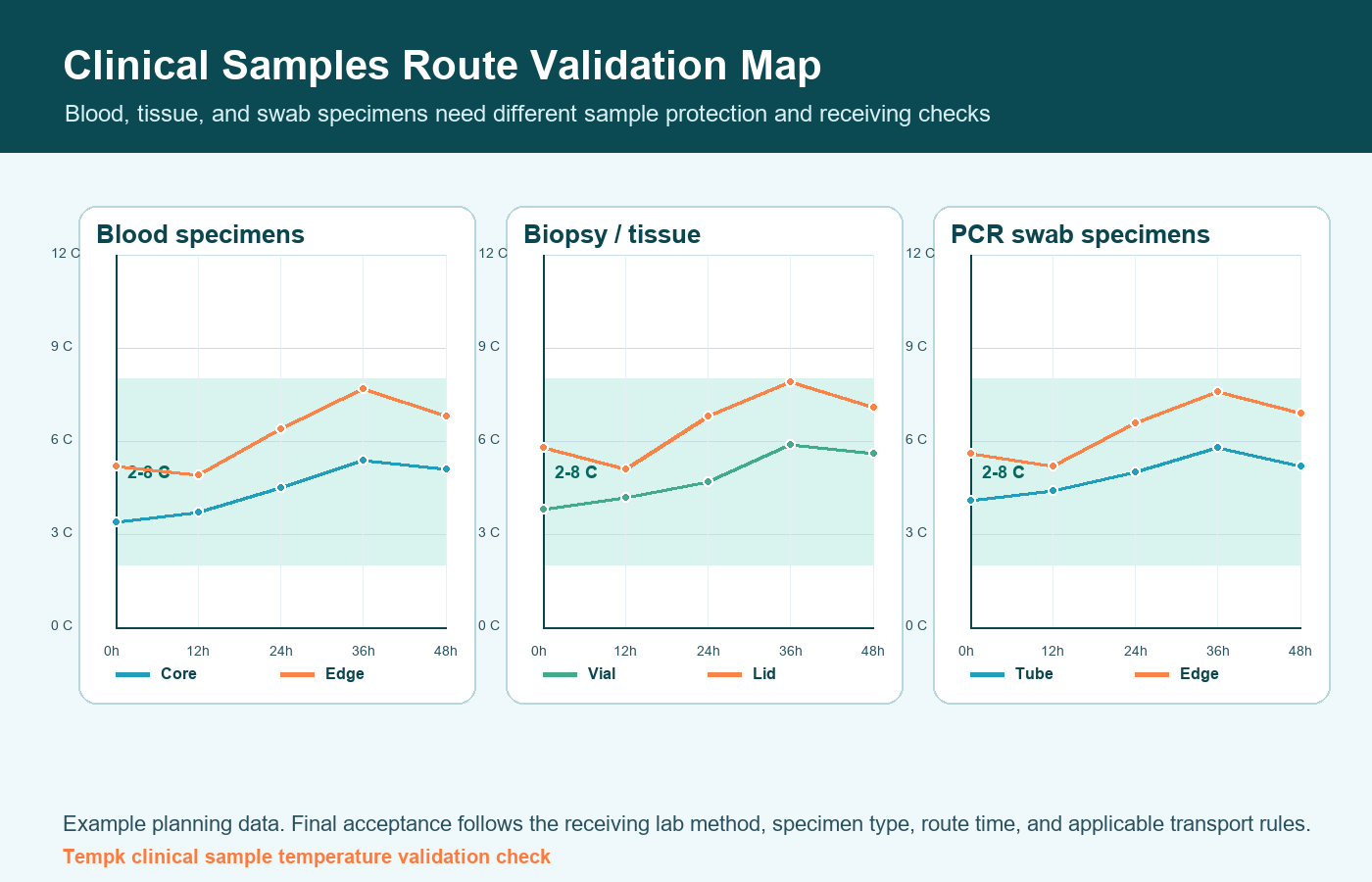
Les itinéraires de diagnostic mixtes et les programmes d'échantillonnage plus petits peuvent utiliser le guide d'échantillonnage clinique plus large tandis que les trois pages ci-dessus couvrent les types d'envois à plus forte valeur..
Notes d'emballage pour le sang, tissu, and écouvillon PCR routes with 2-8 C, congelé, glace carbonique, fuite, et contrôles de transfert.
Utilisez ces pages pour comparer les choix de liquide de refroidissement, risque d'itinéraire, structure d'isolation, cas de logistique médicale à proximité, et questions de configuration d'emballage finale avant échantillonnage.
Échantillons cliniques can be ambient, glacé, congelé, ou surgelé selon le dosage. Le plan d'emballage doit commencer par le type de prélèvement et les critères d'acceptation du laboratoire.
Les échecs incluent l'hémolyse, thawed échantillons, lost chaîne de traçabilité forms, fuite, and prélèvements delivered outside the lab’s receiving window.
Utiliser des contenants primaires étanches, absorbant emballage secondaire, et un expéditeur extérieur rigide. Conserver les formulaires de demande au sec et séparés des conteneurs de prélèvement.
Utilisez du gel réfrigéré, glace carbonique, ou PCM à température ambiante selon le test. Ne choisissez pas le liquide de refroidissement par habitude lorsque les exigences du laboratoire sont différentes.
Confirmer la température, fuite, lisibilité de l'étiquette, et l'heure limite de réception. Un examen des rejets en laboratoire devrait faire partie de la validation de route.
Prise en charge de la configuration d'emballage personnalisée
Pour des tailles de carton fixes, limites de charge utile, exigences en matière de marque, voies saisonnières, ou des cibles de validation, Tempk peut adapter cette solution dans une configuration d'emballage de chaîne du froid personnalisée.
Share the échantillon type, tube ou récipient, température cible, temps de transport maximum, charge utile, durée de l'itinéraire, profil ambiant, étapes de messagerie, classification, and contrôle à la réceptions. Tempk peut aider à comparer l'expéditeur, disposition du liquide de refroidissement, emballage secondaire, absorbant layer, inserts, enregistreur position, et plan de validation.
Demander une révision de configuration d'emballage