


Anticorps monoclonaux
Planifier une route 2-8 °C avec protection contre le gel, maintien des cartons, contact PCM contrôlé et placement des enregistreurs aux points de risque chaud et froid.
Les expéditions de Médicaments biologiques doivent être planifiées en premier à partir du formulaire produit.: anticorps réfrigéré, cryogénique cell therapies, and frozen vecteurs de thérapie génique do not fail in the same way. Tempk aide à cartographier la plage de température, structure de l'expéditeur, choix de liquide de refroidissement ou d'expéditeur sec, poste de surveillance, and contrôle à la réceptions before validation de route.
Un seul colis médical peut être trop chaud pour un produit et trop froid pour un autre.. La première étape utile consiste à séparer la charge utile par risque: freeze-sensitive refrigerated médicaments biologiques, produits à base de cellules vivantes pouvant nécessiter de l'azote liquide en phase vapeur, and vecteurs that often need frozen or congelé à ultra-basse température control.
Planifier une route 2-8 °C avec protection contre le gel, maintien des cartons, contact PCM contrôlé et placement des enregistreurs aux points de risque chaud et froid.
Utiliser la SOP produit pour décider si un dry shipper à azote liquide en phase vapeur est requis, puis protéger la chaîne d'identité, l'orientation et la marge de durée de maintien.
Choisir la glace carbonique ou un dry shipper seulement après clarification de la plage de stockage indiquée. Prévenir décongélation, recongélation, pression sur flacons, dommages par givre et perte de documents.
| Route produit | Objectif de température | Configuration d'emballage | Planification du réfrigérant ou du dry shipper | Contrôle à la réception |
|---|---|---|---|---|
| Anticorps monoclonaux, échantillon ou commercial 2-8 Voie C | Tenez la cuisinière réfrigérée étiquetée et évitez le gel au niveau de la face du liquide de refroidissement. | Expéditeur isolé qualifié, support carton charge utile, diviseur en mousse ou en carton ondulé, contrôle de la condensation, et un activateur à proximité des positions probables chaudes et froides. | Utilisation conditionnée 2-8 C PCM ou accumulateurs de gel réfrigérés derrière une barrière. Pour un petit 3-8 L expéditeur, de nombreux essais commencent 0.8-2.5 kg de liquide de refroidissement, puis ajustez par saison et par voie. | Courbe de température, état du carton, pas de traces de liquide de refroidissement gelé, étiquette readability, et heure de réception. |
| Produits de thérapie cellulaire, cryogénique hospital or manufacturing route | Suivez les SOP du produit. Lorsqu’un contrôle cryogénique est requis, keep the charge utile in a validé azote liquide en phase vapeur dry shipper. | Expéditeur sec préchargé, vérification de l'ajustement de la cassette ou de la cartouche, confinement secondaire, sceau d'inviolabilité, contrôle d'orientation, chaîne d'identité and chaîne de possession paperwork. | Plan by validé hold time, pas la masse de la banquise. Le temps de trajet doit laisser une marge de réserve pour le ramassage, retard de vol, douane, et recevoir la préparation. | État de l'expéditeur sec, dossier de possession, indicateur d'orientation ou de choc, enregistrement du temps de maintien restant, et approbation du destinataire. |
| Vecteurs de thérapie génique, frozen or congelé à ultra-basse température lane | Use the étiquetteed range, often frozen or congelé à ultra-basse température. Avoid décongélation and recongélation during configuration d'emballage or remise. | Expéditeur de glace carbonique ou expéditeur sec selon les besoins, support de support pour flacons, glace carbonique separation, emballage extérieur ventilé, pochette pour documents protégée du gel et de l'humidité. | If glace carbonique is allowed, les petites parcelles commencent souvent les essais autour 3-7 kg pour 0-24 voies h et 8-15 kg pour 24-48 voies h. Utiliser un expéditeur sec validé lorsque le produit nécessite des conditions LN2. | Enregistreur record, remaining glace carbonique or shipper hold margin, aucun mouvement du flacon, pas de documents endommagés par le gel, and immediate congélateur transfer. |
Ces gammes sont des exemples de planification pour la discussion sur l'emballage. Final configuration d'emballage acceptance must follow the product étiquette, sponsoriser la POS, qualification de voie, règles du transporteur, et les exigences réglementaires locales.
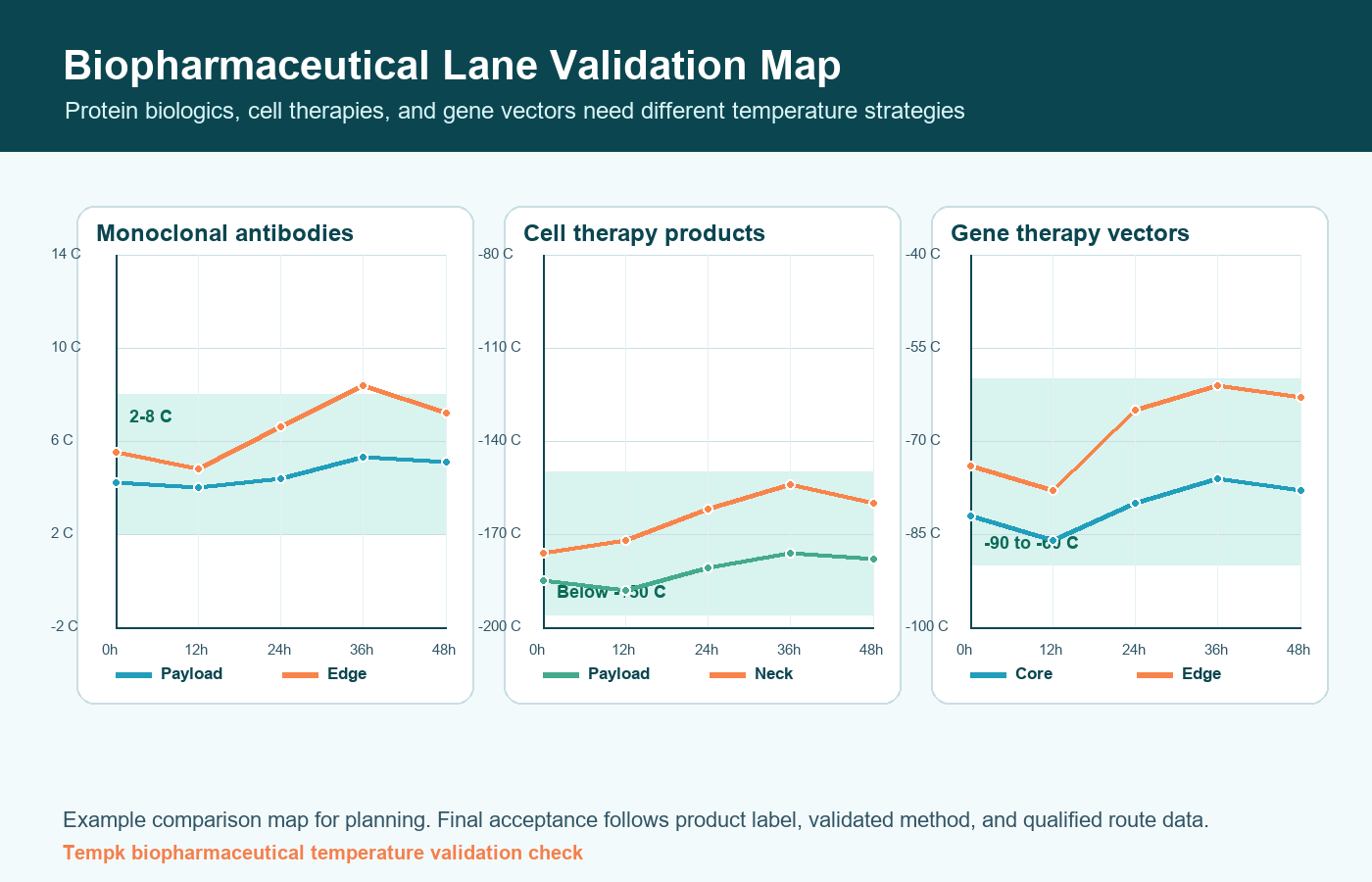
Utilisez la courbe pour comparer les produits réfrigérés, cryogénique, et comportement figé avant de répéter l'itinéraire. Une revue utile combine la courbe d'activation avec la condition de charge utile, délai de prise en charge, étapes de transfert, et recevoir des notes.
Les protéines recombinantes et les thérapies enzymatiques de remplacement nécessitent également une manipulation spécifique au produit., spécialement pour la sensibilité au gel, agrégation control, support de flacon, et des enregistrements.
2-8 Emballage C avec protection antigel, agrégation-aware handling, support de carton, surveillance, et réception des dossiers.
Emballage thérapeutique réfrigéré avec protection du flacon, pas de contact direct avec le liquide de refroidissement gelé, remise contrôlée, et contrôles d'itinéraire.
Utilisez ces pages pour comparer le comportement du liquide de refroidissement, risque d'itinéraire, structure de l'expéditeur, et les cas médicaux de chaîne du froid à proximité avant de demander un échantillon ou un test de voie.
Les expéditions de Médicaments biologiquesceutiques sont très variables. Anticorps monoclonaux may need 2 à 8 Protection C, thérapie cellulaire may require cryogénique control, and vecteurs de thérapie génique may require deep frozen handling.
Les risques les plus graves sont la congélation des médicaments biologiques réfrigérés., glace carbonique depletion on deep frozen lanes, exposition au choc, et dossiers incomplets de la chaîne de possession.
Utiliser une cavité charge utile dimensionnée au flacon, sac, ou une cassette et protégez-la de tout mouvement. La documentation et l'enregistrement de la température doivent être prévus dans le cadre de la configuration d'emballage..
Choisir 2 à 8 CPCM, glace carbonique, or cryogénique equipment according to the product étiquette and validation requirement. Ces systèmes ne doivent pas être échangés par hasard.
Valider la voie, durée, orientation de manipulation, et documentation de remise. Contrôle à la réceptions should include charge utile condition and enregistreur review.
Prise en charge de la configuration d'emballage personnalisée
Pour des tailles de carton fixes, limites de charge utile, exigences en matière de marque, voies saisonnières, ou des cibles de validation, Tempk peut adapter cette solution dans une configuration d'emballage de chaîne du froid personnalisée.
Partager le type de produit, étiquetteed temperature range, taille de charge utile, durée de l'itinéraire, températures des voies, remise limits, exigence de surveillance, et processus de réception. Tempk peut aider à comparer l'expéditeur isolé, PCM, glace carbonique, expéditeur sec, insert de support, et plan de validation.
Demander une révision de configuration d'emballage