


Palettes d'épicerie mixtes réfrigérées
Contrôle 2-8 C des parcours rafraîchis tout en protégeant les flux d'air, compatibilité SKU mixte, condensation, résistance des cartons, et exposition sur quai.
La planification chaîne du froid pour palettes n'est pas un simple colis agrandi. La route doit tenir compte de la masse palette, du flux d'air de l'entrepôt, de l'exposition au quai, de la tension du film étirable, du réchauffement des bords, de la compression des cartons et des positions d'enregistreurs en haut, bord exposé, cœur et couches basses.
Une palette d'épicerie mixte réfrigérée, une palette de viande congelée et une palette de produits de la mer congelés peuvent traverser le même entrepôt, mais les points de défaillance diffèrent. Tempk planifie couverture, doublure, flux d'air, option glace carbonique et cartographie des enregistreurs selon la charge réelle.
Contrôle 2-8 C des parcours rafraîchis tout en protégeant les flux d'air, compatibilité SKU mixte, condensation, résistance des cartons, et exposition sur quai.
Protéger -18 C voies gelées du dégel des bords, compression des cartons, fonte du gel, and transfert porte ouverte risk.
Maintenir le contrôle du gel tout en gérant l’état du glaçage, fuite, produits de la mer odor separation, and bord exposé cartons.
| Palette Itinéraire | Objectif de température | Configuration de protection de charge | Planification réfrigérant ou couverture | Contrôle à la réception |
|---|---|---|---|---|
| Palette d'épicerie mixte réfrigérée, chambre froide to camion frigorifique, 2-12 h | Utilisez les exigences de produit les plus strictes sur la palette; de nombreuses allées d'épiceries mixtes sont prévues aux alentours 2-8 C. | Palette pré-refroidie, filmage tenant compte du flux d'air, empilage à la hauteur d'un carton, couverture thermique ou doublure pour exposition au quai. | Le contrôle principal devrait être la voie réfrigérée. Ajouter des accumulateurs de gel ou PCM uniquement dans un plan de palette isolée validé, souvent 8-25 kg pour les transferts exposés ou les voies tampons passives. | Top/edge/température au cœur, cartons mouillés, cartons souples écrasés, transfert d'odeur, mouvement du film, et retard de réception. |
| Palette de viande congelée, frozen entrepôt to camion frigorifique, 4-24 h | L’objectif commun de planification gelée est d’environ -18 C; protéger les bords exposés et éviter le dégel partiel lors du transfert. | Frozen couverture de palette or liner, cornières, modèle de carton lourd, exposé bord protégé, limite de transfert en cale sèche. | Utiliser le transport actif surgelé comme contrôle principal. La glace carbonique peut être prévue pour des segments de secours ou passifs validés, communément 10-50 kg par palette selon voie, taille de la palette, et règles de manipulation autorisées. | Edge and température au cœur, résistance des cartons, fonte du gel, signes d'égouttement, stabilité de l'enveloppement, et le reste de la glace carbonique si utilisée. |
| Palette de produits de la mer congelés, frozen entrepôt to camion frigorifique or plateforme de transbordement, 4-24 h | Planifier autour du contrôle gelé, souvent à proximité -18 C, en faisant attention au vernis de surface, fuite, et séparation des odeurs. | Couverture ou doublure gelée, séparation fuite/odeur, modèle de carton stable, bord exposé protection, cartographie des enregistreurs haut-bord-cœur. | Use camion frigorifique control first. Glace carbonique or housse de palette congelée can be considered for validated exposed lanes, communément 10-55 kg par palette selon la durée et la masse de la palette. | État de la glaçure, fuite, transfert d'odeur, dégel des bords, mouillage des cartons, cartographie des enregistreurs, et le reste de la glace carbonique si utilisée. |
Ces plages sont des points de départ pour l'échantillonnage et la discussion des itinéraires.. La masse finale du liquide de refroidissement ou de la glace carbonique doit être confirmée par la taille de la palette, masse du produit, règles réglementaires et des transporteurs, durée de l'itinéraire, ventilation, exposition ambiante, et procédure de réception.
Load from stable stockage frigorifique. Une couverture, doublure, ou le plan de liquide de refroidissement devrait maintenir l'itinéraire, ne pas retirer la chaleur d'une palette chaude.
Film étirable, modèle de carton, entrefers, et l'ajustement de la couverture devrait fonctionner ensemble. Le suremballage peut piéger les zones chaudes; un empilement faible peut écraser les cartons inférieurs.
Packs de gel, PCM, or glace carbonique can support some routes palettes, mais ils ne doivent pas remplacer une voie réfrigérée ou congelée requise à moins que la configuration de la palette passive n'ait été validée..
Utiliser les activateurs en haut, bord exposé, cœur, et positions de palette inférieures. One center enregistreur can miss réchauffement des bords or top-layer exposure.
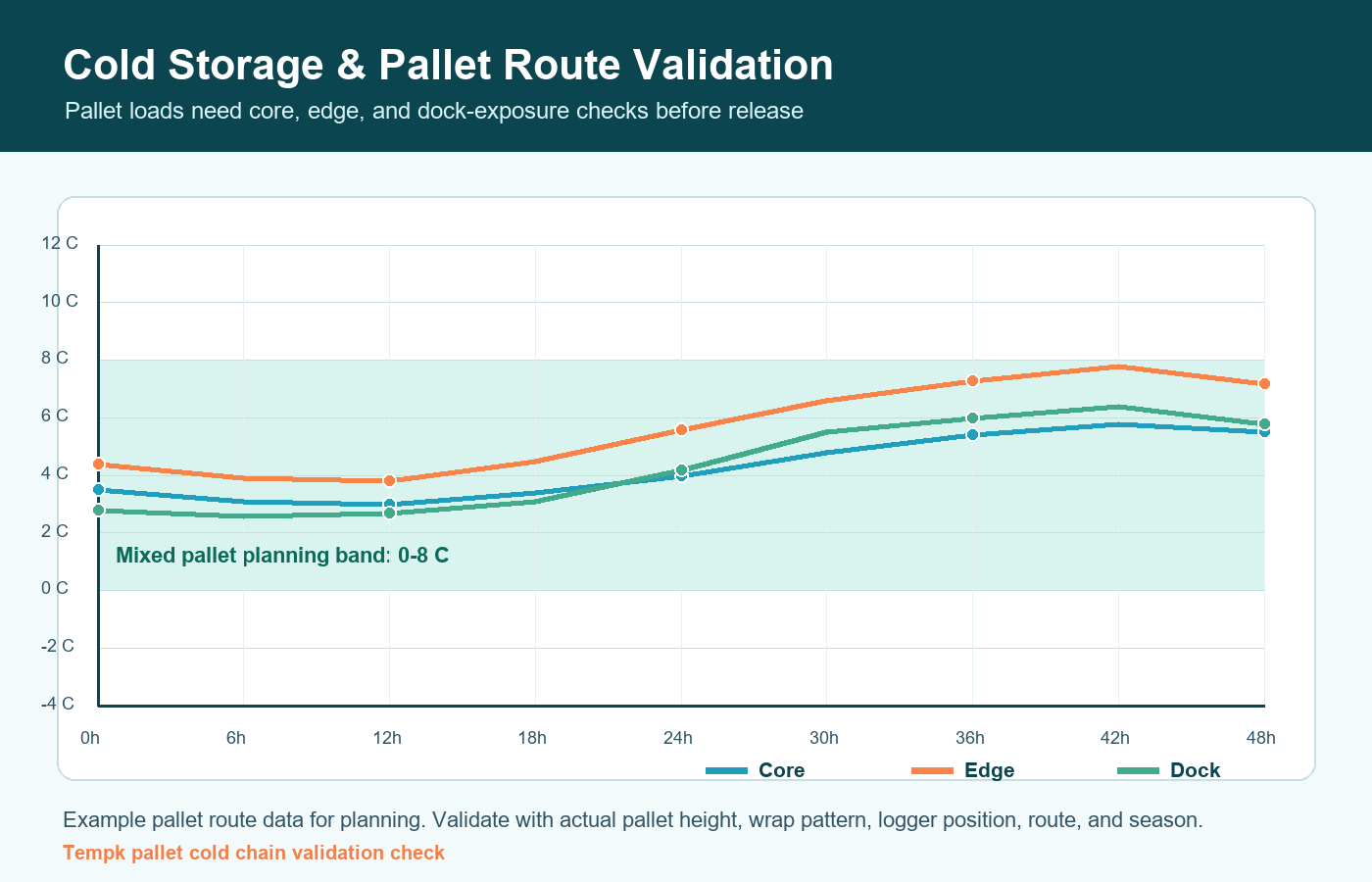
La courbe de palette permet de comparer l'exposition au quai, couverture de palette performance, and enregistreur locations. Lisez-le avec la réception des chèques pour l'état du carton, fuite, gel, odeur, quart de travail, et qualité des bords exposés.
Utilisez ce guide pour une voie de palette réfrigérée connexe où le pré-refroidissement, flux d'air, contrôle d'enroulement, et l'exposition au quai nécessitent des notes de manipulation ciblées.
Guidage de la palette de produits laitiers réfrigérés avec pré-refroidissement, flux d'air, contrôle d'enroulement, exposition au quai, et validation.
Utilisez ces pages pour comparer la masse du liquide de refroidissement, glace carbonique planning, risque d'itinéraire, choix d'isolation, et itinéraires produits à proximité avant validation.
La logistique des palettes échoue lorsqu'une voie est planifiée uniquement en fonction de la température cible. Mixed épicerie, viande surgelée, et les palettes de produits de la mer congelées nécessitent chacune un flux d'air différent, film de palette, et décisions de placement du liquide de refroidissement.
Les réclamations d'Entrepôt incluent les centres de palettes chaudes, cartons écrasés, wet film étirable, gel irrégulier, et dommages au produit près des portes ou des quais.
Construire des palettes avec des cornières, modèles de couches stables, et des chemins de flux d'air dégagés. N'utiliser des couvertures de palettes ou des couvertures isolantes qu'après avoir connu l'itinéraire et l'attente à quai..
Use accumulateurs de gel, glace carbonique, ou PCM uniquement lorsque la palette de routage nécessite un contrôle de température supplémentaire. Le plan de refroidissement ne doit pas bloquer le flux d'air.
Haut de la carte, milieu, bord, et postes clés. Palette validation should include attente au quai, séquence de chargement, et retard de réception.
Prise en charge de la configuration d'emballage personnalisée
Pour des tailles de carton fixes, limites de charge utile, exigences en matière de marque, voies saisonnières, ou des cibles de validation, Tempk peut adapter cette solution dans une configuration d'emballage de chaîne du froid personnalisée.
Partager les dimensions de la palette, masse du produit, modèle de carton, température cible, temps au quai, type de remorque, plateforme de transbordement steps, conditions ambiantes, et recevoir des chèques. Tempk peut vous aider à comparer les couvertures, doublures, accumulateurs de gel, PCM, glace carbonique support, positions des enregistreurs, et étapes de validation.
Demander une revue de route palette