20 Liter Industrial Ice Box Supplier: A Route-Based Framework
A sound decision on 20 liter industrial ice box supplier can be reduced to five linked questions: what must be protected, on which route, with what loaded configuration, under whose operating control, and with what evidence.
The result is an integrated selection framework. It combines product education, engineering judgment, route risk, supplier qualification, total cost, and sustainability so that a buyer can issue a clearer request, run a meaningful trial, and approve a configuration with fewer surprises.
Use five decisions to control the purchase
A complete 20 liter industrial ice box project can be governed through five decisions. First, define the protected product and acceptance condition. Second, characterize the lane and its handovers. Third, design the loaded packout, including coolant, barriers, monitoring, and usable space. Fourth, qualify the supplier and evidence. Fifth, prove that operations can reproduce, clean, return, and maintain the configuration.
The sequence matters. Teams create rework when they choose a box, then attempt to fit the product and route into it. Starting with the product and lane allows several architectures to be compared on equal terms. It also makes cost negotiation more useful, because the quotation describes a defined job rather than a generic container.
The central tradeoff is a compact unit improves mobility and return logistics, but leaves less room for thermal buffers and packing tolerances. The framework does not remove tradeoffs; it makes them explicit. Procurement can decide which consequences are acceptable, engineering can document the technical basis, quality or food safety can set evidence, and operations can test whether the method is repeatable.
Decision 1 and 2: connect product requirements to the lane
Write a one-page use-case brief for small cartons, sample racks, bottles, service parts, ingredients, meals, or compact temperature-sensitive kits. Include the current product instruction, starting condition, quantity, carton or tray dimensions, sensitivity to freezing, overheating, light, contamination, impact, or delay, and the disposition process for an excursion. Avoid importing a common industry range into a product that has different instructions.
Then map vehicle-based field work, inter-building transfers, local delivery, or controlled distribution with frequent manual handling. Record elapsed time, seasonal external conditions, staging, vehicle environment, door opening, stop count, transfer surfaces, custody changes, and receiving storage. Add a normal scenario and a realistic challenge. The challenge may be a warm dock, late receiver, partial load, repeated opening, or outdoor handoff. It should represent a credible operating day, not an artificial worst case with no defined probability or response.
Assign each risk to packaging, procedure, equipment, or escalation. Insulation and coolant can buffer environmental exposure. A route schedule can reduce dwell. A portable active unit may be more appropriate for some high-risk movements. A receiver appointment can remove an uncontrolled handover. This allocation prevents the passive box from being asked to compensate for every process weakness.
Decision 3: approve a loaded configuration, not a nominal box
The loaded design must resolve this capacity issue: a 20 liter designation does not guarantee that the specific rack, bottle height, tray footprint, or coolant arrangement will fit. Create a drawing and physical mock-up showing product orientation, coolant, barriers, monitoring, dividers, tolerances, and closure clearance. Calculate or measure the expected packed weight. Confirm vehicle, shelf, pallet, trolley, and door fit with the handles and lid in their operating positions.
Control local temperatures by defining coolant condition and placement. The design should avoid unintended direct contact, uncontrolled air gaps, and components that can shift. Development work may need several sensors to map the load, but routine monitoring should use a fixed location that represents the required product decision. Partial loads need an approved alternative rather than an improvised version of the full packout.
Construction should support compact shell geometry, corner strength, lid alignment, latch protection, handle attachment, insulation continuity, and stable base design. Review the lid joint, thermal bridges, high-load hardware, cleanability, component replacement, and compatibility with sunlight or chemicals where relevant. Material names are inputs, not conclusions. The approved specification should define the construction in enough detail to preserve function through production.
Decision 4: qualify the supplier and the evidence together
Establish who owns the design and who controls the factory. The commercial party may be a manufacturer, exporter, distributor, or integrator, but the buyer needs a clear route to drawings, material controls, inspection, defects, and change notification. Ask which components are critical and how production units are compared with the approved sample.
The request for quotation should cover true internal dimensions, empty and loaded handling, insulation and shell, handle and latch construction, inserts, coolant compatibility, labeling, carton quantity, and sample testing. Normalize the included bill of materials and delivery terms before comparing prices. Separate hardware, coolant, monitoring, customization, tooling, testing, documentation, packing, freight, and spare parts. This makes cost drivers visible and prevents a low empty-box price from being compared with a process-ready kit.
Request dimensioned samples, load-bearing details, material and insulation description, component consistency, drop and handling information where available, and a controlled packout recommendation. Read test reports for conditions, not headlines. Check payload, starting temperature, coolant, ambient profile, duration, openings, sensor positions, acceptance criteria, and whether the sample represented production. Record the gaps between that evidence and the intended lane so the team can decide what further work is proportionate.
| Approval gate | Minimum output | Reason the gate exists |
|---|---|---|
| Product and lane | Use-case brief with payload, condition, route, exposure, and handovers | Prevents the box from being selected before the job is defined |
| Loaded configuration | Drawing, component list, coolant, barriers, sensor, weight, and fit | Converts nominal capacity into a reproducible packout |
| Supplier and evidence | Controlled specification, samples, reports, and change rules | Connects commercial supply to the approved design |
| Operating readiness | SOP, training, cleaning, receiving, return, and exceptions | Shows that people can repeat and maintain the method |
| Scale and lifecycle | First-lot check, route rollout, cost model, asset tracking, review triggers | Protects performance and value after launch |
The approval gates prevent a project from moving directly from an attractive sample to a bulk order. Each gate creates a tangible output and closes a different risk: unclear use case, nonreproducible packout, uncontrolled supply, weak operations, or an unproven lifecycle model.
Use regulatory and technical guidance without overclaiming
Authoritative guidance helps define control expectations, but it does not turn a generic box into an approved system. Product instructions and applicable local rules remain decisive. A technical file should state why each reference is relevant and where route-specific testing or quality review is still required.
The approval decision should identify the tested operating envelope and the conditions that require escalation. When evidence is incomplete, convert the unknown into a verification question or an operational limit rather than filling the gap with a confident marketing claim.
Decision 5: prove the organization can repeat the method
Run a pilot with the actual packers, drivers, receivers, cleaning staff, and quality or food-safety reviewers. Observe component identification, coolant preparation, loading, monitor placement, closure, staging, lifting, restraint, opening, handover, return, wash, drying, and inspection. Record workarounds; they are evidence that the design or instruction needs correction.
Helpful decision tools
Check the details before you choose packaging
These quick tools can help you compare route risk, sizing needs, coolant choices, and packaging details before you request a quote.
Insulation Material Reference
Compare insulation material choices for different cold chain packaging needs.
Compare materialsRoute Risk Checker
Review lane conditions before selecting packaging for real operating requirements.
Check route riskDry Ice Calculator
Estimate dry ice needs for frozen or ultra-cold shipments before packing.
Estimate dry iceThe return process must implement this hygiene requirement: portable boxes are often set on floors, vehicles, benches, and outdoor surfaces, making a clear exterior and interior cleaning process important. Separate dirty, clean, repair, quarantine, and retired status. Define objective release criteria and control removable parts. Measure cleaning turnaround and storage space so fleet quantity reflects assets that are genuinely available, not only boxes purchased.
Prepare exception paths before launch. Staff need to know what to do when a coolant component is missing, the monitor fails, a lid will not close, a box is damaged, a vehicle is delayed, the receiver is absent, or the product trace shows an excursion. A short escalation path protects the approved process under time pressure.
Judge cost and sustainability across the same operating cycle
Build total cost from the approved configuration: hardware, tooling, samples, coolant, monitoring, labels, packing, freight, duties, labor, vehicle cube, return, washing, drying, storage, repair, loss, replacement, and evidence maintenance. Report cost per successful trip by route cohort. This avoids both a narrow unit-price decision and an unsupported claim that reuse always saves money.
The sustainability question is small reusable boxes can be efficient on dense local routes because they are easier to recover and store, although loss rates and cleaning discipline still determine performance. Track circulation, return distance, loss, repair, wash resources, utilization, and end-of-life handling. A reusable system creates value when the network can keep it in controlled service. Right-sizing, repairable components, and efficient return stacking can matter as much as the base material.
Commercial approval can include a sensitivity review. Examine how the result changes when return falls, damage rises, demand shifts, or a route needs a different size. This does not require invented market data. It uses the organization's own operating assumptions to identify where the proposal is robust and where a different packaging model should be retained.
Scale through controlled gates and change triggers
Gate 1 approves the use-case brief and loaded drawing. Gate 2 approves production-intent samples and supplier documents. Gate 3 approves relevant thermal, mechanical, cleaning, and route evidence. Gate 4 approves the SOP, training, exception process, and return loop. Gate 5 releases production after first-lot verification. Each gate has an owner and recorded acceptance criteria.
Expand by similar route cohorts. Start with a representative lane and a credible challenge, correct problems, then add sites that share payload and exposure. Do not assume one successful pilot covers a different vehicle, climate, stop pattern, product, or wash process. Use a documented comparison to decide whether the existing evidence can be extended.
Maintain a change register after launch. Product cartons, coolant, payload mass, sensor, route time, cleaning chemistry, supplier material, seal, hardware, or factory changes can affect the baseline. Assign review levels so minor administrative updates do not trigger unnecessary work while functional changes receive appropriate comparison or requalification.
Keep the main non-assumptions visible
Do not assume that nominal capacity equals payload capacity, that insulation creates the required product temperature, that a logger provides protection, or that a test under different conditions proves the lane. Do not assume that durability equals food or pharmaceutical suitability, or that one program's approval transfers to another. The specific risk here is choosing a small box for convenience and then overpacking it until airflow, coolant spacing, or closure is compromised.
Turn each non-assumption into a control. Use a loaded drawing for capacity, a defined coolant plan for thermal control, a fixed sensor position for evidence, a route comparison for transferability, a cleaning and segregation process for hygiene, and a controlled specification for production consistency. This makes the article's principles actionable in an RFQ and pilot.
Finally, preserve uncertainty honestly. When a parameter is not supported by product instructions, a reliable technical source, supplier documentation, or testing, ask the supplier to confirm it or plan a verification. Removing an unsupported number is better engineering and better procurement than presenting precision that the evidence cannot carry.
Integrated Procurement Questions
What information should be sent to a supplier first?
Send the product type and required condition, carton or payload dimensions, quantity, route duration, seasonal exposure, stop and opening pattern, vehicle or shelf constraints, coolant preference, monitoring need, cleaning method, reuse plan, customization, and order volume. Mark any unknowns so they become project questions rather than assumptions.
How do I know whether the proposed box is too large or too small?
Build the complete packout and compare usable payload count, loaded weight, outside cube, vehicle fit, partial-load behavior, and handling. A large box may waste coolant and space; a small one may force compression or extra trips. Use real order profiles and approve load bands.
What evidence is most important before production?
The evidence should match the dominant risks. At minimum, control dimensions, materials, components, loaded fit, handling, cleaning, and relevant thermal assumptions. Higher-risk healthcare or food routes may also need qualification, calibrated monitoring, route studies, formal records, and quality or food-safety approval.
How should cost quotations be compared?
Compare the same bill of materials, dimensions, accessories, coolant, monitoring, customization, testing, packing, order quantity, delivery terms, freight assumptions, spare parts, and change-control scope. Then model labor, return, cleaning, loss, repair, and successful trips. An empty-shell unit price is not a complete comparison.
What should trigger requalification or reassessment?
Changes to product instructions, payload, carton, coolant, sensor, route, ambient exposure, stop pattern, cleaning, material, seal, hardware, process, or factory can matter. Set risk-based triggers for document review, sample comparison, targeted testing, route work, or full requalification.
Final Decision
Treat 20 liter industrial ice box supplier as a controlled system decision. Define the product and lane, approve the loaded packout, qualify supplier controls and evidence, prove the operating process, and model cost and reuse across successful trips. Scale only after production-intent samples and route cohorts are reviewed. This approach preserves the useful information from product education, engineering, compliance, operations, and sustainability without relying on universal claims.
About Tempk
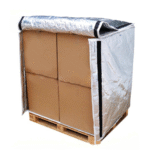
Tempk is the cold-chain packaging brand of Shanghai Tempk Industrial Co., Ltd. Its public portfolio includes gel packs, ice bricks, insulated bags and liners, EPP and other insulated boxes, medical ice boxes, pallet covers, and custom packaging for food and healthcare logistics. Buyers can provide product geometry, target condition, route, coolant, monitoring, handling, cleaning, identification, and commercial requirements so Tempk can propose a configuration for sample review, testing, and sample-to-production discussion.
Project Next Step
Ask Tempk to review your 20 liter industrial ice boxes project using the actual payload, route, packout, operating controls, and sourcing assumptions before a bulk quotation is finalized.