Hospital Gel Cold Therapy Packs: A Practical Framework for Better Buying and Better Use
A hospital gel cold therapy pack should be chosen for patient safety, comfort, cleanability, and procurement consistency—not for shipping performance. The right manufacturer is the one that can deliver reliable pack construction, appropriate size options, clear instructions for use, and practical support for clinical workflows such as storage, cleaning, and case replenishment.
In clinical procurement, the discussion is broader than temperature alone. Teams have to think about skin protection, cleanability, freezer staging, case-pack efficiency, and whether one platform can serve several departments without creating confusion. That makes manufacturer consistency and instructions for use more important than a low price on a box of packs.
A strong decision starts with context. You need to know who will use the pack, how long it needs to stay pliable and comfortable, whether it is reused or assigned to one patient, and how staff will store, clean, and rotate stock. Once those basics are clear, supplier comparison becomes much more straightforward.
What gel cold therapy packs for hospitals really is
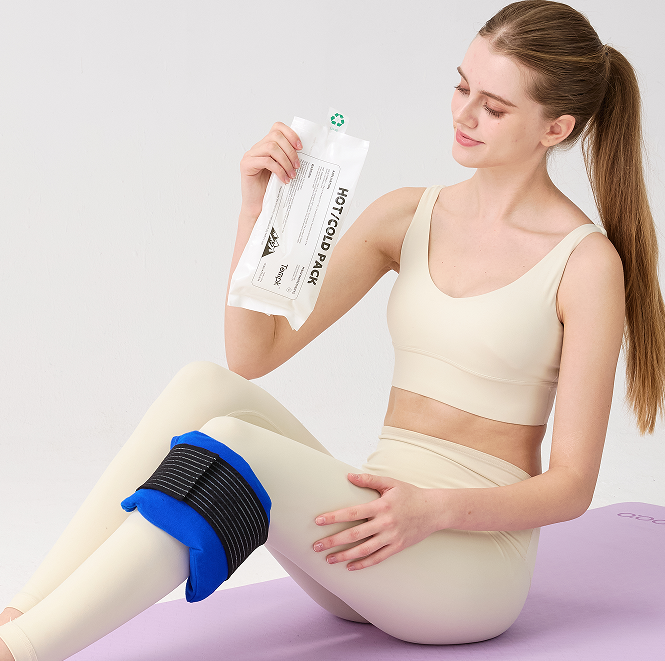
A reusable or single-patient gel cold therapy pack used for localized therapeutic cooling in hospitals and clinics. Buyers may see related terms such as gel cold therapy pack, cold therapy compress, and hospital gel pack. In clinical use, the pack is chilled or frozen in advance and then applied with an appropriate cover or barrier for short, controlled treatment periods. Some products are cold-only. Others are dual-use packs that can also be warmed for heat therapy.
That distinction matters because a therapy pack is not simply a colder version of a shipping gel pack. The clinical product has to feel acceptable against the body, remain flexible enough to contour to joints or muscle groups, and come with instructions staff can follow consistently. Surface material, seal design, size, and cover options all influence whether the pack is truly usable in a hospital setting.
Hospitals also evaluate the pack in workflow terms. Is it easy to stage in a freezer? Does it fit standard carts or bins? Can departments share one size, or do they need several shapes? Those questions are part of the product definition, not secondary details.
How this format actually works
For clinical cold therapy, the pack works by drawing heat away from the body for a limited period. The therapeutic goal is not to mimic a shipping freezer. It is to provide localized cooling that can help with swelling, discomfort, and post-procedure recovery while remaining tolerable to the patient when used with an appropriate barrier and timing routine.
Construction influences that experience. A pack that stays pliable after freezing conforms better to knees, shoulders, backs, and other contours. A pack with a stiff seam or brittle outer film may feel awkward and create pressure points. Cover material, thickness, and gel distribution all affect how evenly the cold is delivered.
Dual-use packs add another layer because they must behave acceptably in both freezer and warming use. That can be helpful for hospitals trying to rationalize SKUs, but it also means buyers should review the instructions for use carefully rather than assuming every hot/cold product performs equally well in both modes.
Where this format fits best
Hospital demand is usually strongest in settings where staff need a simple, freezer-ready pack that can be used without a powered machine. Common use cases include post-surgical care, orthopedic recovery, emergency swelling control, rehabilitation, sports medicine, and discharge support. In all of those settings, the pack has to be easy to locate, easy to apply, and easy to understand.
Not every department wants the same product. A physical therapy clinic may want a larger, highly pliable reusable pack for repeated supervised use. A ward may prefer a simpler format that is easy to clean or assign to a patient. Some programs prioritize dual hot/cold versatility, while others standardize around cold-only applications because they want fewer variables.
The best fit therefore depends on workflow and patient population, not only on freezing capability. A hospital should choose the pack that staff can use consistently and safely, with minimal confusion and minimal avoidable waste.
Main advantages and trade-offs
Clinical products are easiest to buy when the trade-offs are stated plainly. A pack can be very cold but too stiff. It can be very durable but awkward on curved anatomy. It can be inexpensive but frustrating if departments need multiple overlays, covers, or replacement cycles. Looking at both strengths and limits helps hospitals avoid false savings.
- Benefit: Gel packs stay more pliable than plain ice and conform better to knees, shoulders, backs, or incision sites.
- Benefit: Many hospital-grade packs can be used for cold therapy and, in some cases, heated for warm therapy.
- Benefit: Sealed packs reduce dripping compared with improvised ice bags.
- Benefit: Standardized therapy packs support nursing, rehab, sports medicine, and discharge use.
- Limit: A shipping refrigerant pack is not automatically suitable for direct patient-contact therapy.
- Limit: Clinical use still requires barrier protection, timing discipline, and patient-specific judgment.
- Limit: Some reusable packs may not fit infection-control preferences for every department.
- Limit: Oversized packs can be uncomfortable, while underfilled packs may fail to contour properly.
The right therapy pack is the one whose advantages matter in your actual department workflow and whose limitations are manageable within your clinical routines.
How to choose the right size, format, and pack strategy
The selection process should begin with the route and the payload, not with a stock catalog. Start by defining the target temperature band, the longest realistic time out of controlled storage, the product loading temperature, and the actual inside dimensions of the insulated shipper. Without those basics, even a technically good pack can become the wrong choice.
From there, buyers usually compare pliability after freezing, outer film or textile comfort and cleanability, single-patient versus reusable workflow, size range for different body areas, and clear instructions for freezer, microwave, and skin barrier use where applicable. It also helps to look at the broader packing system: how much freezer space is needed for preconditioning, whether the pack can be counted and placed consistently, how much box cube it consumes, and whether the resulting parcel weight still makes commercial sense.
In hospital procurement, selection should also reflect department workflow. A rehab unit, an orthopedic ward, and a discharge kit do not necessarily want the same size, surface, or reuse model. SKU rationalization is valuable, but only if it does not undermine clinical usability.
Why sourcing decisions are changing
Hospitals are under pressure to simplify supplies without frustrating clinicians. That is pushing buyers toward packs that are easier to standardize by department, easier to store in common freezers, and less prone to seam failure or comfort complaints. Reuse still matters, but only when the workflow for assignment, cleaning, and replacement is clear.
There is also more scrutiny on total program cost. A cheap pack that tears, stiffens, or performs poorly in daily use creates hidden waste through replacements, stock-outs, and staff workarounds. By contrast, a well-chosen therapy pack can reduce SKU clutter and support more consistent patient care.
Helpful decision tools
Check the details before you choose packaging
These quick tools can help you compare route risk, sizing needs, coolant choices, and packaging details before you request a quote.
Dry Ice Calculator
Estimate dry ice needs for frozen or ultra-cold shipments before packing.
Estimate dry iceBox Liner & Pallet Cover Sizing
Check box liner and pallet cover sizing logic for insulated packaging projects.
Estimate sizingPackaging Selector
Compare insulated packaging options by product, route, and temperature need.
Find packagingIn this setting, sustainability is tied closely to service life and operational fit. durable reusable packs may reduce waste where cleaning and reuse are acceptable, a rationalized size range can cut expired or unused stock, and the most sustainable therapy pack is one that survives clinical handling without frequent replacement. Procurement teams increasingly recognize that durability and correct clinical use are part of the sustainability equation.
Why handling rules matter as much as the pack itself
A clinically useful therapy pack is not just well made; it is easy to manage. Hospitals need freezer staging rules, stock rotation, and clear signals showing which packs are ready for use. If packs are buried in overcrowded freezers or mixed with nonclinical items, staff waste time and consistency suffers.
Use rules matter too. Barrier cloths or sleeves, application timing, and patient checks should be part of the product discussion because they shape how safe and acceptable the pack is at the bedside. A manufacturer that provides clear instructions helps reduce the temptation for every unit or department to invent its own method.
For reusable formats, the handoff after use is equally important. Buyers should ask how packs are wiped down, reassigned, or retired when seams fail. Good procurement anticipates the daily handling cycle instead of focusing only on the first use.
Testing, documentation, and the limits of generic performance claims
For hospital therapy packs, the main boundary is intended use. Clinical buyers should not treat parcel-style thermal language as evidence of bedside suitability. The useful questions are whether the pack is designed for direct therapy use, what the instructions say about barriers and application time, how the product is cleaned or assigned, and whether the manufacturer is clear about reuse expectations.
Documentation still matters, but it is different from parcel qualification. Buyers may review labeling, material information, latex status, cleaning guidance, case configuration, and instructions for freezer or microwave use where relevant. Those details help risk, nursing, rehab, and purchasing teams align on how the product should actually be used.
In short, a hospital should evaluate the therapy pack against patient-contact workflow and internal protocol, not against shipping standards. The right supplier is the one whose product information reduces ambiguity for staff.
How to screen suppliers before bulk approval
For hospitals, supplier review should connect procurement with clinical reality. A sample pack may look acceptable in purchasing, but staff will judge it by pliability, comfort, instructions, case format, and whether it fits actual treatment routines. That is why a supplier interview should go beyond catalog dimensions.
- Ask whether the pack is intended for clinical therapy use rather than parcel shipping.
- Review material details, latex status, non-toxic gel information, and cleaning guidance.
- Check if covers, sleeves, or skin-barrier accessories are included or sold separately.
- Confirm size assortment, case counts, and whether one platform can serve several departments.
- Ask how the pack performs after repeated freeze-thaw cycles and whether seams remain flexible.
- Review instructions for use so nursing staff are not forced to invent their own handling routine.
- Finally, check suitability for the real department workflow, patient population, and handling routine.
The strongest hospital supplier is usually the one that makes product use clearer for staff and reduces replacement headaches for procurement.
Where otherwise good programs go wrong
Most failures are not dramatic material defects. They are ordinary process errors that compound over time. The useful thing about them is that they are usually fixable once they are named clearly.
- applying a pack directly to skin for too long
- mixing single-patient and shared-use workflows without clear rules
- buying shipping packs for bedside therapy because they seem similar
- choosing a pack shape that does not match the treated body area
- approving a bulk order after a sample test that did not reflect the real shipment
- focusing on unit cost while ignoring box weight, freezer cube, or labor impact
- assuming a nominal coolant weight says enough about route performance
- re-using packs without inspection in a workflow that actually needs screening
- changing carton geometry or payload arrangement without rechecking the thermal design
- treating sustainability as a separate topic instead of tying it to spoilage, freight weight, and recovery logistics
- evaluating suppliers on quote speed alone rather than supply continuity and quality communication
- approving a bulk purchase after only a brief freezer-room look instead of real user feedback
- choosing on case price while ignoring replacement rate and department fit
If a team can eliminate even two or three of these errors, it usually improves results faster than switching to a more expensive product.
FAQ
Can a hospital buy standard shipping gel packs for therapy use?
That is usually a poor idea. Therapy packs need patient-contact suitability, clear use instructions, and clinical workflow fit.
What matters most to nursing teams?
Pliability, surface comfort, size fit, and easy cleaning or clear single-patient handling rules.
Do hospitals prefer hot/cold packs or cold-only packs?
It depends on the department. Many buyers like dual-use versatility, while others standardize around cold-only applications.
What the best decision usually looks like
The best decision usually comes down to clinical fit. Gel cold therapy packs for hospitals makes sense when its comfort, pliability, instructions, and supply consistency match the real workflow of the hospital departments using it. It becomes a poor choice when teams buy it as a generic frozen pack and hope staff will work around the gaps.
Tempk at a Glance
We manufacture gel packs and related temperature-control products, including hot and cold therapy packs as well as cold-chain ice packs, ice bricks, and insulated packaging. For hospital-oriented therapy projects, we can discuss pack construction, size options, and whether a reusable hot/cold format makes more sense than a shipping-style coolant pack.
Next step
If you are sourcing therapy packs for a hospital, compare clinical use instructions, cleanability, and size assortment before you compare price per unit.