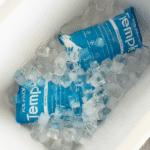
If you are searching for refrigerated bag insulated liner, you are really choosing a small thermal system, not just a bag. The right refrigerated bag insulated liner protects temperature-sensitive goods, supports the user at the point of handling, and keeps your cost per successful delivery under control. A weak design can look fine in a sample photo but fail once route time, repeated opening, sunlight, or coolant placement enters the picture.
This article looks at refrigerated bag insulated liner through a fused decision-making lens that combines technical, commercial, and market insight. You will see how insulation, closure design, payload volume, food-contact or pharma expectations, print or branding needs, and supplier discipline work together in 2026. This matters most for buyers who need adding thermal protection inside outer shippers without avoidable waste, delays, or temperature excursions.
What This Article Will Answer
• How refrigerated bag insulated liner should be sized, insulated, and packed for real operating conditions
• Which long-tail buying signals matter most: cold chain bag supplier and temperature-controlled bag
• How to compare cost, durability, compliance, and supplier reliability before scale-up
• What 2026 trends mean for reusable design, documentation, and sustainable packaging
Why Does Refrigerated Bag Insulated Liner Matter in Daily Operations?
Refrigerated Bag Insulated Liner matters because temperature protection is only valuable when people can use it correctly every day. In the field, a refrigerated bag insulated liner is opened, closed, carried, stacked, and sometimes left on a dock or in a van. That means the right choice is not simply the thickest wall or the lowest unit price. It is the format that fits the route profile, handling pattern, and refill rhythm without slowing the user down.
Think about refrigerated bag insulated liner the way you would think about footwear for a long walk. A technically strong option that is awkward to carry or slow to pack will underperform in real life. Buyers should start with the lane: target hold time, opening frequency, ambient temperature swing, payload fragility, and the kind of coolant available at the shipping point. Once those variables are clear, the right structure becomes much easier to specify.
What Operating Conditions Should Define Refrigerated Bag Insulated Liner?
Start with a simple operating brief. Record the product range you must protect, the acceptable temperature window, the maximum time outside cold storage, and the number of handoffs. Then decide whether refrigerated bag insulated liner needs to survive a short retail trip, a same-day last-mile route, or a multi-stop healthcare round. This step prevents a common mistake: buying a bag by appearance instead of by thermal scenario.
Refrigerated Bag Insulated Liner Operating Fit
| Scenario | Typical Setup | Main Trade-Off | What It Means for You |
| Short urban trip | Light insulation and simple closure | Lower hold time | Good when speed and low cost matter more than long protection |
| Half-day route | Mid-weight insulation with controlled coolant layout | Slightly higher pack-out time | Balanced choice for most commercial cold chain tasks |
| Long or variable route | Higher insulation, tighter seal, validated coolant plan | Higher unit and freight cost | Best when payload loss is more expensive than packaging |
Practical Tips and Suggestions
• Define the real route before requesting samples of refrigerated bag insulated liner. A two-hour use case and an eight-hour use case are different products.
• Use a written pack-out instruction so every operator loads refrigerated bag insulated liner in the same way.
• Test the bag after repeated opening and re-closing, not just in a sealed laboratory condition.
Case example: A regional distributor replaced a visually attractive but thin refrigerated bag insulated liner with a slightly heavier design and a clearer coolant layout. The result was fewer customer complaints, a more stable receiving temperature, and less repacking time at the depot.
How Should You Compare Refrigerated Bag Insulated Liner Designs?
The best refrigerated bag insulated liner is the one that matches the lane, coolant, and handling method as a system. Buyers often compare thickness alone, but thickness is only one part of performance. Closure leakage, seam strength, shape retention, internal fit around the payload, and moisture behavior matter just as much. Two bags with similar wall construction can perform very differently if one leaves air gaps or loses shape after loading.
For this reason, you should compare refrigerated bag insulated liner in three layers. First, compare thermal design: insulation type, coolant compatibility, and whether the bag maintains contact around the payload. Second, compare operational design: handles, zipper or flap, pocket layout, and pack-out speed. Third, compare commercial design: MOQ, customization, carton efficiency, lead time, and defect-response process.
Which Material Choices Improve Refrigerated Bag Insulated Liner Performance?
Material selection changes both thermal behavior and commercial value. Foil layers can reflect radiant heat, foams reduce conductive heat transfer, and tougher outer shells improve reusability. But performance is never only about the bill of materials. Stitch density, sealing consistency, lining attachment, and zipper quality often decide whether a bag remains dependable after repeated use.
Refrigerated Bag Insulated Liner Material Comparison
| Construction Option | Relative Cost | Operational Character | What It Means for You |
| Foil-bubble liner | Low | Thin and light | Works for short transit or as a secondary thermal layer |
| EPE or foam liner bag | Mid | Better insulation volume | A common balance of protection and cost |
| Custom multi-layer liner | Mid to high | Can be route-specific | Best when you need tighter control inside an outer shipper |
Practical Tips and Suggestions
• Ask the supplier to explain why a given refrigerated bag insulated liner structure fits your route instead of accepting a generic thickness claim.
• Use the same payload shape and coolant mass in all sample comparisons so the refrigerated bag insulated liner test is fair.
• Check zipper feel, seam neatness, and internal wipeability during sampling because these details drive field acceptance.
Case example: One buyer reduced replacement rate by changing from a loose, over-sized bag to a better-fitted design with stronger seams. The insulation material barely changed, but user handling improved and the payload stayed more stable.
How Should You Use Refrigerated Bag Insulated Liner Inside a Larger Shipper?
A refrigerated bag insulated liner works best when it is treated as one layer in a full thermal build, not as a magic fix. It adds protection inside an outer container, but performance depends on how closely it fits the payload, where the coolant sits, and how much empty space remains.
A loose liner can create warm air pockets, while an overly tight liner can slow packing and damage the payload. The best liner balances fit, pack-out speed, and moisture management. It should also be simple enough that warehouse teams can load it the same way every time without hesitation.
When comparing liner options, test them inside the actual carton, tote, or outer shipper you plan to use. The same liner can behave very differently depending on outer-wall support, lid fit, and whether the coolant is placed above, beside, or below the product.
How Do You Build the Best 2026 Strategy for Refrigerated Bag Insulated Liner?
The strongest strategy for refrigerated bag insulated liner combines buyer discipline, technical verification, and market awareness. You need a bag that works in the lane, a supplier that can reproduce it consistently, and a documentation set that reduces friction during customer review. When any one of these pieces is missing, scale becomes risky even if the sample looks promising.
The best teams blend commercial and technical thinking from day one. They define the operating target, compare material structures, request route-relevant tests, review compliance or food-contact needs, and then negotiate price. That sequence matters. It stops procurement from locking in a cheap but unsuitable design and stops engineering from specifying a premium build that the market will never pay for.
What Should a High-Quality Refrigerated Bag Insulated Liner Decision Package Include?
A solid decision package includes sample observations, route assumptions, coolant layout, qualification notes, approved artwork or labeling, change-control expectations, carton plan, and commercial terms. When this information is documented early, supplier conversations become faster and scaling becomes safer.
Refrigerated Bag Insulated Liner Decision Criteria
| Criterion | What to Check | Common Weak Point | What It Means for You |
| Thermal fit | Lane time, ambient profile, coolant match | Claims based on unrealistic lab setup | You avoid buying more insulation than needed or less than required |
| Build quality | Seams, closure, handle strength, shape retention | Sample quality not matching mass production | You reduce failure after repeated loading and carrying |
| Commercial readiness | MOQ, lead time, artwork or spec control | Unclear revision control | You protect launches, replenishment, and margin |
Practical Tips and Suggestions
• Ask for a written manufacturing and inspection flow before approving refrigerated bag insulated liner for scale.
• Use a pilot run to compare real handling behavior, not just thermal claims on paper.
• Document change approval so future versions of refrigerated bag insulated liner do not drift from the tested design.
Case example: A buyer that documented route assumptions, cooler mass, and acceptance temperature before negotiation reached scale faster than a buyer who started with price only. The spec was clearer, sample feedback was cleaner, and factory communication improved immediately.
What Safety and Documentation Questions Matter for Refrigerated Bag Insulated Liner?
Even outside pharma, refrigerated bag insulated liner should be documented well enough for your real risk level. The FDA and European Commission both make clear that food-contact packaging and cold holding conditions must support safety. If the bag touches food or repeatedly carries chilled meals, ask about suitable food-contact materials, cleaning method, and the temperature range the system is expected to support.
For many chilled food operations, 5°C or 41°F is a familiar control point. That does not mean every bag must independently hold product at that temperature for hours with no coolant. It means your full system needs to be designed and used in a way that supports the required product condition at handoff.
A credible supplier should therefore discuss use conditions, contact surfaces, route assumptions, and realistic limitations. Clear documentation protects both sides: you get a bag that fits the job, and the supplier avoids overpromising performance that the operating setup cannot reproduce.
Refrigerated Bag Insulated Liner Compliance and Documentation
| Area | Good Practice | Weak Practice | What It Means for You |
| Intended use | Route, payload, and contact conditions written clearly | Generic product description only | You receive bids that are easier to compare |
| Traceability | Version control for materials and dimensions | Unannounced design drift | You protect repeat performance after first approval |
| Records | Test notes, declarations, and user instructions available | Only marketing claims | You reduce audit and customer-review friction |
Practical Tips and Suggestions
• Match the documentation level for refrigerated bag insulated liner to the sensitivity of the payload and the seriousness of failure.
• Do not ask a supplier to guarantee impossible hold time without defined coolant mass and ambient conditions.
• Keep all approved drawings, dimensions, and test assumptions in one controlled file before you reorder.
Case example: A team that stored spec sheets, sample photos, pack-out instructions, and approval notes in one file shortened reorders and reduced argument with suppliers when a later batch looked different.
2026 Trends Shaping Refrigerated Bag Insulated Liner
In 2026, the direction of travel for refrigerated bag insulated liner is clear: buyers want better documentation, smarter thermal design, and lower packaging waste at the same time. Google’s current public search guidance also rewards pages that explain products clearly for people first, so better product education is becoming part of commercial performance, not just marketing polish.
On the packaging side, the EU Packaging and Packaging Waste Regulation entered into force in February 2025 and generally applies from August 2026. That does not automatically change every bag overnight, but it does push European buyers and suppliers toward clearer materials thinking, recyclability planning, and more accountable packaging choices.
For general food, retail, and parcel uses, the strongest shift is from generic bags to application-specific systems. Buyers increasingly ask whether a bag is meant for short urban routes, frozen parcel use, premium customer-facing delivery, or reusable commercial loops. This specialization is good news because it makes product selection more accurate and reduces expensive overdesign.
Latest Developments at a Glance
• Reusable and semi-reusable formats are receiving more interest where reverse logistics is realistic.
• Better product pages now explain route fit, coolant logic, and cleaning method instead of listing thickness only.
• Buyers are asking for pack-out instructions, version control, and test context more often than they did a few years ago.
Market insight for refrigerated bag insulated liner: the winning offer in 2026 is usually the one that makes decision-making easier. If a supplier helps you translate route conditions into a clear bag specification, shows realistic limitations, and supports future reorders with stable documentation, that supplier is creating value beyond the bag itself.
How Can You Lower Risk Before Scaling Refrigerated Bag Insulated Liner?
The safest way to scale refrigerated bag insulated liner is to move from idea, to sample, to pilot, to controlled production. Start by writing a one-page brief that describes the payload, route, ambient condition, target hold time, and key user actions. Then sample against that brief, not against an open-ended idea of a thermal bag.
Next, run a pilot under realistic handling. Use the same coolant mass, payload shape, and opening pattern you expect in live use. Record what goes wrong: overfilling, zipper stress, condensation, poor print durability, awkward carrying angle, or long loading time. These small operational failures are usually what decide whether a bag succeeds at scale.
Finally, lock the approved version. Store final dimensions, materials, photos, and test assumptions. If the supplier changes any of those items later, treat the change as a new approval event. That habit is one of the simplest ways to protect future orders of refrigerated bag insulated liner without adding heavy bureaucracy.
Quick Buyer Checklist
1. Write a route-based specification before buying refrigerated bag insulated liner.
2. Compare at least two construction options using the same payload and coolant.
3. Run a field pilot and document user feedback, not only temperature points.
4. Freeze the approved version with photos, dimensions, and material notes.
5. Review packaging cube, replenishment lead time, and reorder process before launch.
Frequently Asked Questions
What is the main difference between a cheap bag and a well-designed refrigerated bag insulated liner?
A better refrigerated bag insulated liner is designed around a real route and user behavior. It usually has clearer fit, stronger seams, a more reliable closure, and documentation that explains how to pack and use it properly.
How should I test refrigerated bag insulated liner before placing a large order?
Test it with your real payload, real coolant mass, and a realistic opening pattern. A short field pilot usually tells you more than an idealized bench test.
Is reusable refrigerated bag insulated liner always better than disposable packaging?
Not always. Reusable designs work best when you have repeat use or reverse logistics. If you do not have a return path, a lighter single-use or limited-reuse design may be the better business choice.
What documents should a supplier provide for refrigerated bag insulated liner?
At minimum, ask for dimensions, material description, inspection approach, and any relevant food-contact or route-test support. Sensitive applications may require stronger change control and qualification records.
How many samples of refrigerated bag insulated liner should I evaluate?
Evaluate enough samples to compare construction options and observe consistency. For most B2B buyers, two or three distinct structures plus a pilot lot is far more useful than many nearly identical samples.
When should I change the design of refrigerated bag insulated liner?
Change the design when the lane, payload, ambient exposure, or user behavior changes in a meaningful way. A bag that works for one route can underperform badly on another.
Summary and Recommendations
The most important lesson about refrigerated bag insulated liner is simple: buy the full operating solution, not just a bag. Define the route, choose the right structure, verify handling, document the approved version, and work with a supplier that communicates clearly. When you do that, you improve temperature stability, reduce waste, and make future reorders easier.
If you are evaluating refrigerated bag insulated liner options now, begin with a short specification sheet and a realistic pilot. Compare at least two constructions, review packaging cube and lead time, and keep the approved build under change control. That approach gives you a better decision than chasing the lowest quote.
About Tempk
About Tempk: We focus on practical temperature-controlled packaging for B2B use, including insulated bags, ice packs, EPP boxes, and reusable thermal solutions. We aim to help buyers translate route conditions into workable packaging choices with clearer specifications, consistent manufacturing, and commercial flexibility.
Next step: prepare your payload details, route profile, expected ambient range, and target order volume, then request a sample plan that matches those conditions.