Best Seafood Products Cold Chain Kits: How to Keep Seafood Fresh in 2026
Maintaining the quality of seafood through long, complex supply chains demands more than a generic insulated box. With the global seafood market expected to reach roughly US$270.43 billion in 2026 and strict temperature limits of 0 °C–5 °C for fresh fish and ≤–18 °C for frozen goods, investing in the best seafood products cold chain kits has become vital. You’re not just preventing spoilage—you’re protecting your brand, complying with regulations and meeting customers’ expectations for sustainability and transparency. This guide shows you how to choose and use kits that balance insulation, moisture control and physical protection, using up to date research and real world examples.
This guide will answer:
Why the seafood cold chain matters – understand spoilage risks and regulatory standards.
How the three layer kit model works for shellfish and other seafood.
Which packaging materials perform best in 2026(EPS, fibre, polypropylene, bio based foams and reusable containers).
How to select refrigerants and accessories (ice packs, gel packs, dry ice, sensors).
How to match kits to species and route length using a lane score system.
What regulations apply and how to stay compliant.
Practical packing tips, case studies and checklists to improve results.
Trends and innovations shaping 2026 – IoT sensors, sustainable materials, AI route optimisation and new protocols.
Why the seafood cold chain matters in 2026
Spoilage happens fast—temperature is everything
Seafood is one of the most perishable food categories. After harvest, enzymes and bacteria begin breaking down tissues almost immediately. Regulators note that keeping fish near the melting point of ice (0 °C–5 °C) slows microbial growth, while temperatures in the “danger zone” (5 °C–57 °C) allow pathogens like Salmonella and E. coli to double every 20 minutes. The U.S. FDA Food Code requires cold foods to be held at 41 °F (5 °C) or below. Failure to meet these limits doesn’t just lead to stale taste; it can cause food borne illness. The Centers for Disease Control and Prevention estimates 48 million Americans suffer from food borne diseases each year, many linked to improper cold chain management.
Market growth, consumer expectations and sustainability
The stakes are high. The global seafood market is projected to grow from US$252.67 billion in 2024 to US$270.43 billion in 2026 at a compound annual growth rate of about 7 %, and consumers are increasingly demanding transparency and eco friendly packaging. Sustainable materials already account for 37 % of seafood packaging, and reusable containers are gaining traction. Companies that invest in advanced cold chain kits and technology can differentiate themselves and reduce waste.
Understanding cold chain kits: the three layer model
The most successful kits combine outer protection, insulation and inner moisture/ movement control into a cohesive system. If you focus solely on keeping the product cold, you risk leaks, cracked shells and soggy cartons. The three layer model provides a simple framework for evaluating any kit:
| Kit layer | What it does | Common failure | Impact on you |
| Outer protection | Prevents crushing and punctures during handling and transit | Weak corners, soft cartons | More broken shells and leaks |
| Insulation layer | Reduces temperature swings and extends cooling duration | Insulation too thin for lane length | Product warms before delivery |
| Inner control | Manages moisture, absorbs meltwater and keeps seafood stable | No absorbent or poor spacing | Wet labels, odors and messy claims |
Practical tips: Begin by identifying your worst handoff point (e.g., a hot dock or cross dock terminal). Standardize one pack out per lane to reduce variation, and treat moisture as a central risk—wet cartons trigger rejections even if temperatures stay within limits.
Choosing packaging materials: EPS, fibre, PP, bio foams and reusable boxes
Selecting the right box material balances insulation performance, cost, sustainability and regulatory compliance. The following materials dominate the 2026 landscape:
Expanded Polystyrene (EPS)
EPS is a rigid foam that traps air and provides excellent insulation. When packed with ice, EPS boxes can keep fish below 4.4 °C for over 40 hours. They are lightweight and relatively inexpensive, making them ideal for long routes exceeding 900 km and tight budgets. However, EPS is difficult to recycle and faces bans or taxes in many jurisdictions.
Fibre based corrugated boxes
Corrugated fibre boxes coated with water resistant coatings (e.g., Greencoat®) offer insulation comparable to EPS on shorter routes. They remain below 4.4 °C for over 40 hours, ship flat—saving 70–85 % storage space—and are fully recyclable. These boxes perform best on routes shorter than 900 km because their insulation is thinner.
Polypropylene (PP) boxes
PP boxes like the CoolSeal range are made from corrugated polypropylene (PP5). They ship flat or pre folded, saving about 85 % storage space and 30 % shipping weight. Sealed edge technology prevents water absorption and contamination, and the material bends without breaking. PP boxes offer adequate insulation for 24–48 hours and are fully recyclable—ideal for high turnover products, airlines and exporters who need space efficiency.
Bio based foams
New foams derived from mushroom mycelium, algae or starch provide insulation comparable to EPS but cost 20–50 % more. Chemically recycled EPS (e.g., CELOOPS) reprocesses collected foam into new boxes, reducing environmental impact. Bio based foams are compostable and appeal to eco conscious consumers, though performance may vary with humidity.
Rigid reusable containers (RISC)
Rigid insulated shipping containers made from plastic or metal offer high insulation and can hold ice for 3–7 days. They are heavy and expensive upfront, and require cleaning and sanitation after each use. RISC boxes are best suited for closed loop systems, bulk shipments or routes that demand strict sustainability mandates.
Material comparison table
| Material | Insulation performance | Cost & durability | What it means for you |
| EPS | Keeps seafood below 40 °F (4.4 °C) for >40 hours | Low cost, single use, difficult to recycle | Ideal for long routes (>900 km) and tight budgets; may face disposal fees |
| Fibre boxes | Comparable to EPS for shorter routes (≤900 km) | Moderate cost, fully recyclable, ship flat | Good for regional deliveries or air freight where weight and sustainability matter |
| Polypropylene (PP) | Adequate for 24–48 hours; adapts quickly to temperature changes | Durable, moisture resistant, recyclable; smaller external size | Great for high turnover products, airlines and exporters needing space efficiency |
| Bio based foams | Similar to EPS; may extend shelf life by up to 70 % | 20–50 % higher cost, compostable; performance varies with humidity | Appeals to premium, eco conscious markets; supply may be limited |
| Reusable containers | Highest insulation; some hold ice 3–7 days | Highest cost, heavy; require cleaning and return logistics | Best for large volumes, closed loops or strict sustainability mandates |
Refrigerants and accessories: ice packs, gel packs, dry ice and reusable options
The cooling medium you choose influences temperature stability, handling safety and cost. A 2026 buyer’s guide compares the main options:
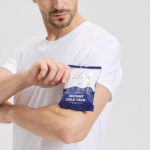
Gel packs are flexible pouches filled with refrigerant and maintain refrigerated temperatures (2–8 °C). They deliver slightly better thermal retention than water packs, are non toxic and require no special handling, but they can leak if punctured and cost more.
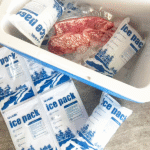
Water packs (ice packs) are pouches filled with frozen water. They are inexpensive, safe and easy to dispose of. The trade off is lower thermal mass, which may require more packs, and rigidity when frozen.
Dry ice (solid CO₂) sublimates at –78.5 °C and provides ultra low temperatures. It is ideal for frozen seafood but is hazardous and requires special handling. It can also over cool or damage products not meant to freeze.
Reusable cold packs use durable gel or water based refrigerants and are designed for closed systems. They reduce waste and cost over time but require return logistics and infrastructure.
Industry specific recommendations: For chilled seafood shipments (2–8 °C), water or gel packs provide sufficient stability. Frozen products like crab or lobster may require dry ice. For subscription seafood services or recurring deliveries, reusable packs offer long term savings.
Complementary equipment: totes, pallets and modular storage
Packaging isn’t the whole story. Insulated totes, pallets and modular cold rooms complete the system. As the cold chain equipment market grows from US$89.5 billion in 2024 to US$94.3 billion in 2026 (projected to reach US$179.8 billion by 2034), producers must invest in equipment that matches their boxes. Bulk insulated fish totes can hold ice for 3–7 days, offer capacities from 9 to 55 cubic feet and allow forklift entry. Pallets made from high density polyethylene or aluminium resist moisture and support heavy loads. Modular cold rooms and hybrid refrigeration units allow you to scale capacity seasonally and integrate IoT sensors for continuous monitoring.
Matching kits to species and route length
Different seafood types and shipping lanes require different solutions. A lane score decision tool from industry experts helps you design kits based on exposure time, handoffs, climate and product sensitivity. Summarized:
Lane length (total exposure): Under 24 hours = 1 point; 24–48 hours = 2 points; over 48 hours = 3 points.
Handoffs: Direct ship = 1 point; one handoff = 2 points; two or more handoffs = 3 points.
Weather risk: Cool season = 1 point; mixed season = 2 points; hot season or hot regions = 3 points.
Species sensitivity: Cooked or sealed packs = 1 point; raw shrimp/mixed seafood = 2 points; live shellfish = 3 points.
Claim tolerance: Low tolerance = 1 point; moderate = 2 points; high = 3 points.
Interpretation: A score of 5–7 suggests a basic kit with strong process controls; 8–11 requires a mid range kit with improved insulation and moisture control; 12–15 demands a high performance kit with monitoring and strict handoff discipline.
Shellfish vs shrimp vs fillets
Live oysters and shellstock need stable cool temperatures (0–4 °C), cushioning and drainage to prevent suffocation and crushing. Avoid direct contact with frozen packs that can cause local freeze damage. Use separators and snug packing to prevent shells from grinding against each other.
Shrimp and shucked shellfish are prone to drip, odor and texture loss. Place refrigerants correctly—too close causes freeze damage; too far creates warm pockets. A two step seal (inner bag plus liner) and a “mess barrier” reduce leaks.
Fillets and frozen products require temperatures below –18 °C; dry ice or high performance phase change materials (PCMs) can maintain these levels. Use trays or separators and vacuum skin packaging (VSP) to prevent sticking and retain moisture.
Regulations and compliance: staying legal and safe
Several national and international regulations govern seafood cold chains. Understanding them protects consumers and avoids fines:
Hazard Analysis and Critical Control Points (HACCP) – a foundational program requiring identification of hazards and monitoring of critical control points.
Good Manufacturing Practices (GMP) and Sanitation Standard Operating Procedures (SSOP) – covering facility hygiene, equipment design and personnel training.
Food Safety Modernization Act (FSMA) – the Sanitary Transportation Rule mandates vehicles and equipment capable of maintaining safe temperatures and preventing cross contamination, while FSMA 204 requires record keeping of key data elements within 24 hours.
European Union Regulation 852/2004 – requires maintaining the cold chain for foods unsafe at ambient temperature and emphasises digital vessel tracking for seafood.
FAO guidelines – advise chilling seafood to 0 °C immediately after capture and maintaining frozen fish at –18 °C or colder. They note exceptions for brine frozen fish intended for canning, which may be transported at –9 °C.
FDA Food Code – states that cold foods (including seafood) must be held at 41 °F (5 °C) or below.
Documentation matters: Keep bills of sale, shipping notes, certificates of origin and health certificates on file. Certifications like FSSC 22000, BRCGS and IFS Logistics demonstrate compliance and build buyer confidence.
User scenarios and practical tips
Handling insulated totes and containers
Pre chill containers: Cool fish totes and boxes before loading to avoid warming seafood.
Layer ice strategically: Use flake or slurry ice to create uniform cooling; avoid crushing delicate fillets.
Rotate and stack correctly: Align totes to maximize airflow and stack no more than three to four high.
Clean and sanitize: Rinse totes with potable water, scrub with food grade detergent and sanitize per HACCP plans; smooth interiors make cleaning easier.
Inspect wear parts: Check latches, gaskets and rubber pads regularly. Replace worn components to maintain insulation and safety.
Case example: A seafood processor in Alaska swapped wooden pallets and uninsulated bins for insulated totes and reusable plastic pallets. Fish stayed at or below 0 °C for 72 hours, enabling longer processing times and yielding 15 % less ice usage.
Selecting the right box and route strategy
Know your product: Shellfish and shrimp require more moisture and moderate temperatures, while fatty fish like salmon spoil quickly if temperatures rise above 5 °C.
Match box to route length and transport mode: Use EPS or high performance fibre boxes for long hauls; polypropylene or fibre boxes reduce weight and environmental impact for regional deliveries.
Evaluate refrigerants: Choose flake ice, gel packs, dry ice or phase change materials (PCMs) based on route length and temperature requirements.
Optimize space and weight: Use boxes that ship flat or pre folded to reduce warehouse space by 85 %; smaller external dimensions allow 20–30 % more product per pallet.
Maintain hygiene and traceability: Choose boxes with sealed edges and integrate barcodes or QR codes for traceability as required by FSMA 204.
Sustainability considerations: Paper boxes with Greencoat® or bio foams are fully recyclable and appeal to eco conscious markets. Reusable containers reduce waste if you can support returns.
Self check quiz
Ask yourself the following yes/no questions to assess your cold chain practices:
Do boxes sit on a warm dock for more than 15 minutes?
Do packers change the pack out “when busy”?
Do you ship mixed odors in the same load area?
Do customers open cartons immediately in warm air?
Do you lack trip evidence for disputes?
If you answer yes to three or more, focus on process improvements before buying more packaging.
2026 trends and innovations
Market growth and sustainability
The cold chain logistics market is booming. Precedence Research estimates that it will rise from US$436.30 billion in 2026 to roughly US$1,359.78 billion by 2034. The frozen seafood market is forecast to expand from US$24.78 billion in 2026 to US$42.58 billion by 2034. Sustainability is a major driver; companies like Seawise have replaced over two million Styrofoam and wax boxes with recyclable corrugated technology that keeps water contained for over 14 days.
Technological innovations
IoT sensors and real time monitoring: Connected sensors are now baseline requirements. They transmit temperature and humidity data to the cloud and trigger alerts when deviations occur. Ambient IoT and battery free sensors harvest energy from radio waves, lowering maintenance costs.
AI driven route optimisation: Artificial intelligence helps logistics providers optimize delivery routes, reducing transit times and energy consumption. This means your seafood spends less time in transit and stays within safe temperature ranges.
Blockchain and digital traceability: Blockchain offers tamper proof records and consumer level transparency. The seafood traceability software market is expected to grow from US$705 million in 2024 to US$1.84 billion by 2033.
Energy efficient refrigeration: Manufacturers are moving toward all electric or hybrid refrigeration units and modular cold rooms. Solar powered systems are gaining momentum; commercial solar rates range between 3.2 and 15.5 cents per kWh, compared with an average utility rate of 13.1 cents in 2024.
New protocols and industry initiatives: In July 2026, the Global Cold Chain Alliance (GCCA) and the American Frozen Food Institute (AFFI) released a protocol for standardized temperature monitoring across the frozen food supply chain. It identifies critical monitoring points and establishes baseline measurements, aiming to enhance operational efficiency and shelf life management.
Regulatory and regional developments
Governments worldwide are tightening requirements and investing in infrastructure. The Food Traceability Rule under FSMA 204 has a compliance date of January 2026, potentially extending to July 2028. Europe is implementing digital vessel tracking and traceability requirements. Asia–Pacific’s cold chain logistics market is projected to grow at about 14.3 % annually, reflecting rising demand for imported seafood and improved infrastructure.
FAQ
How do I keep seafood fresh during shipping? Pack seafood in an insulated container with sealed edges, add gel or water packs to maintain 0–5 °C for fresh fish or dry ice for frozen products, pre chill everything, and monitor temperature with data loggers.
What temperature should seafood be kept at during transport? Fresh fish and shellfish should remain between 0 °C and 5 °C; frozen seafood must stay at –18 °C or colder. The FDA Food Code sets a maximum cold holding temperature of 41 °F (5 °C).
Which cold chain kit works for shellfish vs shrimp? Live oysters need cushioning, drainage and stable cool zones to avoid suffocation and crushing. Shrimp and shucked shellfish require tighter seals and absorbent liners to prevent drip and odor; ensure refrigerants are correctly placed to avoid freeze damage.
Are gel packs or water packs better for seafood? Gel packs provide better thermal retention and are non toxic, but they cost more and may leak if punctured. Water packs are cheaper and safer to dispose of, making them ideal for short to mid duration chilled shipments.
What regulations govern seafood cold chains in the United States and Europe? In the U.S., seafood shipments must comply with HACCP, GMP/SSOP, FSMA (including FSMA 204) and the FDA Food Code. In Europe, Regulation 852/2004 mandates maintaining the cold chain and digital vessel tracking.
Summary and recommendations
Managing seafood quality in 2026 requires more than a cold box—it demands a holistic system that balances insulation, moisture control and monitoring. To achieve success:
Choose materials wisely: For long hauls, EPS or high performance fibre boxes deliver extended insulation. For regional routes, PP or fibre boxes reduce weight and storage space. Invest in bio foams or reusable containers when sustainability and customer perception matter.
Match refrigerants to the product: Gel or water packs are ideal for chilled shipments; dry ice suits frozen products. Consider reusable packs for subscription services.
Design kits around the three layer model: Outer protection, insulation and moisture control must work together. Standardize pack outs and prioritize absorbent liners to avoid “wet box” claims.
Follow the lane score system: Evaluate lane length, handoffs, climate, species sensitivity and claim tolerance to choose the appropriate kit.
Invest in monitoring and technology: Use IoT sensors, data loggers and AI route optimisation to maintain temperature and reduce transit time.
Stay compliant: Adhere to HACCP, FSMA and international regulations. Keep digital records, calibrate equipment and train staff regularly.
By implementing these recommendations, you can deliver seafood that meets customers’ expectations, reduces waste and demonstrates environmental responsibility.
About Tempk
Tempk is a leading provider of cold chain packaging solutions and temperature controlled equipment. We specialize in insulated boxes, gel and water ice packs, medical ice boxes and insulated bags, offering options for both chilled (0–10 °C) and frozen (≤–10 °C) shipments. Our R&D center focuses on eco friendly materials like recyclable fibre coatings and reusable packaging, and we hold certifications such as Sedex and quality management accreditations. Our products are designed to keep seafood, pharmaceuticals and meal kits safe, fresh and compliant. We believe in helping our customers design systems—not just boxes—that protect the product and the planet.
Call to Action: To explore tailored solutions for your seafood business, reach out to our specialists. We can help you design best seafood products cold chain kits that fit your routes, products and sustainability goals. Contact us today for a consultation.