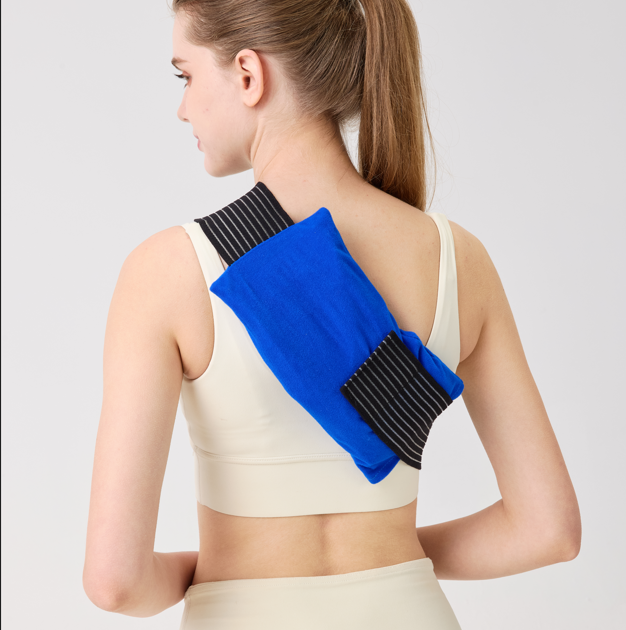
Choosing the Right Reusable Gel Pack for Tissue Sample Shipping
For teams sourcing reusable gel pack options for tissue sample shipping, fit matters more than headline claims. The product has to fit the payload, the shipper, the route, and the packing discipline your team can actually repeat.
When those elements line up, a reusable gel pack can be a very practical cold source. When they do not, even a well-made pack can disappoint in the field.
What this product is and where it fits
A reusable gel pack is best understood as a controlled cold source for passive packaging. It can be very effective in tissue sample shipping when the payload needs temporary thermal protection and the operation can precondition, place, and handle the pack consistently.
It is not automatically a complete temperature-controlled shipping system, and it is not automatically suitable for every payload. For tissue samples, the cold source must be matched to the specimen requirement. Refrigerated gel packs work for many chilled programs, but frozen specimens may still need dry ice and regulated packaging steps. The correct decision comes from matching refrigerant, insulation, route, and operating discipline.
Laboratory and tissue-sample programs add another layer of discipline. Public guidance used in specimen shipping places the refrigerant outside the secondary packaging and stresses that the choice between refrigerated packs, frozen packs, and dry ice depends on the specimen requirement, expected duration, and ambient conditions. That is why experienced lab buyers usually ask not only for a pack sample, but also for clear assembly instructions that can be repeated by receiving teams, couriers, and kit assembly staff.
How performance is really determined
Commercial products on the market show how wide the category really is. Standard refrigerated gels are commonly built around a 0°C phase profile for chilled distribution, while specialized frozen formulas can suppress the freezing point to roughly -23°C for lower-temperature programs. Public product literature also shows differences in construction: some packs use thick polyethylene films around 4 mil, others use puncture-resistant nylon laminates, and some no-sweat designs add an absorbent outer layer to manage condensation. More precise PCM-style gels are also available in the market around controlled-cool set points such as 3°C, 5°C, 7°C, or even 17°C when the goal is to protect against overcooling rather than simply stay cold.
Conditioning matters more than many buyers expect. A good gel pack can still perform poorly if it is frozen unevenly, loaded warm, or staged too long before assembly. Published operating guidance in the market often recommends freezing packs flat at around -18°C or below for 12 to 24 hours, then building the shipper according to a defined pack-out pattern. That process sounds basic, but it is where consistency is won or lost. Two suppliers may offer packs with similar dimensions, yet one may give clearer conditioning instructions, tighter fill-weight control, and more stable repeat performance.
Geometry changes thermal behavior as much as chemistry does. A very thin pack gives fast surface contact but also melts faster. A thicker brick stores more cold energy but takes more space and can create sharper temperature gradients near the payload. That is why the right reusable gel pack is usually the one that matches the product arrangement inside the shipper. If the carton has tight side gaps, a flat side panel may work better than an overfilled pillow pouch. If the payload is heavy and stacked, a semi-rigid brick may create cleaner layers and more predictable separation.
For regulated or high-value shipments, the coolant should be evaluated as part of the whole passive system. That means the outer box, insulation, payload, spacer material, and logger placement all belong in the same conversation. WHO and EU GDP guidance for medicinal distribution emphasize maintaining the required temperature across transport and avoiding direct contact between cool packs and products that could freeze. In other words, a strong pack is useful, but it only becomes a reliable solution when it is matched to the real route and the real product sensitivity.
How to compare formats and constructions
Material choice is not cosmetic. In the market, chilled reusable gel pack products are often built around water-based gel systems thickened with agents such as cellulose derivatives or similar stabilizers so the fill stays distributed instead of sloshing like free liquid. That formulation is then matched with a film or laminate that must survive freezing, seal stress, carton abrasion, and repeated handling. A simple polyethylene pouch may be enough for low-risk use, while a nylon-laminate structure can provide better puncture resistance in harder routes. Some packs add an absorbent outer layer to manage surface moisture. Buyers should treat these as functional design choices, not as small aesthetic differences.
Flexible pouches generally use space well and conform around the payload. Bricks bring cleaner stacking and more defined separation. Blanket or wrap formats can cover more surface area and suit bottles or narrow cartons. No single format wins in every lane. The better question is which construction supports the way your pack-out is actually assembled and opened.
What matters in your application
In tissue sample logistics, the refrigerant has to support specimen integrity, chain-of-custody discipline, and packaging compliance at the same time. A reusable gel pack can be a very practical choice for refrigerated programs involving tissue specimens, swab kits, diagnostic material, and pathology workflows, especially when the lab wants a cleaner alternative to wet ice and a more standardized kit layout. Because the pack can be preconditioned, positioned, and reused, it often fits well into repeat collection programs or scheduled pathology routes.
The limits are just as important as the benefits. A gel pack suitable for chilled specimens is not automatically suitable for frozen materials, and the correct setup depends on the analyte or tissue requirement. That is why the supplier conversation should cover secondary-packaging layout, absorbent materials, the distance between coolant and specimen container, and what happens if transport is delayed. For many labs, the best supplier is the one that can support a repeatable assembly method, not simply the one with the lowest cost per pack.
Case price matters, but delivered cost often changes the ranking. A cheaper pack that needs more units per shipper, produces higher freight weight, or drives more summer add-ons may end up costing more than a better-matched format. The same is true when the operation uses extra labor to separate packs, wipe condensation, or rework damaged cartons. Procurement teams often get a clearer answer by comparing total pack-out cost and exception cost instead of unit price alone.
What buyers should check before placing a bulk order
For a production decision, the shortlist should answer practical questions, not just product questions:
Internal and external dimensions: check both, because small dimensional drift changes carton fit, product spacing, and logger placement.
Usable thermal mass: ask for nominal fill weight, tolerance, and whether the supplier checks weight automatically during production.
Material construction: confirm film or laminate type, thickness, seal layout, and puncture resistance, especially if packs rub against bottles, corners, or inserts.
Conditioning behavior: ask how long the pack needs to freeze, whether it should be frozen flat, and how the supplier handles conditioning guidance for summer and winter lanes.
Sample-to-production consistency: verify that the production pack will use the same gel formulation, film, and seals as the approved sample.
Helpful decision tools
Check the details before you choose packaging
These quick tools can help you compare route risk, sizing needs, coolant choices, and packaging details before you request a quote.
Compliance Checklist Generator
Build a practical checklist for packaging review, shipping, and documentation.
Build checklistIce Pack Calculator
Estimate gel ice pack quantity for chilled shipments and practical route planning.
Estimate ice packsRoute Risk Checker
Review lane conditions before selecting packaging for real operating requirements.
Check route riskChange control: require notice before any change to gel formulation, film, dimensions, or pack weight, because these shifts can change field performance.
Hygiene and leakage control: for food, medical, and laboratory work, ask how the pack is cleaned, packed, and protected from leaks or contamination before use.
Labeling and traceability: ask for lot coding, carton labels, and documentation that lets you trace the pack back to a production batch.
MOQ, lead time, and custom options: understand minimum orders, print options, and how the supplier handles urgent replenishment or pilot volumes.
Route fit: give the supplier your actual temperature target, transit duration, insulation type, and payload arrangement instead of asking for a generic recommendation.
Pack-out compliance support: ask whether the supplier can support assembly instructions that keep refrigerant outside secondary packaging and away from freeze-sensitive payloads when needed.
Scale-up discipline: compare how the supplier manages pilot orders, first production runs, and ongoing quality checks rather than looking only at case price.
A shortlist should come from evidence, not from catalog photography. The best sequence is usually straightforward: verify dimensions and fill weights, test conditioning behavior, run a small logger-based lane trial, then compare how sample performance matches production documentation. That process quickly filters out suppliers who can sell stock packs but cannot support repeatable cold chain execution.
Before placing a bulk order, it helps to treat the sample as a process sample rather than a sales sample. Measure it, weigh it, freeze it the way your site will really freeze it, and pack it into the exact shipper you plan to use. That quick verification step catches many issues early: overfilled pouches, inconsistent seal margins, awkward carton fit, and unrealistic freezer turnaround assumptions.
Operational mistakes worth avoiding
The first common mistake is buying by weight alone. A heavier pack is not automatically better if its shape wastes volume, pushes product against a carton wall, or creates contact freezing. The second mistake is assuming the same pack-out will work year-round. In real routes, winter, shoulder season, and summer often need different conditioning or pack placement. The third mistake is approving a sample and then forgetting to lock the production specification.
In laboratory work, a frequent mistake is ignoring the assembly process. Even a technically sound refrigerant can fail in the field if the kit assembler puts it inside the wrong layer, skips separation material, or conditions it differently at each site.
The main failure modes are predictable. Packs may be underfrozen, loaded warm, punctured by sharp corners, stacked too tightly in the freezer, or placed directly against a freeze-sensitive payload. Film stiffness can change at low temperatures, and repeated reuse can eventually weaken seals. Condensation can soften corrugate or wet printed inserts. None of those problems is unusual, but each one should be planned for before the bulk order is approved.
A first production order should behave like a controlled rollout. Confirm freezer capacity, conditioning time, carton assembly instructions, worker training, and receiving checks before volume scales. If multiple sites will assemble the shipment, make sure each site uses the same conditioning window and the same placement map. That simple discipline often prevents the pattern where one location reports good performance and another sees avoidable excursions.
Sustainability decisions work best when they stay practical. Reusable packs make sense when a closed loop, internal return, or repeated local route actually exists. For one-way parcel traffic, buyers may look at drain-safe, paper-forward, or lower-plastic options, but those alternatives still need to protect the payload and survive normal handling. The goal is not to choose the most fashionable sustainability claim. The goal is to reduce avoidable waste without creating product loss, temperature complaints, or more repacking.
Frequently asked questions
What is the first question to answer before choosing a gel pack?
Define the payload temperature requirement first. Without that, pack format, pack count, and conditioning instructions are all guesses.
Can one pack format handle every season?
Sometimes for short, low-risk routes, but many programs need seasonal adjustments in pack count, placement, or conditioning to stay reliable.
What separates a strong supplier from a basic stock seller?
A strong supplier can explain the pack construction, keep production consistent, support controlled rollout, and respond clearly when the route or product changes.
A practical conclusion
The most useful reusable gel pack is not the one with the loudest claim. It is the one that fits the payload, the pack-out, and the operating reality of your route. That is the standard worth using when you compare manufacturers, wholesalers, or custom options.
The best reusable gel pack decision is usually the one that connects three things: the right thermal behavior, the right physical format, and the right operating discipline. In tissue sample shipping, buyers get better outcomes when they compare suppliers on specification control, conditioning clarity, and route fit rather than on cold language alone.
About Tempk
We are Tempk, a brand of Shanghai Tempk Industrial Co., Ltd., focused on temperature-control products for business and daily use. Our range includes gel ice packs, dry ice packs, freezer ice bricks, insulated bags, EPP cooler boxes, thermal box liners, pallet covers, and medical transport packaging. That breadth is useful when a project needs the refrigerant format and the outer packaging to work together instead of being sourced as separate decisions.
Next step
If you are reviewing a new lane or a bulk purchase, ask for guidance based on the temperature band, transit time, and pack-out structure you actually use. A clearer specification at the start usually prevents expensive trial and error later.