Cold chain logistics are the backbone of today’s frozen and perishable food supply. Keeping products within strict temperature ranges from farm to table ensures safety and quality and prevents massive food waste. With the global cold chain market estimated at USD 316 billion in 2024 and projected to exceed USD 1.6 trillion by 2033, understanding how these systems work is more important than ever. In this guide you’ll discover how modern technology, smart packaging and sustainable practices help you enjoy fresher food while protecting the planet.
What is a cold chain and why is it essential for frozen and perishable foods?
Which components and technologies keep products safe and fresh?
What trends are reshaping cold chain logistics in 2025?
How can businesses and consumers reduce waste and lower their carbon footprint?
What practical steps should you take to build a robust cold chain strategy?
What Makes a Cold Chain Critical for Frozen & Perishable Foods?
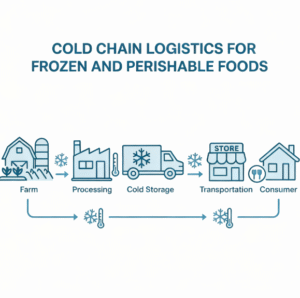
A cold chain is a temperature controlled supply system that preserves products from harvest to consumption. It spans production, storage, transport, distribution and even consumer handling. About 40 % of all foods are refrigerated at some point and 15 % of global energy consumption is devoted to refrigeration. Without reliable cold chains, perishable foods spoil quickly, leading to foodborne illness and huge economic losses.
Maintaining specific temperature ranges is vital. Refrigerated foods should be kept between 0 °C and 4 °C, while frozen goods require temperatures around –18 °C (0 °F). When foods are exposed to the “temperature danger zone” between 41 °F and 135 °F (5 °C–57 °C), bacteria multiply rapidly and can double in as little as 15 minutes. Perishable items like meat, dairy and fish should never remain in this zone for more than two hours.
The cold chain’s importance is also economic. In the United States about 70 % of the food consumed is handled by cold chains, yet around 25 % of products transported in these systems are wasted due to temperature breaches. Globally, poor cold chain management may be responsible for 620 million metric tons of food loss each year, highlighting why investment in better monitoring and control matters for both food security and climate resilience.
Essential Components of a Cold Chain
An effective cold chain brings together several interconnected elements:
| Component | Purpose | Role in your success |
| Product requirements | Different products require specific temperatures and humidity levels | Understanding these needs helps you choose suitable packaging and storage conditions |
| Origin & destination | Where foods are grown, processed and consumed | Enables planning for long distance sourcing and regional distribution |
| Cold storage | Warehousing at recommended temperatures, such as 0–4 °C for refrigeration | Extends shelf life and provides buffer inventory |
| Transportation | Refrigerated trucks, containers and reefer vessels keep goods cold in transit | Ensures an unbroken cold chain during shipping |
| Distribution & retail | Distribution centres and stores with multiple temperature zones | Maintains product safety before customer purchase |
| Consumer handling | Proper refrigeration at home (≤4 °C) and freezing at –18 °C | Final step to prevent spoilage and foodborne illness |
Practical Tips and Advice
Cold chain logistics touch every stage of the supply chain, and there are steps you can take to protect food quality:
Monitor temperatures from harvest to delivery: Use data loggers or IoT sensors to track conditions and prevent unexpected spikes.
Cool products quickly: Rapidly chill meat, dairy or produce after harvest to slow microbial growth.
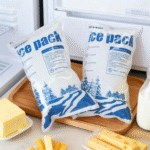
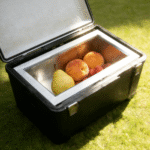
Choose the right packaging: Thermal insulation, phase change materials (PCMs) and ice packs help maintain desired temperatures
Plan efficient routes: Avoid traffic delays to minimise time spent in the danger zone.
Educate staff and consumers: Train employees on handling practices, and remind consumers to refrigerate groceries within two hours.
Real world example: A fruit exporter in Latin America reduced spoilage by 30 % after installing IoT temperature sensors in reefer containers. The sensors sent real time alerts when temperatures deviated, allowing quick interventions. Similar devices are affordable for small producers.
How Technology Keeps Frozen & Perishable Foods Safe
Modern cold chains rely on technology to monitor, record and control conditions. From IoT sensors to advanced analytics, these tools help you maintain product integrity, comply with regulations and reduce waste.
Regulatory bodies such as the U.S. Food Safety Modernization Act (FSMA) and the European Union Food Hygiene Regulations require that perishable products be transported and stored in temperature controlled environments, with temperature data collected and analysed to ensure compliance. Compliance often hinges on IT systems that provide real time monitoring of temperature and humidity.
Monitoring, Packaging & Control Innovations
Digital tools now enable end to end visibility across the cold chain:
| Innovation | Description | Benefit to you |
| IoT sensors & data loggers | Devices placed inside trucks and warehouses record temperature and humidity; deviations trigger alerts | Prevent spoilage and ensure compliance |
| RFID & real time tracking | Tags communicate product location and condition in real time | Optimise routes and provide customers with status updates |
| Automated systems & robotics | Automated storage and retrieval systems (AS/RS) and robotics streamline warehouse operations | Reduce labour costs and improve consistency |
| Blockchain | A secure, immutable ledger that records every transaction in the supply chain | Enhances traceability and accountability |
| Phase change materials & thermal packaging | PCMs absorb and release thermal energy at defined temperatures; new recyclable shippers can maintain 2 °C–8 °C for 72 hours | Sustain longer transit times without active cooling |
| Artificial intelligence & predictive analytics | AI analyses historical and real time data to forecast demand and predict equipment failures | Supports smarter decisions and reduces unexpected downtime |
Why Continuous Monitoring Matters
Perishable foods should be refrigerated at 40 °F (4 °C) or below. Bacteria thrive between 41 °F and 135 °F; leaving items like meat, dairy and fish in this range for more than two hours allows pathogens to multiply. Automated systems help you avoid these hazards by sending alerts when conditions drift.
Beyond safety, monitoring technologies support regulatory compliance. The FSMA and EU regulations require real time data collection and analysis, meaning businesses must invest in digital solutions. Hardware devices currently dominate the cold chain tracking and monitoring market, accounting for over 76 % of market share in 2022. However, as more warehouses adopt automation – only about 20 % are automated today – expect software and analytics to become increasingly important.
Practical Tips and Advice
Integrate sensors early: Embed temperature and humidity sensors in your packaging or pallets. Set up automated alerts to notify you of anomalies.
Leverage cloud platforms: Use cloud based dashboards to aggregate data from multiple locations for easier analysis and regulatory reporting.
Adopt sustainable packaging: Consider PCMs or biodegradable insulation that maintain temperatures without excessive ice packs.
Invest in predictive maintenance: Use AI powered analytics to schedule maintenance before equipment fails.
Build a risk management plan: Establish protocols for what to do when temperatures exceed thresholds so employees can respond quickly.
Practical case: A regional dairy company implemented RFID tags on milk crates to capture real time temperature and location data. By linking this data with their route optimisation software, they reduced delivery times by 15 %, cut fuel consumption and improved customer satisfaction. The hardware investment paid for itself within a year because it prevented product returns and fines.
Trends Shaping Cold Chain Logistics in 2025
Rapid technological advances and changing consumer demands are transforming cold chain logistics. Here are the key trends to watch this year:
Automation and robotics: Cold storage facilities are increasingly adopting automated storage and retrieval systems and robotic handling. About 80 % of warehouses are not automated yet, leaving significant room for growth.
Sustainability as a core value: Companies are focusing on energy efficient refrigeration, renewable energy and sustainable packaging. The global food cold chain infrastructure produces around 2 % of global CO₂ emissions, so reducing this footprint is a priority.
End to end visibility: Widespread adoption of IoT enabled tracking provides real time insights into product location and condition.
Infrastructure modernisation: Ageing cold storage facilities (built 40–50 years ago) are being upgraded to meet new efficiency standards.
AI and predictive analytics: Machine learning is used to forecast demand, optimise routes and predict equipment maintenance needs.
Growth in the pharmaceutical cold chain: Roughly 20 % of new drugs are gene or cell therapies, requiring precise temperature control. The global pharmaceutical cold chain market could reach USD 1,454 billion by 2029.
Investment in fresh food logistics and last mile delivery: The North America food cold chain logistics market is expected to reach USD 86.67 billion in 2025 as e commerce and home delivery grow.
Strategic partnerships and data standardisation: By 2025, 74 % of logistics data is expected to be standardised, enabling better collaboration across supply chains.
Embracing Automation, Sustainability and Visibility
These trends converge around efficiency, sustainability and transparency. Automated systems address labour shortages and rising costs by operating continuously and reducing errors. Sustainable practices not only lower carbon footprints but also reduce energy consumption and waste; the food cold chain currently accounts for around 3.5 % of the world’s carbon footprint. Real time tracking enhances customer satisfaction and helps companies comply with strict regulations.
| Trend | Key insight | Why it matters to you |
| Automation & robotics | AS/RS and robotic handling reduce labour dependence | Helps you offset labour shortages and ensure consistent quality |
| Sustainability | Cold chain infrastructure produces ~2 % of global CO₂ emissions | Energy efficient practices reduce costs and carbon footprint |
| Real time tracking | IoT devices provide location and condition data | Prevents spoilage and improves customer transparency |
| Infrastructure modernisation | Facilities built 40–50 years ago are being upgraded | Upgrades improve efficiency, automation and compliance |
| AI & predictive analytics | AI forecasts demand and predicts maintenance | Optimises operations and reduces downtime |
| Pharmaceutical cold chain growth | 20 % of new drugs need precise temperature control | Drives investment in ultra cold storage and monitoring |
| Fresh food logistics expansion | North America market to reach USD 86.67 billion in 2025 | Highlights opportunities in last mile delivery |
| Data standardisation & partnerships | 74 % of logistics data will be standardised by 2025 | Enables seamless integration across supply chains |
Practical Tips and Advice
Automate strategically: Identify high frequency, repetitive tasks—such as pallet retrieval or order picking—and consider AS/RS or robotics to improve throughput and reduce errors.
Measure your carbon footprint: Conduct energy audits to identify opportunities for switching to renewable electricity or improving insulation.
Adopt open data standards: Ensure your monitoring devices and logistics platforms use interoperable data formats to share information with partners.
Explore last mile innovations: Evaluate micro fulfilment centres and electric refrigerated vans to cut delivery times and emissions.
Collaborate across the supply chain: Form partnerships with suppliers, carriers and technology providers to share best practices and drive joint sustainability initiatives.
Case in point: A national grocery chain partnered with a renewable energy provider to install solar panels at its distribution centres. Coupled with efficient refrigeration systems, the initiative cut energy consumption by 30 % and reduced greenhouse gas emissions, helping the company meet its sustainability targets.
Reducing Waste and Carbon in Cold Chain Operations
Cold chains mitigate waste but also consume significant resources. In 2018 refrigeration represented about 5 % of global energy needs and produced roughly 2.5 % of total greenhouse gas emissions. These energy demands, combined with refrigerants like fluorinated gases, make the global food cold chain responsible for up to 3.5 % of the world’s carbon footprint. Each year more than 1.6 billion tons of food are wasted globally, representing 13 % of total production, and around 144 million tons could be saved in developing countries with proper cold storage.
Improving cold chain efficiency is therefore a climate necessity. Switching freezer temperatures from –18 °C to –15 °C could save 17.7 million metric tonnes of CO₂ annually and about 25 terawatt hours of energy—equivalent to 8.63 % of the UK’s energy consumption. These savings are achievable because advances in insulation and refrigeration allow safe storage at slightly higher temperatures without compromising food quality.
Building a Greener, Resilient Cold Chain
Sustainable strategies span technology, infrastructure and behaviour:
| Strategy | Description | Benefit to you |
| Energy efficient refrigeration | Upgrading to high efficiency compressors and natural refrigerants reduces power consumption | Lowers operating costs and emissions |
| Renewable energy integration | Install solar panels or purchase renewable electricity for warehouses and transport refrigeration | Cuts reliance on fossil fuels |
| Temperature set point optimisation | Adopt the –15 °C standard to save 17.7 million tonnes of CO₂ annually | Reduces energy usage without affecting safety |
| Leak proof refrigerant systems | Regular inspections and natural refrigerants limit F gas leaks; F gases can be 25,000× more potent than CO₂ | Prevents high impact emissions |
| Demand led storage & micro fulfilment | Use micro fulfilment centres and predictive analytics to align inventory with demand | Minimises waste and reduces transportation distances |
Practical Tips and Advice
Adopt the –15 °C initiative: Evaluate product tolerance and adjust freezer set points where safe; collaborate with partners to harmonise standards.
Use natural refrigerants: Ammonia or CO₂ based systems have lower global warming potential than synthetic F gases.
Invest in energy monitoring systems: Track electricity usage in real time to detect inefficiencies and quantify savings.
Reduce food waste: Implement first in, first out (FIFO) policies and donate surplus to food banks; technology can help identify slow moving inventory.
Educate consumers: Encourage customers to store perishable foods at 40 °F or below and to refrigerate groceries promptly to prevent spoilage.
Illustrative story: A seafood processor upgraded to an ammonia based refrigeration system and improved insulation. Combined with solar panels on the warehouse roof, the facility cut energy use by 35 % and virtually eliminated refrigerant leaks. This sustainable investment paid for itself within five years through lower energy bills and fewer maintenance costs.
Building an Effective Cold Chain Strategy for Your Business or Home
Whether you operate a global supply chain or simply want to keep groceries fresh, a well structured cold chain strategy is essential. It starts with understanding product needs and ends with responsible consumption.
Practical Steps to Implement a Robust Cold Chain
| Step | Action | Real benefit |
| Assess product requirements | Identify critical temperatures and humidity levels for each product; for example, meat should be frozen at –18 °C while fruits often need 0–4 °C | Prevents spoilage and ensures quality |
| Design the cold chain | Plan harvest cooling, packaging, storage, transportation and distribution; incorporate redundancy for equipment failures | Minimises risk of temperature breaches |
| Implement monitoring & data collection | Use IoT sensors, RFID and cloud dashboards to record conditions and create a verifiable history | Facilitates compliance and rapid problem solving |
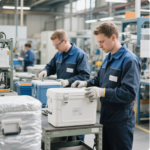
| Train your team | Educate employees on safe handling, temperature checks and hygiene practices | Reduces human error and contamination |
| Review & improve | Regularly audit processes, analyse data to identify trends, and invest in upgrades like automation or renewable energy | Supports continuous improvement and sustainability |
Practical Tips and Advice
Start small, iterate quickly: If you’re new to cold chain logistics, begin with a pilot project on a limited product line to test sensors and workflows.
Engage suppliers and customers: Make sure everyone involved understands temperature requirements and has the right equipment, from packaging to home refrigerators.
Stay informed about regulations: Compliance with FSMA, EU guidelines and local regulations evolves; subscribe to updates and adjust processes accordingly.
Plan for contingencies: Invest in backup generators and emergency response procedures to maintain cold conditions during power outages.
Use data to drive decisions: Analyse temperature logs and supply chain analytics to identify inefficiencies, then implement targeted improvements.
Real life example: A small specialty grocer established a cold chain for imported cheese by working with freight forwarders who used insulated containers and real time temperature monitoring. The store also trained staff on proper storage and installed backup refrigeration. These steps reduced spoilage by 40 % and boosted customer trust.
Latest Developments and Trends in 2025
As we look ahead, several developments are reshaping the cold chain landscape:
Emerging technologies: Robotics, AI and blockchain continue to drive efficiency and transparency.
Sustainable refrigeration: The Move to –15 °C initiative and natural refrigerants show promise in reducing carbon emissions.
Smart packaging: Phase change materials, biodegradable insulation and reusable containers gain traction.
New standards and certifications: Retailers are shifting from older certifications to more rigorous SQF and BRC standards that emphasise food safety and traceability.
Consumer demand for fresh foods: E commerce growth and direct to consumer models require flexible, localised cold storage and last mile delivery.
Investment in data infrastructure: Standardising logistics data improves integration and fosters collaboration.
Latest Trend Highlights
Automation & robotics: About 80 % of warehouses remain non automated, presenting a huge opportunity for efficiency gains.
Carbon reduction through temperature changes: Switching to –15 °C could save 17.7 million tonnes of CO₂ and 25 TWh of energy each year.
Pharmaceutical boom: By 2029, the pharmaceutical cold chain market could reach USD 1,454 billion.
Standardisation of logistics data: 74 % of logistics data is expected to be standardised by 2025, making integration easier.
Sustainable packaging: Recyclable thermal shippers maintain 2 °C–8 °C for 72 hours, reducing reliance on single use materials.
Market Insights
Consumer expectations are shifting toward fresher, healthier foods delivered quickly. This trend fuels investment in regional cold storage facilities and last mile logistics. Meanwhile, strict regulations and heightened awareness of food safety and climate impacts mean businesses must prove their processes are both safe and sustainable. Investing in innovation and collaboration is no longer optional – it’s essential for staying competitive in 2025 and beyond.
Frequently Asked Questions
What is a cold chain?
A cold chain is a series of processes that keep products at specific low temperatures from harvest to consumption. It involves cooling products immediately after harvest, storing them in refrigerated facilities, transporting them in temperature controlled vehicles and ensuring proper handling at retail and home.
Why is the cold chain important for frozen and perishable foods?
Maintaining cold temperatures prevents bacteria from multiplying and preserves texture, flavour and nutritional value. Without reliable cold chains, perishable foods spoil quickly, causing illness and economic loss.
What temperature should I keep my refrigerator and freezer?
Keep your refrigerator at 40 °F (4 °C) or below and your freezer at 0 °F (–17 °C). These temperatures slow bacterial growth and keep foods safe.
How can businesses reduce cold chain waste?
Implement real time monitoring and predictive analytics to detect temperature deviations; train staff to handle products correctly; adopt sustainable packaging; and donate unsold perishable items rather than discarding them.
What are phase change materials (PCMs)?
PCMs are substances that absorb or release heat at specific temperatures. They help maintain consistent temperatures during transit without active cooling.
Summary & Recommendations
Cold chain logistics make it possible for you to enjoy fresh berries in winter or life saving vaccines year round. With global markets growing at over 20 % per year and investments soaring, the cold chain is evolving rapidly. Key takeaways include: maintain proper temperatures to avoid the danger zone; leverage technology for real time monitoring and predictive analytics; pursue automation and sustainable practices to cut costs and emissions; and adopt strategies like the –15 °C initiative to reduce carbon footprints.
Actionable Next Steps
Evaluate your current cold chain: Identify weak points in temperature control, monitoring or training. Use a simple checklist to assess each stage.
Invest in monitoring technology: Start with affordable IoT sensors and dashboards that provide real time data and alerts.
Embrace automation where feasible: Target tasks with high labour costs or error rates for automation, and plan phased investments.
Improve sustainability: Explore renewable energy options, upgrade refrigeration systems and consider adopting the –15 °C temperature standard where safe.
Collaborate with partners: Share data and best practices across your supply chain to build resilience and meet evolving regulatory standards.
About TemPk
TemPk is a pioneer in cold chain packaging solutions and temperature controlled logistics. We combine advanced insulation materials, phase change technologies and IoT monitoring to help businesses maintain product integrity throughout the supply chain. Our insulated boxes and reusable thermal packaging keep products within the 2 °C–8 °C range for up to 72 hours, and our R&D team continuously develops eco friendly alternatives to single use packaging. We support customers across food, pharmaceutical and biotechnology industries with tailored solutions that balance performance, cost and sustainability.
Call to Action
Ready to enhance your cold chain? Reach out to TemPk’s experts for a free consultation and discover how our solutions can help you protect product quality, cut waste and reduce your carbon footprint. Whether you’re shipping frozen meals or life saving vaccines, we’re here to support your journey to a smarter, greener cold chain.