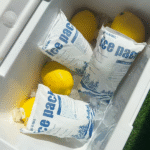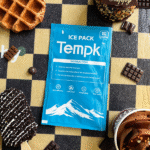
If you ship heat-sensitive products, a gel cooling battery cosmetics manufacturer helps you prevent “melted on arrival” surprises. In the first 48 hours of transit, heat damage can drive a large share of avoidable returns.
Many cosmetics start failing when exposed above 30–35°C, causing leakage, separation, or texture loss.
This guide shows you how to pick the right system and prove it works.
This article will help you:
Choose a gel cooling battery cosmetics manufacturer that fits your route and product mix
Set a realistic “safe temperature band” without freezing your products
Pick the best gel formats for clean unboxing and lower shipping weight
Validate performance using temperature curves and parcel-style thermal profiles
Audit suppliers with a simple scorecard that reduces quality surprises
What does a gel cooling battery cosmetics manufacturer actually deliver?
Direct answer: A gel cooling battery cosmetics manufacturer delivers sealed, reusable gel packs plus the testing know-how to keep cosmetics stable from pickup to delivery.
A gel cooling battery is a slow-release cold reservoir, not a fast-melting ice substitute.
Expanded explanation: Cosmetics shipping is messy in real life. “Two-day” does not always mean 48 safe hours. Parcels pause in depots, ride in hot vans, and sit on porches.
A strong manufacturer designs around those worst moments, not the average day.
Gel cooling battery vs. loose ice: what changes for you?
| Cooling method | Temperature stability | Leak risk | What it means for you |
|---|---|---|---|
| Loose ice | Low | High | Unstable cooling and messy returns |
| Water ice pack | Medium | Medium | Short cooling window |
| Gel cooling battery | High | Low | More reliable protection for cosmetics |
Practical tips you can use this week
1–2 day shipping: Use thin gel packs with moderate freezing points.
Cross-border lanes: Choose long-duration packs tested for 72 hours.
Premium kits: Combine gel packs with insulation for a stable, clean unboxing.
Practical case: A skincare brand reduced summer leakage complaints by over half after switching to a certified solution with tested gel formulas.
What temperature band should your gel cooling battery cosmetics manufacturer target?
Direct answer: Your gel cooling battery cosmetics manufacturer should design to a “safe band” that protects texture and packaging without freezing your product.
Many teams learn their limits through accelerated stress references such as 40°C/75% RH to reveal failure modes faster.
Expanded explanation: You don’t need pharma-level complexity, but you do need one clear rule: protect the weakest formula in the box.
One soft balm or wax-heavy stick can fail before everything else.
Mini decision tool: “Do you need a gel cooling battery system?”
Give yourself 1 point for each “yes”:
You have seen summer leakage, sweating, or separation.
Your label says “store in a cool, dry place.”
Your formula includes waxes, butters, or sensitive actives.
Many customers live in long hot seasons.
Porch exposure happens in your last mile.
Score 0–1: insulation may be enough. Score 2–3: seasonal gel packs + insulation likely help.
Score 4–5: work with a gel cooling battery cosmetics manufacturer and run a lane test.
Practical tips to avoid overcooling
Keep frozen gel packs off direct contact with delicate items using a thin separator.
Temper packs briefly before packing if cold shock is a risk.
Use tuned gels when freezing risk is real, especially for watery serums.
Which gel formats should your gel cooling battery cosmetics manufacturer offer?
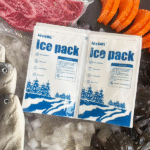
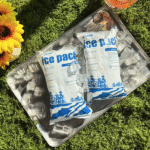
Direct answer: Your gel cooling battery cosmetics manufacturer should offer flat panels, slim sheets, and compact bricks so you can match the pack to your box and lane.
Flat formats pack cleanly and cool evenly, which reduces packing errors at scale.
Expanded explanation: Format controls contact area and airflow. It also controls unboxing. Flat panels tend to look “designed,” not improvised.
| Format | Best for | Main trade-off | Practical meaning for you |
|---|---|---|---|
| Flat panels | Kits and cartons | Needs consistent placement | Faster training, fewer mistakes |
| Slim sheets | Mailers and small boxes | Shorter duration | Lower postage costs |
| Bricks | Export and long delays | Heavier, colder | Longer protection for high-risk lanes |
Practical tips for format selection
Match format to your most common box size first.
Avoid overpacking; more gel is not always better.
Test with real products, not empty boxes.
How do you validate a gel cooling battery cosmetics manufacturer’s claims?
Direct answer: Ask for temperature curves, not just “hours of protection.” Curves show you what happens inside your box, not just what the brochure says.
Expanded explanation: A curve shows you the peak, the valley, and the recovery. It tells you if your product stayed in the safe band or drifted out.
Validation checklist
| What to ask for | What it tells you | Why it matters |
|---|---|---|
| Temperature curves | Real-time thermal behavior | Shows actual performance |
| Sensor placement maps | Where data was collected | Confirms test validity |
| Lane-style profiles | Simulated route conditions | Matches your real shipping |
| Failure mode analysis | What breaks first | Helps you plan contingencies |
How do you audit a gel cooling battery cosmetics manufacturer?
Direct answer: Use a simple scorecard that covers material safety, thermal validation, supply reliability, and support quality.
Supplier audit scorecard
| Area | What to check | Why it matters |
|---|---|---|
| Material safety | Cosmetic-grade + odor control | Protects your brand |
| Thermal validation | Curves + profiles + sensors | Better decisions |
| Supply reliability | Stable lead times | Fewer stock-outs |
| Support quality | Pack-out guidance + root-cause help | Faster fixes when issues spike |
Practical audit tips (quick wins)
Run a pilot: 200 shipments reveal more than a brochure.
Inspect after thaw; leaks often show after the first melt.
Require lot traceability; it matters when you scale.
How can a gel cooling battery cosmetics manufacturer cut cost without adding risk?
Direct answer: The safest savings come from optimizing pack-out geometry, not lowering gel quality.
Think in “cost per protected delivery,” not “cost per pack.”
Mini calculator: cost per protected delivery
| Input | Your number |
|---|---|
| Added cost per order (gel + insulation) | ____ |
| Refund/reship cost when damaged | ____ |
| Damage rate in hot months | ____% |
| Target damage rate after improvement | ____% |
Cost levers that usually work (and why)
Reduce empty space so you need less gel mass.
Use right-sized insulation for your lane.
Standardize pack shapes across SKUs to reduce packing mistakes.
Reuse gel packs in B2B or subscription loops when operationally realistic.
2026 trends for gel cooling battery cosmetics manufacturer solutions
In 2026, buyers reward proof, clarity, and real-world usefulness—and that aligns with Google’s “helpful, reliable, people-first” guidance.
AI-driven discovery also pushes you to be clearer with structure, FAQs, and schema.
Latest developments you should expect
Target-band gels: Less “ice cold,” more “right temperature.”
Cleaner material stories: Low-odor films and clearer documentation.
Lighter systems: Better insulation geometry with less gel mass.
More validation: Lane testing becomes baseline.
Modern parcel thermal profiles: ISTA highlights 7E as the newer parcel thermal standard.
Frequently Asked Questions
Q1: Are gel cooling batteries safe for direct contact with cosmetics?
Yes—when they are cosmetic-grade, sealed, and tested for odor and migration control.
Q2: How long can a gel cooling battery protect cosmetics?
Most systems protect for 24 to 72 hours, depending on insulation, gel mass, and route exposure.
Q3: Can gel cooling batteries cause overcooling damage?
Yes. Avoid direct contact, use a separator, and temper packs when needed.
Q4: How do you prove performance before scaling?
Ask for instrumented validation, sensor maps, and raw curves that match your lanes.
Q5: Why does the manufacturer matter if gel packs look similar?
Because seal quality, film strength, gel consistency, and traceability decide whether you get stable performance at scale.
Summary and recommendations
A gel cooling battery cosmetics manufacturer helps you reduce heat spikes that cause leakage, separation, and negative reviews.
Start by defining a safe band for the weakest item, then choose formats that pack cleanly and train easily.
Validate with temperature curves and lane-style profiles before you scale.
Next step (CTA): Pick your hottest two lanes, run a small pilot, review the curves, then standardize one pack-out your team can repeat.
About Tempk
We build temperature-controlled packaging systems for sensitive shipments, including cosmetics. As a gel cooling battery cosmetics manufacturer, we focus on predictable cooling performance, cosmetic-safe materials, and practical pack-out guidance you can use daily.
We support custom formats, validation planning, and scalable supply for growing brands.
Call to action: Share your SKU list, box dimensions, and target delivery times, and request a lane-based pack-out test plan.