Gel Ice Blanket North America Manufacturer: What Buyers Should Know Before Ordering
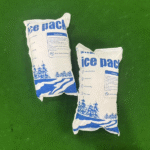
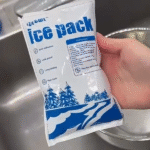
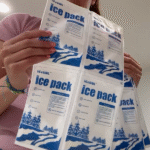
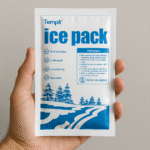
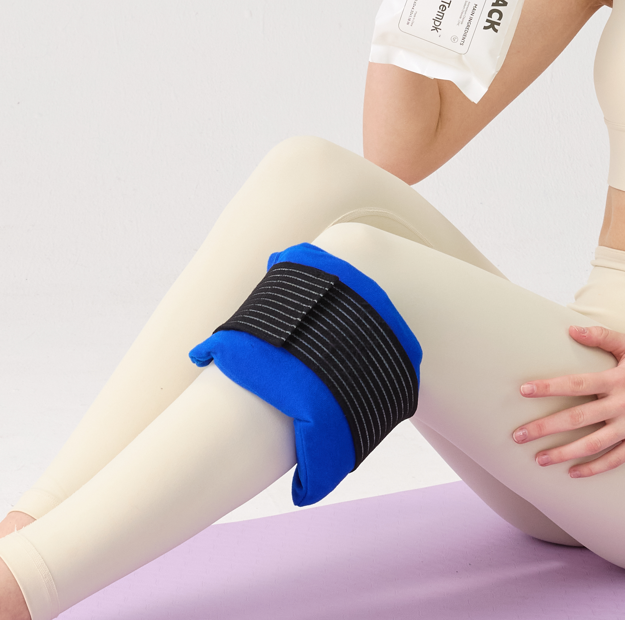
Choosing gel ice blanket North America manufacturer well means answering four questions early: what temperature band you need, how long the route really is, what the product can tolerate, and how consistent the supplier must be. Most buyers in this category are trying to source a refrigerant component that is practical to buy, easy to deploy, and realistic for the lanes they actually run. The packaging component itself is a gel ice blanket: a multi-cell refrigerant sheet or wrap that covers a wider surface area than a single pack.
Good buyers do not stop at the component definition. They compare geometry, conditioning, qualification boundaries, and supplier consistency because a cold pack that is wrong for the route can be just as problematic as a weak one. The best manufacturer is the one that makes the blanket predictable in real operations: uniform cells, stable sealing, and a format that workers can place quickly.
Where this refrigerant fits in a shipping system
Gel Ice Blanket North America Manufacturer usually describes a sourcing need built around one format and several operating decisions. Buyers are not simply choosing a cold pack. They are choosing how that refrigerant will behave in a real box, on a real lane, with a real warehouse team.
The underlying component is a gel ice blanket used inside a passive shipper or insulated parcel. They are useful for larger meal kits, cartons with broad footprints, and line-side operations that benefit from one fast placement instead of several separate packs. A well-chosen gel-based format can simplify pack-out, reduce leakage compared with wet ice, and make temperature control more predictable in a passive system.
The buying decision becomes much clearer once you separate three questions: what the pack is made of, how it is conditioned, and whether the whole shipping design is suitable for the product. That framework is more useful than comparing stock photos or generic cold-retention claims.
How this format behaves during transit
A gel ice blanket protects temperature by acting as a thermal buffer inside a passive system. The insulation reduces the rate of heat gain from outside the parcel, and the refrigerant absorbs that heat for a limited period after packing. That sounds simple, but performance depends heavily on conditioning, placement, and product sensitivity.
A thin pack gives you more contact and can cool faster, while a heavier block or brick usually carries more reserve. Blankets and pillows improve coverage; pads create a flatter interface; standard packs are versatile and easy to reposition. The correct geometry is the one that supports your lane without wasting volume or creating an unsafe cold spot.
Current industry practice continues to treat gel packs, bricks, pouches, and blankets as refrigerants inside a packaging system, not as a stand-alone compliance answer. It still has to be matched with insulation, conditioning, and route logic. Otherwise a well-made pack can still deliver a poor shipping result.
Why material choice matters
From a materials point of view, most commercial gel refrigerants are built around a water-based gel or another phase-change formulation held inside a sealed outer film. Public manufacturer information commonly points to durable polyethylene or comparable thermoplastic films, heat-sealed seams, and designs intended to reduce leakage during handling. That basic construction sounds simple, but small differences in film strength, seal quality, and fill-weight control can change field performance significantly.
Two properties matter more than buyers sometimes expect. The first is thermal mass: more mass usually means more reserve, but it also adds freight weight and internal volume consumption. The second is contact behavior: a flexible pack can wrap and cool quickly, while a rigid shape can make placement more repeatable and reduce pack movement inside the box. That is why blankets can wrap or line larger surfaces, which improves contact and speeds up manual packing in some high-volume operations.
There is also a data-discipline issue. Some suppliers publish rough starting ratios for food and parcel shipping, such as using around one pound of gel refrigerant for every two pounds of product. That can be useful as a planning shortcut, but it is not a design rule. Season, ambient profile, insulation, carton void space, and product starting temperature can move the requirement far away from any generic ratio.
Best-fit use cases
A good fit usually starts with the product and the route rather than with the refrigerant catalog. Blankets can wrap or line larger surfaces, which improves contact and speeds up manual packing in some high-volume operations. When the format is well matched to the lane, it can reduce mess, improve receiving quality, and make warehouse work more repeatable.
Buyers usually get the best results when the refrigerant fits naturally into the existing insulated shipper, freezer workflow, and receiving process. That matters because a technically strong pack is still a poor choice if teams struggle to condition it, place it correctly, or replenish it reliably.
In North American food, healthcare, and parcel networks, the most useful fit is generally the one that supports both thermal needs and local operating realities such as inventory turns, peak season pressure, and lane diversity. A nearby or regional supplier only helps when those real conditions are reflected in the design.
Why regional context matters
In North America, lane diversity is a real sourcing issue. A program may include short urban parcel routes, longer ground networks, hot summer dwell, and occasional cross-border movement. That makes repeatable pack-out and reliable replenishment just as important as the nominal performance of the refrigerant.
Regional manufacturing or inventory can help when custom sizes, branded labels, or high seasonal volumes make stockouts expensive. At the same time, buyers should test the hardest realistic lanes first because broad geography quickly exposes weak thermal assumptions.
What changes the buying decision
Start with the route and the product tolerance, then work backward to the refrigerant. That one change in sequence prevents many bad purchases because it forces you to compare the pack against the shipment you actually run.
Helpful decision tools
Check the details before you choose packaging
These quick tools can help you compare route risk, sizing needs, coolant choices, and packaging details before you request a quote.
Ice Pack Calculator
Estimate gel ice pack quantity for chilled shipments and practical route planning.
Estimate ice packsCoolant & PCM Reference
Compare coolant and PCM options when a route needs added temperature support.
Compare optionsDry Ice Calculator
Estimate dry ice needs for frozen or ultra-cold shipments before packing.
Estimate dry iceMeasure internal dimensions, not just external carton size. Check usable volume, likely pack placement, and whether the refrigerant will create direct contact with a freeze-sensitive load. Uniformity matters. If cell fill, hydration, or sealing is inconsistent, blanket performance can vary more than buyers expect. In many programs, the best option is the design that meets the lane with the simplest repeatable pack-out.
Also compare conditioning method, freezer staging, receiving logic, and delay tolerance. Some suppliers offer useful starting rules of thumb, but those should only be treated as planning cues until the pack-out has been tested on a realistic lane. A buyer guide becomes valuable only when it turns into a route-aware decision.
Why documentation and qualification still matter
One of the most useful distinctions for buyers is the line between a refrigerant component and a qualified shipping system. WHO guidance for time- and temperature-sensitive pharmaceuticals treats gel packs, bricks, bottles, pouches, and related coolants as temperature-stabilizing media inside passive containers. The qualification burden applies to the total design, not to the cold pack alone.
That matters even outside pharma because the same logic applies operationally in food, cosmetics, laboratory, and biotech work. A good cold pack can still fail the shipment if the lane, insulation, or pack-out is wrong.
Supplier qualification is part of this boundary. If packaging components are important to your quality process, ask how fill weight, sealing, identification, and any future design changes are controlled and communicated. That turns compliance from a vague word into a purchasing checklist.
How to shortlist wholesale suppliers
A practical shortlist combines engineering questions with purchasing questions. You are not only buying a refrigerant shape. You are buying repeatability, replenishment discipline, and a change-control relationship. You should ask how the blanket is filled or hydrated, how flexible it remains after freezing, and how cell layout matches the box footprint.
- Internal vs external dimensions. Ask for exact internal fit against the insulated shipper or carton you already use, not only the pack’s nominal size.
- Usable volume and pack placement. Confirm whether the pack works above, below, beside, or around the product and how much sellable space it consumes.
- Material and resin details. Ask what film structure is used, how seams are made, and whether the pack is leak-resistant enough for your handling conditions.
- Conditioning protocol. Clarify whether the pack should be frozen solid, refrigerated, or tempered before use, and how long preconditioning takes in a normal warehouse freezer.
- Stackability and return efficiency. For larger programs, ask whether the case pack, pallet pattern, and possible reuse model improve storage and reverse-logistics efficiency.
- Labeling and traceability. Check whether lots, date codes, or custom identifiers can be applied consistently for receiving and investigation work.
- Sample-to-production consistency. Require the supplier to explain how a validated sample, pilot lot, and mass production run are kept aligned over time.
- MOQ, lead time, and custom options. Compare stock availability with true custom capacity so you do not approve a format that cannot be replenished when demand rises.
- Ask whether the blanket is pre-filled or hydrate-at-use, and how that choice affects storage, handling, and consistency.
- Check whether cell layout matches your box footprint and whether the blanket remains flexible enough after freezing.
- Confirm manufacturing scale, change-control discipline, and support for North American seasonal lanes.
Good suppliers answer these points clearly before the first large order. That early discipline saves time later when volumes rise or routes change.
Where buyer expectations are moving
Current buyer expectations are moving in a clear direction. Companies want refrigerant components that support route-specific design, reduce avoidable packaging waste, and create less mess in packing and receiving. That is one reason reusable or more durable transport formats continue to attract attention in cold-chain operations.
Industry and association material around reusable transport packaging highlights the same business logic: packaging designed for multiple trips can reduce cost per trip and lower environmental burden when the return loop is real and well managed. Not every program can support reuse, but the sourcing conversation increasingly includes returnability, recyclability, and overall material efficiency instead of looking only at piece price.
Wrap-style refrigerants are drawing attention where buyers want faster line-side placement and better contact across larger surfaces. Regional manufacturing is attractive when buyers want shorter replenishment cycles and more control over custom formats. For buyers, the practical takeaway is that supplier selection now includes operational intelligence: who can help you simplify the lane, improve pack-out repeatability, and reduce waste without risking temperature performance.
Problems that show up after the first large order
Most buying problems do not come from catastrophic manufacturing defects. They come from quiet mismatches between the pack, the box, and the lane. A buyer approves a promising sample, then the warehouse uses a different conditioning method, or the custom box changes, or the summer route is harsher than the pilot lane.
- Choosing by unit price alone and ignoring freight weight, dimensional impact, and pack-out labor.
- Using a refrigerant format that fits the catalog photo but wastes internal volume in the real carton.
- Treating a frozen-solid pack as universally safe even when the product is freeze-sensitive.
- Assuming a pass on one short lane proves the design for every destination and season.
- Skipping lot traceability and then struggling to investigate leakage, fill variation, or field complaints.
- Ordering bulk quantities before confirming that production lots match the approved sample.
A blanket is excellent for broad surface coverage, but it still needs a defined insulation set and route-specific test logic. The fix is usually disciplined testing, route-aware design, and stronger supplier communication – not necessarily a more expensive pack.
Common follow-up questions
Does a regional supplier always outperform an offshore supplier?
Not always, but regional sourcing can reduce replenishment time, simplify communication, and lower the risk of inventory gaps for custom formats.
Is a gel pack, pillow, brick, or blanket a complete cold-chain solution?
No. It is one refrigerant component inside a passive shipping design that still depends on insulation, conditioning, and route-specific pack-out logic.
What should you test before scaling up?
Test the actual pack pattern, product load, conditioning method, and the warmest realistic lane you expect to run, not just a short ideal route.
The short version for buyers
In other words, good procurement is less about catalog language and more about fit: fit to product, fit to lane, fit to warehouse workflow, and fit to quality expectations. Before you scale a purchase, confirm the pack geometry, conditioning method, insulation set, and supplier discipline under the same conditions your operation will actually face.
About Tempk
At Tempk, we focus on temperature-controlled packaging for cold-chain shipping, including ice packs, insulated bags, cooler boxes, and thermal pallet covers. We also offer custom packaging solutions built around transport duration, temperature targets, size, and handling needs. For teams evaluating cold-chain refrigerants, our practical strength is combining packaging components with system-level thinking so the solution matches the route instead of relying on a generic cold claim.
Next Step
If you need a better fit for your temperature range, transit time, or bulk-order program, ask for a packaging recommendation built around your actual lane. For custom or wholesale projects, start with the box, the route, and the product sensitivity – then choose the refrigerant.