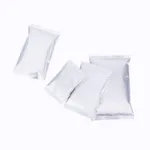
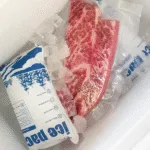
Choosing a coolant is one of the most important decisions in cold chain packaging. Gel packs, dry ice, and PCM packs can all protect temperature-sensitive products, but they are not interchangeable. The right choice depends on the product temperature range, payload mass, route duration, allowable freeze risk, carrier rules, documentation needs, and customer receiving experience.
For B2B buyers, the goal is not to choose the coldest coolant. The goal is to choose the coolant that keeps the product inside its required temperature range for the required time, under realistic handling conditions, with acceptable safety, cost, compliance, and brand experience.
Quick answer
Gel packs are usually the starting point for chilled and refrigerated shipments. FedEx describes gel coolants for products that should remain between 34°F / 1°C and 50°F / 10°C. Dry ice is used when products must remain frozen, but it sublimates at -78.5°C / -109.3°F and requires venting, marking, and handling controls. PCM packs are used when the packout needs more controlled heat absorption and release around a specific phase-change range.
Source-backed coolant comparison
| Coolant type | Source-backed parameter | Best-fit cold chain use | Key risk to control |
|---|---|---|---|
| Gel pack / gel coolant | FedEx describes gel coolants for shipments that need to stay between 34°F / 1°C and 50°F / 10°C. | Chilled food, grocery, meal kits, seafood held above freezing, cosmetics, some refrigerated parcels. | Insufficient coolant mass, direct contact freeze risk, condensation, leakage, wet cartons. |
| Dry ice | USGS states dry ice sublimates at -78.5°C / -109.3°F. | Frozen food, frozen seafood, ice cream, deep-frozen materials, and lanes where gel packs cannot maintain frozen conditions. | CO2 gas pressure, ventilation, frostbite risk, over-freezing, marking, carrier acceptance. |
| PCM pack | ScienceDirect defines phase change materials as materials that absorb and release large amounts of heat during phase change, often near a stable temperature range. | 2-8°C pharma, narrow-band chilled products, controlled room-temperature programs, premium validated systems. | Incorrect phase-change temperature, poor conditioning, cost, supply specification, validation needs. |
| Water injection ice pack | Uses water or water-based coolant filled before use; final performance depends on freezing and packout design. | High-volume food and grocery programs needing lower inbound freight and easier warehouse storage before hydration. | Filling quality, seal integrity, freeze time, operator training. |
When gel packs are the right starting point
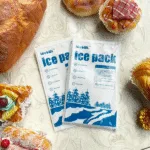
Gel packs are widely used because they are familiar, affordable, and easy to integrate with insulated bags, EPS boxes, box liners, EPP coolers, and parcel cartons. They are often the first option for chilled food, grocery delivery, prepared meals, fresh seafood, cosmetics, and refrigerated ecommerce orders.
A gel pack is appropriate when the product must stay cold but not necessarily frozen. It is also useful when the receiving customer expects a clean, non-hazardous coolant. For meal kits and grocery delivery, the end-user experience matters: the gel pack should not leak, over-wet the carton, or make disposal confusing.
However, gel packs are not a universal solution. A frozen gel pack can create local freeze points if it touches medicine, salad, chocolate, or other freeze-sensitive products. In long-distance summer parcel shipping, the gel pack mass may need to be larger than expected. In a weak insulated carton, simply adding more gel packs can make the box heavy while still failing the route.
When dry ice is still needed
Dry ice is the strongest common cold source in parcel and air shipments. It can keep products frozen where gel packs may only keep them chilled. That makes dry ice relevant for frozen seafood, ice cream, frozen meat, frozen prepared meals, and some deep-frozen lab materials.
But dry ice is not just a colder gel pack. It is solid carbon dioxide. As it sublimates, it becomes gas. Packaging must not be airtight and must allow gas release. PHMSA states that dry ice packages used as refrigerant must be designed to permit the release of gas to prevent pressure buildup and must be marked with the proper shipping name and ID number, such as “Dry ice,” UN1845, and net mass when applicable. The FAA PackSafe guidance also states that dry ice packages must not be airtight and must allow venting.
Dry ice also creates product-quality risk. It can over-freeze products, damage labels or containers by extreme cold, and create a safety issue for packers and receivers. UPS guidance for food and perishable shipments recommends keeping contents separate from dry ice and using EPS foam inside corrugated packaging.
When PCM packs are better than standard gel packs
PCM packs are useful when the customer needs better temperature control around a chosen band. A phase change material absorbs heat as it melts and releases heat as it freezes. This latent heat behavior can help reduce temperature swings when the PCM is selected and conditioned correctly.
Helpful decision tools
Check the details before you choose packaging
These quick tools can help you compare route risk, sizing needs, coolant choices, and packaging details before you request a quote.
Coolant & PCM Reference
Compare coolant and PCM options when a route needs added temperature support.
Compare optionsIce Pack Calculator
Estimate gel ice pack quantity for chilled shipments and practical route planning.
Estimate ice packsInsulation Material Reference
Compare insulation material choices for different cold chain packaging needs.
Compare materialsPCM packs are often considered for 2-8°C pharmaceutical shipments, controlled chilled products, specialty biologics, and packouts where freeze damage is a major concern. They are also useful when the brand needs a documented, repeatable packout rather than a simple “add more ice” approach.
The tradeoff is that PCM packs require more precise specification. The phase-change temperature, container design, conditioning method, payload layout, and test profile must be aligned. If the PCM is conditioned incorrectly, it may not perform as intended. PCM is therefore a solution-design component, not only a commodity coolant.
Decision matrix for enterprise buyers
| Buyer question | Better starting option | Why |
|---|---|---|
| The product must arrive chilled but not frozen. | Gel pack or PCM pack | Gel packs are cost-effective; PCM may reduce freeze risk in narrower bands. |
| The product must remain hard frozen. | Dry ice or frozen PCM system | Dry ice is commonly used for frozen shipments, but requires venting and markings. |
| The shipment is a 2-8°C medicine. | PCM pack or no-freeze gel packout | The main risk is not only warming but also freezing from direct coolant contact. |
| The route is local food delivery. | Gel packs, water injection packs, insulated bags or liners | Lower regulatory complexity and better end-user handling. |
| The brand wants private-label packaging. | Gel packs, water injection packs, insulated bags | These components can support logo printing and retail-style instructions. |
| The route includes air shipment with dry ice. | Dry ice packout with compliance review | Air shipment requires venting, marking, and carrier acceptance procedures. |
| The buyer wants lower inbound freight and warehouse storage. | Water injection ice packs | Packs ship compact before filling, then are hydrated and frozen near use. |
How to think about coolant mass
Coolant mass should not be copied from a competitor’s box. The amount needed depends on product mass, starting temperature, insulation, box dimensions, ambient temperature profile, transit time, and the safety margin. A larger box with more headspace needs different coolant placement than a small insulated pouch. A refrigerated meal at 2-4°C needs a different strategy than a frozen seafood order leaving the freezer at -18°C.
For a first design, create a thermal budget using product mass, insulation type, route duration, and ambient risk. Then validate by a sample packout with a data logger. For enterprise customers, the final specification should include coolant size, quantity, conditioning time, placement, insulation format, carton size, and packing sequence.
Practical packout rules
| Rule | Application |
|---|---|
| Precondition coolant and insulation before packing. | FedEx recommends freezing gel coolants and pre-cooling the insulated container when practical. |
| Use plastic liner and absorbent material where meltwater, purge, or condensation may occur. | Helps prevent wet cartons and protects the shipping label. |
| Avoid direct contact between frozen coolant and freeze-sensitive products. | Especially important for medicine, chocolate, produce, and delicate prepared foods. |
| Allow dry ice packages to vent. | Dry ice sublimation creates gas and pressure risk. |
| Test the complete packout, not the coolant alone. | Coolant performance depends on insulation, payload, placement, and route exposure. |
FAQ
Are gel packs safer than dry ice?
For many chilled shipments, gel packs are easier to handle because they do not release carbon dioxide gas and do not require dry ice marking. However, gel packs can still leak, freeze sensitive products, or create condensation if the packout is poorly designed.
Can dry ice be used for chilled food?
It can be too cold for many chilled products. Dry ice can freeze products that should remain refrigerated. Use separation, buffering, and product-specific testing if dry ice is considered for chilled shipments.
Are PCM packs always better than gel packs?
No. PCM packs are better when their phase-change temperature and conditioning method match the shipment. For simple chilled routes, a well-tested gel pack and insulation system may be more cost-effective.
What should be tested before approval?
Test the full packout: product load, carton, insulation, coolant, placement, conditioning, route profile, and data logger location. Do not approve a coolant based only on its specification sheet.
Final takeaway
Gel packs, dry ice, and PCM packs solve different cold chain problems. Gel packs are usually best for chilled distribution, dry ice is used for frozen packouts but requires ventilation and transport controls, and PCM packs are useful when a narrower temperature band or no-freeze design is needed. The best coolant is the one that keeps the payload in range through the real route, not the one that looks coldest on paper.