Choosing No Sweat Gel Pack Industrial Goods Supplier for Real Cold-Chain and Handling Conditions
Most buyers get better results with no sweat gel pack industrial goods supplier when they first define the temperature window, transit profile, and pack geometry the product has to support.
For industrial goods shipping, moisture-sensitive labels, adhesives, reagents, and clean unpacking requirements, the most reliable answer is usually the same: choose the pack only after you know the target temperature band, the route duration or handling window, the geometry of the payload, and the level of documentation your team needs. That keeps sourcing tied to performance rather than to marketing language.
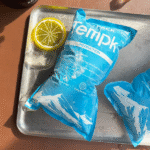
A no-sweat gel pack is a refrigerant pack built to reduce or absorb the moisture that normally forms on the outside of a cold pack as it warms. Some use absorbent outer layers, and some use multi-layered structures designed to control surface wetness during transit.
For industrial goods, that matters because the shipment may be temperature-sensitive without being food or pharma. Think labels, electronics subassemblies, specialty adhesives, diagnostic kits, resins, or components packed in fiberboard. In these cases, condensation can ruin the package even when the temperature itself is acceptable.
Defining the product before you compare suppliers
A no-sweat gel pack is designed to manage surface condensation, but it should not be treated as a cure-all for every industrial cold-chain problem. If the route is thermally underpowered, a dry exterior alone will not protect the product. The pack still has to deliver the right cooling profile for the actual transit conditions.
It also helps to separate anti-condensation performance from pack durability and reuse. Some formats are optimized for cleaner handling. Others are optimized for cycle life or long hold time. Buyers need to decide which failure mode causes the greater operational cost.
Industrial programs may not carry the same regulatory profile as vaccines or specimens, but documentation still matters when packs become repeat-purchase components in multi-site operations. Stable specifications and change communication reduce unpleasant surprises later.
How it works and why format matters
Condensation forms because a cold pack surface drops below the dew point of the surrounding air. No-sweat designs try to manage that effect through outer materials and construction rather than changing the basic physics. The key question is how the surface handles melt-phase moisture and whether that moisture reaches the label, carton, or product area.
Thermal performance comes from more than the inner fill. The shell or film must stay flexible enough for the intended conditioning state, resist puncture or seam fatigue, and preserve a repeatable geometry around the payload. Even a good refrigerant chemistry can disappoint if the filled shape changes too much after freezing, if the cells distribute mass unevenly, or if the exterior becomes difficult to handle in the real workflow.
Geometry is especially important because heat does not enter a shipper or handling setup uniformly. Flat formats create broader contact and can reduce dead space. Thicker bricks or denser packs may store cooling energy longer, but they also occupy more volume and may create colder local contact points. The correct balance depends on whether you need even coverage, longer hold time, easier packing, cleaner handling, or a more controlled temperature window.
The refrigerant inside still matters. Many no-sweat packs are based on water-like systems around 0°C. That may be fine for some industrial goods but too cold for others. In those cases, buyers may need to combine condensation control with a different PCM strategy.
Matching the format to the use case
The best-fit use case depends on the trade-off you care about most: coverage, duration, handling, repeatability, condensation control, receiver experience, or tighter temperature buffering. The common patterns below help buyers compare those trade-offs quickly.
Moisture-sensitive labels and cartons
If the outer carton softens, label ink runs, or barcode readability drops because of condensation, the cold pack has created a secondary damage mechanism. No-sweat formats are designed to reduce that problem and preserve package presentation and scanability.
This is particularly useful in multi-stop distribution or warm receiving areas where packs spend time thawing before unpacking.
Industrial products that need cool, clean handling
Some industrial goods only need moderated temperature, not pharmaceutical-grade qualification. Yet they still need a clean unpacking experience. No-sweat packs help when the receiver opens cartons on a clean bench, in a service van, or near moisture-sensitive paperwork and components.
The gain is operational cleanliness as much as thermal control.
Routes where dry unpacking improves labor efficiency
A wet cold pack slows down receiving. Staff start looking for towels, separating damp paperwork, or waiting to inspect labels. That hidden labor cost is one reason industrial buyers increasingly ask for anti-condensation performance rather than accepting standard gel packs by default.
In many operations, the productivity improvement is as important as the cooling function itself.
A practical supplier checklist before scale-up
When industrial packaging buyers, operations teams, and contract manufacturers buy in volume, the best supplier conversation is detailed and specific. It should cover dimensions in conditioned use, material choice, closure or seam quality, handling stress, lot traceability, and the practical instructions needed for the people who will freeze, pack, move, clean, or receive the product. A short list built on those points is usually more reliable than a long list built only on price and MOQ.
Most buying errors happen when teams compare packs before they have written down the real operating requirement. For industrial goods shipping, moisture-sensitive labels, adhesives, reagents, and clean unpacking requirements, the decision should start with whether condensation is causing real damage or merely inconvenience, then move through how the outer surface behaves after partial thaw in the receiver’s environment, temperature band required by the industrial product and whether 0°C cooling is actually appropriate, and the handling realities behind lint, abrasion, or fiber shedding risk if the outer material is absorbent. If the shipment or use case has a visible end user, the evaluation should also include how the pack fits with labels, inserts, and receiving workflow. That sequence keeps the discussion tied to route outcome rather than to catalog language.
Ask what no-sweat means in measurable terms: absorbent outer, reduced surface condensation, or both.
Helpful decision tools
Check the details before you choose packaging
These quick tools can help you compare route risk, sizing needs, coolant choices, and packaging details before you request a quote.
Compliance Checklist Generator
Build a practical checklist for packaging review, shipping, and documentation.
Build checklistPackaging Selector
Compare insulated packaging options by product, route, and temperature need.
Find packagingRoute Risk Checker
Review lane conditions before selecting packaging for real operating requirements.
Check route riskRequest samples and test them in your actual receiving environment, not only in a controlled lab room.
Check whether the outer material sheds fibers or abrades labels when wet.
Confirm the refrigerant transition point. Dry unpacking is helpful, but not if the product is being overcooled.
Review pack dimensions in conditioned state and how they interact with label locations or paperwork pockets.
Ask about custom sizes and whether no-sweat construction is available across multiple SKUs.
If your product is electronic or highly moisture-sensitive, test carton humidity and label condition after transit, not just payload temperature.
For long-term procurement, change control matters almost as much as first-pass performance. Buyers should know what happens if the supplier changes film structure, resin grade, fill formulation, seal pattern, artwork, or production site. If those changes are not communicated and re-evaluated, a successful pilot can drift into a less reliable production result without anyone noticing until the field complaints begin.
How to validate the format before rollout
Industrial-goods shipments usually sit outside the strictest pharma rules, but buyers should still request clear material and safety documentation, especially when products move across regions or into regulated customer sites.
If the product is temperature-sensitive because of adhesive viscosity, reagent stability, or equipment tolerance, it is wise to document the acceptable temperature band internally and align the no-sweat pack choice to that requirement. A dry exterior does not compensate for a wrong thermal design.
When the industrial good is actually part of a laboratory or healthcare workflow, the supplier may need to support a higher documentation level than a normal commercial pack supplier.
A useful supplier data pack normally includes conditioned dimensions, nominal fill weight or range, material description, conditioning instructions, recommended use window, storage guidance, and any relevant test information on leakage, durability, or route performance. For regulated or quality-sensitive programs, buyers often also want lot traceability, revision control on specifications and artwork, and a clear statement of what the supplier has validated versus what still needs route-specific qualification by the shipper.
Qualification should mirror the lane you actually plan to run. That means defining the payload temperature at packout, the number and location of refrigerants, the insulation configuration, the expected transit duration, and the most credible exposure profile. Temperature loggers or other monitoring tools help confirm whether the packout protects the target range at the warmest and most vulnerable locations, not only at the geometric center of the shipper.
Industrial buyers usually get the best picture by testing both temperature retention and exterior behavior. A pack can look good in a thermal graph and still create problems if condensation wets labels, corrodes secondary packaging, or makes handling awkward on fast lines.
Mechanical review is equally important. Industrial lanes expose packs to stacking pressure, abrasion, and repeated movement through mixed-temperature spaces. No-sweat performance has little value if the seam, shell, or outer layer fails during handling.
Frequently asked questions
What does no-sweat actually mean?
It usually means the pack has an outer construction designed to reduce visible condensation or absorb moisture as the pack warms. Buyers should ask exactly how the claim is achieved.
Are no-sweat packs only for food and pharma?
No. They are often very useful for industrial goods when wet labels, damp cartons, or messy receiving create real cost.
Do no-sweat packs solve all moisture problems?
No. They reduce one moisture source—the pack surface—but do not replace broader humidity control if the route or product demands it.
What a good decision looks like
For industrial goods, the right no-sweat gel pack is one that protects both temperature and presentation. If condensation is causing hidden labor, label failure, or carton damage, supplier selection should focus on outer construction as well as cooling performance.
The strongest procurement outcome usually comes from matching the refrigerant to the exact route or use case, then testing the result under realistic conditions, and finally choosing the supplier that can reproduce that result consistently. That approach is slower than buying by catalog description, but it is usually much cheaper than troubleshooting failures after launch.
About Tempk
At Tempk, we build temperature-controlled packaging products such as gel ice packs, PCM solutions, cooler boxes, and insulated shipping options, with custom development support and laboratory resources shown on our website. For industrial buyers, that matters because anti-condensation performance, pack durability, and packout design usually need to be balanced together rather than treated as separate purchases.
Next step
If you are evaluating suppliers, ask for a recommendation built around your target temperature, handling conditions, and bulk-order requirements rather than a generic stock suggestion.