Article 4: Pro Optimized Version
Choosing Refrigerant Gel For Cold Chain Food Supplier for Real Cold-Chain and Handling Conditions
Most buyers get better results with refrigerant gel for cold chain food supplier when they first define the temperature window, transit profile, and pack geometry the product has to support.
For food cold chain, parcel delivery, grocery, meal kits, dairy, seafood, and prepared foods, the most reliable answer is usually the same: choose the pack only after you know the target temperature band, the route duration or handling window, the geometry of the payload, and the level of documentation your team needs. That keeps sourcing tied to performance rather than to marketing language.
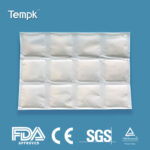
Refrigerant gel for food shipping is the inner cooling medium inside a gel pack, blanket, pad, or brick used to maintain the required food temperature during transport. Buyers often speak as if the gel alone determines success, but the real performance depends on the full packaging system: insulation, pack placement, route time, payload mass, and starting product temperature.
For food, the target is practical and measurable. Perishable products need to stay cold enough through transit to remain safe and high quality. That makes route design, pack conditioning, and receiver timing just as important as the gel formulation itself.
Defining the product before you compare suppliers
Refrigerant gel is only the cooling medium inside the pack. It is not the same thing as a complete food shipping solution. Food safety in transit still depends on insulation, pack geometry, product starting temperature, route duration, handling exposure, and how quickly the receiver opens and stores the shipment.
That is why food buyers should avoid comparing gels only by the label on the inner fill. A different film, pack shape, seam design, or conditioning routine can change the route result just as much as the gel chemistry itself.
Food programs should also separate temperature performance from disposal or food-contact assumptions. A pack can help keep food cold and still require a different disposal route or different handling controls than the buyer first expected.
The main performance drivers buyers should understand
Food refrigerant gels work by absorbing heat from the payload and the environment, but their real-world performance depends on how that cooling energy is distributed. Flat packs improve contact coverage. Bricks extend hold time. PCM formats can target a tighter range when ordinary 0°C cooling is too blunt an instrument.
Thermal performance comes from more than the inner fill. The shell or film must stay flexible enough for the intended conditioning state, resist puncture or seam fatigue, and preserve a repeatable geometry around the payload. Even a good refrigerant chemistry can disappoint if the filled shape changes too much after freezing, if the cells distribute mass unevenly, or if the exterior becomes difficult to handle in the real workflow.
Geometry is especially important because heat does not enter a shipper or handling setup uniformly. Flat formats create broader contact and can reduce dead space. Thicker bricks or denser packs may store cooling energy longer, but they also occupy more volume and may create colder local contact points. The correct balance depends on whether you need even coverage, longer hold time, easier packing, cleaner handling, or a more controlled temperature window.
Film and seam quality are particularly important in food logistics because boxes are often compressed, dropped, and moved quickly across mixed-temperature environments. A small leak can contaminate secondary packaging, create cleanup costs, and damage the customer experience even if the gel itself is non-toxic.
Matching the format to the use case
The best-fit use case depends on the trade-off you care about most: coverage, duration, handling, repeatability, condensation control, receiver experience, or tighter temperature buffering. The common patterns below help buyers compare those trade-offs quickly.
Chilled foods and grocery delivery
Refrigerant gels are widely used for dairy, meal kits, produce, seafood, and prepared foods that need refrigerated transport but do not need dry-ice-level frozen conditions. In these programs, the right gel pack format can balance cooling performance with box space and freight cost.
For parcel-based food routes, flat packs or linked sheets often help with coverage, while brick formats may be better for longer dwell times and more severe ambient exposure.
Frozen or partially frozen food support
Some buyers try to use more and more gel to compensate for a route that really needs a different strategy. That usually raises cost and lowers payload efficiency. If the food must stay deeply frozen for long periods, dry ice or a different engineered system may be more appropriate.
Good suppliers will tell you where gel refrigerants stop being the best answer instead of trying to fit every problem into one product family.
Retail and consumer-facing shipments
When the receiver is a store team or consumer, leak resistance, condensation, and disposal become more visible. The pack should keep food cold without turning the receiving process into a wet cleanup job.
That is why some food shippers explore no-sweat outers, drain-friendly fills, or simpler pack geometries for customer-facing programs.
A practical supplier checklist before scale-up
When food manufacturers, distributors, and cold-chain sourcing teams buy in volume, the best supplier conversation is detailed and specific. It should cover dimensions in conditioned use, material choice, closure or seam quality, handling stress, lot traceability, and the practical instructions needed for the people who will freeze, pack, move, clean, or receive the product. A short list built on those points is usually more reliable than a long list built only on price and MOQ.
Most buying errors happen when teams compare packs before they have written down the real operating requirement. For food cold chain, parcel delivery, grocery, meal kits, dairy, seafood, and prepared foods, the decision should start with food temperature target and whether the product is chilled, frozen, or simply heat-sensitive, then move through route profile, including line staging, parcel hubs, and last-mile exposure, carton size, product stack, and how much payload space the refrigerant will consume, and the handling realities behind receiver experience: condensation, disposal, and ease of handling. If the shipment or use case has a visible end user, the evaluation should also include supplier ability to maintain consistent fill weight, film quality, and lot traceability. That sequence keeps the discussion tied to route outcome rather than to catalog language.
Helpful decision tools
Check the details before you choose packaging
These quick tools can help you compare route risk, sizing needs, coolant choices, and packaging details before you request a quote.
Ice Pack Calculator
Estimate gel ice pack quantity for chilled shipments and practical route planning.
Estimate ice packsRoute Risk Checker
Review lane conditions before selecting packaging for real operating requirements.
Check route riskCompliance Checklist Generator
Build a practical checklist for packaging review, shipping, and documentation.
Build checklistDefine the actual food temperature requirement before comparing pack formats.
Ask for conditioned dimensions and finished weights so freight and carton fit can be modeled accurately.
Check film toughness and seam design for food-industry rough handling and stacked cartons.
Review conditioning instructions and freezer staging needs with your operations team.
Ask about options for no-sweat, drain-friendly, or custom geometry if receiver experience matters.
Request traceability and consistent lot coding for QA investigations.
Run a live route simulation or trial using real food loads, not empty cartons.
For long-term procurement, change control matters almost as much as first-pass performance. Buyers should know what happens if the supplier changes film structure, resin grade, fill formulation, seal pattern, artwork, or production site. If those changes are not communicated and re-evaluated, a successful pilot can drift into a less reliable production result without anyone noticing until the field complaints begin.
Qualification and documentation points that matter
Public food-safety guidance for delivered perishables emphasizes insulated packaging and cold sources such as frozen gel packs or dry ice, with the expectation that perishable food arrives frozen, partially frozen, or at refrigerator temperature, generally 40°F or below.
For food shippers, the implication is clear: procurement should focus on the whole route outcome. The gel pack is only useful if the system keeps the food within its safe target range through the actual transit profile.
If disposal claims are part of the brief, buyers should also separate food-safe from drain-safe. Those are different claims and should be documented separately by the supplier.
A useful supplier data pack normally includes conditioned dimensions, nominal fill weight or range, material description, conditioning instructions, recommended use window, storage guidance, and any relevant test information on leakage, durability, or route performance. For regulated or quality-sensitive programs, buyers often also want lot traceability, revision control on specifications and artwork, and a clear statement of what the supplier has validated versus what still needs route-specific qualification by the shipper.
Qualification should mirror the lane you actually plan to run. That means defining the payload temperature at packout, the number and location of refrigerants, the insulation configuration, the expected transit duration, and the most credible exposure profile. Temperature loggers or other monitoring tools help confirm whether the packout protects the target range at the warmest and most vulnerable locations, not only at the geometric center of the shipper.
For food programs, the most useful data comes from whole-system packouts. The gel formulation matters, but so do the outer package, the orientation of the packs, the mass and temperature of the food, and the actual carrier profile. Good validation therefore mixes thermal testing with loaded-shipper trials that reflect real SKU combinations.
Seasonal qualification is also important. Food parcels often move through variable outdoor and delivery conditions, so buyers benefit from understanding how a packout behaves in both peak summer and more moderate weather rather than assuming one static result fits every month.
Frequently asked questions
What is the best refrigerant gel for food shipping?
There is no universal best option. The right choice depends on whether the food is chilled or frozen, how long the route lasts, and what insulated packaging surrounds the gel.
Can standard gel packs replace dry ice for frozen foods?
Sometimes for short routes, but not always. Deeply frozen or long-duration routes may still need dry ice or a different engineered solution.
What should a food supplier prove before I buy in bulk?
Lot consistency, film durability, clear conditioning instructions, and performance in a route simulation that resembles your real shipment.
Bottom line
For food cold chain programs, the right refrigerant gel supplier is one that helps you design a repeatable route outcome. Thermal performance, pack geometry, leak resistance, and receiver experience all matter when food is moving at scale.
The strongest procurement outcome usually comes from matching the refrigerant to the exact route or use case, then testing the result under realistic conditions, and finally choosing the supplier that can reproduce that result consistently. That approach is slower than buying by catalog description, but it is usually much cheaper than troubleshooting failures after launch.
About Huizhou
At Huizhou, we focus on temperature-controlled packaging for fresh food and biopharma shipping, including gel ice packs, PCM refrigerants, insulated shippers, cooler boxes, and custom packaging development. Our public information also highlights laboratory support for design and testing. For food cold-chain buyers, that combination is useful because refrigerant performance has to be evaluated as part of the whole route system.
Next step
If you are planning a new packout or reviewing an existing one, ask for advice based on your target temperature, route duration, carton layout, and seasonal exposure.