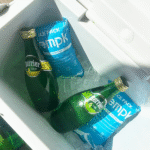
Food delivery and meal kit brands need packaging that protects food safety, product quality, and customer experience through the full delivery route. A 24-48 hour packout is not only a box with gel packs. It is a controlled system that starts with pre-chilled food, uses appropriate insulation and coolant, accounts for last-mile delay, and arrives with clean packaging, readable labels, and acceptable product temperature.
This article explains how to design a practical cold chain packout for chilled meals, meal kits, grocery products, dairy, desserts, sauces, and other temperature-sensitive foods. It uses official food safety and carrier packaging references where possible and separates source-backed parameters from design decisions that require testing.
Start with the food temperature target
FDA food safety guidance states that cold food should be kept at 40°F / 4°C or below, and that perishable food should not remain in the “Danger Zone” of 40°F to 140°F for more than 2 hours, or more than 1 hour if the temperature is above 90°F. This is a food safety reference, not a complete shipping validation protocol, but it helps define the cold chain objective for chilled food delivery.
For frozen food, FDA safe handling guidance references freezer storage at 0°F / -18°C or below. This means a chilled meal kit packout and a frozen meal packout should not be designed the same way.
Temperature and product planning table
| Product category | Practical design target | Main risk | Packaging implication |
|---|---|---|---|
| Chilled prepared meals | Keep cold, generally at or below 40°F / 4°C for food safety. | Warming during last-mile dwell, sauce leakage, tray deformation. | Gel packs, insulated liner or foam box, absorbent layer, clean carton design. |
| Dairy and fresh protein | Strong chilled protection, avoid temperature abuse. | Food safety risk and purge leakage. | Higher coolant mass, product separation, absorbent material, fast packing workflow. |
| Produce and salads | Keep cool but avoid freeze damage. | Freezing from direct gel pack contact, moisture damage. | Buffer layer, airflow control, avoid direct contact with frozen coolant. |
| Chocolate and bakery desserts | Prevent melting or deformation; often not as cold as frozen food. | Heat softening, condensation, appearance damage. | Use insulated liner, gel packs with separation, clean unboxing. |
| Frozen prepared meals | Maintain frozen arrival condition. | Thawing, refreezing, dry ice handling if used. | Strong insulation, frozen coolant strategy, possibly dry ice depending on route. |
| Meal kits with mixed ingredients | Different items may have different sensitivity. | Protein needs colder protection, produce may freeze. | Separate zones, dividers, ingredient grouping, clear packing SOP. |
Build the packout from the inside out
A food delivery packout should be designed from the payload outward.
Start with the food itself. Pack food at the correct starting temperature. Gel packs should protect the product during transit, not cool warm food down after poor warehouse handling. Then define the product arrangement. Keep fragile trays, sauces, and produce away from pressure points and direct frozen surfaces. Add a divider or buffer where freeze risk exists.
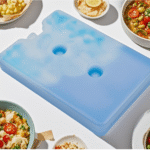
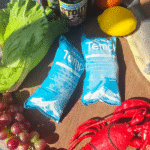
Next choose the coolant. FedEx describes gel coolants for products that need to remain between 34°F / 1°C and 50°F / 10°C. Gel packs are therefore a common choice for chilled food and meal kits. For frozen food, dry ice or a different frozen packout may be required.
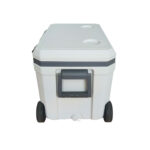
Finally choose insulation. A box liner may be suitable for ecommerce meals where the brand wants flat storage and lower shipping volume. An EPS shipper may improve insulation and rigidity for longer routes. A reusable EPP box may work for local delivery loops or returnable programs.
Recommended packout layers
| Layer | Function | Design notes |
|---|---|---|
| Outer carton | Protects the shipment and carries labels. | Use enough strength for parcel compression and moisture exposure. |
| Insulated liner or foam shipper | Reduces heat gain during transit. | Choose based on hold time, storage space, cost, and sustainability goals. |
| Plastic liner | Protects carton from condensation, leaks, and product purge. | FedEx recommends plastic liners for perishable shipments. |
| Absorbent layer | Captures condensation or leakage. | Especially useful for seafood, meat, dairy, and wet products. |
| Gel packs or coolant | Absorbs heat and extends cold hold time. | Freeze or condition according to packout instruction. |
| Product chamber | Keeps food organized and prevents damage. | Use dividers or sleeves when needed. |
| Packing instruction | Controls warehouse repeatability. | Include pack order, coolant location, and close time. |
| Receiving instruction | Helps the customer judge product condition. | Include “refrigerate immediately” and cold-pack disposal guidance. |
Designing for 24 hours vs 48 hours
A 24-hour design can often use lighter insulation and less coolant than a 48-hour design, but the difference is not linear. A 48-hour parcel may pass through multiple hubs, warmer vehicles, longer dwell time, and residential delivery uncertainty. A delayed 24-hour parcel can behave like a 36-hour shipment. A Friday shipment can become a weekend problem if service fails.
For enterprise food delivery, the design target should include the service time plus a delay margin. A meal kit brand shipping in summer may need different packout versions for warm and mild seasons. A local same-day delivery route may need an insulated bag and reusable packs rather than a parcel foam shipper.
Helpful decision tools
Check the details before you choose packaging
These quick tools can help you compare route risk, sizing needs, coolant choices, and packaging details before you request a quote.
Insulation Material Reference
Compare insulation material choices for different cold chain packaging needs.
Compare materialsCoolant & PCM Reference
Compare coolant and PCM options when a route needs added temperature support.
Compare optionsIce Pack Calculator
Estimate gel ice pack quantity for chilled shipments and practical route planning.
Estimate ice packsRoute risk factors for meal kits and food delivery
| Risk factor | How it affects the packout | Mitigation |
|---|---|---|
| Summer last-mile heat | Increases heat gain near delivery. | More insulation, higher coolant mass, shorter delivery windows, route risk screening. |
| Doorstep dwell | Product may sit after delivery. | Add safety margin and customer instruction. |
| Weekend delay | 24-hour design may fail if delayed. | Avoid high-risk ship days or design for longer hold time. |
| Mixed ingredients | Protein, produce, and sauces have different needs. | Separate cold zones and use dividers. |
| Condensation | Wet cartons damage labels and customer experience. | Plastic liner, absorbent layer, leak-resistant packs. |
| Over-freezing | Frozen gel packs can damage produce or sauces. | Buffer layer, PCM, warmer conditioning, or indirect placement. |
Validation approach
For a new program, start with a desk design using product mass, target temperature, route duration, and insulation format. Then build a sample packout and record product and air-space temperature with data loggers. If the shipment is high volume or national, test against warm and cold profiles. ISTA 7E provides thermal transport profiles developed from real-world heat and cold data and can support more structured testing.
The validation should document product loading temperature, coolant conditioning, pack sequence, data logger location, ambient profile, and arrival condition. If the box passes only when packed by one expert, the design may fail in production. The final design should be simple enough for warehouse staff to repeat during peak demand.
Sustainability and customer experience
Food delivery brands also need to think beyond arrival temperature. Customers complain when ice packs leak, cartons arrive wet, gel disposal is confusing, or too many cold packs accumulate at home. A well-designed packout should include disposal or reuse instructions, right-sized coolant, clean liners, and packaging that does not feel excessive.
Reusable systems can work for closed-loop local delivery. Water injection ice packs can reduce inbound freight and storage volume before hydration. Recyclable liners may support sustainability goals, but they still need thermal testing. Do not replace a validated foam shipper with a lighter liner without re-testing the packout.
FAQ
Can a meal kit stay cold for 48 hours with gel packs?
It depends on payload, insulation, route, starting temperature, gel pack mass, and ambient exposure. Gel packs are commonly used for chilled shipments, but a 48-hour design should be tested under realistic conditions.
Should meal kit gel packs touch the food?
Not always. Direct contact can be useful for some chilled products but can freeze produce, sauces, or delicate foods. Use buffers or dividers when freeze risk exists.
What is the main difference between chilled and frozen meal shipping?
Chilled meals are designed to stay cold but not frozen. Frozen meals must remain frozen and may require stronger insulation, frozen PCM, or dry ice depending on the route.
How can brands reduce wet cartons?
Use leak-resistant gel packs, plastic liners, absorbent material, better coolant placement, and a carton design that keeps labels away from wet surfaces.
Final takeaway
A 24-48 hour meal kit or food delivery packout should be designed around food safety, route reality, product sensitivity, and customer experience. Start with FDA temperature references, choose a coolant and insulation system that matches the route, include moisture control, and validate the complete packout before scaling.