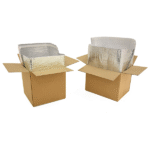
Meal Kit Insulated Packaging: A Better Way to Choose the Pack-Out
meal kit insulated packaging should be selected as a route-specific cold-chain system, not as a single material purchase. Start with the product temperature requirement, then match insulation, refrigerant, carton size, documentation, and receiving instructions to the real shipment. This optimized guide focuses on the decisions that help meal-kit brands, prepared meal operators, grocery delivery teams, and packaging procurement teams reduce soft arrivals, avoid overclaiming performance, and compare suppliers with more useful questions.
Define the Temperature Promise First
The best option is the one that matches product sensitivity, route duration, ambient exposure, and the receiver's ability to act after delivery. meal kit packaging cold chain, meal delivery insulated packaging are useful search terms, but the buying decision should be made from evidence: sample tests, supplier documentation, pack-out photos, and clear acceptance criteria.
For meal kits, pre-portioned ingredients, sauces, proteins, chilled items, frozen components, and consumer delivery boxes, the right packaging question is not 'Which material is best?' It is 'What condition must the product be in when the receiver opens the package?' The answer may involve a numeric temperature limit, a quality requirement, a customer receiving rule, or a simple physical condition such as still being hard frozen. The more valuable or sensitive the product is, the more precise this promise should be.
Meal kit programs should separate chilled, frozen, and ambient ingredients in planning. A single coolant plan can over-chill delicate produce while under-protecting proteins if the pack-out is not designed carefully. This statement belongs in the buying brief. It tells the supplier whether the route needs a chilled, frozen, deep frozen, or mixed-temperature approach. It also prevents the common mistake of buying insulation before defining what the insulation must achieve.
Build the System Around Route Risk
A useful meal kit insulated packaging decision includes the whole route: freezer staging, packing time, carrier pickup, sorting hubs, vehicle dwell, delivery point, and receiving inspection. The box is only one part of that route. A shipment can fail before it leaves the warehouse if the payload is not fully conditioned or if packed cartons wait too long outside cold storage.
Route risk is also seasonal. A pack-out that works in mild weather may not work during a heat wave or holiday delay. Buyers should define approved lanes, approved service levels, maximum dwell assumptions, and what to do when a shipment misses the expected delivery window. This is especially important when mixed loads with incompatible temperature needs, long unattended doorstep exposure, routes without dispatch cutoffs, and boxes that cannot be opened by the consumer soon after delivery.
The strongest programs use evidence in layers. A supplier data sheet gives a starting point. A sample test shows whether the configuration is plausible. A route trial shows how the package behaves in the real logistics path. Arrival checks show whether daily operations are staying close to the approved recipe.
Match Components to the Job They Actually Do
| Component | What it does well | Limit that should not be ignored |
|---|---|---|
| Outer carton or shipper | Provides structure, handling protection, and label surface | Does not control temperature unless paired with insulation and refrigerant |
| Insulated liner or box | Slows heat gain and protects against ambient exposure | Does not create cold and may lose value if seams or lids are poorly closed |
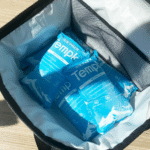
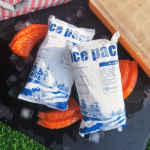
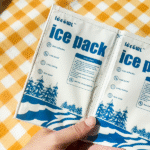
| Gel pack or freezer brick | Adds cooling reserve and simplifies many non-hazardous pack-outs | May not be enough for long or hot frozen routes without testing |
| Dry ice | Provides very strong low-temperature cooling for suitable frozen shipments | Sublimates into gas and may require venting, marking, and special handling |
| Temperature logger or indicator | Creates evidence for lane review and receiving decisions | Records temperature but does not protect the product |
This comparison keeps the decision practical. Components are not interchangeable just because they are used in cold-chain packaging. A liner, a refrigerant, and a logger solve different problems. The buyer's role is to combine them only where the route, product, and operating process support the choice.
What to Verify Before Ordering in Bulk
Bulk purchasing should begin after the sample has proven more than appearance. The buyer should verify usable internal dimensions, payload fit, material consistency, coolant compatibility, closure method, pack-out labor, and any available test evidence. If the quote is based on meal kit packaging cold chain, meal delivery insulated packaging, make sure those terms refer to the actual materials and performance boundaries being proposed, not generic category names.
- Ask whether stated hold time was measured with the same payload and ambient profile you expect.
- Confirm whether dimensions are gross, internal, or usable after insulation and refrigerants.
- Check whether the sample material is the same material that will ship in production.
- Ask how the supplier handles material substitutions, design changes, and repeat orders.
- Request a pack-out diagram or photos that can be used by warehouse staff.
- Define the receiving inspection steps before the first scaled shipment leaves your facility.
These questions do not slow procurement; they prevent avoidable rework. If a supplier cannot explain the operating boundary of the pack-out, the buyer may be taking on hidden risk. If the supplier can discuss limitations clearly, the buyer has a better basis for testing and scaling.
Operational Controls After the Box Leaves the Packing Bench
A pack-out is only reliable when the operation repeats it. Define the freezer conditioning time for refrigerants, the maximum time product can remain outside cold storage, the pack order, the carton close method, and the release check. For dry ice shipments, include venting and label review. For gel pack or freezer-brick shipments, include conditioning verification. For liners, include flap closure and seam checks.
The receiver should have instructions that match the product. They should know whether to open immediately, what arrival condition is acceptable, where to place the goods, what evidence to capture if there is a problem, and who should review exceptions. A good receiving instruction is not a marketing insert. It is a risk-control step that closes the cold-chain loop.
When a shipment fails, review the chain before blaming a single material. Was the product fully frozen? Were refrigerants conditioned? Was the carton size changed? Did a carrier delay occur? Did the box sit unopened? Was the receiving freezer available? These questions lead to useful fixes instead of guesswork.
Risk Prevention by Use Case
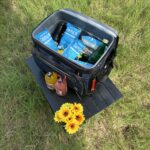
subscription meal kits, prepared-meal deliveries, grocery boxes, trial meal programs, and regional deliveries where passive insulation can protect ingredients through the expected route window are often good candidates for passive packaging when the system is designed carefully. The buyer still needs to separate low-risk and high-risk routes. Low-risk routes may allow a simpler liner and gel pack format. Higher-risk routes may need a rigid insulated shipper, more refrigerant reserve, dry ice, or a different service level.
Helpful decision tools
Check the details before you choose packaging
These quick tools can help you compare route risk, sizing needs, coolant choices, and packaging details before you request a quote.
Ice Pack Calculator
Estimate gel ice pack quantity for chilled shipments and practical route planning.
Estimate ice packsCompliance Checklist Generator
Build a practical checklist for packaging review, shipping, and documentation.
Build checklistDry Ice Calculator
Estimate dry ice needs for frozen or ultra-cold shipments before packing.
Estimate dry icemixed loads with incompatible temperature needs, long unattended doorstep exposure, routes without dispatch cutoffs, and boxes that cannot be opened by the consumer soon after delivery should trigger a different discussion. In these cases, a buyer may need active refrigeration, a qualified thermal shipping system, route-specific testing, or a product-level decision about whether the shipment should be offered at all. Saying no to an unsuitable route is sometimes the most responsible packaging decision.
A meal-kit operator packs chilled proteins, sauces, vegetables, and a frozen add-on in one consumer carton. The problem is not only keeping the box cold; it is avoiding freezing damage, leaks, and a messy unboxing. In this situation, the team should avoid jumping directly to a full bulk order. A better path is to test a small number of pack-outs, record arrival condition, review receiver feedback, and then standardize the recipe that provides the best balance of protection, labor, cost, and customer experience.
Common Mistakes to Remove From the Process
The same preventable mistakes appear across many frozen and cold-chain programs. Teams buy by outside dimensions instead of usable volume. They test in mild weather and launch in summer. They condition refrigerants inconsistently. They leave packages on a dock while paperwork is completed. They copy a pack-out from a different product because the carton looks similar.
- Do not normalize putting frozen gel packs directly against freeze-sensitive vegetables.
- Do not normalize using the same pack-out for all regions and seasons.
- Do not normalize ignoring liquid leakage from thawing items.
- Do not normalize overlooking doorstep dwell time.
- Do not normalize making the box so full that the liner cannot close properly.
A good SOP should remove those mistakes from daily work. It should be short enough for packers to use and specific enough for quality teams to audit. Photos, component counts, and simple acceptance checks are often more effective than long instructions that no one reads during a busy shipping window.
FAQ
How do I choose meal kit insulated packaging for a new route?
Start with the product's required arrival condition, then map route duration, handover points, season, payload, and receiving process. Choose insulation and refrigerant together, not separately. Run a sample test that matches the real carton size and payload before scaling.
What proof should a supplier provide?
Useful proof includes material details, usable dimensions, pack-out diagrams, test conditions where available, and clear operating limits. A broad hold-time number without payload, ambient profile, refrigerant amount, or pass/fail criteria should be treated as a starting claim, not a final decision.
Can I use one pack-out for every season?
Sometimes, but it should be proven. Many programs need seasonal adjustments because ambient exposure, carrier dwell, and destination conditions change. A seasonal plan can be simple: an approved coolant change, a shipping cutoff, an upgraded service level, or an alternate package for high-risk lanes.
Is the most sustainable option always the lightest option?
No. The more sustainable choice must also protect the product. A lighter material that increases product loss, claims, or reshipments may create a worse total outcome. Evaluate thermal evidence, disposal route, return feasibility, labor, and damage rate together.
Conclusion
Additional Procurement Notes
When the buying team compares quotes for meal kit insulated packaging, it should separate material price from total operating cost. Storage space, packing time, damage rate, training, dry ice handling, receiving disputes, and replacement shipments can all change the real cost of a pack-out. A slightly higher unit cost may be justified if the packaging is easier to assemble, easier to audit, and less likely to create temperature or leakage complaints.
Procurement should also confirm the sample-to-production path. Ask whether the same film, liner fold, box structure, refrigerant fill, and closure design will be used in production. If the supplier may change materials, the buyer should define when notification and retesting are needed. This is especially important for meal kits, pre-portioned ingredients, sauces, proteins, chilled items, frozen components, and consumer delivery boxes, where small changes can affect temperature stability and customer experience.
Finally, decide who owns the go or no-go decision when a route exception occurs. A packaging supplier can recommend components, but the shipper should define shipment cutoffs, late-delivery review, receiver instructions, and quality escalation. That division of responsibility keeps meal kit insulated packaging from becoming a vague promise and turns it into a controllable operating procedure.
Choosing meal kit insulated packaging well means making the cold-chain promise visible. Define the required product condition, choose components for their actual roles, verify the pack-out under realistic conditions, and write operating controls that people can repeat. The lowest-risk option is not always the most expensive one, and the cheapest option is not always economical. The best choice is the one that protects product quality within a clear, tested, and repeatable boundary.
About Tempk
Tempk supports meal delivery and food cold-chain projects with gel packs, insulated box liners, cold shipping boxes, freezer ice bricks, EPP boxes, pallet covers, and related packaging materials. We work with buyers who need practical packaging recommendations for real routes, including sample reviews, carton fit discussions, and refrigerant comparisons. Our role is to help connect materials with product needs and packing workflow, while leaving route qualification, market rules, and customer acceptance criteria to the buyer's quality and logistics process.
Share your product type, route time, payload, carton size, and target arrival condition with Tempk to compare meal kit insulated packaging options before scaling up.