No-Sweat Gel Pack Supplier: A Practical Buying Framework
Introduction
A buyer searching for a no-sweat gel pack supplier usually needs more than a cold pack. The goal is to secure a refrigerant format that fits the route, protects the product, and can be supplied with the same quality every time. That sounds simple, but the right choice depends on temperature range, conditioning method, pack geometry, condensation behavior, and how the outer shipper is built around the payload.
In other words, the smart way to compare no-sweat gel pack products is to treat them as part of a shipping system. Once you look at the product this way, the key questions become clearer: what temperature behavior do you need, what format fits the packout, what operational risks matter most, and which supplier can keep the approved sample stable over future batches.
What Buyers Usually Mean by This Product
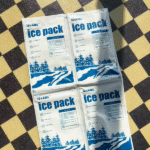
A no-sweat gel pack is designed for situations where moisture on the outer surface causes almost as many problems as heat. These products usually add an outer moisture-managing layer or a dry-touch wrap around the refrigerant core. That helps protect paper labels, printed sleeves, gift boxes, secondary cartons, and other presentation-sensitive packaging. It does not remove the need for route testing, but it can reduce condensation-related complaints in lanes where a standard gel pack leaves cartons damp at delivery.
The phrase temperature sensitive covers a very wide group of products, which is exactly why pack selection should start with the product risk rather than the keyword alone. Some items are harmed mainly by heat. Others are harmed just as quickly by cold shock or by condensation inside the carton. That difference changes whether you need a colder refrigerant, a narrower phase temperature, or a no-sweat design that protects labels and secondary packaging.
In practice, these projects often fail because teams optimize for one variable and ignore the rest. A larger pack might extend hold time but create unwanted condensation. A colder pack might look safer but push the payload below its lower limit. A cheap pouch might meet nominal weight yet fail under edge pressure. The best suppliers help buyers work through those trade-offs in plain language before the bulk order is placed.
The Design Choices That Change Results
Most gel refrigerants are built around a familiar architecture: a flexible film or laminated pouch filled with water and a gel-forming system that holds the liquid in place. In the public market, the gelling system is often based on materials such as sodium polyacrylate or cellulose-derived thickeners, while the outer pouch may use polyethylene alone or a stronger laminate such as PA/PE for better puncture resistance. What matters for buyers is not the chemistry name by itself, but the way that formulation behaves after conditioning, after repeated handling, and after the pack has been pressed against product corners inside a carton.
Public product ranges also show that one family of gel packs does not cover every temperature need. Some are designed around chilled service near 0°C, some use lower-temperature formulations for frozen distribution, and some phase-change variants are tuned to narrower bands such as 3°C, 5°C, 7°C, or warmer controlled ranges. That matters because a colder pack is not automatically a better pack. For freeze-sensitive products, a narrow-band coolant may be safer than a hard-frozen water gel, while frozen foods may need something much colder than a standard refrigerated gel can provide.
Size ranges in the market are equally broad. Small packs can be only a few ounces, while larger shipping formats extend to heavy pads, large pouches, or 80-ounce class packs and beyond. The nominal size, however, is only part of the story. Shape, fill distribution, and consistency from unit to unit all affect how the refrigerant fits the carton and how operators use it in the field. A well-controlled 16-ounce pack may perform better in practice than a nominally larger pack that varies too much in thickness or fill placement.
A buyer does not need a chemistry degree to use this information well. The practical takeaway is simple: ask the supplier what temperature range the pack is intended for, how it should be conditioned, and whether the exact same film and fill system will be maintained once the order moves from samples to production.
Thermal performance depends on the whole packout. Rough rules of thumb can be useful for early estimation, but they should never replace route-based evaluation. The same refrigerant load can behave very differently depending on carton volume, insulation thickness, payload mass, starting temperatures, and the pattern of ambient exposure through the route. Even the location of the pack inside the box matters, because top loading, side loading, and wrap-around placement change the heat path and the risk of direct cold contact.
Hold time on paper matters less than the real route profile. A short lane with repeated dock exposure can be harder than a longer lane that stays inside a controlled network. Conditioning method matters because a pack frozen solid, half-conditioned, or chilled to a narrow target temperature will behave very differently in the same carton. Packout geometry matters as well. Gaps, direct contact, and the position of the refrigerant around the payload can change both temperature distribution and condensation.
Where It Fits and Where It Does Not
A practical way to compare options is to divide them into three groups. Flexible pouches and pillows are best when the payload shape is irregular and close contact matters. Flatter pads work well when headspace is limited and the shipment is arranged in layers. Blocks and bricks are the better fit when you need repeatable geometry, simpler training, and a pack that stays in a defined position inside the shipper. No-sweat constructions deserve a separate look when wet cartons, labels, or printed sleeves create avoidable complaints.
Shape and surface behavior also affect field results. Flexible pillows and pouches can maximize contact area around irregular items, while blocks and bricks simplify standardized packouts. No-sweat constructions help when label damage or wet cartons are a problem. Semi-rigid packs can improve consistency in repetitive operations, but they may require a better-matched shipper to avoid unused voids. In other words, the best-performing pack is the one that fits the thermal goal and the physical workflow at the same time.
For procurement, the lesson is straightforward: evaluate the gel pack inside the shipping system, not as a stand-alone commodity. Ask for sample testing in the intended carton or tote, and make sure the conditioning instructions are realistic for the people who will actually pack the order.
Compliance language is often overused in packaging sales. The safer approach is to ask which requirements truly apply to the payload and which documents the supplier can actually provide. A well-documented refrigerant pack supports compliance work, but it should not be marketed as a complete compliance answer on its own.
How to Compare Suppliers Before a Bulk Order
If you are buying no-sweat gel pack products in volume, the shortlist should be built around repeatability rather than brochure language. The supplier needs to show that the same pack you approved as a sample can be manufactured again with the same gel behavior, seal quality, and dimensions. That is especially important for temperature-sensitive distribution, where a small change in pack thickness or conditioning behavior can alter the result in the field. For supplier-led projects, it is worth confirming whether the seller is the actual producer, a converter, or a stocking distributor, because that affects technical depth and change control.
Regional sourcing still shapes the buying decision even when the keyword does not name a country. Lead time, sampling speed, customs exposure, and after-sales follow-up all influence whether a low unit price translates into a workable supply program. A good supplier conversation should therefore include logistics practicality, not only the gel formula and the quoted piece price.
Helpful decision tools
Check the details before you choose packaging
These quick tools can help you compare route risk, sizing needs, coolant choices, and packaging details before you request a quote.
Coolant & PCM Reference
Compare coolant and PCM options when a route needs added temperature support.
Compare optionsCompliance Checklist Generator
Build a practical checklist for packaging review, shipping, and documentation.
Build checklistInsulation Material Reference
Compare insulation material choices for different cold chain packaging needs.
Compare materialsIf you want meaningful technical data, ask for parameters that connect directly to use. Useful items include nominal fill weight, thickness tolerance, external dimensions, film structure, recommended conditioning range, and any guidance on tempering before use. If the pack is reusable, ask how reuse is defined and what signs of wear should trigger removal from service. For healthcare or sensitive-product use, request the clearest available statement on intended use and any relevant quality-system support.
It is also reasonable to ask how the supplier controls production variation. A gel pack can fail even when the chemistry is correct if sealing temperature drifts, fill weights spread too far, or film lots change without notice. That is why sample approval and change notification should be part of the commercial conversation, not an afterthought added after the first issue appears in the field.
Practical Supplier Checklist
Check the internal and external dimensions, fill weight, and thickness range so the pack truly fits the intended carton or tote.
Ask which gel chemistry or phase temperature is used, what conditioning method is required, and whether tempering is needed before packout.
Review film structure, seal style, puncture resistance, and any moisture-control layer if labels or cartons must stay dry.
Confirm lot coding, labeling options, and whether the supplier can support traceability and consistent identification across reorders.
Request sample-to-production controls: approved sample retention, change notification, and batch consistency on fill weight and seal quality.
Discuss MOQ, lead time, case count, pallet pattern, and whether rush replenishment or seasonal allocation is realistic.
If customization is needed, clarify print, size, film, or gel-chemistry options and ask how those changes affect lead time and repeatability.
Mistakes That Cost Time and Money
The first common mistake is treating every gel pack as interchangeable. Two packs with the same size can behave differently because the gel chemistry, conditioning instructions, film, and surface construction are not the same. The second mistake is buying on nominal weight alone. Weight matters, but footprint, thickness, and pack position often matter just as much in the real carton.
Another avoidable error is to ignore condensation and handling. A route may hold temperature but still fail commercially because the pack leaks, the box becomes damp, or operators cannot follow the conditioning instructions consistently. The last mistake is to assume that one successful sample automatically proves long-term supply reliability. The bigger question is whether the supplier can reproduce that sample month after month without silent specification drift.
Sustainability discussions in this category work best when they stay practical. Reusable packs can cut waste and improve packout consistency, but they only make sense when retrieval, inspection, and reconditioning are realistic. One-way packs remain useful for open-loop parcel programs, especially when the return cost would outweigh the material benefit. The right question is not reusable versus disposable in the abstract; it is what solution reduces total waste and failure in your actual network.
Frequently Asked Questions
Q: How do I know which gel pack size to buy? A: Start with the route, product sensitivity, insulation, and pack placement. Size is important, but it is only one part of the thermal design.
Q: Are reusable packs always the better option? A: Only when retrieval, inspection, and reconditioning are realistic. Otherwise, a one-way format may be operationally safer.
Q: What documents should I ask from the supplier? A: Ask for a specification sheet, conditioning guidance, material information, lot identification details, and clear statements on any special claims such as food use or intended medical use.
Summary
The best no-sweat gel pack program is the one that matches temperature need, pack format, workflow, and supply consistency in a single decision. When buyers compare packs this way, they usually avoid the most expensive mistakes: wrong phase temperature, weak documentation, poor condensation control, and suppliers who cannot repeat an approved sample. That is what turns a simple gel pack into a dependable shipping component.
About Tempk
At Tempk, we focus on cold-chain packaging and temperature-control solutions developed by Shanghai Tempk Industrial Co., Ltd., established in 2011. Our public product range includes gel ice packs, water-filled ice packs, dry ice packs, freezer ice bricks, insulated boxes and liners, insulated pallet covers, and related cold-chain products. We also provide temperature-control verification services, which supports a more practical discussion about route fit rather than product catalog language alone.
Next Step
If you are comparing suppliers or planning a custom size, ask for a route-based recommendation before you lock in the bulk specification.