


Single Bubble Insulated Liner Pricing: How to Choose the Right Liner Supplier
Single Bubble Insulated Liner Pricing: How to Choose the Right Liner Supplier
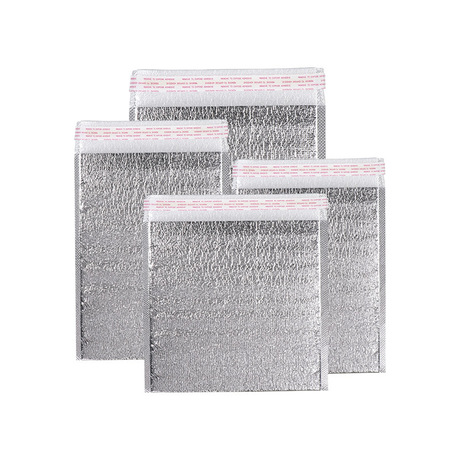
Single Bubble Insulated Liner Pricing: A Practical Framework for Choosing the Right Supplier
The best way to choose single bubble insulated liner pricing is to treat the liner as a controlled packaging component. It should fit the carton, slow heat transfer, support the coolant plan, protect the payload, and be repeatable in daily operations. A buyer who compares only unit price or layer count may miss the factors that actually determine whether the shipment arrives in good condition.
For sourcing managers, finance teams, packaging engineers, and operations leaders, the strongest purchasing process begins with the shipment requirement and then moves to supplier screening. Define the product, route, temperature target, duration, carton size, payload volume, coolant, and receiver expectations first. Then compare liner materials, samples, testing data, quality controls, and total cost. This sequence reduces the risk of using a single bubble liner for a route that needs longer hold time, tighter temperature control, or stronger cushioning.
Start with the Shipment Requirement
A liner specification should begin with the product’s tolerance, not the supplier’s catalog. A frozen item, chilled item, controlled-room-temperature product, and heat-sensitive cosmetic can all require different protection. Even within the same product category, summer and winter routes may need different coolant weight, different staging rules, or different pack-out instructions.
The buyer should define the target temperature range, maximum transit time, expected ambient exposure, time at the packing bench, product starting temperature, and receiving process. For critical products, the quality team should decide whether a qualified shipper, temperature logger, lane qualification, or formal documentation is required. A liner can support these controls but should not be confused with the complete control system.
Understand What the Liner Can and Cannot Do
An insulated liner is a passive barrier. It slows the movement of heat between the outside environment and the payload, but it does not create cooling by itself. When a shipment must remain chilled, frozen, or within controlled room temperature, the liner usually works with conditioned gel packs, phase change materials, dry ice, or a pre-cooled payload. The same liner can perform very differently when carton size, coolant mass, route, and packing discipline change.
A cold chain package is more than a box with reflective material. It is a combination of insulation, coolant, payload, void control, closure, handling process, and receiving inspection. For pharmaceuticals, biologics, lab samples, or regulated food, buyers should treat the liner as one component of a wider thermal packaging system, not as automatic proof that the shipment is qualified for every lane.
Common liner constructions include foil bubble, metallized bubble, EPE foam with foil facing, fiber or paper-based panels, cotton or textile-based insulation, and hybrid structures. Each construction has trade-offs. Bubble films are light and compact. Foam adds cushioning and thickness. Paper-based liners can improve disposal experience where recycling programs accept them. Hybrid systems may improve pack-out speed or presentation but still need route-specific testing.
A careful buyer separates three claims. First, the material may be suitable for a packaging use if documentation supports it. Second, the liner may have thermal performance in a specified test. Third, the complete shipping system may be qualified for a route or profile. These are not the same claim, and confusing them can create compliance risk and receiving disputes.
A single bubble insulated liner is useful because it can make ordinary carton shipping more thermally stable and easier to scale. It is limited because it depends on other parts of the pack-out. If gel packs are under-conditioned, if the carton is oversized, or if the lid is not closed correctly, the liner cannot recover the lost performance by itself.
Compare Materials by Performance and Operations
Material choice should be linked to the route and the operating process. For single bubble insulated liner pricing, buyers may compare one bubble layer with a metallized or foil-facing surface, normally chosen for light-duty insulation, quick packing, and compact storage. The better liner is not always the thickest or the most complex. It is the liner that meets the thermal requirement, fits the carton, supports fast packing, stays consistent in production, and gives the receiver a manageable disposal process.
Use foil bubble or metallized bubble structures when light weight, compact storage, and quick carton insertion are priorities.
Use foam-based structures when added cushioning, flexible thickness, and stronger insulation are needed for rough handling or heavier products.
Use paper or fiber-based options when the disposal experience is central, but confirm moisture behavior and local recycling acceptance.
Use a stronger qualified shipper or reusable container when the shipment has a narrow temperature window, long duration, or high compliance risk.
Fit, Payload, and Carton Geometry
Fit is one of the most overlooked purchasing variables. The buyer should measure the internal carton after the liner is installed, not just the outside box. Corners, folds, flaps, and closure overlap can reduce usable space. If the payload barely fits, workers may crush the liner, change the gel-pack position, or leave the lid partly open. Each of those changes can reduce consistency.
A good specification includes the carton dimensions, liner finished dimensions, thickness tolerance, installed usable volume, payload weight, coolant layout, and closure method. It should also define how the liner is packed for inbound shipping and how operators should open, insert, and close it. These small details make the difference between a sample that works once and a program that works every day.
Supplier Qualification Checklist
Because single bubble insulated liner pricing is a sourcing decision as much as a packaging decision, buyers should ask direct questions before placing a bulk order. The most useful supplier discussions cover production consistency, documentation, customization limits, and problem-solving support.
Ask for internal and external dimensions, not only the named carton size, because usable volume changes after insulation is inserted.
Confirm payload capacity, liner thickness, closure method, seam construction, and whether the liner is supplied as a bag, panel set, pouch, or pre-formed insert.
Request samples from the same material structure intended for production, and compare them against the approved drawing before a bulk order.
Check compatibility with gel packs, PCM packs, dry ice when applicable, absorbent pads, inner bags, labels, and the customer’s carton grade.
Review packing speed, operator training, nesting or flat-storage efficiency, carton loading, pallet pattern, and dimensional-weight impact.
Clarify MOQ, lead time, artwork or tooling charges, mixed-size options, re-order process, and how the supplier communicates material changes.
Define receiving inspection criteria, including thickness tolerance, seal integrity, print quality, odor, contamination, carton count, and recovery after compression if used.
How to Review Thermal Data
A thermal chart should never be separated from the test method. Ask what carton size was used, what payload mass was packed, how many gel packs or PCM packs were included, how they were conditioned, where sensors were placed, what ambient profile was used, and how long the test ran. A claimed duration without these details may not apply to your product.
For food and seafood, testing should consider moisture, leak control, carton strength, and receiver opening time. For healthcare and pharmaceutical shipments, testing should be aligned with the product’s labeled condition and internal quality procedures. In both cases, receiving inspection should define what happens if the package arrives warm, wet, damaged, delayed, or missing a temperature record.
Application Notes for This Use Case
Single bubble liners are often considered for short routes, moderately temperature-sensitive payloads, and programs where storage space matters. They are light, foldable, and easy to insert into standard cartons. Their limitation is that they offer less physical thickness than many foam, paper-panel, or double-bubble options, so buyers should test them before using them for longer lanes or tighter temperature windows.
The application detail matters because the same liner can support different goals. It may be used to keep chilled ingredients stable, reduce heat exposure for chocolate, protect frozen items from short delays, shield medicines from ambient swings, or improve presentation in a subscription box. Each goal changes the coolant, carton, handling, and acceptance criteria.
Pricing and Total Landed Cost
A useful price comparison includes liner size, material structure, layer count, order quantity, compression ratio, inbound freight cube, coolant mass, labor time, spoilage risk, and disposal cost. Buyers should request price breaks by order quantity, but they should also calculate inbound freight, storage space, carton changes, gel-pack changes, packing labor, and likely claim reduction. For import programs, master carton density and dimensional freight can be as important as unit price.
For custom, OEM, or printed liners, ask which costs are one-time and which repeat. Tooling, artwork setup, print plates, sample rounds, and minimum runs may change the economics. If the program is new, a controlled pilot order can be safer than filling the warehouse with a size or material that has not been proven on the route.
Sustainability Without Losing Product Protection
Sustainability should be specific and testable. For single bubble insulated liner pricing, buyers should compare right-sizing, flat storage, recycling instructions, local acceptance, material separation, and reduced product loss. A recyclable claim should be supported by instructions that receivers can understand. A reusable claim should be supported by an actual return or reuse process. A lower-material claim should still protect the product against avoidable waste.
The most sustainable package is rarely the one with the simplest label claim. It is the one that protects the product, minimizes unnecessary cube and material, can be handled correctly by the receiver, and can be supplied consistently without frequent substitutions. Product loss, replacement shipments, and customer complaints can erase the benefit of a liner that looks greener on paper but fails in transit.
Red Flags When Comparing Suppliers
The supplier gives a hold-time claim but cannot describe the test carton, payload, coolant, or ambient profile.
The sample looks different from the production quote, or the quote does not specify material structure and thickness.
The supplier uses broad words such as compliant, validated, or recyclable without explaining the boundary of the claim.
MOQ, lead time, artwork, packaging count, or freight terms change after the buyer approves the sample.
The liner requires a pack-out sequence that warehouse staff cannot repeat during peak volume.
A Practical Ordering Path
Begin with two or three materials that could realistically meet the requirement. Request samples and drawings. Build a test pack-out with the actual carton, payload, and coolant. Run a pilot under credible ambient exposure. Review temperature data, packing time, carton condition, product condition, and receiver feedback. Then finalize the specification and negotiate the commercial terms.
After the first bulk order, keep the approved sample and inspection criteria. Check early production lots carefully and document any deviations. If the supplier changes material, packaging format, or production location, repeat the relevant checks. A liner program becomes more reliable when it is managed like a controlled process rather than a one-time purchase.
FAQ
How many samples should be tested before ordering single bubble insulated liner pricing?
Test enough samples to reflect the intended material, carton size, and packing process. For critical shipments, follow the quality team’s validation plan rather than relying on a single informal trial.
Can one liner size serve several carton sizes?
Sometimes, but only if usable volume, closure, and coolant placement remain consistent. A universal size can reduce inventory but may create poor fit in smaller cartons.
What is the most important supplier document?
The most useful document is a clear specification or drawing tied to an approved sample. Thermal data, material declarations, and packing instructions should support that specification.
About Tempk
Tempk supports cold chain packaging programs with products such as gel ice packs, dry ice packs, freezer ice bricks, insulated bags, EPP insulated boxes, cold shipping boxes, insulated box liners, and pallet covers. For liner-related projects, we can discuss foldable insulated formats, EPE foam and aluminum foil structures, carton fit, and cold-source compatibility for food, pharmaceutical, and other temperature-sensitive shipments. Our role is to help buyers match the packaging format to the route, payload, and operating process rather than treat one liner as a universal solution.
Talk to Tempk
Share your target temperature range, shipment duration, carton size, payload, and route conditions to request a practical liner recommendation or a bulk-order discussion.
Single Bubble Insulated Liner Minimum Order Quantity: How to Choose the Right Liner Supplier
Single Bubble Insulated Liner Minimum Order Quantity: A Practical Framework for Choosing the Right Supplier
The best way to choose single bubble insulated liner minimum order quantity is to treat the liner as a controlled packaging component. It should fit the carton, slow heat transfer, support the coolant plan, protect the payload, and be repeatable in daily operations. A buyer who compares only unit price or layer count may miss the factors that actually determine whether the shipment arrives in good condition.
For B2B buyers, packaging engineers, fulfillment managers, and logistics teams, the strongest purchasing process begins with the shipment requirement and then moves to supplier screening. Define the product, route, temperature target, duration, carton size, payload volume, coolant, and receiver expectations first. Then compare liner materials, samples, testing data, quality controls, and total cost. This sequence reduces the risk of negotiating the lowest MOQ while accepting an untested size or unstable specification.
Start with the Shipment Requirement
A liner specification should begin with the product’s tolerance, not the supplier’s catalog. A frozen item, chilled item, controlled-room-temperature product, and heat-sensitive cosmetic can all require different protection. Even within the same product category, summer and winter routes may need different coolant weight, different staging rules, or different pack-out instructions.
The buyer should define the target temperature range, maximum transit time, expected ambient exposure, time at the packing bench, product starting temperature, and receiving process. For critical products, the quality team should decide whether a qualified shipper, temperature logger, lane qualification, or formal documentation is required. A liner can support these controls but should not be confused with the complete control system.
Understand What the Liner Can and Cannot Do
An insulated liner is a passive barrier. It slows the movement of heat between the outside environment and the payload, but it does not create cooling by itself. When a shipment must remain chilled, frozen, or within controlled room temperature, the liner usually works with conditioned gel packs, phase change materials, dry ice, or a pre-cooled payload. The same liner can perform very differently when carton size, coolant mass, route, and packing discipline change.
A cold chain package is more than a box with reflective material. It is a combination of insulation, coolant, payload, void control, closure, handling process, and receiving inspection. For pharmaceuticals, biologics, lab samples, or regulated food, buyers should treat the liner as one component of a wider thermal packaging system, not as automatic proof that the shipment is qualified for every lane.
Common liner constructions include foil bubble, metallized bubble, EPE foam with foil facing, fiber or paper-based panels, cotton or textile-based insulation, and hybrid structures. Each construction has trade-offs. Bubble films are light and compact. Foam adds cushioning and thickness. Paper-based liners can improve disposal experience where recycling programs accept them. Hybrid systems may improve pack-out speed or presentation but still need route-specific testing.
A careful buyer separates three claims. First, the material may be suitable for a packaging use if documentation supports it. Second, the liner may have thermal performance in a specified test. Third, the complete shipping system may be qualified for a route or profile. These are not the same claim, and confusing them can create compliance risk and receiving disputes.
A single bubble insulated liner is useful because it can make ordinary carton shipping more thermally stable and easier to scale. It is limited because it depends on other parts of the pack-out. If gel packs are under-conditioned, if the carton is oversized, or if the lid is not closed correctly, the liner cannot recover the lost performance by itself.
Compare Materials by Performance and Operations
Material choice should be linked to the route and the operating process. For single bubble insulated liner minimum order quantity, buyers may compare one bubble layer with a metallized or foil-facing surface, normally chosen for light-duty insulation, quick packing, and compact storage. The better liner is not always the thickest or the most complex. It is the liner that meets the thermal requirement, fits the carton, supports fast packing, stays consistent in production, and gives the receiver a manageable disposal process.
Use foil bubble or metallized bubble structures when light weight, compact storage, and quick carton insertion are priorities.
Use foam-based structures when added cushioning, flexible thickness, and stronger insulation are needed for rough handling or heavier products.
Use paper or fiber-based options when the disposal experience is central, but confirm moisture behavior and local recycling acceptance.
Use a stronger qualified shipper or reusable container when the shipment has a narrow temperature window, long duration, or high compliance risk.
Fit, Payload, and Carton Geometry
Fit is one of the most overlooked purchasing variables. The buyer should measure the internal carton after the liner is installed, not just the outside box. Corners, folds, flaps, and closure overlap can reduce usable space. If the payload barely fits, workers may crush the liner, change the gel-pack position, or leave the lid partly open. Each of those changes can reduce consistency.
A good specification includes the carton dimensions, liner finished dimensions, thickness tolerance, installed usable volume, payload weight, coolant layout, and closure method. It should also define how the liner is packed for inbound shipping and how operators should open, insert, and close it. These small details make the difference between a sample that works once and a program that works every day.
Supplier Qualification Checklist
Because single bubble insulated liner minimum order quantity is a sourcing decision as much as a packaging decision, buyers should ask direct questions before placing a bulk order. The most useful supplier discussions cover production consistency, documentation, customization limits, and problem-solving support.
Ask for internal and external dimensions, not only the named carton size, because usable volume changes after insulation is inserted.
Confirm payload capacity, liner thickness, closure method, seam construction, and whether the liner is supplied as a bag, panel set, pouch, or pre-formed insert.
Request samples from the same material structure intended for production, and compare them against the approved drawing before a bulk order.
Check compatibility with gel packs, PCM packs, dry ice when applicable, absorbent pads, inner bags, labels, and the customer’s carton grade.
Review packing speed, operator training, nesting or flat-storage efficiency, carton loading, pallet pattern, and dimensional-weight impact.
Clarify MOQ, lead time, artwork or tooling charges, mixed-size options, re-order process, and how the supplier communicates material changes.
Define receiving inspection criteria, including thickness tolerance, seal integrity, print quality, odor, contamination, carton count, and recovery after compression if used.
How to Review Thermal Data
A thermal chart should never be separated from the test method. Ask what carton size was used, what payload mass was packed, how many gel packs or PCM packs were included, how they were conditioned, where sensors were placed, what ambient profile was used, and how long the test ran. A claimed duration without these details may not apply to your product.
For food and seafood, testing should consider moisture, leak control, carton strength, and receiver opening time. For healthcare and pharmaceutical shipments, testing should be aligned with the product’s labeled condition and internal quality procedures. In both cases, receiving inspection should define what happens if the package arrives warm, wet, damaged, delayed, or missing a temperature record.
Application Notes for This Use Case
Single bubble liners are often considered for short routes, moderately temperature-sensitive payloads, and programs where storage space matters. They are light, foldable, and easy to insert into standard cartons. Their limitation is that they offer less physical thickness than many foam, paper-panel, or double-bubble options, so buyers should test them before using them for longer lanes or tighter temperature windows.
The application detail matters because the same liner can support different goals. It may be used to keep chilled ingredients stable, reduce heat exposure for chocolate, protect frozen items from short delays, shield medicines from ambient swings, or improve presentation in a subscription box. Each goal changes the coolant, carton, handling, and acceptance criteria.
Pricing and Total Landed Cost
A useful price comparison includes unit price, material thickness, order quantity, freight cube, coolant weight, packing labor, damage claims, and disposal burden. Buyers should request price breaks by order quantity, but they should also calculate inbound freight, storage space, carton changes, gel-pack changes, packing labor, and likely claim reduction. For import programs, master carton density and dimensional freight can be as important as unit price.
For custom, OEM, or printed liners, ask which costs are one-time and which repeat. Tooling, artwork setup, print plates, sample rounds, and minimum runs may change the economics. If the program is new, a controlled pilot order can be safer than filling the warehouse with a size or material that has not been proven on the route.
Sustainability Without Losing Product Protection
Sustainability should be specific and testable. For single bubble insulated liner minimum order quantity, buyers should compare right-sizing, flat storage, recycling instructions, local acceptance, material separation, and reduced product loss. A recyclable claim should be supported by instructions that receivers can understand. A reusable claim should be supported by an actual return or reuse process. A lower-material claim should still protect the product against avoidable waste.
The most sustainable package is rarely the one with the simplest label claim. It is the one that protects the product, minimizes unnecessary cube and material, can be handled correctly by the receiver, and can be supplied consistently without frequent substitutions. Product loss, replacement shipments, and customer complaints can erase the benefit of a liner that looks greener on paper but fails in transit.
Red Flags When Comparing Suppliers
The supplier gives a hold-time claim but cannot describe the test carton, payload, coolant, or ambient profile.
The sample looks different from the production quote, or the quote does not specify material structure and thickness.
The supplier uses broad words such as compliant, validated, or recyclable without explaining the boundary of the claim.
MOQ, lead time, artwork, packaging count, or freight terms change after the buyer approves the sample.
The liner requires a pack-out sequence that warehouse staff cannot repeat during peak volume.
A Practical Ordering Path
Begin with two or three materials that could realistically meet the requirement. Request samples and drawings. Build a test pack-out with the actual carton, payload, and coolant. Run a pilot under credible ambient exposure. Review temperature data, packing time, carton condition, product condition, and receiver feedback. Then finalize the specification and negotiate the commercial terms.
After the first bulk order, keep the approved sample and inspection criteria. Check early production lots carefully and document any deviations. If the supplier changes material, packaging format, or production location, repeat the relevant checks. A liner program becomes more reliable when it is managed like a controlled process rather than a one-time purchase.
FAQ
How many samples should be tested before ordering single bubble insulated liner minimum order quantity?
Test enough samples to reflect the intended material, carton size, and packing process. For critical shipments, follow the quality team’s validation plan rather than relying on a single informal trial.
Can one liner size serve several carton sizes?
Sometimes, but only if usable volume, closure, and coolant placement remain consistent. A universal size can reduce inventory but may create poor fit in smaller cartons.
What is the most important supplier document?
The most useful document is a clear specification or drawing tied to an approved sample. Thermal data, material declarations, and packing instructions should support that specification.
About Tempk
Tempk supports cold chain packaging programs with products such as gel ice packs, dry ice packs, freezer ice bricks, insulated bags, EPP insulated boxes, cold shipping boxes, insulated box liners, and pallet covers. For liner-related projects, we can discuss foldable insulated formats, EPE foam and aluminum foil structures, carton fit, and cold-source compatibility for food, pharmaceutical, and other temperature-sensitive shipments. Our role is to help buyers match the packaging format to the route, payload, and operating process rather than treat one liner as a universal solution.
Talk to Tempk
Share your target temperature range, shipment duration, carton size, payload, and route conditions to request a practical liner recommendation or a bulk-order discussion.
Single Bubble Insulated Liner Manufacturers: How to Choose the Right Liner Supplier

Single Bubble Insulated Liner Manufacturers: A Practical Framework for Choosing the Right Supplier
The best way to choose single bubble insulated liner manufacturers is to treat the liner as a controlled packaging component. It should fit the carton, slow heat transfer, support the coolant plan, protect the payload, and be repeatable in daily operations. A buyer who compares only unit price or layer count may miss the factors that actually determine whether the shipment arrives in good condition.
For importers, private-label buyers, packaging engineers, and sourcing managers, the strongest purchasing process begins with the shipment requirement and then moves to supplier screening. Define the product, route, temperature target, duration, carton size, payload volume, coolant, and receiver expectations first. Then compare liner materials, samples, testing data, quality controls, and total cost. This sequence reduces the risk of using a single bubble liner for a route that needs longer hold time, tighter temperature control, or stronger cushioning.
Start with the Shipment Requirement
A liner specification should begin with the product’s tolerance, not the supplier’s catalog. A frozen item, chilled item, controlled-room-temperature product, and heat-sensitive cosmetic can all require different protection. Even within the same product category, summer and winter routes may need different coolant weight, different staging rules, or different pack-out instructions.
The buyer should define the target temperature range, maximum transit time, expected ambient exposure, time at the packing bench, product starting temperature, and receiving process. For critical products, the quality team should decide whether a qualified shipper, temperature logger, lane qualification, or formal documentation is required. A liner can support these controls but should not be confused with the complete control system.
Understand What the Liner Can and Cannot Do
An insulated liner is a passive barrier. It slows the movement of heat between the outside environment and the payload, but it does not create cooling by itself. When a shipment must remain chilled, frozen, or within controlled room temperature, the liner usually works with conditioned gel packs, phase change materials, dry ice, or a pre-cooled payload. The same liner can perform very differently when carton size, coolant mass, route, and packing discipline change.
A cold chain package is more than a box with reflective material. It is a combination of insulation, coolant, payload, void control, closure, handling process, and receiving inspection. For pharmaceuticals, biologics, lab samples, or regulated food, buyers should treat the liner as one component of a wider thermal packaging system, not as automatic proof that the shipment is qualified for every lane.
Common liner constructions include foil bubble, metallized bubble, EPE foam with foil facing, fiber or paper-based panels, cotton or textile-based insulation, and hybrid structures. Each construction has trade-offs. Bubble films are light and compact. Foam adds cushioning and thickness. Paper-based liners can improve disposal experience where recycling programs accept them. Hybrid systems may improve pack-out speed or presentation but still need route-specific testing.
A careful buyer separates three claims. First, the material may be suitable for a packaging use if documentation supports it. Second, the liner may have thermal performance in a specified test. Third, the complete shipping system may be qualified for a route or profile. These are not the same claim, and confusing them can create compliance risk and receiving disputes.
A single bubble insulated liner is useful because it can make ordinary carton shipping more thermally stable and easier to scale. It is limited because it depends on other parts of the pack-out. If gel packs are under-conditioned, if the carton is oversized, or if the lid is not closed correctly, the liner cannot recover the lost performance by itself.
Compare Materials by Performance and Operations
Material choice should be linked to the route and the operating process. For single bubble insulated liner manufacturers, buyers may compare one bubble layer with a metallized or foil-facing surface, normally chosen for light-duty insulation, quick packing, and compact storage. The better liner is not always the thickest or the most complex. It is the liner that meets the thermal requirement, fits the carton, supports fast packing, stays consistent in production, and gives the receiver a manageable disposal process.
Use foil bubble or metallized bubble structures when light weight, compact storage, and quick carton insertion are priorities.
Use foam-based structures when added cushioning, flexible thickness, and stronger insulation are needed for rough handling or heavier products.
Use paper or fiber-based options when the disposal experience is central, but confirm moisture behavior and local recycling acceptance.
Use a stronger qualified shipper or reusable container when the shipment has a narrow temperature window, long duration, or high compliance risk.
Fit, Payload, and Carton Geometry
Fit is one of the most overlooked purchasing variables. The buyer should measure the internal carton after the liner is installed, not just the outside box. Corners, folds, flaps, and closure overlap can reduce usable space. If the payload barely fits, workers may crush the liner, change the gel-pack position, or leave the lid partly open. Each of those changes can reduce consistency.
A good specification includes the carton dimensions, liner finished dimensions, thickness tolerance, installed usable volume, payload weight, coolant layout, and closure method. It should also define how the liner is packed for inbound shipping and how operators should open, insert, and close it. These small details make the difference between a sample that works once and a program that works every day.
Supplier Qualification Checklist
Because single bubble insulated liner manufacturers is a sourcing decision as much as a packaging decision, buyers should ask direct questions before placing a bulk order. The most useful supplier discussions cover production consistency, documentation, customization limits, and problem-solving support.
Ask for internal and external dimensions, not only the named carton size, because usable volume changes after insulation is inserted.
Confirm payload capacity, liner thickness, closure method, seam construction, and whether the liner is supplied as a bag, panel set, pouch, or pre-formed insert.
Request samples from the same material structure intended for production, and compare them against the approved drawing before a bulk order.
Check compatibility with gel packs, PCM packs, dry ice when applicable, absorbent pads, inner bags, labels, and the customer’s carton grade.
Review packing speed, operator training, nesting or flat-storage efficiency, carton loading, pallet pattern, and dimensional-weight impact.
Clarify MOQ, lead time, artwork or tooling charges, mixed-size options, re-order process, and how the supplier communicates material changes.
Define receiving inspection criteria, including thickness tolerance, seal integrity, print quality, odor, contamination, carton count, and recovery after compression if used.
How to Review Thermal Data
A thermal chart should never be separated from the test method. Ask what carton size was used, what payload mass was packed, how many gel packs or PCM packs were included, how they were conditioned, where sensors were placed, what ambient profile was used, and how long the test ran. A claimed duration without these details may not apply to your product.
For food and seafood, testing should consider moisture, leak control, carton strength, and receiver opening time. For healthcare and pharmaceutical shipments, testing should be aligned with the product’s labeled condition and internal quality procedures. In both cases, receiving inspection should define what happens if the package arrives warm, wet, damaged, delayed, or missing a temperature record.
Application Notes for This Use Case
Single bubble liners are often considered for short routes, moderately temperature-sensitive payloads, and programs where storage space matters. They are light, foldable, and easy to insert into standard cartons. Their limitation is that they offer less physical thickness than many foam, paper-panel, or double-bubble options, so buyers should test them before using them for longer lanes or tighter temperature windows.
The application detail matters because the same liner can support different goals. It may be used to keep chilled ingredients stable, reduce heat exposure for chocolate, protect frozen items from short delays, shield medicines from ambient swings, or improve presentation in a subscription box. Each goal changes the coolant, carton, handling, and acceptance criteria.
Pricing and Total Landed Cost
A useful price comparison includes unit price, material thickness, order quantity, freight cube, coolant weight, packing labor, damage claims, and disposal burden. Buyers should request price breaks by order quantity, but they should also calculate inbound freight, storage space, carton changes, gel-pack changes, packing labor, and likely claim reduction. For import programs, master carton density and dimensional freight can be as important as unit price.
For custom, OEM, or printed liners, ask which costs are one-time and which repeat. Tooling, artwork setup, print plates, sample rounds, and minimum runs may change the economics. If the program is new, a controlled pilot order can be safer than filling the warehouse with a size or material that has not been proven on the route.
Sustainability Without Losing Product Protection
Sustainability should be specific and testable. For single bubble insulated liner manufacturers, buyers should compare right-sizing, flat storage, recycling instructions, local acceptance, material separation, and reduced product loss. A recyclable claim should be supported by instructions that receivers can understand. A reusable claim should be supported by an actual return or reuse process. A lower-material claim should still protect the product against avoidable waste.
The most sustainable package is rarely the one with the simplest label claim. It is the one that protects the product, minimizes unnecessary cube and material, can be handled correctly by the receiver, and can be supplied consistently without frequent substitutions. Product loss, replacement shipments, and customer complaints can erase the benefit of a liner that looks greener on paper but fails in transit.
Red Flags When Comparing Suppliers
The supplier gives a hold-time claim but cannot describe the test carton, payload, coolant, or ambient profile.
The sample looks different from the production quote, or the quote does not specify material structure and thickness.
The supplier uses broad words such as compliant, validated, or recyclable without explaining the boundary of the claim.
MOQ, lead time, artwork, packaging count, or freight terms change after the buyer approves the sample.
The liner requires a pack-out sequence that warehouse staff cannot repeat during peak volume.
A Practical Ordering Path
Begin with two or three materials that could realistically meet the requirement. Request samples and drawings. Build a test pack-out with the actual carton, payload, and coolant. Run a pilot under credible ambient exposure. Review temperature data, packing time, carton condition, product condition, and receiver feedback. Then finalize the specification and negotiate the commercial terms.
After the first bulk order, keep the approved sample and inspection criteria. Check early production lots carefully and document any deviations. If the supplier changes material, packaging format, or production location, repeat the relevant checks. A liner program becomes more reliable when it is managed like a controlled process rather than a one-time purchase.
FAQ
How many samples should be tested before ordering single bubble insulated liner manufacturers?
Test enough samples to reflect the intended material, carton size, and packing process. For critical shipments, follow the quality team’s validation plan rather than relying on a single informal trial.
Can one liner size serve several carton sizes?
Sometimes, but only if usable volume, closure, and coolant placement remain consistent. A universal size can reduce inventory but may create poor fit in smaller cartons.
What is the most important supplier document?
The most useful document is a clear specification or drawing tied to an approved sample. Thermal data, material declarations, and packing instructions should support that specification.
About Tempk
Tempk supports cold chain packaging programs with products such as gel ice packs, dry ice packs, freezer ice bricks, insulated bags, EPP insulated boxes, cold shipping boxes, insulated box liners, and pallet covers. For liner-related projects, we can discuss foldable insulated formats, EPE foam and aluminum foil structures, carton fit, and cold-source compatibility for food, pharmaceutical, and other temperature-sensitive shipments. Our role is to help buyers match the packaging format to the route, payload, and operating process rather than treat one liner as a universal solution.
Talk to Tempk
Share your target temperature range, shipment duration, carton size, payload, and route conditions to request a practical liner recommendation or a bulk-order discussion.
Recyclable Insulated Box Liner for Seafood: How to Choose the Right Liner Supplier
Recyclable Insulated Box Liner for Seafood: A Practical Framework for Choosing the Right Supplier
The best way to choose recyclable insulated box liner for seafood is to treat the liner as a controlled packaging component. It should fit the carton, slow heat transfer, support the coolant plan, protect the payload, and be repeatable in daily operations. A buyer who compares only unit price or layer count may miss the factors that actually determine whether the shipment arrives in good condition.
For seafood processors, e-commerce seafood sellers, fish markets, wholesalers, and cold chain packaging buyers, the strongest purchasing process begins with the shipment requirement and then moves to supplier screening. Define the product, route, temperature target, duration, carton size, payload volume, coolant, and receiver expectations first. Then compare liner materials, samples, testing data, quality controls, and total cost. This sequence reduces the risk of letting sustainability claims override leak control, temperature management, and seafood-specific handling requirements.
Start with the Shipment Requirement
A liner specification should begin with the product’s tolerance, not the supplier’s catalog. A frozen item, chilled item, controlled-room-temperature product, and heat-sensitive cosmetic can all require different protection. Even within the same product category, summer and winter routes may need different coolant weight, different staging rules, or different pack-out instructions.
The buyer should define the target temperature range, maximum transit time, expected ambient exposure, time at the packing bench, product starting temperature, and receiving process. For critical products, the quality team should decide whether a qualified shipper, temperature logger, lane qualification, or formal documentation is required. A liner can support these controls but should not be confused with the complete control system.
Understand What the Liner Can and Cannot Do
An insulated liner is a passive barrier. It slows the movement of heat between the outside environment and the payload, but it does not create cooling by itself. When a shipment must remain chilled, frozen, or within controlled room temperature, the liner usually works with conditioned gel packs, phase change materials, dry ice, or a pre-cooled payload. The same liner can perform very differently when carton size, coolant mass, route, and packing discipline change.
A cold chain package is more than a box with reflective material. It is a combination of insulation, coolant, payload, void control, closure, handling process, and receiving inspection. For pharmaceuticals, biologics, lab samples, or regulated food, buyers should treat the liner as one component of a wider thermal packaging system, not as automatic proof that the shipment is qualified for every lane.
Common liner constructions include foil bubble, metallized bubble, EPE foam with foil facing, fiber or paper-based panels, cotton or textile-based insulation, and hybrid structures. Each construction has trade-offs. Bubble films are light and compact. Foam adds cushioning and thickness. Paper-based liners can improve disposal experience where recycling programs accept them. Hybrid systems may improve pack-out speed or presentation but still need route-specific testing.
A careful buyer separates three claims. First, the material may be suitable for a packaging use if documentation supports it. Second, the liner may have thermal performance in a specified test. Third, the complete shipping system may be qualified for a route or profile. These are not the same claim, and confusing them can create compliance risk and receiving disputes.
A recyclable insulated box liner for seafood is useful because it can make ordinary carton shipping more thermally stable and easier to scale. It is limited because it depends on other parts of the pack-out. If gel packs are under-conditioned, if the carton is oversized, or if the lid is not closed correctly, the liner cannot recover the lost performance by itself.
Compare Materials by Performance and Operations
Material choice should be linked to the route and the operating process. For recyclable insulated box liner for seafood, buyers may compare paper-based, PET-based, PE-based, fiber, and other recoverable constructions whose acceptance depends on local recycling programs and contamination control. The better liner is not always the thickest or the most complex. It is the liner that meets the thermal requirement, fits the carton, supports fast packing, stays consistent in production, and gives the receiver a manageable disposal process.
Use foil bubble or metallized bubble structures when light weight, compact storage, and quick carton insertion are priorities.
Use foam-based structures when added cushioning, flexible thickness, and stronger insulation are needed for rough handling or heavier products.
Use paper or fiber-based options when the disposal experience is central, but confirm moisture behavior and local recycling acceptance.
Use a stronger qualified shipper or reusable container when the shipment has a narrow temperature window, long duration, or high compliance risk.
Fit, Payload, and Carton Geometry
Fit is one of the most overlooked purchasing variables. The buyer should measure the internal carton after the liner is installed, not just the outside box. Corners, folds, flaps, and closure overlap can reduce usable space. If the payload barely fits, workers may crush the liner, change the gel-pack position, or leave the lid partly open. Each of those changes can reduce consistency.
A good specification includes the carton dimensions, liner finished dimensions, thickness tolerance, installed usable volume, payload weight, coolant layout, and closure method. It should also define how the liner is packed for inbound shipping and how operators should open, insert, and close it. These small details make the difference between a sample that works once and a program that works every day.
Supplier Qualification Checklist
Because recyclable insulated box liner for seafood is a sourcing decision as much as a packaging decision, buyers should ask direct questions before placing a bulk order. The most useful supplier discussions cover production consistency, documentation, customization limits, and problem-solving support.
Ask for internal and external dimensions, not only the named carton size, because usable volume changes after insulation is inserted.
Confirm payload capacity, liner thickness, closure method, seam construction, and whether the liner is supplied as a bag, panel set, pouch, or pre-formed insert.
Request samples from the same material structure intended for production, and compare them against the approved drawing before a bulk order.
Check compatibility with gel packs, PCM packs, dry ice when applicable, absorbent pads, inner bags, labels, and the customer’s carton grade.
Review packing speed, operator training, nesting or flat-storage efficiency, carton loading, pallet pattern, and dimensional-weight impact.
Clarify MOQ, lead time, artwork or tooling charges, mixed-size options, re-order process, and how the supplier communicates material changes.
Define receiving inspection criteria, including thickness tolerance, seal integrity, print quality, odor, contamination, carton count, and recovery after compression if used.
How to Review Thermal Data
A thermal chart should never be separated from the test method. Ask what carton size was used, what payload mass was packed, how many gel packs or PCM packs were included, how they were conditioned, where sensors were placed, what ambient profile was used, and how long the test ran. A claimed duration without these details may not apply to your product.
For food and seafood, testing should consider moisture, leak control, carton strength, and receiver opening time. For healthcare and pharmaceutical shipments, testing should be aligned with the product’s labeled condition and internal quality procedures. In both cases, receiving inspection should define what happens if the package arrives warm, wet, damaged, delayed, or missing a temperature record.
Application Notes for This Use Case
Seafood packaging must manage temperature, liquid, odor, and rough handling at the same time. Fresh seafood may need ice, gel packs, absorbent pads, or leak-resistant inner bags, while frozen seafood may need stronger insulation and a coolant plan that protects against thawing during delays. A recyclable liner is useful only when it remains durable under moisture exposure and when receivers get clear disposal instructions.
The application detail matters because the same liner can support different goals. It may be used to keep chilled ingredients stable, reduce heat exposure for chocolate, protect frozen items from short delays, shield medicines from ambient swings, or improve presentation in a subscription box. Each goal changes the coolant, carton, handling, and acceptance criteria.
Pricing and Total Landed Cost
A useful price comparison includes unit price, material thickness, order quantity, freight cube, coolant weight, packing labor, damage claims, and disposal burden. Buyers should request price breaks by order quantity, but they should also calculate inbound freight, storage space, carton changes, gel-pack changes, packing labor, and likely claim reduction. For import programs, master carton density and dimensional freight can be as important as unit price.
For custom, OEM, or printed liners, ask which costs are one-time and which repeat. Tooling, artwork setup, print plates, sample rounds, and minimum runs may change the economics. If the program is new, a controlled pilot order can be safer than filling the warehouse with a size or material that has not been proven on the route.
Sustainability Without Losing Product Protection
Sustainability should be specific and testable. For recyclable insulated box liner for seafood, buyers should compare recycling claims after moisture exposure, receiver handling, material separation, and balancing waste reduction with food safety. A recyclable claim should be supported by instructions that receivers can understand. A reusable claim should be supported by an actual return or reuse process. A lower-material claim should still protect the product against avoidable waste.
The most sustainable package is rarely the one with the simplest label claim. It is the one that protects the product, minimizes unnecessary cube and material, can be handled correctly by the receiver, and can be supplied consistently without frequent substitutions. Product loss, replacement shipments, and customer complaints can erase the benefit of a liner that looks greener on paper but fails in transit.
Red Flags When Comparing Suppliers
The supplier gives a hold-time claim but cannot describe the test carton, payload, coolant, or ambient profile.
The sample looks different from the production quote, or the quote does not specify material structure and thickness.
The supplier uses broad words such as compliant, validated, or recyclable without explaining the boundary of the claim.
MOQ, lead time, artwork, packaging count, or freight terms change after the buyer approves the sample.
The liner requires a pack-out sequence that warehouse staff cannot repeat during peak volume.
A Practical Ordering Path
Begin with two or three materials that could realistically meet the requirement. Request samples and drawings. Build a test pack-out with the actual carton, payload, and coolant. Run a pilot under credible ambient exposure. Review temperature data, packing time, carton condition, product condition, and receiver feedback. Then finalize the specification and negotiate the commercial terms.
After the first bulk order, keep the approved sample and inspection criteria. Check early production lots carefully and document any deviations. If the supplier changes material, packaging format, or production location, repeat the relevant checks. A liner program becomes more reliable when it is managed like a controlled process rather than a one-time purchase.
FAQ
How many samples should be tested before ordering recyclable insulated box liner for seafood?
Test enough samples to reflect the intended material, carton size, and packing process. For critical shipments, follow the quality team’s validation plan rather than relying on a single informal trial.
Can one liner size serve several carton sizes?
Sometimes, but only if usable volume, closure, and coolant placement remain consistent. A universal size can reduce inventory but may create poor fit in smaller cartons.
What is the most important supplier document?
The most useful document is a clear specification or drawing tied to an approved sample. Thermal data, material declarations, and packing instructions should support that specification.
About Tempk
Tempk supports cold chain packaging programs with products such as gel ice packs, dry ice packs, freezer ice bricks, insulated bags, EPP insulated boxes, cold shipping boxes, insulated box liners, and pallet covers. For liner-related projects, we can discuss foldable insulated formats, EPE foam and aluminum foil structures, carton fit, and cold-source compatibility for food, pharmaceutical, and other temperature-sensitive shipments. Our role is to help buyers match the packaging format to the route, payload, and operating process rather than treat one liner as a universal solution.
Talk to Tempk
Share your target temperature range, shipment duration, carton size, payload, and route conditions to request a practical liner recommendation or a bulk-order discussion.
Recyclable Insulated Box Liner Factory: How to Choose the Right Liner Supplier
Recyclable Insulated Box Liner Factory: A Practical Framework for Choosing the Right Supplier
The best way to choose recyclable insulated box liner factory is to treat the liner as a controlled packaging component. It should fit the carton, slow heat transfer, support the coolant plan, protect the payload, and be repeatable in daily operations. A buyer who compares only unit price or layer count may miss the factors that actually determine whether the shipment arrives in good condition.
For brand owners, sustainability teams, procurement managers, and private-label buyers, the strongest purchasing process begins with the shipment requirement and then moves to supplier screening. Define the product, route, temperature target, duration, carton size, payload volume, coolant, and receiver expectations first. Then compare liner materials, samples, testing data, quality controls, and total cost. This sequence reduces the risk of selecting a recyclable liner before testing moisture resistance, gel-pack contact, and real route performance.
Start with the Shipment Requirement
A liner specification should begin with the product’s tolerance, not the supplier’s catalog. A frozen item, chilled item, controlled-room-temperature product, and heat-sensitive cosmetic can all require different protection. Even within the same product category, summer and winter routes may need different coolant weight, different staging rules, or different pack-out instructions.
The buyer should define the target temperature range, maximum transit time, expected ambient exposure, time at the packing bench, product starting temperature, and receiving process. For critical products, the quality team should decide whether a qualified shipper, temperature logger, lane qualification, or formal documentation is required. A liner can support these controls but should not be confused with the complete control system.
Understand What the Liner Can and Cannot Do
An insulated liner is a passive barrier. It slows the movement of heat between the outside environment and the payload, but it does not create cooling by itself. When a shipment must remain chilled, frozen, or within controlled room temperature, the liner usually works with conditioned gel packs, phase change materials, dry ice, or a pre-cooled payload. The same liner can perform very differently when carton size, coolant mass, route, and packing discipline change.
A cold chain package is more than a box with reflective material. It is a combination of insulation, coolant, payload, void control, closure, handling process, and receiving inspection. For pharmaceuticals, biologics, lab samples, or regulated food, buyers should treat the liner as one component of a wider thermal packaging system, not as automatic proof that the shipment is qualified for every lane.
Common liner constructions include foil bubble, metallized bubble, EPE foam with foil facing, fiber or paper-based panels, cotton or textile-based insulation, and hybrid structures. Each construction has trade-offs. Bubble films are light and compact. Foam adds cushioning and thickness. Paper-based liners can improve disposal experience where recycling programs accept them. Hybrid systems may improve pack-out speed or presentation but still need route-specific testing.
A careful buyer separates three claims. First, the material may be suitable for a packaging use if documentation supports it. Second, the liner may have thermal performance in a specified test. Third, the complete shipping system may be qualified for a route or profile. These are not the same claim, and confusing them can create compliance risk and receiving disputes.
A recyclable insulated box liner is useful because it can make ordinary carton shipping more thermally stable and easier to scale. It is limited because it depends on other parts of the pack-out. If gel packs are under-conditioned, if the carton is oversized, or if the lid is not closed correctly, the liner cannot recover the lost performance by itself.
Compare Materials by Performance and Operations
Material choice should be linked to the route and the operating process. For recyclable insulated box liner factory, buyers may compare paper-based, PET-based, PE-based, fiber, and other recoverable constructions whose acceptance depends on local recycling programs and contamination control. The better liner is not always the thickest or the most complex. It is the liner that meets the thermal requirement, fits the carton, supports fast packing, stays consistent in production, and gives the receiver a manageable disposal process.
Use foil bubble or metallized bubble structures when light weight, compact storage, and quick carton insertion are priorities.
Use foam-based structures when added cushioning, flexible thickness, and stronger insulation are needed for rough handling or heavier products.
Use paper or fiber-based options when the disposal experience is central, but confirm moisture behavior and local recycling acceptance.
Use a stronger qualified shipper or reusable container when the shipment has a narrow temperature window, long duration, or high compliance risk.
Fit, Payload, and Carton Geometry
Fit is one of the most overlooked purchasing variables. The buyer should measure the internal carton after the liner is installed, not just the outside box. Corners, folds, flaps, and closure overlap can reduce usable space. If the payload barely fits, workers may crush the liner, change the gel-pack position, or leave the lid partly open. Each of those changes can reduce consistency.
A good specification includes the carton dimensions, liner finished dimensions, thickness tolerance, installed usable volume, payload weight, coolant layout, and closure method. It should also define how the liner is packed for inbound shipping and how operators should open, insert, and close it. These small details make the difference between a sample that works once and a program that works every day.
Supplier Qualification Checklist
Because recyclable insulated box liner factory is a sourcing decision as much as a packaging decision, buyers should ask direct questions before placing a bulk order. The most useful supplier discussions cover production consistency, documentation, customization limits, and problem-solving support.
Ask for internal and external dimensions, not only the named carton size, because usable volume changes after insulation is inserted.
Confirm payload capacity, liner thickness, closure method, seam construction, and whether the liner is supplied as a bag, panel set, pouch, or pre-formed insert.
Request samples from the same material structure intended for production, and compare them against the approved drawing before a bulk order.
Check compatibility with gel packs, PCM packs, dry ice when applicable, absorbent pads, inner bags, labels, and the customer’s carton grade.
Review packing speed, operator training, nesting or flat-storage efficiency, carton loading, pallet pattern, and dimensional-weight impact.
Clarify MOQ, lead time, artwork or tooling charges, mixed-size options, re-order process, and how the supplier communicates material changes.
Define receiving inspection criteria, including thickness tolerance, seal integrity, print quality, odor, contamination, carton count, and recovery after compression if used.
How to Review Thermal Data
A thermal chart should never be separated from the test method. Ask what carton size was used, what payload mass was packed, how many gel packs or PCM packs were included, how they were conditioned, where sensors were placed, what ambient profile was used, and how long the test ran. A claimed duration without these details may not apply to your product.
For food and seafood, testing should consider moisture, leak control, carton strength, and receiver opening time. For healthcare and pharmaceutical shipments, testing should be aligned with the product’s labeled condition and internal quality procedures. In both cases, receiving inspection should define what happens if the package arrives warm, wet, damaged, delayed, or missing a temperature record.
Application Notes for This Use Case
Recyclable insulated liners can reduce the frustration receivers feel with bulky foam and hard-to-separate mixed materials. Still, recyclability is not universal. Local collection rules, food residue, moisture, film facings, labels, and adhesives can change whether the material is accepted. Buyers should ask for disposal guidance that matches the receiving market rather than relying on a generic claim.
The application detail matters because the same liner can support different goals. It may be used to keep chilled ingredients stable, reduce heat exposure for chocolate, protect frozen items from short delays, shield medicines from ambient swings, or improve presentation in a subscription box. Each goal changes the coolant, carton, handling, and acceptance criteria.
Pricing and Total Landed Cost
A useful price comparison includes unit price, material thickness, order quantity, freight cube, coolant weight, packing labor, damage claims, and disposal burden. Buyers should request price breaks by order quantity, but they should also calculate inbound freight, storage space, carton changes, gel-pack changes, packing labor, and likely claim reduction. For import programs, master carton density and dimensional freight can be as important as unit price.
For custom, OEM, or printed liners, ask which costs are one-time and which repeat. Tooling, artwork setup, print plates, sample rounds, and minimum runs may change the economics. If the program is new, a controlled pilot order can be safer than filling the warehouse with a size or material that has not been proven on the route.
Sustainability Without Losing Product Protection
Sustainability should be specific and testable. For recyclable insulated box liner factory, buyers should compare verified recyclability, clear receiver disposal instructions, flat inbound storage, lower waste volume, and protection against product loss. A recyclable claim should be supported by instructions that receivers can understand. A reusable claim should be supported by an actual return or reuse process. A lower-material claim should still protect the product against avoidable waste.
The most sustainable package is rarely the one with the simplest label claim. It is the one that protects the product, minimizes unnecessary cube and material, can be handled correctly by the receiver, and can be supplied consistently without frequent substitutions. Product loss, replacement shipments, and customer complaints can erase the benefit of a liner that looks greener on paper but fails in transit.
Red Flags When Comparing Suppliers
The supplier gives a hold-time claim but cannot describe the test carton, payload, coolant, or ambient profile.
The sample looks different from the production quote, or the quote does not specify material structure and thickness.
The supplier uses broad words such as compliant, validated, or recyclable without explaining the boundary of the claim.
MOQ, lead time, artwork, packaging count, or freight terms change after the buyer approves the sample.
The liner requires a pack-out sequence that warehouse staff cannot repeat during peak volume.
A Practical Ordering Path
Begin with two or three materials that could realistically meet the requirement. Request samples and drawings. Build a test pack-out with the actual carton, payload, and coolant. Run a pilot under credible ambient exposure. Review temperature data, packing time, carton condition, product condition, and receiver feedback. Then finalize the specification and negotiate the commercial terms.
After the first bulk order, keep the approved sample and inspection criteria. Check early production lots carefully and document any deviations. If the supplier changes material, packaging format, or production location, repeat the relevant checks. A liner program becomes more reliable when it is managed like a controlled process rather than a one-time purchase.
FAQ
How many samples should be tested before ordering recyclable insulated box liner factory?
Test enough samples to reflect the intended material, carton size, and packing process. For critical shipments, follow the quality team’s validation plan rather than relying on a single informal trial.
Can one liner size serve several carton sizes?
Sometimes, but only if usable volume, closure, and coolant placement remain consistent. A universal size can reduce inventory but may create poor fit in smaller cartons.
What is the most important supplier document?
The most useful document is a clear specification or drawing tied to an approved sample. Thermal data, material declarations, and packing instructions should support that specification.
About Tempk
Tempk supports cold chain packaging programs with products such as gel ice packs, dry ice packs, freezer ice bricks, insulated bags, EPP insulated boxes, cold shipping boxes, insulated box liners, and pallet covers. For liner-related projects, we can discuss foldable insulated formats, EPE foam and aluminum foil structures, carton fit, and cold-source compatibility for food, pharmaceutical, and other temperature-sensitive shipments. Our role is to help buyers match the packaging format to the route, payload, and operating process rather than treat one liner as a universal solution.
Talk to Tempk
Share your target temperature range, shipment duration, carton size, payload, and route conditions to request a practical liner recommendation or a bulk-order discussion.
Paper Insulated Box Liner OEM: How to Choose the Right Liner Supplier

Paper Insulated Box Liner OEM: A Practical Framework for Choosing the Right Supplier
The best way to choose paper insulated box liner OEM is to treat the liner as a controlled packaging component. It should fit the carton, slow heat transfer, support the coolant plan, protect the payload, and be repeatable in daily operations. A buyer who compares only unit price or layer count may miss the factors that actually determine whether the shipment arrives in good condition.
For B2B buyers, packaging engineers, fulfillment managers, and logistics teams, the strongest purchasing process begins with the shipment requirement and then moves to supplier screening. Define the product, route, temperature target, duration, carton size, payload volume, coolant, and receiver expectations first. Then compare liner materials, samples, testing data, quality controls, and total cost. This sequence reduces the risk of approving an attractive sample without locking material thickness, closure design, tolerance, and inspection criteria.
Start with the Shipment Requirement
A liner specification should begin with the product’s tolerance, not the supplier’s catalog. A frozen item, chilled item, controlled-room-temperature product, and heat-sensitive cosmetic can all require different protection. Even within the same product category, summer and winter routes may need different coolant weight, different staging rules, or different pack-out instructions.
The buyer should define the target temperature range, maximum transit time, expected ambient exposure, time at the packing bench, product starting temperature, and receiving process. For critical products, the quality team should decide whether a qualified shipper, temperature logger, lane qualification, or formal documentation is required. A liner can support these controls but should not be confused with the complete control system.
Understand What the Liner Can and Cannot Do
An insulated liner is a passive barrier. It slows the movement of heat between the outside environment and the payload, but it does not create cooling by itself. When a shipment must remain chilled, frozen, or within controlled room temperature, the liner usually works with conditioned gel packs, phase change materials, dry ice, or a pre-cooled payload. The same liner can perform very differently when carton size, coolant mass, route, and packing discipline change.
A cold chain package is more than a box with reflective material. It is a combination of insulation, coolant, payload, void control, closure, handling process, and receiving inspection. For pharmaceuticals, biologics, lab samples, or regulated food, buyers should treat the liner as one component of a wider thermal packaging system, not as automatic proof that the shipment is qualified for every lane.
Common liner constructions include foil bubble, metallized bubble, EPE foam with foil facing, fiber or paper-based panels, cotton or textile-based insulation, and hybrid structures. Each construction has trade-offs. Bubble films are light and compact. Foam adds cushioning and thickness. Paper-based liners can improve disposal experience where recycling programs accept them. Hybrid systems may improve pack-out speed or presentation but still need route-specific testing.
A careful buyer separates three claims. First, the material may be suitable for a packaging use if documentation supports it. Second, the liner may have thermal performance in a specified test. Third, the complete shipping system may be qualified for a route or profile. These are not the same claim, and confusing them can create compliance risk and receiving disputes.
A paper insulated box liner is useful because it can make ordinary carton shipping more thermally stable and easier to scale. It is limited because it depends on other parts of the pack-out. If gel packs are under-conditioned, if the carton is oversized, or if the lid is not closed correctly, the liner cannot recover the lost performance by itself.
Compare Materials by Performance and Operations
Material choice should be linked to the route and the operating process. For paper insulated box liner oem, buyers may compare fiber insulation, paperboard panels, paper wraps, and coatings or films that manage moisture and handling. The better liner is not always the thickest or the most complex. It is the liner that meets the thermal requirement, fits the carton, supports fast packing, stays consistent in production, and gives the receiver a manageable disposal process.
Use foil bubble or metallized bubble structures when light weight, compact storage, and quick carton insertion are priorities.
Use foam-based structures when added cushioning, flexible thickness, and stronger insulation are needed for rough handling or heavier products.
Use paper or fiber-based options when the disposal experience is central, but confirm moisture behavior and local recycling acceptance.
Use a stronger qualified shipper or reusable container when the shipment has a narrow temperature window, long duration, or high compliance risk.
Fit, Payload, and Carton Geometry
Fit is one of the most overlooked purchasing variables. The buyer should measure the internal carton after the liner is installed, not just the outside box. Corners, folds, flaps, and closure overlap can reduce usable space. If the payload barely fits, workers may crush the liner, change the gel-pack position, or leave the lid partly open. Each of those changes can reduce consistency.
A good specification includes the carton dimensions, liner finished dimensions, thickness tolerance, installed usable volume, payload weight, coolant layout, and closure method. It should also define how the liner is packed for inbound shipping and how operators should open, insert, and close it. These small details make the difference between a sample that works once and a program that works every day.
Supplier Qualification Checklist
Because paper insulated box liner OEM is a sourcing decision as much as a packaging decision, buyers should ask direct questions before placing a bulk order. The most useful supplier discussions cover production consistency, documentation, customization limits, and problem-solving support.
Ask for internal and external dimensions, not only the named carton size, because usable volume changes after insulation is inserted.
Confirm payload capacity, liner thickness, closure method, seam construction, and whether the liner is supplied as a bag, panel set, pouch, or pre-formed insert.
Request samples from the same material structure intended for production, and compare them against the approved drawing before a bulk order.
Check compatibility with gel packs, PCM packs, dry ice when applicable, absorbent pads, inner bags, labels, and the customer’s carton grade.
Review packing speed, operator training, nesting or flat-storage efficiency, carton loading, pallet pattern, and dimensional-weight impact.
Clarify MOQ, lead time, artwork or tooling charges, mixed-size options, re-order process, and how the supplier communicates material changes.
Define receiving inspection criteria, including thickness tolerance, seal integrity, print quality, odor, contamination, carton count, and recovery after compression if used.
How to Review Thermal Data
A thermal chart should never be separated from the test method. Ask what carton size was used, what payload mass was packed, how many gel packs or PCM packs were included, how they were conditioned, where sensors were placed, what ambient profile was used, and how long the test ran. A claimed duration without these details may not apply to your product.
For food and seafood, testing should consider moisture, leak control, carton strength, and receiver opening time. For healthcare and pharmaceutical shipments, testing should be aligned with the product’s labeled condition and internal quality procedures. In both cases, receiving inspection should define what happens if the package arrives warm, wet, damaged, delayed, or missing a temperature record.
Application Notes for This Use Case
Paper insulated box liners are often selected by brands that want a cleaner disposal experience than foam or mixed-material liners. The practical question is not simply whether the liner contains paper. Buyers should check how it behaves with condensation, whether coatings affect local recycling acceptance, how much thickness is needed, and whether the packed carton still meets dimensional-weight targets.
The application detail matters because the same liner can support different goals. It may be used to keep chilled ingredients stable, reduce heat exposure for chocolate, protect frozen items from short delays, shield medicines from ambient swings, or improve presentation in a subscription box. Each goal changes the coolant, carton, handling, and acceptance criteria.
Pricing and Total Landed Cost
A useful price comparison includes unit price, material thickness, order quantity, freight cube, coolant weight, packing labor, damage claims, and disposal burden. Buyers should request price breaks by order quantity, but they should also calculate inbound freight, storage space, carton changes, gel-pack changes, packing labor, and likely claim reduction. For import programs, master carton density and dimensional freight can be as important as unit price.
For custom, OEM, or printed liners, ask which costs are one-time and which repeat. Tooling, artwork setup, print plates, sample rounds, and minimum runs may change the economics. If the program is new, a controlled pilot order can be safer than filling the warehouse with a size or material that has not been proven on the route.
Sustainability Without Losing Product Protection
Sustainability should be specific and testable. For paper insulated box liner oem, buyers should compare repulpability, local curbside acceptance, moisture resistance, receiver instructions, and the trade-off between insulation thickness and carton cube. A recyclable claim should be supported by instructions that receivers can understand. A reusable claim should be supported by an actual return or reuse process. A lower-material claim should still protect the product against avoidable waste.
The most sustainable package is rarely the one with the simplest label claim. It is the one that protects the product, minimizes unnecessary cube and material, can be handled correctly by the receiver, and can be supplied consistently without frequent substitutions. Product loss, replacement shipments, and customer complaints can erase the benefit of a liner that looks greener on paper but fails in transit.
Red Flags When Comparing Suppliers
The supplier gives a hold-time claim but cannot describe the test carton, payload, coolant, or ambient profile.
The sample looks different from the production quote, or the quote does not specify material structure and thickness.
The supplier uses broad words such as compliant, validated, or recyclable without explaining the boundary of the claim.
MOQ, lead time, artwork, packaging count, or freight terms change after the buyer approves the sample.
The liner requires a pack-out sequence that warehouse staff cannot repeat during peak volume.
A Practical Ordering Path
Begin with two or three materials that could realistically meet the requirement. Request samples and drawings. Build a test pack-out with the actual carton, payload, and coolant. Run a pilot under credible ambient exposure. Review temperature data, packing time, carton condition, product condition, and receiver feedback. Then finalize the specification and negotiate the commercial terms.
After the first bulk order, keep the approved sample and inspection criteria. Check early production lots carefully and document any deviations. If the supplier changes material, packaging format, or production location, repeat the relevant checks. A liner program becomes more reliable when it is managed like a controlled process rather than a one-time purchase.
FAQ
How many samples should be tested before ordering paper insulated box liner OEM?
Test enough samples to reflect the intended material, carton size, and packing process. For critical shipments, follow the quality team’s validation plan rather than relying on a single informal trial.
Can one liner size serve several carton sizes?
Sometimes, but only if usable volume, closure, and coolant placement remain consistent. A universal size can reduce inventory but may create poor fit in smaller cartons.
What is the most important supplier document?
The most useful document is a clear specification or drawing tied to an approved sample. Thermal data, material declarations, and packing instructions should support that specification.
About Tempk
Tempk supports cold chain packaging programs with products such as gel ice packs, dry ice packs, freezer ice bricks, insulated bags, EPP insulated boxes, cold shipping boxes, insulated box liners, and pallet covers. For liner-related projects, we can discuss foldable insulated formats, EPE foam and aluminum foil structures, carton fit, and cold-source compatibility for food, pharmaceutical, and other temperature-sensitive shipments. Our role is to help buyers match the packaging format to the route, payload, and operating process rather than treat one liner as a universal solution.
Talk to Tempk
Share your target temperature range, shipment duration, carton size, payload, and route conditions to request a practical liner recommendation or a bulk-order discussion.
Paper Insulated Box Liner Custom: How to Choose the Right Liner Supplier
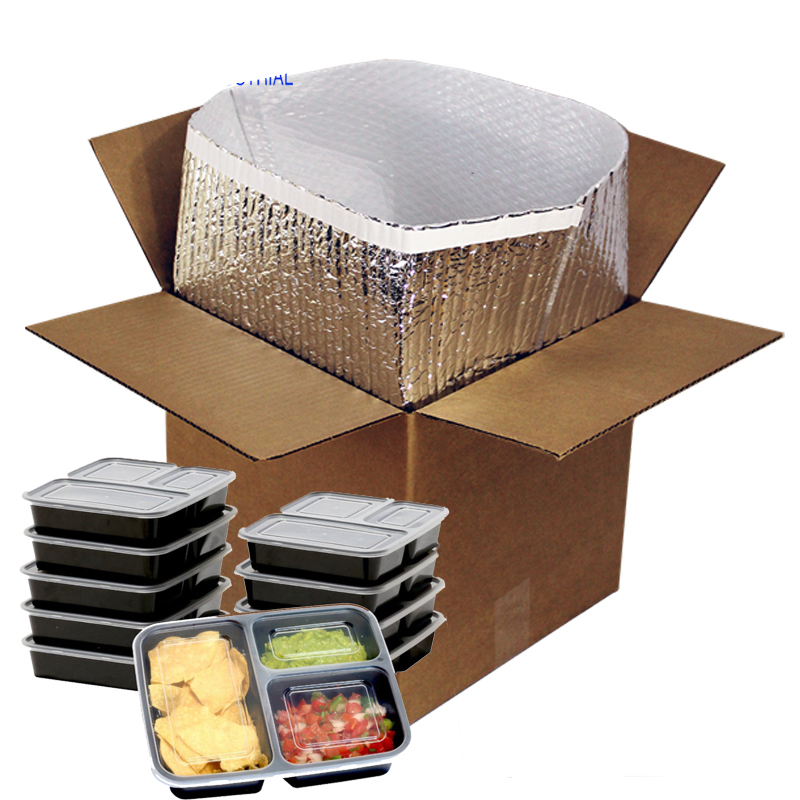
Paper Insulated Box Liner Custom: A Practical Framework for Choosing the Right Supplier
The best way to choose paper insulated box liner custom is to treat the liner as a controlled packaging component. It should fit the carton, slow heat transfer, support the coolant plan, protect the payload, and be repeatable in daily operations. A buyer who compares only unit price or layer count may miss the factors that actually determine whether the shipment arrives in good condition.
For B2B buyers, packaging engineers, fulfillment managers, and logistics teams, the strongest purchasing process begins with the shipment requirement and then moves to supplier screening. Define the product, route, temperature target, duration, carton size, payload volume, coolant, and receiver expectations first. Then compare liner materials, samples, testing data, quality controls, and total cost. This sequence reduces the risk of customizing the outside look while leaving usable volume and coolant placement unresolved.
Start with the Shipment Requirement
A liner specification should begin with the product’s tolerance, not the supplier’s catalog. A frozen item, chilled item, controlled-room-temperature product, and heat-sensitive cosmetic can all require different protection. Even within the same product category, summer and winter routes may need different coolant weight, different staging rules, or different pack-out instructions.
The buyer should define the target temperature range, maximum transit time, expected ambient exposure, time at the packing bench, product starting temperature, and receiving process. For critical products, the quality team should decide whether a qualified shipper, temperature logger, lane qualification, or formal documentation is required. A liner can support these controls but should not be confused with the complete control system.
Understand What the Liner Can and Cannot Do
An insulated liner is a passive barrier. It slows the movement of heat between the outside environment and the payload, but it does not create cooling by itself. When a shipment must remain chilled, frozen, or within controlled room temperature, the liner usually works with conditioned gel packs, phase change materials, dry ice, or a pre-cooled payload. The same liner can perform very differently when carton size, coolant mass, route, and packing discipline change.
A cold chain package is more than a box with reflective material. It is a combination of insulation, coolant, payload, void control, closure, handling process, and receiving inspection. For pharmaceuticals, biologics, lab samples, or regulated food, buyers should treat the liner as one component of a wider thermal packaging system, not as automatic proof that the shipment is qualified for every lane.
Common liner constructions include foil bubble, metallized bubble, EPE foam with foil facing, fiber or paper-based panels, cotton or textile-based insulation, and hybrid structures. Each construction has trade-offs. Bubble films are light and compact. Foam adds cushioning and thickness. Paper-based liners can improve disposal experience where recycling programs accept them. Hybrid systems may improve pack-out speed or presentation but still need route-specific testing.
A careful buyer separates three claims. First, the material may be suitable for a packaging use if documentation supports it. Second, the liner may have thermal performance in a specified test. Third, the complete shipping system may be qualified for a route or profile. These are not the same claim, and confusing them can create compliance risk and receiving disputes.
A paper insulated box liner is useful because it can make ordinary carton shipping more thermally stable and easier to scale. It is limited because it depends on other parts of the pack-out. If gel packs are under-conditioned, if the carton is oversized, or if the lid is not closed correctly, the liner cannot recover the lost performance by itself.
Compare Materials by Performance and Operations
Material choice should be linked to the route and the operating process. For paper insulated box liner custom, buyers may compare fiber insulation, paperboard panels, paper wraps, and coatings or films that manage moisture and handling. The better liner is not always the thickest or the most complex. It is the liner that meets the thermal requirement, fits the carton, supports fast packing, stays consistent in production, and gives the receiver a manageable disposal process.
Use foil bubble or metallized bubble structures when light weight, compact storage, and quick carton insertion are priorities.
Use foam-based structures when added cushioning, flexible thickness, and stronger insulation are needed for rough handling or heavier products.
Use paper or fiber-based options when the disposal experience is central, but confirm moisture behavior and local recycling acceptance.
Use a stronger qualified shipper or reusable container when the shipment has a narrow temperature window, long duration, or high compliance risk.
Fit, Payload, and Carton Geometry
Fit is one of the most overlooked purchasing variables. The buyer should measure the internal carton after the liner is installed, not just the outside box. Corners, folds, flaps, and closure overlap can reduce usable space. If the payload barely fits, workers may crush the liner, change the gel-pack position, or leave the lid partly open. Each of those changes can reduce consistency.
A good specification includes the carton dimensions, liner finished dimensions, thickness tolerance, installed usable volume, payload weight, coolant layout, and closure method. It should also define how the liner is packed for inbound shipping and how operators should open, insert, and close it. These small details make the difference between a sample that works once and a program that works every day.
Supplier Qualification Checklist
Because paper insulated box liner custom is a sourcing decision as much as a packaging decision, buyers should ask direct questions before placing a bulk order. The most useful supplier discussions cover production consistency, documentation, customization limits, and problem-solving support.
Ask for internal and external dimensions, not only the named carton size, because usable volume changes after insulation is inserted.
Confirm payload capacity, liner thickness, closure method, seam construction, and whether the liner is supplied as a bag, panel set, pouch, or pre-formed insert.
Request samples from the same material structure intended for production, and compare them against the approved drawing before a bulk order.
Check compatibility with gel packs, PCM packs, dry ice when applicable, absorbent pads, inner bags, labels, and the customer’s carton grade.
Review packing speed, operator training, nesting or flat-storage efficiency, carton loading, pallet pattern, and dimensional-weight impact.
Clarify MOQ, lead time, artwork or tooling charges, mixed-size options, re-order process, and how the supplier communicates material changes.
Define receiving inspection criteria, including thickness tolerance, seal integrity, print quality, odor, contamination, carton count, and recovery after compression if used.
How to Review Thermal Data
A thermal chart should never be separated from the test method. Ask what carton size was used, what payload mass was packed, how many gel packs or PCM packs were included, how they were conditioned, where sensors were placed, what ambient profile was used, and how long the test ran. A claimed duration without these details may not apply to your product.
For food and seafood, testing should consider moisture, leak control, carton strength, and receiver opening time. For healthcare and pharmaceutical shipments, testing should be aligned with the product’s labeled condition and internal quality procedures. In both cases, receiving inspection should define what happens if the package arrives warm, wet, damaged, delayed, or missing a temperature record.
Application Notes for This Use Case
Paper insulated box liners are often selected by brands that want a cleaner disposal experience than foam or mixed-material liners. The practical question is not simply whether the liner contains paper. Buyers should check how it behaves with condensation, whether coatings affect local recycling acceptance, how much thickness is needed, and whether the packed carton still meets dimensional-weight targets.
The application detail matters because the same liner can support different goals. It may be used to keep chilled ingredients stable, reduce heat exposure for chocolate, protect frozen items from short delays, shield medicines from ambient swings, or improve presentation in a subscription box. Each goal changes the coolant, carton, handling, and acceptance criteria.
Pricing and Total Landed Cost
A useful price comparison includes unit price, material thickness, order quantity, freight cube, coolant weight, packing labor, damage claims, and disposal burden. Buyers should request price breaks by order quantity, but they should also calculate inbound freight, storage space, carton changes, gel-pack changes, packing labor, and likely claim reduction. For import programs, master carton density and dimensional freight can be as important as unit price.
For custom, OEM, or printed liners, ask which costs are one-time and which repeat. Tooling, artwork setup, print plates, sample rounds, and minimum runs may change the economics. If the program is new, a controlled pilot order can be safer than filling the warehouse with a size or material that has not been proven on the route.
Sustainability Without Losing Product Protection
Sustainability should be specific and testable. For paper insulated box liner custom, buyers should compare repulpability, local curbside acceptance, moisture resistance, receiver instructions, and the trade-off between insulation thickness and carton cube. A recyclable claim should be supported by instructions that receivers can understand. A reusable claim should be supported by an actual return or reuse process. A lower-material claim should still protect the product against avoidable waste.
The most sustainable package is rarely the one with the simplest label claim. It is the one that protects the product, minimizes unnecessary cube and material, can be handled correctly by the receiver, and can be supplied consistently without frequent substitutions. Product loss, replacement shipments, and customer complaints can erase the benefit of a liner that looks greener on paper but fails in transit.
Red Flags When Comparing Suppliers
The supplier gives a hold-time claim but cannot describe the test carton, payload, coolant, or ambient profile.
The sample looks different from the production quote, or the quote does not specify material structure and thickness.
The supplier uses broad words such as compliant, validated, or recyclable without explaining the boundary of the claim.
MOQ, lead time, artwork, packaging count, or freight terms change after the buyer approves the sample.
The liner requires a pack-out sequence that warehouse staff cannot repeat during peak volume.
A Practical Ordering Path
Begin with two or three materials that could realistically meet the requirement. Request samples and drawings. Build a test pack-out with the actual carton, payload, and coolant. Run a pilot under credible ambient exposure. Review temperature data, packing time, carton condition, product condition, and receiver feedback. Then finalize the specification and negotiate the commercial terms.
After the first bulk order, keep the approved sample and inspection criteria. Check early production lots carefully and document any deviations. If the supplier changes material, packaging format, or production location, repeat the relevant checks. A liner program becomes more reliable when it is managed like a controlled process rather than a one-time purchase.
FAQ
How many samples should be tested before ordering paper insulated box liner custom?
Test enough samples to reflect the intended material, carton size, and packing process. For critical shipments, follow the quality team’s validation plan rather than relying on a single informal trial.
Can one liner size serve several carton sizes?
Sometimes, but only if usable volume, closure, and coolant placement remain consistent. A universal size can reduce inventory but may create poor fit in smaller cartons.
What is the most important supplier document?
The most useful document is a clear specification or drawing tied to an approved sample. Thermal data, material declarations, and packing instructions should support that specification.
About Tempk
Tempk supports cold chain packaging programs with products such as gel ice packs, dry ice packs, freezer ice bricks, insulated bags, EPP insulated boxes, cold shipping boxes, insulated box liners, and pallet covers. For liner-related projects, we can discuss foldable insulated formats, EPE foam and aluminum foil structures, carton fit, and cold-source compatibility for food, pharmaceutical, and other temperature-sensitive shipments. Our role is to help buyers match the packaging format to the route, payload, and operating process rather than treat one liner as a universal solution.
Talk to Tempk
Share your target temperature range, shipment duration, carton size, payload, and route conditions to request a practical liner recommendation or a bulk-order discussion.
Insulated Packaging Liner Supplier: How to Choose the Right Liner Supplier
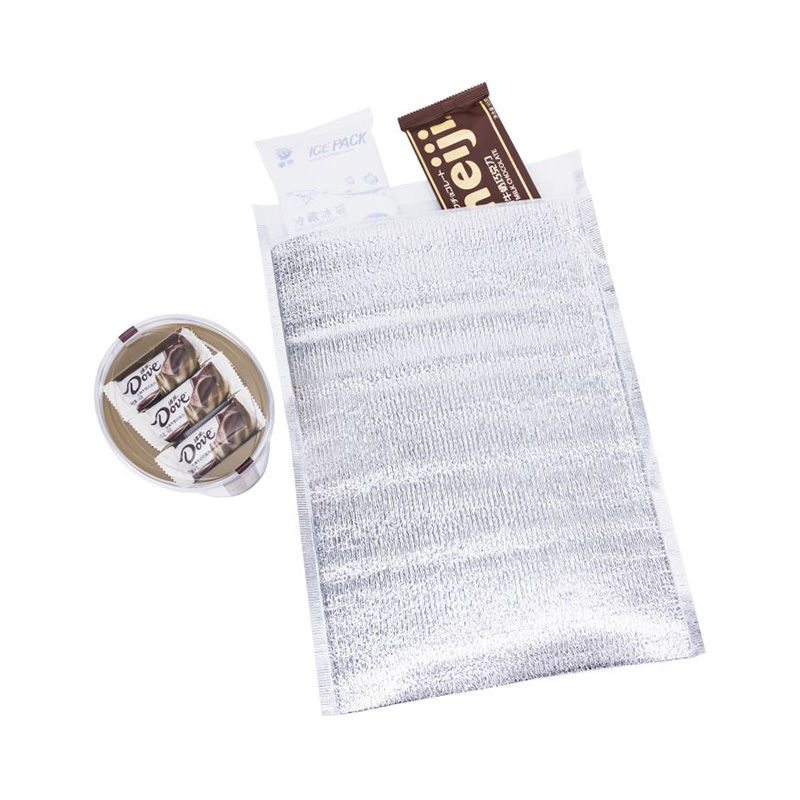
Insulated Packaging Liner Supplier: A Practical Framework for Choosing the Right Supplier
The best way to choose insulated packaging liner supplier is to treat the liner as a controlled packaging component. It should fit the carton, slow heat transfer, support the coolant plan, protect the payload, and be repeatable in daily operations. A buyer who compares only unit price or layer count may miss the factors that actually determine whether the shipment arrives in good condition.
For procurement teams, packaging buyers, fulfillment operators, and cold chain program owners, the strongest purchasing process begins with the shipment requirement and then moves to supplier screening. Define the product, route, temperature target, duration, carton size, payload volume, coolant, and receiver expectations first. Then compare liner materials, samples, testing data, quality controls, and total cost. This sequence reduces the risk of assuming that a liner alone creates a qualified temperature-controlled shipper.
Start with the Shipment Requirement
A liner specification should begin with the product’s tolerance, not the supplier’s catalog. A frozen item, chilled item, controlled-room-temperature product, and heat-sensitive cosmetic can all require different protection. Even within the same product category, summer and winter routes may need different coolant weight, different staging rules, or different pack-out instructions.
The buyer should define the target temperature range, maximum transit time, expected ambient exposure, time at the packing bench, product starting temperature, and receiving process. For critical products, the quality team should decide whether a qualified shipper, temperature logger, lane qualification, or formal documentation is required. A liner can support these controls but should not be confused with the complete control system.
Understand What the Liner Can and Cannot Do
An insulated liner is a passive barrier. It slows the movement of heat between the outside environment and the payload, but it does not create cooling by itself. When a shipment must remain chilled, frozen, or within controlled room temperature, the liner usually works with conditioned gel packs, phase change materials, dry ice, or a pre-cooled payload. The same liner can perform very differently when carton size, coolant mass, route, and packing discipline change.
A cold chain package is more than a box with reflective material. It is a combination of insulation, coolant, payload, void control, closure, handling process, and receiving inspection. For pharmaceuticals, biologics, lab samples, or regulated food, buyers should treat the liner as one component of a wider thermal packaging system, not as automatic proof that the shipment is qualified for every lane.
Common liner constructions include foil bubble, metallized bubble, EPE foam with foil facing, fiber or paper-based panels, cotton or textile-based insulation, and hybrid structures. Each construction has trade-offs. Bubble films are light and compact. Foam adds cushioning and thickness. Paper-based liners can improve disposal experience where recycling programs accept them. Hybrid systems may improve pack-out speed or presentation but still need route-specific testing.
A careful buyer separates three claims. First, the material may be suitable for a packaging use if documentation supports it. Second, the liner may have thermal performance in a specified test. Third, the complete shipping system may be qualified for a route or profile. These are not the same claim, and confusing them can create compliance risk and receiving disputes.
A insulated liner is useful because it can make ordinary carton shipping more thermally stable and easier to scale. It is limited because it depends on other parts of the pack-out. If gel packs are under-conditioned, if the carton is oversized, or if the lid is not closed correctly, the liner cannot recover the lost performance by itself.
Compare Materials by Performance and Operations
Material choice should be linked to the route and the operating process. For insulated packaging liner supplier, buyers may compare reflective foil, metallized bubble film, EPE foam, paper or fiber insulation, and hybrid liner structures. The better liner is not always the thickest or the most complex. It is the liner that meets the thermal requirement, fits the carton, supports fast packing, stays consistent in production, and gives the receiver a manageable disposal process.
Use foil bubble or metallized bubble structures when light weight, compact storage, and quick carton insertion are priorities.
Use foam-based structures when added cushioning, flexible thickness, and stronger insulation are needed for rough handling or heavier products.
Use paper or fiber-based options when the disposal experience is central, but confirm moisture behavior and local recycling acceptance.
Use a stronger qualified shipper or reusable container when the shipment has a narrow temperature window, long duration, or high compliance risk.
Fit, Payload, and Carton Geometry
Fit is one of the most overlooked purchasing variables. The buyer should measure the internal carton after the liner is installed, not just the outside box. Corners, folds, flaps, and closure overlap can reduce usable space. If the payload barely fits, workers may crush the liner, change the gel-pack position, or leave the lid partly open. Each of those changes can reduce consistency.
A good specification includes the carton dimensions, liner finished dimensions, thickness tolerance, installed usable volume, payload weight, coolant layout, and closure method. It should also define how the liner is packed for inbound shipping and how operators should open, insert, and close it. These small details make the difference between a sample that works once and a program that works every day.
Supplier Qualification Checklist
Because insulated packaging liner supplier is a sourcing decision as much as a packaging decision, buyers should ask direct questions before placing a bulk order. The most useful supplier discussions cover production consistency, documentation, customization limits, and problem-solving support.
Ask for internal and external dimensions, not only the named carton size, because usable volume changes after insulation is inserted.
Confirm payload capacity, liner thickness, closure method, seam construction, and whether the liner is supplied as a bag, panel set, pouch, or pre-formed insert.
Request samples from the same material structure intended for production, and compare them against the approved drawing before a bulk order.
Check compatibility with gel packs, PCM packs, dry ice when applicable, absorbent pads, inner bags, labels, and the customer’s carton grade.
Review packing speed, operator training, nesting or flat-storage efficiency, carton loading, pallet pattern, and dimensional-weight impact.
Clarify MOQ, lead time, artwork or tooling charges, mixed-size options, re-order process, and how the supplier communicates material changes.
Define receiving inspection criteria, including thickness tolerance, seal integrity, print quality, odor, contamination, carton count, and recovery after compression if used.
How to Review Thermal Data
A thermal chart should never be separated from the test method. Ask what carton size was used, what payload mass was packed, how many gel packs or PCM packs were included, how they were conditioned, where sensors were placed, what ambient profile was used, and how long the test ran. A claimed duration without these details may not apply to your product.
For food and seafood, testing should consider moisture, leak control, carton strength, and receiver opening time. For healthcare and pharmaceutical shipments, testing should be aligned with the product’s labeled condition and internal quality procedures. In both cases, receiving inspection should define what happens if the package arrives warm, wet, damaged, delayed, or missing a temperature record.
Application Notes for This Use Case
For many B2B programs, the liner is selected to make a standard corrugated carton behave like a better thermal shipper without moving to a bulky molded cooler. That can reduce storage space and simplify fulfillment, but the benefit depends on carton fit, closure discipline, payload stability, and the cooling method used with the liner.
The application detail matters because the same liner can support different goals. It may be used to keep chilled ingredients stable, reduce heat exposure for chocolate, protect frozen items from short delays, shield medicines from ambient swings, or improve presentation in a subscription box. Each goal changes the coolant, carton, handling, and acceptance criteria.
Pricing and Total Landed Cost
A useful price comparison includes unit price, material thickness, order quantity, freight cube, coolant weight, packing labor, damage claims, and disposal burden. Buyers should request price breaks by order quantity, but they should also calculate inbound freight, storage space, carton changes, gel-pack changes, packing labor, and likely claim reduction. For import programs, master carton density and dimensional freight can be as important as unit price.
For custom, OEM, or printed liners, ask which costs are one-time and which repeat. Tooling, artwork setup, print plates, sample rounds, and minimum runs may change the economics. If the program is new, a controlled pilot order can be safer than filling the warehouse with a size or material that has not been proven on the route.
Sustainability Without Losing Product Protection
Sustainability should be specific and testable. For insulated packaging liner supplier, buyers should compare right-sizing, flat storage, recycling instructions, local acceptance, material separation, and reduced product loss. A recyclable claim should be supported by instructions that receivers can understand. A reusable claim should be supported by an actual return or reuse process. A lower-material claim should still protect the product against avoidable waste.
The most sustainable package is rarely the one with the simplest label claim. It is the one that protects the product, minimizes unnecessary cube and material, can be handled correctly by the receiver, and can be supplied consistently without frequent substitutions. Product loss, replacement shipments, and customer complaints can erase the benefit of a liner that looks greener on paper but fails in transit.
Red Flags When Comparing Suppliers
The supplier gives a hold-time claim but cannot describe the test carton, payload, coolant, or ambient profile.
The sample looks different from the production quote, or the quote does not specify material structure and thickness.
The supplier uses broad words such as compliant, validated, or recyclable without explaining the boundary of the claim.
MOQ, lead time, artwork, packaging count, or freight terms change after the buyer approves the sample.
The liner requires a pack-out sequence that warehouse staff cannot repeat during peak volume.
A Practical Ordering Path
Begin with two or three materials that could realistically meet the requirement. Request samples and drawings. Build a test pack-out with the actual carton, payload, and coolant. Run a pilot under credible ambient exposure. Review temperature data, packing time, carton condition, product condition, and receiver feedback. Then finalize the specification and negotiate the commercial terms.
After the first bulk order, keep the approved sample and inspection criteria. Check early production lots carefully and document any deviations. If the supplier changes material, packaging format, or production location, repeat the relevant checks. A liner program becomes more reliable when it is managed like a controlled process rather than a one-time purchase.
FAQ
How many samples should be tested before ordering insulated packaging liner supplier?
Test enough samples to reflect the intended material, carton size, and packing process. For critical shipments, follow the quality team’s validation plan rather than relying on a single informal trial.
Can one liner size serve several carton sizes?
Sometimes, but only if usable volume, closure, and coolant placement remain consistent. A universal size can reduce inventory but may create poor fit in smaller cartons.
What is the most important supplier document?
The most useful document is a clear specification or drawing tied to an approved sample. Thermal data, material declarations, and packing instructions should support that specification.
About Tempk
Tempk supports cold chain packaging programs with products such as gel ice packs, dry ice packs, freezer ice bricks, insulated bags, EPP insulated boxes, cold shipping boxes, insulated box liners, and pallet covers. For liner-related projects, we can discuss foldable insulated formats, EPE foam and aluminum foil structures, carton fit, and cold-source compatibility for food, pharmaceutical, and other temperature-sensitive shipments. Our role is to help buyers match the packaging format to the route, payload, and operating process rather than treat one liner as a universal solution.
Talk to Tempk
Share your target temperature range, shipment duration, carton size, payload, and route conditions to request a practical liner recommendation or a bulk-order discussion.
Insulated Box Insert Manufacturer: How to Choose the Right Liner Supplier

Insulated Box Insert Manufacturer: A Practical Framework for Choosing the Right Supplier
The best way to choose insulated box insert manufacturer is to treat the liner as a controlled packaging component. It should fit the carton, slow heat transfer, support the coolant plan, protect the payload, and be repeatable in daily operations. A buyer who compares only unit price or layer count may miss the factors that actually determine whether the shipment arrives in good condition.
For importers, private-label buyers, packaging engineers, and sourcing managers, the strongest purchasing process begins with the shipment requirement and then moves to supplier screening. Define the product, route, temperature target, duration, carton size, payload volume, coolant, and receiver expectations first. Then compare liner materials, samples, testing data, quality controls, and total cost. This sequence reduces the risk of choosing a manufacturer from catalog photos instead of verified samples and written specifications.
Start with the Shipment Requirement
A liner specification should begin with the product’s tolerance, not the supplier’s catalog. A frozen item, chilled item, controlled-room-temperature product, and heat-sensitive cosmetic can all require different protection. Even within the same product category, summer and winter routes may need different coolant weight, different staging rules, or different pack-out instructions.
The buyer should define the target temperature range, maximum transit time, expected ambient exposure, time at the packing bench, product starting temperature, and receiving process. For critical products, the quality team should decide whether a qualified shipper, temperature logger, lane qualification, or formal documentation is required. A liner can support these controls but should not be confused with the complete control system.
Understand What the Liner Can and Cannot Do
An insulated liner is a passive barrier. It slows the movement of heat between the outside environment and the payload, but it does not create cooling by itself. When a shipment must remain chilled, frozen, or within controlled room temperature, the liner usually works with conditioned gel packs, phase change materials, dry ice, or a pre-cooled payload. The same liner can perform very differently when carton size, coolant mass, route, and packing discipline change.
A cold chain package is more than a box with reflective material. It is a combination of insulation, coolant, payload, void control, closure, handling process, and receiving inspection. For pharmaceuticals, biologics, lab samples, or regulated food, buyers should treat the liner as one component of a wider thermal packaging system, not as automatic proof that the shipment is qualified for every lane.
Common liner constructions include foil bubble, metallized bubble, EPE foam with foil facing, fiber or paper-based panels, cotton or textile-based insulation, and hybrid structures. Each construction has trade-offs. Bubble films are light and compact. Foam adds cushioning and thickness. Paper-based liners can improve disposal experience where recycling programs accept them. Hybrid systems may improve pack-out speed or presentation but still need route-specific testing.
A careful buyer separates three claims. First, the material may be suitable for a packaging use if documentation supports it. Second, the liner may have thermal performance in a specified test. Third, the complete shipping system may be qualified for a route or profile. These are not the same claim, and confusing them can create compliance risk and receiving disputes.
A insulated shipping liner is useful because it can make ordinary carton shipping more thermally stable and easier to scale. It is limited because it depends on other parts of the pack-out. If gel packs are under-conditioned, if the carton is oversized, or if the lid is not closed correctly, the liner cannot recover the lost performance by itself.
Compare Materials by Performance and Operations
Material choice should be linked to the route and the operating process. For insulated box insert manufacturer, buyers may compare reflective foil, metallized bubble film, EPE foam, paper or fiber insulation, and hybrid liner structures. The better liner is not always the thickest or the most complex. It is the liner that meets the thermal requirement, fits the carton, supports fast packing, stays consistent in production, and gives the receiver a manageable disposal process.
Use foil bubble or metallized bubble structures when light weight, compact storage, and quick carton insertion are priorities.
Use foam-based structures when added cushioning, flexible thickness, and stronger insulation are needed for rough handling or heavier products.
Use paper or fiber-based options when the disposal experience is central, but confirm moisture behavior and local recycling acceptance.
Use a stronger qualified shipper or reusable container when the shipment has a narrow temperature window, long duration, or high compliance risk.
Fit, Payload, and Carton Geometry
Fit is one of the most overlooked purchasing variables. The buyer should measure the internal carton after the liner is installed, not just the outside box. Corners, folds, flaps, and closure overlap can reduce usable space. If the payload barely fits, workers may crush the liner, change the gel-pack position, or leave the lid partly open. Each of those changes can reduce consistency.
A good specification includes the carton dimensions, liner finished dimensions, thickness tolerance, installed usable volume, payload weight, coolant layout, and closure method. It should also define how the liner is packed for inbound shipping and how operators should open, insert, and close it. These small details make the difference between a sample that works once and a program that works every day.
Supplier Qualification Checklist
Because insulated box insert manufacturer is a sourcing decision as much as a packaging decision, buyers should ask direct questions before placing a bulk order. The most useful supplier discussions cover production consistency, documentation, customization limits, and problem-solving support.
Ask for internal and external dimensions, not only the named carton size, because usable volume changes after insulation is inserted.
Confirm payload capacity, liner thickness, closure method, seam construction, and whether the liner is supplied as a bag, panel set, pouch, or pre-formed insert.
Request samples from the same material structure intended for production, and compare them against the approved drawing before a bulk order.
Check compatibility with gel packs, PCM packs, dry ice when applicable, absorbent pads, inner bags, labels, and the customer’s carton grade.
Review packing speed, operator training, nesting or flat-storage efficiency, carton loading, pallet pattern, and dimensional-weight impact.
Clarify MOQ, lead time, artwork or tooling charges, mixed-size options, re-order process, and how the supplier communicates material changes.
Define receiving inspection criteria, including thickness tolerance, seal integrity, print quality, odor, contamination, carton count, and recovery after compression if used.
How to Review Thermal Data
A thermal chart should never be separated from the test method. Ask what carton size was used, what payload mass was packed, how many gel packs or PCM packs were included, how they were conditioned, where sensors were placed, what ambient profile was used, and how long the test ran. A claimed duration without these details may not apply to your product.
For food and seafood, testing should consider moisture, leak control, carton strength, and receiver opening time. For healthcare and pharmaceutical shipments, testing should be aligned with the product’s labeled condition and internal quality procedures. In both cases, receiving inspection should define what happens if the package arrives warm, wet, damaged, delayed, or missing a temperature record.
Application Notes for This Use Case
For many B2B programs, the liner is selected to make a standard corrugated carton behave like a better thermal shipper without moving to a bulky molded cooler. That can reduce storage space and simplify fulfillment, but the benefit depends on carton fit, closure discipline, payload stability, and the cooling method used with the liner.
The application detail matters because the same liner can support different goals. It may be used to keep chilled ingredients stable, reduce heat exposure for chocolate, protect frozen items from short delays, shield medicines from ambient swings, or improve presentation in a subscription box. Each goal changes the coolant, carton, handling, and acceptance criteria.
Pricing and Total Landed Cost
A useful price comparison includes unit price, material thickness, order quantity, freight cube, coolant weight, packing labor, damage claims, and disposal burden. Buyers should request price breaks by order quantity, but they should also calculate inbound freight, storage space, carton changes, gel-pack changes, packing labor, and likely claim reduction. For import programs, master carton density and dimensional freight can be as important as unit price.
For custom, OEM, or printed liners, ask which costs are one-time and which repeat. Tooling, artwork setup, print plates, sample rounds, and minimum runs may change the economics. If the program is new, a controlled pilot order can be safer than filling the warehouse with a size or material that has not been proven on the route.
Sustainability Without Losing Product Protection
Sustainability should be specific and testable. For insulated box insert manufacturer, buyers should compare right-sizing, flat storage, recycling instructions, local acceptance, material separation, and reduced product loss. A recyclable claim should be supported by instructions that receivers can understand. A reusable claim should be supported by an actual return or reuse process. A lower-material claim should still protect the product against avoidable waste.
The most sustainable package is rarely the one with the simplest label claim. It is the one that protects the product, minimizes unnecessary cube and material, can be handled correctly by the receiver, and can be supplied consistently without frequent substitutions. Product loss, replacement shipments, and customer complaints can erase the benefit of a liner that looks greener on paper but fails in transit.
Red Flags When Comparing Suppliers
The supplier gives a hold-time claim but cannot describe the test carton, payload, coolant, or ambient profile.
The sample looks different from the production quote, or the quote does not specify material structure and thickness.
The supplier uses broad words such as compliant, validated, or recyclable without explaining the boundary of the claim.
MOQ, lead time, artwork, packaging count, or freight terms change after the buyer approves the sample.
The liner requires a pack-out sequence that warehouse staff cannot repeat during peak volume.
A Practical Ordering Path
Begin with two or three materials that could realistically meet the requirement. Request samples and drawings. Build a test pack-out with the actual carton, payload, and coolant. Run a pilot under credible ambient exposure. Review temperature data, packing time, carton condition, product condition, and receiver feedback. Then finalize the specification and negotiate the commercial terms.
After the first bulk order, keep the approved sample and inspection criteria. Check early production lots carefully and document any deviations. If the supplier changes material, packaging format, or production location, repeat the relevant checks. A liner program becomes more reliable when it is managed like a controlled process rather than a one-time purchase.
FAQ
How many samples should be tested before ordering insulated box insert manufacturer?
Test enough samples to reflect the intended material, carton size, and packing process. For critical shipments, follow the quality team’s validation plan rather than relying on a single informal trial.
Can one liner size serve several carton sizes?
Sometimes, but only if usable volume, closure, and coolant placement remain consistent. A universal size can reduce inventory but may create poor fit in smaller cartons.
What is the most important supplier document?
The most useful document is a clear specification or drawing tied to an approved sample. Thermal data, material declarations, and packing instructions should support that specification.
About Tempk
Tempk supports cold chain packaging programs with products such as gel ice packs, dry ice packs, freezer ice bricks, insulated bags, EPP insulated boxes, cold shipping boxes, insulated box liners, and pallet covers. For liner-related projects, we can discuss foldable insulated formats, EPE foam and aluminum foil structures, carton fit, and cold-source compatibility for food, pharmaceutical, and other temperature-sensitive shipments. Our role is to help buyers match the packaging format to the route, payload, and operating process rather than treat one liner as a universal solution.
Talk to Tempk
Share your target temperature range, shipment duration, carton size, payload, and route conditions to request a practical liner recommendation or a bulk-order discussion.
Foil Bubble Liner for Meal Kit Delivery: How to Choose the Right Liner Supplier
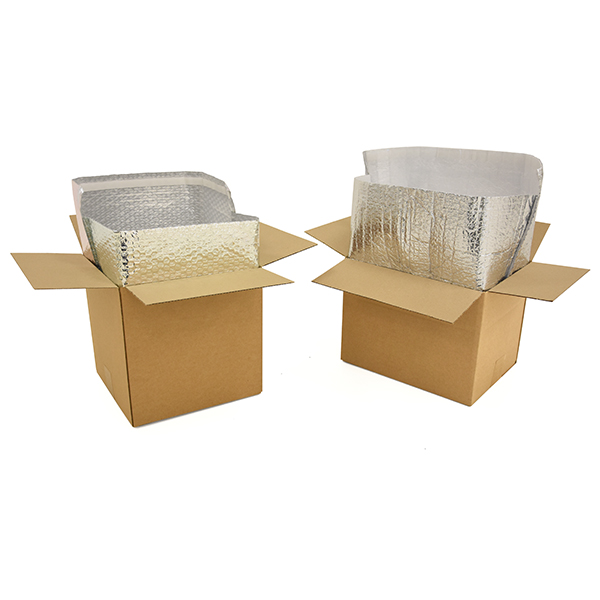
Foil Bubble Liner for Meal Kit Delivery: A Practical Framework for Choosing the Right Supplier
The best way to choose foil bubble liner for meal kit delivery is to treat the liner as a controlled packaging component. It should fit the carton, slow heat transfer, support the coolant plan, protect the payload, and be repeatable in daily operations. A buyer who compares only unit price or layer count may miss the factors that actually determine whether the shipment arrives in good condition.
For meal kit brands, grocery delivery operators, fulfillment teams, and packaging buyers, the strongest purchasing process begins with the shipment requirement and then moves to supplier screening. Define the product, route, temperature target, duration, carton size, payload volume, coolant, and receiver expectations first. Then compare liner materials, samples, testing data, quality controls, and total cost. This sequence reduces the risk of using one liner and gel-pack layout for every season, route, and ingredient mix.
Start with the Shipment Requirement
A liner specification should begin with the product’s tolerance, not the supplier’s catalog. A frozen item, chilled item, controlled-room-temperature product, and heat-sensitive cosmetic can all require different protection. Even within the same product category, summer and winter routes may need different coolant weight, different staging rules, or different pack-out instructions.
The buyer should define the target temperature range, maximum transit time, expected ambient exposure, time at the packing bench, product starting temperature, and receiving process. For critical products, the quality team should decide whether a qualified shipper, temperature logger, lane qualification, or formal documentation is required. A liner can support these controls but should not be confused with the complete control system.
Understand What the Liner Can and Cannot Do
An insulated liner is a passive barrier. It slows the movement of heat between the outside environment and the payload, but it does not create cooling by itself. When a shipment must remain chilled, frozen, or within controlled room temperature, the liner usually works with conditioned gel packs, phase change materials, dry ice, or a pre-cooled payload. The same liner can perform very differently when carton size, coolant mass, route, and packing discipline change.
A cold chain package is more than a box with reflective material. It is a combination of insulation, coolant, payload, void control, closure, handling process, and receiving inspection. For pharmaceuticals, biologics, lab samples, or regulated food, buyers should treat the liner as one component of a wider thermal packaging system, not as automatic proof that the shipment is qualified for every lane.
Common liner constructions include foil bubble, metallized bubble, EPE foam with foil facing, fiber or paper-based panels, cotton or textile-based insulation, and hybrid structures. Each construction has trade-offs. Bubble films are light and compact. Foam adds cushioning and thickness. Paper-based liners can improve disposal experience where recycling programs accept them. Hybrid systems may improve pack-out speed or presentation but still need route-specific testing.
A careful buyer separates three claims. First, the material may be suitable for a packaging use if documentation supports it. Second, the liner may have thermal performance in a specified test. Third, the complete shipping system may be qualified for a route or profile. These are not the same claim, and confusing them can create compliance risk and receiving disputes.
A foil bubble liner for meal kit delivery is useful because it can make ordinary carton shipping more thermally stable and easier to scale. It is limited because it depends on other parts of the pack-out. If gel packs are under-conditioned, if the carton is oversized, or if the lid is not closed correctly, the liner cannot recover the lost performance by itself.
Compare Materials by Performance and Operations
Material choice should be linked to the route and the operating process. For foil bubble liner for meal kit delivery, buyers may compare reflective foil, metallized bubble film, EPE foam, paper or fiber insulation, and hybrid liner structures. The better liner is not always the thickest or the most complex. It is the liner that meets the thermal requirement, fits the carton, supports fast packing, stays consistent in production, and gives the receiver a manageable disposal process.
Use foil bubble or metallized bubble structures when light weight, compact storage, and quick carton insertion are priorities.
Use foam-based structures when added cushioning, flexible thickness, and stronger insulation are needed for rough handling or heavier products.
Use paper or fiber-based options when the disposal experience is central, but confirm moisture behavior and local recycling acceptance.
Use a stronger qualified shipper or reusable container when the shipment has a narrow temperature window, long duration, or high compliance risk.
Fit, Payload, and Carton Geometry
Fit is one of the most overlooked purchasing variables. The buyer should measure the internal carton after the liner is installed, not just the outside box. Corners, folds, flaps, and closure overlap can reduce usable space. If the payload barely fits, workers may crush the liner, change the gel-pack position, or leave the lid partly open. Each of those changes can reduce consistency.
A good specification includes the carton dimensions, liner finished dimensions, thickness tolerance, installed usable volume, payload weight, coolant layout, and closure method. It should also define how the liner is packed for inbound shipping and how operators should open, insert, and close it. These small details make the difference between a sample that works once and a program that works every day.
Supplier Qualification Checklist
Because foil bubble liner for meal kit delivery is a sourcing decision as much as a packaging decision, buyers should ask direct questions before placing a bulk order. The most useful supplier discussions cover production consistency, documentation, customization limits, and problem-solving support.
Ask for internal and external dimensions, not only the named carton size, because usable volume changes after insulation is inserted.
Confirm payload capacity, liner thickness, closure method, seam construction, and whether the liner is supplied as a bag, panel set, pouch, or pre-formed insert.
Request samples from the same material structure intended for production, and compare them against the approved drawing before a bulk order.
Check compatibility with gel packs, PCM packs, dry ice when applicable, absorbent pads, inner bags, labels, and the customer’s carton grade.
Review packing speed, operator training, nesting or flat-storage efficiency, carton loading, pallet pattern, and dimensional-weight impact.
Clarify MOQ, lead time, artwork or tooling charges, mixed-size options, re-order process, and how the supplier communicates material changes.
Define receiving inspection criteria, including thickness tolerance, seal integrity, print quality, odor, contamination, carton count, and recovery after compression if used.
How to Review Thermal Data
A thermal chart should never be separated from the test method. Ask what carton size was used, what payload mass was packed, how many gel packs or PCM packs were included, how they were conditioned, where sensors were placed, what ambient profile was used, and how long the test ran. A claimed duration without these details may not apply to your product.
For food and seafood, testing should consider moisture, leak control, carton strength, and receiver opening time. For healthcare and pharmaceutical shipments, testing should be aligned with the product’s labeled condition and internal quality procedures. In both cases, receiving inspection should define what happens if the package arrives warm, wet, damaged, delayed, or missing a temperature record.
Application Notes for This Use Case
Meal kit delivery is difficult because one carton may hold ingredients with different sensitivities. Proteins may need strong cooling, produce can be damaged by direct contact with frozen gel packs, sauces can leak, and printed recipe material should stay dry. A foil bubble liner can slow heat gain and support fast pack-out, but the actual program should also define gel-pack weight, ingredient placement, void control, and seasonal changes for hot and cold lanes.
The application detail matters because the same liner can support different goals. It may be used to keep chilled ingredients stable, reduce heat exposure for chocolate, protect frozen items from short delays, shield medicines from ambient swings, or improve presentation in a subscription box. Each goal changes the coolant, carton, handling, and acceptance criteria.
Pricing and Total Landed Cost
A useful price comparison includes unit price, material thickness, order quantity, freight cube, coolant weight, packing labor, damage claims, and disposal burden. Buyers should request price breaks by order quantity, but they should also calculate inbound freight, storage space, carton changes, gel-pack changes, packing labor, and likely claim reduction. For import programs, master carton density and dimensional freight can be as important as unit price.
For custom, OEM, or printed liners, ask which costs are one-time and which repeat. Tooling, artwork setup, print plates, sample rounds, and minimum runs may change the economics. If the program is new, a controlled pilot order can be safer than filling the warehouse with a size or material that has not been proven on the route.
Sustainability Without Losing Product Protection
Sustainability should be specific and testable. For foil bubble liner for meal kit delivery, buyers should compare recycling instructions, consumer disposal burden, lower material volume, and the balance between convenience and performance. A recyclable claim should be supported by instructions that receivers can understand. A reusable claim should be supported by an actual return or reuse process. A lower-material claim should still protect the product against avoidable waste.
The most sustainable package is rarely the one with the simplest label claim. It is the one that protects the product, minimizes unnecessary cube and material, can be handled correctly by the receiver, and can be supplied consistently without frequent substitutions. Product loss, replacement shipments, and customer complaints can erase the benefit of a liner that looks greener on paper but fails in transit.
Red Flags When Comparing Suppliers
The supplier gives a hold-time claim but cannot describe the test carton, payload, coolant, or ambient profile.
The sample looks different from the production quote, or the quote does not specify material structure and thickness.
The supplier uses broad words such as compliant, validated, or recyclable without explaining the boundary of the claim.
MOQ, lead time, artwork, packaging count, or freight terms change after the buyer approves the sample.
The liner requires a pack-out sequence that warehouse staff cannot repeat during peak volume.
A Practical Ordering Path
Begin with two or three materials that could realistically meet the requirement. Request samples and drawings. Build a test pack-out with the actual carton, payload, and coolant. Run a pilot under credible ambient exposure. Review temperature data, packing time, carton condition, product condition, and receiver feedback. Then finalize the specification and negotiate the commercial terms.
After the first bulk order, keep the approved sample and inspection criteria. Check early production lots carefully and document any deviations. If the supplier changes material, packaging format, or production location, repeat the relevant checks. A liner program becomes more reliable when it is managed like a controlled process rather than a one-time purchase.
FAQ
How many samples should be tested before ordering foil bubble liner for meal kit delivery?
Test enough samples to reflect the intended material, carton size, and packing process. For critical shipments, follow the quality team’s validation plan rather than relying on a single informal trial.
Can one liner size serve several carton sizes?
Sometimes, but only if usable volume, closure, and coolant placement remain consistent. A universal size can reduce inventory but may create poor fit in smaller cartons.
What is the most important supplier document?
The most useful document is a clear specification or drawing tied to an approved sample. Thermal data, material declarations, and packing instructions should support that specification.
About Tempk
Tempk supports cold chain packaging programs with products such as gel ice packs, dry ice packs, freezer ice bricks, insulated bags, EPP insulated boxes, cold shipping boxes, insulated box liners, and pallet covers. For liner-related projects, we can discuss foldable insulated formats, EPE foam and aluminum foil structures, carton fit, and cold-source compatibility for food, pharmaceutical, and other temperature-sensitive shipments. Our role is to help buyers match the packaging format to the route, payload, and operating process rather than treat one liner as a universal solution.
Talk to Tempk
Share your target temperature range, shipment duration, carton size, payload, and route conditions to request a practical liner recommendation or a bulk-order discussion.