


Ice Bricks Bag: Industry Uses, Buying Trends, and Sustainable Pack-Outs
Ice Bricks Bag: Industry Uses, Buying Trends, and Sustainable Pack-Outs
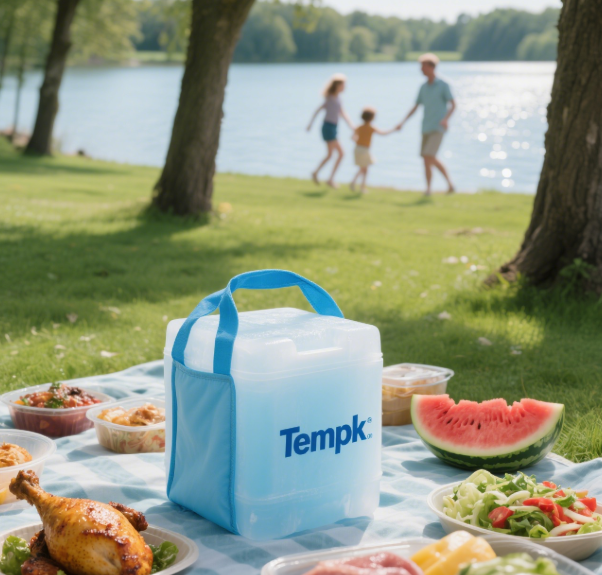
Ice Bricks Bag: Industry Uses, Buying Trends, and Sustainable Pack-Outs
Ice Bricks Bag are becoming more important because more shipments now move through mixed networks: e-commerce fulfillment, grocery delivery, pharmacy distribution, laboratory logistics, regional depots, and cross-border lanes. The same product may pass through a freezer room, a staging table, a parcel hub, a van, and a customer receiving area. A rigid cold source helps only when it fits this operational reality.
For ice bricks used with insulated delivery bags for last-mile food, grocery, pharmacy, and sample movement, buyers usually want a practical answer: which brick format will protect the product without wasting space, adding unnecessary freight cost, or creating a hard-to-manage return process? The answer depends on the package system and on how workers will use the bricks every day.
Why Ice Bricks Are Used Across Modern Cold Chains
Cold chain networks are no longer limited to large refrigerated trucks. Many businesses rely on passive packaging for parcels, local delivery, mobile service, and backup transport. Ice bricks can support these operations because they are easy to count, pre-condition, place, recover, clean, and reuse. Their rigid shape makes pack-out instructions easier to standardize than loose ice or irregular cooling materials.
Food businesses use ice bricks to help maintain freshness during delivery rounds and shipment of perishable goods. Healthcare and laboratory teams use them in more controlled ways, often with insulated boxes, temperature monitors, and written procedures. Industrial and field service teams may use them for samples, reagents, or temperature-sensitive kits that travel outside a controlled facility.
The common theme is control. A cold chain team does not buy ice bricks bag only to create coldness. It buys them to make coldness repeatable: the same number of bricks, the same position, the same conditioning, and the same receiving check whenever the same shipping profile is used.
Industry Scenarios
In grocery and prepared-food delivery, the challenge is frequent opening and closing. A delivery bag or cooler may be exposed to warm air at every stop. Bricks should be placed where they support the cold zone without blocking access or making the bag uncomfortable to carry. Short local routes still need discipline because repeated door openings can erode temperature protection quickly.
In pharmaceutical logistics, the challenge is product-specific requirements. A vaccine, biologic, insulin product, reagent, or sample may have strict temperature limits. The cold source must be part of a qualified package, and the receiving team may need evidence that the shipment stayed within range. An ice brick that works well for food should not be copied into pharma use without review.
In freight or pallet-level shipments, the challenge is uneven exposure. Pallet corners, top layers, and outer faces may warm faster than the product core. Larger bricks, panels, thermal covers, insulated pallet shippers, and strategic monitor placement may be needed. The loading pattern matters as much as the refrigerant quantity.
Market Direction: From Single Components to Pack-Out Systems
A clear trend in cold chain buying is the move from buying individual components to designing pack-out systems. Buyers increasingly ask how an ice brick works with a box liner, EPP cooler, delivery bag, pallet cover, or data logger. This is a healthy shift because cold chain failures rarely come from one component alone. They usually come from a mismatch between product, route, packaging, and procedure.
Another direction is SKU simplification. Large operations do not want ten similar brick sizes if three sizes can cover most pack-outs. Fewer SKUs make training easier, reduce storage errors, simplify freezing rotation, and help procurement negotiate more stable supply. The risk is oversimplification: a brick that is convenient for inventory may still be wrong for a specific product or lane.
Sustainability is also influencing purchasing decisions. Reusable bricks can reduce single-use waste when they are recovered and recirculated. However, sustainability depends on the full system. Return rates, cleaning water, freezer energy, transport weight, packaging damage, and end-of-life recycling all affect the real outcome.
How Sustainability Should Be Evaluated
A reusable ice brick is not automatically sustainable just because it can be used again. It must actually return to the operation, remain clean, avoid leakage, survive handling, and be refrozen efficiently. For open parcel networks where the brick will not return, a reusable design may still be useful for durability, but the business should be honest about end-of-life assumptions.
Closed-loop delivery systems are more favorable. Grocery routes, meal delivery fleets, pharmacy totes, laboratory couriers, and internal distribution networks may collect bricks after use. In those operations, durable shells, clear labeling, cleaning instructions, and freezer rotation can support both cost control and waste reduction.
Weight is part of sustainability too. A brick that is larger than needed increases transport weight and may force a larger carton. The better environmental choice is not always the largest reusable brick. It is the smallest reliable pack-out that protects the product under the approved route conditions.
Ice Bricks Compared With Alternative Cold Sources
Loose ice is inexpensive but creates melt water, uneven handling, and limited pack-out control. Flexible gel packs are useful where contact with irregular surfaces is needed. Rigid ice bricks are useful when the team needs defined geometry, better stacking, cleaner handling, and repeated placement. PCM panels or bricks can support tighter temperature bands when matched to the product requirement.
Dry ice can support frozen or deep-frozen shipments, but it brings sublimation, ventilation, handling, and regulatory considerations. It is not a direct substitute for chilled ice bricks. Active temperature-controlled containers can provide strong control for high-value shipments, but they add cost, charging, maintenance, and reverse logistics. The best choice depends on product risk and lane requirements.
For ice bricks bag, the comparison should be framed around use case. A local chilled food route, a cross-country medical shipment, a pallet of seafood, and an export pharmaceutical lane may all require different cold sources even if the word ice appears in the product name.
What Buyers Should Build Into Supplier Discussions
Supplier discussions should connect commercial terms with operational use. For bag capacity, pocket layout, rider comfort, closure quality, cleaning, condensation control, and route duration, ask how the brick will be supplied, how it will fit into your current packing flow, and what documentation or support will be available after the first order. A low quoted price is less attractive if the product creates extra labor or inconsistent pack-outs.
Define the product temperature range and route duration before asking for a recommendation.
Measure the final payload cavity after insulation and bricks are installed.
Ask whether the supplier can support sample review, pilot orders, and repeat production lots.
Check whether carton labels, color, size, or molded markings can reduce warehouse errors.
Confirm cleaning, reuse, and end-of-life practices for closed-loop operations.
Review how the supplier handles material or formula changes over time.
Consider inbound freight cost, pallet cube, freezer capacity, and storage space.
Use temperature monitoring during trials instead of relying on touch or visual inspection.
A useful supplier will discuss the pack-out, not only the brick. The conversation should include insulation type, payload amount, starting temperature, route duration, seasonal exposure, and whether the product is heat-sensitive, freeze-sensitive, or both.
Operational Examples Without Overclaiming
A local grocery operator may place slim bricks in side pockets of insulated delivery bags and recover them at the end of the route. The pack-out can be practical when route time is short, bags are closed properly, and workers rotate fully conditioned bricks. It should not be assumed to protect every product during long outdoor delays.
A laboratory courier may use a rigid insulated box with conditioned bricks and a separator to move samples between facilities. The procedure may include loading records and temperature checks. The same brick might not be acceptable for a different sample type if the allowed temperature range changes.
A food exporter may use larger bricks in an insulated carton or pallet shipper for a chilled route. The design should account for customs dwell time, terminal exposure, and product loading temperature. If the lane becomes longer or warmer, the team may need a different system rather than simply adding more bricks.
A Decision Framework for the Next Order
First, classify the product. Is it chilled, frozen, controlled room temperature, or freeze-sensitive? Second, classify the route. Is it last-mile, parcel, cross-country, export, or pallet freight? Third, classify the operating model. Will the bricks return, or are they one-way? These three questions narrow the options before the buyer compares prices.
Next, select the package family: bag, box, liner, cooler, pallet cover, or qualified shipper. Choose the brick only after the container geometry and payload volume are known. A cold source that looks attractive on its own can become difficult to use if it blocks product loading, prevents lid closure, or creates too much weight for manual handling.
Finally, pilot the system and document the result. A small trial can reveal problems with freezing capacity, staging time, condensation, worker instructions, return flow, and receiving inspection. Those findings are more valuable than a theoretical claim about how long a brick lasts.
FAQ
Are ice bricks suitable for international shipments? They may be suitable for some chilled or frozen lanes, but the full package must account for route duration, customs dwell time, airline or carrier handling, and product-specific requirements.
Do reusable bricks lower cost? They can lower cost in closed-loop operations when recovery, cleaning, freezing, and rotation are well managed. In one-way shipments, the total cost calculation may be different.
Should a buyer choose gel packs or rigid bricks? Choose based on container fit, product sensitivity, reuse plan, and pack-out repeatability. Flexible packs conform better, while rigid bricks are easier to standardize and stack.
About Tempk
At Tempk, we focus on practical cold chain packaging for food, pharmaceutical, biotech, and other temperature-sensitive shipments. Our public product range includes gel ice packs, dry ice packs, ice bricks, insulated bags, insulated box liners, EPP boxes, cold shipping boxes, thermal pallet covers, and related cold chain materials. For ice bricks bag projects, we help buyers think through the refrigerant, container, payload, route, and handling process together rather than treating the brick as a separate accessory.
A practical approval process starts with the product requirement, not the refrigerant catalog. Define the allowed temperature range, the maximum time outside controlled storage, the payload volume, the loading temperature, and the worst expected ambient exposure. Only then should the team choose brick mass, brick placement, insulation, separators, and monitoring. This order prevents a common mistake: approving a cold-looking pack-out that has never been checked against the real lane.
For repeat programs, the packing instruction should be simple enough for warehouse staff to follow under time pressure. A drawing, a photo sequence, brick pre-conditioning instructions, and a check box for payload placement often do more to protect temperature than a long technical explanation. The instruction should also say what to do when a brick is damaged, partly thawed, dirty, or missing.
Discuss Your Pack-Out
Share your temperature range, shipment duration, payload size, and expected handling conditions to discuss a practical ice bricks bag solution. Ask for bulk, sample, or custom guidance before approving a repeat pack-out.
Ice Gel Brick Wholesale: Industry Uses, Buying Trends, and Sustainable Pack-Outs

Ice Gel Brick Wholesale: Industry Uses, Buying Trends, and Sustainable Pack-Outs
Ice Gel Brick Wholesale are becoming more important because more shipments now move through mixed networks: e-commerce fulfillment, grocery delivery, pharmacy distribution, laboratory logistics, regional depots, and cross-border lanes. The same product may pass through a freezer room, a staging table, a parcel hub, a van, and a customer receiving area. A rigid cold source helps only when it fits this operational reality.
For wholesale ice gel brick purchasing for distributors, cold chain packers, food delivery operators, and healthcare logistics teams, buyers usually want a practical answer: which brick format will protect the product without wasting space, adding unnecessary freight cost, or creating a hard-to-manage return process? The answer depends on the package system and on how workers will use the bricks every day.
Why Ice Bricks Are Used Across Modern Cold Chains
Cold chain networks are no longer limited to large refrigerated trucks. Many businesses rely on passive packaging for parcels, local delivery, mobile service, and backup transport. Ice bricks can support these operations because they are easy to count, pre-condition, place, recover, clean, and reuse. Their rigid shape makes pack-out instructions easier to standardize than loose ice or irregular cooling materials.
Food businesses use ice bricks to help maintain freshness during delivery rounds and shipment of perishable goods. Healthcare and laboratory teams use them in more controlled ways, often with insulated boxes, temperature monitors, and written procedures. Industrial and field service teams may use them for samples, reagents, or temperature-sensitive kits that travel outside a controlled facility.
The common theme is control. A cold chain team does not buy ice gel brick wholesale only to create coldness. It buys them to make coldness repeatable: the same number of bricks, the same position, the same conditioning, and the same receiving check whenever the same shipping profile is used.
Industry Scenarios
In grocery and prepared-food delivery, the challenge is frequent opening and closing. A delivery bag or cooler may be exposed to warm air at every stop. Bricks should be placed where they support the cold zone without blocking access or making the bag uncomfortable to carry. Short local routes still need discipline because repeated door openings can erode temperature protection quickly.
In pharmaceutical logistics, the challenge is product-specific requirements. A vaccine, biologic, insulin product, reagent, or sample may have strict temperature limits. The cold source must be part of a qualified package, and the receiving team may need evidence that the shipment stayed within range. An ice brick that works well for food should not be copied into pharma use without review.
In freight or pallet-level shipments, the challenge is uneven exposure. Pallet corners, top layers, and outer faces may warm faster than the product core. Larger bricks, panels, thermal covers, insulated pallet shippers, and strategic monitor placement may be needed. The loading pattern matters as much as the refrigerant quantity.
Market Direction: From Single Components to Pack-Out Systems
A clear trend in cold chain buying is the move from buying individual components to designing pack-out systems. Buyers increasingly ask how an ice brick works with a box liner, EPP cooler, delivery bag, pallet cover, or data logger. This is a healthy shift because cold chain failures rarely come from one component alone. They usually come from a mismatch between product, route, packaging, and procedure.
Another direction is SKU simplification. Large operations do not want ten similar brick sizes if three sizes can cover most pack-outs. Fewer SKUs make training easier, reduce storage errors, simplify freezing rotation, and help procurement negotiate more stable supply. The risk is oversimplification: a brick that is convenient for inventory may still be wrong for a specific product or lane.
Sustainability is also influencing purchasing decisions. Reusable bricks can reduce single-use waste when they are recovered and recirculated. However, sustainability depends on the full system. Return rates, cleaning water, freezer energy, transport weight, packaging damage, and end-of-life recycling all affect the real outcome.
How Sustainability Should Be Evaluated
A reusable ice brick is not automatically sustainable just because it can be used again. It must actually return to the operation, remain clean, avoid leakage, survive handling, and be refrozen efficiently. For open parcel networks where the brick will not return, a reusable design may still be useful for durability, but the business should be honest about end-of-life assumptions.
Closed-loop delivery systems are more favorable. Grocery routes, meal delivery fleets, pharmacy totes, laboratory couriers, and internal distribution networks may collect bricks after use. In those operations, durable shells, clear labeling, cleaning instructions, and freezer rotation can support both cost control and waste reduction.
Weight is part of sustainability too. A brick that is larger than needed increases transport weight and may force a larger carton. The better environmental choice is not always the largest reusable brick. It is the smallest reliable pack-out that protects the product under the approved route conditions.
Ice Bricks Compared With Alternative Cold Sources
Loose ice is inexpensive but creates melt water, uneven handling, and limited pack-out control. Flexible gel packs are useful where contact with irregular surfaces is needed. Rigid ice bricks are useful when the team needs defined geometry, better stacking, cleaner handling, and repeated placement. PCM panels or bricks can support tighter temperature bands when matched to the product requirement.
Dry ice can support frozen or deep-frozen shipments, but it brings sublimation, ventilation, handling, and regulatory considerations. It is not a direct substitute for chilled ice bricks. Active temperature-controlled containers can provide strong control for high-value shipments, but they add cost, charging, maintenance, and reverse logistics. The best choice depends on product risk and lane requirements.
For ice gel brick wholesale, the comparison should be framed around use case. A local chilled food route, a cross-country medical shipment, a pallet of seafood, and an export pharmaceutical lane may all require different cold sources even if the word ice appears in the product name.
What Buyers Should Build Into Supplier Discussions
Supplier discussions should connect commercial terms with operational use. For SKU rationalization, carton quantity, pallet count, storage space, lot records, and reorder timing, ask how the brick will be supplied, how it will fit into your current packing flow, and what documentation or support will be available after the first order. A low quoted price is less attractive if the product creates extra labor or inconsistent pack-outs.
Define the product temperature range and route duration before asking for a recommendation.
Measure the final payload cavity after insulation and bricks are installed.
Ask whether the supplier can support sample review, pilot orders, and repeat production lots.
Check whether carton labels, color, size, or molded markings can reduce warehouse errors.
Confirm cleaning, reuse, and end-of-life practices for closed-loop operations.
Review how the supplier handles material or formula changes over time.
Consider inbound freight cost, pallet cube, freezer capacity, and storage space.
Use temperature monitoring during trials instead of relying on touch or visual inspection.
A useful supplier will discuss the pack-out, not only the brick. The conversation should include insulation type, payload amount, starting temperature, route duration, seasonal exposure, and whether the product is heat-sensitive, freeze-sensitive, or both.
Operational Examples Without Overclaiming
A local grocery operator may place slim bricks in side pockets of insulated delivery bags and recover them at the end of the route. The pack-out can be practical when route time is short, bags are closed properly, and workers rotate fully conditioned bricks. It should not be assumed to protect every product during long outdoor delays.
A laboratory courier may use a rigid insulated box with conditioned bricks and a separator to move samples between facilities. The procedure may include loading records and temperature checks. The same brick might not be acceptable for a different sample type if the allowed temperature range changes.
A food exporter may use larger bricks in an insulated carton or pallet shipper for a chilled route. The design should account for customs dwell time, terminal exposure, and product loading temperature. If the lane becomes longer or warmer, the team may need a different system rather than simply adding more bricks.
A Decision Framework for the Next Order
First, classify the product. Is it chilled, frozen, controlled room temperature, or freeze-sensitive? Second, classify the route. Is it last-mile, parcel, cross-country, export, or pallet freight? Third, classify the operating model. Will the bricks return, or are they one-way? These three questions narrow the options before the buyer compares prices.
Next, select the package family: bag, box, liner, cooler, pallet cover, or qualified shipper. Choose the brick only after the container geometry and payload volume are known. A cold source that looks attractive on its own can become difficult to use if it blocks product loading, prevents lid closure, or creates too much weight for manual handling.
Finally, pilot the system and document the result. A small trial can reveal problems with freezing capacity, staging time, condensation, worker instructions, return flow, and receiving inspection. Those findings are more valuable than a theoretical claim about how long a brick lasts.
FAQ
Are ice bricks suitable for international shipments? They may be suitable for some chilled or frozen lanes, but the full package must account for route duration, customs dwell time, airline or carrier handling, and product-specific requirements.
Do reusable bricks lower cost? They can lower cost in closed-loop operations when recovery, cleaning, freezing, and rotation are well managed. In one-way shipments, the total cost calculation may be different.
Should a buyer choose gel packs or rigid bricks? Choose based on container fit, product sensitivity, reuse plan, and pack-out repeatability. Flexible packs conform better, while rigid bricks are easier to standardize and stack.
About Tempk
At Tempk, we focus on practical cold chain packaging for food, pharmaceutical, biotech, and other temperature-sensitive shipments. Our public product range includes gel ice packs, dry ice packs, ice bricks, insulated bags, insulated box liners, EPP boxes, cold shipping boxes, thermal pallet covers, and related cold chain materials. For ice gel brick wholesale projects, we help buyers think through the refrigerant, container, payload, route, and handling process together rather than treating the brick as a separate accessory.
A practical approval process starts with the product requirement, not the refrigerant catalog. Define the allowed temperature range, the maximum time outside controlled storage, the payload volume, the loading temperature, and the worst expected ambient exposure. Only then should the team choose brick mass, brick placement, insulation, separators, and monitoring. This order prevents a common mistake: approving a cold-looking pack-out that has never been checked against the real lane.
For repeat programs, the packing instruction should be simple enough for warehouse staff to follow under time pressure. A drawing, a photo sequence, brick pre-conditioning instructions, and a check box for payload placement often do more to protect temperature than a long technical explanation. The instruction should also say what to do when a brick is damaged, partly thawed, dirty, or missing.
Discuss Your Pack-Out
Share your temperature range, shipment duration, payload size, and expected handling conditions to discuss a practical ice gel brick wholesale solution. Ask for bulk, sample, or custom guidance before approving a repeat pack-out.
Ice Gel Brick Supplier: Industry Uses, Buying Trends, and Sustainable Pack-Outs
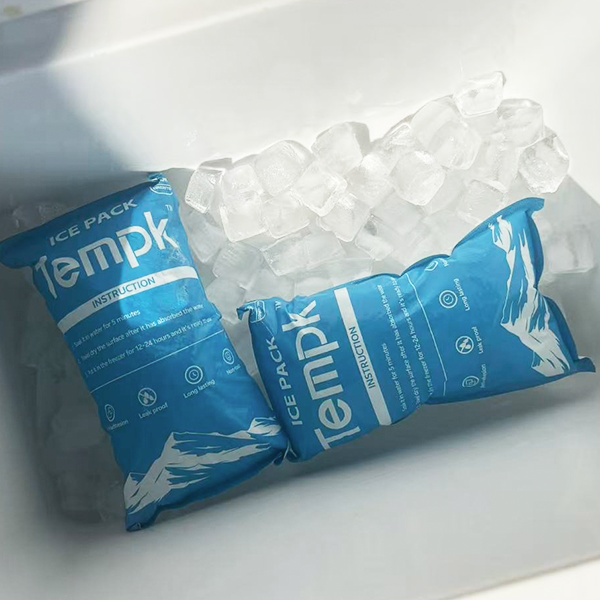
Ice Gel Brick Supplier: Industry Uses, Buying Trends, and Sustainable Pack-Outs
Ice Gel Brick Supplier are becoming more important because more shipments now move through mixed networks: e-commerce fulfillment, grocery delivery, pharmacy distribution, laboratory logistics, regional depots, and cross-border lanes. The same product may pass through a freezer room, a staging table, a parcel hub, a van, and a customer receiving area. A rigid cold source helps only when it fits this operational reality.
For choosing an ice gel brick supplier for commercial cold chain programs and repeat ordering, buyers usually want a practical answer: which brick format will protect the product without wasting space, adding unnecessary freight cost, or creating a hard-to-manage return process? The answer depends on the package system and on how workers will use the bricks every day.
Why Ice Bricks Are Used Across Modern Cold Chains
Cold chain networks are no longer limited to large refrigerated trucks. Many businesses rely on passive packaging for parcels, local delivery, mobile service, and backup transport. Ice bricks can support these operations because they are easy to count, pre-condition, place, recover, clean, and reuse. Their rigid shape makes pack-out instructions easier to standardize than loose ice or irregular cooling materials.
Food businesses use ice bricks to help maintain freshness during delivery rounds and shipment of perishable goods. Healthcare and laboratory teams use them in more controlled ways, often with insulated boxes, temperature monitors, and written procedures. Industrial and field service teams may use them for samples, reagents, or temperature-sensitive kits that travel outside a controlled facility.
The common theme is control. A cold chain team does not buy ice gel brick supplier only to create coldness. It buys them to make coldness repeatable: the same number of bricks, the same position, the same conditioning, and the same receiving check whenever the same shipping profile is used.
Industry Scenarios
In grocery and prepared-food delivery, the challenge is frequent opening and closing. A delivery bag or cooler may be exposed to warm air at every stop. Bricks should be placed where they support the cold zone without blocking access or making the bag uncomfortable to carry. Short local routes still need discipline because repeated door openings can erode temperature protection quickly.
In pharmaceutical logistics, the challenge is product-specific requirements. A vaccine, biologic, insulin product, reagent, or sample may have strict temperature limits. The cold source must be part of a qualified package, and the receiving team may need evidence that the shipment stayed within range. An ice brick that works well for food should not be copied into pharma use without review.
In freight or pallet-level shipments, the challenge is uneven exposure. Pallet corners, top layers, and outer faces may warm faster than the product core. Larger bricks, panels, thermal covers, insulated pallet shippers, and strategic monitor placement may be needed. The loading pattern matters as much as the refrigerant quantity.
Market Direction: From Single Components to Pack-Out Systems
A clear trend in cold chain buying is the move from buying individual components to designing pack-out systems. Buyers increasingly ask how an ice brick works with a box liner, EPP cooler, delivery bag, pallet cover, or data logger. This is a healthy shift because cold chain failures rarely come from one component alone. They usually come from a mismatch between product, route, packaging, and procedure.
Another direction is SKU simplification. Large operations do not want ten similar brick sizes if three sizes can cover most pack-outs. Fewer SKUs make training easier, reduce storage errors, simplify freezing rotation, and help procurement negotiate more stable supply. The risk is oversimplification: a brick that is convenient for inventory may still be wrong for a specific product or lane.
Sustainability is also influencing purchasing decisions. Reusable bricks can reduce single-use waste when they are recovered and recirculated. However, sustainability depends on the full system. Return rates, cleaning water, freezer energy, transport weight, packaging damage, and end-of-life recycling all affect the real outcome.
How Sustainability Should Be Evaluated
A reusable ice brick is not automatically sustainable just because it can be used again. It must actually return to the operation, remain clean, avoid leakage, survive handling, and be refrozen efficiently. For open parcel networks where the brick will not return, a reusable design may still be useful for durability, but the business should be honest about end-of-life assumptions.
Closed-loop delivery systems are more favorable. Grocery routes, meal delivery fleets, pharmacy totes, laboratory couriers, and internal distribution networks may collect bricks after use. In those operations, durable shells, clear labeling, cleaning instructions, and freezer rotation can support both cost control and waste reduction.
Weight is part of sustainability too. A brick that is larger than needed increases transport weight and may force a larger carton. The better environmental choice is not always the largest reusable brick. It is the smallest reliable pack-out that protects the product under the approved route conditions.
Ice Bricks Compared With Alternative Cold Sources
Loose ice is inexpensive but creates melt water, uneven handling, and limited pack-out control. Flexible gel packs are useful where contact with irregular surfaces is needed. Rigid ice bricks are useful when the team needs defined geometry, better stacking, cleaner handling, and repeated placement. PCM panels or bricks can support tighter temperature bands when matched to the product requirement.
Dry ice can support frozen or deep-frozen shipments, but it brings sublimation, ventilation, handling, and regulatory considerations. It is not a direct substitute for chilled ice bricks. Active temperature-controlled containers can provide strong control for high-value shipments, but they add cost, charging, maintenance, and reverse logistics. The best choice depends on product risk and lane requirements.
For ice gel brick supplier, the comparison should be framed around use case. A local chilled food route, a cross-country medical shipment, a pallet of seafood, and an export pharmaceutical lane may all require different cold sources even if the word ice appears in the product name.
What Buyers Should Build Into Supplier Discussions
Supplier discussions should connect commercial terms with operational use. For sample policy, MOQ, lead time, specification sheets, production consistency, and after-order support, ask how the brick will be supplied, how it will fit into your current packing flow, and what documentation or support will be available after the first order. A low quoted price is less attractive if the product creates extra labor or inconsistent pack-outs.
Define the product temperature range and route duration before asking for a recommendation.
Measure the final payload cavity after insulation and bricks are installed.
Ask whether the supplier can support sample review, pilot orders, and repeat production lots.
Check whether carton labels, color, size, or molded markings can reduce warehouse errors.
Confirm cleaning, reuse, and end-of-life practices for closed-loop operations.
Review how the supplier handles material or formula changes over time.
Consider inbound freight cost, pallet cube, freezer capacity, and storage space.
Use temperature monitoring during trials instead of relying on touch or visual inspection.
A useful supplier will discuss the pack-out, not only the brick. The conversation should include insulation type, payload amount, starting temperature, route duration, seasonal exposure, and whether the product is heat-sensitive, freeze-sensitive, or both.
Operational Examples Without Overclaiming
A local grocery operator may place slim bricks in side pockets of insulated delivery bags and recover them at the end of the route. The pack-out can be practical when route time is short, bags are closed properly, and workers rotate fully conditioned bricks. It should not be assumed to protect every product during long outdoor delays.
A laboratory courier may use a rigid insulated box with conditioned bricks and a separator to move samples between facilities. The procedure may include loading records and temperature checks. The same brick might not be acceptable for a different sample type if the allowed temperature range changes.
A food exporter may use larger bricks in an insulated carton or pallet shipper for a chilled route. The design should account for customs dwell time, terminal exposure, and product loading temperature. If the lane becomes longer or warmer, the team may need a different system rather than simply adding more bricks.
A Decision Framework for the Next Order
First, classify the product. Is it chilled, frozen, controlled room temperature, or freeze-sensitive? Second, classify the route. Is it last-mile, parcel, cross-country, export, or pallet freight? Third, classify the operating model. Will the bricks return, or are they one-way? These three questions narrow the options before the buyer compares prices.
Next, select the package family: bag, box, liner, cooler, pallet cover, or qualified shipper. Choose the brick only after the container geometry and payload volume are known. A cold source that looks attractive on its own can become difficult to use if it blocks product loading, prevents lid closure, or creates too much weight for manual handling.
Finally, pilot the system and document the result. A small trial can reveal problems with freezing capacity, staging time, condensation, worker instructions, return flow, and receiving inspection. Those findings are more valuable than a theoretical claim about how long a brick lasts.
FAQ
Are ice bricks suitable for international shipments? They may be suitable for some chilled or frozen lanes, but the full package must account for route duration, customs dwell time, airline or carrier handling, and product-specific requirements.
Do reusable bricks lower cost? They can lower cost in closed-loop operations when recovery, cleaning, freezing, and rotation are well managed. In one-way shipments, the total cost calculation may be different.
Should a buyer choose gel packs or rigid bricks? Choose based on container fit, product sensitivity, reuse plan, and pack-out repeatability. Flexible packs conform better, while rigid bricks are easier to standardize and stack.
About Tempk
At Tempk, we focus on practical cold chain packaging for food, pharmaceutical, biotech, and other temperature-sensitive shipments. Our public product range includes gel ice packs, dry ice packs, ice bricks, insulated bags, insulated box liners, EPP boxes, cold shipping boxes, thermal pallet covers, and related cold chain materials. For ice gel brick supplier projects, we help buyers think through the refrigerant, container, payload, route, and handling process together rather than treating the brick as a separate accessory.
A practical approval process starts with the product requirement, not the refrigerant catalog. Define the allowed temperature range, the maximum time outside controlled storage, the payload volume, the loading temperature, and the worst expected ambient exposure. Only then should the team choose brick mass, brick placement, insulation, separators, and monitoring. This order prevents a common mistake: approving a cold-looking pack-out that has never been checked against the real lane.
For repeat programs, the packing instruction should be simple enough for warehouse staff to follow under time pressure. A drawing, a photo sequence, brick pre-conditioning instructions, and a check box for payload placement often do more to protect temperature than a long technical explanation. The instruction should also say what to do when a brick is damaged, partly thawed, dirty, or missing.
Discuss Your Pack-Out
Share your temperature range, shipment duration, payload size, and expected handling conditions to discuss a practical ice gel brick supplier solution. Ask for bulk, sample, or custom guidance before approving a repeat pack-out.
Ice Gel Brick Manufacturer: Industry Uses, Buying Trends, and Sustainable Pack-Outs

Ice Gel Brick Manufacturer: Industry Uses, Buying Trends, and Sustainable Pack-Outs
Ice Gel Brick Manufacturer are becoming more important because more shipments now move through mixed networks: e-commerce fulfillment, grocery delivery, pharmacy distribution, laboratory logistics, regional depots, and cross-border lanes. The same product may pass through a freezer room, a staging table, a parcel hub, a van, and a customer receiving area. A rigid cold source helps only when it fits this operational reality.
For evaluating an ice gel brick manufacturer for production capability, quality control, customization, and scale-up reliability, buyers usually want a practical answer: which brick format will protect the product without wasting space, adding unnecessary freight cost, or creating a hard-to-manage return process? The answer depends on the package system and on how workers will use the bricks every day.
Why Ice Bricks Are Used Across Modern Cold Chains
Cold chain networks are no longer limited to large refrigerated trucks. Many businesses rely on passive packaging for parcels, local delivery, mobile service, and backup transport. Ice bricks can support these operations because they are easy to count, pre-condition, place, recover, clean, and reuse. Their rigid shape makes pack-out instructions easier to standardize than loose ice or irregular cooling materials.
Food businesses use ice bricks to help maintain freshness during delivery rounds and shipment of perishable goods. Healthcare and laboratory teams use them in more controlled ways, often with insulated boxes, temperature monitors, and written procedures. Industrial and field service teams may use them for samples, reagents, or temperature-sensitive kits that travel outside a controlled facility.
The common theme is control. A cold chain team does not buy ice gel brick manufacturer only to create coldness. It buys them to make coldness repeatable: the same number of bricks, the same position, the same conditioning, and the same receiving check whenever the same shipping profile is used.
Industry Scenarios
In grocery and prepared-food delivery, the challenge is frequent opening and closing. A delivery bag or cooler may be exposed to warm air at every stop. Bricks should be placed where they support the cold zone without blocking access or making the bag uncomfortable to carry. Short local routes still need discipline because repeated door openings can erode temperature protection quickly.
In pharmaceutical logistics, the challenge is product-specific requirements. A vaccine, biologic, insulin product, reagent, or sample may have strict temperature limits. The cold source must be part of a qualified package, and the receiving team may need evidence that the shipment stayed within range. An ice brick that works well for food should not be copied into pharma use without review.
In freight or pallet-level shipments, the challenge is uneven exposure. Pallet corners, top layers, and outer faces may warm faster than the product core. Larger bricks, panels, thermal covers, insulated pallet shippers, and strategic monitor placement may be needed. The loading pattern matters as much as the refrigerant quantity.
Market Direction: From Single Components to Pack-Out Systems
A clear trend in cold chain buying is the move from buying individual components to designing pack-out systems. Buyers increasingly ask how an ice brick works with a box liner, EPP cooler, delivery bag, pallet cover, or data logger. This is a healthy shift because cold chain failures rarely come from one component alone. They usually come from a mismatch between product, route, packaging, and procedure.
Another direction is SKU simplification. Large operations do not want ten similar brick sizes if three sizes can cover most pack-outs. Fewer SKUs make training easier, reduce storage errors, simplify freezing rotation, and help procurement negotiate more stable supply. The risk is oversimplification: a brick that is convenient for inventory may still be wrong for a specific product or lane.
Sustainability is also influencing purchasing decisions. Reusable bricks can reduce single-use waste when they are recovered and recirculated. However, sustainability depends on the full system. Return rates, cleaning water, freezer energy, transport weight, packaging damage, and end-of-life recycling all affect the real outcome.
How Sustainability Should Be Evaluated
A reusable ice brick is not automatically sustainable just because it can be used again. It must actually return to the operation, remain clean, avoid leakage, survive handling, and be refrozen efficiently. For open parcel networks where the brick will not return, a reusable design may still be useful for durability, but the business should be honest about end-of-life assumptions.
Closed-loop delivery systems are more favorable. Grocery routes, meal delivery fleets, pharmacy totes, laboratory couriers, and internal distribution networks may collect bricks after use. In those operations, durable shells, clear labeling, cleaning instructions, and freezer rotation can support both cost control and waste reduction.
Weight is part of sustainability too. A brick that is larger than needed increases transport weight and may force a larger carton. The better environmental choice is not always the largest reusable brick. It is the smallest reliable pack-out that protects the product under the approved route conditions.
Ice Bricks Compared With Alternative Cold Sources
Loose ice is inexpensive but creates melt water, uneven handling, and limited pack-out control. Flexible gel packs are useful where contact with irregular surfaces is needed. Rigid ice bricks are useful when the team needs defined geometry, better stacking, cleaner handling, and repeated placement. PCM panels or bricks can support tighter temperature bands when matched to the product requirement.
Dry ice can support frozen or deep-frozen shipments, but it brings sublimation, ventilation, handling, and regulatory considerations. It is not a direct substitute for chilled ice bricks. Active temperature-controlled containers can provide strong control for high-value shipments, but they add cost, charging, maintenance, and reverse logistics. The best choice depends on product risk and lane requirements.
For ice gel brick manufacturer, the comparison should be framed around use case. A local chilled food route, a cross-country medical shipment, a pallet of seafood, and an export pharmaceutical lane may all require different cold sources even if the word ice appears in the product name.
What Buyers Should Build Into Supplier Discussions
Supplier discussions should connect commercial terms with operational use. For manufacturing controls, capacity, quality documentation, custom molds, packaging of finished bricks, and export readiness, ask how the brick will be supplied, how it will fit into your current packing flow, and what documentation or support will be available after the first order. A low quoted price is less attractive if the product creates extra labor or inconsistent pack-outs.
Define the product temperature range and route duration before asking for a recommendation.
Measure the final payload cavity after insulation and bricks are installed.
Ask whether the supplier can support sample review, pilot orders, and repeat production lots.
Check whether carton labels, color, size, or molded markings can reduce warehouse errors.
Confirm cleaning, reuse, and end-of-life practices for closed-loop operations.
Review how the supplier handles material or formula changes over time.
Consider inbound freight cost, pallet cube, freezer capacity, and storage space.
Use temperature monitoring during trials instead of relying on touch or visual inspection.
A useful supplier will discuss the pack-out, not only the brick. The conversation should include insulation type, payload amount, starting temperature, route duration, seasonal exposure, and whether the product is heat-sensitive, freeze-sensitive, or both.
Operational Examples Without Overclaiming
A local grocery operator may place slim bricks in side pockets of insulated delivery bags and recover them at the end of the route. The pack-out can be practical when route time is short, bags are closed properly, and workers rotate fully conditioned bricks. It should not be assumed to protect every product during long outdoor delays.
A laboratory courier may use a rigid insulated box with conditioned bricks and a separator to move samples between facilities. The procedure may include loading records and temperature checks. The same brick might not be acceptable for a different sample type if the allowed temperature range changes.
A food exporter may use larger bricks in an insulated carton or pallet shipper for a chilled route. The design should account for customs dwell time, terminal exposure, and product loading temperature. If the lane becomes longer or warmer, the team may need a different system rather than simply adding more bricks.
A Decision Framework for the Next Order
First, classify the product. Is it chilled, frozen, controlled room temperature, or freeze-sensitive? Second, classify the route. Is it last-mile, parcel, cross-country, export, or pallet freight? Third, classify the operating model. Will the bricks return, or are they one-way? These three questions narrow the options before the buyer compares prices.
Next, select the package family: bag, box, liner, cooler, pallet cover, or qualified shipper. Choose the brick only after the container geometry and payload volume are known. A cold source that looks attractive on its own can become difficult to use if it blocks product loading, prevents lid closure, or creates too much weight for manual handling.
Finally, pilot the system and document the result. A small trial can reveal problems with freezing capacity, staging time, condensation, worker instructions, return flow, and receiving inspection. Those findings are more valuable than a theoretical claim about how long a brick lasts.
FAQ
Are ice bricks suitable for international shipments? They may be suitable for some chilled or frozen lanes, but the full package must account for route duration, customs dwell time, airline or carrier handling, and product-specific requirements.
Do reusable bricks lower cost? They can lower cost in closed-loop operations when recovery, cleaning, freezing, and rotation are well managed. In one-way shipments, the total cost calculation may be different.
Should a buyer choose gel packs or rigid bricks? Choose based on container fit, product sensitivity, reuse plan, and pack-out repeatability. Flexible packs conform better, while rigid bricks are easier to standardize and stack.
About Tempk
At Tempk, we focus on practical cold chain packaging for food, pharmaceutical, biotech, and other temperature-sensitive shipments. Our public product range includes gel ice packs, dry ice packs, ice bricks, insulated bags, insulated box liners, EPP boxes, cold shipping boxes, thermal pallet covers, and related cold chain materials. For ice gel brick manufacturer projects, we help buyers think through the refrigerant, container, payload, route, and handling process together rather than treating the brick as a separate accessory.
A practical approval process starts with the product requirement, not the refrigerant catalog. Define the allowed temperature range, the maximum time outside controlled storage, the payload volume, the loading temperature, and the worst expected ambient exposure. Only then should the team choose brick mass, brick placement, insulation, separators, and monitoring. This order prevents a common mistake: approving a cold-looking pack-out that has never been checked against the real lane.
For repeat programs, the packing instruction should be simple enough for warehouse staff to follow under time pressure. A drawing, a photo sequence, brick pre-conditioning instructions, and a check box for payload placement often do more to protect temperature than a long technical explanation. The instruction should also say what to do when a brick is damaged, partly thawed, dirty, or missing.
Discuss Your Pack-Out
Share your temperature range, shipment duration, payload size, and expected handling conditions to discuss a practical ice gel brick manufacturer solution. Ask for bulk, sample, or custom guidance before approving a repeat pack-out.
Ice Gel Brick Exporter: Industry Uses, Buying Trends, and Sustainable Pack-Outs

Ice Gel Brick Exporter: Industry Uses, Buying Trends, and Sustainable Pack-Outs
Ice Gel Brick Exporter are becoming more important because more shipments now move through mixed networks: e-commerce fulfillment, grocery delivery, pharmacy distribution, laboratory logistics, regional depots, and cross-border lanes. The same product may pass through a freezer room, a staging table, a parcel hub, a van, and a customer receiving area. A rigid cold source helps only when it fits this operational reality.
For exporters that supply ice gel bricks to international buyers, distributors, and cold chain packaging assemblers, buyers usually want a practical answer: which brick format will protect the product without wasting space, adding unnecessary freight cost, or creating a hard-to-manage return process? The answer depends on the package system and on how workers will use the bricks every day.
Why Ice Bricks Are Used Across Modern Cold Chains
Cold chain networks are no longer limited to large refrigerated trucks. Many businesses rely on passive packaging for parcels, local delivery, mobile service, and backup transport. Ice bricks can support these operations because they are easy to count, pre-condition, place, recover, clean, and reuse. Their rigid shape makes pack-out instructions easier to standardize than loose ice or irregular cooling materials.
Food businesses use ice bricks to help maintain freshness during delivery rounds and shipment of perishable goods. Healthcare and laboratory teams use them in more controlled ways, often with insulated boxes, temperature monitors, and written procedures. Industrial and field service teams may use them for samples, reagents, or temperature-sensitive kits that travel outside a controlled facility.
The common theme is control. A cold chain team does not buy ice gel brick exporter only to create coldness. It buys them to make coldness repeatable: the same number of bricks, the same position, the same conditioning, and the same receiving check whenever the same shipping profile is used.
Industry Scenarios
In grocery and prepared-food delivery, the challenge is frequent opening and closing. A delivery bag or cooler may be exposed to warm air at every stop. Bricks should be placed where they support the cold zone without blocking access or making the bag uncomfortable to carry. Short local routes still need discipline because repeated door openings can erode temperature protection quickly.
In pharmaceutical logistics, the challenge is product-specific requirements. A vaccine, biologic, insulin product, reagent, or sample may have strict temperature limits. The cold source must be part of a qualified package, and the receiving team may need evidence that the shipment stayed within range. An ice brick that works well for food should not be copied into pharma use without review.
In freight or pallet-level shipments, the challenge is uneven exposure. Pallet corners, top layers, and outer faces may warm faster than the product core. Larger bricks, panels, thermal covers, insulated pallet shippers, and strategic monitor placement may be needed. The loading pattern matters as much as the refrigerant quantity.
Market Direction: From Single Components to Pack-Out Systems
A clear trend in cold chain buying is the move from buying individual components to designing pack-out systems. Buyers increasingly ask how an ice brick works with a box liner, EPP cooler, delivery bag, pallet cover, or data logger. This is a healthy shift because cold chain failures rarely come from one component alone. They usually come from a mismatch between product, route, packaging, and procedure.
Another direction is SKU simplification. Large operations do not want ten similar brick sizes if three sizes can cover most pack-outs. Fewer SKUs make training easier, reduce storage errors, simplify freezing rotation, and help procurement negotiate more stable supply. The risk is oversimplification: a brick that is convenient for inventory may still be wrong for a specific product or lane.
Sustainability is also influencing purchasing decisions. Reusable bricks can reduce single-use waste when they are recovered and recirculated. However, sustainability depends on the full system. Return rates, cleaning water, freezer energy, transport weight, packaging damage, and end-of-life recycling all affect the real outcome.
How Sustainability Should Be Evaluated
A reusable ice brick is not automatically sustainable just because it can be used again. It must actually return to the operation, remain clean, avoid leakage, survive handling, and be refrozen efficiently. For open parcel networks where the brick will not return, a reusable design may still be useful for durability, but the business should be honest about end-of-life assumptions.
Closed-loop delivery systems are more favorable. Grocery routes, meal delivery fleets, pharmacy totes, laboratory couriers, and internal distribution networks may collect bricks after use. In those operations, durable shells, clear labeling, cleaning instructions, and freezer rotation can support both cost control and waste reduction.
Weight is part of sustainability too. A brick that is larger than needed increases transport weight and may force a larger carton. The better environmental choice is not always the largest reusable brick. It is the smallest reliable pack-out that protects the product under the approved route conditions.
Ice Bricks Compared With Alternative Cold Sources
Loose ice is inexpensive but creates melt water, uneven handling, and limited pack-out control. Flexible gel packs are useful where contact with irregular surfaces is needed. Rigid ice bricks are useful when the team needs defined geometry, better stacking, cleaner handling, and repeated placement. PCM panels or bricks can support tighter temperature bands when matched to the product requirement.
Dry ice can support frozen or deep-frozen shipments, but it brings sublimation, ventilation, handling, and regulatory considerations. It is not a direct substitute for chilled ice bricks. Active temperature-controlled containers can provide strong control for high-value shipments, but they add cost, charging, maintenance, and reverse logistics. The best choice depends on product risk and lane requirements.
For ice gel brick exporter, the comparison should be framed around use case. A local chilled food route, a cross-country medical shipment, a pallet of seafood, and an export pharmaceutical lane may all require different cold sources even if the word ice appears in the product name.
What Buyers Should Build Into Supplier Discussions
Supplier discussions should connect commercial terms with operational use. For export cartons, HS-code discussion, destination labeling, sample approval, shipping terms, and regional compliance review, ask how the brick will be supplied, how it will fit into your current packing flow, and what documentation or support will be available after the first order. A low quoted price is less attractive if the product creates extra labor or inconsistent pack-outs.
Define the product temperature range and route duration before asking for a recommendation.
Measure the final payload cavity after insulation and bricks are installed.
Ask whether the supplier can support sample review, pilot orders, and repeat production lots.
Check whether carton labels, color, size, or molded markings can reduce warehouse errors.
Confirm cleaning, reuse, and end-of-life practices for closed-loop operations.
Review how the supplier handles material or formula changes over time.
Consider inbound freight cost, pallet cube, freezer capacity, and storage space.
Use temperature monitoring during trials instead of relying on touch or visual inspection.
A useful supplier will discuss the pack-out, not only the brick. The conversation should include insulation type, payload amount, starting temperature, route duration, seasonal exposure, and whether the product is heat-sensitive, freeze-sensitive, or both.
Operational Examples Without Overclaiming
A local grocery operator may place slim bricks in side pockets of insulated delivery bags and recover them at the end of the route. The pack-out can be practical when route time is short, bags are closed properly, and workers rotate fully conditioned bricks. It should not be assumed to protect every product during long outdoor delays.
A laboratory courier may use a rigid insulated box with conditioned bricks and a separator to move samples between facilities. The procedure may include loading records and temperature checks. The same brick might not be acceptable for a different sample type if the allowed temperature range changes.
A food exporter may use larger bricks in an insulated carton or pallet shipper for a chilled route. The design should account for customs dwell time, terminal exposure, and product loading temperature. If the lane becomes longer or warmer, the team may need a different system rather than simply adding more bricks.
A Decision Framework for the Next Order
First, classify the product. Is it chilled, frozen, controlled room temperature, or freeze-sensitive? Second, classify the route. Is it last-mile, parcel, cross-country, export, or pallet freight? Third, classify the operating model. Will the bricks return, or are they one-way? These three questions narrow the options before the buyer compares prices.
Next, select the package family: bag, box, liner, cooler, pallet cover, or qualified shipper. Choose the brick only after the container geometry and payload volume are known. A cold source that looks attractive on its own can become difficult to use if it blocks product loading, prevents lid closure, or creates too much weight for manual handling.
Finally, pilot the system and document the result. A small trial can reveal problems with freezing capacity, staging time, condensation, worker instructions, return flow, and receiving inspection. Those findings are more valuable than a theoretical claim about how long a brick lasts.
FAQ
Are ice bricks suitable for international shipments? They may be suitable for some chilled or frozen lanes, but the full package must account for route duration, customs dwell time, airline or carrier handling, and product-specific requirements.
Do reusable bricks lower cost? They can lower cost in closed-loop operations when recovery, cleaning, freezing, and rotation are well managed. In one-way shipments, the total cost calculation may be different.
Should a buyer choose gel packs or rigid bricks? Choose based on container fit, product sensitivity, reuse plan, and pack-out repeatability. Flexible packs conform better, while rigid bricks are easier to standardize and stack.
About Tempk
At Tempk, we focus on practical cold chain packaging for food, pharmaceutical, biotech, and other temperature-sensitive shipments. Our public product range includes gel ice packs, dry ice packs, ice bricks, insulated bags, insulated box liners, EPP boxes, cold shipping boxes, thermal pallet covers, and related cold chain materials. For ice gel brick exporter projects, we help buyers think through the refrigerant, container, payload, route, and handling process together rather than treating the brick as a separate accessory.
A practical approval process starts with the product requirement, not the refrigerant catalog. Define the allowed temperature range, the maximum time outside controlled storage, the payload volume, the loading temperature, and the worst expected ambient exposure. Only then should the team choose brick mass, brick placement, insulation, separators, and monitoring. This order prevents a common mistake: approving a cold-looking pack-out that has never been checked against the real lane.
For repeat programs, the packing instruction should be simple enough for warehouse staff to follow under time pressure. A drawing, a photo sequence, brick pre-conditioning instructions, and a check box for payload placement often do more to protect temperature than a long technical explanation. The instruction should also say what to do when a brick is damaged, partly thawed, dirty, or missing.
Discuss Your Pack-Out
Share your temperature range, shipment duration, payload size, and expected handling conditions to discuss a practical ice gel brick exporter solution. Ask for bulk, sample, or custom guidance before approving a repeat pack-out.
Ice Gel Brick Distributor: Industry Uses, Buying Trends, and Sustainable Pack-Outs

Ice Gel Brick Distributor: Industry Uses, Buying Trends, and Sustainable Pack-Outs
Ice Gel Brick Distributor are becoming more important because more shipments now move through mixed networks: e-commerce fulfillment, grocery delivery, pharmacy distribution, laboratory logistics, regional depots, and cross-border lanes. The same product may pass through a freezer room, a staging table, a parcel hub, a van, and a customer receiving area. A rigid cold source helps only when it fits this operational reality.
For distributors that stock and supply ice gel bricks for regional cold chain users, buyers usually want a practical answer: which brick format will protect the product without wasting space, adding unnecessary freight cost, or creating a hard-to-manage return process? The answer depends on the package system and on how workers will use the bricks every day.
Why Ice Bricks Are Used Across Modern Cold Chains
Cold chain networks are no longer limited to large refrigerated trucks. Many businesses rely on passive packaging for parcels, local delivery, mobile service, and backup transport. Ice bricks can support these operations because they are easy to count, pre-condition, place, recover, clean, and reuse. Their rigid shape makes pack-out instructions easier to standardize than loose ice or irregular cooling materials.
Food businesses use ice bricks to help maintain freshness during delivery rounds and shipment of perishable goods. Healthcare and laboratory teams use them in more controlled ways, often with insulated boxes, temperature monitors, and written procedures. Industrial and field service teams may use them for samples, reagents, or temperature-sensitive kits that travel outside a controlled facility.
The common theme is control. A cold chain team does not buy ice gel brick distributor only to create coldness. It buys them to make coldness repeatable: the same number of bricks, the same position, the same conditioning, and the same receiving check whenever the same shipping profile is used.
Industry Scenarios
In grocery and prepared-food delivery, the challenge is frequent opening and closing. A delivery bag or cooler may be exposed to warm air at every stop. Bricks should be placed where they support the cold zone without blocking access or making the bag uncomfortable to carry. Short local routes still need discipline because repeated door openings can erode temperature protection quickly.
In pharmaceutical logistics, the challenge is product-specific requirements. A vaccine, biologic, insulin product, reagent, or sample may have strict temperature limits. The cold source must be part of a qualified package, and the receiving team may need evidence that the shipment stayed within range. An ice brick that works well for food should not be copied into pharma use without review.
In freight or pallet-level shipments, the challenge is uneven exposure. Pallet corners, top layers, and outer faces may warm faster than the product core. Larger bricks, panels, thermal covers, insulated pallet shippers, and strategic monitor placement may be needed. The loading pattern matters as much as the refrigerant quantity.
Market Direction: From Single Components to Pack-Out Systems
A clear trend in cold chain buying is the move from buying individual components to designing pack-out systems. Buyers increasingly ask how an ice brick works with a box liner, EPP cooler, delivery bag, pallet cover, or data logger. This is a healthy shift because cold chain failures rarely come from one component alone. They usually come from a mismatch between product, route, packaging, and procedure.
Another direction is SKU simplification. Large operations do not want ten similar brick sizes if three sizes can cover most pack-outs. Fewer SKUs make training easier, reduce storage errors, simplify freezing rotation, and help procurement negotiate more stable supply. The risk is oversimplification: a brick that is convenient for inventory may still be wrong for a specific product or lane.
Sustainability is also influencing purchasing decisions. Reusable bricks can reduce single-use waste when they are recovered and recirculated. However, sustainability depends on the full system. Return rates, cleaning water, freezer energy, transport weight, packaging damage, and end-of-life recycling all affect the real outcome.
How Sustainability Should Be Evaluated
A reusable ice brick is not automatically sustainable just because it can be used again. It must actually return to the operation, remain clean, avoid leakage, survive handling, and be refrozen efficiently. For open parcel networks where the brick will not return, a reusable design may still be useful for durability, but the business should be honest about end-of-life assumptions.
Closed-loop delivery systems are more favorable. Grocery routes, meal delivery fleets, pharmacy totes, laboratory couriers, and internal distribution networks may collect bricks after use. In those operations, durable shells, clear labeling, cleaning instructions, and freezer rotation can support both cost control and waste reduction.
Weight is part of sustainability too. A brick that is larger than needed increases transport weight and may force a larger carton. The better environmental choice is not always the largest reusable brick. It is the smallest reliable pack-out that protects the product under the approved route conditions.
Ice Bricks Compared With Alternative Cold Sources
Loose ice is inexpensive but creates melt water, uneven handling, and limited pack-out control. Flexible gel packs are useful where contact with irregular surfaces is needed. Rigid ice bricks are useful when the team needs defined geometry, better stacking, cleaner handling, and repeated placement. PCM panels or bricks can support tighter temperature bands when matched to the product requirement.
Dry ice can support frozen or deep-frozen shipments, but it brings sublimation, ventilation, handling, and regulatory considerations. It is not a direct substitute for chilled ice bricks. Active temperature-controlled containers can provide strong control for high-value shipments, but they add cost, charging, maintenance, and reverse logistics. The best choice depends on product risk and lane requirements.
For ice gel brick distributor, the comparison should be framed around use case. A local chilled food route, a cross-country medical shipment, a pallet of seafood, and an export pharmaceutical lane may all require different cold sources even if the word ice appears in the product name.
What Buyers Should Build Into Supplier Discussions
Supplier discussions should connect commercial terms with operational use. For stock control, substitution policy, regional coverage, mixed-carton orders, documentation flow, and technical escalation, ask how the brick will be supplied, how it will fit into your current packing flow, and what documentation or support will be available after the first order. A low quoted price is less attractive if the product creates extra labor or inconsistent pack-outs.
Define the product temperature range and route duration before asking for a recommendation.
Measure the final payload cavity after insulation and bricks are installed.
Ask whether the supplier can support sample review, pilot orders, and repeat production lots.
Check whether carton labels, color, size, or molded markings can reduce warehouse errors.
Confirm cleaning, reuse, and end-of-life practices for closed-loop operations.
Review how the supplier handles material or formula changes over time.
Consider inbound freight cost, pallet cube, freezer capacity, and storage space.
Use temperature monitoring during trials instead of relying on touch or visual inspection.
A useful supplier will discuss the pack-out, not only the brick. The conversation should include insulation type, payload amount, starting temperature, route duration, seasonal exposure, and whether the product is heat-sensitive, freeze-sensitive, or both.
Operational Examples Without Overclaiming
A local grocery operator may place slim bricks in side pockets of insulated delivery bags and recover them at the end of the route. The pack-out can be practical when route time is short, bags are closed properly, and workers rotate fully conditioned bricks. It should not be assumed to protect every product during long outdoor delays.
A laboratory courier may use a rigid insulated box with conditioned bricks and a separator to move samples between facilities. The procedure may include loading records and temperature checks. The same brick might not be acceptable for a different sample type if the allowed temperature range changes.
A food exporter may use larger bricks in an insulated carton or pallet shipper for a chilled route. The design should account for customs dwell time, terminal exposure, and product loading temperature. If the lane becomes longer or warmer, the team may need a different system rather than simply adding more bricks.
A Decision Framework for the Next Order
First, classify the product. Is it chilled, frozen, controlled room temperature, or freeze-sensitive? Second, classify the route. Is it last-mile, parcel, cross-country, export, or pallet freight? Third, classify the operating model. Will the bricks return, or are they one-way? These three questions narrow the options before the buyer compares prices.
Next, select the package family: bag, box, liner, cooler, pallet cover, or qualified shipper. Choose the brick only after the container geometry and payload volume are known. A cold source that looks attractive on its own can become difficult to use if it blocks product loading, prevents lid closure, or creates too much weight for manual handling.
Finally, pilot the system and document the result. A small trial can reveal problems with freezing capacity, staging time, condensation, worker instructions, return flow, and receiving inspection. Those findings are more valuable than a theoretical claim about how long a brick lasts.
FAQ
Are ice bricks suitable for international shipments? They may be suitable for some chilled or frozen lanes, but the full package must account for route duration, customs dwell time, airline or carrier handling, and product-specific requirements.
Do reusable bricks lower cost? They can lower cost in closed-loop operations when recovery, cleaning, freezing, and rotation are well managed. In one-way shipments, the total cost calculation may be different.
Should a buyer choose gel packs or rigid bricks? Choose based on container fit, product sensitivity, reuse plan, and pack-out repeatability. Flexible packs conform better, while rigid bricks are easier to standardize and stack.
About Tempk
At Tempk, we focus on practical cold chain packaging for food, pharmaceutical, biotech, and other temperature-sensitive shipments. Our public product range includes gel ice packs, dry ice packs, ice bricks, insulated bags, insulated box liners, EPP boxes, cold shipping boxes, thermal pallet covers, and related cold chain materials. For ice gel brick distributor projects, we help buyers think through the refrigerant, container, payload, route, and handling process together rather than treating the brick as a separate accessory.
A practical approval process starts with the product requirement, not the refrigerant catalog. Define the allowed temperature range, the maximum time outside controlled storage, the payload volume, the loading temperature, and the worst expected ambient exposure. Only then should the team choose brick mass, brick placement, insulation, separators, and monitoring. This order prevents a common mistake: approving a cold-looking pack-out that has never been checked against the real lane.
For repeat programs, the packing instruction should be simple enough for warehouse staff to follow under time pressure. A drawing, a photo sequence, brick pre-conditioning instructions, and a check box for payload placement often do more to protect temperature than a long technical explanation. The instruction should also say what to do when a brick is damaged, partly thawed, dirty, or missing.
Discuss Your Pack-Out
Share your temperature range, shipment duration, payload size, and expected handling conditions to discuss a practical ice gel brick distributor solution. Ask for bulk, sample, or custom guidance before approving a repeat pack-out.
Ice Gel Brick Bulk: Industry Uses, Buying Trends, and Sustainable Pack-Outs
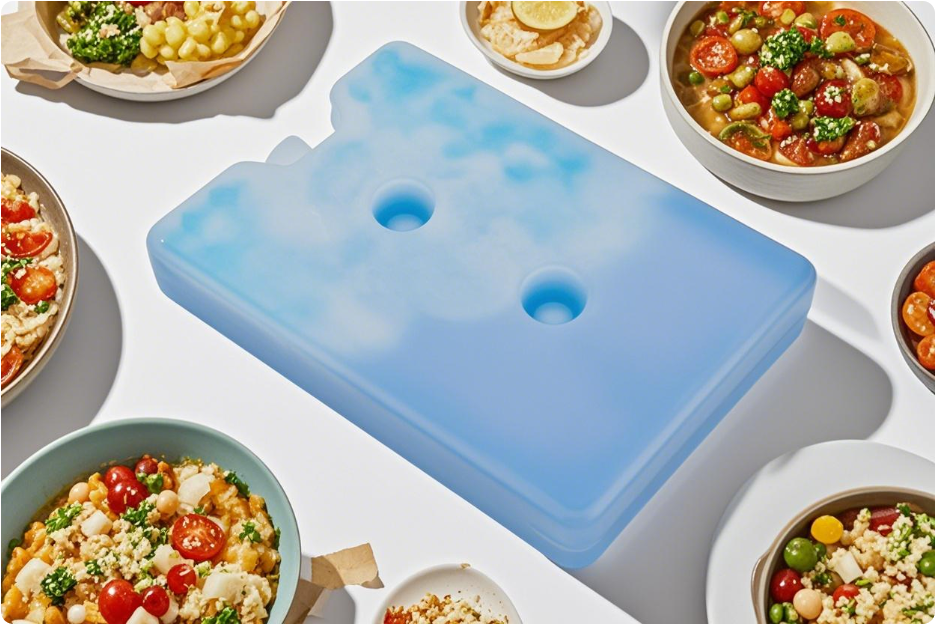
Ice Gel Brick Bulk: Industry Uses, Buying Trends, and Sustainable Pack-Outs
Ice Gel Brick Bulk are becoming more important because more shipments now move through mixed networks: e-commerce fulfillment, grocery delivery, pharmacy distribution, laboratory logistics, regional depots, and cross-border lanes. The same product may pass through a freezer room, a staging table, a parcel hub, a van, and a customer receiving area. A rigid cold source helps only when it fits this operational reality.
For bulk ice gel brick orders for scaling cold chain operations without losing pack-out discipline, buyers usually want a practical answer: which brick format will protect the product without wasting space, adding unnecessary freight cost, or creating a hard-to-manage return process? The answer depends on the package system and on how workers will use the bricks every day.
Why Ice Bricks Are Used Across Modern Cold Chains
Cold chain networks are no longer limited to large refrigerated trucks. Many businesses rely on passive packaging for parcels, local delivery, mobile service, and backup transport. Ice bricks can support these operations because they are easy to count, pre-condition, place, recover, clean, and reuse. Their rigid shape makes pack-out instructions easier to standardize than loose ice or irregular cooling materials.
Food businesses use ice bricks to help maintain freshness during delivery rounds and shipment of perishable goods. Healthcare and laboratory teams use them in more controlled ways, often with insulated boxes, temperature monitors, and written procedures. Industrial and field service teams may use them for samples, reagents, or temperature-sensitive kits that travel outside a controlled facility.
The common theme is control. A cold chain team does not buy ice gel brick bulk only to create coldness. It buys them to make coldness repeatable: the same number of bricks, the same position, the same conditioning, and the same receiving check whenever the same shipping profile is used.
Industry Scenarios
In grocery and prepared-food delivery, the challenge is frequent opening and closing. A delivery bag or cooler may be exposed to warm air at every stop. Bricks should be placed where they support the cold zone without blocking access or making the bag uncomfortable to carry. Short local routes still need discipline because repeated door openings can erode temperature protection quickly.
In pharmaceutical logistics, the challenge is product-specific requirements. A vaccine, biologic, insulin product, reagent, or sample may have strict temperature limits. The cold source must be part of a qualified package, and the receiving team may need evidence that the shipment stayed within range. An ice brick that works well for food should not be copied into pharma use without review.
In freight or pallet-level shipments, the challenge is uneven exposure. Pallet corners, top layers, and outer faces may warm faster than the product core. Larger bricks, panels, thermal covers, insulated pallet shippers, and strategic monitor placement may be needed. The loading pattern matters as much as the refrigerant quantity.
Market Direction: From Single Components to Pack-Out Systems
A clear trend in cold chain buying is the move from buying individual components to designing pack-out systems. Buyers increasingly ask how an ice brick works with a box liner, EPP cooler, delivery bag, pallet cover, or data logger. This is a healthy shift because cold chain failures rarely come from one component alone. They usually come from a mismatch between product, route, packaging, and procedure.
Another direction is SKU simplification. Large operations do not want ten similar brick sizes if three sizes can cover most pack-outs. Fewer SKUs make training easier, reduce storage errors, simplify freezing rotation, and help procurement negotiate more stable supply. The risk is oversimplification: a brick that is convenient for inventory may still be wrong for a specific product or lane.
Sustainability is also influencing purchasing decisions. Reusable bricks can reduce single-use waste when they are recovered and recirculated. However, sustainability depends on the full system. Return rates, cleaning water, freezer energy, transport weight, packaging damage, and end-of-life recycling all affect the real outcome.
How Sustainability Should Be Evaluated
A reusable ice brick is not automatically sustainable just because it can be used again. It must actually return to the operation, remain clean, avoid leakage, survive handling, and be refrozen efficiently. For open parcel networks where the brick will not return, a reusable design may still be useful for durability, but the business should be honest about end-of-life assumptions.
Closed-loop delivery systems are more favorable. Grocery routes, meal delivery fleets, pharmacy totes, laboratory couriers, and internal distribution networks may collect bricks after use. In those operations, durable shells, clear labeling, cleaning instructions, and freezer rotation can support both cost control and waste reduction.
Weight is part of sustainability too. A brick that is larger than needed increases transport weight and may force a larger carton. The better environmental choice is not always the largest reusable brick. It is the smallest reliable pack-out that protects the product under the approved route conditions.
Ice Bricks Compared With Alternative Cold Sources
Loose ice is inexpensive but creates melt water, uneven handling, and limited pack-out control. Flexible gel packs are useful where contact with irregular surfaces is needed. Rigid ice bricks are useful when the team needs defined geometry, better stacking, cleaner handling, and repeated placement. PCM panels or bricks can support tighter temperature bands when matched to the product requirement.
Dry ice can support frozen or deep-frozen shipments, but it brings sublimation, ventilation, handling, and regulatory considerations. It is not a direct substitute for chilled ice bricks. Active temperature-controlled containers can provide strong control for high-value shipments, but they add cost, charging, maintenance, and reverse logistics. The best choice depends on product risk and lane requirements.
For ice gel brick bulk, the comparison should be framed around use case. A local chilled food route, a cross-country medical shipment, a pallet of seafood, and an export pharmaceutical lane may all require different cold sources even if the word ice appears in the product name.
What Buyers Should Build Into Supplier Discussions
Supplier discussions should connect commercial terms with operational use. For bulk pack configuration, palletization, freeze capacity, lot tracking, QC sampling, and replacement planning, ask how the brick will be supplied, how it will fit into your current packing flow, and what documentation or support will be available after the first order. A low quoted price is less attractive if the product creates extra labor or inconsistent pack-outs.
Define the product temperature range and route duration before asking for a recommendation.
Measure the final payload cavity after insulation and bricks are installed.
Ask whether the supplier can support sample review, pilot orders, and repeat production lots.
Check whether carton labels, color, size, or molded markings can reduce warehouse errors.
Confirm cleaning, reuse, and end-of-life practices for closed-loop operations.
Review how the supplier handles material or formula changes over time.
Consider inbound freight cost, pallet cube, freezer capacity, and storage space.
Use temperature monitoring during trials instead of relying on touch or visual inspection.
A useful supplier will discuss the pack-out, not only the brick. The conversation should include insulation type, payload amount, starting temperature, route duration, seasonal exposure, and whether the product is heat-sensitive, freeze-sensitive, or both.
Operational Examples Without Overclaiming
A local grocery operator may place slim bricks in side pockets of insulated delivery bags and recover them at the end of the route. The pack-out can be practical when route time is short, bags are closed properly, and workers rotate fully conditioned bricks. It should not be assumed to protect every product during long outdoor delays.
A laboratory courier may use a rigid insulated box with conditioned bricks and a separator to move samples between facilities. The procedure may include loading records and temperature checks. The same brick might not be acceptable for a different sample type if the allowed temperature range changes.
A food exporter may use larger bricks in an insulated carton or pallet shipper for a chilled route. The design should account for customs dwell time, terminal exposure, and product loading temperature. If the lane becomes longer or warmer, the team may need a different system rather than simply adding more bricks.
A Decision Framework for the Next Order
First, classify the product. Is it chilled, frozen, controlled room temperature, or freeze-sensitive? Second, classify the route. Is it last-mile, parcel, cross-country, export, or pallet freight? Third, classify the operating model. Will the bricks return, or are they one-way? These three questions narrow the options before the buyer compares prices.
Next, select the package family: bag, box, liner, cooler, pallet cover, or qualified shipper. Choose the brick only after the container geometry and payload volume are known. A cold source that looks attractive on its own can become difficult to use if it blocks product loading, prevents lid closure, or creates too much weight for manual handling.
Finally, pilot the system and document the result. A small trial can reveal problems with freezing capacity, staging time, condensation, worker instructions, return flow, and receiving inspection. Those findings are more valuable than a theoretical claim about how long a brick lasts.
FAQ
Are ice bricks suitable for international shipments? They may be suitable for some chilled or frozen lanes, but the full package must account for route duration, customs dwell time, airline or carrier handling, and product-specific requirements.
Do reusable bricks lower cost? They can lower cost in closed-loop operations when recovery, cleaning, freezing, and rotation are well managed. In one-way shipments, the total cost calculation may be different.
Should a buyer choose gel packs or rigid bricks? Choose based on container fit, product sensitivity, reuse plan, and pack-out repeatability. Flexible packs conform better, while rigid bricks are easier to standardize and stack.
About Tempk
At Tempk, we focus on practical cold chain packaging for food, pharmaceutical, biotech, and other temperature-sensitive shipments. Our public product range includes gel ice packs, dry ice packs, ice bricks, insulated bags, insulated box liners, EPP boxes, cold shipping boxes, thermal pallet covers, and related cold chain materials. For ice gel brick bulk projects, we help buyers think through the refrigerant, container, payload, route, and handling process together rather than treating the brick as a separate accessory.
A practical approval process starts with the product requirement, not the refrigerant catalog. Define the allowed temperature range, the maximum time outside controlled storage, the payload volume, the loading temperature, and the worst expected ambient exposure. Only then should the team choose brick mass, brick placement, insulation, separators, and monitoring. This order prevents a common mistake: approving a cold-looking pack-out that has never been checked against the real lane.
For repeat programs, the packing instruction should be simple enough for warehouse staff to follow under time pressure. A drawing, a photo sequence, brick pre-conditioning instructions, and a check box for payload placement often do more to protect temperature than a long technical explanation. The instruction should also say what to do when a brick is damaged, partly thawed, dirty, or missing.
Discuss Your Pack-Out
Share your temperature range, shipment duration, payload size, and expected handling conditions to discuss a practical ice gel brick bulk solution. Ask for bulk, sample, or custom guidance before approving a repeat pack-out.
Ice Bricks Pallet Shipper: Industry Uses, Buying Trends, and Sustainable Pack-Outs
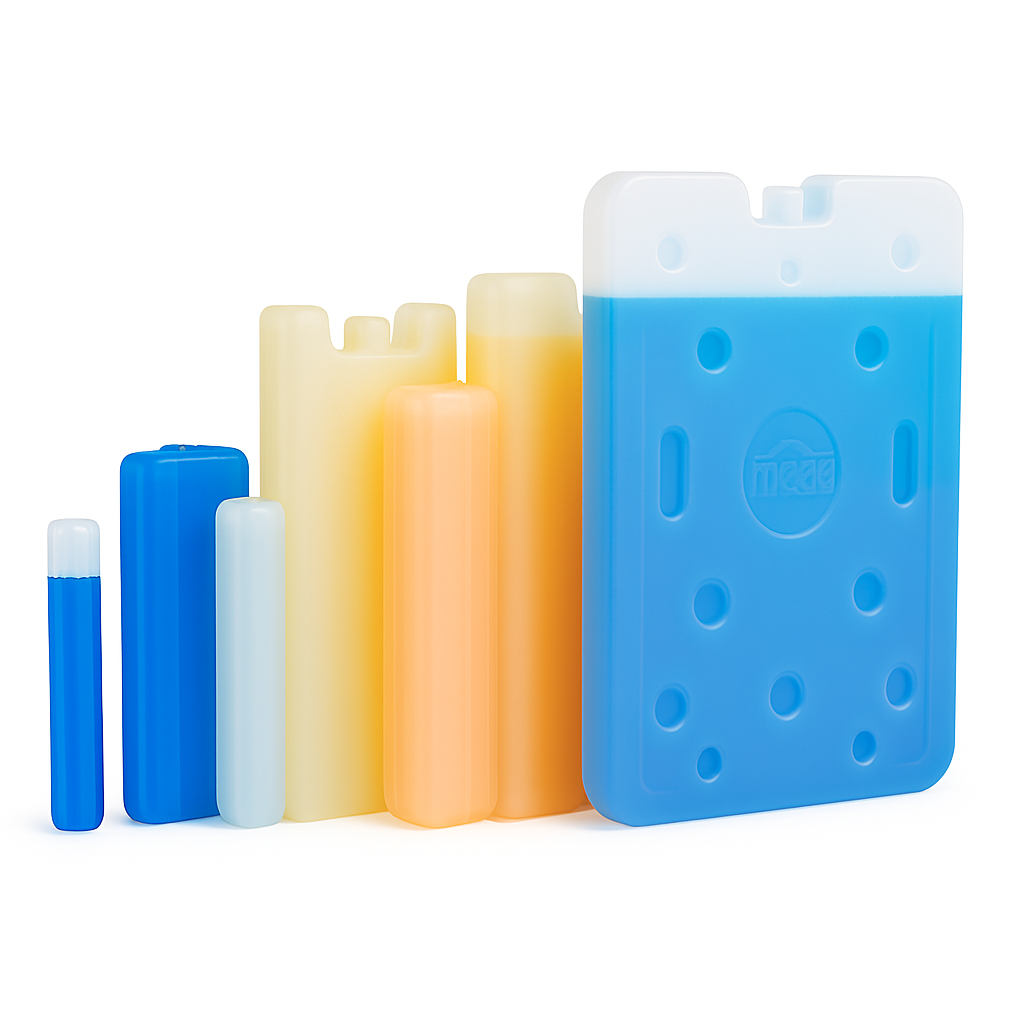
Ice Bricks Pallet Shipper: Industry Uses, Buying Trends, and Sustainable Pack-Outs
Ice Bricks Pallet Shipper are becoming more important because more shipments now move through mixed networks: e-commerce fulfillment, grocery delivery, pharmacy distribution, laboratory logistics, regional depots, and cross-border lanes. The same product may pass through a freezer room, a staging table, a parcel hub, a van, and a customer receiving area. A rigid cold source helps only when it fits this operational reality.
For ice bricks used in pallet-level passive packaging, thermal pallet covers, and large payload shipments, buyers usually want a practical answer: which brick format will protect the product without wasting space, adding unnecessary freight cost, or creating a hard-to-manage return process? The answer depends on the package system and on how workers will use the bricks every day.
Why Ice Bricks Are Used Across Modern Cold Chains
Cold chain networks are no longer limited to large refrigerated trucks. Many businesses rely on passive packaging for parcels, local delivery, mobile service, and backup transport. Ice bricks can support these operations because they are easy to count, pre-condition, place, recover, clean, and reuse. Their rigid shape makes pack-out instructions easier to standardize than loose ice or irregular cooling materials.
Food businesses use ice bricks to help maintain freshness during delivery rounds and shipment of perishable goods. Healthcare and laboratory teams use them in more controlled ways, often with insulated boxes, temperature monitors, and written procedures. Industrial and field service teams may use them for samples, reagents, or temperature-sensitive kits that travel outside a controlled facility.
The common theme is control. A cold chain team does not buy ice bricks pallet shipper only to create coldness. It buys them to make coldness repeatable: the same number of bricks, the same position, the same conditioning, and the same receiving check whenever the same shipping profile is used.
Industry Scenarios
In grocery and prepared-food delivery, the challenge is frequent opening and closing. A delivery bag or cooler may be exposed to warm air at every stop. Bricks should be placed where they support the cold zone without blocking access or making the bag uncomfortable to carry. Short local routes still need discipline because repeated door openings can erode temperature protection quickly.
In pharmaceutical logistics, the challenge is product-specific requirements. A vaccine, biologic, insulin product, reagent, or sample may have strict temperature limits. The cold source must be part of a qualified package, and the receiving team may need evidence that the shipment stayed within range. An ice brick that works well for food should not be copied into pharma use without review.
In freight or pallet-level shipments, the challenge is uneven exposure. Pallet corners, top layers, and outer faces may warm faster than the product core. Larger bricks, panels, thermal covers, insulated pallet shippers, and strategic monitor placement may be needed. The loading pattern matters as much as the refrigerant quantity.
Market Direction: From Single Components to Pack-Out Systems
A clear trend in cold chain buying is the move from buying individual components to designing pack-out systems. Buyers increasingly ask how an ice brick works with a box liner, EPP cooler, delivery bag, pallet cover, or data logger. This is a healthy shift because cold chain failures rarely come from one component alone. They usually come from a mismatch between product, route, packaging, and procedure.
Another direction is SKU simplification. Large operations do not want ten similar brick sizes if three sizes can cover most pack-outs. Fewer SKUs make training easier, reduce storage errors, simplify freezing rotation, and help procurement negotiate more stable supply. The risk is oversimplification: a brick that is convenient for inventory may still be wrong for a specific product or lane.
Sustainability is also influencing purchasing decisions. Reusable bricks can reduce single-use waste when they are recovered and recirculated. However, sustainability depends on the full system. Return rates, cleaning water, freezer energy, transport weight, packaging damage, and end-of-life recycling all affect the real outcome.
How Sustainability Should Be Evaluated
A reusable ice brick is not automatically sustainable just because it can be used again. It must actually return to the operation, remain clean, avoid leakage, survive handling, and be refrozen efficiently. For open parcel networks where the brick will not return, a reusable design may still be useful for durability, but the business should be honest about end-of-life assumptions.
Closed-loop delivery systems are more favorable. Grocery routes, meal delivery fleets, pharmacy totes, laboratory couriers, and internal distribution networks may collect bricks after use. In those operations, durable shells, clear labeling, cleaning instructions, and freezer rotation can support both cost control and waste reduction.
Weight is part of sustainability too. A brick that is larger than needed increases transport weight and may force a larger carton. The better environmental choice is not always the largest reusable brick. It is the smallest reliable pack-out that protects the product under the approved route conditions.
Ice Bricks Compared With Alternative Cold Sources
Loose ice is inexpensive but creates melt water, uneven handling, and limited pack-out control. Flexible gel packs are useful where contact with irregular surfaces is needed. Rigid ice bricks are useful when the team needs defined geometry, better stacking, cleaner handling, and repeated placement. PCM panels or bricks can support tighter temperature bands when matched to the product requirement.
Dry ice can support frozen or deep-frozen shipments, but it brings sublimation, ventilation, handling, and regulatory considerations. It is not a direct substitute for chilled ice bricks. Active temperature-controlled containers can provide strong control for high-value shipments, but they add cost, charging, maintenance, and reverse logistics. The best choice depends on product risk and lane requirements.
For ice bricks pallet shipper, the comparison should be framed around use case. A local chilled food route, a cross-country medical shipment, a pallet of seafood, and an export pharmaceutical lane may all require different cold sources even if the word ice appears in the product name.
What Buyers Should Build Into Supplier Discussions
Supplier discussions should connect commercial terms with operational use. For pallet footprint, payload density, refrigerant placement, cover compatibility, forklift damage resistance, and lane qualification, ask how the brick will be supplied, how it will fit into your current packing flow, and what documentation or support will be available after the first order. A low quoted price is less attractive if the product creates extra labor or inconsistent pack-outs.
Define the product temperature range and route duration before asking for a recommendation.
Measure the final payload cavity after insulation and bricks are installed.
Ask whether the supplier can support sample review, pilot orders, and repeat production lots.
Check whether carton labels, color, size, or molded markings can reduce warehouse errors.
Confirm cleaning, reuse, and end-of-life practices for closed-loop operations.
Review how the supplier handles material or formula changes over time.
Consider inbound freight cost, pallet cube, freezer capacity, and storage space.
Use temperature monitoring during trials instead of relying on touch or visual inspection.
A useful supplier will discuss the pack-out, not only the brick. The conversation should include insulation type, payload amount, starting temperature, route duration, seasonal exposure, and whether the product is heat-sensitive, freeze-sensitive, or both.
Operational Examples Without Overclaiming
A local grocery operator may place slim bricks in side pockets of insulated delivery bags and recover them at the end of the route. The pack-out can be practical when route time is short, bags are closed properly, and workers rotate fully conditioned bricks. It should not be assumed to protect every product during long outdoor delays.
A laboratory courier may use a rigid insulated box with conditioned bricks and a separator to move samples between facilities. The procedure may include loading records and temperature checks. The same brick might not be acceptable for a different sample type if the allowed temperature range changes.
A food exporter may use larger bricks in an insulated carton or pallet shipper for a chilled route. The design should account for customs dwell time, terminal exposure, and product loading temperature. If the lane becomes longer or warmer, the team may need a different system rather than simply adding more bricks.
A Decision Framework for the Next Order
First, classify the product. Is it chilled, frozen, controlled room temperature, or freeze-sensitive? Second, classify the route. Is it last-mile, parcel, cross-country, export, or pallet freight? Third, classify the operating model. Will the bricks return, or are they one-way? These three questions narrow the options before the buyer compares prices.
Next, select the package family: bag, box, liner, cooler, pallet cover, or qualified shipper. Choose the brick only after the container geometry and payload volume are known. A cold source that looks attractive on its own can become difficult to use if it blocks product loading, prevents lid closure, or creates too much weight for manual handling.
Finally, pilot the system and document the result. A small trial can reveal problems with freezing capacity, staging time, condensation, worker instructions, return flow, and receiving inspection. Those findings are more valuable than a theoretical claim about how long a brick lasts.
FAQ
Are ice bricks suitable for international shipments? They may be suitable for some chilled or frozen lanes, but the full package must account for route duration, customs dwell time, airline or carrier handling, and product-specific requirements.
Do reusable bricks lower cost? They can lower cost in closed-loop operations when recovery, cleaning, freezing, and rotation are well managed. In one-way shipments, the total cost calculation may be different.
Should a buyer choose gel packs or rigid bricks? Choose based on container fit, product sensitivity, reuse plan, and pack-out repeatability. Flexible packs conform better, while rigid bricks are easier to standardize and stack.
About Tempk
At Tempk, we focus on practical cold chain packaging for food, pharmaceutical, biotech, and other temperature-sensitive shipments. Our public product range includes gel ice packs, dry ice packs, ice bricks, insulated bags, insulated box liners, EPP boxes, cold shipping boxes, thermal pallet covers, and related cold chain materials. For ice bricks pallet shipper projects, we help buyers think through the refrigerant, container, payload, route, and handling process together rather than treating the brick as a separate accessory.
A practical approval process starts with the product requirement, not the refrigerant catalog. Define the allowed temperature range, the maximum time outside controlled storage, the payload volume, the loading temperature, and the worst expected ambient exposure. Only then should the team choose brick mass, brick placement, insulation, separators, and monitoring. This order prevents a common mistake: approving a cold-looking pack-out that has never been checked against the real lane.
For repeat programs, the packing instruction should be simple enough for warehouse staff to follow under time pressure. A drawing, a photo sequence, brick pre-conditioning instructions, and a check box for payload placement often do more to protect temperature than a long technical explanation. The instruction should also say what to do when a brick is damaged, partly thawed, dirty, or missing.
Discuss Your Pack-Out
Share your temperature range, shipment duration, payload size, and expected handling conditions to discuss a practical ice bricks pallet shipper solution. Ask for bulk, sample, or custom guidance before approving a repeat pack-out.
Ice Bricks Packaging: Industry Uses, Buying Trends, and Sustainable Pack-Outs
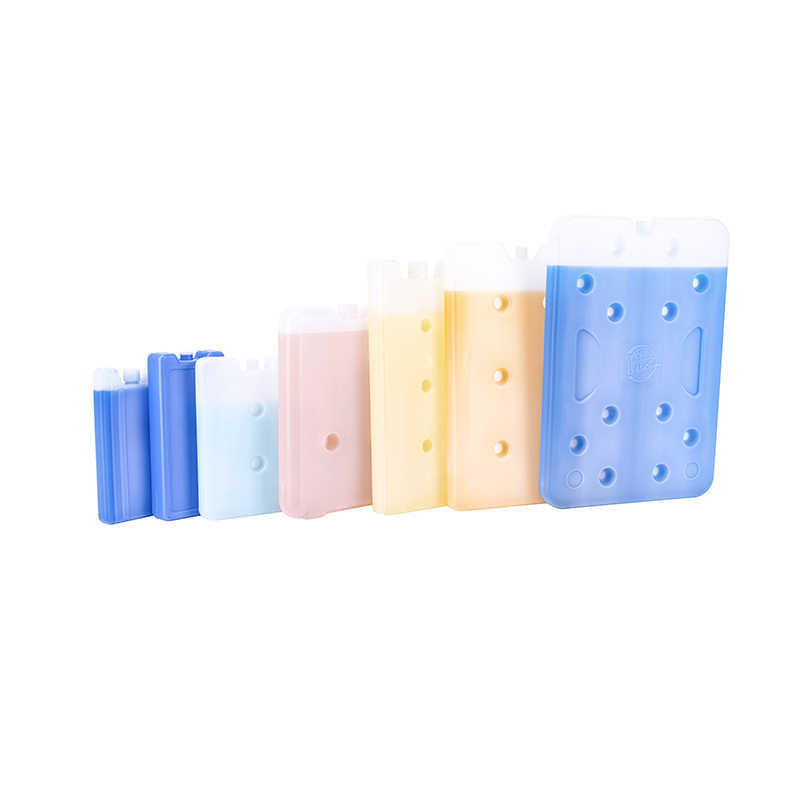
Ice Bricks Packaging: Industry Uses, Buying Trends, and Sustainable Pack-Outs
Ice Bricks Packaging are becoming more important because more shipments now move through mixed networks: e-commerce fulfillment, grocery delivery, pharmacy distribution, laboratory logistics, regional depots, and cross-border lanes. The same product may pass through a freezer room, a staging table, a parcel hub, a van, and a customer receiving area. A rigid cold source helps only when it fits this operational reality.
For ice bricks as one component of a cold chain packaging system, not a standalone temperature-control solution, buyers usually want a practical answer: which brick format will protect the product without wasting space, adding unnecessary freight cost, or creating a hard-to-manage return process? The answer depends on the package system and on how workers will use the bricks every day.
Why Ice Bricks Are Used Across Modern Cold Chains
Cold chain networks are no longer limited to large refrigerated trucks. Many businesses rely on passive packaging for parcels, local delivery, mobile service, and backup transport. Ice bricks can support these operations because they are easy to count, pre-condition, place, recover, clean, and reuse. Their rigid shape makes pack-out instructions easier to standardize than loose ice or irregular cooling materials.
Food businesses use ice bricks to help maintain freshness during delivery rounds and shipment of perishable goods. Healthcare and laboratory teams use them in more controlled ways, often with insulated boxes, temperature monitors, and written procedures. Industrial and field service teams may use them for samples, reagents, or temperature-sensitive kits that travel outside a controlled facility.
The common theme is control. A cold chain team does not buy ice bricks packaging only to create coldness. It buys them to make coldness repeatable: the same number of bricks, the same position, the same conditioning, and the same receiving check whenever the same shipping profile is used.
Industry Scenarios
In grocery and prepared-food delivery, the challenge is frequent opening and closing. A delivery bag or cooler may be exposed to warm air at every stop. Bricks should be placed where they support the cold zone without blocking access or making the bag uncomfortable to carry. Short local routes still need discipline because repeated door openings can erode temperature protection quickly.
In pharmaceutical logistics, the challenge is product-specific requirements. A vaccine, biologic, insulin product, reagent, or sample may have strict temperature limits. The cold source must be part of a qualified package, and the receiving team may need evidence that the shipment stayed within range. An ice brick that works well for food should not be copied into pharma use without review.
In freight or pallet-level shipments, the challenge is uneven exposure. Pallet corners, top layers, and outer faces may warm faster than the product core. Larger bricks, panels, thermal covers, insulated pallet shippers, and strategic monitor placement may be needed. The loading pattern matters as much as the refrigerant quantity.
Market Direction: From Single Components to Pack-Out Systems
A clear trend in cold chain buying is the move from buying individual components to designing pack-out systems. Buyers increasingly ask how an ice brick works with a box liner, EPP cooler, delivery bag, pallet cover, or data logger. This is a healthy shift because cold chain failures rarely come from one component alone. They usually come from a mismatch between product, route, packaging, and procedure.
Another direction is SKU simplification. Large operations do not want ten similar brick sizes if three sizes can cover most pack-outs. Fewer SKUs make training easier, reduce storage errors, simplify freezing rotation, and help procurement negotiate more stable supply. The risk is oversimplification: a brick that is convenient for inventory may still be wrong for a specific product or lane.
Sustainability is also influencing purchasing decisions. Reusable bricks can reduce single-use waste when they are recovered and recirculated. However, sustainability depends on the full system. Return rates, cleaning water, freezer energy, transport weight, packaging damage, and end-of-life recycling all affect the real outcome.
How Sustainability Should Be Evaluated
A reusable ice brick is not automatically sustainable just because it can be used again. It must actually return to the operation, remain clean, avoid leakage, survive handling, and be refrozen efficiently. For open parcel networks where the brick will not return, a reusable design may still be useful for durability, but the business should be honest about end-of-life assumptions.
Closed-loop delivery systems are more favorable. Grocery routes, meal delivery fleets, pharmacy totes, laboratory couriers, and internal distribution networks may collect bricks after use. In those operations, durable shells, clear labeling, cleaning instructions, and freezer rotation can support both cost control and waste reduction.
Weight is part of sustainability too. A brick that is larger than needed increases transport weight and may force a larger carton. The better environmental choice is not always the largest reusable brick. It is the smallest reliable pack-out that protects the product under the approved route conditions.
Ice Bricks Compared With Alternative Cold Sources
Loose ice is inexpensive but creates melt water, uneven handling, and limited pack-out control. Flexible gel packs are useful where contact with irregular surfaces is needed. Rigid ice bricks are useful when the team needs defined geometry, better stacking, cleaner handling, and repeated placement. PCM panels or bricks can support tighter temperature bands when matched to the product requirement.
Dry ice can support frozen or deep-frozen shipments, but it brings sublimation, ventilation, handling, and regulatory considerations. It is not a direct substitute for chilled ice bricks. Active temperature-controlled containers can provide strong control for high-value shipments, but they add cost, charging, maintenance, and reverse logistics. The best choice depends on product risk and lane requirements.
For ice bricks packaging, the comparison should be framed around use case. A local chilled food route, a cross-country medical shipment, a pallet of seafood, and an export pharmaceutical lane may all require different cold sources even if the word ice appears in the product name.
What Buyers Should Build Into Supplier Discussions
Supplier discussions should connect commercial terms with operational use. For container compatibility, liner fit, pack-out drawings, payload conditioning, separators, and temperature monitoring, ask how the brick will be supplied, how it will fit into your current packing flow, and what documentation or support will be available after the first order. A low quoted price is less attractive if the product creates extra labor or inconsistent pack-outs.
Define the product temperature range and route duration before asking for a recommendation.
Measure the final payload cavity after insulation and bricks are installed.
Ask whether the supplier can support sample review, pilot orders, and repeat production lots.
Check whether carton labels, color, size, or molded markings can reduce warehouse errors.
Confirm cleaning, reuse, and end-of-life practices for closed-loop operations.
Review how the supplier handles material or formula changes over time.
Consider inbound freight cost, pallet cube, freezer capacity, and storage space.
Use temperature monitoring during trials instead of relying on touch or visual inspection.
A useful supplier will discuss the pack-out, not only the brick. The conversation should include insulation type, payload amount, starting temperature, route duration, seasonal exposure, and whether the product is heat-sensitive, freeze-sensitive, or both.
Operational Examples Without Overclaiming
A local grocery operator may place slim bricks in side pockets of insulated delivery bags and recover them at the end of the route. The pack-out can be practical when route time is short, bags are closed properly, and workers rotate fully conditioned bricks. It should not be assumed to protect every product during long outdoor delays.
A laboratory courier may use a rigid insulated box with conditioned bricks and a separator to move samples between facilities. The procedure may include loading records and temperature checks. The same brick might not be acceptable for a different sample type if the allowed temperature range changes.
A food exporter may use larger bricks in an insulated carton or pallet shipper for a chilled route. The design should account for customs dwell time, terminal exposure, and product loading temperature. If the lane becomes longer or warmer, the team may need a different system rather than simply adding more bricks.
A Decision Framework for the Next Order
First, classify the product. Is it chilled, frozen, controlled room temperature, or freeze-sensitive? Second, classify the route. Is it last-mile, parcel, cross-country, export, or pallet freight? Third, classify the operating model. Will the bricks return, or are they one-way? These three questions narrow the options before the buyer compares prices.
Next, select the package family: bag, box, liner, cooler, pallet cover, or qualified shipper. Choose the brick only after the container geometry and payload volume are known. A cold source that looks attractive on its own can become difficult to use if it blocks product loading, prevents lid closure, or creates too much weight for manual handling.
Finally, pilot the system and document the result. A small trial can reveal problems with freezing capacity, staging time, condensation, worker instructions, return flow, and receiving inspection. Those findings are more valuable than a theoretical claim about how long a brick lasts.
FAQ
Are ice bricks suitable for international shipments? They may be suitable for some chilled or frozen lanes, but the full package must account for route duration, customs dwell time, airline or carrier handling, and product-specific requirements.
Do reusable bricks lower cost? They can lower cost in closed-loop operations when recovery, cleaning, freezing, and rotation are well managed. In one-way shipments, the total cost calculation may be different.
Should a buyer choose gel packs or rigid bricks? Choose based on container fit, product sensitivity, reuse plan, and pack-out repeatability. Flexible packs conform better, while rigid bricks are easier to standardize and stack.
About Tempk
At Tempk, we focus on practical cold chain packaging for food, pharmaceutical, biotech, and other temperature-sensitive shipments. Our public product range includes gel ice packs, dry ice packs, ice bricks, insulated bags, insulated box liners, EPP boxes, cold shipping boxes, thermal pallet covers, and related cold chain materials. For ice bricks packaging projects, we help buyers think through the refrigerant, container, payload, route, and handling process together rather than treating the brick as a separate accessory.
A practical approval process starts with the product requirement, not the refrigerant catalog. Define the allowed temperature range, the maximum time outside controlled storage, the payload volume, the loading temperature, and the worst expected ambient exposure. Only then should the team choose brick mass, brick placement, insulation, separators, and monitoring. This order prevents a common mistake: approving a cold-looking pack-out that has never been checked against the real lane.
For repeat programs, the packing instruction should be simple enough for warehouse staff to follow under time pressure. A drawing, a photo sequence, brick pre-conditioning instructions, and a check box for payload placement often do more to protect temperature than a long technical explanation. The instruction should also say what to do when a brick is damaged, partly thawed, dirty, or missing.
Discuss Your Pack-Out
Share your temperature range, shipment duration, payload size, and expected handling conditions to discuss a practical ice bricks packaging solution. Ask for bulk, sample, or custom guidance before approving a repeat pack-out.
Ice Bricks International Shipping: Industry Uses, Buying Trends, and Sustainable Pack-Outs
Ice Bricks International Shipping: Industry Uses, Buying Trends, and Sustainable Pack-Outs
Ice Bricks International Shipping are becoming more important because more shipments now move through mixed networks: e-commerce fulfillment, grocery delivery, pharmacy distribution, laboratory logistics, regional depots, and cross-border lanes. The same product may pass through a freezer room, a staging table, a parcel hub, a van, and a customer receiving area. A rigid cold source helps only when it fits this operational reality.
For ice bricks used in international cold chain shipments where customs dwell time, air freight handling, and documentation affect risk, buyers usually want a practical answer: which brick format will protect the product without wasting space, adding unnecessary freight cost, or creating a hard-to-manage return process? The answer depends on the package system and on how workers will use the bricks every day.
Why Ice Bricks Are Used Across Modern Cold Chains
Cold chain networks are no longer limited to large refrigerated trucks. Many businesses rely on passive packaging for parcels, local delivery, mobile service, and backup transport. Ice bricks can support these operations because they are easy to count, pre-condition, place, recover, clean, and reuse. Their rigid shape makes pack-out instructions easier to standardize than loose ice or irregular cooling materials.
Food businesses use ice bricks to help maintain freshness during delivery rounds and shipment of perishable goods. Healthcare and laboratory teams use them in more controlled ways, often with insulated boxes, temperature monitors, and written procedures. Industrial and field service teams may use them for samples, reagents, or temperature-sensitive kits that travel outside a controlled facility.
The common theme is control. A cold chain team does not buy ice bricks international shipping only to create coldness. It buys them to make coldness repeatable: the same number of bricks, the same position, the same conditioning, and the same receiving check whenever the same shipping profile is used.
Industry Scenarios
In grocery and prepared-food delivery, the challenge is frequent opening and closing. A delivery bag or cooler may be exposed to warm air at every stop. Bricks should be placed where they support the cold zone without blocking access or making the bag uncomfortable to carry. Short local routes still need discipline because repeated door openings can erode temperature protection quickly.
In pharmaceutical logistics, the challenge is product-specific requirements. A vaccine, biologic, insulin product, reagent, or sample may have strict temperature limits. The cold source must be part of a qualified package, and the receiving team may need evidence that the shipment stayed within range. An ice brick that works well for food should not be copied into pharma use without review.
In freight or pallet-level shipments, the challenge is uneven exposure. Pallet corners, top layers, and outer faces may warm faster than the product core. Larger bricks, panels, thermal covers, insulated pallet shippers, and strategic monitor placement may be needed. The loading pattern matters as much as the refrigerant quantity.
Market Direction: From Single Components to Pack-Out Systems
A clear trend in cold chain buying is the move from buying individual components to designing pack-out systems. Buyers increasingly ask how an ice brick works with a box liner, EPP cooler, delivery bag, pallet cover, or data logger. This is a healthy shift because cold chain failures rarely come from one component alone. They usually come from a mismatch between product, route, packaging, and procedure.
Another direction is SKU simplification. Large operations do not want ten similar brick sizes if three sizes can cover most pack-outs. Fewer SKUs make training easier, reduce storage errors, simplify freezing rotation, and help procurement negotiate more stable supply. The risk is oversimplification: a brick that is convenient for inventory may still be wrong for a specific product or lane.
Sustainability is also influencing purchasing decisions. Reusable bricks can reduce single-use waste when they are recovered and recirculated. However, sustainability depends on the full system. Return rates, cleaning water, freezer energy, transport weight, packaging damage, and end-of-life recycling all affect the real outcome.
How Sustainability Should Be Evaluated
A reusable ice brick is not automatically sustainable just because it can be used again. It must actually return to the operation, remain clean, avoid leakage, survive handling, and be refrozen efficiently. For open parcel networks where the brick will not return, a reusable design may still be useful for durability, but the business should be honest about end-of-life assumptions.
Closed-loop delivery systems are more favorable. Grocery routes, meal delivery fleets, pharmacy totes, laboratory couriers, and internal distribution networks may collect bricks after use. In those operations, durable shells, clear labeling, cleaning instructions, and freezer rotation can support both cost control and waste reduction.
Weight is part of sustainability too. A brick that is larger than needed increases transport weight and may force a larger carton. The better environmental choice is not always the largest reusable brick. It is the smallest reliable pack-out that protects the product under the approved route conditions.
Ice Bricks Compared With Alternative Cold Sources
Loose ice is inexpensive but creates melt water, uneven handling, and limited pack-out control. Flexible gel packs are useful where contact with irregular surfaces is needed. Rigid ice bricks are useful when the team needs defined geometry, better stacking, cleaner handling, and repeated placement. PCM panels or bricks can support tighter temperature bands when matched to the product requirement.
Dry ice can support frozen or deep-frozen shipments, but it brings sublimation, ventilation, handling, and regulatory considerations. It is not a direct substitute for chilled ice bricks. Active temperature-controlled containers can provide strong control for high-value shipments, but they add cost, charging, maintenance, and reverse logistics. The best choice depends on product risk and lane requirements.
For ice bricks international shipping, the comparison should be framed around use case. A local chilled food route, a cross-country medical shipment, a pallet of seafood, and an export pharmaceutical lane may all require different cold sources even if the word ice appears in the product name.
What Buyers Should Build Into Supplier Discussions
Supplier discussions should connect commercial terms with operational use. For export carton strength, refrigerant declarations, labeling space, packaging qualification records, and regional distribution support, ask how the brick will be supplied, how it will fit into your current packing flow, and what documentation or support will be available after the first order. A low quoted price is less attractive if the product creates extra labor or inconsistent pack-outs.
Define the product temperature range and route duration before asking for a recommendation.
Measure the final payload cavity after insulation and bricks are installed.
Ask whether the supplier can support sample review, pilot orders, and repeat production lots.
Check whether carton labels, color, size, or molded markings can reduce warehouse errors.
Confirm cleaning, reuse, and end-of-life practices for closed-loop operations.
Review how the supplier handles material or formula changes over time.
Consider inbound freight cost, pallet cube, freezer capacity, and storage space.
Use temperature monitoring during trials instead of relying on touch or visual inspection.
A useful supplier will discuss the pack-out, not only the brick. The conversation should include insulation type, payload amount, starting temperature, route duration, seasonal exposure, and whether the product is heat-sensitive, freeze-sensitive, or both.
Operational Examples Without Overclaiming
A local grocery operator may place slim bricks in side pockets of insulated delivery bags and recover them at the end of the route. The pack-out can be practical when route time is short, bags are closed properly, and workers rotate fully conditioned bricks. It should not be assumed to protect every product during long outdoor delays.
A laboratory courier may use a rigid insulated box with conditioned bricks and a separator to move samples between facilities. The procedure may include loading records and temperature checks. The same brick might not be acceptable for a different sample type if the allowed temperature range changes.
A food exporter may use larger bricks in an insulated carton or pallet shipper for a chilled route. The design should account for customs dwell time, terminal exposure, and product loading temperature. If the lane becomes longer or warmer, the team may need a different system rather than simply adding more bricks.
A Decision Framework for the Next Order
First, classify the product. Is it chilled, frozen, controlled room temperature, or freeze-sensitive? Second, classify the route. Is it last-mile, parcel, cross-country, export, or pallet freight? Third, classify the operating model. Will the bricks return, or are they one-way? These three questions narrow the options before the buyer compares prices.
Next, select the package family: bag, box, liner, cooler, pallet cover, or qualified shipper. Choose the brick only after the container geometry and payload volume are known. A cold source that looks attractive on its own can become difficult to use if it blocks product loading, prevents lid closure, or creates too much weight for manual handling.
Finally, pilot the system and document the result. A small trial can reveal problems with freezing capacity, staging time, condensation, worker instructions, return flow, and receiving inspection. Those findings are more valuable than a theoretical claim about how long a brick lasts.
FAQ
Are ice bricks suitable for international shipments? They may be suitable for some chilled or frozen lanes, but the full package must account for route duration, customs dwell time, airline or carrier handling, and product-specific requirements.
Do reusable bricks lower cost? They can lower cost in closed-loop operations when recovery, cleaning, freezing, and rotation are well managed. In one-way shipments, the total cost calculation may be different.
Should a buyer choose gel packs or rigid bricks? Choose based on container fit, product sensitivity, reuse plan, and pack-out repeatability. Flexible packs conform better, while rigid bricks are easier to standardize and stack.
About Tempk
At Tempk, we focus on practical cold chain packaging for food, pharmaceutical, biotech, and other temperature-sensitive shipments. Our public product range includes gel ice packs, dry ice packs, ice bricks, insulated bags, insulated box liners, EPP boxes, cold shipping boxes, thermal pallet covers, and related cold chain materials. For ice bricks international shipping projects, we help buyers think through the refrigerant, container, payload, route, and handling process together rather than treating the brick as a separate accessory.
A practical approval process starts with the product requirement, not the refrigerant catalog. Define the allowed temperature range, the maximum time outside controlled storage, the payload volume, the loading temperature, and the worst expected ambient exposure. Only then should the team choose brick mass, brick placement, insulation, separators, and monitoring. This order prevents a common mistake: approving a cold-looking pack-out that has never been checked against the real lane.
For repeat programs, the packing instruction should be simple enough for warehouse staff to follow under time pressure. A drawing, a photo sequence, brick pre-conditioning instructions, and a check box for payload placement often do more to protect temperature than a long technical explanation. The instruction should also say what to do when a brick is damaged, partly thawed, dirty, or missing.
Discuss Your Pack-Out
Share your temperature range, shipment duration, payload size, and expected handling conditions to discuss a practical ice bricks international shipping solution. Ask for bulk, sample, or custom guidance before approving a repeat pack-out.