


Ice Bricks Custom Size: Industry Uses, Buying Trends, and Sustainable Pack-Outs
Ice Bricks Custom Size: Industry Uses, Buying Trends, and Sustainable Pack-Outs
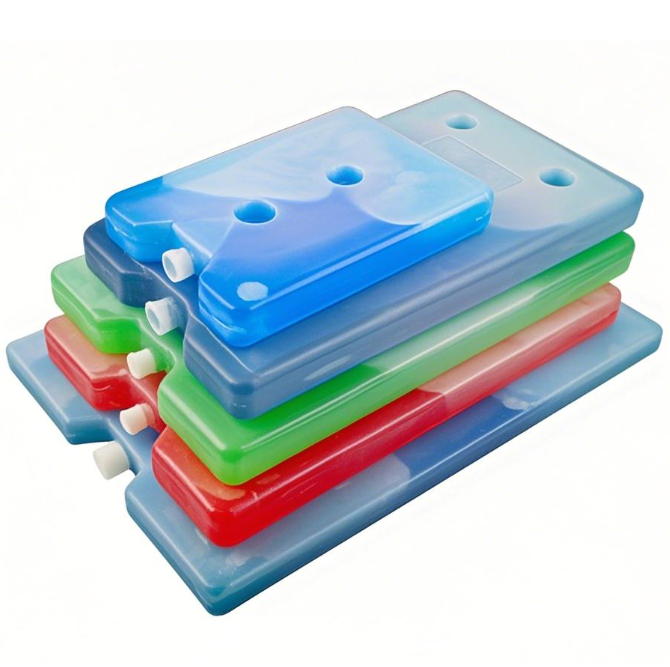
Ice Bricks Custom Size: Industry Uses, Buying Trends, and Sustainable Pack-Outs
Ice Bricks Custom Size are becoming more important because more shipments now move through mixed networks: e-commerce fulfillment, grocery delivery, pharmacy distribution, laboratory logistics, regional depots, and cross-border lanes. The same product may pass through a freezer room, a staging table, a parcel hub, a van, and a customer receiving area. A rigid cold source helps only when it fits this operational reality.
For custom-sized rigid refrigerant bricks for cartons, cooler boxes, bags, liners, and validated pack-outs, buyers usually want a practical answer: which brick format will protect the product without wasting space, adding unnecessary freight cost, or creating a hard-to-manage return process? The answer depends on the package system and on how workers will use the bricks every day.
Why Ice Bricks Are Used Across Modern Cold Chains
Cold chain networks are no longer limited to large refrigerated trucks. Many businesses rely on passive packaging for parcels, local delivery, mobile service, and backup transport. Ice bricks can support these operations because they are easy to count, pre-condition, place, recover, clean, and reuse. Their rigid shape makes pack-out instructions easier to standardize than loose ice or irregular cooling materials.
Food businesses use ice bricks to help maintain freshness during delivery rounds and shipment of perishable goods. Healthcare and laboratory teams use them in more controlled ways, often with insulated boxes, temperature monitors, and written procedures. Industrial and field service teams may use them for samples, reagents, or temperature-sensitive kits that travel outside a controlled facility.
The common theme is control. A cold chain team does not buy ice bricks custom size only to create coldness. It buys them to make coldness repeatable: the same number of bricks, the same position, the same conditioning, and the same receiving check whenever the same shipping profile is used.
Industry Scenarios
In grocery and prepared-food delivery, the challenge is frequent opening and closing. A delivery bag or cooler may be exposed to warm air at every stop. Bricks should be placed where they support the cold zone without blocking access or making the bag uncomfortable to carry. Short local routes still need discipline because repeated door openings can erode temperature protection quickly.
In pharmaceutical logistics, the challenge is product-specific requirements. A vaccine, biologic, insulin product, reagent, or sample may have strict temperature limits. The cold source must be part of a qualified package, and the receiving team may need evidence that the shipment stayed within range. An ice brick that works well for food should not be copied into pharma use without review.
In freight or pallet-level shipments, the challenge is uneven exposure. Pallet corners, top layers, and outer faces may warm faster than the product core. Larger bricks, panels, thermal covers, insulated pallet shippers, and strategic monitor placement may be needed. The loading pattern matters as much as the refrigerant quantity.
Market Direction: From Single Components to Pack-Out Systems
A clear trend in cold chain buying is the move from buying individual components to designing pack-out systems. Buyers increasingly ask how an ice brick works with a box liner, EPP cooler, delivery bag, pallet cover, or data logger. This is a healthy shift because cold chain failures rarely come from one component alone. They usually come from a mismatch between product, route, packaging, and procedure.
Another direction is SKU simplification. Large operations do not want ten similar brick sizes if three sizes can cover most pack-outs. Fewer SKUs make training easier, reduce storage errors, simplify freezing rotation, and help procurement negotiate more stable supply. The risk is oversimplification: a brick that is convenient for inventory may still be wrong for a specific product or lane.
Sustainability is also influencing purchasing decisions. Reusable bricks can reduce single-use waste when they are recovered and recirculated. However, sustainability depends on the full system. Return rates, cleaning water, freezer energy, transport weight, packaging damage, and end-of-life recycling all affect the real outcome.
How Sustainability Should Be Evaluated
A reusable ice brick is not automatically sustainable just because it can be used again. It must actually return to the operation, remain clean, avoid leakage, survive handling, and be refrozen efficiently. For open parcel networks where the brick will not return, a reusable design may still be useful for durability, but the business should be honest about end-of-life assumptions.
Closed-loop delivery systems are more favorable. Grocery routes, meal delivery fleets, pharmacy totes, laboratory couriers, and internal distribution networks may collect bricks after use. In those operations, durable shells, clear labeling, cleaning instructions, and freezer rotation can support both cost control and waste reduction.
Weight is part of sustainability too. A brick that is larger than needed increases transport weight and may force a larger carton. The better environmental choice is not always the largest reusable brick. It is the smallest reliable pack-out that protects the product under the approved route conditions.
Ice Bricks Compared With Alternative Cold Sources
Loose ice is inexpensive but creates melt water, uneven handling, and limited pack-out control. Flexible gel packs are useful where contact with irregular surfaces is needed. Rigid ice bricks are useful when the team needs defined geometry, better stacking, cleaner handling, and repeated placement. PCM panels or bricks can support tighter temperature bands when matched to the product requirement.
Dry ice can support frozen or deep-frozen shipments, but it brings sublimation, ventilation, handling, and regulatory considerations. It is not a direct substitute for chilled ice bricks. Active temperature-controlled containers can provide strong control for high-value shipments, but they add cost, charging, maintenance, and reverse logistics. The best choice depends on product risk and lane requirements.
For ice bricks custom size, the comparison should be framed around use case. A local chilled food route, a cross-country medical shipment, a pallet of seafood, and an export pharmaceutical lane may all require different cold sources even if the word ice appears in the product name.
What Buyers Should Build Into Supplier Discussions
Supplier discussions should connect commercial terms with operational use. For custom dimensions, mold requirements, sample-to-production consistency, resin, PCM temperature, labeling, and change control, ask how the brick will be supplied, how it will fit into your current packing flow, and what documentation or support will be available after the first order. A low quoted price is less attractive if the product creates extra labor or inconsistent pack-outs.
Define the product temperature range and route duration before asking for a recommendation.
Measure the final payload cavity after insulation and bricks are installed.
Ask whether the supplier can support sample review, pilot orders, and repeat production lots.
Check whether carton labels, color, size, or molded markings can reduce warehouse errors.
Confirm cleaning, reuse, and end-of-life practices for closed-loop operations.
Review how the supplier handles material or formula changes over time.
Consider inbound freight cost, pallet cube, freezer capacity, and storage space.
Use temperature monitoring during trials instead of relying on touch or visual inspection.
A useful supplier will discuss the pack-out, not only the brick. The conversation should include insulation type, payload amount, starting temperature, route duration, seasonal exposure, and whether the product is heat-sensitive, freeze-sensitive, or both.
Operational Examples Without Overclaiming
A local grocery operator may place slim bricks in side pockets of insulated delivery bags and recover them at the end of the route. The pack-out can be practical when route time is short, bags are closed properly, and workers rotate fully conditioned bricks. It should not be assumed to protect every product during long outdoor delays.
A laboratory courier may use a rigid insulated box with conditioned bricks and a separator to move samples between facilities. The procedure may include loading records and temperature checks. The same brick might not be acceptable for a different sample type if the allowed temperature range changes.
A food exporter may use larger bricks in an insulated carton or pallet shipper for a chilled route. The design should account for customs dwell time, terminal exposure, and product loading temperature. If the lane becomes longer or warmer, the team may need a different system rather than simply adding more bricks.
A Decision Framework for the Next Order
First, classify the product. Is it chilled, frozen, controlled room temperature, or freeze-sensitive? Second, classify the route. Is it last-mile, parcel, cross-country, export, or pallet freight? Third, classify the operating model. Will the bricks return, or are they one-way? These three questions narrow the options before the buyer compares prices.
Next, select the package family: bag, box, liner, cooler, pallet cover, or qualified shipper. Choose the brick only after the container geometry and payload volume are known. A cold source that looks attractive on its own can become difficult to use if it blocks product loading, prevents lid closure, or creates too much weight for manual handling.
Finally, pilot the system and document the result. A small trial can reveal problems with freezing capacity, staging time, condensation, worker instructions, return flow, and receiving inspection. Those findings are more valuable than a theoretical claim about how long a brick lasts.
FAQ
Are ice bricks suitable for international shipments? They may be suitable for some chilled or frozen lanes, but the full package must account for route duration, customs dwell time, airline or carrier handling, and product-specific requirements.
Do reusable bricks lower cost? They can lower cost in closed-loop operations when recovery, cleaning, freezing, and rotation are well managed. In one-way shipments, the total cost calculation may be different.
Should a buyer choose gel packs or rigid bricks? Choose based on container fit, product sensitivity, reuse plan, and pack-out repeatability. Flexible packs conform better, while rigid bricks are easier to standardize and stack.
About Tempk
At Tempk, we focus on practical cold chain packaging for food, pharmaceutical, biotech, and other temperature-sensitive shipments. Our public product range includes gel ice packs, dry ice packs, ice bricks, insulated bags, insulated box liners, EPP boxes, cold shipping boxes, thermal pallet covers, and related cold chain materials. For ice bricks custom size projects, we help buyers think through the refrigerant, container, payload, route, and handling process together rather than treating the brick as a separate accessory.
A practical approval process starts with the product requirement, not the refrigerant catalog. Define the allowed temperature range, the maximum time outside controlled storage, the payload volume, the loading temperature, and the worst expected ambient exposure. Only then should the team choose brick mass, brick placement, insulation, separators, and monitoring. This order prevents a common mistake: approving a cold-looking pack-out that has never been checked against the real lane.
For repeat programs, the packing instruction should be simple enough for warehouse staff to follow under time pressure. A drawing, a photo sequence, brick pre-conditioning instructions, and a check box for payload placement often do more to protect temperature than a long technical explanation. The instruction should also say what to do when a brick is damaged, partly thawed, dirty, or missing.
Discuss Your Pack-Out
Share your temperature range, shipment duration, payload size, and expected handling conditions to discuss a practical ice bricks custom size solution. Ask for bulk, sample, or custom guidance before approving a repeat pack-out.
Ice Bricks Cross-country: Industry Uses, Buying Trends, and Sustainable Pack-Outs
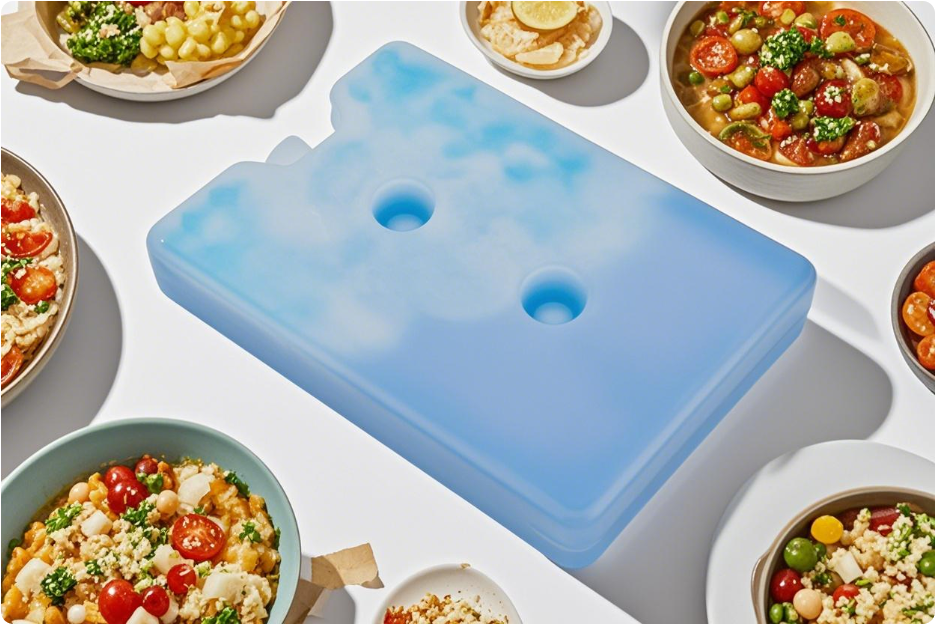
Ice Bricks Cross-country: Industry Uses, Buying Trends, and Sustainable Pack-Outs
Ice Bricks Cross-country are becoming more important because more shipments now move through mixed networks: e-commerce fulfillment, grocery delivery, pharmacy distribution, laboratory logistics, regional depots, and cross-border lanes. The same product may pass through a freezer room, a staging table, a parcel hub, a van, and a customer receiving area. A rigid cold source helps only when it fits this operational reality.
For ice bricks for long domestic lanes, parcel networks, cross-country trucks, hub delays, and seasonal ambient exposure, buyers usually want a practical answer: which brick format will protect the product without wasting space, adding unnecessary freight cost, or creating a hard-to-manage return process? The answer depends on the package system and on how workers will use the bricks every day.
Why Ice Bricks Are Used Across Modern Cold Chains
Cold chain networks are no longer limited to large refrigerated trucks. Many businesses rely on passive packaging for parcels, local delivery, mobile service, and backup transport. Ice bricks can support these operations because they are easy to count, pre-condition, place, recover, clean, and reuse. Their rigid shape makes pack-out instructions easier to standardize than loose ice or irregular cooling materials.
Food businesses use ice bricks to help maintain freshness during delivery rounds and shipment of perishable goods. Healthcare and laboratory teams use them in more controlled ways, often with insulated boxes, temperature monitors, and written procedures. Industrial and field service teams may use them for samples, reagents, or temperature-sensitive kits that travel outside a controlled facility.
The common theme is control. A cold chain team does not buy ice bricks cross-country only to create coldness. It buys them to make coldness repeatable: the same number of bricks, the same position, the same conditioning, and the same receiving check whenever the same shipping profile is used.
Industry Scenarios
In grocery and prepared-food delivery, the challenge is frequent opening and closing. A delivery bag or cooler may be exposed to warm air at every stop. Bricks should be placed where they support the cold zone without blocking access or making the bag uncomfortable to carry. Short local routes still need discipline because repeated door openings can erode temperature protection quickly.
In pharmaceutical logistics, the challenge is product-specific requirements. A vaccine, biologic, insulin product, reagent, or sample may have strict temperature limits. The cold source must be part of a qualified package, and the receiving team may need evidence that the shipment stayed within range. An ice brick that works well for food should not be copied into pharma use without review.
In freight or pallet-level shipments, the challenge is uneven exposure. Pallet corners, top layers, and outer faces may warm faster than the product core. Larger bricks, panels, thermal covers, insulated pallet shippers, and strategic monitor placement may be needed. The loading pattern matters as much as the refrigerant quantity.
Market Direction: From Single Components to Pack-Out Systems
A clear trend in cold chain buying is the move from buying individual components to designing pack-out systems. Buyers increasingly ask how an ice brick works with a box liner, EPP cooler, delivery bag, pallet cover, or data logger. This is a healthy shift because cold chain failures rarely come from one component alone. They usually come from a mismatch between product, route, packaging, and procedure.
Another direction is SKU simplification. Large operations do not want ten similar brick sizes if three sizes can cover most pack-outs. Fewer SKUs make training easier, reduce storage errors, simplify freezing rotation, and help procurement negotiate more stable supply. The risk is oversimplification: a brick that is convenient for inventory may still be wrong for a specific product or lane.
Sustainability is also influencing purchasing decisions. Reusable bricks can reduce single-use waste when they are recovered and recirculated. However, sustainability depends on the full system. Return rates, cleaning water, freezer energy, transport weight, packaging damage, and end-of-life recycling all affect the real outcome.
How Sustainability Should Be Evaluated
A reusable ice brick is not automatically sustainable just because it can be used again. It must actually return to the operation, remain clean, avoid leakage, survive handling, and be refrozen efficiently. For open parcel networks where the brick will not return, a reusable design may still be useful for durability, but the business should be honest about end-of-life assumptions.
Closed-loop delivery systems are more favorable. Grocery routes, meal delivery fleets, pharmacy totes, laboratory couriers, and internal distribution networks may collect bricks after use. In those operations, durable shells, clear labeling, cleaning instructions, and freezer rotation can support both cost control and waste reduction.
Weight is part of sustainability too. A brick that is larger than needed increases transport weight and may force a larger carton. The better environmental choice is not always the largest reusable brick. It is the smallest reliable pack-out that protects the product under the approved route conditions.
Ice Bricks Compared With Alternative Cold Sources
Loose ice is inexpensive but creates melt water, uneven handling, and limited pack-out control. Flexible gel packs are useful where contact with irregular surfaces is needed. Rigid ice bricks are useful when the team needs defined geometry, better stacking, cleaner handling, and repeated placement. PCM panels or bricks can support tighter temperature bands when matched to the product requirement.
Dry ice can support frozen or deep-frozen shipments, but it brings sublimation, ventilation, handling, and regulatory considerations. It is not a direct substitute for chilled ice bricks. Active temperature-controlled containers can provide strong control for high-value shipments, but they add cost, charging, maintenance, and reverse logistics. The best choice depends on product risk and lane requirements.
For ice bricks cross-country, the comparison should be framed around use case. A local chilled food route, a cross-country medical shipment, a pallet of seafood, and an export pharmaceutical lane may all require different cold sources even if the word ice appears in the product name.
What Buyers Should Build Into Supplier Discussions
Supplier discussions should connect commercial terms with operational use. For route duration, seasonal profile, conditioning method, payload volume, monitoring plan, and contingency stock, ask how the brick will be supplied, how it will fit into your current packing flow, and what documentation or support will be available after the first order. A low quoted price is less attractive if the product creates extra labor or inconsistent pack-outs.
Define the product temperature range and route duration before asking for a recommendation.
Measure the final payload cavity after insulation and bricks are installed.
Ask whether the supplier can support sample review, pilot orders, and repeat production lots.
Check whether carton labels, color, size, or molded markings can reduce warehouse errors.
Confirm cleaning, reuse, and end-of-life practices for closed-loop operations.
Review how the supplier handles material or formula changes over time.
Consider inbound freight cost, pallet cube, freezer capacity, and storage space.
Use temperature monitoring during trials instead of relying on touch or visual inspection.
A useful supplier will discuss the pack-out, not only the brick. The conversation should include insulation type, payload amount, starting temperature, route duration, seasonal exposure, and whether the product is heat-sensitive, freeze-sensitive, or both.
Operational Examples Without Overclaiming
A local grocery operator may place slim bricks in side pockets of insulated delivery bags and recover them at the end of the route. The pack-out can be practical when route time is short, bags are closed properly, and workers rotate fully conditioned bricks. It should not be assumed to protect every product during long outdoor delays.
A laboratory courier may use a rigid insulated box with conditioned bricks and a separator to move samples between facilities. The procedure may include loading records and temperature checks. The same brick might not be acceptable for a different sample type if the allowed temperature range changes.
A food exporter may use larger bricks in an insulated carton or pallet shipper for a chilled route. The design should account for customs dwell time, terminal exposure, and product loading temperature. If the lane becomes longer or warmer, the team may need a different system rather than simply adding more bricks.
A Decision Framework for the Next Order
First, classify the product. Is it chilled, frozen, controlled room temperature, or freeze-sensitive? Second, classify the route. Is it last-mile, parcel, cross-country, export, or pallet freight? Third, classify the operating model. Will the bricks return, or are they one-way? These three questions narrow the options before the buyer compares prices.
Next, select the package family: bag, box, liner, cooler, pallet cover, or qualified shipper. Choose the brick only after the container geometry and payload volume are known. A cold source that looks attractive on its own can become difficult to use if it blocks product loading, prevents lid closure, or creates too much weight for manual handling.
Finally, pilot the system and document the result. A small trial can reveal problems with freezing capacity, staging time, condensation, worker instructions, return flow, and receiving inspection. Those findings are more valuable than a theoretical claim about how long a brick lasts.
FAQ
Are ice bricks suitable for international shipments? They may be suitable for some chilled or frozen lanes, but the full package must account for route duration, customs dwell time, airline or carrier handling, and product-specific requirements.
Do reusable bricks lower cost? They can lower cost in closed-loop operations when recovery, cleaning, freezing, and rotation are well managed. In one-way shipments, the total cost calculation may be different.
Should a buyer choose gel packs or rigid bricks? Choose based on container fit, product sensitivity, reuse plan, and pack-out repeatability. Flexible packs conform better, while rigid bricks are easier to standardize and stack.
About Tempk
At Tempk, we focus on practical cold chain packaging for food, pharmaceutical, biotech, and other temperature-sensitive shipments. Our public product range includes gel ice packs, dry ice packs, ice bricks, insulated bags, insulated box liners, EPP boxes, cold shipping boxes, thermal pallet covers, and related cold chain materials. For ice bricks cross-country projects, we help buyers think through the refrigerant, container, payload, route, and handling process together rather than treating the brick as a separate accessory.
A practical approval process starts with the product requirement, not the refrigerant catalog. Define the allowed temperature range, the maximum time outside controlled storage, the payload volume, the loading temperature, and the worst expected ambient exposure. Only then should the team choose brick mass, brick placement, insulation, separators, and monitoring. This order prevents a common mistake: approving a cold-looking pack-out that has never been checked against the real lane.
For repeat programs, the packing instruction should be simple enough for warehouse staff to follow under time pressure. A drawing, a photo sequence, brick pre-conditioning instructions, and a check box for payload placement often do more to protect temperature than a long technical explanation. The instruction should also say what to do when a brick is damaged, partly thawed, dirty, or missing.
Discuss Your Pack-Out
Share your temperature range, shipment duration, payload size, and expected handling conditions to discuss a practical ice bricks cross-country solution. Ask for bulk, sample, or custom guidance before approving a repeat pack-out.
Gel Ice Bricks for Cold Chain Packaging: How to Choose the Right Cold Chain Packout
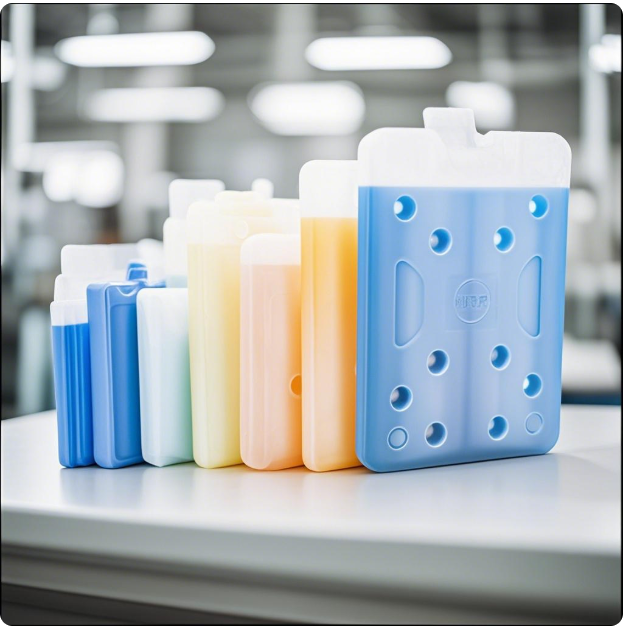
Gel Ice Bricks for Cold Chain Packaging: How to Choose the Right Cold Chain Packout
Gel ice bricks for cold chain packaging are useful when a shipment needs passive cooling inside an insulated container. They help protect perishable foods, pharmaceuticals, samples, cosmetics, and other products that need chilled support during transit by absorbing heat during transport, staging, and delivery. The right choice depends on the required temperature range, transport duration, payload volume, ambient exposure, and how the brick is conditioned and placed.
The most important buying principle is simple: an ice brick is a component, not a complete temperature-controlled system. For ice bricks gel, the complete system includes the brick, the insulated shipper, the product load, the packout pattern, the route, the handling process, and any monitoring or receiving checks. If one part changes, performance can change.
Quick Answer for Buyers
Choose gel ice bricks for cold chain packaging when the product needs controlled cooling and the operation can manage freezing or conditioning, packing, recovery, cleaning, and inspection. Avoid choosing by size alone. A brick that is too small may warm early, while a brick that is too cold, too large, or placed directly against sensitive goods may create local freezing, condensation, weight, or volume problems.
For high-value, food safety, pharmaceutical, vaccine, biologic, diagnostic, or sample shipments, treat the ice brick as part of a verified packout. Confirm the required temperature range, run a realistic test or monitored pilot, and document the packing method. A reusable brick can support compliance work, but it does not prove compliance by itself.
What Ice Bricks Actually Do
An ice brick slows temperature change by absorbing heat that enters the package. Heat enters through the container walls, lid, seams, void space, and every moment the package is opened or exposed. The coolant gives the payload more time within range, but it cannot stop heat transfer completely. This is why insulation, loading pattern, and closed-lid discipline matter.
In gel-based coolant selection, the goal is not to make the package as cold as possible. The goal is to keep the payload within the correct band for the intended time. That distinction matters when products are sensitive to freezing, moisture, or thermal shock. The safest packout is often the one that balances cooling power with separation, airflow control, and appropriate conditioning.
Water, Gel, PCM, and Heavy Duty Designs
Water-based ice bricks are familiar and cost-effective for many chilled or frozen uses. Gel bricks use a thicker fill that can improve handling and reduce liquid movement inside the brick. PCM bricks are formulated to absorb or release heat near a selected phase-change temperature, which can help when a product needs a narrower target range than ordinary frozen water provides.
Heavy duty bricks focus on repeated handling. They may use stronger shells, thicker walls, molded corners, or shapes that stack well in crates and freezers. A heavy duty design can reduce leakage and breakage, but it does not automatically extend hold time. Thermal performance still depends on fill mass, phase behavior, insulation, payload, and route exposure.
Insulation and Coolant Must Be Chosen Together
A brick without insulation loses cooling capacity quickly. An insulated box without enough conditioned coolant may delay warming but still fail before delivery. Foam coolers, EPP boxes, insulated liners, thermal bags, and pallet covers all reduce heat transfer in different ways. The coolant should be sized for the internal volume and payload of the selected container.
Usable volume is a practical buying issue. External carton size does not tell you how much product fits after insulation and coolant are added. A packout with four large bricks may leave too little room for the payload or may force packers to place bricks in unsafe positions. Buyers should request internal dimensions and test the actual product cartons before committing to bulk quantities.
Where Ice Bricks Fit Best
Ice bricks fit best in predictable lanes such as reusable shippers, delivery bags, insulated boxes, small parcel lanes, and applications where a rigid form is easier to stack than a soft pouch. They are also useful as backup cooling during loading, short-term staging, and last-mile delivery. They work particularly well when staff can follow a fixed packing diagram and when the receiving team can inspect both the product and the condition of the coolant.
Closed-loop routes are strong candidates because bricks can be recovered, washed, inspected, and reused.
Short or medium passive lanes are good candidates when the ambient exposure is known and the package stays closed.
Parcel lanes may be suitable when the insulated shipper and coolant quantity have been tested against realistic delays.
Regulated or high-value shipments need additional review, monitoring, and documentation before routine use.
Where Ice Bricks Can Fail
The most common failure is a mismatch between the packout and the route. Selecting a gel brick by size only without checking freeze behavior, leakage risk, direct-contact risk, and route duration can occur when coolant mass is too low, insulation is weak, bricks are not fully conditioned, or packages sit too long on a warm dock. The opposite problem can occur when frozen bricks directly touch freeze-sensitive products and create local cold damage.
Mechanical failure also matters. Frozen bricks are often handled roughly. They may be dropped, stacked, washed, returned, and refrozen many times. Cracks, seam stress, swelling, label loss, and surface contamination can all affect whether a brick remains suitable. A reusable coolant program should include inspection criteria and a clear retirement process for damaged units.
Dry Ice Alternative: When the Comparison Makes Sense
Ice bricks and PCM bricks are sometimes considered as alternatives to dry ice. The comparison makes sense when the product needs chilled, controlled room temperature, or moderate frozen support rather than ultra-low conditions. Dry ice is much colder and sublimates into carbon dioxide gas, so it has handling, ventilation, marking, and carrier acceptance considerations.
For ice bricks gel, the safer question is not whether ice bricks are better than dry ice. The question is which coolant matches the product's temperature requirement and route. A PCM brick may be appropriate for a 2-8 C style refrigerated lane. A water-based frozen brick may suit some frozen foods. Dry ice may still be needed for deep-frozen or ultra-low shipments.
Food, Pharmaceutical, and Temperature-Sensitive Boundaries
Food transport decisions should consider temperature control, sanitation, cleaning, cross-contamination prevention, loading practices, and receiving checks. A package that keeps a product cool but is hard to clean or hard to inspect can still create operational risk. For perishable foods, product quality and safety programs should define acceptable handling conditions.
Pharmaceutical and vaccine shipments require especially careful boundaries. A reusable handling container, waterproof box, or plastic crate is not automatically a qualified thermal shipper. An insulated box is not automatically qualified for every route. Buyers should confirm the required temperature range, shipment duration, payload volume, refrigerant type, ambient exposure, lane conditions, receiving inspection, and documentation requirements.
What Buyers Should Ask Suppliers Before Ordering
Supplier evaluation should connect product design with operational use. A low unit price is not helpful if the brick leaks, changes dimensions, lacks documentation, or cannot be conditioned fast enough for peak demand. Before placing a bulk order, buyers should ask questions that reveal both product quality and production consistency.
What are the external dimensions, weight range, fill volume, material type, and dimensional tolerances?
Is the fill water, gel, PCM, or another refrigerant, and what conditioning method is required?
What safety documentation supports claims such as non-toxic, food-related use, or other intended-use statements?
How are leak resistance, seal strength, deformation, cracking, and surface defects checked during production?
Will production lots match the approved sample, and how are resin, fill, mold, or supplier changes controlled?
Can the brick be labeled, color-coded, molded, or packed in a way that supports tracking and return sorting?
What minimum order quantity, lead time, and custom options apply, and how do repeat orders stay consistent?
Can the supplier discuss the brick together with insulated boxes, liners, bags, or pallet covers when the route needs a full packout?
How to Test a Packout Before Scaling
A practical test should use the real insulated container, intended product or equivalent payload mass, planned number of bricks, actual placement pattern, and realistic ambient exposure. Measure the payload environment, not only the air beside the coolant. If the shipment has partial loads, seasonal extremes, or long staging periods, those conditions should be included in the test plan.
Receiving checks complete the loop. The receiver should know what to inspect, what temperature evidence is required, and what to do after a deviation. For regulated or high-value goods, the decision to accept, quarantine, or reject a shipment should follow the quality procedure rather than a visual impression of whether the bricks are still cold.
Sustainability and Reuse
Gel bricks can be reused many times in controlled loops, but disposal and damaged units still need a responsible process. The business case depends on return rate, service life, cleaning effort, storage space, freezer energy, replacement rate, and product loss reduction. A reusable brick is most valuable when the network already brings containers back or when customers can return packaging reliably.
Sustainability claims should be specific. Instead of asking only whether a brick is eco-friendly, ask how many cycles it is expected to survive, how damaged units are handled, whether the shell material can be recycled in the target market, and whether the fill creates disposal restrictions. Also consider whether better temperature control reduces product waste, because wasted product can carry a larger footprint than packaging.
Final Buying Guidance
For ice bricks gel, start with the product requirement and route risk, then choose the coolant. Confirm the temperature range, duration, insulation, payload volume, ambient exposure, and handling process. Use sample testing before bulk purchasing. Keep the packout simple enough for staff to repeat, but technical enough that quality teams can trust it.
The best ice brick is not always the biggest, coldest, cheapest, or most advanced. It is the one that fits the lane, protects the product, works with the insulated container, can be conditioned on schedule, survives repeated handling, and comes from a supplier that can maintain consistent production quality.
FAQ
Are ice bricks the same as gel packs?
Not always. Some ice bricks contain gel, some contain water, and some contain PCM. The term usually refers to a rigid or semi-rigid coolant format, while gel pack can also describe soft pouch products.
Can ice bricks be used for 2-8 C shipments?
They may be used in some refrigerated packouts, especially when the coolant and insulation are designed for that range. Buyers should verify the complete packout and avoid direct freezing risk for sensitive products.
Do reusable ice bricks automatically reduce cost?
They can reduce recurring coolant purchases, but only when the return, cleaning, inspection, and refreezing process is efficient. Lost bricks and poor return logistics can erase the savings.
Implementation Notes for Operations Teams
Operations teams should convert the chosen gel ice bricks for cold chain packaging into a repeatable work instruction. The instruction should state how long each brick must be conditioned, where it should be placed in the package, how the payload should be separated from the coolant, and what the receiver should check on arrival. This reduces variation between shifts and makes the packout easier to audit.
Freezer planning should be reviewed before scale-up. A pilot may work well with a small number of bricks, but bulk distribution can fail if the freezer is overloaded or if warm returned bricks are placed directly beside conditioned stock. Separate storage for warm returns, units in conditioning, and ready-to-pack units helps keep the process stable.
About Tempk
Tempk is part of Shanghai Tempk Industrial Co., Ltd., a cold chain company established in 2011. We provide gel ice packs, dry ice packs, freezer ice bricks, EPP insulated boxes, cold shipping boxes, insulated box liners, pallet covers, and related temperature-controlled packaging materials. For ice-brick projects, our team focuses on the practical match between coolant, insulation, payload, route exposure, and reuse process, so buyers can choose a configuration that fits the shipment instead of selecting by size alone.
Talk to Tempk
Share the product temperature range, payload volume, transport duration, and return process you expect to use. Tempk can help you discuss a suitable ice brick or insulated packaging configuration for bulk supply, custom sizing, or route-specific evaluation.
Ice Bricks for Foam Insulated Packaging: How to Choose the Right Cold Chain Packout
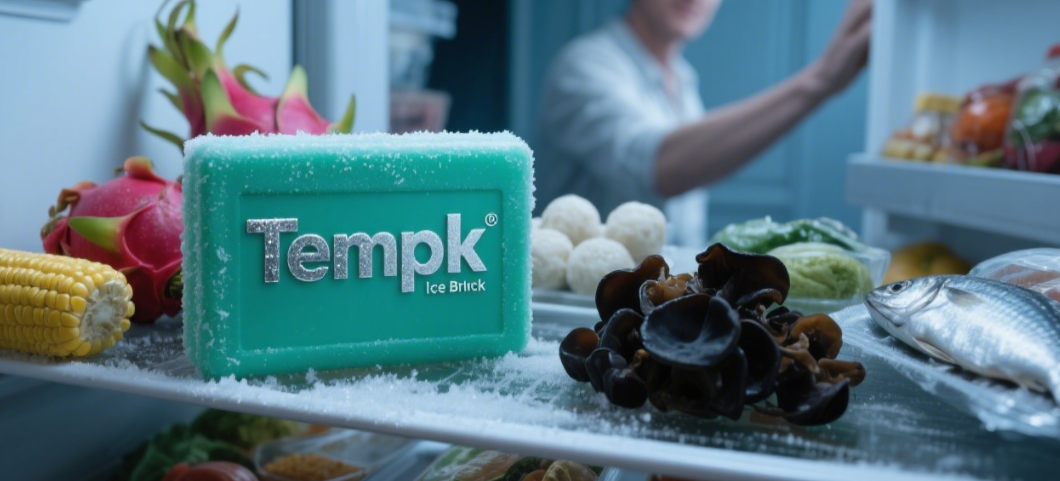
Ice Bricks for Foam Insulated Packaging: How to Choose the Right Cold Chain Packout
Ice bricks for foam insulated packaging are useful when a shipment needs passive cooling inside an insulated container. They help protect chilled and frozen goods packed inside foam coolers, foam-lined cartons, EPP boxes, or insulated delivery containers by absorbing heat during transport, staging, and delivery. The right choice depends on the required temperature range, transport duration, payload volume, ambient exposure, and how the brick is conditioned and placed.
The most important buying principle is simple: an ice brick is a component, not a complete temperature-controlled system. For ice bricks foam, the complete system includes the brick, the insulated shipper, the product load, the packout pattern, the route, the handling process, and any monitoring or receiving checks. If one part changes, performance can change.
Quick Answer for Buyers
Choose ice bricks for foam insulated packaging when the product needs controlled cooling and the operation can manage freezing or conditioning, packing, recovery, cleaning, and inspection. Avoid choosing by size alone. A brick that is too small may warm early, while a brick that is too cold, too large, or placed directly against sensitive goods may create local freezing, condensation, weight, or volume problems.
For high-value, food safety, pharmaceutical, vaccine, biologic, diagnostic, or sample shipments, treat the ice brick as part of a verified packout. Confirm the required temperature range, run a realistic test or monitored pilot, and document the packing method. A reusable brick can support compliance work, but it does not prove compliance by itself.
What Ice Bricks Actually Do
An ice brick slows temperature change by absorbing heat that enters the package. Heat enters through the container walls, lid, seams, void space, and every moment the package is opened or exposed. The coolant gives the payload more time within range, but it cannot stop heat transfer completely. This is why insulation, loading pattern, and closed-lid discipline matter.
In foam insulated cold chain packaging, the goal is not to make the package as cold as possible. The goal is to keep the payload within the correct band for the intended time. That distinction matters when products are sensitive to freezing, moisture, or thermal shock. The safest packout is often the one that balances cooling power with separation, airflow control, and appropriate conditioning.
Water, Gel, PCM, and Heavy Duty Designs
Water-based ice bricks are familiar and cost-effective for many chilled or frozen uses. Gel bricks use a thicker fill that can improve handling and reduce liquid movement inside the brick. PCM bricks are formulated to absorb or release heat near a selected phase-change temperature, which can help when a product needs a narrower target range than ordinary frozen water provides.
Heavy duty bricks focus on repeated handling. They may use stronger shells, thicker walls, molded corners, or shapes that stack well in crates and freezers. A heavy duty design can reduce leakage and breakage, but it does not automatically extend hold time. Thermal performance still depends on fill mass, phase behavior, insulation, payload, and route exposure.
Insulation and Coolant Must Be Chosen Together
A brick without insulation loses cooling capacity quickly. An insulated box without enough conditioned coolant may delay warming but still fail before delivery. Foam coolers, EPP boxes, insulated liners, thermal bags, and pallet covers all reduce heat transfer in different ways. The coolant should be sized for the internal volume and payload of the selected container.
Usable volume is a practical buying issue. External carton size does not tell you how much product fits after insulation and coolant are added. A packout with four large bricks may leave too little room for the payload or may force packers to place bricks in unsafe positions. Buyers should request internal dimensions and test the actual product cartons before committing to bulk quantities.
Where Ice Bricks Fit Best
Ice bricks fit best in predictable lanes such as parcel shippers, grocery delivery, catering, pharmaceuticals, and reusable delivery boxes where foam provides thermal resistance. They are also useful as backup cooling during loading, short-term staging, and last-mile delivery. They work particularly well when staff can follow a fixed packing diagram and when the receiving team can inspect both the product and the condition of the coolant.
Closed-loop routes are strong candidates because bricks can be recovered, washed, inspected, and reused.
Short or medium passive lanes are good candidates when the ambient exposure is known and the package stays closed.
Parcel lanes may be suitable when the insulated shipper and coolant quantity have been tested against realistic delays.
Regulated or high-value shipments need additional review, monitoring, and documentation before routine use.
Where Ice Bricks Can Fail
The most common failure is a mismatch between the packout and the route. Assuming that foam insulation alone will hold temperature without enough conditioned coolant and a suitable packout can occur when coolant mass is too low, insulation is weak, bricks are not fully conditioned, or packages sit too long on a warm dock. The opposite problem can occur when frozen bricks directly touch freeze-sensitive products and create local cold damage.
Mechanical failure also matters. Frozen bricks are often handled roughly. They may be dropped, stacked, washed, returned, and refrozen many times. Cracks, seam stress, swelling, label loss, and surface contamination can all affect whether a brick remains suitable. A reusable coolant program should include inspection criteria and a clear retirement process for damaged units.
Dry Ice Alternative: When the Comparison Makes Sense
Ice bricks and PCM bricks are sometimes considered as alternatives to dry ice. The comparison makes sense when the product needs chilled, controlled room temperature, or moderate frozen support rather than ultra-low conditions. Dry ice is much colder and sublimates into carbon dioxide gas, so it has handling, ventilation, marking, and carrier acceptance considerations.
For ice bricks foam, the safer question is not whether ice bricks are better than dry ice. The question is which coolant matches the product's temperature requirement and route. A PCM brick may be appropriate for a 2-8 C style refrigerated lane. A water-based frozen brick may suit some frozen foods. Dry ice may still be needed for deep-frozen or ultra-low shipments.
Food, Pharmaceutical, and Temperature-Sensitive Boundaries
Food transport decisions should consider temperature control, sanitation, cleaning, cross-contamination prevention, loading practices, and receiving checks. A package that keeps a product cool but is hard to clean or hard to inspect can still create operational risk. For perishable foods, product quality and safety programs should define acceptable handling conditions.
Pharmaceutical and vaccine shipments require especially careful boundaries. A reusable handling container, waterproof box, or plastic crate is not automatically a qualified thermal shipper. An insulated box is not automatically qualified for every route. Buyers should confirm the required temperature range, shipment duration, payload volume, refrigerant type, ambient exposure, lane conditions, receiving inspection, and documentation requirements.
What Buyers Should Ask Suppliers Before Ordering
Supplier evaluation should connect product design with operational use. A low unit price is not helpful if the brick leaks, changes dimensions, lacks documentation, or cannot be conditioned fast enough for peak demand. Before placing a bulk order, buyers should ask questions that reveal both product quality and production consistency.
What are the external dimensions, weight range, fill volume, material type, and dimensional tolerances?
Is the fill water, gel, PCM, or another refrigerant, and what conditioning method is required?
What safety documentation supports claims such as non-toxic, food-related use, or other intended-use statements?
How are leak resistance, seal strength, deformation, cracking, and surface defects checked during production?
Will production lots match the approved sample, and how are resin, fill, mold, or supplier changes controlled?
Can the brick be labeled, color-coded, molded, or packed in a way that supports tracking and return sorting?
What minimum order quantity, lead time, and custom options apply, and how do repeat orders stay consistent?
Can the supplier discuss the brick together with insulated boxes, liners, bags, or pallet covers when the route needs a full packout?
How to Test a Packout Before Scaling
A practical test should use the real insulated container, intended product or equivalent payload mass, planned number of bricks, actual placement pattern, and realistic ambient exposure. Measure the payload environment, not only the air beside the coolant. If the shipment has partial loads, seasonal extremes, or long staging periods, those conditions should be included in the test plan.
Receiving checks complete the loop. The receiver should know what to inspect, what temperature evidence is required, and what to do after a deviation. For regulated or high-value goods, the decision to accept, quarantine, or reject a shipment should follow the quality procedure rather than a visual impression of whether the bricks are still cold.
Sustainability and Reuse
Reusable epp boxes and reusable bricks can reduce single-use packaging only when recovery and cleaning are practical. The business case depends on return rate, service life, cleaning effort, storage space, freezer energy, replacement rate, and product loss reduction. A reusable brick is most valuable when the network already brings containers back or when customers can return packaging reliably.
Sustainability claims should be specific. Instead of asking only whether a brick is eco-friendly, ask how many cycles it is expected to survive, how damaged units are handled, whether the shell material can be recycled in the target market, and whether the fill creates disposal restrictions. Also consider whether better temperature control reduces product waste, because wasted product can carry a larger footprint than packaging.
Final Buying Guidance
For ice bricks foam, start with the product requirement and route risk, then choose the coolant. Confirm the temperature range, duration, insulation, payload volume, ambient exposure, and handling process. Use sample testing before bulk purchasing. Keep the packout simple enough for staff to repeat, but technical enough that quality teams can trust it.
The best ice brick is not always the biggest, coldest, cheapest, or most advanced. It is the one that fits the lane, protects the product, works with the insulated container, can be conditioned on schedule, survives repeated handling, and comes from a supplier that can maintain consistent production quality.
FAQ
Are ice bricks the same as gel packs?
Not always. Some ice bricks contain gel, some contain water, and some contain PCM. The term usually refers to a rigid or semi-rigid coolant format, while gel pack can also describe soft pouch products.
Can ice bricks be used for 2-8 C shipments?
They may be used in some refrigerated packouts, especially when the coolant and insulation are designed for that range. Buyers should verify the complete packout and avoid direct freezing risk for sensitive products.
Do reusable ice bricks automatically reduce cost?
They can reduce recurring coolant purchases, but only when the return, cleaning, inspection, and refreezing process is efficient. Lost bricks and poor return logistics can erase the savings.
Implementation Notes for Operations Teams
Operations teams should convert the chosen ice bricks for foam insulated packaging into a repeatable work instruction. The instruction should state how long each brick must be conditioned, where it should be placed in the package, how the payload should be separated from the coolant, and what the receiver should check on arrival. This reduces variation between shifts and makes the packout easier to audit.
Freezer planning should be reviewed before scale-up. A pilot may work well with a small number of bricks, but bulk distribution can fail if the freezer is overloaded or if warm returned bricks are placed directly beside conditioned stock. Separate storage for warm returns, units in conditioning, and ready-to-pack units helps keep the process stable.
Inventory control is another practical detail. Reusable bricks should be counted like operating assets, not disposable supplies. Missing units can create urgent substitutions, and substitutions can change thermal performance. Labels, color coding, crates, or simple scan records can help a team understand how many bricks are ready, in use, returned, damaged, or retired.
About Tempk
Tempk is part of Shanghai Tempk Industrial Co., Ltd., a cold chain company established in 2011. We provide gel ice packs, dry ice packs, freezer ice bricks, EPP insulated boxes, cold shipping boxes, insulated box liners, pallet covers, and related temperature-controlled packaging materials. For ice-brick projects, our team focuses on the practical match between coolant, insulation, payload, route exposure, and reuse process, so buyers can choose a configuration that fits the shipment instead of selecting by size alone.
Talk to Tempk
Share the product temperature range, payload volume, transport duration, and return process you expect to use. Tempk can help you discuss a suitable ice brick or insulated packaging configuration for bulk supply, custom sizing, or route-specific evaluation.
Eco-Friendly Ice Bricks for Cold Chain Packaging: How to Choose the Right Cold Chain Packout
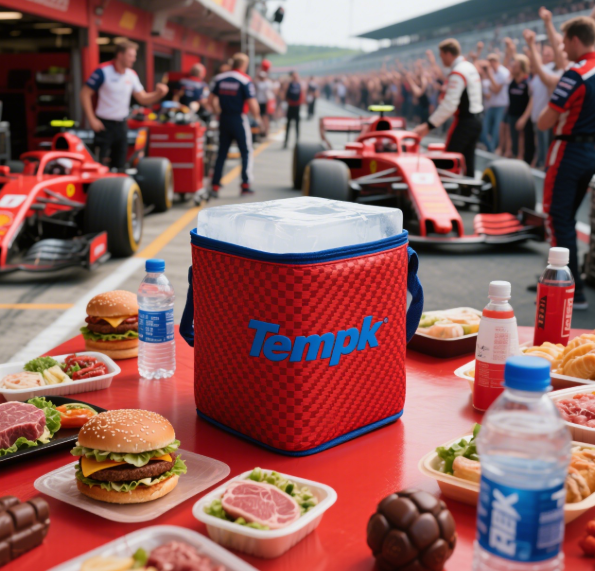
Eco-Friendly Ice Bricks for Cold Chain Packaging: How to Choose the Right Cold Chain Packout
Eco-friendly ice bricks for cold chain packaging are useful when a shipment needs passive cooling inside an insulated container. They help protect perishable foods, chilled medicines, cosmetics, beverages, and temperature-sensitive products shipped in reusable or recyclable systems by absorbing heat during transport, staging, and delivery. The right choice depends on the required temperature range, transport duration, payload volume, ambient exposure, and how the brick is conditioned and placed.
The most important buying principle is simple: an ice brick is a component, not a complete temperature-controlled system. For ice bricks eco-friendly, the complete system includes the brick, the insulated shipper, the product load, the packout pattern, the route, the handling process, and any monitoring or receiving checks. If one part changes, performance can change.
Quick Answer for Buyers
Choose eco-friendly ice bricks for cold chain packaging when the product needs controlled cooling and the operation can manage freezing or conditioning, packing, recovery, cleaning, and inspection. Avoid choosing by size alone. A brick that is too small may warm early, while a brick that is too cold, too large, or placed directly against sensitive goods may create local freezing, condensation, weight, or volume problems.
For high-value, food safety, pharmaceutical, vaccine, biologic, diagnostic, or sample shipments, treat the ice brick as part of a verified packout. Confirm the required temperature range, run a realistic test or monitored pilot, and document the packing method. A reusable brick can support compliance work, but it does not prove compliance by itself.
What Ice Bricks Actually Do
An ice brick slows temperature change by absorbing heat that enters the package. Heat enters through the container walls, lid, seams, void space, and every moment the package is opened or exposed. The coolant gives the payload more time within range, but it cannot stop heat transfer completely. This is why insulation, loading pattern, and closed-lid discipline matter.
In eco-conscious cold chain packaging, the goal is not to make the package as cold as possible. The goal is to keep the payload within the correct band for the intended time. That distinction matters when products are sensitive to freezing, moisture, or thermal shock. The safest packout is often the one that balances cooling power with separation, airflow control, and appropriate conditioning.
Water, Gel, PCM, and Heavy Duty Designs
Water-based ice bricks are familiar and cost-effective for many chilled or frozen uses. Gel bricks use a thicker fill that can improve handling and reduce liquid movement inside the brick. PCM bricks are formulated to absorb or release heat near a selected phase-change temperature, which can help when a product needs a narrower target range than ordinary frozen water provides.
Heavy duty bricks focus on repeated handling. They may use stronger shells, thicker walls, molded corners, or shapes that stack well in crates and freezers. A heavy duty design can reduce leakage and breakage, but it does not automatically extend hold time. Thermal performance still depends on fill mass, phase behavior, insulation, payload, and route exposure.
Insulation and Coolant Must Be Chosen Together
A brick without insulation loses cooling capacity quickly. An insulated box without enough conditioned coolant may delay warming but still fail before delivery. Foam coolers, EPP boxes, insulated liners, thermal bags, and pallet covers all reduce heat transfer in different ways. The coolant should be sized for the internal volume and payload of the selected container.
Usable volume is a practical buying issue. External carton size does not tell you how much product fits after insulation and coolant are added. A packout with four large bricks may leave too little room for the payload or may force packers to place bricks in unsafe positions. Buyers should request internal dimensions and test the actual product cartons before committing to bulk quantities.
Where Ice Bricks Fit Best
Ice bricks fit best in predictable lanes such as local delivery, returnable packaging programs, reusable grocery totes, pharmacy delivery, and subscription food shipments. They are also useful as backup cooling during loading, short-term staging, and last-mile delivery. They work particularly well when staff can follow a fixed packing diagram and when the receiving team can inspect both the product and the condition of the coolant.
Closed-loop routes are strong candidates because bricks can be recovered, washed, inspected, and reused.
Short or medium passive lanes are good candidates when the ambient exposure is known and the package stays closed.
Parcel lanes may be suitable when the insulated shipper and coolant quantity have been tested against realistic delays.
Regulated or high-value shipments need additional review, monitoring, and documentation before routine use.
Where Ice Bricks Can Fail
The most common failure is a mismatch between the packout and the route. Choosing an eco claim that does not survive a full operational review of performance, returns, cleaning, and disposal can occur when coolant mass is too low, insulation is weak, bricks are not fully conditioned, or packages sit too long on a warm dock. The opposite problem can occur when frozen bricks directly touch freeze-sensitive products and create local cold damage.
Mechanical failure also matters. Frozen bricks are often handled roughly. They may be dropped, stacked, washed, returned, and refrozen many times. Cracks, seam stress, swelling, label loss, and surface contamination can all affect whether a brick remains suitable. A reusable coolant program should include inspection criteria and a clear retirement process for damaged units.
Dry Ice Alternative: When the Comparison Makes Sense
Ice bricks and PCM bricks are sometimes considered as alternatives to dry ice. The comparison makes sense when the product needs chilled, controlled room temperature, or moderate frozen support rather than ultra-low conditions. Dry ice is much colder and sublimates into carbon dioxide gas, so it has handling, ventilation, marking, and carrier acceptance considerations.
For ice bricks eco-friendly, the safer question is not whether ice bricks are better than dry ice. The question is which coolant matches the product's temperature requirement and route. A PCM brick may be appropriate for a 2-8 C style refrigerated lane. A water-based frozen brick may suit some frozen foods. Dry ice may still be needed for deep-frozen or ultra-low shipments.
Food, Pharmaceutical, and Temperature-Sensitive Boundaries
Food transport decisions should consider temperature control, sanitation, cleaning, cross-contamination prevention, loading practices, and receiving checks. A package that keeps a product cool but is hard to clean or hard to inspect can still create operational risk. For perishable foods, product quality and safety programs should define acceptable handling conditions.
Pharmaceutical and vaccine shipments require especially careful boundaries. A reusable handling container, waterproof box, or plastic crate is not automatically a qualified thermal shipper. An insulated box is not automatically qualified for every route. Buyers should confirm the required temperature range, shipment duration, payload volume, refrigerant type, ambient exposure, lane conditions, receiving inspection, and documentation requirements.
What Buyers Should Ask Suppliers Before Ordering
Supplier evaluation should connect product design with operational use. A low unit price is not helpful if the brick leaks, changes dimensions, lacks documentation, or cannot be conditioned fast enough for peak demand. Before placing a bulk order, buyers should ask questions that reveal both product quality and production consistency.
What are the external dimensions, weight range, fill volume, material type, and dimensional tolerances?
Is the fill water, gel, PCM, or another refrigerant, and what conditioning method is required?
What safety documentation supports claims such as non-toxic, food-related use, or other intended-use statements?
How are leak resistance, seal strength, deformation, cracking, and surface defects checked during production?
Will production lots match the approved sample, and how are resin, fill, mold, or supplier changes controlled?
Can the brick be labeled, color-coded, molded, or packed in a way that supports tracking and return sorting?
What minimum order quantity, lead time, and custom options apply, and how do repeat orders stay consistent?
Can the supplier discuss the brick together with insulated boxes, liners, bags, or pallet covers when the route needs a full packout?
How to Test a Packout Before Scaling
A practical test should use the real insulated container, intended product or equivalent payload mass, planned number of bricks, actual placement pattern, and realistic ambient exposure. Measure the payload environment, not only the air beside the coolant. If the shipment has partial loads, seasonal extremes, or long staging periods, those conditions should be included in the test plan.
Receiving checks complete the loop. The receiver should know what to inspect, what temperature evidence is required, and what to do after a deviation. For regulated or high-value goods, the decision to accept, quarantine, or reject a shipment should follow the quality procedure rather than a visual impression of whether the bricks are still cold.
Sustainability and Reuse
Eco-friendly ice bricks are most credible when they combine reuse, dependable thermal performance, and clear instructions for recovery or disposal. The business case depends on return rate, service life, cleaning effort, storage space, freezer energy, replacement rate, and product loss reduction. A reusable brick is most valuable when the network already brings containers back or when customers can return packaging reliably.
Sustainability claims should be specific. Instead of asking only whether a brick is eco-friendly, ask how many cycles it is expected to survive, how damaged units are handled, whether the shell material can be recycled in the target market, and whether the fill creates disposal restrictions. Also consider whether better temperature control reduces product waste, because wasted product can carry a larger footprint than packaging.
Final Buying Guidance
For ice bricks eco-friendly, start with the product requirement and route risk, then choose the coolant. Confirm the temperature range, duration, insulation, payload volume, ambient exposure, and handling process. Use sample testing before bulk purchasing. Keep the packout simple enough for staff to repeat, but technical enough that quality teams can trust it.
The best ice brick is not always the biggest, coldest, cheapest, or most advanced. It is the one that fits the lane, protects the product, works with the insulated container, can be conditioned on schedule, survives repeated handling, and comes from a supplier that can maintain consistent production quality.
FAQ
Are ice bricks the same as gel packs?
Not always. Some ice bricks contain gel, some contain water, and some contain PCM. The term usually refers to a rigid or semi-rigid coolant format, while gel pack can also describe soft pouch products.
Can ice bricks be used for 2-8 C shipments?
They may be used in some refrigerated packouts, especially when the coolant and insulation are designed for that range. Buyers should verify the complete packout and avoid direct freezing risk for sensitive products.
Do reusable ice bricks automatically reduce cost?
They can reduce recurring coolant purchases, but only when the return, cleaning, inspection, and refreezing process is efficient. Lost bricks and poor return logistics can erase the savings.
Implementation Notes for Operations Teams
Operations teams should convert the chosen eco-friendly ice bricks for cold chain packaging into a repeatable work instruction. The instruction should state how long each brick must be conditioned, where it should be placed in the package, how the payload should be separated from the coolant, and what the receiver should check on arrival. This reduces variation between shifts and makes the packout easier to audit.
Freezer planning should be reviewed before scale-up. A pilot may work well with a small number of bricks, but bulk distribution can fail if the freezer is overloaded or if warm returned bricks are placed directly beside conditioned stock. Separate storage for warm returns, units in conditioning, and ready-to-pack units helps keep the process stable.
Inventory control is another practical detail. Reusable bricks should be counted like operating assets, not disposable supplies. Missing units can create urgent substitutions, and substitutions can change thermal performance. Labels, color coding, crates, or simple scan records can help a team understand how many bricks are ready, in use, returned, damaged, or retired.
About Tempk
Tempk is part of Shanghai Tempk Industrial Co., Ltd., a cold chain company established in 2011. We provide gel ice packs, dry ice packs, freezer ice bricks, EPP insulated boxes, cold shipping boxes, insulated box liners, pallet covers, and related temperature-controlled packaging materials. For ice-brick projects, our team focuses on the practical match between coolant, insulation, payload, route exposure, and reuse process, so buyers can choose a configuration that fits the shipment instead of selecting by size alone.
Talk to Tempk
Share the product temperature range, payload volume, transport duration, and return process you expect to use. Tempk can help you discuss a suitable ice brick or insulated packaging configuration for bulk supply, custom sizing, or route-specific evaluation.
Ice Bricks as a Dry Ice Alternative: How to Choose the Right Cold Chain Packout

Ice Bricks as a Dry Ice Alternative: How to Choose the Right Cold Chain Packout
Ice bricks as a dry ice alternative are useful when a shipment needs passive cooling inside an insulated container. They help protect chilled foods, frozen foods, some laboratory materials, and selected temperature-sensitive products that do not require ultra-low dry-ice conditions by absorbing heat during transport, staging, and delivery. The right choice depends on the required temperature range, transport duration, payload volume, ambient exposure, and how the brick is conditioned and placed.
The most important buying principle is simple: an ice brick is a component, not a complete temperature-controlled system. For ice bricks dry ice alternative, the complete system includes the brick, the insulated shipper, the product load, the packout pattern, the route, the handling process, and any monitoring or receiving checks. If one part changes, performance can change.
Quick Answer for Buyers
Choose ice bricks as a dry ice alternative when the product needs controlled cooling and the operation can manage freezing or conditioning, packing, recovery, cleaning, and inspection. Avoid choosing by size alone. A brick that is too small may warm early, while a brick that is too cold, too large, or placed directly against sensitive goods may create local freezing, condensation, weight, or volume problems.
For high-value, food safety, pharmaceutical, vaccine, biologic, diagnostic, or sample shipments, treat the ice brick as part of a verified packout. Confirm the required temperature range, run a realistic test or monitored pilot, and document the packing method. A reusable brick can support compliance work, but it does not prove compliance by itself.
What Ice Bricks Actually Do
An ice brick slows temperature change by absorbing heat that enters the package. Heat enters through the container walls, lid, seams, void space, and every moment the package is opened or exposed. The coolant gives the payload more time within range, but it cannot stop heat transfer completely. This is why insulation, loading pattern, and closed-lid discipline matter.
In dry ice replacement planning, the goal is not to make the package as cold as possible. The goal is to keep the payload within the correct band for the intended time. That distinction matters when products are sensitive to freezing, moisture, or thermal shock. The safest packout is often the one that balances cooling power with separation, airflow control, and appropriate conditioning.
Water, Gel, PCM, and Heavy Duty Designs
Water-based ice bricks are familiar and cost-effective for many chilled or frozen uses. Gel bricks use a thicker fill that can improve handling and reduce liquid movement inside the brick. PCM bricks are formulated to absorb or release heat near a selected phase-change temperature, which can help when a product needs a narrower target range than ordinary frozen water provides.
Heavy duty bricks focus on repeated handling. They may use stronger shells, thicker walls, molded corners, or shapes that stack well in crates and freezers. A heavy duty design can reduce leakage and breakage, but it does not automatically extend hold time. Thermal performance still depends on fill mass, phase behavior, insulation, payload, and route exposure.
Insulation and Coolant Must Be Chosen Together
A brick without insulation loses cooling capacity quickly. An insulated box without enough conditioned coolant may delay warming but still fail before delivery. Foam coolers, EPP boxes, insulated liners, thermal bags, and pallet covers all reduce heat transfer in different ways. The coolant should be sized for the internal volume and payload of the selected container.
Usable volume is a practical buying issue. External carton size does not tell you how much product fits after insulation and coolant are added. A packout with four large bricks may leave too little room for the payload or may force packers to place bricks in unsafe positions. Buyers should request internal dimensions and test the actual product cartons before committing to bulk quantities.
Where Ice Bricks Fit Best
Ice bricks fit best in predictable lanes such as 2-8 C chilled lanes, short frozen lanes, reusable local distribution, and routes where dry ice handling or ventilation is impractical. They are also useful as backup cooling during loading, short-term staging, and last-mile delivery. They work particularly well when staff can follow a fixed packing diagram and when the receiving team can inspect both the product and the condition of the coolant.
Closed-loop routes are strong candidates because bricks can be recovered, washed, inspected, and reused.
Short or medium passive lanes are good candidates when the ambient exposure is known and the package stays closed.
Parcel lanes may be suitable when the insulated shipper and coolant quantity have been tested against realistic delays.
Regulated or high-value shipments need additional review, monitoring, and documentation before routine use.
Where Ice Bricks Can Fail
The most common failure is a mismatch between the packout and the route. Choosing a coolant that is easier to handle but unable to hold the required temperature for the route can occur when coolant mass is too low, insulation is weak, bricks are not fully conditioned, or packages sit too long on a warm dock. The opposite problem can occur when frozen bricks directly touch freeze-sensitive products and create local cold damage.
Mechanical failure also matters. Frozen bricks are often handled roughly. They may be dropped, stacked, washed, returned, and refrozen many times. Cracks, seam stress, swelling, label loss, and surface contamination can all affect whether a brick remains suitable. A reusable coolant program should include inspection criteria and a clear retirement process for damaged units.
Dry Ice Alternative: When the Comparison Makes Sense
Ice bricks and PCM bricks are sometimes considered as alternatives to dry ice. The comparison makes sense when the product needs chilled, controlled room temperature, or moderate frozen support rather than ultra-low conditions. Dry ice is much colder and sublimates into carbon dioxide gas, so it has handling, ventilation, marking, and carrier acceptance considerations.
For ice bricks dry ice alternative, the safer question is not whether ice bricks are better than dry ice. The question is which coolant matches the product's temperature requirement and route. A PCM brick may be appropriate for a 2-8 C style refrigerated lane. A water-based frozen brick may suit some frozen foods. Dry ice may still be needed for deep-frozen or ultra-low shipments.
Food, Pharmaceutical, and Temperature-Sensitive Boundaries
Food transport decisions should consider temperature control, sanitation, cleaning, cross-contamination prevention, loading practices, and receiving checks. A package that keeps a product cool but is hard to clean or hard to inspect can still create operational risk. For perishable foods, product quality and safety programs should define acceptable handling conditions.
Pharmaceutical and vaccine shipments require especially careful boundaries. A reusable handling container, waterproof box, or plastic crate is not automatically a qualified thermal shipper. An insulated box is not automatically qualified for every route. Buyers should confirm the required temperature range, shipment duration, payload volume, refrigerant type, ambient exposure, lane conditions, receiving inspection, and documentation requirements.
What Buyers Should Ask Suppliers Before Ordering
Supplier evaluation should connect product design with operational use. A low unit price is not helpful if the brick leaks, changes dimensions, lacks documentation, or cannot be conditioned fast enough for peak demand. Before placing a bulk order, buyers should ask questions that reveal both product quality and production consistency.
What are the external dimensions, weight range, fill volume, material type, and dimensional tolerances?
Is the fill water, gel, PCM, or another refrigerant, and what conditioning method is required?
What safety documentation supports claims such as non-toxic, food-related use, or other intended-use statements?
How are leak resistance, seal strength, deformation, cracking, and surface defects checked during production?
Will production lots match the approved sample, and how are resin, fill, mold, or supplier changes controlled?
Can the brick be labeled, color-coded, molded, or packed in a way that supports tracking and return sorting?
What minimum order quantity, lead time, and custom options apply, and how do repeat orders stay consistent?
Can the supplier discuss the brick together with insulated boxes, liners, bags, or pallet covers when the route needs a full packout?
How to Test a Packout Before Scaling
A practical test should use the real insulated container, intended product or equivalent payload mass, planned number of bricks, actual placement pattern, and realistic ambient exposure. Measure the payload environment, not only the air beside the coolant. If the shipment has partial loads, seasonal extremes, or long staging periods, those conditions should be included in the test plan.
Receiving checks complete the loop. The receiver should know what to inspect, what temperature evidence is required, and what to do after a deviation. For regulated or high-value goods, the decision to accept, quarantine, or reject a shipment should follow the quality procedure rather than a visual impression of whether the bricks are still cold.
Sustainability and Reuse
Reusable bricks can avoid the sublimation losses of dry ice and reduce replenishment frequency in closed-loop networks. The business case depends on return rate, service life, cleaning effort, storage space, freezer energy, replacement rate, and product loss reduction. A reusable brick is most valuable when the network already brings containers back or when customers can return packaging reliably.
Sustainability claims should be specific. Instead of asking only whether a brick is eco-friendly, ask how many cycles it is expected to survive, how damaged units are handled, whether the shell material can be recycled in the target market, and whether the fill creates disposal restrictions. Also consider whether better temperature control reduces product waste, because wasted product can carry a larger footprint than packaging.
Final Buying Guidance
For ice bricks dry ice alternative, start with the product requirement and route risk, then choose the coolant. Confirm the temperature range, duration, insulation, payload volume, ambient exposure, and handling process. Use sample testing before bulk purchasing. Keep the packout simple enough for staff to repeat, but technical enough that quality teams can trust it.
The best ice brick is not always the biggest, coldest, cheapest, or most advanced. It is the one that fits the lane, protects the product, works with the insulated container, can be conditioned on schedule, survives repeated handling, and comes from a supplier that can maintain consistent production quality.
FAQ
Are ice bricks the same as gel packs?
Not always. Some ice bricks contain gel, some contain water, and some contain PCM. The term usually refers to a rigid or semi-rigid coolant format, while gel pack can also describe soft pouch products.
Can ice bricks be used for 2-8 C shipments?
They may be used in some refrigerated packouts, especially when the coolant and insulation are designed for that range. Buyers should verify the complete packout and avoid direct freezing risk for sensitive products.
Do reusable ice bricks automatically reduce cost?
They can reduce recurring coolant purchases, but only when the return, cleaning, inspection, and refreezing process is efficient. Lost bricks and poor return logistics can erase the savings.
Implementation Notes for Operations Teams
Operations teams should convert the chosen ice bricks as a dry ice alternative into a repeatable work instruction. The instruction should state how long each brick must be conditioned, where it should be placed in the package, how the payload should be separated from the coolant, and what the receiver should check on arrival. This reduces variation between shifts and makes the packout easier to audit.
Freezer planning should be reviewed before scale-up. A pilot may work well with a small number of bricks, but bulk distribution can fail if the freezer is overloaded or if warm returned bricks are placed directly beside conditioned stock. Separate storage for warm returns, units in conditioning, and ready-to-pack units helps keep the process stable.
About Tempk
Tempk is part of Shanghai Tempk Industrial Co., Ltd., a cold chain company established in 2011. We provide gel ice packs, dry ice packs, freezer ice bricks, EPP insulated boxes, cold shipping boxes, insulated box liners, pallet covers, and related temperature-controlled packaging materials. For ice-brick projects, our team focuses on the practical match between coolant, insulation, payload, route exposure, and reuse process, so buyers can choose a configuration that fits the shipment instead of selecting by size alone.
Talk to Tempk
Share the product temperature range, payload volume, transport duration, and return process you expect to use. Tempk can help you discuss a suitable ice brick or insulated packaging configuration for bulk supply, custom sizing, or route-specific evaluation.
Ice Bricks for Dairy Shipping: How to Choose the Right Cold Chain Packout
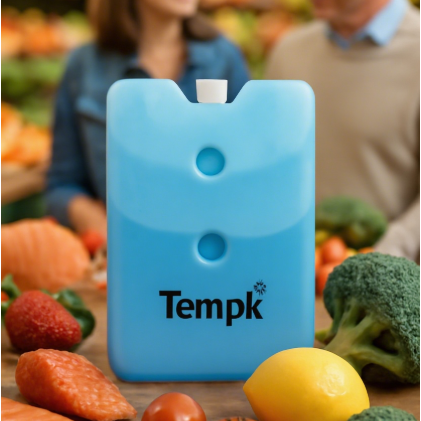
Ice Bricks for Dairy Shipping: How to Choose the Right Cold Chain Packout
Ice bricks for dairy shipping are useful when a shipment needs passive cooling inside an insulated container. They help protect milk, yogurt, cheese, cream, butter, cultured products, and other chilled dairy items by absorbing heat during transport, staging, and delivery. The right choice depends on the required temperature range, transport duration, payload volume, ambient exposure, and how the brick is conditioned and placed.
The most important buying principle is simple: an ice brick is a component, not a complete temperature-controlled system. For ice bricks dairy, the complete system includes the brick, the insulated shipper, the product load, the packout pattern, the route, the handling process, and any monitoring or receiving checks. If one part changes, performance can change.
Quick Answer for Buyers
Choose ice bricks for dairy shipping when the product needs controlled cooling and the operation can manage freezing or conditioning, packing, recovery, cleaning, and inspection. Avoid choosing by size alone. A brick that is too small may warm early, while a brick that is too cold, too large, or placed directly against sensitive goods may create local freezing, condensation, weight, or volume problems.
For high-value, food safety, pharmaceutical, vaccine, biologic, diagnostic, or sample shipments, treat the ice brick as part of a verified packout. Confirm the required temperature range, run a realistic test or monitored pilot, and document the packing method. A reusable brick can support compliance work, but it does not prove compliance by itself.
What Ice Bricks Actually Do
An ice brick slows temperature change by absorbing heat that enters the package. Heat enters through the container walls, lid, seams, void space, and every moment the package is opened or exposed. The coolant gives the payload more time within range, but it cannot stop heat transfer completely. This is why insulation, loading pattern, and closed-lid discipline matter.
In refrigerated dairy distribution, the goal is not to make the package as cold as possible. The goal is to keep the payload within the correct band for the intended time. That distinction matters when products are sensitive to freezing, moisture, or thermal shock. The safest packout is often the one that balances cooling power with separation, airflow control, and appropriate conditioning.
Water, Gel, PCM, and Heavy Duty Designs
Water-based ice bricks are familiar and cost-effective for many chilled or frozen uses. Gel bricks use a thicker fill that can improve handling and reduce liquid movement inside the brick. PCM bricks are formulated to absorb or release heat near a selected phase-change temperature, which can help when a product needs a narrower target range than ordinary frozen water provides.
Heavy duty bricks focus on repeated handling. They may use stronger shells, thicker walls, molded corners, or shapes that stack well in crates and freezers. A heavy duty design can reduce leakage and breakage, but it does not automatically extend hold time. Thermal performance still depends on fill mass, phase behavior, insulation, payload, and route exposure.
Insulation and Coolant Must Be Chosen Together
A brick without insulation loses cooling capacity quickly. An insulated box without enough conditioned coolant may delay warming but still fail before delivery. Foam coolers, EPP boxes, insulated liners, thermal bags, and pallet covers all reduce heat transfer in different ways. The coolant should be sized for the internal volume and payload of the selected container.
Usable volume is a practical buying issue. External carton size does not tell you how much product fits after insulation and coolant are added. A packout with four large bricks may leave too little room for the payload or may force packers to place bricks in unsafe positions. Buyers should request internal dimensions and test the actual product cartons before committing to bulk quantities.
Where Ice Bricks Fit Best
Ice bricks fit best in predictable lanes such as short-haul chilled delivery, insulated totes, farm-to-retail transfer, store replenishment, and backup cooling inside an insulated shipper. They are also useful as backup cooling during loading, short-term staging, and last-mile delivery. They work particularly well when staff can follow a fixed packing diagram and when the receiving team can inspect both the product and the condition of the coolant.
Closed-loop routes are strong candidates because bricks can be recovered, washed, inspected, and reused.
Short or medium passive lanes are good candidates when the ambient exposure is known and the package stays closed.
Parcel lanes may be suitable when the insulated shipper and coolant quantity have been tested against realistic delays.
Regulated or high-value shipments need additional review, monitoring, and documentation before routine use.
Where Ice Bricks Can Fail
The most common failure is a mismatch between the packout and the route. Temperature abuse that can affect quality, shelf life, and food safety programs can occur when coolant mass is too low, insulation is weak, bricks are not fully conditioned, or packages sit too long on a warm dock. The opposite problem can occur when frozen bricks directly touch freeze-sensitive products and create local cold damage.
Mechanical failure also matters. Frozen bricks are often handled roughly. They may be dropped, stacked, washed, returned, and refrozen many times. Cracks, seam stress, swelling, label loss, and surface contamination can all affect whether a brick remains suitable. A reusable coolant program should include inspection criteria and a clear retirement process for damaged units.
Dry Ice Alternative: When the Comparison Makes Sense
Ice bricks and PCM bricks are sometimes considered as alternatives to dry ice. The comparison makes sense when the product needs chilled, controlled room temperature, or moderate frozen support rather than ultra-low conditions. Dry ice is much colder and sublimates into carbon dioxide gas, so it has handling, ventilation, marking, and carrier acceptance considerations.
For ice bricks dairy, the safer question is not whether ice bricks are better than dry ice. The question is which coolant matches the product's temperature requirement and route. A PCM brick may be appropriate for a 2-8 C style refrigerated lane. A water-based frozen brick may suit some frozen foods. Dry ice may still be needed for deep-frozen or ultra-low shipments.
Food, Pharmaceutical, and Temperature-Sensitive Boundaries
Food transport decisions should consider temperature control, sanitation, cleaning, cross-contamination prevention, loading practices, and receiving checks. A package that keeps a product cool but is hard to clean or hard to inspect can still create operational risk. For perishable foods, product quality and safety programs should define acceptable handling conditions.
Pharmaceutical and vaccine shipments require especially careful boundaries. A reusable handling container, waterproof box, or plastic crate is not automatically a qualified thermal shipper. An insulated box is not automatically qualified for every route. Buyers should confirm the required temperature range, shipment duration, payload volume, refrigerant type, ambient exposure, lane conditions, receiving inspection, and documentation requirements.
What Buyers Should Ask Suppliers Before Ordering
Supplier evaluation should connect product design with operational use. A low unit price is not helpful if the brick leaks, changes dimensions, lacks documentation, or cannot be conditioned fast enough for peak demand. Before placing a bulk order, buyers should ask questions that reveal both product quality and production consistency.
What are the external dimensions, weight range, fill volume, material type, and dimensional tolerances?
Is the fill water, gel, PCM, or another refrigerant, and what conditioning method is required?
What safety documentation supports claims such as non-toxic, food-related use, or other intended-use statements?
How are leak resistance, seal strength, deformation, cracking, and surface defects checked during production?
Will production lots match the approved sample, and how are resin, fill, mold, or supplier changes controlled?
Can the brick be labeled, color-coded, molded, or packed in a way that supports tracking and return sorting?
What minimum order quantity, lead time, and custom options apply, and how do repeat orders stay consistent?
Can the supplier discuss the brick together with insulated boxes, liners, bags, or pallet covers when the route needs a full packout?
How to Test a Packout Before Scaling
A practical test should use the real insulated container, intended product or equivalent payload mass, planned number of bricks, actual placement pattern, and realistic ambient exposure. Measure the payload environment, not only the air beside the coolant. If the shipment has partial loads, seasonal extremes, or long staging periods, those conditions should be included in the test plan.
Receiving checks complete the loop. The receiver should know what to inspect, what temperature evidence is required, and what to do after a deviation. For regulated or high-value goods, the decision to accept, quarantine, or reject a shipment should follow the quality procedure rather than a visual impression of whether the bricks are still cold.
Sustainability and Reuse
Reusable ice bricks can reduce single-use coolant waste when return loops, cleaning, and inventory control are managed well. The business case depends on return rate, service life, cleaning effort, storage space, freezer energy, replacement rate, and product loss reduction. A reusable brick is most valuable when the network already brings containers back or when customers can return packaging reliably.
Sustainability claims should be specific. Instead of asking only whether a brick is eco-friendly, ask how many cycles it is expected to survive, how damaged units are handled, whether the shell material can be recycled in the target market, and whether the fill creates disposal restrictions. Also consider whether better temperature control reduces product waste, because wasted product can carry a larger footprint than packaging.
Final Buying Guidance
For ice bricks dairy, start with the product requirement and route risk, then choose the coolant. Confirm the temperature range, duration, insulation, payload volume, ambient exposure, and handling process. Use sample testing before bulk purchasing. Keep the packout simple enough for staff to repeat, but technical enough that quality teams can trust it.
The best ice brick is not always the biggest, coldest, cheapest, or most advanced. It is the one that fits the lane, protects the product, works with the insulated container, can be conditioned on schedule, survives repeated handling, and comes from a supplier that can maintain consistent production quality.
FAQ
Are ice bricks the same as gel packs?
Not always. Some ice bricks contain gel, some contain water, and some contain PCM. The term usually refers to a rigid or semi-rigid coolant format, while gel pack can also describe soft pouch products.
Can ice bricks be used for 2-8 C shipments?
They may be used in some refrigerated packouts, especially when the coolant and insulation are designed for that range. Buyers should verify the complete packout and avoid direct freezing risk for sensitive products.
Do reusable ice bricks automatically reduce cost?
They can reduce recurring coolant purchases, but only when the return, cleaning, inspection, and refreezing process is efficient. Lost bricks and poor return logistics can erase the savings.
Implementation Notes for Operations Teams
Operations teams should convert the chosen ice bricks for dairy shipping into a repeatable work instruction. The instruction should state how long each brick must be conditioned, where it should be placed in the package, how the payload should be separated from the coolant, and what the receiver should check on arrival. This reduces variation between shifts and makes the packout easier to audit.
Freezer planning should be reviewed before scale-up. A pilot may work well with a small number of bricks, but bulk distribution can fail if the freezer is overloaded or if warm returned bricks are placed directly beside conditioned stock. Separate storage for warm returns, units in conditioning, and ready-to-pack units helps keep the process stable.
Inventory control is another practical detail. Reusable bricks should be counted like operating assets, not disposable supplies. Missing units can create urgent substitutions, and substitutions can change thermal performance. Labels, color coding, crates, or simple scan records can help a team understand how many bricks are ready, in use, returned, damaged, or retired.
About Tempk
Tempk is part of Shanghai Tempk Industrial Co., Ltd., a cold chain company established in 2011. We provide gel ice packs, dry ice packs, freezer ice bricks, EPP insulated boxes, cold shipping boxes, insulated box liners, pallet covers, and related temperature-controlled packaging materials. For ice-brick projects, our team focuses on the practical match between coolant, insulation, payload, route exposure, and reuse process, so buyers can choose a configuration that fits the shipment instead of selecting by size alone.
Talk to Tempk
Share the product temperature range, payload volume, transport duration, and return process you expect to use. Tempk can help you discuss a suitable ice brick or insulated packaging configuration for bulk supply, custom sizing, or route-specific evaluation.
Vacuum Sealed Ice Bricks for Cold Chain Packaging: How to Choose the Right Cold Chain Packout
Vacuum Sealed Ice Bricks for Cold Chain Packaging: How to Choose the Right Cold Chain Packout
Vacuum sealed ice bricks and sealed coolant packaging are useful when a shipment needs passive cooling inside an insulated container. They help protect foods, pharmaceuticals, cosmetics, samples, and consumer deliveries where seal integrity and cleanliness matter by absorbing heat during transport, staging, and delivery. The right choice depends on the required temperature range, transport duration, payload volume, ambient exposure, and how the brick is conditioned and placed.
The most important buying principle is simple: an ice brick is a component, not a complete temperature-controlled system. For ice bricks vacuum sealed, the complete system includes the brick, the insulated shipper, the product load, the packout pattern, the route, the handling process, and any monitoring or receiving checks. If one part changes, performance can change.
Quick Answer for Buyers
Choose vacuum sealed ice bricks and sealed coolant packaging when the product needs controlled cooling and the operation can manage freezing or conditioning, packing, recovery, cleaning, and inspection. Avoid choosing by size alone. A brick that is too small may warm early, while a brick that is too cold, too large, or placed directly against sensitive goods may create local freezing, condensation, weight, or volume problems.
For high-value, food safety, pharmaceutical, vaccine, biologic, diagnostic, or sample shipments, treat the ice brick as part of a verified packout. Confirm the required temperature range, run a realistic test or monitored pilot, and document the packing method. A reusable brick can support compliance work, but it does not prove compliance by itself.
What Ice Bricks Actually Do
An ice brick slows temperature change by absorbing heat that enters the package. Heat enters through the container walls, lid, seams, void space, and every moment the package is opened or exposed. The coolant gives the payload more time within range, but it cannot stop heat transfer completely. This is why insulation, loading pattern, and closed-lid discipline matter.
In sealed coolant and leak-prevention planning, the goal is not to make the package as cold as possible. The goal is to keep the payload within the correct band for the intended time. That distinction matters when products are sensitive to freezing, moisture, or thermal shock. The safest packout is often the one that balances cooling power with separation, airflow control, and appropriate conditioning.
Water, Gel, PCM, and Heavy Duty Designs
Water-based ice bricks are familiar and cost-effective for many chilled or frozen uses. Gel bricks use a thicker fill that can improve handling and reduce liquid movement inside the brick. PCM bricks are formulated to absorb or release heat near a selected phase-change temperature, which can help when a product needs a narrower target range than ordinary frozen water provides.
Heavy duty bricks focus on repeated handling. They may use stronger shells, thicker walls, molded corners, or shapes that stack well in crates and freezers. A heavy duty design can reduce leakage and breakage, but it does not automatically extend hold time. Thermal performance still depends on fill mass, phase behavior, insulation, payload, and route exposure.
Insulation and Coolant Must Be Chosen Together
A brick without insulation loses cooling capacity quickly. An insulated box without enough conditioned coolant may delay warming but still fail before delivery. Foam coolers, EPP boxes, insulated liners, thermal bags, and pallet covers all reduce heat transfer in different ways. The coolant should be sized for the internal volume and payload of the selected container.
Usable volume is a practical buying issue. External carton size does not tell you how much product fits after insulation and coolant are added. A packout with four large bricks may leave too little room for the payload or may force packers to place bricks in unsafe positions. Buyers should request internal dimensions and test the actual product cartons before committing to bulk quantities.
Where Ice Bricks Fit Best
Ice bricks fit best in predictable lanes such as shipments where leakage control, clean handling, compact storage, and consistent packout geometry are important. They are also useful as backup cooling during loading, short-term staging, and last-mile delivery. They work particularly well when staff can follow a fixed packing diagram and when the receiving team can inspect both the product and the condition of the coolant.
Closed-loop routes are strong candidates because bricks can be recovered, washed, inspected, and reused.
Short or medium passive lanes are good candidates when the ambient exposure is known and the package stays closed.
Parcel lanes may be suitable when the insulated shipper and coolant quantity have been tested against realistic delays.
Regulated or high-value shipments need additional review, monitoring, and documentation before routine use.
Where Ice Bricks Can Fail
The most common failure is a mismatch between the packout and the route. Assuming that a vacuum-sealed pouch or tight seal automatically creates a qualified temperature-controlled system can occur when coolant mass is too low, insulation is weak, bricks are not fully conditioned, or packages sit too long on a warm dock. The opposite problem can occur when frozen bricks directly touch freeze-sensitive products and create local cold damage.
Mechanical failure also matters. Frozen bricks are often handled roughly. They may be dropped, stacked, washed, returned, and refrozen many times. Cracks, seam stress, swelling, label loss, and surface contamination can all affect whether a brick remains suitable. A reusable coolant program should include inspection criteria and a clear retirement process for damaged units.
Dry Ice Alternative: When the Comparison Makes Sense
Ice bricks and PCM bricks are sometimes considered as alternatives to dry ice. The comparison makes sense when the product needs chilled, controlled room temperature, or moderate frozen support rather than ultra-low conditions. Dry ice is much colder and sublimates into carbon dioxide gas, so it has handling, ventilation, marking, and carrier acceptance considerations.
For ice bricks vacuum sealed, the safer question is not whether ice bricks are better than dry ice. The question is which coolant matches the product's temperature requirement and route. A PCM brick may be appropriate for a 2-8 C style refrigerated lane. A water-based frozen brick may suit some frozen foods. Dry ice may still be needed for deep-frozen or ultra-low shipments.
Food, Pharmaceutical, and Temperature-Sensitive Boundaries
Food transport decisions should consider temperature control, sanitation, cleaning, cross-contamination prevention, loading practices, and receiving checks. A package that keeps a product cool but is hard to clean or hard to inspect can still create operational risk. For perishable foods, product quality and safety programs should define acceptable handling conditions.
Pharmaceutical and vaccine shipments require especially careful boundaries. A reusable handling container, waterproof box, or plastic crate is not automatically a qualified thermal shipper. An insulated box is not automatically qualified for every route. Buyers should confirm the required temperature range, shipment duration, payload volume, refrigerant type, ambient exposure, lane conditions, receiving inspection, and documentation requirements.
What Buyers Should Ask Suppliers Before Ordering
Supplier evaluation should connect product design with operational use. A low unit price is not helpful if the brick leaks, changes dimensions, lacks documentation, or cannot be conditioned fast enough for peak demand. Before placing a bulk order, buyers should ask questions that reveal both product quality and production consistency.
What are the external dimensions, weight range, fill volume, material type, and dimensional tolerances?
Is the fill water, gel, PCM, or another refrigerant, and what conditioning method is required?
What safety documentation supports claims such as non-toxic, food-related use, or other intended-use statements?
How are leak resistance, seal strength, deformation, cracking, and surface defects checked during production?
Will production lots match the approved sample, and how are resin, fill, mold, or supplier changes controlled?
Can the brick be labeled, color-coded, molded, or packed in a way that supports tracking and return sorting?
What minimum order quantity, lead time, and custom options apply, and how do repeat orders stay consistent?
Can the supplier discuss the brick together with insulated boxes, liners, bags, or pallet covers when the route needs a full packout?
How to Test a Packout Before Scaling
A practical test should use the real insulated container, intended product or equivalent payload mass, planned number of bricks, actual placement pattern, and realistic ambient exposure. Measure the payload environment, not only the air beside the coolant. If the shipment has partial loads, seasonal extremes, or long staging periods, those conditions should be included in the test plan.
Receiving checks complete the loop. The receiver should know what to inspect, what temperature evidence is required, and what to do after a deviation. For regulated or high-value goods, the decision to accept, quarantine, or reject a shipment should follow the quality procedure rather than a visual impression of whether the bricks are still cold.
Sustainability and Reuse
Strong seals can extend reuse by preventing leaks, but damaged pouches or bricks still need removal and responsible disposal. The business case depends on return rate, service life, cleaning effort, storage space, freezer energy, replacement rate, and product loss reduction. A reusable brick is most valuable when the network already brings containers back or when customers can return packaging reliably.
Sustainability claims should be specific. Instead of asking only whether a brick is eco-friendly, ask how many cycles it is expected to survive, how damaged units are handled, whether the shell material can be recycled in the target market, and whether the fill creates disposal restrictions. Also consider whether better temperature control reduces product waste, because wasted product can carry a larger footprint than packaging.
Final Buying Guidance
For ice bricks vacuum sealed, start with the product requirement and route risk, then choose the coolant. Confirm the temperature range, duration, insulation, payload volume, ambient exposure, and handling process. Use sample testing before bulk purchasing. Keep the packout simple enough for staff to repeat, but technical enough that quality teams can trust it.
The best ice brick is not always the biggest, coldest, cheapest, or most advanced. It is the one that fits the lane, protects the product, works with the insulated container, can be conditioned on schedule, survives repeated handling, and comes from a supplier that can maintain consistent production quality.
FAQ
Are ice bricks the same as gel packs?
Not always. Some ice bricks contain gel, some contain water, and some contain PCM. The term usually refers to a rigid or semi-rigid coolant format, while gel pack can also describe soft pouch products.
Can ice bricks be used for 2-8 C shipments?
They may be used in some refrigerated packouts, especially when the coolant and insulation are designed for that range. Buyers should verify the complete packout and avoid direct freezing risk for sensitive products.
Do reusable ice bricks automatically reduce cost?
They can reduce recurring coolant purchases, but only when the return, cleaning, inspection, and refreezing process is efficient. Lost bricks and poor return logistics can erase the savings.
Implementation Notes for Operations Teams
Operations teams should convert the chosen vacuum sealed ice bricks and sealed coolant packaging into a repeatable work instruction. The instruction should state how long each brick must be conditioned, where it should be placed in the package, how the payload should be separated from the coolant, and what the receiver should check on arrival. This reduces variation between shifts and makes the packout easier to audit.
Freezer planning should be reviewed before scale-up. A pilot may work well with a small number of bricks, but bulk distribution can fail if the freezer is overloaded or if warm returned bricks are placed directly beside conditioned stock. Separate storage for warm returns, units in conditioning, and ready-to-pack units helps keep the process stable.
Inventory control is another practical detail. Reusable bricks should be counted like operating assets, not disposable supplies. Missing units can create urgent substitutions, and substitutions can change thermal performance. Labels, color coding, crates, or simple scan records can help a team understand how many bricks are ready, in use, returned, damaged, or retired.
About Tempk
Tempk is part of Shanghai Tempk Industrial Co., Ltd., a cold chain company established in 2011. We provide gel ice packs, dry ice packs, freezer ice bricks, EPP insulated boxes, cold shipping boxes, insulated box liners, pallet covers, and related temperature-controlled packaging materials. For ice-brick projects, our team focuses on the practical match between coolant, insulation, payload, route exposure, and reuse process, so buyers can choose a configuration that fits the shipment instead of selecting by size alone.
Talk to Tempk
Share the product temperature range, payload volume, transport duration, and return process you expect to use. Tempk can help you discuss a suitable ice brick or insulated packaging configuration for bulk supply, custom sizing, or route-specific evaluation.
Ice Bricks for Temperature-Sensitive Products: How to Choose the Right Cold Chain Packout

Ice Bricks for Temperature-Sensitive Products: How to Choose the Right Cold Chain Packout
Ice bricks for temperature-sensitive products are useful when a shipment needs passive cooling inside an insulated container. They help protect temperature-sensitive foods, pharmaceuticals, diagnostics, samples, cosmetics, chemicals, and other products with defined storage conditions by absorbing heat during transport, staging, and delivery. The right choice depends on the required temperature range, transport duration, payload volume, ambient exposure, and how the brick is conditioned and placed.
The most important buying principle is simple: an ice brick is a component, not a complete temperature-controlled system. For ice bricks temperature-sensitive, the complete system includes the brick, the insulated shipper, the product load, the packout pattern, the route, the handling process, and any monitoring or receiving checks. If one part changes, performance can change.
Quick Answer for Buyers
Choose ice bricks for temperature-sensitive products when the product needs controlled cooling and the operation can manage freezing or conditioning, packing, recovery, cleaning, and inspection. Avoid choosing by size alone. A brick that is too small may warm early, while a brick that is too cold, too large, or placed directly against sensitive goods may create local freezing, condensation, weight, or volume problems.
For high-value, food safety, pharmaceutical, vaccine, biologic, diagnostic, or sample shipments, treat the ice brick as part of a verified packout. Confirm the required temperature range, run a realistic test or monitored pilot, and document the packing method. A reusable brick can support compliance work, but it does not prove compliance by itself.
What Ice Bricks Actually Do
An ice brick slows temperature change by absorbing heat that enters the package. Heat enters through the container walls, lid, seams, void space, and every moment the package is opened or exposed. The coolant gives the payload more time within range, but it cannot stop heat transfer completely. This is why insulation, loading pattern, and closed-lid discipline matter.
In temperature-sensitive logistics, the goal is not to make the package as cold as possible. The goal is to keep the payload within the correct band for the intended time. That distinction matters when products are sensitive to freezing, moisture, or thermal shock. The safest packout is often the one that balances cooling power with separation, airflow control, and appropriate conditioning.
Water, Gel, PCM, and Heavy Duty Designs
Water-based ice bricks are familiar and cost-effective for many chilled or frozen uses. Gel bricks use a thicker fill that can improve handling and reduce liquid movement inside the brick. PCM bricks are formulated to absorb or release heat near a selected phase-change temperature, which can help when a product needs a narrower target range than ordinary frozen water provides.
Heavy duty bricks focus on repeated handling. They may use stronger shells, thicker walls, molded corners, or shapes that stack well in crates and freezers. A heavy duty design can reduce leakage and breakage, but it does not automatically extend hold time. Thermal performance still depends on fill mass, phase behavior, insulation, payload, and route exposure.
Insulation and Coolant Must Be Chosen Together
A brick without insulation loses cooling capacity quickly. An insulated box without enough conditioned coolant may delay warming but still fail before delivery. Foam coolers, EPP boxes, insulated liners, thermal bags, and pallet covers all reduce heat transfer in different ways. The coolant should be sized for the internal volume and payload of the selected container.
Usable volume is a practical buying issue. External carton size does not tell you how much product fits after insulation and coolant are added. A packout with four large bricks may leave too little room for the payload or may force packers to place bricks in unsafe positions. Buyers should request internal dimensions and test the actual product cartons before committing to bulk quantities.
Where Ice Bricks Fit Best
Ice bricks fit best in predictable lanes such as qualified insulated shippers, controlled delivery routes, temporary storage support, emergency cooling, and reusable transport systems. They are also useful as backup cooling during loading, short-term staging, and last-mile delivery. They work particularly well when staff can follow a fixed packing diagram and when the receiving team can inspect both the product and the condition of the coolant.
Closed-loop routes are strong candidates because bricks can be recovered, washed, inspected, and reused.
Short or medium passive lanes are good candidates when the ambient exposure is known and the package stays closed.
Parcel lanes may be suitable when the insulated shipper and coolant quantity have been tested against realistic delays.
Regulated or high-value shipments need additional review, monitoring, and documentation before routine use.
Where Ice Bricks Can Fail
The most common failure is a mismatch between the packout and the route. Thermal excursions that can compromise product quality, release decisions, or receiving acceptance can occur when coolant mass is too low, insulation is weak, bricks are not fully conditioned, or packages sit too long on a warm dock. The opposite problem can occur when frozen bricks directly touch freeze-sensitive products and create local cold damage.
Mechanical failure also matters. Frozen bricks are often handled roughly. They may be dropped, stacked, washed, returned, and refrozen many times. Cracks, seam stress, swelling, label loss, and surface contamination can all affect whether a brick remains suitable. A reusable coolant program should include inspection criteria and a clear retirement process for damaged units.
Dry Ice Alternative: When the Comparison Makes Sense
Ice bricks and PCM bricks are sometimes considered as alternatives to dry ice. The comparison makes sense when the product needs chilled, controlled room temperature, or moderate frozen support rather than ultra-low conditions. Dry ice is much colder and sublimates into carbon dioxide gas, so it has handling, ventilation, marking, and carrier acceptance considerations.
For ice bricks temperature-sensitive, the safer question is not whether ice bricks are better than dry ice. The question is which coolant matches the product's temperature requirement and route. A PCM brick may be appropriate for a 2-8 C style refrigerated lane. A water-based frozen brick may suit some frozen foods. Dry ice may still be needed for deep-frozen or ultra-low shipments.
Food, Pharmaceutical, and Temperature-Sensitive Boundaries
Food transport decisions should consider temperature control, sanitation, cleaning, cross-contamination prevention, loading practices, and receiving checks. A package that keeps a product cool but is hard to clean or hard to inspect can still create operational risk. For perishable foods, product quality and safety programs should define acceptable handling conditions.
Pharmaceutical and vaccine shipments require especially careful boundaries. A reusable handling container, waterproof box, or plastic crate is not automatically a qualified thermal shipper. An insulated box is not automatically qualified for every route. Buyers should confirm the required temperature range, shipment duration, payload volume, refrigerant type, ambient exposure, lane conditions, receiving inspection, and documentation requirements.
What Buyers Should Ask Suppliers Before Ordering
Supplier evaluation should connect product design with operational use. A low unit price is not helpful if the brick leaks, changes dimensions, lacks documentation, or cannot be conditioned fast enough for peak demand. Before placing a bulk order, buyers should ask questions that reveal both product quality and production consistency.
What are the external dimensions, weight range, fill volume, material type, and dimensional tolerances?
Is the fill water, gel, PCM, or another refrigerant, and what conditioning method is required?
What safety documentation supports claims such as non-toxic, food-related use, or other intended-use statements?
How are leak resistance, seal strength, deformation, cracking, and surface defects checked during production?
Will production lots match the approved sample, and how are resin, fill, mold, or supplier changes controlled?
Can the brick be labeled, color-coded, molded, or packed in a way that supports tracking and return sorting?
What minimum order quantity, lead time, and custom options apply, and how do repeat orders stay consistent?
Can the supplier discuss the brick together with insulated boxes, liners, bags, or pallet covers when the route needs a full packout?
How to Test a Packout Before Scaling
A practical test should use the real insulated container, intended product or equivalent payload mass, planned number of bricks, actual placement pattern, and realistic ambient exposure. Measure the payload environment, not only the air beside the coolant. If the shipment has partial loads, seasonal extremes, or long staging periods, those conditions should be included in the test plan.
Receiving checks complete the loop. The receiver should know what to inspect, what temperature evidence is required, and what to do after a deviation. For regulated or high-value goods, the decision to accept, quarantine, or reject a shipment should follow the quality procedure rather than a visual impression of whether the bricks are still cold.
Sustainability and Reuse
Reusable coolant can support lower-waste logistics if cleaning, inspection, and return processes are documented. The business case depends on return rate, service life, cleaning effort, storage space, freezer energy, replacement rate, and product loss reduction. A reusable brick is most valuable when the network already brings containers back or when customers can return packaging reliably.
Sustainability claims should be specific. Instead of asking only whether a brick is eco-friendly, ask how many cycles it is expected to survive, how damaged units are handled, whether the shell material can be recycled in the target market, and whether the fill creates disposal restrictions. Also consider whether better temperature control reduces product waste, because wasted product can carry a larger footprint than packaging.
Final Buying Guidance
For ice bricks temperature-sensitive, start with the product requirement and route risk, then choose the coolant. Confirm the temperature range, duration, insulation, payload volume, ambient exposure, and handling process. Use sample testing before bulk purchasing. Keep the packout simple enough for staff to repeat, but technical enough that quality teams can trust it.
The best ice brick is not always the biggest, coldest, cheapest, or most advanced. It is the one that fits the lane, protects the product, works with the insulated container, can be conditioned on schedule, survives repeated handling, and comes from a supplier that can maintain consistent production quality.
FAQ
Are ice bricks the same as gel packs?
Not always. Some ice bricks contain gel, some contain water, and some contain PCM. The term usually refers to a rigid or semi-rigid coolant format, while gel pack can also describe soft pouch products.
Can ice bricks be used for 2-8 C shipments?
They may be used in some refrigerated packouts, especially when the coolant and insulation are designed for that range. Buyers should verify the complete packout and avoid direct freezing risk for sensitive products.
Do reusable ice bricks automatically reduce cost?
They can reduce recurring coolant purchases, but only when the return, cleaning, inspection, and refreezing process is efficient. Lost bricks and poor return logistics can erase the savings.
Implementation Notes for Operations Teams
Operations teams should convert the chosen ice bricks for temperature-sensitive products into a repeatable work instruction. The instruction should state how long each brick must be conditioned, where it should be placed in the package, how the payload should be separated from the coolant, and what the receiver should check on arrival. This reduces variation between shifts and makes the packout easier to audit.
Freezer planning should be reviewed before scale-up. A pilot may work well with a small number of bricks, but bulk distribution can fail if the freezer is overloaded or if warm returned bricks are placed directly beside conditioned stock. Separate storage for warm returns, units in conditioning, and ready-to-pack units helps keep the process stable.
Inventory control is another practical detail. Reusable bricks should be counted like operating assets, not disposable supplies. Missing units can create urgent substitutions, and substitutions can change thermal performance. Labels, color coding, crates, or simple scan records can help a team understand how many bricks are ready, in use, returned, damaged, or retired.
About Tempk
Tempk is part of Shanghai Tempk Industrial Co., Ltd., a cold chain company established in 2011. We provide gel ice packs, dry ice packs, freezer ice bricks, EPP insulated boxes, cold shipping boxes, insulated box liners, pallet covers, and related temperature-controlled packaging materials. For ice-brick projects, our team focuses on the practical match between coolant, insulation, payload, route exposure, and reuse process, so buyers can choose a configuration that fits the shipment instead of selecting by size alone.
Talk to Tempk
Share the product temperature range, payload volume, transport duration, and return process you expect to use. Tempk can help you discuss a suitable ice brick or insulated packaging configuration for bulk supply, custom sizing, or route-specific evaluation.
Sustainable Ice Bricks for Cold Chain Packaging: How to Choose the Right Cold Chain Packout
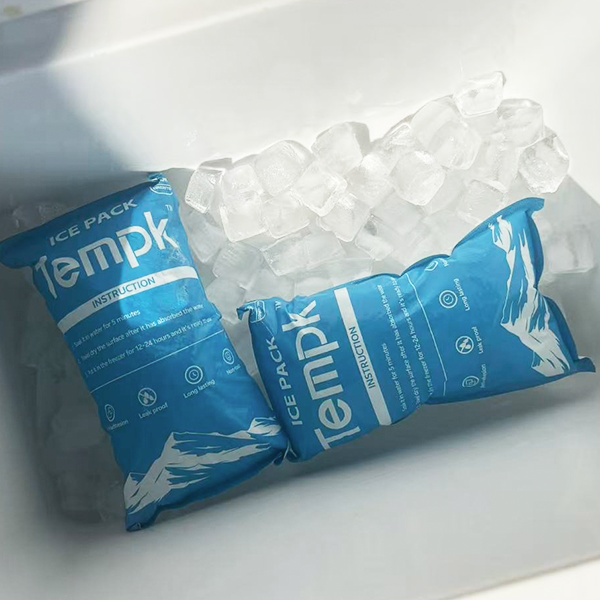
Sustainable Ice Bricks for Cold Chain Packaging: How to Choose the Right Cold Chain Packout
Sustainable ice bricks for cold chain packaging are useful when a shipment needs passive cooling inside an insulated container. They help protect food, grocery, pharmaceutical, cosmetic, and sample shipments that can use reusable coolant within a controlled process by absorbing heat during transport, staging, and delivery. The right choice depends on the required temperature range, transport duration, payload volume, ambient exposure, and how the brick is conditioned and placed.
The most important buying principle is simple: an ice brick is a component, not a complete temperature-controlled system. For ice bricks sustainable, the complete system includes the brick, the insulated shipper, the product load, the packout pattern, the route, the handling process, and any monitoring or receiving checks. If one part changes, performance can change.
Quick Answer for Buyers
Choose sustainable ice bricks for cold chain packaging when the product needs controlled cooling and the operation can manage freezing or conditioning, packing, recovery, cleaning, and inspection. Avoid choosing by size alone. A brick that is too small may warm early, while a brick that is too cold, too large, or placed directly against sensitive goods may create local freezing, condensation, weight, or volume problems.
For high-value, food safety, pharmaceutical, vaccine, biologic, diagnostic, or sample shipments, treat the ice brick as part of a verified packout. Confirm the required temperature range, run a realistic test or monitored pilot, and document the packing method. A reusable brick can support compliance work, but it does not prove compliance by itself.
What Ice Bricks Actually Do
An ice brick slows temperature change by absorbing heat that enters the package. Heat enters through the container walls, lid, seams, void space, and every moment the package is opened or exposed. The coolant gives the payload more time within range, but it cannot stop heat transfer completely. This is why insulation, loading pattern, and closed-lid discipline matter.
In lower-waste cold chain operations, the goal is not to make the package as cold as possible. The goal is to keep the payload within the correct band for the intended time. That distinction matters when products are sensitive to freezing, moisture, or thermal shock. The safest packout is often the one that balances cooling power with separation, airflow control, and appropriate conditioning.
Water, Gel, PCM, and Heavy Duty Designs
Water-based ice bricks are familiar and cost-effective for many chilled or frozen uses. Gel bricks use a thicker fill that can improve handling and reduce liquid movement inside the brick. PCM bricks are formulated to absorb or release heat near a selected phase-change temperature, which can help when a product needs a narrower target range than ordinary frozen water provides.
Heavy duty bricks focus on repeated handling. They may use stronger shells, thicker walls, molded corners, or shapes that stack well in crates and freezers. A heavy duty design can reduce leakage and breakage, but it does not automatically extend hold time. Thermal performance still depends on fill mass, phase behavior, insulation, payload, and route exposure.
Insulation and Coolant Must Be Chosen Together
A brick without insulation loses cooling capacity quickly. An insulated box without enough conditioned coolant may delay warming but still fail before delivery. Foam coolers, EPP boxes, insulated liners, thermal bags, and pallet covers all reduce heat transfer in different ways. The coolant should be sized for the internal volume and payload of the selected container.
Usable volume is a practical buying issue. External carton size does not tell you how much product fits after insulation and coolant are added. A packout with four large bricks may leave too little room for the payload or may force packers to place bricks in unsafe positions. Buyers should request internal dimensions and test the actual product cartons before committing to bulk quantities.
Where Ice Bricks Fit Best
Ice bricks fit best in predictable lanes such as closed-loop distribution, reusable totes, store replenishment, pharmacy delivery, and subscription programs with predictable returns. They are also useful as backup cooling during loading, short-term staging, and last-mile delivery. They work particularly well when staff can follow a fixed packing diagram and when the receiving team can inspect both the product and the condition of the coolant.
Closed-loop routes are strong candidates because bricks can be recovered, washed, inspected, and reused.
Short or medium passive lanes are good candidates when the ambient exposure is known and the package stays closed.
Parcel lanes may be suitable when the insulated shipper and coolant quantity have been tested against realistic delays.
Regulated or high-value shipments need additional review, monitoring, and documentation before routine use.
Where Ice Bricks Can Fail
The most common failure is a mismatch between the packout and the route. Calling a coolant sustainable without checking reuse rate, loss rate, cleaning energy, return distance, and end-of-life handling can occur when coolant mass is too low, insulation is weak, bricks are not fully conditioned, or packages sit too long on a warm dock. The opposite problem can occur when frozen bricks directly touch freeze-sensitive products and create local cold damage.
Mechanical failure also matters. Frozen bricks are often handled roughly. They may be dropped, stacked, washed, returned, and refrozen many times. Cracks, seam stress, swelling, label loss, and surface contamination can all affect whether a brick remains suitable. A reusable coolant program should include inspection criteria and a clear retirement process for damaged units.
Dry Ice Alternative: When the Comparison Makes Sense
Ice bricks and PCM bricks are sometimes considered as alternatives to dry ice. The comparison makes sense when the product needs chilled, controlled room temperature, or moderate frozen support rather than ultra-low conditions. Dry ice is much colder and sublimates into carbon dioxide gas, so it has handling, ventilation, marking, and carrier acceptance considerations.
For ice bricks sustainable, the safer question is not whether ice bricks are better than dry ice. The question is which coolant matches the product's temperature requirement and route. A PCM brick may be appropriate for a 2-8 C style refrigerated lane. A water-based frozen brick may suit some frozen foods. Dry ice may still be needed for deep-frozen or ultra-low shipments.
Food, Pharmaceutical, and Temperature-Sensitive Boundaries
Food transport decisions should consider temperature control, sanitation, cleaning, cross-contamination prevention, loading practices, and receiving checks. A package that keeps a product cool but is hard to clean or hard to inspect can still create operational risk. For perishable foods, product quality and safety programs should define acceptable handling conditions.
Pharmaceutical and vaccine shipments require especially careful boundaries. A reusable handling container, waterproof box, or plastic crate is not automatically a qualified thermal shipper. An insulated box is not automatically qualified for every route. Buyers should confirm the required temperature range, shipment duration, payload volume, refrigerant type, ambient exposure, lane conditions, receiving inspection, and documentation requirements.
What Buyers Should Ask Suppliers Before Ordering
Supplier evaluation should connect product design with operational use. A low unit price is not helpful if the brick leaks, changes dimensions, lacks documentation, or cannot be conditioned fast enough for peak demand. Before placing a bulk order, buyers should ask questions that reveal both product quality and production consistency.
What are the external dimensions, weight range, fill volume, material type, and dimensional tolerances?
Is the fill water, gel, PCM, or another refrigerant, and what conditioning method is required?
What safety documentation supports claims such as non-toxic, food-related use, or other intended-use statements?
How are leak resistance, seal strength, deformation, cracking, and surface defects checked during production?
Will production lots match the approved sample, and how are resin, fill, mold, or supplier changes controlled?
Can the brick be labeled, color-coded, molded, or packed in a way that supports tracking and return sorting?
What minimum order quantity, lead time, and custom options apply, and how do repeat orders stay consistent?
Can the supplier discuss the brick together with insulated boxes, liners, bags, or pallet covers when the route needs a full packout?
How to Test a Packout Before Scaling
A practical test should use the real insulated container, intended product or equivalent payload mass, planned number of bricks, actual placement pattern, and realistic ambient exposure. Measure the payload environment, not only the air beside the coolant. If the shipment has partial loads, seasonal extremes, or long staging periods, those conditions should be included in the test plan.
Receiving checks complete the loop. The receiver should know what to inspect, what temperature evidence is required, and what to do after a deviation. For regulated or high-value goods, the decision to accept, quarantine, or reject a shipment should follow the quality procedure rather than a visual impression of whether the bricks are still cold.
Sustainability and Reuse
The strongest sustainability case usually comes from a measured return loop, not only from the coolant material itself. The business case depends on return rate, service life, cleaning effort, storage space, freezer energy, replacement rate, and product loss reduction. A reusable brick is most valuable when the network already brings containers back or when customers can return packaging reliably.
Sustainability claims should be specific. Instead of asking only whether a brick is eco-friendly, ask how many cycles it is expected to survive, how damaged units are handled, whether the shell material can be recycled in the target market, and whether the fill creates disposal restrictions. Also consider whether better temperature control reduces product waste, because wasted product can carry a larger footprint than packaging.
Final Buying Guidance
For ice bricks sustainable, start with the product requirement and route risk, then choose the coolant. Confirm the temperature range, duration, insulation, payload volume, ambient exposure, and handling process. Use sample testing before bulk purchasing. Keep the packout simple enough for staff to repeat, but technical enough that quality teams can trust it.
The best ice brick is not always the biggest, coldest, cheapest, or most advanced. It is the one that fits the lane, protects the product, works with the insulated container, can be conditioned on schedule, survives repeated handling, and comes from a supplier that can maintain consistent production quality.
FAQ
Are ice bricks the same as gel packs?
Not always. Some ice bricks contain gel, some contain water, and some contain PCM. The term usually refers to a rigid or semi-rigid coolant format, while gel pack can also describe soft pouch products.
Can ice bricks be used for 2-8 C shipments?
They may be used in some refrigerated packouts, especially when the coolant and insulation are designed for that range. Buyers should verify the complete packout and avoid direct freezing risk for sensitive products.
Do reusable ice bricks automatically reduce cost?
They can reduce recurring coolant purchases, but only when the return, cleaning, inspection, and refreezing process is efficient. Lost bricks and poor return logistics can erase the savings.
Implementation Notes for Operations Teams
Operations teams should convert the chosen sustainable ice bricks for cold chain packaging into a repeatable work instruction. The instruction should state how long each brick must be conditioned, where it should be placed in the package, how the payload should be separated from the coolant, and what the receiver should check on arrival. This reduces variation between shifts and makes the packout easier to audit.
Freezer planning should be reviewed before scale-up. A pilot may work well with a small number of bricks, but bulk distribution can fail if the freezer is overloaded or if warm returned bricks are placed directly beside conditioned stock. Separate storage for warm returns, units in conditioning, and ready-to-pack units helps keep the process stable.
Inventory control is another practical detail. Reusable bricks should be counted like operating assets, not disposable supplies. Missing units can create urgent substitutions, and substitutions can change thermal performance. Labels, color coding, crates, or simple scan records can help a team understand how many bricks are ready, in use, returned, damaged, or retired.
About Tempk
Tempk is part of Shanghai Tempk Industrial Co., Ltd., a cold chain company established in 2011. We provide gel ice packs, dry ice packs, freezer ice bricks, EPP insulated boxes, cold shipping boxes, insulated box liners, pallet covers, and related temperature-controlled packaging materials. For ice-brick projects, our team focuses on the practical match between coolant, insulation, payload, route exposure, and reuse process, so buyers can choose a configuration that fits the shipment instead of selecting by size alone.
Talk to Tempk
Share the product temperature range, payload volume, transport duration, and return process you expect to use. Tempk can help you discuss a suitable ice brick or insulated packaging configuration for bulk supply, custom sizing, or route-specific evaluation.