


Distributor Dry Ice Pack for Vaccine Shipping: Selection and Bulk Buying Guide
Distributor Dry Ice Pack for Vaccine Shipping: Selection and Bulk Buying Guide

Distributor Dry Ice Pack for Vaccine Shipping: Selection and Bulk Buying Guide
A distributor dry ice pack for vaccine shipping should be chosen only after the product temperature range, route duration, payload size, and handling limits are clear. The safest buying decision is to treat the pack as one part of a temperature-controlled packaging system, not as a universal solution.
Many vaccines licensed for refrigerated storage are held at 2°C to 8°C and must not be frozen, while some products have frozen or ultra-cold requirements. The manufacturer instructions and applicable public health guidance must control the packout. Dry ice is appropriate only when the vaccine or related product is specified for frozen or ultra-cold shipment and the shipper is designed for dry ice use. For refrigerated vaccines, dry ice can be damaging if it creates freezing exposure. If those boundaries are not written down, procurement may buy a pack that is cold but unsuitable.
This guide focuses on practical selection: what the product should do, when dry ice makes sense, when alternatives are safer, what specifications buyers should request, and how to judge suppliers before placing a repeat or bulk order.
The Core Decision: Frozen, Chilled, or Controlled Ambient?
Every cold-chain purchase should begin with the required temperature range. Frozen, refrigerated, ultra-cold, and controlled ambient are different packaging problems. A dry ice pack can support very cold shipment conditions, but it may be damaging for products that must remain in a mild refrigerated range.
For vaccine shipping, this distinction is especially important. The largest risks are temperature excursions, accidental freezing, dry ice sublimation before delivery, poor re-icing control, missing logger data, and receiving teams that cannot verify shipment condition promptly. A packout that is too cold can create hidden quality problems even when the delivery is fast and the outer carton looks undamaged.
What a Dry Ice Pack Can and Cannot Do
The phrase dry ice pack can be used in two ways. In strict logistics language, dry ice refers to solid carbon dioxide used as a very cold refrigerant. In packaging catalogs, the same phrase may also be used for hydrated or reusable cold packs that are frozen before use and placed inside insulated packaging. Buyers should clarify the meaning before approving a specification.
Dry ice is solid carbon dioxide that sublimates at about -78.5°C, so it can create a much colder environment than ordinary frozen water-based packs. That can be valuable for frozen shipments, but it can be too cold for products that need a refrigerated or controlled room-temperature range. Dry ice also turns into gas, which means the package must not be airtight and must allow carbon dioxide to vent safely.
A dry ice pack can absorb heat and help maintain a frozen or ultra-cold environment when the rest of the system is designed for it. It cannot compensate for poor insulation, warm product at packing, excessive route duration, blocked venting, or staff who do not follow the packout diagram.
For 2°C to 8°C vaccines, conditioned gel packs or PCM systems are usually more appropriate than dry ice because they reduce freeze risk when properly designed and qualified. The best choice is usually the one that maintains the required range with the least avoidable risk, not the one with the coldest starting temperature.
Build the Packout as a System
A refrigerant pack alone is not a qualified temperature-controlled shipper; performance comes from the full combination of product, payload, insulation, refrigerant, void fill, packout method, ambient exposure, and transit time.
A typical passive cold-chain packout starts with a product that has already been cooled to the required starting condition. The product is placed into a tested insulated shipper, with refrigerant arranged according to a written diagram. Void space is managed so heat does not move quickly through air gaps, but airflow and venting requirements are still respected when dry ice is used.
The same pack may perform differently on a short night route, a weekend route, a summer parcel lane, or a lane with long dock exposure. For that reason, buyers should compare packaging by route assumptions and test conditions rather than by promotional cooling duration alone.
Buyer Checklist for Specifications
A strong quotation request should make it difficult for a supplier to answer vaguely. Include the information below so samples, bulk production, and operational packing are aligned.
Required temperature range: refrigerated, frozen, ultra-cold, or controlled room temperature. Do not treat these ranges as interchangeable.
Shipment duration: include packing time, carrier pickup, hub dwell, possible delay, delivery window, and receiving time.
Payload volume: confirm usable internal volume after insulation and refrigerant are installed, not only the outer carton size.
Payload weight: confirm the package can tolerate the filled product, refrigerant, absorbent materials, and handling loads.
Refrigerant compatibility: decide whether solid dry ice, gel packs, PCM packs, or a hybrid system is appropriate for the product.
Preconditioning instructions: specify freezing or conditioning temperature, time, staging process, and how staff verify readiness before packing.
Product separation: include dividers, pads, liners, or buffers when a very cold refrigerant could damage product surfaces.
Venting and marking: when solid dry ice is used, confirm venting, labels, net dry ice mass, and carrier documentation needs for the transport mode.
Receiving checks: define what the receiver should inspect, record, and escalate when the shipment arrives.
What to Confirm with a Distributor Before Stocking
Because the phrase distributor dry ice pack usually appears in a buying context, supplier evaluation should focus on repeatability, not only price. For vaccine shipping, the most useful supplier conversation covers stock continuity, carton-level consistency, clear SKU separation, regional delivery planning, and technical support for downstream customers.
Which pack sizes are stocked regularly, and which are made to order?
Can the distributor provide the same specification across repeat orders, not only a similar substitute?
How are cartons labeled so warehouse staff can separate chilled, frozen, and ultra-cold packouts?
What documentation is available for product dimensions, preconditioning instructions, and safe handling?
Can the distributor support seasonal demand spikes without changing materials without notice?
The supplier should also describe how it handles substitutions. A change from one film, pack size, fill amount, insulation material, or carton format to another can affect both thermal results and warehouse workflow. For regulated or high-value products, buyers should ask for written change-control expectations before the order is placed.
Compliance, Safety, and Receiving Boundaries
Vaccine cold chain programs require clear SOPs, temperature monitoring, trained staff, and documentation from shipment through receipt. Dry ice shipments by air or water also need vented packaging and applicable dry ice marking and documentation.
If solid dry ice is used for aircraft or vessel transport, the package must be designed to release carbon dioxide gas and prevent pressure buildup. Air shipments may also require dry ice marking, net mass information, operator arrangements, and transport documentation depending on the route and contents.
For pharmaceutical, vaccine, biologic, insulin, or medical shipments, packaging suitability should be reviewed by the quality or logistics team. A reusable pack, insulated carton, or waterproof container is not automatically compliant. The system must be appropriate for the product, route, monitoring plan, and documented procedure.
Receivers should immediately inspect shipment condition, review temperature data when provided, verify the product was received within its required range, and follow escalation procedures for any excursion.
Operational Details That Reduce Failed Shipments
Preconditioning is one of the most common weak points. A pack that is not fully frozen or conditioned before use will not perform like the tested sample. Bulk buyers should confirm whether their own facility has enough freezer, refrigerator, or conditioning capacity to prepare all packs before daily dispatch.
Pack placement is another weak point. A dry ice pack placed directly against a freeze-sensitive product can cause localized damage, while a pack placed too far from the heat path may not protect the shipment. Written diagrams, photos, and simple training can reduce variation between shifts and sites.
The outer package should also match real handling. Parcel networks compress, rotate, stack, and delay packages. Wholesale and pallet shipments may face dock dwell and mixed-load conflicts. A packout that works on a clean laboratory bench may need adjustment for warehouse speed, glove use, scanning, labeling, and receiving workflows.
How to Avoid Overbuying or Underbuying
Overbuying happens when the buyer selects the largest or coldest pack for every shipment. It can waste money, reduce payload volume, increase shipping weight, add safety burden, and damage products that should not freeze. Underbuying happens when the buyer chooses the cheapest pack without considering route duration, insulation, preconditioning, or ambient exposure.
A better approach is to create a small number of approved packouts. One may cover short refrigerated routes, another may cover long frozen routes, and another may cover summer risk. This keeps procurement simple while still respecting the differences between products and lanes.
Frequently Asked Questions
Is a dry ice pack always better than a gel pack?
No. Dry ice is much colder and may be useful for frozen shipments, but for 2°c to 8°c vaccines, conditioned gel packs or pcm systems are usually more appropriate than dry ice because they reduce freeze risk when properly designed and qualified. The correct choice depends on the product temperature range and route.
Can one packout work for every season?
Usually not. Summer heat, winter freezing risk, carrier dwell time, and delivery windows can change the amount and type of refrigerant required. Many buyers keep separate packout instructions by route and season.
What should be tested before launch?
Test the full package with representative product mass, refrigerant quantity, insulation, preconditioning process, route duration, and ambient exposure. Testing only an empty box or only the refrigerant pack is not enough.
Additional Procurement Notes
Buyers should request the same information from every potential supplier so quotes can be compared fairly. A low quoted unit price may hide a smaller pack, weaker insulation, thinner film, fewer pieces per carton, less useful documentation, or longer preparation time for warehouse teams.
Storage and staging costs should also be counted. Packs may require freezer space, refrigerator space, dry storage, or a return area for reusable components. If the buyer cannot prepare the packs correctly at scale, the packaging system may fail even when the supplier product is well made.
The approved packout should be written in a way that a new employee can follow. Include the product starting condition, number of packs, orientation, insulation pieces, void fill, closure method, label placement, pickup timing, and receiving checks. Photographs are often more useful than long instructions.
For repeat purchasing, ask the supplier to keep the same item code tied to the same material and dimensions. If the supplier treats similar packs as interchangeable, procurement savings can be lost through inconsistent thermal performance, warehouse confusion, and customer complaints.
Operational Handoff Points
The cold-chain handoff is where many failures occur. A purchasing team may approve the right pack, while a warehouse team may use it too early, leave it staged too long, place it in the wrong position, or close the carton before the product is at the required starting condition. A good buying program therefore includes workflow instructions, not only product specifications.
About Tempk
Tempk is a cold chain packaging supplier headquartered in Shanghai. Our public product range includes dry ice packs, gel ice packs, freezer ice bricks, insulated boxes, cold shipping boxes, insulated liners, pallet covers, and related temperature-control packaging materials. We support food, pharmaceutical, and other temperature-sensitive shipments with practical packaging options and route-specific discussion rather than one-size-fits-all claims.
Talk with Tempk
For a safer selection, share your required temperature range, shipment duration, payload size, and route conditions before placing a distributor order. Tempk can help you discuss a practical packout for vaccine shipping, including bulk or custom options where appropriate.
Distributor Dry Ice Pack for Dairy Packaging: Selection and Bulk Buying Guide
Distributor Dry Ice Pack for Dairy Packaging: Selection and Bulk Buying Guide
A distributor dry ice pack for dairy packaging should be chosen only after the product temperature range, route duration, payload size, and handling limits are clear. The safest buying decision is to treat the pack as one part of a temperature-controlled packaging system, not as a universal solution.
Most chilled dairy products need stable refrigerated handling, while frozen desserts and some specialty items need frozen protection. The exact set point should come from the product specification, food safety plan, and shipping route. A dry ice pack may be useful for frozen dairy or for emergency cooling, but many chilled dairy shipments are better served by gel packs or phase change materials that hold a milder temperature range. Direct exposure to dry ice can over-chill cartons, crack packaging, or freeze products that should remain refrigerated. If those boundaries are not written down, procurement may buy a pack that is cold but unsuitable.
This guide focuses on practical selection: what the product should do, when dry ice makes sense, when alternatives are safer, what specifications buyers should request, and how to judge suppliers before placing a repeat or bulk order.
The Core Decision: Frozen, Chilled, or Controlled Ambient?
Every cold-chain purchase should begin with the required temperature range. Frozen, refrigerated, ultra-cold, and controlled ambient are different packaging problems. A dry ice pack can support very cold shipment conditions, but it may be damaging for products that must remain in a mild refrigerated range.
For dairy packaging, this distinction is especially important. Dairy shipments are vulnerable to condensation, carton softening, leakage from primary packs, odor transfer, and freeze damage. The packaging system must also keep the product separated from refrigerants and protect labels, tamper seals, and consumer-facing packs. A packout that is too cold can create hidden quality problems even when the delivery is fast and the outer carton looks undamaged.
What a Dry Ice Pack Can and Cannot Do
The phrase dry ice pack can be used in two ways. In strict logistics language, dry ice refers to solid carbon dioxide used as a very cold refrigerant. In packaging catalogs, the same phrase may also be used for hydrated or reusable cold packs that are frozen before use and placed inside insulated packaging. Buyers should clarify the meaning before approving a specification.
Dry ice is solid carbon dioxide that sublimates at about -78.5°C, so it can create a much colder environment than ordinary frozen water-based packs. That can be valuable for frozen shipments, but it can be too cold for products that need a refrigerated or controlled room-temperature range. Dry ice also turns into gas, which means the package must not be airtight and must allow carbon dioxide to vent safely.
A dry ice pack can absorb heat and help maintain a frozen or ultra-cold environment when the rest of the system is designed for it. It cannot compensate for poor insulation, warm product at packing, excessive route duration, blocked venting, or staff who do not follow the packout diagram.
Gel packs, water-based ice packs, and chilled PCM packs often make more sense for refrigerated dairy because they reduce the risk of freezing while still absorbing heat through the route. The best choice is usually the one that maintains the required range with the least avoidable risk, not the one with the coldest starting temperature.
Build the Packout as a System
A refrigerant pack alone is not a qualified temperature-controlled shipper; performance comes from the full combination of product, payload, insulation, refrigerant, void fill, packout method, ambient exposure, and transit time.
A typical passive cold-chain packout starts with a product that has already been cooled to the required starting condition. The product is placed into a tested insulated shipper, with refrigerant arranged according to a written diagram. Void space is managed so heat does not move quickly through air gaps, but airflow and venting requirements are still respected when dry ice is used.
The same pack may perform differently on a short night route, a weekend route, a summer parcel lane, or a lane with long dock exposure. For that reason, buyers should compare packaging by route assumptions and test conditions rather than by promotional cooling duration alone.
Buyer Checklist for Specifications
A strong quotation request should make it difficult for a supplier to answer vaguely. Include the information below so samples, bulk production, and operational packing are aligned.
Required temperature range: refrigerated, frozen, ultra-cold, or controlled room temperature. Do not treat these ranges as interchangeable.
Shipment duration: include packing time, carrier pickup, hub dwell, possible delay, delivery window, and receiving time.
Payload volume: confirm usable internal volume after insulation and refrigerant are installed, not only the outer carton size.
Payload weight: confirm the package can tolerate the filled product, refrigerant, absorbent materials, and handling loads.
Refrigerant compatibility: decide whether solid dry ice, gel packs, PCM packs, or a hybrid system is appropriate for the product.
Preconditioning instructions: specify freezing or conditioning temperature, time, staging process, and how staff verify readiness before packing.
Product separation: include dividers, pads, liners, or buffers when a very cold refrigerant could damage product surfaces.
Venting and marking: when solid dry ice is used, confirm venting, labels, net dry ice mass, and carrier documentation needs for the transport mode.
Receiving checks: define what the receiver should inspect, record, and escalate when the shipment arrives.
What to Confirm with a Distributor Before Stocking
Because the phrase distributor dry ice pack usually appears in a buying context, supplier evaluation should focus on repeatability, not only price. For dairy packaging, the most useful supplier conversation covers stock continuity, carton-level consistency, clear SKU separation, regional delivery planning, and technical support for downstream customers.
Which pack sizes are stocked regularly, and which are made to order?
Can the distributor provide the same specification across repeat orders, not only a similar substitute?
How are cartons labeled so warehouse staff can separate chilled, frozen, and ultra-cold packouts?
What documentation is available for product dimensions, preconditioning instructions, and safe handling?
Can the distributor support seasonal demand spikes without changing materials without notice?
The supplier should also describe how it handles substitutions. A change from one film, pack size, fill amount, insulation material, or carton format to another can affect both thermal results and warehouse workflow. For regulated or high-value products, buyers should ask for written change-control expectations before the order is placed.
Compliance, Safety, and Receiving Boundaries
For U.S. food distribution, sanitary transportation expectations include cleanable equipment, adequate temperature control for foods that require it, protection from contamination, and receiving checks when temperature abuse is suspected.
If solid dry ice is used for aircraft or vessel transport, the package must be designed to release carbon dioxide gas and prevent pressure buildup. Air shipments may also require dry ice marking, net mass information, operator arrangements, and transport documentation depending on the route and contents.
For pharmaceutical, vaccine, biologic, insulin, or medical shipments, packaging suitability should be reviewed by the quality or logistics team. A reusable pack, insulated carton, or waterproof container is not automatically compliant. The system must be appropriate for the product, route, monitoring plan, and documented procedure.
Receivers should inspect carton condition, temperature indicators or logger data when used, signs of leakage, and whether the product has been frozen when it was intended to stay chilled.
Operational Details That Reduce Failed Shipments
Preconditioning is one of the most common weak points. A pack that is not fully frozen or conditioned before use will not perform like the tested sample. Bulk buyers should confirm whether their own facility has enough freezer, refrigerator, or conditioning capacity to prepare all packs before daily dispatch.
Pack placement is another weak point. A dry ice pack placed directly against a freeze-sensitive product can cause localized damage, while a pack placed too far from the heat path may not protect the shipment. Written diagrams, photos, and simple training can reduce variation between shifts and sites.
The outer package should also match real handling. Parcel networks compress, rotate, stack, and delay packages. Wholesale and pallet shipments may face dock dwell and mixed-load conflicts. A packout that works on a clean laboratory bench may need adjustment for warehouse speed, glove use, scanning, labeling, and receiving workflows.
How to Avoid Overbuying or Underbuying
Overbuying happens when the buyer selects the largest or coldest pack for every shipment. It can waste money, reduce payload volume, increase shipping weight, add safety burden, and damage products that should not freeze. Underbuying happens when the buyer chooses the cheapest pack without considering route duration, insulation, preconditioning, or ambient exposure.
A better approach is to create a small number of approved packouts. One may cover short refrigerated routes, another may cover long frozen routes, and another may cover summer risk. This keeps procurement simple while still respecting the differences between products and lanes.
Frequently Asked Questions
Is a dry ice pack always better than a gel pack?
No. Dry ice is much colder and may be useful for frozen shipments, but gel packs, water-based ice packs, and chilled pcm packs often make more sense for refrigerated dairy because they reduce the risk of freezing while still absorbing heat through the route. The correct choice depends on the product temperature range and route.
Can one packout work for every season?
Usually not. Summer heat, winter freezing risk, carrier dwell time, and delivery windows can change the amount and type of refrigerant required. Many buyers keep separate packout instructions by route and season.
What should be tested before launch?
Test the full package with representative product mass, refrigerant quantity, insulation, preconditioning process, route duration, and ambient exposure. Testing only an empty box or only the refrigerant pack is not enough.
Additional Procurement Notes
Buyers should request the same information from every potential supplier so quotes can be compared fairly. A low quoted unit price may hide a smaller pack, weaker insulation, thinner film, fewer pieces per carton, less useful documentation, or longer preparation time for warehouse teams.
Storage and staging costs should also be counted. Packs may require freezer space, refrigerator space, dry storage, or a return area for reusable components. If the buyer cannot prepare the packs correctly at scale, the packaging system may fail even when the supplier product is well made.
The approved packout should be written in a way that a new employee can follow. Include the product starting condition, number of packs, orientation, insulation pieces, void fill, closure method, label placement, pickup timing, and receiving checks. Photographs are often more useful than long instructions.
For repeat purchasing, ask the supplier to keep the same item code tied to the same material and dimensions. If the supplier treats similar packs as interchangeable, procurement savings can be lost through inconsistent thermal performance, warehouse confusion, and customer complaints.
About Tempk
Tempk is a cold chain packaging supplier headquartered in Shanghai. Our public product range includes dry ice packs, gel ice packs, freezer ice bricks, insulated boxes, cold shipping boxes, insulated liners, pallet covers, and related temperature-control packaging materials. We support food, pharmaceutical, and other temperature-sensitive shipments with practical packaging options and route-specific discussion rather than one-size-fits-all claims.
Talk with Tempk
For a safer selection, share your required temperature range, shipment duration, payload size, and route conditions before placing a distributor order. Tempk can help you discuss a practical packout for dairy packaging, including bulk or custom options where appropriate.
Dry Ice Pack Distributor China: Pro Optimized Guide
Dry Ice Pack Distributor China: Pro Optimized Guide
If you are evaluating dry ice pack distributor China, you probably want more than a list of vendors. You want to know which pack format fits your temperature target, which documents speed up approval, and which sourcing model keeps service stable when demand swings. In 2026, the best buying decisions come from joining buyer guidance, technical evidence, regional compliance, and real operating economics in one framework. That is exactly how you turn a broad search into a low-risk purchasing decision.
What this article answers
How to separate true dry ice, dry-ice-style sheet packs, gel packs, and PCM options for china sourcing
What technical details matter most when you review a distributor quote, a validation file, or a pilot order
Which documents and market signals should shape your shortlist before you commit to a production program
How to balance storage footprint, route risk, sustainability pressure, and total landed cost
Why is Dry Ice Pack Distributor China still a high-intent search in 2026?
The search term dry ice pack distributor China still attracts serious buyers because it sits at the intersection of product safety, packaging efficiency, and supply continuity. But the phrase itself is broad. One supplier may mean a water-activated dry-ice-style sheet, another may mean a reusable PCM brick, and another may mean true solid CO2 for vented shippers. If you compare those offers as if they were identical, you risk buying the wrong temperature system, the wrong operating model, or both.
The smarter way to start is to treat dry ice pack distributor China as a sourcing question, not a product answer. You first define the payload range, the real transit window, the destination climate, and the tolerance for excursion. Then you screen vendors against your internal limits on storage, labor, documentation, and replenishment speed. That process works whether you buy for meal kits, seafood, diagnostics, pharmaceuticals, or export parcels in China.
A practical four-step decision tool
The most reliable buyers use a simple screen before they request samples. They ask what temperature the product really needs, what the route really looks like, what the warehouse can prepare every day, and what evidence quality will require before launch. Those four questions instantly narrow the field and make each stocking distributor quote much easier to compare. They also reduce the common habit of choosing the coldest-looking option rather than the most suitable option.
| Decision factor | What to define | Why it matters | What it means for you |
|---|---|---|---|
| Payload target | 2°C to 8°C, 15°C to 25°C, frozen, or ultra-frozen | Stops buyers from choosing a colder pack than the product actually needs | Better product protection with less wasted coolant |
| Transit profile | Courier parcel, air export, linehaul, or closed-loop return | Matches hold time, handling risk, and replenishment logic | More accurate pack-out and fewer emergency reships |
| Warehouse reality | Flat storage, freezer space, hydration labor, and conditioning windows | Avoids buying a format your site cannot prepare at scale | Smoother daily operations |
| Approval burden | Food-contact file, GDP support, test data, and change control | Prevents delays after procurement says yes | Faster launch and easier audits |
Practical tips and recommendations
Write down the allowed product temperature range before you speak to sales teams.
Ask for route-specific recommendations instead of one generic brochure pack-out.
Separate one-way parcel programs from closed-loop reusable programs at the start.
Field example: a buyer searching for dry ice pack distributor China expected to choose the heaviest pack for safety. After mapping lanes and storage limits, the team selected a lighter format for most routes and reserved the heavy build for summer outliers. That reduced storage pressure and still protected product quality.
How do you choose the right coolant format for dry ice pack distributor China?
The correct coolant format depends on the product, the route, and the site that prepares orders. Hydrated sheet packs shine when you need flat storage and flexible placement. Gel or PCM bricks fit programs that prefer defined geometry and repeat conditioning. True dry ice belongs in programs that genuinely need extreme low temperature or already manage dangerous-goods procedures confidently.
In other words, the question is not whether one pack is universally better. It is whether the format matches your reality. For a distributor search, that means you should ask how the pack is stored, prepared, loaded, and disposed of after delivery. A pack that looks economical on paper may become expensive if it consumes freezer space, slows pick speed, or increases exception handling.
Where technical fit beats headline coldness
Buyers often overvalue the lowest nominal temperature and undervalue control. What protects your shipment is not just how cold the pack can be at one moment, but how evenly it holds temperature around the payload and how predictably it behaves in the carton. A slightly warmer but better-matched system can outperform an extreme coolant that creates freeze risk, condensation, or needless handling complexity.
| Format | Typical advantage | Watch-out point | What it means for you |
|---|---|---|---|
| Hydrated sheet pack | Stores flat and activates quickly | Needs good hydration discipline | Ideal when warehouse space is tight and order count swings fast |
| Gel pack | Simple conditioning and familiar handling | Can waste carton space if size match is poor | Useful for standard chilled parcel programs |
| PCM brick | Tighter temperature band when correctly selected | Needs disciplined pre-conditioning | Strong option when you need more precise control |
| True dry ice | Deepest low-temperature capability | Requires ventilation, labeling, and careful transport rules | Best only when your product or route truly justifies it |
Practical tips and recommendations
Request one recommendation for your normal lane and one for your hottest-risk lane in China.
Ask how many usable packs fit per carton and per pallet before you compare unit pricing.
Treat every thermal recommendation as incomplete until the vendor explains conditioning time and handling steps.
Field example: a diagnostic-shipments team tested both PCM bricks and dry-ice-style sheets. The sheets won on storage density and pick speed, while the PCM option won on narrow temperature control. The final decision split by route type rather than forcing one solution across every shipment.
What technical details separate a reliable distributor offer from a risky one?
A dependable dry ice pack distributor China program is built on small technical details that buyers can easily miss. Film strength affects puncture resistance and leakage. Absorbent structure or PCM formulation affects how evenly the pack charges and releases energy. Seal quality determines whether the pack survives hydration, freezing, stacking, and courier abuse. When those details drift, failures usually appear as mess, temperature loss, or both.
This is why serious sourcing conversations go beyond a brochure. You want dimensional tolerances, fill-weight consistency, burst or seal testing, and clear instructions for conditioning and storage. If you are working with a manufacturer, you also want change-control discipline so a film, resin, or filling update does not quietly alter performance. If you are working with a distributor or supplier, you still want traceability back to the original production standard.
The material-science checks that matter in everyday operations
Think of a cold pack like a battery inside a protective skin. The outer film is the shell, the internal medium is the stored energy, and the seal is the point that keeps the system intact under pressure. If any one of those three elements is weak, the pack may still look acceptable in a sample box but fail during scale-up, longer transit, or hotter weather. That is why technical screening saves money long before the first complaint appears.
| Technical element | What to check | Why buyers care | What it means for you |
|---|---|---|---|
| Outer film | Film thickness, puncture resistance, and seal behavior | Protects against leaks, abrasion, and rough parcel handling | Fewer damaged cartons and cleaner pack-out lines |
| Absorbent or PCM core | Water uptake, phase point, and mass consistency | Controls how evenly the pack cools and how long it lasts | More predictable thermal hold |
| Geometry | Cell size, sheet layout, or brick dimensions | Determines fit around the payload and carton dead space | Better cubic efficiency |
| Seal system | Burst resistance and corner integrity | Weak seals usually fail during hydration, freezing, or compression | Lower loss and complaint rates |
Practical tips and recommendations
Ask for the vendor's standard tolerances on pack dimensions and fill weight.
Request evidence that seal quality is checked by batch, not only during initial product development.
Pilot the pack in your real carton with your real payload before approving national or export volume.
Field example: a food exporter liked a low-cost sample because it looked identical to the incumbent. During a stress test, the cheaper pack showed corner seepage after compression and thaw-refreeze handling. The visual similarity hid a seal-quality gap that would have created costly field failures.
What documents should you demand before approving dry ice pack distributor China in China?
Documentation is the quiet force that separates quick launches from painful delays. Before approval, you should know exactly what the pack is made from, how it is conditioned, how performance was tested, and which declarations apply to your market. China gives buyers access to broad manufacturing capacity, but the best results come when you screen for system strength rather than chasing the lowest quote. For drug and vaccine programs, NMPA rules make cold storage, low-temperature transport, and regular temperature monitoring critical. More broadly, Chinese policy has continued to support cold-chain logistics expansion because demand is growing across agriculture, frozen food, and pharmaceuticals. So when you evaluate a Chinese partner, ask whether they can support both domestic use and export documentation, including batch records, test reports, food-contact statements where relevant, and stable shipping cartons.
Many teams wait until after commercial agreement to request quality files. That is backwards. In 2026, procurement, quality, operations, and sustainability often review the same pack from different angles, so document readiness is part of supplier readiness. If a vendor cannot assemble a clean, market-appropriate file set early, the relationship will probably stay slow and reactive.
A minimum approval file for serious buyers
A strong approval file should connect specification, evidence, and commercial continuity. It should tell you what the pack is, how it performs, and how supply stays stable when weather or demand changes. When that file is ready before first order, cross-functional approval gets faster and pilot timelines become much easier to manage.
| Document block | What it should contain | Why it matters | What it means for you |
|---|---|---|---|
| Product specification | Dimensions, fill weight, conditioning method, and tolerances | Makes quotes truly comparable | Less confusion during approval |
| Compliance file | Food-contact basis, test reports, declaration letters, and change control | Shows whether the pack fits your market and product class | Faster quality review |
| Transit evidence | Route test, summer and winter profiles, and acceptance criteria | Proves real performance instead of marketing claims | More confident launches |
| Supply plan | MOQ, lead time, safety stock, and peak-season plan | Prevents shortages during promotions or hot weather | Better continuity |
Practical tips and recommendations
For in China, ask the vendor to explain market-specific declarations in plain English, not just send certificates without context.
Require route-test summaries that match the actual carton, payload, and coolant mass you plan to buy.
Confirm what happens if raw materials or dimensions change after approval, including notification timing.
Field example: a buyer nearly approved a new source on price alone. The project paused when quality discovered that transit data used a different box and payload from the launch design. One week spent aligning documents early would have saved a month of rework.
How do storage, service, and price change the real value of dry ice pack distributor China?
The best commercial choice is rarely the lowest unit price. Real value comes from the full system: warehouse footprint, conditioning labor, pick speed, damaged-shipment rate, replenishment speed, and emergency backup when demand spikes. For dry ice pack distributor China, you should compare landed performance, not just invoice price.
Role matters here. A distributor model tends to emphasize local inventory, fast replenishment, mixed-SKU support, and practical service during urgent demand spikes. That can be excellent when it matches your buying pattern. But it can also create friction if your internal reality is different. A distributor lowers lead time risk and can simplify monthly buying, but the trade-off is usually less freedom on custom format and chemistry.
A 20-point buyer scorecard for final comparison
One practical method is to score every shortlisted supplier on four dimensions: thermal fit, operational fit, documentation fit, and commercial fit. Each category gets five points. A vendor with a slightly higher price but a much better score usually creates lower total cost over a full season because failures, reships, and internal delays shrink.
| Score area | Question to ask | Score | What it means for you |
|---|---|---|---|
| Thermal fit | Does the vendor show lane-specific hold data rather than generic brochure claims? | 0-5 | Higher score means lower spoilage risk |
| Operational fit | Can your site store, hydrate, freeze, and pick the pack at the needed speed? | 0-5 | Higher score means smoother daily execution |
| Documentation fit | Are the compliance papers ready before launch, not after? | 0-5 | Higher score means faster approval |
| Commercial fit | Do MOQ, call-off rules, and emergency backup support your real demand curve? | 0-5 | Higher score means lower disruption risk |
Practical tips and recommendations
Do not compare factory-direct and local-stock models without adjusting for lead time and approval burden.
Ask what emergency plan applies if a heatwave or promotion doubles weekly demand.
Review packaging dimensions because smaller cartons can lower freight and storage cost even when pack price is unchanged.
Field example: two offers for dry ice pack distributor China looked close on price. The lower quote required a larger MOQ, longer lead time, and no heatwave backup stock. The higher quote came from a local partner with shorter replenishment and better documentation. Over the season, the second option delivered lower total operating cost.
How are sustainability and market trends reshaping dry ice pack distributor China in 2026?
In 2026, sustainability is no longer a separate conversation held after thermal approval. It is part of sourcing from day one. In 2026, the strongest Chinese suppliers are differentiating through quality systems, not only capacity. Buyers now ask for cleaner leak testing, better seal consistency, more stable carton counts, and stronger responsiveness during pilot validation. This is especially important when the same pack is sold into North America, Europe, Australia, and Japan, where documentation expectations differ. Sustainability is no longer only a Western buyer request. Chinese factories increasingly get asked about downgauging, recycled content where safe and appropriate, carton efficiency, and how quickly a new design can remove unnecessary materials without reducing performance. The best partner will talk about defect reduction and freight efficiency, not just marketing claims.
The strongest market trend is not a single material switch. It is better fit. Buyers increasingly want lane-specific pack-outs, lighter cartons, clearer recyclability claims, and evidence that a supplier can reduce damage and waste without shifting risk to the product. China's policy direction has been clear for several years: national planning has pushed cold-chain logistics capacity because demand is rising across agricultural produce, frozen food, and pharmaceuticals. That helps explain why Chinese supply is broad, but also why buyers now see larger differences between basic commodity factories and system-oriented export suppliers.
Three trend signals buyers should watch
If you want a future-proof supply program, watch where policy, operations, and customer expectation overlap. That overlap is where supplier advantage now appears. Firms that document materials clearly, right-size packs, and support route-based validation are usually better positioned than those that only compete on price or buzzwords.
| Trend | What is happening | Why it matters | What it means for you |
|---|---|---|---|
| Lane-specific pack-outs | More buyers are approving different summer, winter, and regional builds | Cuts overpacking on easy routes while protecting high-risk lanes | Stronger cost-to-performance balance |
| Documentation-first sourcing | Quality teams want files early, especially in regulated sectors | Moves decisions from marketing claims toward evidence | Faster cross-functional approval |
| Waste-aware design | Packaging policy and disposal costs are shaping choices in every region | Rewards right-sized formats and honest material claims | Better ESG conversations without losing performance |
Practical tips and recommendations
Ask suppliers to explain the waste story of the whole pack-out, not just one component.
Request a right-sizing review before you commit to annual volume.
When sustainability claims are made, ask whether they are based on actual local recovery pathways or only theoretical recyclability.
Field example: a premium-food shipper improved both cost and sustainability by switching from one oversized national carton to two route-specific carton sizes with adjusted coolant mass. Damage fell, dimensional freight dropped, and customer disposal complaints decreased at the same time.
2026 latest developments and buyer signals
The 2026 market for dry ice pack distributor China rewards evidence, fit, and waste awareness more than generic product claims. Across regulated sectors and mainstream parcel programs alike, buyers are moving toward shorter approval cycles built on better files, more route testing, and clearer material decisions. That means the strongest suppliers are the ones that can explain not only what the pack is, but why it is the right answer for your exact lane.
Growth is shifting toward route-specific pack-outs instead of one universal national formula.
Quality and procurement teams increasingly want document packets before pilot approval, not after the commercial discussion.
Sustainability pressure is pushing buyers to review carton size, coolant mass, and disposal realism as part of the same sourcing decision.
In practice, the winners in China are not always the loudest marketers. They are the partners that combine operational honesty, test evidence, and responsive service. If a supplier can translate technical details into day-to-day value for your team, approval tends to move faster and long-term performance tends to improve.
Frequently asked questions
Can dry ice pack distributor China mean true dry ice and not only a dry-ice-style pack?
Yes. Buyers use the phrase both ways. That is why you should ask every vendor to define the coolant type, temperature range, and handling method before you compare quotes.
What is the fastest way to shortlist dry ice pack distributor China suppliers?
Use four filters: payload temperature, transit window, warehouse readiness, and document readiness. Suppliers that fit all four usually deserve sampling first.
How important is documentation for dry ice pack distributor China in regulated sectors?
It is critical. Even a good-performing pack can be delayed if the quality file, market declarations, or route-test evidence are incomplete or mismatched to your launch design.
Should you choose the coldest pack available for safety?
Not automatically. The safest pack is the one that holds the right temperature band for the real route without creating freeze risk, leakage, or unnecessary handling complexity.
When does a local stocking distributor beat a factory-direct model?
Usually when lead time, emergency replenishment, mixed-case orders, or approval speed matter more than absolute factory pricing. Total operating risk often matters more than nominal unit cost.
Summary and recommendations
The best dry ice pack distributor China decision in 2026 comes from combining four views at once. You need buyer-fit analysis, technical evidence, market-appropriate documents, and an honest cost model. When you define the lane clearly, test the pack in your real shipper, and score suppliers on more than price, you usually get better product protection and smoother operations. That is the difference between buying a cold pack and building a dependable cold-chain program.
Your next step is simple. List your target temperature, normal and worst-case transit times, current carton sizes, and approval documents. Then ask shortlisted vendors to respond to the same brief so their offers stay comparable. That single step saves time, reduces internal debate, and helps you choose the right pack faster.
About Tempk
About Tempk: we focus on practical cold-chain packaging decisions, from dry-ice-style sheet packs to reusable temperature-control formats and export-ready pack-out support. We work from the view that buyers need clear product definitions, dependable quality, and documents that help operations and quality teams approve faster. Our advantage is not hype. It is helping teams match the right coolant system to the real shipping lane.
Talk with Tempk about your route profile, pack format options, and validation needs so you can build a lower-risk sourcing plan.
Dry Ice Pack Distributor Australia: Pro Optimized Guide
Dry Ice Pack Distributor Australia: Pro Optimized Guide
If you are evaluating dry ice pack distributor Australia, you probably want more than a list of vendors. You want to know which pack format fits your temperature target, which documents speed up approval, and which sourcing model keeps service stable when demand swings. In 2026, the best buying decisions come from joining buyer guidance, technical evidence, regional compliance, and real operating economics in one framework. That is exactly how you turn a broad search into a low-risk purchasing decision.
What this article answers
How to separate true dry ice, dry-ice-style sheet packs, gel packs, and PCM options for australia sourcing
What technical details matter most when you review a distributor quote, a validation file, or a pilot order
Which documents and market signals should shape your shortlist before you commit to a production program
How to balance storage footprint, route risk, sustainability pressure, and total landed cost
Why is Dry Ice Pack Distributor Australia still a high-intent search in 2026?
The search term dry ice pack distributor Australia still attracts serious buyers because it sits at the intersection of product safety, packaging efficiency, and supply continuity. But the phrase itself is broad. One supplier may mean a water-activated dry-ice-style sheet, another may mean a reusable PCM brick, and another may mean true solid CO2 for vented shippers. If you compare those offers as if they were identical, you risk buying the wrong temperature system, the wrong operating model, or both.
The smarter way to start is to treat dry ice pack distributor Australia as a sourcing question, not a product answer. You first define the payload range, the real transit window, the destination climate, and the tolerance for excursion. Then you screen vendors against your internal limits on storage, labor, documentation, and replenishment speed. That process works whether you buy for meal kits, seafood, diagnostics, pharmaceuticals, or export parcels in Australia.
A practical four-step decision tool
The most reliable buyers use a simple screen before they request samples. They ask what temperature the product really needs, what the route really looks like, what the warehouse can prepare every day, and what evidence quality will require before launch. Those four questions instantly narrow the field and make each stocking distributor quote much easier to compare. They also reduce the common habit of choosing the coldest-looking option rather than the most suitable option.
| Decision factor | What to define | Why it matters | What it means for you |
|---|---|---|---|
| Payload target | 2°C to 8°C, 15°C to 25°C, frozen, or ultra-frozen | Stops buyers from choosing a colder pack than the product actually needs | Better product protection with less wasted coolant |
| Transit profile | Courier parcel, air export, linehaul, or closed-loop return | Matches hold time, handling risk, and replenishment logic | More accurate pack-out and fewer emergency reships |
| Warehouse reality | Flat storage, freezer space, hydration labor, and conditioning windows | Avoids buying a format your site cannot prepare at scale | Smoother daily operations |
| Approval burden | Food-contact file, GDP support, test data, and change control | Prevents delays after procurement says yes | Faster launch and easier audits |
Practical tips and recommendations
Write down the allowed product temperature range before you speak to sales teams.
Ask for route-specific recommendations instead of one generic brochure pack-out.
Separate one-way parcel programs from closed-loop reusable programs at the start.
Field example: a buyer searching for dry ice pack distributor Australia expected to choose the heaviest pack for safety. After mapping lanes and storage limits, the team selected a lighter format for most routes and reserved the heavy build for summer outliers. That reduced storage pressure and still protected product quality.
How do you choose the right coolant format for dry ice pack distributor Australia?
The correct coolant format depends on the product, the route, and the site that prepares orders. Hydrated sheet packs shine when you need flat storage and flexible placement. Gel or PCM bricks fit programs that prefer defined geometry and repeat conditioning. True dry ice belongs in programs that genuinely need extreme low temperature or already manage dangerous-goods procedures confidently.
In other words, the question is not whether one pack is universally better. It is whether the format matches your reality. For a distributor search, that means you should ask how the pack is stored, prepared, loaded, and disposed of after delivery. A pack that looks economical on paper may become expensive if it consumes freezer space, slows pick speed, or increases exception handling.
Where technical fit beats headline coldness
Buyers often overvalue the lowest nominal temperature and undervalue control. What protects your shipment is not just how cold the pack can be at one moment, but how evenly it holds temperature around the payload and how predictably it behaves in the carton. A slightly warmer but better-matched system can outperform an extreme coolant that creates freeze risk, condensation, or needless handling complexity.
| Format | Typical advantage | Watch-out point | What it means for you |
|---|---|---|---|
| Hydrated sheet pack | Stores flat and activates quickly | Needs good hydration discipline | Ideal when warehouse space is tight and order count swings fast |
| Gel pack | Simple conditioning and familiar handling | Can waste carton space if size match is poor | Useful for standard chilled parcel programs |
| PCM brick | Tighter temperature band when correctly selected | Needs disciplined pre-conditioning | Strong option when you need more precise control |
| True dry ice | Deepest low-temperature capability | Requires ventilation, labeling, and careful transport rules | Best only when your product or route truly justifies it |
Practical tips and recommendations
Request one recommendation for your normal lane and one for your hottest-risk lane in Australia.
Ask how many usable packs fit per carton and per pallet before you compare unit pricing.
Treat every thermal recommendation as incomplete until the vendor explains conditioning time and handling steps.
Field example: a diagnostic-shipments team tested both PCM bricks and dry-ice-style sheets. The sheets won on storage density and pick speed, while the PCM option won on narrow temperature control. The final decision split by route type rather than forcing one solution across every shipment.
What technical details separate a reliable distributor offer from a risky one?
A dependable dry ice pack distributor Australia program is built on small technical details that buyers can easily miss. Film strength affects puncture resistance and leakage. Absorbent structure or PCM formulation affects how evenly the pack charges and releases energy. Seal quality determines whether the pack survives hydration, freezing, stacking, and courier abuse. When those details drift, failures usually appear as mess, temperature loss, or both.
This is why serious sourcing conversations go beyond a brochure. You want dimensional tolerances, fill-weight consistency, burst or seal testing, and clear instructions for conditioning and storage. If you are working with a manufacturer, you also want change-control discipline so a film, resin, or filling update does not quietly alter performance. If you are working with a distributor or supplier, you still want traceability back to the original production standard.
The material-science checks that matter in everyday operations
Think of a cold pack like a battery inside a protective skin. The outer film is the shell, the internal medium is the stored energy, and the seal is the point that keeps the system intact under pressure. If any one of those three elements is weak, the pack may still look acceptable in a sample box but fail during scale-up, longer transit, or hotter weather. That is why technical screening saves money long before the first complaint appears.
| Technical element | What to check | Why buyers care | What it means for you |
|---|---|---|---|
| Outer film | Film thickness, puncture resistance, and seal behavior | Protects against leaks, abrasion, and rough parcel handling | Fewer damaged cartons and cleaner pack-out lines |
| Absorbent or PCM core | Water uptake, phase point, and mass consistency | Controls how evenly the pack cools and how long it lasts | More predictable thermal hold |
| Geometry | Cell size, sheet layout, or brick dimensions | Determines fit around the payload and carton dead space | Better cubic efficiency |
| Seal system | Burst resistance and corner integrity | Weak seals usually fail during hydration, freezing, or compression | Lower loss and complaint rates |
Practical tips and recommendations
Ask for the vendor's standard tolerances on pack dimensions and fill weight.
Request evidence that seal quality is checked by batch, not only during initial product development.
Pilot the pack in your real carton with your real payload before approving national or export volume.
Field example: a food exporter liked a low-cost sample because it looked identical to the incumbent. During a stress test, the cheaper pack showed corner seepage after compression and thaw-refreeze handling. The visual similarity hid a seal-quality gap that would have created costly field failures.
What documents should you demand before approving dry ice pack distributor Australia in Australia?
Documentation is the quiet force that separates quick launches from painful delays. Before approval, you should know exactly what the pack is made from, how it is conditioned, how performance was tested, and which declarations apply to your market. Australia is one of the clearest markets where packaging must reflect geography. Transit lanes can be long, ambient peaks can be severe, and remote addresses add real risk. For medicines, TGA wholesaling guidance is very practical: cold-chain medicines should be packaged and transported under procedures established for unfavourable environments, and labels such as 'Refrigerate – do not freeze' or 'Keep frozen' should match the intended condition. On the packaging policy side, APCO data show the system is still short of national targets, so buyers increasingly prefer designs that reduce unnecessary plastic, improve recyclability, or use recycled content without hurting performance.
Many teams wait until after commercial agreement to request quality files. That is backwards. In 2026, procurement, quality, operations, and sustainability often review the same pack from different angles, so document readiness is part of supplier readiness. If a vendor cannot assemble a clean, market-appropriate file set early, the relationship will probably stay slow and reactive.
A minimum approval file for serious buyers
A strong approval file should connect specification, evidence, and commercial continuity. It should tell you what the pack is, how it performs, and how supply stays stable when weather or demand changes. When that file is ready before first order, cross-functional approval gets faster and pilot timelines become much easier to manage.
| Document block | What it should contain | Why it matters | What it means for you |
|---|---|---|---|
| Product specification | Dimensions, fill weight, conditioning method, and tolerances | Makes quotes truly comparable | Less confusion during approval |
| Compliance file | Food-contact basis, test reports, declaration letters, and change control | Shows whether the pack fits your market and product class | Faster quality review |
| Transit evidence | Route test, summer and winter profiles, and acceptance criteria | Proves real performance instead of marketing claims | More confident launches |
| Supply plan | MOQ, lead time, safety stock, and peak-season plan | Prevents shortages during promotions or hot weather | Better continuity |
Practical tips and recommendations
For in Australia, ask the vendor to explain market-specific declarations in plain English, not just send certificates without context.
Require route-test summaries that match the actual carton, payload, and coolant mass you plan to buy.
Confirm what happens if raw materials or dimensions change after approval, including notification timing.
Field example: a buyer nearly approved a new source on price alone. The project paused when quality discovered that transit data used a different box and payload from the launch design. One week spent aligning documents early would have saved a month of rework.
How do storage, service, and price change the real value of dry ice pack distributor Australia?
The best commercial choice is rarely the lowest unit price. Real value comes from the full system: warehouse footprint, conditioning labor, pick speed, damaged-shipment rate, replenishment speed, and emergency backup when demand spikes. For dry ice pack distributor Australia, you should compare landed performance, not just invoice price.
Role matters here. A distributor model tends to emphasize local inventory, fast replenishment, mixed-SKU support, and practical service during urgent demand spikes. That can be excellent when it matches your buying pattern. But it can also create friction if your internal reality is different. A distributor lowers lead time risk and can simplify monthly buying, but the trade-off is usually less freedom on custom format and chemistry.
A 20-point buyer scorecard for final comparison
One practical method is to score every shortlisted supplier on four dimensions: thermal fit, operational fit, documentation fit, and commercial fit. Each category gets five points. A vendor with a slightly higher price but a much better score usually creates lower total cost over a full season because failures, reships, and internal delays shrink.
| Score area | Question to ask | Score | What it means for you |
|---|---|---|---|
| Thermal fit | Does the vendor show lane-specific hold data rather than generic brochure claims? | 0-5 | Higher score means lower spoilage risk |
| Operational fit | Can your site store, hydrate, freeze, and pick the pack at the needed speed? | 0-5 | Higher score means smoother daily execution |
| Documentation fit | Are the compliance papers ready before launch, not after? | 0-5 | Higher score means faster approval |
| Commercial fit | Do MOQ, call-off rules, and emergency backup support your real demand curve? | 0-5 | Higher score means lower disruption risk |
Practical tips and recommendations
Do not compare factory-direct and local-stock models without adjusting for lead time and approval burden.
Ask what emergency plan applies if a heatwave or promotion doubles weekly demand.
Review packaging dimensions because smaller cartons can lower freight and storage cost even when pack price is unchanged.
Field example: two offers for dry ice pack distributor Australia looked close on price. The lower quote required a larger MOQ, longer lead time, and no heatwave backup stock. The higher quote came from a local partner with shorter replenishment and better documentation. Over the season, the second option delivered lower total operating cost.
How are sustainability and market trends reshaping dry ice pack distributor Australia in 2026?
In 2026, sustainability is no longer a separate conversation held after thermal approval. It is part of sourcing from day one. The practical trend in Australia is hybrid sourcing. You keep one or two locally available pack formats for urgent national replenishment, and you source specialized or branded formats through longer-lead manufacturing. That reduces the risk of stockouts during hot months while still keeping annual packaging cost under control. Australian buyers tend to be very practical about sustainability. A pack wins if it stores flat, hydrates quickly, survives rough handling, and reduces waste in real delivery conditions. Because backhauls are not always easy, reusable packs work best in controlled loops such as healthcare campuses, DC-to-store transfers, or internal catering networks.
The strongest market trend is not a single material switch. It is better fit. Buyers increasingly want lane-specific pack-outs, lighter cartons, clearer recyclability claims, and evidence that a supplier can reduce damage and waste without shifting risk to the product. APCO's latest public data show that 86% of packaging is reusable, recyclable, or compostable, but only 20% of plastic packaging is recycled or composted, while average post-consumer recycled content is 44%. That gap explains why Australian buyers increasingly ask suppliers to justify pack format, material intensity, and waste outcomes, not just cold performance.
Three trend signals buyers should watch
If you want a future-proof supply program, watch where policy, operations, and customer expectation overlap. That overlap is where supplier advantage now appears. Firms that document materials clearly, right-size packs, and support route-based validation are usually better positioned than those that only compete on price or buzzwords.
| Trend | What is happening | Why it matters | What it means for you |
|---|---|---|---|
| Lane-specific pack-outs | More buyers are approving different summer, winter, and regional builds | Cuts overpacking on easy routes while protecting high-risk lanes | Stronger cost-to-performance balance |
| Documentation-first sourcing | Quality teams want files early, especially in regulated sectors | Moves decisions from marketing claims toward evidence | Faster cross-functional approval |
| Waste-aware design | Packaging policy and disposal costs are shaping choices in every region | Rewards right-sized formats and honest material claims | Better ESG conversations without losing performance |
Practical tips and recommendations
Ask suppliers to explain the waste story of the whole pack-out, not just one component.
Request a right-sizing review before you commit to annual volume.
When sustainability claims are made, ask whether they are based on actual local recovery pathways or only theoretical recyclability.
Field example: a premium-food shipper improved both cost and sustainability by switching from one oversized national carton to two route-specific carton sizes with adjusted coolant mass. Damage fell, dimensional freight dropped, and customer disposal complaints decreased at the same time.
2026 latest developments and buyer signals
The 2026 market for dry ice pack distributor Australia rewards evidence, fit, and waste awareness more than generic product claims. Across regulated sectors and mainstream parcel programs alike, buyers are moving toward shorter approval cycles built on better files, more route testing, and clearer material decisions. That means the strongest suppliers are the ones that can explain not only what the pack is, but why it is the right answer for your exact lane.
Growth is shifting toward route-specific pack-outs instead of one universal national formula.
Quality and procurement teams increasingly want document packets before pilot approval, not after the commercial discussion.
Sustainability pressure is pushing buyers to review carton size, coolant mass, and disposal realism as part of the same sourcing decision.
In practice, the winners in Australia are not always the loudest marketers. They are the partners that combine operational honesty, test evidence, and responsive service. If a supplier can translate technical details into day-to-day value for your team, approval tends to move faster and long-term performance tends to improve.
Frequently asked questions
Can dry ice pack distributor Australia mean true dry ice and not only a dry-ice-style pack?
Yes. Buyers use the phrase both ways. That is why you should ask every vendor to define the coolant type, temperature range, and handling method before you compare quotes.
What is the fastest way to shortlist dry ice pack distributor Australia suppliers?
Use four filters: payload temperature, transit window, warehouse readiness, and document readiness. Suppliers that fit all four usually deserve sampling first.
How important is documentation for dry ice pack distributor Australia in regulated sectors?
It is critical. Even a good-performing pack can be delayed if the quality file, market declarations, or route-test evidence are incomplete or mismatched to your launch design.
Should you choose the coldest pack available for safety?
Not automatically. The safest pack is the one that holds the right temperature band for the real route without creating freeze risk, leakage, or unnecessary handling complexity.
When does a local stocking distributor beat a factory-direct model?
Usually when lead time, emergency replenishment, mixed-case orders, or approval speed matter more than absolute factory pricing. Total operating risk often matters more than nominal unit cost.
Summary and recommendations
The best dry ice pack distributor Australia decision in 2026 comes from combining four views at once. You need buyer-fit analysis, technical evidence, market-appropriate documents, and an honest cost model. When you define the lane clearly, test the pack in your real shipper, and score suppliers on more than price, you usually get better product protection and smoother operations. That is the difference between buying a cold pack and building a dependable cold-chain program.
Your next step is simple. List your target temperature, normal and worst-case transit times, current carton sizes, and approval documents. Then ask shortlisted vendors to respond to the same brief so their offers stay comparable. That single step saves time, reduces internal debate, and helps you choose the right pack faster.
About Tempk
About Tempk: we focus on practical cold-chain packaging decisions, from dry-ice-style sheet packs to reusable temperature-control formats and export-ready pack-out support. We work from the view that buyers need clear product definitions, dependable quality, and documents that help operations and quality teams approve faster. Our advantage is not hype. It is helping teams match the right coolant system to the real shipping lane.
Talk with Tempk about your route profile, pack format options, and validation needs so you can build a lower-risk sourcing plan.
Dry Ice Pack Bulk USA: Pro Optimized Guide

Dry Ice Pack Bulk USA: Pro Optimized Guide
If you are evaluating dry ice pack bulk USA, you probably want more than a list of vendors. You want to know which pack format fits your temperature target, which documents speed up approval, and which sourcing model keeps service stable when demand swings. In 2026, the best buying decisions come from joining buyer guidance, technical evidence, regional compliance, and real operating economics in one framework. That is exactly how you turn a broad search into a low-risk purchasing decision.
What this article answers
How to separate true dry ice, dry-ice-style sheet packs, gel packs, and PCM options for usa sourcing
What technical details matter most when you review a bulk quote, a validation file, or a pilot order
Which documents and market signals should shape your shortlist before you commit to a production program
How to balance storage footprint, route risk, sustainability pressure, and total landed cost
Why is Dry Ice Pack Bulk USA still a high-intent search in 2026?
The search term dry ice pack bulk USA still attracts serious buyers because it sits at the intersection of product safety, packaging efficiency, and supply continuity. But the phrase itself is broad. One supplier may mean a water-activated dry-ice-style sheet, another may mean a reusable PCM brick, and another may mean true solid CO2 for vented shippers. If you compare those offers as if they were identical, you risk buying the wrong temperature system, the wrong operating model, or both.
The smarter way to start is to treat dry ice pack bulk USA as a sourcing question, not a product answer. You first define the payload range, the real transit window, the destination climate, and the tolerance for excursion. Then you screen vendors against your internal limits on storage, labor, documentation, and replenishment speed. That process works whether you buy for meal kits, seafood, diagnostics, pharmaceuticals, or export parcels in the USA.
A practical four-step decision tool
The most reliable buyers use a simple screen before they request samples. They ask what temperature the product really needs, what the route really looks like, what the warehouse can prepare every day, and what evidence quality will require before launch. Those four questions instantly narrow the field and make each bulk supply partner quote much easier to compare. They also reduce the common habit of choosing the coldest-looking option rather than the most suitable option.
| Decision factor | What to define | Why it matters | What it means for you |
|---|---|---|---|
| Payload target | 2°C to 8°C, 15°C to 25°C, frozen, or ultra-frozen | Stops buyers from choosing a colder pack than the product actually needs | Better product protection with less wasted coolant |
| Transit profile | Courier parcel, air export, linehaul, or closed-loop return | Matches hold time, handling risk, and replenishment logic | More accurate pack-out and fewer emergency reships |
| Warehouse reality | Flat storage, freezer space, hydration labor, and conditioning windows | Avoids buying a format your site cannot prepare at scale | Smoother daily operations |
| Approval burden | Food-contact file, GDP support, test data, and change control | Prevents delays after procurement says yes | Faster launch and easier audits |
Practical tips and recommendations
Write down the allowed product temperature range before you speak to sales teams.
Ask for route-specific recommendations instead of one generic brochure pack-out.
Separate one-way parcel programs from closed-loop reusable programs at the start.
Field example: a buyer searching for dry ice pack bulk USA expected to choose the heaviest pack for safety. After mapping lanes and storage limits, the team selected a lighter format for most routes and reserved the heavy build for summer outliers. That reduced storage pressure and still protected product quality.
How do you choose the right coolant format for dry ice pack bulk USA?
The correct coolant format depends on the product, the route, and the site that prepares orders. Hydrated sheet packs shine when you need flat storage and flexible placement. Gel or PCM bricks fit programs that prefer defined geometry and repeat conditioning. True dry ice belongs in programs that genuinely need extreme low temperature or already manage dangerous-goods procedures confidently.
In other words, the question is not whether one pack is universally better. It is whether the format matches your reality. For a bulk search, that means you should ask how the pack is stored, prepared, loaded, and disposed of after delivery. A pack that looks economical on paper may become expensive if it consumes freezer space, slows pick speed, or increases exception handling.
Where technical fit beats headline coldness
Buyers often overvalue the lowest nominal temperature and undervalue control. What protects your shipment is not just how cold the pack can be at one moment, but how evenly it holds temperature around the payload and how predictably it behaves in the carton. A slightly warmer but better-matched system can outperform an extreme coolant that creates freeze risk, condensation, or needless handling complexity.
| Format | Typical advantage | Watch-out point | What it means for you |
|---|---|---|---|
| Hydrated sheet pack | Stores flat and activates quickly | Needs good hydration discipline | Ideal when warehouse space is tight and order count swings fast |
| Gel pack | Simple conditioning and familiar handling | Can waste carton space if size match is poor | Useful for standard chilled parcel programs |
| PCM brick | Tighter temperature band when correctly selected | Needs disciplined pre-conditioning | Strong option when you need more precise control |
| True dry ice | Deepest low-temperature capability | Requires ventilation, labeling, and careful transport rules | Best only when your product or route truly justifies it |
Practical tips and recommendations
Request one recommendation for your normal lane and one for your hottest-risk lane in the USA.
Ask how many usable packs fit per carton and per pallet before you compare unit pricing.
Treat every thermal recommendation as incomplete until the vendor explains conditioning time and handling steps.
Field example: a diagnostic-shipments team tested both PCM bricks and dry-ice-style sheets. The sheets won on storage density and pick speed, while the PCM option won on narrow temperature control. The final decision split by route type rather than forcing one solution across every shipment.
What technical details separate a reliable bulk offer from a risky one?
A dependable dry ice pack bulk USA program is built on small technical details that buyers can easily miss. Film strength affects puncture resistance and leakage. Absorbent structure or PCM formulation affects how evenly the pack charges and releases energy. Seal quality determines whether the pack survives hydration, freezing, stacking, and courier abuse. When those details drift, failures usually appear as mess, temperature loss, or both.
This is why serious sourcing conversations go beyond a brochure. You want dimensional tolerances, fill-weight consistency, burst or seal testing, and clear instructions for conditioning and storage. If you are working with a manufacturer, you also want change-control discipline so a film, resin, or filling update does not quietly alter performance. If you are working with a distributor or supplier, you still want traceability back to the original production standard.
The material-science checks that matter in everyday operations
Think of a cold pack like a battery inside a protective skin. The outer film is the shell, the internal medium is the stored energy, and the seal is the point that keeps the system intact under pressure. If any one of those three elements is weak, the pack may still look acceptable in a sample box but fail during scale-up, longer transit, or hotter weather. That is why technical screening saves money long before the first complaint appears.
| Technical element | What to check | Why buyers care | What it means for you |
|---|---|---|---|
| Outer film | Film thickness, puncture resistance, and seal behavior | Protects against leaks, abrasion, and rough parcel handling | Fewer damaged cartons and cleaner pack-out lines |
| Absorbent or PCM core | Water uptake, phase point, and mass consistency | Controls how evenly the pack cools and how long it lasts | More predictable thermal hold |
| Geometry | Cell size, sheet layout, or brick dimensions | Determines fit around the payload and carton dead space | Better cubic efficiency |
| Seal system | Burst resistance and corner integrity | Weak seals usually fail during hydration, freezing, or compression | Lower loss and complaint rates |
Practical tips and recommendations
Ask for the vendor's standard tolerances on pack dimensions and fill weight.
Request evidence that seal quality is checked by batch, not only during initial product development.
Pilot the pack in your real carton with your real payload before approving national or export volume.
Field example: a food exporter liked a low-cost sample because it looked identical to the incumbent. During a stress test, the cheaper pack showed corner seepage after compression and thaw-refreeze handling. The visual similarity hid a seal-quality gap that would have created costly field failures.
What documents should you demand before approving dry ice pack bulk USA in the USA?
Documentation is the quiet force that separates quick launches from painful delays. Before approval, you should know exactly what the pack is made from, how it is conditioned, how performance was tested, and which declarations apply to your market. In the U.S., you should separate three topics: packaging materials, food transport practice, and air transport rules. Food-contact materials are regulated through the FDA framework for food contact substances. If your pack or film touches food directly or can reasonably migrate, your supplier should explain the authorization basis, resin choice, and intended conditions of use. For food distribution, the FSMA Sanitary Transportation rule focuses on suitable vehicles and equipment, documented temperature control, records, and training when the carrier is responsible for sanitary conditions. If your program uses true dry ice for airfreight, IATA rules add a second layer: venting, net weight marking, and air-waybill notation.
Many teams wait until after commercial agreement to request quality files. That is backwards. In 2026, procurement, quality, operations, and sustainability often review the same pack from different angles, so document readiness is part of supplier readiness. If a vendor cannot assemble a clean, market-appropriate file set early, the relationship will probably stay slow and reactive.
A minimum approval file for serious buyers
A strong approval file should connect specification, evidence, and commercial continuity. It should tell you what the pack is, how it performs, and how supply stays stable when weather or demand changes. When that file is ready before first order, cross-functional approval gets faster and pilot timelines become much easier to manage.
| Document block | What it should contain | Why it matters | What it means for you |
|---|---|---|---|
| Product specification | Dimensions, fill weight, conditioning method, and tolerances | Makes quotes truly comparable | Less confusion during approval |
| Compliance file | Food-contact basis, test reports, declaration letters, and change control | Shows whether the pack fits your market and product class | Faster quality review |
| Transit evidence | Route test, summer and winter profiles, and acceptance criteria | Proves real performance instead of marketing claims | More confident launches |
| Supply plan | MOQ, lead time, safety stock, and peak-season plan | Prevents shortages during promotions or hot weather | Better continuity |
Practical tips and recommendations
For in the USA, ask the vendor to explain market-specific declarations in plain English, not just send certificates without context.
Require route-test summaries that match the actual carton, payload, and coolant mass you plan to buy.
Confirm what happens if raw materials or dimensions change after approval, including notification timing.
Field example: a buyer nearly approved a new source on price alone. The project paused when quality discovered that transit data used a different box and payload from the launch design. One week spent aligning documents early would have saved a month of rework.
How do storage, service, and price change the real value of dry ice pack bulk USA?
The best commercial choice is rarely the lowest unit price. Real value comes from the full system: warehouse footprint, conditioning labor, pick speed, damaged-shipment rate, replenishment speed, and emergency backup when demand spikes. For dry ice pack bulk USA, you should compare landed performance, not just invoice price.
Role matters here. A bulk model tends to emphasize high-volume procurement, pallet efficiency, freezer space, safety stock, and annual supply planning. That can be excellent when it matches your buying pattern. But it can also create friction if your internal reality is different. Bulk buying lowers the unit price only when your storage, pre-conditioning, and call-off rhythm are planned. Otherwise, cheap stock becomes expensive waste.
A 20-point buyer scorecard for final comparison
One practical method is to score every shortlisted supplier on four dimensions: thermal fit, operational fit, documentation fit, and commercial fit. Each category gets five points. A vendor with a slightly higher price but a much better score usually creates lower total cost over a full season because failures, reships, and internal delays shrink.
| Score area | Question to ask | Score | What it means for you |
|---|---|---|---|
| Thermal fit | Does the vendor show lane-specific hold data rather than generic brochure claims? | 0-5 | Higher score means lower spoilage risk |
| Operational fit | Can your site store, hydrate, freeze, and pick the pack at the needed speed? | 0-5 | Higher score means smoother daily execution |
| Documentation fit | Are the compliance papers ready before launch, not after? | 0-5 | Higher score means faster approval |
| Commercial fit | Do MOQ, call-off rules, and emergency backup support your real demand curve? | 0-5 | Higher score means lower disruption risk |
Practical tips and recommendations
Do not compare factory-direct and local-stock models without adjusting for lead time and approval burden.
Ask what emergency plan applies if a heatwave or promotion doubles weekly demand.
Review packaging dimensions because smaller cartons can lower freight and storage cost even when pack price is unchanged.
Field example: two offers for dry ice pack bulk USA looked close on price. The lower quote required a larger MOQ, longer lead time, and no heatwave backup stock. The higher quote came from a local partner with shorter replenishment and better documentation. Over the season, the second option delivered lower total operating cost.
How are sustainability and market trends reshaping dry ice pack bulk USA in 2026?
In 2026, sustainability is no longer a separate conversation held after thermal approval. It is part of sourcing from day one. In 2026, buyers in the USA are pushing for lane-specific pack outs rather than one national pack formula. A two-day Northeast parcel and a summer Southwest parcel do not need the same coolant load, carton size, or safety margin. You also see stronger demand for smaller storage footprints, reusable formats for closed loops, and clearer documentation that lets procurement, quality, and operations approve one solution faster. Sustainability conversations in the USA are practical rather than abstract. You win approval when you can show lower dimensional weight, less unused coolant, fewer damaged shipments, and a realistic end-of-life path for film, absorbent fill, and insulation. For high-repeat urban routes, reusable bricks or returnable liners can work. For wide one-way parcel networks, right-sized disposable packs often remain the better operational answer.
The strongest market trend is not a single material switch. It is better fit. Buyers increasingly want lane-specific pack-outs, lighter cartons, clearer recyclability claims, and evidence that a supplier can reduce damage and waste without shifting risk to the product. In the USA, the strongest signal is operational segmentation. Large national programs are moving away from one generic pack-out toward route-specific designs because food safety controls, air-shipment rules for true dry ice, and parcel economics all punish overbuilt or underbuilt solutions.
Three trend signals buyers should watch
If you want a future-proof supply program, watch where policy, operations, and customer expectation overlap. That overlap is where supplier advantage now appears. Firms that document materials clearly, right-size packs, and support route-based validation are usually better positioned than those that only compete on price or buzzwords.
| Trend | What is happening | Why it matters | What it means for you |
|---|---|---|---|
| Lane-specific pack-outs | More buyers are approving different summer, winter, and regional builds | Cuts overpacking on easy routes while protecting high-risk lanes | Stronger cost-to-performance balance |
| Documentation-first sourcing | Quality teams want files early, especially in regulated sectors | Moves decisions from marketing claims toward evidence | Faster cross-functional approval |
| Waste-aware design | Packaging policy and disposal costs are shaping choices in every region | Rewards right-sized formats and honest material claims | Better ESG conversations without losing performance |
Practical tips and recommendations
Ask suppliers to explain the waste story of the whole pack-out, not just one component.
Request a right-sizing review before you commit to annual volume.
When sustainability claims are made, ask whether they are based on actual local recovery pathways or only theoretical recyclability.
Field example: a premium-food shipper improved both cost and sustainability by switching from one oversized national carton to two route-specific carton sizes with adjusted coolant mass. Damage fell, dimensional freight dropped, and customer disposal complaints decreased at the same time.
2026 latest developments and buyer signals
The 2026 market for dry ice pack bulk USA rewards evidence, fit, and waste awareness more than generic product claims. Across regulated sectors and mainstream parcel programs alike, buyers are moving toward shorter approval cycles built on better files, more route testing, and clearer material decisions. That means the strongest suppliers are the ones that can explain not only what the pack is, but why it is the right answer for your exact lane.
Growth is shifting toward route-specific pack-outs instead of one universal national formula.
Quality and procurement teams increasingly want document packets before pilot approval, not after the commercial discussion.
Sustainability pressure is pushing buyers to review carton size, coolant mass, and disposal realism as part of the same sourcing decision.
In practice, the winners in the USA are not always the loudest marketers. They are the partners that combine operational honesty, test evidence, and responsive service. If a supplier can translate technical details into day-to-day value for your team, approval tends to move faster and long-term performance tends to improve.
Frequently asked questions
Can dry ice pack bulk USA mean true dry ice and not only a dry-ice-style pack?
Yes. Buyers use the phrase both ways. That is why you should ask every vendor to define the coolant type, temperature range, and handling method before you compare quotes.
What is the fastest way to shortlist dry ice pack bulk USA suppliers?
Use four filters: payload temperature, transit window, warehouse readiness, and document readiness. Suppliers that fit all four usually deserve sampling first.
How important is documentation for dry ice pack bulk USA in regulated sectors?
It is critical. Even a good-performing pack can be delayed if the quality file, market declarations, or route-test evidence are incomplete or mismatched to your launch design.
Should you choose the coldest pack available for safety?
Not automatically. The safest pack is the one that holds the right temperature band for the real route without creating freeze risk, leakage, or unnecessary handling complexity.
When does a local bulk supply partner beat a factory-direct model?
Usually when lead time, emergency replenishment, mixed-case orders, or approval speed matter more than absolute factory pricing. Total operating risk often matters more than nominal unit cost.
Summary and recommendations
The best dry ice pack bulk USA decision in 2026 comes from combining four views at once. You need buyer-fit analysis, technical evidence, market-appropriate documents, and an honest cost model. When you define the lane clearly, test the pack in your real shipper, and score suppliers on more than price, you usually get better product protection and smoother operations. That is the difference between buying a cold pack and building a dependable cold-chain program.
Your next step is simple. List your target temperature, normal and worst-case transit times, current carton sizes, and approval documents. Then ask shortlisted vendors to respond to the same brief so their offers stay comparable. That single step saves time, reduces internal debate, and helps you choose the right pack faster.
About Tempk
About Tempk: we focus on practical cold-chain packaging decisions, from dry-ice-style sheet packs to reusable temperature-control formats and export-ready pack-out support. We work from the view that buyers need clear product definitions, dependable quality, and documents that help operations and quality teams approve faster. Our advantage is not hype. It is helping teams match the right coolant system to the real shipping lane.
Talk with Tempk about your route profile, pack format options, and validation needs so you can build a lower-risk sourcing plan.
Dry Ice Pack Bulk Australia: Pro Optimized Guide
Dry Ice Pack Bulk Australia: Pro Optimized Guide
If you are evaluating dry ice pack bulk Australia, you probably want more than a list of vendors. You want to know which pack format fits your temperature target, which documents speed up approval, and which sourcing model keeps service stable when demand swings. In 2026, the best buying decisions come from joining buyer guidance, technical evidence, regional compliance, and real operating economics in one framework. That is exactly how you turn a broad search into a low-risk purchasing decision.
What this article answers
How to separate true dry ice, dry-ice-style sheet packs, gel packs, and PCM options for australia sourcing
What technical details matter most when you review a bulk quote, a validation file, or a pilot order
Which documents and market signals should shape your shortlist before you commit to a production program
How to balance storage footprint, route risk, sustainability pressure, and total landed cost
Why is Dry Ice Pack Bulk Australia still a high-intent search in 2026?
The search term dry ice pack bulk Australia still attracts serious buyers because it sits at the intersection of product safety, packaging efficiency, and supply continuity. But the phrase itself is broad. One supplier may mean a water-activated dry-ice-style sheet, another may mean a reusable PCM brick, and another may mean true solid CO2 for vented shippers. If you compare those offers as if they were identical, you risk buying the wrong temperature system, the wrong operating model, or both.
The smarter way to start is to treat dry ice pack bulk Australia as a sourcing question, not a product answer. You first define the payload range, the real transit window, the destination climate, and the tolerance for excursion. Then you screen vendors against your internal limits on storage, labor, documentation, and replenishment speed. That process works whether you buy for meal kits, seafood, diagnostics, pharmaceuticals, or export parcels in Australia.
A practical four-step decision tool
The most reliable buyers use a simple screen before they request samples. They ask what temperature the product really needs, what the route really looks like, what the warehouse can prepare every day, and what evidence quality will require before launch. Those four questions instantly narrow the field and make each bulk supply partner quote much easier to compare. They also reduce the common habit of choosing the coldest-looking option rather than the most suitable option.
| Decision factor | What to define | Why it matters | What it means for you |
|---|---|---|---|
| Payload target | 2°C to 8°C, 15°C to 25°C, frozen, or ultra-frozen | Stops buyers from choosing a colder pack than the product actually needs | Better product protection with less wasted coolant |
| Transit profile | Courier parcel, air export, linehaul, or closed-loop return | Matches hold time, handling risk, and replenishment logic | More accurate pack-out and fewer emergency reships |
| Warehouse reality | Flat storage, freezer space, hydration labor, and conditioning windows | Avoids buying a format your site cannot prepare at scale | Smoother daily operations |
| Approval burden | Food-contact file, GDP support, test data, and change control | Prevents delays after procurement says yes | Faster launch and easier audits |
Practical tips and recommendations
Write down the allowed product temperature range before you speak to sales teams.
Ask for route-specific recommendations instead of one generic brochure pack-out.
Separate one-way parcel programs from closed-loop reusable programs at the start.
Field example: a buyer searching for dry ice pack bulk Australia expected to choose the heaviest pack for safety. After mapping lanes and storage limits, the team selected a lighter format for most routes and reserved the heavy build for summer outliers. That reduced storage pressure and still protected product quality.
How do you choose the right coolant format for dry ice pack bulk Australia?
The correct coolant format depends on the product, the route, and the site that prepares orders. Hydrated sheet packs shine when you need flat storage and flexible placement. Gel or PCM bricks fit programs that prefer defined geometry and repeat conditioning. True dry ice belongs in programs that genuinely need extreme low temperature or already manage dangerous-goods procedures confidently.
In other words, the question is not whether one pack is universally better. It is whether the format matches your reality. For a bulk search, that means you should ask how the pack is stored, prepared, loaded, and disposed of after delivery. A pack that looks economical on paper may become expensive if it consumes freezer space, slows pick speed, or increases exception handling.
Where technical fit beats headline coldness
Buyers often overvalue the lowest nominal temperature and undervalue control. What protects your shipment is not just how cold the pack can be at one moment, but how evenly it holds temperature around the payload and how predictably it behaves in the carton. A slightly warmer but better-matched system can outperform an extreme coolant that creates freeze risk, condensation, or needless handling complexity.
| Format | Typical advantage | Watch-out point | What it means for you |
|---|---|---|---|
| Hydrated sheet pack | Stores flat and activates quickly | Needs good hydration discipline | Ideal when warehouse space is tight and order count swings fast |
| Gel pack | Simple conditioning and familiar handling | Can waste carton space if size match is poor | Useful for standard chilled parcel programs |
| PCM brick | Tighter temperature band when correctly selected | Needs disciplined pre-conditioning | Strong option when you need more precise control |
| True dry ice | Deepest low-temperature capability | Requires ventilation, labeling, and careful transport rules | Best only when your product or route truly justifies it |
Practical tips and recommendations
Request one recommendation for your normal lane and one for your hottest-risk lane in Australia.
Ask how many usable packs fit per carton and per pallet before you compare unit pricing.
Treat every thermal recommendation as incomplete until the vendor explains conditioning time and handling steps.
Field example: a diagnostic-shipments team tested both PCM bricks and dry-ice-style sheets. The sheets won on storage density and pick speed, while the PCM option won on narrow temperature control. The final decision split by route type rather than forcing one solution across every shipment.
What technical details separate a reliable bulk offer from a risky one?
A dependable dry ice pack bulk Australia program is built on small technical details that buyers can easily miss. Film strength affects puncture resistance and leakage. Absorbent structure or PCM formulation affects how evenly the pack charges and releases energy. Seal quality determines whether the pack survives hydration, freezing, stacking, and courier abuse. When those details drift, failures usually appear as mess, temperature loss, or both.
This is why serious sourcing conversations go beyond a brochure. You want dimensional tolerances, fill-weight consistency, burst or seal testing, and clear instructions for conditioning and storage. If you are working with a manufacturer, you also want change-control discipline so a film, resin, or filling update does not quietly alter performance. If you are working with a distributor or supplier, you still want traceability back to the original production standard.
The material-science checks that matter in everyday operations
Think of a cold pack like a battery inside a protective skin. The outer film is the shell, the internal medium is the stored energy, and the seal is the point that keeps the system intact under pressure. If any one of those three elements is weak, the pack may still look acceptable in a sample box but fail during scale-up, longer transit, or hotter weather. That is why technical screening saves money long before the first complaint appears.
| Technical element | What to check | Why buyers care | What it means for you |
|---|---|---|---|
| Outer film | Film thickness, puncture resistance, and seal behavior | Protects against leaks, abrasion, and rough parcel handling | Fewer damaged cartons and cleaner pack-out lines |
| Absorbent or PCM core | Water uptake, phase point, and mass consistency | Controls how evenly the pack cools and how long it lasts | More predictable thermal hold |
| Geometry | Cell size, sheet layout, or brick dimensions | Determines fit around the payload and carton dead space | Better cubic efficiency |
| Seal system | Burst resistance and corner integrity | Weak seals usually fail during hydration, freezing, or compression | Lower loss and complaint rates |
Practical tips and recommendations
Ask for the vendor's standard tolerances on pack dimensions and fill weight.
Request evidence that seal quality is checked by batch, not only during initial product development.
Pilot the pack in your real carton with your real payload before approving national or export volume.
Field example: a food exporter liked a low-cost sample because it looked identical to the incumbent. During a stress test, the cheaper pack showed corner seepage after compression and thaw-refreeze handling. The visual similarity hid a seal-quality gap that would have created costly field failures.
What documents should you demand before approving dry ice pack bulk Australia in Australia?
Documentation is the quiet force that separates quick launches from painful delays. Before approval, you should know exactly what the pack is made from, how it is conditioned, how performance was tested, and which declarations apply to your market. Australia is one of the clearest markets where packaging must reflect geography. Transit lanes can be long, ambient peaks can be severe, and remote addresses add real risk. For medicines, TGA wholesaling guidance is very practical: cold-chain medicines should be packaged and transported under procedures established for unfavourable environments, and labels such as 'Refrigerate – do not freeze' or 'Keep frozen' should match the intended condition. On the packaging policy side, APCO data show the system is still short of national targets, so buyers increasingly prefer designs that reduce unnecessary plastic, improve recyclability, or use recycled content without hurting performance.
Many teams wait until after commercial agreement to request quality files. That is backwards. In 2026, procurement, quality, operations, and sustainability often review the same pack from different angles, so document readiness is part of supplier readiness. If a vendor cannot assemble a clean, market-appropriate file set early, the relationship will probably stay slow and reactive.
A minimum approval file for serious buyers
A strong approval file should connect specification, evidence, and commercial continuity. It should tell you what the pack is, how it performs, and how supply stays stable when weather or demand changes. When that file is ready before first order, cross-functional approval gets faster and pilot timelines become much easier to manage.
| Document block | What it should contain | Why it matters | What it means for you |
|---|---|---|---|
| Product specification | Dimensions, fill weight, conditioning method, and tolerances | Makes quotes truly comparable | Less confusion during approval |
| Compliance file | Food-contact basis, test reports, declaration letters, and change control | Shows whether the pack fits your market and product class | Faster quality review |
| Transit evidence | Route test, summer and winter profiles, and acceptance criteria | Proves real performance instead of marketing claims | More confident launches |
| Supply plan | MOQ, lead time, safety stock, and peak-season plan | Prevents shortages during promotions or hot weather | Better continuity |
Practical tips and recommendations
For in Australia, ask the vendor to explain market-specific declarations in plain English, not just send certificates without context.
Require route-test summaries that match the actual carton, payload, and coolant mass you plan to buy.
Confirm what happens if raw materials or dimensions change after approval, including notification timing.
Field example: a buyer nearly approved a new source on price alone. The project paused when quality discovered that transit data used a different box and payload from the launch design. One week spent aligning documents early would have saved a month of rework.
How do storage, service, and price change the real value of dry ice pack bulk Australia?
The best commercial choice is rarely the lowest unit price. Real value comes from the full system: warehouse footprint, conditioning labor, pick speed, damaged-shipment rate, replenishment speed, and emergency backup when demand spikes. For dry ice pack bulk Australia, you should compare landed performance, not just invoice price.
Role matters here. A bulk model tends to emphasize high-volume procurement, pallet efficiency, freezer space, safety stock, and annual supply planning. That can be excellent when it matches your buying pattern. But it can also create friction if your internal reality is different. Bulk buying lowers the unit price only when your storage, pre-conditioning, and call-off rhythm are planned. Otherwise, cheap stock becomes expensive waste.
A 20-point buyer scorecard for final comparison
One practical method is to score every shortlisted supplier on four dimensions: thermal fit, operational fit, documentation fit, and commercial fit. Each category gets five points. A vendor with a slightly higher price but a much better score usually creates lower total cost over a full season because failures, reships, and internal delays shrink.
| Score area | Question to ask | Score | What it means for you |
|---|---|---|---|
| Thermal fit | Does the vendor show lane-specific hold data rather than generic brochure claims? | 0-5 | Higher score means lower spoilage risk |
| Operational fit | Can your site store, hydrate, freeze, and pick the pack at the needed speed? | 0-5 | Higher score means smoother daily execution |
| Documentation fit | Are the compliance papers ready before launch, not after? | 0-5 | Higher score means faster approval |
| Commercial fit | Do MOQ, call-off rules, and emergency backup support your real demand curve? | 0-5 | Higher score means lower disruption risk |
Practical tips and recommendations
Do not compare factory-direct and local-stock models without adjusting for lead time and approval burden.
Ask what emergency plan applies if a heatwave or promotion doubles weekly demand.
Review packaging dimensions because smaller cartons can lower freight and storage cost even when pack price is unchanged.
Field example: two offers for dry ice pack bulk Australia looked close on price. The lower quote required a larger MOQ, longer lead time, and no heatwave backup stock. The higher quote came from a local partner with shorter replenishment and better documentation. Over the season, the second option delivered lower total operating cost.
How are sustainability and market trends reshaping dry ice pack bulk Australia in 2026?
In 2026, sustainability is no longer a separate conversation held after thermal approval. It is part of sourcing from day one. The practical trend in Australia is hybrid sourcing. You keep one or two locally available pack formats for urgent national replenishment, and you source specialized or branded formats through longer-lead manufacturing. That reduces the risk of stockouts during hot months while still keeping annual packaging cost under control. Australian buyers tend to be very practical about sustainability. A pack wins if it stores flat, hydrates quickly, survives rough handling, and reduces waste in real delivery conditions. Because backhauls are not always easy, reusable packs work best in controlled loops such as healthcare campuses, DC-to-store transfers, or internal catering networks.
The strongest market trend is not a single material switch. It is better fit. Buyers increasingly want lane-specific pack-outs, lighter cartons, clearer recyclability claims, and evidence that a supplier can reduce damage and waste without shifting risk to the product. APCO's latest public data show that 86% of packaging is reusable, recyclable, or compostable, but only 20% of plastic packaging is recycled or composted, while average post-consumer recycled content is 44%. That gap explains why Australian buyers increasingly ask suppliers to justify pack format, material intensity, and waste outcomes, not just cold performance.
Three trend signals buyers should watch
If you want a future-proof supply program, watch where policy, operations, and customer expectation overlap. That overlap is where supplier advantage now appears. Firms that document materials clearly, right-size packs, and support route-based validation are usually better positioned than those that only compete on price or buzzwords.
| Trend | What is happening | Why it matters | What it means for you |
|---|---|---|---|
| Lane-specific pack-outs | More buyers are approving different summer, winter, and regional builds | Cuts overpacking on easy routes while protecting high-risk lanes | Stronger cost-to-performance balance |
| Documentation-first sourcing | Quality teams want files early, especially in regulated sectors | Moves decisions from marketing claims toward evidence | Faster cross-functional approval |
| Waste-aware design | Packaging policy and disposal costs are shaping choices in every region | Rewards right-sized formats and honest material claims | Better ESG conversations without losing performance |
Practical tips and recommendations
Ask suppliers to explain the waste story of the whole pack-out, not just one component.
Request a right-sizing review before you commit to annual volume.
When sustainability claims are made, ask whether they are based on actual local recovery pathways or only theoretical recyclability.
Field example: a premium-food shipper improved both cost and sustainability by switching from one oversized national carton to two route-specific carton sizes with adjusted coolant mass. Damage fell, dimensional freight dropped, and customer disposal complaints decreased at the same time.
2026 latest developments and buyer signals
The 2026 market for dry ice pack bulk Australia rewards evidence, fit, and waste awareness more than generic product claims. Across regulated sectors and mainstream parcel programs alike, buyers are moving toward shorter approval cycles built on better files, more route testing, and clearer material decisions. That means the strongest suppliers are the ones that can explain not only what the pack is, but why it is the right answer for your exact lane.
Growth is shifting toward route-specific pack-outs instead of one universal national formula.
Quality and procurement teams increasingly want document packets before pilot approval, not after the commercial discussion.
Sustainability pressure is pushing buyers to review carton size, coolant mass, and disposal realism as part of the same sourcing decision.
In practice, the winners in Australia are not always the loudest marketers. They are the partners that combine operational honesty, test evidence, and responsive service. If a supplier can translate technical details into day-to-day value for your team, approval tends to move faster and long-term performance tends to improve.
Frequently asked questions
Can dry ice pack bulk Australia mean true dry ice and not only a dry-ice-style pack?
Yes. Buyers use the phrase both ways. That is why you should ask every vendor to define the coolant type, temperature range, and handling method before you compare quotes.
What is the fastest way to shortlist dry ice pack bulk Australia suppliers?
Use four filters: payload temperature, transit window, warehouse readiness, and document readiness. Suppliers that fit all four usually deserve sampling first.
How important is documentation for dry ice pack bulk Australia in regulated sectors?
It is critical. Even a good-performing pack can be delayed if the quality file, market declarations, or route-test evidence are incomplete or mismatched to your launch design.
Should you choose the coldest pack available for safety?
Not automatically. The safest pack is the one that holds the right temperature band for the real route without creating freeze risk, leakage, or unnecessary handling complexity.
When does a local bulk supply partner beat a factory-direct model?
Usually when lead time, emergency replenishment, mixed-case orders, or approval speed matter more than absolute factory pricing. Total operating risk often matters more than nominal unit cost.
Summary and recommendations
The best dry ice pack bulk Australia decision in 2026 comes from combining four views at once. You need buyer-fit analysis, technical evidence, market-appropriate documents, and an honest cost model. When you define the lane clearly, test the pack in your real shipper, and score suppliers on more than price, you usually get better product protection and smoother operations. That is the difference between buying a cold pack and building a dependable cold-chain program.
Your next step is simple. List your target temperature, normal and worst-case transit times, current carton sizes, and approval documents. Then ask shortlisted vendors to respond to the same brief so their offers stay comparable. That single step saves time, reduces internal debate, and helps you choose the right pack faster.
About Tempk
About Tempk: we focus on practical cold-chain packaging decisions, from dry-ice-style sheet packs to reusable temperature-control formats and export-ready pack-out support. We work from the view that buyers need clear product definitions, dependable quality, and documents that help operations and quality teams approve faster. Our advantage is not hype. It is helping teams match the right coolant system to the real shipping lane.
Talk with Tempk about your route profile, pack format options, and validation needs so you can build a lower-risk sourcing plan.
Dry Ice Pack Wholesale USA: Pro Optimized Guide

Dry Ice Pack Wholesale USA: Pro Optimized Guide
If you are evaluating dry ice pack wholesale USA, you probably want more than a list of vendors. You want to know which pack format fits your temperature target, which documents speed up approval, and which sourcing model keeps service stable when demand swings. In 2026, the best buying decisions come from joining buyer guidance, technical evidence, regional compliance, and real operating economics in one framework. That is exactly how you turn a broad search into a low-risk purchasing decision.
What this article answers
How to separate true dry ice, dry-ice-style sheet packs, gel packs, and PCM options for usa sourcing
What technical details matter most when you review a wholesale quote, a validation file, or a pilot order
Which documents and market signals should shape your shortlist before you commit to a production program
How to balance storage footprint, route risk, sustainability pressure, and total landed cost
Why is Dry Ice Pack Wholesale USA still a high-intent search in 2026?
The search term dry ice pack wholesale USA still attracts serious buyers because it sits at the intersection of product safety, packaging efficiency, and supply continuity. But the phrase itself is broad. One supplier may mean a water-activated dry-ice-style sheet, another may mean a reusable PCM brick, and another may mean true solid CO2 for vented shippers. If you compare those offers as if they were identical, you risk buying the wrong temperature system, the wrong operating model, or both.
The smarter way to start is to treat dry ice pack wholesale USA as a sourcing question, not a product answer. You first define the payload range, the real transit window, the destination climate, and the tolerance for excursion. Then you screen vendors against your internal limits on storage, labor, documentation, and replenishment speed. That process works whether you buy for meal kits, seafood, diagnostics, pharmaceuticals, or export parcels in the USA.
A practical four-step decision tool
The most reliable buyers use a simple screen before they request samples. They ask what temperature the product really needs, what the route really looks like, what the warehouse can prepare every day, and what evidence quality will require before launch. Those four questions instantly narrow the field and make each wholesale partner quote much easier to compare. They also reduce the common habit of choosing the coldest-looking option rather than the most suitable option.
| Decision factor | What to define | Why it matters | What it means for you |
|---|---|---|---|
| Payload target | 2°C to 8°C, 15°C to 25°C, frozen, or ultra-frozen | Stops buyers from choosing a colder pack than the product actually needs | Better product protection with less wasted coolant |
| Transit profile | Courier parcel, air export, linehaul, or closed-loop return | Matches hold time, handling risk, and replenishment logic | More accurate pack-out and fewer emergency reships |
| Warehouse reality | Flat storage, freezer space, hydration labor, and conditioning windows | Avoids buying a format your site cannot prepare at scale | Smoother daily operations |
| Approval burden | Food-contact file, GDP support, test data, and change control | Prevents delays after procurement says yes | Faster launch and easier audits |
Practical tips and recommendations
Write down the allowed product temperature range before you speak to sales teams.
Ask for route-specific recommendations instead of one generic brochure pack-out.
Separate one-way parcel programs from closed-loop reusable programs at the start.
Field example: a buyer searching for dry ice pack wholesale USA expected to choose the heaviest pack for safety. After mapping lanes and storage limits, the team selected a lighter format for most routes and reserved the heavy build for summer outliers. That reduced storage pressure and still protected product quality.
How do you choose the right coolant format for dry ice pack wholesale USA?
The correct coolant format depends on the product, the route, and the site that prepares orders. Hydrated sheet packs shine when you need flat storage and flexible placement. Gel or PCM bricks fit programs that prefer defined geometry and repeat conditioning. True dry ice belongs in programs that genuinely need extreme low temperature or already manage dangerous-goods procedures confidently.
In other words, the question is not whether one pack is universally better. It is whether the format matches your reality. For a wholesale search, that means you should ask how the pack is stored, prepared, loaded, and disposed of after delivery. A pack that looks economical on paper may become expensive if it consumes freezer space, slows pick speed, or increases exception handling.
Where technical fit beats headline coldness
Buyers often overvalue the lowest nominal temperature and undervalue control. What protects your shipment is not just how cold the pack can be at one moment, but how evenly it holds temperature around the payload and how predictably it behaves in the carton. A slightly warmer but better-matched system can outperform an extreme coolant that creates freeze risk, condensation, or needless handling complexity.
| Format | Typical advantage | Watch-out point | What it means for you |
|---|---|---|---|
| Hydrated sheet pack | Stores flat and activates quickly | Needs good hydration discipline | Ideal when warehouse space is tight and order count swings fast |
| Gel pack | Simple conditioning and familiar handling | Can waste carton space if size match is poor | Useful for standard chilled parcel programs |
| PCM brick | Tighter temperature band when correctly selected | Needs disciplined pre-conditioning | Strong option when you need more precise control |
| True dry ice | Deepest low-temperature capability | Requires ventilation, labeling, and careful transport rules | Best only when your product or route truly justifies it |
Practical tips and recommendations
Request one recommendation for your normal lane and one for your hottest-risk lane in the USA.
Ask how many usable packs fit per carton and per pallet before you compare unit pricing.
Treat every thermal recommendation as incomplete until the vendor explains conditioning time and handling steps.
Field example: a diagnostic-shipments team tested both PCM bricks and dry-ice-style sheets. The sheets won on storage density and pick speed, while the PCM option won on narrow temperature control. The final decision split by route type rather than forcing one solution across every shipment.
What technical details separate a reliable wholesale offer from a risky one?
A dependable dry ice pack wholesale USA program is built on small technical details that buyers can easily miss. Film strength affects puncture resistance and leakage. Absorbent structure or PCM formulation affects how evenly the pack charges and releases energy. Seal quality determines whether the pack survives hydration, freezing, stacking, and courier abuse. When those details drift, failures usually appear as mess, temperature loss, or both.
This is why serious sourcing conversations go beyond a brochure. You want dimensional tolerances, fill-weight consistency, burst or seal testing, and clear instructions for conditioning and storage. If you are working with a manufacturer, you also want change-control discipline so a film, resin, or filling update does not quietly alter performance. If you are working with a distributor or supplier, you still want traceability back to the original production standard.
The material-science checks that matter in everyday operations
Think of a cold pack like a battery inside a protective skin. The outer film is the shell, the internal medium is the stored energy, and the seal is the point that keeps the system intact under pressure. If any one of those three elements is weak, the pack may still look acceptable in a sample box but fail during scale-up, longer transit, or hotter weather. That is why technical screening saves money long before the first complaint appears.
| Technical element | What to check | Why buyers care | What it means for you |
|---|---|---|---|
| Outer film | Film thickness, puncture resistance, and seal behavior | Protects against leaks, abrasion, and rough parcel handling | Fewer damaged cartons and cleaner pack-out lines |
| Absorbent or PCM core | Water uptake, phase point, and mass consistency | Controls how evenly the pack cools and how long it lasts | More predictable thermal hold |
| Geometry | Cell size, sheet layout, or brick dimensions | Determines fit around the payload and carton dead space | Better cubic efficiency |
| Seal system | Burst resistance and corner integrity | Weak seals usually fail during hydration, freezing, or compression | Lower loss and complaint rates |
Practical tips and recommendations
Ask for the vendor's standard tolerances on pack dimensions and fill weight.
Request evidence that seal quality is checked by batch, not only during initial product development.
Pilot the pack in your real carton with your real payload before approving national or export volume.
Field example: a food exporter liked a low-cost sample because it looked identical to the incumbent. During a stress test, the cheaper pack showed corner seepage after compression and thaw-refreeze handling. The visual similarity hid a seal-quality gap that would have created costly field failures.
What documents should you demand before approving dry ice pack wholesale USA in the USA?
Documentation is the quiet force that separates quick launches from painful delays. Before approval, you should know exactly what the pack is made from, how it is conditioned, how performance was tested, and which declarations apply to your market. In the U.S., you should separate three topics: packaging materials, food transport practice, and air transport rules. Food-contact materials are regulated through the FDA framework for food contact substances. If your pack or film touches food directly or can reasonably migrate, your supplier should explain the authorization basis, resin choice, and intended conditions of use. For food distribution, the FSMA Sanitary Transportation rule focuses on suitable vehicles and equipment, documented temperature control, records, and training when the carrier is responsible for sanitary conditions. If your program uses true dry ice for airfreight, IATA rules add a second layer: venting, net weight marking, and air-waybill notation.
Many teams wait until after commercial agreement to request quality files. That is backwards. In 2026, procurement, quality, operations, and sustainability often review the same pack from different angles, so document readiness is part of supplier readiness. If a vendor cannot assemble a clean, market-appropriate file set early, the relationship will probably stay slow and reactive.
A minimum approval file for serious buyers
A strong approval file should connect specification, evidence, and commercial continuity. It should tell you what the pack is, how it performs, and how supply stays stable when weather or demand changes. When that file is ready before first order, cross-functional approval gets faster and pilot timelines become much easier to manage.
| Document block | What it should contain | Why it matters | What it means for you |
|---|---|---|---|
| Product specification | Dimensions, fill weight, conditioning method, and tolerances | Makes quotes truly comparable | Less confusion during approval |
| Compliance file | Food-contact basis, test reports, declaration letters, and change control | Shows whether the pack fits your market and product class | Faster quality review |
| Transit evidence | Route test, summer and winter profiles, and acceptance criteria | Proves real performance instead of marketing claims | More confident launches |
| Supply plan | MOQ, lead time, safety stock, and peak-season plan | Prevents shortages during promotions or hot weather | Better continuity |
Practical tips and recommendations
For in the USA, ask the vendor to explain market-specific declarations in plain English, not just send certificates without context.
Require route-test summaries that match the actual carton, payload, and coolant mass you plan to buy.
Confirm what happens if raw materials or dimensions change after approval, including notification timing.
Field example: a buyer nearly approved a new source on price alone. The project paused when quality discovered that transit data used a different box and payload from the launch design. One week spent aligning documents early would have saved a month of rework.
How do storage, service, and price change the real value of dry ice pack wholesale USA?
The best commercial choice is rarely the lowest unit price. Real value comes from the full system: warehouse footprint, conditioning labor, pick speed, damaged-shipment rate, replenishment speed, and emergency backup when demand spikes. For dry ice pack wholesale USA, you should compare landed performance, not just invoice price.
Role matters here. A wholesale model tends to emphasize carton economics, repeat ordering, resale-ready pack counts, and price stability over volume. That can be excellent when it matches your buying pattern. But it can also create friction if your internal reality is different. Wholesale buying is about disciplined repeatability. You want a pack format that works operationally, then you optimize the economics around storage, forecast, and freight.
A 20-point buyer scorecard for final comparison
One practical method is to score every shortlisted supplier on four dimensions: thermal fit, operational fit, documentation fit, and commercial fit. Each category gets five points. A vendor with a slightly higher price but a much better score usually creates lower total cost over a full season because failures, reships, and internal delays shrink.
| Score area | Question to ask | Score | What it means for you |
|---|---|---|---|
| Thermal fit | Does the vendor show lane-specific hold data rather than generic brochure claims? | 0-5 | Higher score means lower spoilage risk |
| Operational fit | Can your site store, hydrate, freeze, and pick the pack at the needed speed? | 0-5 | Higher score means smoother daily execution |
| Documentation fit | Are the compliance papers ready before launch, not after? | 0-5 | Higher score means faster approval |
| Commercial fit | Do MOQ, call-off rules, and emergency backup support your real demand curve? | 0-5 | Higher score means lower disruption risk |
Practical tips and recommendations
Do not compare factory-direct and local-stock models without adjusting for lead time and approval burden.
Ask what emergency plan applies if a heatwave or promotion doubles weekly demand.
Review packaging dimensions because smaller cartons can lower freight and storage cost even when pack price is unchanged.
Field example: two offers for dry ice pack wholesale USA looked close on price. The lower quote required a larger MOQ, longer lead time, and no heatwave backup stock. The higher quote came from a local partner with shorter replenishment and better documentation. Over the season, the second option delivered lower total operating cost.
How are sustainability and market trends reshaping dry ice pack wholesale USA in 2026?
In 2026, sustainability is no longer a separate conversation held after thermal approval. It is part of sourcing from day one. In 2026, buyers in the USA are pushing for lane-specific pack outs rather than one national pack formula. A two-day Northeast parcel and a summer Southwest parcel do not need the same coolant load, carton size, or safety margin. You also see stronger demand for smaller storage footprints, reusable formats for closed loops, and clearer documentation that lets procurement, quality, and operations approve one solution faster. Sustainability conversations in the USA are practical rather than abstract. You win approval when you can show lower dimensional weight, less unused coolant, fewer damaged shipments, and a realistic end-of-life path for film, absorbent fill, and insulation. For high-repeat urban routes, reusable bricks or returnable liners can work. For wide one-way parcel networks, right-sized disposable packs often remain the better operational answer.
The strongest market trend is not a single material switch. It is better fit. Buyers increasingly want lane-specific pack-outs, lighter cartons, clearer recyclability claims, and evidence that a supplier can reduce damage and waste without shifting risk to the product. In the USA, the strongest signal is operational segmentation. Large national programs are moving away from one generic pack-out toward route-specific designs because food safety controls, air-shipment rules for true dry ice, and parcel economics all punish overbuilt or underbuilt solutions.
Three trend signals buyers should watch
If you want a future-proof supply program, watch where policy, operations, and customer expectation overlap. That overlap is where supplier advantage now appears. Firms that document materials clearly, right-size packs, and support route-based validation are usually better positioned than those that only compete on price or buzzwords.
| Trend | What is happening | Why it matters | What it means for you |
|---|---|---|---|
| Lane-specific pack-outs | More buyers are approving different summer, winter, and regional builds | Cuts overpacking on easy routes while protecting high-risk lanes | Stronger cost-to-performance balance |
| Documentation-first sourcing | Quality teams want files early, especially in regulated sectors | Moves decisions from marketing claims toward evidence | Faster cross-functional approval |
| Waste-aware design | Packaging policy and disposal costs are shaping choices in every region | Rewards right-sized formats and honest material claims | Better ESG conversations without losing performance |
Practical tips and recommendations
Ask suppliers to explain the waste story of the whole pack-out, not just one component.
Request a right-sizing review before you commit to annual volume.
When sustainability claims are made, ask whether they are based on actual local recovery pathways or only theoretical recyclability.
Field example: a premium-food shipper improved both cost and sustainability by switching from one oversized national carton to two route-specific carton sizes with adjusted coolant mass. Damage fell, dimensional freight dropped, and customer disposal complaints decreased at the same time.
2026 latest developments and buyer signals
The 2026 market for dry ice pack wholesale USA rewards evidence, fit, and waste awareness more than generic product claims. Across regulated sectors and mainstream parcel programs alike, buyers are moving toward shorter approval cycles built on better files, more route testing, and clearer material decisions. That means the strongest suppliers are the ones that can explain not only what the pack is, but why it is the right answer for your exact lane.
Growth is shifting toward route-specific pack-outs instead of one universal national formula.
Quality and procurement teams increasingly want document packets before pilot approval, not after the commercial discussion.
Sustainability pressure is pushing buyers to review carton size, coolant mass, and disposal realism as part of the same sourcing decision.
In practice, the winners in the USA are not always the loudest marketers. They are the partners that combine operational honesty, test evidence, and responsive service. If a supplier can translate technical details into day-to-day value for your team, approval tends to move faster and long-term performance tends to improve.
Frequently asked questions
Can dry ice pack wholesale USA mean true dry ice and not only a dry-ice-style pack?
Yes. Buyers use the phrase both ways. That is why you should ask every vendor to define the coolant type, temperature range, and handling method before you compare quotes.
What is the fastest way to shortlist dry ice pack wholesale USA suppliers?
Use four filters: payload temperature, transit window, warehouse readiness, and document readiness. Suppliers that fit all four usually deserve sampling first.
How important is documentation for dry ice pack wholesale USA in regulated sectors?
It is critical. Even a good-performing pack can be delayed if the quality file, market declarations, or route-test evidence are incomplete or mismatched to your launch design.
Should you choose the coldest pack available for safety?
Not automatically. The safest pack is the one that holds the right temperature band for the real route without creating freeze risk, leakage, or unnecessary handling complexity.
When does a local wholesale partner beat a factory-direct model?
Usually when lead time, emergency replenishment, mixed-case orders, or approval speed matter more than absolute factory pricing. Total operating risk often matters more than nominal unit cost.
Summary and recommendations
The best dry ice pack wholesale USA decision in 2026 comes from combining four views at once. You need buyer-fit analysis, technical evidence, market-appropriate documents, and an honest cost model. When you define the lane clearly, test the pack in your real shipper, and score suppliers on more than price, you usually get better product protection and smoother operations. That is the difference between buying a cold pack and building a dependable cold-chain program.
Your next step is simple. List your target temperature, normal and worst-case transit times, current carton sizes, and approval documents. Then ask shortlisted vendors to respond to the same brief so their offers stay comparable. That single step saves time, reduces internal debate, and helps you choose the right pack faster.
About Tempk
About Tempk: we focus on practical cold-chain packaging decisions, from dry-ice-style sheet packs to reusable temperature-control formats and export-ready pack-out support. We work from the view that buyers need clear product definitions, dependable quality, and documents that help operations and quality teams approve faster. Our advantage is not hype. It is helping teams match the right coolant system to the real shipping lane.
Talk with Tempk about your route profile, pack format options, and validation needs so you can build a lower-risk sourcing plan.
Dry Ice Pack Wholesale Germany: Pro Optimized Guide
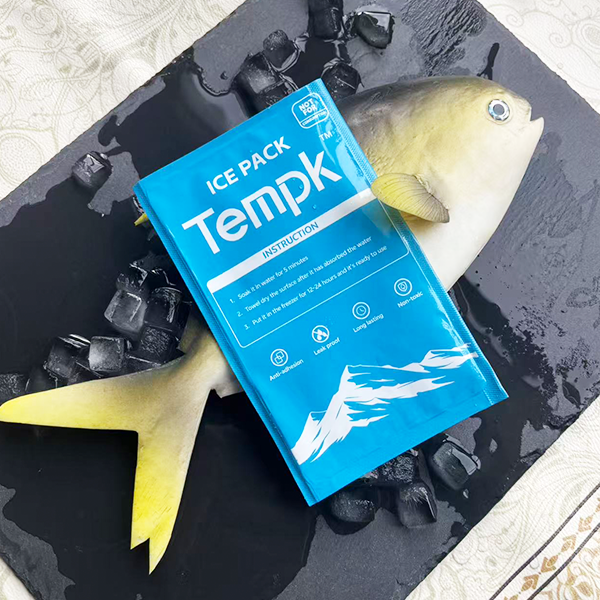
Dry Ice Pack Wholesale Germany: Pro Optimized Guide
If you are evaluating dry ice pack wholesale Germany, you probably want more than a list of vendors. You want to know which pack format fits your temperature target, which documents speed up approval, and which sourcing model keeps service stable when demand swings. In 2026, the best buying decisions come from joining buyer guidance, technical evidence, regional compliance, and real operating economics in one framework. That is exactly how you turn a broad search into a low-risk purchasing decision.
What this article answers
How to separate true dry ice, dry-ice-style sheet packs, gel packs, and PCM options for germany sourcing
What technical details matter most when you review a wholesale quote, a validation file, or a pilot order
Which documents and market signals should shape your shortlist before you commit to a production program
How to balance storage footprint, route risk, sustainability pressure, and total landed cost
Why is Dry Ice Pack Wholesale Germany still a high-intent search in 2026?
The search term dry ice pack wholesale Germany still attracts serious buyers because it sits at the intersection of product safety, packaging efficiency, and supply continuity. But the phrase itself is broad. One supplier may mean a water-activated dry-ice-style sheet, another may mean a reusable PCM brick, and another may mean true solid CO2 for vented shippers. If you compare those offers as if they were identical, you risk buying the wrong temperature system, the wrong operating model, or both.
The smarter way to start is to treat dry ice pack wholesale Germany as a sourcing question, not a product answer. You first define the payload range, the real transit window, the destination climate, and the tolerance for excursion. Then you screen vendors against your internal limits on storage, labor, documentation, and replenishment speed. That process works whether you buy for meal kits, seafood, diagnostics, pharmaceuticals, or export parcels in Germany.
A practical four-step decision tool
The most reliable buyers use a simple screen before they request samples. They ask what temperature the product really needs, what the route really looks like, what the warehouse can prepare every day, and what evidence quality will require before launch. Those four questions instantly narrow the field and make each wholesale partner quote much easier to compare. They also reduce the common habit of choosing the coldest-looking option rather than the most suitable option.
| Decision factor | What to define | Why it matters | What it means for you |
|---|---|---|---|
| Payload target | 2°C to 8°C, 15°C to 25°C, frozen, or ultra-frozen | Stops buyers from choosing a colder pack than the product actually needs | Better product protection with less wasted coolant |
| Transit profile | Courier parcel, air export, linehaul, or closed-loop return | Matches hold time, handling risk, and replenishment logic | More accurate pack-out and fewer emergency reships |
| Warehouse reality | Flat storage, freezer space, hydration labor, and conditioning windows | Avoids buying a format your site cannot prepare at scale | Smoother daily operations |
| Approval burden | Food-contact file, GDP support, test data, and change control | Prevents delays after procurement says yes | Faster launch and easier audits |
Practical tips and recommendations
Write down the allowed product temperature range before you speak to sales teams.
Ask for route-specific recommendations instead of one generic brochure pack-out.
Separate one-way parcel programs from closed-loop reusable programs at the start.
Field example: a buyer searching for dry ice pack wholesale Germany expected to choose the heaviest pack for safety. After mapping lanes and storage limits, the team selected a lighter format for most routes and reserved the heavy build for summer outliers. That reduced storage pressure and still protected product quality.
How do you choose the right coolant format for dry ice pack wholesale Germany?
The correct coolant format depends on the product, the route, and the site that prepares orders. Hydrated sheet packs shine when you need flat storage and flexible placement. Gel or PCM bricks fit programs that prefer defined geometry and repeat conditioning. True dry ice belongs in programs that genuinely need extreme low temperature or already manage dangerous-goods procedures confidently.
In other words, the question is not whether one pack is universally better. It is whether the format matches your reality. For a wholesale search, that means you should ask how the pack is stored, prepared, loaded, and disposed of after delivery. A pack that looks economical on paper may become expensive if it consumes freezer space, slows pick speed, or increases exception handling.
Where technical fit beats headline coldness
Buyers often overvalue the lowest nominal temperature and undervalue control. What protects your shipment is not just how cold the pack can be at one moment, but how evenly it holds temperature around the payload and how predictably it behaves in the carton. A slightly warmer but better-matched system can outperform an extreme coolant that creates freeze risk, condensation, or needless handling complexity.
| Format | Typical advantage | Watch-out point | What it means for you |
|---|---|---|---|
| Hydrated sheet pack | Stores flat and activates quickly | Needs good hydration discipline | Ideal when warehouse space is tight and order count swings fast |
| Gel pack | Simple conditioning and familiar handling | Can waste carton space if size match is poor | Useful for standard chilled parcel programs |
| PCM brick | Tighter temperature band when correctly selected | Needs disciplined pre-conditioning | Strong option when you need more precise control |
| True dry ice | Deepest low-temperature capability | Requires ventilation, labeling, and careful transport rules | Best only when your product or route truly justifies it |
Practical tips and recommendations
Request one recommendation for your normal lane and one for your hottest-risk lane in Germany.
Ask how many usable packs fit per carton and per pallet before you compare unit pricing.
Treat every thermal recommendation as incomplete until the vendor explains conditioning time and handling steps.
Field example: a diagnostic-shipments team tested both PCM bricks and dry-ice-style sheets. The sheets won on storage density and pick speed, while the PCM option won on narrow temperature control. The final decision split by route type rather than forcing one solution across every shipment.
What technical details separate a reliable wholesale offer from a risky one?
A dependable dry ice pack wholesale Germany program is built on small technical details that buyers can easily miss. Film strength affects puncture resistance and leakage. Absorbent structure or PCM formulation affects how evenly the pack charges and releases energy. Seal quality determines whether the pack survives hydration, freezing, stacking, and courier abuse. When those details drift, failures usually appear as mess, temperature loss, or both.
This is why serious sourcing conversations go beyond a brochure. You want dimensional tolerances, fill-weight consistency, burst or seal testing, and clear instructions for conditioning and storage. If you are working with a manufacturer, you also want change-control discipline so a film, resin, or filling update does not quietly alter performance. If you are working with a distributor or supplier, you still want traceability back to the original production standard.
The material-science checks that matter in everyday operations
Think of a cold pack like a battery inside a protective skin. The outer film is the shell, the internal medium is the stored energy, and the seal is the point that keeps the system intact under pressure. If any one of those three elements is weak, the pack may still look acceptable in a sample box but fail during scale-up, longer transit, or hotter weather. That is why technical screening saves money long before the first complaint appears.
| Technical element | What to check | Why buyers care | What it means for you |
|---|---|---|---|
| Outer film | Film thickness, puncture resistance, and seal behavior | Protects against leaks, abrasion, and rough parcel handling | Fewer damaged cartons and cleaner pack-out lines |
| Absorbent or PCM core | Water uptake, phase point, and mass consistency | Controls how evenly the pack cools and how long it lasts | More predictable thermal hold |
| Geometry | Cell size, sheet layout, or brick dimensions | Determines fit around the payload and carton dead space | Better cubic efficiency |
| Seal system | Burst resistance and corner integrity | Weak seals usually fail during hydration, freezing, or compression | Lower loss and complaint rates |
Practical tips and recommendations
Ask for the vendor's standard tolerances on pack dimensions and fill weight.
Request evidence that seal quality is checked by batch, not only during initial product development.
Pilot the pack in your real carton with your real payload before approving national or export volume.
Field example: a food exporter liked a low-cost sample because it looked identical to the incumbent. During a stress test, the cheaper pack showed corner seepage after compression and thaw-refreeze handling. The visual similarity hid a seal-quality gap that would have created costly field failures.
What documents should you demand before approving dry ice pack wholesale Germany in Germany?
Documentation is the quiet force that separates quick launches from painful delays. Before approval, you should know exactly what the pack is made from, how it is conditioned, how performance was tested, and which declarations apply to your market. For Germany, the practical rule set is usually European first and German market expectations second. If your dry ice pack is used around food, you should align packaging materials with EU food-contact rules and be ready with traceability documents. For medical and pharmaceutical flows, buyers often expect GDP-style thinking: documented control, trained handling, deviation management, and validated temperature performance. From a sustainability angle, the Packaging and Packaging Waste Regulation becomes a major design signal for 2026, pushing the whole market toward better recyclability, smarter material choices, and less wasteful pack configurations.
Many teams wait until after commercial agreement to request quality files. That is backwards. In 2026, procurement, quality, operations, and sustainability often review the same pack from different angles, so document readiness is part of supplier readiness. If a vendor cannot assemble a clean, market-appropriate file set early, the relationship will probably stay slow and reactive.
A minimum approval file for serious buyers
A strong approval file should connect specification, evidence, and commercial continuity. It should tell you what the pack is, how it performs, and how supply stays stable when weather or demand changes. When that file is ready before first order, cross-functional approval gets faster and pilot timelines become much easier to manage.
| Document block | What it should contain | Why it matters | What it means for you |
|---|---|---|---|
| Product specification | Dimensions, fill weight, conditioning method, and tolerances | Makes quotes truly comparable | Less confusion during approval |
| Compliance file | Food-contact basis, test reports, declaration letters, and change control | Shows whether the pack fits your market and product class | Faster quality review |
| Transit evidence | Route test, summer and winter profiles, and acceptance criteria | Proves real performance instead of marketing claims | More confident launches |
| Supply plan | MOQ, lead time, safety stock, and peak-season plan | Prevents shortages during promotions or hot weather | Better continuity |
Practical tips and recommendations
For in Germany, ask the vendor to explain market-specific declarations in plain English, not just send certificates without context.
Require route-test summaries that match the actual carton, payload, and coolant mass you plan to buy.
Confirm what happens if raw materials or dimensions change after approval, including notification timing.
Field example: a buyer nearly approved a new source on price alone. The project paused when quality discovered that transit data used a different box and payload from the launch design. One week spent aligning documents early would have saved a month of rework.
How do storage, service, and price change the real value of dry ice pack wholesale Germany?
The best commercial choice is rarely the lowest unit price. Real value comes from the full system: warehouse footprint, conditioning labor, pick speed, damaged-shipment rate, replenishment speed, and emergency backup when demand spikes. For dry ice pack wholesale Germany, you should compare landed performance, not just invoice price.
Role matters here. A wholesale model tends to emphasize carton economics, repeat ordering, resale-ready pack counts, and price stability over volume. That can be excellent when it matches your buying pattern. But it can also create friction if your internal reality is different. Wholesale buying is about disciplined repeatability. You want a pack format that works operationally, then you optimize the economics around storage, forecast, and freight.
A 20-point buyer scorecard for final comparison
One practical method is to score every shortlisted supplier on four dimensions: thermal fit, operational fit, documentation fit, and commercial fit. Each category gets five points. A vendor with a slightly higher price but a much better score usually creates lower total cost over a full season because failures, reships, and internal delays shrink.
| Score area | Question to ask | Score | What it means for you |
|---|---|---|---|
| Thermal fit | Does the vendor show lane-specific hold data rather than generic brochure claims? | 0-5 | Higher score means lower spoilage risk |
| Operational fit | Can your site store, hydrate, freeze, and pick the pack at the needed speed? | 0-5 | Higher score means smoother daily execution |
| Documentation fit | Are the compliance papers ready before launch, not after? | 0-5 | Higher score means faster approval |
| Commercial fit | Do MOQ, call-off rules, and emergency backup support your real demand curve? | 0-5 | Higher score means lower disruption risk |
Practical tips and recommendations
Do not compare factory-direct and local-stock models without adjusting for lead time and approval burden.
Ask what emergency plan applies if a heatwave or promotion doubles weekly demand.
Review packaging dimensions because smaller cartons can lower freight and storage cost even when pack price is unchanged.
Field example: two offers for dry ice pack wholesale Germany looked close on price. The lower quote required a larger MOQ, longer lead time, and no heatwave backup stock. The higher quote came from a local partner with shorter replenishment and better documentation. Over the season, the second option delivered lower total operating cost.
How are sustainability and market trends reshaping dry ice pack wholesale Germany in 2026?
In 2026, sustainability is no longer a separate conversation held after thermal approval. It is part of sourcing from day one. In 2026, German buyers are not only asking whether a pack keeps temperature. They are also asking whether the same pack supports consistent fill quality, low leakage, good pallet density, and a credible waste story. That means a supplier with test data, carton optimization, and a realistic recycling or disposal plan is often chosen ahead of a cheaper but poorly documented alternative. Germany remains one of the markets where sustainability claims are checked rather than simply accepted. You should ask for actual component breakdowns, recycled content where appropriate, and honest statements about whether a pack is reusable, recyclable, or only conditionally recyclable within a local stream. Right-sized cartons and fewer damaged shipments are still the fastest sustainability wins because they lower both material waste and replacement freight.
The strongest market trend is not a single material switch. It is better fit. Buyers increasingly want lane-specific pack-outs, lighter cartons, clearer recyclability claims, and evidence that a supplier can reduce damage and waste without shifting risk to the product. For Germany, the most important market signal is not a single price index but the regulatory and procurement shift around packaging quality. With the PPWR now in force and applying from August 2026, buyers are testing suppliers on recyclability, traceability, and waste intensity much earlier in the sourcing cycle.
Three trend signals buyers should watch
If you want a future-proof supply program, watch where policy, operations, and customer expectation overlap. That overlap is where supplier advantage now appears. Firms that document materials clearly, right-size packs, and support route-based validation are usually better positioned than those that only compete on price or buzzwords.
| Trend | What is happening | Why it matters | What it means for you |
|---|---|---|---|
| Lane-specific pack-outs | More buyers are approving different summer, winter, and regional builds | Cuts overpacking on easy routes while protecting high-risk lanes | Stronger cost-to-performance balance |
| Documentation-first sourcing | Quality teams want files early, especially in regulated sectors | Moves decisions from marketing claims toward evidence | Faster cross-functional approval |
| Waste-aware design | Packaging policy and disposal costs are shaping choices in every region | Rewards right-sized formats and honest material claims | Better ESG conversations without losing performance |
Practical tips and recommendations
Ask suppliers to explain the waste story of the whole pack-out, not just one component.
Request a right-sizing review before you commit to annual volume.
When sustainability claims are made, ask whether they are based on actual local recovery pathways or only theoretical recyclability.
Field example: a premium-food shipper improved both cost and sustainability by switching from one oversized national carton to two route-specific carton sizes with adjusted coolant mass. Damage fell, dimensional freight dropped, and customer disposal complaints decreased at the same time.
2026 latest developments and buyer signals
The 2026 market for dry ice pack wholesale Germany rewards evidence, fit, and waste awareness more than generic product claims. Across regulated sectors and mainstream parcel programs alike, buyers are moving toward shorter approval cycles built on better files, more route testing, and clearer material decisions. That means the strongest suppliers are the ones that can explain not only what the pack is, but why it is the right answer for your exact lane.
Growth is shifting toward route-specific pack-outs instead of one universal national formula.
Quality and procurement teams increasingly want document packets before pilot approval, not after the commercial discussion.
Sustainability pressure is pushing buyers to review carton size, coolant mass, and disposal realism as part of the same sourcing decision.
In practice, the winners in Germany are not always the loudest marketers. They are the partners that combine operational honesty, test evidence, and responsive service. If a supplier can translate technical details into day-to-day value for your team, approval tends to move faster and long-term performance tends to improve.
Frequently asked questions
Can dry ice pack wholesale Germany mean true dry ice and not only a dry-ice-style pack?
Yes. Buyers use the phrase both ways. That is why you should ask every vendor to define the coolant type, temperature range, and handling method before you compare quotes.
What is the fastest way to shortlist dry ice pack wholesale Germany suppliers?
Use four filters: payload temperature, transit window, warehouse readiness, and document readiness. Suppliers that fit all four usually deserve sampling first.
How important is documentation for dry ice pack wholesale Germany in regulated sectors?
It is critical. Even a good-performing pack can be delayed if the quality file, market declarations, or route-test evidence are incomplete or mismatched to your launch design.
Should you choose the coldest pack available for safety?
Not automatically. The safest pack is the one that holds the right temperature band for the real route without creating freeze risk, leakage, or unnecessary handling complexity.
When does a local wholesale partner beat a factory-direct model?
Usually when lead time, emergency replenishment, mixed-case orders, or approval speed matter more than absolute factory pricing. Total operating risk often matters more than nominal unit cost.
Summary and recommendations
The best dry ice pack wholesale Germany decision in 2026 comes from combining four views at once. You need buyer-fit analysis, technical evidence, market-appropriate documents, and an honest cost model. When you define the lane clearly, test the pack in your real shipper, and score suppliers on more than price, you usually get better product protection and smoother operations. That is the difference between buying a cold pack and building a dependable cold-chain program.
Your next step is simple. List your target temperature, normal and worst-case transit times, current carton sizes, and approval documents. Then ask shortlisted vendors to respond to the same brief so their offers stay comparable. That single step saves time, reduces internal debate, and helps you choose the right pack faster.
About Tempk
About Tempk: we focus on practical cold-chain packaging decisions, from dry-ice-style sheet packs to reusable temperature-control formats and export-ready pack-out support. We work from the view that buyers need clear product definitions, dependable quality, and documents that help operations and quality teams approve faster. Our advantage is not hype. It is helping teams match the right coolant system to the real shipping lane.
Talk with Tempk about your route profile, pack format options, and validation needs so you can build a lower-risk sourcing plan.
Dry Ice Pack Wholesale Canada: Pro Optimized Guide
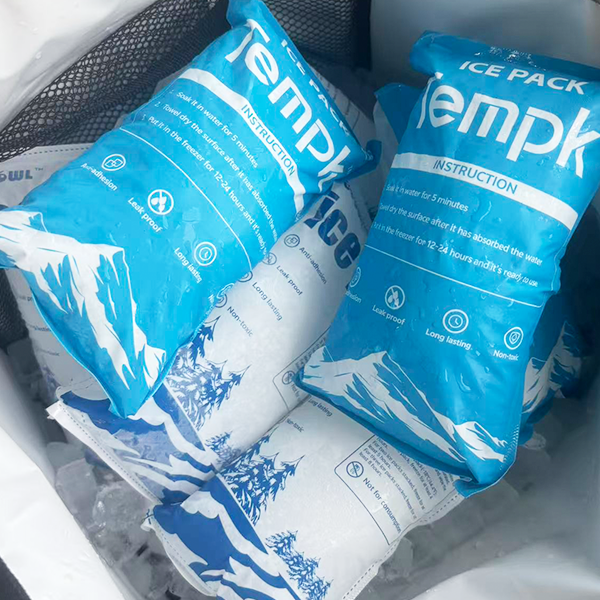
Dry Ice Pack Wholesale Canada: Pro Optimized Guide
If you are evaluating dry ice pack wholesale Canada, you probably want more than a list of vendors. You want to know which pack format fits your temperature target, which documents speed up approval, and which sourcing model keeps service stable when demand swings. In 2026, the best buying decisions come from joining buyer guidance, technical evidence, regional compliance, and real operating economics in one framework. That is exactly how you turn a broad search into a low-risk purchasing decision.
What this article answers
How to separate true dry ice, dry-ice-style sheet packs, gel packs, and PCM options for canada sourcing
What technical details matter most when you review a wholesale quote, a validation file, or a pilot order
Which documents and market signals should shape your shortlist before you commit to a production program
How to balance storage footprint, route risk, sustainability pressure, and total landed cost
Why is Dry Ice Pack Wholesale Canada still a high-intent search in 2026?
The search term dry ice pack wholesale Canada still attracts serious buyers because it sits at the intersection of product safety, packaging efficiency, and supply continuity. But the phrase itself is broad. One supplier may mean a water-activated dry-ice-style sheet, another may mean a reusable PCM brick, and another may mean true solid CO2 for vented shippers. If you compare those offers as if they were identical, you risk buying the wrong temperature system, the wrong operating model, or both.
The smarter way to start is to treat dry ice pack wholesale Canada as a sourcing question, not a product answer. You first define the payload range, the real transit window, the destination climate, and the tolerance for excursion. Then you screen vendors against your internal limits on storage, labor, documentation, and replenishment speed. That process works whether you buy for meal kits, seafood, diagnostics, pharmaceuticals, or export parcels in Canada.
A practical four-step decision tool
The most reliable buyers use a simple screen before they request samples. They ask what temperature the product really needs, what the route really looks like, what the warehouse can prepare every day, and what evidence quality will require before launch. Those four questions instantly narrow the field and make each wholesale partner quote much easier to compare. They also reduce the common habit of choosing the coldest-looking option rather than the most suitable option.
| Decision factor | What to define | Why it matters | What it means for you |
|---|---|---|---|
| Payload target | 2°C to 8°C, 15°C to 25°C, frozen, or ultra-frozen | Stops buyers from choosing a colder pack than the product actually needs | Better product protection with less wasted coolant |
| Transit profile | Courier parcel, air export, linehaul, or closed-loop return | Matches hold time, handling risk, and replenishment logic | More accurate pack-out and fewer emergency reships |
| Warehouse reality | Flat storage, freezer space, hydration labor, and conditioning windows | Avoids buying a format your site cannot prepare at scale | Smoother daily operations |
| Approval burden | Food-contact file, GDP support, test data, and change control | Prevents delays after procurement says yes | Faster launch and easier audits |
Practical tips and recommendations
Write down the allowed product temperature range before you speak to sales teams.
Ask for route-specific recommendations instead of one generic brochure pack-out.
Separate one-way parcel programs from closed-loop reusable programs at the start.
Field example: a buyer searching for dry ice pack wholesale Canada expected to choose the heaviest pack for safety. After mapping lanes and storage limits, the team selected a lighter format for most routes and reserved the heavy build for summer outliers. That reduced storage pressure and still protected product quality.
How do you choose the right coolant format for dry ice pack wholesale Canada?
The correct coolant format depends on the product, the route, and the site that prepares orders. Hydrated sheet packs shine when you need flat storage and flexible placement. Gel or PCM bricks fit programs that prefer defined geometry and repeat conditioning. True dry ice belongs in programs that genuinely need extreme low temperature or already manage dangerous-goods procedures confidently.
In other words, the question is not whether one pack is universally better. It is whether the format matches your reality. For a wholesale search, that means you should ask how the pack is stored, prepared, loaded, and disposed of after delivery. A pack that looks economical on paper may become expensive if it consumes freezer space, slows pick speed, or increases exception handling.
Where technical fit beats headline coldness
Buyers often overvalue the lowest nominal temperature and undervalue control. What protects your shipment is not just how cold the pack can be at one moment, but how evenly it holds temperature around the payload and how predictably it behaves in the carton. A slightly warmer but better-matched system can outperform an extreme coolant that creates freeze risk, condensation, or needless handling complexity.
| Format | Typical advantage | Watch-out point | What it means for you |
|---|---|---|---|
| Hydrated sheet pack | Stores flat and activates quickly | Needs good hydration discipline | Ideal when warehouse space is tight and order count swings fast |
| Gel pack | Simple conditioning and familiar handling | Can waste carton space if size match is poor | Useful for standard chilled parcel programs |
| PCM brick | Tighter temperature band when correctly selected | Needs disciplined pre-conditioning | Strong option when you need more precise control |
| True dry ice | Deepest low-temperature capability | Requires ventilation, labeling, and careful transport rules | Best only when your product or route truly justifies it |
Practical tips and recommendations
Request one recommendation for your normal lane and one for your hottest-risk lane in Canada.
Ask how many usable packs fit per carton and per pallet before you compare unit pricing.
Treat every thermal recommendation as incomplete until the vendor explains conditioning time and handling steps.
Field example: a diagnostic-shipments team tested both PCM bricks and dry-ice-style sheets. The sheets won on storage density and pick speed, while the PCM option won on narrow temperature control. The final decision split by route type rather than forcing one solution across every shipment.
What technical details separate a reliable wholesale offer from a risky one?
A dependable dry ice pack wholesale Canada program is built on small technical details that buyers can easily miss. Film strength affects puncture resistance and leakage. Absorbent structure or PCM formulation affects how evenly the pack charges and releases energy. Seal quality determines whether the pack survives hydration, freezing, stacking, and courier abuse. When those details drift, failures usually appear as mess, temperature loss, or both.
This is why serious sourcing conversations go beyond a brochure. You want dimensional tolerances, fill-weight consistency, burst or seal testing, and clear instructions for conditioning and storage. If you are working with a manufacturer, you also want change-control discipline so a film, resin, or filling update does not quietly alter performance. If you are working with a distributor or supplier, you still want traceability back to the original production standard.
The material-science checks that matter in everyday operations
Think of a cold pack like a battery inside a protective skin. The outer film is the shell, the internal medium is the stored energy, and the seal is the point that keeps the system intact under pressure. If any one of those three elements is weak, the pack may still look acceptable in a sample box but fail during scale-up, longer transit, or hotter weather. That is why technical screening saves money long before the first complaint appears.
| Technical element | What to check | Why buyers care | What it means for you |
|---|---|---|---|
| Outer film | Film thickness, puncture resistance, and seal behavior | Protects against leaks, abrasion, and rough parcel handling | Fewer damaged cartons and cleaner pack-out lines |
| Absorbent or PCM core | Water uptake, phase point, and mass consistency | Controls how evenly the pack cools and how long it lasts | More predictable thermal hold |
| Geometry | Cell size, sheet layout, or brick dimensions | Determines fit around the payload and carton dead space | Better cubic efficiency |
| Seal system | Burst resistance and corner integrity | Weak seals usually fail during hydration, freezing, or compression | Lower loss and complaint rates |
Practical tips and recommendations
Ask for the vendor's standard tolerances on pack dimensions and fill weight.
Request evidence that seal quality is checked by batch, not only during initial product development.
Pilot the pack in your real carton with your real payload before approving national or export volume.
Field example: a food exporter liked a low-cost sample because it looked identical to the incumbent. During a stress test, the cheaper pack showed corner seepage after compression and thaw-refreeze handling. The visual similarity hid a seal-quality gap that would have created costly field failures.
What documents should you demand before approving dry ice pack wholesale Canada in Canada?
Documentation is the quiet force that separates quick launches from painful delays. Before approval, you should know exactly what the pack is made from, how it is conditioned, how performance was tested, and which declarations apply to your market. Canada rewards packaging programs that are both safe and seasonally intelligent. For food, Health Canada requires packaging materials not to impart harmful substances, and it offers assessment pathways for food packaging submissions. For drug products, GUI-0069 is explicit that drugs must be stored and transported according to labeled or data-supported conditions, and that temperature excursions must be controlled. Sustainability is also gaining procurement weight: Canada prioritizes reduced plastic waste, and recycled plastics in food packaging come with clear safety considerations rather than blanket approval.
Many teams wait until after commercial agreement to request quality files. That is backwards. In 2026, procurement, quality, operations, and sustainability often review the same pack from different angles, so document readiness is part of supplier readiness. If a vendor cannot assemble a clean, market-appropriate file set early, the relationship will probably stay slow and reactive.
A minimum approval file for serious buyers
A strong approval file should connect specification, evidence, and commercial continuity. It should tell you what the pack is, how it performs, and how supply stays stable when weather or demand changes. When that file is ready before first order, cross-functional approval gets faster and pilot timelines become much easier to manage.
| Document block | What it should contain | Why it matters | What it means for you |
|---|---|---|---|
| Product specification | Dimensions, fill weight, conditioning method, and tolerances | Makes quotes truly comparable | Less confusion during approval |
| Compliance file | Food-contact basis, test reports, declaration letters, and change control | Shows whether the pack fits your market and product class | Faster quality review |
| Transit evidence | Route test, summer and winter profiles, and acceptance criteria | Proves real performance instead of marketing claims | More confident launches |
| Supply plan | MOQ, lead time, safety stock, and peak-season plan | Prevents shortages during promotions or hot weather | Better continuity |
Practical tips and recommendations
For in Canada, ask the vendor to explain market-specific declarations in plain English, not just send certificates without context.
Require route-test summaries that match the actual carton, payload, and coolant mass you plan to buy.
Confirm what happens if raw materials or dimensions change after approval, including notification timing.
Field example: a buyer nearly approved a new source on price alone. The project paused when quality discovered that transit data used a different box and payload from the launch design. One week spent aligning documents early would have saved a month of rework.
How do storage, service, and price change the real value of dry ice pack wholesale Canada?
The best commercial choice is rarely the lowest unit price. Real value comes from the full system: warehouse footprint, conditioning labor, pick speed, damaged-shipment rate, replenishment speed, and emergency backup when demand spikes. For dry ice pack wholesale Canada, you should compare landed performance, not just invoice price.
Role matters here. A wholesale model tends to emphasize carton economics, repeat ordering, resale-ready pack counts, and price stability over volume. That can be excellent when it matches your buying pattern. But it can also create friction if your internal reality is different. Wholesale buying is about disciplined repeatability. You want a pack format that works operationally, then you optimize the economics around storage, forecast, and freight.
A 20-point buyer scorecard for final comparison
One practical method is to score every shortlisted supplier on four dimensions: thermal fit, operational fit, documentation fit, and commercial fit. Each category gets five points. A vendor with a slightly higher price but a much better score usually creates lower total cost over a full season because failures, reships, and internal delays shrink.
| Score area | Question to ask | Score | What it means for you |
|---|---|---|---|
| Thermal fit | Does the vendor show lane-specific hold data rather than generic brochure claims? | 0-5 | Higher score means lower spoilage risk |
| Operational fit | Can your site store, hydrate, freeze, and pick the pack at the needed speed? | 0-5 | Higher score means smoother daily execution |
| Documentation fit | Are the compliance papers ready before launch, not after? | 0-5 | Higher score means faster approval |
| Commercial fit | Do MOQ, call-off rules, and emergency backup support your real demand curve? | 0-5 | Higher score means lower disruption risk |
Practical tips and recommendations
Do not compare factory-direct and local-stock models without adjusting for lead time and approval burden.
Ask what emergency plan applies if a heatwave or promotion doubles weekly demand.
Review packaging dimensions because smaller cartons can lower freight and storage cost even when pack price is unchanged.
Field example: two offers for dry ice pack wholesale Canada looked close on price. The lower quote required a larger MOQ, longer lead time, and no heatwave backup stock. The higher quote came from a local partner with shorter replenishment and better documentation. Over the season, the second option delivered lower total operating cost.
How are sustainability and market trends reshaping dry ice pack wholesale Canada in 2026?
In 2026, sustainability is no longer a separate conversation held after thermal approval. It is part of sourcing from day one. In 2026, Canadian buyers are paying close attention to lane-specific thermal risk. Winter freeze damage is just as real as summer heat exposure, especially for products labeled 'refrigerate – do not freeze'. That is why the best dry ice pack or ultra-cold pack program is not the coldest program. It is the one that protects the target range across both extremes. Canadian sourcing teams increasingly ask whether a package uses recycled content safely, whether it can be right-sized for postal and courier thresholds, and whether material choices hold up in both winter and summer. The strongest answer usually combines a simple pack architecture with real validation data.
The strongest market trend is not a single material switch. It is better fit. Buyers increasingly want lane-specific pack-outs, lighter cartons, clearer recyclability claims, and evidence that a supplier can reduce damage and waste without shifting risk to the product. Global Affairs Canada reported that consumer goods exports rose by CAD 5.5 billion in 2024, or 6.3%, with food, beverage, and pharmaceutical and medicinal products among the largest contributors. That matters because higher movement of sensitive goods increases demand for predictable cold-chain packaging and better route validation.
Three trend signals buyers should watch
If you want a future-proof supply program, watch where policy, operations, and customer expectation overlap. That overlap is where supplier advantage now appears. Firms that document materials clearly, right-size packs, and support route-based validation are usually better positioned than those that only compete on price or buzzwords.
| Trend | What is happening | Why it matters | What it means for you |
|---|---|---|---|
| Lane-specific pack-outs | More buyers are approving different summer, winter, and regional builds | Cuts overpacking on easy routes while protecting high-risk lanes | Stronger cost-to-performance balance |
| Documentation-first sourcing | Quality teams want files early, especially in regulated sectors | Moves decisions from marketing claims toward evidence | Faster cross-functional approval |
| Waste-aware design | Packaging policy and disposal costs are shaping choices in every region | Rewards right-sized formats and honest material claims | Better ESG conversations without losing performance |
Practical tips and recommendations
Ask suppliers to explain the waste story of the whole pack-out, not just one component.
Request a right-sizing review before you commit to annual volume.
When sustainability claims are made, ask whether they are based on actual local recovery pathways or only theoretical recyclability.
Field example: a premium-food shipper improved both cost and sustainability by switching from one oversized national carton to two route-specific carton sizes with adjusted coolant mass. Damage fell, dimensional freight dropped, and customer disposal complaints decreased at the same time.
2026 latest developments and buyer signals
The 2026 market for dry ice pack wholesale Canada rewards evidence, fit, and waste awareness more than generic product claims. Across regulated sectors and mainstream parcel programs alike, buyers are moving toward shorter approval cycles built on better files, more route testing, and clearer material decisions. That means the strongest suppliers are the ones that can explain not only what the pack is, but why it is the right answer for your exact lane.
Growth is shifting toward route-specific pack-outs instead of one universal national formula.
Quality and procurement teams increasingly want document packets before pilot approval, not after the commercial discussion.
Sustainability pressure is pushing buyers to review carton size, coolant mass, and disposal realism as part of the same sourcing decision.
In practice, the winners in Canada are not always the loudest marketers. They are the partners that combine operational honesty, test evidence, and responsive service. If a supplier can translate technical details into day-to-day value for your team, approval tends to move faster and long-term performance tends to improve.
Frequently asked questions
Can dry ice pack wholesale Canada mean true dry ice and not only a dry-ice-style pack?
Yes. Buyers use the phrase both ways. That is why you should ask every vendor to define the coolant type, temperature range, and handling method before you compare quotes.
What is the fastest way to shortlist dry ice pack wholesale Canada suppliers?
Use four filters: payload temperature, transit window, warehouse readiness, and document readiness. Suppliers that fit all four usually deserve sampling first.
How important is documentation for dry ice pack wholesale Canada in regulated sectors?
It is critical. Even a good-performing pack can be delayed if the quality file, market declarations, or route-test evidence are incomplete or mismatched to your launch design.
Should you choose the coldest pack available for safety?
Not automatically. The safest pack is the one that holds the right temperature band for the real route without creating freeze risk, leakage, or unnecessary handling complexity.
When does a local wholesale partner beat a factory-direct model?
Usually when lead time, emergency replenishment, mixed-case orders, or approval speed matter more than absolute factory pricing. Total operating risk often matters more than nominal unit cost.
Summary and recommendations
The best dry ice pack wholesale Canada decision in 2026 comes from combining four views at once. You need buyer-fit analysis, technical evidence, market-appropriate documents, and an honest cost model. When you define the lane clearly, test the pack in your real shipper, and score suppliers on more than price, you usually get better product protection and smoother operations. That is the difference between buying a cold pack and building a dependable cold-chain program.
Your next step is simple. List your target temperature, normal and worst-case transit times, current carton sizes, and approval documents. Then ask shortlisted vendors to respond to the same brief so their offers stay comparable. That single step saves time, reduces internal debate, and helps you choose the right pack faster.
About Tempk
About Tempk: we focus on practical cold-chain packaging decisions, from dry-ice-style sheet packs to reusable temperature-control formats and export-ready pack-out support. We work from the view that buyers need clear product definitions, dependable quality, and documents that help operations and quality teams approve faster. Our advantage is not hype. It is helping teams match the right coolant system to the real shipping lane.
Talk with Tempk about your route profile, pack format options, and validation needs so you can build a lower-risk sourcing plan.
Dry Ice Pack Supplier Japan: Pro Optimized Guide
Dry Ice Pack Supplier Japan: Pro Optimized Guide
If you are evaluating dry ice pack supplier Japan, you probably want more than a list of vendors. You want to know which pack format fits your temperature target, which documents speed up approval, and which sourcing model keeps service stable when demand swings. In 2026, the best buying decisions come from joining buyer guidance, technical evidence, regional compliance, and real operating economics in one framework. That is exactly how you turn a broad search into a low-risk purchasing decision.
What this article answers
How to separate true dry ice, dry-ice-style sheet packs, gel packs, and PCM options for japan sourcing
What technical details matter most when you review a supplier quote, a validation file, or a pilot order
Which documents and market signals should shape your shortlist before you commit to a production program
How to balance storage footprint, route risk, sustainability pressure, and total landed cost
Why is Dry Ice Pack Supplier Japan still a high-intent search in 2026?
The search term dry ice pack supplier Japan still attracts serious buyers because it sits at the intersection of product safety, packaging efficiency, and supply continuity. But the phrase itself is broad. One supplier may mean a water-activated dry-ice-style sheet, another may mean a reusable PCM brick, and another may mean true solid CO2 for vented shippers. If you compare those offers as if they were identical, you risk buying the wrong temperature system, the wrong operating model, or both.
The smarter way to start is to treat dry ice pack supplier Japan as a sourcing question, not a product answer. You first define the payload range, the real transit window, the destination climate, and the tolerance for excursion. Then you screen vendors against your internal limits on storage, labor, documentation, and replenishment speed. That process works whether you buy for meal kits, seafood, diagnostics, pharmaceuticals, or export parcels in Japan.
A practical four-step decision tool
The most reliable buyers use a simple screen before they request samples. They ask what temperature the product really needs, what the route really looks like, what the warehouse can prepare every day, and what evidence quality will require before launch. Those four questions instantly narrow the field and make each sourcing partner quote much easier to compare. They also reduce the common habit of choosing the coldest-looking option rather than the most suitable option.
| Decision factor | What to define | Why it matters | What it means for you |
|---|---|---|---|
| Payload target | 2°C to 8°C, 15°C to 25°C, frozen, or ultra-frozen | Stops buyers from choosing a colder pack than the product actually needs | Better product protection with less wasted coolant |
| Transit profile | Courier parcel, air export, linehaul, or closed-loop return | Matches hold time, handling risk, and replenishment logic | More accurate pack-out and fewer emergency reships |
| Warehouse reality | Flat storage, freezer space, hydration labor, and conditioning windows | Avoids buying a format your site cannot prepare at scale | Smoother daily operations |
| Approval burden | Food-contact file, GDP support, test data, and change control | Prevents delays after procurement says yes | Faster launch and easier audits |
Practical tips and recommendations
Write down the allowed product temperature range before you speak to sales teams.
Ask for route-specific recommendations instead of one generic brochure pack-out.
Separate one-way parcel programs from closed-loop reusable programs at the start.
Field example: a buyer searching for dry ice pack supplier Japan expected to choose the heaviest pack for safety. After mapping lanes and storage limits, the team selected a lighter format for most routes and reserved the heavy build for summer outliers. That reduced storage pressure and still protected product quality.
How do you choose the right coolant format for dry ice pack supplier Japan?
The correct coolant format depends on the product, the route, and the site that prepares orders. Hydrated sheet packs shine when you need flat storage and flexible placement. Gel or PCM bricks fit programs that prefer defined geometry and repeat conditioning. True dry ice belongs in programs that genuinely need extreme low temperature or already manage dangerous-goods procedures confidently.
In other words, the question is not whether one pack is universally better. It is whether the format matches your reality. For a supplier search, that means you should ask how the pack is stored, prepared, loaded, and disposed of after delivery. A pack that looks economical on paper may become expensive if it consumes freezer space, slows pick speed, or increases exception handling.
Where technical fit beats headline coldness
Buyers often overvalue the lowest nominal temperature and undervalue control. What protects your shipment is not just how cold the pack can be at one moment, but how evenly it holds temperature around the payload and how predictably it behaves in the carton. A slightly warmer but better-matched system can outperform an extreme coolant that creates freeze risk, condensation, or needless handling complexity.
| Format | Typical advantage | Watch-out point | What it means for you |
|---|---|---|---|
| Hydrated sheet pack | Stores flat and activates quickly | Needs good hydration discipline | Ideal when warehouse space is tight and order count swings fast |
| Gel pack | Simple conditioning and familiar handling | Can waste carton space if size match is poor | Useful for standard chilled parcel programs |
| PCM brick | Tighter temperature band when correctly selected | Needs disciplined pre-conditioning | Strong option when you need more precise control |
| True dry ice | Deepest low-temperature capability | Requires ventilation, labeling, and careful transport rules | Best only when your product or route truly justifies it |
Practical tips and recommendations
Request one recommendation for your normal lane and one for your hottest-risk lane in Japan.
Ask how many usable packs fit per carton and per pallet before you compare unit pricing.
Treat every thermal recommendation as incomplete until the vendor explains conditioning time and handling steps.
Field example: a diagnostic-shipments team tested both PCM bricks and dry-ice-style sheets. The sheets won on storage density and pick speed, while the PCM option won on narrow temperature control. The final decision split by route type rather than forcing one solution across every shipment.
What technical details separate a reliable supplier offer from a risky one?
A dependable dry ice pack supplier Japan program is built on small technical details that buyers can easily miss. Film strength affects puncture resistance and leakage. Absorbent structure or PCM formulation affects how evenly the pack charges and releases energy. Seal quality determines whether the pack survives hydration, freezing, stacking, and courier abuse. When those details drift, failures usually appear as mess, temperature loss, or both.
This is why serious sourcing conversations go beyond a brochure. You want dimensional tolerances, fill-weight consistency, burst or seal testing, and clear instructions for conditioning and storage. If you are working with a manufacturer, you also want change-control discipline so a film, resin, or filling update does not quietly alter performance. If you are working with a distributor or supplier, you still want traceability back to the original production standard.
The material-science checks that matter in everyday operations
Think of a cold pack like a battery inside a protective skin. The outer film is the shell, the internal medium is the stored energy, and the seal is the point that keeps the system intact under pressure. If any one of those three elements is weak, the pack may still look acceptable in a sample box but fail during scale-up, longer transit, or hotter weather. That is why technical screening saves money long before the first complaint appears.
| Technical element | What to check | Why buyers care | What it means for you |
|---|---|---|---|
| Outer film | Film thickness, puncture resistance, and seal behavior | Protects against leaks, abrasion, and rough parcel handling | Fewer damaged cartons and cleaner pack-out lines |
| Absorbent or PCM core | Water uptake, phase point, and mass consistency | Controls how evenly the pack cools and how long it lasts | More predictable thermal hold |
| Geometry | Cell size, sheet layout, or brick dimensions | Determines fit around the payload and carton dead space | Better cubic efficiency |
| Seal system | Burst resistance and corner integrity | Weak seals usually fail during hydration, freezing, or compression | Lower loss and complaint rates |
Practical tips and recommendations
Ask for the vendor's standard tolerances on pack dimensions and fill weight.
Request evidence that seal quality is checked by batch, not only during initial product development.
Pilot the pack in your real carton with your real payload before approving national or export volume.
Field example: a food exporter liked a low-cost sample because it looked identical to the incumbent. During a stress test, the cheaper pack showed corner seepage after compression and thaw-refreeze handling. The visual similarity hid a seal-quality gap that would have created costly field failures.
What documents should you demand before approving dry ice pack supplier Japan in Japan?
Documentation is the quiet force that separates quick launches from painful delays. Before approval, you should know exactly what the pack is made from, how it is conditioned, how performance was tested, and which declarations apply to your market. Japan is a demanding but rewarding market for temperature-control packaging. PMDA sits at the center of inspections and compliance assessments for drugs and medical products, so documentation culture is strong. At the same time, JETRO describes the pharmaceutical sector as one of the largest in the world and still growing, which keeps pressure on safe, reliable cold-chain support. If your dry ice pack program is food-facing, you also need materials and labeling discipline that fit Japan's quality expectations. And if sustainability is part of the tender, packaging reduction and recycling are not new ideas in Japan; they are part of a long-standing containers and packaging policy framework.
Many teams wait until after commercial agreement to request quality files. That is backwards. In 2026, procurement, quality, operations, and sustainability often review the same pack from different angles, so document readiness is part of supplier readiness. If a vendor cannot assemble a clean, market-appropriate file set early, the relationship will probably stay slow and reactive.
A minimum approval file for serious buyers
A strong approval file should connect specification, evidence, and commercial continuity. It should tell you what the pack is, how it performs, and how supply stays stable when weather or demand changes. When that file is ready before first order, cross-functional approval gets faster and pilot timelines become much easier to manage.
| Document block | What it should contain | Why it matters | What it means for you |
|---|---|---|---|
| Product specification | Dimensions, fill weight, conditioning method, and tolerances | Makes quotes truly comparable | Less confusion during approval |
| Compliance file | Food-contact basis, test reports, declaration letters, and change control | Shows whether the pack fits your market and product class | Faster quality review |
| Transit evidence | Route test, summer and winter profiles, and acceptance criteria | Proves real performance instead of marketing claims | More confident launches |
| Supply plan | MOQ, lead time, safety stock, and peak-season plan | Prevents shortages during promotions or hot weather | Better continuity |
Practical tips and recommendations
For in Japan, ask the vendor to explain market-specific declarations in plain English, not just send certificates without context.
Require route-test summaries that match the actual carton, payload, and coolant mass you plan to buy.
Confirm what happens if raw materials or dimensions change after approval, including notification timing.
Field example: a buyer nearly approved a new source on price alone. The project paused when quality discovered that transit data used a different box and payload from the launch design. One week spent aligning documents early would have saved a month of rework.
How do storage, service, and price change the real value of dry ice pack supplier Japan?
The best commercial choice is rarely the lowest unit price. Real value comes from the full system: warehouse footprint, conditioning labor, pick speed, damaged-shipment rate, replenishment speed, and emergency backup when demand spikes. For dry ice pack supplier Japan, you should compare landed performance, not just invoice price.
Role matters here. A supplier model tends to emphasize balanced sourcing, quality consistency, documentation, and the ability to match the right pack to the right lane. That can be excellent when it matches your buying pattern. But it can also create friction if your internal reality is different. The word supplier sounds broad, so your first job is to clarify whether you are buying capacity, stock, engineering support, or all three.
A 20-point buyer scorecard for final comparison
One practical method is to score every shortlisted supplier on four dimensions: thermal fit, operational fit, documentation fit, and commercial fit. Each category gets five points. A vendor with a slightly higher price but a much better score usually creates lower total cost over a full season because failures, reships, and internal delays shrink.
| Score area | Question to ask | Score | What it means for you |
|---|---|---|---|
| Thermal fit | Does the vendor show lane-specific hold data rather than generic brochure claims? | 0-5 | Higher score means lower spoilage risk |
| Operational fit | Can your site store, hydrate, freeze, and pick the pack at the needed speed? | 0-5 | Higher score means smoother daily execution |
| Documentation fit | Are the compliance papers ready before launch, not after? | 0-5 | Higher score means faster approval |
| Commercial fit | Do MOQ, call-off rules, and emergency backup support your real demand curve? | 0-5 | Higher score means lower disruption risk |
Practical tips and recommendations
Do not compare factory-direct and local-stock models without adjusting for lead time and approval burden.
Ask what emergency plan applies if a heatwave or promotion doubles weekly demand.
Review packaging dimensions because smaller cartons can lower freight and storage cost even when pack price is unchanged.
Field example: two offers for dry ice pack supplier Japan looked close on price. The lower quote required a larger MOQ, longer lead time, and no heatwave backup stock. The higher quote came from a local partner with shorter replenishment and better documentation. Over the season, the second option delivered lower total operating cost.
How are sustainability and market trends reshaping dry ice pack supplier Japan in 2026?
In 2026, sustainability is no longer a separate conversation held after thermal approval. It is part of sourcing from day one. The 2026 opportunity in Japan is not only scale. It is fit. Buyers often prefer precise pack sizes, compact carton footprints, stable pre-conditioning instructions, and very clear handling language. A supplier that adapts to those expectations can outperform a lower-cost offer that feels generic or under-documented. Japanese buyers often prefer sustainability through quiet efficiency: less excess packaging, better storage density, fewer damaged shipments, and easier material separation. Strong process control is itself a sustainability advantage because it reduces waste, rework, and emergency reshipment.
The strongest market trend is not a single material switch. It is better fit. Buyers increasingly want lane-specific pack-outs, lighter cartons, clearer recyclability claims, and evidence that a supplier can reduce damage and waste without shifting risk to the product. JETRO describes Japan's pharmaceutical sector as one of the largest in the world and notes that the domestic pharmaceutical market was about JPY 11.7 trillion in 2021 and on an increasing trend. For packaging buyers, that means long-term demand is linked to quality, continuity, and disciplined documentation rather than impulse purchasing.
Three trend signals buyers should watch
If you want a future-proof supply program, watch where policy, operations, and customer expectation overlap. That overlap is where supplier advantage now appears. Firms that document materials clearly, right-size packs, and support route-based validation are usually better positioned than those that only compete on price or buzzwords.
| Trend | What is happening | Why it matters | What it means for you |
|---|---|---|---|
| Lane-specific pack-outs | More buyers are approving different summer, winter, and regional builds | Cuts overpacking on easy routes while protecting high-risk lanes | Stronger cost-to-performance balance |
| Documentation-first sourcing | Quality teams want files early, especially in regulated sectors | Moves decisions from marketing claims toward evidence | Faster cross-functional approval |
| Waste-aware design | Packaging policy and disposal costs are shaping choices in every region | Rewards right-sized formats and honest material claims | Better ESG conversations without losing performance |
Practical tips and recommendations
Ask suppliers to explain the waste story of the whole pack-out, not just one component.
Request a right-sizing review before you commit to annual volume.
When sustainability claims are made, ask whether they are based on actual local recovery pathways or only theoretical recyclability.
Field example: a premium-food shipper improved both cost and sustainability by switching from one oversized national carton to two route-specific carton sizes with adjusted coolant mass. Damage fell, dimensional freight dropped, and customer disposal complaints decreased at the same time.
2026 latest developments and buyer signals
The 2026 market for dry ice pack supplier Japan rewards evidence, fit, and waste awareness more than generic product claims. Across regulated sectors and mainstream parcel programs alike, buyers are moving toward shorter approval cycles built on better files, more route testing, and clearer material decisions. That means the strongest suppliers are the ones that can explain not only what the pack is, but why it is the right answer for your exact lane.
Growth is shifting toward route-specific pack-outs instead of one universal national formula.
Quality and procurement teams increasingly want document packets before pilot approval, not after the commercial discussion.
Sustainability pressure is pushing buyers to review carton size, coolant mass, and disposal realism as part of the same sourcing decision.
In practice, the winners in Japan are not always the loudest marketers. They are the partners that combine operational honesty, test evidence, and responsive service. If a supplier can translate technical details into day-to-day value for your team, approval tends to move faster and long-term performance tends to improve.
Frequently asked questions
Can dry ice pack supplier Japan mean true dry ice and not only a dry-ice-style pack?
Yes. Buyers use the phrase both ways. That is why you should ask every vendor to define the coolant type, temperature range, and handling method before you compare quotes.
What is the fastest way to shortlist dry ice pack supplier Japan suppliers?
Use four filters: payload temperature, transit window, warehouse readiness, and document readiness. Suppliers that fit all four usually deserve sampling first.
How important is documentation for dry ice pack supplier Japan in regulated sectors?
It is critical. Even a good-performing pack can be delayed if the quality file, market declarations, or route-test evidence are incomplete or mismatched to your launch design.
Should you choose the coldest pack available for safety?
Not automatically. The safest pack is the one that holds the right temperature band for the real route without creating freeze risk, leakage, or unnecessary handling complexity.
When does a local sourcing partner beat a factory-direct model?
Usually when lead time, emergency replenishment, mixed-case orders, or approval speed matter more than absolute factory pricing. Total operating risk often matters more than nominal unit cost.
Summary and recommendations
The best dry ice pack supplier Japan decision in 2026 comes from combining four views at once. You need buyer-fit analysis, technical evidence, market-appropriate documents, and an honest cost model. When you define the lane clearly, test the pack in your real shipper, and score suppliers on more than price, you usually get better product protection and smoother operations. That is the difference between buying a cold pack and building a dependable cold-chain program.
Your next step is simple. List your target temperature, normal and worst-case transit times, current carton sizes, and approval documents. Then ask shortlisted vendors to respond to the same brief so their offers stay comparable. That single step saves time, reduces internal debate, and helps you choose the right pack faster.
About Tempk
About Tempk: we focus on practical cold-chain packaging decisions, from dry-ice-style sheet packs to reusable temperature-control formats and export-ready pack-out support. We work from the view that buyers need clear product definitions, dependable quality, and documents that help operations and quality teams approve faster. Our advantage is not hype. It is helping teams match the right coolant system to the real shipping lane.
Talk with Tempk about your route profile, pack format options, and validation needs so you can build a lower-risk sourcing plan.