


Best Dry Ice Pack Wholesale Australia Guide 2026
Best Dry Ice Pack Wholesale Australia Guide 2026
Best Guide to Dry Ice Pack Wholesale in Australia
Dry ice pack wholesale Australia only looks simple if you reduce the decision to price. The better way to see it is as a combined sourcing problem: you need the right cooling format, the right partner model, the right operating routine, and the right document set. In Australia, ABS reported that seasonally adjusted online retailing sales reached 4.7 billion australian dollars in june 2025 and were up 13.0% through the year. The TGA defines an unbroken cold chain as uninterrupted storage and distribution that maintains the labelled temperature range, and notes that a common medicine cold chain is 2 to 8 degrees Celsius. Those pressures make dry ice pack buying a strategic decision for both food and healthcare supply chains.
This optimized guide brings together the best parts of product education, technical review, market insight, and a reader-friendly structure. You will get a clear framework for choosing the pack, validating the lane, managing cost, and preparing for 2026 expectations around reliability and sustainability. The aim is not to give you more noise. It is to help you reach a stronger decision faster and with fewer blind spots.
This guide will help you decide
What defines a strong dry ice pack wholesale Australia strategy in 2026
Which specs, materials, and performance tests matter before you commit volume
How local market conditions in Australia affect format, stock planning, and partner choice
How to handle compliance and sustainability without turning the project into paperwork overload
How to use a final supplier scorecard that balances price, risk, and growth readiness
What defines the right strategy for dry ice pack wholesale Australia before you compare prices?
The best strategy starts with a simple truth: you are not buying cold in the abstract. You are buying a repeatable shipping outcome. That outcome depends on the route, the payload, the outer packaging, the operator routine, and the supplier behind the pack. If one of those pieces is weak, the cold source alone will not save the system. This is why the smartest buyers define the use case first and the supplier list second.
For dry ice pack wholesale Australia, strategy usually comes down to four questions. What temperature range must the shipment stay in? How variable is the real transit window? How complex can the warehouse routine be before error rises? And what kind of partner support do you need after sampling? Once those four questions are clear, you can choose between sheet packs, rigid reusable packs, true dry ice support, or hybrid builds with much better confidence.
Start with route reality, not product marketing
Route reality means actual transit, not only promised service. It means real summer exposure, not average weather. It means box dimensions after the payload is loaded, not the outer carton measured empty on a desk. And it means the real capabilities of your team. Your assortment should cover short-lane chilled needs, longer frozen lanes, and a few custom opportunities without becoming chaotic. That is why strong sourcing teams ask for a route-specific recommendation before they ask for a discount ladder.
| Strategic Question | What You Should Clarify | Weak Approach | Better Decision |
|---|---|---|---|
| Temperature target | Chilled, frozen, or subzero support | Buy the coldest option | Match the pack to the payload |
| Transit reality | Normal and stress duration | Use service promise only | Plan for delay risk |
| Process complexity | What operators can do repeatedly | Assume perfect execution | Choose a workable SOP |
| Support need | Sample, docs, scale, and change control | Compare price only | Select a growth-ready partner |
A quick self-check
If your route changes by season, you need at least two recommended pack rules.
If your box fill varies a lot, you need more than one generic pack count.
If your customers ask for documents before onboarding, supplier organization matters almost as much as product quality.
Example scenario: a buyer thought the project was about finding a cheaper cold source. After a short review, the team realized the real issue was inconsistent box fill and weak route segmentation. Once those issues were fixed, the pack choice became easier and the cost discussion became more meaningful.
Which specs, materials, and tests truly matter?
Good dry ice pack buying combines product education with technical discipline. At the product level, you need to understand the format: sheet pack, reusable pack, true dry ice support, or a hybrid system. At the technical level, you need to understand construction detail, activation routine, and pack-out logic. Reliable packs usually have stable cell distribution, controlled sealing, clear dimensions, and an operating method that can be repeated by warehouse staff without constant supervision.
Testing should be practical, not theatrical. A useful test asks whether the full system protects the shipment under realistic conditions. That means the right insulation, the real payload mass, realistic pre-freezing, and data logger placement at risk points. When buyers skip that discipline, they often end up arguing about the pack when the real problem is process drift, box mismatch, or unrealistic lane assumptions.
The short list of technical proof
Ask for seven things: product dimensions, material description, hydrated or frozen behavior guidance, activation routine, recommended pack layout, document pack, and a clear explanation of the intended use case. Then validate the setup under normal and stress conditions. This is enough to separate strong suppliers from sellers who only repeat generic claims. The goal is not to run a research program. It is to remove obvious technical ambiguity before scale.
| Proof Item | What Good Looks Like | Common Weakness | Why It Matters |
|---|---|---|---|
| Construction detail | Clear size, cell, and material information | Vague product description | Protects technical comparison |
| Activation guidance | Specific soak and freeze routine | Freeze as needed | Reduces launch error |
| Pack layout | Recommended count and placement | Use your judgment | Improves repeatability |
| Validation file | Normal and stress results | Single success story | Supports scale-up confidence |
Practical testing advice
Treat the box, insulation, product, and pack as one system in every trial.
Use one test to check warm risk and another to check accidental over-freezing when the payload is sensitive.
Document the freezer condition and preconditioning time, because these often explain field variation.
Example scenario: two packs looked identical after freezing, but one required a much tighter preparation routine. The easier-to-run pack won because it delivered more stable results with normal warehouse behavior, not because it looked colder in a photo.
How do market conditions in Australia affect cost, format, and stock planning?
Market conditions shape the correct answer more than many buyers expect. In Australia, ABS reported that seasonally adjusted online retailing sales reached 4.7 billion Australian dollars in June 2025 and were up 13.0% through the year. Australia's long-distance domestic freight patterns make passive cold-chain packaging a daily operational issue rather than a niche specialty. That means the pack you choose has to work commercially as well as thermally. It has to support the dominant channels in your market, respond to seasonal pressure, and stay available when demand rises. A technically perfect pack with unstable supply can still be the wrong choice.
Stock planning is especially important because cold-chain demand often spikes during the same periods that thermal risk is highest. Seasonal heat planning matters, but so does consistency in shoulder seasons when teams become less vigilant. If you buy too late, you may be forced into substitutions or rushed logistics. If you buy too early without clarity, you can overstock the wrong format. The better approach is to lock a core validated configuration, then use route segmentation and seasonal planning to decide how much buffer you really need.
Where market context changes the packaging answer
Growing e-commerce raises the value of neat, easy-to-pack, right-sized formats. Strong healthcare demand raises the value of documentation and validation. Regulatory or packaging-accountability pressure raises the value of traceable specifications and better material disclosure. Climate exposure raises the value of stress testing. When you line these forces up, it becomes obvious that one universal buying rule is too blunt for a modern dry ice pack program.
| Market Condition | Packaging Effect | Supply Effect | Best Response |
|---|---|---|---|
| High parcel exposure | Needs better box fit and SOP simplicity | More frequent replenishment | Standardize a few proven setups |
| Healthcare scrutiny | Needs stronger documentation | Slower approval if files are weak | Prepare the document pack early |
| Seasonal heat | Needs stress-ready design | Higher safety-stock need | Plan summer inventory before peak |
| Sustainability pressure | Needs right-sizing and waste logic | More supplier questions | Choose evidence-backed configurations |
Market-aware buying advice
Use the main demand segments in Australia to decide which pack formats deserve priority stock.
Qualify at least one backup configuration before peak season if lead times are long or imported supply is involved.
Do not let route segmentation become too complex; a few clear market-based rules outperform a large confusing matrix.
Example scenario: a business kept adding new SKUs to satisfy different customer requests. Inventory complexity rose, but service did not improve. After mapping the market by route type and account type, the team reduced the range and improved both fill rate and packing accuracy.
How do you manage compliance and sustainability together for dry ice pack wholesale Australia?
Compliance and sustainability often look like separate workstreams, but the strongest programs manage them together. A well-documented, stable specification reduces waste because it cuts errors and rework. A right-sized pack reduces waste because it avoids excess material and failed shipments. A supplier with clear declarations and change control reduces compliance risk because nothing important is left vague. In other words, better control often improves both regulatory confidence and environmental performance.
The specific rules vary by market, but the underlying logic is consistent. The TGA defines an unbroken cold chain as uninterrupted storage and distribution that maintains the labelled temperature range, and notes that a common medicine cold chain is 2 to 8 degrees Celsius. Australian buyers often like solutions that reduce melt mess, lower box size, and support repeatable packing without heavy training. When you ask suppliers to connect pack recommendation, document readiness, and waste reduction into one story, weak offers tend to fall apart quickly. Strong offers become easier to spot because they show how the system performs, not just what the product is made of.
A balanced way to ask the right questions
Ask your supplier to explain four things in one meeting: why the pack fits the route, what documents support that choice, which part of the system reduces waste, and what changes would trigger re-approval. This single conversation often replaces several disconnected email chains. It also helps procurement, operations, and QA align earlier. That alignment matters because late-stage disagreement is one of the quietest but most expensive causes of project delay.
| Control Area | What to Ask | Weak Reply | Stronger Outcome |
|---|---|---|---|
| Use-case fit | Why this pack for this lane? | It is our best seller | Route-specific logic |
| Document fit | What files are available now? | We can send later | Faster account approval |
| Waste logic | How does the system avoid excess? | It is eco-friendly | Practical right-sizing |
| Change control | What changes need approval? | Minor updates happen | Stable specification |
Practical combined-control advice
Keep your validated pack-out file together with the key supplier declarations and the approved specification.
Measure waste in operational terms: spoilage, repack, customer complaints, and excess box cube.
Review both compliance updates and sustainability targets before peak season, not during it.
Example scenario: once a company moved its packaging documents, validation notes, and approved spec into one controlled file, both audits and buying decisions became faster. The same change also reduced waste because teams stopped ordering substitute packs when they could not find the approved information.
What final supplier scorecard should you use for dry ice pack wholesale Australia?
The final scorecard should be simple enough to use and strong enough to expose hidden risk. Use five categories: product fit, process fit, document fit, commercial fit, and growth fit. Product fit asks whether the pack matches the lane. Process fit asks whether the team can run it reliably. Document fit asks whether the files support the market. Commercial fit asks whether the cost is sensible. Growth fit asks whether the supplier can support you after the pilot stage.
Weight the scorecard according to your business model. If you run healthcare lanes, document fit may matter more. If you run fast parcel food, process fit may matter more. If you are building private label or OEM supply, growth fit and change control matter more. The exact weighting can change, but the structure should stay visible. That visibility protects you from choosing a low quote that only works for one sample shipment and falls apart when the account grows.
A practical scoring approach
Score each category from one to five and require a minimum threshold for the most critical category. For example, healthcare buyers may refuse any supplier that scores below four on documents and change control. Food e-commerce buyers may set the minimum threshold on process simplicity and route fit. The point is not bureaucracy. The point is discipline. Once a scorecard exists, internal discussions become faster and more objective.
| Scorecard Area | What to Measure | Why It Matters | Typical Red Flag |
|---|---|---|---|
| Product fit | Route match and pack layout | Protects temperature performance | Generic recommendation |
| Process fit | Ease of activation and packing | Protects daily execution | Complex SOP |
| Document fit | Technical and compliance file quality | Protects onboarding speed | Late or vague files |
| Commercial fit | True landed cost | Protects margin | Cheap unit, high failure cost |
| Growth fit | Stock, customization, change control | Protects scale-up | Pilot-only capability |
How to use the scorecard well
Score the sample stage and the volume stage separately if your support needs change after launch.
Let QA, operations, and procurement each comment on the category they know best.
Review the scorecard after the first real season to see whether the supplier still deserves the same rating.
Example scenario: two suppliers looked similar on price, but one scored far better on document speed and growth fit. That supplier won the business and later handled a volume increase without changing the approved specification, which confirmed the value of the scorecard.
2026 outlook for dry ice pack wholesale Australia
The 2026 direction is clear. Buyers want route-specific packaging, stronger documentation, and leaner systems with less waste. ABS reported that seasonally adjusted online retailing sales reached 4.7 billion Australian dollars in June 2025 and were up 13.0% through the year. Australia's long-distance domestic freight patterns make passive cold-chain packaging a daily operational issue rather than a niche specialty. As these forces build, dry ice pack decisions will keep moving closer to procurement strategy, QA planning, and customer experience management. The winners will be buyers and suppliers who can connect cold performance, operational simplicity, and market readiness in one clear recommendation.
What to watch next
More businesses will separate normal and hot-season pack rules instead of relying on one universal configuration.
Document quality and change control will become stronger buying filters as packaging responsibility grows.
Sustainability discussions will increasingly focus on right-sizing and failure prevention rather than slogans alone.
Market insight: the strongest packaging programs now look less like product catalogs and more like operating systems. They define route types, pack rules, validation files, supplier responsibilities, and change triggers. That is the direction serious dry ice pack sourcing is taking in 2026.
Frequently asked questions
What is the first thing to decide before requesting quotes?
Define the route, temperature target, and operating routine. Without that context, pack comparisons are mostly guesswork.
Do you need both technical review and market review?
Yes. A pack can be technically good and still be the wrong commercial choice if it does not fit your channel, timing, or document needs.
What is the best way to control hidden cost?
Use total landed cost. Include labor, freight cube, spoilage risk, complaints, and stock stability, not just the unit price.
How do you keep sustainability practical?
Focus on right-sizing, lower failure rates, and stable specifications. Those changes usually create more value than broad environmental claims.
What makes a supplier strong for dry ice pack wholesale Australia?
Strong suppliers connect product fit, process fit, document fit, and growth fit. They do not sell only the sample; they support the system.
Summary and recommendations
The best dry ice pack wholesale Australia strategy combines four things: route-first planning, technical proof, market awareness, and controlled supplier selection. When those pieces line up, you gain better temperature protection, faster onboarding, stronger cost control, and a packaging system that can scale with less waste.
Recommended next step: build a short sourcing brief, run a route-based trial, and score suppliers on product, process, documents, cost, and growth fit. That one framework is enough to turn a confusing search into a clear commercial decision.
About Tempk
Tempk provides cold-chain packaging solutions for temperature-sensitive logistics, including dry ice packs, gel packs, ice bricks, insulated bags, EPP boxes, liners, and related packaging materials. We focus on helping customers match the cold source to the real route, box, and operating process.
If you are evaluating dry ice pack wholesale Australia, we can help you compare formats, review trial logic, and turn your route data into a practical packaging recommendation that is ready for real operations.
Best Dry Ice Pack Manufacturer USA Guide 2026
Best Guide to Dry Ice Pack Manufacturing in the USA
Dry ice pack manufacturer USA only looks simple if you reduce the decision to price. The better way to see it is as a combined sourcing problem: you need the right cooling format, the right partner model, the right operating routine, and the right document set. In the USA, the U.S. Census Bureau estimated that retail e-commerce sales reached 1.2337 trillion us dollars in 2025, up 5.4% from 2024, and accounted for 16.4% of total retail sales. FDA guidance on sanitary transportation emphasizes appropriate temperature control, suitable packaging, and good communication between shipper, transporter, and receiver. Those pressures make dry ice pack buying a strategic decision for both food and healthcare supply chains.
This optimized guide brings together the best parts of product education, technical review, market insight, and a reader-friendly structure. You will get a clear framework for choosing the pack, validating the lane, managing cost, and preparing for 2026 expectations around reliability and sustainability. The aim is not to give you more noise. It is to help you reach a stronger decision faster and with fewer blind spots.
This guide will help you decide
What defines a strong dry ice pack manufacturer USA strategy in 2026
Which specs, materials, and performance tests matter before you commit volume
How local market conditions in the USA affect format, stock planning, and partner choice
How to handle compliance and sustainability without turning the project into paperwork overload
How to use a final supplier scorecard that balances price, risk, and growth readiness
What defines the right strategy for dry ice pack manufacturer USA before you compare prices?
The best strategy starts with a simple truth: you are not buying cold in the abstract. You are buying a repeatable shipping outcome. That outcome depends on the route, the payload, the outer packaging, the operator routine, and the supplier behind the pack. If one of those pieces is weak, the cold source alone will not save the system. This is why the smartest buyers define the use case first and the supplier list second.
For dry ice pack manufacturer USA, strategy usually comes down to four questions. What temperature range must the shipment stay in? How variable is the real transit window? How complex can the warehouse routine be before error rises? And what kind of partner support do you need after sampling? Once those four questions are clear, you can choose between sheet packs, rigid reusable packs, true dry ice support, or hybrid builds with much better confidence.
Start with route reality, not product marketing
Route reality means actual transit, not only promised service. It means real summer exposure, not average weather. It means box dimensions after the payload is loaded, not the outer carton measured empty on a desk. And it means the real capabilities of your team. If you need OEM or private label supply, you must know who controls artwork, dimensions, migration data, and release criteria. That is why strong sourcing teams ask for a route-specific recommendation before they ask for a discount ladder.
| Strategic Question | What You Should Clarify | Weak Approach | Better Decision |
|---|---|---|---|
| Temperature target | Chilled, frozen, or subzero support | Buy the coldest option | Match the pack to the payload |
| Transit reality | Normal and stress duration | Use service promise only | Plan for delay risk |
| Process complexity | What operators can do repeatedly | Assume perfect execution | Choose a workable SOP |
| Support need | Sample, docs, scale, and change control | Compare price only | Select a growth-ready partner |
A quick self-check
If your route changes by season, you need at least two recommended pack rules.
If your box fill varies a lot, you need more than one generic pack count.
If your customers ask for documents before onboarding, supplier organization matters almost as much as product quality.
Example scenario: a buyer thought the project was about finding a cheaper cold source. After a short review, the team realized the real issue was inconsistent box fill and weak route segmentation. Once those issues were fixed, the pack choice became easier and the cost discussion became more meaningful.
Which specs, materials, and tests truly matter?
Good dry ice pack buying combines product education with technical discipline. At the product level, you need to understand the format: sheet pack, reusable pack, true dry ice support, or a hybrid system. At the technical level, you need to understand construction detail, activation routine, and pack-out logic. Reliable packs usually have stable cell distribution, controlled sealing, clear dimensions, and an operating method that can be repeated by warehouse staff without constant supervision.
Testing should be practical, not theatrical. A useful test asks whether the full system protects the shipment under realistic conditions. That means the right insulation, the real payload mass, realistic pre-freezing, and data logger placement at risk points. When buyers skip that discipline, they often end up arguing about the pack when the real problem is process drift, box mismatch, or unrealistic lane assumptions.
The short list of technical proof
Ask for seven things: product dimensions, material description, hydrated or frozen behavior guidance, activation routine, recommended pack layout, document pack, and a clear explanation of the intended use case. Then validate the setup under normal and stress conditions. This is enough to separate strong suppliers from sellers who only repeat generic claims. The goal is not to run a research program. It is to remove obvious technical ambiguity before scale.
| Proof Item | What Good Looks Like | Common Weakness | Why It Matters |
|---|---|---|---|
| Construction detail | Clear size, cell, and material information | Vague product description | Protects technical comparison |
| Activation guidance | Specific soak and freeze routine | Freeze as needed | Reduces launch error |
| Pack layout | Recommended count and placement | Use your judgment | Improves repeatability |
| Validation file | Normal and stress results | Single success story | Supports scale-up confidence |
Practical testing advice
Treat the box, insulation, product, and pack as one system in every trial.
Use one test to check warm risk and another to check accidental over-freezing when the payload is sensitive.
Document the freezer condition and preconditioning time, because these often explain field variation.
Example scenario: two packs looked identical after freezing, but one required a much tighter preparation routine. The easier-to-run pack won because it delivered more stable results with normal warehouse behavior, not because it looked colder in a photo.
How do market conditions in the USA affect cost, format, and stock planning?
Market conditions shape the correct answer more than many buyers expect. In the USA, The U.S. Census Bureau estimated that retail e-commerce sales reached 1.2337 trillion US dollars in 2025, up 5.4% from 2024, and accounted for 16.4% of total retail sales. The scale of American parcel distribution keeps pushing cold-chain buyers toward packaging that is easy to pack, easy to validate, and cost-efficient at volume. That means the pack you choose has to work commercially as well as thermally. It has to support the dominant channels in your market, respond to seasonal pressure, and stay available when demand rises. A technically perfect pack with unstable supply can still be the wrong choice.
Stock planning is especially important because cold-chain demand often spikes during the same periods that thermal risk is highest. Large U.S. buyers often prefer suppliers who can support pilots, quick scale-up, custom printing, and ongoing specification discipline. If you buy too late, you may be forced into substitutions or rushed logistics. If you buy too early without clarity, you can overstock the wrong format. The better approach is to lock a core validated configuration, then use route segmentation and seasonal planning to decide how much buffer you really need.
Where market context changes the packaging answer
Growing e-commerce raises the value of neat, easy-to-pack, right-sized formats. Strong healthcare demand raises the value of documentation and validation. Regulatory or packaging-accountability pressure raises the value of traceable specifications and better material disclosure. Climate exposure raises the value of stress testing. When you line these forces up, it becomes obvious that one universal buying rule is too blunt for a modern dry ice pack program.
| Market Condition | Packaging Effect | Supply Effect | Best Response |
|---|---|---|---|
| High parcel exposure | Needs better box fit and SOP simplicity | More frequent replenishment | Standardize a few proven setups |
| Healthcare scrutiny | Needs stronger documentation | Slower approval if files are weak | Prepare the document pack early |
| Seasonal heat | Needs stress-ready design | Higher safety-stock need | Plan summer inventory before peak |
| Sustainability pressure | Needs right-sizing and waste logic | More supplier questions | Choose evidence-backed configurations |
Market-aware buying advice
Use the main demand segments in the USA to decide which pack formats deserve priority stock.
Qualify at least one backup configuration before peak season if lead times are long or imported supply is involved.
Do not let route segmentation become too complex; a few clear market-based rules outperform a large confusing matrix.
Example scenario: a business kept adding new SKUs to satisfy different customer requests. Inventory complexity rose, but service did not improve. After mapping the market by route type and account type, the team reduced the range and improved both fill rate and packing accuracy.
How do you manage compliance and sustainability together for dry ice pack manufacturer USA?
Compliance and sustainability often look like separate workstreams, but the strongest programs manage them together. A well-documented, stable specification reduces waste because it cuts errors and rework. A right-sized pack reduces waste because it avoids excess material and failed shipments. A supplier with clear declarations and change control reduces compliance risk because nothing important is left vague. In other words, better control often improves both regulatory confidence and environmental performance.
The specific rules vary by market, but the underlying logic is consistent. FDA guidance on sanitary transportation emphasizes appropriate temperature control, suitable packaging, and good communication between shipper, transporter, and receiver. American buyers are under pressure to reduce dimensional weight, avoid overpacking, and lower spoilage rather than just make broad sustainability claims. When you ask suppliers to connect pack recommendation, document readiness, and waste reduction into one story, weak offers tend to fall apart quickly. Strong offers become easier to spot because they show how the system performs, not just what the product is made of.
A balanced way to ask the right questions
Ask your supplier to explain four things in one meeting: why the pack fits the route, what documents support that choice, which part of the system reduces waste, and what changes would trigger re-approval. This single conversation often replaces several disconnected email chains. It also helps procurement, operations, and QA align earlier. That alignment matters because late-stage disagreement is one of the quietest but most expensive causes of project delay.
| Control Area | What to Ask | Weak Reply | Stronger Outcome |
|---|---|---|---|
| Use-case fit | Why this pack for this lane? | It is our best seller | Route-specific logic |
| Document fit | What files are available now? | We can send later | Faster account approval |
| Waste logic | How does the system avoid excess? | It is eco-friendly | Practical right-sizing |
| Change control | What changes need approval? | Minor updates happen | Stable specification |
Practical combined-control advice
Keep your validated pack-out file together with the key supplier declarations and the approved specification.
Measure waste in operational terms: spoilage, repack, customer complaints, and excess box cube.
Review both compliance updates and sustainability targets before peak season, not during it.
Example scenario: once a company moved its packaging documents, validation notes, and approved spec into one controlled file, both audits and buying decisions became faster. The same change also reduced waste because teams stopped ordering substitute packs when they could not find the approved information.
What final supplier scorecard should you use for dry ice pack manufacturer USA?
The final scorecard should be simple enough to use and strong enough to expose hidden risk. Use five categories: product fit, process fit, document fit, commercial fit, and growth fit. Product fit asks whether the pack matches the lane. Process fit asks whether the team can run it reliably. Document fit asks whether the files support the market. Commercial fit asks whether the cost is sensible. Growth fit asks whether the supplier can support you after the pilot stage.
Weight the scorecard according to your business model. If you run healthcare lanes, document fit may matter more. If you run fast parcel food, process fit may matter more. If you are building private label or OEM supply, growth fit and change control matter more. The exact weighting can change, but the structure should stay visible. That visibility protects you from choosing a low quote that only works for one sample shipment and falls apart when the account grows.
A practical scoring approach
Score each category from one to five and require a minimum threshold for the most critical category. For example, healthcare buyers may refuse any supplier that scores below four on documents and change control. Food e-commerce buyers may set the minimum threshold on process simplicity and route fit. The point is not bureaucracy. The point is discipline. Once a scorecard exists, internal discussions become faster and more objective.
| Scorecard Area | What to Measure | Why It Matters | Typical Red Flag |
|---|---|---|---|
| Product fit | Route match and pack layout | Protects temperature performance | Generic recommendation |
| Process fit | Ease of activation and packing | Protects daily execution | Complex SOP |
| Document fit | Technical and compliance file quality | Protects onboarding speed | Late or vague files |
| Commercial fit | True landed cost | Protects margin | Cheap unit, high failure cost |
| Growth fit | Stock, customization, change control | Protects scale-up | Pilot-only capability |
How to use the scorecard well
Score the sample stage and the volume stage separately if your support needs change after launch.
Let QA, operations, and procurement each comment on the category they know best.
Review the scorecard after the first real season to see whether the supplier still deserves the same rating.
Example scenario: two suppliers looked similar on price, but one scored far better on document speed and growth fit. That supplier won the business and later handled a volume increase without changing the approved specification, which confirmed the value of the scorecard.
2026 outlook for dry ice pack manufacturer USA
The 2026 direction is clear. Buyers want route-specific packaging, stronger documentation, and leaner systems with less waste. The U.S. Census Bureau estimated that retail e-commerce sales reached 1.2337 trillion US dollars in 2025, up 5.4% from 2024, and accounted for 16.4% of total retail sales. The scale of American parcel distribution keeps pushing cold-chain buyers toward packaging that is easy to pack, easy to validate, and cost-efficient at volume. As these forces build, dry ice pack decisions will keep moving closer to procurement strategy, QA planning, and customer experience management. The winners will be buyers and suppliers who can connect cold performance, operational simplicity, and market readiness in one clear recommendation.
What to watch next
More businesses will separate normal and hot-season pack rules instead of relying on one universal configuration.
Document quality and change control will become stronger buying filters as packaging responsibility grows.
Sustainability discussions will increasingly focus on right-sizing and failure prevention rather than slogans alone.
Market insight: the strongest packaging programs now look less like product catalogs and more like operating systems. They define route types, pack rules, validation files, supplier responsibilities, and change triggers. That is the direction serious dry ice pack sourcing is taking in 2026.
Frequently asked questions
What is the first thing to decide before requesting quotes?
Define the route, temperature target, and operating routine. Without that context, pack comparisons are mostly guesswork.
Do you need both technical review and market review?
Yes. A pack can be technically good and still be the wrong commercial choice if it does not fit your channel, timing, or document needs.
What is the best way to control hidden cost?
Use total landed cost. Include labor, freight cube, spoilage risk, complaints, and stock stability, not just the unit price.
How do you keep sustainability practical?
Focus on right-sizing, lower failure rates, and stable specifications. Those changes usually create more value than broad environmental claims.
What makes a supplier strong for dry ice pack manufacturer USA?
Strong suppliers connect product fit, process fit, document fit, and growth fit. They do not sell only the sample; they support the system.
Summary and recommendations
The best dry ice pack manufacturer USA strategy combines four things: route-first planning, technical proof, market awareness, and controlled supplier selection. When those pieces line up, you gain better temperature protection, faster onboarding, stronger cost control, and a packaging system that can scale with less waste.
Recommended next step: build a short sourcing brief, run a route-based trial, and score suppliers on product, process, documents, cost, and growth fit. That one framework is enough to turn a confusing search into a clear commercial decision.
About Tempk
Tempk provides cold-chain packaging solutions for temperature-sensitive logistics, including dry ice packs, gel packs, ice bricks, insulated bags, EPP boxes, liners, and related packaging materials. We focus on helping customers match the cold source to the real route, box, and operating process.
If you are evaluating dry ice pack manufacturer USA, we can help you compare formats, review trial logic, and turn your route data into a practical packaging recommendation that is ready for real operations.
Best Dry Ice Pack Manufacturer Japan Guide 2026
Best Guide to Dry Ice Pack Manufacturing in Japan
Dry ice pack manufacturer Japan only looks simple if you reduce the decision to price. The better way to see it is as a combined sourcing problem: you need the right cooling format, the right partner model, the right operating routine, and the right document set. In Japan, METI reported that Japan's domestic B-to-C e-commerce market reached 26.1 trillion yen in 2024, up 5.1% year on year. PMDA and Japanese GDP materials emphasize that every party in the distribution chain should protect product quality and maintain chain integrity during procurement, storage, distribution, and returns. Those pressures make dry ice pack buying a strategic decision for both food and healthcare supply chains.
This optimized guide brings together the best parts of product education, technical review, market insight, and a reader-friendly structure. You will get a clear framework for choosing the pack, validating the lane, managing cost, and preparing for 2026 expectations around reliability and sustainability. The aim is not to give you more noise. It is to help you reach a stronger decision faster and with fewer blind spots.
This guide will help you decide
What defines a strong dry ice pack manufacturer Japan strategy in 2026
Which specs, materials, and performance tests matter before you commit volume
How local market conditions in Japan affect format, stock planning, and partner choice
How to handle compliance and sustainability without turning the project into paperwork overload
How to use a final supplier scorecard that balances price, risk, and growth readiness
What defines the right strategy for dry ice pack manufacturer Japan before you compare prices?
The best strategy starts with a simple truth: you are not buying cold in the abstract. You are buying a repeatable shipping outcome. That outcome depends on the route, the payload, the outer packaging, the operator routine, and the supplier behind the pack. If one of those pieces is weak, the cold source alone will not save the system. This is why the smartest buyers define the use case first and the supplier list second.
For dry ice pack manufacturer Japan, strategy usually comes down to four questions. What temperature range must the shipment stay in? How variable is the real transit window? How complex can the warehouse routine be before error rises? And what kind of partner support do you need after sampling? Once those four questions are clear, you can choose between sheet packs, rigid reusable packs, true dry ice support, or hybrid builds with much better confidence.
Start with route reality, not product marketing
Route reality means actual transit, not only promised service. It means real summer exposure, not average weather. It means box dimensions after the payload is loaded, not the outer carton measured empty on a desk. And it means the real capabilities of your team. If you need OEM or private label supply, you must know who controls artwork, dimensions, migration data, and release criteria. That is why strong sourcing teams ask for a route-specific recommendation before they ask for a discount ladder.
| Strategic Question | What You Should Clarify | Weak Approach | Better Decision |
|---|---|---|---|
| Temperature target | Chilled, frozen, or subzero support | Buy the coldest option | Match the pack to the payload |
| Transit reality | Normal and stress duration | Use service promise only | Plan for delay risk |
| Process complexity | What operators can do repeatedly | Assume perfect execution | Choose a workable SOP |
| Support need | Sample, docs, scale, and change control | Compare price only | Select a growth-ready partner |
A quick self-check
If your route changes by season, you need at least two recommended pack rules.
If your box fill varies a lot, you need more than one generic pack count.
If your customers ask for documents before onboarding, supplier organization matters almost as much as product quality.
Example scenario: a buyer thought the project was about finding a cheaper cold source. After a short review, the team realized the real issue was inconsistent box fill and weak route segmentation. Once those issues were fixed, the pack choice became easier and the cost discussion became more meaningful.
Which specs, materials, and tests truly matter?
Good dry ice pack buying combines product education with technical discipline. At the product level, you need to understand the format: sheet pack, reusable pack, true dry ice support, or a hybrid system. At the technical level, you need to understand construction detail, activation routine, and pack-out logic. Reliable packs usually have stable cell distribution, controlled sealing, clear dimensions, and an operating method that can be repeated by warehouse staff without constant supervision.
Testing should be practical, not theatrical. A useful test asks whether the full system protects the shipment under realistic conditions. That means the right insulation, the real payload mass, realistic pre-freezing, and data logger placement at risk points. When buyers skip that discipline, they often end up arguing about the pack when the real problem is process drift, box mismatch, or unrealistic lane assumptions.
The short list of technical proof
Ask for seven things: product dimensions, material description, hydrated or frozen behavior guidance, activation routine, recommended pack layout, document pack, and a clear explanation of the intended use case. Then validate the setup under normal and stress conditions. This is enough to separate strong suppliers from sellers who only repeat generic claims. The goal is not to run a research program. It is to remove obvious technical ambiguity before scale.
| Proof Item | What Good Looks Like | Common Weakness | Why It Matters |
|---|---|---|---|
| Construction detail | Clear size, cell, and material information | Vague product description | Protects technical comparison |
| Activation guidance | Specific soak and freeze routine | Freeze as needed | Reduces launch error |
| Pack layout | Recommended count and placement | Use your judgment | Improves repeatability |
| Validation file | Normal and stress results | Single success story | Supports scale-up confidence |
Practical testing advice
Treat the box, insulation, product, and pack as one system in every trial.
Use one test to check warm risk and another to check accidental over-freezing when the payload is sensitive.
Document the freezer condition and preconditioning time, because these often explain field variation.
Example scenario: two packs looked identical after freezing, but one required a much tighter preparation routine. The easier-to-run pack won because it delivered more stable results with normal warehouse behavior, not because it looked colder in a photo.
How do market conditions in Japan affect cost, format, and stock planning?
Market conditions shape the correct answer more than many buyers expect. In Japan, METI reported that Japan's domestic B-to-C e-commerce market reached 26.1 trillion yen in 2024, up 5.1% year on year. JETRO describes Japan's pharmaceutical sector as one of the world's largest and expects life-science demand to keep growing with an aging population and higher healthcare spending. That means the pack you choose has to work commercially as well as thermally. It has to support the dominant channels in your market, respond to seasonal pressure, and stay available when demand rises. A technically perfect pack with unstable supply can still be the wrong choice.
Stock planning is especially important because cold-chain demand often spikes during the same periods that thermal risk is highest. Summer validation and holiday-season stock planning matter because both heat and demand can peak quickly. If you buy too late, you may be forced into substitutions or rushed logistics. If you buy too early without clarity, you can overstock the wrong format. The better approach is to lock a core validated configuration, then use route segmentation and seasonal planning to decide how much buffer you really need.
Where market context changes the packaging answer
Growing e-commerce raises the value of neat, easy-to-pack, right-sized formats. Strong healthcare demand raises the value of documentation and validation. Regulatory or packaging-accountability pressure raises the value of traceable specifications and better material disclosure. Climate exposure raises the value of stress testing. When you line these forces up, it becomes obvious that one universal buying rule is too blunt for a modern dry ice pack program.
| Market Condition | Packaging Effect | Supply Effect | Best Response |
|---|---|---|---|
| High parcel exposure | Needs better box fit and SOP simplicity | More frequent replenishment | Standardize a few proven setups |
| Healthcare scrutiny | Needs stronger documentation | Slower approval if files are weak | Prepare the document pack early |
| Seasonal heat | Needs stress-ready design | Higher safety-stock need | Plan summer inventory before peak |
| Sustainability pressure | Needs right-sizing and waste logic | More supplier questions | Choose evidence-backed configurations |
Market-aware buying advice
Use the main demand segments in Japan to decide which pack formats deserve priority stock.
Qualify at least one backup configuration before peak season if lead times are long or imported supply is involved.
Do not let route segmentation become too complex; a few clear market-based rules outperform a large confusing matrix.
Example scenario: a business kept adding new SKUs to satisfy different customer requests. Inventory complexity rose, but service did not improve. After mapping the market by route type and account type, the team reduced the range and improved both fill rate and packing accuracy.
How do you manage compliance and sustainability together for dry ice pack manufacturer Japan?
Compliance and sustainability often look like separate workstreams, but the strongest programs manage them together. A well-documented, stable specification reduces waste because it cuts errors and rework. A right-sized pack reduces waste because it avoids excess material and failed shipments. A supplier with clear declarations and change control reduces compliance risk because nothing important is left vague. In other words, better control often improves both regulatory confidence and environmental performance.
The specific rules vary by market, but the underlying logic is consistent. PMDA and Japanese GDP materials emphasize that every party in the distribution chain should protect product quality and maintain chain integrity during procurement, storage, distribution, and returns. Japanese buyers increasingly prefer pack formats that store flat, reduce mess, and limit overpacking without adding process complexity. When you ask suppliers to connect pack recommendation, document readiness, and waste reduction into one story, weak offers tend to fall apart quickly. Strong offers become easier to spot because they show how the system performs, not just what the product is made of.
A balanced way to ask the right questions
Ask your supplier to explain four things in one meeting: why the pack fits the route, what documents support that choice, which part of the system reduces waste, and what changes would trigger re-approval. This single conversation often replaces several disconnected email chains. It also helps procurement, operations, and QA align earlier. That alignment matters because late-stage disagreement is one of the quietest but most expensive causes of project delay.
| Control Area | What to Ask | Weak Reply | Stronger Outcome |
|---|---|---|---|
| Use-case fit | Why this pack for this lane? | It is our best seller | Route-specific logic |
| Document fit | What files are available now? | We can send later | Faster account approval |
| Waste logic | How does the system avoid excess? | It is eco-friendly | Practical right-sizing |
| Change control | What changes need approval? | Minor updates happen | Stable specification |
Practical combined-control advice
Keep your validated pack-out file together with the key supplier declarations and the approved specification.
Measure waste in operational terms: spoilage, repack, customer complaints, and excess box cube.
Review both compliance updates and sustainability targets before peak season, not during it.
Example scenario: once a company moved its packaging documents, validation notes, and approved spec into one controlled file, both audits and buying decisions became faster. The same change also reduced waste because teams stopped ordering substitute packs when they could not find the approved information.
What final supplier scorecard should you use for dry ice pack manufacturer Japan?
The final scorecard should be simple enough to use and strong enough to expose hidden risk. Use five categories: product fit, process fit, document fit, commercial fit, and growth fit. Product fit asks whether the pack matches the lane. Process fit asks whether the team can run it reliably. Document fit asks whether the files support the market. Commercial fit asks whether the cost is sensible. Growth fit asks whether the supplier can support you after the pilot stage.
Weight the scorecard according to your business model. If you run healthcare lanes, document fit may matter more. If you run fast parcel food, process fit may matter more. If you are building private label or OEM supply, growth fit and change control matter more. The exact weighting can change, but the structure should stay visible. That visibility protects you from choosing a low quote that only works for one sample shipment and falls apart when the account grows.
A practical scoring approach
Score each category from one to five and require a minimum threshold for the most critical category. For example, healthcare buyers may refuse any supplier that scores below four on documents and change control. Food e-commerce buyers may set the minimum threshold on process simplicity and route fit. The point is not bureaucracy. The point is discipline. Once a scorecard exists, internal discussions become faster and more objective.
| Scorecard Area | What to Measure | Why It Matters | Typical Red Flag |
|---|---|---|---|
| Product fit | Route match and pack layout | Protects temperature performance | Generic recommendation |
| Process fit | Ease of activation and packing | Protects daily execution | Complex SOP |
| Document fit | Technical and compliance file quality | Protects onboarding speed | Late or vague files |
| Commercial fit | True landed cost | Protects margin | Cheap unit, high failure cost |
| Growth fit | Stock, customization, change control | Protects scale-up | Pilot-only capability |
How to use the scorecard well
Score the sample stage and the volume stage separately if your support needs change after launch.
Let QA, operations, and procurement each comment on the category they know best.
Review the scorecard after the first real season to see whether the supplier still deserves the same rating.
Example scenario: two suppliers looked similar on price, but one scored far better on document speed and growth fit. That supplier won the business and later handled a volume increase without changing the approved specification, which confirmed the value of the scorecard.
2026 outlook for dry ice pack manufacturer Japan
The 2026 direction is clear. Buyers want route-specific packaging, stronger documentation, and leaner systems with less waste. METI reported that Japan's domestic B-to-C e-commerce market reached 26.1 trillion yen in 2024, up 5.1% year on year. JETRO describes Japan's pharmaceutical sector as one of the world's largest and expects life-science demand to keep growing with an aging population and higher healthcare spending. As these forces build, dry ice pack decisions will keep moving closer to procurement strategy, QA planning, and customer experience management. The winners will be buyers and suppliers who can connect cold performance, operational simplicity, and market readiness in one clear recommendation.
What to watch next
More businesses will separate normal and hot-season pack rules instead of relying on one universal configuration.
Document quality and change control will become stronger buying filters as packaging responsibility grows.
Sustainability discussions will increasingly focus on right-sizing and failure prevention rather than slogans alone.
Market insight: the strongest packaging programs now look less like product catalogs and more like operating systems. They define route types, pack rules, validation files, supplier responsibilities, and change triggers. That is the direction serious dry ice pack sourcing is taking in 2026.
Frequently asked questions
What is the first thing to decide before requesting quotes?
Define the route, temperature target, and operating routine. Without that context, pack comparisons are mostly guesswork.
Do you need both technical review and market review?
Yes. A pack can be technically good and still be the wrong commercial choice if it does not fit your channel, timing, or document needs.
What is the best way to control hidden cost?
Use total landed cost. Include labor, freight cube, spoilage risk, complaints, and stock stability, not just the unit price.
How do you keep sustainability practical?
Focus on right-sizing, lower failure rates, and stable specifications. Those changes usually create more value than broad environmental claims.
What makes a supplier strong for dry ice pack manufacturer Japan?
Strong suppliers connect product fit, process fit, document fit, and growth fit. They do not sell only the sample; they support the system.
Summary and recommendations
The best dry ice pack manufacturer Japan strategy combines four things: route-first planning, technical proof, market awareness, and controlled supplier selection. When those pieces line up, you gain better temperature protection, faster onboarding, stronger cost control, and a packaging system that can scale with less waste.
Recommended next step: build a short sourcing brief, run a route-based trial, and score suppliers on product, process, documents, cost, and growth fit. That one framework is enough to turn a confusing search into a clear commercial decision.
About Tempk
Tempk provides cold-chain packaging solutions for temperature-sensitive logistics, including dry ice packs, gel packs, ice bricks, insulated bags, EPP boxes, liners, and related packaging materials. We focus on helping customers match the cold source to the real route, box, and operating process.
If you are evaluating dry ice pack manufacturer Japan, we can help you compare formats, review trial logic, and turn your route data into a practical packaging recommendation that is ready for real operations.
Best Dry Ice Pack Distributor India Guide 2026
Best Guide to Dry Ice Pack Distribution in India
Dry ice pack distributor India only looks simple if you reduce the decision to price. The better way to see it is as a combined sourcing problem: you need the right cooling format, the right partner model, the right operating routine, and the right document set. In India, Pharmexcil's 2025 handbook says India's pharmaceutical exports reached 30.47 billion us dollars in fy25, up 9.4% from the prior year. CDSCO's GDP guidance says every party in the distribution chain must protect quality and maintain supply-chain integrity, with clear agreements covering storage, transportation, and distribution. Those pressures make dry ice pack buying a strategic decision for both food and healthcare supply chains.
This optimized guide brings together the best parts of product education, technical review, market insight, and a reader-friendly structure. You will get a clear framework for choosing the pack, validating the lane, managing cost, and preparing for 2026 expectations around reliability and sustainability. The aim is not to give you more noise. It is to help you reach a stronger decision faster and with fewer blind spots.
This guide will help you decide
What defines a strong dry ice pack distributor India strategy in 2026
Which specs, materials, and performance tests matter before you commit volume
How local market conditions in India affect format, stock planning, and partner choice
How to handle compliance and sustainability without turning the project into paperwork overload
How to use a final supplier scorecard that balances price, risk, and growth readiness
What defines the right strategy for dry ice pack distributor India before you compare prices?
The best strategy starts with a simple truth: you are not buying cold in the abstract. You are buying a repeatable shipping outcome. That outcome depends on the route, the payload, the outer packaging, the operator routine, and the supplier behind the pack. If one of those pieces is weak, the cold source alone will not save the system. This is why the smartest buyers define the use case first and the supplier list second.
For dry ice pack distributor India, strategy usually comes down to four questions. What temperature range must the shipment stay in? How variable is the real transit window? How complex can the warehouse routine be before error rises? And what kind of partner support do you need after sampling? Once those four questions are clear, you can choose between sheet packs, rigid reusable packs, true dry ice support, or hybrid builds with much better confidence.
Start with route reality, not product marketing
Route reality means actual transit, not only promised service. It means real summer exposure, not average weather. It means box dimensions after the payload is loaded, not the outer carton measured empty on a desk. And it means the real capabilities of your team. When you choose a distributor, you are really choosing how fast your market can respond to heat, growth, and customer audits. That is why strong sourcing teams ask for a route-specific recommendation before they ask for a discount ladder.
| Strategic Question | What You Should Clarify | Weak Approach | Better Decision |
|---|---|---|---|
| Temperature target | Chilled, frozen, or subzero support | Buy the coldest option | Match the pack to the payload |
| Transit reality | Normal and stress duration | Use service promise only | Plan for delay risk |
| Process complexity | What operators can do repeatedly | Assume perfect execution | Choose a workable SOP |
| Support need | Sample, docs, scale, and change control | Compare price only | Select a growth-ready partner |
A quick self-check
If your route changes by season, you need at least two recommended pack rules.
If your box fill varies a lot, you need more than one generic pack count.
If your customers ask for documents before onboarding, supplier organization matters almost as much as product quality.
Example scenario: a buyer thought the project was about finding a cheaper cold source. After a short review, the team realized the real issue was inconsistent box fill and weak route segmentation. Once those issues were fixed, the pack choice became easier and the cost discussion became more meaningful.
Which specs, materials, and tests truly matter?
Good dry ice pack buying combines product education with technical discipline. At the product level, you need to understand the format: sheet pack, reusable pack, true dry ice support, or a hybrid system. At the technical level, you need to understand construction detail, activation routine, and pack-out logic. Reliable packs usually have stable cell distribution, controlled sealing, clear dimensions, and an operating method that can be repeated by warehouse staff without constant supervision.
Testing should be practical, not theatrical. A useful test asks whether the full system protects the shipment under realistic conditions. That means the right insulation, the real payload mass, realistic pre-freezing, and data logger placement at risk points. When buyers skip that discipline, they often end up arguing about the pack when the real problem is process drift, box mismatch, or unrealistic lane assumptions.
The short list of technical proof
Ask for seven things: product dimensions, material description, hydrated or frozen behavior guidance, activation routine, recommended pack layout, document pack, and a clear explanation of the intended use case. Then validate the setup under normal and stress conditions. This is enough to separate strong suppliers from sellers who only repeat generic claims. The goal is not to run a research program. It is to remove obvious technical ambiguity before scale.
| Proof Item | What Good Looks Like | Common Weakness | Why It Matters |
|---|---|---|---|
| Construction detail | Clear size, cell, and material information | Vague product description | Protects technical comparison |
| Activation guidance | Specific soak and freeze routine | Freeze as needed | Reduces launch error |
| Pack layout | Recommended count and placement | Use your judgment | Improves repeatability |
| Validation file | Normal and stress results | Single success story | Supports scale-up confidence |
Practical testing advice
Treat the box, insulation, product, and pack as one system in every trial.
Use one test to check warm risk and another to check accidental over-freezing when the payload is sensitive.
Document the freezer condition and preconditioning time, because these often explain field variation.
Example scenario: two packs looked identical after freezing, but one required a much tighter preparation routine. The easier-to-run pack won because it delivered more stable results with normal warehouse behavior, not because it looked colder in a photo.
How do market conditions in India affect cost, format, and stock planning?
Market conditions shape the correct answer more than many buyers expect. In India, Pharmexcil's 2025 handbook says India's pharmaceutical exports reached 30.47 billion US dollars in FY25, up 9.4% from the prior year. India's Ministry of Commerce reported that drugs and pharmaceuticals exports rose 21.46% year on year in January 2025. That means the pack you choose has to work commercially as well as thermally. It has to support the dominant channels in your market, respond to seasonal pressure, and stay available when demand rises. A technically perfect pack with unstable supply can still be the wrong choice.
Stock planning is especially important because cold-chain demand often spikes during the same periods that thermal risk is highest. You should expect more scrutiny around summer validation, lane-specific performance, and emergency restocking capability. If you buy too late, you may be forced into substitutions or rushed logistics. If you buy too early without clarity, you can overstock the wrong format. The better approach is to lock a core validated configuration, then use route segmentation and seasonal planning to decide how much buffer you really need.
Where market context changes the packaging answer
Growing e-commerce raises the value of neat, easy-to-pack, right-sized formats. Strong healthcare demand raises the value of documentation and validation. Regulatory or packaging-accountability pressure raises the value of traceable specifications and better material disclosure. Climate exposure raises the value of stress testing. When you line these forces up, it becomes obvious that one universal buying rule is too blunt for a modern dry ice pack program.
| Market Condition | Packaging Effect | Supply Effect | Best Response |
|---|---|---|---|
| High parcel exposure | Needs better box fit and SOP simplicity | More frequent replenishment | Standardize a few proven setups |
| Healthcare scrutiny | Needs stronger documentation | Slower approval if files are weak | Prepare the document pack early |
| Seasonal heat | Needs stress-ready design | Higher safety-stock need | Plan summer inventory before peak |
| Sustainability pressure | Needs right-sizing and waste logic | More supplier questions | Choose evidence-backed configurations |
Market-aware buying advice
Use the main demand segments in India to decide which pack formats deserve priority stock.
Qualify at least one backup configuration before peak season if lead times are long or imported supply is involved.
Do not let route segmentation become too complex; a few clear market-based rules outperform a large confusing matrix.
Example scenario: a business kept adding new SKUs to satisfy different customer requests. Inventory complexity rose, but service did not improve. After mapping the market by route type and account type, the team reduced the range and improved both fill rate and packing accuracy.
How do you manage compliance and sustainability together for dry ice pack distributor India?
Compliance and sustainability often look like separate workstreams, but the strongest programs manage them together. A well-documented, stable specification reduces waste because it cuts errors and rework. A right-sized pack reduces waste because it avoids excess material and failed shipments. A supplier with clear declarations and change control reduces compliance risk because nothing important is left vague. In other words, better control often improves both regulatory confidence and environmental performance.
The specific rules vary by market, but the underlying logic is consistent. CDSCO's GDP guidance says every party in the distribution chain must protect quality and maintain supply-chain integrity, with clear agreements covering storage, transportation, and distribution. In India, practical sustainability usually starts with reducing product loss, rework, and wasted coolant before it moves into marketing claims. When you ask suppliers to connect pack recommendation, document readiness, and waste reduction into one story, weak offers tend to fall apart quickly. Strong offers become easier to spot because they show how the system performs, not just what the product is made of.
A balanced way to ask the right questions
Ask your supplier to explain four things in one meeting: why the pack fits the route, what documents support that choice, which part of the system reduces waste, and what changes would trigger re-approval. This single conversation often replaces several disconnected email chains. It also helps procurement, operations, and QA align earlier. That alignment matters because late-stage disagreement is one of the quietest but most expensive causes of project delay.
| Control Area | What to Ask | Weak Reply | Stronger Outcome |
|---|---|---|---|
| Use-case fit | Why this pack for this lane? | It is our best seller | Route-specific logic |
| Document fit | What files are available now? | We can send later | Faster account approval |
| Waste logic | How does the system avoid excess? | It is eco-friendly | Practical right-sizing |
| Change control | What changes need approval? | Minor updates happen | Stable specification |
Practical combined-control advice
Keep your validated pack-out file together with the key supplier declarations and the approved specification.
Measure waste in operational terms: spoilage, repack, customer complaints, and excess box cube.
Review both compliance updates and sustainability targets before peak season, not during it.
Example scenario: once a company moved its packaging documents, validation notes, and approved spec into one controlled file, both audits and buying decisions became faster. The same change also reduced waste because teams stopped ordering substitute packs when they could not find the approved information.
What final supplier scorecard should you use for dry ice pack distributor India?
The final scorecard should be simple enough to use and strong enough to expose hidden risk. Use five categories: product fit, process fit, document fit, commercial fit, and growth fit. Product fit asks whether the pack matches the lane. Process fit asks whether the team can run it reliably. Document fit asks whether the files support the market. Commercial fit asks whether the cost is sensible. Growth fit asks whether the supplier can support you after the pilot stage.
Weight the scorecard according to your business model. If you run healthcare lanes, document fit may matter more. If you run fast parcel food, process fit may matter more. If you are building private label or OEM supply, growth fit and change control matter more. The exact weighting can change, but the structure should stay visible. That visibility protects you from choosing a low quote that only works for one sample shipment and falls apart when the account grows.
A practical scoring approach
Score each category from one to five and require a minimum threshold for the most critical category. For example, healthcare buyers may refuse any supplier that scores below four on documents and change control. Food e-commerce buyers may set the minimum threshold on process simplicity and route fit. The point is not bureaucracy. The point is discipline. Once a scorecard exists, internal discussions become faster and more objective.
| Scorecard Area | What to Measure | Why It Matters | Typical Red Flag |
|---|---|---|---|
| Product fit | Route match and pack layout | Protects temperature performance | Generic recommendation |
| Process fit | Ease of activation and packing | Protects daily execution | Complex SOP |
| Document fit | Technical and compliance file quality | Protects onboarding speed | Late or vague files |
| Commercial fit | True landed cost | Protects margin | Cheap unit, high failure cost |
| Growth fit | Stock, customization, change control | Protects scale-up | Pilot-only capability |
How to use the scorecard well
Score the sample stage and the volume stage separately if your support needs change after launch.
Let QA, operations, and procurement each comment on the category they know best.
Review the scorecard after the first real season to see whether the supplier still deserves the same rating.
Example scenario: two suppliers looked similar on price, but one scored far better on document speed and growth fit. That supplier won the business and later handled a volume increase without changing the approved specification, which confirmed the value of the scorecard.
2026 outlook for dry ice pack distributor India
The 2026 direction is clear. Buyers want route-specific packaging, stronger documentation, and leaner systems with less waste. Pharmexcil's 2025 handbook says India's pharmaceutical exports reached 30.47 billion US dollars in FY25, up 9.4% from the prior year. India's Ministry of Commerce reported that drugs and pharmaceuticals exports rose 21.46% year on year in January 2025. As these forces build, dry ice pack decisions will keep moving closer to procurement strategy, QA planning, and customer experience management. The winners will be buyers and suppliers who can connect cold performance, operational simplicity, and market readiness in one clear recommendation.
What to watch next
More businesses will separate normal and hot-season pack rules instead of relying on one universal configuration.
Document quality and change control will become stronger buying filters as packaging responsibility grows.
Sustainability discussions will increasingly focus on right-sizing and failure prevention rather than slogans alone.
Market insight: the strongest packaging programs now look less like product catalogs and more like operating systems. They define route types, pack rules, validation files, supplier responsibilities, and change triggers. That is the direction serious dry ice pack sourcing is taking in 2026.
Frequently asked questions
What is the first thing to decide before requesting quotes?
Define the route, temperature target, and operating routine. Without that context, pack comparisons are mostly guesswork.
Do you need both technical review and market review?
Yes. A pack can be technically good and still be the wrong commercial choice if it does not fit your channel, timing, or document needs.
What is the best way to control hidden cost?
Use total landed cost. Include labor, freight cube, spoilage risk, complaints, and stock stability, not just the unit price.
How do you keep sustainability practical?
Focus on right-sizing, lower failure rates, and stable specifications. Those changes usually create more value than broad environmental claims.
What makes a supplier strong for dry ice pack distributor India?
Strong suppliers connect product fit, process fit, document fit, and growth fit. They do not sell only the sample; they support the system.
Summary and recommendations
The best dry ice pack distributor India strategy combines four things: route-first planning, technical proof, market awareness, and controlled supplier selection. When those pieces line up, you gain better temperature protection, faster onboarding, stronger cost control, and a packaging system that can scale with less waste.
Recommended next step: build a short sourcing brief, run a route-based trial, and score suppliers on product, process, documents, cost, and growth fit. That one framework is enough to turn a confusing search into a clear commercial decision.
About Tempk
Tempk provides cold-chain packaging solutions for temperature-sensitive logistics, including dry ice packs, gel packs, ice bricks, insulated bags, EPP boxes, liners, and related packaging materials. We focus on helping customers match the cold source to the real route, box, and operating process.
If you are evaluating dry ice pack distributor India, we can help you compare formats, review trial logic, and turn your route data into a practical packaging recommendation that is ready for real operations.
Best Dry Ice Pack Distributor Germany Guide 2026

Best Guide to Dry Ice Pack Distribution in Germany
Dry ice pack distributor Germany only looks simple if you reduce the decision to price. The better way to see it is as a combined sourcing problem: you need the right cooling format, the right partner model, the right operating routine, and the right document set. In Germany, Destatis reported that wholesale prices in Germany were 1.1% higher in october 2025 than a year earlier, while wholesale food, beverages, and tobacco prices were up 3.5%. Germany's LUCID register says that if you commercially distribute packaged goods in Germany, you need to register, and the producer concept can include manufacturers, distributors, importers, online retailers, and mail-order companies. Those pressures make dry ice pack buying a strategic decision for both food and healthcare supply chains.
This optimized guide brings together the best parts of product education, technical review, market insight, and a reader-friendly structure. You will get a clear framework for choosing the pack, validating the lane, managing cost, and preparing for 2026 expectations around reliability and sustainability. The aim is not to give you more noise. It is to help you reach a stronger decision faster and with fewer blind spots.
This guide will help you decide
What defines a strong dry ice pack distributor Germany strategy in 2026
Which specs, materials, and performance tests matter before you commit volume
How local market conditions in Germany affect format, stock planning, and partner choice
How to handle compliance and sustainability without turning the project into paperwork overload
How to use a final supplier scorecard that balances price, risk, and growth readiness
What defines the right strategy for dry ice pack distributor Germany before you compare prices?
The best strategy starts with a simple truth: you are not buying cold in the abstract. You are buying a repeatable shipping outcome. That outcome depends on the route, the payload, the outer packaging, the operator routine, and the supplier behind the pack. If one of those pieces is weak, the cold source alone will not save the system. This is why the smartest buyers define the use case first and the supplier list second.
For dry ice pack distributor Germany, strategy usually comes down to four questions. What temperature range must the shipment stay in? How variable is the real transit window? How complex can the warehouse routine be before error rises? And what kind of partner support do you need after sampling? Once those four questions are clear, you can choose between sheet packs, rigid reusable packs, true dry ice support, or hybrid builds with much better confidence.
Start with route reality, not product marketing
Route reality means actual transit, not only promised service. It means real summer exposure, not average weather. It means box dimensions after the payload is loaded, not the outer carton measured empty on a desk. And it means the real capabilities of your team. When you choose a distributor, you are really choosing how fast your market can respond to heat, growth, and customer audits. That is why strong sourcing teams ask for a route-specific recommendation before they ask for a discount ladder.
| Strategic Question | What You Should Clarify | Weak Approach | Better Decision |
|---|---|---|---|
| Temperature target | Chilled, frozen, or subzero support | Buy the coldest option | Match the pack to the payload |
| Transit reality | Normal and stress duration | Use service promise only | Plan for delay risk |
| Process complexity | What operators can do repeatedly | Assume perfect execution | Choose a workable SOP |
| Support need | Sample, docs, scale, and change control | Compare price only | Select a growth-ready partner |
A quick self-check
If your route changes by season, you need at least two recommended pack rules.
If your box fill varies a lot, you need more than one generic pack count.
If your customers ask for documents before onboarding, supplier organization matters almost as much as product quality.
Example scenario: a buyer thought the project was about finding a cheaper cold source. After a short review, the team realized the real issue was inconsistent box fill and weak route segmentation. Once those issues were fixed, the pack choice became easier and the cost discussion became more meaningful.
Which specs, materials, and tests truly matter?
Good dry ice pack buying combines product education with technical discipline. At the product level, you need to understand the format: sheet pack, reusable pack, true dry ice support, or a hybrid system. At the technical level, you need to understand construction detail, activation routine, and pack-out logic. Reliable packs usually have stable cell distribution, controlled sealing, clear dimensions, and an operating method that can be repeated by warehouse staff without constant supervision.
Testing should be practical, not theatrical. A useful test asks whether the full system protects the shipment under realistic conditions. That means the right insulation, the real payload mass, realistic pre-freezing, and data logger placement at risk points. When buyers skip that discipline, they often end up arguing about the pack when the real problem is process drift, box mismatch, or unrealistic lane assumptions.
The short list of technical proof
Ask for seven things: product dimensions, material description, hydrated or frozen behavior guidance, activation routine, recommended pack layout, document pack, and a clear explanation of the intended use case. Then validate the setup under normal and stress conditions. This is enough to separate strong suppliers from sellers who only repeat generic claims. The goal is not to run a research program. It is to remove obvious technical ambiguity before scale.
| Proof Item | What Good Looks Like | Common Weakness | Why It Matters |
|---|---|---|---|
| Construction detail | Clear size, cell, and material information | Vague product description | Protects technical comparison |
| Activation guidance | Specific soak and freeze routine | Freeze as needed | Reduces launch error |
| Pack layout | Recommended count and placement | Use your judgment | Improves repeatability |
| Validation file | Normal and stress results | Single success story | Supports scale-up confidence |
Practical testing advice
Treat the box, insulation, product, and pack as one system in every trial.
Use one test to check warm risk and another to check accidental over-freezing when the payload is sensitive.
Document the freezer condition and preconditioning time, because these often explain field variation.
Example scenario: two packs looked identical after freezing, but one required a much tighter preparation routine. The easier-to-run pack won because it delivered more stable results with normal warehouse behavior, not because it looked colder in a photo.
How do market conditions in Germany affect cost, format, and stock planning?
Market conditions shape the correct answer more than many buyers expect. In Germany, Destatis reported that wholesale prices in Germany were 1.1% higher in October 2025 than a year earlier, while wholesale food, beverages, and tobacco prices were up 3.5%. Germany remains a central hub for European distribution, industrial buyers, and compliance-heavy packaging decisions. That means the pack you choose has to work commercially as well as thermally. It has to support the dominant channels in your market, respond to seasonal pressure, and stay available when demand rises. A technically perfect pack with unstable supply can still be the wrong choice.
Stock planning is especially important because cold-chain demand often spikes during the same periods that thermal risk is highest. German sourcing teams often reward suppliers who answer precisely, provide documents quickly, and keep specifications stable over time. If you buy too late, you may be forced into substitutions or rushed logistics. If you buy too early without clarity, you can overstock the wrong format. The better approach is to lock a core validated configuration, then use route segmentation and seasonal planning to decide how much buffer you really need.
Where market context changes the packaging answer
Growing e-commerce raises the value of neat, easy-to-pack, right-sized formats. Strong healthcare demand raises the value of documentation and validation. Regulatory or packaging-accountability pressure raises the value of traceable specifications and better material disclosure. Climate exposure raises the value of stress testing. When you line these forces up, it becomes obvious that one universal buying rule is too blunt for a modern dry ice pack program.
| Market Condition | Packaging Effect | Supply Effect | Best Response |
|---|---|---|---|
| High parcel exposure | Needs better box fit and SOP simplicity | More frequent replenishment | Standardize a few proven setups |
| Healthcare scrutiny | Needs stronger documentation | Slower approval if files are weak | Prepare the document pack early |
| Seasonal heat | Needs stress-ready design | Higher safety-stock need | Plan summer inventory before peak |
| Sustainability pressure | Needs right-sizing and waste logic | More supplier questions | Choose evidence-backed configurations |
Market-aware buying advice
Use the main demand segments in Germany to decide which pack formats deserve priority stock.
Qualify at least one backup configuration before peak season if lead times are long or imported supply is involved.
Do not let route segmentation become too complex; a few clear market-based rules outperform a large confusing matrix.
Example scenario: a business kept adding new SKUs to satisfy different customer requests. Inventory complexity rose, but service did not improve. After mapping the market by route type and account type, the team reduced the range and improved both fill rate and packing accuracy.
How do you manage compliance and sustainability together for dry ice pack distributor Germany?
Compliance and sustainability often look like separate workstreams, but the strongest programs manage them together. A well-documented, stable specification reduces waste because it cuts errors and rework. A right-sized pack reduces waste because it avoids excess material and failed shipments. A supplier with clear declarations and change control reduces compliance risk because nothing important is left vague. In other words, better control often improves both regulatory confidence and environmental performance.
The specific rules vary by market, but the underlying logic is consistent. Germany's LUCID register says that if you commercially distribute packaged goods in Germany, you need to register, and the producer concept can include manufacturers, distributors, importers, online retailers, and mail-order companies. German buyers usually want sustainability claims backed by packaging data, clear responsibilities, and practical recovery or recycling logic. When you ask suppliers to connect pack recommendation, document readiness, and waste reduction into one story, weak offers tend to fall apart quickly. Strong offers become easier to spot because they show how the system performs, not just what the product is made of.
A balanced way to ask the right questions
Ask your supplier to explain four things in one meeting: why the pack fits the route, what documents support that choice, which part of the system reduces waste, and what changes would trigger re-approval. This single conversation often replaces several disconnected email chains. It also helps procurement, operations, and QA align earlier. That alignment matters because late-stage disagreement is one of the quietest but most expensive causes of project delay.
| Control Area | What to Ask | Weak Reply | Stronger Outcome |
|---|---|---|---|
| Use-case fit | Why this pack for this lane? | It is our best seller | Route-specific logic |
| Document fit | What files are available now? | We can send later | Faster account approval |
| Waste logic | How does the system avoid excess? | It is eco-friendly | Practical right-sizing |
| Change control | What changes need approval? | Minor updates happen | Stable specification |
Practical combined-control advice
Keep your validated pack-out file together with the key supplier declarations and the approved specification.
Measure waste in operational terms: spoilage, repack, customer complaints, and excess box cube.
Review both compliance updates and sustainability targets before peak season, not during it.
Example scenario: once a company moved its packaging documents, validation notes, and approved spec into one controlled file, both audits and buying decisions became faster. The same change also reduced waste because teams stopped ordering substitute packs when they could not find the approved information.
What final supplier scorecard should you use for dry ice pack distributor Germany?
The final scorecard should be simple enough to use and strong enough to expose hidden risk. Use five categories: product fit, process fit, document fit, commercial fit, and growth fit. Product fit asks whether the pack matches the lane. Process fit asks whether the team can run it reliably. Document fit asks whether the files support the market. Commercial fit asks whether the cost is sensible. Growth fit asks whether the supplier can support you after the pilot stage.
Weight the scorecard according to your business model. If you run healthcare lanes, document fit may matter more. If you run fast parcel food, process fit may matter more. If you are building private label or OEM supply, growth fit and change control matter more. The exact weighting can change, but the structure should stay visible. That visibility protects you from choosing a low quote that only works for one sample shipment and falls apart when the account grows.
A practical scoring approach
Score each category from one to five and require a minimum threshold for the most critical category. For example, healthcare buyers may refuse any supplier that scores below four on documents and change control. Food e-commerce buyers may set the minimum threshold on process simplicity and route fit. The point is not bureaucracy. The point is discipline. Once a scorecard exists, internal discussions become faster and more objective.
| Scorecard Area | What to Measure | Why It Matters | Typical Red Flag |
|---|---|---|---|
| Product fit | Route match and pack layout | Protects temperature performance | Generic recommendation |
| Process fit | Ease of activation and packing | Protects daily execution | Complex SOP |
| Document fit | Technical and compliance file quality | Protects onboarding speed | Late or vague files |
| Commercial fit | True landed cost | Protects margin | Cheap unit, high failure cost |
| Growth fit | Stock, customization, change control | Protects scale-up | Pilot-only capability |
How to use the scorecard well
Score the sample stage and the volume stage separately if your support needs change after launch.
Let QA, operations, and procurement each comment on the category they know best.
Review the scorecard after the first real season to see whether the supplier still deserves the same rating.
Example scenario: two suppliers looked similar on price, but one scored far better on document speed and growth fit. That supplier won the business and later handled a volume increase without changing the approved specification, which confirmed the value of the scorecard.
2026 outlook for dry ice pack distributor Germany
The 2026 direction is clear. Buyers want route-specific packaging, stronger documentation, and leaner systems with less waste. Destatis reported that wholesale prices in Germany were 1.1% higher in October 2025 than a year earlier, while wholesale food, beverages, and tobacco prices were up 3.5%. Germany remains a central hub for European distribution, industrial buyers, and compliance-heavy packaging decisions. As these forces build, dry ice pack decisions will keep moving closer to procurement strategy, QA planning, and customer experience management. The winners will be buyers and suppliers who can connect cold performance, operational simplicity, and market readiness in one clear recommendation.
What to watch next
More businesses will separate normal and hot-season pack rules instead of relying on one universal configuration.
Document quality and change control will become stronger buying filters as packaging responsibility grows.
Sustainability discussions will increasingly focus on right-sizing and failure prevention rather than slogans alone.
Market insight: the strongest packaging programs now look less like product catalogs and more like operating systems. They define route types, pack rules, validation files, supplier responsibilities, and change triggers. That is the direction serious dry ice pack sourcing is taking in 2026.
Frequently asked questions
What is the first thing to decide before requesting quotes?
Define the route, temperature target, and operating routine. Without that context, pack comparisons are mostly guesswork.
Do you need both technical review and market review?
Yes. A pack can be technically good and still be the wrong commercial choice if it does not fit your channel, timing, or document needs.
What is the best way to control hidden cost?
Use total landed cost. Include labor, freight cube, spoilage risk, complaints, and stock stability, not just the unit price.
How do you keep sustainability practical?
Focus on right-sizing, lower failure rates, and stable specifications. Those changes usually create more value than broad environmental claims.
What makes a supplier strong for dry ice pack distributor Germany?
Strong suppliers connect product fit, process fit, document fit, and growth fit. They do not sell only the sample; they support the system.
Summary and recommendations
The best dry ice pack distributor Germany strategy combines four things: route-first planning, technical proof, market awareness, and controlled supplier selection. When those pieces line up, you gain better temperature protection, faster onboarding, stronger cost control, and a packaging system that can scale with less waste.
Recommended next step: build a short sourcing brief, run a route-based trial, and score suppliers on product, process, documents, cost, and growth fit. That one framework is enough to turn a confusing search into a clear commercial decision.
About Tempk
Tempk provides cold-chain packaging solutions for temperature-sensitive logistics, including dry ice packs, gel packs, ice bricks, insulated bags, EPP boxes, liners, and related packaging materials. We focus on helping customers match the cold source to the real route, box, and operating process.
If you are evaluating dry ice pack distributor Germany, we can help you compare formats, review trial logic, and turn your route data into a practical packaging recommendation that is ready for real operations.
Best Dry Ice Pack Distributor Europe Guide 2026
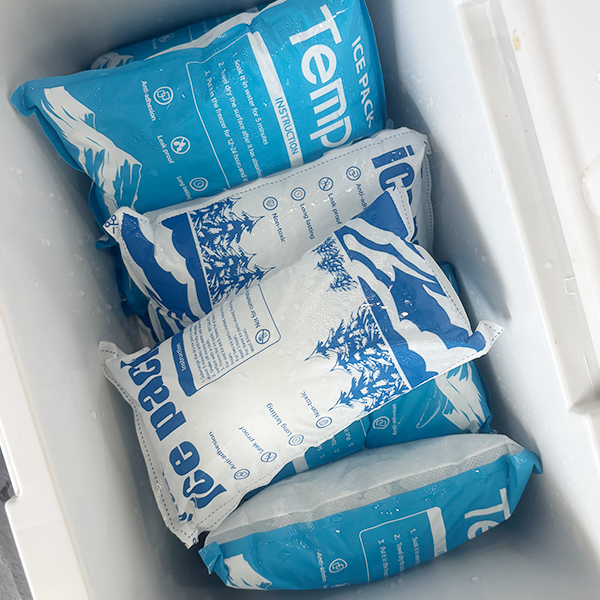
Best Guide to Dry Ice Pack Distribution in Europe
Dry ice pack distributor Europe only looks simple if you reduce the decision to price. The better way to see it is as a combined sourcing problem: you need the right cooling format, the right partner model, the right operating routine, and the right document set. In Europe, eurostat said 78% of EU internet users bought online in 2025, which keeps pressure on last-mile cold packaging for food, wellness, and specialty goods. EMA says good distribution practice sets the minimum standards needed to keep medicine quality and integrity intact across the supply chain. Those pressures make dry ice pack buying a strategic decision for both food and healthcare supply chains.
This optimized guide brings together the best parts of product education, technical review, market insight, and a reader-friendly structure. You will get a clear framework for choosing the pack, validating the lane, managing cost, and preparing for 2026 expectations around reliability and sustainability. The aim is not to give you more noise. It is to help you reach a stronger decision faster and with fewer blind spots.
This guide will help you decide
What defines a strong dry ice pack distributor Europe strategy in 2026
Which specs, materials, and performance tests matter before you commit volume
How local market conditions in Europe affect format, stock planning, and partner choice
How to handle compliance and sustainability without turning the project into paperwork overload
How to use a final supplier scorecard that balances price, risk, and growth readiness
What defines the right strategy for dry ice pack distributor Europe before you compare prices?
The best strategy starts with a simple truth: you are not buying cold in the abstract. You are buying a repeatable shipping outcome. That outcome depends on the route, the payload, the outer packaging, the operator routine, and the supplier behind the pack. If one of those pieces is weak, the cold source alone will not save the system. This is why the smartest buyers define the use case first and the supplier list second.
For dry ice pack distributor Europe, strategy usually comes down to four questions. What temperature range must the shipment stay in? How variable is the real transit window? How complex can the warehouse routine be before error rises? And what kind of partner support do you need after sampling? Once those four questions are clear, you can choose between sheet packs, rigid reusable packs, true dry ice support, or hybrid builds with much better confidence.
Start with route reality, not product marketing
Route reality means actual transit, not only promised service. It means real summer exposure, not average weather. It means box dimensions after the payload is loaded, not the outer carton measured empty on a desk. And it means the real capabilities of your team. When you choose a distributor, you are really choosing how fast your market can respond to heat, growth, and customer audits. That is why strong sourcing teams ask for a route-specific recommendation before they ask for a discount ladder.
| Strategic Question | What You Should Clarify | Weak Approach | Better Decision |
|---|---|---|---|
| Temperature target | Chilled, frozen, or subzero support | Buy the coldest option | Match the pack to the payload |
| Transit reality | Normal and stress duration | Use service promise only | Plan for delay risk |
| Process complexity | What operators can do repeatedly | Assume perfect execution | Choose a workable SOP |
| Support need | Sample, docs, scale, and change control | Compare price only | Select a growth-ready partner |
A quick self-check
If your route changes by season, you need at least two recommended pack rules.
If your box fill varies a lot, you need more than one generic pack count.
If your customers ask for documents before onboarding, supplier organization matters almost as much as product quality.
Example scenario: a buyer thought the project was about finding a cheaper cold source. After a short review, the team realized the real issue was inconsistent box fill and weak route segmentation. Once those issues were fixed, the pack choice became easier and the cost discussion became more meaningful.
Which specs, materials, and tests truly matter?
Good dry ice pack buying combines product education with technical discipline. At the product level, you need to understand the format: sheet pack, reusable pack, true dry ice support, or a hybrid system. At the technical level, you need to understand construction detail, activation routine, and pack-out logic. Reliable packs usually have stable cell distribution, controlled sealing, clear dimensions, and an operating method that can be repeated by warehouse staff without constant supervision.
Testing should be practical, not theatrical. A useful test asks whether the full system protects the shipment under realistic conditions. That means the right insulation, the real payload mass, realistic pre-freezing, and data logger placement at risk points. When buyers skip that discipline, they often end up arguing about the pack when the real problem is process drift, box mismatch, or unrealistic lane assumptions.
The short list of technical proof
Ask for seven things: product dimensions, material description, hydrated or frozen behavior guidance, activation routine, recommended pack layout, document pack, and a clear explanation of the intended use case. Then validate the setup under normal and stress conditions. This is enough to separate strong suppliers from sellers who only repeat generic claims. The goal is not to run a research program. It is to remove obvious technical ambiguity before scale.
| Proof Item | What Good Looks Like | Common Weakness | Why It Matters |
|---|---|---|---|
| Construction detail | Clear size, cell, and material information | Vague product description | Protects technical comparison |
| Activation guidance | Specific soak and freeze routine | Freeze as needed | Reduces launch error |
| Pack layout | Recommended count and placement | Use your judgment | Improves repeatability |
| Validation file | Normal and stress results | Single success story | Supports scale-up confidence |
Practical testing advice
Treat the box, insulation, product, and pack as one system in every trial.
Use one test to check warm risk and another to check accidental over-freezing when the payload is sensitive.
Document the freezer condition and preconditioning time, because these often explain field variation.
Example scenario: two packs looked identical after freezing, but one required a much tighter preparation routine. The easier-to-run pack won because it delivered more stable results with normal warehouse behavior, not because it looked colder in a photo.
How do market conditions in Europe affect cost, format, and stock planning?
Market conditions shape the correct answer more than many buyers expect. In Europe, Eurostat said 78% of EU internet users bought online in 2025, which keeps pressure on last-mile cold packaging for food, wellness, and specialty goods. Eurostat also reported that the EU exported 366.2 billion euros of medicinal and pharmaceutical products in 2025, with a record trade surplus of 220.5 billion euros. That means the pack you choose has to work commercially as well as thermally. It has to support the dominant channels in your market, respond to seasonal pressure, and stay available when demand rises. A technically perfect pack with unstable supply can still be the wrong choice.
Stock planning is especially important because cold-chain demand often spikes during the same periods that thermal risk is highest. If your route map includes multiple countries, you should assume language, labeling, and EPR-related questions will appear sooner rather than later. If you buy too late, you may be forced into substitutions or rushed logistics. If you buy too early without clarity, you can overstock the wrong format. The better approach is to lock a core validated configuration, then use route segmentation and seasonal planning to decide how much buffer you really need.
Where market context changes the packaging answer
Growing e-commerce raises the value of neat, easy-to-pack, right-sized formats. Strong healthcare demand raises the value of documentation and validation. Regulatory or packaging-accountability pressure raises the value of traceable specifications and better material disclosure. Climate exposure raises the value of stress testing. When you line these forces up, it becomes obvious that one universal buying rule is too blunt for a modern dry ice pack program.
| Market Condition | Packaging Effect | Supply Effect | Best Response |
|---|---|---|---|
| High parcel exposure | Needs better box fit and SOP simplicity | More frequent replenishment | Standardize a few proven setups |
| Healthcare scrutiny | Needs stronger documentation | Slower approval if files are weak | Prepare the document pack early |
| Seasonal heat | Needs stress-ready design | Higher safety-stock need | Plan summer inventory before peak |
| Sustainability pressure | Needs right-sizing and waste logic | More supplier questions | Choose evidence-backed configurations |
Market-aware buying advice
Use the main demand segments in Europe to decide which pack formats deserve priority stock.
Qualify at least one backup configuration before peak season if lead times are long or imported supply is involved.
Do not let route segmentation become too complex; a few clear market-based rules outperform a large confusing matrix.
Example scenario: a business kept adding new SKUs to satisfy different customer requests. Inventory complexity rose, but service did not improve. After mapping the market by route type and account type, the team reduced the range and improved both fill rate and packing accuracy.
How do you manage compliance and sustainability together for dry ice pack distributor Europe?
Compliance and sustainability often look like separate workstreams, but the strongest programs manage them together. A well-documented, stable specification reduces waste because it cuts errors and rework. A right-sized pack reduces waste because it avoids excess material and failed shipments. A supplier with clear declarations and change control reduces compliance risk because nothing important is left vague. In other words, better control often improves both regulatory confidence and environmental performance.
The specific rules vary by market, but the underlying logic is consistent. EMA says good distribution practice sets the minimum standards needed to keep medicine quality and integrity intact across the supply chain. European sourcing teams are asking earlier about recyclability, right-sizing, secondary packaging reduction, and evidence rather than general green claims. When you ask suppliers to connect pack recommendation, document readiness, and waste reduction into one story, weak offers tend to fall apart quickly. Strong offers become easier to spot because they show how the system performs, not just what the product is made of.
A balanced way to ask the right questions
Ask your supplier to explain four things in one meeting: why the pack fits the route, what documents support that choice, which part of the system reduces waste, and what changes would trigger re-approval. This single conversation often replaces several disconnected email chains. It also helps procurement, operations, and QA align earlier. That alignment matters because late-stage disagreement is one of the quietest but most expensive causes of project delay.
| Control Area | What to Ask | Weak Reply | Stronger Outcome |
|---|---|---|---|
| Use-case fit | Why this pack for this lane? | It is our best seller | Route-specific logic |
| Document fit | What files are available now? | We can send later | Faster account approval |
| Waste logic | How does the system avoid excess? | It is eco-friendly | Practical right-sizing |
| Change control | What changes need approval? | Minor updates happen | Stable specification |
Practical combined-control advice
Keep your validated pack-out file together with the key supplier declarations and the approved specification.
Measure waste in operational terms: spoilage, repack, customer complaints, and excess box cube.
Review both compliance updates and sustainability targets before peak season, not during it.
Example scenario: once a company moved its packaging documents, validation notes, and approved spec into one controlled file, both audits and buying decisions became faster. The same change also reduced waste because teams stopped ordering substitute packs when they could not find the approved information.
What final supplier scorecard should you use for dry ice pack distributor Europe?
The final scorecard should be simple enough to use and strong enough to expose hidden risk. Use five categories: product fit, process fit, document fit, commercial fit, and growth fit. Product fit asks whether the pack matches the lane. Process fit asks whether the team can run it reliably. Document fit asks whether the files support the market. Commercial fit asks whether the cost is sensible. Growth fit asks whether the supplier can support you after the pilot stage.
Weight the scorecard according to your business model. If you run healthcare lanes, document fit may matter more. If you run fast parcel food, process fit may matter more. If you are building private label or OEM supply, growth fit and change control matter more. The exact weighting can change, but the structure should stay visible. That visibility protects you from choosing a low quote that only works for one sample shipment and falls apart when the account grows.
A practical scoring approach
Score each category from one to five and require a minimum threshold for the most critical category. For example, healthcare buyers may refuse any supplier that scores below four on documents and change control. Food e-commerce buyers may set the minimum threshold on process simplicity and route fit. The point is not bureaucracy. The point is discipline. Once a scorecard exists, internal discussions become faster and more objective.
| Scorecard Area | What to Measure | Why It Matters | Typical Red Flag |
|---|---|---|---|
| Product fit | Route match and pack layout | Protects temperature performance | Generic recommendation |
| Process fit | Ease of activation and packing | Protects daily execution | Complex SOP |
| Document fit | Technical and compliance file quality | Protects onboarding speed | Late or vague files |
| Commercial fit | True landed cost | Protects margin | Cheap unit, high failure cost |
| Growth fit | Stock, customization, change control | Protects scale-up | Pilot-only capability |
How to use the scorecard well
Score the sample stage and the volume stage separately if your support needs change after launch.
Let QA, operations, and procurement each comment on the category they know best.
Review the scorecard after the first real season to see whether the supplier still deserves the same rating.
Example scenario: two suppliers looked similar on price, but one scored far better on document speed and growth fit. That supplier won the business and later handled a volume increase without changing the approved specification, which confirmed the value of the scorecard.
2026 outlook for dry ice pack distributor Europe
The 2026 direction is clear. Buyers want route-specific packaging, stronger documentation, and leaner systems with less waste. Eurostat said 78% of EU internet users bought online in 2025, which keeps pressure on last-mile cold packaging for food, wellness, and specialty goods. Eurostat also reported that the EU exported 366.2 billion euros of medicinal and pharmaceutical products in 2025, with a record trade surplus of 220.5 billion euros. As these forces build, dry ice pack decisions will keep moving closer to procurement strategy, QA planning, and customer experience management. The winners will be buyers and suppliers who can connect cold performance, operational simplicity, and market readiness in one clear recommendation.
What to watch next
More businesses will separate normal and hot-season pack rules instead of relying on one universal configuration.
Document quality and change control will become stronger buying filters as packaging responsibility grows.
Sustainability discussions will increasingly focus on right-sizing and failure prevention rather than slogans alone.
Market insight: the strongest packaging programs now look less like product catalogs and more like operating systems. They define route types, pack rules, validation files, supplier responsibilities, and change triggers. That is the direction serious dry ice pack sourcing is taking in 2026.
Frequently asked questions
What is the first thing to decide before requesting quotes?
Define the route, temperature target, and operating routine. Without that context, pack comparisons are mostly guesswork.
Do you need both technical review and market review?
Yes. A pack can be technically good and still be the wrong commercial choice if it does not fit your channel, timing, or document needs.
What is the best way to control hidden cost?
Use total landed cost. Include labor, freight cube, spoilage risk, complaints, and stock stability, not just the unit price.
How do you keep sustainability practical?
Focus on right-sizing, lower failure rates, and stable specifications. Those changes usually create more value than broad environmental claims.
What makes a supplier strong for dry ice pack distributor Europe?
Strong suppliers connect product fit, process fit, document fit, and growth fit. They do not sell only the sample; they support the system.
Summary and recommendations
The best dry ice pack distributor Europe strategy combines four things: route-first planning, technical proof, market awareness, and controlled supplier selection. When those pieces line up, you gain better temperature protection, faster onboarding, stronger cost control, and a packaging system that can scale with less waste.
Recommended next step: build a short sourcing brief, run a route-based trial, and score suppliers on product, process, documents, cost, and growth fit. That one framework is enough to turn a confusing search into a clear commercial decision.
About Tempk
Tempk provides cold-chain packaging solutions for temperature-sensitive logistics, including dry ice packs, gel packs, ice bricks, insulated bags, EPP boxes, liners, and related packaging materials. We focus on helping customers match the cold source to the real route, box, and operating process.
If you are evaluating dry ice pack distributor Europe, we can help you compare formats, review trial logic, and turn your route data into a practical packaging recommendation that is ready for real operations.
Best Dry Ice Pack Distributor Canada Guide 2026
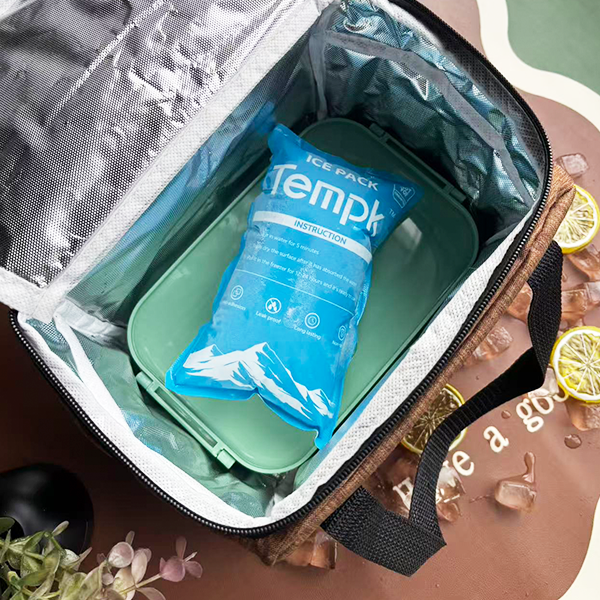
Best Guide to Dry Ice Pack Distribution in Canada
Dry ice pack distributor Canada only looks simple if you reduce the decision to price. The better way to see it is as a combined sourcing problem: you need the right cooling format, the right partner model, the right operating routine, and the right document set. In Canada, statistics canada reported that retail e-commerce sales were 4.0 billion canadian dollars in november 2025, equal to 5.7% of total retail trade. Health Canada says drug products must be stored and transported according to labelled storage conditions and that firms must reduce the risk of temperature excursions. Those pressures make dry ice pack buying a strategic decision for both food and healthcare supply chains.
This optimized guide brings together the best parts of product education, technical review, market insight, and a reader-friendly structure. You will get a clear framework for choosing the pack, validating the lane, managing cost, and preparing for 2026 expectations around reliability and sustainability. The aim is not to give you more noise. It is to help you reach a stronger decision faster and with fewer blind spots.
This guide will help you decide
What defines a strong dry ice pack distributor Canada strategy in 2026
Which specs, materials, and performance tests matter before you commit volume
How local market conditions in Canada affect format, stock planning, and partner choice
How to handle compliance and sustainability without turning the project into paperwork overload
How to use a final supplier scorecard that balances price, risk, and growth readiness
What defines the right strategy for dry ice pack distributor Canada before you compare prices?
The best strategy starts with a simple truth: you are not buying cold in the abstract. You are buying a repeatable shipping outcome. That outcome depends on the route, the payload, the outer packaging, the operator routine, and the supplier behind the pack. If one of those pieces is weak, the cold source alone will not save the system. This is why the smartest buyers define the use case first and the supplier list second.
For dry ice pack distributor Canada, strategy usually comes down to four questions. What temperature range must the shipment stay in? How variable is the real transit window? How complex can the warehouse routine be before error rises? And what kind of partner support do you need after sampling? Once those four questions are clear, you can choose between sheet packs, rigid reusable packs, true dry ice support, or hybrid builds with much better confidence.
Start with route reality, not product marketing
Route reality means actual transit, not only promised service. It means real summer exposure, not average weather. It means box dimensions after the payload is loaded, not the outer carton measured empty on a desk. And it means the real capabilities of your team. When you choose a distributor, you are really choosing how fast your market can respond to heat, growth, and customer audits. That is why strong sourcing teams ask for a route-specific recommendation before they ask for a discount ladder.
| Strategic Question | What You Should Clarify | Weak Approach | Better Decision |
|---|---|---|---|
| Temperature target | Chilled, frozen, or subzero support | Buy the coldest option | Match the pack to the payload |
| Transit reality | Normal and stress duration | Use service promise only | Plan for delay risk |
| Process complexity | What operators can do repeatedly | Assume perfect execution | Choose a workable SOP |
| Support need | Sample, docs, scale, and change control | Compare price only | Select a growth-ready partner |
A quick self-check
If your route changes by season, you need at least two recommended pack rules.
If your box fill varies a lot, you need more than one generic pack count.
If your customers ask for documents before onboarding, supplier organization matters almost as much as product quality.
Example scenario: a buyer thought the project was about finding a cheaper cold source. After a short review, the team realized the real issue was inconsistent box fill and weak route segmentation. Once those issues were fixed, the pack choice became easier and the cost discussion became more meaningful.
Which specs, materials, and tests truly matter?
Good dry ice pack buying combines product education with technical discipline. At the product level, you need to understand the format: sheet pack, reusable pack, true dry ice support, or a hybrid system. At the technical level, you need to understand construction detail, activation routine, and pack-out logic. Reliable packs usually have stable cell distribution, controlled sealing, clear dimensions, and an operating method that can be repeated by warehouse staff without constant supervision.
Testing should be practical, not theatrical. A useful test asks whether the full system protects the shipment under realistic conditions. That means the right insulation, the real payload mass, realistic pre-freezing, and data logger placement at risk points. When buyers skip that discipline, they often end up arguing about the pack when the real problem is process drift, box mismatch, or unrealistic lane assumptions.
The short list of technical proof
Ask for seven things: product dimensions, material description, hydrated or frozen behavior guidance, activation routine, recommended pack layout, document pack, and a clear explanation of the intended use case. Then validate the setup under normal and stress conditions. This is enough to separate strong suppliers from sellers who only repeat generic claims. The goal is not to run a research program. It is to remove obvious technical ambiguity before scale.
| Proof Item | What Good Looks Like | Common Weakness | Why It Matters |
|---|---|---|---|
| Construction detail | Clear size, cell, and material information | Vague product description | Protects technical comparison |
| Activation guidance | Specific soak and freeze routine | Freeze as needed | Reduces launch error |
| Pack layout | Recommended count and placement | Use your judgment | Improves repeatability |
| Validation file | Normal and stress results | Single success story | Supports scale-up confidence |
Practical testing advice
Treat the box, insulation, product, and pack as one system in every trial.
Use one test to check warm risk and another to check accidental over-freezing when the payload is sensitive.
Document the freezer condition and preconditioning time, because these often explain field variation.
Example scenario: two packs looked identical after freezing, but one required a much tighter preparation routine. The easier-to-run pack won because it delivered more stable results with normal warehouse behavior, not because it looked colder in a photo.
How do market conditions in Canada affect cost, format, and stock planning?
Market conditions shape the correct answer more than many buyers expect. In Canada, Statistics Canada reported that retail e-commerce sales were 4.0 billion Canadian dollars in November 2025, equal to 5.7% of total retail trade. Canada's cold-chain requirements are shaped by large geography, dispersed demand, and big seasonal swings rather than one single operating pattern. That means the pack you choose has to work commercially as well as thermally. It has to support the dominant channels in your market, respond to seasonal pressure, and stay available when demand rises. A technically perfect pack with unstable supply can still be the wrong choice.
Stock planning is especially important because cold-chain demand often spikes during the same periods that thermal risk is highest. You should plan for lane qualification by season because one winter profile does not prove summer performance. If you buy too late, you may be forced into substitutions or rushed logistics. If you buy too early without clarity, you can overstock the wrong format. The better approach is to lock a core validated configuration, then use route segmentation and seasonal planning to decide how much buffer you really need.
Where market context changes the packaging answer
Growing e-commerce raises the value of neat, easy-to-pack, right-sized formats. Strong healthcare demand raises the value of documentation and validation. Regulatory or packaging-accountability pressure raises the value of traceable specifications and better material disclosure. Climate exposure raises the value of stress testing. When you line these forces up, it becomes obvious that one universal buying rule is too blunt for a modern dry ice pack program.
| Market Condition | Packaging Effect | Supply Effect | Best Response |
|---|---|---|---|
| High parcel exposure | Needs better box fit and SOP simplicity | More frequent replenishment | Standardize a few proven setups |
| Healthcare scrutiny | Needs stronger documentation | Slower approval if files are weak | Prepare the document pack early |
| Seasonal heat | Needs stress-ready design | Higher safety-stock need | Plan summer inventory before peak |
| Sustainability pressure | Needs right-sizing and waste logic | More supplier questions | Choose evidence-backed configurations |
Market-aware buying advice
Use the main demand segments in Canada to decide which pack formats deserve priority stock.
Qualify at least one backup configuration before peak season if lead times are long or imported supply is involved.
Do not let route segmentation become too complex; a few clear market-based rules outperform a large confusing matrix.
Example scenario: a business kept adding new SKUs to satisfy different customer requests. Inventory complexity rose, but service did not improve. After mapping the market by route type and account type, the team reduced the range and improved both fill rate and packing accuracy.
How do you manage compliance and sustainability together for dry ice pack distributor Canada?
Compliance and sustainability often look like separate workstreams, but the strongest programs manage them together. A well-documented, stable specification reduces waste because it cuts errors and rework. A right-sized pack reduces waste because it avoids excess material and failed shipments. A supplier with clear declarations and change control reduces compliance risk because nothing important is left vague. In other words, better control often improves both regulatory confidence and environmental performance.
The specific rules vary by market, but the underlying logic is consistent. Health Canada says drug products must be stored and transported according to labelled storage conditions and that firms must reduce the risk of temperature excursions. A better-designed pack can reduce both overpacking and spoilage, which is often the most meaningful sustainability win in a Canadian lane. When you ask suppliers to connect pack recommendation, document readiness, and waste reduction into one story, weak offers tend to fall apart quickly. Strong offers become easier to spot because they show how the system performs, not just what the product is made of.
A balanced way to ask the right questions
Ask your supplier to explain four things in one meeting: why the pack fits the route, what documents support that choice, which part of the system reduces waste, and what changes would trigger re-approval. This single conversation often replaces several disconnected email chains. It also helps procurement, operations, and QA align earlier. That alignment matters because late-stage disagreement is one of the quietest but most expensive causes of project delay.
| Control Area | What to Ask | Weak Reply | Stronger Outcome |
|---|---|---|---|
| Use-case fit | Why this pack for this lane? | It is our best seller | Route-specific logic |
| Document fit | What files are available now? | We can send later | Faster account approval |
| Waste logic | How does the system avoid excess? | It is eco-friendly | Practical right-sizing |
| Change control | What changes need approval? | Minor updates happen | Stable specification |
Practical combined-control advice
Keep your validated pack-out file together with the key supplier declarations and the approved specification.
Measure waste in operational terms: spoilage, repack, customer complaints, and excess box cube.
Review both compliance updates and sustainability targets before peak season, not during it.
Example scenario: once a company moved its packaging documents, validation notes, and approved spec into one controlled file, both audits and buying decisions became faster. The same change also reduced waste because teams stopped ordering substitute packs when they could not find the approved information.
What final supplier scorecard should you use for dry ice pack distributor Canada?
The final scorecard should be simple enough to use and strong enough to expose hidden risk. Use five categories: product fit, process fit, document fit, commercial fit, and growth fit. Product fit asks whether the pack matches the lane. Process fit asks whether the team can run it reliably. Document fit asks whether the files support the market. Commercial fit asks whether the cost is sensible. Growth fit asks whether the supplier can support you after the pilot stage.
Weight the scorecard according to your business model. If you run healthcare lanes, document fit may matter more. If you run fast parcel food, process fit may matter more. If you are building private label or OEM supply, growth fit and change control matter more. The exact weighting can change, but the structure should stay visible. That visibility protects you from choosing a low quote that only works for one sample shipment and falls apart when the account grows.
A practical scoring approach
Score each category from one to five and require a minimum threshold for the most critical category. For example, healthcare buyers may refuse any supplier that scores below four on documents and change control. Food e-commerce buyers may set the minimum threshold on process simplicity and route fit. The point is not bureaucracy. The point is discipline. Once a scorecard exists, internal discussions become faster and more objective.
| Scorecard Area | What to Measure | Why It Matters | Typical Red Flag |
|---|---|---|---|
| Product fit | Route match and pack layout | Protects temperature performance | Generic recommendation |
| Process fit | Ease of activation and packing | Protects daily execution | Complex SOP |
| Document fit | Technical and compliance file quality | Protects onboarding speed | Late or vague files |
| Commercial fit | True landed cost | Protects margin | Cheap unit, high failure cost |
| Growth fit | Stock, customization, change control | Protects scale-up | Pilot-only capability |
How to use the scorecard well
Score the sample stage and the volume stage separately if your support needs change after launch.
Let QA, operations, and procurement each comment on the category they know best.
Review the scorecard after the first real season to see whether the supplier still deserves the same rating.
Example scenario: two suppliers looked similar on price, but one scored far better on document speed and growth fit. That supplier won the business and later handled a volume increase without changing the approved specification, which confirmed the value of the scorecard.
2026 outlook for dry ice pack distributor Canada
The 2026 direction is clear. Buyers want route-specific packaging, stronger documentation, and leaner systems with less waste. Statistics Canada reported that retail e-commerce sales were 4.0 billion Canadian dollars in November 2025, equal to 5.7% of total retail trade. Canada's cold-chain requirements are shaped by large geography, dispersed demand, and big seasonal swings rather than one single operating pattern. As these forces build, dry ice pack decisions will keep moving closer to procurement strategy, QA planning, and customer experience management. The winners will be buyers and suppliers who can connect cold performance, operational simplicity, and market readiness in one clear recommendation.
What to watch next
More businesses will separate normal and hot-season pack rules instead of relying on one universal configuration.
Document quality and change control will become stronger buying filters as packaging responsibility grows.
Sustainability discussions will increasingly focus on right-sizing and failure prevention rather than slogans alone.
Market insight: the strongest packaging programs now look less like product catalogs and more like operating systems. They define route types, pack rules, validation files, supplier responsibilities, and change triggers. That is the direction serious dry ice pack sourcing is taking in 2026.
Frequently asked questions
What is the first thing to decide before requesting quotes?
Define the route, temperature target, and operating routine. Without that context, pack comparisons are mostly guesswork.
Do you need both technical review and market review?
Yes. A pack can be technically good and still be the wrong commercial choice if it does not fit your channel, timing, or document needs.
What is the best way to control hidden cost?
Use total landed cost. Include labor, freight cube, spoilage risk, complaints, and stock stability, not just the unit price.
How do you keep sustainability practical?
Focus on right-sizing, lower failure rates, and stable specifications. Those changes usually create more value than broad environmental claims.
What makes a supplier strong for dry ice pack distributor Canada?
Strong suppliers connect product fit, process fit, document fit, and growth fit. They do not sell only the sample; they support the system.
Summary and recommendations
The best dry ice pack distributor Canada strategy combines four things: route-first planning, technical proof, market awareness, and controlled supplier selection. When those pieces line up, you gain better temperature protection, faster onboarding, stronger cost control, and a packaging system that can scale with less waste.
Recommended next step: build a short sourcing brief, run a route-based trial, and score suppliers on product, process, documents, cost, and growth fit. That one framework is enough to turn a confusing search into a clear commercial decision.
About Tempk
Tempk provides cold-chain packaging solutions for temperature-sensitive logistics, including dry ice packs, gel packs, ice bricks, insulated bags, EPP boxes, liners, and related packaging materials. We focus on helping customers match the cold source to the real route, box, and operating process.
If you are evaluating dry ice pack distributor Canada, we can help you compare formats, review trial logic, and turn your route data into a practical packaging recommendation that is ready for real operations.
Dry Ice Pack Bulk Buying in the Middle East: A Practical Selection Guide
Dry Ice Pack Bulk Buying in the Middle East: A Practical Selection Guide
If you are evaluating dry ice pack bulk buying in the Middle East, start with one principle: buy the shipping outcome, not just the pack. In this category, unit price means very little without clear dimensions, hydrated weight, material construction, route fit, and evidence that the supplier can reproduce the same pack again and again. In the Middle East, very high ambient temperatures, airport and customs dwell, and cross-border distribution lanes make route realism a core purchasing issue.
First, Define the Product Correctly
Before comparing vendors or prices, make sure everyone means the same product. In many industrial listings, a dry ice pack is a dry-form pack or sheet that is hydrated with water, frozen, and then used as a refrigerant inside an insulated shipper. It may arrive as a small cell sheet, a larger blanket, a brick-style pouch, or another gel-based format. That is not the same as carbon dioxide dry ice, which reaches much lower temperatures, vents gas as it sublimates, and is subject to specific transport and safety rules. Confusing the two terms can create specification mistakes, cost surprises, and even compliance issues in air shipments.
Most products in this category use a sealed film or film-plus-nonwoven structure that holds a water-absorbing medium. In many commercial designs that medium is a superabsorbent polymer, sometimes paired with a gel or phase-change formulation. After water enters the pack, the internal material swells and traps the liquid inside separate cells. Once frozen, those cells absorb heat from the payload and help slow temperature rise. Sheet formats can wrap around corners and spread cooling more evenly than rigid bricks, while brick or pouch formats are easier to stack in repeatable layers.
Compare the Main Refrigerant Options Before You Buy
A dry-state sheet is attractive when you want flexible coverage and low inbound storage volume. A pre-filled gel pack is attractive when you want simple preparation and repeatable handling. A rigid brick or PCM brick is useful when stacking discipline matters. Carbon dioxide dry ice sits in a different class: it is the choice for much colder applications, but it brings venting, handling, and transport obligations that do not belong to ordinary hydrated gel packs.
| Format | Best fit | Main watch-out |
|---|---|---|
| Hydrated sheet pack | Wraparound coverage and lower inbound storage volume | Needs hydration workflow and space to swell |
| Pre-filled gel pack | Quick deployment and consistent handling | Higher storage cube and freight weight |
| Rigid brick or PCM brick | Repeatable layer packing and strong support | Less flexible around corners and odd shapes |
| Carbon dioxide dry ice | Ultra-cold frozen applications | Vent, safety, and dry-ice transport rules |
Where These Packs Fit Best in Practice
Dry-state packs and sheet refrigerants are commonly used when teams need a lightweight cold source for one-way or repeat shipments of seafood, meat, dairy, bakery fillings, meal kits, fresh produce, and laboratory or diagnostic items. They are also used in secondary pharmaceutical packaging when the full shipper has been matched to a known temperature band and route duration. Flexible sheet formats are especially useful when the payload is irregularly shaped or when coverage around the top and sides matters more than building a rigid wall of cold bricks.
They are less suitable when you need true ultra-low temperature transport, when you do not control the hydration and freezing workflow, or when the lane is so harsh that a higher-performance insulated shipper and a better-defined refrigerant strategy are required. In many cases, the right answer is not "more packs." It is a better combination of pre-conditioning, pack placement, insulation, and shipment timing.
In hot-climate lanes, performance margins shrink quickly. Packs may spend time in staging, in vehicles, or in depots that are far hotter than a laboratory test room. That makes proper pre-chilling, route discipline, and sufficient insulation more important than the nominal capability of the pack alone.
Conditioning Workflow Matters More Than Many Buyers Expect
Dry-state packs introduce one extra operational step compared with pre-filled gel packs: activation. That step sounds simple, yet it can determine whether the program works smoothly. Teams need a repeatable method for soaking or hydrating the pack, removing excess surface water, and freezing the pack for long enough to reach the intended condition. If hydration is inconsistent, some cells may remain underfilled. If packs are stacked too densely in the freezer, freezing can be uneven. If excess surface water is left on the outside, the pack may freeze together with neighboring packs or create unnecessary frost.
For low-volume programs, those problems are manageable. For wholesale or bulk programs, they become process questions. Buyers should ask whether their own operation can support the supplier's recommended routine at scale. A very compact dry sheet can look ideal during procurement but become awkward if the warehouse has limited freezer capacity or if operators need fast turnaround. That does not make the product poor. It simply means the product and the process have to be designed together.
Thermal performance is always a system question, not a pack-only question. The same pack can behave very differently depending on the starting temperature of the goods, the insulation type, how tightly the payload is loaded, how much empty air remains in the box, and whether the shipment sits in a van, on a tarmac, or in a depot cage. That is why experienced buyers look past a headline hold-time claim and ask for a route-specific packout logic, not just a single marketing statement.
What Good Evidence Looks Like
Cold-chain evidence does not need to be complicated, but it does need to be relevant. Useful evidence explains the conditioning method, the shipper type, the amount of payload, the placement of the refrigerant, and the ambient exposure used during the test. Better evidence also distinguishes between easy and hard lanes rather than presenting one broad claim for every use case.
For buyers, the practical move is to ask for two levels of proof. The first is supplier-level proof: specification sheets, material information, and any test or handling guidance the supplier already has. The second is program-level proof: a pilot shipment or thermal check using your own packout and route logic. That second level is where purchasing decisions become reliable, because it shows whether the format survives real handling and supports the target band under realistic conditions.
Route Reality In The Middle East
In the Middle East, the decisive question is often heat management over unpredictable dwell times. A sheet or gel pack that looks acceptable in a short-room-temperature demonstration may not be enough after loading, ramp exposure, customs delay, and last-mile delivery. Strong buyers in this region push for realistic hot-lane evaluation and often prefer suppliers who can support the refrigerant together with the insulated shipper.
For this region, the ability to combine refrigerant packs with insulated boxes or liners often matters more than the pack alone.
Bulk Ordering: Operational Checks Before You Commit in the Middle East
Bulk purchasing works best when the pack format and the activation workflow are already stable. A large dry-pack order can look very efficient on paper because the product ships flat and stores compactly. In practice, the real bottlenecks are usually hydration throughput, freezer capacity, staging time, and the discipline needed to keep first-in and first-out handling clean. If those site conditions are not ready, buying in bulk can create more waste than savings.
Start with the basics: internal and external dimensions, dry weight, hydrated weight, units per carton, cartons per pallet, and the recommended soak time or hydration method. Then move to operational questions. How much space will the hydrated packs occupy in your freezer? How many hours do you need between hydration and loading? Can your team handle peak-season activation without leaving packs partially frozen? For this region, the ability to combine refrigerant packs with insulated boxes or liners often matters more than the pack alone.
Ask how the supplier, manufacturer, or distributor supports hot-lane testing, inventory buffering, and rapid replenishment when summer exposure or customs timing becomes unpredictable. It is also wise to ask how the supplier controls carton count and lot traceability. In a high-volume program, small errors in count, weight, or sealing quality can multiply quickly across many thousands of shipments.
A practical bulk-order checklist includes:
- Dry and hydrated dimensions, plus usable thickness in the final shipper.
- Film, nonwoven, or laminate type and seal construction.
- Recommended hydration water quality and soak time.
- Freeze time under your own freezer conditions.
- Lot coding, carton labeling, and sample retention policy.
- Agreement on what counts as an acceptable leak, burst, or underfilled-cell rate.
A Practical Supplier Checklist
Before you move from sample stage to production or repeat purchase, make sure the review covers most of these points:
- Internal and external fit: dry size, hydrated size, and how the pack sits inside the actual shipper.
- Usable cold mass: hydrated weight, conditioned temperature, and how much of the box volume the refrigerant consumes.
- Material construction: film or laminate type, nonwoven reinforcement, and any stated resin or absorbent system.
- Closure and integrity: seal pattern, leak resistance, burst control, and tolerance for weak cells.
- Handling efficiency: stackability, cut-to-fit guidance, wraparound suitability, and whether the thawed pack stays clean to handle.
- Hygiene and traceability: SDS, lot coding, carton labels, and any material or food-contact declarations you need.
- Commercial terms: MOQ, stock versus custom lead time, print setup conditions, and carton or pallet quantities.
- Consistency: how approval samples are matched to production and how changes are communicated.
- Route suitability: whether the pack was selected for your actual temperature band, transit duration, and handling environment.
Compliance, Qualification, and Documentation
Cold packs are components, not compliance shortcuts. For pharmaceutical or healthcare use, the critical question is whether the full shipping configuration can maintain the intended temperature range over the intended route. Public guidance from Health Canada and GDP-oriented regulatory material emphasizes transport according to labelled storage conditions or transport conditions supported by data. That principle applies whether you are using a simple gel pack, a hydrated sheet, a PCM brick, or true carbon dioxide dry ice.
Documentation should therefore be matched to the application. For food-related distribution, buyers may need material declarations, SDS information, and relevant food-contact or indirect-contact statements. For laboratory and pharmaceutical programs, traceability, packout instructions, thermal evidence, and change-control discipline are more important than generic marketing certificates. If the shipment uses actual carbon dioxide dry ice, additional transport obligations apply because the package must vent gas and follow dry-ice-specific marking and handling requirements. Hydrated gel packs avoid that particular dry ice hazard profile, but they still need fit-for-purpose evidence.
A practical compliance review also distinguishes between a reusable handling container and a qualified temperature-control system. A clean reusable crate can improve handling and hygiene, yet still offer no meaningful thermal protection. A flexible dry sheet can provide useful cooling, yet still be inadequate without the right insulated box and route validation. Buyers in regulated sectors should treat those distinctions as basic, not optional.
FAQ
Are dry ice packs the same as carbon dioxide dry ice?
No. In many packaging catalogs, a dry ice pack is a dry-state gel or refrigerant pack that is hydrated and frozen before use. Carbon dioxide dry ice is a different refrigerant entirely. It sublimates, requires venting, and has transport and safety rules that do not apply in the same way to hydrated gel packs.
Can these packs be used for pharmaceutical shipments?
They may be suitable as part of a qualified insulated shipper, but suitability depends on the product, temperature range, route duration, and packout design. For drug products, buyers should work from labelled storage conditions or transport conditions supported by data rather than assuming any cold pack is automatically acceptable.
What should I test before approving a bulk order?
Test the actual packout on your intended insulated box or liner. Include starting product temperature, conditioning method, hot and cold seasonal exposure, parcel handling if relevant, and receiving checks. Also compare approval samples with production samples so size, hydrated mass, and seal quality do not drift later.
What is the most common buying mistake?
The most common mistake is comparing packs only by quoted hold time or price per piece. A buyer gets better results by comparing dry and hydrated dimensions, film construction, hydrate-and-freeze workflow, and evidence that the supplier can reproduce the same pack consistently.
Conclusion
A strong buying decision in this category is rarely about finding the coldest or cheapest pack. It is about matching the right refrigerant format to the right insulated system, then choosing a supplier that can reproduce that specification consistently. Once you define the lane, the target temperature band, and the packout workflow clearly, the comparison becomes much more objective.
About Tempk
At Tempk, we work on temperature-controlled packaging for food, pharmaceutical, and other sensitive shipments. Our public product range includes gel ice packs, hydration dry ice packs, insulated bags, cooler boxes, thermal pallet covers, and broader custom packaging solutions across multiple temperature zones. We focus on matching refrigerant format and shipper structure to real transport conditions so buyers can compare practical options before scaling a program.
Next Step
If you are comparing pack formats or suppliers, ask for a recommendation built around your target temperature, transit time, and handling conditions. That makes bulk purchasing and customization decisions far easier to get right.
Dry Ice Pack Bulk Buying in India: A Practical Selection Guide
Dry Ice Pack Bulk Buying in India: A Practical Selection Guide
If you are evaluating dry ice pack bulk buying in India, start with one principle: buy the shipping outcome, not just the pack. In this category, unit price means very little without clear dimensions, hydrated weight, material construction, route fit, and evidence that the supplier can reproduce the same pack again and again. In India, procurement decisions are shaped by long road lanes, high summer ambient temperatures, varied freezer conditions, and a growing need for economical cold-chain consumables.
First, Define the Product Correctly
Before comparing vendors or prices, make sure everyone means the same product. In many industrial listings, a dry ice pack is a dry-form pack or sheet that is hydrated with water, frozen, and then used as a refrigerant inside an insulated shipper. It may arrive as a small cell sheet, a larger blanket, a brick-style pouch, or another gel-based format. That is not the same as carbon dioxide dry ice, which reaches much lower temperatures, vents gas as it sublimates, and is subject to specific transport and safety rules. Confusing the two terms can create specification mistakes, cost surprises, and even compliance issues in air shipments.
Most products in this category use a sealed film or film-plus-nonwoven structure that holds a water-absorbing medium. In many commercial designs that medium is a superabsorbent polymer, sometimes paired with a gel or phase-change formulation. After water enters the pack, the internal material swells and traps the liquid inside separate cells. Once frozen, those cells absorb heat from the payload and help slow temperature rise. Sheet formats can wrap around corners and spread cooling more evenly than rigid bricks, while brick or pouch formats are easier to stack in repeatable layers.
Compare the Main Refrigerant Options Before You Buy
A dry-state sheet is attractive when you want flexible coverage and low inbound storage volume. A pre-filled gel pack is attractive when you want simple preparation and repeatable handling. A rigid brick or PCM brick is useful when stacking discipline matters. Carbon dioxide dry ice sits in a different class: it is the choice for much colder applications, but it brings venting, handling, and transport obligations that do not belong to ordinary hydrated gel packs.
| Format | Best fit | Main watch-out |
|---|---|---|
| Hydrated sheet pack | Wraparound coverage and lower inbound storage volume | Needs hydration workflow and space to swell |
| Pre-filled gel pack | Quick deployment and consistent handling | Higher storage cube and freight weight |
| Rigid brick or PCM brick | Repeatable layer packing and strong support | Less flexible around corners and odd shapes |
| Carbon dioxide dry ice | Ultra-cold frozen applications | Vent, safety, and dry-ice transport rules |
Where These Packs Fit Best in Practice
Dry-state packs and sheet refrigerants are commonly used when teams need a lightweight cold source for one-way or repeat shipments of seafood, meat, dairy, bakery fillings, meal kits, fresh produce, and laboratory or diagnostic items. They are also used in secondary pharmaceutical packaging when the full shipper has been matched to a known temperature band and route duration. Flexible sheet formats are especially useful when the payload is irregularly shaped or when coverage around the top and sides matters more than building a rigid wall of cold bricks.
They are less suitable when you need true ultra-low temperature transport, when you do not control the hydration and freezing workflow, or when the lane is so harsh that a higher-performance insulated shipper and a better-defined refrigerant strategy are required. In many cases, the right answer is not "more packs." It is a better combination of pre-conditioning, pack placement, insulation, and shipment timing.
In hot-climate lanes, performance margins shrink quickly. Packs may spend time in staging, in vehicles, or in depots that are far hotter than a laboratory test room. That makes proper pre-chilling, route discipline, and sufficient insulation more important than the nominal capability of the pack alone.
Conditioning Workflow Matters More Than Many Buyers Expect
Dry-state packs introduce one extra operational step compared with pre-filled gel packs: activation. That step sounds simple, yet it can determine whether the program works smoothly. Teams need a repeatable method for soaking or hydrating the pack, removing excess surface water, and freezing the pack for long enough to reach the intended condition. If hydration is inconsistent, some cells may remain underfilled. If packs are stacked too densely in the freezer, freezing can be uneven. If excess surface water is left on the outside, the pack may freeze together with neighboring packs or create unnecessary frost.
For low-volume programs, those problems are manageable. For wholesale or bulk programs, they become process questions. Buyers should ask whether their own operation can support the supplier's recommended routine at scale. A very compact dry sheet can look ideal during procurement but become awkward if the warehouse has limited freezer capacity or if operators need fast turnaround. That does not make the product poor. It simply means the product and the process have to be designed together.
Thermal performance is always a system question, not a pack-only question. The same pack can behave very differently depending on the starting temperature of the goods, the insulation type, how tightly the payload is loaded, how much empty air remains in the box, and whether the shipment sits in a van, on a tarmac, or in a depot cage. That is why experienced buyers look past a headline hold-time claim and ask for a route-specific packout logic, not just a single marketing statement.
What Good Evidence Looks Like
Cold-chain evidence does not need to be complicated, but it does need to be relevant. Useful evidence explains the conditioning method, the shipper type, the amount of payload, the placement of the refrigerant, and the ambient exposure used during the test. Better evidence also distinguishes between easy and hard lanes rather than presenting one broad claim for every use case.
For buyers, the practical move is to ask for two levels of proof. The first is supplier-level proof: specification sheets, material information, and any test or handling guidance the supplier already has. The second is program-level proof: a pilot shipment or thermal check using your own packout and route logic. That second level is where purchasing decisions become reliable, because it shows whether the format survives real handling and supports the target band under realistic conditions.
Route Reality In India
India creates a demanding real-world test for cold packs because ambient temperatures can be severe and distribution lanes can involve long road movement, transfer points, and inconsistent staging conditions. That means the pack should be reviewed not only for thermal mass but also for seal strength, thaw behavior, and how easily operators can prepare it under practical warehouse conditions.
A pack that looks fine in a room-temperature demo can fail on a real Indian route if staging times are long or cartons sit in non-air-conditioned transfer points.
Bulk Ordering: Operational Checks Before You Commit in India
Bulk purchasing works best when the pack format and the activation workflow are already stable. A large dry-pack order can look very efficient on paper because the product ships flat and stores compactly. In practice, the real bottlenecks are usually hydration throughput, freezer capacity, staging time, and the discipline needed to keep first-in and first-out handling clean. If those site conditions are not ready, buying in bulk can create more waste than savings.
Start with the basics: internal and external dimensions, dry weight, hydrated weight, units per carton, cartons per pallet, and the recommended soak time or hydration method. Then move to operational questions. How much space will the hydrated packs occupy in your freezer? How many hours do you need between hydration and loading? Can your team handle peak-season activation without leaving packs partially frozen? A pack that looks fine in a room-temperature demo can fail on a real Indian route if staging times are long or cartons sit in non-air-conditioned transfer points.
Buyers should look closely at hot-lane performance, seal robustness, hydration workflow, and whether the supplier can support consistent replenishment across regional distribution points. It is also wise to ask how the supplier controls carton count and lot traceability. In a high-volume program, small errors in count, weight, or sealing quality can multiply quickly across many thousands of shipments.
A practical bulk-order checklist includes:
- Dry and hydrated dimensions, plus usable thickness in the final shipper.
- Film, nonwoven, or laminate type and seal construction.
- Recommended hydration water quality and soak time.
- Freeze time under your own freezer conditions.
- Lot coding, carton labeling, and sample retention policy.
- Agreement on what counts as an acceptable leak, burst, or underfilled-cell rate.
A Practical Supplier Checklist
Before you move from sample stage to production or repeat purchase, make sure the review covers most of these points:
- Internal and external fit: dry size, hydrated size, and how the pack sits inside the actual shipper.
- Usable cold mass: hydrated weight, conditioned temperature, and how much of the box volume the refrigerant consumes.
- Material construction: film or laminate type, nonwoven reinforcement, and any stated resin or absorbent system.
- Closure and integrity: seal pattern, leak resistance, burst control, and tolerance for weak cells.
- Handling efficiency: stackability, cut-to-fit guidance, wraparound suitability, and whether the thawed pack stays clean to handle.
- Hygiene and traceability: SDS, lot coding, carton labels, and any material or food-contact declarations you need.
- Commercial terms: MOQ, stock versus custom lead time, print setup conditions, and carton or pallet quantities.
- Consistency: how approval samples are matched to production and how changes are communicated.
- Route suitability: whether the pack was selected for your actual temperature band, transit duration, and handling environment.
Compliance, Qualification, and Documentation
Cold packs are components, not compliance shortcuts. For pharmaceutical or healthcare use, the critical question is whether the full shipping configuration can maintain the intended temperature range over the intended route. Public guidance from Health Canada and GDP-oriented regulatory material emphasizes transport according to labelled storage conditions or transport conditions supported by data. That principle applies whether you are using a simple gel pack, a hydrated sheet, a PCM brick, or true carbon dioxide dry ice.
Documentation should therefore be matched to the application. For food-related distribution, buyers may need material declarations, SDS information, and relevant food-contact or indirect-contact statements. For laboratory and pharmaceutical programs, traceability, packout instructions, thermal evidence, and change-control discipline are more important than generic marketing certificates. If the shipment uses actual carbon dioxide dry ice, additional transport obligations apply because the package must vent gas and follow dry-ice-specific marking and handling requirements. Hydrated gel packs avoid that particular dry ice hazard profile, but they still need fit-for-purpose evidence.
A practical compliance review also distinguishes between a reusable handling container and a qualified temperature-control system. A clean reusable crate can improve handling and hygiene, yet still offer no meaningful thermal protection. A flexible dry sheet can provide useful cooling, yet still be inadequate without the right insulated box and route validation. Buyers in regulated sectors should treat those distinctions as basic, not optional.
FAQ
Are dry ice packs the same as carbon dioxide dry ice?
No. In many packaging catalogs, a dry ice pack is a dry-state gel or refrigerant pack that is hydrated and frozen before use. Carbon dioxide dry ice is a different refrigerant entirely. It sublimates, requires venting, and has transport and safety rules that do not apply in the same way to hydrated gel packs.
Can these packs be used for pharmaceutical shipments?
They may be suitable as part of a qualified insulated shipper, but suitability depends on the product, temperature range, route duration, and packout design. For drug products, buyers should work from labelled storage conditions or transport conditions supported by data rather than assuming any cold pack is automatically acceptable.
What should I test before approving a bulk order?
Test the actual packout on your intended insulated box or liner. Include starting product temperature, conditioning method, hot and cold seasonal exposure, parcel handling if relevant, and receiving checks. Also compare approval samples with production samples so size, hydrated mass, and seal quality do not drift later.
What is the most common buying mistake?
The most common mistake is comparing packs only by quoted hold time or price per piece. A buyer gets better results by comparing dry and hydrated dimensions, film construction, hydrate-and-freeze workflow, and evidence that the supplier can reproduce the same pack consistently.
Conclusion
A strong buying decision in this category is rarely about finding the coldest or cheapest pack. It is about matching the right refrigerant format to the right insulated system, then choosing a supplier that can reproduce that specification consistently. Once you define the lane, the target temperature band, and the packout workflow clearly, the comparison becomes much more objective.
About Tempk
At Tempk, we work on temperature-controlled packaging for food, pharmaceutical, and other sensitive shipments. Our public product range includes gel ice packs, hydration dry ice packs, insulated bags, cooler boxes, thermal pallet covers, and broader custom packaging solutions across multiple temperature zones. We focus on matching refrigerant format and shipper structure to real transport conditions so buyers can compare practical options before scaling a program.
Next Step
If you are comparing pack formats or suppliers, ask for a recommendation built around your target temperature, transit time, and handling conditions. That makes bulk purchasing and customization decisions far easier to get right.
Dry Ice Pack Bulk Buying in Canada: A Practical Selection Guide
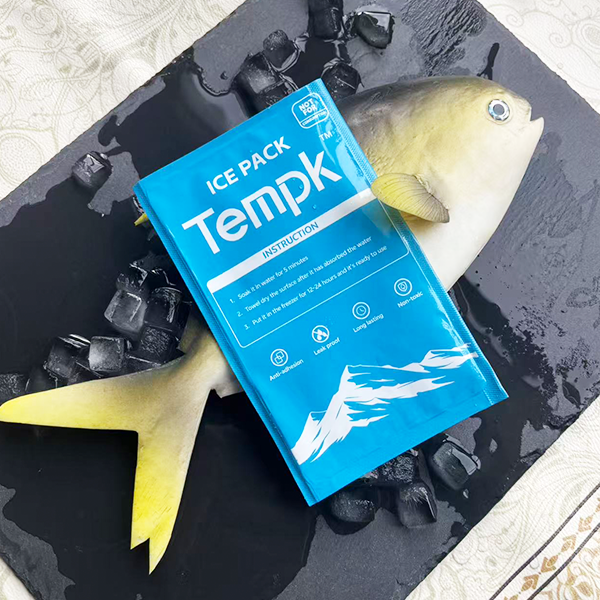
Dry Ice Pack Bulk Buying in Canada: A Practical Selection Guide
If you are evaluating dry ice pack bulk buying in Canada, start with one principle: buy the shipping outcome, not just the pack. In this category, unit price means very little without clear dimensions, hydrated weight, material construction, route fit, and evidence that the supplier can reproduce the same pack again and again. Canadian buyers typically care about long domestic distances, cross-border complexity, and seasonal extremes. A supplier has to be ready for both summer heat and winter cold.
First, Define the Product Correctly
Before comparing vendors or prices, make sure everyone means the same product. In many industrial listings, a dry ice pack is a dry-form pack or sheet that is hydrated with water, frozen, and then used as a refrigerant inside an insulated shipper. It may arrive as a small cell sheet, a larger blanket, a brick-style pouch, or another gel-based format. That is not the same as carbon dioxide dry ice, which reaches much lower temperatures, vents gas as it sublimates, and is subject to specific transport and safety rules. Confusing the two terms can create specification mistakes, cost surprises, and even compliance issues in air shipments.
Most products in this category use a sealed film or film-plus-nonwoven structure that holds a water-absorbing medium. In many commercial designs that medium is a superabsorbent polymer, sometimes paired with a gel or phase-change formulation. After water enters the pack, the internal material swells and traps the liquid inside separate cells. Once frozen, those cells absorb heat from the payload and help slow temperature rise. Sheet formats can wrap around corners and spread cooling more evenly than rigid bricks, while brick or pouch formats are easier to stack in repeatable layers.
Compare the Main Refrigerant Options Before You Buy
A dry-state sheet is attractive when you want flexible coverage and low inbound storage volume. A pre-filled gel pack is attractive when you want simple preparation and repeatable handling. A rigid brick or PCM brick is useful when stacking discipline matters. Carbon dioxide dry ice sits in a different class: it is the choice for much colder applications, but it brings venting, handling, and transport obligations that do not belong to ordinary hydrated gel packs.
| Format | Best fit | Main watch-out |
|---|---|---|
| Hydrated sheet pack | Wraparound coverage and lower inbound storage volume | Needs hydration workflow and space to swell |
| Pre-filled gel pack | Quick deployment and consistent handling | Higher storage cube and freight weight |
| Rigid brick or PCM brick | Repeatable layer packing and strong support | Less flexible around corners and odd shapes |
| Carbon dioxide dry ice | Ultra-cold frozen applications | Vent, safety, and dry-ice transport rules |
Where These Packs Fit Best in Practice
Dry-state packs and sheet refrigerants are commonly used when teams need a lightweight cold source for one-way or repeat shipments of seafood, meat, dairy, bakery fillings, meal kits, fresh produce, and laboratory or diagnostic items. They are also used in secondary pharmaceutical packaging when the full shipper has been matched to a known temperature band and route duration. Flexible sheet formats are especially useful when the payload is irregularly shaped or when coverage around the top and sides matters more than building a rigid wall of cold bricks.
They are less suitable when you need true ultra-low temperature transport, when you do not control the hydration and freezing workflow, or when the lane is so harsh that a higher-performance insulated shipper and a better-defined refrigerant strategy are required. In many cases, the right answer is not "more packs." It is a better combination of pre-conditioning, pack placement, insulation, and shipment timing.
In Canada, long distances and mixed modes can create the opposite problem as well. You may need to protect against both warm exposure and unintended overcooling when sensitive products travel through winter conditions. That is another reason to validate the full system, not just the pack.
Conditioning Workflow Matters More Than Many Buyers Expect
Dry-state packs introduce one extra operational step compared with pre-filled gel packs: activation. That step sounds simple, yet it can determine whether the program works smoothly. Teams need a repeatable method for soaking or hydrating the pack, removing excess surface water, and freezing the pack for long enough to reach the intended condition. If hydration is inconsistent, some cells may remain underfilled. If packs are stacked too densely in the freezer, freezing can be uneven. If excess surface water is left on the outside, the pack may freeze together with neighboring packs or create unnecessary frost.
For low-volume programs, those problems are manageable. For wholesale or bulk programs, they become process questions. Buyers should ask whether their own operation can support the supplier's recommended routine at scale. A very compact dry sheet can look ideal during procurement but become awkward if the warehouse has limited freezer capacity or if operators need fast turnaround. That does not make the product poor. It simply means the product and the process have to be designed together.
Thermal performance is always a system question, not a pack-only question. The same pack can behave very differently depending on the starting temperature of the goods, the insulation type, how tightly the payload is loaded, how much empty air remains in the box, and whether the shipment sits in a van, on a tarmac, or in a depot cage. That is why experienced buyers look past a headline hold-time claim and ask for a route-specific packout logic, not just a single marketing statement.
What Good Evidence Looks Like
Cold-chain evidence does not need to be complicated, but it does need to be relevant. Useful evidence explains the conditioning method, the shipper type, the amount of payload, the placement of the refrigerant, and the ambient exposure used during the test. Better evidence also distinguishes between easy and hard lanes rather than presenting one broad claim for every use case.
For buyers, the practical move is to ask for two levels of proof. The first is supplier-level proof: specification sheets, material information, and any test or handling guidance the supplier already has. The second is program-level proof: a pilot shipment or thermal check using your own packout and route logic. That second level is where purchasing decisions become reliable, because it shows whether the format survives real handling and supports the target band under realistic conditions.
Route Reality In Canada
Canada adds a different complexity: long domestic routes and strong seasonality. A pack that is designed only for summer heat may not be ideal for winter-sensitive products that can be harmed by overcooling. Buyers should therefore ask how the supplier thinks about both warm and cold seasonal exposures, not just the hottest day of the year.
For domestic distribution, cold-chain packaging may face air, road, depot dwell, and remote delivery conditions within the same program.
Bulk Ordering: Operational Checks Before You Commit in Canada
Bulk purchasing works best when the pack format and the activation workflow are already stable. A large dry-pack order can look very efficient on paper because the product ships flat and stores compactly. In practice, the real bottlenecks are usually hydration throughput, freezer capacity, staging time, and the discipline needed to keep first-in and first-out handling clean. If those site conditions are not ready, buying in bulk can create more waste than savings.
Start with the basics: internal and external dimensions, dry weight, hydrated weight, units per carton, cartons per pallet, and the recommended soak time or hydration method. Then move to operational questions. How much space will the hydrated packs occupy in your freezer? How many hours do you need between hydration and loading? Can your team handle peak-season activation without leaving packs partially frozen? For domestic distribution, cold-chain packaging may face air, road, depot dwell, and remote delivery conditions within the same program.
It helps to confirm local stockholding, seasonal test logic, lot traceability, and whether the supplier has experience with parcels, healthcare shipments, and long regional lanes. It is also wise to ask how the supplier controls carton count and lot traceability. In a high-volume program, small errors in count, weight, or sealing quality can multiply quickly across many thousands of shipments.
A practical bulk-order checklist includes:
- Dry and hydrated dimensions, plus usable thickness in the final shipper.
- Film, nonwoven, or laminate type and seal construction.
- Recommended hydration water quality and soak time.
- Freeze time under your own freezer conditions.
- Lot coding, carton labeling, and sample retention policy.
- Agreement on what counts as an acceptable leak, burst, or underfilled-cell rate.
A Practical Supplier Checklist
Before you move from sample stage to production or repeat purchase, make sure the review covers most of these points:
- Internal and external fit: dry size, hydrated size, and how the pack sits inside the actual shipper.
- Usable cold mass: hydrated weight, conditioned temperature, and how much of the box volume the refrigerant consumes.
- Material construction: film or laminate type, nonwoven reinforcement, and any stated resin or absorbent system.
- Closure and integrity: seal pattern, leak resistance, burst control, and tolerance for weak cells.
- Handling efficiency: stackability, cut-to-fit guidance, wraparound suitability, and whether the thawed pack stays clean to handle.
- Hygiene and traceability: SDS, lot coding, carton labels, and any material or food-contact declarations you need.
- Commercial terms: MOQ, stock versus custom lead time, print setup conditions, and carton or pallet quantities.
- Consistency: how approval samples are matched to production and how changes are communicated.
- Route suitability: whether the pack was selected for your actual temperature band, transit duration, and handling environment.
Compliance, Qualification, and Documentation
Cold packs are components, not compliance shortcuts. For pharmaceutical or healthcare use, the critical question is whether the full shipping configuration can maintain the intended temperature range over the intended route. Public guidance from Health Canada and GDP-oriented regulatory material emphasizes transport according to labelled storage conditions or transport conditions supported by data. That principle applies whether you are using a simple gel pack, a hydrated sheet, a PCM brick, or true carbon dioxide dry ice.
Documentation should therefore be matched to the application. For food-related distribution, buyers may need material declarations, SDS information, and relevant food-contact or indirect-contact statements. For laboratory and pharmaceutical programs, traceability, packout instructions, thermal evidence, and change-control discipline are more important than generic marketing certificates. If the shipment uses actual carbon dioxide dry ice, additional transport obligations apply because the package must vent gas and follow dry-ice-specific marking and handling requirements. Hydrated gel packs avoid that particular dry ice hazard profile, but they still need fit-for-purpose evidence.
A practical compliance review also distinguishes between a reusable handling container and a qualified temperature-control system. A clean reusable crate can improve handling and hygiene, yet still offer no meaningful thermal protection. A flexible dry sheet can provide useful cooling, yet still be inadequate without the right insulated box and route validation. Buyers in regulated sectors should treat those distinctions as basic, not optional.
FAQ
Are dry ice packs the same as carbon dioxide dry ice?
No. In many packaging catalogs, a dry ice pack is a dry-state gel or refrigerant pack that is hydrated and frozen before use. Carbon dioxide dry ice is a different refrigerant entirely. It sublimates, requires venting, and has transport and safety rules that do not apply in the same way to hydrated gel packs.
Can these packs be used for pharmaceutical shipments?
They may be suitable as part of a qualified insulated shipper, but suitability depends on the product, temperature range, route duration, and packout design. For drug products, buyers should work from labelled storage conditions or transport conditions supported by data rather than assuming any cold pack is automatically acceptable.
What should I test before approving a bulk order?
Test the actual packout on your intended insulated box or liner. Include starting product temperature, conditioning method, hot and cold seasonal exposure, parcel handling if relevant, and receiving checks. Also compare approval samples with production samples so size, hydrated mass, and seal quality do not drift later.
What is the most common buying mistake?
The most common mistake is comparing packs only by quoted hold time or price per piece. A buyer gets better results by comparing dry and hydrated dimensions, film construction, hydrate-and-freeze workflow, and evidence that the supplier can reproduce the same pack consistently.
Conclusion
A strong buying decision in this category is rarely about finding the coldest or cheapest pack. It is about matching the right refrigerant format to the right insulated system, then choosing a supplier that can reproduce that specification consistently. Once you define the lane, the target temperature band, and the packout workflow clearly, the comparison becomes much more objective.
About Tempk
At Tempk, we work on temperature-controlled packaging for food, pharmaceutical, and other sensitive shipments. Our public product range includes gel ice packs, hydration dry ice packs, insulated bags, cooler boxes, thermal pallet covers, and broader custom packaging solutions across multiple temperature zones. We focus on matching refrigerant format and shipper structure to real transport conditions so buyers can compare practical options before scaling a program.
Next Step
If you are comparing pack formats or suppliers, ask for a recommendation built around your target temperature, transit time, and handling conditions. That makes bulk purchasing and customization decisions far easier to get right.