


Supplier dry ice pack for food logistics: Practical buying guide
Supplier dry ice pack for food logistics: Practical buying guide
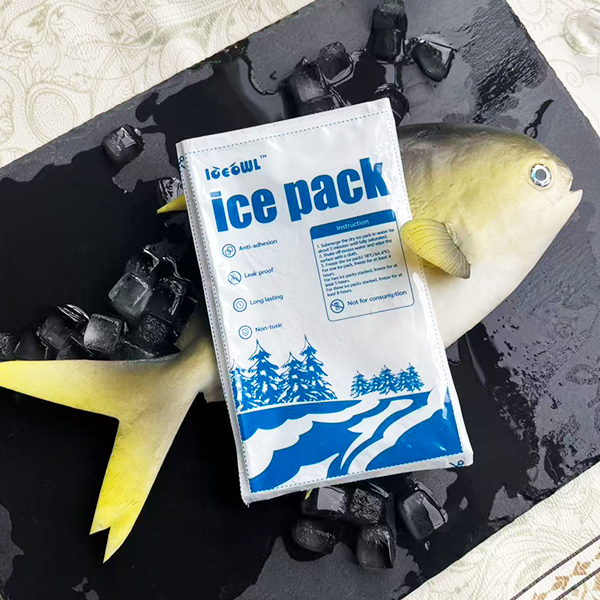
What to check before buying Supplier dry ice pack for food logistics
If you are evaluating supplier dry ice pack for food logistics, the most important insight is simple: buy the shipping system for the product condition you must protect, not for the name of the pack. The phrase dry ice pack can refer to several very different refrigerant formats, and in food logistics those differences matter. Some shipments genuinely need deep-cold protection. Many others need controlled refrigeration, moisture management, structural protection, or a cleaner pack-out design more than they need maximum cold intensity.
A supplier dry ice pack for food logistics can be useful, but food logistics is too broad for one blanket answer. Frozen meals, seafood, dairy, confectionery, produce, and prepared foods do not all need the same thermal treatment. The first job is to classify the food, not to choose the coldest insert.
What buyers usually mean by this type of request
Food buyers often use dry ice pack as a catch-all term for shipping refrigerants. That shortcut hides the difference between actual dry ice, hydrated sheet packs, gel packs, and PCMs. Those materials behave differently in a shipper and are not interchangeable across all food categories.
A supplier-led search usually means you need technical capability, repeatable production, and a clear answer on how the pack fits the shipper, not just a price quote.
When a dry-ice-style pack fits and when it does not
A dry-ice-style pack fits when the product state and route actually justify it. That usually means a frozen target or an unusually severe lane that has been thought through as a full insulated system. It does not mean that deeper cold is automatically safer. In food logistics, the wrong cold source can create freeze damage, condensation, quality loss, or unnecessary handling complexity. The pack has to be evaluated as part of the total design: product starting temperature, insulation, internal spacing, duration, ambient swings, and receiving conditions.
True dry ice is a strong fit for true frozen food programs and some severe lanes. It is a weaker fit when the product is merely chilled or quality-sensitive to deep cold. Many food programs work better when the supplier offers more than one refrigerant path under one relationship.
Single deep-cold solution: Simple operating model. Main limitation: Often overspecified and may not suit chilled or quality-sensitive foods.
Segmented refrigerant strategy: Matches food classes more accurately. Main limitation: Requires better SKU logic and packing discipline.
Insulated shipper plus moderate coolant: Useful for chilled foods and moderate lanes. Main limitation: Not enough for true frozen routes.
Reusable insulated system: Potential waste reduction on stable lanes. Main limitation: Needs reverse logistics and cleaning control.
Build the package around the product, not the pack name
Mixed food logistics is a segmentation exercise. Start by grouping products into frozen, chilled, cool-but-not-frozen, and ambient-stable classes. Then think about route length, carrier exposure, leakage risk, insulation, and what arrival condition the customer expects.
Food logistics involves both safety thinking and product-quality thinking. Temperature affects shelf life, texture, thaw state, and appearance, but the relevant threshold changes across products. A refrigerant that is right for frozen entrées may be wasteful or damaging for chilled dairy or fresh produce in the same network.
Food logistics still needs leakage control, outer-package integrity, and food-safe handling. If true dry ice is used, handling and transport documentation become more important, and some product categories, such as live seafood, may rule out dry ice even if other frozen products use it effectively.
The refrigerant is only part of the answer. The package system matters just as much: insulation type, box size, internal dead space, pack placement, spacers, dividers, absorbent layers, and the starting temperature of the payload all shape the result. Two suppliers can offer similar frozen pack weights and still produce very different payload outcomes because one system manages heat flow and local cold spots better than the other. For B2B buyers, that is why a system-level conversation is usually more useful than a component-only conversation.
A practical buying framework
A practical buying framework starts with five questions. What temperature condition must the product reach at delivery? How long is the realistic door-to-door exposure? What is the hottest and coldest environment the route may see? How much packing variation can your operation tolerate? And what would failure actually look like: thawing, freezing, leakage, appearance loss, or simply excess packaging cost? When those questions are answered first, supplier recommendations become much easier to judge.
Ask for data that reflects how your operation actually works. A hold-time statement means little unless you know the payload mass, the ambient challenge, the pass-fail definition, and the conditioning method behind it. The more useful questions are how the payload behaves near the cold faces, what happens after a route delay, and whether the pack-out remains inside the intended range after repeated ambient shocks. In practice, a supplier's discipline in explaining the assumptions often tells you more than the headline performance claim.
Procurement success in cold-chain packaging often depends on consistency rather than on one impressive sample. A well-performing pilot can still fail at scale if the production film, gel fill, PCM formulation, carton dimensions, or conditioning steps drift over time. That is why supplier evaluation should cover sample-to-production consistency, change control, packing-line practicality, and storage handling in addition to pure thermal performance.
The best supplier in food logistics usually behaves like a packaging program partner, not just a pack vendor. Ask whether they can support frozen, chilled, and moderate-cooling applications under one framework and whether they help define pack-out logic by route and product class.
Which food classes can your pack range support: frozen, chilled, cool-but-not-frozen, or heat-sensitive ambient products?
Do you offer multiple refrigerant formats and insulated packaging options under one supplier program?
What payload assumptions, ambient profiles, and hold-time definitions support your recommendations?
How do you address leakage control, absorbency, and box integrity for different food categories?
Can the pack-out be standardized for warehouse labor without oversimplifying product differences?
What are the MOQ, lead times, and custom options for seasonal peaks?
How do you manage specification consistency and change control across repeat orders?
Can you help right-size the package to reduce cost and waste without exposing the food to added risk?
What drives real cost
The most expensive packaging program is often not the one with the highest unit price. It is the one that looks inexpensive until you count spoilage, re-shipments, complaint handling, extra freezer space, dimensional weight, and time lost on awkward pack-outs. In cold-chain procurement, the right system often wins by reducing operational friction as much as by protecting the payload.
Sustainability also becomes clearer when the package is correctly matched to the product. Overspecification adds weight, waste, and energy use. Underspecification adds spoilage and repeat shipments. The better path is usually to right-size the shipper, choose a refrigerant that matches the target condition, and keep the packing method simple enough to repeat accurately at scale.
Food logistics continues to move toward smaller, more frequent shipments, stronger freshness expectations, and greater scrutiny of packaging waste. That pushes buyers toward more precise pack-outs rather than simply adding more refrigerant, and it increases the value of right-sizing and better SKU segmentation.
Before rolling out a full supplier program, run a pilot lane that uses the final production components, not a hand-built sample. Pack the real payload, condition the coolant the same way the warehouse will do it, and test the shipment under the most realistic route conditions you can simulate. Then review not only payload temperature, but also packing speed, storage footprint, receiving condition, and the clarity of work instructions. That pilot usually tells you more about launch success than any brochure claim.
Common failure points
Using one cold source for frozen, chilled, and heat-sensitive foods with different needs.
Buying a dry ice pack before defining the thermal class of the food.
Ignoring leakage, structural integrity, and pack-out repeatability.
Comparing suppliers on pack cost without checking spoilage, complaint handling, and labor impact.
Assuming more refrigerant automatically means a better food-logistics design.
Operational details buyers should not skip
Operational discipline matters because the best thermal design can still fail if the warehouse cannot repeat it. In food logistics, buyers should ask how the coolant is stored, how long it takes to condition, what the acceptable assembly window is once the pack leaves frozen storage, and whether the work instruction is realistic for the people actually building the shipment. A supplier-led search usually means you need technical capability, repeatable production, and a clear answer on how the pack fits the shipper, not just a price quote. A packaging choice that looks efficient on paper but is awkward on the packing line often becomes an expensive program in practice.
Receiving checks also deserve attention. The product does not stop being at risk when the box leaves the warehouse. Think about what the receiver should see, touch, and record at arrival. Should they verify package integrity, look for signs of leakage or condensation, check whether the cold source is still present, or escalate if the product feels unexpectedly hard or warm? In food logistics, a clear receiving rule can reduce preventable product loss because it turns vague observations into a defined response.
Storage footprint and staging time are part of the buying decision as well. Some cold packs need more freezer space, longer conditioning, or stricter first-in-first-out control than others. If a program ships at volume, that operational burden can matter almost as much as the thermal curve. The better solution is often the one your team can execute cleanly every day, not just the one that looks strongest in a single test.
Short FAQ
Is a supplier dry ice pack enough for all food logistics needs?
No. Food products differ too much in temperature requirement, quality risk, and route exposure.
When is true dry ice the right choice?
Usually for genuinely frozen products or highly demanding cold routes, not as a default for all foods.
What is the best first step before comparing suppliers?
Classify your products into frozen, chilled, and other thermal groups, then define the route challenge.
Why do suppliers need to know the lane?
Because the same food may need a different pack-out for overnight regional delivery than for a longer parcel route.
Final takeaway
The safest way to buy a supplier dry ice pack for food logistics is to start with the product requirement and the route, not with the pack name. Once you know the target condition, transit duration, ambient risk, and packaging constraints, the right cold source becomes easier to choose and easier to scale. Buyers who treat the pack as part of a full shipping system usually get better protection, lower waste, and fewer surprises after launch.
About Tempk
We are Tempk, a temperature-control packaging brand established in 2011. Our published product range includes ice packs, insulated bags and boxes, thermal pallet covers, insulin temperature carriers, and custom temperature-controlled packaging solutions for food and pharmaceutical applications. We focus on matching packaging formats to product sensitivity, route conditions, and practical packing needs so buyers can choose a more suitable cold-chain setup instead of relying on a generic cold source. For broad food cold-chain use, Tempk’s published product range of ice packs, insulated bags, insulated boxes, and custom temperature-controlled packaging is relevant because buyers often need a packaging family that can support more than one food temperature class rather than one fixed refrigerant format.
Next step
Map your food portfolio by temperature class and transit risk before you compare suppliers. If you are screening suppliers, start with your target temperature band, transit duration, and the risk points that matter most on the route.
Distributor dry ice pack for insulin packaging: Practical buying guide
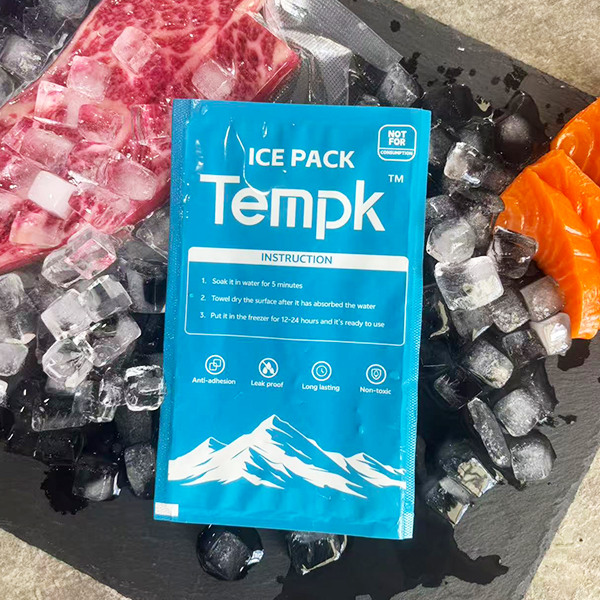
What to check before buying Distributor dry ice pack for insulin packaging
If you are evaluating distributor dry ice pack for insulin packaging, the most important insight is simple: buy the shipping system for the product condition you must protect, not for the name of the pack. The phrase dry ice pack can refer to several very different refrigerant formats, and in insulin packaging those differences matter. Some shipments genuinely need deep-cold protection. Many others need controlled refrigeration, moisture management, structural protection, or a cleaner pack-out design more than they need maximum cold intensity.
When buyers ask for a distributor dry ice pack for insulin packaging, they are usually trying to solve a package-design problem, not simply buy a cold component. The packaging has to hold a refrigerated range, limit freeze exposure, and fit a repeatable assembly method for fulfillment or distribution.
What buyers usually mean by this type of request
The wording dry ice pack hides important differences. One distributor may mean actual dry ice, another may mean a frozen sheet pack, and another may mean a standard gel pack. Those are not equivalent in insulin packaging because local contact with a very cold surface can damage the medicine even when the outer box still looks well controlled.
A distributor-led search usually comes from teams that need stocked product, replenishment speed, and consistent specifications across repeat orders.
When a dry-ice-style pack fits and when it does not
A dry-ice-style pack fits when the product state and route actually justify it. That usually means a frozen target or an unusually severe lane that has been thought through as a full insulated system. It does not mean that deeper cold is automatically safer. In insulin packaging, the wrong cold source can create freeze damage, condensation, quality loss, or unnecessary handling complexity. The pack has to be evaluated as part of the total design: product starting temperature, insulation, internal spacing, duration, ambient swings, and receiving conditions.
A distributor can add value when the offered coolant fits a practical insulin package build. If the distributor only offers deep-cold packs without guidance on spacing and packaging geometry, the offer may not be a good fit. Many insulin packaging projects are better served by a more controlled refrigerant and a simpler, more repeatable pack layout.
Component only: Simple to source and stock. Main limitation: Does not solve package geometry or freeze-risk control.
Standard insulated kit: Faster to launch for common lanes. Main limitation: May need adjustment if the product or route changes.
Custom package build: Better fit for payload, labor, and thermal balance. Main limitation: Takes longer to develop and approve.
Reusable package: Potentially cleaner presentation and lower waste on stable lanes. Main limitation: Needs return handling and inspection discipline.
Build the package around the product, not the pack name
Insulin packaging is about the whole assembly: pack size, cavity size, insulation, coolant location, product spacing, absorbent protection, secondary packaging, and line-side repeatability. A design that only works when assembled by an expert at low volume may fail when a warehouse team builds it every day.
Technically, the payload response matters more than the pack label. The same coolant can behave very differently depending on insulation, dead space, product mass, and the gap between the insulin and the coldest pack surface. That is why package geometry often matters as much as refrigerant chemistry.
Packaging components should not be confused with a qualified shipping system. Requirements vary by route and market, and additional qualification may be needed. If true dry ice is part of the design, handling, labeling, and venting requirements also become more important.
The refrigerant is only part of the answer. The package system matters just as much: insulation type, box size, internal dead space, pack placement, spacers, dividers, absorbent layers, and the starting temperature of the payload all shape the result. Two suppliers can offer similar frozen pack weights and still produce very different payload outcomes because one system manages heat flow and local cold spots better than the other. For B2B buyers, that is why a system-level conversation is usually more useful than a component-only conversation.
A practical buying framework
A practical buying framework starts with five questions. What temperature condition must the product reach at delivery? How long is the realistic door-to-door exposure? What is the hottest and coldest environment the route may see? How much packing variation can your operation tolerate? And what would failure actually look like: thawing, freezing, leakage, appearance loss, or simply excess packaging cost? When those questions are answered first, supplier recommendations become much easier to judge.
Ask for data that reflects how your operation actually works. A hold-time statement means little unless you know the payload mass, the ambient challenge, the pass-fail definition, and the conditioning method behind it. The more useful questions are how the payload behaves near the cold faces, what happens after a route delay, and whether the pack-out remains inside the intended range after repeated ambient shocks. In practice, a supplier's discipline in explaining the assumptions often tells you more than the headline performance claim.
Procurement success in cold-chain packaging often depends on consistency rather than on one impressive sample. A well-performing pilot can still fail at scale if the production film, gel fill, PCM formulation, carton dimensions, or conditioning steps drift over time. That is why supplier evaluation should cover sample-to-production consistency, change control, packing-line practicality, and storage handling in addition to pure thermal performance.
For insulin packaging, ask whether the distributor can support a stable bill of materials, dimensional consistency, and a clear buffer strategy between the coolant and the medicine. If they only talk about the pack itself and never ask how the package is built, the conversation is incomplete.
What exact coolant category are you distributing for insulin packaging, and what temperature band is it intended to support?
Can you provide dimensional tolerance and fill-consistency information so the package cavity can be designed accurately?
How should the coolant be conditioned before pack-out, and how sensitive is performance to that step?
What spacer, tray, divider, or sleeve do you recommend to avoid direct freeze contact?
Can your coolant be paired with different insulated boxes or pouches for short and long lanes?
How stable are your replenishment cycle, lot consistency, and specification controls over repeat orders?
Do you offer custom sizes if the current pack creates dead space or uneven temperature distribution?
What documentation can you share on sample-to-production consistency and assembly guidance?
What drives real cost
The most expensive packaging program is often not the one with the highest unit price. It is the one that looks inexpensive until you count spoilage, re-shipments, complaint handling, extra freezer space, dimensional weight, and time lost on awkward pack-outs. In cold-chain procurement, the right system often wins by reducing operational friction as much as by protecting the payload.
Sustainability also becomes clearer when the package is correctly matched to the product. Overspecification adds weight, waste, and energy use. Underspecification adds spoilage and repeat shipments. The better path is usually to right-size the shipper, choose a refrigerant that matches the target condition, and keep the packing method simple enough to repeat accurately at scale.
Insulin packaging is moving toward smaller, more distributed shipments and easier assembly methods. That makes buyers more interested in right-sized kits, clear work instructions, and refrigerants that are easier to control in real operations instead of only in ideal test conditions.
Before rolling out a full distributor program, run a pilot lane that uses the final production components, not a hand-built sample. Pack the real payload, condition the coolant the same way the warehouse will do it, and test the shipment under the most realistic route conditions you can simulate. Then review not only payload temperature, but also packing speed, storage footprint, receiving condition, and the clarity of work instructions. That pilot usually tells you more about launch success than any brochure claim.
Common failure points
Designing the insulin package around a vague refrigerant label instead of a defined temperature target.
Placing the product too close to the coldest surface in the name of longer hold time.
Ignoring assembly variation between pilot samples and real warehouse production.
Assuming a neat insulated carton automatically proves shipping performance.
Failing to separate packaging questions from route-qualification questions.
Operational details buyers should not skip
Operational discipline matters because the best thermal design can still fail if the warehouse cannot repeat it. In insulin packaging, buyers should ask how the coolant is stored, how long it takes to condition, what the acceptable assembly window is once the pack leaves frozen storage, and whether the work instruction is realistic for the people actually building the shipment. A distributor-led search usually comes from teams that need stocked product, replenishment speed, and consistent specifications across repeat orders. A packaging choice that looks efficient on paper but is awkward on the packing line often becomes an expensive program in practice.
Receiving checks also deserve attention. The product does not stop being at risk when the box leaves the warehouse. Think about what the receiver should see, touch, and record at arrival. Should they verify package integrity, look for signs of leakage or condensation, check whether the cold source is still present, or escalate if the product feels unexpectedly hard or warm? In insulin packaging, a clear receiving rule can reduce preventable product loss because it turns vague observations into a defined response.
Storage footprint and staging time are part of the buying decision as well. Some cold packs need more freezer space, longer conditioning, or stricter first-in-first-out control than others. If a program ships at volume, that operational burden can matter almost as much as the thermal curve. The better solution is often the one your team can execute cleanly every day, not just the one that looks strongest in a single test.
Short FAQ
Is insulin packaging the same as insulin shipping?
Not exactly. Packaging focuses on how the system is built and assembled, while shipping includes the full route, carrier exposure, and receiving conditions.
Can a distributor help with package design?
Some can, especially if they understand how their coolant behaves inside insulated systems. Others mainly sell the component.
Why is spacing so important?
Because a small medicine pack placed against a very cold surface can freeze locally even when the overall box looks stable.
What should I validate before scaling the package?
Validate the coolant specification, conditioning method, assembly steps, payload placement, and whether the production build matches the sample build.
Final takeaway
The safest way to buy a distributor dry ice pack for insulin packaging is to start with the product requirement and the route, not with the pack name. Once you know the target condition, transit duration, ambient risk, and packaging constraints, the right cold source becomes easier to choose and easier to scale. Buyers who treat the pack as part of a full shipping system usually get better protection, lower waste, and fewer surprises after launch.
About Tempk
We are Tempk, a temperature-control packaging brand established in 2011. Our published product range includes ice packs, insulated bags and boxes, thermal pallet covers, insulin temperature carriers, and custom temperature-controlled packaging solutions for food and pharmaceutical applications. We focus on matching packaging formats to product sensitivity, route conditions, and practical packing needs so buyers can choose a more suitable cold-chain setup instead of relying on a generic cold source. For insulin packaging projects, Tempk’s public product range is relevant because it includes insulin temperature carriers and custom temperature-controlled packaging, giving buyers a reference point for both small-format medical protection and broader insulated shipping design.
Next step
Start the discussion with the package layout, target temperature band, and assembly method rather than asking for the coldest pack. If you are comparing distributors, ask how they handle stocking, replenishment, and consistency over repeat shipments.
How to Select a Cryotherapy Gel Pack distributor for Chemical Distri

Selecting a Cryotherapy Gel Pack Distributor for Chemical Distribution Without Guesswork
A good cryotherapy gel pack supplier should help you solve a route problem, not just quote a unit price. For chemical distribution, that means matching the pack format to temperature exposure, loading pattern, operator workflow, and the level of documentation your procurement process actually requires.
Many buyers start with the right instinct and the wrong shortcut. They focus on nominal pack size, or on whether a pouch feels soft or rigid, before they check the things that usually decide outcomes: conditioning practice, pack count, box geometry, seal integrity, change control, and fit with the actual route.
The better approach is to separate three questions. First, what job is the pack doing in the system? Second, what technical details control that job? Third, which supplier can reproduce those details consistently at commercial scale? That is the framework this article uses.
What this product solves and what it does not
A soft reusable gel cold pack sometimes considered for chemical logistics because it is durable, but it was not necessarily designed as a primary transport component for chemicals is typically chosen because buyers want flexibility and durable pouch handling. In temperature-sensitive chemicals, reagents, specialty materials, and laboratory chemical logistics, that can make the pack easier to place, easier to count, or easier to integrate with an insulated shipper.
Cryotherapy-style packs are often engineered to stay soft against the body and to survive repeated freeze-thaw handling. Those are useful qualities, but they are not the same as transport qualification. When buyers compare these packs for shipping, they should separate comfort-oriented design from route-oriented packaging performance.
The important boundary is this: the pack is only one part of the system. Chemical distribution raises compatibility, spill-response, and documentation questions that do not exist in ordinary consumer cold-pack sourcing. If the route is long, hot, highly variable, or regulated, buyers still need to review insulation, product load, conditioning, handling, and receiver expectations.
- Use the pack name as a starting point, not as proof of route suitability.
- Match the format to the box layout and operator workflow, not only to the product category.
- Ask what the pack is designed to do after conditioning, partial thaw, and receipt.
Match the format to the route, product, and handling pattern
Route fit matters more than a catalog label. Start with the job the pack has to do across lab chemical transfers, specialty reagent distribution, and industrial temperature-sensitive shipments: hold a target temperature band, buffer short spikes, separate product layers, or keep the load stable until receipt.
Chemical distribution adds another layer of review. The refrigerant remains outside the regulated product packaging, but buyers still need to think about compatibility, spill response, and the stability needs of the chemical itself. A soft reusable pack can be useful, yet it should be considered within the broader containment and safety logic of the shipment. Buyers should map not only line-haul time, but also pre-pack storage, carton dwell time on the dock, carrier handoffs, delivery windows, and how quickly the receiver checks the shipment. A pack can look adequate in the freezer room and still underperform once those extra exposures are added.
The same pack may work well in one lane and poorly in another. A short urban delivery with fast handoff may reward compact pack geometry and faster packing. A longer route with hotter exposure may reward more thermal mass, more insulation, or a different refrigerant strategy altogether.
- Temperature-sensitive reagents that need cold support around a separate primary container.
- Lab chemical routes where the refrigerant must remain outside the regulated product packaging.
- Buyers comparing reusable soft packs with more standard shipping refrigerants for small-quantity specialty lanes.
Technical details that separate one supplier from another
Cold packs that look similar at first glance can differ in ways that matter. Film thickness, seal width, fill ratio, pouch shape, corner design, and the internal gel system all influence how the pack freezes, thaws, flexes, and survives impact.
Cryotherapy-style packs deserve extra scrutiny because their design priorities may include softness, skin-contact comfort, and reuse. Those features can be positive, yet shipping performance depends more on seal durability, dimensional control, and how repeatably the pack can be conditioned and placed in the shipper.
In this category, the most useful sample is not the prettiest sample. It is the one that behaves consistently after freeze-thaw cycles, hand packing, stacking, and receipt inspection. That is where differences in manufacturing control become visible.
- Check actual fill weight, not only nominal size.
- Review film and seal quality after low-temperature conditioning.
- Confirm how the pack is meant to be placed inside the insulated system.
- Ask whether the sample spec is locked before scale-up.
Keep compliance language precise
A cryotherapy gel pack may help with external temperature support, but chemical transport requirements depend on the product classification, packaging system, and route. Additional compatibility and containment review may be needed. Buyers should ask the supplier to be precise about what the pack is intended to do, what supporting documents are available, and what still has to be proven in the complete shipper system. That distinction prevents an ordinary cold pack from being oversold as a fully qualified shipping solution.
This is one of the most common buying errors in cold chain packaging: a team finds a pack that seems to hold cold, and then assumes that the pack itself carries the whole compliance story. In reality, regulated or quality-sensitive shipments usually depend on the complete packaging configuration, handling instruction, and route qualification.
For procurement, the practical question is not whether the supplier can say the right words. It is whether the supplier can provide clear intended-use information, stable specifications, and the technical detail needed for your own internal review, testing, or approval workflow.
- Request intended-use language that matches the real shipment.
- Separate cold-pack capability from full shipper qualification.
- Decide in advance which declarations or technical documents are mandatory.
A practical supplier checklist
The supplier conversation should become more specific as soon as the format looks promising. A useful cryotherapy gel pack distributor discussion moves from broad claims to measurable details, sample review, complaint handling, and scale-up control.
A useful supplier discussion should cover more than MOQ and lead time. Buyers should compare how the supplier defines the pack, how it controls production, how it handles complaints, and whether a pilot sample is likely to match the full commercial run.
Consistency is especially important when pack-outs are repeated daily. Small changes in gel fill, film gauge, dimensions, or sealing can change how the pack freezes, how it fits in the box, and how the receiver experiences the shipment.
- Intended-use statement and technical composition information.
- Film durability, leak resistance, and secondary containment expectations.
- Documentation suitable for chemical QA or EHS review where relevant.
- Change-control process for gel, film, and closure design.
- Support for pilot shipments and incident review.
- Clarity on reusability limits and inspection criteria after use.
How to review samples without missing hidden risk
A sample review should imitate the real operation as closely as possible. Condition the pack the way the supplier recommends, load the actual product or a realistic surrogate, and use the same insulation, carton, and packing order expected in production.
Then watch what happens at the points where failures usually appear: before pack-out, after the last pack is loaded, after a realistic dwell period, after routine transport handling, and when the receiver opens the shipment. For many buyers, those checks reveal more than any headline hold-time claim.
Sample review should also cover the commercial side. Does the supplier label lots clearly? Can operators identify the pack quickly? Does the approved sample become a locked specification? Is there a documented process if the supplier needs to change film, gel, weight, or manufacturing site?
- Freeze or chill the sample exactly as instructed.
- Use the real box, liner, and pack count whenever possible.
- Record how the pack looks and feels at receipt, not just the payload temperature.
- Ask how sample approval is translated into production control.
Operational details that decide whether the program scales
Small operational details often decide whether a bulk program feels efficient or frustrating. How are the packs cased? How much freezer space do they need? Do operators place them the same way every time? Does the receiver see a clean, organized pack-out or a messy box that triggers doubt?
Those questions sound practical rather than technical, but they influence total cost and complaint rates. In many cases, the winning pack is not the one with the boldest performance claim. It is the one that the warehouse can store, condition, place, and receive with fewer exceptions.
That is especially relevant for chemical distribution, where the packaging decision touches more than temperature. It affects handling quality, perception at receipt, and whether the process can be repeated smoothly at scale.
- Review freezer space, staging time, and operator workflow before buying in bulk.
- Make sure the pack count and placement can be taught consistently.
- Evaluate the arrival condition of the pack as part of the decision.
Cost, sustainability, and operational fit
Chemical buyers increasingly focus on documentation, containment logic, and risk control rather than simply choosing the coldest-looking pack. That usually shifts the conversation from nominal pack price to total pack-out cost: labor time, carton utilization, freezer space, complaint rate, replacement shipments, and whether the chosen format simplifies receiving.
Sustainability also needs a practical lens. A lighter pack is not automatically greener if it increases spoilage or forces overpacking. A reusable pack is not automatically better if the return loop is unrealistic. The strongest sustainability decision usually comes from fitting the pack to the route well enough to avoid waste, while keeping materials and reverse logistics realistic.
For teams buying in bulk, operational fit is often where value is won or lost. A pack that stores cleanly, conditions consistently, loads quickly, and creates fewer exceptions can outperform a nominally cheaper pack that causes receiving complaints or labor drag.
- Review freezer space, storage density, and operator handling time.
- Consider the effect of pack geometry on carton fill and payload space.
- Treat waste reduction and route performance as part of the same decision.
Common errors that make a good sample fail in production
Most problems with cryotherapy gel pack sourcing come from mismatch rather than from obvious defects. The pack may be well made, but wrong for the route, wrong for the carton layout, or wrong for the procurement assumptions behind the project.
Typical failure patterns include using a pack format without reviewing compatibility and containment expectations, confusing external refrigerant support with chemical primary packaging, and missing route-specific stability requirements for the chemical itself. These issues usually appear when the team approves a sample too quickly, ignores conditioning detail, or assumes that a product category automatically predicts pack performance.
The simplest way to avoid these problems is to anchor decisions to the real shipment: intended temperature band, route duration, ambient profile, operator workflow, receiving condition, and the supporting documents your internal team actually needs.
- Do not assume the same pack count works in every season.
- Do not approve a sample without locking the commercial specification.
- Do not confuse a useful refrigerant component with a complete validated shipper.
- Do not ignore how the receiver will see the pack on arrival.
Final takeaway
The best cryotherapy gel pack distributor is the one that matches the job the pack actually needs to do. For chemical distribution, that means connecting format, conditioning, box design, route conditions, and supplier consistency instead of treating the cold pack as a generic commodity.
Once that frame is clear, the shortlist usually becomes smaller and more useful. Suppliers who can discuss route fit, documentation, repeatability, and sample-to-production control tend to be safer partners than those who only compete on label language or price.
About Tempk
At Tempk, we focus on cold packs, insulated shipping systems, and route-based packaging selection. Based on our public product range, we work across temperature-controlled packaging categories that include gel packs, insulated shippers, EPP cooler solutions, pallet covers, and temperature-monitoring support. We try to keep the conversation practical: match the packaging to the route, the product, and the handling conditions, rather than treating one pack style as the answer to every cold chain problem.
Next step
If you are comparing suppliers, start with your target temperature band, route duration, and box format. Ask for a sample plan and a route-based recommendation before you place a bulk order.
How to Select a Cooling Gel Pack wholesaler for Seafood Shipping
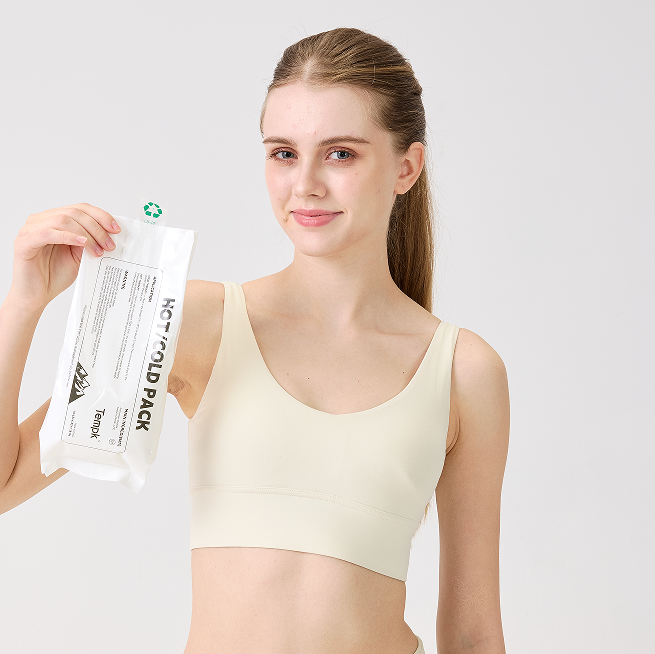
Selecting a Cooling Gel Pack Wholesaler for Seafood Shipping Without Guesswork
A good cooling gel pack supplier should help you solve a route problem, not just quote a unit price. For seafood shipping, that means matching the pack format to temperature exposure, loading pattern, operator workflow, and the level of documentation your procurement process actually requires.
Many buyers start with the right instinct and the wrong shortcut. They focus on nominal pack size, or on whether a pouch feels soft or rigid, before they check the things that usually decide outcomes: conditioning practice, pack count, box geometry, seal integrity, change control, and fit with the actual route.
The better approach is to separate three questions. First, what job is the pack doing in the system? Second, what technical details control that job? Third, which supplier can reproduce those details consistently at commercial scale? That is the framework this article uses.
What this product solves and what it does not
A flexible or semi-rigid gel refrigerant pack used to supplement insulated seafood boxes is typically chosen because buyers want cleaner handling than loose water ice and better control over pack geometry. In fresh and frozen seafood distribution, processing, export handling, and wholesale replenishment, that can make the pack easier to place, easier to count, or easier to integrate with an insulated shipper.
General gel-pack formats cover a wide range of fill ratios, pouch films, seal patterns, and panel shapes. Two products can look similar on paper and behave very differently in the field. That is why buyers should compare full specifications, not only the pack name.
The important boundary is this: the pack is only one part of the system. Seafood pack-outs must manage cold retention, condensation, odor, and box hygiene at the same time. If the route is long, hot, highly variable, or regulated, buyers still need to review insulation, product load, conditioning, handling, and receiver expectations.
- Use the pack name as a starting point, not as proof of route suitability.
- Match the format to the box layout and operator workflow, not only to the product category.
- Ask what the pack is designed to do after conditioning, partial thaw, and receipt.
Match the format to the route, product, and handling pattern
Route fit matters more than a catalog label. Start with the job the pack has to do across dock-to-processor runs, wholesale distribution, and insulated last-mile seafood shipments: hold a target temperature band, buffer short spikes, separate product layers, or keep the load stable until receipt.
Seafood routes are highly sensitive to product state and handling condition. Fresh seafood is often managed close to the melting point of ice, while frozen seafood needs a genuinely frozen distribution path. That makes hygiene, melt management, odor control, and receipt presentation almost as important as headline cold duration. Buyers should map not only line-haul time, but also pre-pack storage, carton dwell time on the dock, carrier handoffs, delivery windows, and how quickly the receiver checks the shipment. A pack can look adequate in the freezer room and still underperform once those extra exposures are added.
The same pack may work well in one lane and poorly in another. A short urban delivery with fast handoff may reward compact pack geometry and faster packing. A longer route with hotter exposure may reward more thermal mass, more insulation, or a different refrigerant strategy altogether.
- Fresh fillet deliveries where clean presentation matters at receipt.
- Processor-to-wholesaler runs where packs may sit in wet bins or insulated totes.
- Frozen seafood replenishment where rigid geometry helps maintain repeatable pack-out patterns.
Technical details that separate one supplier from another
Cold packs that look similar at first glance can differ in ways that matter. Film thickness, seal width, fill ratio, pouch shape, corner design, and the internal gel system all influence how the pack freezes, thaws, flexes, and survives impact.
Most buyers benefit from asking simple but revealing questions. Does the pack stay dimensionally stable after conditioning? Does the surface become brittle at low temperature? Do seals stay intact after drops, compression, and routine warehouse handling? How much cold mass is actually available in the chosen format?
In this category, the most useful sample is not the prettiest sample. It is the one that behaves consistently after freeze-thaw cycles, hand packing, stacking, and receipt inspection. That is where differences in manufacturing control become visible.
- Check actual fill weight, not only nominal size.
- Review film and seal quality after low-temperature conditioning.
- Confirm how the pack is meant to be placed inside the insulated system.
- Ask whether the sample spec is locked before scale-up.
Keep compliance language precise
Fresh and frozen seafood have different route requirements. A cooling gel pack can be useful, but the full system still needs to match product state, handling conditions, and transit duration. Buyers should ask the supplier to be precise about what the pack is intended to do, what supporting documents are available, and what still has to be proven in the complete shipper system. That distinction prevents an ordinary cold pack from being oversold as a fully qualified shipping solution.
This is one of the most common buying errors in cold chain packaging: a team finds a pack that seems to hold cold, and then assumes that the pack itself carries the whole compliance story. In reality, regulated or quality-sensitive shipments usually depend on the complete packaging configuration, handling instruction, and route qualification.
For procurement, the practical question is not whether the supplier can say the right words. It is whether the supplier can provide clear intended-use information, stable specifications, and the technical detail needed for your own internal review, testing, or approval workflow.
- Request intended-use language that matches the real shipment.
- Separate cold-pack capability from full shipper qualification.
- Decide in advance which declarations or technical documents are mandatory.
A practical supplier checklist
The supplier conversation should become more specific as soon as the format looks promising. A useful cooling gel pack wholesaler discussion moves from broad claims to measurable details, sample review, complaint handling, and scale-up control.
A useful supplier discussion should cover more than MOQ and lead time. Buyers should compare how the supplier defines the pack, how it controls production, how it handles complaints, and whether a pilot sample is likely to match the full commercial run.
Consistency is especially important when pack-outs are repeated daily. Small changes in gel fill, film gauge, dimensions, or sealing can change how the pack freezes, how it fits in the box, and how the receiver experiences the shipment.
- Cold retention versus pack mass and carton size.
- Film durability in wet, rough, and low-temperature handling.
- Surface cleanability and leak response if the pouch is damaged.
- Compatibility with EPS, EPP, corrugated, or reusable seafood boxes.
- Stacking performance and whether packs shift in transit.
- Production consistency during seasonal seafood peaks.
How to review samples without missing hidden risk
A sample review should imitate the real operation as closely as possible. Condition the pack the way the supplier recommends, load the actual product or a realistic surrogate, and use the same insulation, carton, and packing order expected in production.
Then watch what happens at the points where failures usually appear: before pack-out, after the last pack is loaded, after a realistic dwell period, after routine transport handling, and when the receiver opens the shipment. For many buyers, those checks reveal more than any headline hold-time claim.
Sample review should also cover the commercial side. Does the supplier label lots clearly? Can operators identify the pack quickly? Does the approved sample become a locked specification? Is there a documented process if the supplier needs to change film, gel, weight, or manufacturing site?
- Freeze or chill the sample exactly as instructed.
- Use the real box, liner, and pack count whenever possible.
- Record how the pack looks and feels at receipt, not just the payload temperature.
- Ask how sample approval is translated into production control.
Operational details that decide whether the program scales
Small operational details often decide whether a bulk program feels efficient or frustrating. How are the packs cased? How much freezer space do they need? Do operators place them the same way every time? Does the receiver see a clean, organized pack-out or a messy box that triggers doubt?
Those questions sound practical rather than technical, but they influence total cost and complaint rates. In many cases, the winning pack is not the one with the boldest performance claim. It is the one that the warehouse can store, condition, place, and receive with fewer exceptions.
That is especially relevant for seafood shipping, where the packaging decision touches more than temperature. It affects handling quality, perception at receipt, and whether the process can be repeated smoothly at scale.
- Review freezer space, staging time, and operator workflow before buying in bulk.
- Make sure the pack count and placement can be taught consistently.
- Evaluate the arrival condition of the pack as part of the decision.
Cost, sustainability, and operational fit
More seafood buyers are moving from generic ice replacement language to route-based decisions around hygiene, presentation, and box efficiency. That usually shifts the conversation from nominal pack price to total pack-out cost: labor time, carton utilization, freezer space, complaint rate, replacement shipments, and whether the chosen format simplifies receiving.
Sustainability also needs a practical lens. A lighter pack is not automatically greener if it increases spoilage or forces overpacking. A reusable pack is not automatically better if the return loop is unrealistic. The strongest sustainability decision usually comes from fitting the pack to the route well enough to avoid waste, while keeping materials and reverse logistics realistic.
For teams buying in bulk, operational fit is often where value is won or lost. A pack that stores cleanly, conditions consistently, loads quickly, and creates fewer exceptions can outperform a nominally cheaper pack that causes receiving complaints or labor drag.
- Review freezer space, storage density, and operator handling time.
- Consider the effect of pack geometry on carton fill and payload space.
- Treat waste reduction and route performance as part of the same decision.
Common errors that make a good sample fail in production
Most problems with cooling gel pack sourcing come from mismatch rather than from obvious defects. The pack may be well made, but wrong for the route, wrong for the carton layout, or wrong for the procurement assumptions behind the project.
Typical failure patterns include meltwater management problems, odor transfer or dirty exterior presentation, and using the wrong pack geometry for fish box layouts. These issues usually appear when the team approves a sample too quickly, ignores conditioning detail, or assumes that a product category automatically predicts pack performance.
The simplest way to avoid these problems is to anchor decisions to the real shipment: intended temperature band, route duration, ambient profile, operator workflow, receiving condition, and the supporting documents your internal team actually needs.
- Do not assume the same pack count works in every season.
- Do not approve a sample without locking the commercial specification.
- Do not confuse a useful refrigerant component with a complete validated shipper.
- Do not ignore how the receiver will see the pack on arrival.
Final takeaway
The best cooling gel pack wholesaler is the one that matches the job the pack actually needs to do. For seafood shipping, that means connecting format, conditioning, box design, route conditions, and supplier consistency instead of treating the cold pack as a generic commodity.
Once that frame is clear, the shortlist usually becomes smaller and more useful. Suppliers who can discuss route fit, documentation, repeatability, and sample-to-production control tend to be safer partners than those who only compete on label language or price.
About Tempk
At Tempk, we focus on gel ice packs, insulated bags, EPP boxes, and other practical cold chain packaging for food and temperature-sensitive distribution. Based on our public product range, we work across temperature-controlled packaging categories that include gel packs, insulated shippers, EPP cooler solutions, pallet covers, and temperature-monitoring support. We try to keep the conversation practical: match the packaging to the route, the product, and the handling conditions, rather than treating one pack style as the answer to every cold chain problem.
Next step
If you are comparing suppliers, start with your target temperature band, route duration, and box format. Ask for a sample plan and a route-based recommendation before you place a bulk order.
How to Select a Cold Gel Pack supplier in China Without Missing Rou

Selecting a Cold Gel Pack Supplier for Global Sourcing From China Without Guesswork
A good cold gel pack supplier should help you solve a route problem, not just quote a unit price. For global sourcing from China, that means matching the pack format to temperature exposure, loading pattern, operator workflow, and the level of documentation your procurement process actually requires.
Many buyers start with the right instinct and the wrong shortcut. They focus on nominal pack size, or on whether a pouch feels soft or rigid, before they check the things that usually decide outcomes: conditioning practice, pack count, box geometry, seal integrity, change control, and fit with the actual route.
The better approach is to separate three questions. First, what job is the pack doing in the system? Second, what technical details control that job? Third, which supplier can reproduce those details consistently at commercial scale? That is the framework this article uses.
What this product solves and what it does not
A general-purpose cold gel pack sourced from chinese manufacturers or trading suppliers is typically chosen because buyers want scale, custom size options, and broad manufacturing flexibility. In cold chain packaging procurement, OEM supply, and export manufacturing, that can make the pack easier to place, easier to count, or easier to integrate with an insulated shipper.
General gel-pack formats cover a wide range of fill ratios, pouch films, seal patterns, and panel shapes. Two products can look similar on paper and behave very differently in the field. That is why buyers should compare full specifications, not only the pack name.
The important boundary is this: the pack is only one part of the system. When sourcing from China, the technical spec matters as much as the commercial quote. If the route is long, hot, highly variable, or regulated, buyers still need to review insulation, product load, conditioning, handling, and receiver expectations.
- Use the pack name as a starting point, not as proof of route suitability.
- Match the format to the box layout and operator workflow, not only to the product category.
- Ask what the pack is designed to do after conditioning, partial thaw, and receipt.
Match the format to the route, product, and handling pattern
Route fit matters more than a catalog label. Start with the job the pack has to do across export orders, containerized supply, and cross-border replenishment of cold chain packaging: hold a target temperature band, buffer short spikes, separate product layers, or keep the load stable until receipt.
In China, buyers often compare not only pack performance but also documentation quality, local support, and how smoothly the supply program scales across different lanes and seasons. Buyers should map not only line-haul time, but also pre-pack storage, carton dwell time on the dock, carrier handoffs, delivery windows, and how quickly the receiver checks the shipment. A pack can look adequate in the freezer room and still underperform once those extra exposures are added.
The same pack may work well in one lane and poorly in another. A short urban delivery with fast handoff may reward compact pack geometry and faster packing. A longer route with hotter exposure may reward more thermal mass, more insulation, or a different refrigerant strategy altogether.
- Buyers building private-label or OEM cold pack programs.
- Importers balancing cost with the need for consistent pack-out dimensions.
- Multi-country programs where the same pack has to support more than one insulated system.
Technical details that separate one supplier from another
Cold packs that look similar at first glance can differ in ways that matter. Film thickness, seal width, fill ratio, pouch shape, corner design, and the internal gel system all influence how the pack freezes, thaws, flexes, and survives impact.
Most buyers benefit from asking simple but revealing questions. Does the pack stay dimensionally stable after conditioning? Does the surface become brittle at low temperature? Do seals stay intact after drops, compression, and routine warehouse handling? How much cold mass is actually available in the chosen format?
In this category, the most useful sample is not the prettiest sample. It is the one that behaves consistently after freeze-thaw cycles, hand packing, stacking, and receipt inspection. That is where differences in manufacturing control become visible.
- Check actual fill weight, not only nominal size.
- Review film and seal quality after low-temperature conditioning.
- Confirm how the pack is meant to be placed inside the insulated system.
- Ask whether the sample spec is locked before scale-up.
Keep compliance language precise
For imported cold packs, the required documentation depends on the destination market and end use. Food, pharma, and laboratory applications may require different supporting documents or declarations. Buyers should ask the supplier to be precise about what the pack is intended to do, what supporting documents are available, and what still has to be proven in the complete shipper system. That distinction prevents an ordinary cold pack from being oversold as a fully qualified shipping solution. For export sourcing, the procurement file should also define which documents are mandatory for the destination market so the supplier is not guessing late in the process.
This is one of the most common buying errors in cold chain packaging: a team finds a pack that seems to hold cold, and then assumes that the pack itself carries the whole compliance story. In reality, regulated or quality-sensitive shipments usually depend on the complete packaging configuration, handling instruction, and route qualification.
For procurement, the practical question is not whether the supplier can say the right words. It is whether the supplier can provide clear intended-use information, stable specifications, and the technical detail needed for your own internal review, testing, or approval workflow.
- Request intended-use language that matches the real shipment.
- Separate cold-pack capability from full shipper qualification.
- Decide in advance which declarations or technical documents are mandatory.
A practical supplier checklist
The supplier conversation should become more specific as soon as the format looks promising. A useful cold gel pack supplier in China discussion moves from broad claims to measurable details, sample review, complaint handling, and scale-up control.
A useful supplier discussion should cover more than MOQ and lead time. Buyers should compare how the supplier defines the pack, how it controls production, how it handles complaints, and whether a pilot sample is likely to match the full commercial run.
Consistency is especially important when pack-outs are repeated daily. Small changes in gel fill, film gauge, dimensions, or sealing can change how the pack freezes, how it fits in the box, and how the receiver experiences the shipment.
- Full written specification for size, weight, film, seal, and gel type.
- AQL or incoming inspection approach for mass production.
- Sample retention and golden-sample control.
- Export packaging, palletization, and damage prevention plan.
- Material declarations and relevant regulatory support for the end market.
- Clear change-control and corrective-action process.
How to review samples without missing hidden risk
A sample review should imitate the real operation as closely as possible. Condition the pack the way the supplier recommends, load the actual product or a realistic surrogate, and use the same insulation, carton, and packing order expected in production.
Then watch what happens at the points where failures usually appear: before pack-out, after the last pack is loaded, after a realistic dwell period, after routine transport handling, and when the receiver opens the shipment. For many buyers, those checks reveal more than any headline hold-time claim.
Sample review should also cover the commercial side. Does the supplier label lots clearly? Can operators identify the pack quickly? Does the approved sample become a locked specification? Is there a documented process if the supplier needs to change film, gel, weight, or manufacturing site?
- Freeze or chill the sample exactly as instructed.
- Use the real box, liner, and pack count whenever possible.
- Record how the pack looks and feels at receipt, not just the payload temperature.
- Ask how sample approval is translated into production control.
Operational details that decide whether the program scales
Small operational details often decide whether a bulk program feels efficient or frustrating. How are the packs cased? How much freezer space do they need? Do operators place them the same way every time? Does the receiver see a clean, organized pack-out or a messy box that triggers doubt?
Those questions sound practical rather than technical, but they influence total cost and complaint rates. In many cases, the winning pack is not the one with the boldest performance claim. It is the one that the warehouse can store, condition, place, and receive with fewer exceptions.
That is especially relevant for global sourcing from China, where the packaging decision touches more than temperature. It affects handling quality, perception at receipt, and whether the process can be repeated smoothly at scale.
- Review freezer space, staging time, and operator workflow before buying in bulk.
- Make sure the pack count and placement can be taught consistently.
- Evaluate the arrival condition of the pack as part of the decision.
Cost, sustainability, and operational fit
Global buyers increasingly shortlist China suppliers by process control, communication quality, and repeatability rather than by price alone. That usually shifts the conversation from nominal pack price to total pack-out cost: labor time, carton utilization, freezer space, complaint rate, replacement shipments, and whether the chosen format simplifies receiving.
Sustainability also needs a practical lens. A lighter pack is not automatically greener if it increases spoilage or forces overpacking. A reusable pack is not automatically better if the return loop is unrealistic. The strongest sustainability decision usually comes from fitting the pack to the route well enough to avoid waste, while keeping materials and reverse logistics realistic.
For teams buying in bulk, operational fit is often where value is won or lost. A pack that stores cleanly, conditions consistently, loads quickly, and creates fewer exceptions can outperform a nominally cheaper pack that causes receiving complaints or labor drag.
- Review freezer space, storage density, and operator handling time.
- Consider the effect of pack geometry on carton fill and payload space.
- Treat waste reduction and route performance as part of the same decision.
Common errors that make a good sample fail in production
Most problems with cold gel pack sourcing come from mismatch rather than from obvious defects. The pack may be well made, but wrong for the route, wrong for the carton layout, or wrong for the procurement assumptions behind the project.
Typical failure patterns include approving a prototype without a locked production spec, poor communication on film, fill, or pouch tolerances, and lead-time shocks or substitution risk during scale-up. These issues usually appear when the team approves a sample too quickly, ignores conditioning detail, or assumes that a product category automatically predicts pack performance.
The simplest way to avoid these problems is to anchor decisions to the real shipment: intended temperature band, route duration, ambient profile, operator workflow, receiving condition, and the supporting documents your internal team actually needs.
- Do not assume the same pack count works in every season.
- Do not approve a sample without locking the commercial specification.
- Do not confuse a useful refrigerant component with a complete validated shipper.
- Do not ignore how the receiver will see the pack on arrival.
Final takeaway
The best cold gel pack supplier is the one that matches the job the pack actually needs to do. For global sourcing from China, that means connecting format, conditioning, box design, route conditions, and supplier consistency instead of treating the cold pack as a generic commodity.
Once that frame is clear, the shortlist usually becomes smaller and more useful. Suppliers who can discuss route fit, documentation, repeatability, and sample-to-production control tend to be safer partners than those who only compete on label language or price.
About Tempk
At Tempk, we focus on gel ice packs, insulated shipping bags, EPP coolers, pallet covers, and related cold chain packaging. Based on our public product range, we work across temperature-controlled packaging categories that include gel packs, insulated shippers, EPP cooler solutions, pallet covers, and temperature-monitoring support. We try to keep the conversation practical: match the packaging to the route, the product, and the handling conditions, rather than treating one pack style as the answer to every cold chain problem.
Next step
If you are comparing suppliers, start with your target temperature band, route duration, and box format. Ask for a sample plan and a route-based recommendation before you place a bulk order.
How to Select a SAP gel pack supplier in Mexico Without Missing Rou

Selecting a SAP gel pack Supplier for Temperature-Sensitive Distribution In Mexico Without Guesswork
A good SAP gel pack supplier should help you solve a route problem, not just quote a unit price. For temperature-sensitive distribution in Mexico, that means matching the pack format to temperature exposure, loading pattern, operator workflow, and the level of documentation your procurement process actually requires.
Many buyers start with the right instinct and the wrong shortcut. They focus on nominal pack size, or on whether a pouch feels soft or rigid, before they check the things that usually decide outcomes: conditioning practice, pack count, box geometry, seal integrity, change control, and fit with the actual route.
The better approach is to separate three questions. First, what job is the pack doing in the system? Second, what technical details control that job? Third, which supplier can reproduce those details consistently at commercial scale? That is the framework this article uses.
What this product solves and what it does not
A polymer-thickened gel refrigerant pack chosen for clean handling and stable pouch behavior is typically chosen because buyers want good handling stability and lower free-liquid movement. In food, pharmaceutical, laboratory, and industrial cold chain supply in Mexico, that can make the pack easier to place, easier to count, or easier to integrate with an insulated shipper.
SAP-based packs use superabsorbent polymer to immobilize water within the pouch. That can improve handling after partial thaw and reduce free-liquid movement if the pack is stressed. It does not remove the need to check fill weight, pouch geometry, conditioning practice, and seal strength.
The important boundary is this: the pack is only one part of the system. Mexico routes often combine warm ambient exposure, long urban delivery windows, and variable transfer conditions. If the route is long, hot, highly variable, or regulated, buyers still need to review insulation, product load, conditioning, handling, and receiver expectations.
- Use the pack name as a starting point, not as proof of route suitability.
- Match the format to the box layout and operator workflow, not only to the product category.
- Ask what the pack is designed to do after conditioning, partial thaw, and receipt.
Match the format to the route, product, and handling pattern
Route fit matters more than a catalog label. Start with the job the pack has to do across major-city distribution, cross-border handoffs, and high-ambient domestic lanes: hold a target temperature band, buffer short spikes, separate product layers, or keep the load stable until receipt.
In Mexico, buyers often compare not only pack performance but also documentation quality, local support, and how smoothly the supply program scales across different lanes and seasons. Buyers should map not only line-haul time, but also pre-pack storage, carton dwell time on the dock, carrier handoffs, delivery windows, and how quickly the receiver checks the shipment. A pack can look adequate in the freezer room and still underperform once those extra exposures are added.
The same pack may work well in one lane and poorly in another. A short urban delivery with fast handoff may reward compact pack geometry and faster packing. A longer route with hotter exposure may reward more thermal mass, more insulation, or a different refrigerant strategy altogether.
- Urban routes with many handoffs and long unloading windows.
- Cross-border or near-border supply programs with customs dwell time risk.
- Regional food or life-science shipments that need consistent pack-out guidance in Spanish or English procurement environments.
Technical details that separate one supplier from another
Cold packs that look similar at first glance can differ in ways that matter. Film thickness, seal width, fill ratio, pouch shape, corner design, and the internal gel system all influence how the pack freezes, thaws, flexes, and survives impact.
With SAP-based products, buyers should pay attention to how fully the water phase is immobilized, whether the gel distribution remains even after repeated handling, and whether the pouch keeps its intended shape after freezing and partial thaw. A tidy gel chemistry description is useful, but it still needs to be tied back to actual route behavior.
In this category, the most useful sample is not the prettiest sample. It is the one that behaves consistently after freeze-thaw cycles, hand packing, stacking, and receipt inspection. That is where differences in manufacturing control become visible.
- Check actual fill weight, not only nominal size.
- Review film and seal quality after low-temperature conditioning.
- Confirm how the pack is meant to be placed inside the insulated system.
- Ask whether the sample spec is locked before scale-up.
Keep compliance language precise
The right documentation depends on the end use. A SAP gel pack may support chilled or frozen logistics, but buyers should still evaluate product classification, route duration, and the full insulated system. Buyers should ask the supplier to be precise about what the pack is intended to do, what supporting documents are available, and what still has to be proven in the complete shipper system. That distinction prevents an ordinary cold pack from being oversold as a fully qualified shipping solution. In Mexico, the conversation often expands to route heat exposure, urban delivery time, and whether the supplier can support technical reviews in a practical way.
This is one of the most common buying errors in cold chain packaging: a team finds a pack that seems to hold cold, and then assumes that the pack itself carries the whole compliance story. In reality, regulated or quality-sensitive shipments usually depend on the complete packaging configuration, handling instruction, and route qualification.
For procurement, the practical question is not whether the supplier can say the right words. It is whether the supplier can provide clear intended-use information, stable specifications, and the technical detail needed for your own internal review, testing, or approval workflow.
- Request intended-use language that matches the real shipment.
- Separate cold-pack capability from full shipper qualification.
- Decide in advance which declarations or technical documents are mandatory.
A practical supplier checklist
The supplier conversation should become more specific as soon as the format looks promising. A useful SAP gel pack supplier in Mexico discussion moves from broad claims to measurable details, sample review, complaint handling, and scale-up control.
A useful supplier discussion should cover more than MOQ and lead time. Buyers should compare how the supplier defines the pack, how it controls production, how it handles complaints, and whether a pilot sample is likely to match the full commercial run.
Consistency is especially important when pack-outs are repeated daily. Small changes in gel fill, film gauge, dimensions, or sealing can change how the pack freezes, how it fits in the box, and how the receiver experiences the shipment.
- Local stock, local support, or a clear landed supply plan.
- Conditioning requirements for the intended route temperature band.
- Pack integrity after rough handling and warm-cold cycling.
- Lot traceability, batch coding, and change notification process.
- Support for pilot sampling, route review, and scale-up planning.
- Documentation suitable for food, pharma, or laboratory procurement files as applicable.
How to review samples without missing hidden risk
A sample review should imitate the real operation as closely as possible. Condition the pack the way the supplier recommends, load the actual product or a realistic surrogate, and use the same insulation, carton, and packing order expected in production.
Then watch what happens at the points where failures usually appear: before pack-out, after the last pack is loaded, after a realistic dwell period, after routine transport handling, and when the receiver opens the shipment. For many buyers, those checks reveal more than any headline hold-time claim.
Sample review should also cover the commercial side. Does the supplier label lots clearly? Can operators identify the pack quickly? Does the approved sample become a locked specification? Is there a documented process if the supplier needs to change film, gel, weight, or manufacturing site?
- Freeze or chill the sample exactly as instructed.
- Use the real box, liner, and pack count whenever possible.
- Record how the pack looks and feels at receipt, not just the payload temperature.
- Ask how sample approval is translated into production control.
Operational details that decide whether the program scales
Small operational details often decide whether a bulk program feels efficient or frustrating. How are the packs cased? How much freezer space do they need? Do operators place them the same way every time? Does the receiver see a clean, organized pack-out or a messy box that triggers doubt?
Those questions sound practical rather than technical, but they influence total cost and complaint rates. In many cases, the winning pack is not the one with the boldest performance claim. It is the one that the warehouse can store, condition, place, and receive with fewer exceptions.
That is especially relevant for temperature-sensitive distribution in Mexico, where the packaging decision touches more than temperature. It affects handling quality, perception at receipt, and whether the process can be repeated smoothly at scale.
- Review freezer space, staging time, and operator workflow before buying in bulk.
- Make sure the pack count and placement can be taught consistently.
- Evaluate the arrival condition of the pack as part of the decision.
Cost, sustainability, and operational fit
Buyers in Mexico often prioritize suppliers that can discuss real ambient exposure and distribution behavior rather than quoting a generic hold time. That usually shifts the conversation from nominal pack price to total pack-out cost: labor time, carton utilization, freezer space, complaint rate, replacement shipments, and whether the chosen format simplifies receiving.
Sustainability also needs a practical lens. A lighter pack is not automatically greener if it increases spoilage or forces overpacking. A reusable pack is not automatically better if the return loop is unrealistic. The strongest sustainability decision usually comes from fitting the pack to the route well enough to avoid waste, while keeping materials and reverse logistics realistic.
For teams buying in bulk, operational fit is often where value is won or lost. A pack that stores cleanly, conditions consistently, loads quickly, and creates fewer exceptions can outperform a nominally cheaper pack that causes receiving complaints or labor drag.
- Review freezer space, storage density, and operator handling time.
- Consider the effect of pack geometry on carton fill and payload space.
- Treat waste reduction and route performance as part of the same decision.
Common errors that make a good sample fail in production
Most problems with SAP gel pack sourcing come from mismatch rather than from obvious defects. The pack may be well made, but wrong for the route, wrong for the carton layout, or wrong for the procurement assumptions behind the project.
Typical failure patterns include underestimating heat exposure during delivery windows, focusing on nominal pack size instead of system design, and poor change control between approved sample and production. These issues usually appear when the team approves a sample too quickly, ignores conditioning detail, or assumes that a product category automatically predicts pack performance.
The simplest way to avoid these problems is to anchor decisions to the real shipment: intended temperature band, route duration, ambient profile, operator workflow, receiving condition, and the supporting documents your internal team actually needs.
- Do not assume the same pack count works in every season.
- Do not approve a sample without locking the commercial specification.
- Do not confuse a useful refrigerant component with a complete validated shipper.
- Do not ignore how the receiver will see the pack on arrival.
Final takeaway
The best SAP gel pack supplier is the one that matches the job the pack actually needs to do. For temperature-sensitive distribution in Mexico, that means connecting format, conditioning, box design, route conditions, and supplier consistency instead of treating the cold pack as a generic commodity.
Once that frame is clear, the shortlist usually becomes smaller and more useful. Suppliers who can discuss route fit, documentation, repeatability, and sample-to-production control tend to be safer partners than those who only compete on label language or price.
About Tempk
At Tempk, we focus on gel ice packs, insulated shipping bags, EPP coolers, pallet covers, and related cold chain packaging. Based on our public product range, we work across temperature-controlled packaging categories that include gel packs, insulated shippers, EPP cooler solutions, pallet covers, and temperature-monitoring support. We try to keep the conversation practical: match the packaging to the route, the product, and the handling conditions, rather than treating one pack style as the answer to every cold chain problem.
Next step
If you are comparing suppliers, start with your target temperature band, route duration, and box format. Ask for a sample plan and a route-based recommendation before you place a bulk order.
How to Select a SAP gel pack wholesaler for Ice Cream Distribution

Selecting a SAP gel pack Wholesaler for Ice Cream Distribution Without Guesswork
A good SAP gel pack supplier should help you solve a route problem, not just quote a unit price. For ice cream distribution, that means matching the pack format to temperature exposure, loading pattern, operator workflow, and the level of documentation your procurement process actually requires.
Many buyers start with the right instinct and the wrong shortcut. They focus on nominal pack size, or on whether a pouch feels soft or rigid, before they check the things that usually decide outcomes: conditioning practice, pack count, box geometry, seal integrity, change control, and fit with the actual route.
The better approach is to separate three questions. First, what job is the pack doing in the system? Second, what technical details control that job? Third, which supplier can reproduce those details consistently at commercial scale? That is the framework this article uses.
What this product solves and what it does not
A gel refrigerant pack thickened with superabsorbent polymer to immobilize water and improve handling stability is typically chosen because buyers want reduced free-liquid movement and good handling after partial thaw. In frozen dessert wholesale, e-commerce frozen food, and freezer-to-store logistics, that can make the pack easier to place, easier to count, or easier to integrate with an insulated shipper.
SAP-based packs use superabsorbent polymer to immobilize water within the pouch. That can improve handling after partial thaw and reduce free-liquid movement if the pack is stressed. It does not remove the need to check fill weight, pouch geometry, conditioning practice, and seal strength.
The important boundary is this: the pack is only one part of the system. Ice cream buyers often confuse pack chemistry with route performance, but pack mass, pack count, and insulation still matter more. If the route is long, hot, highly variable, or regulated, buyers still need to review insulation, product load, conditioning, handling, and receiver expectations.
- Use the pack name as a starting point, not as proof of route suitability.
- Match the format to the box layout and operator workflow, not only to the product category.
- Ask what the pack is designed to do after conditioning, partial thaw, and receipt.
Match the format to the route, product, and handling pattern
Route fit matters more than a catalog label. Start with the job the pack has to do across short parcel lanes, retail replenishment, and seasonal frozen promotions: hold a target temperature band, buffer short spikes, separate product layers, or keep the load stable until receipt.
Ice cream is less forgiving than ordinary chilled food. The route has to preserve a hard-frozen state, not merely keep the box cool. In short local lanes, gel packs may play a useful role inside a good insulated system. For longer or hotter routes, buyers may need more aggressive thermal design, different refrigerants, or additional insulation. Buyers should map not only line-haul time, but also pre-pack storage, carton dwell time on the dock, carrier handoffs, delivery windows, and how quickly the receiver checks the shipment. A pack can look adequate in the freezer room and still underperform once those extra exposures are added.
The same pack may work well in one lane and poorly in another. A short urban delivery with fast handoff may reward compact pack geometry and faster packing. A longer route with hotter exposure may reward more thermal mass, more insulation, or a different refrigerant strategy altogether.
- Small-batch e-commerce frozen packs where leakage control is critical.
- Regional frozen wholesale routes with predictable transit windows.
- Mixed frozen dessert assortments that benefit from flexible pack placement.
Technical details that separate one supplier from another
Cold packs that look similar at first glance can differ in ways that matter. Film thickness, seal width, fill ratio, pouch shape, corner design, and the internal gel system all influence how the pack freezes, thaws, flexes, and survives impact.
With SAP-based products, buyers should pay attention to how fully the water phase is immobilized, whether the gel distribution remains even after repeated handling, and whether the pouch keeps its intended shape after freezing and partial thaw. A tidy gel chemistry description is useful, but it still needs to be tied back to actual route behavior.
In this category, the most useful sample is not the prettiest sample. It is the one that behaves consistently after freeze-thaw cycles, hand packing, stacking, and receipt inspection. That is where differences in manufacturing control become visible.
- Check actual fill weight, not only nominal size.
- Review film and seal quality after low-temperature conditioning.
- Confirm how the pack is meant to be placed inside the insulated system.
- Ask whether the sample spec is locked before scale-up.
Keep compliance language precise
A SAP gel pack can be useful in frozen dessert pack-outs, but it should still be evaluated within the full insulated system. Longer routes may call for other refrigerants or more aggressive pack counts. Buyers should ask the supplier to be precise about what the pack is intended to do, what supporting documents are available, and what still has to be proven in the complete shipper system. That distinction prevents an ordinary cold pack from being oversold as a fully qualified shipping solution.
This is one of the most common buying errors in cold chain packaging: a team finds a pack that seems to hold cold, and then assumes that the pack itself carries the whole compliance story. In reality, regulated or quality-sensitive shipments usually depend on the complete packaging configuration, handling instruction, and route qualification.
For procurement, the practical question is not whether the supplier can say the right words. It is whether the supplier can provide clear intended-use information, stable specifications, and the technical detail needed for your own internal review, testing, or approval workflow.
- Request intended-use language that matches the real shipment.
- Separate cold-pack capability from full shipper qualification.
- Decide in advance which declarations or technical documents are mandatory.
A practical supplier checklist
The supplier conversation should become more specific as soon as the format looks promising. A useful SAP gel pack wholesaler discussion moves from broad claims to measurable details, sample review, complaint handling, and scale-up control.
A useful supplier discussion should cover more than MOQ and lead time. Buyers should compare how the supplier defines the pack, how it controls production, how it handles complaints, and whether a pilot sample is likely to match the full commercial run.
Consistency is especially important when pack-outs are repeated daily. Small changes in gel fill, film gauge, dimensions, or sealing can change how the pack freezes, how it fits in the box, and how the receiver experiences the shipment.
- SAP formulation consistency and gel stability.
- Fill accuracy, pouch dimensions, and seal strength.
- Performance after deep-freeze conditioning and repeated handling.
- Bag flexibility at freezer temperatures and pack placement repeatability.
- Case supply reliability for peak summer demand.
- Complaint response and lot-based investigation process.
How to review samples without missing hidden risk
A sample review should imitate the real operation as closely as possible. Condition the pack the way the supplier recommends, load the actual product or a realistic surrogate, and use the same insulation, carton, and packing order expected in production.
Then watch what happens at the points where failures usually appear: before pack-out, after the last pack is loaded, after a realistic dwell period, after routine transport handling, and when the receiver opens the shipment. For many buyers, those checks reveal more than any headline hold-time claim.
Sample review should also cover the commercial side. Does the supplier label lots clearly? Can operators identify the pack quickly? Does the approved sample become a locked specification? Is there a documented process if the supplier needs to change film, gel, weight, or manufacturing site?
- Freeze or chill the sample exactly as instructed.
- Use the real box, liner, and pack count whenever possible.
- Record how the pack looks and feels at receipt, not just the payload temperature.
- Ask how sample approval is translated into production control.
Operational details that decide whether the program scales
Small operational details often decide whether a bulk program feels efficient or frustrating. How are the packs cased? How much freezer space do they need? Do operators place them the same way every time? Does the receiver see a clean, organized pack-out or a messy box that triggers doubt?
Those questions sound practical rather than technical, but they influence total cost and complaint rates. In many cases, the winning pack is not the one with the boldest performance claim. It is the one that the warehouse can store, condition, place, and receive with fewer exceptions.
That is especially relevant for ice cream distribution, where the packaging decision touches more than temperature. It affects handling quality, perception at receipt, and whether the process can be repeated smoothly at scale.
- Review freezer space, staging time, and operator workflow before buying in bulk.
- Make sure the pack count and placement can be taught consistently.
- Evaluate the arrival condition of the pack as part of the decision.
Cost, sustainability, and operational fit
Buyers are increasingly asking not just what gel chemistry is used, but how the pack behaves after a real frozen route and a real handling cycle. That usually shifts the conversation from nominal pack price to total pack-out cost: labor time, carton utilization, freezer space, complaint rate, replacement shipments, and whether the chosen format simplifies receiving.
Sustainability also needs a practical lens. A lighter pack is not automatically greener if it increases spoilage or forces overpacking. A reusable pack is not automatically better if the return loop is unrealistic. The strongest sustainability decision usually comes from fitting the pack to the route well enough to avoid waste, while keeping materials and reverse logistics realistic.
For teams buying in bulk, operational fit is often where value is won or lost. A pack that stores cleanly, conditions consistently, loads quickly, and creates fewer exceptions can outperform a nominally cheaper pack that causes receiving complaints or labor drag.
- Review freezer space, storage density, and operator handling time.
- Consider the effect of pack geometry on carton fill and payload space.
- Treat waste reduction and route performance as part of the same decision.
Common errors that make a good sample fail in production
Most problems with SAP gel pack sourcing come from mismatch rather than from obvious defects. The pack may be well made, but wrong for the route, wrong for the carton layout, or wrong for the procurement assumptions behind the project.
Typical failure patterns include soft product because the route was modeled like a chilled lane, assuming SAP equals longer hold without testing, and seals failing after repeated low-temperature cycling. These issues usually appear when the team approves a sample too quickly, ignores conditioning detail, or assumes that a product category automatically predicts pack performance.
The simplest way to avoid these problems is to anchor decisions to the real shipment: intended temperature band, route duration, ambient profile, operator workflow, receiving condition, and the supporting documents your internal team actually needs.
- Do not assume the same pack count works in every season.
- Do not approve a sample without locking the commercial specification.
- Do not confuse a useful refrigerant component with a complete validated shipper.
- Do not ignore how the receiver will see the pack on arrival.
Final takeaway
The best SAP gel pack wholesaler is the one that matches the job the pack actually needs to do. For ice cream distribution, that means connecting format, conditioning, box design, route conditions, and supplier consistency instead of treating the cold pack as a generic commodity.
Once that frame is clear, the shortlist usually becomes smaller and more useful. Suppliers who can discuss route fit, documentation, repeatability, and sample-to-production control tend to be safer partners than those who only compete on label language or price.
About Tempk
At Tempk, we focus on gel ice packs, insulated bags, EPP boxes, and other practical cold chain packaging for food and temperature-sensitive distribution. Based on our public product range, we work across temperature-controlled packaging categories that include gel packs, insulated shippers, EPP cooler solutions, pallet covers, and temperature-monitoring support. We try to keep the conversation practical: match the packaging to the route, the product, and the handling conditions, rather than treating one pack style as the answer to every cold chain problem.
Next step
If you are comparing suppliers, start with your target temperature band, route duration, and box format. Ask for a sample plan and a route-based recommendation before you place a bulk order.
How to Select a Refrigerant Gel Package wholesale supplier in UK Wi

Selecting a Refrigerant Gel Package Wholesale supplier for Uk Cold Chain Wholesale Purchasing Without Guesswork
A good refrigerant gel package supplier should help you solve a route problem, not just quote a unit price. For UK cold chain wholesale purchasing, that means matching the pack format to temperature exposure, loading pattern, operator workflow, and the level of documentation your procurement process actually requires.
Many buyers start with the right instinct and the wrong shortcut. They focus on nominal pack size, or on whether a pouch feels soft or rigid, before they check the things that usually decide outcomes: conditioning practice, pack count, box geometry, seal integrity, change control, and fit with the actual route.
The better approach is to separate three questions. First, what job is the pack doing in the system? Second, what technical details control that job? Third, which supplier can reproduce those details consistently at commercial scale? That is the framework this article uses.
What this product solves and what it does not
A general gel-based refrigerant pack supplied in wholesale volumes for insulated shipping systems is typically chosen because buyers want broad route flexibility and easy integration with common insulated shippers. In food, pharmaceutical, laboratory, and e-commerce cold chain packaging in the UK, that can make the pack easier to place, easier to count, or easier to integrate with an insulated shipper.
General gel-pack formats cover a wide range of fill ratios, pouch films, seal patterns, and panel shapes. Two products can look similar on paper and behave very differently in the field. That is why buyers should compare full specifications, not only the pack name.
The important boundary is this: the pack is only one part of the system. UK buyers usually care about stock reliability, documentation, and route-specific performance rather than pack terminology alone. If the route is long, hot, highly variable, or regulated, buyers still need to review insulation, product load, conditioning, handling, and receiver expectations.
- Use the pack name as a starting point, not as proof of route suitability.
- Match the format to the box layout and operator workflow, not only to the product category.
- Ask what the pack is designed to do after conditioning, partial thaw, and receipt.
Match the format to the route, product, and handling pattern
Route fit matters more than a catalog label. Start with the job the pack has to do across domestic parcel lanes, regional distribution centers, and cross-border replenishment into or from the UK: hold a target temperature band, buffer short spikes, separate product layers, or keep the load stable until receipt.
In UK, buyers often compare not only pack performance but also documentation quality, local support, and how smoothly the supply program scales across different lanes and seasons. Buyers should map not only line-haul time, but also pre-pack storage, carton dwell time on the dock, carrier handoffs, delivery windows, and how quickly the receiver checks the shipment. A pack can look adequate in the freezer room and still underperform once those extra exposures are added.
The same pack may work well in one lane and poorly in another. A short urban delivery with fast handoff may reward compact pack geometry and faster packing. A longer route with hotter exposure may reward more thermal mass, more insulation, or a different refrigerant strategy altogether.
- National parcel routes with strong regional climate variation.
- Wholesale replenishment where buyers want standard case packs and short lead times.
- Mixed chilled and frozen operations that need more than one gel package format.
Technical details that separate one supplier from another
Cold packs that look similar at first glance can differ in ways that matter. Film thickness, seal width, fill ratio, pouch shape, corner design, and the internal gel system all influence how the pack freezes, thaws, flexes, and survives impact.
Most buyers benefit from asking simple but revealing questions. Does the pack stay dimensionally stable after conditioning? Does the surface become brittle at low temperature? Do seals stay intact after drops, compression, and routine warehouse handling? How much cold mass is actually available in the chosen format?
In this category, the most useful sample is not the prettiest sample. It is the one that behaves consistently after freeze-thaw cycles, hand packing, stacking, and receipt inspection. That is where differences in manufacturing control become visible.
- Check actual fill weight, not only nominal size.
- Review film and seal quality after low-temperature conditioning.
- Confirm how the pack is meant to be placed inside the insulated system.
- Ask whether the sample spec is locked before scale-up.
Keep compliance language precise
Depending on the end use, UK buyers may need food-contact information for direct contact applications, or broader material documentation for regulated cold chain shipments. Requirements vary by product, route, and use case. Buyers should ask the supplier to be precise about what the pack is intended to do, what supporting documents are available, and what still has to be proven in the complete shipper system. That distinction prevents an ordinary cold pack from being oversold as a fully qualified shipping solution. In UK procurement, that may also include local stock position, product declarations, and clarity on whether the pack is aimed at food, laboratory, or pharmaceutical use.
This is one of the most common buying errors in cold chain packaging: a team finds a pack that seems to hold cold, and then assumes that the pack itself carries the whole compliance story. In reality, regulated or quality-sensitive shipments usually depend on the complete packaging configuration, handling instruction, and route qualification.
For procurement, the practical question is not whether the supplier can say the right words. It is whether the supplier can provide clear intended-use information, stable specifications, and the technical detail needed for your own internal review, testing, or approval workflow.
- Request intended-use language that matches the real shipment.
- Separate cold-pack capability from full shipper qualification.
- Decide in advance which declarations or technical documents are mandatory.
A practical supplier checklist
The supplier conversation should become more specific as soon as the format looks promising. A useful refrigerant gel package wholesale supplier in UK discussion moves from broad claims to measurable details, sample review, complaint handling, and scale-up control.
A useful supplier discussion should cover more than MOQ and lead time. Buyers should compare how the supplier defines the pack, how it controls production, how it handles complaints, and whether a pilot sample is likely to match the full commercial run.
Consistency is especially important when pack-outs are repeated daily. Small changes in gel fill, film gauge, dimensions, or sealing can change how the pack freezes, how it fits in the box, and how the receiver experiences the shipment.
- UK stock position or landed supply plan.
- Material declarations and composition statements where relevant.
- Conditioning instructions and recommended pack count ranges.
- Carton, liner, or cooler compatibility for common UK parcel formats.
- Batch coding, traceability, and complaint handling process.
- Lead time stability through peak seasonal demand.
How to review samples without missing hidden risk
A sample review should imitate the real operation as closely as possible. Condition the pack the way the supplier recommends, load the actual product or a realistic surrogate, and use the same insulation, carton, and packing order expected in production.
Then watch what happens at the points where failures usually appear: before pack-out, after the last pack is loaded, after a realistic dwell period, after routine transport handling, and when the receiver opens the shipment. For many buyers, those checks reveal more than any headline hold-time claim.
Sample review should also cover the commercial side. Does the supplier label lots clearly? Can operators identify the pack quickly? Does the approved sample become a locked specification? Is there a documented process if the supplier needs to change film, gel, weight, or manufacturing site?
- Freeze or chill the sample exactly as instructed.
- Use the real box, liner, and pack count whenever possible.
- Record how the pack looks and feels at receipt, not just the payload temperature.
- Ask how sample approval is translated into production control.
Operational details that decide whether the program scales
Small operational details often decide whether a bulk program feels efficient or frustrating. How are the packs cased? How much freezer space do they need? Do operators place them the same way every time? Does the receiver see a clean, organized pack-out or a messy box that triggers doubt?
Those questions sound practical rather than technical, but they influence total cost and complaint rates. In many cases, the winning pack is not the one with the boldest performance claim. It is the one that the warehouse can store, condition, place, and receive with fewer exceptions.
That is especially relevant for UK cold chain wholesale purchasing, where the packaging decision touches more than temperature. It affects handling quality, perception at receipt, and whether the process can be repeated smoothly at scale.
- Review freezer space, staging time, and operator workflow before buying in bulk.
- Make sure the pack count and placement can be taught consistently.
- Evaluate the arrival condition of the pack as part of the decision.
Cost, sustainability, and operational fit
UK wholesale buyers increasingly compare local availability, documentation, and total-pack-out efficiency instead of buying on unit price alone. That usually shifts the conversation from nominal pack price to total pack-out cost: labor time, carton utilization, freezer space, complaint rate, replacement shipments, and whether the chosen format simplifies receiving.
Sustainability also needs a practical lens. A lighter pack is not automatically greener if it increases spoilage or forces overpacking. A reusable pack is not automatically better if the return loop is unrealistic. The strongest sustainability decision usually comes from fitting the pack to the route well enough to avoid waste, while keeping materials and reverse logistics realistic.
For teams buying in bulk, operational fit is often where value is won or lost. A pack that stores cleanly, conditions consistently, loads quickly, and creates fewer exceptions can outperform a nominally cheaper pack that causes receiving complaints or labor drag.
- Review freezer space, storage density, and operator handling time.
- Consider the effect of pack geometry on carton fill and payload space.
- Treat waste reduction and route performance as part of the same decision.
Common errors that make a good sample fail in production
Most problems with refrigerant gel package sourcing come from mismatch rather than from obvious defects. The pack may be well made, but wrong for the route, wrong for the carton layout, or wrong for the procurement assumptions behind the project.
Typical failure patterns include buying on pack label rather than route fit, using one configuration for all seasons, and missing UK-specific documentation or warehouse support needs. These issues usually appear when the team approves a sample too quickly, ignores conditioning detail, or assumes that a product category automatically predicts pack performance.
The simplest way to avoid these problems is to anchor decisions to the real shipment: intended temperature band, route duration, ambient profile, operator workflow, receiving condition, and the supporting documents your internal team actually needs.
- Do not assume the same pack count works in every season.
- Do not approve a sample without locking the commercial specification.
- Do not confuse a useful refrigerant component with a complete validated shipper.
- Do not ignore how the receiver will see the pack on arrival.
Final takeaway
The best refrigerant gel package wholesale supplier is the one that matches the job the pack actually needs to do. For UK cold chain wholesale purchasing, that means connecting format, conditioning, box design, route conditions, and supplier consistency instead of treating the cold pack as a generic commodity.
Once that frame is clear, the shortlist usually becomes smaller and more useful. Suppliers who can discuss route fit, documentation, repeatability, and sample-to-production control tend to be safer partners than those who only compete on label language or price.
About Tempk
At Tempk, we focus on gel ice packs, insulated shipping bags, EPP coolers, pallet covers, and related cold chain packaging. Based on our public product range, we work across temperature-controlled packaging categories that include gel packs, insulated shippers, EPP cooler solutions, pallet covers, and temperature-monitoring support. We try to keep the conversation practical: match the packaging to the route, the product, and the handling conditions, rather than treating one pack style as the answer to every cold chain problem.
Next step
If you are comparing suppliers, start with your target temperature band, route duration, and box format. Ask for a sample plan and a route-based recommendation before you place a bulk order.
How to Select a Gel Refrigerant Brick manufacturer in France Withou

Selecting a Gel Refrigerant Brick Manufacturer for Cold Chain Manufacturing In France Without Guesswork
A good gel refrigerant brick supplier should help you solve a route problem, not just quote a unit price. For cold chain manufacturing in France, that means matching the pack format to temperature exposure, loading pattern, operator workflow, and the level of documentation your procurement process actually requires.
Many buyers start with the right instinct and the wrong shortcut. They focus on nominal pack size, or on whether a pouch feels soft or rigid, before they check the things that usually decide outcomes: conditioning practice, pack count, box geometry, seal integrity, change control, and fit with the actual route.
The better approach is to separate three questions. First, what job is the pack doing in the system? Second, what technical details control that job? Third, which supplier can reproduce those details consistently at commercial scale? That is the framework this article uses.
What this product solves and what it does not
A rigid or semi-rigid gel refrigerant brick produced in france for predictable insulated pack-outs is typically chosen because buyers want repeatable geometry and easier standardization in box designs. In food, pharmaceutical, and industrial temperature-controlled packaging supply in France, that can make the pack easier to place, easier to count, or easier to integrate with an insulated shipper.
Brick formats are chosen for geometry. They stack neatly, fit repeatably against box walls or layers, and are easier to count and standardize in SOPs. They are less forgiving than soft pouches when the payload shape changes from one order to the next.
The important boundary is this: the pack is only one part of the system. Buyers often look to a France manufacturer for documentation control, production consistency, and shorter regional supply chains. If the route is long, hot, highly variable, or regulated, buyers still need to review insulation, product load, conditioning, handling, and receiver expectations.
- Use the pack name as a starting point, not as proof of route suitability.
- Match the format to the box layout and operator workflow, not only to the product category.
- Ask what the pack is designed to do after conditioning, partial thaw, and receipt.
Match the format to the route, product, and handling pattern
Route fit matters more than a catalog label. Start with the job the pack has to do across domestic EU distribution, export shipments, and regulated cold chain procurement: hold a target temperature band, buffer short spikes, separate product layers, or keep the load stable until receipt.
In France, buyers often compare not only pack performance but also documentation quality, local support, and how smoothly the supply program scales across different lanes and seasons. Buyers should map not only line-haul time, but also pre-pack storage, carton dwell time on the dock, carrier handoffs, delivery windows, and how quickly the receiver checks the shipment. A pack can look adequate in the freezer room and still underperform once those extra exposures are added.
The same pack may work well in one lane and poorly in another. A short urban delivery with fast handoff may reward compact pack geometry and faster packing. A longer route with hotter exposure may reward more thermal mass, more insulation, or a different refrigerant strategy altogether.
- EU programs that want shorter regional supply chains for refrigerants.
- Food or pharma pack-outs that benefit from a rigid, repeatable refrigerant geometry.
- Buyers who need a manufacturer discussion rather than only a reseller quote.
Technical details that separate one supplier from another
Cold packs that look similar at first glance can differ in ways that matter. Film thickness, seal width, fill ratio, pouch shape, corner design, and the internal gel system all influence how the pack freezes, thaws, flexes, and survives impact.
Most buyers benefit from asking simple but revealing questions. Does the pack stay dimensionally stable after conditioning? Does the surface become brittle at low temperature? Do seals stay intact after drops, compression, and routine warehouse handling? How much cold mass is actually available in the chosen format?
In this category, the most useful sample is not the prettiest sample. It is the one that behaves consistently after freeze-thaw cycles, hand packing, stacking, and receipt inspection. That is where differences in manufacturing control become visible.
- Check actual fill weight, not only nominal size.
- Review film and seal quality after low-temperature conditioning.
- Confirm how the pack is meant to be placed inside the insulated system.
- Ask whether the sample spec is locked before scale-up.
Keep compliance language precise
Requirements vary by end use. A gel refrigerant brick may support food, pharmaceutical, or industrial shipping, but documentation and qualification needs depend on the specific product and route. Buyers should ask the supplier to be precise about what the pack is intended to do, what supporting documents are available, and what still has to be proven in the complete shipper system. That distinction prevents an ordinary cold pack from being oversold as a fully qualified shipping solution. For EU procurement files, manufacturers are often expected to discuss material declarations, traceability, and any relevant change-control process with more rigor than a trading intermediary.
This is one of the most common buying errors in cold chain packaging: a team finds a pack that seems to hold cold, and then assumes that the pack itself carries the whole compliance story. In reality, regulated or quality-sensitive shipments usually depend on the complete packaging configuration, handling instruction, and route qualification.
For procurement, the practical question is not whether the supplier can say the right words. It is whether the supplier can provide clear intended-use information, stable specifications, and the technical detail needed for your own internal review, testing, or approval workflow.
- Request intended-use language that matches the real shipment.
- Separate cold-pack capability from full shipper qualification.
- Decide in advance which declarations or technical documents are mandatory.
A practical supplier checklist
The supplier conversation should become more specific as soon as the format looks promising. A useful gel refrigerant brick manufacturer in France discussion moves from broad claims to measurable details, sample review, complaint handling, and scale-up control.
A useful supplier discussion should cover more than MOQ and lead time. Buyers should compare how the supplier defines the pack, how it controls production, how it handles complaints, and whether a pilot sample is likely to match the full commercial run.
Consistency is especially important when pack-outs are repeated daily. Small changes in gel fill, film gauge, dimensions, or sealing can change how the pack freezes, how it fits in the box, and how the receiver experiences the shipment.
- Brick dimensions, weight tolerance, and mold or fill repeatability.
- Documented material and composition support where applicable.
- Batch traceability, retention samples, and complaint handling.
- Support for validation trials and custom format review.
- Lead time, palletization, and continuity planning.
- Clarity on what is standard versus custom in production.
How to review samples without missing hidden risk
A sample review should imitate the real operation as closely as possible. Condition the pack the way the supplier recommends, load the actual product or a realistic surrogate, and use the same insulation, carton, and packing order expected in production.
Then watch what happens at the points where failures usually appear: before pack-out, after the last pack is loaded, after a realistic dwell period, after routine transport handling, and when the receiver opens the shipment. For many buyers, those checks reveal more than any headline hold-time claim.
Sample review should also cover the commercial side. Does the supplier label lots clearly? Can operators identify the pack quickly? Does the approved sample become a locked specification? Is there a documented process if the supplier needs to change film, gel, weight, or manufacturing site?
- Freeze or chill the sample exactly as instructed.
- Use the real box, liner, and pack count whenever possible.
- Record how the pack looks and feels at receipt, not just the payload temperature.
- Ask how sample approval is translated into production control.
Operational details that decide whether the program scales
Small operational details often decide whether a bulk program feels efficient or frustrating. How are the packs cased? How much freezer space do they need? Do operators place them the same way every time? Does the receiver see a clean, organized pack-out or a messy box that triggers doubt?
Those questions sound practical rather than technical, but they influence total cost and complaint rates. In many cases, the winning pack is not the one with the boldest performance claim. It is the one that the warehouse can store, condition, place, and receive with fewer exceptions.
That is especially relevant for cold chain manufacturing in France, where the packaging decision touches more than temperature. It affects handling quality, perception at receipt, and whether the process can be repeated smoothly at scale.
- Review freezer space, staging time, and operator workflow before buying in bulk.
- Make sure the pack count and placement can be taught consistently.
- Evaluate the arrival condition of the pack as part of the decision.
Cost, sustainability, and operational fit
European buyers increasingly balance regional manufacturing, technical support, and quality consistency against pure unit cost. That usually shifts the conversation from nominal pack price to total pack-out cost: labor time, carton utilization, freezer space, complaint rate, replacement shipments, and whether the chosen format simplifies receiving.
Sustainability also needs a practical lens. A lighter pack is not automatically greener if it increases spoilage or forces overpacking. A reusable pack is not automatically better if the return loop is unrealistic. The strongest sustainability decision usually comes from fitting the pack to the route well enough to avoid waste, while keeping materials and reverse logistics realistic.
For teams buying in bulk, operational fit is often where value is won or lost. A pack that stores cleanly, conditions consistently, loads quickly, and creates fewer exceptions can outperform a nominally cheaper pack that causes receiving complaints or labor drag.
- Review freezer space, storage density, and operator handling time.
- Consider the effect of pack geometry on carton fill and payload space.
- Treat waste reduction and route performance as part of the same decision.
Common errors that make a good sample fail in production
Most problems with gel refrigerant brick sourcing come from mismatch rather than from obvious defects. The pack may be well made, but wrong for the route, wrong for the carton layout, or wrong for the procurement assumptions behind the project.
Typical failure patterns include choosing a manufacturer only by location rather than actual spec control, missing change-control expectations, and assuming one brick design suits all chilled and frozen lanes. These issues usually appear when the team approves a sample too quickly, ignores conditioning detail, or assumes that a product category automatically predicts pack performance.
The simplest way to avoid these problems is to anchor decisions to the real shipment: intended temperature band, route duration, ambient profile, operator workflow, receiving condition, and the supporting documents your internal team actually needs.
- Do not assume the same pack count works in every season.
- Do not approve a sample without locking the commercial specification.
- Do not confuse a useful refrigerant component with a complete validated shipper.
- Do not ignore how the receiver will see the pack on arrival.
Final takeaway
The best gel refrigerant brick manufacturer is the one that matches the job the pack actually needs to do. For cold chain manufacturing in France, that means connecting format, conditioning, box design, route conditions, and supplier consistency instead of treating the cold pack as a generic commodity.
Once that frame is clear, the shortlist usually becomes smaller and more useful. Suppliers who can discuss route fit, documentation, repeatability, and sample-to-production control tend to be safer partners than those who only compete on label language or price.
About Tempk
At Tempk, we focus on gel ice packs, insulated shipping bags, EPP coolers, pallet covers, and related cold chain packaging. Based on our public product range, we work across temperature-controlled packaging categories that include gel packs, insulated shippers, EPP cooler solutions, pallet covers, and temperature-monitoring support. We try to keep the conversation practical: match the packaging to the route, the product, and the handling conditions, rather than treating one pack style as the answer to every cold chain problem.
Next step
If you are comparing suppliers, start with your target temperature band, route duration, and box format. Ask for a sample plan and a route-based recommendation before you place a bulk order.
How to Select a Gel Ice Sheet distributor for Tissue Sample Shipping

Selecting a Gel Ice Sheet Distributor for Tissue Sample Shipping Without Guesswork
A good gel ice sheet supplier should help you solve a route problem, not just quote a unit price. For tissue sample shipping, that means matching the pack format to temperature exposure, loading pattern, operator workflow, and the level of documentation your procurement process actually requires.
Many buyers start with the right instinct and the wrong shortcut. They focus on nominal pack size, or on whether a pouch feels soft or rigid, before they check the things that usually decide outcomes: conditioning practice, pack count, box geometry, seal integrity, change control, and fit with the actual route.
The better approach is to separate three questions. First, what job is the pack doing in the system? Second, what technical details control that job? Third, which supplier can reproduce those details consistently at commercial scale? That is the framework this article uses.
What this product solves and what it does not
A thin flexible refrigerant sheet that can line a box, wrap a secondary pouch, or sit between small sample containers is typically chosen because buyers want coverage, flexibility, and space efficiency. In laboratory, diagnostic, and clinical sample logistics, that can make the pack easier to place, easier to count, or easier to integrate with an insulated shipper.
Sheet formats are thin and broad. They are useful when the shipment needs coverage over a larger surface area or around smaller cartons, trays, or pouches. The tradeoff is that a sheet usually gives you less thermal mass per piece than a thicker block or brick, so the route has to justify the format.
The important boundary is this: the pack is only one part of the system. It is secondary refrigerant support, not the full regulatory sample packaging system. If the route is long, hot, highly variable, or regulated, buyers still need to review insulation, product load, conditioning, handling, and receiver expectations.
- Use the pack name as a starting point, not as proof of route suitability.
- Match the format to the box layout and operator workflow, not only to the product category.
- Ask what the pack is designed to do after conditioning, partial thaw, and receipt.
Match the format to the route, product, and handling pattern
Route fit matters more than a catalog label. Start with the job the pack has to do across specimen collection points, hospital labs, research sites, and overnight diagnostic lanes: hold a target temperature band, buffer short spikes, separate product layers, or keep the load stable until receipt.
For tissue or specimen logistics, the cold pack supports the packaging system but does not replace it. Sample type, transport classification, and receiving protocol still decide what primary and secondary packaging are required. The refrigerant should help stabilize the temperature zone and protect the pack-out, while keeping vials, bags, or sample tubes from shifting or cracking. Buyers should map not only line-haul time, but also pre-pack storage, carton dwell time on the dock, carrier handoffs, delivery windows, and how quickly the receiver checks the shipment. A pack can look adequate in the freezer room and still underperform once those extra exposures are added.
The same pack may work well in one lane and poorly in another. A short urban delivery with fast handoff may reward compact pack geometry and faster packing. A longer route with hotter exposure may reward more thermal mass, more insulation, or a different refrigerant strategy altogether.
- Small diagnostic sample boxes where thicker bricks waste usable space.
- Research shipments that need broad surface contact around trays or pouches.
- Short courier lanes where a compact refrigerant layer matters more than long-duration thermal mass.
Technical details that separate one supplier from another
Cold packs that look similar at first glance can differ in ways that matter. Film thickness, seal width, fill ratio, pouch shape, corner design, and the internal gel system all influence how the pack freezes, thaws, flexes, and survives impact.
Most buyers benefit from asking simple but revealing questions. Does the pack stay dimensionally stable after conditioning? Does the surface become brittle at low temperature? Do seals stay intact after drops, compression, and routine warehouse handling? How much cold mass is actually available in the chosen format?
In this category, the most useful sample is not the prettiest sample. It is the one that behaves consistently after freeze-thaw cycles, hand packing, stacking, and receipt inspection. That is where differences in manufacturing control become visible.
- Check actual fill weight, not only nominal size.
- Review film and seal quality after low-temperature conditioning.
- Confirm how the pack is meant to be placed inside the insulated system.
- Ask whether the sample spec is locked before scale-up.
Keep compliance language precise
For diagnostic or clinical material, applicable specimen rules still depend on the product, route, and classification. A gel sheet may support temperature control, but it does not replace the required primary, secondary, and outer packaging structure. Buyers should ask the supplier to be precise about what the pack is intended to do, what supporting documents are available, and what still has to be proven in the complete shipper system. That distinction prevents an ordinary cold pack from being oversold as a fully qualified shipping solution.
This is one of the most common buying errors in cold chain packaging: a team finds a pack that seems to hold cold, and then assumes that the pack itself carries the whole compliance story. In reality, regulated or quality-sensitive shipments usually depend on the complete packaging configuration, handling instruction, and route qualification.
For procurement, the practical question is not whether the supplier can say the right words. It is whether the supplier can provide clear intended-use information, stable specifications, and the technical detail needed for your own internal review, testing, or approval workflow.
- Request intended-use language that matches the real shipment.
- Separate cold-pack capability from full shipper qualification.
- Decide in advance which declarations or technical documents are mandatory.
A practical supplier checklist
The supplier conversation should become more specific as soon as the format looks promising. A useful gel ice sheet distributor discussion moves from broad claims to measurable details, sample review, complaint handling, and scale-up control.
A useful supplier discussion should cover more than MOQ and lead time. Buyers should compare how the supplier defines the pack, how it controls production, how it handles complaints, and whether a pilot sample is likely to match the full commercial run.
Consistency is especially important when pack-outs are repeated daily. Small changes in gel fill, film gauge, dimensions, or sealing can change how the pack freezes, how it fits in the box, and how the receiver experiences the shipment.
- Sheet dimensions, thickness tolerance, and cut accuracy.
- Film puncture resistance and seal consistency.
- Conditioning guidance for refrigerated versus frozen use.
- Lot traceability and change control for gel formulation or film.
- How the sheet behaves when partially thawed and re-frozen.
- Outer packaging compatibility with secondary sample containers.
How to review samples without missing hidden risk
A sample review should imitate the real operation as closely as possible. Condition the pack the way the supplier recommends, load the actual product or a realistic surrogate, and use the same insulation, carton, and packing order expected in production.
Then watch what happens at the points where failures usually appear: before pack-out, after the last pack is loaded, after a realistic dwell period, after routine transport handling, and when the receiver opens the shipment. For many buyers, those checks reveal more than any headline hold-time claim.
Sample review should also cover the commercial side. Does the supplier label lots clearly? Can operators identify the pack quickly? Does the approved sample become a locked specification? Is there a documented process if the supplier needs to change film, gel, weight, or manufacturing site?
- Freeze or chill the sample exactly as instructed.
- Use the real box, liner, and pack count whenever possible.
- Record how the pack looks and feels at receipt, not just the payload temperature.
- Ask how sample approval is translated into production control.
Operational details that decide whether the program scales
Small operational details often decide whether a bulk program feels efficient or frustrating. How are the packs cased? How much freezer space do they need? Do operators place them the same way every time? Does the receiver see a clean, organized pack-out or a messy box that triggers doubt?
Those questions sound practical rather than technical, but they influence total cost and complaint rates. In many cases, the winning pack is not the one with the boldest performance claim. It is the one that the warehouse can store, condition, place, and receive with fewer exceptions.
That is especially relevant for tissue sample shipping, where the packaging decision touches more than temperature. It affects handling quality, perception at receipt, and whether the process can be repeated smoothly at scale.
- Review freezer space, staging time, and operator workflow before buying in bulk.
- Make sure the pack count and placement can be taught consistently.
- Evaluate the arrival condition of the pack as part of the decision.
Cost, sustainability, and operational fit
Laboratories increasingly want pack formats that standardize pack-out without adding unnecessary box volume. That usually shifts the conversation from nominal pack price to total pack-out cost: labor time, carton utilization, freezer space, complaint rate, replacement shipments, and whether the chosen format simplifies receiving.
Sustainability also needs a practical lens. A lighter pack is not automatically greener if it increases spoilage or forces overpacking. A reusable pack is not automatically better if the return loop is unrealistic. The strongest sustainability decision usually comes from fitting the pack to the route well enough to avoid waste, while keeping materials and reverse logistics realistic.
For teams buying in bulk, operational fit is often where value is won or lost. A pack that stores cleanly, conditions consistently, loads quickly, and creates fewer exceptions can outperform a nominally cheaper pack that causes receiving complaints or labor drag.
- Review freezer space, storage density, and operator handling time.
- Consider the effect of pack geometry on carton fill and payload space.
- Treat waste reduction and route performance as part of the same decision.
Common errors that make a good sample fail in production
Most problems with gel ice sheet sourcing come from mismatch rather than from obvious defects. The pack may be well made, but wrong for the route, wrong for the carton layout, or wrong for the procurement assumptions behind the project.
Typical failure patterns include temperature drift during courier delays, tube breakage from loose pack movement, and documentation gaps around sample packaging. These issues usually appear when the team approves a sample too quickly, ignores conditioning detail, or assumes that a product category automatically predicts pack performance.
The simplest way to avoid these problems is to anchor decisions to the real shipment: intended temperature band, route duration, ambient profile, operator workflow, receiving condition, and the supporting documents your internal team actually needs.
- Do not assume the same pack count works in every season.
- Do not approve a sample without locking the commercial specification.
- Do not confuse a useful refrigerant component with a complete validated shipper.
- Do not ignore how the receiver will see the pack on arrival.
Final takeaway
The best gel ice sheet distributor is the one that matches the job the pack actually needs to do. For tissue sample shipping, that means connecting format, conditioning, box design, route conditions, and supplier consistency instead of treating the cold pack as a generic commodity.
Once that frame is clear, the shortlist usually becomes smaller and more useful. Suppliers who can discuss route fit, documentation, repeatability, and sample-to-production control tend to be safer partners than those who only compete on label language or price.
About Tempk
At Tempk, we focus on gel ice packs, insulated shippers, and temperature-control support for laboratory and pharmaceutical logistics. Based on our public product range, we work across temperature-controlled packaging categories that include gel packs, insulated shippers, EPP cooler solutions, pallet covers, and temperature-monitoring support. We try to keep the conversation practical: match the packaging to the route, the product, and the handling conditions, rather than treating one pack style as the answer to every cold chain problem.
Next step
If you are comparing suppliers, start with your target temperature band, route duration, and box format. Ask for a sample plan and a route-based recommendation before you place a bulk order.