


Tie-Down Slot Pharmaceutical Ice Box Manufacturer: Specification Guide
Tie-Down Slot Pharmaceutical Ice Box Manufacturer: Specification Guide
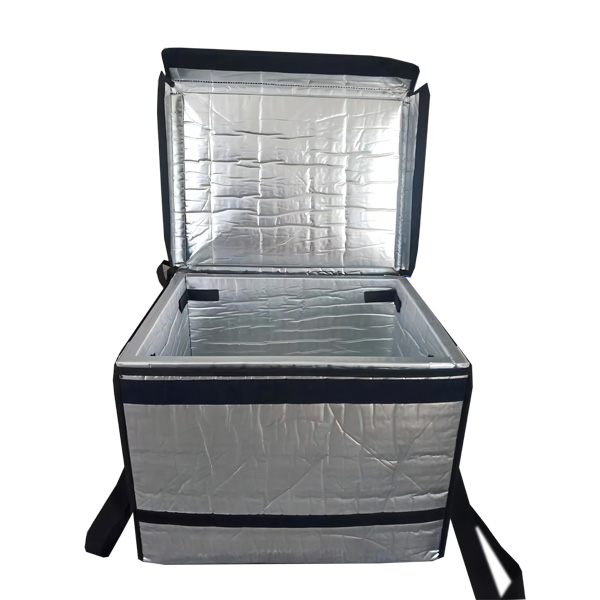
Selecting a Tie-Down Slot Pharmaceutical Ice Box Manufacturer: A Requirement-to-Evidence Guide
The most useful way to select a tie-down slot pharmaceutical ice box manufacturer is to move through a requirement-to-evidence sequence. First define the product and temperature need. Then model payload and coolant space, map the route and handling risks, select construction, and decide what testing or documentation must support approval. This sequence keeps commercial discussions anchored to the application rather than to broad claims about liters, insulation, duration, or price.
For pharmaceutical distribution, clinical supplies, healthcare delivery, vehicle transport, and controlled handovers, procurement, operations, engineering, and quality teams should work from the same controlled brief. Tie-down slots improve restraint only when designed and used correctly. They do not make an ice box a qualified pharmaceutical shipping system by themselves. The sections below combine buyer, engineering, operational, and supplier-control perspectives into one decision path, ending with implementation checks that help the approved sample remain representative of production and real use.
| Decision answer: Select the pharmaceutical ice box with tie-down slots only after confirming the payload, usable geometry, temperature requirement, route, coolant, handling, evidence, and production controls. Tie-down slots improve restraint only when designed and used correctly. They do not make an ice box a qualified pharmaceutical shipping system by themselves. |
|---|
Move From Need to Evidence in a Controlled Sequence
A controlled decision can be organized into four gates. Gate one defines the product and required condition. Gate two confirms that payload, coolant, internal geometry, handling, and route fit the proposed box. Gate three evaluates evidence, including drawings, material data, test reports, manufacturing controls, and application limits. Gate four approves implementation, including instructions, monitoring, receiving, change control, and supplier responsibilities. A project should not move forward merely because one gate looks strong while another remains undefined.
The gates also create useful ownership. Operations can define the route and work method; engineering can review geometry, materials, and failure modes; quality can set evidence and deviation rules; procurement can compare scope and commercial terms. For pharmaceutical logistics, quality, packaging engineers, fleet operators, and procurement teams, this shared structure reduces repeated clarification and makes quotations comparable. It also exposes when a request is still a concept rather than a purchase-ready specification. The final approval record should show what was confirmed, by whom, using which evidence, and for which application boundary.
- Gate 1 – Product, temperature condition, sensitivity, and consequence of failure
- Gate 2 – Payload envelope, coolant, route, handling, hygiene, and user fit
- Gate 3 – Materials, drawings, tests, quality controls, and stated limitations
- Gate 4 – Pilot, instructions, monitoring, receiving, change control, and launch approval
A Useful Specification Starts With the Job
Write a user requirement that another team could apply without hearing the original sales discussion. Identify the payload, packaging, initial condition, required temperature condition, maximum time, delay allowance, ambient exposure, openings, vehicle or carrier, handling, cleaning, and receiving decision. For pharmaceutical distribution, clinical supplies, healthcare delivery, vehicle transport, and controlled handovers, also state the consequence of a failure and whether the shipment can be replaced, quarantined, or investigated without major disruption.
Turn the primary objective – combine a controlled thermal packout with secure restraint that does not damage the box, disturb the lid, or create an unverified claim of compliance – into measurable acceptance points. Separate functions supplied by the physical container from those supplied by coolant, monitoring, work instructions, the carrier, and receiving. Then assign owners for unresolved assumptions. A controlled user requirement prevents the final approval from depending on vague phrases such as durable, medical, food grade, leakproof, long lasting, or suitable for cold chain.
- Defined payload, packaging, quantity, mass, and temperature condition
- Normal lane plus delay, seasonal, opening, and handover assumptions
- Packout components, conditioning, placement, and loaded configuration
- Handling, restraint, hygiene, labels, monitoring, and receiving decisions
- Required drawings, test evidence, production controls, and change ownership
Turn the Unique Risks Into Approval Criteria
The approval record should resolve the project-specific risks before commercial release: placing a strap over the lid seal, concentrating load on weak walls, confusing restraint with qualification, and failing to test the loaded system. It should also state how the proposed configuration will combine a controlled thermal packout with secure restraint that does not damage the box, disturb the lid, or create an unverified claim of compliance. These are not background comments; they are requirements that need an owner, evidence, and an acceptance decision. Where a condition cannot yet be proven, the record should identify the remaining test, pilot, or quality action.
Use an application matrix that connects reinforced slot geometry, stress distribution, wall and lid stiffness, insulation continuity, abrasion resistance, and seal protection with the route, handling, hygiene, monitoring, and supplier controls. Include the three decisive points: Route strap forces through reinforced geometry without pulling the lid out of alignment or crushing insulated walls. Validate strap angle, tension, anchor points, abrasion, vibration, braking loads, and access in the actual vehicle setup. Keep qualification, monitoring, packout, and GDP responsibilities separate from the mechanical restraint feature. The final choice should be explainable to procurement, quality, operations, and the supplier without relying on a sales presentation or personal memory.
Engineer the Restraint Load Path
The approval record should close three application-specific gaps before the project moves to production or launch.
- Approval requirement: Route strap forces through reinforced geometry without pulling the lid out of alignment or crushing insulated walls.
- Approval requirement: Validate strap angle, tension, anchor points, abrasion, vibration, braking loads, and access in the actual vehicle setup.
- Approval requirement: Keep qualification, monitoring, packout, and GDP responsibilities separate from the mechanical restraint feature.
Assign an owner and supporting evidence to each requirement. If one remains uncertain, keep it as an open approval item rather than hiding the uncertainty inside a broad supplier claim.
| Decision gate | Project-specific confirmation | Acceptable evidence | Owner |
|---|---|---|---|
| Product requirement | Combine a controlled thermal packout with secure restraint that does not damage the box, disturb the lid, or create an unverified claim of compliance | Approved user requirement and product information | Product and quality teams |
| Physical and operating fit | Application-defined; slot geometry, strap angle, load path, edge radius, label visibility, lid access, stacking, and vehicle anchor compatibility | Packout drawing, sample trial, route observation, and cleaning review | Engineering and operations |
| Performance boundary | Tie-down slots improve restraint only when designed and used correctly. They do not make an ice box a qualified pharmaceutical shipping system by themselves. | Traceable thermal, mechanical, monitoring, and application evidence | Engineering and quality |
| Supplier control | Dimensioned restraint design, material and structural tests, loaded transport simulation, thermal test data, packout instructions, calibration records, and change control | Control plan, records, audit evidence, and change agreement | Procurement and quality |
| Implementation | Validate strap angle, tension, anchor points, abrasion, vibration, braking loads, and access in the actual vehicle setup. | Approved pilot, instructions, training, receiving, and escalation plan | Operations and quality |
| Lifecycle decision | engineering, tooling, structural and thermal tests, straps and anchors, vehicle installation, inspection, damage prevention, and qualification support; reduced transport damage, durable restraint interfaces, replaceable straps, controlled reuse, and fewer product excursions | Comparable business case and periodic performance review | Procurement and operations |
Define Temperature Performance With Conditions Attached
Convert thermal claims into approval statements with conditions attached. The specification should identify the required product range, packout revision, payload range, coolant and conditioning, ambient profile, duration and delay margin, openings, sensor plan, and acceptance criterion. Where different seasons use different packouts, approve each configuration explicitly rather than treating them as informal operator adjustments.
Create an evidence ladder. Start with design calculations or development comparison, move to representative laboratory testing, add lane qualification when the risk requires it, and use operational monitoring to verify controlled use. Each step answers a different question. Approval should be based on the level that matches product value, sensitivity, regulatory context, recoverability, and route variability, not on the most impressive certificate name in a proposal.
Capacity Must Be Proven With a Packout
Convert the catalog description into a controlled payload envelope. Request clear internal length, width, and height at the points where the payload actually sits, then place the intended coolant, separators, racks, monitor, and product in a drawing or physical trial. A catalog volume rating describes nominal space; it does not state how many saleable units, vaccine cartons, specimens, or dairy packs can be loaded without disturbing the approved arrangement.
Approval should cover external footprint and loaded mass as well as internal fit. The proposed container has to enter the vehicle, pass through doors, sit securely, allow the lid to close without compression, and remain manageable at delivery. Where summer and winter packouts differ, document both. The accepted specification should state the usable payload for the defined configuration and identify any dimensional tolerance that could change packing, restraint, or thermal performance.
Create an Evidence Ladder for the Decision
Organize approval evidence by the decision it supports. Drawings and material records establish what the product is. Mechanical tests address handling and restraint. Thermal development tests compare designs. Qualification tests a defined packout against an approved requirement. Route monitoring shows how the controlled method behaves under operational variability. The approval record should identify which level is required and why, rather than accepting a collection of unrelated reports.
Before relying on any report, compare the tested version, payload, coolant, conditioning, initial temperatures, ambient profile, duration, openings, orientation, sensors, acceptance criteria, and deviations with the planned use. Record gaps and decide whether they are acceptable, require analysis, or require additional testing. A report name or pass statement is not enough. The supported conclusion must remain traceable to the configuration that procurement and production will actually purchase.
Select the Supplier and the Control System Together
Evaluate the proposed manufacturer against the approved requirement, not against a generic supplier questionnaire. Confirm whether the offer covers the box only or a wider scope that includes coolant, inserts, packout drawings, testing, qualification support, monitoring, labels, spare parts, training, and deviation assistance. Request dimensioned restraint design, material and structural tests, loaded transport simulation, thermal test data, packout instructions, calibration records, and change control. Every important claim should point to a controlled document, sample, test condition, or production control.
Complete commercial and quality due diligence together. Review approved material sources, critical processes, inspection records, calibration, tooling maintenance, nonconformance, corrective action, subcontracted components, and engineering change notification. Agree who owns drawings, molds, product revisions, records, and retesting decisions. A supplier is ready for approval when it can recreate the accepted configuration and explain how changes will be evaluated before they reach a shipment.
- Scope of supply, documentation, testing, qualification, and support
- Controlled specification, approved sample, bill of materials, and revision link
- Critical processes, inspections, records, calibration, and corrective action
- Subcontractor control, tooling maintenance, substitutions, and change notification
- Commercial responsibility for defects, rework, spare parts, and future orders
A Controlled Rollout Prevents Expensive Surprises
Implementation should move from representative sample to controlled pilot before full production or route launch. Confirm the exact bill of materials, drawings, colors, markings, accessories, packaging, and instructions. Use the pilot to test packing time, user errors, loaded ergonomics, vehicle fit, restraint, cleaning, monitoring, and receiving. For a temperature-controlled application, verify that the pilot follows the intended coolant and payload configuration rather than an easier demonstration setup.
After approval, freeze the critical specification and define change control. Train packers, drivers, couriers, cleaners, and receivers on the parts of the process they own. Establish a first-production review and monitor early shipments for recurring issues. A launch should include escalation contacts and a method for segregating suspect boxes or components. Periodic review can use damage, deviation, return, cleaning, and temperature data to refine the system without weakening the qualified or approved boundary.
Build a Cost Model Around Risk and Utilization
Build a risk-adjusted business case with one-time, recurring, and failure costs separated. One-time items may include design, tooling, samples, validation, and launch. Recurring items can include units, coolant, monitoring, labor, cleaning, freight, inspection, storage, and replacement. Failure costs may include product hold, reshipment, deviation investigation, customer disruption, and lost route capacity. Use project data or clearly identified assumptions rather than a generic savings percentage.
Compare alternatives on the same approved scope. A lower unit price is not lower cost if usable space is poor, freight cube is high, packout labor is slow, or quality escapes are frequent. A technically stronger design is not automatically better if it adds cost without addressing a route risk. The approval team should document the trade-off it is accepting and the operating measure that will show whether the expected value is achieved.
Applying the Decision Path to a Typical Project
Apply the full decision path to a typical project. A fleet team adds straps to prevent movement, but the original route placed compression across the lid. The restraint reduced sliding while creating a seal and thermal risk. The cross-functional team first approves the user requirement, then confirms payload and coolant fit with a physical sample. It records loaded handling, route exposure, hygiene, monitoring, and receiving needs before selecting the evidence level and commercial scope.
The chosen manufacturer supplies controlled drawings, materials, test reports, and a pilot batch. Procurement compares the quotation against the approved scope; quality checks change control and acceptance criteria; operations runs the pilot with normal users. Launch occurs only after unresolved gaps have owners and dates. The final record links the requirement, configuration, evidence, instructions, and production version so future changes can be assessed coherently.
Final Procurement Questions
What must be approved before the purchase order is released?
Approve the user requirement, product revision, internal and external dimensions, materials, packout components, test or qualification basis, critical inspection criteria, labels, packaging, documentation, commercial scope, and change-control responsibilities. For temperature-sensitive use, also approve the payload, coolant conditioning, ambient and duration assumptions, sensor plan, operating instructions, receiving criteria, and unresolved limitations.
How is an approved sample kept consistent with production?
Link the sample to controlled drawings, bill of materials, approved material sources, process settings, critical dimensions, inspection methods, and a pilot batch. Retain a reference sample where useful, but do not rely on appearance alone. The supplier should notify the buyer before changes to tooling, resin, insulation, hardware, seal, insert, coolant, subcontractor, process, or packaging that could affect function.
Who owns qualification and compliance decisions?
Responsibility should be allocated in the project agreement. The supplier can provide accurate product data, samples, reports, and technical support; the buyer normally defines the product limits, lane, acceptance criteria, quality system, and applicable market obligations. A contract manufacturer or testing laboratory may perform work, but that does not remove the need for the product owner and quality team to approve suitability.
When is a custom design justified?
Customization is justified when a standard product cannot meet critical payload geometry, usable capacity, restraint, cleaning, branding, route, accessory, or operating needs. Compare the value with tooling, development time, MOQ, change risk, test requirements, spare parts, and future revisions. A custom shape should solve a documented requirement rather than add complexity that can be handled with an insert or process change.
Do tie-down slots make an ice box pharmaceutical compliant?
No. Tie-down slots are a mechanical restraint feature. They must transfer strap loads without crushing insulation, distorting the lid, hiding labels, or interfering with the packout. Pharmaceutical suitability still depends on product limits, a qualified thermal configuration where required, calibrated monitoring, controlled instructions, transport risk management, receiving, and applicable GDP or local quality requirements.
Conclusion: Approve a System You Can Explain and Repeat
A suitable tie-down slot pharmaceutical ice box manufacturer is the result of disciplined specification rather than a single feature. The most reliable decision connects payload, temperature condition, route, usable space, construction, coolant, handling, hygiene, evidence, production control, and operating ownership. When those elements are explicit, procurement can compare offers fairly and operations can repeat the approved method without relying on memory or broad sales language.
- Start with the product and lane, then confirm physical fit and packout.
- Match the required evidence to the risk and application boundary.
- Approve supplier controls, implementation, monitoring, and change management together.
- Maintain one traceable link from requirement to evidence to operating instruction.
About Tempk
Tempk works from Shanghai on cold-chain packaging products and solutions and has operated since 2011. The company’s public product categories include ice packs, insulated boxes, vacuum-insulated packaging, bags and liners, pallet covers, and temperature-monitoring equipment. Rather than selecting from capacity alone, a buyer can share the product, required condition, payload, route, season, handling, and receiving details for a more relevant discussion. Any temperature-sensitive application should still be confirmed through the appropriate testing, documentation, and quality review.
Preparing a Useful Inquiry
Share your payload, route, temperature requirement, and expected order scope with Tempk to discuss a practical pharmaceutical ice box with tie-down slots configuration.
Industrial Ice Box Laboratory Samples Manufacturer: Specification Guide
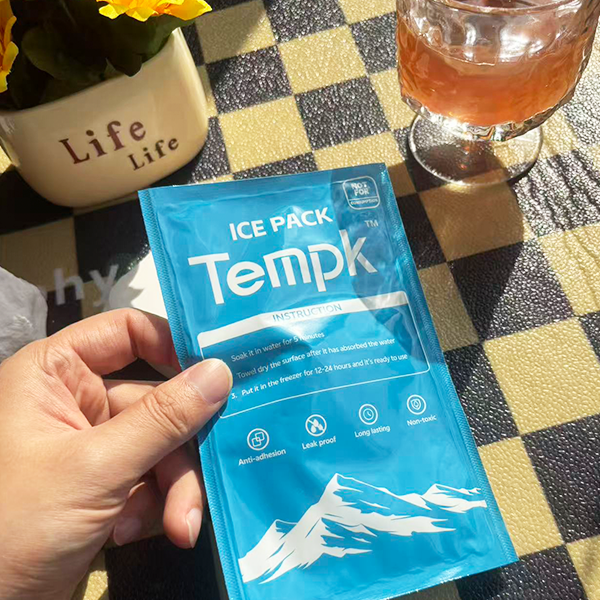
Selecting a Industrial Ice Box Laboratory Samples Manufacturer: A Requirement-to-Evidence Guide
The most useful way to select a industrial ice box laboratory samples manufacturer is to move through a requirement-to-evidence sequence. First define the product and temperature need. Then model payload and coolant space, map the route and handling risks, select construction, and decide what testing or documentation must support approval. This sequence keeps commercial discussions anchored to the application rather than to broad claims about liters, insulation, duration, or price.
For clinical, research, environmental, food, veterinary, and industrial sample transport, procurement, operations, engineering, and quality teams should work from the same controlled brief. The insulated box manages heat transfer. It does not replace primary and secondary containment, dangerous-goods classification, labeling, chain of custody, or laboratory acceptance procedures. The sections below combine buyer, engineering, operational, and supplier-control perspectives into one decision path, ending with implementation checks that help the approved sample remain representative of production and real use.
| Decision answer: Select the laboratory sample ice box only after confirming the payload, usable geometry, temperature requirement, route, coolant, handling, evidence, and production controls. The insulated box manages heat transfer. It does not replace primary and secondary containment, dangerous-goods classification, labeling, chain of custody, or laboratory acceptance procedures. |
|---|
Move From Need to Evidence in a Controlled Sequence
A controlled decision can be organized into four gates. Gate one defines the product and required condition. Gate two confirms that payload, coolant, internal geometry, handling, and route fit the proposed box. Gate three evaluates evidence, including drawings, material data, test reports, manufacturing controls, and application limits. Gate four approves implementation, including instructions, monitoring, receiving, change control, and supplier responsibilities. A project should not move forward merely because one gate looks strong while another remains undefined.
The gates also create useful ownership. Operations can define the route and work method; engineering can review geometry, materials, and failure modes; quality can set evidence and deviation rules; procurement can compare scope and commercial terms. For laboratory managers, clinical operations, quality teams, couriers, and procurement specialists, this shared structure reduces repeated clarification and makes quotations comparable. It also exposes when a request is still a concept rather than a purchase-ready specification. The final approval record should show what was confirmed, by whom, using which evidence, and for which application boundary.
- Gate 1 – Product, temperature condition, sensitivity, and consequence of failure
- Gate 2 – Payload envelope, coolant, route, handling, hygiene, and user fit
- Gate 3 – Materials, drawings, tests, quality controls, and stated limitations
- Gate 4 – Pilot, instructions, monitoring, receiving, change control, and launch approval
A Useful Specification Starts With the Job
Write a user requirement that another team could apply without hearing the original sales discussion. Identify the payload, packaging, initial condition, required temperature condition, maximum time, delay allowance, ambient exposure, openings, vehicle or carrier, handling, cleaning, and receiving decision. For clinical, research, environmental, food, veterinary, and industrial sample transport, also state the consequence of a failure and whether the shipment can be replaced, quarantined, or investigated without major disruption.
Turn the primary objective – protect sample condition while keeping thermal control separate from primary containment, hazard controls, chain of custody, and analytical requirements – into measurable acceptance points. Separate functions supplied by the physical container from those supplied by coolant, monitoring, work instructions, the carrier, and receiving. Then assign owners for unresolved assumptions. A controlled user requirement prevents the final approval from depending on vague phrases such as durable, medical, food grade, leakproof, long lasting, or suitable for cold chain.
- Defined payload, packaging, quantity, mass, and temperature condition
- Normal lane plus delay, seasonal, opening, and handover assumptions
- Packout components, conditioning, placement, and loaded configuration
- Handling, restraint, hygiene, labels, monitoring, and receiving decisions
- Required drawings, test evidence, production controls, and change ownership
Turn the Unique Risks Into Approval Criteria
The approval record should resolve the project-specific risks before commercial release: treating the ice box as leakproof specimen packaging, using the wrong temperature condition, losing chain-of-custody information, and allowing coolant to damage labels or samples. It should also state how the proposed configuration will protect sample condition while keeping thermal control separate from primary containment, hazard controls, chain of custody, and analytical requirements. These are not background comments; they are requirements that need an owner, evidence, and an acceptance decision. Where a condition cannot yet be proven, the record should identify the remaining test, pilot, or quality action.
Use an application matrix that connects cleanable shell, insulation continuity, internal rack fit, secondary-containment compatibility, secure closure, and resistance to courier handling with the route, handling, hygiene, monitoring, and supplier controls. Include the three decisive points: Define the sample stability condition and maximum time outside controlled storage before selecting coolant and packout. Keep thermal packaging separate from leakproof containment, absorbent, marks, documents, and any classification requirements. Place the monitor and paperwork so that data and identity remain recoverable even if coolant shifts or condensation occurs. The final choice should be explainable to procurement, quality, operations, and the supplier without relying on a sales presentation or personal memory.
Protect the Sample and the Evidence Around It
The approval record should close three application-specific gaps before the project moves to production or launch.
- Approval requirement: Define the sample stability condition and maximum time outside controlled storage before selecting coolant and packout.
- Approval requirement: Keep thermal packaging separate from leakproof containment, absorbent, marks, documents, and any classification requirements.
- Approval requirement: Place the monitor and paperwork so that data and identity remain recoverable even if coolant shifts or condensation occurs.
Assign an owner and supporting evidence to each requirement. If one remains uncertain, keep it as an open approval item rather than hiding the uncertainty inside a broad supplier claim.
| Decision gate | Project-specific confirmation | Acceptable evidence | Owner |
|---|---|---|---|
| Product requirement | Protect sample condition while keeping thermal control separate from primary containment, hazard controls, chain of custody, and analytical requirements | Approved user requirement and product information | Product and quality teams |
| Physical and operating fit | Sample-defined; upright orientation where needed, tamper evidence, protected documents, restraint, controlled opening, and safe unpacking | Packout drawing, sample trial, route observation, and cleaning review | Engineering and operations |
| Performance boundary | The insulated box manages heat transfer. It does not replace primary and secondary containment, dangerous-goods classification, labeling, chain of custody, or laboratory acceptance procedures. | Traceable thermal, mechanical, monitoring, and application evidence | Engineering and quality |
| Supplier control | Packing diagrams, material compatibility, sample stability requirements, monitoring method, transport records, and applicable dangerous-goods documentation | Control plan, records, audit evidence, and change agreement | Procurement and quality |
| Implementation | Keep thermal packaging separate from leakproof containment, absorbent, marks, documents, and any classification requirements. | Approved pilot, instructions, training, receiving, and escalation plan | Operations and quality |
| Lifecycle decision | sample value, recollection risk, courier delay, consumables, monitoring, cleaning, and receiving investigation time; reusable outer boxes where decontamination and return are controlled, while retaining single-use safety components when required | Comparable business case and periodic performance review | Procurement and operations |
Define Temperature Performance With Conditions Attached
Convert thermal claims into approval statements with conditions attached. The specification should identify the required product range, packout revision, payload range, coolant and conditioning, ambient profile, duration and delay margin, openings, sensor plan, and acceptance criterion. Where different seasons use different packouts, approve each configuration explicitly rather than treating them as informal operator adjustments.
Create an evidence ladder. Start with design calculations or development comparison, move to representative laboratory testing, add lane qualification when the risk requires it, and use operational monitoring to verify controlled use. Each step answers a different question. Approval should be based on the level that matches product value, sensitivity, regulatory context, recoverability, and route variability, not on the most impressive certificate name in a proposal.
Capacity Must Be Proven With a Packout
Convert the catalog description into a controlled payload envelope. Request clear internal length, width, and height at the points where the payload actually sits, then place the intended coolant, separators, racks, monitor, and product in a drawing or physical trial. A catalog volume rating describes nominal space; it does not state how many saleable units, vaccine cartons, specimens, or dairy packs can be loaded without disturbing the approved arrangement.
Approval should cover external footprint and loaded mass as well as internal fit. The proposed container has to enter the vehicle, pass through doors, sit securely, allow the lid to close without compression, and remain manageable at delivery. Where summer and winter packouts differ, document both. The accepted specification should state the usable payload for the defined configuration and identify any dimensional tolerance that could change packing, restraint, or thermal performance.
Create an Evidence Ladder for the Decision
Organize approval evidence by the decision it supports. Drawings and material records establish what the product is. Mechanical tests address handling and restraint. Thermal development tests compare designs. Qualification tests a defined packout against an approved requirement. Route monitoring shows how the controlled method behaves under operational variability. The approval record should identify which level is required and why, rather than accepting a collection of unrelated reports.
Before relying on any report, compare the tested version, payload, coolant, conditioning, initial temperatures, ambient profile, duration, openings, orientation, sensors, acceptance criteria, and deviations with the planned use. Record gaps and decide whether they are acceptable, require analysis, or require additional testing. A report name or pass statement is not enough. The supported conclusion must remain traceable to the configuration that procurement and production will actually purchase.
Select the Supplier and the Control System Together
Evaluate the proposed manufacturer against the approved requirement, not against a generic supplier questionnaire. Confirm whether the offer covers the box only or a wider scope that includes coolant, inserts, packout drawings, testing, qualification support, monitoring, labels, spare parts, training, and deviation assistance. Request packing diagrams, material compatibility, sample stability requirements, monitoring method, transport records, and applicable dangerous-goods documentation. Every important claim should point to a controlled document, sample, test condition, or production control.
Complete commercial and quality due diligence together. Review approved material sources, critical processes, inspection records, calibration, tooling maintenance, nonconformance, corrective action, subcontracted components, and engineering change notification. Agree who owns drawings, molds, product revisions, records, and retesting decisions. A supplier is ready for approval when it can recreate the accepted configuration and explain how changes will be evaluated before they reach a shipment.
- Scope of supply, documentation, testing, qualification, and support
- Controlled specification, approved sample, bill of materials, and revision link
- Critical processes, inspections, records, calibration, and corrective action
- Subcontractor control, tooling maintenance, substitutions, and change notification
- Commercial responsibility for defects, rework, spare parts, and future orders
Pilot, Approve, Launch, and Review
Implementation should move from representative sample to controlled pilot before full production or route launch. Confirm the exact bill of materials, drawings, colors, markings, accessories, packaging, and instructions. Use the pilot to test packing time, user errors, loaded ergonomics, vehicle fit, restraint, cleaning, monitoring, and receiving. For a temperature-controlled application, verify that the pilot follows the intended coolant and payload configuration rather than an easier demonstration setup.
After approval, freeze the critical specification and define change control. Train packers, drivers, couriers, cleaners, and receivers on the parts of the process they own. Establish a first-production review and monitor early shipments for recurring issues. A launch should include escalation contacts and a method for segregating suspect boxes or components. Periodic review can use damage, deviation, return, cleaning, and temperature data to refine the system without weakening the qualified or approved boundary.
Build a Cost Model Around Risk and Utilization
Build a risk-adjusted business case with one-time, recurring, and failure costs separated. One-time items may include design, tooling, samples, validation, and launch. Recurring items can include units, coolant, monitoring, labor, cleaning, freight, inspection, storage, and replacement. Failure costs may include product hold, reshipment, deviation investigation, customer disruption, and lost route capacity. Use project data or clearly identified assumptions rather than a generic savings percentage.
Compare alternatives on the same approved scope. A lower unit price is not lower cost if usable space is poor, freight cube is high, packout labor is slow, or quality escapes are frequent. A technically stronger design is not automatically better if it adds cost without addressing a route risk. The approval team should document the trade-off it is accepting and the operating measure that will show whether the expected value is achieved.
Applying the Decision Path to a Typical Project
Apply the full decision path to a typical project. A laboratory collects multiple specimen types on one route. Some require refrigeration, others must not be frozen, and all require unambiguous identification at receiving. The cross-functional team first approves the user requirement, then confirms payload and coolant fit with a physical sample. It records loaded handling, route exposure, hygiene, monitoring, and receiving needs before selecting the evidence level and commercial scope.
The chosen manufacturer supplies controlled drawings, materials, test reports, and a pilot batch. Procurement compares the quotation against the approved scope; quality checks change control and acceptance criteria; operations runs the pilot with normal users. Launch occurs only after unresolved gaps have owners and dates. The final record links the requirement, configuration, evidence, instructions, and production version so future changes can be assessed coherently.
Final Procurement Questions
What must be approved before the purchase order is released?
Approve the user requirement, product revision, internal and external dimensions, materials, packout components, test or qualification basis, critical inspection criteria, labels, packaging, documentation, commercial scope, and change-control responsibilities. For temperature-sensitive use, also approve the payload, coolant conditioning, ambient and duration assumptions, sensor plan, operating instructions, receiving criteria, and unresolved limitations.
How is an approved sample kept consistent with production?
Link the sample to controlled drawings, bill of materials, approved material sources, process settings, critical dimensions, inspection methods, and a pilot batch. Retain a reference sample where useful, but do not rely on appearance alone. The supplier should notify the buyer before changes to tooling, resin, insulation, hardware, seal, insert, coolant, subcontractor, process, or packaging that could affect function.
Who owns qualification and compliance decisions?
Responsibility should be allocated in the project agreement. The supplier can provide accurate product data, samples, reports, and technical support; the buyer normally defines the product limits, lane, acceptance criteria, quality system, and applicable market obligations. A contract manufacturer or testing laboratory may perform work, but that does not remove the need for the product owner and quality team to approve suitability.
When is a custom design justified?
Customization is justified when a standard product cannot meet critical payload geometry, usable capacity, restraint, cleaning, branding, route, accessory, or operating needs. Compare the value with tooling, development time, MOQ, change risk, test requirements, spare parts, and future revisions. A custom shape should solve a documented requirement rather than add complexity that can be handled with an insert or process change.
Does an insulated laboratory ice box replace specimen containment?
No. The ice box manages heat transfer but does not replace the required primary container, secondary containment, absorbent where applicable, sample identification, chain of custody, hazard classification, marks, documents, or trained shipping procedure. The laboratory should define the specimen stability condition and compliant containment first, then design the coolant and insulated outer packout around that system.
Conclusion: Approve a System You Can Explain and Repeat
A suitable industrial ice box laboratory samples manufacturer is the result of disciplined specification rather than a single feature. The most reliable decision connects payload, temperature condition, route, usable space, construction, coolant, handling, hygiene, evidence, production control, and operating ownership. When those elements are explicit, procurement can compare offers fairly and operations can repeat the approved method without relying on memory or broad sales language.
- Start with the product and lane, then confirm physical fit and packout.
- Match the required evidence to the risk and application boundary.
- Approve supplier controls, implementation, monitoring, and change management together.
- Maintain one traceable link from requirement to evidence to operating instruction.
About Tempk
Established in 2011 and based in Shanghai, Tempk develops and supplies cold-chain packaging products such as coolant packs, EPP and plastic ice boxes, insulated shipping solutions, liners, bags, pallet covers, and monitoring products. The practical starting point is the shipment brief: product, temperature requirement, payload, route, seasonal exposure, handovers, and receiving. Tempk can use that information to discuss suitable standard or custom options while keeping performance claims tied to the final packout and the evidence required by the buyer.
Next Step
Discuss the planned product, coolant, route, season, monitoring, and receiving process with Tempk before moving from sample to production.
Ice Chest OEM Supplier: Specification Guide
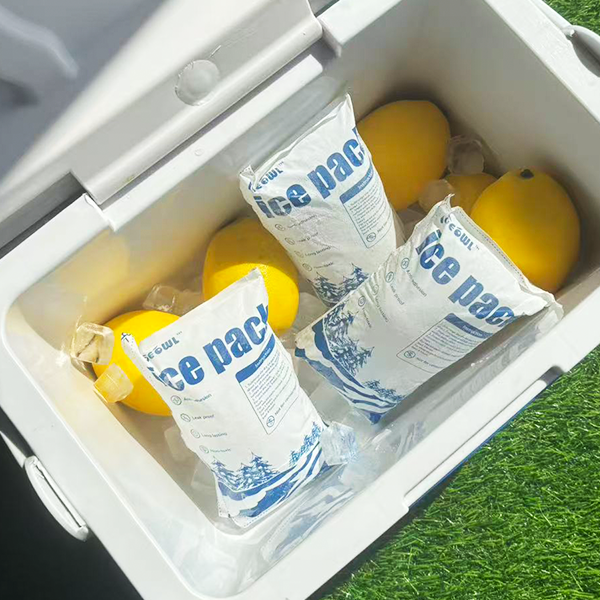
Selecting a Ice Chest OEM Supplier: A Requirement-to-Evidence Guide
The most useful way to select a ice chest OEM supplier is to move through a requirement-to-evidence sequence. First define the product and temperature need. Then model payload and coolant space, map the route and handling risks, select construction, and decide what testing or documentation must support approval. This sequence keeps commercial discussions anchored to the application rather than to broad claims about liters, insulation, duration, or price.
For private-label retail, commercial programs, branded field equipment, food service, medical support, and promotional product lines, procurement, operations, engineering, and quality teams should work from the same controlled brief. OEM customization can change geometry and branding, but it does not create verified thermal performance unless the final design and packout are tested under defined conditions. The sections below combine buyer, engineering, operational, and supplier-control perspectives into one decision path, ending with implementation checks that help the approved sample remain representative of production and real use.
| Decision answer: Select the OEM ice chest only after confirming the payload, usable geometry, temperature requirement, route, coolant, handling, evidence, and production controls. OEM customization can change geometry and branding, but it does not create verified thermal performance unless the final design and packout are tested under defined conditions. |
|---|
Use a Requirement-to-Evidence Decision Path
A controlled decision can be organized into four gates. Gate one defines the product and required condition. Gate two confirms that payload, coolant, internal geometry, handling, and route fit the proposed box. Gate three evaluates evidence, including drawings, material data, test reports, manufacturing controls, and application limits. Gate four approves implementation, including instructions, monitoring, receiving, change control, and supplier responsibilities. A project should not move forward merely because one gate looks strong while another remains undefined.
The gates also create useful ownership. Operations can define the route and work method; engineering can review geometry, materials, and failure modes; quality can set evidence and deviation rules; procurement can compare scope and commercial terms. For brand owners, product managers, importers, distributors, and sourcing engineers, this shared structure reduces repeated clarification and makes quotations comparable. It also exposes when a request is still a concept rather than a purchase-ready specification. The final approval record should show what was confirmed, by whom, using which evidence, and for which application boundary.
- Gate 1 – Product, temperature condition, sensitivity, and consequence of failure
- Gate 2 – Payload envelope, coolant, route, handling, hygiene, and user fit
- Gate 3 – Materials, drawings, tests, quality controls, and stated limitations
- Gate 4 – Pilot, instructions, monitoring, receiving, change control, and launch approval
Turn the Unique Risks Into Approval Criteria
The approval record should resolve the project-specific risks before commercial release: starting tooling before requirements are stable, approving appearance without testing function, unclear ownership of drawings, and uncontrolled substitutions. It should also state how the proposed configuration will translate a market requirement into a controlled product specification that can be manufactured consistently at scale. These are not background comments; they are requirements that need an owner, evidence, and an acceptance decision. Where a condition cannot yet be proven, the record should identify the remaining test, pilot, or quality action.
Use an application matrix that connects resin choice, insulation system, tooling draft and wall control, hardware, sealing, decoration, and environmental resistance with the route, handling, hygiene, monitoring, and supplier controls. Include the three decisive points: Approve functional requirements, critical dimensions, materials, thermal boundary, labels, and test methods before tooling release. Use prototypes and a pilot run to expose assembly, sealing, appearance, packaging, and handling problems before scale-up. Define ownership of tooling, drawings, molds, branding assets, and future engineering changes in the commercial agreement. The final choice should be explainable to procurement, quality, operations, and the supplier without relying on a sales presentation or personal memory.
Begin With a Clear User Requirement
Write a user requirement that another team could apply without hearing the original sales discussion. Identify the payload, packaging, initial condition, required temperature condition, maximum time, delay allowance, ambient exposure, openings, vehicle or carrier, handling, cleaning, and receiving decision. For private-label retail, commercial programs, branded field equipment, food service, medical support, and promotional product lines, also state the consequence of a failure and whether the shipment can be replaced, quarantined, or investigated without major disruption.
Turn the primary objective – translate a market requirement into a controlled product specification that can be manufactured consistently at scale – into measurable acceptance points. Separate functions supplied by the physical container from those supplied by coolant, monitoring, work instructions, the carrier, and receiving. Then assign owners for unresolved assumptions. A controlled user requirement prevents the final approval from depending on vague phrases such as durable, medical, food grade, leakproof, long lasting, or suitable for cold chain.
- Defined payload, packaging, quantity, mass, and temperature condition
- Normal lane plus delay, seasonal, opening, and handover assumptions
- Packout components, conditioning, placement, and loaded configuration
- Handling, restraint, hygiene, labels, monitoring, and receiving decisions
- Required drawings, test evidence, production controls, and change ownership
Procurement Should Test the Supplier’s Process
Evaluate the proposed manufacturer against the approved requirement, not against a generic supplier questionnaire. Confirm whether the offer covers the box only or a wider scope that includes coolant, inserts, packout drawings, testing, qualification support, monitoring, labels, spare parts, training, and deviation assistance. Request product requirements document, controlled drawings, bill of materials, golden sample, test plan, inspection criteria, and engineering change process. Every important claim should point to a controlled document, sample, test condition, or production control.
Complete commercial and quality due diligence together. Review approved material sources, critical processes, inspection records, calibration, tooling maintenance, nonconformance, corrective action, subcontracted components, and engineering change notification. Agree who owns drawings, molds, product revisions, records, and retesting decisions. A supplier is ready for approval when it can recreate the accepted configuration and explain how changes will be evaluated before they reach a shipment.
- Scope of supply, documentation, testing, qualification, and support
- Controlled specification, approved sample, bill of materials, and revision link
- Critical processes, inspections, records, calibration, and corrective action
- Subcontractor control, tooling maintenance, substitutions, and change notification
- Commercial responsibility for defects, rework, spare parts, and future orders
| Decision gate | Project-specific confirmation | Acceptable evidence | Owner |
|---|---|---|---|
| Product requirement | Translate a market requirement into a controlled product specification that can be manufactured consistently at scale | Approved user requirement and product information | Product and quality teams |
| Physical and operating fit | Custom-capacity; ergonomics, latches, hinges, handles, restraints, stacking, retail packaging, and end-user instructions | Packout drawing, sample trial, route observation, and cleaning review | Engineering and operations |
| Performance boundary | OEM customization can change geometry and branding, but it does not create verified thermal performance unless the final design and packout are tested under defined conditions. | Traceable thermal, mechanical, monitoring, and application evidence | Engineering and quality |
| Supplier control | Product requirements document, controlled drawings, bill of materials, golden sample, test plan, inspection criteria, and engineering change process | Control plan, records, audit evidence, and change agreement | Procurement and quality |
| Implementation | Use prototypes and a pilot run to expose assembly, sealing, appearance, packaging, and handling problems before scale-up. | Approved pilot, instructions, training, receiving, and escalation plan | Operations and quality |
| Lifecycle decision | design work, tooling, samples, MOQ, material, decoration, packaging, freight, inspection, and engineering changes; design for long life, replaceable components, lower material waste, efficient packaging, and realistic end-of-life planning | Comparable business case and periodic performance review | Procurement and operations |
Turn Critical Features Into Measurable Controls
Quality planning should identify the product characteristics that can change function. Typical candidates include internal dimensions, wall and lid alignment, insulation continuity, closure engagement, seal compression, handle or tie-down integrity, hardware fit, surface condition, markings, and export packaging. Not every feature requires the same inspection frequency, but critical-to-quality items need a measurement method, tolerance, sampling plan, reaction rule, and traceable record.
The approved sample should be supported by controlled drawings and a bill of materials rather than serving as the only definition of quality. Samples can hide internal variation, and appearance does not reveal insulation voids or weak load paths. Use pilot production to confirm that the factory can repeat the design at normal process settings. Then connect incoming inspection, in-process checks, final inspection, and change control to the risks identified during development.
Create an Evidence Ladder for the Decision
Organize approval evidence by the decision it supports. Drawings and material records establish what the product is. Mechanical tests address handling and restraint. Thermal development tests compare designs. Qualification tests a defined packout against an approved requirement. Route monitoring shows how the controlled method behaves under operational variability. The approval record should identify which level is required and why, rather than accepting a collection of unrelated reports.
Before relying on any report, compare the tested version, payload, coolant, conditioning, initial temperatures, ambient profile, duration, openings, orientation, sensors, acceptance criteria, and deviations with the planned use. Record gaps and decide whether they are acceptable, require analysis, or require additional testing. A report name or pass statement is not enough. The supported conclusion must remain traceable to the configuration that procurement and production will actually purchase.
Capacity Must Be Proven With a Packout
Convert the catalog description into a controlled payload envelope. Request clear internal length, width, and height at the points where the payload actually sits, then place the intended coolant, separators, racks, monitor, and product in a drawing or physical trial. A catalog volume rating describes nominal space; it does not state how many saleable units, vaccine cartons, specimens, or dairy packs can be loaded without disturbing the approved arrangement.
Approval should cover external footprint and loaded mass as well as internal fit. The proposed container has to enter the vehicle, pass through doors, sit securely, allow the lid to close without compression, and remain manageable at delivery. Where summer and winter packouts differ, document both. The accepted specification should state the usable payload for the defined configuration and identify any dimensional tolerance that could change packing, restraint, or thermal performance.
A Controlled Rollout Prevents Expensive Surprises
Implementation should move from representative sample to controlled pilot before full production or route launch. Confirm the exact bill of materials, drawings, colors, markings, accessories, packaging, and instructions. Use the pilot to test packing time, user errors, loaded ergonomics, vehicle fit, restraint, cleaning, monitoring, and receiving. For a temperature-controlled application, verify that the pilot follows the intended coolant and payload configuration rather than an easier demonstration setup.
After approval, freeze the critical specification and define change control. Train packers, drivers, couriers, cleaners, and receivers on the parts of the process they own. Establish a first-production review and monitor early shipments for recurring issues. A launch should include escalation contacts and a method for segregating suspect boxes or components. Periodic review can use damage, deviation, return, cleaning, and temperature data to refine the system without weakening the qualified or approved boundary.
Build a Cost Model Around Risk and Utilization
Build a risk-adjusted business case with one-time, recurring, and failure costs separated. One-time items may include design, tooling, samples, validation, and launch. Recurring items can include units, coolant, monitoring, labor, cleaning, freight, inspection, storage, and replacement. Failure costs may include product hold, reshipment, deviation investigation, customer disruption, and lost route capacity. Use project data or clearly identified assumptions rather than a generic savings percentage.
Compare alternatives on the same approved scope. A lower unit price is not lower cost if usable space is poor, freight cube is high, packout labor is slow, or quality escapes are frequent. A technically stronger design is not automatically better if it adds cost without addressing a route risk. The approval team should document the trade-off it is accepting and the operating measure that will show whether the expected value is achieved.
Freeze the Requirement Before You Freeze the Tooling
The approval record should close three application-specific gaps before the project moves to production or launch.
- Approval requirement: Approve functional requirements, critical dimensions, materials, thermal boundary, labels, and test methods before tooling release.
- Approval requirement: Use prototypes and a pilot run to expose assembly, sealing, appearance, packaging, and handling problems before scale-up.
- Approval requirement: Define ownership of tooling, drawings, molds, branding assets, and future engineering changes in the commercial agreement.
Assign an owner and supporting evidence to each requirement. If one remains uncertain, keep it as an open approval item rather than hiding the uncertainty inside a broad supplier claim.
Applying the Decision Path to a Typical Project
Apply the full decision path to a typical project. A brand owner requests a distinctive shape and large logo area. The change looks simple, yet it alters wall thickness, hinge load, stacking, usable volume, and tooling risk. The cross-functional team first approves the user requirement, then confirms payload and coolant fit with a physical sample. It records loaded handling, route exposure, hygiene, monitoring, and receiving needs before selecting the evidence level and commercial scope.
The chosen manufacturer supplies controlled drawings, materials, test reports, and a pilot batch. Procurement compares the quotation against the approved scope; quality checks change control and acceptance criteria; operations runs the pilot with normal users. Launch occurs only after unresolved gaps have owners and dates. The final record links the requirement, configuration, evidence, instructions, and production version so future changes can be assessed coherently.
Final Procurement Questions
What must be approved before the purchase order is released?
Approve the user requirement, product revision, internal and external dimensions, materials, packout components, test or qualification basis, critical inspection criteria, labels, packaging, documentation, commercial scope, and change-control responsibilities. For temperature-sensitive use, also approve the payload, coolant conditioning, ambient and duration assumptions, sensor plan, operating instructions, receiving criteria, and unresolved limitations.
How is an approved sample kept consistent with production?
Link the sample to controlled drawings, bill of materials, approved material sources, process settings, critical dimensions, inspection methods, and a pilot batch. Retain a reference sample where useful, but do not rely on appearance alone. The supplier should notify the buyer before changes to tooling, resin, insulation, hardware, seal, insert, coolant, subcontractor, process, or packaging that could affect function.
Who owns qualification and compliance decisions?
Responsibility should be allocated in the project agreement. The supplier can provide accurate product data, samples, reports, and technical support; the buyer normally defines the product limits, lane, acceptance criteria, quality system, and applicable market obligations. A contract manufacturer or testing laboratory may perform work, but that does not remove the need for the product owner and quality team to approve suitability.
When is a custom design justified?
Customization is justified when a standard product cannot meet critical payload geometry, usable capacity, restraint, cleaning, branding, route, accessory, or operating needs. Compare the value with tooling, development time, MOQ, change risk, test requirements, spare parts, and future revisions. A custom shape should solve a documented requirement rather than add complexity that can be handled with an insert or process change.
What must be approved before OEM tooling is released?
Approve the user requirement, controlled drawings, critical dimensions, materials, insulation, hardware, sealing, branding, labels, packaging, tests, inspection criteria, tooling ownership, and change process. Use prototypes to verify function and a pilot to verify manufacturability. Do not freeze tooling while payload geometry, stackability, thermal boundary, or market requirements are still changing.
Conclusion: Approve a System You Can Explain and Repeat
A suitable ice chest OEM supplier is the result of disciplined specification rather than a single feature. The most reliable decision connects payload, temperature condition, route, usable space, construction, coolant, handling, hygiene, evidence, production control, and operating ownership. When those elements are explicit, procurement can compare offers fairly and operations can repeat the approved method without relying on memory or broad sales language.
- Start with the product and lane, then confirm physical fit and packout.
- Match the required evidence to the risk and application boundary.
- Approve supplier controls, implementation, monitoring, and change management together.
- Maintain one traceable link from requirement to evidence to operating instruction.
About Tempk
Tempk works from Shanghai on cold-chain packaging products and solutions and has operated since 2011. The company’s public product categories include ice packs, insulated boxes, vacuum-insulated packaging, bags and liners, pallet covers, and temperature-monitoring equipment. Rather than selecting from capacity alone, a buyer can share the product, required condition, payload, route, season, handling, and receiving details for a more relevant discussion. Any temperature-sensitive application should still be confirmed through the appropriate testing, documentation, and quality review.
Next Step
Share your payload, route, temperature requirement, and expected order scope with Tempk to discuss a practical OEM ice chest configuration.
Cooler Box Supplier: Specification Guide

Selecting a Cooler Box Supplier: A Requirement-to-Evidence Guide
The most useful way to select a cooler box supplier is to move through a requirement-to-evidence sequence. First define the product and temperature need. Then model payload and coolant space, map the route and handling risks, select construction, and decide what testing or documentation must support approval. This sequence keeps commercial discussions anchored to the application rather than to broad claims about liters, insulation, duration, or price.
For commercial food, medical support, delivery, field service, retail, and general insulated transport, procurement, operations, engineering, and quality teams should work from the same controlled brief. A supplier can provide an insulated box and accessories, but temperature performance must be assessed in the intended packout and route. The sections below combine buyer, engineering, operational, and supplier-control perspectives into one decision path, ending with implementation checks that help the approved sample remain representative of production and real use.
| Decision answer: Select the cooler box only after confirming the payload, usable geometry, temperature requirement, route, coolant, handling, evidence, and production controls. A supplier can provide an insulated box and accessories, but temperature performance must be assessed in the intended packout and route. |
|---|
Use a Requirement-to-Evidence Decision Path
A controlled decision can be organized into four gates. Gate one defines the product and required condition. Gate two confirms that payload, coolant, internal geometry, handling, and route fit the proposed box. Gate three evaluates evidence, including drawings, material data, test reports, manufacturing controls, and application limits. Gate four approves implementation, including instructions, monitoring, receiving, change control, and supplier responsibilities. A project should not move forward merely because one gate looks strong while another remains undefined.
The gates also create useful ownership. Operations can define the route and work method; engineering can review geometry, materials, and failure modes; quality can set evidence and deviation rules; procurement can compare scope and commercial terms. For wholesale buyers, importers, distributors, procurement teams, and operations managers, this shared structure reduces repeated clarification and makes quotations comparable. It also exposes when a request is still a concept rather than a purchase-ready specification. The final approval record should show what was confirmed, by whom, using which evidence, and for which application boundary.
- Gate 1 – Product, temperature condition, sensitivity, and consequence of failure
- Gate 2 – Payload envelope, coolant, route, handling, hygiene, and user fit
- Gate 3 – Materials, drawings, tests, quality controls, and stated limitations
- Gate 4 – Pilot, instructions, monitoring, receiving, change control, and launch approval
A Useful Specification Starts With the Job
Write a user requirement that another team could apply without hearing the original sales discussion. Identify the payload, packaging, initial condition, required temperature condition, maximum time, delay allowance, ambient exposure, openings, vehicle or carrier, handling, cleaning, and receiving decision. For commercial food, medical support, delivery, field service, retail, and general insulated transport, also state the consequence of a failure and whether the shipment can be replaced, quarantined, or investigated without major disruption.
Turn the primary objective – supply a consistent box and accessory system with clear specifications, reliable production, and appropriate application boundaries – into measurable acceptance points. Separate functions supplied by the physical container from those supplied by coolant, monitoring, work instructions, the carrier, and receiving. Then assign owners for unresolved assumptions. A controlled user requirement prevents the final approval from depending on vague phrases such as durable, medical, food grade, leakproof, long lasting, or suitable for cold chain.
- Defined payload, packaging, quantity, mass, and temperature condition
- Normal lane plus delay, seasonal, opening, and handover assumptions
- Packout components, conditioning, placement, and loaded configuration
- Handling, restraint, hygiene, labels, monitoring, and receiving decisions
- Required drawings, test evidence, production controls, and change ownership
The Project-Specific Decision Record
The approval record should resolve the project-specific risks before commercial release: comparing only quoted price, ignoring tolerances and change control, and accepting broad temperature claims without packout evidence. It should also state how the proposed configuration will supply a consistent box and accessory system with clear specifications, reliable production, and appropriate application boundaries. These are not background comments; they are requirements that need an owner, evidence, and an acceptance decision. Where a condition cannot yet be proven, the record should identify the remaining test, pilot, or quality action.
Use an application matrix that connects resin or shell specification, insulation type, molded geometry, hinge and latch life, seal fit, and color consistency with the route, handling, hygiene, monitoring, and supplier controls. Include the three decisive points: Create an approved specification that covers dimensions, materials, critical fit points, labeling, packaging, and inspection. Agree how material, tooling, component, and process changes will be communicated before production. Use production samples and records to confirm that bulk units match the approved reference. The final choice should be explainable to procurement, quality, operations, and the supplier without relying on a sales presentation or personal memory.
Capacity Must Be Proven With a Packout
Convert the catalog description into a controlled payload envelope. Request clear internal length, width, and height at the points where the payload actually sits, then place the intended coolant, separators, racks, monitor, and product in a drawing or physical trial. A catalog volume rating describes nominal space; it does not state how many saleable units, vaccine cartons, specimens, or dairy packs can be loaded without disturbing the approved arrangement.
Approval should cover external footprint and loaded mass as well as internal fit. The proposed container has to enter the vehicle, pass through doors, sit securely, allow the lid to close without compression, and remain manageable at delivery. Where summer and winter packouts differ, document both. The accepted specification should state the usable payload for the defined configuration and identify any dimensional tolerance that could change packing, restraint, or thermal performance.
| Decision gate | Project-specific confirmation | Acceptable evidence | Owner |
|---|---|---|---|
| Product requirement | Supply a consistent box and accessory system with clear specifications, reliable production, and appropriate application boundaries | Approved user requirement and product information | Product and quality teams |
| Physical and operating fit | Multi-size; carton strength, palletization, stacking, handles, closures, nesting, spare parts, and end-user instructions | Packout drawing, sample trial, route observation, and cleaning review | Engineering and operations |
| Performance boundary | A supplier can provide an insulated box and accessories, but temperature performance must be assessed in the intended packout and route. | Traceable thermal, mechanical, monitoring, and application evidence | Engineering and quality |
| Supplier control | Approved samples, specifications, control plans, incoming material records, in-process checks, and final inspection data | Control plan, records, audit evidence, and change agreement | Procurement and quality |
| Implementation | Agree how material, tooling, component, and process changes will be communicated before production. | Approved pilot, instructions, training, receiving, and escalation plan | Operations and quality |
| Lifecycle decision | unit price, tooling, packaging, freight, defects, inspection, replacement parts, and supplier-management effort; consistent long-life products, reduced damage, efficient packaging, repairable parts, and realistic reuse systems | Comparable business case and periodic performance review | Procurement and operations |
Supplier Consistency Protects the Buyer’s Specification
The approval record should close three application-specific gaps before the project moves to production or launch.
- Approval requirement: Create an approved specification that covers dimensions, materials, critical fit points, labeling, packaging, and inspection.
- Approval requirement: Agree how material, tooling, component, and process changes will be communicated before production.
- Approval requirement: Use production samples and records to confirm that bulk units match the approved reference.
Assign an owner and supporting evidence to each requirement. If one remains uncertain, keep it as an open approval item rather than hiding the uncertainty inside a broad supplier claim.
Define Temperature Performance With Conditions Attached
Convert thermal claims into approval statements with conditions attached. The specification should identify the required product range, packout revision, payload range, coolant and conditioning, ambient profile, duration and delay margin, openings, sensor plan, and acceptance criterion. Where different seasons use different packouts, approve each configuration explicitly rather than treating them as informal operator adjustments.
Create an evidence ladder. Start with design calculations or development comparison, move to representative laboratory testing, add lane qualification when the risk requires it, and use operational monitoring to verify controlled use. Each step answers a different question. Approval should be based on the level that matches product value, sensitivity, regulatory context, recoverability, and route variability, not on the most impressive certificate name in a proposal.
Procurement Should Test the Supplier’s Process
Evaluate the proposed manufacturer against the approved requirement, not against a generic supplier questionnaire. Confirm whether the offer covers the box only or a wider scope that includes coolant, inserts, packout drawings, testing, qualification support, monitoring, labels, spare parts, training, and deviation assistance. Request approved samples, specifications, control plans, incoming material records, in-process checks, and final inspection data. Every important claim should point to a controlled document, sample, test condition, or production control.
Complete commercial and quality due diligence together. Review approved material sources, critical processes, inspection records, calibration, tooling maintenance, nonconformance, corrective action, subcontracted components, and engineering change notification. Agree who owns drawings, molds, product revisions, records, and retesting decisions. A supplier is ready for approval when it can recreate the accepted configuration and explain how changes will be evaluated before they reach a shipment.
- Scope of supply, documentation, testing, qualification, and support
- Controlled specification, approved sample, bill of materials, and revision link
- Critical processes, inspections, records, calibration, and corrective action
- Subcontractor control, tooling maintenance, substitutions, and change notification
- Commercial responsibility for defects, rework, spare parts, and future orders
Create an Evidence Ladder for the Decision
Organize approval evidence by the decision it supports. Drawings and material records establish what the product is. Mechanical tests address handling and restraint. Thermal development tests compare designs. Qualification tests a defined packout against an approved requirement. Route monitoring shows how the controlled method behaves under operational variability. The approval record should identify which level is required and why, rather than accepting a collection of unrelated reports.
Before relying on any report, compare the tested version, payload, coolant, conditioning, initial temperatures, ambient profile, duration, openings, orientation, sensors, acceptance criteria, and deviations with the planned use. Record gaps and decide whether they are acceptable, require analysis, or require additional testing. A report name or pass statement is not enough. The supported conclusion must remain traceable to the configuration that procurement and production will actually purchase.
A Controlled Rollout Prevents Expensive Surprises
Implementation should move from representative sample to controlled pilot before full production or route launch. Confirm the exact bill of materials, drawings, colors, markings, accessories, packaging, and instructions. Use the pilot to test packing time, user errors, loaded ergonomics, vehicle fit, restraint, cleaning, monitoring, and receiving. For a temperature-controlled application, verify that the pilot follows the intended coolant and payload configuration rather than an easier demonstration setup.
After approval, freeze the critical specification and define change control. Train packers, drivers, couriers, cleaners, and receivers on the parts of the process they own. Establish a first-production review and monitor early shipments for recurring issues. A launch should include escalation contacts and a method for segregating suspect boxes or components. Periodic review can use damage, deviation, return, cleaning, and temperature data to refine the system without weakening the qualified or approved boundary.
Build a Cost Model Around Risk and Utilization
Build a risk-adjusted business case with one-time, recurring, and failure costs separated. One-time items may include design, tooling, samples, validation, and launch. Recurring items can include units, coolant, monitoring, labor, cleaning, freight, inspection, storage, and replacement. Failure costs may include product hold, reshipment, deviation investigation, customer disruption, and lost route capacity. Use project data or clearly identified assumptions rather than a generic savings percentage.
Compare alternatives on the same approved scope. A lower unit price is not lower cost if usable space is poor, freight cube is high, packout labor is slow, or quality escapes are frequent. A technically stronger design is not automatically better if it adds cost without addressing a route risk. The approval team should document the trade-off it is accepting and the operating measure that will show whether the expected value is achieved.
Applying the Decision Path to a Typical Project
Apply the full decision path to a typical project. An importer wants one supplier for several sizes. The greatest risk is not choosing the wrong color; it is allowing dimensions, foam structure, hardware, or packout assumptions to drift after approval. The cross-functional team first approves the user requirement, then confirms payload and coolant fit with a physical sample. It records loaded handling, route exposure, hygiene, monitoring, and receiving needs before selecting the evidence level and commercial scope.
The chosen manufacturer supplies controlled drawings, materials, test reports, and a pilot batch. Procurement compares the quotation against the approved scope; quality checks change control and acceptance criteria; operations runs the pilot with normal users. Launch occurs only after unresolved gaps have owners and dates. The final record links the requirement, configuration, evidence, instructions, and production version so future changes can be assessed coherently.
Final Procurement Questions
What must be approved before the purchase order is released?
Approve the user requirement, product revision, internal and external dimensions, materials, packout components, test or qualification basis, critical inspection criteria, labels, packaging, documentation, commercial scope, and change-control responsibilities. For temperature-sensitive use, also approve the payload, coolant conditioning, ambient and duration assumptions, sensor plan, operating instructions, receiving criteria, and unresolved limitations.
How is an approved sample kept consistent with production?
Link the sample to controlled drawings, bill of materials, approved material sources, process settings, critical dimensions, inspection methods, and a pilot batch. Retain a reference sample where useful, but do not rely on appearance alone. The supplier should notify the buyer before changes to tooling, resin, insulation, hardware, seal, insert, coolant, subcontractor, process, or packaging that could affect function.
Who owns qualification and compliance decisions?
Responsibility should be allocated in the project agreement. The supplier can provide accurate product data, samples, reports, and technical support; the buyer normally defines the product limits, lane, acceptance criteria, quality system, and applicable market obligations. A contract manufacturer or testing laboratory may perform work, but that does not remove the need for the product owner and quality team to approve suitability.
When is a custom design justified?
Customization is justified when a standard product cannot meet critical payload geometry, usable capacity, restraint, cleaning, branding, route, accessory, or operating needs. Compare the value with tooling, development time, MOQ, change risk, test requirements, spare parts, and future revisions. A custom shape should solve a documented requirement rather than add complexity that can be handled with an insert or process change.
What is the most important limitation of a cooler box?
A supplier can provide an insulated box and accessories, but temperature performance must be assessed in the intended packout and route. The buyer should therefore avoid treating a capacity label, material name, or generic duration as a complete performance statement. Confirm the payload, coolant, route, openings, ambient exposure, handling, monitoring, test conditions, and receiving decision that define the intended use.
Conclusion: Approve a System You Can Explain and Repeat
A suitable cooler box supplier is the result of disciplined specification rather than a single feature. The most reliable decision connects payload, temperature condition, route, usable space, construction, coolant, handling, hygiene, evidence, production control, and operating ownership. When those elements are explicit, procurement can compare offers fairly and operations can repeat the approved method without relying on memory or broad sales language.
- Start with the product and lane, then confirm physical fit and packout.
- Match the required evidence to the risk and application boundary.
- Approve supplier controls, implementation, monitoring, and change management together.
- Maintain one traceable link from requirement to evidence to operating instruction.
About Tempk
Tempk is a Shanghai-based cold-chain packaging company established in 2011. Its publicly presented range includes gel and water-based ice packs, EPP and plastic insulated boxes, vacuum-insulated solutions, insulated bags and liners, pallet covers, and temperature-monitoring products. For a project, Tempk can review the product type, required temperature condition, payload, route, season, handling, and receiving process before discussing a standard or customized configuration. Final suitability still depends on the buyer’s application review, testing, qualification, and operating controls.
Preparing a Useful Inquiry
Share your payload, route, temperature requirement, and expected order scope with Tempk to discuss a practical cooler box configuration.
Cooler Box Provider: Specification Guide
Selecting a Cooler Box Provider: A Requirement-to-Evidence Guide
The most useful way to select a cooler box provider is to move through a requirement-to-evidence sequence. First define the product and temperature need. Then model payload and coolant space, map the route and handling risks, select construction, and decide what testing or documentation must support approval. This sequence keeps commercial discussions anchored to the application rather than to broad claims about liters, insulation, duration, or price.
For food, pharmaceutical, laboratory, delivery, outdoor commercial, and general temperature-sensitive logistics, procurement, operations, engineering, and quality teams should work from the same controlled brief. A provider can supply components and support selection, but the buyer remains responsible for defining the product, route, acceptance criteria, and qualification needs. The sections below combine buyer, engineering, operational, and supplier-control perspectives into one decision path, ending with implementation checks that help the approved sample remain representative of production and real use.
| Decision answer: Select the cooler box portfolio only after confirming the payload, usable geometry, temperature requirement, route, coolant, handling, evidence, and production controls. A provider can supply components and support selection, but the buyer remains responsible for defining the product, route, acceptance criteria, and qualification needs. |
|---|
The Decision Has Four Connected Gates
A controlled decision can be organized into four gates. Gate one defines the product and required condition. Gate two confirms that payload, coolant, internal geometry, handling, and route fit the proposed box. Gate three evaluates evidence, including drawings, material data, test reports, manufacturing controls, and application limits. Gate four approves implementation, including instructions, monitoring, receiving, change control, and supplier responsibilities. A project should not move forward merely because one gate looks strong while another remains undefined.
The gates also create useful ownership. Operations can define the route and work method; engineering can review geometry, materials, and failure modes; quality can set evidence and deviation rules; procurement can compare scope and commercial terms. For buyers comparing providers rather than a single catalog model, this shared structure reduces repeated clarification and makes quotations comparable. It also exposes when a request is still a concept rather than a purchase-ready specification. The final approval record should show what was confirmed, by whom, using which evidence, and for which application boundary.
- Gate 1 – Product, temperature condition, sensitivity, and consequence of failure
- Gate 2 – Payload envelope, coolant, route, handling, hygiene, and user fit
- Gate 3 – Materials, drawings, tests, quality controls, and stated limitations
- Gate 4 – Pilot, instructions, monitoring, receiving, change control, and launch approval
Write the Requirement in Operational Language
Write a user requirement that another team could apply without hearing the original sales discussion. Identify the payload, packaging, initial condition, required temperature condition, maximum time, delay allowance, ambient exposure, openings, vehicle or carrier, handling, cleaning, and receiving decision. For food, pharmaceutical, laboratory, delivery, outdoor commercial, and general temperature-sensitive logistics, also state the consequence of a failure and whether the shipment can be replaced, quarantined, or investigated without major disruption.
Turn the primary objective – match the box, insulation, coolant, accessories, documentation, and supply service to a defined use case – into measurable acceptance points. Separate functions supplied by the physical container from those supplied by coolant, monitoring, work instructions, the carrier, and receiving. Then assign owners for unresolved assumptions. A controlled user requirement prevents the final approval from depending on vague phrases such as durable, medical, food grade, leakproof, long lasting, or suitable for cold chain.
- Defined payload, packaging, quantity, mass, and temperature condition
- Normal lane plus delay, seasonal, opening, and handover assumptions
- Packout components, conditioning, placement, and loaded configuration
- Handling, restraint, hygiene, labels, monitoring, and receiving decisions
- Required drawings, test evidence, production controls, and change ownership
Turn the Unique Risks Into Approval Criteria
The approval record should resolve the project-specific risks before commercial release: selecting a provider from a product photo, assuming every insulated box is a qualified shipper, and failing to compare service depth. It should also state how the proposed configuration will match the box, insulation, coolant, accessories, documentation, and supply service to a defined use case. These are not background comments; they are requirements that need an owner, evidence, and an acceptance decision. Where a condition cannot yet be proven, the record should identify the remaining test, pilot, or quality action.
Use an application matrix that connects the relationship among shell material, insulation type, wall geometry, closure design, and accessory compatibility with the route, handling, hygiene, monitoring, and supplier controls. Include the three decisive points: Ask who owns packout design, testing, documentation, change notification, and post-sale troubleshooting. Separate catalog availability from engineering support and from formal qualification support. Check whether samples, drawings, accessories, replacement parts, and production data remain consistent across orders. The final choice should be explainable to procurement, quality, operations, and the supplier without relying on a sales presentation or personal memory.
Convert Nominal Volume Into Usable Space
Convert the catalog description into a controlled payload envelope. Request clear internal length, width, and height at the points where the payload actually sits, then place the intended coolant, separators, racks, monitor, and product in a drawing or physical trial. A catalog volume rating describes nominal space; it does not state how many saleable units, vaccine cartons, specimens, or dairy packs can be loaded without disturbing the approved arrangement.
Approval should cover external footprint and loaded mass as well as internal fit. The proposed container has to enter the vehicle, pass through doors, sit securely, allow the lid to close without compression, and remain manageable at delivery. Where summer and winter packouts differ, document both. The accepted specification should state the usable payload for the defined configuration and identify any dimensional tolerance that could change packing, restraint, or thermal performance.
| Decision gate | Project-specific confirmation | Acceptable evidence | Owner |
|---|---|---|---|
| Product requirement | Match the box, insulation, coolant, accessories, documentation, and supply service to a defined use case | Approved user requirement and product information | Product and quality teams |
| Physical and operating fit | Multi-capacity; loading compatibility, handles, closures, stackability, nesting, labels, restraints, and return management | Packout drawing, sample trial, route observation, and cleaning review | Engineering and operations |
| Performance boundary | A provider can supply components and support selection, but the buyer remains responsible for defining the product, route, acceptance criteria, and qualification needs. | Traceable thermal, mechanical, monitoring, and application evidence | Engineering and quality |
| Supplier control | Portfolio drawings, sample data, change-control records, test reports, quality plans, and clear statements of what is and is not included | Control plan, records, audit evidence, and change agreement | Procurement and quality |
| Implementation | Separate catalog availability from engineering support and from formal qualification support. | Approved pilot, instructions, training, receiving, and escalation plan | Operations and quality |
| Lifecycle decision | portfolio rationalization, sample expense, supplier management effort, freight, spare parts, and failure-response capability; fewer unnecessary sizes, reusable systems where return logistics work, repairable parts, and documented end-of-life options | Comparable business case and periodic performance review | Procurement and operations |
Provider Capability Is More Than Product Range
The approval record should close three application-specific gaps before the project moves to production or launch.
- Approval requirement: Ask who owns packout design, testing, documentation, change notification, and post-sale troubleshooting.
- Approval requirement: Separate catalog availability from engineering support and from formal qualification support.
- Approval requirement: Check whether samples, drawings, accessories, replacement parts, and production data remain consistent across orders.
Assign an owner and supporting evidence to each requirement. If one remains uncertain, keep it as an open approval item rather than hiding the uncertainty inside a broad supplier claim.
Define Temperature Performance With Conditions Attached
Convert thermal claims into approval statements with conditions attached. The specification should identify the required product range, packout revision, payload range, coolant and conditioning, ambient profile, duration and delay margin, openings, sensor plan, and acceptance criterion. Where different seasons use different packouts, approve each configuration explicitly rather than treating them as informal operator adjustments.
Create an evidence ladder. Start with design calculations or development comparison, move to representative laboratory testing, add lane qualification when the risk requires it, and use operational monitoring to verify controlled use. Each step answers a different question. Approval should be based on the level that matches product value, sensitivity, regulatory context, recoverability, and route variability, not on the most impressive certificate name in a proposal.
Procurement Should Test the Supplier’s Process
Evaluate the proposed manufacturer against the approved requirement, not against a generic supplier questionnaire. Confirm whether the offer covers the box only or a wider scope that includes coolant, inserts, packout drawings, testing, qualification support, monitoring, labels, spare parts, training, and deviation assistance. Request portfolio drawings, sample data, change-control records, test reports, quality plans, and clear statements of what is and is not included. Every important claim should point to a controlled document, sample, test condition, or production control.
Complete commercial and quality due diligence together. Review approved material sources, critical processes, inspection records, calibration, tooling maintenance, nonconformance, corrective action, subcontracted components, and engineering change notification. Agree who owns drawings, molds, product revisions, records, and retesting decisions. A supplier is ready for approval when it can recreate the accepted configuration and explain how changes will be evaluated before they reach a shipment.
- Scope of supply, documentation, testing, qualification, and support
- Controlled specification, approved sample, bill of materials, and revision link
- Critical processes, inspections, records, calibration, and corrective action
- Subcontractor control, tooling maintenance, substitutions, and change notification
- Commercial responsibility for defects, rework, spare parts, and future orders
Create an Evidence Ladder for the Decision
Organize approval evidence by the decision it supports. Drawings and material records establish what the product is. Mechanical tests address handling and restraint. Thermal development tests compare designs. Qualification tests a defined packout against an approved requirement. Route monitoring shows how the controlled method behaves under operational variability. The approval record should identify which level is required and why, rather than accepting a collection of unrelated reports.
Before relying on any report, compare the tested version, payload, coolant, conditioning, initial temperatures, ambient profile, duration, openings, orientation, sensors, acceptance criteria, and deviations with the planned use. Record gaps and decide whether they are acceptable, require analysis, or require additional testing. A report name or pass statement is not enough. The supported conclusion must remain traceable to the configuration that procurement and production will actually purchase.
Pilot, Approve, Launch, and Review
Implementation should move from representative sample to controlled pilot before full production or route launch. Confirm the exact bill of materials, drawings, colors, markings, accessories, packaging, and instructions. Use the pilot to test packing time, user errors, loaded ergonomics, vehicle fit, restraint, cleaning, monitoring, and receiving. For a temperature-controlled application, verify that the pilot follows the intended coolant and payload configuration rather than an easier demonstration setup.
After approval, freeze the critical specification and define change control. Train packers, drivers, couriers, cleaners, and receivers on the parts of the process they own. Establish a first-production review and monitor early shipments for recurring issues. A launch should include escalation contacts and a method for segregating suspect boxes or components. Periodic review can use damage, deviation, return, cleaning, and temperature data to refine the system without weakening the qualified or approved boundary.
Build a Cost Model Around Risk and Utilization
Build a risk-adjusted business case with one-time, recurring, and failure costs separated. One-time items may include design, tooling, samples, validation, and launch. Recurring items can include units, coolant, monitoring, labor, cleaning, freight, inspection, storage, and replacement. Failure costs may include product hold, reshipment, deviation investigation, customer disruption, and lost route capacity. Use project data or clearly identified assumptions rather than a generic savings percentage.
Compare alternatives on the same approved scope. A lower unit price is not lower cost if usable space is poor, freight cube is high, packout labor is slow, or quality escapes are frequent. A technically stronger design is not automatically better if it adds cost without addressing a route risk. The approval team should document the trade-off it is accepting and the operating measure that will show whether the expected value is achieved.
Applying the Decision Path to a Typical Project
Apply the full decision path to a typical project. A procurement team needs one provider for food delivery boxes and a separate documented packout for temperature-sensitive samples, so service scope matters as much as catalog breadth. The cross-functional team first approves the user requirement, then confirms payload and coolant fit with a physical sample. It records loaded handling, route exposure, hygiene, monitoring, and receiving needs before selecting the evidence level and commercial scope.
The chosen manufacturer supplies controlled drawings, materials, test reports, and a pilot batch. Procurement compares the quotation against the approved scope; quality checks change control and acceptance criteria; operations runs the pilot with normal users. Launch occurs only after unresolved gaps have owners and dates. The final record links the requirement, configuration, evidence, instructions, and production version so future changes can be assessed coherently.
Final Procurement Questions
What must be approved before the purchase order is released?
Approve the user requirement, product revision, internal and external dimensions, materials, packout components, test or qualification basis, critical inspection criteria, labels, packaging, documentation, commercial scope, and change-control responsibilities. For temperature-sensitive use, also approve the payload, coolant conditioning, ambient and duration assumptions, sensor plan, operating instructions, receiving criteria, and unresolved limitations.
How is an approved sample kept consistent with production?
Link the sample to controlled drawings, bill of materials, approved material sources, process settings, critical dimensions, inspection methods, and a pilot batch. Retain a reference sample where useful, but do not rely on appearance alone. The supplier should notify the buyer before changes to tooling, resin, insulation, hardware, seal, insert, coolant, subcontractor, process, or packaging that could affect function.
Who owns qualification and compliance decisions?
Responsibility should be allocated in the project agreement. The supplier can provide accurate product data, samples, reports, and technical support; the buyer normally defines the product limits, lane, acceptance criteria, quality system, and applicable market obligations. A contract manufacturer or testing laboratory may perform work, but that does not remove the need for the product owner and quality team to approve suitability.
When is a custom design justified?
Customization is justified when a standard product cannot meet critical payload geometry, usable capacity, restraint, cleaning, branding, route, accessory, or operating needs. Compare the value with tooling, development time, MOQ, change risk, test requirements, spare parts, and future revisions. A custom shape should solve a documented requirement rather than add complexity that can be handled with an insert or process change.
What distinguishes a provider from a simple product reseller?
A provider may support application review, size selection, accessories, packout development, samples, testing coordination, documentation, change control, spare parts, and issue resolution in addition to supplying boxes. Confirm the exact scope in writing. A broad catalog alone does not prove engineering support or qualification capability, and those services should not be assumed unless they are included in the offer.
Conclusion: Approve a System You Can Explain and Repeat
A suitable cooler box provider is the result of disciplined specification rather than a single feature. The most reliable decision connects payload, temperature condition, route, usable space, construction, coolant, handling, hygiene, evidence, production control, and operating ownership. When those elements are explicit, procurement can compare offers fairly and operations can repeat the approved method without relying on memory or broad sales language.
- Start with the product and lane, then confirm physical fit and packout.
- Match the required evidence to the risk and application boundary.
- Approve supplier controls, implementation, monitoring, and change management together.
- Maintain one traceable link from requirement to evidence to operating instruction.
About Tempk
Established in 2011 and based in Shanghai, Tempk develops and supplies cold-chain packaging products such as coolant packs, EPP and plastic ice boxes, insulated shipping solutions, liners, bags, pallet covers, and monitoring products. The practical starting point is the shipment brief: product, temperature requirement, payload, route, seasonal exposure, handovers, and receiving. Tempk can use that information to discuss suitable standard or custom options while keeping performance claims tied to the final packout and the evidence required by the buyer.
Project Discussion
Discuss the planned product, coolant, route, season, monitoring, and receiving process with Tempk before moving from sample to production.
Cool Box Price: Specification Guide
Cool Box Price: A Requirement-to-Cost Specification
The most useful way to evaluate cool box price is to move through a requirement-to-cost-and-evidence sequence. First define the product and temperature need. Then model payload and coolant space, map the route and handling risks, select construction, and decide what testing or documentation must support approval. This sequence keeps commercial discussions anchored to the application rather than to broad claims about liters, insulation, duration, or price.
For commercial buying, wholesale sourcing, private label, food delivery, medical support, and general insulated use, procurement, operations, engineering, and quality teams should work from the same controlled brief. Price does not establish suitability. A low quote can become expensive if usable volume, thermal performance, quality consistency, freight, or service life is poor. The sections below combine buyer, engineering, operational, and supplier-control perspectives into one decision path, ending with implementation checks that help the approved sample remain representative of production and real use.
| Decision answer: Select the cool box only after confirming the payload, usable geometry, temperature requirement, route, coolant, handling, evidence, and production controls. Price does not establish suitability. A low quote can become expensive if usable volume, thermal performance, quality consistency, freight, or service life is poor. |
|---|
Use a Requirement-to-Evidence Decision Path
A controlled decision can be organized into four gates. Gate one defines the product and required condition. Gate two confirms that payload, coolant, internal geometry, handling, and route fit the proposed box. Gate three evaluates evidence, including drawings, material data, test reports, manufacturing controls, and application limits. Gate four approves implementation, including instructions, monitoring, receiving, change control, and supplier responsibilities. A project should not move forward merely because one gate looks strong while another remains undefined.
The gates also create useful ownership. Operations can define the route and work method; engineering can review geometry, materials, and failure modes; quality can set evidence and deviation rules; procurement can compare scope and commercial terms. For buyers trying to understand quotations and total landed cost, this shared structure reduces repeated clarification and makes quotations comparable. It also exposes when a request is still a concept rather than a purchase-ready specification. The final approval record should show what was confirmed, by whom, using which evidence, and for which application boundary.
- Gate 1 – Product, temperature condition, sensitivity, and consequence of failure
- Gate 2 – Payload envelope, coolant, route, handling, hygiene, and user fit
- Gate 3 – Materials, drawings, tests, quality controls, and stated limitations
- Gate 4 – Pilot, instructions, monitoring, receiving, change control, and launch approval
Build a Cost Model Around Risk and Utilization
Build a risk-adjusted business case with one-time, recurring, and failure costs separated. One-time items may include design, tooling, samples, validation, and launch. Recurring items can include units, coolant, monitoring, labor, cleaning, freight, inspection, storage, and replacement. Failure costs may include product hold, reshipment, deviation investigation, customer disruption, and lost route capacity. Use project data or clearly identified assumptions rather than a generic savings percentage.
Compare alternatives on the same approved scope. A lower unit price is not lower cost if usable space is poor, freight cube is high, packout labor is slow, or quality escapes are frequent. A technically stronger design is not automatically better if it adds cost without addressing a route risk. The approval team should document the trade-off it is accepting and the operating measure that will show whether the expected value is achieved.
Turn the Unique Risks Into Approval Criteria
The approval record should resolve the project-specific risks before commercial release: comparing unit prices with different dimensions or materials, ignoring tooling and freight, assuming cheap insulation performs the same, and overlooking lifecycle cost. It should also state how the proposed configuration will compare price on a like-for-like specification rather than treating all cool boxes as interchangeable. These are not background comments; they are requirements that need an owner, evidence, and an acceptance decision. Where a condition cannot yet be proven, the record should identify the remaining test, pilot, or quality action.
Use an application matrix that connects material grade, insulation system, wall geometry, hardware, decoration, packaging, and production volume with the route, handling, hygiene, monitoring, and supplier controls. Include the three decisive points: Normalize internal and external dimensions, materials, insulation, accessories, packaging, order quantity, and delivery terms. Separate one-time tooling and development charges from recurring unit cost and freight. Estimate operating costs such as cleaning, damage, replacement, coolant, labor, and product-risk exposure. The final choice should be explainable to procurement, quality, operations, and the supplier without relying on a sales presentation or personal memory.
Write the Requirement in Operational Language
Write a user requirement that another team could apply without hearing the original sales discussion. Identify the payload, packaging, initial condition, required temperature condition, maximum time, delay allowance, ambient exposure, openings, vehicle or carrier, handling, cleaning, and receiving decision. For commercial buying, wholesale sourcing, private label, food delivery, medical support, and general insulated use, also state the consequence of a failure and whether the shipment can be replaced, quarantined, or investigated without major disruption.
Turn the primary objective – compare price on a like-for-like specification rather than treating all cool boxes as interchangeable – into measurable acceptance points. Separate functions supplied by the physical container from those supplied by coolant, monitoring, work instructions, the carrier, and receiving. Then assign owners for unresolved assumptions. A controlled user requirement prevents the final approval from depending on vague phrases such as durable, medical, food grade, leakproof, long lasting, or suitable for cold chain.
- Defined payload, packaging, quantity, mass, and temperature condition
- Normal lane plus delay, seasonal, opening, and handover assumptions
- Packout components, conditioning, placement, and loaded configuration
- Handling, restraint, hygiene, labels, monitoring, and receiving decisions
- Required drawings, test evidence, production controls, and change ownership
| Decision gate | Project-specific confirmation | Acceptable evidence | Owner |
|---|---|---|---|
| Product requirement | Compare price on a like-for-like specification rather than treating all cool boxes as interchangeable | Approved user requirement and product information | Product and quality teams |
| Physical and operating fit | Size-dependent; packaging cube, pallet quantity, nesting, damage protection, loaded ergonomics, and replacement parts | Packout drawing, sample trial, route observation, and cleaning review | Engineering and operations |
| Performance boundary | Price does not establish suitability. A low quote can become expensive if usable volume, thermal performance, quality consistency, freight, or service life is poor. | Traceable thermal, mechanical, monitoring, and application evidence | Engineering and quality |
| Supplier control | Itemized quotation, controlled specification, sample approval, packing plan, test scope, inspection plan, and warranty terms | Control plan, records, audit evidence, and change agreement | Procurement and quality |
| Implementation | Separate one-time tooling and development charges from recurring unit cost and freight. | Approved pilot, instructions, training, receiving, and escalation plan | Operations and quality |
| Lifecycle decision | specification, materials, tooling, quantity, decoration, inspection, packaging, freight, duty, damage, labor, and service life; total material use, freight efficiency, durability, repair, reuse rate, and avoided product loss rather than a cheap purchase price | Comparable business case and periodic performance review | Procurement and operations |
Convert Nominal Volume Into Usable Space
Convert the catalog description into a controlled payload envelope. Request clear internal length, width, and height at the points where the payload actually sits, then place the intended coolant, separators, racks, monitor, and product in a drawing or physical trial. A catalog volume rating describes nominal space; it does not state how many saleable units, vaccine cartons, specimens, or dairy packs can be loaded without disturbing the approved arrangement.
Approval should cover external footprint and loaded mass as well as internal fit. The proposed container has to enter the vehicle, pass through doors, sit securely, allow the lid to close without compression, and remain manageable at delivery. Where summer and winter packouts differ, document both. The accepted specification should state the usable payload for the defined configuration and identify any dimensional tolerance that could change packing, restraint, or thermal performance.
Procurement Should Test the Supplier’s Process
Evaluate the proposed manufacturer against the approved requirement, not against a generic supplier questionnaire. Confirm whether the offer covers the box only or a wider scope that includes coolant, inserts, packout drawings, testing, qualification support, monitoring, labels, spare parts, training, and deviation assistance. Request itemized quotation, controlled specification, sample approval, packing plan, test scope, inspection plan, and warranty terms. Every important claim should point to a controlled document, sample, test condition, or production control.
Complete commercial and quality due diligence together. Review approved material sources, critical processes, inspection records, calibration, tooling maintenance, nonconformance, corrective action, subcontracted components, and engineering change notification. Agree who owns drawings, molds, product revisions, records, and retesting decisions. A supplier is ready for approval when it can recreate the accepted configuration and explain how changes will be evaluated before they reach a shipment.
- Scope of supply, documentation, testing, qualification, and support
- Controlled specification, approved sample, bill of materials, and revision link
- Critical processes, inspections, records, calibration, and corrective action
- Subcontractor control, tooling maintenance, substitutions, and change notification
- Commercial responsibility for defects, rework, spare parts, and future orders
Create an Evidence Ladder for the Decision
Organize approval evidence by the decision it supports. Drawings and material records establish what the product is. Mechanical tests address handling and restraint. Thermal development tests compare designs. Qualification tests a defined packout against an approved requirement. Route monitoring shows how the controlled method behaves under operational variability. The approval record should identify which level is required and why, rather than accepting a collection of unrelated reports.
Before relying on any report, compare the tested version, payload, coolant, conditioning, initial temperatures, ambient profile, duration, openings, orientation, sensors, acceptance criteria, and deviations with the planned use. Record gaps and decide whether they are acceptable, require analysis, or require additional testing. A report name or pass statement is not enough. The supported conclusion must remain traceable to the configuration that procurement and production will actually purchase.
A Controlled Rollout Prevents Expensive Surprises
Implementation should move from representative sample to controlled pilot before full production or route launch. Confirm the exact bill of materials, drawings, colors, markings, accessories, packaging, and instructions. Use the pilot to test packing time, user errors, loaded ergonomics, vehicle fit, restraint, cleaning, monitoring, and receiving. For a temperature-controlled application, verify that the pilot follows the intended coolant and payload configuration rather than an easier demonstration setup.
After approval, freeze the critical specification and define change control. Train packers, drivers, couriers, cleaners, and receivers on the parts of the process they own. Establish a first-production review and monitor early shipments for recurring issues. A launch should include escalation contacts and a method for segregating suspect boxes or components. Periodic review can use damage, deviation, return, cleaning, and temperature data to refine the system without weakening the qualified or approved boundary.
Build a Comparable Cost Sheet Before Negotiating
The approval record should close three application-specific gaps before the project moves to production or launch.
- Approval requirement: Normalize internal and external dimensions, materials, insulation, accessories, packaging, order quantity, and delivery terms.
- Approval requirement: Separate one-time tooling and development charges from recurring unit cost and freight.
- Approval requirement: Estimate operating costs such as cleaning, damage, replacement, coolant, labor, and product-risk exposure.
Assign an owner and supporting evidence to each requirement. If one remains uncertain, keep it as an open approval item rather than hiding the uncertainty inside a broad supplier claim.
Applying the Decision Path to a Typical Project
Apply the full decision path to a typical project. Two suppliers quote similar outer sizes. One includes thicker walls, stronger hardware, documented inspection, and better pallet density; the other quotes only a basic unit price. The cross-functional team first approves the user requirement, then confirms payload and coolant fit with a physical sample. It records loaded handling, route exposure, hygiene, monitoring, and receiving needs before selecting the evidence level and commercial scope.
The chosen manufacturer supplies controlled drawings, materials, test reports, and a pilot batch. Procurement compares the quotation against the approved scope; quality checks change control and acceptance criteria; operations runs the pilot with normal users. Launch occurs only after unresolved gaps have owners and dates. The final record links the requirement, configuration, evidence, instructions, and production version so future changes can be assessed coherently.
Final Procurement Questions
What must be approved before the purchase order is released?
Approve the user requirement, product revision, internal and external dimensions, materials, packout components, test or qualification basis, critical inspection criteria, labels, packaging, documentation, commercial scope, and change-control responsibilities. For temperature-sensitive use, also approve the payload, coolant conditioning, ambient and duration assumptions, sensor plan, operating instructions, receiving criteria, and unresolved limitations.
How is an approved sample kept consistent with production?
Link the sample to controlled drawings, bill of materials, approved material sources, process settings, critical dimensions, inspection methods, and a pilot batch. Retain a reference sample where useful, but do not rely on appearance alone. The supplier should notify the buyer before changes to tooling, resin, insulation, hardware, seal, insert, coolant, subcontractor, process, or packaging that could affect function.
Who owns qualification and compliance decisions?
Responsibility should be allocated in the project agreement. The supplier can provide accurate product data, samples, reports, and technical support; the buyer normally defines the product limits, lane, acceptance criteria, quality system, and applicable market obligations. A contract manufacturer or testing laboratory may perform work, but that does not remove the need for the product owner and quality team to approve suitability.
When is a custom design justified?
Customization is justified when a standard product cannot meet critical payload geometry, usable capacity, restraint, cleaning, branding, route, accessory, or operating needs. Compare the value with tooling, development time, MOQ, change risk, test requirements, spare parts, and future revisions. A custom shape should solve a documented requirement rather than add complexity that can be handled with an insert or process change.
Why can two similar-looking cool boxes have different prices?
Outer appearance does not reveal usable internal geometry, shell and insulation specification, hardware, tooling quality, production controls, test scope, packaging, freight efficiency, or service support. One quotation may also include development, inspection, accessories, or documentation that another excludes. Normalize the specification and delivery terms before deciding that one unit price is genuinely lower.
Conclusion: Approve a System You Can Explain and Repeat
A suitable cool box price is the result of disciplined specification rather than a single feature. The most reliable decision connects payload, temperature condition, route, usable space, construction, coolant, handling, hygiene, evidence, production control, and operating ownership. When those elements are explicit, procurement can compare offers fairly and operations can repeat the approved method without relying on memory or broad sales language.
- Start with the product and lane, then confirm physical fit and packout.
- Match the required evidence to the risk and application boundary.
- Approve supplier controls, implementation, monitoring, and change management together.
- Maintain one traceable link from requirement to evidence to operating instruction.
About Tempk
Established in 2011 and based in Shanghai, Tempk develops and supplies cold-chain packaging products such as coolant packs, EPP and plastic ice boxes, insulated shipping solutions, liners, bags, pallet covers, and monitoring products. The practical starting point is the shipment brief: product, temperature requirement, payload, route, seasonal exposure, handovers, and receiving. Tempk can use that information to discuss suitable standard or custom options while keeping performance claims tied to the final packout and the evidence required by the buyer.
Project Discussion
For a more useful quotation, provide Tempk with the packout dimensions, operating lane, handling conditions, documentation needs, and customization priorities.
Cool Box Factory: Specification Guide

Selecting a Cool Box Factory: A Requirement-to-Evidence Guide
The most useful way to select a cool box factory is to move through a requirement-to-evidence sequence. First define the product and temperature need. Then model payload and coolant space, map the route and handling risks, select construction, and decide what testing or documentation must support approval. This sequence keeps commercial discussions anchored to the application rather than to broad claims about liters, insulation, duration, or price.
For wholesale, private label, commercial distribution, food use, medical support, and general insulated transport, procurement, operations, engineering, and quality teams should work from the same controlled brief. Factory capability supports product consistency; it does not prove route-specific temperature performance unless the product and packout are tested. The sections below combine buyer, engineering, operational, and supplier-control perspectives into one decision path, ending with implementation checks that help the approved sample remain representative of production and real use.
| Decision answer: Select the cool box only after confirming the payload, usable geometry, temperature requirement, route, coolant, handling, evidence, and production controls. Factory capability supports product consistency; it does not prove route-specific temperature performance unless the product and packout are tested. |
|---|
Move From Need to Evidence in a Controlled Sequence
A controlled decision can be organized into four gates. Gate one defines the product and required condition. Gate two confirms that payload, coolant, internal geometry, handling, and route fit the proposed box. Gate three evaluates evidence, including drawings, material data, test reports, manufacturing controls, and application limits. Gate four approves implementation, including instructions, monitoring, receiving, change control, and supplier responsibilities. A project should not move forward merely because one gate looks strong while another remains undefined.
The gates also create useful ownership. Operations can define the route and work method; engineering can review geometry, materials, and failure modes; quality can set evidence and deviation rules; procurement can compare scope and commercial terms. For sourcing teams, importers, distributors, brand owners, and quality auditors, this shared structure reduces repeated clarification and makes quotations comparable. It also exposes when a request is still a concept rather than a purchase-ready specification. The final approval record should show what was confirmed, by whom, using which evidence, and for which application boundary.
- Gate 1 – Product, temperature condition, sensitivity, and consequence of failure
- Gate 2 – Payload envelope, coolant, route, handling, hygiene, and user fit
- Gate 3 – Materials, drawings, tests, quality controls, and stated limitations
- Gate 4 – Pilot, instructions, monitoring, receiving, change control, and launch approval
Turn the Unique Risks Into Approval Criteria
The approval record should resolve the project-specific risks before commercial release: auditing only the showroom, relying on a golden sample without process controls, ignoring subcontracted parts, and weak change notification. It should also state how the proposed configuration will convert an approved cool-box specification into consistent production through controlled materials, tooling, molding, assembly, inspection, and packing. These are not background comments; they are requirements that need an owner, evidence, and an acceptance decision. Where a condition cannot yet be proven, the record should identify the remaining test, pilot, or quality action.
Use an application matrix that connects resin consistency, foam or insulation process, molded dimensions, warpage, assembly interfaces, color, decoration, and packing protection with the route, handling, hygiene, monitoring, and supplier controls. Include the three decisive points: Trace critical materials and components from approved specification through receiving and production records. Observe how the factory controls dimensions, warpage, insulation fill, hardware fit, appearance, and final packaging. Review nonconformance, corrective action, calibration, tooling maintenance, and engineering change procedures. The final choice should be explainable to procurement, quality, operations, and the supplier without relying on a sales presentation or personal memory.
Write the Requirement in Operational Language
Write a user requirement that another team could apply without hearing the original sales discussion. Identify the payload, packaging, initial condition, required temperature condition, maximum time, delay allowance, ambient exposure, openings, vehicle or carrier, handling, cleaning, and receiving decision. For wholesale, private label, commercial distribution, food use, medical support, and general insulated transport, also state the consequence of a failure and whether the shipment can be replaced, quarantined, or investigated without major disruption.
Turn the primary objective – convert an approved cool-box specification into consistent production through controlled materials, tooling, molding, assembly, inspection, and packing – into measurable acceptance points. Separate functions supplied by the physical container from those supplied by coolant, monitoring, work instructions, the carrier, and receiving. Then assign owners for unresolved assumptions. A controlled user requirement prevents the final approval from depending on vague phrases such as durable, medical, food grade, leakproof, long lasting, or suitable for cold chain.
- Defined payload, packaging, quantity, mass, and temperature condition
- Normal lane plus delay, seasonal, opening, and handover assumptions
- Packout components, conditioning, placement, and loaded configuration
- Handling, restraint, hygiene, labels, monitoring, and receiving decisions
- Required drawings, test evidence, production controls, and change ownership
Procurement Should Test the Supplier’s Process
Evaluate the proposed manufacturer against the approved requirement, not against a generic supplier questionnaire. Confirm whether the offer covers the box only or a wider scope that includes coolant, inserts, packout drawings, testing, qualification support, monitoring, labels, spare parts, training, and deviation assistance. Request process flow, bill of materials, approved suppliers, control plan, inspection records, calibration, nonconformance handling, and change-control procedure. Every important claim should point to a controlled document, sample, test condition, or production control.
Complete commercial and quality due diligence together. Review approved material sources, critical processes, inspection records, calibration, tooling maintenance, nonconformance, corrective action, subcontracted components, and engineering change notification. Agree who owns drawings, molds, product revisions, records, and retesting decisions. A supplier is ready for approval when it can recreate the accepted configuration and explain how changes will be evaluated before they reach a shipment.
- Scope of supply, documentation, testing, qualification, and support
- Controlled specification, approved sample, bill of materials, and revision link
- Critical processes, inspections, records, calibration, and corrective action
- Subcontractor control, tooling maintenance, substitutions, and change notification
- Commercial responsibility for defects, rework, spare parts, and future orders
| Decision gate | Project-specific confirmation | Acceptable evidence | Owner |
|---|---|---|---|
| Product requirement | Convert an approved cool-box specification into consistent production through controlled materials, tooling, molding, assembly, inspection, and packing | Approved user requirement and product information | Product and quality teams |
| Physical and operating fit | Factory-range; production fixtures, assembly force, hardware fit, carton design, palletization, warehouse stacking, and transport protection | Packout drawing, sample trial, route observation, and cleaning review | Engineering and operations |
| Performance boundary | Factory capability supports product consistency; it does not prove route-specific temperature performance unless the product and packout are tested. | Traceable thermal, mechanical, monitoring, and application evidence | Engineering and quality |
| Supplier control | Process flow, bill of materials, approved suppliers, control plan, inspection records, calibration, nonconformance handling, and change-control procedure | Control plan, records, audit evidence, and change agreement | Procurement and quality |
| Implementation | Observe how the factory controls dimensions, warpage, insulation fill, hardware fit, appearance, and final packaging. | Approved pilot, instructions, training, receiving, and escalation plan | Operations and quality |
| Lifecycle decision | process yield, tooling maintenance, material use, labor, inspection, packaging, freight damage, and quality escapes; stable processes, lower scrap, durable product design, efficient cartons, and documented material handling | Comparable business case and periodic performance review | Procurement and operations |
Turn Critical Features Into Measurable Controls
Quality planning should identify the product characteristics that can change function. Typical candidates include internal dimensions, wall and lid alignment, insulation continuity, closure engagement, seal compression, handle or tie-down integrity, hardware fit, surface condition, markings, and export packaging. Not every feature requires the same inspection frequency, but critical-to-quality items need a measurement method, tolerance, sampling plan, reaction rule, and traceable record.
The approved sample should be supported by controlled drawings and a bill of materials rather than serving as the only definition of quality. Samples can hide internal variation, and appearance does not reveal insulation voids or weak load paths. Use pilot production to confirm that the factory can repeat the design at normal process settings. Then connect incoming inspection, in-process checks, final inspection, and change control to the risks identified during development.
Create an Evidence Ladder for the Decision
Organize approval evidence by the decision it supports. Drawings and material records establish what the product is. Mechanical tests address handling and restraint. Thermal development tests compare designs. Qualification tests a defined packout against an approved requirement. Route monitoring shows how the controlled method behaves under operational variability. The approval record should identify which level is required and why, rather than accepting a collection of unrelated reports.
Before relying on any report, compare the tested version, payload, coolant, conditioning, initial temperatures, ambient profile, duration, openings, orientation, sensors, acceptance criteria, and deviations with the planned use. Record gaps and decide whether they are acceptable, require analysis, or require additional testing. A report name or pass statement is not enough. The supported conclusion must remain traceable to the configuration that procurement and production will actually purchase.
Convert Nominal Volume Into Usable Space
Convert the catalog description into a controlled payload envelope. Request clear internal length, width, and height at the points where the payload actually sits, then place the intended coolant, separators, racks, monitor, and product in a drawing or physical trial. A catalog volume rating describes nominal space; it does not state how many saleable units, vaccine cartons, specimens, or dairy packs can be loaded without disturbing the approved arrangement.
Approval should cover external footprint and loaded mass as well as internal fit. The proposed container has to enter the vehicle, pass through doors, sit securely, allow the lid to close without compression, and remain manageable at delivery. Where summer and winter packouts differ, document both. The accepted specification should state the usable payload for the defined configuration and identify any dimensional tolerance that could change packing, restraint, or thermal performance.
A Controlled Rollout Prevents Expensive Surprises
Implementation should move from representative sample to controlled pilot before full production or route launch. Confirm the exact bill of materials, drawings, colors, markings, accessories, packaging, and instructions. Use the pilot to test packing time, user errors, loaded ergonomics, vehicle fit, restraint, cleaning, monitoring, and receiving. For a temperature-controlled application, verify that the pilot follows the intended coolant and payload configuration rather than an easier demonstration setup.
After approval, freeze the critical specification and define change control. Train packers, drivers, couriers, cleaners, and receivers on the parts of the process they own. Establish a first-production review and monitor early shipments for recurring issues. A launch should include escalation contacts and a method for segregating suspect boxes or components. Periodic review can use damage, deviation, return, cleaning, and temperature data to refine the system without weakening the qualified or approved boundary.
Build a Cost Model Around Risk and Utilization
Build a risk-adjusted business case with one-time, recurring, and failure costs separated. One-time items may include design, tooling, samples, validation, and launch. Recurring items can include units, coolant, monitoring, labor, cleaning, freight, inspection, storage, and replacement. Failure costs may include product hold, reshipment, deviation investigation, customer disruption, and lost route capacity. Use project data or clearly identified assumptions rather than a generic savings percentage.
Compare alternatives on the same approved scope. A lower unit price is not lower cost if usable space is poor, freight cube is high, packout labor is slow, or quality escapes are frequent. A technically stronger design is not automatically better if it adds cost without addressing a route risk. The approval team should document the trade-off it is accepting and the operating measure that will show whether the expected value is achieved.
Audit the Process That Recreates the Sample
The approval record should close three application-specific gaps before the project moves to production or launch.
- Approval requirement: Trace critical materials and components from approved specification through receiving and production records.
- Approval requirement: Observe how the factory controls dimensions, warpage, insulation fill, hardware fit, appearance, and final packaging.
- Approval requirement: Review nonconformance, corrective action, calibration, tooling maintenance, and engineering change procedures.
Assign an owner and supporting evidence to each requirement. If one remains uncertain, keep it as an open approval item rather than hiding the uncertainty inside a broad supplier claim.
Applying the Decision Path to a Typical Project
Apply the full decision path to a typical project. A buyer approves a well-made sample, but bulk units later show lid misalignment because tooling temperature, cooling time, or component tolerances were not controlled. The cross-functional team first approves the user requirement, then confirms payload and coolant fit with a physical sample. It records loaded handling, route exposure, hygiene, monitoring, and receiving needs before selecting the evidence level and commercial scope.
The chosen manufacturer supplies controlled drawings, materials, test reports, and a pilot batch. Procurement compares the quotation against the approved scope; quality checks change control and acceptance criteria; operations runs the pilot with normal users. Launch occurs only after unresolved gaps have owners and dates. The final record links the requirement, configuration, evidence, instructions, and production version so future changes can be assessed coherently.
Final Procurement Questions
What must be approved before the purchase order is released?
Approve the user requirement, product revision, internal and external dimensions, materials, packout components, test or qualification basis, critical inspection criteria, labels, packaging, documentation, commercial scope, and change-control responsibilities. For temperature-sensitive use, also approve the payload, coolant conditioning, ambient and duration assumptions, sensor plan, operating instructions, receiving criteria, and unresolved limitations.
How is an approved sample kept consistent with production?
Link the sample to controlled drawings, bill of materials, approved material sources, process settings, critical dimensions, inspection methods, and a pilot batch. Retain a reference sample where useful, but do not rely on appearance alone. The supplier should notify the buyer before changes to tooling, resin, insulation, hardware, seal, insert, coolant, subcontractor, process, or packaging that could affect function.
Who owns qualification and compliance decisions?
Responsibility should be allocated in the project agreement. The supplier can provide accurate product data, samples, reports, and technical support; the buyer normally defines the product limits, lane, acceptance criteria, quality system, and applicable market obligations. A contract manufacturer or testing laboratory may perform work, but that does not remove the need for the product owner and quality team to approve suitability.
When is a custom design justified?
Customization is justified when a standard product cannot meet critical payload geometry, usable capacity, restraint, cleaning, branding, route, accessory, or operating needs. Compare the value with tooling, development time, MOQ, change risk, test requirements, spare parts, and future revisions. A custom shape should solve a documented requirement rather than add complexity that can be handled with an insert or process change.
What should a cool box factory audit examine?
Follow the process that recreates the approved sample: material receiving, supplier control, molding or forming, insulation, assembly, critical dimensions, hardware fit, appearance, calibration, inspection, nonconformance, corrective action, tooling maintenance, packing, and change control. Confirm which steps are subcontracted. A showroom and a golden sample do not prove that normal production is controlled.
Conclusion: Approve a System You Can Explain and Repeat
A suitable cool box factory is the result of disciplined specification rather than a single feature. The most reliable decision connects payload, temperature condition, route, usable space, construction, coolant, handling, hygiene, evidence, production control, and operating ownership. When those elements are explicit, procurement can compare offers fairly and operations can repeat the approved method without relying on memory or broad sales language.
- Start with the product and lane, then confirm physical fit and packout.
- Match the required evidence to the risk and application boundary.
- Approve supplier controls, implementation, monitoring, and change management together.
- Maintain one traceable link from requirement to evidence to operating instruction.
About Tempk
Tempk is a Shanghai-based cold-chain packaging company established in 2011. Its publicly presented range includes gel and water-based ice packs, EPP and plastic insulated boxes, vacuum-insulated solutions, insulated bags and liners, pallet covers, and temperature-monitoring products. For a project, Tempk can review the product type, required temperature condition, payload, route, season, handling, and receiving process before discussing a standard or customized configuration. Final suitability still depends on the buyer’s application review, testing, qualification, and operating controls.
Next Step
Share your payload, route, temperature requirement, and expected order scope with Tempk to discuss a practical cool box configuration.
Commercial Ice Box Temperature Controlled Shipping: Specification Guide
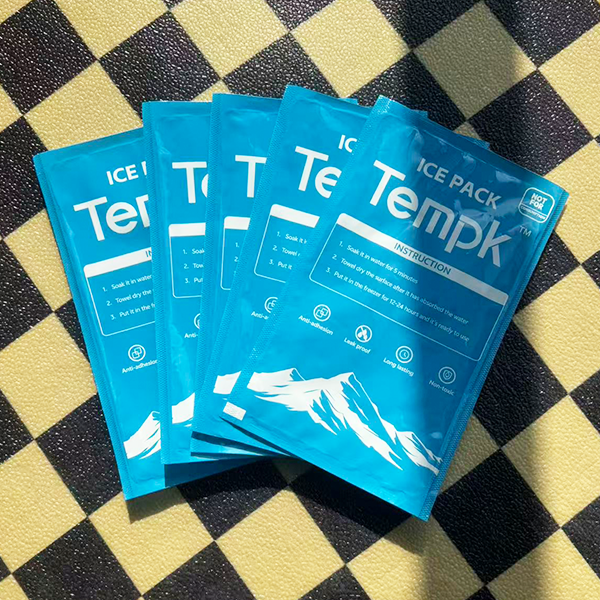
Commercial Ice Box Temperature-Controlled Shipping: Specification Guide
The most useful way to plan commercial ice box temperature controlled shipping is to move through a requirement-to-evidence sequence. First define the product and temperature need. Then model payload and coolant space, map the route and handling risks, select construction, and decide what testing or documentation must support approval. This sequence keeps commercial discussions anchored to the application rather than to broad claims about liters, insulation, duration, or price.
For food, pharmaceutical, laboratory, specialty chemical, and other temperature-sensitive commercial shipments, procurement, operations, engineering, and quality teams should work from the same controlled brief. Temperature-controlled shipping is a system outcome. The commercial ice box alone cannot guarantee the result. The sections below combine buyer, engineering, operational, and supplier-control perspectives into one decision path, ending with implementation checks that help the approved sample remain representative of production and real use.
| Decision answer: Select the commercial insulated shipping system only after confirming the payload, usable geometry, temperature requirement, route, coolant, handling, evidence, and production controls. Temperature-controlled shipping is a system outcome. The commercial ice box alone cannot guarantee the result. |
|---|
Move From Need to Evidence in a Controlled Sequence
A controlled decision can be organized into four gates. Gate one defines the product and required condition. Gate two confirms that payload, coolant, internal geometry, handling, and route fit the proposed box. Gate three evaluates evidence, including drawings, material data, test reports, manufacturing controls, and application limits. Gate four approves implementation, including instructions, monitoring, receiving, change control, and supplier responsibilities. A project should not move forward merely because one gate looks strong while another remains undefined.
The gates also create useful ownership. Operations can define the route and work method; engineering can review geometry, materials, and failure modes; quality can set evidence and deviation rules; procurement can compare scope and commercial terms. For cold-chain managers, packaging engineers, quality teams, shippers, and procurement professionals, this shared structure reduces repeated clarification and makes quotations comparable. It also exposes when a request is still a concept rather than a purchase-ready specification. The final approval record should show what was confirmed, by whom, using which evidence, and for which application boundary.
- Gate 1 – Product, temperature condition, sensitivity, and consequence of failure
- Gate 2 – Payload envelope, coolant, route, handling, hygiene, and user fit
- Gate 3 – Materials, drawings, tests, quality controls, and stated limitations
- Gate 4 – Pilot, instructions, monitoring, receiving, change control, and launch approval
Write the Requirement in Operational Language
Write a user requirement that another team could apply without hearing the original sales discussion. Identify the payload, packaging, initial condition, required temperature condition, maximum time, delay allowance, ambient exposure, openings, vehicle or carrier, handling, cleaning, and receiving decision. For food, pharmaceutical, laboratory, specialty chemical, and other temperature-sensitive commercial shipments, also state the consequence of a failure and whether the shipment can be replaced, quarantined, or investigated without major disruption.
Turn the primary objective – maintain a defined product temperature condition through a specified route using an integrated box, coolant, packout, monitoring, and operating process – into measurable acceptance points. Separate functions supplied by the physical container from those supplied by coolant, monitoring, work instructions, the carrier, and receiving. Then assign owners for unresolved assumptions. A controlled user requirement prevents the final approval from depending on vague phrases such as durable, medical, food grade, leakproof, long lasting, or suitable for cold chain.
- Defined payload, packaging, quantity, mass, and temperature condition
- Normal lane plus delay, seasonal, opening, and handover assumptions
- Packout components, conditioning, placement, and loaded configuration
- Handling, restraint, hygiene, labels, monitoring, and receiving decisions
- Required drawings, test evidence, production controls, and change ownership
The Project-Specific Decision Record
The approval record should resolve the project-specific risks before commercial release: treating the box as the whole system, applying a generic duration to every lane, choosing coolant without product limits, and failing to define acceptance criteria. It should also state how the proposed configuration will maintain a defined product temperature condition through a specified route using an integrated box, coolant, packout, monitoring, and operating process. These are not background comments; they are requirements that need an owner, evidence, and an acceptance decision. Where a condition cannot yet be proven, the record should identify the remaining test, pilot, or quality action.
Use an application matrix that connects insulation continuity, coolant compatibility, vapor and moisture behavior, structural protection, closure design, and dimensional repeatability with the route, handling, hygiene, monitoring, and supplier controls. Include the three decisive points: Define product range, temperature limits, route duration, delay allowance, payload, seasonal exposure, and receiving criteria before selecting hardware. Control coolant conditioning, packing order, monitor position, closure, labels, and release checks through written instructions. Use development testing and lane qualification appropriately; a generic laboratory test does not guarantee every real route. The final choice should be explainable to procurement, quality, operations, and the supplier without relying on a sales presentation or personal memory.
Treat the Packout as a Controlled Process
The approval record should close three application-specific gaps before the project moves to production or launch.
- Approval requirement: Define product range, temperature limits, route duration, delay allowance, payload, seasonal exposure, and receiving criteria before selecting hardware.
- Approval requirement: Control coolant conditioning, packing order, monitor position, closure, labels, and release checks through written instructions.
- Approval requirement: Use development testing and lane qualification appropriately; a generic laboratory test does not guarantee every real route.
Assign an owner and supporting evidence to each requirement. If one remains uncertain, keep it as an open approval item rather than hiding the uncertainty inside a broad supplier claim.
| Decision gate | Project-specific confirmation | Acceptable evidence | Owner |
|---|---|---|---|
| Product requirement | Maintain a defined product temperature condition through a specified route using an integrated box, coolant, packout, monitoring, and operating process | Approved user requirement and product information | Product and quality teams |
| Physical and operating fit | Shipment-defined; packout repeatability, closure, labels, orientation, restraint, carrier compatibility, and receiving instructions | Packout drawing, sample trial, route observation, and cleaning review | Engineering and operations |
| Performance boundary | Temperature-controlled shipping is a system outcome. The commercial ice box alone cannot guarantee the result. | Traceable thermal, mechanical, monitoring, and application evidence | Engineering and quality |
| Supplier control | User requirements, thermal model or test plan, route profile, payload configuration, coolant conditioning, calibrated monitoring, qualification report, and operating instructions | Control plan, records, audit evidence, and change agreement | Procurement and quality |
| Implementation | Control coolant conditioning, packing order, monitor position, closure, labels, and release checks through written instructions. | Approved pilot, instructions, training, receiving, and escalation plan | Operations and quality |
| Lifecycle decision | packaging, coolant, monitoring, qualification, labor, freight, delays, product value, deviation investigation, and recovery planning; right-sized systems, reusable options where return and cleaning work, lower coolant waste, and prevention of product loss | Comparable business case and periodic performance review | Procurement and operations |
Define Temperature Performance With Conditions Attached
Convert thermal claims into approval statements with conditions attached. The specification should identify the required product range, packout revision, payload range, coolant and conditioning, ambient profile, duration and delay margin, openings, sensor plan, and acceptance criterion. Where different seasons use different packouts, approve each configuration explicitly rather than treating them as informal operator adjustments.
Create an evidence ladder. Start with design calculations or development comparison, move to representative laboratory testing, add lane qualification when the risk requires it, and use operational monitoring to verify controlled use. Each step answers a different question. Approval should be based on the level that matches product value, sensitivity, regulatory context, recoverability, and route variability, not on the most impressive certificate name in a proposal.
Capacity Must Be Proven With a Packout
Convert the catalog description into a controlled payload envelope. Request clear internal length, width, and height at the points where the payload actually sits, then place the intended coolant, separators, racks, monitor, and product in a drawing or physical trial. A catalog volume rating describes nominal space; it does not state how many saleable units, vaccine cartons, specimens, or dairy packs can be loaded without disturbing the approved arrangement.
Approval should cover external footprint and loaded mass as well as internal fit. The proposed container has to enter the vehicle, pass through doors, sit securely, allow the lid to close without compression, and remain manageable at delivery. Where summer and winter packouts differ, document both. The accepted specification should state the usable payload for the defined configuration and identify any dimensional tolerance that could change packing, restraint, or thermal performance.
Create an Evidence Ladder for the Decision
Organize approval evidence by the decision it supports. Drawings and material records establish what the product is. Mechanical tests address handling and restraint. Thermal development tests compare designs. Qualification tests a defined packout against an approved requirement. Route monitoring shows how the controlled method behaves under operational variability. The approval record should identify which level is required and why, rather than accepting a collection of unrelated reports.
Before relying on any report, compare the tested version, payload, coolant, conditioning, initial temperatures, ambient profile, duration, openings, orientation, sensors, acceptance criteria, and deviations with the planned use. Record gaps and decide whether they are acceptable, require analysis, or require additional testing. A report name or pass statement is not enough. The supported conclusion must remain traceable to the configuration that procurement and production will actually purchase.
Procurement Should Test the Supplier’s Process
Evaluate the proposed manufacturer against the approved requirement, not against a generic supplier questionnaire. Confirm whether the offer covers the box only or a wider scope that includes coolant, inserts, packout drawings, testing, qualification support, monitoring, labels, spare parts, training, and deviation assistance. Request user requirements, thermal model or test plan, route profile, payload configuration, coolant conditioning, calibrated monitoring, qualification report, and operating instructions. Every important claim should point to a controlled document, sample, test condition, or production control.
Complete commercial and quality due diligence together. Review approved material sources, critical processes, inspection records, calibration, tooling maintenance, nonconformance, corrective action, subcontracted components, and engineering change notification. Agree who owns drawings, molds, product revisions, records, and retesting decisions. A supplier is ready for approval when it can recreate the accepted configuration and explain how changes will be evaluated before they reach a shipment.
- Scope of supply, documentation, testing, qualification, and support
- Controlled specification, approved sample, bill of materials, and revision link
- Critical processes, inspections, records, calibration, and corrective action
- Subcontractor control, tooling maintenance, substitutions, and change notification
- Commercial responsibility for defects, rework, spare parts, and future orders
A Controlled Rollout Prevents Expensive Surprises
Implementation should move from representative sample to controlled pilot before full production or route launch. Confirm the exact bill of materials, drawings, colors, markings, accessories, packaging, and instructions. Use the pilot to test packing time, user errors, loaded ergonomics, vehicle fit, restraint, cleaning, monitoring, and receiving. For a temperature-controlled application, verify that the pilot follows the intended coolant and payload configuration rather than an easier demonstration setup.
After approval, freeze the critical specification and define change control. Train packers, drivers, couriers, cleaners, and receivers on the parts of the process they own. Establish a first-production review and monitor early shipments for recurring issues. A launch should include escalation contacts and a method for segregating suspect boxes or components. Periodic review can use damage, deviation, return, cleaning, and temperature data to refine the system without weakening the qualified or approved boundary.
Build a Cost Model Around Risk and Utilization
Build a risk-adjusted business case with one-time, recurring, and failure costs separated. One-time items may include design, tooling, samples, validation, and launch. Recurring items can include units, coolant, monitoring, labor, cleaning, freight, inspection, storage, and replacement. Failure costs may include product hold, reshipment, deviation investigation, customer disruption, and lost route capacity. Use project data or clearly identified assumptions rather than a generic savings percentage.
Compare alternatives on the same approved scope. A lower unit price is not lower cost if usable space is poor, freight cube is high, packout labor is slow, or quality escapes are frequent. A technically stronger design is not automatically better if it adds cost without addressing a route risk. The approval team should document the trade-off it is accepting and the operating measure that will show whether the expected value is achieved.
Applying the Decision Path to a Typical Project
Apply the full decision path to a typical project. A shipper wants one box for a forty-eight-hour service, but carrier cutoffs, weekend delay, payload mass, seasonal ambient exposure, and receiving availability all affect the required design margin. The cross-functional team first approves the user requirement, then confirms payload and coolant fit with a physical sample. It records loaded handling, route exposure, hygiene, monitoring, and receiving needs before selecting the evidence level and commercial scope.
The chosen manufacturer supplies controlled drawings, materials, test reports, and a pilot batch. Procurement compares the quotation against the approved scope; quality checks change control and acceptance criteria; operations runs the pilot with normal users. Launch occurs only after unresolved gaps have owners and dates. The final record links the requirement, configuration, evidence, instructions, and production version so future changes can be assessed coherently.
Final Procurement Questions
What must be approved before the purchase order is released?
Approve the user requirement, product revision, internal and external dimensions, materials, packout components, test or qualification basis, critical inspection criteria, labels, packaging, documentation, commercial scope, and change-control responsibilities. For temperature-sensitive use, also approve the payload, coolant conditioning, ambient and duration assumptions, sensor plan, operating instructions, receiving criteria, and unresolved limitations.
How is an approved sample kept consistent with production?
Link the sample to controlled drawings, bill of materials, approved material sources, process settings, critical dimensions, inspection methods, and a pilot batch. Retain a reference sample where useful, but do not rely on appearance alone. The supplier should notify the buyer before changes to tooling, resin, insulation, hardware, seal, insert, coolant, subcontractor, process, or packaging that could affect function.
Who owns qualification and compliance decisions?
Responsibility should be allocated in the project agreement. The supplier can provide accurate product data, samples, reports, and technical support; the buyer normally defines the product limits, lane, acceptance criteria, quality system, and applicable market obligations. A contract manufacturer or testing laboratory may perform work, but that does not remove the need for the product owner and quality team to approve suitability.
When is a custom design justified?
Customization is justified when a standard product cannot meet critical payload geometry, usable capacity, restraint, cleaning, branding, route, accessory, or operating needs. Compare the value with tooling, development time, MOQ, change risk, test requirements, spare parts, and future revisions. A custom shape should solve a documented requirement rather than add complexity that can be handled with an insert or process change.
What turns an ice box into a temperature-controlled shipping system?
A controlled system combines a defined product temperature condition, payload, coolant or PCM, conditioning, packout, ambient and duration profile, design margin, monitoring, closure, labels, handling, receiving criteria, and appropriate testing or qualification. The box supplies insulation and structural protection, but the shipping outcome comes from the complete configuration and repeatable operating process.
Conclusion: Approve a System You Can Explain and Repeat
A suitable commercial ice box temperature controlled shipping is the result of disciplined specification rather than a single feature. The most reliable decision connects payload, temperature condition, route, usable space, construction, coolant, handling, hygiene, evidence, production control, and operating ownership. When those elements are explicit, procurement can compare offers fairly and operations can repeat the approved method without relying on memory or broad sales language.
- Start with the product and lane, then confirm physical fit and packout.
- Match the required evidence to the risk and application boundary.
- Approve supplier controls, implementation, monitoring, and change management together.
- Maintain one traceable link from requirement to evidence to operating instruction.
About Tempk
Tempk works from Shanghai on cold-chain packaging products and solutions and has operated since 2011. The company’s public product categories include ice packs, insulated boxes, vacuum-insulated packaging, bags and liners, pallet covers, and temperature-monitoring equipment. Rather than selecting from capacity alone, a buyer can share the product, required condition, payload, route, season, handling, and receiving details for a more relevant discussion. Any temperature-sensitive application should still be confirmed through the appropriate testing, documentation, and quality review.
Preparing a Useful Inquiry
Share your payload, route, temperature requirement, and expected order scope with Tempk to discuss a practical commercial insulated shipping system configuration.
Commercial Ice Box Dairy Logistics Manufacturer: Specification Guide
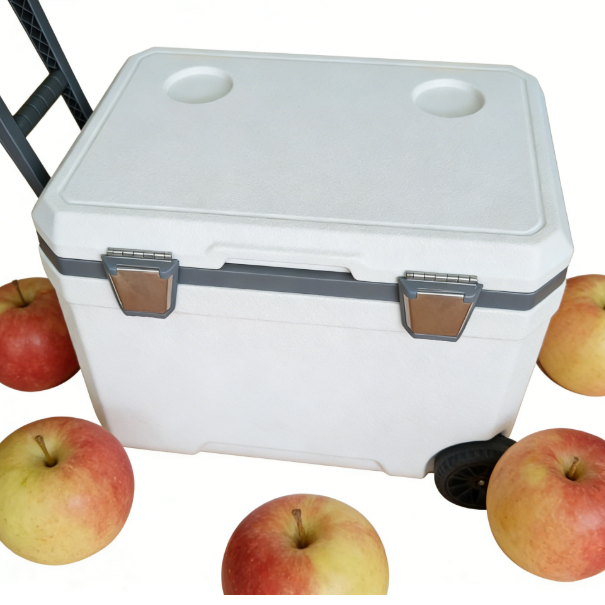
Selecting a Commercial Ice Box Dairy Logistics Manufacturer: A Requirement-to-Evidence Guide
The most useful way to select a commercial ice box dairy logistics manufacturer is to move through a requirement-to-evidence sequence. First define the product and temperature need. Then model payload and coolant space, map the route and handling risks, select construction, and decide what testing or documentation must support approval. This sequence keeps commercial discussions anchored to the application rather than to broad claims about liters, insulation, duration, or price.
For milk, yogurt, cheese, cultured products, ingredients, samples, and route-delivery operations, procurement, operations, engineering, and quality teams should work from the same controlled brief. The commercial ice box is one part of the dairy cold chain. Product limits, coolant, route time, opening behavior, vehicle conditions, and receiving controls determine performance. The sections below combine buyer, engineering, operational, and supplier-control perspectives into one decision path, ending with implementation checks that help the approved sample remain representative of production and real use.
| Decision answer: Select the commercial dairy logistics ice box only after confirming the payload, usable geometry, temperature requirement, route, coolant, handling, evidence, and production controls. The commercial ice box is one part of the dairy cold chain. Product limits, coolant, route time, opening behavior, vehicle conditions, and receiving controls determine performance. |
|---|
Use a Requirement-to-Evidence Decision Path
A controlled decision can be organized into four gates. Gate one defines the product and required condition. Gate two confirms that payload, coolant, internal geometry, handling, and route fit the proposed box. Gate three evaluates evidence, including drawings, material data, test reports, manufacturing controls, and application limits. Gate four approves implementation, including instructions, monitoring, receiving, change control, and supplier responsibilities. A project should not move forward merely because one gate looks strong while another remains undefined.
The gates also create useful ownership. Operations can define the route and work method; engineering can review geometry, materials, and failure modes; quality can set evidence and deviation rules; procurement can compare scope and commercial terms. For dairy processors, distributors, route operators, quality teams, and food-logistics procurement, this shared structure reduces repeated clarification and makes quotations comparable. It also exposes when a request is still a concept rather than a purchase-ready specification. The final approval record should show what was confirmed, by whom, using which evidence, and for which application boundary.
- Gate 1 – Product, temperature condition, sensitivity, and consequence of failure
- Gate 2 – Payload envelope, coolant, route, handling, hygiene, and user fit
- Gate 3 – Materials, drawings, tests, quality controls, and stated limitations
- Gate 4 – Pilot, instructions, monitoring, receiving, change control, and launch approval
A Useful Specification Starts With the Job
Write a user requirement that another team could apply without hearing the original sales discussion. Identify the payload, packaging, initial condition, required temperature condition, maximum time, delay allowance, ambient exposure, openings, vehicle or carrier, handling, cleaning, and receiving decision. For milk, yogurt, cheese, cultured products, ingredients, samples, and route-delivery operations, also state the consequence of a failure and whether the shipment can be replaced, quarantined, or investigated without major disruption.
Turn the primary objective – preserve the product-specific refrigerated condition while supporting hygienic, repetitive commercial handling – into measurable acceptance points. Separate functions supplied by the physical container from those supplied by coolant, monitoring, work instructions, the carrier, and receiving. Then assign owners for unresolved assumptions. A controlled user requirement prevents the final approval from depending on vague phrases such as durable, medical, food grade, leakproof, long lasting, or suitable for cold chain.
- Defined payload, packaging, quantity, mass, and temperature condition
- Normal lane plus delay, seasonal, opening, and handover assumptions
- Packout components, conditioning, placement, and loaded configuration
- Handling, restraint, hygiene, labels, monitoring, and receiving decisions
- Required drawings, test evidence, production controls, and change ownership
The Project-Specific Decision Record
The approval record should resolve the project-specific risks before commercial release: assuming insulation alone controls temperature, ignoring dwell time at handovers, allowing meltwater or soil traps, and selecting a box that slows route work. It should also state how the proposed configuration will preserve the product-specific refrigerated condition while supporting hygienic, repetitive commercial handling. These are not background comments; they are requirements that need an owner, evidence, and an acceptance decision. Where a condition cannot yet be proven, the record should identify the remaining test, pilot, or quality action.
Use an application matrix that connects cleanable shell materials, closed insulation structure, seal design, drainage details, impact durability, and resistance to detergents with the route, handling, hygiene, monitoring, and supplier controls. Include the three decisive points: Map dock dwell, vehicle temperature, stop count, opening time, and receiving delay before choosing the box and coolant. Prioritize cleanable details and fast, repeatable loading because dairy routes are operationally repetitive. Confirm product-specific temperature and sanitation requirements under the applicable dairy and food-safety rules. The final choice should be explainable to procurement, quality, operations, and the supplier without relying on a sales presentation or personal memory.
Convert Nominal Volume Into Usable Space
Convert the catalog description into a controlled payload envelope. Request clear internal length, width, and height at the points where the payload actually sits, then place the intended coolant, separators, racks, monitor, and product in a drawing or physical trial. A catalog volume rating describes nominal space; it does not state how many saleable units, vaccine cartons, specimens, or dairy packs can be loaded without disturbing the approved arrangement.
Approval should cover external footprint and loaded mass as well as internal fit. The proposed container has to enter the vehicle, pass through doors, sit securely, allow the lid to close without compression, and remain manageable at delivery. Where summer and winter packouts differ, document both. The accepted specification should state the usable payload for the defined configuration and identify any dimensional tolerance that could change packing, restraint, or thermal performance.
| Decision gate | Project-specific confirmation | Acceptable evidence | Owner |
|---|---|---|---|
| Product requirement | Preserve the product-specific refrigerated condition while supporting hygienic, repetitive commercial handling | Approved user requirement and product information | Product and quality teams |
| Physical and operating fit | Route-sized; fast loading, stable stacking, secure closures, vehicle restraint, route labels, and safe carrying when wet | Packout drawing, sample trial, route observation, and cleaning review | Engineering and operations |
| Performance boundary | The commercial ice box is one part of the dairy cold chain. Product limits, coolant, route time, opening behavior, vehicle conditions, and receiving controls determine performance. | Traceable thermal, mechanical, monitoring, and application evidence | Engineering and quality |
| Supplier control | Material declarations, cleanability review, dimensions, route test conditions, temperature records, and production quality documentation | Control plan, records, audit evidence, and change agreement | Procurement and quality |
| Implementation | Prioritize cleanable details and fast, repeatable loading because dairy routes are operationally repetitive. | Approved pilot, instructions, training, receiving, and escalation plan | Operations and quality |
| Lifecycle decision | route labor, cleaning time, product loss risk, vehicle cube, box replacement, and the number of sizes needed; high utilization, reliable reuse, wash efficiency, route-compatible return, and lower product loss | Comparable business case and periodic performance review | Procurement and operations |
Design Around the Route, Not Only the Product
The approval record should close three application-specific gaps before the project moves to production or launch.
- Approval requirement: Map dock dwell, vehicle temperature, stop count, opening time, and receiving delay before choosing the box and coolant.
- Approval requirement: Prioritize cleanable details and fast, repeatable loading because dairy routes are operationally repetitive.
- Approval requirement: Confirm product-specific temperature and sanitation requirements under the applicable dairy and food-safety rules.
Assign an owner and supporting evidence to each requirement. If one remains uncertain, keep it as an open approval item rather than hiding the uncertainty inside a broad supplier claim.
Define Temperature Performance With Conditions Attached
Convert thermal claims into approval statements with conditions attached. The specification should identify the required product range, packout revision, payload range, coolant and conditioning, ambient profile, duration and delay margin, openings, sensor plan, and acceptance criterion. Where different seasons use different packouts, approve each configuration explicitly rather than treating them as informal operator adjustments.
Create an evidence ladder. Start with design calculations or development comparison, move to representative laboratory testing, add lane qualification when the risk requires it, and use operational monitoring to verify controlled use. Each step answers a different question. Approval should be based on the level that matches product value, sensitivity, regulatory context, recoverability, and route variability, not on the most impressive certificate name in a proposal.
Procurement Should Test the Supplier’s Process
Evaluate the proposed manufacturer against the approved requirement, not against a generic supplier questionnaire. Confirm whether the offer covers the box only or a wider scope that includes coolant, inserts, packout drawings, testing, qualification support, monitoring, labels, spare parts, training, and deviation assistance. Request material declarations, cleanability review, dimensions, route test conditions, temperature records, and production quality documentation. Every important claim should point to a controlled document, sample, test condition, or production control.
Complete commercial and quality due diligence together. Review approved material sources, critical processes, inspection records, calibration, tooling maintenance, nonconformance, corrective action, subcontracted components, and engineering change notification. Agree who owns drawings, molds, product revisions, records, and retesting decisions. A supplier is ready for approval when it can recreate the accepted configuration and explain how changes will be evaluated before they reach a shipment.
- Scope of supply, documentation, testing, qualification, and support
- Controlled specification, approved sample, bill of materials, and revision link
- Critical processes, inspections, records, calibration, and corrective action
- Subcontractor control, tooling maintenance, substitutions, and change notification
- Commercial responsibility for defects, rework, spare parts, and future orders
Create an Evidence Ladder for the Decision
Organize approval evidence by the decision it supports. Drawings and material records establish what the product is. Mechanical tests address handling and restraint. Thermal development tests compare designs. Qualification tests a defined packout against an approved requirement. Route monitoring shows how the controlled method behaves under operational variability. The approval record should identify which level is required and why, rather than accepting a collection of unrelated reports.
Before relying on any report, compare the tested version, payload, coolant, conditioning, initial temperatures, ambient profile, duration, openings, orientation, sensors, acceptance criteria, and deviations with the planned use. Record gaps and decide whether they are acceptable, require analysis, or require additional testing. A report name or pass statement is not enough. The supported conclusion must remain traceable to the configuration that procurement and production will actually purchase.
A Controlled Rollout Prevents Expensive Surprises
Implementation should move from representative sample to controlled pilot before full production or route launch. Confirm the exact bill of materials, drawings, colors, markings, accessories, packaging, and instructions. Use the pilot to test packing time, user errors, loaded ergonomics, vehicle fit, restraint, cleaning, monitoring, and receiving. For a temperature-controlled application, verify that the pilot follows the intended coolant and payload configuration rather than an easier demonstration setup.
After approval, freeze the critical specification and define change control. Train packers, drivers, couriers, cleaners, and receivers on the parts of the process they own. Establish a first-production review and monitor early shipments for recurring issues. A launch should include escalation contacts and a method for segregating suspect boxes or components. Periodic review can use damage, deviation, return, cleaning, and temperature data to refine the system without weakening the qualified or approved boundary.
Build a Cost Model Around Risk and Utilization
Build a risk-adjusted business case with one-time, recurring, and failure costs separated. One-time items may include design, tooling, samples, validation, and launch. Recurring items can include units, coolant, monitoring, labor, cleaning, freight, inspection, storage, and replacement. Failure costs may include product hold, reshipment, deviation investigation, customer disruption, and lost route capacity. Use project data or clearly identified assumptions rather than a generic savings percentage.
Compare alternatives on the same approved scope. A lower unit price is not lower cost if usable space is poor, freight cube is high, packout labor is slow, or quality escapes are frequent. A technically stronger design is not automatically better if it adds cost without addressing a route risk. The approval team should document the trade-off it is accepting and the operating measure that will show whether the expected value is achieved.
Applying the Decision Path to a Typical Project
Apply the full decision path to a typical project. A dairy distributor completes many short deliveries. Each opening is brief, but accumulated exposure, wet handling, and inconsistent re-packing can create more risk than the drive time alone. The cross-functional team first approves the user requirement, then confirms payload and coolant fit with a physical sample. It records loaded handling, route exposure, hygiene, monitoring, and receiving needs before selecting the evidence level and commercial scope.
The chosen manufacturer supplies controlled drawings, materials, test reports, and a pilot batch. Procurement compares the quotation against the approved scope; quality checks change control and acceptance criteria; operations runs the pilot with normal users. Launch occurs only after unresolved gaps have owners and dates. The final record links the requirement, configuration, evidence, instructions, and production version so future changes can be assessed coherently.
Final Procurement Questions
What must be approved before the purchase order is released?
Approve the user requirement, product revision, internal and external dimensions, materials, packout components, test or qualification basis, critical inspection criteria, labels, packaging, documentation, commercial scope, and change-control responsibilities. For temperature-sensitive use, also approve the payload, coolant conditioning, ambient and duration assumptions, sensor plan, operating instructions, receiving criteria, and unresolved limitations.
How is an approved sample kept consistent with production?
Link the sample to controlled drawings, bill of materials, approved material sources, process settings, critical dimensions, inspection methods, and a pilot batch. Retain a reference sample where useful, but do not rely on appearance alone. The supplier should notify the buyer before changes to tooling, resin, insulation, hardware, seal, insert, coolant, subcontractor, process, or packaging that could affect function.
Who owns qualification and compliance decisions?
Responsibility should be allocated in the project agreement. The supplier can provide accurate product data, samples, reports, and technical support; the buyer normally defines the product limits, lane, acceptance criteria, quality system, and applicable market obligations. A contract manufacturer or testing laboratory may perform work, but that does not remove the need for the product owner and quality team to approve suitability.
When is a custom design justified?
Customization is justified when a standard product cannot meet critical payload geometry, usable capacity, restraint, cleaning, branding, route, accessory, or operating needs. Compare the value with tooling, development time, MOQ, change risk, test requirements, spare parts, and future revisions. A custom shape should solve a documented requirement rather than add complexity that can be handled with an insert or process change.
What should be confirmed for dairy route logistics?
Confirm the product-specific refrigerated condition, maximum dock and delivery exposure, vehicle environment, stop count, opening pattern, hygiene method, and receiving delay under the applicable food and dairy rules. The box should support fast repeatable loading and cleaning without water traps or damaged surfaces. Insulation is only one control within the broader dairy cold chain.
Conclusion: Approve a System You Can Explain and Repeat
A suitable commercial ice box dairy logistics manufacturer is the result of disciplined specification rather than a single feature. The most reliable decision connects payload, temperature condition, route, usable space, construction, coolant, handling, hygiene, evidence, production control, and operating ownership. When those elements are explicit, procurement can compare offers fairly and operations can repeat the approved method without relying on memory or broad sales language.
- Start with the product and lane, then confirm physical fit and packout.
- Match the required evidence to the risk and application boundary.
- Approve supplier controls, implementation, monitoring, and change management together.
- Maintain one traceable link from requirement to evidence to operating instruction.
About Tempk
Tempk works from Shanghai on cold-chain packaging products and solutions and has operated since 2011. The company’s public product categories include ice packs, insulated boxes, vacuum-insulated packaging, bags and liners, pallet covers, and temperature-monitoring equipment. Rather than selecting from capacity alone, a buyer can share the product, required condition, payload, route, season, handling, and receiving details for a more relevant discussion. Any temperature-sensitive application should still be confirmed through the appropriate testing, documentation, and quality review.
Project Discussion
Discuss the planned product, coolant, route, season, monitoring, and receiving process with Tempk before moving from sample to production.
40 Liter Insulated Ice Box Supplier: Specification Guide
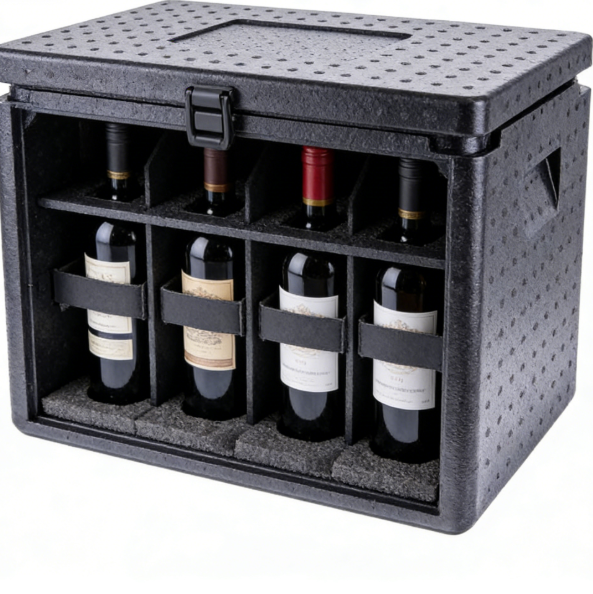
Selecting a 40 Liter Insulated Ice Box Supplier: A Requirement-to-Evidence Guide
The most useful way to select a 40 liter insulated ice box supplier is to move through a requirement-to-evidence sequence. First define the product and temperature need. Then model payload and coolant space, map the route and handling risks, select construction, and decide what testing or documentation must support approval. This sequence keeps commercial discussions anchored to the application rather than to broad claims about liters, insulation, duration, or price.
For commercial delivery, food distribution, medical support, events, field work, and regional transport, procurement, operations, engineering, and quality teams should work from the same controlled brief. Forty liters describes nominal internal volume, not a guaranteed payload or thermal duration. The complete packout and route determine the result. The sections below combine buyer, engineering, operational, and supplier-control perspectives into one decision path, ending with implementation checks that help the approved sample remain representative of production and real use.
| Decision answer: Select the insulated ice box only after confirming the payload, usable geometry, temperature requirement, route, coolant, handling, evidence, and production controls. Forty liters describes nominal internal volume, not a guaranteed payload or thermal duration. The complete packout and route determine the result. |
|---|
The Decision Has Four Connected Gates
A controlled decision can be organized into four gates. Gate one defines the product and required condition. Gate two confirms that payload, coolant, internal geometry, handling, and route fit the proposed box. Gate three evaluates evidence, including drawings, material data, test reports, manufacturing controls, and application limits. Gate four approves implementation, including instructions, monitoring, receiving, change control, and supplier responsibilities. A project should not move forward merely because one gate looks strong while another remains undefined.
The gates also create useful ownership. Operations can define the route and work method; engineering can review geometry, materials, and failure modes; quality can set evidence and deviation rules; procurement can compare scope and commercial terms. For commercial procurement, distributors, logistics planners, and brand owners, this shared structure reduces repeated clarification and makes quotations comparable. It also exposes when a request is still a concept rather than a purchase-ready specification. The final approval record should show what was confirmed, by whom, using which evidence, and for which application boundary.
- Gate 1 – Product, temperature condition, sensitivity, and consequence of failure
- Gate 2 – Payload envelope, coolant, route, handling, hygiene, and user fit
- Gate 3 – Materials, drawings, tests, quality controls, and stated limitations
- Gate 4 – Pilot, instructions, monitoring, receiving, change control, and launch approval
Write the Requirement in Operational Language
Write a user requirement that another team could apply without hearing the original sales discussion. Identify the payload, packaging, initial condition, required temperature condition, maximum time, delay allowance, ambient exposure, openings, vehicle or carrier, handling, cleaning, and receiving decision. For commercial delivery, food distribution, medical support, events, field work, and regional transport, also state the consequence of a failure and whether the shipment can be replaced, quarantined, or investigated without major disruption.
Turn the primary objective – combine meaningful usable capacity with manageable handling and a thermal design appropriate to the lane – into measurable acceptance points. Separate functions supplied by the physical container from those supplied by coolant, monitoring, work instructions, the carrier, and receiving. Then assign owners for unresolved assumptions. A controlled user requirement prevents the final approval from depending on vague phrases such as durable, medical, food grade, leakproof, long lasting, or suitable for cold chain.
- Defined payload, packaging, quantity, mass, and temperature condition
- Normal lane plus delay, seasonal, opening, and handover assumptions
- Packout components, conditioning, placement, and loaded configuration
- Handling, restraint, hygiene, labels, monitoring, and receiving decisions
- Required drawings, test evidence, production controls, and change ownership
Close the Application-Specific Approval Gaps
The approval record should resolve the project-specific risks before commercial release: overestimating usable capacity, using a generic hold-time claim, overlooking wall or lid thermal bridges, and failing to restrain the box. It should also state how the proposed configuration will combine meaningful usable capacity with manageable handling and a thermal design appropriate to the lane. These are not background comments; they are requirements that need an owner, evidence, and an acceptance decision. Where a condition cannot yet be proven, the record should identify the remaining test, pilot, or quality action.
Use an application matrix that connects insulation thickness and continuity, lid construction, corners, shell impact resistance, hardware, and closure compression with the route, handling, hygiene, monitoring, and supplier controls. Include the three decisive points: Confirm internal length, width, height, and the payload envelope after coolant placement. Review both hot-ambient and cold-ambient risks when the route or product requires them. Do not accept a duration claim unless the supplier identifies payload, coolant, test profile, openings, and acceptance criteria. The final choice should be explainable to procurement, quality, operations, and the supplier without relying on a sales presentation or personal memory.
Convert Nominal Volume Into Usable Space
Convert the catalog description into a controlled payload envelope. Request clear internal length, width, and height at the points where the payload actually sits, then place the intended coolant, separators, racks, monitor, and product in a drawing or physical trial. A 40-liter rating describes nominal space; it does not state how many saleable units, vaccine cartons, specimens, or dairy packs can be loaded without disturbing the approved arrangement.
Approval should cover external footprint and loaded mass as well as internal fit. The proposed container has to enter the vehicle, pass through doors, sit securely, allow the lid to close without compression, and remain manageable at delivery. Where summer and winter packouts differ, document both. The accepted specification should state the usable payload for the defined configuration and identify any dimensional tolerance that could change packing, restraint, or thermal performance.
| Decision gate | Project-specific confirmation | Acceptable evidence | Owner |
|---|---|---|---|
| Product requirement | Combine meaningful usable capacity with manageable handling and a thermal design appropriate to the lane | Approved user requirement and product information | Product and quality teams |
| Physical and operating fit | 40-liter; loaded lifting, handles, stack interface, tie-down compatibility, lid access, and receiving ergonomics | Packout drawing, sample trial, route observation, and cleaning review | Engineering and operations |
| Performance boundary | Forty liters describes nominal internal volume, not a guaranteed payload or thermal duration. The complete packout and route determine the result. | Traceable thermal, mechanical, monitoring, and application evidence | Engineering and quality |
| Supplier control | Dimensioned specification, material data, test profile, payload and coolant details, acceptance criteria, and lot inspection | Control plan, records, audit evidence, and change agreement | Procurement and quality |
| Implementation | Review both hot-ambient and cold-ambient risks when the route or product requires them. | Approved pilot, instructions, training, receiving, and escalation plan | Operations and quality |
| Lifecycle decision | usable capacity, freight cube, coolant requirement, labor, test support, damage, and long-term replacement; right-sized packouts, longer product life, efficient reverse logistics, and reduced coolant or product waste | Comparable business case and periodic performance review | Procurement and operations |
Capacity, Insulation, and Handling Must Be Balanced
The approval record should close three application-specific gaps before the project moves to production or launch.
- Approval requirement: Confirm internal length, width, height, and the payload envelope after coolant placement.
- Approval requirement: Review both hot-ambient and cold-ambient risks when the route or product requires them.
- Approval requirement: Do not accept a duration claim unless the supplier identifies payload, coolant, test profile, openings, and acceptance criteria.
Assign an owner and supporting evidence to each requirement. If one remains uncertain, keep it as an open approval item rather than hiding the uncertainty inside a broad supplier claim.
Define Temperature Performance With Conditions Attached
Convert thermal claims into approval statements with conditions attached. The specification should identify the required product range, packout revision, payload range, coolant and conditioning, ambient profile, duration and delay margin, openings, sensor plan, and acceptance criterion. Where different seasons use different packouts, approve each configuration explicitly rather than treating them as informal operator adjustments.
Create an evidence ladder. Start with design calculations or development comparison, move to representative laboratory testing, add lane qualification when the risk requires it, and use operational monitoring to verify controlled use. Each step answers a different question. Approval should be based on the level that matches product value, sensitivity, regulatory context, recoverability, and route variability, not on the most impressive certificate name in a proposal.
Procurement Should Test the Supplier’s Process
Evaluate the proposed manufacturer against the approved requirement, not against a generic supplier questionnaire. Confirm whether the offer covers the box only or a wider scope that includes coolant, inserts, packout drawings, testing, qualification support, monitoring, labels, spare parts, training, and deviation assistance. Request dimensioned specification, material data, test profile, payload and coolant details, acceptance criteria, and lot inspection. Every important claim should point to a controlled document, sample, test condition, or production control.
Complete commercial and quality due diligence together. Review approved material sources, critical processes, inspection records, calibration, tooling maintenance, nonconformance, corrective action, subcontracted components, and engineering change notification. Agree who owns drawings, molds, product revisions, records, and retesting decisions. A supplier is ready for approval when it can recreate the accepted configuration and explain how changes will be evaluated before they reach a shipment.
- Scope of supply, documentation, testing, qualification, and support
- Controlled specification, approved sample, bill of materials, and revision link
- Critical processes, inspections, records, calibration, and corrective action
- Subcontractor control, tooling maintenance, substitutions, and change notification
- Commercial responsibility for defects, rework, spare parts, and future orders
Create an Evidence Ladder for the Decision
Organize approval evidence by the decision it supports. Drawings and material records establish what the product is. Mechanical tests address handling and restraint. Thermal development tests compare designs. Qualification tests a defined packout against an approved requirement. Route monitoring shows how the controlled method behaves under operational variability. The approval record should identify which level is required and why, rather than accepting a collection of unrelated reports.
Before relying on any report, compare the tested version, payload, coolant, conditioning, initial temperatures, ambient profile, duration, openings, orientation, sensors, acceptance criteria, and deviations with the planned use. Record gaps and decide whether they are acceptable, require analysis, or require additional testing. A report name or pass statement is not enough. The supported conclusion must remain traceable to the configuration that procurement and production will actually purchase.
A Controlled Rollout Prevents Expensive Surprises
Implementation should move from representative sample to controlled pilot before full production or route launch. Confirm the exact bill of materials, drawings, colors, markings, accessories, packaging, and instructions. Use the pilot to test packing time, user errors, loaded ergonomics, vehicle fit, restraint, cleaning, monitoring, and receiving. For a temperature-controlled application, verify that the pilot follows the intended coolant and payload configuration rather than an easier demonstration setup.
After approval, freeze the critical specification and define change control. Train packers, drivers, couriers, cleaners, and receivers on the parts of the process they own. Establish a first-production review and monitor early shipments for recurring issues. A launch should include escalation contacts and a method for segregating suspect boxes or components. Periodic review can use damage, deviation, return, cleaning, and temperature data to refine the system without weakening the qualified or approved boundary.
Build a Cost Model Around Risk and Utilization
Build a risk-adjusted business case with one-time, recurring, and failure costs separated. One-time items may include design, tooling, samples, validation, and launch. Recurring items can include units, coolant, monitoring, labor, cleaning, freight, inspection, storage, and replacement. Failure costs may include product hold, reshipment, deviation investigation, customer disruption, and lost route capacity. Use project data or clearly identified assumptions rather than a generic savings percentage.
Compare alternatives on the same approved scope. A lower unit price is not lower cost if usable space is poor, freight cube is high, packout labor is slow, or quality escapes are frequent. A technically stronger design is not automatically better if it adds cost without addressing a route risk. The approval team should document the trade-off it is accepting and the operating measure that will show whether the expected value is achieved.
Applying the Decision Path to a Typical Project
Apply the full decision path to a typical project. A medical-support distributor needs a medium box for regional delivery. The same outer size must support summer and winter packouts, which changes coolant and usable payload. The cross-functional team first approves the user requirement, then confirms payload and coolant fit with a physical sample. It records loaded handling, route exposure, hygiene, monitoring, and receiving needs before selecting the evidence level and commercial scope.
The chosen manufacturer supplies controlled drawings, materials, test reports, and a pilot batch. Procurement compares the quotation against the approved scope; quality checks change control and acceptance criteria; operations runs the pilot with normal users. Launch occurs only after unresolved gaps have owners and dates. The final record links the requirement, configuration, evidence, instructions, and production version so future changes can be assessed coherently.
Final Procurement Questions
What must be approved before the purchase order is released?
Approve the user requirement, product revision, internal and external dimensions, materials, packout components, test or qualification basis, critical inspection criteria, labels, packaging, documentation, commercial scope, and change-control responsibilities. For temperature-sensitive use, also approve the payload, coolant conditioning, ambient and duration assumptions, sensor plan, operating instructions, receiving criteria, and unresolved limitations.
How is an approved sample kept consistent with production?
Link the sample to controlled drawings, bill of materials, approved material sources, process settings, critical dimensions, inspection methods, and a pilot batch. Retain a reference sample where useful, but do not rely on appearance alone. The supplier should notify the buyer before changes to tooling, resin, insulation, hardware, seal, insert, coolant, subcontractor, process, or packaging that could affect function.
Who owns qualification and compliance decisions?
Responsibility should be allocated in the project agreement. The supplier can provide accurate product data, samples, reports, and technical support; the buyer normally defines the product limits, lane, acceptance criteria, quality system, and applicable market obligations. A contract manufacturer or testing laboratory may perform work, but that does not remove the need for the product owner and quality team to approve suitability.
When is a custom design justified?
Customization is justified when a standard product cannot meet critical payload geometry, usable capacity, restraint, cleaning, branding, route, accessory, or operating needs. Compare the value with tooling, development time, MOQ, change risk, test requirements, spare parts, and future revisions. A custom shape should solve a documented requirement rather than add complexity that can be handled with an insert or process change.
What is the most important limitation of a insulated ice box?
Forty liters describes nominal internal volume, not a guaranteed payload or thermal duration. The complete packout and route determine the result. The buyer should therefore avoid treating a capacity label, material name, or generic duration as a complete performance statement. Confirm the payload, coolant, route, openings, ambient exposure, handling, monitoring, test conditions, and receiving decision that define the intended use.
Conclusion: Approve a System You Can Explain and Repeat
A suitable 40 liter insulated ice box supplier is the result of disciplined specification rather than a single feature. The most reliable decision connects payload, temperature condition, route, usable space, construction, coolant, handling, hygiene, evidence, production control, and operating ownership. When those elements are explicit, procurement can compare offers fairly and operations can repeat the approved method without relying on memory or broad sales language.
- Start with the product and lane, then confirm physical fit and packout.
- Match the required evidence to the risk and application boundary.
- Approve supplier controls, implementation, monitoring, and change management together.
- Maintain one traceable link from requirement to evidence to operating instruction.
About Tempk
Tempk is a Shanghai-based cold-chain packaging company established in 2011. Its publicly presented range includes gel and water-based ice packs, EPP and plastic insulated boxes, vacuum-insulated solutions, insulated bags and liners, pallet covers, and temperature-monitoring products. For a project, Tempk can review the product type, required temperature condition, payload, route, season, handling, and receiving process before discussing a standard or customized configuration. Final suitability still depends on the buyer’s application review, testing, qualification, and operating controls.
Project Discussion
Discuss the planned product, coolant, route, season, monitoring, and receiving process with Tempk before moving from sample to production.