


Insulated Pallet Blankets For Life Sciences Best Practices
Insulated Pallet Blankets For Life Sciences Best Practices
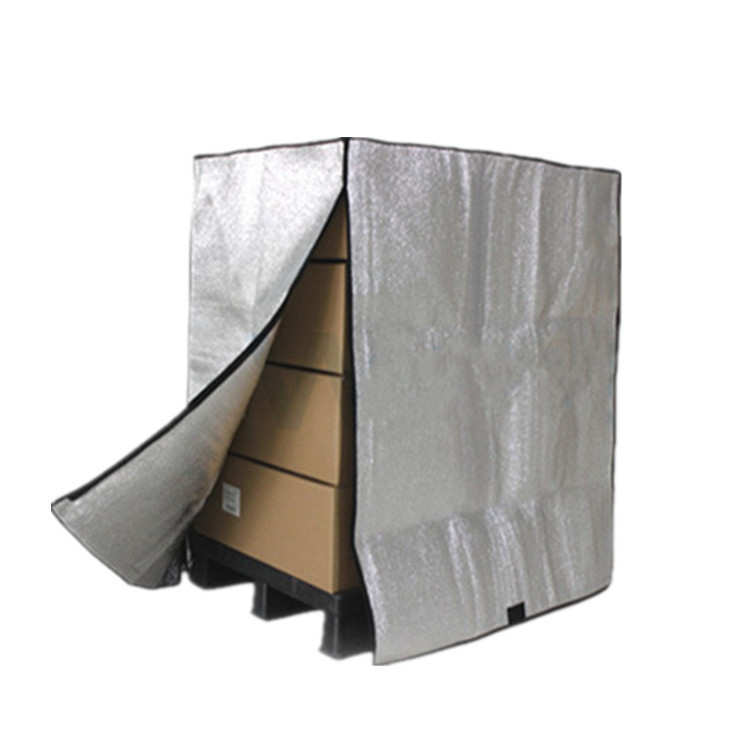
insulated pallet blankets for life sciences can lower excursion risk, improve product appearance, and make your pallet-level process more repeatable. For life sciences logistics, the main goal is to stabilize time- and temperature-sensitive shipments such as diagnostics, cell materials, assay kits, and specialty reagents. The cover does not replace refrigeration or process discipline, but it can reduce damage during short transfer windows, multi-stop courier networks, and airport and hospital receiving delays.
If you are buying or specifying a thermal blanket, start with the lane, not the brochure. Look at exposure time, target temperature, pallet shape, handling speed, and the real cost of failure. In practice, buyers care about validation support, clean appearance, and rapid deployment, not just insulation claims on paper.
What this article will answer
- How insulated pallet blankets for life sciences reduce risk on exposed transfer points and protect life sciences logistics
- Which insulated pallet blanket for life sciences features actually improve day-to-day handling
- How to compare reusable thermal blanket for diagnostics logistics options by risk, cost, and operational fit
- What quality, compliance, and documentation steps support reliable pallet protection
- Which 2026 trends are shaping reuse, monitoring, and supplier selection
Why insulated pallet blankets for life sciences are worth serious attention
The first job of insulated pallet blankets for life sciences is simple: slow down the rate at which the outer layer of the pallet absorbs or loses heat. That matters because most failures begin at the surface before the core shows a problem. For life sciences logistics, a few uncontrolled minutes can be the difference between a routine move and a preventable quality event.
Used correctly, the cover helps the pallet stay closer to target during staging, loading, unloading, and short waiting periods. It also protects packaging appearance and reduces the number of shipments that need manual review on arrival. That combination is why insulated pallet blankets for life sciences often pay back faster than buyers expect.
What risk should insulated pallet blankets for life sciences control first?
A common mistake is to judge insulated pallet blankets for life sciences only by insulation thickness. In reality, performance also depends on pallet shape, closure leakage, route length, solar exposure, and how quickly the team applies the cover. Because many healthcare products are high value, even a short deviation can trigger investigation, quarantine, or waste.
| Risk point | What happens | Cover response | Why it matters to you |
| Dock dwell time | Outer cartons or cases heat up or cool down first | Creates a short-term thermal buffer | Gives your team more safe handling time |
| Door openings and staging | Air exchange speeds up surface drift | Reduces direct exposure to ambient swings | Improves consistency across busy shifts |
| Handoffs between zones | Condensation, sweating, or excursion risk rises | Moderates the transition rate | Cuts avoidable quality reviews and loss |
Practical tips
- Map where insulated pallet blankets for life sciences add the most value before you buy in bulk. Most gains come from the exposed parts of the lane, not the cold room itself.
- Match the cover size to the real pallet footprint. A loose fit weakens performance and makes application slower.
- Use a simple handling SOP with named responsibility, especially during shift changes and high-volume dispatch windows.
Illustrative scenario: A diagnostics network added insulated pallet blankets for inter-site transfers of temperature-sensitive kits. The change improved consistency during courier handoff and reduced the number of shipments flagged for manual temperature review.
How to choose the right insulated pallet blankets for life sciences for your lane
When you compare insulated pallet blankets for life sciences, start with route reality. Ask how long the pallet will be exposed, how often the door opens, whether the load is full height, and whether the cover must survive repeated reuse. A buyer who skips those questions usually pays for features that do not solve the real problem.
The strongest shortlist balances five things at once: performance, ease of use, cleanliness, durability, and total cost over repeated cycles. That is how you move from buying a product to building a reliable pallet-protection process. Once those five fit together, the ROI becomes much easier to justify.
Which material layers matter most?
The best covers usually combine a medical-logistics friendly outer layer, a high-loft insulation, and secure closure design and cleanable surfaces. Each layer has a job: reflect, slow transfer, protect structure, and keep the cover practical for repeated handling. When a supplier cannot explain that job clearly, the design is probably too generic.
| Selection factor | What to check | Warning sign | Operational value |
| Fit and closure | How well it seals around the real pallet shape | Large gaps or loose drape | Better control and faster use |
| Material durability | Seams, corners, and repeat-use condition | Rapid wear after folding | Lower replacement cost |
| Handling speed | How quickly teams can apply and remove it | Complex closures that slow loading | Higher SOP compliance |
What to ask a supplier before you buy
- Ask for route-relevant test evidence, not a generic performance claim made on a different pallet size.
- Request a small pilot on a real lane before full rollout. It is the fastest way to see fit, labor impact, and logger results together.
- Review how the cover will be stored, cleaned, and returned after use. Reuse programs fail when reverse handling is ignored.
How to build a repeatable process around insulated pallet blankets for life sciences
Operational success with insulated pallet blankets for life sciences depends on timing. The cover should be applied as close as practical to the exposure point, not hours earlier while the pallet is still in a stable zone. That keeps the protection focused on the risky window where it matters most.
Your process should also define who applies the cover, when loggers are placed, how long the pallet may wait, and what happens if the route changes. Simple role clarity prevents small delays from turning into uncontrolled exposure. In busy facilities, process discipline creates as much value as the cover itself.
A simple rollout checklist
- Qualify the lane and identify the exact exposure points before rollout.
- Pre-stage the correct cover size and confirm the pallet pattern fits the chosen design.
- Apply the cover immediately before the exposure window and place temperature loggers in defined positions if required.
- Record departure, transfer, or dwell exceptions and escalate any route change that increases time at ambient conditions.
- Inspect, clean, fold, and store the cover in a consistent way so reuse does not destroy performance.
Which quality controls keep the program credible?
Compliance does not mean you need endless paperwork, but it does mean insulated pallet blankets for life sciences should sit inside a documented process. You should know which products need the cover, which lanes justify it, how the team handles exceptions, and how performance is reviewed. That baseline turns the cover from a nice idea into an auditable control.
For life sciences logistics, the most useful records are often simple: route, dwell time, logger result, cover ID or batch, and any deviation noted by the team. Those basics are enough to improve future decisions and support customer conversations. Without them, you cannot tell whether a cover problem was a material issue or an execution issue.
What should your team document?
- Target SKU or product family
- Approved pallet size and stacking pattern
- Route or lane where the cover is required
- Maximum allowable exposed time
- Logger placement or monitoring expectation
- Cleaning, inspection, and storage rule after use
2026 trends that should influence your decision
The 2026 conversation around insulated pallet blankets for life sciences is broader than insulation alone. In 2026, healthcare shippers still lean on a risk-based model: validate the lane, monitor the shipment, and document every meaningful exception. The big 2026 shift is practical: more attention is going to transfer points, airport handoff zones, and cross-dock rooms, because that is where many preventable deviations start.
Sustainability is also becoming part of the decision. Many buyers now prefer reusable systems that lower disposable packaging use, survive multiple cycles, and still fit site SOPs. That does not mean every route should use the same cover, but it does mean lifecycle value matters more than before.
Latest developments to watch
- Healthcare shippers continue to emphasize risk-based lane qualification, logger discipline, and stronger transfer-point control.
- Air cargo rules for time- and temperature-sensitive healthcare products keep attention on packaging, labeling, and documented handling.
- Reusable pallet-level protection is gaining interest when it can fit existing quality systems without creating validation headaches.
For buyers, the market is moving toward fewer, better packaging decisions. Instead of asking for the thickest cover, teams are asking which system best fits life sciences logistics, reuse cycles, labor reality, and total failure cost. That is a healthier buying standard because it links performance to operations, not marketing language.
Quick self-audit
- Do you know the exact exposure window where insulated pallet blankets for life sciences are supposed to help?
- Has the chosen cover been checked on the real pallet size and stacking pattern?
- Can your team apply and remove it quickly enough during peak loading?
- Is there a clear rule for cleaning, storage, and reuse after each trip?
- Do you review logger data or quality events after seasonal route changes?
Frequently asked questions
When do insulated pallet blankets for life sciences make the biggest difference?
They matter most during staging, loading, unloading, and other short exposure windows. That is where pallet surfaces drift fastest. If your route is already tightly controlled with almost no handoff risk, the benefit will be smaller but still useful for consistency.
Can insulated pallet blankets for life sciences replace a reefer truck or a cold room?
No. A cover is a passive buffer, not active refrigeration. It buys you time and reduces short swings, but it must be used with the right vehicle, storage condition, and operating SOP.
How should you test a new pallet cover before rollout?
Run a pilot on a real lane, use the actual pallet pattern, and compare logger results with and without the cover. Also review labor impact, fit quality, and how the cover behaves after repeated handling.
What is the most common buying mistake?
The most common mistake is choosing by thickness or price alone. Fit, closure quality, handling speed, and route match usually have a bigger effect on daily performance than a generic insulation claim.
Are reusable covers better than disposable options?
Often yes, if the lane repeats often enough and the team can clean, inspect, and store the covers properly. Reusables usually deliver better long-term value when reverse handling is planned from the start.
How often should cover performance be reviewed?
Review it after pilot trials, seasonal route changes, customer complaints, or any significant process change. A simple review of logger data, damage events, and cover condition is usually enough to keep the program healthy.
Summary and recommendations
The best insulated pallet blankets for life sciences program is not built around a product claim alone. It is built around route risk, product sensitivity, pallet fit, and consistent handling. When those four elements line up, you reduce avoidable drift, protect product quality, and make receiving outcomes more predictable.
Your next step is simple: identify the lanes with the highest exposure cost, run a controlled pilot, and define a short SOP your team can follow every time. That approach gives you real evidence, not guesswork. It also makes supplier comparison much easier because you are testing against your own operation.
About Tempk
At Tempk, we focus on practical temperature-control packaging for real shipping environments. We work on pallet covers, insulated boxes, thermal bags, and other protective systems that help reduce excursion risk without making operations harder. Our approach is built around route fit, repeatable handling, and durable performance.
If you are evaluating a new lane, a seasonal risk period, or a reusable packaging project, start with the operating conditions and the failure cost. That gives you a clearer path to the right cover design, the right test plan, and the right long-term value.
Why Thermal Pallet Blankets For Air Cargo Matter in 2026

Thermal pallet blankets for air cargo are most valuable when you use them to protect the exact moments where your lane is weakest: tarmac dwell, ULD build-up, and security screening queues. In 2026, strong results come from combining buyer-side practicality, technical validation, and real operational discipline. This guide shows you how to choose the right cover, prove it works, and deploy it in a way that supports quality, compliance, and total-cost control.
This optimized guide will answer:
• What thermal pallet blankets for air cargo do, and what they do not do, for your lane
• How to match cover performance to product mass, dwell time, and handling reality
• How to validate the cover with data, compliance, and operational proof
• How to turn one purchase into a repeatable 2026-ready protection program
What do Thermal Pallet Blankets For Air Cargo actually do for your operation?
Thermal pallet blankets for air cargo protect the pallet during the exact moments when controlled conditions pause and risk begins. They slow heat gain, cold shock, airflow-driven drift, and surface damage during handoff steps such as tarmac dwell, ULD build-up, security screening queues, and late flight connections. They do not replace refrigeration, active containers, or missing precooling. Their value is that they give you more control over short exposure windows and help you preserve the temperature stability of vaccines, biologics, fresh seafood, berries, and diagnostic kits while the next controlled step is prepared.
That distinction matters because many buying mistakes start with the wrong expectation. If you expect the cover to create cold, you will be disappointed. If you expect it to buy time, reduce temperature spikes, protect carton condition, and make the lane more forgiving, you will judge it correctly. In 2026, the strongest programs use covers as one layer in a broader operating system that includes correct starting temperature, clear dwell limits, and data review.
Where does the product create the most value for air cargo pallet insulation?
| Operational step | Typical threat | How the cover helps | What you gain |
| Tarmac Dwell | Temperature drift or surface warming starts | Check actual dwell time and ambient range | This is often where claims begin. |
| Uld Build-Up | Handling delay turns a small gap into a full excursion risk | Check queue time and opening frequency | This is where a faster, better-fitting cover pays back. |
| Security Screening Queues | Airflow, sun, or night cold changes the surface first | Check where the pallet is exposed, not just stored | This is where data loggers reveal the true weak point. |
| Late Flight Connections | Documentation or access delay extends uncontrolled time | Check who owns release and recovery timing | This is where SOP discipline matters as much as the material. |
Quick decision tool
1. If the pallet repeatedly leaves controlled space for more than a few minutes, you likely need a thermal cover review.
2. If the same lane shows warm corners, soft cartons, or temperature spikes, map those events before buying.
3. If operators struggle with current packaging, choose a simpler cover before choosing a thicker one.
4. If the product is high value or tightly regulated, treat the cover as a controlled component, not a convenience item.
A 2 to 8 C biologics pallet spent ninety minutes outside conditioned storage during acceptance and ramp transfer. The blanket did not create cold, but it slowed the rise enough to keep the pallet inside its approved exposure budget.
How do you choose the right spec for your lane?
The right specification comes from the lane, not from a generic catalog claim. Start with product temperature at release, target range, expected dwell time, seasonal profile, pallet size, stack height, and how often the cover must be opened. Then decide what matters most: reflectivity, short-term insulation, rugged reuse, faster closure, label visibility, or a combination of those needs. A technically stronger blanket is not the better choice if it slows the team or fits badly.
Buyers also need to judge the design against total cost. A cover that lasts longer, applies faster, and prevents a small number of claims may outperform a cheaper option by a wide margin. The most useful way to compare suppliers is to ask how the product behaves in your hardest real condition. That shifts the discussion from marketing language to measurable fit for purpose.
Buyer matrix for Thermal Pallet Blankets For Air Cargo
| Route or need | Best design priority | What to test first | Best practical outcome |
| Hot apron exposure | High reflectivity and tight fit | Lower solar gain | Best for summer ramp dwell |
| Frequent handoffs | Quick closures and lighter weight | Faster application | Best when teams open and close often |
| Long cut-to-load windows | Higher thermal buffer and full top cover | More exposure tolerance | Best for complex hubs |
| Rough airport handling | Tear-resistant woven shell | Longer reuse life | Best for closed-loop airport programs |
Supplier questions that improve decisions
| Question | Why it matters | Good answer | Warning sign |
| How much time does the pallet spend outside controlled conditions at origin, transit, and destination? | It defines the real heat load. | Measured and time-stamped | Estimated from memory |
| Is solar exposure, cold shock, draft, or repeated opening the bigger risk on this lane? | It shows whether reflectivity, insulation, or both matter most. | Seasonal and lane-specific | Based on room set-point alone |
| Which pallet sizes, stack heights, and label-visibility needs matter most in daily use? | It prevents a good cover from becoming operational friction. | Simple for operators | No one owns the handling step |
| Will the cover be reused, returned, cleaned, and released through a controlled process? | It determines whether a reusable program is realistic. | Closed-loop and inspectable | No cleaning or return process |
| How will you prove performance with logger data, lane trials, or change-control review? | It turns marketing claims into measurable proof. | Backed by live or trial data | No logger plan or pass-fail rule |
• Ask to see the tested configuration, not only the material description.
• Match the cover to the pallet sizes and stack heights you use most often.
• Reject any option that makes operators improvise around corners, labels, or closures.
How do you validate Thermal Pallet Blankets For Air Cargo with data and compliance?
Validation is the bridge between a promising product and a trustworthy program. Start with one representative lane and compare uncovered versus covered performance under a realistic exposure profile. Use representative payload mass, known starting temperature, and logger placement at the top, side, and likely weak points. Define the pass-fail rule before the trial starts so procurement, operations, and quality all agree on what success means.
Compliance expectations should shape the trial design. IATA states that its Temperature Control Regulations contain the information and requirements needed to ship compliant temperature-sensitive products, including packaging and documentation expectations. IATA's 2025 cargo-facility vision also highlights real-time visibility, IoT sensing, and monitoring of temperature and humidity, which means physical protection and digital evidence increasingly work together. That means the right validation package may need more than temperature curves. You may also need label visibility, documented application timing, cleaning rules, condition-release checks, or evidence that the cover does not interfere with export or GDP controls.
Validation framework
| Validation item | What to document | Why it matters | Best practice |
| Lane map | Every exposure step and dwell minute | Shows the real risk window | Use timestamps from live operations |
| Payload and start temperature | Product mass, build, and release condition | Prevents false results | Replicate normal shipping build |
| Logger placement | Top, edge, corner, and center positions | Reveals weak zones | Use a written sensor map |
| Acceptance rule | Allowed drift, dwell, and handling exceptions | Enables fair comparison | Agree before testing |
Relevant standards and control references
| Reference | Why it matters | Typical use | Meaning for you |
| IATA Temperature Control Regulations | Air cargo operating reference | What it means | Defines shipping, packaging, and documentation expectations |
| shipper lane qualification | Route-specific validation | What it means | Shows whether the cover fits the actual journey |
| pharma GDP expectations when medicines are involved | Medicine quality expectations | What it means | Pushes buyers to document use and review |
| SOP-based release and recovery timing | Operational control point | What it means | Links people and process to thermal performance |
| data logger placement that proves real exposure, not just warehouse set-point | Evidence design | What it means | Measures the pallet instead of the room |
The best proof package does not try to look complicated. It simply proves that the cover keeps the real lane inside the allowed budget.
How should you deploy, reuse, and audit covers in daily work?
Operational discipline is where return on investment is either created or lost. Pre-condition first, apply the cover late, keep closures complete, define the maximum uncontrolled time, and review first shipments carefully. For reusable systems, add condition inspection, cleaning, release, and retirement rules. Those basic controls often matter more than another incremental layer of insulation.
In repeat lanes, the goal is to make the cover easy to identify and hard to misuse. Operators should know which pallet size it fits, when it stays on, when it comes off, and what to do if it is damaged. Managers should be able to review exceptions quickly. If your process depends on heroics, it will not scale. If your process fits normal human behavior, it usually will.
Daily operating framework
| Step | Why it matters | Common miss | Recommended action |
| Pre-condition the product and pallet exactly as the lane requires before the cover goes on. | The cover cannot recover a bad starting temperature. | Covering a warm pallet | Use a written step with a named owner |
| Apply the cover as late as practical before exposure while keeping labels and loggers visible. | Late application saves the thermal budget for the real exposure window. | Putting the cover on too early | Use a written step with a named owner |
| Close all top and corner sections fully so the pallet does not behave like a chimney. | Open corners act like a chimney and waste insulation value. | Leaving gaps around edges or straps | Use a written step with a named owner |
| Set a clear maximum uncontrolled timer for staging, handoff, or route exposure. | A timer makes uncontrolled exposure visible and manageable. | No maximum exposure time | Use a written step with a named owner |
| Review the first live shipments and refine the SOP with logger data and operator feedback. | Review turns one shipment into a better SOP. | Skipping first-shipment review | Use a written step with a named owner |
Reuse and audit checklist
• Assign a simple asset ID when the blanket is part of a repeat closed loop.
• Inspect seams, closures, outer shell condition, and contamination before release.
• Record cleaning method, damage status, and retirement limits in one easy form.
• Review logger data and operator comments after the first live shipments and after seasonal changes.
A forwarder serving both pharma and food lanes standardized two blanket thicknesses across common pallet sizes, which simplified training and reduced loading mistakes in peak season.
What 2026 trends should guide your next Thermal Pallet Blankets For Air Cargo decision?
2026 buyers are looking for evidence, simplicity, and sustainability at the same time. buyers increasingly ask for reusable solutions that reduce waste and fit digital traceability programs real-time monitoring and logger review are becoming more closely linked to packaging decisions operations teams want covers that are faster to deploy because labor minutes can erase theoretical performance gains That means the strongest product is not the one with the loudest claim. It is the one that fits your route, proves its value with data, and supports a reuse model your network can actually manage.
The market is also rewarding covers that fit broader business priorities. Operations wants speed and consistency. Quality wants traceable proof. Procurement wants total-cost clarity. Sustainability teams want longer life and less waste. A well-designed thermal cover program can support all four groups when you size the solution correctly and avoid overengineering. That cross-functional fit is one reason thermal covers are getting more strategic attention across modern temperature-sensitive supply chains.
2026 trend snapshot
| Trend | What is changing | Practical effect | Owner focus |
| Trend 1 | buyers increasingly ask for reusable solutions that reduce waste and fit digital traceability programs | Simpler deployment | Operations |
| Trend 2 | real-time monitoring and logger review are becoming more closely linked to packaging decisions | Better visibility | QA and compliance |
| Trend 3 | operations teams want covers that are faster to deploy because labor minutes can erase theoretical performance gains | More flexible qualification | Procurement |
| Trend 4 | lane segmentation is replacing one-size-fits-all blanket buying in many supply chains | Stronger total-cost control | Sustainability |
Latest developments to watch
• Buyers increasingly ask for reusable solutions that reduce waste and fit digital traceability programs
• Real-time monitoring and logger review are becoming more closely linked to packaging decisions
• Operations teams want covers that are faster to deploy because labor minutes can erase theoretical performance gains
• Lane segmentation is replacing one-size-fits-all blanket buying in many supply chains
Frequently asked questions
Do thermal pallet blankets for air cargo replace refrigeration?
No. They are passive protection. They slow heat transfer, but they do not create cooling. Correct starting temperature and lane design still matter.
How long can a pallet stay protected?
There is no honest universal number. Safe time depends on product thermal mass, outside conditions, dwell pattern, pallet build, and cover design. Use lane trials before setting limits.
What is the biggest buying mistake?
Choosing by thickness alone. Fit, closure speed, durability, and real exposure conditions usually matter more than a headline material claim.
Should I use one cover for every lane?
Usually not. Many programs perform better when they segment routes by exposure severity, season, and product sensitivity.
How do I prove value quickly?
Run a covered versus uncovered trial on one representative lane and compare logger data, product condition, and operational ease.
SEO and content implementation notes
For search performance in 2026, this topic works best when the page is built around people-first content, clear title signals, and strong on-page structure. Use the exact keyword early, keep subheads specific, and support the article with a comparison table, FAQ, and a clear action path. That improves readability for buyers and strengthens the page's ability to compete on both product education and decision intent.
Summary and recommendations
The best thermal pallet blankets for air cargo program is simple to explain. You identify the real exposure step, choose the cover around the lane, validate it with data, and run it with a clear SOP. That formula helps you reduce avoidable drift, protect product quality, support compliance, and improve total cost over time.
If you are comparing options now, start with one priority lane and build a small decision file: exposure map, product range, pallet size, expected dwell, trial plan, and reuse rules. That file will quickly tell you which cover belongs in your operation and which only looks good in a brochure.
About Tempk
At Tempk, we design reusable pallet blankets and cargo covers for air cargo, warehouse, freight, export, and temperature-sensitive supply-chain operations. We focus on practical fit, durable multilayer construction, and deployment support so your team gets a solution that works in real conditions rather than only in theory.
If you are evaluating thermal pallet blankets for air cargo, start with your actual exposure map and logger data, then shortlist the cover sizes and performance levels that match the lane instead of buying on thickness alone.
Why Thermal Cargo Covers For Life Sciences Matter in 2026
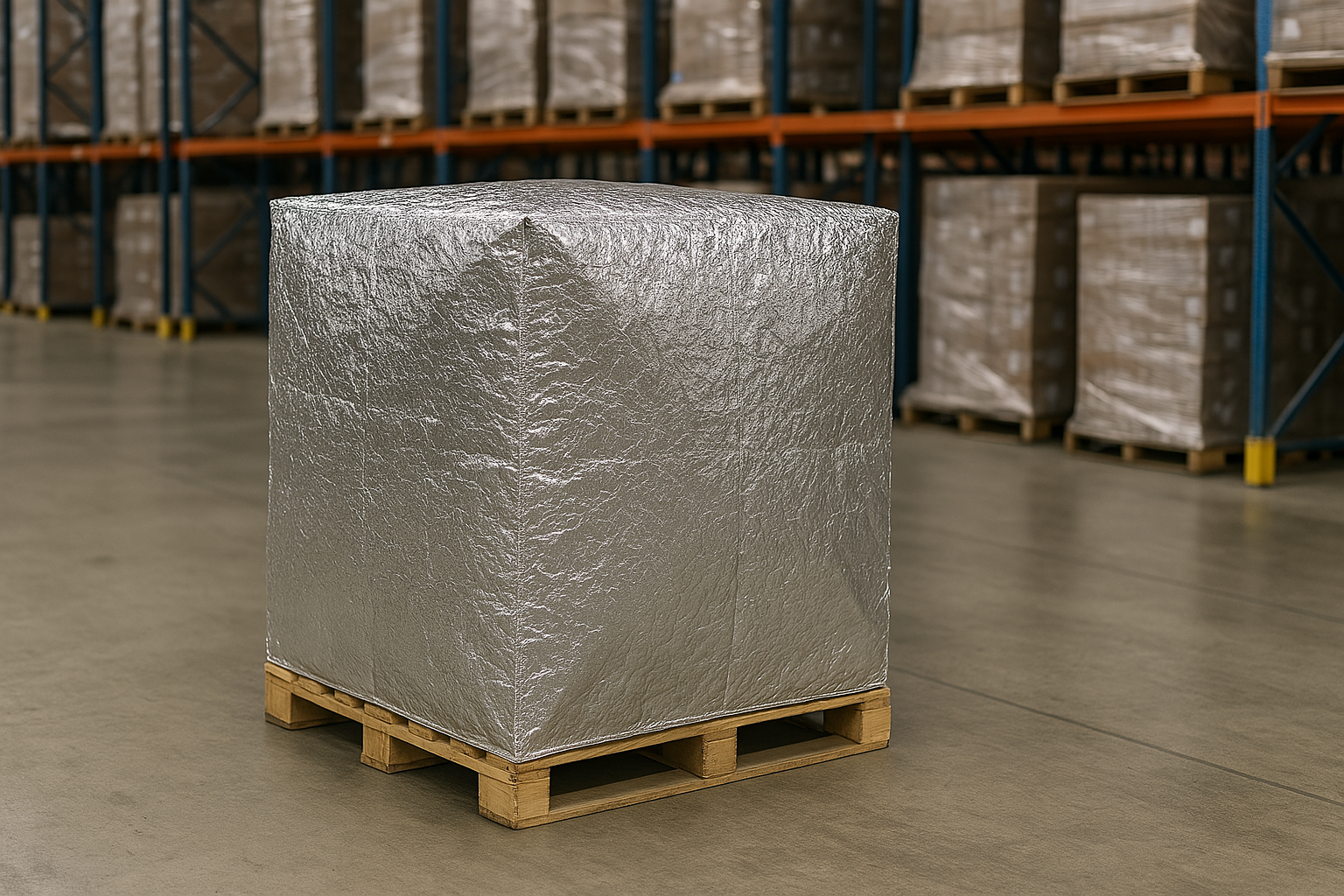
Thermal cargo covers for life sciences are most valuable when you use them to protect the exact moments where your lane is weakest: airport and warehouse dwell, transfer between qualified systems, and documentation holds. In 2026, strong results come from combining buyer-side practicality, technical validation, and real operational discipline. This guide shows you how to choose the right cover, prove it works, and deploy it in a way that supports quality, compliance, and total-cost control.
This optimized guide will answer:
• What thermal cargo covers for life sciences do, and what they do not do, for your lane
• How to match cover performance to product mass, dwell time, and handling reality
• How to validate the cover with data, compliance, and operational proof
• How to turn one purchase into a repeatable 2026-ready protection program
What do Thermal Cargo Covers For Life Sciences actually do for your operation?
Thermal cargo covers for life sciences protect the pallet during the exact moments when controlled conditions pause and risk begins. They slow heat gain, cold shock, airflow-driven drift, and surface damage during handoff steps such as airport and warehouse dwell, transfer between qualified systems, documentation holds, and deviation risk during last-mile handoff. They do not replace refrigeration, active containers, or missing precooling. Their value is that they give you more control over short exposure windows and help you preserve the temperature stability of vaccines, biologics, diagnostic reagents, clinical trial kits, and cell and gene inputs while the next controlled step is prepared.
That distinction matters because many buying mistakes start with the wrong expectation. If you expect the cover to create cold, you will be disappointed. If you expect it to buy time, reduce temperature spikes, protect carton condition, and make the lane more forgiving, you will judge it correctly. In 2026, the strongest programs use covers as one layer in a broader operating system that includes correct starting temperature, clear dwell limits, and data review.
Where does the product create the most value for pharma pallet covers?
| Operational step | Typical threat | How the cover helps | What you gain |
| Airport And Warehouse Dwell | Temperature drift or surface warming starts | Check actual dwell time and ambient range | This is often where claims begin. |
| Transfer Between Qualified Systems | Handling delay turns a small gap into a full excursion risk | Check queue time and opening frequency | This is where a faster, better-fitting cover pays back. |
| Documentation Holds | Airflow, sun, or night cold changes the surface first | Check where the pallet is exposed, not just stored | This is where data loggers reveal the true weak point. |
| Deviation Risk During Last-Mile Handoff | Documentation or access delay extends uncontrolled time | Check who owns release and recovery timing | This is where SOP discipline matters as much as the material. |
Quick decision tool
1. If the pallet repeatedly leaves controlled space for more than a few minutes, you likely need a thermal cover review.
2. If the same lane shows warm corners, soft cartons, or temperature spikes, map those events before buying.
3. If operators struggle with current packaging, choose a simpler cover before choosing a thicker one.
4. If the product is high value or tightly regulated, treat the cover as a controlled component, not a convenience item.
A biopharma shipper used reusable covers as secondary protection around active-container handoffs and reduced deviation risk during acceptance and final-mile transfer.
How do you choose the right spec for your lane?
The right specification comes from the lane, not from a generic catalog claim. Start with product temperature at release, target range, expected dwell time, seasonal profile, pallet size, stack height, and how often the cover must be opened. Then decide what matters most: reflectivity, short-term insulation, rugged reuse, faster closure, label visibility, or a combination of those needs. A technically stronger blanket is not the better choice if it slows the team or fits badly.
Buyers also need to judge the design against total cost. A cover that lasts longer, applies faster, and prevents a small number of claims may outperform a cheaper option by a wide margin. The most useful way to compare suppliers is to ask how the product behaves in your hardest real condition. That shifts the discussion from marketing language to measurable fit for purpose.
Buyer matrix for Thermal Cargo Covers For Life Sciences
| Route or need | Best design priority | What to test first | Best practical outcome |
| 2 to 8 C lanes | High-performance secondary barrier | More excursion resilience | Best for chilled biologics |
| 15 to 25 C lanes | Balanced insulation and quick handling | Stability without overbuild | Best for CRT products |
| Audit-heavy operations | Logger access and label visibility | Cleaner documentation | Best for GDP programs |
| Repeat qualified lanes | Reusable validated design | Lower long-term cost | Best for closed-loop use |
Supplier questions that improve decisions
| Question | Why it matters | Good answer | Warning sign |
| How much time does the pallet spend outside controlled conditions at origin, transit, and destination? | It defines the real heat load. | Measured and time-stamped | Estimated from memory |
| Is solar exposure, cold shock, draft, or repeated opening the bigger risk on this lane? | It shows whether reflectivity, insulation, or both matter most. | Seasonal and lane-specific | Based on room set-point alone |
| Which pallet sizes, stack heights, and label-visibility needs matter most in daily use? | It prevents a good cover from becoming operational friction. | Simple for operators | No one owns the handling step |
| Will the cover be reused, returned, cleaned, and released through a controlled process? | It determines whether a reusable program is realistic. | Closed-loop and inspectable | No cleaning or return process |
| How will you prove performance with logger data, lane trials, or change-control review? | It turns marketing claims into measurable proof. | Backed by live or trial data | No logger plan or pass-fail rule |
• Ask to see the tested configuration, not only the material description.
• Match the cover to the pallet sizes and stack heights you use most often.
• Reject any option that makes operators improvise around corners, labels, or closures.
How do you validate Thermal Cargo Covers For Life Sciences with data and compliance?
Validation is the bridge between a promising product and a trustworthy program. Start with one representative lane and compare uncovered versus covered performance under a realistic exposure profile. Use representative payload mass, known starting temperature, and logger placement at the top, side, and likely weak points. Define the pass-fail rule before the trial starts so procurement, operations, and quality all agree on what success means.
Compliance expectations should shape the trial design. EMA states that Good Distribution Practice sets the minimum standards needed to ensure the quality and integrity of medicines throughout the supply chain. WHO's 2025 vaccine shipping guidance aims to ensure vaccine quality across all stages of international air transportation, and IATA's TCR remains a central operational reference for compliant temperature-sensitive air shipments. That means the right validation package may need more than temperature curves. You may also need label visibility, documented application timing, cleaning rules, condition-release checks, or evidence that the cover does not interfere with export or GDP controls.
Validation framework
| Validation item | What to document | Why it matters | Best practice |
| Lane map | Every exposure step and dwell minute | Shows the real risk window | Use timestamps from live operations |
| Payload and start temperature | Product mass, build, and release condition | Prevents false results | Replicate normal shipping build |
| Logger placement | Top, edge, corner, and center positions | Reveals weak zones | Use a written sensor map |
| Acceptance rule | Allowed drift, dwell, and handling exceptions | Enables fair comparison | Agree before testing |
Relevant standards and control references
| Reference | Why it matters | Typical use | Meaning for you |
| IATA Temperature Control Regulations | Air cargo operating reference | What it means | Defines shipping, packaging, and documentation expectations |
| EMA Good Distribution Practice | Medicine integrity framework | What it means | Supports quality and traceability across the supply chain |
| WHO guidance for vaccine shipping | International vaccine logistics reference | What it means | Focuses on quality during air transport and handoff |
| lane qualification and excursion management | Change-control and quality step | What it means | Proves that the lane still works under real stress |
| ISTA Standard 20/7E and ASTM D3103-informed package evaluation | Thermal test and package-evaluation references | What it means | Improves the quality of qualification data |
The best proof package does not try to look complicated. It simply proves that the cover keeps the real lane inside the allowed budget.
How should you deploy, reuse, and audit covers in daily work?
Operational discipline is where return on investment is either created or lost. Pre-condition first, apply the cover late, keep closures complete, define the maximum uncontrolled time, and review first shipments carefully. For reusable systems, add condition inspection, cleaning, release, and retirement rules. Those basic controls often matter more than another incremental layer of insulation.
In repeat lanes, the goal is to make the cover easy to identify and hard to misuse. Operators should know which pallet size it fits, when it stays on, when it comes off, and what to do if it is damaged. Managers should be able to review exceptions quickly. If your process depends on heroics, it will not scale. If your process fits normal human behavior, it usually will.
Daily operating framework
| Step | Why it matters | Common miss | Recommended action |
| Pre-condition the product and pallet exactly as the lane requires before the cover goes on. | The cover cannot recover a bad starting temperature. | Covering a warm pallet | Use a written step with a named owner |
| Apply the cover as late as practical before exposure while keeping labels and loggers visible. | Late application saves the thermal budget for the real exposure window. | Putting the cover on too early | Use a written step with a named owner |
| Close all top and corner sections fully so the pallet does not behave like a chimney. | Open corners act like a chimney and waste insulation value. | Leaving gaps around edges or straps | Use a written step with a named owner |
| Set a clear maximum uncontrolled timer for staging, handoff, or route exposure. | A timer makes uncontrolled exposure visible and manageable. | No maximum exposure time | Use a written step with a named owner |
| Review the first live shipments and refine the SOP with logger data and operator feedback. | Review turns one shipment into a better SOP. | Skipping first-shipment review | Use a written step with a named owner |
Reuse and audit checklist
• Assign a simple asset ID when the blanket is part of a repeat closed loop.
• Inspect seams, closures, outer shell condition, and contamination before release.
• Record cleaning method, damage status, and retirement limits in one easy form.
• Review logger data and operator comments after the first live shipments and after seasonal changes.
A vaccine distributor documented cover application, removal timing, and logger review rules for repeated export lanes, which made cross-functional quality review much easier.
What 2026 trends should guide your next Thermal Cargo Covers For Life Sciences decision?
2026 buyers are looking for evidence, simplicity, and sustainability at the same time. growth in biologics and advanced therapies is pushing more shipments into tighter control frameworks buyers increasingly ask for validated passive secondary protection rather than relying on one active asset alone buyers increasingly ask for reusable solutions that reduce waste and fit digital traceability programs That means the strongest product is not the one with the loudest claim. It is the one that fits your route, proves its value with data, and supports a reuse model your network can actually manage.
The market is also rewarding covers that fit broader business priorities. Operations wants speed and consistency. Quality wants traceable proof. Procurement wants total-cost clarity. Sustainability teams want longer life and less waste. A well-designed thermal cover program can support all four groups when you size the solution correctly and avoid overengineering. That cross-functional fit is one reason thermal covers are getting more strategic attention across modern temperature-sensitive supply chains.
2026 trend snapshot
| Trend | What is changing | Practical effect | Owner focus |
| Trend 1 | growth in biologics and advanced therapies is pushing more shipments into tighter control frameworks | Simpler deployment | Operations |
| Trend 2 | buyers increasingly ask for validated passive secondary protection rather than relying on one active asset alone | Better visibility | QA and compliance |
| Trend 3 | buyers increasingly ask for reusable solutions that reduce waste and fit digital traceability programs | More flexible qualification | Procurement |
| Trend 4 | real-time monitoring and logger review are becoming more closely linked to packaging decisions | Stronger total-cost control | Sustainability |
Latest developments to watch
• Growth in biologics and advanced therapies is pushing more shipments into tighter control frameworks
• Buyers increasingly ask for validated passive secondary protection rather than relying on one active asset alone
• Buyers increasingly ask for reusable solutions that reduce waste and fit digital traceability programs
• Real-time monitoring and logger review are becoming more closely linked to packaging decisions
Frequently asked questions
Can thermal cargo covers for life sciences be used on validated lanes?
Yes, when they are included in risk assessment and qualification. In life sciences, they are usually used as secondary protection rather than as a replacement for the primary validated system.
Which standards matter most?
That depends on product and route, but common references include IATA TCR for air handling, GDP expectations for medicine integrity, and disciplined thermal qualification approaches informed by ISTA and ASTM practice.
Do they help only with 2 to 8 C products?
No. They can also support 15 to 25 C lanes and other stability-defined ranges where short exposure can trigger deviations.
How do I prove they work?
Use a formal lane qualification or change-control process with representative payloads, logger mapping, worst-case conditions, and predefined acceptance criteria.
Are reusable covers acceptable in regulated operations?
Yes, when material condition, cleaning, reuse limits, and release checks are controlled and documented.
SEO and content implementation notes
For search performance in 2026, this topic works best when the page is built around people-first content, clear title signals, and strong on-page structure. Use the exact keyword early, keep subheads specific, and support the article with a comparison table, FAQ, and a clear action path. That improves readability for buyers and strengthens the page's ability to compete on both product education and decision intent.
Summary and recommendations
The best thermal cargo covers for life sciences program is simple to explain. You identify the real exposure step, choose the cover around the lane, validate it with data, and run it with a clear SOP. That formula helps you reduce avoidable drift, protect product quality, support compliance, and improve total cost over time.
If you are comparing options now, start with one priority lane and build a small decision file: exposure map, product range, pallet size, expected dwell, trial plan, and reuse rules. That file will quickly tell you which cover belongs in your operation and which only looks good in a brochure.
About Tempk
At Tempk, we design reusable pallet blankets and cargo covers for life sciences, warehouse, freight, export, and temperature-sensitive supply-chain operations. We focus on practical fit, durable multilayer construction, and deployment support so your team gets a solution that works in real conditions rather than only in theory.
If you are evaluating thermal cargo covers for life sciences, start with your actual exposure map and logger data, then shortlist the cover sizes and performance levels that match the lane instead of buying on thickness alone.
Why Thermal Cargo Covers For Beer Matter in 2026
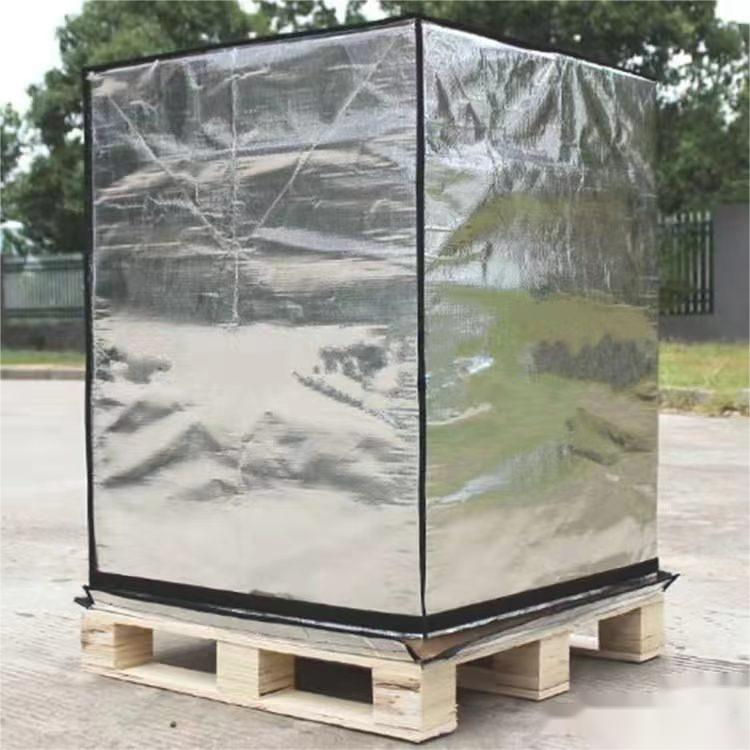
Thermal cargo covers for beer are most valuable when you use them to protect the exact moments where your lane is weakest: brewery dock staging, delivery loading, and route stops. In 2026, strong results come from combining buyer-side practicality, technical validation, and real operational discipline. This guide shows you how to choose the right cover, prove it works, and deploy it in a way that supports quality, compliance, and total-cost control.
This optimized guide will answer:
• What thermal cargo covers for beer do, and what they do not do, for your lane
• How to match cover performance to product mass, dwell time, and handling reality
• How to validate the cover with data, compliance, and operational proof
• How to turn one purchase into a repeatable 2026-ready protection program
What do Thermal Cargo Covers For Beer actually do for your operation?
Thermal cargo covers for beer protect the pallet during the exact moments when controlled conditions pause and risk begins. They slow heat gain, cold shock, airflow-driven drift, and surface damage during handoff steps such as brewery dock staging, delivery loading, route stops, and ambient warehouse waiting. They do not replace refrigeration, active containers, or missing precooling. Their value is that they give you more control over short exposure windows and help you preserve the temperature stability of kegs, craft beer cases, lager pallets, hop-forward beer, and premium beverage packs while the next controlled step is prepared.
That distinction matters because many buying mistakes start with the wrong expectation. If you expect the cover to create cold, you will be disappointed. If you expect it to buy time, reduce temperature spikes, protect carton condition, and make the lane more forgiving, you will judge it correctly. In 2026, the strongest programs use covers as one layer in a broader operating system that includes correct starting temperature, clear dwell limits, and data review.
Where does the product create the most value for beer pallet thermal cover?
| Operational step | Typical threat | How the cover helps | What you gain |
| Brewery Dock Staging | Temperature drift or surface warming starts | Check actual dwell time and ambient range | This is often where claims begin. |
| Delivery Loading | Handling delay turns a small gap into a full excursion risk | Check queue time and opening frequency | This is where a faster, better-fitting cover pays back. |
| Route Stops | Airflow, sun, or night cold changes the surface first | Check where the pallet is exposed, not just stored | This is where data loggers reveal the true weak point. |
| Ambient Warehouse Waiting | Documentation or access delay extends uncontrolled time | Check who owns release and recovery timing | This is where SOP discipline matters as much as the material. |
Quick decision tool
1. If the pallet repeatedly leaves controlled space for more than a few minutes, you likely need a thermal cover review.
2. If the same lane shows warm corners, soft cartons, or temperature spikes, map those events before buying.
3. If operators struggle with current packaging, choose a simpler cover before choosing a thicker one.
4. If the product is high value or tightly regulated, treat the cover as a controlled component, not a convenience item.
A distributor used thermal cargo covers on premium keg pallets during summer route staging and reduced warm-pour complaints at retail accounts.
How do you choose the right spec for your lane?
The right specification comes from the lane, not from a generic catalog claim. Start with product temperature at release, target range, expected dwell time, seasonal profile, pallet size, stack height, and how often the cover must be opened. Then decide what matters most: reflectivity, short-term insulation, rugged reuse, faster closure, label visibility, or a combination of those needs. A technically stronger blanket is not the better choice if it slows the team or fits badly.
Buyers also need to judge the design against total cost. A cover that lasts longer, applies faster, and prevents a small number of claims may outperform a cheaper option by a wide margin. The most useful way to compare suppliers is to ask how the product behaves in your hardest real condition. That shifts the discussion from marketing language to measurable fit for purpose.
Buyer matrix for Thermal Cargo Covers For Beer
| Route or need | Best design priority | What to test first | Best practical outcome |
| Keg distribution | Quick-fit durable cover | Better short-term cooling retention | Best for route staging |
| Craft beer pallets | Higher thermal buffer | More quality protection | Best for premium product |
| Event delivery | Lightweight easy-access design | Faster set-up | Best for temporary venues |
| Closed-loop brewery network | Reusable cleanable cover | Lower repeat cost | Best for daily delivery systems |
Supplier questions that improve decisions
| Question | Why it matters | Good answer | Warning sign |
| How much time does the pallet spend outside controlled conditions at origin, transit, and destination? | It defines the real heat load. | Measured and time-stamped | Estimated from memory |
| Is solar exposure, cold shock, draft, or repeated opening the bigger risk on this lane? | It shows whether reflectivity, insulation, or both matter most. | Seasonal and lane-specific | Based on room set-point alone |
| Which pallet sizes, stack heights, and label-visibility needs matter most in daily use? | It prevents a good cover from becoming operational friction. | Simple for operators | No one owns the handling step |
| Will the cover be reused, returned, cleaned, and released through a controlled process? | It determines whether a reusable program is realistic. | Closed-loop and inspectable | No cleaning or return process |
| How will you prove performance with logger data, lane trials, or change-control review? | It turns marketing claims into measurable proof. | Backed by live or trial data | No logger plan or pass-fail rule |
• Ask to see the tested configuration, not only the material description.
• Match the cover to the pallet sizes and stack heights you use most often.
• Reject any option that makes operators improvise around corners, labels, or closures.
How do you validate Thermal Cargo Covers For Beer with data and compliance?
Validation is the bridge between a promising product and a trustworthy program. Start with one representative lane and compare uncovered versus covered performance under a realistic exposure profile. Use representative payload mass, known starting temperature, and logger placement at the top, side, and likely weak points. Define the pass-fail rule before the trial starts so procurement, operations, and quality all agree on what success means.
Compliance expectations should shape the trial design. Brewers Association guidance highlights how quickly keg temperature can climb during delivery or ambient storage, which is why short exposure control matters more than many teams expect. For breweries and distributors, passive covers are most valuable at the exact moments when the product leaves controlled refrigeration but has not yet reached the final cooler. That means the right validation package may need more than temperature curves. You may also need label visibility, documented application timing, cleaning rules, condition-release checks, or evidence that the cover does not interfere with export or GDP controls.
Validation framework
| Validation item | What to document | Why it matters | Best practice |
| Lane map | Every exposure step and dwell minute | Shows the real risk window | Use timestamps from live operations |
| Payload and start temperature | Product mass, build, and release condition | Prevents false results | Replicate normal shipping build |
| Logger placement | Top, edge, corner, and center positions | Reveals weak zones | Use a written sensor map |
| Acceptance rule | Allowed drift, dwell, and handling exceptions | Enables fair comparison | Agree before testing |
Relevant standards and control references
| Reference | Why it matters | Typical use | Meaning for you |
| documented quality-handling SOPs | Control reference | What it means | Helps define what proof and discipline the lane needs |
| delivery route review | Control reference | What it means | Helps define what proof and discipline the lane needs |
| cleaning and reuse inspection records | Reuse governance | What it means | Shows when a cover is fit for the next cycle |
| data logger placement on top and outer kegs or cartons | Control reference | What it means | Helps define what proof and discipline the lane needs |
| seasonal distribution checks | Control reference | What it means | Helps define what proof and discipline the lane needs |
The best proof package does not try to look complicated. It simply proves that the cover keeps the real lane inside the allowed budget.
How should you deploy, reuse, and audit covers in daily work?
Operational discipline is where return on investment is either created or lost. Pre-condition first, apply the cover late, keep closures complete, define the maximum uncontrolled time, and review first shipments carefully. For reusable systems, add condition inspection, cleaning, release, and retirement rules. Those basic controls often matter more than another incremental layer of insulation.
In repeat lanes, the goal is to make the cover easy to identify and hard to misuse. Operators should know which pallet size it fits, when it stays on, when it comes off, and what to do if it is damaged. Managers should be able to review exceptions quickly. If your process depends on heroics, it will not scale. If your process fits normal human behavior, it usually will.
Daily operating framework
| Step | Why it matters | Common miss | Recommended action |
| Pre-condition the product and pallet exactly as the lane requires before the cover goes on. | The cover cannot recover a bad starting temperature. | Covering a warm pallet | Use a written step with a named owner |
| Apply the cover as late as practical before exposure while keeping labels and loggers visible. | Late application saves the thermal budget for the real exposure window. | Putting the cover on too early | Use a written step with a named owner |
| Close all top and corner sections fully so the pallet does not behave like a chimney. | Open corners act like a chimney and waste insulation value. | Leaving gaps around edges or straps | Use a written step with a named owner |
| Set a clear maximum uncontrolled timer for staging, handoff, or route exposure. | A timer makes uncontrolled exposure visible and manageable. | No maximum exposure time | Use a written step with a named owner |
| Review the first live shipments and refine the SOP with logger data and operator feedback. | Review turns one shipment into a better SOP. | Skipping first-shipment review | Use a written step with a named owner |
Reuse and audit checklist
• Assign a simple asset ID when the blanket is part of a repeat closed loop.
• Inspect seams, closures, outer shell condition, and contamination before release.
• Record cleaning method, damage status, and retirement limits in one easy form.
• Review logger data and operator comments after the first live shipments and after seasonal changes.
A beverage operator compared covered versus uncovered case pallets on festival deliveries and found that better dock timing plus covers preserved quality far better than covers alone.
What 2026 trends should guide your next Thermal Cargo Covers For Beer decision?
2026 buyers are looking for evidence, simplicity, and sustainability at the same time. premium beer and quality-sensitive beverage programs are giving more weight to staging protection distributors are combining route segmentation and reusable covers to defend flavor quality on warm days buyers increasingly ask for reusable solutions that reduce waste and fit digital traceability programs That means the strongest product is not the one with the loudest claim. It is the one that fits your route, proves its value with data, and supports a reuse model your network can actually manage.
The market is also rewarding covers that fit broader business priorities. Operations wants speed and consistency. Quality wants traceable proof. Procurement wants total-cost clarity. Sustainability teams want longer life and less waste. A well-designed thermal cover program can support all four groups when you size the solution correctly and avoid overengineering. That cross-functional fit is one reason thermal covers are getting more strategic attention across modern temperature-sensitive supply chains.
2026 trend snapshot
| Trend | What is changing | Practical effect | Owner focus |
| Trend 1 | premium beer and quality-sensitive beverage programs are giving more weight to staging protection | Simpler deployment | Operations |
| Trend 2 | distributors are combining route segmentation and reusable covers to defend flavor quality on warm days | Better visibility | QA and compliance |
| Trend 3 | buyers increasingly ask for reusable solutions that reduce waste and fit digital traceability programs | More flexible qualification | Procurement |
| Trend 4 | real-time monitoring and logger review are becoming more closely linked to packaging decisions | Stronger total-cost control | Sustainability |
Latest developments to watch
• Premium beer and quality-sensitive beverage programs are giving more weight to staging protection
• Distributors are combining route segmentation and reusable covers to defend flavor quality on warm days
• Buyers increasingly ask for reusable solutions that reduce waste and fit digital traceability programs
• Real-time monitoring and logger review are becoming more closely linked to packaging decisions
Frequently asked questions
Do thermal cargo covers for beer keep beer cold all day?
Not by themselves. They are most useful for short staging and delivery exposures between refrigerated steps.
Which beer products benefit most?
Premium, hop-forward, or otherwise heat-sensitive products usually benefit the most from better short-term thermal control.
Are covers more useful for kegs or case pallets?
Both can benefit, but the right fit and route pattern matter. Keg staging and high-value case pallets are common starting points.
How do I build a business case?
Compare warm-day complaints, delivery conditions, and logger data before and after cover use on one defined route.
What is the biggest mistake?
Assuming the blanket alone solves a poor route. Loading speed, cooler discipline, and stop pattern still matter.
SEO and content implementation notes
For search performance in 2026, this topic works best when the page is built around people-first content, clear title signals, and strong on-page structure. Use the exact keyword early, keep subheads specific, and support the article with a comparison table, FAQ, and a clear action path. That improves readability for buyers and strengthens the page's ability to compete on both product education and decision intent.
Summary and recommendations
The best thermal cargo covers for beer program is simple to explain. You identify the real exposure step, choose the cover around the lane, validate it with data, and run it with a clear SOP. That formula helps you reduce avoidable drift, protect product quality, support compliance, and improve total cost over time.
If you are comparing options now, start with one priority lane and build a small decision file: exposure map, product range, pallet size, expected dwell, trial plan, and reuse rules. That file will quickly tell you which cover belongs in your operation and which only looks good in a brochure.
About Tempk
At Tempk, we design reusable pallet blankets and cargo covers for beer and beverage, warehouse, freight, export, and temperature-sensitive supply-chain operations. We focus on practical fit, durable multilayer construction, and deployment support so your team gets a solution that works in real conditions rather than only in theory.
If you are evaluating thermal cargo covers for beer, start with your actual exposure map and logger data, then shortlist the cover sizes and performance levels that match the lane instead of buying on thickness alone.
Why Temperature Control Pallet Covers For Perishable Export Matter in 2026

Temperature control pallet covers for perishable export are most valuable when you use them to protect the exact moments where your lane is weakest: pre-export staging, customs or phytosanitary hold, and airport or seaport transfer. In 2026, strong results come from combining buyer-side practicality, technical validation, and real operational discipline. This guide shows you how to choose the right cover, prove it works, and deploy it in a way that supports quality, compliance, and total-cost control.
This optimized guide will answer:
• What temperature control pallet covers for perishable export do, and what they do not do, for your lane
• How to match cover performance to product mass, dwell time, and handling reality
• How to validate the cover with data, compliance, and operational proof
• How to turn one purchase into a repeatable 2026-ready protection program
What do Temperature Control Pallet Covers For Perishable Export actually do for your operation?
Temperature control pallet covers for perishable export protect the pallet during the exact moments when controlled conditions pause and risk begins. They slow heat gain, cold shock, airflow-driven drift, and surface damage during handoff steps such as pre-export staging, customs or phytosanitary hold, airport or seaport transfer, and cold treatment handoff. They do not replace refrigeration, active containers, or missing precooling. Their value is that they give you more control over short exposure windows and help you preserve the temperature stability of regulated fruit, berries, chilled seafood, fresh vegetables, and cut flowers while the next controlled step is prepared.
That distinction matters because many buying mistakes start with the wrong expectation. If you expect the cover to create cold, you will be disappointed. If you expect it to buy time, reduce temperature spikes, protect carton condition, and make the lane more forgiving, you will judge it correctly. In 2026, the strongest programs use covers as one layer in a broader operating system that includes correct starting temperature, clear dwell limits, and data review.
Where does the product create the most value for export pallet temperature cover?
| Operational step | Typical threat | How the cover helps | What you gain |
| Pre-Export Staging | Temperature drift or surface warming starts | Check actual dwell time and ambient range | This is often where claims begin. |
| Customs Or Phytosanitary Hold | Handling delay turns a small gap into a full excursion risk | Check queue time and opening frequency | This is where a faster, better-fitting cover pays back. |
| Airport Or Seaport Transfer | Airflow, sun, or night cold changes the surface first | Check where the pallet is exposed, not just stored | This is where data loggers reveal the true weak point. |
| Cold Treatment Handoff | Documentation or access delay extends uncontrolled time | Check who owns release and recovery timing | This is where SOP discipline matters as much as the material. |
Quick decision tool
1. If the pallet repeatedly leaves controlled space for more than a few minutes, you likely need a thermal cover review.
2. If the same lane shows warm corners, soft cartons, or temperature spikes, map those events before buying.
3. If operators struggle with current packaging, choose a simpler cover before choosing a thicker one.
4. If the product is high value or tightly regulated, treat the cover as a controlled component, not a convenience item.
A perishable exporter added reusable covers to fruit pallets waiting for airline acceptance so short customs and documentation delays no longer caused the same top-layer drift.
How do you choose the right spec for your lane?
The right specification comes from the lane, not from a generic catalog claim. Start with product temperature at release, target range, expected dwell time, seasonal profile, pallet size, stack height, and how often the cover must be opened. Then decide what matters most: reflectivity, short-term insulation, rugged reuse, faster closure, label visibility, or a combination of those needs. A technically stronger blanket is not the better choice if it slows the team or fits badly.
Buyers also need to judge the design against total cost. A cover that lasts longer, applies faster, and prevents a small number of claims may outperform a cheaper option by a wide margin. The most useful way to compare suppliers is to ask how the product behaves in your hardest real condition. That shifts the discussion from marketing language to measurable fit for purpose.
Buyer matrix for Temperature Control Pallet Covers For Perishable Export
| Route or need | Best design priority | What to test first | Best practical outcome |
| Regulated export fruit | Visibility for labels and probe access | Safer compliance handling | Best for cold-treatment lanes |
| Airport export staging | Reflective shell and strong closures | Lower handoff drift | Best for warm apron exposure |
| Multi-party export lanes | Reusable durable design | More repeatable handoff control | Best for regular export programs |
| Mixed perishables | Balanced buffer and easy size options | Lower operational friction | Best for varied export pallets |
Supplier questions that improve decisions
| Question | Why it matters | Good answer | Warning sign |
| How much time does the pallet spend outside controlled conditions at origin, transit, and destination? | It defines the real heat load. | Measured and time-stamped | Estimated from memory |
| Is solar exposure, cold shock, draft, or repeated opening the bigger risk on this lane? | It shows whether reflectivity, insulation, or both matter most. | Seasonal and lane-specific | Based on room set-point alone |
| Which pallet sizes, stack heights, and label-visibility needs matter most in daily use? | It prevents a good cover from becoming operational friction. | Simple for operators | No one owns the handling step |
| Will the cover be reused, returned, cleaned, and released through a controlled process? | It determines whether a reusable program is realistic. | Closed-loop and inspectable | No cleaning or return process |
| How will you prove performance with logger data, lane trials, or change-control review? | It turns marketing claims into measurable proof. | Backed by live or trial data | No logger plan or pass-fail rule |
• Ask to see the tested configuration, not only the material description.
• Match the cover to the pallet sizes and stack heights you use most often.
• Reject any option that makes operators improvise around corners, labels, or closures.
How do you validate Temperature Control Pallet Covers For Perishable Export with data and compliance?
Validation is the bridge between a promising product and a trustworthy program. Start with one representative lane and compare uncovered versus covered performance under a realistic exposure profile. Use representative payload mass, known starting temperature, and logger placement at the top, side, and likely weak points. Define the pass-fail rule before the trial starts so procurement, operations, and quality all agree on what success means.
Compliance expectations should shape the trial design. U.S. cold-treatment rules for certain fruit imports require treatment enclosures to maintain fruit pulp temperatures with no more than 0.39 C variation between consecutive hourly readings and require temperatures to be recorded at least every hour. Those rules show how tight export control can be, which is why pallet covers must be selected around compliance, visibility, and actual lane steps rather than generic insulation claims. That means the right validation package may need more than temperature curves. You may also need label visibility, documented application timing, cleaning rules, condition-release checks, or evidence that the cover does not interfere with export or GDP controls.
Validation framework
| Validation item | What to document | Why it matters | Best practice |
| Lane map | Every exposure step and dwell minute | Shows the real risk window | Use timestamps from live operations |
| Payload and start temperature | Product mass, build, and release condition | Prevents false results | Replicate normal shipping build |
| Logger placement | Top, edge, corner, and center positions | Reveals weak zones | Use a written sensor map |
| Acceptance rule | Allowed drift, dwell, and handling exceptions | Enables fair comparison | Agree before testing |
Relevant standards and control references
| Reference | Why it matters | Typical use | Meaning for you |
| cold treatment access and record visibility for regulated export fruit | Export compliance need | What it means | Preserves access to probes, labels, and records |
| IATA Temperature Control Regulations | Air cargo operating reference | What it means | Defines shipping, packaging, and documentation expectations |
| USDA precooling and handling guidance | Produce preparation reference | What it means | Confirms that the best cover cannot fix missing precooling |
| shipper lane qualification | Route-specific validation | What it means | Shows whether the cover fits the actual journey |
| data logger placement that proves real exposure and keeps labels visible | Control reference | What it means | Helps define what proof and discipline the lane needs |
The best proof package does not try to look complicated. It simply proves that the cover keeps the real lane inside the allowed budget.
How should you deploy, reuse, and audit covers in daily work?
Operational discipline is where return on investment is either created or lost. Pre-condition first, apply the cover late, keep closures complete, define the maximum uncontrolled time, and review first shipments carefully. For reusable systems, add condition inspection, cleaning, release, and retirement rules. Those basic controls often matter more than another incremental layer of insulation.
In repeat lanes, the goal is to make the cover easy to identify and hard to misuse. Operators should know which pallet size it fits, when it stays on, when it comes off, and what to do if it is damaged. Managers should be able to review exceptions quickly. If your process depends on heroics, it will not scale. If your process fits normal human behavior, it usually will.
Daily operating framework
| Step | Why it matters | Common miss | Recommended action |
| Pre-condition the product and pallet exactly as the lane requires before the cover goes on. | The cover cannot recover a bad starting temperature. | Covering a warm pallet | Use a written step with a named owner |
| Apply the cover as late as practical before exposure while keeping labels and loggers visible. | Late application saves the thermal budget for the real exposure window. | Putting the cover on too early | Use a written step with a named owner |
| Close all top and corner sections fully so the pallet does not behave like a chimney. | Open corners act like a chimney and waste insulation value. | Leaving gaps around edges or straps | Use a written step with a named owner |
| Set a clear maximum uncontrolled timer for staging, handoff, or route exposure. | A timer makes uncontrolled exposure visible and manageable. | No maximum exposure time | Use a written step with a named owner |
| Review the first live shipments and refine the SOP with logger data and operator feedback. | Review turns one shipment into a better SOP. | Skipping first-shipment review | Use a written step with a named owner |
Reuse and audit checklist
• Assign a simple asset ID when the blanket is part of a repeat closed loop.
• Inspect seams, closures, outer shell condition, and contamination before release.
• Record cleaning method, damage status, and retirement limits in one easy form.
• Review logger data and operator comments after the first live shipments and after seasonal changes.
An exporter mapped origin, transit, and destination exposures and discovered that one documented staging step caused most risk; a better cover plus a revised SOP solved most exceptions.
What 2026 trends should guide your next Temperature Control Pallet Covers For Perishable Export decision?
2026 buyers are looking for evidence, simplicity, and sustainability at the same time. multi-party export handoffs are increasing demand for covers that balance thermal value with compliance visibility export teams want documented cover programs that do not hide labels, records, or probe access buyers increasingly ask for reusable solutions that reduce waste and fit digital traceability programs That means the strongest product is not the one with the loudest claim. It is the one that fits your route, proves its value with data, and supports a reuse model your network can actually manage.
The market is also rewarding covers that fit broader business priorities. Operations wants speed and consistency. Quality wants traceable proof. Procurement wants total-cost clarity. Sustainability teams want longer life and less waste. A well-designed thermal cover program can support all four groups when you size the solution correctly and avoid overengineering. That cross-functional fit is one reason thermal covers are getting more strategic attention across modern temperature-sensitive supply chains.
2026 trend snapshot
| Trend | What is changing | Practical effect | Owner focus |
| Trend 1 | multi-party export handoffs are increasing demand for covers that balance thermal value with compliance visibility | Simpler deployment | Operations |
| Trend 2 | export teams want documented cover programs that do not hide labels, records, or probe access | Better visibility | QA and compliance |
| Trend 3 | buyers increasingly ask for reusable solutions that reduce waste and fit digital traceability programs | More flexible qualification | Procurement |
| Trend 4 | real-time monitoring and logger review are becoming more closely linked to packaging decisions | Stronger total-cost control | Sustainability |
Latest developments to watch
• Multi-party export handoffs are increasing demand for covers that balance thermal value with compliance visibility
• Export teams want documented cover programs that do not hide labels, records, or probe access
• Buyers increasingly ask for reusable solutions that reduce waste and fit digital traceability programs
• Real-time monitoring and logger review are becoming more closely linked to packaging decisions
Frequently asked questions
Do temperature control pallet covers for perishable export replace refrigeration?
No. They are passive protection. They slow heat transfer, but they do not create cooling. Correct starting temperature and lane design still matter.
How long can a pallet stay protected?
There is no honest universal number. Safe time depends on product thermal mass, outside conditions, dwell pattern, pallet build, and cover design. Use lane trials before setting limits.
What is the biggest buying mistake?
Choosing by thickness alone. Fit, closure speed, durability, and real exposure conditions usually matter more than a headline material claim.
Should I use one cover for every lane?
Usually not. Many programs perform better when they segment routes by exposure severity, season, and product sensitivity.
How do I prove value quickly?
Run a covered versus uncovered trial on one representative lane and compare logger data, product condition, and operational ease.
SEO and content implementation notes
For search performance in 2026, this topic works best when the page is built around people-first content, clear title signals, and strong on-page structure. Use the exact keyword early, keep subheads specific, and support the article with a comparison table, FAQ, and a clear action path. That improves readability for buyers and strengthens the page's ability to compete on both product education and decision intent.
Summary and recommendations
The best temperature control pallet covers for perishable export program is simple to explain. You identify the real exposure step, choose the cover around the lane, validate it with data, and run it with a clear SOP. That formula helps you reduce avoidable drift, protect product quality, support compliance, and improve total cost over time.
If you are comparing options now, start with one priority lane and build a small decision file: exposure map, product range, pallet size, expected dwell, trial plan, and reuse rules. That file will quickly tell you which cover belongs in your operation and which only looks good in a brochure.
About Tempk
At Tempk, we design reusable pallet blankets and cargo covers for perishable export, warehouse, freight, export, and temperature-sensitive supply-chain operations. We focus on practical fit, durable multilayer construction, and deployment support so your team gets a solution that works in real conditions rather than only in theory.
If you are evaluating temperature control pallet covers for perishable export, start with your actual exposure map and logger data, then shortlist the cover sizes and performance levels that match the lane instead of buying on thickness alone.
Why Pallet Thermal Covers For Manufacturing Matter in 2026
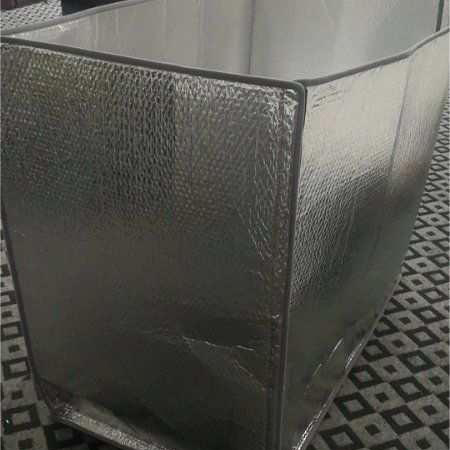
Pallet thermal covers for manufacturing are most valuable when you use them to protect the exact moments where your lane is weakest: production-to-warehouse handoff, quality release waiting time, and dock staging. In 2026, strong results come from combining buyer-side practicality, technical validation, and real operational discipline. This guide shows you how to choose the right cover, prove it works, and deploy it in a way that supports quality, compliance, and total-cost control.
This optimized guide will answer:
• What pallet thermal covers for manufacturing do, and what they do not do, for your lane
• How to match cover performance to product mass, dwell time, and handling reality
• How to validate the cover with data, compliance, and operational proof
• How to turn one purchase into a repeatable 2026-ready protection program
What do Pallet Thermal Covers For Manufacturing actually do for your operation?
Pallet thermal covers for manufacturing protect the pallet during the exact moments when controlled conditions pause and risk begins. They slow heat gain, cold shock, airflow-driven drift, and surface damage during handoff steps such as production-to-warehouse handoff, quality release waiting time, dock staging, and yard transfer. They do not replace refrigeration, active containers, or missing precooling. Their value is that they give you more control over short exposure windows and help you preserve the temperature stability of intermediate ingredients, finished packaged food, medical supplies, temperature-sensitive components, and chemicals while the next controlled step is prepared.
That distinction matters because many buying mistakes start with the wrong expectation. If you expect the cover to create cold, you will be disappointed. If you expect it to buy time, reduce temperature spikes, protect carton condition, and make the lane more forgiving, you will judge it correctly. In 2026, the strongest programs use covers as one layer in a broader operating system that includes correct starting temperature, clear dwell limits, and data review.
Where does the product create the most value for plant pallet thermal protection?
| Operational step | Typical threat | How the cover helps | What you gain |
| Production-To-Warehouse Handoff | Temperature drift or surface warming starts | Check actual dwell time and ambient range | This is often where claims begin. |
| Quality Release Waiting Time | Handling delay turns a small gap into a full excursion risk | Check queue time and opening frequency | This is where a faster, better-fitting cover pays back. |
| Dock Staging | Airflow, sun, or night cold changes the surface first | Check where the pallet is exposed, not just stored | This is where data loggers reveal the true weak point. |
| Yard Transfer | Documentation or access delay extends uncontrolled time | Check who owns release and recovery timing | This is where SOP discipline matters as much as the material. |
Quick decision tool
1. If the pallet repeatedly leaves controlled space for more than a few minutes, you likely need a thermal cover review.
2. If the same lane shows warm corners, soft cartons, or temperature spikes, map those events before buying.
3. If operators struggle with current packaging, choose a simpler cover before choosing a thicker one.
4. If the product is high value or tightly regulated, treat the cover as a controlled component, not a convenience item.
A plant protected finished pallets waiting for QA release near an outbound dock and reduced both carton deformation and temperature drift during predictable release delays.
How do you choose the right spec for your lane?
The right specification comes from the lane, not from a generic catalog claim. Start with product temperature at release, target range, expected dwell time, seasonal profile, pallet size, stack height, and how often the cover must be opened. Then decide what matters most: reflectivity, short-term insulation, rugged reuse, faster closure, label visibility, or a combination of those needs. A technically stronger blanket is not the better choice if it slows the team or fits badly.
Buyers also need to judge the design against total cost. A cover that lasts longer, applies faster, and prevents a small number of claims may outperform a cheaper option by a wide margin. The most useful way to compare suppliers is to ask how the product behaves in your hardest real condition. That shifts the discussion from marketing language to measurable fit for purpose.
Buyer matrix for Pallet Thermal Covers For Manufacturing
| Route or need | Best design priority | What to test first | Best practical outcome |
| QA release hold | Fast-fit reusable cover | Better release stability | Best for predictable waiting time |
| Plant-to-plant transfer | Higher thermal buffer | More handoff resilience | Best for internal transport |
| Frequent dock staging | Durable shell and quick closures | Lower handling friction | Best for busy outbound areas |
| Sensitive WIP or reserve stock | Right-sized cover with clear labeling | Better process control | Best for internal inventory steps |
Supplier questions that improve decisions
| Question | Why it matters | Good answer | Warning sign |
| How much time does the pallet spend outside controlled conditions at origin, transit, and destination? | It defines the real heat load. | Measured and time-stamped | Estimated from memory |
| Is solar exposure, cold shock, draft, or repeated opening the bigger risk on this lane? | It shows whether reflectivity, insulation, or both matter most. | Seasonal and lane-specific | Based on room set-point alone |
| Which pallet sizes, stack heights, and label-visibility needs matter most in daily use? | It prevents a good cover from becoming operational friction. | Simple for operators | No one owns the handling step |
| Will the cover be reused, returned, cleaned, and released through a controlled process? | It determines whether a reusable program is realistic. | Closed-loop and inspectable | No cleaning or return process |
| How will you prove performance with logger data, lane trials, or change-control review? | It turns marketing claims into measurable proof. | Backed by live or trial data | No logger plan or pass-fail rule |
• Ask to see the tested configuration, not only the material description.
• Match the cover to the pallet sizes and stack heights you use most often.
• Reject any option that makes operators improvise around corners, labels, or closures.
How do you validate Pallet Thermal Covers For Manufacturing with data and compliance?
Validation is the bridge between a promising product and a trustworthy program. Start with one representative lane and compare uncovered versus covered performance under a realistic exposure profile. Use representative payload mass, known starting temperature, and logger placement at the top, side, and likely weak points. Define the pass-fail rule before the trial starts so procurement, operations, and quality all agree on what success means.
Compliance expectations should shape the trial design. As cold chain and temperature-sensitive logistics become more traceable, internal manufacturing handoffs are receiving the same scrutiny that transport lanes already do. That shift favors reusable pallet covers because they can turn a known weak point—like an outbound dock hold—into a documented, controlled step. That means the right validation package may need more than temperature curves. You may also need label visibility, documented application timing, cleaning rules, condition-release checks, or evidence that the cover does not interfere with export or GDP controls.
Validation framework
| Validation item | What to document | Why it matters | Best practice |
| Lane map | Every exposure step and dwell minute | Shows the real risk window | Use timestamps from live operations |
| Payload and start temperature | Product mass, build, and release condition | Prevents false results | Replicate normal shipping build |
| Logger placement | Top, edge, corner, and center positions | Reveals weak zones | Use a written sensor map |
| Acceptance rule | Allowed drift, dwell, and handling exceptions | Enables fair comparison | Agree before testing |
Relevant standards and control references
| Reference | Why it matters | Typical use | Meaning for you |
| batch traceability and lot release requirements | Manufacturing control | What it means | Keeps quality events linked to production data |
| documented internal handling SOPs | Control reference | What it means | Helps define what proof and discipline the lane needs |
| cleaning and reuse inspection records | Reuse governance | What it means | Shows when a cover is fit for the next cycle |
| data logger placement at handoff points | Control reference | What it means | Helps define what proof and discipline the lane needs |
| change-control review for process updates | Control reference | What it means | Helps define what proof and discipline the lane needs |
The best proof package does not try to look complicated. It simply proves that the cover keeps the real lane inside the allowed budget.
How should you deploy, reuse, and audit covers in daily work?
Operational discipline is where return on investment is either created or lost. Pre-condition first, apply the cover late, keep closures complete, define the maximum uncontrolled time, and review first shipments carefully. For reusable systems, add condition inspection, cleaning, release, and retirement rules. Those basic controls often matter more than another incremental layer of insulation.
In repeat lanes, the goal is to make the cover easy to identify and hard to misuse. Operators should know which pallet size it fits, when it stays on, when it comes off, and what to do if it is damaged. Managers should be able to review exceptions quickly. If your process depends on heroics, it will not scale. If your process fits normal human behavior, it usually will.
Daily operating framework
| Step | Why it matters | Common miss | Recommended action |
| Pre-condition the product and pallet exactly as the lane requires before the cover goes on. | The cover cannot recover a bad starting temperature. | Covering a warm pallet | Use a written step with a named owner |
| Apply the cover as late as practical before exposure while keeping labels and loggers visible. | Late application saves the thermal budget for the real exposure window. | Putting the cover on too early | Use a written step with a named owner |
| Close all top and corner sections fully so the pallet does not behave like a chimney. | Open corners act like a chimney and waste insulation value. | Leaving gaps around edges or straps | Use a written step with a named owner |
| Set a clear maximum uncontrolled timer for staging, handoff, or route exposure. | A timer makes uncontrolled exposure visible and manageable. | No maximum exposure time | Use a written step with a named owner |
| Review the first live shipments and refine the SOP with logger data and operator feedback. | Review turns one shipment into a better SOP. | Skipping first-shipment review | Use a written step with a named owner |
Reuse and audit checklist
• Assign a simple asset ID when the blanket is part of a repeat closed loop.
• Inspect seams, closures, outer shell condition, and contamination before release.
• Record cleaning method, damage status, and retirement limits in one easy form.
• Review logger data and operator comments after the first live shipments and after seasonal changes.
An internal audit found that most thermal complaints started during outbound staging, so the site added covers only to those pallets and wrote the step into its SOP.
What 2026 trends should guide your next Pallet Thermal Covers For Manufacturing decision?
2026 buyers are looking for evidence, simplicity, and sustainability at the same time. buyers increasingly ask for reusable solutions that reduce waste and fit digital traceability programs real-time monitoring and logger review are becoming more closely linked to packaging decisions operations teams want covers that are faster to deploy because labor minutes can erase theoretical performance gains That means the strongest product is not the one with the loudest claim. It is the one that fits your route, proves its value with data, and supports a reuse model your network can actually manage.
The market is also rewarding covers that fit broader business priorities. Operations wants speed and consistency. Quality wants traceable proof. Procurement wants total-cost clarity. Sustainability teams want longer life and less waste. A well-designed thermal cover program can support all four groups when you size the solution correctly and avoid overengineering. That cross-functional fit is one reason thermal covers are getting more strategic attention across modern temperature-sensitive supply chains.
2026 trend snapshot
| Trend | What is changing | Practical effect | Owner focus |
| Trend 1 | buyers increasingly ask for reusable solutions that reduce waste and fit digital traceability programs | Simpler deployment | Operations |
| Trend 2 | real-time monitoring and logger review are becoming more closely linked to packaging decisions | Better visibility | QA and compliance |
| Trend 3 | operations teams want covers that are faster to deploy because labor minutes can erase theoretical performance gains | More flexible qualification | Procurement |
| Trend 4 | lane segmentation is replacing one-size-fits-all blanket buying in many supply chains | Stronger total-cost control | Sustainability |
Latest developments to watch
• Buyers increasingly ask for reusable solutions that reduce waste and fit digital traceability programs
• Real-time monitoring and logger review are becoming more closely linked to packaging decisions
• Operations teams want covers that are faster to deploy because labor minutes can erase theoretical performance gains
• Lane segmentation is replacing one-size-fits-all blanket buying in many supply chains
Frequently asked questions
Do pallet thermal covers for manufacturing replace refrigeration?
No. They are passive protection. They slow heat transfer, but they do not create cooling. Correct starting temperature and lane design still matter.
How long can a pallet stay protected?
There is no honest universal number. Safe time depends on product thermal mass, outside conditions, dwell pattern, pallet build, and cover design. Use lane trials before setting limits.
What is the biggest buying mistake?
Choosing by thickness alone. Fit, closure speed, durability, and real exposure conditions usually matter more than a headline material claim.
Should I use one cover for every lane?
Usually not. Many programs perform better when they segment routes by exposure severity, season, and product sensitivity.
How do I prove value quickly?
Run a covered versus uncovered trial on one representative lane and compare logger data, product condition, and operational ease.
SEO and content implementation notes
For search performance in 2026, this topic works best when the page is built around people-first content, clear title signals, and strong on-page structure. Use the exact keyword early, keep subheads specific, and support the article with a comparison table, FAQ, and a clear action path. That improves readability for buyers and strengthens the page's ability to compete on both product education and decision intent.
Summary and recommendations
The best pallet thermal covers for manufacturing program is simple to explain. You identify the real exposure step, choose the cover around the lane, validate it with data, and run it with a clear SOP. That formula helps you reduce avoidable drift, protect product quality, support compliance, and improve total cost over time.
If you are comparing options now, start with one priority lane and build a small decision file: exposure map, product range, pallet size, expected dwell, trial plan, and reuse rules. That file will quickly tell you which cover belongs in your operation and which only looks good in a brochure.
About Tempk
At Tempk, we design reusable pallet blankets and cargo covers for manufacturing, warehouse, freight, export, and temperature-sensitive supply-chain operations. We focus on practical fit, durable multilayer construction, and deployment support so your team gets a solution that works in real conditions rather than only in theory.
If you are evaluating pallet thermal covers for manufacturing, start with your actual exposure map and logger data, then shortlist the cover sizes and performance levels that match the lane instead of buying on thickness alone.
Why Pallet Thermal Blankets For Dry Van Shipping Matter in 2026
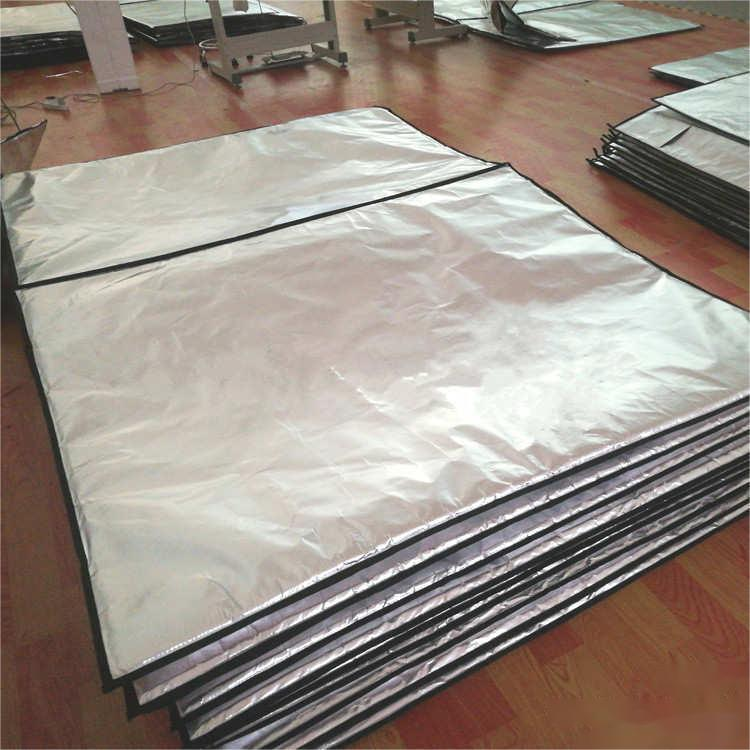
Pallet thermal blankets for dry van shipping are most valuable when you use them to protect the exact moments where your lane is weakest: hot trailer loading, dock waits, and mid-route stops. In 2026, strong results come from combining buyer-side practicality, technical validation, and real operational discipline. This guide shows you how to choose the right cover, prove it works, and deploy it in a way that supports quality, compliance, and total-cost control.
This optimized guide will answer:
• What pallet thermal blankets for dry van shipping do, and what they do not do, for your lane
• How to match cover performance to product mass, dwell time, and handling reality
• How to validate the cover with data, compliance, and operational proof
• How to turn one purchase into a repeatable 2026-ready protection program
What do Pallet Thermal Blankets For Dry Van Shipping actually do for your operation?
Pallet thermal blankets for dry van shipping protect the pallet during the exact moments when controlled conditions pause and risk begins. They slow heat gain, cold shock, airflow-driven drift, and surface damage during handoff steps such as hot trailer loading, dock waits, mid-route stops, and summer solar load. They do not replace refrigeration, active containers, or missing precooling. Their value is that they give you more control over short exposure windows and help you preserve the temperature stability of bakery ingredients, chocolate, specialty foods, supplements, and temperature-sensitive packaging while the next controlled step is prepared.
That distinction matters because many buying mistakes start with the wrong expectation. If you expect the cover to create cold, you will be disappointed. If you expect it to buy time, reduce temperature spikes, protect carton condition, and make the lane more forgiving, you will judge it correctly. In 2026, the strongest programs use covers as one layer in a broader operating system that includes correct starting temperature, clear dwell limits, and data review.
Where does the product create the most value for dry van pallet insulation?
| Operational step | Typical threat | How the cover helps | What you gain |
| Hot Trailer Loading | Temperature drift or surface warming starts | Check actual dwell time and ambient range | This is often where claims begin. |
| Dock Waits | Handling delay turns a small gap into a full excursion risk | Check queue time and opening frequency | This is where a faster, better-fitting cover pays back. |
| Mid-Route Stops | Airflow, sun, or night cold changes the surface first | Check where the pallet is exposed, not just stored | This is where data loggers reveal the true weak point. |
| Summer Solar Load | Documentation or access delay extends uncontrolled time | Check who owns release and recovery timing | This is where SOP discipline matters as much as the material. |
Quick decision tool
1. If the pallet repeatedly leaves controlled space for more than a few minutes, you likely need a thermal cover review.
2. If the same lane shows warm corners, soft cartons, or temperature spikes, map those events before buying.
3. If operators struggle with current packaging, choose a simpler cover before choosing a thicker one.
4. If the product is high value or tightly regulated, treat the cover as a controlled component, not a convenience item.
A regional food distributor used pallet blankets on short dry-van lanes after proving that most temperature stress happened during loading and first-stop delivery, not during steady highway motion.
How do you choose the right spec for your lane?
The right specification comes from the lane, not from a generic catalog claim. Start with product temperature at release, target range, expected dwell time, seasonal profile, pallet size, stack height, and how often the cover must be opened. Then decide what matters most: reflectivity, short-term insulation, rugged reuse, faster closure, label visibility, or a combination of those needs. A technically stronger blanket is not the better choice if it slows the team or fits badly.
Buyers also need to judge the design against total cost. A cover that lasts longer, applies faster, and prevents a small number of claims may outperform a cheaper option by a wide margin. The most useful way to compare suppliers is to ask how the product behaves in your hardest real condition. That shifts the discussion from marketing language to measurable fit for purpose.
Buyer matrix for Pallet Thermal Blankets For Dry Van Shipping
| Route or need | Best design priority | What to test first | Best practical outcome |
| Short regional lanes | Lightweight quick-fit blanket | Fast dispatch | Best for frequent loading |
| Summer heat lanes | Reflective outer layer and stronger buffer | Better solar protection | Best for hot-season routes |
| Winter-sensitive product | Balanced cold-shock protection | Lower rapid temperature drop | Best for selected freeze-sensitive goods |
| Mixed stop deliveries | Durable reusable design | Better repeat economics | Best for distribution networks |
Supplier questions that improve decisions
| Question | Why it matters | Good answer | Warning sign |
| How much time does the pallet spend outside controlled conditions at origin, transit, and destination? | It defines the real heat load. | Measured and time-stamped | Estimated from memory |
| Is solar exposure, cold shock, draft, or repeated opening the bigger risk on this lane? | It shows whether reflectivity, insulation, or both matter most. | Seasonal and lane-specific | Based on room set-point alone |
| Which pallet sizes, stack heights, and label-visibility needs matter most in daily use? | It prevents a good cover from becoming operational friction. | Simple for operators | No one owns the handling step |
| Will the cover be reused, returned, cleaned, and released through a controlled process? | It determines whether a reusable program is realistic. | Closed-loop and inspectable | No cleaning or return process |
| How will you prove performance with logger data, lane trials, or change-control review? | It turns marketing claims into measurable proof. | Backed by live or trial data | No logger plan or pass-fail rule |
• Ask to see the tested configuration, not only the material description.
• Match the cover to the pallet sizes and stack heights you use most often.
• Reject any option that makes operators improvise around corners, labels, or closures.
How do you validate Pallet Thermal Blankets For Dry Van Shipping with data and compliance?
Validation is the bridge between a promising product and a trustworthy program. Start with one representative lane and compare uncovered versus covered performance under a realistic exposure profile. Use representative payload mass, known starting temperature, and logger placement at the top, side, and likely weak points. Define the pass-fail rule before the trial starts so procurement, operations, and quality all agree on what success means.
Compliance expectations should shape the trial design. USDA transport guidance points out that when produce is not properly precooled, the transport system has to carry extra heat load. In a dry van there is no refrigeration unit to recover that load, which makes preparation even more important. This is why dry van blanket strategies succeed only when product temperature, lane duration, and dock exposure are controlled together. That means the right validation package may need more than temperature curves. You may also need label visibility, documented application timing, cleaning rules, condition-release checks, or evidence that the cover does not interfere with export or GDP controls.
Validation framework
| Validation item | What to document | Why it matters | Best practice |
| Lane map | Every exposure step and dwell minute | Shows the real risk window | Use timestamps from live operations |
| Payload and start temperature | Product mass, build, and release condition | Prevents false results | Replicate normal shipping build |
| Logger placement | Top, edge, corner, and center positions | Reveals weak zones | Use a written sensor map |
| Acceptance rule | Allowed drift, dwell, and handling exceptions | Enables fair comparison | Agree before testing |
Relevant standards and control references
| Reference | Why it matters | Typical use | Meaning for you |
| documented lane qualification | Control reference | What it means | Helps define what proof and discipline the lane needs |
| food safety plans and sanitary handling | Control reference | What it means | Helps define what proof and discipline the lane needs |
| USDA precooling and handling guidance | Produce preparation reference | What it means | Confirms that the best cover cannot fix missing precooling |
| seasonal route review | Control reference | What it means | Helps define what proof and discipline the lane needs |
| data logger placement that proves true trailer exposure | Control reference | What it means | Helps define what proof and discipline the lane needs |
The best proof package does not try to look complicated. It simply proves that the cover keeps the real lane inside the allowed budget.
How should you deploy, reuse, and audit covers in daily work?
Operational discipline is where return on investment is either created or lost. Pre-condition first, apply the cover late, keep closures complete, define the maximum uncontrolled time, and review first shipments carefully. For reusable systems, add condition inspection, cleaning, release, and retirement rules. Those basic controls often matter more than another incremental layer of insulation.
In repeat lanes, the goal is to make the cover easy to identify and hard to misuse. Operators should know which pallet size it fits, when it stays on, when it comes off, and what to do if it is damaged. Managers should be able to review exceptions quickly. If your process depends on heroics, it will not scale. If your process fits normal human behavior, it usually will.
Daily operating framework
| Step | Why it matters | Common miss | Recommended action |
| Pre-condition the product and pallet exactly as the lane requires before the cover goes on. | The cover cannot recover a bad starting temperature. | Covering a warm pallet | Use a written step with a named owner |
| Apply the cover as late as practical before exposure while keeping labels and loggers visible. | Late application saves the thermal budget for the real exposure window. | Putting the cover on too early | Use a written step with a named owner |
| Close all top and corner sections fully so the pallet does not behave like a chimney. | Open corners act like a chimney and waste insulation value. | Leaving gaps around edges or straps | Use a written step with a named owner |
| Set a clear maximum uncontrolled timer for staging, handoff, or route exposure. | A timer makes uncontrolled exposure visible and manageable. | No maximum exposure time | Use a written step with a named owner |
| Review the first live shipments and refine the SOP with logger data and operator feedback. | Review turns one shipment into a better SOP. | Skipping first-shipment review | Use a written step with a named owner |
Reuse and audit checklist
• Assign a simple asset ID when the blanket is part of a repeat closed loop.
• Inspect seams, closures, outer shell condition, and contamination before release.
• Record cleaning method, damage status, and retirement limits in one easy form.
• Review logger data and operator comments after the first live shipments and after seasonal changes.
A shipper compared covered and uncovered pallets in July and found that fast loading plus a better blanket fit delivered more value than simply adding more material thickness.
What 2026 trends should guide your next Pallet Thermal Blankets For Dry Van Shipping decision?
2026 buyers are looking for evidence, simplicity, and sustainability at the same time. buyers increasingly ask for reusable solutions that reduce waste and fit digital traceability programs real-time monitoring and logger review are becoming more closely linked to packaging decisions operations teams want covers that are faster to deploy because labor minutes can erase theoretical performance gains That means the strongest product is not the one with the loudest claim. It is the one that fits your route, proves its value with data, and supports a reuse model your network can actually manage.
The market is also rewarding covers that fit broader business priorities. Operations wants speed and consistency. Quality wants traceable proof. Procurement wants total-cost clarity. Sustainability teams want longer life and less waste. A well-designed thermal cover program can support all four groups when you size the solution correctly and avoid overengineering. That cross-functional fit is one reason thermal covers are getting more strategic attention across modern temperature-sensitive supply chains.
2026 trend snapshot
| Trend | What is changing | Practical effect | Owner focus |
| Trend 1 | buyers increasingly ask for reusable solutions that reduce waste and fit digital traceability programs | Simpler deployment | Operations |
| Trend 2 | real-time monitoring and logger review are becoming more closely linked to packaging decisions | Better visibility | QA and compliance |
| Trend 3 | operations teams want covers that are faster to deploy because labor minutes can erase theoretical performance gains | More flexible qualification | Procurement |
| Trend 4 | lane segmentation is replacing one-size-fits-all blanket buying in many supply chains | Stronger total-cost control | Sustainability |
Latest developments to watch
• Buyers increasingly ask for reusable solutions that reduce waste and fit digital traceability programs
• Real-time monitoring and logger review are becoming more closely linked to packaging decisions
• Operations teams want covers that are faster to deploy because labor minutes can erase theoretical performance gains
• Lane segmentation is replacing one-size-fits-all blanket buying in many supply chains
Frequently asked questions
Do pallet thermal blankets for dry van shipping replace refrigeration?
No. They are passive protection. They slow heat transfer, but they do not create cooling. Correct starting temperature and lane design still matter.
How long can a pallet stay protected?
There is no honest universal number. Safe time depends on product thermal mass, outside conditions, dwell pattern, pallet build, and cover design. Use lane trials before setting limits.
What is the biggest buying mistake?
Choosing by thickness alone. Fit, closure speed, durability, and real exposure conditions usually matter more than a headline material claim.
Should I use one cover for every lane?
Usually not. Many programs perform better when they segment routes by exposure severity, season, and product sensitivity.
How do I prove value quickly?
Run a covered versus uncovered trial on one representative lane and compare logger data, product condition, and operational ease.
SEO and content implementation notes
For search performance in 2026, this topic works best when the page is built around people-first content, clear title signals, and strong on-page structure. Use the exact keyword early, keep subheads specific, and support the article with a comparison table, FAQ, and a clear action path. That improves readability for buyers and strengthens the page's ability to compete on both product education and decision intent.
Summary and recommendations
The best pallet thermal blankets for dry van shipping program is simple to explain. You identify the real exposure step, choose the cover around the lane, validate it with data, and run it with a clear SOP. That formula helps you reduce avoidable drift, protect product quality, support compliance, and improve total cost over time.
If you are comparing options now, start with one priority lane and build a small decision file: exposure map, product range, pallet size, expected dwell, trial plan, and reuse rules. That file will quickly tell you which cover belongs in your operation and which only looks good in a brochure.
About Tempk
At Tempk, we design reusable pallet blankets and cargo covers for dry van shipping, warehouse, freight, export, and temperature-sensitive supply-chain operations. We focus on practical fit, durable multilayer construction, and deployment support so your team gets a solution that works in real conditions rather than only in theory.
If you are evaluating pallet thermal blankets for dry van shipping, start with your actual exposure map and logger data, then shortlist the cover sizes and performance levels that match the lane instead of buying on thickness alone.
Why Insulated Pallet Blankets For Fish Matter in 2026
Insulated pallet blankets for fish are most valuable when you use them to protect the exact moments where your lane is weakest: dock staging, icing gaps, and cross-dock delays. In 2026, strong results come from combining buyer-side practicality, technical validation, and real operational discipline. This guide shows you how to choose the right cover, prove it works, and deploy it in a way that supports quality, compliance, and total-cost control.
This optimized guide will answer:
• What insulated pallet blankets for fish do, and what they do not do, for your lane
• How to match cover performance to product mass, dwell time, and handling reality
• How to validate the cover with data, compliance, and operational proof
• How to turn one purchase into a repeatable 2026-ready protection program
What do Insulated Pallet Blankets For Fish actually do for your operation?
Insulated pallet blankets for fish protect the pallet during the exact moments when controlled conditions pause and risk begins. They slow heat gain, cold shock, airflow-driven drift, and surface damage during handoff steps such as dock staging, icing gaps, cross-dock delays, and vehicle waiting time. They do not replace refrigeration, active containers, or missing precooling. Their value is that they give you more control over short exposure windows and help you preserve the temperature stability of whole fish, fillets, shellfish, fresh salmon, and tuna loins while the next controlled step is prepared.
That distinction matters because many buying mistakes start with the wrong expectation. If you expect the cover to create cold, you will be disappointed. If you expect it to buy time, reduce temperature spikes, protect carton condition, and make the lane more forgiving, you will judge it correctly. In 2026, the strongest programs use covers as one layer in a broader operating system that includes correct starting temperature, clear dwell limits, and data review.
Where does the product create the most value for fish pallet thermal cover?
| Operational step | Typical threat | How the cover helps | What you gain |
| Dock Staging | Temperature drift or surface warming starts | Check actual dwell time and ambient range | This is often where claims begin. |
| Icing Gaps | Handling delay turns a small gap into a full excursion risk | Check queue time and opening frequency | This is where a faster, better-fitting cover pays back. |
| Cross-Dock Delays | Airflow, sun, or night cold changes the surface first | Check where the pallet is exposed, not just stored | This is where data loggers reveal the true weak point. |
| Vehicle Waiting Time | Documentation or access delay extends uncontrolled time | Check who owns release and recovery timing | This is where SOP discipline matters as much as the material. |
Quick decision tool
1. If the pallet repeatedly leaves controlled space for more than a few minutes, you likely need a thermal cover review.
2. If the same lane shows warm corners, soft cartons, or temperature spikes, map those events before buying.
3. If operators struggle with current packaging, choose a simpler cover before choosing a thicker one.
4. If the product is high value or tightly regulated, treat the cover as a controlled component, not a convenience item.
A processor shipping fresh salmon used insulated pallet blankets to protect ice-packed cartons during a two-hour dock delay. Core temperature stayed acceptable, and carton softness at delivery dropped sharply.
How do you choose the right spec for your lane?
The right specification comes from the lane, not from a generic catalog claim. Start with product temperature at release, target range, expected dwell time, seasonal profile, pallet size, stack height, and how often the cover must be opened. Then decide what matters most: reflectivity, short-term insulation, rugged reuse, faster closure, label visibility, or a combination of those needs. A technically stronger blanket is not the better choice if it slows the team or fits badly.
Buyers also need to judge the design against total cost. A cover that lasts longer, applies faster, and prevents a small number of claims may outperform a cheaper option by a wide margin. The most useful way to compare suppliers is to ask how the product behaves in your hardest real condition. That shifts the discussion from marketing language to measurable fit for purpose.
Buyer matrix for Insulated Pallet Blankets For Fish
| Route or need | Best design priority | What to test first | Best practical outcome |
| Ice-packed fish | Moisture-tolerant shell | Better hygiene and durability | Best for wet handling |
| Short urban delivery | Lightweight quick-fit design | Fast loading and unloading | Best for frequent stops |
| Export staging | Higher thermal buffer | Longer chilled protection | Best for customs and acceptance delays |
| Closed-loop seafood program | Cleanable reusable construction | Lower repeat cost | Best for daily or weekly lanes |
Supplier questions that improve decisions
| Question | Why it matters | Good answer | Warning sign |
| How much time does the pallet spend outside controlled conditions at origin, transit, and destination? | It defines the real heat load. | Measured and time-stamped | Estimated from memory |
| Is solar exposure, cold shock, draft, or repeated opening the bigger risk on this lane? | It shows whether reflectivity, insulation, or both matter most. | Seasonal and lane-specific | Based on room set-point alone |
| Which pallet sizes, stack heights, and label-visibility needs matter most in daily use? | It prevents a good cover from becoming operational friction. | Simple for operators | No one owns the handling step |
| Will the cover be reused, returned, cleaned, and released through a controlled process? | It determines whether a reusable program is realistic. | Closed-loop and inspectable | No cleaning or return process |
| How will you prove performance with logger data, lane trials, or change-control review? | It turns marketing claims into measurable proof. | Backed by live or trial data | No logger plan or pass-fail rule |
• Ask to see the tested configuration, not only the material description.
• Match the cover to the pallet sizes and stack heights you use most often.
• Reject any option that makes operators improvise around corners, labels, or closures.
How do you validate Insulated Pallet Blankets For Fish with data and compliance?
Validation is the bridge between a promising product and a trustworthy program. Start with one representative lane and compare uncovered versus covered performance under a realistic exposure profile. Use representative payload mass, known starting temperature, and logger placement at the top, side, and likely weak points. Define the pass-fail rule before the trial starts so procurement, operations, and quality all agree on what success means.
Compliance expectations should shape the trial design. FAO seafood guidance stresses that time and temperature are the two most important factors and recommends chilled storage, preferably under ice, at less than 4 C after reception. FDA seafood guidance also treats time and temperature abuse as a key hazard and points to refrigeration control, proper icing, rapid cooling, and controlled transit as preventive measures. That means the right validation package may need more than temperature curves. You may also need label visibility, documented application timing, cleaning rules, condition-release checks, or evidence that the cover does not interfere with export or GDP controls.
Validation framework
| Validation item | What to document | Why it matters | Best practice |
| Lane map | Every exposure step and dwell minute | Shows the real risk window | Use timestamps from live operations |
| Payload and start temperature | Product mass, build, and release condition | Prevents false results | Replicate normal shipping build |
| Logger placement | Top, edge, corner, and center positions | Reveals weak zones | Use a written sensor map |
| Acceptance rule | Allowed drift, dwell, and handling exceptions | Enables fair comparison | Agree before testing |
Relevant standards and control references
| Reference | Why it matters | Typical use | Meaning for you |
| food safety plans and documented handling rules | Food safety system | What it means | Turns blanket use into a repeatable preventive step |
| FDA sanitary transport expectations | Food transport risk control | What it means | Reinforces clean, controlled handling |
| rapid cooling and transit control for seafood | Seafood handling rule | What it means | Connects cover use to cold-chain speed and control |
| cleaning and reuse inspection records | Reuse governance | What it means | Shows when a cover is fit for the next cycle |
| data logger placement that proves real exposure, not just room target | Control reference | What it means | Helps define what proof and discipline the lane needs |
The best proof package does not try to look complicated. It simply proves that the cover keeps the real lane inside the allowed budget.
How should you deploy, reuse, and audit covers in daily work?
Operational discipline is where return on investment is either created or lost. Pre-condition first, apply the cover late, keep closures complete, define the maximum uncontrolled time, and review first shipments carefully. For reusable systems, add condition inspection, cleaning, release, and retirement rules. Those basic controls often matter more than another incremental layer of insulation.
In repeat lanes, the goal is to make the cover easy to identify and hard to misuse. Operators should know which pallet size it fits, when it stays on, when it comes off, and what to do if it is damaged. Managers should be able to review exceptions quickly. If your process depends on heroics, it will not scale. If your process fits normal human behavior, it usually will.
Daily operating framework
| Step | Why it matters | Common miss | Recommended action |
| Pre-condition the product and pallet exactly as the lane requires before the cover goes on. | The cover cannot recover a bad starting temperature. | Covering a warm pallet | Use a written step with a named owner |
| Apply the cover as late as practical before exposure while keeping labels and loggers visible. | Late application saves the thermal budget for the real exposure window. | Putting the cover on too early | Use a written step with a named owner |
| Close all top and corner sections fully so the pallet does not behave like a chimney. | Open corners act like a chimney and waste insulation value. | Leaving gaps around edges or straps | Use a written step with a named owner |
| Set a clear maximum uncontrolled timer for staging, handoff, or route exposure. | A timer makes uncontrolled exposure visible and manageable. | No maximum exposure time | Use a written step with a named owner |
| Review the first live shipments and refine the SOP with logger data and operator feedback. | Review turns one shipment into a better SOP. | Skipping first-shipment review | Use a written step with a named owner |
Reuse and audit checklist
• Assign a simple asset ID when the blanket is part of a repeat closed loop.
• Inspect seams, closures, outer shell condition, and contamination before release.
• Record cleaning method, damage status, and retirement limits in one easy form.
• Review logger data and operator comments after the first live shipments and after seasonal changes.
A distributor running daily chilled-fish routes adopted one-page cover SOPs and logger checks, which reduced spoilage debates and made quality-release decisions faster.
What 2026 trends should guide your next Insulated Pallet Blankets For Fish decision?
2026 buyers are looking for evidence, simplicity, and sustainability at the same time. buyers increasingly ask for reusable solutions that reduce waste and fit digital traceability programs real-time monitoring and logger review are becoming more closely linked to packaging decisions operations teams want covers that are faster to deploy because labor minutes can erase theoretical performance gains That means the strongest product is not the one with the loudest claim. It is the one that fits your route, proves its value with data, and supports a reuse model your network can actually manage.
The market is also rewarding covers that fit broader business priorities. Operations wants speed and consistency. Quality wants traceable proof. Procurement wants total-cost clarity. Sustainability teams want longer life and less waste. A well-designed thermal cover program can support all four groups when you size the solution correctly and avoid overengineering. That cross-functional fit is one reason thermal covers are getting more strategic attention across modern temperature-sensitive supply chains.
2026 trend snapshot
| Trend | What is changing | Practical effect | Owner focus |
| Trend 1 | buyers increasingly ask for reusable solutions that reduce waste and fit digital traceability programs | Simpler deployment | Operations |
| Trend 2 | real-time monitoring and logger review are becoming more closely linked to packaging decisions | Better visibility | QA and compliance |
| Trend 3 | operations teams want covers that are faster to deploy because labor minutes can erase theoretical performance gains | More flexible qualification | Procurement |
| Trend 4 | lane segmentation is replacing one-size-fits-all blanket buying in many supply chains | Stronger total-cost control | Sustainability |
Latest developments to watch
• Buyers increasingly ask for reusable solutions that reduce waste and fit digital traceability programs
• Real-time monitoring and logger review are becoming more closely linked to packaging decisions
• Operations teams want covers that are faster to deploy because labor minutes can erase theoretical performance gains
• Lane segmentation is replacing one-size-fits-all blanket buying in many supply chains
Frequently asked questions
Can insulated pallet blankets for fish replace ice or refrigeration?
No. They are passive protection. They help preserve existing cold conditions, but they do not create new cooling capacity.
Why do seafood pallets need special cover attention?
Because seafood lanes combine temperature risk with hygiene risk. Wet surfaces, melted ice, and rough handling all affect real performance.
Do surface carton issues really matter if the core is still cold?
Yes. Soft cartons, condensation, and top-layer warming can trigger claims before the deep product temperature clearly fails.
How should I test a fish pallet blanket?
Compare covered and uncovered pallets with representative ice load, logger placement at exposed layers, and realistic dock or export delays.
Is reusability a good idea for seafood?
Yes, if you can control sanitation, inspection, and release. Without that, reuse can add quality risk.
SEO and content implementation notes
For search performance in 2026, this topic works best when the page is built around people-first content, clear title signals, and strong on-page structure. Use the exact keyword early, keep subheads specific, and support the article with a comparison table, FAQ, and a clear action path. That improves readability for buyers and strengthens the page's ability to compete on both product education and decision intent.
Summary and recommendations
The best insulated pallet blankets for fish program is simple to explain. You identify the real exposure step, choose the cover around the lane, validate it with data, and run it with a clear SOP. That formula helps you reduce avoidable drift, protect product quality, support compliance, and improve total cost over time.
If you are comparing options now, start with one priority lane and build a small decision file: exposure map, product range, pallet size, expected dwell, trial plan, and reuse rules. That file will quickly tell you which cover belongs in your operation and which only looks good in a brochure.
About Tempk
At Tempk, we design reusable pallet blankets and cargo covers for seafood, warehouse, freight, export, and temperature-sensitive supply-chain operations. We focus on practical fit, durable multilayer construction, and deployment support so your team gets a solution that works in real conditions rather than only in theory.
If you are evaluating insulated pallet blankets for fish, start with your actual exposure map and logger data, then shortlist the cover sizes and performance levels that match the lane instead of buying on thickness alone.
Why Insulated Pallet Blankets For Bulk Storage Matter in 2026
Insulated pallet blankets for bulk storage are most valuable when you use them to protect the exact moments where your lane is weakest: door openings, overflow staging, and pick-face waiting time. In 2026, strong results come from combining buyer-side practicality, technical validation, and real operational discipline. This guide shows you how to choose the right cover, prove it works, and deploy it in a way that supports quality, compliance, and total-cost control.
This optimized guide will answer:
• What insulated pallet blankets for bulk storage do, and what they do not do, for your lane
• How to match cover performance to product mass, dwell time, and handling reality
• How to validate the cover with data, compliance, and operational proof
• How to turn one purchase into a repeatable 2026-ready protection program
What do Insulated Pallet Blankets For Bulk Storage actually do for your operation?
Insulated pallet blankets for bulk storage protect the pallet during the exact moments when controlled conditions pause and risk begins. They slow heat gain, cold shock, airflow-driven drift, and surface damage during handoff steps such as door openings, overflow staging, pick-face waiting time, and roof or wall hot spots. They do not replace refrigeration, active containers, or missing precooling. Their value is that they give you more control over short exposure windows and help you preserve the temperature stability of dairy ingredients, nutraceuticals, specialty foods, temperature-sensitive chemicals, and seasonal inventory while the next controlled step is prepared.
That distinction matters because many buying mistakes start with the wrong expectation. If you expect the cover to create cold, you will be disappointed. If you expect it to buy time, reduce temperature spikes, protect carton condition, and make the lane more forgiving, you will judge it correctly. In 2026, the strongest programs use covers as one layer in a broader operating system that includes correct starting temperature, clear dwell limits, and data review.
Where does the product create the most value for warehouse pallet insulation?
| Operational step | Typical threat | How the cover helps | What you gain |
| Door Openings | Temperature drift or surface warming starts | Check actual dwell time and ambient range | This is often where claims begin. |
| Overflow Staging | Handling delay turns a small gap into a full excursion risk | Check queue time and opening frequency | This is where a faster, better-fitting cover pays back. |
| Pick-Face Waiting Time | Airflow, sun, or night cold changes the surface first | Check where the pallet is exposed, not just stored | This is where data loggers reveal the true weak point. |
| Roof Or Wall Hot Spots | Documentation or access delay extends uncontrolled time | Check who owns release and recovery timing | This is where SOP discipline matters as much as the material. |
Quick decision tool
1. If the pallet repeatedly leaves controlled space for more than a few minutes, you likely need a thermal cover review.
2. If the same lane shows warm corners, soft cartons, or temperature spikes, map those events before buying.
3. If operators struggle with current packaging, choose a simpler cover before choosing a thicker one.
4. If the product is high value or tightly regulated, treat the cover as a controlled component, not a convenience item.
A bulk warehouse used pallet blankets for reserve stock staged near shipping doors, which reduced surface warming during repeated forklift activity and kept release-ready pallets more stable.
How do you choose the right spec for your lane?
The right specification comes from the lane, not from a generic catalog claim. Start with product temperature at release, target range, expected dwell time, seasonal profile, pallet size, stack height, and how often the cover must be opened. Then decide what matters most: reflectivity, short-term insulation, rugged reuse, faster closure, label visibility, or a combination of those needs. A technically stronger blanket is not the better choice if it slows the team or fits badly.
Buyers also need to judge the design against total cost. A cover that lasts longer, applies faster, and prevents a small number of claims may outperform a cheaper option by a wide margin. The most useful way to compare suppliers is to ask how the product behaves in your hardest real condition. That shifts the discussion from marketing language to measurable fit for purpose.
Buyer matrix for Insulated Pallet Blankets For Bulk Storage
| Route or need | Best design priority | What to test first | Best practical outcome |
| Door-adjacent staging | Quick-fit reusable cover | Fast protection during door cycles | Best for outbound reserve stock |
| Longer overflow storage | Higher thermal buffer | More stability in exception zones | Best for temporary off-zone holding |
| Frequent pallet access | Peel-back access panels | Fewer handling delays | Best for pick operations |
| High reuse program | Durable shell and inspection routine | Lower long-run cost | Best for mapped warehouse loops |
Supplier questions that improve decisions
| Question | Why it matters | Good answer | Warning sign |
| How much time does the pallet spend outside controlled conditions at origin, transit, and destination? | It defines the real heat load. | Measured and time-stamped | Estimated from memory |
| Is solar exposure, cold shock, draft, or repeated opening the bigger risk on this lane? | It shows whether reflectivity, insulation, or both matter most. | Seasonal and lane-specific | Based on room set-point alone |
| Which pallet sizes, stack heights, and label-visibility needs matter most in daily use? | It prevents a good cover from becoming operational friction. | Simple for operators | No one owns the handling step |
| Will the cover be reused, returned, cleaned, and released through a controlled process? | It determines whether a reusable program is realistic. | Closed-loop and inspectable | No cleaning or return process |
| How will you prove performance with logger data, lane trials, or change-control review? | It turns marketing claims into measurable proof. | Backed by live or trial data | No logger plan or pass-fail rule |
• Ask to see the tested configuration, not only the material description.
• Match the cover to the pallet sizes and stack heights you use most often.
• Reject any option that makes operators improvise around corners, labels, or closures.
How do you validate Insulated Pallet Blankets For Bulk Storage with data and compliance?
Validation is the bridge between a promising product and a trustworthy program. Start with one representative lane and compare uncovered versus covered performance under a realistic exposure profile. Use representative payload mass, known starting temperature, and logger placement at the top, side, and likely weak points. Define the pass-fail rule before the trial starts so procurement, operations, and quality all agree on what success means.
Compliance expectations should shape the trial design. Industry researchers estimate that warehouse and cold-storage services represented the largest share of the cold chain logistics market in 2025, which shows how much pressure sits inside storage and staging rather than transport alone. That same market view also highlights rising use of real-time monitoring and greener packaging choices, making reusable pallet blankets attractive when teams need both control and auditability. That means the right validation package may need more than temperature curves. You may also need label visibility, documented application timing, cleaning rules, condition-release checks, or evidence that the cover does not interfere with export or GDP controls.
Validation framework
| Validation item | What to document | Why it matters | Best practice |
| Lane map | Every exposure step and dwell minute | Shows the real risk window | Use timestamps from live operations |
| Payload and start temperature | Product mass, build, and release condition | Prevents false results | Replicate normal shipping build |
| Logger placement | Top, edge, corner, and center positions | Reveals weak zones | Use a written sensor map |
| Acceptance rule | Allowed drift, dwell, and handling exceptions | Enables fair comparison | Agree before testing |
Relevant standards and control references
| Reference | Why it matters | Typical use | Meaning for you |
| documented warehouse handling rules | Control reference | What it means | Helps define what proof and discipline the lane needs |
| lot and batch traceability | Control reference | What it means | Helps define what proof and discipline the lane needs |
| data logger placement that proves actual pallet exposure | Control reference | What it means | Helps define what proof and discipline the lane needs |
| cleaning and reuse inspection records | Reuse governance | What it means | Shows when a cover is fit for the next cycle |
| temperature-mapping review for staging zones | Control reference | What it means | Helps define what proof and discipline the lane needs |
The best proof package does not try to look complicated. It simply proves that the cover keeps the real lane inside the allowed budget.
How should you deploy, reuse, and audit covers in daily work?
Operational discipline is where return on investment is either created or lost. Pre-condition first, apply the cover late, keep closures complete, define the maximum uncontrolled time, and review first shipments carefully. For reusable systems, add condition inspection, cleaning, release, and retirement rules. Those basic controls often matter more than another incremental layer of insulation.
In repeat lanes, the goal is to make the cover easy to identify and hard to misuse. Operators should know which pallet size it fits, when it stays on, when it comes off, and what to do if it is damaged. Managers should be able to review exceptions quickly. If your process depends on heroics, it will not scale. If your process fits normal human behavior, it usually will.
Daily operating framework
| Step | Why it matters | Common miss | Recommended action |
| Pre-condition the product and pallet exactly as the lane requires before the cover goes on. | The cover cannot recover a bad starting temperature. | Covering a warm pallet | Use a written step with a named owner |
| Apply the cover as late as practical before exposure while keeping labels and loggers visible. | Late application saves the thermal budget for the real exposure window. | Putting the cover on too early | Use a written step with a named owner |
| Close all top and corner sections fully so the pallet does not behave like a chimney. | Open corners act like a chimney and waste insulation value. | Leaving gaps around edges or straps | Use a written step with a named owner |
| Set a clear maximum uncontrolled timer for staging, handoff, or route exposure. | A timer makes uncontrolled exposure visible and manageable. | No maximum exposure time | Use a written step with a named owner |
| Review the first live shipments and refine the SOP with logger data and operator feedback. | Review turns one shipment into a better SOP. | Skipping first-shipment review | Use a written step with a named owner |
Reuse and audit checklist
• Assign a simple asset ID when the blanket is part of a repeat closed loop.
• Inspect seams, closures, outer shell condition, and contamination before release.
• Record cleaning method, damage status, and retirement limits in one easy form.
• Review logger data and operator comments after the first live shipments and after seasonal changes.
A mixed-use cold store combined thermal covers with zone mapping and found that a few predictable hot spots caused most complaints, not the storage room as a whole.
What 2026 trends should guide your next Insulated Pallet Blankets For Bulk Storage decision?
2026 buyers are looking for evidence, simplicity, and sustainability at the same time. buyers increasingly ask for reusable solutions that reduce waste and fit digital traceability programs real-time monitoring and logger review are becoming more closely linked to packaging decisions operations teams want covers that are faster to deploy because labor minutes can erase theoretical performance gains That means the strongest product is not the one with the loudest claim. It is the one that fits your route, proves its value with data, and supports a reuse model your network can actually manage.
The market is also rewarding covers that fit broader business priorities. Operations wants speed and consistency. Quality wants traceable proof. Procurement wants total-cost clarity. Sustainability teams want longer life and less waste. A well-designed thermal cover program can support all four groups when you size the solution correctly and avoid overengineering. That cross-functional fit is one reason thermal covers are getting more strategic attention across modern temperature-sensitive supply chains.
2026 trend snapshot
| Trend | What is changing | Practical effect | Owner focus |
| Trend 1 | buyers increasingly ask for reusable solutions that reduce waste and fit digital traceability programs | Simpler deployment | Operations |
| Trend 2 | real-time monitoring and logger review are becoming more closely linked to packaging decisions | Better visibility | QA and compliance |
| Trend 3 | operations teams want covers that are faster to deploy because labor minutes can erase theoretical performance gains | More flexible qualification | Procurement |
| Trend 4 | lane segmentation is replacing one-size-fits-all blanket buying in many supply chains | Stronger total-cost control | Sustainability |
Latest developments to watch
• Buyers increasingly ask for reusable solutions that reduce waste and fit digital traceability programs
• Real-time monitoring and logger review are becoming more closely linked to packaging decisions
• Operations teams want covers that are faster to deploy because labor minutes can erase theoretical performance gains
• Lane segmentation is replacing one-size-fits-all blanket buying in many supply chains
Frequently asked questions
Do insulated pallet blankets for bulk storage replace refrigeration?
No. They are passive protection. They slow heat transfer, but they do not create cooling. Correct starting temperature and lane design still matter.
How long can a pallet stay protected?
There is no honest universal number. Safe time depends on product thermal mass, outside conditions, dwell pattern, pallet build, and cover design. Use lane trials before setting limits.
What is the biggest buying mistake?
Choosing by thickness alone. Fit, closure speed, durability, and real exposure conditions usually matter more than a headline material claim.
Should I use one cover for every lane?
Usually not. Many programs perform better when they segment routes by exposure severity, season, and product sensitivity.
How do I prove value quickly?
Run a covered versus uncovered trial on one representative lane and compare logger data, product condition, and operational ease.
SEO and content implementation notes
For search performance in 2026, this topic works best when the page is built around people-first content, clear title signals, and strong on-page structure. Use the exact keyword early, keep subheads specific, and support the article with a comparison table, FAQ, and a clear action path. That improves readability for buyers and strengthens the page's ability to compete on both product education and decision intent.
Summary and recommendations
The best insulated pallet blankets for bulk storage program is simple to explain. You identify the real exposure step, choose the cover around the lane, validate it with data, and run it with a clear SOP. That formula helps you reduce avoidable drift, protect product quality, support compliance, and improve total cost over time.
If you are comparing options now, start with one priority lane and build a small decision file: exposure map, product range, pallet size, expected dwell, trial plan, and reuse rules. That file will quickly tell you which cover belongs in your operation and which only looks good in a brochure.
About Tempk
At Tempk, we design reusable pallet blankets and cargo covers for bulk storage, warehouse, freight, export, and temperature-sensitive supply-chain operations. We focus on practical fit, durable multilayer construction, and deployment support so your team gets a solution that works in real conditions rather than only in theory.
If you are evaluating insulated pallet blankets for bulk storage, start with your actual exposure map and logger data, then shortlist the cover sizes and performance levels that match the lane instead of buying on thickness alone.
Why Insulated Cargo Covers For Freight Matter in 2026
Insulated cargo covers for freight are most valuable when you use them to protect the exact moments where your lane is weakest: terminal dwell, cross-dock handoff, and linehaul waiting. In 2026, strong results come from combining buyer-side practicality, technical validation, and real operational discipline. This guide shows you how to choose the right cover, prove it works, and deploy it in a way that supports quality, compliance, and total-cost control.
This optimized guide will answer:
• What insulated cargo covers for freight do, and what they do not do, for your lane
• How to match cover performance to product mass, dwell time, and handling reality
• How to validate the cover with data, compliance, and operational proof
• How to turn one purchase into a repeatable 2026-ready protection program
What do Insulated Cargo Covers For Freight actually do for your operation?
Insulated cargo covers for freight protect the pallet during the exact moments when controlled conditions pause and risk begins. They slow heat gain, cold shock, airflow-driven drift, and surface damage during handoff steps such as terminal dwell, cross-dock handoff, linehaul waiting, and last-mile dispatch delay. They do not replace refrigeration, active containers, or missing precooling. Their value is that they give you more control over short exposure windows and help you preserve the temperature stability of specialty foods, diagnostics, industrial materials, supplements, and premium consumer goods while the next controlled step is prepared.
That distinction matters because many buying mistakes start with the wrong expectation. If you expect the cover to create cold, you will be disappointed. If you expect it to buy time, reduce temperature spikes, protect carton condition, and make the lane more forgiving, you will judge it correctly. In 2026, the strongest programs use covers as one layer in a broader operating system that includes correct starting temperature, clear dwell limits, and data review.
Where does the product create the most value for freight thermal cover?
| Operational step | Typical threat | How the cover helps | What you gain |
| Terminal Dwell | Temperature drift or surface warming starts | Check actual dwell time and ambient range | This is often where claims begin. |
| Cross-Dock Handoff | Handling delay turns a small gap into a full excursion risk | Check queue time and opening frequency | This is where a faster, better-fitting cover pays back. |
| Linehaul Waiting | Airflow, sun, or night cold changes the surface first | Check where the pallet is exposed, not just stored | This is where data loggers reveal the true weak point. |
| Last-Mile Dispatch Delay | Documentation or access delay extends uncontrolled time | Check who owns release and recovery timing | This is where SOP discipline matters as much as the material. |
Quick decision tool
1. If the pallet repeatedly leaves controlled space for more than a few minutes, you likely need a thermal cover review.
2. If the same lane shows warm corners, soft cartons, or temperature spikes, map those events before buying.
3. If operators struggle with current packaging, choose a simpler cover before choosing a thicker one.
4. If the product is high value or tightly regulated, treat the cover as a controlled component, not a convenience item.
A premium freight operator introduced insulated cargo covers only on high-risk terminal transfers and reduced exception calls without slowing the broader network.
How do you choose the right spec for your lane?
The right specification comes from the lane, not from a generic catalog claim. Start with product temperature at release, target range, expected dwell time, seasonal profile, pallet size, stack height, and how often the cover must be opened. Then decide what matters most: reflectivity, short-term insulation, rugged reuse, faster closure, label visibility, or a combination of those needs. A technically stronger blanket is not the better choice if it slows the team or fits badly.
Buyers also need to judge the design against total cost. A cover that lasts longer, applies faster, and prevents a small number of claims may outperform a cheaper option by a wide margin. The most useful way to compare suppliers is to ask how the product behaves in your hardest real condition. That shifts the discussion from marketing language to measurable fit for purpose.
Buyer matrix for Insulated Cargo Covers For Freight
| Route or need | Best design priority | What to test first | Best practical outcome |
| Premium freight | Fast-fit durable cover | Better service consistency | Best for high-value shipments |
| Terminal-heavy network | Reusable cover with asset ID | Improved traceability | Best for repeat hub transfers |
| Mixed commodity freight | Balanced design and easy labeling | Lower misuse risk | Best for broad networks |
| Last-mile handoff | Lightweight quick-access cover | Faster stops | Best for urban delivery |
Supplier questions that improve decisions
| Question | Why it matters | Good answer | Warning sign |
| How much time does the pallet spend outside controlled conditions at origin, transit, and destination? | It defines the real heat load. | Measured and time-stamped | Estimated from memory |
| Is solar exposure, cold shock, draft, or repeated opening the bigger risk on this lane? | It shows whether reflectivity, insulation, or both matter most. | Seasonal and lane-specific | Based on room set-point alone |
| Which pallet sizes, stack heights, and label-visibility needs matter most in daily use? | It prevents a good cover from becoming operational friction. | Simple for operators | No one owns the handling step |
| Will the cover be reused, returned, cleaned, and released through a controlled process? | It determines whether a reusable program is realistic. | Closed-loop and inspectable | No cleaning or return process |
| How will you prove performance with logger data, lane trials, or change-control review? | It turns marketing claims into measurable proof. | Backed by live or trial data | No logger plan or pass-fail rule |
• Ask to see the tested configuration, not only the material description.
• Match the cover to the pallet sizes and stack heights you use most often.
• Reject any option that makes operators improvise around corners, labels, or closures.
How do you validate Insulated Cargo Covers For Freight with data and compliance?
Validation is the bridge between a promising product and a trustworthy program. Start with one representative lane and compare uncovered versus covered performance under a realistic exposure profile. Use representative payload mass, known starting temperature, and logger placement at the top, side, and likely weak points. Define the pass-fail rule before the trial starts so procurement, operations, and quality all agree on what success means.
Compliance expectations should shape the trial design. Cold chain researchers continue to point to rising demand for real-time monitoring and stronger traceability, which fits well with freight programs that combine reusable covers and logger data. The broader cold chain logistics market is still expanding rapidly, which is increasing the number of nontraditional temperature-sensitive goods moving through general freight networks. That means the right validation package may need more than temperature curves. You may also need label visibility, documented application timing, cleaning rules, condition-release checks, or evidence that the cover does not interfere with export or GDP controls.
Validation framework
| Validation item | What to document | Why it matters | Best practice |
| Lane map | Every exposure step and dwell minute | Shows the real risk window | Use timestamps from live operations |
| Payload and start temperature | Product mass, build, and release condition | Prevents false results | Replicate normal shipping build |
| Logger placement | Top, edge, corner, and center positions | Reveals weak zones | Use a written sensor map |
| Acceptance rule | Allowed drift, dwell, and handling exceptions | Enables fair comparison | Agree before testing |
Relevant standards and control references
| Reference | Why it matters | Typical use | Meaning for you |
| documented handling rules | Control reference | What it means | Helps define what proof and discipline the lane needs |
| segmenting lanes by risk | Control reference | What it means | Helps define what proof and discipline the lane needs |
| cleaning and reuse inspection records | Reuse governance | What it means | Shows when a cover is fit for the next cycle |
| data logger placement during terminal transitions | Control reference | What it means | Helps define what proof and discipline the lane needs |
| customer-specific quality agreements | Control reference | What it means | Helps define what proof and discipline the lane needs |
The best proof package does not try to look complicated. It simply proves that the cover keeps the real lane inside the allowed budget.
How should you deploy, reuse, and audit covers in daily work?
Operational discipline is where return on investment is either created or lost. Pre-condition first, apply the cover late, keep closures complete, define the maximum uncontrolled time, and review first shipments carefully. For reusable systems, add condition inspection, cleaning, release, and retirement rules. Those basic controls often matter more than another incremental layer of insulation.
In repeat lanes, the goal is to make the cover easy to identify and hard to misuse. Operators should know which pallet size it fits, when it stays on, when it comes off, and what to do if it is damaged. Managers should be able to review exceptions quickly. If your process depends on heroics, it will not scale. If your process fits normal human behavior, it usually will.
Daily operating framework
| Step | Why it matters | Common miss | Recommended action |
| Pre-condition the product and pallet exactly as the lane requires before the cover goes on. | The cover cannot recover a bad starting temperature. | Covering a warm pallet | Use a written step with a named owner |
| Apply the cover as late as practical before exposure while keeping labels and loggers visible. | Late application saves the thermal budget for the real exposure window. | Putting the cover on too early | Use a written step with a named owner |
| Close all top and corner sections fully so the pallet does not behave like a chimney. | Open corners act like a chimney and waste insulation value. | Leaving gaps around edges or straps | Use a written step with a named owner |
| Set a clear maximum uncontrolled timer for staging, handoff, or route exposure. | A timer makes uncontrolled exposure visible and manageable. | No maximum exposure time | Use a written step with a named owner |
| Review the first live shipments and refine the SOP with logger data and operator feedback. | Review turns one shipment into a better SOP. | Skipping first-shipment review | Use a written step with a named owner |
Reuse and audit checklist
• Assign a simple asset ID when the blanket is part of a repeat closed loop.
• Inspect seams, closures, outer shell condition, and contamination before release.
• Record cleaning method, damage status, and retirement limits in one easy form.
• Review logger data and operator comments after the first live shipments and after seasonal changes.
A distributor moving diagnostics through general freight improved product quality by protecting the exact terminal-to-vehicle handoff where delays were most common.
What 2026 trends should guide your next Insulated Cargo Covers For Freight decision?
2026 buyers are looking for evidence, simplicity, and sustainability at the same time. buyers increasingly ask for reusable solutions that reduce waste and fit digital traceability programs real-time monitoring and logger review are becoming more closely linked to packaging decisions operations teams want covers that are faster to deploy because labor minutes can erase theoretical performance gains That means the strongest product is not the one with the loudest claim. It is the one that fits your route, proves its value with data, and supports a reuse model your network can actually manage.
The market is also rewarding covers that fit broader business priorities. Operations wants speed and consistency. Quality wants traceable proof. Procurement wants total-cost clarity. Sustainability teams want longer life and less waste. A well-designed thermal cover program can support all four groups when you size the solution correctly and avoid overengineering. That cross-functional fit is one reason thermal covers are getting more strategic attention across modern temperature-sensitive supply chains.
2026 trend snapshot
| Trend | What is changing | Practical effect | Owner focus |
| Trend 1 | buyers increasingly ask for reusable solutions that reduce waste and fit digital traceability programs | Simpler deployment | Operations |
| Trend 2 | real-time monitoring and logger review are becoming more closely linked to packaging decisions | Better visibility | QA and compliance |
| Trend 3 | operations teams want covers that are faster to deploy because labor minutes can erase theoretical performance gains | More flexible qualification | Procurement |
| Trend 4 | lane segmentation is replacing one-size-fits-all blanket buying in many supply chains | Stronger total-cost control | Sustainability |
Latest developments to watch
• Buyers increasingly ask for reusable solutions that reduce waste and fit digital traceability programs
• Real-time monitoring and logger review are becoming more closely linked to packaging decisions
• Operations teams want covers that are faster to deploy because labor minutes can erase theoretical performance gains
• Lane segmentation is replacing one-size-fits-all blanket buying in many supply chains
Frequently asked questions
Do insulated cargo covers for freight replace refrigeration?
No. They are passive protection. They slow heat transfer, but they do not create cooling. Correct starting temperature and lane design still matter.
How long can a pallet stay protected?
There is no honest universal number. Safe time depends on product thermal mass, outside conditions, dwell pattern, pallet build, and cover design. Use lane trials before setting limits.
What is the biggest buying mistake?
Choosing by thickness alone. Fit, closure speed, durability, and real exposure conditions usually matter more than a headline material claim.
Should I use one cover for every lane?
Usually not. Many programs perform better when they segment routes by exposure severity, season, and product sensitivity.
How do I prove value quickly?
Run a covered versus uncovered trial on one representative lane and compare logger data, product condition, and operational ease.
SEO and content implementation notes
For search performance in 2026, this topic works best when the page is built around people-first content, clear title signals, and strong on-page structure. Use the exact keyword early, keep subheads specific, and support the article with a comparison table, FAQ, and a clear action path. That improves readability for buyers and strengthens the page's ability to compete on both product education and decision intent.
Summary and recommendations
The best insulated cargo covers for freight program is simple to explain. You identify the real exposure step, choose the cover around the lane, validate it with data, and run it with a clear SOP. That formula helps you reduce avoidable drift, protect product quality, support compliance, and improve total cost over time.
If you are comparing options now, start with one priority lane and build a small decision file: exposure map, product range, pallet size, expected dwell, trial plan, and reuse rules. That file will quickly tell you which cover belongs in your operation and which only looks good in a brochure.
About Tempk
At Tempk, we design reusable pallet blankets and cargo covers for general freight, warehouse, freight, export, and temperature-sensitive supply-chain operations. We focus on practical fit, durable multilayer construction, and deployment support so your team gets a solution that works in real conditions rather than only in theory.
If you are evaluating insulated cargo covers for freight, start with your actual exposure map and logger data, then shortlist the cover sizes and performance levels that match the lane instead of buying on thickness alone.
















