


Why does an insulated box vendor chemical supplier matter?
Why does an insulated box vendor chemical supplier matter?
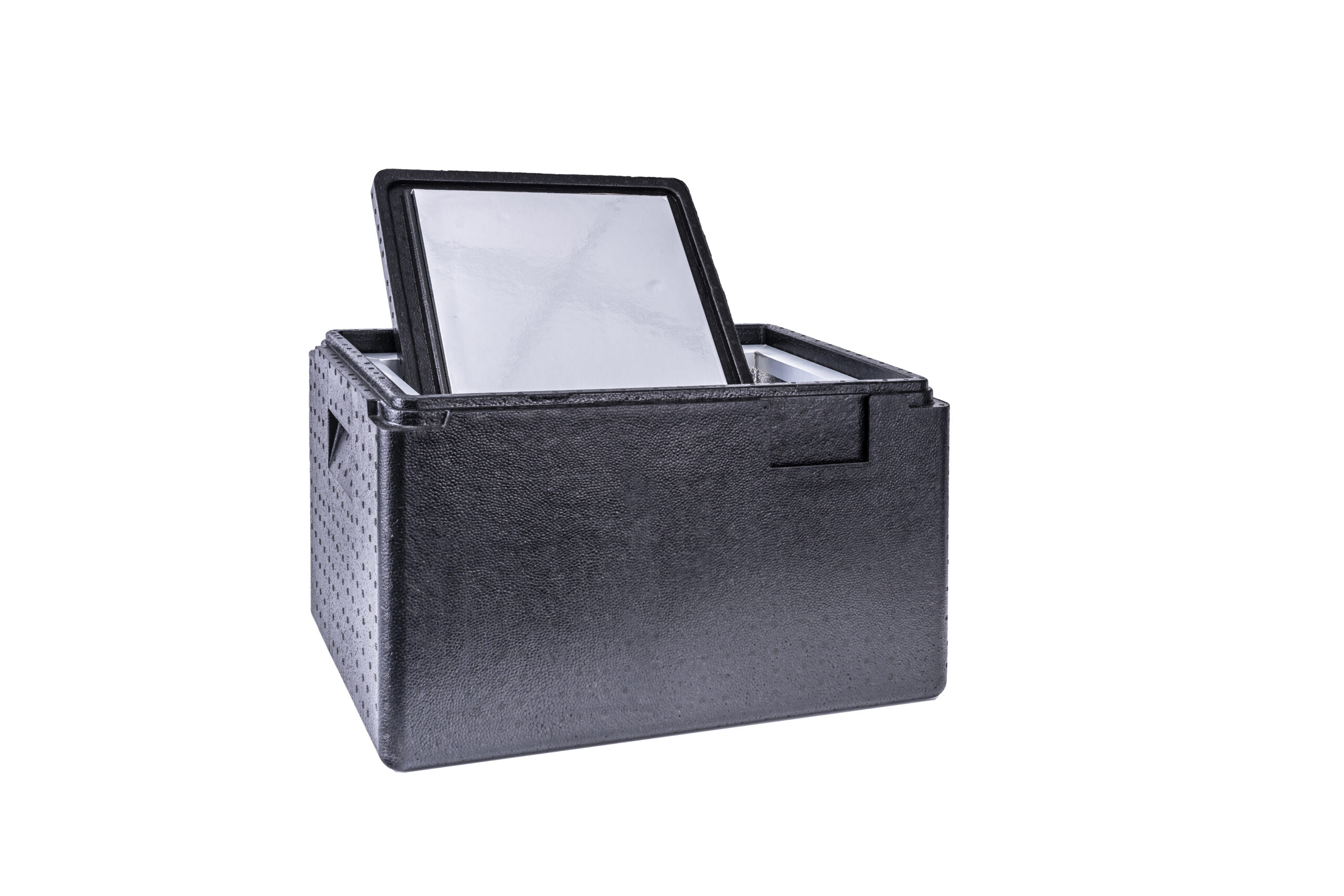
Last updated: January 9, 2026
If you ship temperature-sensitive chemicals, choosing an insulated box vendor chemical supplier teams can rely on is a safety decision, not just a sourcing task. Your goal is not “the coldest box.” Your goal is the most predictable outcome for your lane, payload, and rules. Dry ice shipments also require clear marking and net weight visibility in many workflows, so packaging choices must support compliance—not fight it.
This article will help you:
Define your lane profile so an insulated box vendor chemical supplier can quote the right design
Spot the 3 most common temperature failures in chemical shipping lanes
Compare EPS, EPP, PU, and VIP insulation options using practical trade-offs
Validate and document performance with lane-like thermal testing standards (7D/7E concepts)
Choose based on total landed cost instead of unit price
Prepare for 2026 packaging pressure in sustainability and documentation (including EU timing signals)
A strong insulated box vendor chemical supplier helps you keep products inside a safe temperature band long enough to survive real shipping chaos. That reduces rejects, reships, and customer escalations. It also lowers “hidden” cost like emergency replacements and expedited freight.
Think of insulation like a winter coat for your shipment. Thickness helps, but fit and consistency matter more. A right-sized design keeps coolant stable, prevents bottle movement, and reduces thermal drift.
What “repeatable protection” looks like in real life
Repeatable protection means the vendor can produce the same build quality across batches and peak seasons. You should expect documented controls for material specs, tolerances, and change management.
| Repeatability lever | What it controls | What you gain | What it means for you |
|---|---|---|---|
| Material specs | Foam density, liners, adhesives | Stable thermal behavior | Fewer surprise failures |
| Change control | BOM swaps, supplier changes | Predictable re-qualification | Less “silent drift” risk |
| Pack-out SOP | Steps + photos | Fewer human errors | Faster training |
| Validation file | Profiles + results | Easier audits | Cleaner approvals |
Practical tips you can use this week
Treat your vendor like a risk partner: ask “how do you control variation?” before you ask price.
Require pack-out photos: they prevent “lab success, field failure.”
Standardize sizes early: fewer SKUs means fewer packing mistakes.
Field example: A specialty chemical supplier reduced warm-arrival complaints after switching to a right-sized shipper and tightening pack-out steps.
What temperature risks should your insulated box vendor chemical supplier design for?
Most temperature failures fall into three patterns. If you name the pattern, your insulated box vendor chemical supplier can design faster and more accurately.
| Temperature risk | What it looks like | Common cause | The practical impact on you |
|---|---|---|---|
| Heat spike | Fast jump above spec | Hot dock, sun, tarmac time | Rapid degradation, rejection |
| Slow drift | Creeps out of spec over hours | Weak insulation, long duration | Shorter shelf life, reships |
| Freeze damage | Drops below minimum | Too much coolant, wrong layout | Cracked bottles, phase change |
How to reduce each risk without “overbuilding”
Heat spike: improve insulation efficiency and reduce void space (less air swapping).
Slow drift: add hold time with better materials or smarter coolant placement.
Freeze damage: use separators and “never-freeze” layouts (don’t park packs against bottles).
Simple rule: “Cannot freeze” is a more useful requirement than “keep cold.”
How do you define your lane profile before you call an insulated box vendor chemical supplier?
You get better quotes—and better performance—when you walk into the first call with a lane profile. Think of it as your product’s “shipping passport.”
A 5-minute lane worksheet (copy/paste)
Write one sentence per line:
Target temperature band: 2–8°C / 15–25°C / frozen / other
Transit time: typical vs worst case (include weekends)
Handoffs: pickup → hub → airport → customs → last mile
Ambient extremes: hottest and coldest months on this lane
Payload sensitivity: “never freeze,” “avoid heat spikes,” or “robust”
Why this worksheet saves money
Without lane clarity, the insulated box vendor chemical supplier must guess. Guessing usually means oversized cartons, too much coolant, and higher dimensional weight charges.
Dimensional weight is the carrier fee based on package size, not just weight. A bigger box can cost more even if it is light.
Which materials should an insulated box vendor chemical supplier offer in 2026?
No single insulation material wins every lane. A capable insulated box vendor chemical supplier offers multiple options and explains trade-offs in plain language.
EPS vs EPP vs PU vs VIP (practical comparison)
| Material | What it is (simple) | Best for | Limitation | What it means for you |
|---|---|---|---|---|
| EPS | Disposable foam cooler | Short lanes, low cost | Can crack, more waste | Cheap, but fragile |
| EPP | Tough reusable foam | Reuse loops, rough handling | Higher upfront | Fewer breakages |
| PU foam | Dense high-insulation foam | Longer holds | Harder recycling | Strong hold time |
| VIP hybrid | “Thermos-like” insulation | Long lanes, tight size limits | Needs careful design | Smaller box, lower DIM |
Practical tips for choosing materials
If breakage is your pain: lean toward EPP or reinforced corners.
If hold time is your pain: explore PU or VIP hybrid designs.
If freight cost is your pain: ask for right-sizing and thinner-wall options.
Real-world result: Many teams cut freight spend after reducing outer carton size while keeping the same temperature hold time.
What compliance support should your insulated box vendor chemical supplier provide?
Compliance is how you avoid holds, refusals, and rework. Packaging does not replace training or documentation, but it should support your workflow.
Dry ice (UN1845): markings and net weight
For air and many carrier processes, you typically need clear identification and net weight visibility for dry ice shipments. Acceptance checklists and carrier job aids commonly emphasize: proper shipping name, UN1845, and net quantity in kilograms, plus venting so CO₂ gas can escape.
Dry ice venting and safety (plain language)
Dry ice turns into gas. If gas cannot vent, pressure can build. Your insulated box vendor chemical supplier should provide venting instructions and designs that avoid “sealed box” mistakes.
Compliance questions to ask (fast, specific)
| Compliance topic | Ask your vendor | What “good” looks like | Impact on you |
|---|---|---|---|
| Dry ice labeling | “Do you provide label fields?” | UN1845 + net kg space | Fewer carrier holds |
| Vented design | “How does CO₂ vent?” | Clear vent method + SOP | Lower pressure risk |
| UN-rated packaging (if needed) | “Can you supply test docs?” | Documented markings | Fewer rejected DG shipments |
| Pack-out documentation | “Do you provide photos?” | 1-page SOP | Faster training |
Important: Rules vary by mode, quantity, and classification. Confirm your final requirements with DG-trained staff.
How do you validate performance with an insulated box vendor chemical supplier?
Validation turns “it should work” into “we can prove it works.” A professional insulated box vendor chemical supplier talks about profiles, payload modeling, and pass/fail rules.
Use lane-like thermal profiles (7D/7E concepts)
ISTA’s thermal standards describe structured approaches for temperature-exposure testing, and ISTA highlights 7E profiles as a newer baseline for parcel thermal testing discussions.
You do not need to memorize standards. You need a test that matches your lane reality: duration, ambient extremes, and handling delays.
What a clean validation report should include
Lane assumptions: duration, season, worst-case holds
Pack-out photos: coolant placement, separators, closures
Pass/fail rule: “stay 2–8°C for 72 hours”
Graphs + summary: simple, readable, audit-friendly
Practical validation tips (that prevent re-testing)
Start with one lane: prove success once, then expand.
Lock coolant spec: swapping gel packs later can break performance.
Test packing tolerance: what happens if assembly runs 10 minutes late?
Field lesson: Many failures come from pack-out variation, not insulation thickness.
How do you control total cost with an insulated box vendor chemical supplier?
Unit price is not total cost. Total cost is what you spend to deliver in-spec product, repeatedly.
The simple cost model (use this in procurement)
| Cost bucket | What drives it | What to optimize | What it means for you |
|---|---|---|---|
| Packaging | shipper + coolant + accessories | standard sizes | fewer SKUs |
| Freight | weight + dimensional weight | right-sizing | lower parcel cost |
| Labor | pack-out minutes | simpler steps | faster training |
| Failure | reships + claims + expedites | validation + SOPs | lower hidden cost |
Questions that reveal real cost
“How does your shipper size change dimensional weight fees?”
“What failure rate did your design reduce on similar lanes?”
Simple truth: One failed shipment can cost more than weeks of “premium” packaging.
What should be in your insulated box vendor chemical supplier RFP?
A strong RFP forces apples-to-apples quotes. It also protects you from vague promises.
Copy-paste RFP checklist
Ask every insulated box vendor chemical supplier to answer these in writing:
Lane + duration: best and worst case (include weekends)
Target band + “never freeze” constraints
Outer dimensions + total shipped weight
Thermal proof: lane-like results + pass/fail summary
Physical survivability: drop/vibration/compression approach
Pack-out SOP: steps + photos
Change control: how BOM changes are managed
Lead time + peak capacity plan
What is excluded: tooling, cartons, coolant, labels, accessories
Vendor audit scorecard (interactive decision tool)
Score each line 1 (weak) to 5 (excellent). 24+ is a strong shortlist.
Thermal proof (lane-like results)
Pack-out clarity (new packer can succeed)
Compliance support (dry ice/DG checklists when needed)
Cost transparency (freight + failure cost discussion)
Supply reliability (peak season planning)
Sustainability documentation (material declarations)
2026 trends: what’s changing for insulated box vendor chemical supplier decisions?
In 2026, buyers increasingly expect two things in the same packet: performance proof and sustainability proof.
Trend 1: EU packaging pressure becomes operational
The European Commission’s timeline shows PPWR entering into force on 11 February 2025 with a general application date of 12 August 2026, pushing more documentation and packaging design scrutiny.
Trend 2: “One-page SOPs” replace long manuals
Teams want pack-out instructions that reduce errors fast. Photos and checklists outperform long PDFs because packers actually use them.
Trend 3: Validation files become a competitive edge
If two shippers perform similarly, the winner is the insulated box vendor chemical supplier who can prove performance, control changes, and support your rollout.
Common questions (FAQ)
Q1: How many times should I use “insulated box vendor chemical supplier” on a page? Use it naturally in headings and key sections, but keep the page readable. Helpful clarity beats repetition.
Q2: Do I need UN-rated packaging for every chemical shipment? Not always. It depends on classification and mode. Confirm requirements with DG-trained staff before launch.
Q3: What must be marked when shipping dry ice (UN1845)? Common requirements include the proper shipping name, UN1845, and net dry ice quantity in kilograms, plus venting.
Q4: What’s the fastest way to reduce temperature excursions? Standardize pack-out steps, use visual SOPs, and validate a lane-based configuration before scaling.
Q5: Should I choose reusable or disposable shippers? Choose based on reverse logistics reality. Reuse works when returns and cleaning are reliable and economical.
Q6: How many pilot shipments do I need before scaling? Often 30–120 monitored shipments reveals patterns, especially across temperature extremes.
Summary and recommendations
Choosing the right insulated box vendor chemical supplier is about predictable temperature control, clean compliance support, and low-friction operations. Start with a simple lane profile, then compare materials using real constraints like handling risk and dimensional weight. Validate with lane-like tests and clear pass/fail rules. Finally, choose based on total landed cost and failure risk, not unit price.
Your next step (clear CTA)
This week, write one lane profile for your highest-risk shipment. Then ask two vendors for the same three items: prototype, pack-out SOP, and validation summary. If a vendor cannot explain design choices in plain language, keep shopping.
About Tempk
At Tempk, we build insulated packaging programs for temperature-sensitive shipping that are easy to run and hard to break. We support chemical supplier teams with right-sized shipper designs, repeatable build quality, and practical pack-out SOPs that reduce mistakes. We focus on performance you can document, not marketing claims.
Next step: Share your lane profile and target temperature band, and we’ll help you shortlist shipper options and a pilot plan for 2026.
How to Choose an Insulated Box Supplier in 2026?

If you’re choosing an insulated box supplier in 2026, don’t start with “72-hour” labels or the cheapest quote. Start with your lane reality: temperature band, hold time, seasonal extremes, and handling risk. A well-designed shipper can protect product for 48–120 hours—but only when the box, coolant, and pack-out steps match your route. This guide gives you a practical way to shortlist suppliers, reduce temperature excursions, and control total landed cost.
This guide answers for you
Which materials (EPS, EPP, PU, VIP, fiber) fit your risk, budget, and sustainability goals
What “pre-qualified” should mean when you evaluate an insulated box supplier
How to compare total cost (DIM weight, labor, claims), not just unit price
A 5-minute scorecard to shortlist the best insulated box supplier for your business
What do you really need from an insulated box supplier?
You need an insulated box supplier that solves your lane, not the one with the thickest walls. Think of shipping insulation like a winter coat. A coat that is warmer is useless if it doesn’t fit. Your product label, route duration, and handling decide the fit.
When you give a supplier a clear lane profile, you cut trial-and-error and shorten qualification time. You also avoid overpackaging that inflates freight charges and waste.
Build a one-page lane profile (your “packing recipe”)
| Lane Profile Item | What to Write Down | Simple Example | What It Means for You |
|---|---|---|---|
| Target temperature band | Allowed internal range | 2–8°C / -20°C | Drives coolant and pack-out rules |
| Minimum hold time | Transit + buffer | 72h + 24h buffer | Protects you from delays |
| Seasonal extremes | Worst ambient exposure | Summer 35°C / Winter -10°C | Defines test profiles to request |
| Handling risk | Where it gets rough | Parcel + last-mile | Drives outer carton + inserts |
Practical tips you can use today
Pharma: write the exact label band and any excursion limits (time + degrees).
Food: define “still safe” versus “still premium quality”—pack-out can change.
Remote lanes: add a 24-hour buffer before you compare any insulated box supplier.
Real-world example: A clinic shipping biologics reduced excursions after adding a buffer and right-sizing the pack-out. Training got simpler, and errors dropped.
Which insulated box supplier materials and coolants fit your lane?
A strong insulated box supplier helps you choose materials and coolant based on heat flow, size, and handling—without burying you in lab jargon. In plain terms, insulation works like a thermos: better insulation slows temperature change, so your coolant lasts longer.
Material options (in plain language)
EPS (expanded polystyrene): low cost, common, usually single-use.
EPP (expanded polypropylene): tougher, reuse-friendly, handles rough networks.
PU foam (polyurethane): strong insulation in many shapes, often slimmer walls.
VIP (vacuum insulated panels): high performance per thickness, smaller boxes, higher care.
Fiber composites: lighter sustainability story, performance depends on design and pack-out.
Material match table you can use immediately
| Material | Best For | Trade-offs | What It Means for You |
|---|---|---|---|
| EPS | Cost-sensitive, short/medium lanes | Can crack, bulkier walls | Low unit price, bigger DIM risk |
| EPP | Reuse programs, rough handling | Needs return logistics | Fewer damages, better durability |
| PU foam | Mid/long lanes needing slimmer size | Price varies by design | Often reduces size and coolant load |
| VIP | Long lanes, high-value payloads | Higher price, handling care | Smaller cube, lower DIM and drift |
| Fiber composite | Sustainability-driven lanes | Needs strict pack-out | Lighter feel, disposal clarity matters |
Coolant choice: gel packs vs PCM vs dry ice
Cooling is half the system your insulated box supplier must get right. Most failures happen when coolant is wrong or preconditioning is skipped.
| Coolant | Best For | Common Mistake | What It Means for You |
|---|---|---|---|
| Gel packs | Short to medium lanes | Not frozen long enough | Warm arrivals, inconsistent results |
| PCM (phase change material) | Tight bands like 2–8°C | Wrong melt point | Product goes too cold or too warm |
| Dry ice | Deep frozen shipments | No ventilation planning | Safety issues and carrier delays |
Practical tips you can apply
If DIM weight is killing you, ask for a smaller external cube (VIP or PU can help).
If damage rates are high, choose tougher EPP designs before buying “more insulation.”
If training varies by site, request a simpler pack-out with fewer components.
How can an insulated box supplier prove temperature performance?
A credible insulated box supplier proves performance with documented tests, clear pack-out instructions, and repeatable configurations. You’re not buying “a box.” You’re buying a system: insulation, coolant, outer carton, and packing steps.
If a supplier can’t show test evidence, you’re betting your product on marketing.
What “pre-qualified” should mean in 2026
“Pre-qualified” should mean the shipper was tested under defined temperature profiles with a defined pack-out. For temperature exposure testing, many teams reference ISTA temperature procedures (for example, ISTA Procedure 7D describes evaluating package-products under external temperature exposures).
Your proof pack (ask every insulated box supplier for this)
| Proof Item | What It Should Include | Why You Care | What It Means for You |
|---|---|---|---|
| Test summary report | Profiles, payload, coolant, pass/fail | Confirms claims are real | Faster internal approval |
| Pack-out work instruction | Photos, steps, conditioning rules | Reduces human error | Fewer field excursions |
| Bill of materials (BOM) | Exact parts + tolerances | Prevents silent swaps | Consistent outcomes over time |
| Change-control statement | Notice + approval process | Protects validated lanes | Less requalification pain |
How to read a thermal report without being a scientist
Focus on what affects your lane:
Profile used: summer vs winter, dwell time, and handoffs
Payload simulation: real payload or justified dummy load
Sensor placement: where probes were placed and why those spots matter
Pass/fail rule: what range was required, and for how long
Practical tips for performance verification
Use a three-run rule: request at least three successful tests per lane profile.
Run a small field pilot before committing to one insulated box supplier.
Ask one hard question: “Show your worst result and what you changed.”
How do you audit an insulated box supplier’s quality and compliance?
A reliable insulated box supplier is measured by consistency, not a single perfect prototype. Quality is the boring part that saves you in peak season. This is where change control, lot traceability, and basic process discipline matter.
If you use ISO-style audits, ISO 9001 is widely used as a framework for building and continually improving a quality management system.
Batch-to-batch consistency checklist
| Checkpoint | Simple Acceptance Idea | Typical Risk if Missed | What It Means for You |
|---|---|---|---|
| Foam density / panel thickness | Must stay in a tight range | Faster heat leak | Shorter hold time |
| Coolant fill weight | Weight tolerance per pack | Early warm-up/freeze | Excursions and claims |
| Outer carton strength | Drop/stack rating defined | Crushed shippers | Damaged payload |
| Work instruction control | One approved pack-out sheet | Wrong packing steps | Higher human error |
| Lot coding | Boxes + coolant traceable | Slow investigations | Longer downtime |
Audit questions that reveal the truth
Ask for specifics, not promises:
“What changed in your top three products last year?”
“How do you prevent substitutes from shipping by accident?”
“Show me a real corrective action report.”
Compliance quick checks (simple, not scary)
Regulated products: ask for documentation support and audit-ready files.
Dry ice lanes: confirm labeling guidance and safe handling instructions.
Sustainability claims: request material declarations and end-of-life guidance by region.
How do you compare insulated box suppliers on total cost?
Unit price is the wrong anchor. A cheaper box that fails costs more than a pricier one that works. Total cost includes freight, labor, claims, and brand risk. A good insulated box supplier helps you model all four.
Total cost breakdown table
| Cost Bucket | What Drives It | How to Reduce It | What It Means for You |
|---|---|---|---|
| Unit price | Material, volume, supplier margin | Standardize SKUs, commit volume | Lower per-box cost |
| Freight (DIM) | Box outer dimensions | Right-size, use VIP or PU | Smaller cube = lower DIM |
| Labor | Pack-out complexity | Fewer parts, clearer SOPs | Faster packing, fewer errors |
| Claims | Excursions, damage | Better testing, tougher design | Fewer refunds and complaints |
| Brand risk | Customer experience | Cleaner unboxing, less mess | Better reviews and retention |
Practical tips for cost control
Ask for a DIM-weight comparison: two suppliers may quote the same unit price but ship different cube sizes.
Track claims by SKU: one configuration may drive most of your losses.
Run a labor study: time your packers with each supplier’s pack-out and compare.
5-minute supplier scorecard
Use this table to compare 2–3 shortlisted insulated box suppliers. Score each on a 1–5 scale. The highest total usually wins, but weight the categories that matter most to your operation.
| Criterion | What to Check | Score (1–5) | What It Means for You |
|---|---|---|---|
| Lane fit | Does the supplier’s standard range cover your temperature band and hold time? | Faster qualification | |
| Test evidence | Can they show test reports, pack-out instructions, and BOM? | Lower risk of surprises | |
| Total cost | Unit price + DIM + labor + claims | True landed cost | |
| Quality consistency | Change control, lot coding, audit history | Reliable at scale | |
| Sustainability | Material declarations, reuse options, end-of-life guidance | Meets your ESG goals | |
| Service | Response time, technical support, flexibility | Easier to work with |
2026 trends and regulatory updates
The cold chain packaging market continues to grow. Grand View Research describes the global cold chain packaging market as valued at USD 26.89 billion in 2024, with projected expansion driven by pharmaceutical and food logistics.
For EU-bound shipments, the Packaging and Packaging Waste Regulation is a major forcing function. Public EU timelines describe 12 August 2026 as a general application date for key provisions, so suppliers should help you prepare with material declarations and labeling-ready documentation.
Latest changes to watch
Lane-based validation by default: fewer generic “hours” claims, more profile-based testing
Smaller, higher-performance shippers: better insulation per thickness to reduce DIM
Simpler pack-outs: fewer parts to reduce training time and mistakes
More reuse where realistic: EPP loops expand in dense return networks
Clear end-of-life guidance: more bids request disposal instructions by region
A quick note on durability testing
Thermal performance is not the same as surviving distribution hazards. Many teams use distribution-style test plans to uncover crushing, vibration, and drop failure points. ASTM describes D4169 as a practice that guides evaluation of shipping units using a uniform system with test levels representative of actual distribution.
Frequently asked questions
Q1: How do I choose an insulated box supplier for 2–8°C shipping? Choose an insulated box supplier that can show summer and winter test reports, a clear pack-out, and written change control. Run a small pilot and train packers with photos. If the supplier can’t explain the “why” in plain words, treat it as risk.
Q2: What hold time should I request from an insulated box supplier? Request your real transit time plus a buffer, often 24 hours. The right hold time depends on seasonality, delays, and how costly an excursion would be. Always compare suppliers using the same lane profile and buffer.
Q3: Are VIP shippers always better than EPS shippers? Not always. VIP can cut size and improve long-duration performance, but it costs more and needs careful handling. Ask your insulated box supplier to model both options using your payload and freight pricing, then pilot the winner.
Q4: How many configurations should I standardize with my insulated box supplier? Start small. Many operations cover most lanes with a few sizes per temperature band. Fewer SKUs usually means fewer packing mistakes, faster training, and cleaner purchasing control across multiple sites.
Q5: What documents should an insulated box supplier provide for qualification? At minimum: a test summary report, pack-out instructions with photos, a bill of materials, and a change-control statement. Those four items prevent most surprises. Without them, performance often drifts over time.
Q6: How can I reduce customer complaints about cold chain packaging? Right-size the box, reduce mess, and make unpacking simple. Ask your insulated box supplier to reduce empty space and improve presentation. A cleaner unboxing experience often improves reviews without sacrificing temperature control.
Q7: Can an insulated box supplier help with sustainability goals? Yes, if they offer realistic reuse options, material declarations, and end-of-life guidance by region. The best suppliers help you reduce material through right-sizing first, then offer reuse or recyclable options where they truly work.
Summary and recommendations
The right insulated box supplier is the one that matches your lane profile, proves performance with test reports, and delivers consistent quality at scale. Start by defining your temperature band, hold time, seasonal extremes, and handling risks. Then demand a proof pack (test report, pack-out, BOM, change control) and compare quotes by total cost, not unit price.
Next step: shortlist 2–3 suppliers, run a controlled pilot, score them with the 5-minute scorecard, and standardize the winning configurations for scale.
About Tempk
At Tempk, we build cold chain packaging as a system, not a single box. We combine insulated boxes with gel packs, dry ice options, and pack-out instructions that are designed for real shipping lanes. We focus on repeatable performance, consistent manufacturing, and documentation you can use for audits and onboarding.
Call to action: Share your lane profile (temperature band, hold time, and seasonal extremes). We can recommend a configuration and a simple pilot plan to qualify with confidence.
What should an insulated box quotation include in 2026?

Last updated: January 9, 2026
An insulated box quotation should tell you more than a unit price. It should show what you’re buying, what it protects, and what assumptions make it “work.” In 2026, many buyers are shifting to performance-based quoting, because two boxes can look identical but perform very differently. In many builds, insulation materials can account for about 40–55% of total cost, so small spec changes move price fast.
This article will help you:
Read an insulated box quotation line-by-line (so nothing is “assumed”)
Control the biggest insulated box quotation cost drivers (without cutting protection)
Copy/paste an accurate insulated box quotation RFQ template
Compare insulated box quotations using a simple scorecard
Plan for 2026 trends that affect cost, compliance, and lead time
Direct answer: A usable insulated box quotation includes the build, the performance target, and the assumptions behind that target. If the assumptions are missing, you don’t have a “quote.” You have a guess. You should see materials, inner/outer dimensions, payload limits, refrigerant type and quantity, expected hold time under a defined profile, MOQ tiers, lead time, and what’s included vs excluded.
Expanded explanation: Think of a quotation like an insurance plan. The price is meaningless without coverage details. If one supplier assumes summer heat, a heavier payload, and a stricter pass/fail rule, their quote will be higher. You want all suppliers pricing the same “coverage,” so you can negotiate fairly and avoid failures later.
The line items you should demand (not assume)
| Quote line item | What suppliers may write | What you should clarify | Practical meaning for you |
|---|---|---|---|
| Box material | EPS / EPP / VIP / liner kit | Grade, density, wall thickness | Durability, insulation, damage risk |
| Dimensions | “Standard size” | Inner + outer dimensions | Freight cost can change dramatically |
| Payload | “Up to X kg” | Product format + density | Impacts refrigerant need and stability |
| Hold time | “48–72 hours” | Profile, ambient range, pass/fail rule | Prevents “paper performance” |
| Temperature band | “2–8°C” | Allowed excursion + no-freeze rule | Prevents freeze damage and complaints |
| Refrigerant | Gel / PCM / dry ice | Quantity + placement + conditioning | Drives real cost and compliance |
| Evidence | “Validated” | Method + scope + report type | Proof you can defend in QA reviews |
| Packout | “Assembly included” | Diagram + SOP steps | Consistency across teams and sites |
| Inclusions | “Full set” | Tape, separators, labels, cartons? | Avoids surprise add-ons |
| MOQ & breaks | Tiered pricing | 100 / 500 / 2,000 pricing | Helps budgeting and negotiation |
| Lead time | “2–4 weeks” | Sample vs mass production | Protects your launch schedule |
| Trade terms | EXW / FOB / DDP | Which Incoterms version | Ensures “apples-to-apples” cost |
Practical tips you can use today
Ask for assumptions in writing: ambient range, duration, payload, and pass/fail limits.
Request a “what’s excluded” section: freight, refrigerant, labels, testing, and assembly.
Force comparability: every supplier quotes the same lane and same performance target.
Real case: A food shipper thought they were buying “48-hour” protection. Once summer lane assumptions and payload mass were clarified, the “cheap” quote stopped being cheap.
Why does an insulated box quotation vary so much?
Direct answer: Big gaps usually mean suppliers imagined different shipments. When your request is vague, the supplier pads risk with thicker insulation, more refrigerant, or extra services. That creates quotes you can’t compare.
Expanded explanation: Quoting without lane details is like pricing a taxi ride without a destination. You’ll get three numbers, but they won’t describe the same trip. Most differences come from these three buckets:
Build & materials: what the shipper is made of and how it’s assembled
Performance proof: testing, reports, packout instructions, validation scope
Service scope: samples, customization, inventory, change control, training
A 2-minute “quote gap” scan
If the price gap is >20%, check outer dimensions and refrigerant quantity first.
If lead times differ, ask what is in stock vs what must be tooled.
If performance claims look similar, ask what counts as a fail (one spike or average?).
Insulated box quotation cost drivers you can control
Core answer: You can’t control resin prices or labor rates. But you can control how clear your RFQ is and how much waste you ship. Tight inputs reduce “padding” and prevent you from paying for protection you don’t need.
Plain-language breakdown: The easiest savings are usually in right-sizing and matching hold time to real transit, not in cutting insulation blindly. Even your transit-duration assumption can swing price noticeably (often around ±15%).
| Cost driver | What changes the cost | Typical quote impact | What it means for you |
|---|---|---|---|
| Box size | Internal volume + void space | Bigger = higher | Oversizing burns refrigerant and freight |
| Hold time | 24h vs 72h + delay buffer | Longer = higher | Extra hours can force a higher tier |
| Temperature band | 2–8°C vs frozen | Tighter = higher | Narrow windows need better control |
| Lane realism | summer peak + winter low | Extremes = higher | “Average lanes” often under-protect you |
| Proof level | claim vs report | More proof = higher | Fewer deviations later |
| Reuse plan | single-use vs returnable | depends | Only wins if returns are reliable |
| Outer dimensions | dimensional weight | can dominate | Freight can beat materials cost |
EPS vs EPP vs VIP: what changes your quote most?
| Build style | Strengths | Tradeoffs | Best for you when… |
|---|---|---|---|
| EPS molded cooler | low unit price, common | bulky, can crack | short lanes, low-risk products |
| EPP reusable shipper | durable, reusable | higher upfront | frequent shipping + return loop |
| VIP-enhanced shipper | strong insulation, long hold | highest unit cost | long lanes, extreme seasons, tight size |
| Liner kit in carton | easy storage, light | limited performance | mild lanes, speed matters |
| Pallet cover system | stabilizes pallets | not for parcels | pallet shipping with lane consistency |
Practical cost moves (safe and repeatable)
Right-size first: less air means less refrigerant and less freight volume.
Standardize sizes: custom tooling and SKU sprawl inflate cost and lead time.
Ask for 3 volumes: 100 / 500 / 2,000 units to make pricing usable.
Request two versions: a “lean” quote and a “safe” quote with buffer.
Real case: A seafood distributor reduced cost by 18% after switching from “72-hour by habit” to validated 48-hour performance that matched real delivery time.
How to request an accurate insulated box quotation (RFQ template)
Direct answer: You get an accurate insulated box quotation when you provide real shipping conditions. The supplier stops guessing, and you stop paying for safety margins you didn’t ask for.
What to share (minimum inputs):
Temperature range (example: 2–8°C, “must not freeze,” or frozen)
Door-to-door time + delay buffer
Payload size, weight, and format (liquid, gel, solid)
Lane details (origin → destination), seasonality, and handling intensity
Shipping mode (air, parcel, ground, pallet) and service expectations
Decision tool: define your target in 90 seconds
Answer these and paste them into your RFQ:
What is your target temperature range and non-negotiables (like “no freeze”)?
What is your true door-to-door time, plus your delay buffer?
What is your worst-case summer and winter ambient risk?
What is the payload mass and product format?
Do you need a report for customers, QA, or regulators?
Practical tips to speed your quote
Ask for “good / better / best” options, not one single number.
Ask for delivered cost lines: box + refrigerant + accessories + assembly.
Ask for outer dimensions + ship weight to estimate freight early.
How to compare insulated box quotations fairly (scorecard + quick math)
Straight answer: Compare performance per dollar, not unit price alone. A cheaper insulated box quotation can become the most expensive option after spoilage, reshipments, and freight.
Apples-to-apples checklist:
Same payload and internal packaging
Same duration target and buffer
Same hot/cold assumptions
Same pass/fail rule
Same included items (box-only vs full kit + assembly)
Insulated box quotation comparison scorecard
| Category | 0 points | 1 point | 2 points |
|---|---|---|---|
| Assumptions documented | Missing | Partial | Clear + written |
| Performance evidence | None | Claim only | Method + report |
| BOM clarity | Vague | Mostly clear | Fully itemized |
| Supply reliability | Unclear | Stated | Stated + contingency |
| Quality & traceability | Missing | Basic | Documented system |
| Packout guidance | None | Basic | Detailed + training |
How to use it: A quote scoring 10–12 is usually safer than one scoring 5–7, even with a higher unit price.
Quick sanity check (simple buyer math)
Landed cost = unit price + refrigerant + accessories + assembly + freight
Cost per protected hour = landed cost ÷ validated in-range hours
This keeps the negotiation honest, because it ties spend to verified protection.
Hidden landed-cost traps: freight, Incoterms, and “excluded” items
Direct answer: The biggest hidden cost is often freight. Outer dimensions and ship weight can swing landed cost more than materials. If the quote says “EXW” and you need “DDP,” you’re not comparing the same thing.
Common exclusions that inflate your real cost
| Exclusion | Why it matters | What to ask |
|---|---|---|
| Freight | Can exceed material cost | Ask for DDP or delivered pricing |
| Refrigerant | Gel/PCM adds cost and weight | Ask for full-kit pricing |
| Accessories | Tape, labels, separators | Ask for itemized BOM |
| Assembly | Labor at your site | Ask for packout labor estimate |
| Testing | Validation reports | Ask if included or extra |
Practical tip
Ask every supplier to quote the same Incoterms and the same “full kit” scope. That makes the comparison real.
What’s changing in 2026? Trends that affect your insulated box quotation
Direct answer: Two forces are reshaping insulated box quotations: (1) cost pressure from materials and logistics, and (2) sustainability expectations. Many buyers are also reducing dry ice dependence where possible, and asking for clearer documentation up front.
Latest developments to watch
More performance-based pricing: you pay for validated protection, not just dimensions
More reuse where returns work: reusable systems win when reverse logistics are reliable
More scrutiny on materials: recyclability, labeling, and substances documentation matter more
More dry ice pressure: cost, airline handling, and documentation requirements
More standardized test profiles: making comparisons easier when assumptions are written
Market insight: Cold chain packaging demand continues to grow, and more buyers are focusing on total cost of ownership instead of unit price. That pushes suppliers to itemize and justify costs more clearly.
Insulated Box Quotation Readiness Score (interactive)
Add your points. Then choose how detailed your next insulated box quotation request should be.
Q1: How strict is your temperature window?
Wide (15–25°C): 1
Medium (2–8°C): 3
Very strict (must not freeze / frozen): 5
Q2: How long is door-to-door time?
≤24 hours: 1
24–48 hours: 3
≥72 hours or frequent delays: 5
Q3: How harsh are your lanes?
Mostly mild climates: 1
Hot summers or cold winters: 3
Both extremes or many handoffs: 5
Q4: How costly is one failure?
Low: 1
Medium: 3
High (loss, compliance impact, customer risk): 5
Q5: How many shippers do you send monthly?
<100: 1
100–1,000: 3
>1,000: 5
Score meaning:
5–9: Start with standard options and a crisp RFQ.
10–17: Request semi-custom tuning and proof data.
18–25: Request a custom insulated box quotation with lane profiles and validation scope.
Frequently asked questions about insulated box quotation
Q1: What makes an insulated box quotation accurate? Clear temperature range, duration, payload, and realistic hot/cold assumptions—plus a stated delay buffer.
Q2: Why do insulated box quotations vary so much? Because suppliers assume different lanes, payloads, proof levels, and included items. Missing inputs create padding.
Q3: Is a higher insulated box quotation always better? No. Higher only helps when it matches your real lane risks and includes evidence you actually need.
Q4: Can I negotiate insulated box pricing without increasing risk? Yes. Standardizing sizes, reducing void space, and committing volume tiers often lowers cost safely.
Q5: What is the biggest hidden cost in comparing quotations? Freight. Outer dimensions and total ship weight can change landed cost more than materials.
Q6: How often should I re-quote? At least yearly, and anytime your lane, payload, seasonality, or compliance requirements change.
Summary and recommendations
A strong insulated box quotation is a performance-based offer, not a number on page one. Define your lane, payload, temperature band, and hold time first. Then demand itemized scope and written assumptions so quotes are comparable. Use the scorecard to rank evidence, BOM clarity, and reliability—not just unit price. Finally, optimize by cutting waste (void space and freight), not protection.
Your next step (simple action plan)
Copy the RFQ template and fill it out today.
Send it to 3 suppliers and request the same Incoterms and the same assumptions.
Ask for three volume tiers and a “lean vs safe” option set.
Score each quote, then run a pilot shipment before scaling.
About Tempk
Tempk (Shanghai Huizhou Industrial Co., Ltd.) was established in 2011 and is headquartered in Shanghai. We provide temperature-controlled packaging products for food and pharmaceutical cold chain logistics, including gel ice packs, dry ice packs, insulated boxes, insulated box liners, and thermal bags. Our focus is simple: clear assumptions, itemized quotations, and performance you can validate.
Call to action: Share your lane (origin → destination), payload, temperature target, and hold time. We’ll help you turn that into an insulated box quotation request that is clear, comparable, and procurement-ready.
How to Choose the Right Insulated Box Producer in 2026?
Last updated: January 2026
If you’re picking an insulated box producer, the “right” choice is the one that can prove performance, consistency, and compliance at scale—not the one with the nicest brochure. In 2026, you should expect verified thermal data, stable supply, customization, sustainability, and better traceability.
One practical benchmark: reusable solutions often target 20–100+ cycles, and lane-matching design choices can cut temperature drift dramatically over multi-day routes.
This article will help you:
Validate insulated box producer performance claims using measurable thermal metrics
Reduce total cost by comparing lifecycle value, not unit price
Avoid risk with food and pharma insulated boxes using clear documentation
Choose materials for reusable insulated boxes and eco-friendly cold chain packaging
Use a simple decision tool to shortlist an insulated box producer fast
What Does an Insulated Box Producer Do for You?
An insulated box producer doesn’t just “make boxes.” They design, test, manufacture, and scale thermal packaging so your product stays in range when time, weather, and handling try to break your plan.
If they miss small details—like closure fit, wall stability, or repeatable molding—you pay for it through spoilage, complaints, and rework.
What “good” looks like in plain terms
A strong insulated box producer helps you get three predictable outcomes:
Hold time you can trust for your real lanes
Repeatable quality across production batches
Clear documentation that reduces onboarding and audit friction
How Can an Insulated Box Producer Prove Thermal Performance?
A credible insulated box producer should show you test results that look like engineering, not marketing. Expect simulated lanes, multi-point probes, and repeatable protocols that match your shipping reality.
You want evidence of repeatability across batches, not a single “hero test.”
The thermal metrics you should request (and why)
Ask your insulated box producer for a simple report that includes metrics like these:
| Performance focus | What to ask for | What it means for you |
|---|---|---|
| Heat gain | °C/hour (repeatable) | Predictable delivery windows |
| Hold time | Hours vs your lane target | Fewer temperature excursions |
| Closure integrity | Leak check pass/fail | Lower spoilage risk |
| Reusability | Cycles achieved in real use | Lower cost per shipment |
These are the same practical indicators top producers use to translate design into outcomes.
Practical tips you can apply today
Short lanes (same/next day): Consider thinner walls with higher density to reduce bulk
Long lanes (2–5 days): Add thickness or hybrid insulation to extend hold time
Return/reuse loops: Choose durable shells to protect ROI across cycles
Real-world example: One seafood shipper aligned wall thickness to route duration and cut heat gain nearly in half over 48 hours.
Which Materials Should Your Insulated Box Producer Recommend?
Material choice is where many projects quietly fail. The right insulated box producer recommends materials based on your lane, handling, and return model—not trends.
Common insulation options in 2026
| Material | Strength | Thermal stability | Your practical benefit |
|---|---|---|---|
| EPS foam | Lightweight | Moderate | Low-cost, single-use lanes |
| EPP | High impact | Stable | Reusable, tough handling |
| PU foam | High insulation efficiency | Stable | Long holds with slimmer walls |
| Hybrid | Tunable | Optimized | Best balance for mixed lanes |
Plain-language takeaway: if handling is rough or you plan reuse, EPP usually wins. If you need long holds in a smaller footprint, PU or hybrid options are strong.
Tips that reduce cost without risking performance
Match density to abuse level (over-building burns money)
Ask for real reuse-cycle data, not assumptions
Confirm end-of-life options (recycling or take-back programs)
What Compliance and Quality Controls Should You Demand?
In 2026, “we comply” is not enough. Your insulated box producer should document material safety, cleanability, moisture resistance, and batch controls in a way that your QA team can approve quickly.
The buyer-friendly compliance checklist
Ask your insulated box producer to provide:
Food-contact and material safety declarations (as applicable to your markets)
Cleaning guidance and moisture behavior (practical, not vague)
Documented quality controls (incoming material, in-process checks, final inspection)
Why this protects you: clear documentation reduces audits, speeds onboarding, and lowers risk when you scale.
Practical case: A pharma distributor shortened onboarding by choosing a producer with pre-validated documentation, saving weeks of back-and-forth.
How Does Customization Improve Cold Chain Outcomes?
Customization is not “nice to have.” It’s how an insulated box producer turns a generic container into a lane-specific solution that reduces excursions.
High-impact customization options (that actually matter)
| Custom feature | What it changes | Benefit to you |
|---|---|---|
| Insert geometry | Airflow paths | More even temperatures |
| Lid design | Seal quality | Fewer leaks |
| Branding/labels | Identification | Faster sorting |
| Tracking slots | Data capture | Proof of compliance |
These are practical upgrades that improve consistency without over-complicating operations.
Do this before you customize
Start with payload mapping: size to product, not vice versa
Pilot before scaling: validate with a small run
Lock specs: prevent drift between batches
How Do You Compare Cost Across Insulated Box Producer Quotes?
If you compare only unit price, you will choose wrong. A better method is cost per protected shipment, which includes losses, replacements, and admin effort.
A cost comparison you can trust
| Cost driver | Low-price box | Optimized box | Your outcome |
|---|---|---|---|
| Unit price | Low | Moderate | Misleading alone |
| Loss rate | Higher | Lower | Margin protection |
| Reuse cycles | Few | Many | Lower lifetime cost |
| Admin effort | High | Low | Time saved |
Bottom line: pick the insulated box producer that reduces total cost, not the invoice line.
Interactive Decision Tool: Insulated Box Producer Fit Score (2 Minutes)
Score each item 0–2 points (0 = no proof, 1 = partial, 2 = clear proof). Add them up.
The insulated box producer provides lane-matched thermal reports (time/temperature curves).
Results are repeatable across batches (not one-off).
The producer can explain failures and fixes (not just successes).
Materials match your lane and handling model (single-use vs return).
Clear documentation supports your QA/compliance checks.
QC plan covers batch consistency and traceability.
Custom inserts/lids are available and piloted before scale.
Lead times are realistic and communicated in writing.
Sustainability plan is practical (reuse, repair, or end-of-life).
The producer can support scale without spec drift.
How to interpret your score
16–20: Strong fit—move to pilot lanes
11–15: Conditional—pilot only with clear improvement plan
0–10: High risk—keep searching for another insulated box producer
2026 Trends: What Insulated Box Producers Are Changing Now
In 2026, the best insulated box producer is becoming more “data-ready” and more lifecycle-focused. Buyers increasingly expect packaging that supports measurement, reduces waste, and improves repeatability.
Latest progress snapshot
Data-ready designs: built-in space for sensors and labels
Material efficiency: less foam for the same hold time
Circular programs: repair/refurbish options to reduce waste
Market insight: buyers now prefer producers who offer lifecycle plans, not just products.
Frequently Asked Questions
Q1: How do I verify an insulated box producer’s performance claims? Ask for lane-specific test reports with time-temperature curves, and check repeatability across batches—not a single test.
Q2: Are reusable insulated boxes worth it for small volumes? Often yes, if routes are predictable. Even a few reuse cycles can offset higher upfront cost.
Q3: What lead time should I expect from an insulated box producer in 2026? Standard designs ship faster than custom builds. Strong producers communicate timelines clearly and early.
Q4: How do I reduce box size without losing performance? Use more efficient insulation choices and optimize inserts to reduce dead air and stabilize internal temperatures.
Q5: What’s the quickest way to shortlist an insulated box producer? Use the Fit Score tool above, then pilot the top two on your most common lane before scaling.
Q6: What should I ask for in a first RFQ email? Ask for lane assumptions, thermal test summary, material options, QC plan, lead time, and reuse/circular program details.
Summary and Recommendations
A great insulated box producer proves performance with data, matches materials to your lane reality, and helps you win on lifecycle cost—not just price.
Your next step is simple: define your top lanes, set hold-time targets, request test data, and run a small pilot before scaling.
Your 3-step action plan
Map lanes (duration, ambient risk, target temperature, payload)
Shortlist using the Fit Score (aim for 16+)
Pilot with real packaging builds, then lock specs for scale
About Tempk
At Tempk, we design and manufacture insulated boxes for food and pharmaceutical cold chains, focusing on measurable performance, durable materials, and clear documentation. We emphasize practical customization and repeatable quality that supports your daily operations as you grow.
CTA: If you want a faster, lower-risk selection process, talk with our team to review your lanes and recommend an insulated box configuration that matches your 2026 requirements.
Insulated Box OEM: How Do You Choose Wisely?

Choosing an insulated box OEM decides whether your shipments stay in-range or become expensive exceptions. In 2026, temperature excursions still drive major product losses, while smarter OEM partnerships can cut risk by up to two-thirds.
A well-designed shipper can also hold temperature 48–120 hours depending on lane and payload, but only if the system is specified, built, and packed consistently.
This guide will answer for you
How an insulated box OEM delivers a repeatable shipping outcome (not “just a box”)
A quote-ready insulated box OEM RFQ template you can send today
Which materials (EPS, EPP, VIP, hybrid, fiber) fit your lane and budget
A practical checklist to audit an insulated box OEM factory (even by video)
How to validate performance with lane-based testing and clear pass/fail rules
What “sustainability in 2026” really means (proof, labeling, substances of concern)
What does an insulated box OEM actually deliver in 2026?
A strong insulated box OEM delivers a repeatable shipping outcome, not just a prototype that looks good. In plain terms, the OEM controls how the walls are built, how parts fit, and how repeatable production is at scale—because a great sample is useless if mass production drifts.
Here’s the simplest way to avoid confusion: you own the lane reality, the OEM owns the build reality.
What you control vs. what the insulated box OEM controls
| Responsibility | You (shipper owner) | Insulated box OEM | What it means for you |
|---|---|---|---|
| Product limits | Define min/max + excursion rules | Design around it | Vague limits = overdesign or failures |
| Lane conditions | Define duration + seasons + stops | Model and test to it | Real lane data reduces cost and risk |
| Build quality | Approve specs + acceptance criteria | Execute process controls | Quality is designed, not “checked later” |
| Validation plan | Approve profiles + pass/fail | Run tests or support labs | Proof must match reality |
Practical takeaway: Ask your insulated box OEM for a one-page production control plan to prevent “good samples, bad batches.”
Which specs matter most in an insulated box OEM RFQ?
If your RFQ is vague, you’ll get quotes that look cheap—but explode later through redesigns, extra refrigerant, or failed validation. Your RFQ should describe the shipping reality in a way a factory can build and a tester can validate.
The RFQ “must-have” inputs (copy/paste friendly)
Use this table as your insulated box OEM RFQ template.
| RFQ field | Example | Why the insulated box OEM needs it | What it means for you |
|---|---|---|---|
| Temperature band | 2–8°C | Drives refrigerant choice | Fewer spoilage + re-shipments |
| Hold time | 72 hours | Sets insulation thickness | Fewer “almost made it” failures |
| Summer profile | 35°C peak | Builds worst-case | Less seasonal surprise |
| Payload | 2 kg, 4× vials | Heat capacity matters | Better pass rates in testing |
| Pack-out constraint | <6 minutes | Labor + error risk | Faster fulfillment, fewer mistakes |
Tips that prevent RFQ rework
If lanes vary: create two RFQs—one “typical” and one “worst-case.”
If ambient extremes are unclear: use realistic exposure assumptions, then test worst-case.
If you ship by air: confirm labeling and booking expectations early.
Real example: A biotech team reduced redesign cycles by adding one RFQ line: “Payload must never drop below 2°C.”
Which materials should your insulated box OEM recommend in 2026?
Material choice is a three-way trade-off: thermal performance, durability, and end-of-life. The “best” pick depends on whether your biggest enemy is heat, rough handling, or disposal pressure.
Think of insulation like a winter jacket: thicker can be warmer, but it can also be heavy and expensive to ship.
Buyer-friendly material comparison
| Material | Strengths | Watch-outs | What it means for you |
|---|---|---|---|
| EPS | Low cost, good insulation | Policy pressure in some regions | Lower unit cost, more compliance planning |
| EPP | Durable, reusable | Higher upfront cost | Better total cost in return loops |
| PU foam | Strong insulation + structure | Disposal can be complex | Better long holds, fewer refrigerant bricks |
| VIP hybrid | Thin walls, high insulation | Needs protection, higher cost | More payload volume, less dim-weight risk |
| Fiber-based | Disposal-friendly in some regions | Moisture resistance varies | Good for sustainability goals if repeatable |
Simple rule: Don’t choose VIP “because it’s best.” Choose it when you must hit long durations or tight temperature bands in a small shipper.
A quick “material fit” decision tool
If you need low cost + decent insulation: start with EPS or fiber-based, then validate.
If you need reuse + toughness: prioritize EPP and plan cleaning/returns.
If you need thin walls + high performance: shortlist hybrid or VIP hybrid, then protect panels.
How do you match an insulated box OEM design to your shipping lane?
The right insulated box OEM design starts with your lane profile: duration, ambient range, payload sensitivity, and handling. If you skip this, you’ll either overpay for “extra safety” or underbuild and risk excursions.
The 5 inputs that decide real-world performance
Duration: door-to-door hours, including delays
Ambient range: hottest and coldest likely conditions
Payload: mass, starting temperature, sensitivity
Coolant strategy: gel packs, PCM, or dry ice
Pack-out workflow: how fast your team can pack consistently
Pack-out decision tool
Use this mini-tool to align quickly with your insulated box OEM.
Step 1: Choose lane duration
0–24 hours → prioritize speed + low cost
24–72 hours → prioritize repeatability + seasonal pack-outs
72–120 hours → prioritize insulation quality + validation depth
Step 2: Choose temperature mode
Chilled (2–8°C)
Controlled room temp (15–25°C)
Frozen (-20°C or lower)
Step 3: Pick risk level
Low: local, few handoffs
Medium: regional, occasional delays
High: multiple hubs, seasonal extremes
If you picked “72–120 hours” or “High risk,” ask your insulated box OEM for a lane-specific qualification plan, not a brochure test.
Practical tips that reduce failures
Define starting temperatures. A “cold” gel pack is not the same as a “frozen” one.
Train one standard pack-out. Variation is the hidden enemy of hold time.
Ask for pack-out photos + a one-page SOP to prevent drift over time.
Real example: A seafood exporter reduced spoilage by standardizing gel pack conditioning and adding a top-layer spacer to prevent direct-contact freezing.
How do you audit an insulated box OEM factory before you sign?
Audit process control, not showroom samples. A factory can look clean and still produce inconsistent batches if incoming checks and assembly controls are weak.
Audit checklist (ask these exact questions)
Incoming materials: do they record lot numbers and inspect density/thickness/defects?
Tooling and molds: do they maintain molds and document changes?
Assembly control: do they measure fit, gaps, lid compression, adhesive cure time?
In-process checks: do they sample during production, not only at the end?
Traceability: can they link a finished shipper back to raw material batches?
What to ask for (before or during the visit)
A one-page production control plan
Sample QC inspection records
Change control process for tooling or materials
Tip: If the factory can’t show you a QC form, they probably don’t use one consistently.
How do you validate insulated box OEM performance?
Validation proves the shipper works in your real-world lane—not just in a lab. Without this, you’re trusting marketing claims instead of data.
The 3 levels of validation
| Level | What it tests | When to use | What it means for you |
|---|---|---|---|
| Lab simulation | Controlled chamber profile | Early design stage | Fast feedback, not final proof |
| Field pilot | Real shipment with loggers | Before scale-up | Catches real-world surprises |
| Ongoing monitoring | Spot-checks in production | After launch | Detects drift before failures |
Key insight: Lab tests set the baseline; field pilots catch what labs miss (delays, mishandling, seasonal swings).
Pass/fail rules you should define
Temperature band: e.g., 2–8°C, no excursions below 2°C or above 8°C
Duration: e.g., 72 hours door-to-door
Ambient profile: e.g., 35°C summer, 5°C winter
Payload state: e.g., product starts at 5°C, gel packs at 0°C
Tip: Write pass/fail rules into your RFQ so the OEM designs to them—not to a generic brochure spec.
How do you manage change control with an insulated box OEM?
Change control protects your validation. Without it, a “small” material swap or mold adjustment can quietly break performance.
What triggers a change review?
Material supplier change
Density or thickness adjustment
Mold or tooling modification
Adhesive or closure change
Pack-out SOP revision
Simple change control process
OEM notifies you before the change
You assess impact (minor, major, critical)
If major or critical: re-validate before production
Document the decision and keep records
Tip: Add a “no silent changes” clause to your supply agreement.
What does “sustainability” mean for insulated box OEM in 2026?
Sustainability in 2026 is about proof, not slogans. Buyers and regulators want documented materials, clear disposal labels, and awareness of substances of concern.
The 3 sustainability questions to ask your OEM
What are the materials, and can you document them?
How should the end user dispose of this shipper?
Are there any substances of concern for food-contact or sensitive markets?
Practical sustainability checklist
| Area | What to ask | What it means for you |
|---|---|---|
| Material documentation | Can you provide a material data sheet? | Proof for audits and compliance |
| Disposal labeling | Is the disposal path clear to the end user? | Reduces confusion and complaints |
| Substances of concern | Any restricted chemicals in the product? | Avoids market access issues |
| Right-sizing | Is the shipper sized to the payload? | Less waste, lower freight |
Tip: “Recyclable” claims are only useful if the end user knows how to recycle it. Ask for clear labeling.
How do you compare insulated box OEM suppliers fairly?
Comparing OEMs on price alone is a trap. The real cost includes validation, rework, and failed shipments. Use a scorecard that weights what matters.
OEM comparison scorecard
| Criteria | Weight | What to look for |
|---|---|---|
| Thermal performance | 25% | Validated hold time for your lane |
| Production consistency | 20% | QC records, process controls |
| Traceability | 15% | Lot tracking, change control |
| Sustainability documentation | 15% | Material data, disposal guidance |
| Total cost | 15% | Unit + freight + rework + validation |
| Responsiveness | 10% | Lead time, communication, flexibility |
Tip: Ask each OEM to fill in the same RFQ template so you can compare apples to apples.
Readiness self-assessment
Use this quick self-assessment to check if you’re ready to scale with an insulated box OEM.
| Question | Yes = 1 point |
|---|---|
| Do you have a written lane profile (duration, ambient, payload)? | ☐ |
| Do you have a one-page RFQ with pass/fail rules? | ☐ |
| Do you have a pack-out SOP your team can follow? | ☐ |
| Have you piloted with monitoring data? | ☐ |
| Do you have a change control process with your OEM? | ☐ |
Score interpretation
| Score | Readiness | Recommended action |
|---|---|---|
| 0–2 | High risk | Don’t scale yet; define lane + pack-out first |
| 3–4 | Medium risk | Pilot with tight monitoring + clear SOP |
| 5 | Scale-ready | Lock spec, validate, negotiate supply terms |
CTA: If you scored 3 or less, build a one-page RFQ + pack-out SOP, then request a pilot build.
2026 latest insulated box OEM developments and trends
The biggest 2026 trend is system thinking: the market is moving from “a box that insulates” to a shipping system that is validated, right-sized, and easier to comply with.
Latest developments at a glance
More right-sized designs: less empty space, lower freight, less waste
More documentation-ready packaging: buyers want traceability, not marketing claims
More focus on substances of concern: especially for food-contact and sensitive markets
Operational note: Handling guidance keeps evolving, and the document notes updates in IATA Temperature Control Regulations (2026 edition) that reinforce rising compliance expectations.
Frequently Asked Questions
Q1: What’s the biggest mistake when choosing an insulated box OEM? Buying on unit price alone. The real cost is failed deliveries, replacements, and customer churn. Choose based on validated outcomes, documented controls, and repeatable pack-out—not a cheaper sample.
Q2: How long does insulated box OEM development take? Most projects take 4–8 weeks for design, prototyping, and testing. Timelines can be faster if you reuse existing tooling, but you should still protect time for pilot pack-out and data review.
Q3: Can “too much refrigerant” be a problem in 2–8°C shipping? Yes. Overcooling can cause freezing, and many chilled products are harmed by freezing, not just warming. Use lane-based validation and set a clear “no-freeze” rule in your RFQ and SOP.
Q4: What documents should an insulated box OEM provide for audits? At minimum: material specs, QC checks, traceability approach, and a change control process. For regulated lanes, keep validation reports organized so investigations are faster and less disruptive.
Q5: Do I need testing for every lane? Not always. Start with your highest-risk lanes first (long duration, hot season, multiple handoffs). Once the design and pack-out are stable, expand carefully with periodic verification checks.
Q6: How do I make insulated packaging more “2026-ready” for sustainability? Right-size the shipper, improve disposal label clarity, document materials, and plan ahead for stricter rules and timelines in target markets. Ask your OEM for proof, not slogans.
Summary and recommendations
A strong insulated box OEM helps you control temperature risk with a repeatable system. Define your lane and product limits first, then write an RFQ with temperature band, duration, ambient profile, payload, and pass/fail rules. Validate the full system (box + refrigerant + pack-out), then lock specs with change control.
Your next step
Pick one SKU and one worst-case lane.
Create a one-page RFQ + pack-out checklist.
Run a pilot with monitoring, fix the human failure points, then scale.
About Tempk
At Tempk, we focus on temperature-controlled packaging that works in real operations. We design insulated shipping systems that prioritize repeatable pack-out, clear documentation, and scalable manufacturing—so your insulated box OEM program is built to ship reliably, not just look good on paper.
Next step: Share your lane profile (duration, temperature range, season, payload size). We’ll help you turn it into a quote-ready RFQ and a validation plan your team can actually run.
Insulated Box Manufacturer: How to Choose in 2026?

Last updated: January 8, 2026
Choosing an insulated box manufacturer is really choosing time, temperature stability, and fewer failures. The global cold chain market is already enormous (estimates put it around $371B in 2025) and still growing, so packaging expectations are rising fast. If you ship temperature-sensitive goods, even small excursions can ruin value—especially for products that must stay in tight bands like 2°C to 8°C.
This article will help you answer:
How to define a quote-ready spec for an insulated box manufacturer (lane, duration, temperature band)
How to compare EPS vs EPP vs VIP insulated box materials without guesswork
What insulated box manufacturer thermal validation testing should look like (plain language)
How to audit quality, traceability, and scaling ability in one short visit
How to calculate total cost beyond unit price (freight, labor, damage, returns)
A decision tool and scorecards you can use today to shortlist suppliers
What should an insulated box manufacturer deliver in 2026?
Core answer: A strong insulated box manufacturer delivers (1) the shipper, (2) a repeatable pack-out method, and (3) proof it works. If any one of those is missing, your results will be inconsistent in real shipping.
Think of it like a winter jacket. Fabric matters, but so do the zipper, fit, and how you layer. A “great material” cannot save a bad seal or sloppy pack-out.
The 3 deliverables checklist (non-negotiable)
Product: shipper + insulation system + closure design
Method: a pack-out SOP your team can follow on a busy day
Evidence: thermal test data that matches your lane, payload, and duration
| Deliverable | What you should receive | What it means for you |
|---|---|---|
| Product | Drawings + material specs + tolerances | Predictable fit and stable temperature |
| Method | Step-by-step pack-out SOP (photos help) | Less operator error and faster training |
| Evidence | Test report + sensor map + pass/fail rule | You can compare suppliers fairly |
How do you define specs for an insulated box manufacturer quote?
Core answer: You can’t compare an insulated box manufacturer quote until you define your lane (the real route + time + weather + handling). A meal-kit parcel and a vaccine shipper can look similar, but they behave very differently in heat.
Start with three facts. Keep them simple.
The “3 numbers” that make quotes comparable
Temperature band: refrigerated, frozen, or controlled ambient
Max door-to-door time: average + credible delay buffer
Payload reality: product size, starting temperature, and packing layout
Practical rule: If your lane averages 36 hours, design for 48–60 hours. That buffer covers weekend delays and missed scans.
Lane brief template (copy/paste)
| Lane brief item | Your input | Why it matters |
|---|---|---|
| Target range | e.g., 2–8°C | Defines pass/fail |
| Duration | e.g., 48 hours | Drives insulation + coolant |
| Worst delay | e.g., +12–24 hours | Prevents “average-only” designs |
| Handling | parcel / pallet / air | Impacts abuse + stacking needs |
| Climate | hot summer / cold winter | Drives profile selection |
How do you shortlist an insulated box manufacturer in 2026?
Core answer: Use a two-stage shortlist. Stage 1 checks capability fast. Stage 2 demands proof. This stops you from picking the best brochure.
Stage 1: questions you can ask in one call
What insulation materials do you offer, and why?
Do you support single-use and reusable options?
Can you share test summaries for similar durations and lanes?
What are MOQ and lead times for stock vs custom?
How do you control quality across production batches?
Stage 2: the “Proof Packet” you should request
A serious insulated box manufacturer can provide these without drama.
| Proof item | What it should include | Why it matters |
|---|---|---|
| Thermal report | profile, duration, results | Confirms it holds your temp band |
| Pack-out SOP | steps + photos | Makes results repeatable in ops |
| Sensor map | probe locations | Prevents best-case-only reporting |
| Payload definition | mass + start temp | Stops unrealistic lab setups |
| Change control note | what can change (and when) | Prevents performance drift at scale |
Which materials should your insulated box manufacturer offer?
Core answer: The best insulated box manufacturer helps you choose materials based on your lane, not a one-material pitch.
Here’s the simple way to think about common options:
EPS: low-cost cooler for short lanes
EPP: rugged cooler you can reuse many times
PU/PUR: “thicker jacket” for longer exposure
VIP: high-performance “thermos wall” in thin space
Paper-based insulated designs: growing in availability, best evaluated with real lane tests
Quick decision table (materials you can actually use)
| Material | Typical durability | Thermal efficiency | Best fit | What it means for you |
|---|---|---|---|---|
| EPS | Low–medium | Good | same/next day | Lower unit price, higher breakage risk |
| EPP | High | Good | reuse programs | Less damage, steadier performance over cycles |
| PU/PUR | Medium–high | Better | 24–72 hours | Longer holds, often heavier walls |
| VIP (hybrid) | Medium | Excellent | tight windows | Smaller outer size, lower DIM weight |
Practical tips that save money (and failures)
If freight is expensive: ask for a DIM-weight optimized design.
If drivers stack boxes: demand crush resistance and consistent lid fit.
If you want reuse: model reverse logistics before you commit.
Example scenario: A team often starts with EPS for speed, then switches to EPP when volumes justify returns and lower damage.
What does insulated box manufacturer thermal validation testing look like?
Core answer: You don’t need to be an engineer. You just need a clear question: “Will this shipper keep my product in range for my lane?”
In 2026, more buyers ask for comparable thermal proof using recognized approaches such as ISTA STD-7E, described by ISTA as the new standard for thermal transport testing in parcel delivery shipments.
What “good validation” looks like in plain language
The shipper faces a realistic hot/cold cycle.
Sensors record internal temperatures at multiple points.
“Pass” is defined (example: 2–8°C for 48 hours).
Runs are repeatable, not one lucky test.
Ask for temperature curves, not marketing charts
Request these data points from an insulated box manufacturer:
Ambient profile used (heat/cold and transitions)
Payload simulator (mass + starting temperature)
Coolant type and placement (gel/PCM/dry ice)
Sensor locations (center and near walls)
Time to breach (and the exact breach rule)
Red flags (walk away fast)
“We don’t share test details.”
No pass/fail definition (only “performed well”).
Sensors only in the center (best-case reporting).
No guidance on what changes require re-test.
What quality systems should an insulated box manufacturer show you?
Core answer: Variation is the hidden killer. Small changes in wall thickness, density, or lid fit can change hold time by hours.
A trustworthy insulated box manufacturer runs production like a controlled kitchen: consistent ingredients, consistent recipe, traceable batches.
The QC signals that reduce your risk
Incoming checks: foam density, panel thickness, liner specs
In-process checks: dimensions, lid fit, seam integrity
Finished goods checks: weight, cosmetic defects, closure seal
Lot traceability: you can trace materials to a production batch
Change control: material/supplier changes are documented events
How to audit an insulated box manufacturer in 90 minutes
You don’t need a full-day tour. Walk this route:
Receiving: how raw materials are labeled and stored
Production: where defects happen and how they’re caught
Fit checks: lid tolerance and measurable spec checks
Storage: protection from heat, sun, and crushing
Documentation: raw test data availability, not just summaries
How do you balance price, MOQ, and lead time with real-world risk?
Core answer: Unit price is loud, but it’s rarely the biggest number. Total cost includes freight, labor, failures, and returns.
The 5-minute landed cost calculator (simple version)
| Input | Your number | Notes |
|---|---|---|
| Unit price | $___ | per shipper |
| Freight cost | $___ | DIM weight matters |
| Pack labor | $___ | minutes × wage |
| Excursion rate | ___% | failures per 100 shipments |
| Excursion cost | $___ | product + reship + customer impact |
Sustainability and compliance: what insulated box manufacturer buyers should know
Core answer: Regulation is accelerating. The EU Packaging and Packaging Waste Regulation (PPWR) sets timelines for recyclability and reuse. The European Commission states objectives such as making packaging recyclable (economically viable) by 2030.
What this means in plain language
Your insulated box manufacturer will increasingly be asked to document:
What the packaging is made from (material transparency)
How it can be sorted, recycled, or reused
How waste is reduced (right-sizing, lighter designs, reuse loops)
A simple sustainability scorecard you can use
Right-sized designs: less material, less freight
Reusability options: return loops where realistic
Recyclability planning: clear material labeling and separation
Supplier transparency: basic reporting on composition and sourcing
2026 latest insulated box manufacturer developments and trends
In 2026, insulated packaging is moving in three directions: lighter, cleaner, and more measurable.
Latest progress at a glance
More standardized test language: buyers want comparable proof, not custom charts.
More performance-per-inch designs: VIP hybrids and optimized seals reduce outer size.
More compliance pressure: risk-based temperature control and calibrated monitoring expectations continue shaping pharma lanes.
More sustainability reporting: PPWR timelines pull documentation earlier in procurement.
Frequently Asked Questions
Q1: How do I compare two insulated box manufacturer quotes fairly? Match payload, lane duration, and the same pass/fail temperature window. Ask both for the same “proof packet.”
Q2: What is insulated box manufacturer thermal validation testing in simple terms? It’s a controlled hot/cold exposure test with sensors inside. You check if temperatures stay in range for your duration.
Q3: Is EPS or EPP better when choosing an insulated box manufacturer? EPS is cheaper for single-use lanes. EPP is tougher for reuse and rough handling. Pick based on your return reality.
Q4: How many hours should my insulated shipper last? Start with average transit time, then add a delay buffer. Many parcel lanes need an extra 12–24 hours to stay safe.
Q5: What should I know about dry ice packaging? Your packaging must vent CO₂ gas. Use clear labeling and a trained pack-out SOP to avoid carrier issues.
Q6: What compliance trends matter most in 2026? EU PPWR timelines (12 Aug 2026) increase pressure for recyclability and documentation.
Summary and recommendations
Choosing an insulated box manufacturer is about repeatability, not promises. Define your lane, temperature band, and duration first. Then demand proof: clear thermal data, a pack-out SOP, and a quality system that prevents drift. Audit for process control, not showroom polish. Finally, choose the option that lowers total cost—freight, labor, damage, and excursions—rather than only the unit price.
Your next steps (simple and effective)
Write a one-page lane brief (range, duration, worst delay, handling).
Shortlist 2–3 insulated box manufacturer candidates using the scorecards above.
Run a pilot on your toughest lane with data loggers and a strict pass/fail rule.
Scale only after pack-out training is repeatable under peak staffing.
About Tempk
At Tempk, we help you run insulated shipping as a repeatable cold chain program—not a one-off box purchase. We focus on practical performance: validated insulation approaches, durable material options, and manufacturing that supports scaling. We also design around operational reality, so your team can pack fast and pack correctly.
Next step: Share your lane duration, payload size, and temperature target. We’ll suggest a practical pack-out approach you can pilot quickly.
Insulated Box Factory for E-Commerce: 2026 Guide

This article will help you:
Understand how an insulated box factory e-commerce company reduces cost and risk
Choose the right factory model for cold-chain shipping
Compare materials, insulation performance, and customization options
Apply 2026 trends to your own logistics strategy
What Is an Insulated Box Factory E-Commerce Company?
Direct answer
An insulated box factory e-commerce company sells insulated shipping boxes directly from its own production facility through an online ordering system. You avoid distributors, reduce markups, and gain direct access to material options, performance data, and factory-level customization.
Instead of buying “off-the-shelf” boxes, you order packaging designed around your shipping temperature, transit time, and product sensitivity.
Why this model matters in 2026
Cold-chain shipping volumes continue to grow, especially for food delivery, pharmaceuticals, and specialty chemicals. Traditional distributors struggle to keep up with customization and fast replenishment.
Factory-direct e-commerce solves this by combining:
Manufacturing control
Digital ordering
Data-driven insulation design
This gives you predictable performance and repeatable quality.
Key difference vs traditional suppliers
| Comparison Area | Factory E-Commerce | Traditional Distributor | What It Means for You |
|---|---|---|---|
| Pricing | Factory-direct | Multiple markups | Lower unit cost |
| Custom sizes | Yes | Limited | Better product fit |
| Lead time | Shorter | Longer | Faster replenishment |
| Material choice | Full control | Fixed SKUs | Higher temperature accuracy |
Practical tips for buyers
If you ship weekly: Use a factory e-commerce portal for recurring orders
If temperatures vary: Request multiple insulation thickness options
If volumes grow fast: Choose factories with scalable production lines
Real example: A meal-kit brand switched to a factory e-commerce model and reduced packaging spend by 32% while improving 48-hour temperature stability.
Why Do E-Commerce Brands Prefer Insulated Box Factories?
Direct answer
E-commerce brands prefer insulated box factories because they offer predictable performance, faster iteration, and lower long-term cost. You work with engineers instead of resellers.
This matters when shipping time- and temperature-sensitive products.
How factories support fast-growing brands
An insulated box factory e-commerce company supports you with:
Rapid prototyping
Thermal testing
Scalable production
Online order management
Insulated Box Wholesale: Your 2026 Buying Guide
This article will help you:
Decide what to put in a one-page insulated box wholesale spec sheet (so quotes are comparable)
Compare materials (EPS, EPP, PU, VIP) using real shipping scenarios
Choose testing proof (ISTA + ASTM) that actually predicts performance
Spot supplier red flags before you sign a contract
Build a 2026 pricing model that accounts for tariffs, freight, and volume breaks
Insulated box wholesale spec: start with the lane, not the material
Updated: January 11 2026
Before you compare insulated box wholesale quotes, define your shipping lane. A “lane” is the route your product travels—including every stop, handoff, and temperature risk. If you don’t know your lane, you’re guessing at insulation needs. FDA’s Food Safety Modernization Act (FSMA) and EU GDP guidelines both expect you to understand and document the qualification status of packaging. EUR-Lex
Most buyers skip this and jump straight to “EPS or EPP.” That’s backwards. Your product target (2–8°C, 15–25°C, frozen) and your lane behavior (summer porch vs. airport hub) decide everything else. If you treat your lane like a weather forecast—sometimes calm, sometimes brutal—you’ll build a packout that holds up on the worst day, not the best day.
Insulated box wholesale spec sheet: what goes on one page?
Use this as a quote template. It keeps your insulated box wholesale supplier honest and makes your purchasing team faster.
| Spec item | What to write | What it means for you |
|---|---|---|
| Product temp band | 2–8°C / 15–25°C / frozen | Sets gel/PCM and wall-thickness needs |
| Hold time target | e.g., 48h “door-to-door” | Prevents under-designed packouts |
| Lane profile | parcel / air / last-mile | Drives testing profile and risk plan |
| Payload size | L×W×H + kg | Controls DIM weight and cost |
| Ambient extremes | expected hot + cold | Avoids “works in spring” failures |
| Reuse requirement | single-use / multi-trip | Changes material and cleaning SOP |
Practical tips you can use today
If you ship food: write a cleaning and contact-surface expectation for any reusable option, and document who cleans it.
If you ship pharmaceuticals: include a requirement for qualified equipment and a temperature-excursion procedure.
If you ship to homes: include a “doorstep” risk note (sun + delay) and design for it.
Insulated box wholesale materials: EPS, EPP, PU, VIP—what fits your lane?
The best insulated box wholesale material is the one that matches your lane risk, reuse cycle, and cost ceiling—not the “best” material on paper. EPS often wins on low unit price for single-use. EPP is popular when you need toughness and reuse. PU and VIP can reduce size and extend duration, but they demand tighter process control.
EPS vs EPP for insulated box wholesale: a quick comparison
| Material | Typical strengths | Typical trade-offs | Best fit scenarios |
|---|---|---|---|
| EPS | Low cost, good insulation | Dents easier, often single-trip | High-volume, cost-sensitive lanes |
| EPP | Tougher, reusable | Higher unit cost | Multi-trip, rough handling lanes |
Insulated Box Supplier: How to Choose in 2026?
This article will help you:
Understand what really defines a reliable insulated box supplier
Compare insulated box materials for different cold chain scenarios
Avoid hidden costs that impact long-term shipping budgets
Align supplier choice with 2026 cold chain regulations and trends
Make confident, data-backed supplier decisions
What Is an Insulated Box Supplier and Why Does It Matter?
An insulated box supplier provides temperature-controlled packaging designed to protect perishable goods during transport. These boxes slow heat transfer, helping your products stay within safe temperature ranges for hours—or days.
In real terms, this means fewer spoiled shipments, fewer customer complaints, and better regulatory compliance. Whether you ship pharmaceuticals, seafood, or biotech samples, your supplier choice directly impacts reliability. A weak supplier can turn even a short shipment into a costly failure.
In 2026, insulated box suppliers are no longer just packaging vendors. They are cold chain partners who influence risk, cost, and scalability across your operations.
How Insulated Boxes Actually Protect Your Products
Insulated boxes work by combining low thermal conductivity materials with tight structural design. Instead of fighting temperature change, they slow it down.
For you, this means:
More stable internal temperatures
Longer protection windows without active cooling
Lower dependency on excessive gel packs or dry ice
A strong supplier understands this balance and designs boxes that fit your real shipping conditions—not lab-perfect scenarios.
| Protection Factor | Standard Box | Optimized Insulated Box | What It Means for You |
|---|---|---|---|
| Heat transfer rate | High | Low | Slower temperature change |
| Structural strength | Basic | Reinforced | Fewer damages in transit |
| Payload efficiency | Low | High | More product, less filler |
Practical Tips for Buyers
Short-distance shipping: Choose lightweight insulation to reduce freight costs
Multi-day shipping: Prioritize thicker walls and validated performance data
Mixed SKUs: Ask for modular sizes to reduce overpacking
Real-world example: A food distributor reduced rejected deliveries by 27% after switching to a supplier offering route-tested insulated boxes instead of generic foam containers.
What Should You Look for in an Insulated Box Supplier?
The best insulated box supplier combines performance, consistency, and transparency. In 2026, product specs alone are not enough.
You should evaluate suppliers across five core dimensions:
Material quality
Thermal performance validation
Manufacturing consistency
Compliance support
Scalability and lead times
A supplier may look affordable upfront but cost more through failures, delays, or compliance gaps.
Folding Insulated Box: Space-Saving Cold Chain in 2026

This article will help you understand:
How a foldable insulated box outperforms rigid containers
How insulation performance affects your delivery risk and cost
What features matter most for food, medical, and pharma shipping
Which trends define folding insulated boxes in 2026 and beyond
What Is a Folding Insulated Box and Why Does It Matter?
A folding insulated box is a reusable thermal container that collapses flat when empty while still maintaining reliable insulation during transport. It combines insulation panels with foldable structures so you protect temperature-sensitive goods without wasting storage or return-shipping space.
From your perspective, this means fewer trucks, lower warehouse costs, and easier handling. Instead of storing bulky rigid boxes, you fold them down in minutes. For cold chain operations, this design solves one of the most common hidden cost problems: empty-container logistics.
How Folding Insulated Boxes Improve Cold Chain Efficiency
A folding insulated box supports temperature stability while adapting to modern distribution models like last-mile delivery, reverse logistics, and reusable packaging systems. You benefit in three ways:
Space efficiency: Folded boxes occupy a fraction of their original volume.
Thermal reliability: Multi-layer insulation slows heat transfer.
Operational flexibility: Boxes adapt to different payload sizes.
| Key Feature | Rigid Insulated Box | Folding Insulated Box | What It Means for You |
|---|---|---|---|
| Storage volume | Fixed, bulky | Foldable, compact | Lower warehouse space costs |
| Return shipping | Expensive | Reduced by up to 70% | Cheaper reverse logistics |
| Reusability | Medium | High | Better ROI over time |
| Handling speed | Moderate | Fast | Less labor time |
How Does a Folding Insulated Box Maintain Temperature Stability?
A folding insulated box maintains temperature stability by combining insulation layers with controlled air gaps and tight sealing. Even though it folds, the thermal barrier remains intact when assembled correctly.
Think of it like a high-quality winter jacket. When worn properly, it traps warm air. When folded, it becomes compact. The same principle applies here.
Key Insulation Materials Used in Folding Insulated Boxes
Different insulation materials define performance and cost. You should match material choice to your shipping duration and temperature range.
EPP (expanded polypropylene): Durable, reusable, lightweight
Composite foam panels: Balanced insulation and flexibility
Reflective liners: Reduce radiant heat transfer
Sealed joints: Prevent thermal leakage at fold lines
How Do You Choose the Right Folding Insulated Box?
Start with your product’s temperature requirements. Then match insulation type, coolant strategy, and box size to those needs.
Step-by-step selection process
Define temperature range (frozen, chilled, ambient)
Estimate transit time and worst-case conditions
Choose insulation material based on reuse cycles
Match box size to payload volume
Verify fold mechanism durability
Conclusion
A folding insulated box offers a practical balance between thermal performance and logistical efficiency. It reduces storage costs, simplifies reverse logistics, and supports sustainable cold chain operations. Choose based on your temperature requirements, transit duration, and reuse expectations.