


Thermal Pallet Blankets for Blood Products, Qualified
Thermal Pallet Blankets for Blood Products, Qualified
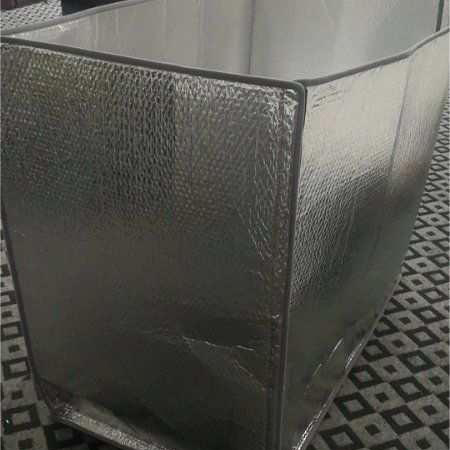
Thermal Pallet Blankets for Blood Products Within a Qualified Logistics System
The safest way to buy thermal pallet blankets for blood products is to stop treating the blanket as the temperature-control system. It is an outer passive component. It may slow heat entering or leaving a pallet, but only the complete, qualified configuration can be evaluated against a blood component’s requirements. Refrigeration, frozen packouts, platelet handling, monitoring, traceability, and quality release remain separate controls.
A practical selection method connects one component state to one lane and one operating envelope. It then passes through seven gates: requirement, role, geometry, thermal design, evidence, routine operation, and lifecycle control. If a proposal cannot pass a gate, a larger order should wait.
Gate 1: name the component and its state
Do not begin a specification with “blood pallet.” Write the full component and state: stored whole blood, liquid red cells, platelets under their approved process, frozen plasma, thawed plasma, or another specifically labeled component. Note processing or modification that affects conditions. State the applicable label, blood-establishment procedure, national rules, and destination requirements.
WHO blood cold-chain guidance distinguishes refrigerated whole blood and red cells, platelets held under controlled conditions with agitation during storage, and frozen plasma. U.S. FDA regulations also specify product-by-product conditions; the numbers and contexts are not identical to every WHO training statement or another country’s rules. That is expected. A global logistics program needs a requirements matrix, not a universal temperature copied into every protocol.
The matrix should include allowed range or frozen-state criterion, maximum process time where applicable, agitation or other non-temperature needs, packaging and labeling constraints, visual inspection, monitoring, and disposition authority. It should also state whether the requirement applies to storage, shipment, processing, post-thaw holding, or issue for transfusion. These stages must not be conflated.
Mixed-component loads usually fail this gate unless the products share compatible, approved conditions and physical segregation. A reflective outer cover cannot make refrigerated red cells compatible with controlled room-temperature platelets or a dry-ice frozen-plasma packout.
Gate 2: assign one narrow job to the blanket
Write a sentence that describes the blanket’s task without using “maintain” or “control” unless supported by system evidence. For example: “Provide an evaluated outer insulating layer around qualified red-cell transport boxes during indoor dock staging and vehicle loading.” The sentence names the protected configuration and exposure.
Possible jobs include buffering a planned handover, adding an evaluated outer layer to a passive pallet packout, reducing radiant load during a brief transfer, or supporting a prequalified emergency movement. Unsuitable jobs include replacing a blood-bank refrigerator, storing platelets without required agitation, converting an ordinary truck into a refrigerated vehicle, keeping plasma frozen with insulation alone, or extending a delay beyond the qualified duration.
Define the failure action in the same sentence set. If staging reaches its limit, the pallet returns to approved equipment, transfers to a validated alternative, or enters an escalation decided by the quality procedure. The blanket is not allowed to create an undefined grace period.
This narrow assignment also helps with compliance language. The complete configuration may be qualified for a specified use; the blanket itself should not be called universally “FDA compliant,” “WHO approved,” or suitable for all blood products. Ask suppliers to state construction and supporting tests precisely.
Gate 3: capture the real pallet and lane
Pallet drawings should reflect the wrapped production load. Record outer dimensions, minimum and maximum height, box layout, overhang, corner boards, voids, total payload range, labels, seals, refrigerant locations, and base. A full pallet and a half pallet can have different surface-area-to-mass ratios and internal air paths, so both may need evaluation.
Map the lane minute by minute from the last controlled point to the next controlled point. Include dispatch reconciliation, elevator waits, dock staging, door cycles, security, loading, vehicle preconditioning, airport acceptance, transfer, customs, receiving, and logger retrieval. Mark surfaces beneath the pallet and radiant exposures above it. Identify the longest credible delay and the recovery path.
Air temperature alone may not represent the challenge. Direct sun, a hot roof, a cold metal deck, wind, precipitation, and adjacent frozen loads can create local effects. If outdoor use is possible, examine securement, water behavior, and safe handling. A loose skirt or saturated blanket may be a worker and contamination hazard.
Human factors belong in the lane file. Who installs the cover? What protective clothing is worn? Can one person reach the top? Are labels visible? Can forklifts enter without touching the skirt? Does removal risk striking brittle frozen-plasma boxes? Trial these tasks with the intended personnel and equipment.
Gate 4: design all heat paths and internal sources
Conduction, convection, and radiation occur simultaneously. The blanket’s insulating core resists heat through its panels. A reflective surface can reduce radiant exchange under relevant conditions. Flaps and skirts can limit moving air. Seams, gaps, compressed folds, and the uncovered base can bypass these functions.
Think of the pallet as a six-sided boundary. A five-sided cover leaves the underside connected to the pallet and floor. A base pad may reduce this path but can affect stability, hygiene, fork access, and qualification. Make that choice before the test configuration is frozen.
The blanket also interacts with internal refrigerants. Cool packs or phase-change materials absorb energy but can create cold spots if too cold, poorly conditioned, or placed against red-cell boxes. Dry ice supports certain frozen systems but releases carbon dioxide gas and brings dangerous-goods, ventilation, handling, and material-compatibility concerns. Insulation may prolong both the desired and undesired influence of a refrigerant.
Platelets again require separate logic. A blanket cannot deliver continuous agitation in storage. It also should not obstruct controlled airflow around platelet equipment. Any transport configuration must follow the approved platelet process; adding generic chilled gel packs would be an unsafe assumption.
Moisture is part of the design. A cold pallet entering humid air can collect condensation. Water may weaken boxes, damage labels, hide leaks, create slippery floors, or enter insulation through damaged seams. Define installation location, vapor and water considerations, drainage, drying, and inspection. “Waterproof” does not answer condensation behavior.
Request a complete construction description: outer layer, insulation, reinforcement, inner liner, seams, closures, handles, dimensions, tolerances, and orientation. Material coupon values support comparison but do not predict complete-system duration. Test the finished blanket around the proposed load.
Gate 5: create evidence that matches the claim
The evidence plan should move from fit to controlled thermal testing and then to operational confirmation. A fit trial can eliminate unsafe or poorly sized concepts before expensive chamber work. It should challenge all approved pallet heights, labels, equipment clearance, closure reach, installation time, and removal.
The thermal protocol states the component criterion, surrogate justification, payload range, starting distribution, packout and refrigerant conditioning, blanket and base configuration, environmental profile, duration, handling events, sensor system, placement, repeats, and acceptance rules. It should include both hot and cold risk when applicable.
| Required evidence | What it should identify | Decision it supports |
|---|---|---|
| Construction record | Finished layers, seams, closures, dimensions, tolerances, production identity | Whether tested and supplied units are comparable |
| Lane or facility profile | Time, ambient, humidity where relevant, surfaces, radiation, handovers, delays | Whether the challenge represents intended use |
| Qualification protocol and report | Payload, packout, sensors, calibration, profiles, repetitions, criteria, results | Whether the complete configuration supports the operating envelope |
| Handling assessment | Installation, securement, labels, worker reach, equipment interaction | Whether the method is repeatable and safe |
| Change-control agreement | Supplier and internal changes requiring review | Whether evidence remains applicable after change |
Sensor placement should investigate extremes. Include outer top and corner regions, the lower floor interface, positions near refrigerants, closures, and the load core as justified. An ambient logger interprets the challenge; it does not represent product temperature. Calibration, range, response, resolution, interval, time synchronization, and attachment method should be documented.
ISTA thermal profiles and qualification processes can inform certain packaging studies. Their official scope must be checked. Parcel-delivery profiles do not automatically represent palletized blood on an airport apron or in hospital staging. A standard reference is useful only when the test article, profile, method, and deviations are disclosed.
A pass under one ambient profile does not prove all seasons and lanes. Establish whether bracketing or separate seasonal tests are scientifically justified. If a supplier offers a duration, keep the payload, criterion, starting condition, profile, and sensor locations attached to it.
Gate 6: make routine operation observable
Qualification succeeds only if dispatch and receiving reproduce the critical configuration. Convert the report into a short packout instruction with photographs, numbered steps, and clear limits. Control coolant conditioning, box arrangement, pallet pattern, base, blanket orientation, closure sequence, logger position, label pouch, seal, and timestamps.
At dispatch, staff verify component status, approved load family, starting condition, blanket identity and inspection, logger readiness, and shipment documentation. At each handover, time and custody are recorded. The blanket remains closed unless the SOP defines access. If a delay, location, or physical condition exits the operating envelope, the named escalation begins.
At receiving, staff inspect the covered pallet before dismantling, record damage or moisture, reconcile component units, retrieve data, and place product in the correct controlled equipment. Data review follows the blood establishment’s procedure. A green indicator, intact blanket, or remaining refrigerant is not an independent release decision.
For an exception, quarantine as required and preserve all records. Review logger calibration and placement, time history, blanket and packout integrity, refrigerant state, product label, physical observations, and applicable regulatory criteria. Only authorized personnel decide release, reissue, additional evaluation, or discard.
Training should include wrong-use examples. Staff need to recognize a blanket selected for the wrong component, an open lower edge, direct refrigerant contact, a hidden label, a wet core, expired logger calibration, and a delay beyond the envelope. Periodic drills are especially useful for emergency configurations that are rarely used.
Gate 7: control reuse, change, and end-of-life
A reusable blanket becomes part of the quality-supporting asset pool. Give it a unique ID where appropriate and establish clean-ready, issued, returned, cleaning, drying, repair, quarantine, and retired statuses. Define compatible cleaning agents and methods, inspection lighting, seam and closure criteria, wet-insulation rules, permitted repairs, and record retention.
No universal reuse count can replace inspection and verification. Abrasion changes reflective surfaces; folds compress insulation; closures collect debris; cleaning can affect bonds; repairs can create thermal bridges. Select aged units for periodic technical review based on use severity, failures, and risk. Retire units that cannot be restored to the approved condition.
Supplier change control is equally important. A new film, alternate foam, different adhesive, relocated closure, changed stitch, or dimensional tolerance can affect performance or safety. Agree which changes require advance notice and what evidence supports equivalence. Internally, changes to boxes, pallet load, refrigerants, loggers, vehicles, or routes may require review.
Sustainability should be calculated per successfully completed, conforming pallet movement. Count manufacturing, packaging, reverse logistics, cleaning, drying, repair, loss, monitoring, qualification, and disposal. Compare those burdens with a single-use system across the same function. Closed hospital loops may favor reuse; one-way emergency or international routes may not.
Track actual cycles, return rate, damage, repair, cleaning resources, loss, and retirement cause. Verify whether local recyclers accept the assembled materials. A theoretical material claim is not an end-of-life program. Above all, do not reduce monitoring or thermal assurance to improve an environmental metric; loss of a donated blood component carries its own clinical and resource consequences.
Conclusion: The final approval package
Before scale-up, the technical file should answer four questions without relying on sales language:
Which component, state, pallet configuration, lane, and seasonal conditions are approved?
What exact function does the blanket perform, and what functions remain with other equipment?
Which protocol and data support the operating envelope, including warm and cold locations?
How do staff inspect, install, monitor, receive, investigate, clean, repair, and retire the system?
If any answer is missing, the next purchase step may be a sample, mapping exercise, or qualification run rather than a production order.
Thermal pallet blankets for blood products can be useful at the vulnerable boundaries of a blood network. Their safest value comes from precision: one defined component state, one representative lane, one complete configuration, and one controlled operating process. That precision keeps a passive layer from being confused with blood-storage equipment and gives quality teams evidence they can defend.
About Tempk
Shanghai Tempk Industrial Co., Ltd. operates Tempk, a provider of cold-chain packaging solutions. Its official products include thermal pallet covers, insulated packaging and boxes, coolants, and PCMs. Official solution content covers packout review, logger-position planning, and validation-plan support, giving us a defined basis for a component-to-lane packaging discussion for a stated blood logistics use. Tempk does not approve blood requirements, qualification, compliance, monitoring procedures, reuse status, or product disposition; those controls remain with the responsible blood establishment.
Send the component-state matrix, full pallet configuration, route profile, monitoring logic, and reuse boundary to Tempk. We can discuss which packaging questions the evaluation plan needs to answer.
Pallet Thermal Covers for Bulk Storage That Fit the Job
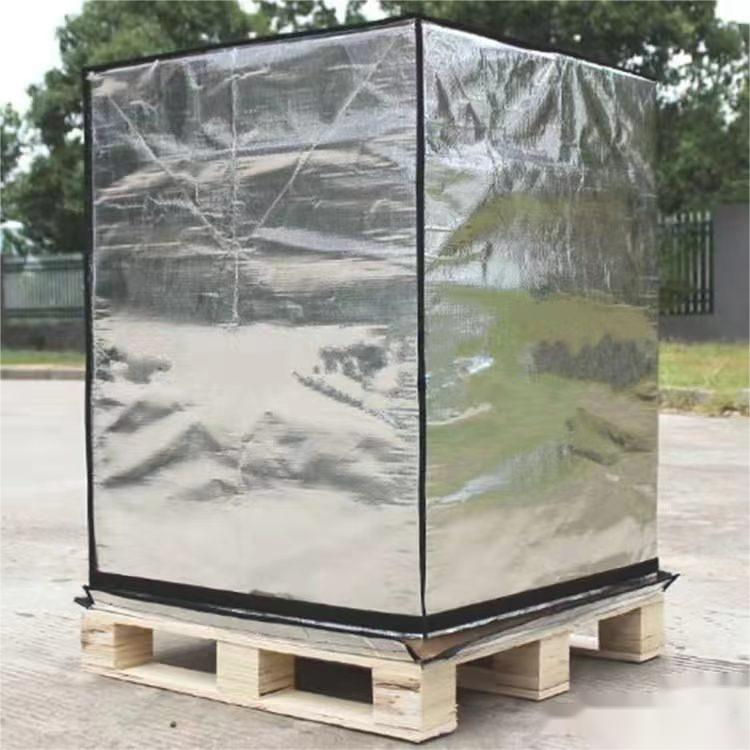
Pallet Thermal Covers for Bulk Storage That Fit the Load, Site, and Process
The best pallet thermal covers for bulk storage are not chosen by thickness alone. They are chosen by matching a complete cover assembly to a known pallet, a known exposure, and a repeatable warehouse process. The cover then slows unwanted heat exchange for that defined event. It does not generate cooling, maintain an exact set point indefinitely, or replace a cold room, refrigerated vehicle, or product-quality decision.
That operating-envelope approach resolves many common buying mistakes. Instead of asking which cover is “most insulated,” you ask which configuration remains usable and supported by evidence at your dock, on your floor, around your load, and through the delay you actually need to manage.
Draw the boundary before naming the solution
Start with a simple boundary drawing. Put the pallet at the center and label everything that can exchange heat or moisture with it: room air, door drafts, roof and lights, adjacent loads, concrete or steel beneath the pallet, and any outdoor exposure. Add the route and timing. This picture often reveals that the buying request is not really “bulk storage.” It may be a controlled-room exit, a dock wait, a cross-building transfer, an overflow rack, or an emergency hold.
Now add the product boundary. Record the approved storage condition, whether freezing or overheating is especially damaging, how uniform the load is when it leaves controlled space, and who decides whether an excursion is acceptable. Requirements vary among foods, medicines, chemicals, electronics, and industrial materials. The temperature printed on a warehouse work order may not be the complete quality criterion.
Finally, add the operational boundary. Note pallet dimensions after wrapping, case overhang, partial-load frequency, material-handling equipment, labeling, fire controls, sanitation needs, and worker reach. A cover that looks thermally capable but cannot be installed safely or consistently is not an effective control.
The output is a short problem statement. For example: “Buffer a defined family of preconditioned pallets during indoor outbound staging beside Door 4, including a documented delay condition, without obstructing IDs or pallet-jack access.” This is far more useful to a supplier and test team than “Need a 48-hour thermal blanket.” It states a function without inventing a result.
Decide whether a cover is the right control
Passive pallet covers are attractive because they require no power and can be deployed around existing loads. Those advantages do not make them appropriate for every risk. Use a control hierarchy based on the severity and duration of exposure.
If goods require continuous refrigerated or frozen storage, the primary control should normally be equipment designed, monitored, and maintained for that condition. If a transfer regularly exceeds the capability of passive insulation, improve scheduling, add controlled staging, or use an appropriate temperature-controlled enclosure. If the exposure is brief, predictable, and moderate enough to study, a cover may be a proportionate secondary layer.
A cover also may support a contingency plan, but only after the plan identifies the point at which goods move to backup refrigeration or another qualified solution. Passive resistance can slow a temperature change; it cannot tell you whether the product remains releasable. Data, approved criteria, and quality review serve that role.
Reject the cover option when it creates a larger hazard. Examples include loose material near vehicle wheels, interference with rack sprinklers, inability to see regulated labels, incompatible contamination risks, or outdoor conditions that can lift or soak the enclosure. Redesigning the work may be safer than forcing a fabric cover into it.
Translate the cover into functional zones
A finished cover can be understood as five functional zones. This view makes supplier comparisons clearer than a list of material trade names.
Radiant-facing zone: The outer face encounters lights, roof surfaces, sun, or cold surroundings. Reflective properties can reduce radiant exchange, but only in the relevant orientation and condition. Dirt, direct contact, coating damage, and folds can change the effect.
Resistive zone: The insulating core slows conductive heat flow through the panel. Its effectiveness depends on structure, thickness, compression, moisture, seams, and aging. Nominal panel data are not the same as finished-cover performance.
Air-control zone: Skirts, overlaps, flaps, and closures limit moving air. A small continuous gap may dominate a minor difference between insulation cores, especially in wind or fan flow.
Contact zone: The pallet, floor, rack, or trailer deck forms the lower boundary. A five-sided cover leaves this path distinct. Any insulated base becomes part of load stability, hygiene, and qualification.
Human-interface zone: Handles, labels, closures, fold lines, and grip points determine whether workers install the system correctly. These details also influence damage and reuse.
The Department of Energy’s heat-transfer explanations identify conduction, convection, and radiation as the basic modes. A functional-zone review connects those principles to warehouse details. It also prevents the outer reflective layer from receiving all the attention while the bottom gap, wet insulation, or failed closure controls the result.
Moisture crosses several zones. A cold load entering humid air can experience condensation even under a water-resistant cover. Water can weaken cartons, obscure labels, make floors slippery, or enter a damaged laminate. Define when the cover is installed, how wet units are handled, where they dry, and how hidden water ingress is detected.
Build evidence in layers
Performance evidence should mature as the purchase moves from concept to scale. Each stage answers a different question.
| Evidence stage | Main question | Useful output |
|---|---|---|
| Document review | Is the construction identifiable and suitable for screening? | Layer description, dimensions, tolerances, material and safety information, stated limits |
| Fit and handling trial | Can workers use it safely on every approved load family? | Installation observations, gap map, equipment clearance, label visibility, damage notes |
| Controlled thermal study | Does the configuration buffer the defined challenge? | Protocol, calibrated sensor data, gradients, repeat results, moisture and integrity observations |
| Site pilot | Does the process work under real handovers and delays? | Compliance, dwell data, exceptions, operator feedback, asset-control results |
| Routine verification | Does approved performance remain credible over time? | Incoming inspection, change review, aged-cover checks, trend and deviation records |
This sequence avoids two extremes. It does not demand an expensive thermal program for a cover that fails the first fit trial, and it does not mistake a comfortable fit for thermal proof. The evidence grows with risk and commitment.
ISTA publishes official thermal test standards and transport profiles, including Standard 7E for parcel-delivery thermal transport packaging and Standard 20 processes for insulated shipping containers. Those frameworks can guide disciplined thinking, but their scope must be respected. A pallet cover used for stationary warehouse staging is not validated merely because a report mentions an ISTA profile. Determine whether the method represents the actual application and what modifications were made.
For a controlled study, specify the pallet build, starting temperatures, cover configuration, environmental profile, floor boundary, air movement, humidity where relevant, handling events, sensor system, duration, and acceptance criteria. Map likely warm and cold points. Do not place every probe in the center, where thermal mass provides the greatest buffering. Document missing data rules and repeat rationale before seeing results.
Be cautious with a supplier’s stated duration. Ask: duration to what criterion, under which ambient pattern, with what payload, at which starting condition, using which sensor positions? A test can be completely valid for its configuration and still be irrelevant to yours.
Write the work instruction around failure modes
An instruction should show more than how to pull a cover over a pallet. It should prevent the predictable ways the control fails.
Before installation, the operator checks pallet identity, approved load family, starting release status, cover ID, dryness, cleanliness, seams, insulation, closures, and label arrangements. The cover is installed in the specified orientation at the defined location. All flaps and skirts are secured, with material clear of wheels and walking paths. The dwell clock begins according to a stated trigger.
During staging, the pallet remains only in approved positions. Opening is avoided unless the procedure permits it; if access occurs, staff record it or restart the rule defined by the quality team. A move to an unapproved door, outdoor apron, sunlit spot, or metal deck triggers escalation rather than casual continuation.
At the end, staff remove the cover safely, inspect the load as required, capture monitoring data, and route the cover to clean return, cleaning, repair, quarantine, or retirement. A damaged cover is never made acceptable simply by doubling it with another unassessed cover. Two layers can change handling, moisture, fire behavior, and closure without a known performance basis.
Visual aids should show acceptable lower gaps, closure order, correct label display, and common damage. Supervisors should observe performance during the busiest shift and during cold or hot seasons. A process designed in a quiet trial may fail when operators handle several pallets at once.
OSHA warehouse materials-handling information in the United States highlights clear passageways and safe equipment clearance. Local laws and facility rules will vary, but the operational lesson is broad: insulation must fit into the safe movement system. Fire, building, insurer, and sanitation reviews may also be needed depending on product and storage arrangement.
Purchase the program, not only the panels
Bulk procurement magnifies small ambiguities. A one-centimeter dimensional shift, a relocated closure, or a substituted laminate can become hundreds of inconsistent installations. The request for quotation should state the approved geometry and construction, critical tolerances, labeling, packaging, incoming inspection, change notification, and document expectations.
Ask suppliers to separate facts into three groups:
Identified characteristics: materials, assembly, dimensions, closures, and workmanship controls.
Supported performance: results tied to a named specimen, payload, profile, and acceptance criterion.
Application assumptions: conditions the buyer must confirm through its own review or qualification.
This separation rewards candor. A supplier that clearly states limits may be a stronger partner than one offering universal temperature claims.
Evaluate sample-to-production consistency. Keep an approved sample or detailed specification, and define what incoming checks verify. For a reusable program, request cleaning limitations, inspection criteria, permitted repair method, and retirement indicators. Ask what happens if a component becomes unavailable. A material substitution should not enter production before its impact is reviewed.
Avoid invented return-on-investment claims. Instead, construct a site-specific cost model containing acquisition, freight, storage, labor to install and remove, cleaning, drying, repairs, reverse logistics, loss, monitoring, qualification, and disposal. Compare it with the current method over the same number of pallet events. Include service failures and inventory tied up in the return loop.
Make reuse and sustainability measurable
Reusable covers can reduce purchases of disposable protection on stable closed loops. They can also travel empty over long distances, require resource-intensive cleaning, disappear at handovers, or become unusable after contamination. Environmental performance is an outcome of the system, not a label attached to the product.
Define a functional comparison such as one correctly protected pallet event within the approved exposure. Track actual cycles, return rate, cleaning frequency, repair material, loss, and retirement causes. Determine whether the cover assembly can enter a real local recycling stream or whether mixed layers prevent it. “Recyclable” without a collection and processing route offers little operational value.
Design choices can improve the result. Clear ownership and unique IDs reduce loss. Standard load families reduce damage from poor fit. Replaceable closures and controlled repair can extend service. A fold-and-store method can protect the reflective face and insulation. However, every repair or aged condition should remain within the inspection and verification program.
Review data after a pilot. If covers are technically effective but rarely returned, the sustainability plan needs logistics work. If most damage occurs at one sharp corner, pallet build or reinforcement may need adjustment. If cleaning queues cause shortages, cover inventory or hygiene methods need redesign. Evidence should change the program.
Conclusion: A release-ready operating envelope
Before full deployment, summarize the approved use on one page. Include covered load families, starting condition, permitted locations, maximum evaluated dwell, seasonal conditions, base configuration, installation photographs, required monitoring, inspection criteria, prohibited exposures, and escalation actions. Reference the supporting study and controlled specification.
This one-page envelope lets operators make fast decisions while preserving the deeper technical file. It also keeps passive buffering distinct from active temperature control. When a delay, location, cover condition, or product falls outside the envelope, the correct action is escalation, not optimism.
Pallet thermal covers for bulk storage can improve resilience at staging and transfer boundaries when their role is deliberately limited. Define the exposure first, examine all six sides of the load, test the finished configuration, and control both people and materials through scale-up. That is how a simple cover becomes a credible part of warehouse operations without being asked to perform the job of refrigeration.
About Tempk
Operated by Shanghai Tempk Industrial Co., Ltd., Tempk is a cold-chain packaging brand whose product pages include thermal pallet covers, insulated packaging and boxes, coolants, and PCMs. On the solution pages, the stated support spans packout review, logger-position planning, and validation planning. For deployment planning, we can relate those activities to load families, site exposure, cover handling, monitoring, and reuse assumptions. The customer must still define the warehouse operating envelope, approve the acceptance criteria, and decide whether evidence for the complete proposed configuration is sufficient.
Use your exposure map and load-family matrix to open the discussion with Tempk. Add handling limits and evidence expectations so the review stays deployment-focused.
Pallet Thermal Blankets for Hazardous Materials Shipping: Five-Gate Method
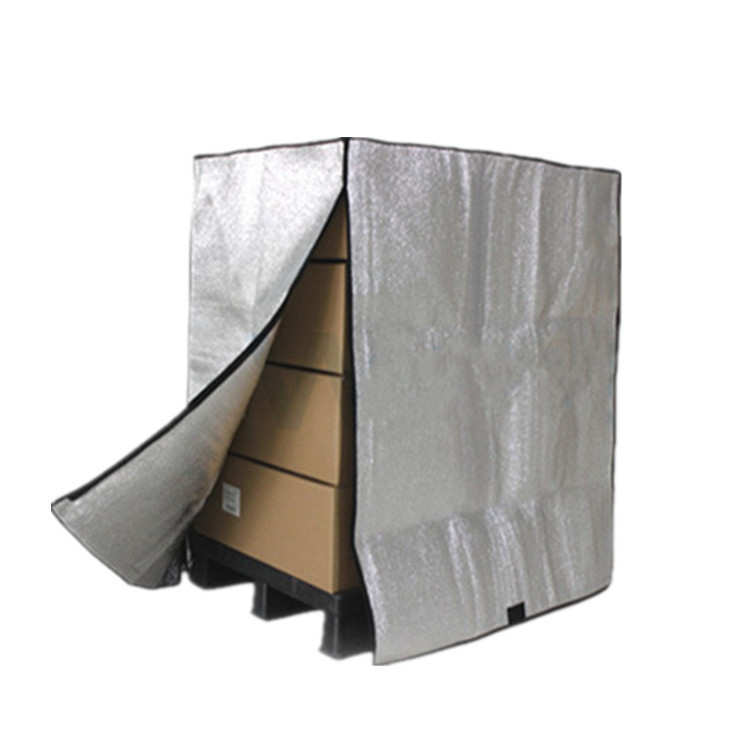
A Five-Gate Method for Pallet Thermal Blankets for Hazardous Materials Shipping
A thermal cover should never be the first item approved on a hazardous-material pallet. The first approvals concern the material, authorized packaging, hazard communication, route, and carrier. Only then can pallet thermal blankets for hazardous materials shipping be assessed as secondary protection against defined ambient exposure. They cannot replace UN-specification packaging when required, classification, segregation, marks, labels, documentation, training, emergency arrangements, or carrier acceptance.
Procurement teams can manage the decision through five gates: legal fit, thermal need, physical integration, evidence, and operational control. A candidate moves forward only when it clears every gate. This method prevents a strong thermal result from hiding a dangerous-goods defect and prevents a compliant bare package from being wrapped in a poorly designed cover.
Gate 1: Is the Completed Unit Legally and Operationally Admissible?
Freeze the blanket discussion until a trained responsible person has defined the dangerous goods. Record the UN or identification number where applicable, proper shipping name, class or division, subsidiary hazard, packing group when assigned, quantity, physical state, concentration, and mode. Confirm the authorized packaging instruction, special provisions, quantity limits, route restrictions, and any carrier or operator variations.
Under the United States Hazardous Materials Regulations, the offeror is responsible for proper classification and description and for determining that the packaging is authorized. Core communication requirements appear in 49 CFR Part 172 and shipper packaging requirements in Part 173, with additional rules for air, vessel, and highway modes. The IATA Dangerous Goods Regulations guide air shipments and include carrier variations and acceptance requirements. ADR and national rules may apply to European road movements. Always use the current provisions for the actual lane.
Now inspect the proposed covered assembly. Ask:
Will every required mark, hazard label, orientation mark, identification, and document pouch remain visible?
If information is hidden, have the applicable overpack marking and labeling requirements been correctly addressed?
Does the cover interfere with vents, valves, pressure-relief devices, closures, lifting points, tie-downs, or emergency access?
Is consolidation allowed, and are compatibility and segregation requirements still met?
Has the carrier accepted the cover, fastening method, inspection access, and completed presentation?
In the United States, 49 CFR 173.25 addresses authorized overpacks and the reproduction of required marks and labels when they are not visible, including use of the “OVERPACK” marking in stated situations. The exact determination depends on the assembly. Do not treat a clear pocket or copied label as a universal solution.
Gate 1 fails if the cover hides communication, changes an authorized configuration without approval, blocks a package safety feature, or cannot be accepted by the operator. Thermal testing should not proceed until these issues are corrected.
Gate 2: What Exact Exposure Is the Cover Supposed to Moderate?
Write a one-sentence use statement. A good example is: “The cover is intended to slow heat gain during outdoor air-cargo build-up and a missed-connection delay after a pallet leaves a controlled truck.” A poor example is: “The cover keeps chemicals at the right temperature.” The first can be tested. The second has no defined product limit, ambient condition, duration, or route segment.
Build a time-ordered exposure record. Include pre-staging, loading, security, cross-dock dwell, customs, transfer between controlled assets, door openings, unpowered container periods, carrier inspections, delays, and receiving. Use lane data, facility observations, weather records, and carrier input where available. Separate shaded ambient exposure from direct solar loading and note conductive contact with floors or equipment.
Define why temperature matters for the material. Product quality, package pressure, viscosity, brittleness, phase behavior, and transport safety are different concerns. Limits must come from an approved product and dangerous-goods assessment. A cover supplier should not select them.
Some dangerous goods have specialized control or emergency temperatures, may generate heat, or require ventilation. Passive insulation is not an active cooling system and can retain internally generated heat. Such materials require a specific regulatory and process-safety approach. Gate 2 fails if the organization is trying to use insulation as a substitute for required active control, approved stabilization, refrigeration, ventilation, or an emergency plan.
Gate 3: Does the Cover Fit the Pallet and Its Safety Functions?
Measure the completed unit load. Nominal pallet dimensions omit height, overhang, bulging cartons, drum rings, corner protectors, stretch-wrap folds, top irregularities, label locations, and access clearances. Record both normal and maximum production dimensions. Specify whether a base pad or skirt is part of the design.
Each construction feature should answer a risk:
| Feature under review | Decision it must support | Failure to look for |
|---|---|---|
| Reflective exterior | Reduce defined radiant exposure | Dirt, abrasion, wrong orientation, unsupported performance claim |
| Insulating layer | Resist conduction through faces | Compression, wetting, inconsistent thickness, shedding |
| Seam and closure | Limit air exchange and stay secured | Thermal bridge, gap, snag, unplanned opening |
| Interior surface | Protect outer packages during use | Abrasion, incompatibility, contamination, static concern |
| Base treatment | Address lower-edge air leakage or floor path | Forklift interference, trapped liquid, unstable skirt |
| Access and label zone | Preserve inspection and communication | Covered marks, blocked valves, inaccessible documents |
The design review should include foreseeable leakage. A general thermal blanket is not spill containment. Determine whether its material could react with, absorb, spread, or conceal escaped contents and how responders would remove or isolate it. Flammable atmospheres, static-sensitive operations, ignition sources, and contaminated-cover disposal require site- and material-specific assessment.
Ergonomics is part of fit. A heavy or tall cover that requires staff to climb, reach over drums, or stand in forklift lanes creates a different risk. Conduct a task observation with representative workers and personal protective equipment. Gate 3 fails if safe, repeatable installation cannot be demonstrated.
Gate 4: Does the Evidence Match the Claim?
Translate the use statement into a protocol. Identify the cover revision, production construction, pallet and payload, starting condition, ambient profile, solar component if relevant, duration, openings, sensor map, calibration status, logging interval, repetitions, control configuration, and acceptance criteria. Approve the protocol before running it.
Heat moves through radiation, convection, and conduction. Reflective surfaces principally address radiant exchange; insulating layers resist conductive paths and internal air movement; closures and skirts affect air exchange. Corners, seams, fasteners, and compressed areas act as bridges. The pallet base may behave differently from the sides. A credible study measures the assembled system rather than extrapolating from one layer.
Use payloads that represent the intended load’s mass, heat capacity, geometry, and packaging. A pallet of dense liquids may respond slowly, while a low-mass pallet with large voids can respond faster. If a surrogate is used, justify why it is conservative or representative.
Map likely hot or cold points as well as a core reference. Capture ambient exposure and, when solar risk matters, an appropriate surface or radiant indicator. Synchronize sensors. A logger is an evidence tool, not thermal protection. Its reading represents its location and accuracy; it does not certify every package.
Thermal standards can provide discipline. ISTA Standard 7E includes profiles for thermal testing of parcel-delivery insulated shipping containers, and Standard 20 provides a design and qualification process. A flexible full-pallet cover may require a different justified protocol or route-specific qualification. Citing a standard name without demonstrating scope is not enough.
Read claims literally. “Reduced heat gain in the tested configuration” may be supported. “Protects all hazardous materials for a fixed number of hours” almost never follows from one study. Gate 4 fails if the report omits the payload, profile, sensors, cover configuration, or acceptance criteria; relies only on flat-material data; or turns a limited trial into a universal guarantee.
Gate 5: Can Operations Keep the Approved State?
Approval exists on paper; control exists on the dock. Write an SOP that identifies the approved cover and revision, pallet limits, orientation, pre-use inspection, installation sequence, closures, label zones, access points, sensor placement, seal use, removal, and storage. Include clear stop conditions for tears, wetting, contamination, delamination, missing tags, wrong dimensions, hidden communication, warm or cold release conditions, or route changes.
Add a completed-unit release check by trained dangerous-goods staff. Inspect after the blanket is fully installed. Confirm packaging condition, marks, labels, orientation, overpack treatment where applicable, documents, segregation, vents, valves, closures, straps, and carrier presentation. This order catches problems that a bare-pallet inspection misses.
Define exception ownership. Logistics handles missed connections and equipment events; dangerous-goods specialists handle packaging and communication deviations; quality evaluates thermal excursions and qualification scope; safety manages leaks or exposure; the carrier decides acceptance under its rules. A phone list is not enough. Write the information each function needs and the authority to hold or reject a shipment.
At receipt, inspect before discarding evidence. Record cover condition, openings or broken seals, package damage, leakage, bulging, label legibility, logger status, and temperatures required by the approved plan. A stable sensor reading does not authorize acceptance of a damaged hazmat package. A damaged cover does not automatically mean the product failed; follow the defined assessment.
Gate 5 fails when the system depends on unwritten expertise, cannot trace cover revision, has no response to damage, or credits protection during route segments where the cover is removed.
The Tender Should Define Reuse, Stop Rules, and a Controlled Result
Once the gates are defined, the request for quotation becomes more useful. Provide the supplier with the pallet envelope, label and access map, route exposure, handling constraints, use model, cleaning expectations, and proposed test objective. Do not disclose sensitive dangerous-goods information beyond what is appropriate, but provide enough for safe technical review.
Require a construction bill of materials or controlled layer description, dimensional tolerances, seam and closure details, production inspection points, and change-notification process. Ask for thermal evidence in full context, not a single headline result. Request relevant information for flammability, static, chemical compatibility, moisture behavior, cleaning, and disposal so internal specialists can assess it. These documents do not confer dangerous-goods approval; they support the buyer’s review.
Evaluate sample-to-production consistency. Check finished dimensions, mass where useful, seam placement, closure strength, surface condition, label windows, and identification. Agree on acceptable repairs and defects before volume supply. A seemingly minor switch in film, foam, adhesive, thread, or closure can change thermal behavior or safety suitability.
Commercial comparisons should include installation labor, storage volume, carrier handling, cleaning, return transport, loss, inspection, repair, and retirement. Avoid assuming an unverified reuse count or fixed thermal duration. Compare options against the same approved function.
Reuse and Sustainability Pass Through the Same Gates
Reuse can reduce discarded material on a closed loop, but it can also add return freight, cleaning, losses, and complex laminates. Define the functional unit as one successfully protected, compliant pallet movement. Then account for cover manufacture, trips actually achieved, return network, cleaning, repairs, replacement parts, and end-of-life route.
Every reuse begins with inspection. Establish limits for tears, crushed insulation, stains, chemical exposure, damaged reflectivity, seam failure, missing closures, and unreadable identity. A contaminated cover should enter the hazardous-material response and waste process appropriate to the contaminant, not an ordinary laundry stream.
Track individual covers if the risk and value justify it. Identity helps link inspection, repairs, cleaning, and revision. It does not replace physical examination or prove performance. A reused cover must still pass Gates 1 through 5 for the intended shipment.
Four Automatic Stop Decisions
Some conditions should stop the release without a debate about thermal benefit:
The dangerous goods are not correctly classified, described, packaged, marked, labeled, documented, or accepted for the mode.
The cover blocks required communication, ventilation, pressure relief, handling, inspection, or emergency access.
The material has a safety-critical temperature-control requirement that the proposed passive configuration has not been specifically approved to meet.
The thermal claim cannot be traced to a representative configuration and relevant profile.
These stops keep the hierarchy intact. The purpose of a thermal cover is to add a margin to a sound shipment, never to make an unsound shipment look complete.
Conclusion: A Release Decision That Can Survive Audit
Pallet thermal blankets for hazardous materials shipping are ready for use only when the organization can answer five questions with records: Is the completed unit admissible? Is the exposure defined? Does the cover integrate safely? Does the evidence support the limited claim? Can operations preserve the approved state?
If the answer to any question is uncertain, hold the project at that gate. The disciplined result is a narrower but more defensible use case: a specified cover, applied to a specified pallet, for a specified route condition, under an SOP that protects every dangerous-goods obligation.
About Tempk
Shanghai Tempk Industrial Co., Ltd. operates Tempk as a cold-chain packaging brand. Our official product information includes thermal pallet covers, insulated packaging and boxes, coolants, and PCMs, while solution pages describe packout review, logger-position planning, and validation-plan support. For hazardous-material shipping, this scope may inform evaluation of an outer thermal layer against defined geometry and exposure. It does not extend to classification, authorized dangerous-goods packaging, marks, documents, routing, emergency response, or carrier approval; qualified shipment parties retain those decisions.
Start with the proposed use statement, complete pallet drawing, access rules, and test boundary. Tempk can then discuss a narrowly scoped thermal-packaging review.
Pallet Insulation Covers for Pharmaceutical Distribution: Deployment
Pallet Insulation Covers for Pharmaceutical Distribution: A Deployment Framework
The useful question is not “How many hours does this cover hold temperature?” but “Which exposure will this pallet face, and what evidence shows the process can manage it?” Pallet insulation covers for pharmaceutical distribution can slow thermal change at docks, ramps, cross-docks, customs holds, and final delivery. They are passive, secondary protection—not active cooling, a self-qualifying system, or a substitute for monitoring, lane qualification, procedures, documentation, or quality review.
With that boundary clear, procurement can compare features, engineers can test the full configuration, operations can apply it consistently, and quality can decide whether the evidence is sufficient.
Give the Cover One Clear Job
Begin with a one-sentence intended-use statement. It should name the product group, pallet configuration, lane segment, environmental challenge, primary controls, and cover function. For example:
The cover is intended to reduce the rate of thermal exchange around a defined pallet configuration during outdoor and uncontrolled handovers between approved controlled facilities and vehicles on selected air lanes.
This statement deliberately avoids promising a product temperature or duration. Those belong in qualification criteria supported by product and route information. It also makes clear that controlled facilities and transport remain the primary environment.
Now write the exclusions. The cover is not intended to replace a temperature-controlled vehicle, add unapproved coolant, protect an incompatible mixed load, justify an indefinite customs delay, or release product after an excursion. It may not be suitable for partial-pallet picking, uncontrolled multi-day transport, or a pallet outside the approved dimensional envelope. Exclusions are not a weakness; they prevent operational drift.
The required pharmaceutical conditions must come from the approved product information, manufacturer instructions, stability knowledge, quality agreement, and applicable market requirements. There is no single range for all medicines. Storage and transport limits may differ, and freeze sensitivity can be critical even on a lane that personnel casually describe as “cold.” The intended use should therefore refer to an approved product category or requirement, not a generic claim such as “for pharma.”
Build an Exposure Budget From Door to Door
A route map usually shows cities and transport legs. An exposure budget shows every interval during which the pallet may be outside its primary controlled environment. Start the clock at the first departure from approved storage and stop it only when the load enters approved storage at the destination. Break the journey into staging, dock movement, loading, local transport, hub transfer, apron activity, aircraft or line-haul movement, customs, reloading, final delivery, and receiving.
For each interval, record:
planned and credible delayed duration;
ambient temperature profile and seasonal uncertainty;
solar exposure, wind, precipitation, and surface contact where relevant;
whether the pallet is in a controlled, temperature-modified, or uncontrolled space;
who has custody and who may open or remove the cover;
availability of suitable temporary storage;
monitoring and milestone data that can confirm what happened;
escalation trigger if the assumption fails.
This exercise often reveals that the longest transport leg is not the design driver. A pallet can spend hours in a controlled aircraft compartment or vehicle but face a sharper challenge during a short sunlit wait. Conversely, a lightly challenged dock transfer may not justify a cover if a later uncontrolled road leg is too severe for passive secondary protection. The exposure budget shows whether a cover closes a real gap or merely creates reassurance.
EU Good Distribution Practice supports this risk-based view. It calls for required product conditions to be maintained, route risk to guide temperature controls, attention to unloading and transit storage, suitable and qualified equipment where appropriate, monitoring, and procedures for excursions. WHO model guidance likewise treats the transport temperature profile as a sequence of anticipated ambient conditions and durations and provides technical direction on route profiling and shipping-container qualification.
Do not turn a weather forecast into a qualification profile. Weather data may inform a study, but it does not capture sun on a metallic surface, wind-driven leakage, a warm dock plate, a cold roller bed, terminal operating practices, or delayed custody transfer. Use route observations, monitoring, facility information, seasonal cases, and justified conservative assumptions to create the challenge.
Define the Controlled Configuration
The test object and the purchased object must be the same controlled configuration. Write down every component and condition that affects thermal response:
pallet material and dimensions;
case pattern, load height, mass range, voids, and stretch wrap;
product or justified simulant and its initial condition;
top-and-side cover construction and orientation;
base pad, insulated pallet, or explicit absence of bottom insulation;
closures, overlaps, straps, access panels, and seals;
handling and storage labels;
logger types, positions, settings, and activation method;
application, opening, reclosure, and removal procedure.
The base deserves its own line. A five-sided cover leaves a pathway through the pallet and supporting surface. If the qualification uses a base pad, operations must use the same specified base. If the real process has no base, testing should not quietly add one. The same logic applies to stretch wrap, pallet overhang, and case gaps.
Fit is a controlled attribute, not a cosmetic preference. A short cover can expose the bottom edge; a tight cover can pull open at corners; an oversized one can create folds, interfere with forklift access, or drag through water. Define the usable internal envelope and dimensional tolerances using actual production pallets, including expected variation and protrusions.
Closure is also part of the thermal boundary. The configuration should show which flap overlaps which, how zippers or hook-and-loop sections engage, where straps sit, and what an acceptable closed state looks like. A photograph or line drawing in the work instruction can make the difference between a qualified configuration and an operator's approximation.
Match Material Functions to the Exposure
The layer stack should answer the exposure budget rather than follow a generic hierarchy of “more layers is better.” Heat crosses the covered pallet by radiation, convection, and conduction.
A low-emissivity metallic surface can reduce radiant exchange, which may be useful under solar or nearby hot-surface exposure. Emissivity is a surface property describing the ability to emit thermal radiation. The result depends on the finished surface, orientation, adjacent space, cleanliness, and damage. It does not stop heat carried by air or transferred through contact. Reflectivity alone cannot support a duration claim.
The insulating layer resists heat flow through the broad faces. Relevant characteristics may include material identity, thickness, density or structure, thermal conductivity under stated conditions, compression behavior, and moisture response. A flat-material test helps characterize the layer but does not represent seams, corners, closures, the base, or a full pallet. Ask how the conversion process controls thickness, bonding, and continuity.
Seams and penetrations can behave as thermal bridges or leakage paths. Stitched, welded, taped, or bonded constructions each require process control and inspection. Pouches and openings should not interrupt the protective envelope without assessment. Repeated folding can concentrate damage at predictable locations, so reusable designs need inspection criteria linked to those failure modes.
Moisture combines thermal and product-protection concerns. Rain resistance does not prove vapor control, and a sheet-material result does not prove the finished seams. Condensation may be trapped against cartons, cleaning liquid may remain inside layers, and dirt can change a reflective surface. Define wet-exposure handling, cleaning, drying, segregation, and rejection rather than relying on the word “waterproof.”
Create an Evidence Chain, Not a Test Certificate
The most useful evidence chain connects the product requirement to the route, the route to the challenge profile, the profile to the tested configuration, and the tested configuration to routine production and operations.
| Decision | Required evidence | Typical owner | Failure to avoid |
|---|---|---|---|
| What must be protected? | Approved product conditions, sensitivities, and acceptance logic | Product quality | Applying one range to every pharmaceutical |
| Where is the risk? | Route profile, handover map, seasonal and delay cases | Logistics and quality | Using total transit time or city weather alone |
| What is the system? | Controlled bill of material, pallet envelope, closure and base details | Packaging engineering | Qualifying a prototype that differs from production |
| Does it perform? | Approved protocol, calibrated sensors, raw data, deviations, and report | Qualification team | Treating a material coupon or one shipment as proof |
| Can it remain in control? | Supplier change notification, incoming checks, training, monitoring, review | Quality and operations | Ignoring drift after launch |
This table is also a responsibility map. No single supplier document can answer every row because the shipper owns product knowledge, the logistics network, and final quality decisions. A supplier can provide design, material, production, and test information, but the customer's quality system must decide applicability.
WHO technical guidance describes design, operational, and performance qualification for shipping containers. Those stages offer a useful discipline. During design qualification, teams review requirements, risks, drawings, materials, closures, and preliminary evidence. Operational qualification challenges defined configurations under approved warm and cold cases, including payload and starting-condition boundaries. Performance qualification demonstrates that production covers, trained operators, actual procedures, and representative lanes work together.
ISTA resources can support test planning, but scope matters. ISTA Standard 20 is a process for insulated shipping-container qualification used with ISTA 7E profiles, while ISTA identifies 7E with parcel delivery systems. A pallet cover moving through unitized freight may need a different or custom test justified by its distribution environment. Thermal testing may also need to be paired with mechanical evaluation of handling, vibration, compression, and load stability. Naming a standard is not enough; the procedure, test object, laboratory, profile, and resulting claim must align.
Design Monitoring Around Decisions
Monitoring should tell the organization whether the assumptions held and what to do if they did not. It is not an accessory added after qualification.
Ambient sensors can characterize the challenge around the pallet. Payload sensors can show the thermal response at selected positions. A logger near the exterior may react quickly; one deep within a dense load may respond slowly. Qualification should use enough sensors, placed through a documented rationale, to identify vulnerable and slow-response locations. Routine monitoring can use a different justified plan when its purpose is clearly defined.
Review the logger's calibrated accuracy, measurement range, response, recording interval, clock control, alarm setup, battery suitability, data integrity, and retrieval workflow. Avoid copying settings from another lane without considering journey length and decision needs. WHO guidance addresses monitoring of passive and active shipping containers, arrival review, calibration, records, and transport monitoring systems. EU GDP also emphasizes maintained and calibrated monitoring equipment and excursion procedures.
The receiving site needs a workable data path. Define who stops or reads the device, which software and permissions are required, how time zones are handled, where the file is retained, and what triggers quarantine. A temperature alarm does not automatically destroy product, and the absence of an alarm does not fix an invalid packout. Disposition belongs to the approved quality process using the relevant product information.
For air freight, monitoring sits alongside correct handling communication. IATA's Temperature Control Regulations address pharmaceutical transport and include the Time and Temperature Sensitive label. Verify the current edition, carrier and government rules, booking information, markings, and dangerous-goods requirements as applicable. The cover must not hide essential labels, and labels must not be mistaken for physical protection.
Convert the Approved Sample Into a Controlled Deployment
Lock the Supply Specification
Scale-up is a high-risk handoff. The sample tested by engineering may have been made with a particular foil, insulating core, adhesive, seam pattern, closure, and level of attention. Production purchasing needs a specification that makes those attributes repeatable.
Create approved drawings and a bill of material. Define internal dimensions and tolerances, layer identities, critical construction attributes, seam and closure locations, orientation markings, cleanliness, labeling, packaging for delivery, and any traceability required. Agree how raw-material, formulation, coating, adhesive, process, tool, subcontractor, or manufacturing-site changes will be communicated and assessed before supply.
Incoming inspection should verify attributes linked to fit, closure, integrity, and cleanliness. Periodic checks may be appropriate for characteristics that cannot be tested on every unit. Retain a controlled production reference rather than relying on an unmeasured showroom sample. If the supplier states a thermal result, request the protocol and report context: test profile, payload, initial condition, full assembly, sensor locations, duration, criteria, deviations, and unit revision.
In the United States, current good manufacturing practice regulations require appropriate storage conditions and written warehousing and distribution procedures. FDA guidance in specific product contexts reinforces protection during storage, handling, and shipping according to labeled conditions. These principles support controlled specifications and procedures; they do not create a universal “FDA-approved” or “FDA-compliant” status for a pallet cover.
Make Handovers Reproducible
The cover will succeed or fail in the hands of warehouse and ground staff. Train with a real pallet and observe the task. Can operators identify the correct revision? Can one or two people fit it safely without dragging it? Are the corners obvious? Can every closure be reached? Do labels remain visible? Are forklift openings clear? Can the cover be restored after inspection?
Write the handover contract into work instructions and quality agreements:
who applies and verifies the cover;
when the exposure clock or controlled dwell begins;
who may open it and under which conditions;
how temporary protection is maintained during inspection;
how correct closure is restored and recorded;
what to do with wet, torn, missing, or contaminated units;
where a delayed pallet can be moved;
who reviews monitoring data and decides disposition.
Consider a shipment arriving at customs with one lower flap detached after inspection. The first question is not whether the material still looks reflective. Staff need to know how long the pallet was open, the ambient conditions, whether the base remained protected, what the logger shows, whether controlled storage was available, and which quality function owns the decision. A mature process can reconstruct those facts. An immature one tapes the flap and continues without a record.
Choose the Reuse Model With Operating Data
Single-use and reusable covers can both be valid. The route network determines which can be controlled and which may have the better environmental profile.
A reusable program needs reverse logistics, collection points, asset identification where justified, cleaning, drying, inspection, repair rules, storage, loss management, and retirement. Qualification must account for the condition in which a unit is allowed to return to service. Avoid promising a fixed number of trips without evidence; damage and handling histories vary.
A single-use program avoids return and refurbishment but transfers disposal responsibility to the receiver. Ask whether the multilayer construction can be separated and whether appropriate recovery actually exists in destination markets. “Recyclable” in theory does not guarantee recovery in practice.
Pilot either model with measurable outcomes. For reuse, track returns, turnaround, transport distance and cube, cleaning, damage, rejection, and actual trips. For single-use, track material consumption, damage, receiving burden, and actual disposal routes. Include product-protection performance in the comparison. Preventing a temperature-related loss is part of environmental stewardship, so material reduction should not weaken the qualified control.
Use a Go/No-Go Gate Before Launch
A lane is ready only when the following statements can be answered with controlled evidence:
The product conditions and excursion decision process are approved.
The cover's intended role and exclusions are explicit.
The route profile includes handovers, seasonality, delays, and relevant radiant, air, moisture, and surface exposures.
The exact pallet, base, cover, closure, labels, and monitoring configuration is defined.
Qualification supports the approved operating envelope and acceptance criteria.
Production units are tied to the tested design through specifications, incoming control, and change notification.
Staff can apply, inspect, open, restore, and remove the cover under approved instructions.
Monitoring data can be retrieved, retained, and acted on at receipt.
Contingencies identify safe storage, escalation contacts, and deviation actions.
The single-use or reusable lifecycle can be operated as designed.
A “no” does not always mean abandoning the cover. It may mean narrowing the lane, improving a closure, adding a base, revising the monitoring plan, securing controlled hub space, running another qualification case, or choosing active or coolant-based passive control instead. The gate prevents procurement volume from outrunning quality knowledge.
Conclusion: Put the Cover in Its Proper Place
A thermal pallet cover is valuable when it slows heat transfer across a defined exposure that the primary logistics system cannot eliminate. Its performance comes from the complete configuration: fit, low-emissivity surface where relevant, insulating layer, seams, closures, base, moisture condition, payload, starting temperature, and operator actions. Its credibility comes from route data, an approved test, production consistency, monitoring, records, and change control.
Use an active container or vehicle when powered regulation is required. Use a qualified coolant-based passive system when the lane demands an enclosed thermal reserve. Improve the facility or handover when the true problem is avoidable dwell. A cover should solve its assigned risk, not conceal a gap in the cold chain.
About Tempk
Tempk, Shanghai Tempk Industrial Co., Ltd.’s cold-chain packaging brand, lists thermal pallet covers, insulated packaging and boxes, coolants, and PCMs on its official product pages. Its solution pages describe packout review, logger-position planning, and validation-plan support. We can use that defined scope to discuss a pallet-cover deployment from intended use through load geometry, route exposure, and an evaluation outline. Pharmaceutical product limits, protocol approval, operating procedures, supplier controls, deviation handling, and release decisions remain governed by the customer’s quality system.
Provide the intended-use statement, pallet envelope, seasonal challenge cases, base and closure constraints, and required evidence. Tempk can then discuss a focused sample-review path.
How to Specify Insulated Pallet Covers for Fish Loads

How to Specify Insulated Pallet Covers for Fish From the Shipment Backward
Do not begin a fish pallet-cover project by comparing foil layers. Begin at receiving: what condition must the seafood be in, what evidence will support acceptance, and which exposure events could threaten that result? Insulated pallet covers for fish can then be designed as a secondary barrier that slows heat flow during those events. They do not refrigerate the load, chill warm fish, replace ice or a qualified coolant packout, create a HACCP control, or qualify every route.
Working backward from the receiving decision creates a specification. It connects the seafood hazard analysis, product state, pallet, refrigerated asset, route data, cover construction, monitoring, and operator procedure. Each connection must be explicit before the cover earns a place in routine shipping.
Decision 1: Define the Acceptable Arrival State
Write separate acceptance statements for food safety, quality, and physical condition. The food-safety statement should come from the responsible processor’s hazard analysis and HACCP plan. The quality statement may include product-specific temperature, frozen state, remaining ice, sensory or shelf-life criteria, and customer requirements. Physical acceptance may address seals, vacuum-pack integrity, cartons, glaze, leakage, contamination, and labels.
This separation prevents a common mistake: using one core logger reading as the answer to every question. A temperature trace can support a time-temperature assessment. It cannot show whether a vacuum pack leaked, a carton collapsed, or meltwater contaminated the pallet. Physical observations cannot reconstruct an unseen temperature history.
United States seafood processors covered by 21 CFR Part 123 must conduct a hazard analysis and implement a HACCP plan when food-safety hazards are reasonably likely to occur. FDA’s Fish and Fishery Products Hazards and Controls Guidance provides product- and hazard-specific control information. Histamine-forming species, cooked refrigerated products, raw ready-to-eat seafood, and reduced-oxygen packaged fish can require different strategies. A pallet cover manufacturer should never assign the critical limit.
The FDA Food Code is useful context for retail and food service, including cold holding of time/temperature control for safety foods, but it is a model code and not a universal international fish-pallet specification. Export, wholesale, processing, and specialized products may follow other validated controls and jurisdictional rules. Document which authority and customer specifications apply.
Decision 2: Identify the Thermal Gap, Minute by Minute
Divide the lane into controlled and exposed segments. Controlled segments may include a cold room, freezer, refrigerated truck, or powered container. Exposed segments include staging, loading, cross-docking, inspection, air-cargo build-up, customs, power connection, unloading, and receiving.
For each exposed segment, capture duration, shaded ambient temperature, direct radiation, wind or fan airflow, floor contact, door position, and any cover opening. Use routine data and a credible delay case. Avoid designing only to the average trip. A missed connection or dock queue may dominate the risk even when most of the route is well controlled.
Then state the cover’s job in measurable language. For example: “Reduce heat gain at the upper and outer packages of a frozen-fish pallet during transfer from cold storage to a powered export container, including a defined power delay.” This statement identifies location, product state, event, and objective. It does not promise that the cover can maintain an unlimited frozen condition.
If the exposure is caused by a fixable process failure, correct it first. Shorter dock dwell, a pre-cooled vehicle, better door discipline, powered staging, or a revised appointment may outperform extra insulation. The cover should add resilience after the primary process is sound.
Decision 3: Choose the Primary Cold Source
Insulation reduces the rate of heat transfer; it does not remove incoming heat indefinitely. Define the source that establishes and maintains the product condition.
For fresh fish, approved chilling may rely on ice, refrigerated seawater, mechanical refrigeration, or another controlled method. FAO guidance consistently emphasizes prompt chilling and proper ice use in many fresh-fish systems. Apply a cover only after the product reaches its approved condition unless the validated process explicitly includes the cover during cooling.
For chilled packaged seafood, the primary system is usually refrigerated storage and transport, potentially supported by a qualified coolant arrangement for exposed segments. Coolants need deliberate placement. Excessively cold packs can create local freezing, while insufficient or poorly distributed packs can leave warm zones. Condensation and package compatibility belong in the design.
For frozen fish, the freezer and refrigerated vehicle or container maintain the product’s specified frozen condition. A cover can moderate short transfer exposure. It should not be used to plan an unpowered long journey.
Where the FDA sanitary transportation rule applies, covered parties have responsibilities related to sanitary practices, suitable transportation equipment, and adequate temperature control for food that needs it for safety. A covered pallet inside an unsuitable or poorly operated vehicle remains an unsuitable shipment.
Decision 4: Engineer the Physical Interface
Measure the finished pallet at its largest approved configuration. Include overhang, straps, stretch wrap, corner boards, top shape, labels, drains, vents, and forklift entries. Record the lowest and highest approved loads if one cover family is expected to fit several heights.
The outer surface, insulation, inner face, seams, closures, and base each perform a different job. A reflective exterior can reduce radiant exchange when it is exposed and in suitable condition. The insulation core resists conduction and internal air motion. Closures limit uncontrolled air exchange. Seams and compressed corners are thermal bridges. The base can admit air, collect water, or conduct heat from the floor.
Design moisture behavior deliberately. Fresh iced fish may generate meltwater. Frozen pallets can condense when exposed to humid air. A long skirt can touch dirty floors; a sealed base can pool water; a porous layer can retain odor or contamination. Agree on drainage, removal, cleaning, drying, and storage with sanitation and operations.
The cover is normally outside sealed shipping packages. If it could contact exposed fish, ice that contacts fish, or a food-contact surface, review the material for that intended use. “Waterproof,” “non-toxic,” or “food logistics” is not a substitute for a food-contact determination.
| Interface | Specification question | Approval evidence |
|---|---|---|
| Pallet envelope | Does the cover fit every approved height without crushing or large gaps? | Dimensional study and production tolerances |
| Refrigerated airflow | Will the cover prevent needed cooling or block vehicle circulation? | Load-plan test with the cover installed |
| Moisture and drainage | Where will condensation or meltwater go? | Wet-handling observation and sanitation review |
| Labels and receiving access | Can staff identify, inspect, and open the load correctly? | Operational trial and SOP photographs |
| Reuse surface | Can the unit be cleaned, dried, inspected, and stored? | Approved procedure and retirement criteria |
The table forces thermal and sanitation decisions into the same design review. A cover should not pass because its chamber curve looks good while water handling or airflow remains unresolved.
Decision 5: Create Evidence That Mirrors the Shipment
Start the protocol with the use statement and acceptance criteria. Identify product or justified surrogate, packaging, pallet type, cover revision, starting condition, primary cold source, ambient profile, solar load if relevant, airflow, duration, openings, and delay. Use production-representative covers and define how many runs are needed for the risk and variability.
Place sensors according to heat paths. A top sensor can show radiant exposure; edge and lower-corner sensors can reveal air leakage; a base sensor can reveal floor conduction; the core provides a slow-response reference. Ambient and vehicle sensors describe the challenge. Product or package sensors describe the response. No single point represents the whole pallet.
Record sensor identity, calibration or verification status, accuracy, logging interval, location, attachment method, and synchronized time. Retain raw data and document deviations. Report only the precision the instruments support.
Use a control when it answers the question. An uncovered pallet can show incremental protection during a safe development test. The currently approved cover can benchmark a proposed revision. For an operational trial, log door openings, refrigeration events, cover removal, and location so the thermal trace has context.
Qualification is the documented conclusion that the total evidence supports a defined use. It is not a property inherent in insulation. The scope should name the product family, pallet range, route or profile, season where relevant, cover construction, installation, primary refrigeration, and acceptance criteria. Changes outside that scope require assessment.
Decision 6: Connect the Cover to HACCP and Quality Records
Decide whether cover-related data is monitoring, verification, validation support, or general quality information. These terms have different roles. Under seafood HACCP, monitoring records show whether a critical control point stayed under control; verification checks that the system operates as intended; validation or scientific support establishes that the control measures can control the hazard. The responsible processor should assign those roles.
A pallet logger may be valuable without being a HACCP record. If the business makes it part of a critical control, the plan needs defined procedures, frequency, responsible person, record review, calibration or accuracy checks, deviations, and corrective actions as appropriate. Do not add a logger to marketing materials and assume it satisfies these elements.
Receiving must have an escalation path. The receiver should know how to interpret vehicle records, pallet data, product measurements, and physical observations. An alarm should trigger the approved evaluation, not automatic acceptance or rejection unless the plan explicitly says so. Preserve traceability between the pallet, cover, logger, shipment, and lot.
For imported seafood in the United States, importer obligations under the seafood HACCP framework can add records and affirmative-step considerations. Global lanes also involve destination requirements and customer specifications. Keep the cover record connected to, but distinct from, the broader regulatory file.
Decision 7: Make Repetition Safe, Purchasable, and Accountable
Convert the approved configuration into a short, visual, controlled SOP. Show the correct cover part number and revision, orientation, pallet range, application sequence, closures, label zone, sensor location, inspection, removal, and storage. Include stop conditions for warm release, wrong size, tears, open seams, crushed insulation, wet or contaminated interior, odor, mold, missing identity, and unapproved repairs.
Train the people who actually work the dock and observe them during early shipments. Check whether cold-room gloves can operate the closure, the cover catches on corners, staff step into forklift lanes, and the finished unit fits vehicle and terminal equipment. Adjust the design or work method before scale.
At receipt, separate four decisions: seafood condition, package condition, cover condition, and data completeness. A product may be acceptable while a reusable cover requires retirement. A sound cover does not rescue damaged seafood. Document each outcome.
Change control should include exterior film, insulation, inner liner, adhesive, stitching, seam tape, closure, dimension, production site, repair material, pallet height, product pack, vehicle, route, and primary cold source. Procurement should require notification before supplier changes. Quality and food safety decide whether review, targeted testing, or requalification is necessary.
Buying Questions That Expose Weak Proposals
Ask the supplier to provide the complete conditions behind any thermal claim. Which pallet, payload, starting temperature, ambient profile, sensors, duration, openings, and acceptance criteria were used? Was direct radiation included? Was the cover dry? Was a base pad present? Were results repeated?
Ask how production units are controlled against the tested unit. Dimensions, layer construction, seam spacing, closure location, and material substitutions can all matter. Request a sample-to-production comparison and incoming inspection plan.
Ask how moisture and cleaning affect the cover. Which chemistry and method are approved? How does it dry? What damage triggers repair or retirement? What happens after contact with leaked seafood or meltwater? Avoid an unsupported fixed reuse count.
Finally, ask how the proposal works with the refrigerated asset, food-safety plan, receiving method, and end-of-life network. A low unit price can be outweighed by slow application, blocked airflow, cleaning labor, return freight, or lost covers.
Sustainability Is a Design Requirement, Not a Label
Define the function being compared: one fish pallet delivered in the approved condition over a specified route. Compare disposable and reusable options against that same function. Include material and manufacturing, freight weight and volume, cleaning, drying, returns, repairs, losses, actual service life, and disposal or recycling.
Closed-loop lanes may support reuse because returns are planned and inspection can be centralized. One-way export routes may favor a lighter design if recovery is unrealistic. Multilayer covers can perform well but be difficult to recycle; simpler structures can improve end-of-life options but may change durability or insulation. Test the trade-off rather than assuming the greener-sounding feature wins.
Product waste belongs in the assessment, but use measured data. If a cover reduces temperature deviations or rejected seafood on a route, document the baseline and outcome. Do not assign a waste-saving percentage without evidence.
Conclusion: The Specification in One Sentence
A defensible program can be summarized this way: use a controlled cover revision on a defined fish product and pallet, after approved chilling, during identified exposed events, with suitable refrigeration, hygienic handling, mapped monitoring, acceptance criteria, an operator SOP, and documented change control.
Insulated pallet covers for fish are valuable precisely because their role is limited and testable. They slow heat flow. The food business’s HACCP system, refrigeration, approved cooling method, sanitation, records, and qualified people protect the seafood supply chain as a whole.
About Tempk
Tempk is Shanghai Tempk Industrial Co., Ltd.’s cold-chain packaging brand. Product pages include thermal pallet covers, insulated packaging and boxes, coolants, and PCMs; solution pages describe packout review, planning for logger positions, and validation-plan support. We can place those capabilities around a customer-defined fish pallet, primary cooling method, and route challenge to support a structured packaging discussion. The processor or other responsible food business still owns hazard analysis, HACCP controls, sanitation, product criteria, and release decisions, and a cover must not be presented as refrigeration.
Share the arrival requirement, pallet geometry, cooling source, hygiene rules, and worst credible exposure. Tempk can discuss what a controlled comparison should include before any wider deployment.
Thermal Cargo Covers for Industrial Chemicals: Plan
Thermal Cargo Covers for Industrial Chemicals: Build the Control Before Buying the Cover
Thermal cargo covers for industrial chemicals are easy to buy and surprisingly easy to misuse. A reflective, insulated shell may reduce the rate of heat gain or loss around a pallet, yet that capability is only useful inside a complete control: the product begins in the right condition, the route exposure is bounded, the cover fits, operators apply it correctly, dangerous-goods information remains available, and an exception plan takes over when delays exceed the passive layer's role. Starting with this control chain prevents a purchasing shortcut from becoming an unsupported temperature claim.
Begin With the Consequence, Not the Catalog
Write down what temperature can do to the specific product. The answer may involve viscosity that impairs unloading, crystals that require controlled reconditioning, phase separation, degradation, pressure change, or a safety mechanism associated with a dangerous-goods classification. Do not choose among these possibilities from general industry knowledge. Use the current safety data sheet, manufacturer specifications, stability or process information, and the judgment of the product owner.
Next, define the consequence of a limit being approached or exceeded. Could the shipment be evaluated and released through an approved quality process? Would it require sampling, rework, quarantine, or disposal? Could the condition affect safe handling? Is there a regulatory control temperature or other dangerous-goods provision? The consequence sets the level of evidence, monitoring, contingency, and management attention.
The SDS is indispensable but not the entire transport decision. OSHA requires handling and storage information, including incompatibilities, in the safety data sheet framework for hazardous chemicals. Transport classification and mode-specific rules require separate competent review. In U.S. commerce, PHMSA administers the Hazardous Materials Regulations. ADR, airline dangerous-goods processes based on IATA rules, and the IMO's IMDG Code may govern other movements. A cover supplier should not be asked to make that legal determination from a product name alone.
Finally, describe the thermal margin without inventing certainty. The product's required condition, starting condition, sensitivity to duration, load distribution, and credible ambient events form a risk envelope. If those inputs are unknown, the project is not ready for a performance promise. Procurement can still explore samples, but approval must wait for the technical questions.
The Minimum Control Chain Has Seven Links
First is preconditioning. The product and packaging must reach the intended starting state through a controlled process. A cover slows movement away from that state; it does not reliably pull a warm or cold pallet toward a desired condition.
Second is packaging integrity. Closures, primary receptacles, cushioning, combination packaging, pallet restraint, and any regulated overpack functions must already be correct. The thermal layer cannot compensate for a leaking drum, damaged intermediate bulk container, loose closure, or unstable load.
Third is fit. The approved cover must match the loaded geometry, including top cap, protrusions, corner protection, and base. Oversize fabric can leave air paths and handling hazards. An undersize cover can strain seams or expose the lower load.
Fourth is exposure control. The route owner maps docks, yards, equipment, transfers, delay, sun, cold air, and receiving. Wherever possible, operational changes should reduce the exposure before insulation is asked to absorb it.
Fifth is verification. Finished-cover evidence should represent the pallet, starting state, exposure sequence, application method, and measurement objective. A material sample or staged marketing demonstration is not enough.
Sixth is execution. Trained operators inspect the packages and cover, apply the documented configuration, preserve required marks and labels, record handovers, and respond to damage.
Seventh is exception management. The team defines the point at which protected holding, active temperature control, technical review, or shipment stop replaces normal work. Without that link, the cover may merely delay recognition of an uncontrolled event.
Weakness in any link can dominate the result. A high-performing cover placed over an incorrectly conditioned load cannot recover the starting state. Excellent laboratory data do not compensate for an open closure at the terminal. The control must be reviewed end to end.
Choose the Smallest Solution That Covers the Credible Risk
Passive pallet coverage is one option in a hierarchy, not the default answer. Sometimes the best control is procedural: move the staging lane indoors, load at a protected dock, reserve a departure window, or create a delay escalation with the carrier. These changes remove exposure rather than slowing its effect.
A thermal cover is appropriate when the remaining exposure is bounded, the product has enough margin, and the configuration can be verified. It is particularly plausible for transfers and routes where a pallet-level buffer fits the operation. It becomes less persuasive as exposure length and uncertainty increase, product margin narrows, or access requirements repeatedly open the boundary.
A qualified passive shipping system offers a more integrated package, often combining insulation, defined payload arrangement, and thermal energy storage where appropriate. It still depends on preconditioning, assembly, and the qualified conditions. It should not be confused with a loose pallet cover.
Active temperature-managed transport uses powered control and may be suitable when a stable environment must be maintained across longer or less predictable movement. Active equipment also requires correct setup, maintenance, airflow, loading, monitoring, power or fuel management, and contingency. "Active" does not mean risk-free.
Some shipments require specific equipment or procedures because of their dangerous-goods classification. Certain self-reactive substances and organic peroxides can be subject to control and emergency temperature provisions. In those cases, do not use a generic passive-cover comparison to decide compliance. The responsible dangerous-goods team must apply the current rules for the mode and route.
The selection principle is conservative: use the least complex control that has enough verified authority over the credible event, but do not save complexity by transferring unknown risk to the product.
Use an Evidence Ladder to Test Supplier Claims
Supplier information arrives in different forms. Sort it by how closely it represents your decision rather than by presentation quality.
| Evidence level | What it can reasonably tell you | What it cannot establish alone | Buyer response |
|---|---|---|---|
| Layer description | Materials and intended functions | Finished-cover performance | Confirm construction and compatibility details |
| Material property test | Behavior of a sample under stated conditions | Seam, fit, base, and pallet effects | Check method, conditions, and production link |
| Finished empty-cover test | Workmanship and limited thermal behavior | Loaded-pallet response | Request payload-representative evidence |
| Loaded generic demonstration | Performance for one setup | Your product, route, or acceptance criterion | Compare geometry, mass, start, profile, and sensors |
| Route-representative comparative test | Effect for a defined configuration and exposure | Unbounded delays or changed lanes | Document limits and implementation controls |
| Monitored operational use | Whether field conditions match assumptions at measured points | Every product location or future route | Trend exceptions and maintain change control |
This ladder does not mean every project needs the same study. It makes claims proportional. A short dock application for a robust product may need a different evidence package from a high-consequence export route. The responsible technical team should document why the selected level answers the decision.
When reviewing a report, look past the summary graph. Identify the exact cover construction, pallet dimensions, load mass and thermal properties, starting conditions, ambient program, radiant and airflow conditions, base arrangement, sensor map, device status, number of runs, deviations, and acceptance rule. Ask whether the tested item came from normal production. If the report omits a major boundary condition, do not fill the gap with optimism.
Avoid generic "maintains temperature for" language unless the statement includes a defined range, setup, profile, measurement point, and acceptance method supported by reliable evidence. Even then, publish the limitation. A thermal duration is not a property of fabric alone.
Put Procurement Through Gates, Not a Feature Score
A feature matrix can rank suppliers while hiding a fatal mismatch. Use decision gates instead. A candidate advances only when it clears each gate relevant to the application.
Gate one is safety and legal fit. The configuration must preserve authorized packaging, hazard communication, package inspection, handling, and mode-specific obligations. Cover materials and reuse procedures require review for chemical residues, incompatibility, ignition, electrostatic, fire protection, and facility rules where relevant. Unsupported labels such as "chemical proof" or "anti-static" are not substitutes for defined evidence.
Gate two is physical fit. Evaluate the loaded pallet, not nominal dimensions. Check the top, base, forklift access, restraint, closures, protrusions, and operator reach. Confirm that required marks, labels, documents, and inspection points remain accessible in the approved way.
Gate three is thermal relevance. Construction and evidence must address the dominant exposure. A reflective outer surface may help with radiant gain but does not eliminate conduction and convection. Insulation can slow heat flow but cannot create an unlimited duration. Seams and openings should be included in the finished evaluation.
Gate four is operational repeatability. Representative personnel apply, scan, open, refit, move, and remove sample covers. Record steps that are slow, ambiguous, or likely to be skipped. If the correct result depends on a laboratory technician's careful wrapping, redesign the product or process.
Gate five is supply control. Specify dimensions, layers, seam and closure construction, workmanship, identity, documentation, and allowed variation. Ask how production materials are controlled and how changes are notified. Decide what is checked at receipt and what is periodically verified.
Gate six is end-of-use control. For single-use covers, establish waste and contamination handling. For reusable covers, define identification, return, segregation, cleaning, drying, inspection, repair limits, and retirement. A reusable item that cannot be safely returned from a chemical consignee is not a functioning reuse system.
Commercial terms come after these gates. Price, order quantity, lead time, customization, and inventory still matter, but they should be requested as supplier-specific facts rather than invented benchmarks. Compare total operating cost across the intended volume and route, including testing, labor, storage, return, cleaning, loss, and exception handling.
Design the Delay Response Before the First Shipment
Imagine a hypothetical pallet of sealed chemical containers is approved for a regional lane using a fitted cover. The route study and comparative test support the normal dock and transit exposure, and monitoring is included during launch. A vehicle then breaks down near a transfer point, and the expected recovery falls outside the approved exposure window.
A weak procedure tells the driver to "keep the cover closed" and wait. That treats slowing heat exchange as indefinite protection. A stronger plan names the coordinator, identifies nearby protected holding options, states what shipment and logger information must be reported, sets a time for technical escalation, and prevents unauthorized removal or opening. The product owner decides whether to continue, transfer to managed equipment, return, or hold for evaluation.
The cover still provides value during the response by slowing the rate of change. Its value is resilience time, not a promise that the event no longer matters. The monitoring record, ambient context, product stability information, and approved disposition process then support the decision.
Build similar responses for a torn cover, missing closure, blocked label, wet surface, suspected leak, logger failure, unplanned customs hold, delivery refusal, or change of transport mode. Some events are thermal; others are safety or compliance issues that require a different chain of command. Operators should be able to identify the category without diagnosing the chemical.
After an event, review whether the original assumptions were wrong or execution failed. Update the route profile, carrier instruction, cover design, training, monitoring, or selection of transport control. Do not quietly redefine the successful use case to include the excursion.
Keep the Pallet Visible to the Safety System
The most serious cover failure may have nothing to do with temperature. A covered pallet can hide a stain, swollen package, shifted drum, incorrect label, or unauthorized combination. The pre-cover inspection must therefore be explicit, and handover procedures should preserve condition checks.
Required dangerous-goods marks and labels communicate hazards to people who did not design the thermal program. Do not place convenience ahead of that communication. If an access panel, window, or duplicate marking is proposed, competent personnel must confirm that the arrangement satisfies current applicable requirements. Airline, carrier, port, and facility procedures may add practical constraints.
The cover itself can become contaminated. A responder needs to know which chemical area it came from, whether residue is known, and which procedure controls contact, cleaning, transport, or disposal. Reusable covers should not circulate anonymously. Identification and quarantine are safety features even though they do not improve insulation.
Warehouse controls continue to apply. Storage conditions and incompatibilities from the SDS, ventilation, ignition controls, secondary containment where required, inspection access, fire protection, and safe material handling cannot be traded away for thermal buffering. A cover installed inside a facility should be reviewed for its effect on these controls.
Keep regulatory and thermal approvals separate but connected. A thermal report can support the choice to use a cover; it cannot authorize a package or classification. A dangerous-goods review can approve an arrangement; it does not prove the chemical stays in its quality condition. Both decisions should point to the same configuration and work instruction.
Approve a Defined Use, Then Defend Its Boundaries
A strong thermal-cover program ends with a concise approved-use statement: which product or product family, packaging and pallet build, cover item, starting condition, route or exposure, application method, monitoring, and exception plan are included. It also identifies exclusions. That statement is more valuable than a broad claim because operations can apply it and auditors can test it.
Review performance through field observations, monitoring where justified, supplier quality, damage and contamination records, route deviations, and product exceptions. Reassess after material changes, altered pallet geometry, new carrier or mode, revised SDS, new lane, or updated regulation. If the passive boundary is repeatedly exceeded, improve the route or adopt a control with greater authority.
Decision FAQ
When is a thermal cargo cover clearly not enough?
It is not enough when the product or dangerous-goods rules require active or specified temperature-control equipment, when credible exposure exceeds verified passive capability, when the starting condition cannot be controlled, or when the cover prevents required safety and handling functions. High uncertainty and high consequence also favor a more authoritative control.
Can an insulated cover be called a qualified shipping system?
Not automatically. A qualified system is supported for a defined payload, configuration, temperature criterion, ambient profile, duration, assembly, and use. A cover may be one component in a broader evaluated arrangement, but material construction or a generic test does not qualify every pallet and lane. Ask for scope and limitations.
What should be included in a sample trial?
Use a fully built representative pallet. Include normal restraint, top cap, labels, scans, inspection, forklift movement, expected openings, and removal. Have actual operators apply the cover and record fit problems. Thermal testing, if required, should then use the approved configuration rather than a specially adjusted sample.
Who should approve the use of the cover?
Approval is typically cross-functional. Product or quality personnel own the condition criterion; environment, health, and safety staff address workplace and chemical risks; dangerous-goods specialists review transport compliance; logistics owns the route; operations confirms executable work; and procurement controls the supplier specification. Roles vary by organization, but no single marketing claim should replace them.
About Tempk
The relevant Tempk context is temperature-controlled packaging and cold-chain solutions. Our role in an industrial chemical cover project can be to help turn route and pallet information into a practical passive-packaging discussion. We favor clearly defined use conditions, representative fit checks, and evidence that is read with its limitations. The chemical manufacturer, shipper, and their qualified safety and compliance teams remain responsible for product requirements, dangerous-goods decisions, operating approval, and shipment disposition.
Ask Tempk to review a specific pallet configuration and exposure gap. Sharing the load drawing, route stages, handling constraints, and decision criteria will make the discussion more useful than requesting a universal cover rating.
Temperature Control Pallet Covers for Temperature-Controlled Warehousing Decisions
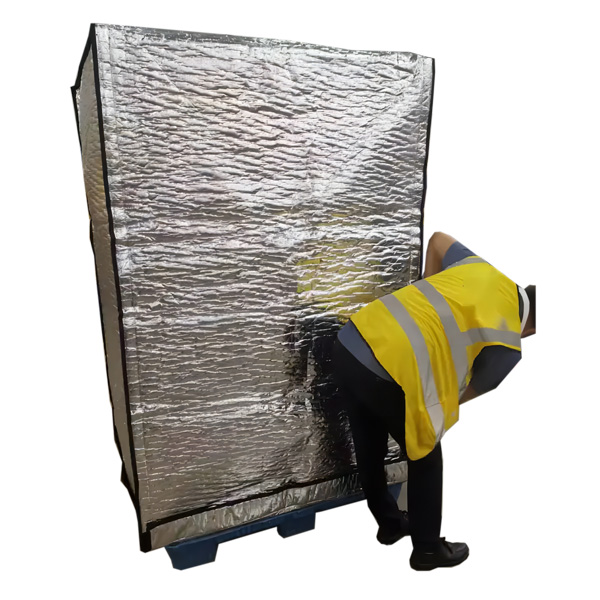
Temperature Control Pallet Covers for Temperature-Controlled Warehousing: Close the Right Control Gap
A pallet cover should earn its place in the control strategy. Temperature control pallet covers for temperature-controlled warehousing are most credible when they address a named, time-bounded exposure that the facility and workflow cannot reasonably eliminate. They are passive barriers, so they change the rate of heat transfer rather than commanding a temperature. That distinction turns a vague purchase into an engineering and operations decision: define the gap, compare control options, specify the complete cover, verify it in context, and govern its use.
This method is useful whether the pallet contains pharmaceutical goods, food, laboratory materials, or another temperature-sensitive product. The required condition always comes from the product and applicable quality system, not from the cover catalog.
Name the Control Gap Before Naming the Product
Write the problem as an event. "Warm dock" is only a location. "Released pallets may wait between the monitored dispatch room and a confirmed vehicle while exterior air enters during door cycles" describes an event that can be observed. It identifies the load state, process step, boundary, and delay that a control must address.
Next, identify why the event exists. It may result from trailer scheduling, inspection timing, insufficient protected staging, a long transfer between buildings, intermittent door operation, or an emergency contingency. Causes matter because a process or facility correction may outperform an accessory. If pallets are called too early, a release rule could prevent the wait. If solar exposure reaches a marked bay, shielding or relocation could protect every load. If control is lost because refrigeration capacity is inadequate, a cover should not legitimize continued storage.
Define the consequence without assuming it. Environmental temperature outside the required range does not automatically prove that product temperature exceeded its limit; product thermal mass and packaging influence response. The reverse is also important: a room reading within range may not represent a pallet near a door or radiant source. Use mapping, routine monitoring, product information, and risk assessment to decide what measurement and response are relevant.
Then set the boundary. State the normal event duration, credible delay, product and pallet configurations, starting condition, season or weather concerns, and the action triggered when the boundary is exceeded. Do not turn a trial result into a universal allowable exposure time. The quality team must retain authority over product impact and deviations.
Choose the Control Layer With the Fewest Fragile Steps
Controls differ in dependence on human action. A protected, temperature-controlled staging room acts on every correctly placed pallet. A scheduling rule can prevent unnecessary dwell but depends on coordination. A fitted cover can travel with an individual load but must be available, intact, correctly oriented, closed, removed, and recovered. The most suitable answer may combine layers, yet each layer should have a reason.
Evaluate options in a practical order. Can the exposure be eliminated by changing timing or route? Can engineering reduce it through an enclosure, door management, airflow change, or added controlled space? Can administrative controls limit dwell and improve escalation? If residual exposure remains, could a passive cover add a meaningful buffer? This is not a rigid regulatory hierarchy for every facility; it is a way to avoid using a portable item to compensate for a preventable system problem.
Consider failure visibility. A warehouse alarm is designed to signal a facility condition. A torn or partly open cover may fail silently unless an operator notices. A reusable cover may appear present while its seams or closure are no longer fit. Inspection, training, and supervision must match that failure mode.
Also consider whether covering conflicts with the primary storage design. Cold rooms may rely on airflow around loads and defined pallet spacing. Covers can obstruct visual inspection, barcode scanning, pest observation, sprinkler patterns, or stock status. Long-term stationary covering should therefore be reviewed separately from short transfer use. It should never be adopted simply because the cover is already purchased.
Write a Requirement That Suppliers Can Answer Honestly
A user requirement should describe function and context before asking for a construction. Avoid prescribing a fashionable layer stack without understanding the heat path. Give suppliers enough information to propose a fit, while protecting confidential product details through an appropriate data-sharing process.
| Requirement field | What the buyer should define | What a useful response should show |
|---|---|---|
| Intended event | Warehouse route, staging activity, normal use, delay case, and exposure direction | A clear statement of suitable and unsuitable use |
| Load envelope | Pallet footprint, height range, overhang, top cap, wrap, labels, and access needs | Internal fit, closure arrangement, and a sample on a representative load |
| Thermal purpose | Radiant shielding, reduced convective exchange, added resistance, or a combination | Construction rationale and relevant complete-cover evidence |
| Handling | Application area, staffing, equipment, scanning, movement, and removal | Safe work sequence with no loose material in travel paths |
| Quality controls | Identification, inspection, documentation, cleaning, storage, and change notification | Defined material and construction controls plus buyer-review points |
| Verification | Challenge, payload, sensors, repetitions, acceptance rule, and report expectations | Transparent test conditions and limits, not an unconditional performance promise |
| End of use | One-way disposal or reusable recovery, cleaning, repair, and retirement | Practical instructions and material information for the destination market |
The table creates a comparable request without forcing every supplier into one unsupported claim. If a field cannot yet be completed, that gap belongs in the project plan. It should not be replaced with a guessed dimension, assumed hold time, or generic request for "GDP certification."
Material details still matter. Ask what controls radiant properties, what supplies insulation, how seams and corners are formed, and how the skirt closes around an irregular load. Request production tolerances and change-notification practices appropriate to the risk. If the cover includes a window or flap, assess the edge construction and the behavior after repeated access. If it is reusable, confirm cleaning compatibility, drying, identification, inspection, and repair boundaries.
Performance evidence must describe a complete configuration. Panel coupons do not capture seams, fit, compression, or air leakage. A supplier test with a different pallet, payload, initial condition, or ambient challenge may be useful background but not direct proof. ISTA thermal profiles and processes can inform certain transport-packaging work, yet a warehouse transfer should be represented by conditions relevant to that transfer. Applicability is part of verification.
Pilot the Process, Not Just the Cover
An effective pilot begins before the first sensor is placed. Operations, quality, engineering, safety, and procurement should agree on the decision to be made. The protocol identifies production-representative covers and loads, reference condition, sensor rationale, instrument calibration status, environmental measurements, handling sequence, deviations, repetitions, and acceptance criteria. Record photographs or diagrams of fit when permitted, because a graph alone cannot show an open skirt or compressed corner.
Use operators from the intended shifts after initial instruction. Timed application can inform staffing, but speed is not the only measure. Observe awkward reaches, blocked labels, loose hems, tears, closure mistakes, load movement, and removal at destination. Check that workers understand the stop point: a cover does not authorize an extension when the vehicle is delayed, an alarm sounds, or the pallet is misrouted.
Consider a hypothetical campus transfer. A mapped and monitored storage room dispatches mixed-height pallets to another controlled building through a covered but unconditioned passage. The project team expects the cover to buffer variable air exposure. During the pilot, thermal traces are acceptable for the tested loads, but short covers ride above the pallet deck on taller configurations and leave a gap. The correct response is not to average all runs and approve the product. The team may narrow the approved height range, add a size, redesign the closure, or change the transfer process, then test the controlled configuration again.
Read the data by location and event. Edge and top sensors can respond faster than core locations. Ambient readings help explain the challenge but do not equal product temperature. Averages can hide the worst position. Investigate outliers, handling notes, starting differences, and sensor movement before concluding that the material succeeded or failed. Predetermine how protocol deviations will be evaluated.
Approval should state exactly what was established: cover identifier, construction, load range, process step, application method, relevant conditions, and limits. It should also name what was not established. This concise boundary is more useful to future operators and auditors than a broad claim that the cover "passed."
Keep the Approved State Intact
Routine control begins with availability. Store covers where the procedure can be followed without a search, while keeping clean and used items separated when needed. Identify size and status plainly. Inspect closures, seams, panels, windows, labels, and contamination before use. Define quarantine and retirement so damaged units do not return because replacement stock is inconvenient.
For reusable covers, build the return loop at launch. Decide who scans or counts returns, where covers are cleaned, which method is allowed, how drying is confirmed, whether repairs are permitted, and how an unreturned item is investigated. Reuse claims should be based on actual recovery and condition data, not on a theoretical maximum. Single-use designs need destination-aware disposal instructions and material information; theoretical recyclability does not guarantee local acceptance.
Monitor the process as well as the environment. Useful review questions include whether covers were applied when required, whether closures remained shut, whether labels were accessible, why units were rejected, and whether unplanned delays occurred. These findings can trigger retraining, inventory changes, redesign, or a more fundamental workflow fix.
Change control protects the evidence. A different material, seam, closure, window, supplier site, pallet height, case pattern, stretch-wrap method, transfer route, door schedule, or cleaning chemistry may affect the approved state. Assess significance through risk and testing rather than assuming all changes are equal. World Health Organization guidance and EU Good Distribution Practice principles reinforce the broader need for qualified storage, suitable monitoring, mapped areas, maintained equipment, procedures, and risk-based control. The cover remains one documented part of that system.
Set a review trigger for major facility or workflow changes and a sensible periodic review under the site's quality system. The team should confirm that approved loads, cover inventory, operator practice, and challenge conditions remain current. Re-verification should be driven by risk; routine repetition with no decision attached is not a substitute for watching the variables that can actually change performance.
Decision FAQs
What is the strongest sign that a cover project is poorly defined?
A request for a guaranteed duration without a product, payload, starting state, ambient challenge, or acceptance rule is a warning sign. Duration is an outcome of a complete configuration and test condition, not an inherent promise of the fabric. Convert the request into a defined event and ask what evidence represents it.
Can a cover compensate for a monitoring hot spot?
It should not be the automatic response. A mapped hot spot may influence monitoring placement, storage restrictions, airflow investigation, maintenance, or layout. A cover might be evaluated for a specific transfer or residual exposure, but it cannot make the underlying space uniformly controlled or replace corrective action approved by the facility and quality teams.
When should procurement reject a sample despite good thermal data?
Reject or redesign it if safe and consistent use is unrealistic. Examples include a skirt that enters equipment paths, blocked release labels, excessive fitting strain, poor closure access, incompatible cleaning, or uncontrolled construction changes. Thermal response is necessary only when thermal protection is the purpose; it is not sufficient for warehouse suitability.
Does using a data logger make the covered pallet temperature controlled?
No. A logger records conditions at its sensing location; it does not protect the load or regulate temperature. Monitoring can verify and investigate, while the facility and qualified process provide control. Sensor selection, placement, calibration, interval, data review, and alarm use should match the decision and product requirements.
Conclusion: A Narrow Claim Can Support a Strong Control
The most defensible pallet-cover program makes a modest claim and supports it well. Name the exposure, compare stronger control layers, specify fit and function, pilot the full process, approve a bounded configuration, and maintain it through inspection, training, records, and change control.
Temperature control pallet covers for temperature-controlled warehousing are passive, supplemental controls. They are not a substitute for a controlled building, representative mapping, ongoing monitoring, HVAC or refrigeration, product-specific storage requirements, qualification, contingency planning, or quality assessment. Use them to close the right gap, not to hide a larger one.
About Tempk
Tempk is a name associated with temperature-controlled packaging for cold-chain applications. We can help buyers turn a warehouse exposure into a more precise discussion of cover fit, construction, handling, reuse, and verification needs. We do not infer universal performance or compliance from a product category. The selected approach should be reviewed against the buyer's pallet configuration, facility, monitoring, process controls, and quality expectations.
Send Tempk the event you need to manage, along with the load envelope and operating constraints, to compare a practical path forward. Plan independent or site-specific verification as required before deployment.
Temperature Control Pallet Covers for Bulk Chemical Shipping Plan
Temperature Control Pallet Covers for Bulk Chemical Shipping: A Decision System That Holds Up
Temperature control pallet covers for bulk chemical shipping should be approved through a decision system, not purchased as a stand-alone promise. The system connects a documented chemical requirement with a mapped exposure, a fitted passive cover, representative evidence, safe operating steps, and a clear exit to stronger control. This approach avoids two common errors: expecting reflective insulation to regulate a set point, and letting a cover interfere with dangerous-goods packaging or hazard communication. The result is a defined use that procurement can specify, operators can repeat, and quality and safety teams can review.
Prepare Two Files Before Requesting Samples
The first file is the product-and-package brief. It identifies the chemical or approved family, current safety data sheet, product condition criteria, known temperature-response mechanisms, dangerous-goods determination, authorized containers, pallet build, restraint, and required access. It should distinguish quality requirements from safe storage conditions and from regulatory transport controls.
OSHA's safety data sheet framework includes precautions for safe handling and conditions for safe storage, including incompatibilities. That information must remain central to the workplace process. A transport specialist still needs to determine the requirements for the actual shipment. PHMSA rules govern relevant U.S. hazardous-material movements; ADR, IATA dangerous-goods processes, and the IMO's IMDG Code apply in their respective road, air, and sea contexts.
The brief should also resolve the word "bulk." If it means a bulk commercial order of smaller containers, state that. If the shipment uses an intermediate bulk container or another form considered bulk packaging by applicable rules, record the actual category. The cover does not change packaging status, quantity limits, or communication duties.
The second file is the route-and-operations brief. It maps the shipment from conditioning through receipt, including all dwell points, conveyances, seasonal conditions, direct sun or cold airflow, floor contact, openings, custody changes, and delays. It names what can be controlled at each point and the protected options available when the schedule fails.
Together, the files give suppliers a solvable problem. Without them, suppliers are pushed toward generic descriptions because no one has defined the load or the exposure. They also give internal reviewers a stable baseline: when the product, package, or route changes, the company can see which approval assumptions need review.
Draw the Boundary Around What the Cover Owns
The cover should own a particular exposure, not the entire cold or temperature chain. A boundary statement might assign it to outbound staging and an ambient regional trailer, while protected holding owns extended delay and the warehouse owns product conditioning. Every risk should have a control with enough authority.
| Boundary question | Answer that supports passive use | Answer that signals escalation | Owner to involve |
|---|---|---|---|
| Does the product start in the approved condition? | Measured or controlled starting process | Unknown core condition or release at a limit | Product and quality teams |
| Is exposure bounded and represented by evidence? | Defined stages with credible delay and backup | Uncontrolled hold or unobserved route variability | Logistics and carrier |
| Is the pallet configuration stable? | Approved packages, load pattern, restraint, and fit | Mixed or changing builds without review | Packaging and operations |
| Can the cover remain correctly closed? | Openings are limited, simulated, and rechecked | Frequent inspection or scanning defeats closure | Operations and handlers |
| Are hazard communication and inspection preserved? | Exact arrangement has competent approval | Marks, labels, closures, or damage are hidden | Dangerous-goods and safety teams |
| Is passive buffering enough for the consequence? | Verified margin and workable contingency | High consequence, narrow margin, or required active control | Technical and compliance owners |
This table is a governance screen. It prevents a favorable material feature from overruling an unsuitable route. A single escalation answer does not always end the project, but it must be resolved through route control, design change, stronger packaging, or active equipment.
The boundary should include the bottom. A cover that wraps only sides and top can leave conductive and convective paths at the pallet base. If a bottom panel, skirt, or floor interface is used, it must remain compatible with forklifts, pallet jacks, restraint, drainage, and safe handling. The tested and shipped arrangements should match.
The boundary should also include time outside normal movement. Weekend closures, missed transfers, security inspection, customs holds, vehicle breakdowns, delivery refusal, and power or equipment failure at protected sites can shift responsibility. Give each credible event an owner and response.
Select an Architecture, Not Just an Insulating Layer
The cover architecture includes outer face, insulating core, inner face, seams, corners, closure, top, base, access, identification, and integration with the pallet. Each part can change heat flow or execution. Suppliers should explain intended function without converting component properties into finished-system guarantees.
A reflective exterior is useful against radiant gain under relevant conditions. It does not stop heat moved by air or contact. Insulation slows conduction but can be bypassed by gaps and compressed areas. A close fit can reduce air exchange but might obstruct labels or inspection. An access flap supports operations but creates a closure that has to be consistently restored.
For chemical use, architecture also includes contamination behavior. Smooth surfaces may be easier to inspect, yet seams and edges can retain residue. Some materials may be attacked by the chemical or approved cleaning agent. Ask for exact material information and scoped compatibility evidence. If fire behavior, static control, or liquid resistance matters, specify the scenario and test method. Do not rely on unqualified adjectives.
Choose size from the loaded pallet envelope and work method. Include package tolerances, bulge, corner boards, top cap, straps, and projections. Check operator reach and mechanical handling. A custom fit may improve consistency but increases item complexity; an adjustable fit can support several builds but creates variation. The correct balance depends on the pallet portfolio and consequences of misuse.
Determine whether the cover is single use, limited reuse, or part of a managed closed loop. Reuse architecture may need durable surfaces, identifiable units, repairable features, and defined cleaning resistance. But durability alone does not create a safe loop. The consignee, reverse logistics, segregation, and quarantine process have to exist.
Demand Evidence in Layers
Start with component documentation to understand construction, then move toward finished-cover and route evidence. A material coupon can support a comparison between layers. A finished-cover test reveals seams and geometry. A loaded comparison shows how the payload changes response. A route-representative protocol connects the configuration to the decision. Operational monitoring checks whether real use stays inside the assumptions.
At each layer, ask what was tested and what inference is justified. Record material batch or cover identity, production status, dimensions, load, starting state, external profile, radiation and airflow where relevant, floor and base, sensor locations, device calibration, data interval, number of runs, deviations, and acceptance rule. If the result is confidential, arrange a controlled technical review rather than accepting only a headline.
Test against an appropriate comparator. An uncovered but otherwise equivalent pallet can quantify the cover's incremental effect. Another cover or an operational control can support an alternative decision. Ensure comparable starting conditions and exposure. A warmer control pallet can make the proposed cover look better without the cover being responsible.
Measure quantities that answer the product decision. Under-cover air, container surface, product, and surrogate temperatures are not interchangeable. Use a documented sensor map and calibrated devices appropriate to the purpose. Preserve raw data and event times. State how uncertainty and spatial variation affect acceptance.
Do not turn a result into an unconditional duration. A claim only applies to the configuration and boundary conditions it represents. If the test supports routine exposure but not a long delay, record both findings. The delay belongs to the exception plan, not to creative wording.
Use official or recognized standards only within scope. ISTA publishes thermal transport test resources for defined distribution systems, but a parcel-oriented profile may not describe palletized chemical freight. A standard method improves repeatability when appropriate; it does not replace the chemical criterion, pallet geometry, or route model.
Put Supplier Control Into the Technical Approval
Supplier qualification for a passive cover should focus on the attributes that sustain the evidence. Create a purchase specification for materials or defined construction, dimensions and tolerances, seam and closure methods, access locations, base, identification, workmanship, allowed repairs, storage, and care. Include the exact production item tied to the trial.
Ask the supplier to describe incoming material control, in-process checks, finished inspection, nonconformance handling, traceability appropriate to the product, and change notification. Do not invent certifications the supplier must hold unless the business has a verified requirement. A useful audit question is how the supplier would prevent an apparently similar substitute film, foam, closure, or adhesive from entering production without review.
Request production samples before the volume release or establish another risk-appropriate first-article check. Compare them with the approved configuration for fit, materials, workmanship, closures, access, and identity. A beautiful prototype from a development bench does not demonstrate repeatable production.
Define receiving controls that operators can perform. Confirm item and size, inspect for tears, delamination, incomplete seams, damaged closures, contamination, moisture, and incorrect identification. Dimensional sampling may be appropriate. Thermal verification can occur periodically or after changes according to risk rather than on every receipt.
Make commercial scaling conditional. Price, minimum order quantities, lead time, customization, spares, packaging, and delivery schedule are supplier-specific questions. Add the internal costs of training, application, storage, inspection, cleaning, returns, losses, monitoring, and exception handling. The lowest cover price can create the highest process cost if fit is inconsistent.
Pilot the Operating Process, Then Release the Product
A pilot should begin at the conditioning or staging point and end after receipt, not at the laboratory door. Representative operators build and inspect the pallet, apply the cover, scan and move it, perform expected handovers, open it if required, refit it, and remove it. Quality and safety observers record workarounds, visibility issues, damage, and time pressure.
Use launch monitoring when justified to compare field exposure with the test model. The plan defines device locations, calibration status, sampling, download, alarm or review criteria, missing-data handling, and decision authority. Monitoring is not a substitute for protection and should not create uncontrolled electrical or access issues around the chemical.
Train people on the reason for each critical step. "Close the flap fully" is easier to follow when handlers understand that an open path changes the tested boundary. "Do not cover a stained drum" connects the thermal process to package safety. Avoid asking operators to decide product stability; give them observable stop conditions and escalation contacts.
Release documentation should include the approved product and package, pallet drawing, cover item, application instruction, required access, starting condition process, approved lanes or stages, monitoring, and exception flow. It should also state exclusions, such as unapproved pallet heights, mixed products, specified dangerous goods, uncontrolled export routes, or contaminated covers as applicable.
Field feedback should be reviewed early. An apparently minor issue, such as a closure that opens during a scan, may invalidate thermal assumptions. Correct design or workflow before expanding the program. A successful temperature trace does not excuse a blocked label or unsafe inspection.
A Disruption Reveals Whether the System Is Real
Consider a hypothetical launch shipment of palletized drums on an approved ambient road lane. The cover fits, labels remain accessible, and route evidence supports the routine movement. At a cross-dock, a carrier changes equipment and the pallet misses its connection. The likely dwell will exceed the passive-use boundary.
The shipping instruction names this event. The terminal places the pallet in a reviewed protected area without removing the cover, records the time and cover condition, and alerts the route owner. The technical team reviews the exposure and monitoring information. If the protected option is unavailable, the plan identifies a temperature-managed recovery or return decision. The driver or dock worker is not asked to guess product suitability.
During inspection, a handler notices moisture near one drum. The response switches immediately from thermal delay to the chemical incident procedure. Personnel isolate the pallet and follow the SDS, site emergency process, and required protective measures. The cover is treated as potentially contaminated. Thermal performance is no longer the priority.
After the event, the team confirms whether the carrier change was foreseeable, whether terminal instructions were accessible, and whether the approved-use file needs revision. It reviews data without claiming that one sensor proves every drum's condition. Product disposition remains with the authorized function.
This scenario exposes the value of a layered system. The cover buys passive margin, the protected location controls a delay, monitoring informs review, and safety procedures take over for suspected leakage. No single component is asked to perform another's job.
Reject Claims That Collapse Important Distinctions
"Temperature controlled" is incomplete if the product is passive. Ask whether it merely slows heat exchange or uses active regulation. "Maintains temperature" is incomplete without a range, load, starting state, profile, duration, measurement point, and acceptance rule. "Tested" is incomplete without the protocol and production link.
"Suitable for chemicals" is too broad. Ask which surfaces were assessed against which substances, concentrations, contact modes, durations, and temperatures. "Waterproof" does not prove chemical compatibility, and "reusable" does not establish cleanability after a spill. "Anti-static" or "fire resistant" needs a relevant method and complete construction.
"Compliant" is especially risky. The cover does not classify the chemical, authorize the receptacle, create training, prepare shipping papers, or satisfy every mark, label, placard, stowage, segregation, or temperature-control rule. Compliance belongs to the shipment and operation under applicable requirements, not to a generic pallet accessory.
"Bulk shipping" must also be unpacked. A marketing phrase about volume does not resolve whether the actual containers are regulatory bulk packagings. Ask the shipper's dangerous-goods professional to document the determination.
Finally, reject environmental claims without boundaries. Recyclable material may not be locally accepted. Reusable material may not return. A lower product weight may not overcome losses or cleaning. Require a defined comparison before publishing percentages or absolute statements.
Finish With an Approval Memo That Operations Can Use
The final decision should fit on a concise approval page backed by evidence. It names the product, package, pallet, cover, route stages, starting process, allowed openings, evidence reference, monitoring, operating boundary, contingency, reuse or disposal route, owners, and change triggers. This is the control that accompanies the physical item.
Approve only what the evidence supports. Expand later through deliberate review. If a new lane has longer holds, a different load, or another transport mode, treat it as a change, not an administrative extension. If events repeatedly approach the boundary, improve the route or move to a system with greater control authority.
Approval FAQ
What is the most important question for a first supplier meeting?
Ask the supplier to explain which finished-cover configuration and test conditions support the proposed use on your actual pallet and route. This opens the discussion about materials, fit, payload, profile, sensor locations, and limitations. A supplier that begins with those conditions is giving you more useful information than one that begins with a universal duration.
Can pallet covers replace preconditioning?
No. A passive cover preserves a starting state only by slowing change. It cannot be relied on to bring the chemical to the correct condition. Define how the product and packaging are conditioned, how adequate time is established, and what measurement or release check confirms the starting state.
When should the cover be retested?
Retesting or other technical review may be needed after changes to materials, seams, dimensions, closures, pallet geometry, package, payload, starting process, cleaning, route, carrier, mode, or ambient profile. The level of work depends on risk and the relationship to prior evidence. Define triggers in change control before launch.
Who owns an excursion decision?
The authorized product or quality function should own disposition using the approved procedure and relevant product knowledge. Logistics supplies route events, monitoring supplies measured conditions, and safety or dangerous-goods personnel address hazards and compliance. A cover supplier or driver should not independently declare affected chemical acceptable.
About Tempk
For buyers building this decision system, Tempk is associated with temperature-controlled packaging and cold-chain solutions and can help explore passive pallet-cover configurations. We can work from a defined pallet and route so fit, access, cover construction, and verification questions remain concrete. We do not position a cover as an automatic qualified shipping system, a dangerous-goods compliance device, or a substitute for SDS requirements and internal product approval.
Share your product-and-package brief and route-and-operations brief with Tempk to start a focused cover discussion before samples, testing, or volume purchasing.
Selecting Insulated Pallet Blankets for Last Mile Delivery

Selecting Insulated Pallet Blankets for Last Mile Delivery
Insulated pallet blankets for last mile delivery make sense when a team can identify a temporary exposure that needs passive, supplemental protection. They are poorly suited to vague assignments such as "maintain the cold chain" or "cover any delay." A blanket can slow heat exchange while a pallet crosses a dock, waits for a planned transfer, or moves through a short handoff. It cannot cool the load, replace a refrigerated vehicle or qualified shipper, prove product condition, override product-specific requirements, or qualify a lane. Selection should therefore begin with a decision boundary, not a fabric sample.
Decide whether the gap is suitable for a blanket
The first decision is whether the problem is truly temporary exposure. If a pallet spends most of the route inside an appropriate controlled vehicle and needs added protection during movement between that vehicle and a controlled facility, a blanket may have a logical supporting role. If the route lacks a dependable primary control, passive coverage is unlikely to be the right starting point.
Describe the gap as an event. "Outbound pallet waits beside an open dock while the controlled vehicle backs into position" is actionable. "Last mile gets warm" is not. The event description should name the location, product, responsible handler, surrounding environment, expected process, and reason exposure occurs.
Then ask whether the gap can be removed. Better appointment coordination, indoor staging, a ready-before-release rule, pre-cleared paperwork, or direct receiver communication may prevent exposure. A blanket can still support the revised process, but it should not preserve a delay that operations could eliminate.
If the gap remains, confirm the product requirement. Use approved product and quality information, not a generic cold-chain range. Product sensitivity determines whether passive buffering is appropriate and what evidence is needed. A cover used around stable ingredients cannot be assumed suitable for medicines, biologics, diagnostic products, or food requiring temperature control for safety.
Identify the primary control next. Temperature-controlled vehicles, qualified passive shippers, active containers, and approved packouts perform different jobs. A pallet blanket sits outside those systems and may change their exposure or airflow. The team responsible for the transport design should decide whether the combination is appropriate.
Finally, establish a stop rule. What happens if the vehicle is late, the receiver is closed, the blanket is damaged, the load starts outside its condition, or monitoring indicates a concern? Passive protection must not convert an unexpected delay into unlimited waiting. The route needs an authorized contingency and an escalation owner.
This decision boundary is also a purchasing filter. A supplier who understands the use should ask about the exposure, pallet, and process. A promise that the blanket alone will keep every product "at temperature" skips the information needed for a credible recommendation.
Choose the control that matches the failure mode
Not every last-mile temperature concern is solved by adding insulation. Different failure modes call for different interventions, and several controls may be combined after a risk review. The buyer's task is to match the control to the failure rather than select the easiest item to purchase.
| Observed failure mode | More relevant control direction | Potential role for a pallet blanket | Assumption to avoid |
|---|---|---|---|
| Brief transfer through an uncontrolled dock or apron | Coordinate the handoff and maintain the approved primary transport system | Add passive coverage during the defined movement | The cover makes transfer time irrelevant |
| Vehicle compartment cannot maintain required conditions | Repair, replace, qualify, or redesign the primary vehicle or shipping system | None as a substitute; possible later supplemental use after the primary issue is resolved | More insulation corrects failed refrigeration |
| Repeated door opening affects remaining pallets | Review route order, compartment use, airflow, access, and monitoring | Reduce direct ambient exchange if safe access and fit are demonstrated | Covering the pallet proves product stayed acceptable |
| Receiver delays unloading | Improve appointment control and define a wait-and-escalate process | Buffer the planned handoff while the receiver is ready | The driver may wait indefinitely because the load is covered |
| Individual cases need validated temperature control | Use a qualified shipper or packout appropriate to the product | Possible external shielding only if evaluated with the complete configuration | A pallet cover qualifies every case inside it |
| Condition is unknown after delivery | Use a suitable monitoring and review process | No monitoring function; it may be used alongside monitoring | Insulation creates evidence or decides product release |
The table draws a line between protection, control, and evidence. A blanket belongs mainly in the protection column. Refrigeration or qualified thermal packaging may provide the primary control, while monitoring and records support evidence. Treating those functions as interchangeable creates risk.
This comparison also prevents a common budget error. A blanket can appear less expensive than redesigning a route, but the two options may not solve the same problem. If the vehicle is unsuitable or the receiver routinely creates long uncontrolled waits, buying covers may add cost without fixing the failure mode.
Sometimes the best decision is a combined control. A suitable controlled vehicle may carry the main thermal burden, a fitted blanket may protect the pallet during transfer, a logger may provide required data, and an appointment process may limit dwell. The combination should be evaluated as a complete operating system, with clear responsibility for each component.
The same logic applies when the product is already in qualified shippers. A blanket around the pallet might reduce external exposure, but it changes the tested context. The quality team should decide whether existing qualification covers that arrangement or whether further evaluation is needed. Added insulation is not automatically harmless; it can influence conditioning, airflow, handling, and access.
Specify a blanket that operators can actually use
Once the intended role is approved, convert it into an operational specification. A useful specification covers fit, construction, handling, care, identification, evidence, and change control. It does not need invented performance numbers to be precise.
Begin with pallet geometry. Provide the loaded footprint, height range, top shape, protrusions, wrap pattern, corner protection, and handling openings. Confirm whether the same cover is expected to fit full and partial pallets. A sample should be placed over the real load so the team can see gaps, excess material, closures, and label access.
Fit must support safe handling. The cover should not trail near wheels, block a driver's view, hide damage, interfere with load securement, or require unsafe climbing. If handlers need access during delivery, the design should allow that access without leaving the whole pallet exposed or encouraging improvised cutting and folding.
Review the complete construction. Ask the supplier to explain the insulating structure, outer and inner surfaces, seams, closures, flaps, reinforcement, and identification features. Avoid translating a material name into an unsupported thermal conclusion. Performance depends on the assembly and installed condition.
Define environmental and hygiene needs. Will the cover encounter rain, condensation, dirty docks, food residues, or repeated cleaning? Moisture resistance, cleaning compatibility, drying, segregation, and storage should be addressed with supplier information and site procedures. Do not assume that "reusable" means easy to sanitize or suitable for every product category.
Identification deserves more attention than it usually receives. Operations may need to distinguish size, intended use, clean status, ownership, or inspection state. Labels or markings should remain readable through the expected handling process. If serialized tracking is desired, confirm how identifiers are attached and whether cleaning or folding affects them.
Inspection and retirement criteria need a practical form. Tears, punctures, seam separation, damaged closures, contamination, trapped moisture, loss of identification, or misshapen insulation may require segregation. The exact acceptance limits should be based on the design, supplier guidance, and buyer's risk process. An assumed reuse count is not a substitute for checking condition.
Request change control before approving bulk supply. A later change in material, thickness, seam, closure, coating, or dimensions may alter the reviewed configuration even when the product name remains the same. Establish how the supplier communicates changes and how receiving verifies that production units match the approved item.
Finally, state the evidence expected with the product. That may include specifications, care instructions, inspection guidance, material declarations relevant to the use, and contextual thermal data. The evidence list should follow actual risk and company procedures, not a generic demand for every certificate a supplier can provide.
Prove the use case without turning a pilot into a promise
A pilot should answer a bounded question: can this specific blanket be used safely and consistently in this defined handoff, and does the complete process meet the product team's acceptance criteria? It should not be designed to generate a broad marketing duration.
Write the intended use and acceptance criteria before the pilot. Include the product or representative load, pallet configuration, cover installation, primary transport control, route step, receiving process, monitoring purpose, responsibilities, and deviation path. If the trial conditions change, record the change instead of quietly treating the run as equivalent.
Use a comparison only when it is ethical and operationally safe. A control configuration should not knowingly put sensitive product at risk. Depending on the quality system, the team may use product simulants, controlled environmental work, monitored operational trials, or other approved methods. The study design belongs with qualified technical and quality personnel.
Monitoring positions should be chosen to answer stated questions. An outer sensor may characterize exposure near the cover, while another position may represent the load. Device suitability, calibration status, sampling approach, activation, retrieval, and data review all matter. One trace should not be generalized across every pallet location or product.
Record process data as well as temperature data. Vehicle readiness, dispatch time, cover installation, door opening, transfer start, receiver acceptance, removal, ambient events, and deviations help explain the thermal record. Without those details, a result may show that something happened without revealing why.
Hypothetical scenario: A laboratory supplier uses a controlled vehicle to deliver palletized diagnostic materials to several urban sites. The final transfer at one building passes through an uncovered service yard. The team evaluates a fitted blanket only for that transfer. During the pilot, handlers discover that the receiver's scan label sits beneath a closed flap, so they open the cover outdoors before the building door is ready. The blanket may have acceptable material properties, but the workflow is not yet suitable. The team moves the scan information to an accessible document pouch, retrains the handoff, repeats the evaluation, and keeps the controlled vehicle as the primary thermal control throughout.
Review negative findings for process value. Poor fit, difficult closure, unsafe lifting, wet storage, unreadable identification, or inconsistent installation are valid reasons to reject or redesign the option even when a chamber test looks favorable. Operational reliability is part of real performance.
Approval should define boundaries. List the pallet format, handoff, primary control, installation, monitoring, cleaning, inspection, and change triggers covered by the decision. New routes, products, vehicles, cover revisions, seasons, or receiving conditions may require review. The goal is controlled use, not a permanent declaration that the blanket is "qualified" in isolation.
Scale purchasing without losing the approved configuration
Bulk ordering introduces risks that a successful sample cannot reveal. The organization needs to preserve item identity, production consistency, training, maintenance, and evidence as the blanket moves from a trial tool to routine equipment.
Procurement should link the purchase specification to the reviewed sample. Dimensions, construction, closures, markings, documents, packaging, and change-notification expectations should be clear. If substitutes are permitted, define who approves them. A visually similar cover should not be accepted automatically for a controlled use.
Incoming inspection can be proportionate but meaningful. Confirm item identity, condition, labeling, expected construction, key dimensions, and documentation. Sample-based checks may be appropriate under the buyer's quality system, but the method should be established rather than improvised after a shipment arrives.
Plan inventory status. New, released, in-use, awaiting cleaning, damaged, and retired blankets should not become an indistinguishable pile. Storage should protect clean covers from dirt, moisture, crushing, sharp edges, and traffic. Folding instructions may help preserve consistent fit if they are compatible with the design.
Training should use the approved configuration and real handling environment. Include dispatch, warehouse, drivers, receivers where possible, cleaning staff, and anyone who reviews deviations. People need to understand both what the blanket does and what it does not do. That knowledge helps them escalate instead of relying on a false sense of security.
Reverse logistics can determine whether reuse works economically. Decide who collects the cover, where it returns, how its status is marked, and who pays attention when an item goes missing. A durable blanket that rarely comes back may not provide the expected value. A return process that mixes contaminated and clean items may create a larger operational problem.
Monitor the process after launch. Review installation errors, damaged covers, receiver delays, missed returns, cleaning failures, logger events, and deviations. Trends can point to a supplier issue, training gap, route weakness, or unrealistic intended use. Correct the source rather than treating every problem as a reason to add another cover.
Cost comparison should include the whole life cycle: purchase, handling, storage, cleaning, inspection, return, loss, repair where allowed, and retirement. Avoid an unsupported savings claim. Use the organization's own route volume, labor process, loss experience, and quality costs to determine whether the option is worthwhile.
Supplier management continues after purchase. Periodically confirm that specifications and manufacturing status remain controlled, especially after notifications or observed differences. If a change could affect fit, handling, hygiene, or thermal behavior, assess it before routine use.
Frequently Asked Questions
How do I know whether my route needs an insulated pallet blanket?
Map every transition between controlled spaces and identify temporary ambient exposure. If the primary transport system is suitable and a specific handoff remains vulnerable, a blanket may be worth evaluating. If the route lacks reliable temperature control, has open-ended dwell, or has uncertain product requirements, correct those issues first rather than expecting passive coverage to solve them.
What documentation should a buyer request from the supplier?
Request documents relevant to the intended use, such as an item specification, construction and dimension details, installation and care instructions, inspection guidance, change-control information, and contextual support for any thermal claim. Ask what configuration and conditions were tested. A certificate title or isolated performance statement is not enough to establish suitability for your pallet and route.
Can a blanket extend the allowed delivery time?
Not automatically. Any permitted route duration or handoff limit must come from the approved transport design and supporting evidence. A blanket may reduce exposure under defined conditions, but it should not be used to extend waiting time by assumption. If the operating process changes, the responsible quality or food-safety team should review the effect and decide whether further evaluation is required.
Do I still need temperature monitoring?
Use monitoring according to the product, route, quality agreement, and applicable requirements. A blanket has no recording function and cannot demonstrate product condition. Monitoring also does not provide thermal protection, so the two tools are not substitutes. Define device suitability, placement, retrieval, review, and excursion response within the transport plan.
When should a reusable blanket be retired?
Retirement should follow approved condition criteria based on the product design, supplier guidance, hygiene needs, and buyer's risk assessment. Damage to insulation, seams, closures, surfaces, or identification; persistent contamination; trapped moisture; or loss of fit may require segregation. Do not rely only on appearance or an assumed reuse count.
Conclusion
Selecting an insulated pallet blanket is a system decision disguised as a product purchase. The cover can be valuable when it reduces a specific temporary exposure and fits safely into an already sound transport plan. It is not refrigeration, a qualified shipper, monitoring, product approval, or lane qualification.
Define the gap, remove avoidable delays, preserve the primary control, and set a stop rule. Then specify fit, handling, construction, hygiene, identification, inspection, evidence, and change control. Use a bounded pilot to confirm that people can repeat the intended process and that the complete configuration meets approved criteria.
When purchasing scales, keep the reviewed configuration intact through supplier control, incoming inspection, training, status management, return, and ongoing review. A blanket earns its place by supporting a controlled handoff, not by carrying claims the passive product cannot support.
About Tempk
Tempk's connection to temperature-controlled packaging and cold-chain solutions shapes a system-level view of pallet blankets. We approach each blanket as one possible supplemental layer around a defined shipment. Product requirements, primary transport control, pallet fit, temporary exposure, monitoring, handling, and lane evidence still govern the decision. Tempk does not position a blanket as a replacement for refrigeration, qualified thermal packaging, product-specific instructions, or lane qualification; the proposed use should be assessed within the customer's actual process.
Share your exposure point, pallet build, and primary transport method with Tempk to frame the right sample and supplier questions.
Cold Chain Pallet Covers for Temperature-Controlled Warehousing Plans

Cold Chain Pallet Covers for Temperature-Controlled Warehousing: A Control Plan From Release to Receipt
The safest time to decide what a pallet cover means is before a covered pallet reaches the dock. Cold chain pallet covers for temperature-controlled warehousing should sit inside a release-to-receipt control plan with defined readiness gates, owners, limits, and evidence. The cover itself is passive: it slows some heat transfer but neither senses nor regulates temperature. Its presence cannot authorize an indefinite delay or replace a controlled space.
This control-plan approach changes the buying conversation. Instead of asking for a universal protection time, the team defines the handoff, chooses the cover for that event, verifies a representative configuration, and states exactly when normal flow must stop.
Begin With the Product Promise, Not the Cover Claim
The product requirement is the anchor. Storage and transfer conditions may come from labeling, stability information, a client quality agreement, food safety controls, or another approved specification. They can vary by product and market. A warehouse should not adopt a general "cold-chain range" and expect one cover to satisfy every load.
Translate the requirement into process obligations. Which room is approved for storage? What environmental conditions are monitored? What makes a vehicle or next zone ready? How are product and pallet status verified? Which data are reviewed before release? Who owns an unexpected wait? These questions define control independently of any accessory.
Then state the cover claim narrowly. It might be intended to reduce short-term radiant and convective exposure during movement from a monitored dispatch area to a ready vehicle. It might provide a passive buffer while receiving personnel complete a planned identity check at a protected bay. Each statement names an operation and a thermal purpose without promising that the cover maintains a universal temperature for a universal time.
Avoid merging distinct functions. HVAC or refrigeration controls the warehouse. Temperature mapping characterizes spatial behavior and helps place monitoring devices. Monitoring records conditions. A logger measures at its sensor. A cover resists heat flow. Product stability knowledge supports impact assessment. Qualification shows that a defined process or system is fit for intended use. No one element performs all of those jobs.
This separation is also practical during an event. A room alarm cannot be dismissed because a load is covered. A favorable logger reading cannot prove that every case was protected. A damaged cover does not automatically mean product failed. Each signal enters the deviation process, where relevant evidence and product requirements support the decision.
Use Five Readiness Gates Around the Handoff
The first gate is eligibility. Confirm that the product, pallet format, cover configuration, route, and intended event fall within the approved use. Mixed loads require special attention because the most restrictive applicable requirement may shape handling, while different thermal masses can respond differently.
The second gate is destination readiness. Do not release a pallet merely because the cover is available. The receiving room, vehicle, staging position, staff, and documentation should be ready according to procedure. This gate removes avoidable dwell instead of asking insulation to absorb it.
The third gate is coverage readiness. Select the correct size and status. Inspect panels, seams, skirt, closures, access features, identification, cleanliness, and dryness as relevant. Confirm that labels and any required monitor remain accessible. Fit the cover without destabilizing the load or creating material in an aisle or equipment path.
The fourth gate is controlled movement. Start time ownership, follow the approved route, limit unnecessary stops, keep closures in the required state, and protect against conditions not addressed by the cover, such as precipitation or unsafe wind. If the handoff exceeds its boundary, follow escalation rather than silently extending it.
The fifth gate is receipt and closure. The receiving owner confirms arrival, records required information, removes or retains the cover according to procedure, inspects the load, and routes the cover for disposal, return, cleaning, or quarantine. Responsibility does not end when the forklift crosses the threshold.
These gates can be simple in a low-risk operation and more formal in a regulated one. Their value is that they make assumptions visible. A passive cover is strongest when destination readiness and time ownership are already strong.
Verify the Exact Configuration the Team Will Operate
Qualification or verification should answer a decision, not produce an attractive chart. Write the intended-use statement, risk assessment, protocol, acceptance criteria, and change boundary before ordering at scale. The level of formality should reflect product, operation, and applicable quality requirements.
| Verification question | Evidence to collect | Decision it supports |
|---|---|---|
| Does the cover fit approved loads? | Representative heights, overhang, top caps, stretch wrap, closures, and access observation | Defines the usable pallet envelope and safe fitting method |
| Does it address the relevant heat path? | Complete-cover tests with measured ambient, radiant, airflow, and contact context as applicable | Supports a bounded thermal-purpose claim |
| Is the result product-relevant? | Justified payload or simulant, starting state, sensor map, calibrated instruments, and acceptance rule | Connects thermal response to the intended product or process decision |
| Can intended staff apply it consistently? | Shift-representative handling trial, label scans, timing, safety, and closure checks | Supports the work instruction and staffing model |
| Can the cover remain controlled? | Incoming checks, identification, cleaning or disposal, damage criteria, and change notification | Supports routine supply, reuse, and lifecycle governance |
| What happens outside the plan? | Delay, damage, alarm, wrong-route, and missing-cover challenge discussions or drills | Defines stop rules and deviation response |
The table deliberately combines thermal and operational evidence. A cover that performs in a chamber but cannot be closed after scanning is not verified for that workflow. A cover that is easy to fit but lacks relevant thermal evidence cannot support the intended thermal claim.
Test articles should represent production materials, seams, closures, windows, and dimensions. The pallet, payload, case arrangement, top cap, and wrap should represent approved routine variation. Measure the local challenge rather than relying solely on the warehouse setpoint. Sensor positions should include locations justified by risk, and each channel should be identified as air, surface, simulant, or product-relevant measurement.
Review individual traces before averages. Look for early-changing corners, asymmetry, flap events, sensor movement, and run-to-run variability. Document exclusions and protocol deviations. If starting conditions differ, do not claim that the cover caused the full difference in response.
External methods can inform the plan when applicable. ISTA thermal standards address defined transport-packaging contexts, while World Health Organization technical supplements address qualification, mapping, monitoring, and time- and temperature-sensitive product systems. EU Good Distribution Practice addresses representative storage mapping, suitable monitoring and control equipment, and protection in receiving and dispatch. None removes the need to show that a method fits this pallet, warehouse handoff, and decision.
Make Deviations Actionable Before They Happen
Write stop rules in plain operating language. Examples include the wrong cover size, open or failed closure, tear, wet or contaminated cover, hidden status label, unstable load, unready vehicle, blocked route, facility alarm, missed time boundary, unexpected outdoor exposure, sensor issue, or arrival at the wrong zone. Link each event to a safe immediate action and an escalation owner.
Immediate action protects the product and people without deciding more than the operator knows. It may mean keeping the load in approved storage, returning it to a controlled area, pausing movement, replacing a cover, securing the route, or notifying quality. The operator should not decide product acceptability from ambient feel, cover appearance, or a single live reading unless an approved procedure specifically assigns that decision.
Consider a hypothetical pharmaceutical dispatch. A qualified covered transfer begins only after the vehicle is reported ready. Midway to the bay, the vehicle fails a preloading check and the route backs up. The operator follows the stop rule and returns the pallet to the monitored dispatch room rather than parking it under the cover. The time and relevant readings are recorded, the cover is inspected, and quality determines whether further assessment is required. The control worked because the plan prevented the cover from becoming storage.
Root-cause review should look beyond "operator error." Was vehicle readiness status reliable? Was the cover hard to close? Was the approved size available? Did a label require reopening? Did production variation exceed the specified load envelope? Did staffing or peak flow make the procedure unrealistic? Correct the system that produced the error.
Product assessment should use the evidence and process defined by the responsible quality or food safety system. Environmental conditions, product or surface data where available, duration, product stability knowledge, packaging, and event history may all matter. The pallet cover can influence exposure, but it does not make the disposition decision.
Control the Supply and Lifecycle After Approval
An approved sample does not guarantee ongoing equivalence. The purchasing specification should identify controlled materials and construction, dimensions, seams, closures, access features, markings, workmanship, incoming packaging, and change notification appropriate to risk. Define what receiving can inspect and what supplier records or test evidence may be reviewed.
Scale carefully when customization is involved. Printing, windows, label pockets, reinforced handles, closure changes, and size adjustments can affect air leakage, thermal bridges, fit, cleaning, and handling. A visual branding change may still need technical assessment. The quality system should decide whether documentation review, fit confirmation, or thermal rework is warranted.
Reusable covers need an identity and condition loop. Establish clean, issued, used, cleaning, drying, quarantine, repair, and retired states. Define who owns each transition. A repair should not be improvised with unknown tape or stitching if it can affect cleanliness, insulation, vapor behavior, or fit. Retirement criteria should be practical enough that staff can recognize an unfit unit.
For one-way covers, know the destination. Material composition, coatings, mixed layers, contamination, and local waste infrastructure affect disposal or recycling. Sustainability claims should match verified boundaries. Reusable is not automatically lower impact when return is poor, and recyclable does not mean the item will be recycled.
Review process indicators with a purpose: correct use, missing stock, damage type, closure error, return, cleaning rejection, unplanned dwell, and deviations. Trends can show when a cover design, supplier, route, or training no longer supports the approved state. They can also show that a process improvement has removed the original need.
Change control should cover both product and operation. A new cover material, supplier process, pallet height, case configuration, stretch-wrap pattern, route, dock layout, monitoring plan, cleaning agent, or vehicle handoff can change performance. Assess the impact before treating the old evidence as current.
Control-Plan FAQs
Must every covered pallet carry a data logger?
Not automatically. Monitoring strategy depends on product risk, quality requirements, process evidence, and the purpose of measurement. Warehouse monitoring, pallet or shipment loggers, and study sensors answer different questions. If a logger is used, define its location, calibration status, setup, review, and action rules. The logger records; it does not provide protection.
Can a successful summer trial cover winter use?
Only if the approved evidence and risk assessment justify both directions of exposure. Winter can introduce cooling or freezing risk, different air movement, condensation behavior after reentry, and different material handling. Representative seasonal conditions may require separate challenge work or additional evidence.
What if the cover supplier changes a seam or closure?
Assess the change against the approved configuration. Seams and closures can affect leakage, thermal bridges, fit, operator behavior, cleaning, and durability. The response may range from documentation review to fit and thermal testing, depending on risk. Do not assume the change is harmless because the main panel material is unchanged.
Is the cover part of warehouse qualification?
It may be part of qualification for a specific transfer process or operational control, depending on the quality system. It does not qualify the warehouse itself. Facility qualification, mapping, monitoring, HVAC or refrigeration, maintenance, and operating procedures retain their own purposes and evidence.
Conclusion: Release Only Into a Ready Handoff
A reliable pallet-cover plan begins with product requirements and destination readiness. Use eligibility, coverage, movement, and receipt gates; verify the exact configuration; write stop rules; and control supply and lifecycle changes. This structure turns a portable cover into a bounded process element rather than an informal permission to wait.
Cold chain pallet covers for temperature-controlled warehousing are passive, supplemental controls. They cannot substitute for controlled premises, representative mapping, routine monitoring, HVAC or refrigeration, product-specific requirements, suitable transport, quality assessment, or qualification. Their role is to reduce a defined exposure between stronger controls.
About Tempk
Tempk works in the area of temperature-controlled packaging and cold-chain solutions. We can help structure a pallet-cover discussion around readiness gates, load fit, closure and access, verification evidence, and routine lifecycle control. We avoid treating a cover as universal storage or assuming that a general material claim applies to every product and route. The buyer's facility, monitoring, procedures, quality review, and operating limits remain decisive.
Give Tempk the planned handoff and the conditions that should stop it. Those details support a more useful cover recommendation and a clearer path to verification before routine release.