


How to Specify a Foam-Lined Insulated Box
How to Specify a Foam-Lined Insulated Box
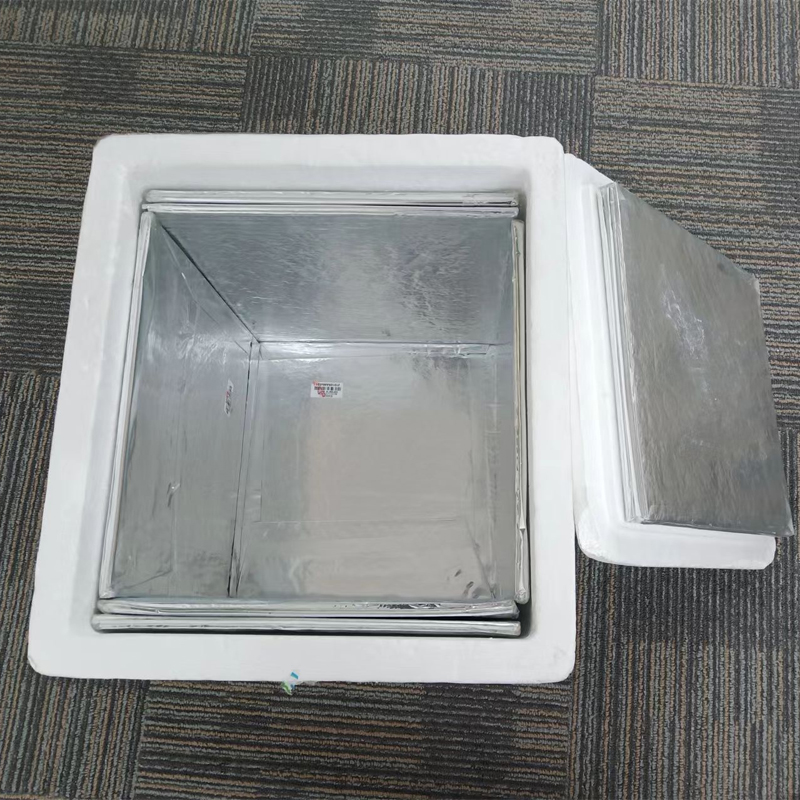
How to Specify a Foam-Lined Insulated Box
The right foam-lined insulated box is the one whose evidence and operating instructions match the product, payload, route, season, and receiving reality. A strong procurement process therefore starts with requirements, converts them into a packout, tests the packout under defined conditions, and controls it after launch. This article combines the thermal, operational, supplier, and quality decisions needed for chilled, frozen, or moderately temperature-sensitive food, healthcare, and specialty products without treating insulation as a universal guarantee.
Write a requirement that a supplier can actually answer
A useful requirement names the product, approved condition, payload range, route, maximum operational window, seasonal exposure, receiving process, and consequence of failure. It also states what the packaging must not be expected to do. For this application, a foam lining slows heat transfer but does not create a defined temperature range without a suitable coolant and packout design. That sentence prevents scope drift and makes missing controls visible before quotations are compared.
The requirement should distinguish fixed inputs from variables. Fixed inputs may include external-size limits, a regulated inner package, a product carton, or a destination procedure. Variables may include insulation type, coolant arrangement, payload insert, closure, outer carton, and monitoring plan. Allowing suppliers to propose alternatives can improve the design, but each alternative should be assessed against the same acceptance criteria.
The useful thermal window depends on foam material, geometry, joints, coolant, payload, starting temperatures, ambient exposure, and opening events. Record the source and owner of that product requirement. A procurement team should not create a temperature band merely to make supplier comparison easier.
- What product or product family will be shipped, and who owns the stability decision?
- What are the minimum and maximum payloads, including physical dimensions and starting condition?
- What is the full packing-to-storage duration, including contingency and receiving delay?
- What hot, cold, mechanical, moisture, hygiene, and regulatory exposures can occur?
- What evidence, operating instructions, production controls, and post-launch support are required?
Choose materials after the route and payload are known
Start with the dominant constraint. A one-way express shipment may prioritize low mass, parcel durability, and simple packing. A reusable hospital or distributor loop may prioritize impact resistance, cleanability, replaceable components, and return efficiency. An export biotech lane may prioritize a long contingency window, documentation space, dry-ice compatibility, or high insulation efficiency within an airline size limit. The architecture follows the constraint.
Foam-lined corrugated boxes can be practical for many single-use routes. Molded EPS provides shaped insulation at relatively low mass. EPP can support repeated handling where the operating model justifies return and inspection. Panel systems can support custom dimensions. VIP-based designs can save insulation thickness but require careful edge, puncture, aging, and quality controls. No material choice removes the need to test the finished packout.
Geometry should be reviewed alongside freight. More insulation and coolant can increase external dimensions while reducing payload space. A smaller high-performance solution may lower dimensional cost, but it may add material complexity. A larger simple solution may be easier to pack but expensive to store and ship. Compare the entire program rather than an isolated unit price.
Control the variables that change the temperature profile
A passive system works from stored thermal energy and resistance to heat flow. Product, coolant, insulation, air space, and external exposure interact. If the product is loaded warm, the refrigerant must remove that heat before it can buffer the route. If the payload is very small, it may respond quickly to local gradients. If coolant is placed directly against a sensitive item, the package can create cold damage while successfully resisting external heat.
The packout specification should identify the exact coolant or PCM, required conditioning state, quantity, placement, barriers, payload limits, void-fill method, monitor location, and closure. Components should be restrained so parcel handling cannot rearrange the tested geometry. For dry-ice applications, gas release, material compatibility, worker safety, transport-mode rules, and destination handling need dedicated review.
Consider the complete operating capacity. Conditioning freezers, staging space, packing benches, staff time, backup coolants, and dispatch cutoff rules can limit a program even when the box performs well. A design that requires more frozen components than the site can consistently prepare is not operationally robust.
Replace generic hour claims with a documented profile
Ask for evidence tied to the proposed construction and packout. The report should identify the package version, materials, dimensions, coolant, conditioning, payload, sensor locations, ambient profile, duration, opening events if any, and acceptance criteria. A standardized parcel profile can support comparison, while lane-specific profiling can improve relevance. Neither is meaningful if the supplied production unit differs from the tested design.
Review minimum and maximum payloads and hot and cold seasonal conditions where they represent different risks. Repeated-use systems may need aging or reuse assessment. Mechanical testing may be appropriate when drops, compression, vibration, or frozen-bag fragility can change the geometry or damage the product. Thermal and mechanical evidence should reflect how the package is actually handled.
The report supports a decision; it does not make the decision by itself. The quality or product owner evaluates whether the observed profile is acceptable for chilled, frozen, or moderately temperature-sensitive food, healthcare, and specialty products. When a deviation occurs, the team should compare actual shipment conditions with the qualified envelope and the product's approved excursion process.
Evaluate suppliers as controlled manufacturing partners
A polished prototype can hide weak production control. Ask how the supplier manages material identity, dimensions, tolerances, assembly, closure fit, printing, final inspection, nonconforming units, traceability, and changes. For custom products, approve a drawing, bill of materials, artwork, packout, and golden sample. Define which substitutions or process changes require notification and whether additional testing is needed.
Assess support for foam type, joint continuity, lid fit, usable volume, moisture management, impact resistance, reuse or disposal model, and complete-packout testing. The answer should show awareness of the application without crossing into unsupported product or regulatory claims. A supplier can provide construction details, samples, packout drawings, test reports, training aids, and change records. The buyer retains responsibility for product requirements, route decisions, local compliance, and quality disposition.
Commercial terms should reflect the controlled scope. Compare tooling, samples, test work, coolants, inserts, cartons, labels, minimum order expectations, lead-time assumptions, storage, replacement parts, and change management. Where a value is not yet known, state it as a question rather than inventing a number for the business case.
Foam type changes operations as well as insulation
Expanded polystyrene is widely used in one-way shippers because it can be molded into efficient shapes. Expanded polypropylene is often considered where impact resistance and reuse are priorities. Rigid polyurethane and other panel constructions can support different performance and manufacturing needs. The right choice depends on more than a single insulation value: joints, water resistance, cleaning, breakage, nesting, tooling, and end-of-life pathways all affect the business case.
This issue should be visible in the design review, operating procedure, and supplier evaluation. It is not a minor application note. It changes which components are acceptable, what staff must verify, and how a shipment is released or escalated.
Buyers should inspect the lid and corners closely. Small gaps or poorly aligned panels create preferred paths for heat flow. A thick wall with a loose lid can perform worse than a thinner but well-integrated design. Usable payload is another trade-off because thicker insulation and more coolant reduce the volume available for product.
Pilot the people and process, not only the package
A pilot should run through normal staff, equipment, cutoff times, carrier handovers, receiving locations, and data systems. Observe conditioning, picking, packing, labeling, dispatch, receipt, unpacking, monitoring, cleaning, and returns. Record confusion and workarounds. A package that only succeeds when the engineer is standing beside the operator is not ready for routine use.
Define release criteria for the pilot. These can include correct component selection, packout completion, closure integrity, scan and label quality, temperature results, package damage, receiving time, data retrieval, and staff feedback. When failures occur, separate design weakness from process deviation and route disruption before selecting a corrective action.
After launch, protect the approved state. New products, payload dimensions, suppliers, materials, coolants, artwork, carriers, destinations, seasons, or cleaning chemicals can affect performance. A change-control review decides whether documentation updates, additional testing, training, or requalification are necessary.
Failure-mode review before purchase approval
| Failure mode | Question before approval | Possible control |
|---|---|---|
| Warm excursion | Is the route longer or hotter than the evidence? | Revise profile, capacity, service, dispatch rule, or contingency. |
| Cold excursion | Can coolant or winter exposure overcool the payload? | Condition coolant, add barriers, revise placement, and test cold-season risk. |
| Insufficient payload space | Was usable volume measured with every component installed? | Approve a packout drawing and physical fit sample. |
| Process variation | Can operators confuse components or skip a critical step? | Kit parts, simplify instructions, use visual controls, and audit packing. |
| Package damage | Can drops, compression, moisture, or reuse alter the geometry? | Strengthen shell or closure, inspect units, and include mechanical testing. |
| Receiving delay | Who receives, unpacks, stores, and reviews the shipment? | Confirm hours, send alerts, define instructions, and add contingency. |
| Unsupported claim | Does the statement identify conditions and evidence? | Request the full report or rewrite the requirement as a verification point. |
The value of this review is its specificity. “Reliable packaging” is not a testable requirement, while the listed failure modes can be linked to drawings, reports, work instructions, and responsibilities. Add application-specific items where necessary, especially choosing by wall thickness or appearance while ignoring foam continuity, lid fit, payload ratio, moisture, handling, and disposal or return requirements.
The review can also prevent unnecessary overdesign. Once the dominant failure modes are controlled and evidence shows adequate margin, the team can evaluate whether excess material, coolant, freight, or process complexity can be reduced through a documented change.
A practical decision path
An online seller changes from a compact product to a taller package but keeps the same outer box. The product now touches the lid and displaces coolant, so the original thermal balance no longer applies. Begin by verifying the product requirement and mapping every minute from packing to controlled receipt. Select a candidate architecture that fits the payload and operating constraints. Create a defined packout, test it under representative conditions, and run a pilot through the real network. Review evidence with quality, logistics, operations, and procurement before approval.
If the shipment changes, return to the affected step rather than restarting blindly. A new label may require only a document review. A larger payload, different coolant, longer route, colder winter profile, or new customs process may require additional testing. This risk-based path keeps the program controlled without treating every change as identical.
Frequently asked questions
What is the first step in specifying a foam-lined insulated box?
Confirm the product requirement and map the complete operational lane. Define payload, starting condition, maximum packing-to-storage time, seasonal exposure, handovers, receiving process, and failure consequence. Those inputs create a fair basis for comparing designs and prevent the supplier from guessing what “cold” or “long duration” means.
What is the most important evidence to request?
Request a report for the proposed construction and packout that identifies components, conditioning, payload, sensor positions, ambient profile, duration, and acceptance criteria. Pair it with drawings, a bill of materials, and production controls. Evidence is strongest when the tested unit and the supplied unit are demonstrably the same.
Should procurement choose the coolant or the supplier?
The choice should be collaborative. The product owner defines the acceptable condition; packaging specialists evaluate heat flow and gradients; operations confirms conditioning capacity and packing practicality; safety and compliance teams review transport restrictions; and the supplier proposes compatible components. No single party should decide without the others' constraints.
How do I know whether customization requires retesting?
Assess whether the change can affect heat flow, coolant capacity, payload geometry, closure, mechanical durability, monitoring, or the operating process. Artwork alone may not affect thermal performance, while a dimensional, material, lid, coolant, or payload change often deserves deeper review. Document the decision under change control.
What should be included in a purchase specification?
Include approved drawings, materials, dimensions and tolerances, usable payload space, closure, component list, packout instructions, test evidence, production inspection, labeling, packaging for delivery, change notification, nonconformance handling, and any cleaning or reuse requirements. Mark assumptions that still require confirmation instead of turning them into unsupported facts.
The purchasing decision in practice
Specify a foam-lined insulated box through a controlled sequence: confirm the product requirement, map the route, select an architecture, define the packout, review evidence, qualify the supplier, pilot the operation, and protect the approved state through change control. This approach avoids unsupported guarantees while giving procurement, quality, and operations a common basis for decision-making.
About Tempk
Shanghai Tempk Industrial Co., Ltd. offers cold-chain packaging under the Tempk brand. Relevant options include gel packs, insulated liners and bags, molded EPP boxes, and VIP-based medical cool boxes. Tempk can review application inputs such as size, payload, insulation structure, coolant arrangement, and packing format. The appropriate recommendation depends on the route and should not be separated from supporting packout evidence.
Next step
Describe the product, route, payload dimensions, reuse plan, coolant, and target condition to Tempk for a foam-lined box recommendation.
Wholesale Insulated Box for Vaccines: Complete Procurement Framework
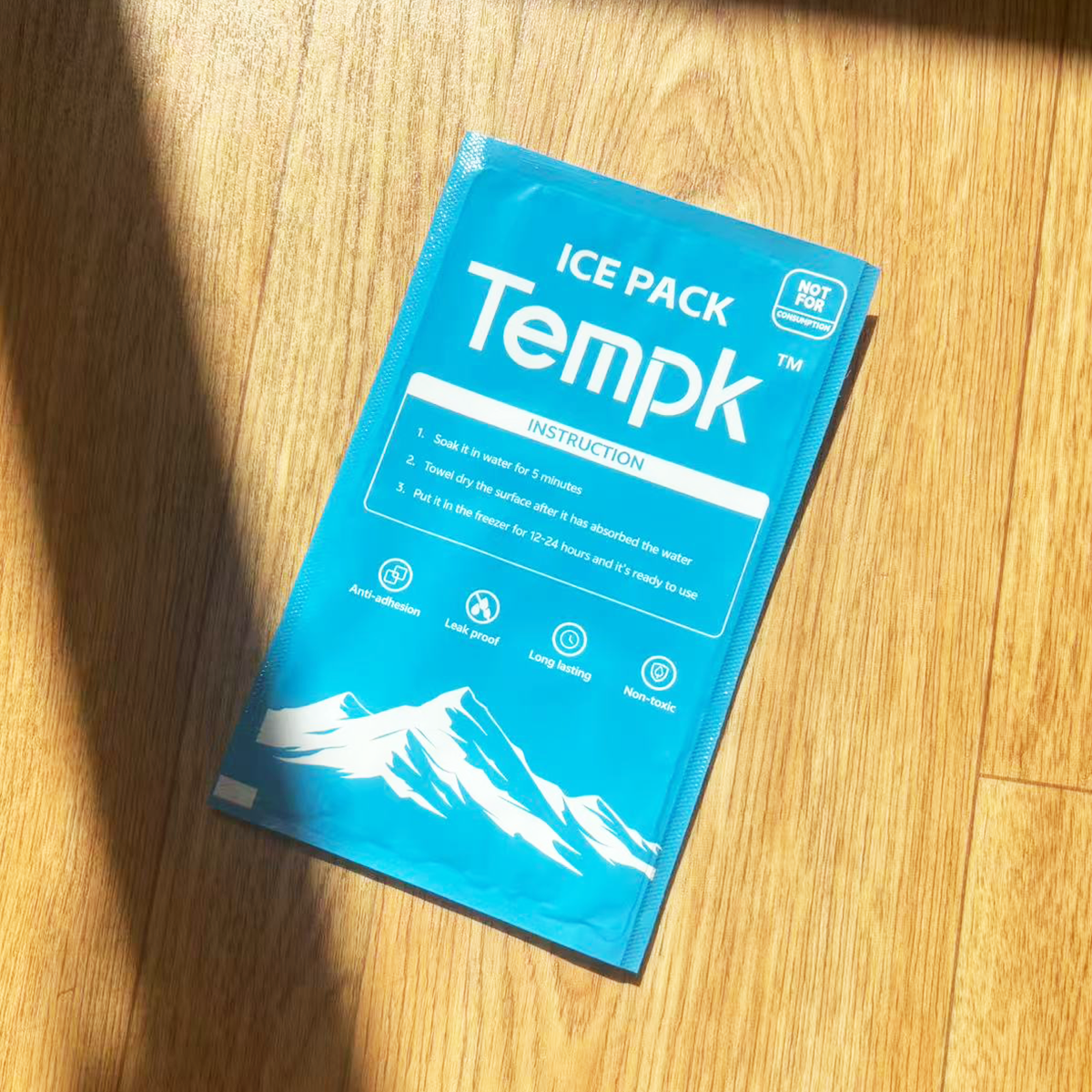
Wholesale Insulated Box for Vaccines: Complete Procurement Framework
The right wholesale program uses a defined insulated box configuration whose evidence and operating instructions match the product, payload, route, season, and receiving reality. A strong procurement process therefore starts with requirements, converts them into a packout, tests the packout under defined conditions, and controls it after launch. This article combines the thermal, operational, supplier, and quality decisions needed for refrigerated, frozen, or ultra-cold vaccines and related diluents handled according to product-specific instructions without treating insulation as a universal guarantee.
Write a requirement that a supplier can actually answer
A useful requirement names the product, approved condition, payload range, route, maximum operational window, seasonal exposure, receiving process, and consequence of failure. It also states what the packaging must not be expected to do. For this application, a wholesale insulated box is one component of vaccine transport; conditioning, packing, monitoring, staff training, receiving inspection, and excursion assessment remain essential. That sentence prevents scope drift and makes missing controls visible before quotations are compared.
The requirement should distinguish fixed inputs from variables. Fixed inputs may include external-size limits, a regulated inner package, a product carton, or a destination procedure. Variables may include insulation type, coolant arrangement, payload insert, closure, outer carton, and monitoring plan. Allowing suppliers to propose alternatives can improve the design, but each alternative should be assessed against the same acceptance criteria.
Many routinely refrigerated vaccines are managed around 2°C to 8°C, but some products require frozen or ultra-cold storage and every product must follow its current manufacturer and program instructions. Record the source and owner of that product requirement. A procurement team should not create a temperature band merely to make supplier comparison easier.
- What product or product family will be shipped, and who owns the stability decision?
- What are the minimum and maximum payloads, including physical dimensions and starting condition?
- What is the full packing-to-storage duration, including contingency and receiving delay?
- What hot, cold, mechanical, moisture, hygiene, and regulatory exposures can occur?
- What evidence, operating instructions, production controls, and post-launch support are required?
The best box is a balanced system, not the thickest wall
Start with the dominant constraint. A one-way express shipment may prioritize low mass, parcel durability, and simple packing. A reusable hospital or distributor loop may prioritize impact resistance, cleanability, replaceable components, and return efficiency. An export biotech lane may prioritize a long contingency window, documentation space, dry-ice compatibility, or high insulation efficiency within an airline size limit. The architecture follows the constraint.
Foam-lined corrugated boxes can be practical for many single-use routes. Molded EPS provides shaped insulation at relatively low mass. EPP can support repeated handling where the operating model justifies return and inspection. Panel systems can support custom dimensions. VIP-based designs can save insulation thickness but require careful edge, puncture, aging, and quality controls. No material choice removes the need to test the finished packout.
Geometry should be reviewed alongside freight. More insulation and coolant can increase external dimensions while reducing payload space. A smaller high-performance solution may lower dimensional cost, but it may add material complexity. A larger simple solution may be easier to pack but expensive to store and ship. Compare the entire program rather than an isolated unit price.
Payload, coolant, and void space form one packout
A passive system works from stored thermal energy and resistance to heat flow. Product, coolant, insulation, air space, and external exposure interact. If the product is loaded warm, the refrigerant must remove that heat before it can buffer the route. If the payload is very small, it may respond quickly to local gradients. If coolant is placed directly against a sensitive item, the package can create cold damage while successfully resisting external heat.
The packout specification should identify the exact coolant or PCM, required conditioning state, quantity, placement, barriers, payload limits, void-fill method, monitor location, and closure. Components should be restrained so parcel handling cannot rearrange the tested geometry. For dry-ice applications, gas release, material compatibility, worker safety, transport-mode rules, and destination handling need dedicated review.
Consider the complete operating capacity. Conditioning freezers, staging space, packing benches, staff time, backup coolants, and dispatch cutoff rules can limit a program even when the box performs well. A design that requires more frozen components than the site can consistently prepare is not operationally robust.
Qualification should answer the intended-use question
Ask for evidence tied to the proposed construction and packout. The report should identify the package version, materials, dimensions, coolant, conditioning, payload, sensor locations, ambient profile, duration, opening events if any, and acceptance criteria. A standardized parcel profile can support comparison, while lane-specific profiling can improve relevance. Neither is meaningful if the supplied production unit differs from the tested design.
Review minimum and maximum payloads and hot and cold seasonal conditions where they represent different risks. Repeated-use systems may need aging or reuse assessment. Mechanical testing may be appropriate when drops, compression, vibration, or frozen-bag fragility can change the geometry or damage the product. Thermal and mechanical evidence should reflect how the package is actually handled.
The report supports a decision; it does not make the decision by itself. The quality or product owner evaluates whether the observed profile is acceptable for refrigerated, frozen, or ultra-cold vaccines and related diluents handled according to product-specific instructions. When a deviation occurs, the team should compare actual shipment conditions with the qualified envelope and the product's approved excursion process.
Evaluate suppliers as controlled manufacturing partners
A polished prototype can hide weak production control. Ask how the supplier manages material identity, dimensions, tolerances, assembly, closure fit, printing, final inspection, nonconforming units, traceability, and changes. For custom products, approve a drawing, bill of materials, artwork, packout, and golden sample. Define which substitutions or process changes require notification and whether additional testing is needed.
Assess support for product-specific temperature requirements, freeze-risk management, repeatable coolant conditioning, monitoring placement, multi-site SOPs, and supporting qualification data. The answer should show awareness of the application without crossing into unsupported product or regulatory claims. A supplier can provide construction details, samples, packout drawings, test reports, training aids, and change records. The buyer retains responsibility for product requirements, route decisions, local compliance, and quality disposition.
Commercial terms should reflect the controlled scope. Compare tooling, samples, test work, coolants, inserts, cartons, labels, minimum order expectations, lead-time assumptions, storage, replacement parts, and change management. Where a value is not yet known, state it as a question rather than inventing a number for the business case.
Freeze protection can be as important as heat protection
Adding more frozen coolant is not automatically safer for refrigerated vaccines. Direct contact with deeply frozen packs can create cold spots and expose freeze-sensitive products to damaging conditions. The packout may need conditioned coolant, spacers, barriers, controlled placement, and a defined loading sequence. The correct design depends on the vaccine, payload, route, season, and acceptance criteria.
This issue should be visible in the design review, operating procedure, and supplier evaluation. It is not a minor application note. It changes which components are acceptable, what staff must verify, and how a shipment is released or escalated.
Wholesale programs also need consistency across many packing sites. A qualified design can fail when one depot uses a different coolant state, omits a separator, overfills the payload area, or places the monitor against a refrigerant. Standard work instructions, visual packout diagrams, component kits, training, and deviation records make the thermal design repeatable.
Move from sample to operation without losing the design
A pilot should run through normal staff, equipment, cutoff times, carrier handovers, receiving locations, and data systems. Observe conditioning, picking, packing, labeling, dispatch, receipt, unpacking, monitoring, cleaning, and returns. Record confusion and workarounds. A package that only succeeds when the engineer is standing beside the operator is not ready for routine use.
Define release criteria for the pilot. These can include correct component selection, packout completion, closure integrity, scan and label quality, temperature results, package damage, receiving time, data retrieval, and staff feedback. When failures occur, separate design weakness from process deviation and route disruption before selecting a corrective action.
After launch, protect the approved state. New products, payload dimensions, suppliers, materials, coolants, artwork, carriers, destinations, seasons, or cleaning chemicals can affect performance. A change-control review decides whether documentation updates, additional testing, training, or requalification are necessary.
Failure-mode review before purchase approval
| Failure mode | Question before approval | Possible control |
|---|---|---|
| Warm excursion | Is the route longer or hotter than the evidence? | Revise profile, capacity, service, dispatch rule, or contingency. |
| Cold excursion | Can coolant or winter exposure overcool the payload? | Condition coolant, add barriers, revise placement, and test cold-season risk. |
| Insufficient payload space | Was usable volume measured with every component installed? | Approve a packout drawing and physical fit sample. |
| Process variation | Can operators confuse components or skip a critical step? | Kit parts, simplify instructions, use visual controls, and audit packing. |
| Package damage | Can drops, compression, moisture, or reuse alter the geometry? | Strengthen shell or closure, inspect units, and include mechanical testing. |
| Receiving delay | Who receives, unpacks, stores, and reviews the shipment? | Confirm hours, send alerts, define instructions, and add contingency. |
| Unsupported claim | Does the statement identify conditions and evidence? | Request the full report or rewrite the requirement as a verification point. |
The value of this review is its specificity. “Reliable packaging” is not a testable requirement, while the listed failure modes can be linked to drawings, reports, work instructions, and responsibilities. Add application-specific items where necessary, especially treating all vaccines as if they share one temperature range, coolant, freeze tolerance, and transport procedure.
The review can also prevent unnecessary overdesign. Once the dominant failure modes are controlled and evidence shows adequate margin, the team can evaluate whether excess material, coolant, freight, or process complexity can be reduced through a documented change.
A practical decision path
A vaccine wholesaler serves urban clinics and remote outreach sites from the same depot. The routes have different durations, vehicle conditions, receiving hours, and return logistics, so one packout may not be the best operational choice for both. Begin by verifying the product requirement and mapping every minute from packing to controlled receipt. Select a candidate architecture that fits the payload and operating constraints. Create a defined packout, test it under representative conditions, and run a pilot through the real network. Review evidence with quality, logistics, operations, and procurement before approval.
If the shipment changes, return to the affected step rather than restarting blindly. A new label may require only a document review. A larger payload, different coolant, longer route, colder winter profile, or new customs process may require additional testing. This risk-based path keeps the program controlled without treating every change as identical.
Frequently asked questions
What is the first step in specifying a wholesale insulated box for vaccines?
Confirm the product requirement and map the complete operational lane. Define payload, starting condition, maximum packing-to-storage time, seasonal exposure, handovers, receiving process, and failure consequence. Those inputs create a fair basis for comparing designs and prevent the supplier from guessing what “cold” or “long duration” means.
What is the most important evidence to request?
Request a report for the proposed construction and packout that identifies components, conditioning, payload, sensor positions, ambient profile, duration, and acceptance criteria. Pair it with drawings, a bill of materials, and production controls. Evidence is strongest when the tested unit and the supplied unit are demonstrably the same.
Should procurement choose the coolant or the supplier?
The choice should be collaborative. The product owner defines the acceptable condition; packaging specialists evaluate heat flow and gradients; operations confirms conditioning capacity and packing practicality; safety and compliance teams review transport restrictions; and the supplier proposes compatible components. No single party should decide without the others' constraints.
How do I know whether customization requires retesting?
Assess whether the change can affect heat flow, coolant capacity, payload geometry, closure, mechanical durability, monitoring, or the operating process. Artwork alone may not affect thermal performance, while a dimensional, material, lid, coolant, or payload change often deserves deeper review. Document the decision under change control.
What should be included in a purchase specification?
Include approved drawings, materials, dimensions and tolerances, usable payload space, closure, component list, packout instructions, test evidence, production inspection, labeling, packaging for delivery, change notification, nonconformance handling, and any cleaning or reuse requirements. Mark assumptions that still require confirmation instead of turning them into unsupported facts.
The purchasing decision in practice
Specify a wholesale insulated box for vaccines through a controlled sequence: confirm the product requirement, map the route, select an architecture, define the packout, review evidence, qualify the supplier, pilot the operation, and protect the approved state through change control. This approach avoids unsupported guarantees while giving procurement, quality, and operations a common basis for decision-making.
About Tempk
Tempk, a brand of Shanghai Tempk Industrial Co., Ltd., supplies passive cold-chain packaging components including gel packs, insulated bags and liners, EPP boxes, and VIP medical cool boxes. For a project like this, the discussion can cover payload dimensions, insulation structure, coolant matching, branding, carton packing, and bulk requirements where supported by the selected product. Performance should be confirmed for the final configuration and stated test conditions.
Next step
Share the vaccine category, required condition, payload, route length, season, and packing-site workflow with Tempk to discuss a suitable wholesale configuration.
Wholesale Insulated Box for Pharmacies: Complete Procurement Framework
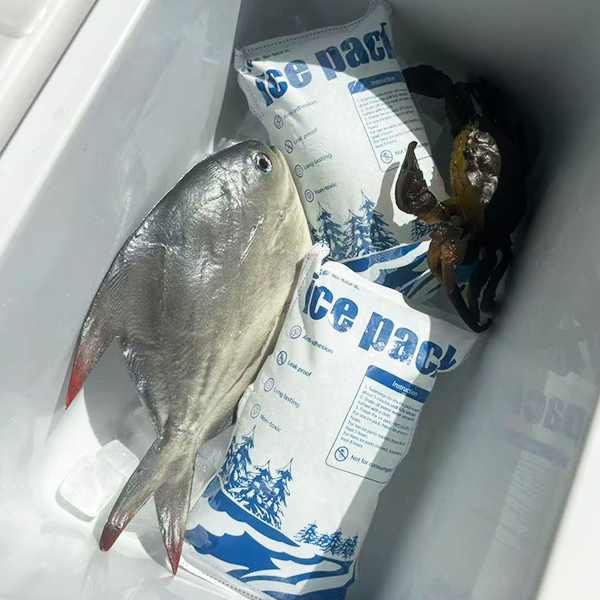
Wholesale Insulated Box for Pharmacies: Complete Procurement Framework
The right wholesale program uses a defined insulated box configuration whose evidence and operating instructions match the product, payload, route, season, and receiving reality. A strong procurement process therefore starts with requirements, converts them into a packout, tests the packout under defined conditions, and controls it after launch. This article combines the thermal, operational, supplier, and quality decisions needed for refrigerated medicines, selected biologics, controlled room-temperature products, frozen therapies, and pharmacy orders with mixed handling needs without treating insulation as a universal guarantee.
Begin with five decisions, not a catalog model
A useful requirement names the product, approved condition, payload range, route, maximum operational window, seasonal exposure, receiving process, and consequence of failure. It also states what the packaging must not be expected to do. For this application, passive packaging supports distribution but does not replace wholesaler gdp controls, temperature monitoring decisions, excursion assessment, or pharmacist review. That sentence prevents scope drift and makes missing controls visible before quotations are compared.
The requirement should distinguish fixed inputs from variables. Fixed inputs may include external-size limits, a regulated inner package, a product carton, or a destination procedure. Variables may include insulation type, coolant arrangement, payload insert, closure, outer carton, and monitoring plan. Allowing suppliers to propose alternatives can improve the design, but each alternative should be assessed against the same acceptance criteria.
The approved label and stability program determine each medicine’s condition; 2°C to 8°C is common for many refrigerated products but is not universal. Record the source and owner of that product requirement. A procurement team should not create a temperature band merely to make supplier comparison easier.
- What product or product family will be shipped, and who owns the stability decision?
- What are the minimum and maximum payloads, including physical dimensions and starting condition?
- What is the full packing-to-storage duration, including contingency and receiving delay?
- What hot, cold, mechanical, moisture, hygiene, and regulatory exposures can occur?
- What evidence, operating instructions, production controls, and post-launch support are required?
Select the architecture by constraint
Start with the dominant constraint. A one-way express shipment may prioritize low mass, parcel durability, and simple packing. A reusable hospital or distributor loop may prioritize impact resistance, cleanability, replaceable components, and return efficiency. An export biotech lane may prioritize a long contingency window, documentation space, dry-ice compatibility, or high insulation efficiency within an airline size limit. The architecture follows the constraint.
Foam-lined corrugated boxes can be practical for many single-use routes. Molded EPS provides shaped insulation at relatively low mass. EPP can support repeated handling where the operating model justifies return and inspection. Panel systems can support custom dimensions. VIP-based designs can save insulation thickness but require careful edge, puncture, aging, and quality controls. No material choice removes the need to test the finished packout.
Geometry should be reviewed alongside freight. More insulation and coolant can increase external dimensions while reducing payload space. A smaller high-performance solution may lower dimensional cost, but it may add material complexity. A larger simple solution may be easier to pack but expensive to store and ship. Compare the entire program rather than an isolated unit price.
Build the thermal system around controlled starting conditions
A passive system works from stored thermal energy and resistance to heat flow. Product, coolant, insulation, air space, and external exposure interact. If the product is loaded warm, the refrigerant must remove that heat before it can buffer the route. If the payload is very small, it may respond quickly to local gradients. If coolant is placed directly against a sensitive item, the package can create cold damage while successfully resisting external heat.
The packout specification should identify the exact coolant or PCM, required conditioning state, quantity, placement, barriers, payload limits, void-fill method, monitor location, and closure. Components should be restrained so parcel handling cannot rearrange the tested geometry. For dry-ice applications, gas release, material compatibility, worker safety, transport-mode rules, and destination handling need dedicated review.
Consider the complete operating capacity. Conditioning freezers, staging space, packing benches, staff time, backup coolants, and dispatch cutoff rules can limit a program even when the box performs well. A design that requires more frozen components than the site can consistently prepare is not operationally robust.
Qualification should answer the intended-use question
Ask for evidence tied to the proposed construction and packout. The report should identify the package version, materials, dimensions, coolant, conditioning, payload, sensor locations, ambient profile, duration, opening events if any, and acceptance criteria. A standardized parcel profile can support comparison, while lane-specific profiling can improve relevance. Neither is meaningful if the supplied production unit differs from the tested design.
Review minimum and maximum payloads and hot and cold seasonal conditions where they represent different risks. Repeated-use systems may need aging or reuse assessment. Mechanical testing may be appropriate when drops, compression, vibration, or frozen-bag fragility can change the geometry or damage the product. Thermal and mechanical evidence should reflect how the package is actually handled.
The report supports a decision; it does not make the decision by itself. The quality or product owner evaluates whether the observed profile is acceptable for refrigerated medicines, selected biologics, controlled room-temperature products, frozen therapies, and pharmacy orders with mixed handling needs. When a deviation occurs, the team should compare actual shipment conditions with the qualified envelope and the product's approved excursion process.
Evaluate suppliers as controlled manufacturing partners
A polished prototype can hide weak production control. Ask how the supplier manages material identity, dimensions, tolerances, assembly, closure fit, printing, final inspection, nonconforming units, traceability, and changes. For custom products, approve a drawing, bill of materials, artwork, packout, and golden sample. Define which substitutions or process changes require notification and whether additional testing is needed.
Assess support for SKU-to-packout mapping, multi-depot repeatability, patient receiving risk, coolant conditioning, monitor strategy, return decisions, seasonal qualification, and change control. The answer should show awareness of the application without crossing into unsupported product or regulatory claims. A supplier can provide construction details, samples, packout drawings, test reports, training aids, and change records. The buyer retains responsibility for product requirements, route decisions, local compliance, and quality disposition.
Commercial terms should reflect the controlled scope. Compare tooling, samples, test work, coolants, inserts, cartons, labels, minimum order expectations, lead-time assumptions, storage, replacement parts, and change management. Where a value is not yet known, state it as a question rather than inventing a number for the business case.
Wholesale scale makes small packing errors repeat quickly
A packout that is easy for one experienced operator can become unreliable across multiple shifts and depots. Wholesalers need component kitting, clear coolant-conditioning rules, visual loading instructions, barcode-controlled selection where appropriate, and checks that prevent the wrong shipper from being used for a SKU. Standardization should reduce choices without erasing necessary differences between products and routes.
This issue should be visible in the design review, operating procedure, and supplier evaluation. It is not a minor application note. It changes which components are acceptable, what staff must verify, and how a shipment is released or escalated.
Direct-to-patient or pharmacy parcel delivery adds receiving uncertainty. A package may sit at a front desk, in a parcel room, or outside a home. The thermal window should cover that operational reality, and communications should tell the recipient how quickly to retrieve and store the product. A return should not be automatically placed back into saleable stock simply because the box still feels cool.
Move from sample to operation without losing the design
A pilot should run through normal staff, equipment, cutoff times, carrier handovers, receiving locations, and data systems. Observe conditioning, picking, packing, labeling, dispatch, receipt, unpacking, monitoring, cleaning, and returns. Record confusion and workarounds. A package that only succeeds when the engineer is standing beside the operator is not ready for routine use.
Define release criteria for the pilot. These can include correct component selection, packout completion, closure integrity, scan and label quality, temperature results, package damage, receiving time, data retrieval, and staff feedback. When failures occur, separate design weakness from process deviation and route disruption before selecting a corrective action.
After launch, protect the approved state. New products, payload dimensions, suppliers, materials, coolants, artwork, carriers, destinations, seasons, or cleaning chemicals can affect performance. A change-control review decides whether documentation updates, additional testing, training, or requalification are necessary.
Failure-mode review before purchase approval
| Failure mode | Question before approval | Possible control |
|---|---|---|
| Warm excursion | Is the route longer or hotter than the evidence? | Revise profile, capacity, service, dispatch rule, or contingency. |
| Cold excursion | Can coolant or winter exposure overcool the payload? | Condition coolant, add barriers, revise placement, and test cold-season risk. |
| Insufficient payload space | Was usable volume measured with every component installed? | Approve a packout drawing and physical fit sample. |
| Process variation | Can operators confuse components or skip a critical step? | Kit parts, simplify instructions, use visual controls, and audit packing. |
| Package damage | Can drops, compression, moisture, or reuse alter the geometry? | Strengthen shell or closure, inspect units, and include mechanical testing. |
| Receiving delay | Who receives, unpacks, stores, and reviews the shipment? | Confirm hours, send alerts, define instructions, and add contingency. |
| Unsupported claim | Does the statement identify conditions and evidence? | Request the full report or rewrite the requirement as a verification point. |
The value of this review is its specificity. “Reliable packaging” is not a testable requirement, while the listed failure modes can be linked to drawings, reports, work instructions, and responsibilities. Add application-specific items where necessary, especially using one standard box for every medicine while overlooking product-specific ranges, patient availability, proof of delivery, return decisions, and seasonal route changes.
The review can also prevent unnecessary overdesign. Once the dominant failure modes are controlled and evidence shows adequate margin, the team can evaluate whether excess material, coolant, freight, or process complexity can be reduced through a documented change.
A practical decision path
A pharmacy wholesaler sends the same refrigerated medicine to a staffed hospital dock and to a residential address. The transit service may be identical, but the receiving risk and required contingency are not. Begin by verifying the product requirement and mapping every minute from packing to controlled receipt. Select a candidate architecture that fits the payload and operating constraints. Create a defined packout, test it under representative conditions, and run a pilot through the real network. Review evidence with quality, logistics, operations, and procurement before approval.
If the shipment changes, return to the affected step rather than restarting blindly. A new label may require only a document review. A larger payload, different coolant, longer route, colder winter profile, or new customs process may require additional testing. This risk-based path keeps the program controlled without treating every change as identical.
Buyer questions answered
What is the first step in specifying a wholesale insulated box for pharmacies?
Confirm the product requirement and map the complete operational lane. Define payload, starting condition, maximum packing-to-storage time, seasonal exposure, handovers, receiving process, and failure consequence. Those inputs create a fair basis for comparing designs and prevent the supplier from guessing what “cold” or “long duration” means.
What is the most important evidence to request?
Request a report for the proposed construction and packout that identifies components, conditioning, payload, sensor positions, ambient profile, duration, and acceptance criteria. Pair it with drawings, a bill of materials, and production controls. Evidence is strongest when the tested unit and the supplied unit are demonstrably the same.
Should procurement choose the coolant or the supplier?
The choice should be collaborative. The product owner defines the acceptable condition; packaging specialists evaluate heat flow and gradients; operations confirms conditioning capacity and packing practicality; safety and compliance teams review transport restrictions; and the supplier proposes compatible components. No single party should decide without the others' constraints.
How do I know whether customization requires retesting?
Assess whether the change can affect heat flow, coolant capacity, payload geometry, closure, mechanical durability, monitoring, or the operating process. Artwork alone may not affect thermal performance, while a dimensional, material, lid, coolant, or payload change often deserves deeper review. Document the decision under change control.
What should be included in a purchase specification?
Include approved drawings, materials, dimensions and tolerances, usable payload space, closure, component list, packout instructions, test evidence, production inspection, labeling, packaging for delivery, change notification, nonconformance handling, and any cleaning or reuse requirements. Mark assumptions that still require confirmation instead of turning them into unsupported facts.
The purchasing decision in practice
Specify a wholesale insulated box for pharmacies through a controlled sequence: confirm the product requirement, map the route, select an architecture, define the packout, review evidence, qualify the supplier, pilot the operation, and protect the approved state through change control. This approach avoids unsupported guarantees while giving procurement, quality, and operations a common basis for decision-making.
About Tempk
Tempk, a brand of Shanghai Tempk Industrial Co., Ltd., supplies passive cold-chain packaging components including gel packs, insulated bags and liners, EPP boxes, and VIP medical cool boxes. For a project like this, the discussion can cover payload dimensions, insulation structure, coolant matching, branding, carton packing, and bulk requirements where supported by the selected product. Performance should be confirmed for the final configuration and stated test conditions.
Next step
Share the pharmacy SKU profile, route types, delivery model, payload, seasonal conditions, and operating process with Tempk to compare wholesale packaging options.
Selecting an Insulated Box Vendor for Agricultural Products: Procurement Framework
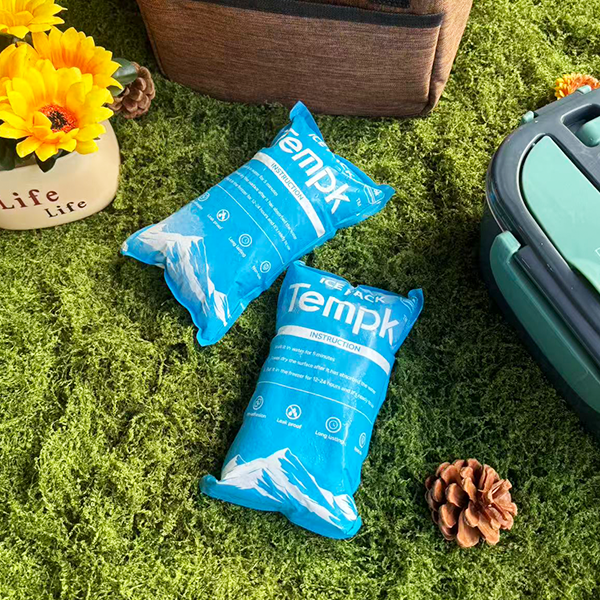
Selecting an Insulated Box Vendor for Agricultural Products: Procurement Framework
The right insulated box vendor for agricultural products is a supplier whose proposed packout, evidence, production controls, and operating support match the product, payload, route, season, and receiving reality. A strong procurement process therefore starts with requirements, converts them into a packout, tests the packout under defined conditions, and controls it after launch. This article combines the thermal, operational, supplier, and quality decisions needed for fresh produce, flowers, seedlings, seeds, breeding materials, specialty crops, and selected agricultural samples without treating insulation as a universal guarantee.
Convert the shipping problem into a controlled specification
A useful requirement names the product, approved condition, payload range, route, maximum operational window, seasonal exposure, receiving process, and consequence of failure. It also states what the packaging must not be expected to do. For this application, insulation buffers external conditions but does not remove field heat, manage respiration indefinitely, or replace commodity-specific postharvest practices. That sentence prevents scope drift and makes missing controls visible before quotations are compared.
The requirement should distinguish fixed inputs from variables. Fixed inputs may include external-size limits, a regulated inner package, a product carton, or a destination procedure. Variables may include insulation type, coolant arrangement, payload insert, closure, outer carton, and monitoring plan. Allowing suppliers to propose alternatives can improve the design, but each alternative should be assessed against the same acceptance criteria.
Agricultural products have commodity-specific temperature and humidity needs; some tropical produce can be damaged by temperatures that are safe for temperate crops. Record the source and owner of that product requirement. A procurement team should not create a temperature band merely to make supplier comparison easier.
- What product or product family will be shipped, and who owns the stability decision?
- What are the minimum and maximum payloads, including physical dimensions and starting condition?
- What is the full packing-to-storage duration, including contingency and receiving delay?
- What hot, cold, mechanical, moisture, hygiene, and regulatory exposures can occur?
- What evidence, operating instructions, production controls, and post-launch support are required?
Select the architecture by constraint
Start with the dominant constraint. A one-way express shipment may prioritize low mass, parcel durability, and simple packing. A reusable hospital or distributor loop may prioritize impact resistance, cleanability, replaceable components, and return efficiency. An export biotech lane may prioritize a long contingency window, documentation space, dry-ice compatibility, or high insulation efficiency within an airline size limit. The architecture follows the constraint.
Foam-lined corrugated boxes can be practical for many single-use routes. Molded EPS provides shaped insulation at relatively low mass. EPP can support repeated handling where the operating model justifies return and inspection. Panel systems can support custom dimensions. VIP-based designs can save insulation thickness but require careful edge, puncture, aging, and quality controls. No material choice removes the need to test the finished packout.
Geometry should be reviewed alongside freight. More insulation and coolant can increase external dimensions while reducing payload space. A smaller high-performance solution may lower dimensional cost, but it may add material complexity. A larger simple solution may be easier to pack but expensive to store and ship. Compare the entire program rather than an isolated unit price.
Build the thermal system around controlled starting conditions
A passive system works from stored thermal energy and resistance to heat flow. Product, coolant, insulation, air space, and external exposure interact. If the product is loaded warm, the refrigerant must remove that heat before it can buffer the route. If the payload is very small, it may respond quickly to local gradients. If coolant is placed directly against a sensitive item, the package can create cold damage while successfully resisting external heat.
The packout specification should identify the exact coolant or PCM, required conditioning state, quantity, placement, barriers, payload limits, void-fill method, monitor location, and closure. Components should be restrained so parcel handling cannot rearrange the tested geometry. For dry-ice applications, gas release, material compatibility, worker safety, transport-mode rules, and destination handling need dedicated review.
Consider the complete operating capacity. Conditioning freezers, staging space, packing benches, staff time, backup coolants, and dispatch cutoff rules can limit a program even when the box performs well. A design that requires more frozen components than the site can consistently prepare is not operationally robust.
Qualification should answer the intended-use question
Ask for evidence tied to the proposed construction and packout. The report should identify the package version, materials, dimensions, coolant, conditioning, payload, sensor locations, ambient profile, duration, opening events if any, and acceptance criteria. A standardized parcel profile can support comparison, while lane-specific profiling can improve relevance. Neither is meaningful if the supplied production unit differs from the tested design.
Review minimum and maximum payloads and hot and cold seasonal conditions where they represent different risks. Repeated-use systems may need aging or reuse assessment. Mechanical testing may be appropriate when drops, compression, vibration, or frozen-bag fragility can change the geometry or damage the product. Thermal and mechanical evidence should reflect how the package is actually handled.
The report supports a decision; it does not make the decision by itself. The quality or product owner evaluates whether the observed profile is acceptable for fresh produce, flowers, seedlings, seeds, breeding materials, specialty crops, and selected agricultural samples. When a deviation occurs, the team should compare actual shipment conditions with the qualified envelope and the product's approved excursion process.
Production consistency deserves its own review
A polished prototype can hide weak production control. Ask how the supplier manages material identity, dimensions, tolerances, assembly, closure fit, printing, final inspection, nonconforming units, traceability, and changes. For custom products, approve a drawing, bill of materials, artwork, packout, and golden sample. Define which substitutions or process changes require notification and whether additional testing is needed.
Assess support for commodity temperature, pre-cooling, respiration, humidity, ventilation, chilling sensitivity, payload density, multi-stop handling, and export inspection requirements. The answer should show awareness of the application without crossing into unsupported product or regulatory claims. A supplier can provide construction details, samples, packout drawings, test reports, training aids, and change records. The buyer retains responsibility for product requirements, route decisions, local compliance, and quality disposition.
Commercial terms should reflect the controlled scope. Compare tooling, samples, test work, coolants, inserts, cartons, labels, minimum order expectations, lead-time assumptions, storage, replacement parts, and change management. Where a value is not yet known, state it as a question rather than inventing a number for the business case.
Living products keep producing heat and moisture
Fresh produce continues to respire after harvest. That biological activity generates heat and water vapor, and its rate can change with temperature, maturity, damage, and gas composition. A fully sealed insulated box may therefore create condensation or an unsuitable atmosphere for some commodities. Ventilation, absorbent materials, perforated liners, pre-cooling, and load density should be selected for the actual crop rather than copied from a pharmaceutical shipper.
This issue should be visible in the design review, operating procedure, and supplier evaluation. It is not a minor application note. It changes which components are acceptable, what staff must verify, and how a shipment is released or escalated.
Chilling injury is another important boundary. Bananas, mangoes, cucumbers, and other sensitive commodities can lose quality when held too cold even though they are not frozen. The vendor should ask for the product, variety, harvest condition, maturity, route, and target shelf life. For seeds, seedlings, floral products, or biological agricultural samples, the priorities may shift toward moisture control, orientation, light protection, or regulatory documentation.
Pilot the people and process, not only the package
A pilot should run through normal staff, equipment, cutoff times, carrier handovers, receiving locations, and data systems. Observe conditioning, picking, packing, labeling, dispatch, receipt, unpacking, monitoring, cleaning, and returns. Record confusion and workarounds. A package that only succeeds when the engineer is standing beside the operator is not ready for routine use.
Define release criteria for the pilot. These can include correct component selection, packout completion, closure integrity, scan and label quality, temperature results, package damage, receiving time, data retrieval, and staff feedback. When failures occur, separate design weakness from process deviation and route disruption before selecting a corrective action.
After launch, protect the approved state. New products, payload dimensions, suppliers, materials, coolants, artwork, carriers, destinations, seasons, or cleaning chemicals can affect performance. A change-control review decides whether documentation updates, additional testing, training, or requalification are necessary.
Failure-mode review before purchase approval
| Failure mode | Question before approval | Possible control |
|---|---|---|
| Warm excursion | Is the route longer or hotter than the evidence? | Revise profile, capacity, service, dispatch rule, or contingency. |
| Cold excursion | Can coolant or winter exposure overcool the payload? | Condition coolant, add barriers, revise placement, and test cold-season risk. |
| Insufficient payload space | Was usable volume measured with every component installed? | Approve a packout drawing and physical fit sample. |
| Process variation | Can operators confuse components or skip a critical step? | Kit parts, simplify instructions, use visual controls, and audit packing. |
| Package damage | Can drops, compression, moisture, or reuse alter the geometry? | Strengthen shell or closure, inspect units, and include mechanical testing. |
| Receiving delay | Who receives, unpacks, stores, and reviews the shipment? | Confirm hours, send alerts, define instructions, and add contingency. |
| Unsupported claim | Does the statement identify conditions and evidence? | Request the full report or rewrite the requirement as a verification point. |
The value of this review is its specificity. “Reliable packaging” is not a testable requirement, while the listed failure modes can be linked to drawings, reports, work instructions, and responsibilities. Add application-specific items where necessary, especially assuming colder is always better and ignoring respiration, chilling injury, moisture, ventilation, ethylene sensitivity, and product maturity.
The review can also prevent unnecessary overdesign. Once the dominant failure modes are controlled and evidence shows adequate margin, the team can evaluate whether excess material, coolant, freight, or process complexity can be reduced through a documented change.
A practical decision path
An exporter packs tropical fruit with frozen gel packs to survive a hot airport transfer. The pulp near the packs becomes overcooled while fruit in the center remains warm, demonstrating why coolant placement and commodity tolerance must be balanced. Begin by verifying the product requirement and mapping every minute from packing to controlled receipt. Select a candidate architecture that fits the payload and operating constraints. Create a defined packout, test it under representative conditions, and run a pilot through the real network. Review evidence with quality, logistics, operations, and procurement before approval.
If the shipment changes, return to the affected step rather than restarting blindly. A new label may require only a document review. A larger payload, different coolant, longer route, colder winter profile, or new customs process may require additional testing. This risk-based path keeps the program controlled without treating every change as identical.
Questions procurement and quality teams often ask
What is the first step in evaluating an insulated box vendor for agricultural products?
Confirm the product requirement and map the complete operational lane. Define payload, starting condition, maximum packing-to-storage time, seasonal exposure, handovers, receiving process, and failure consequence. Those inputs create a fair basis for comparing designs and prevent the supplier from guessing what “cold” or “long duration” means.
What is the most important evidence to request?
Request a report for the proposed construction and packout that identifies components, conditioning, payload, sensor positions, ambient profile, duration, and acceptance criteria. Pair it with drawings, a bill of materials, and production controls. Evidence is strongest when the tested unit and the supplied unit are demonstrably the same.
Should procurement choose the coolant or the supplier?
The choice should be collaborative. The product owner defines the acceptable condition; packaging specialists evaluate heat flow and gradients; operations confirms conditioning capacity and packing practicality; safety and compliance teams review transport restrictions; and the supplier proposes compatible components. No single party should decide without the others' constraints.
How do I know whether customization requires retesting?
Assess whether the change can affect heat flow, coolant capacity, payload geometry, closure, mechanical durability, monitoring, or the operating process. Artwork alone may not affect thermal performance, while a dimensional, material, lid, coolant, or payload change often deserves deeper review. Document the decision under change control.
What should be included in a purchase specification?
Include approved drawings, materials, dimensions and tolerances, usable payload space, closure, component list, packout instructions, test evidence, production inspection, labeling, packaging for delivery, change notification, nonconformance handling, and any cleaning or reuse requirements. Mark assumptions that still require confirmation instead of turning them into unsupported facts.
Conclusion
Select an insulated box vendor for agricultural products through a controlled sequence: confirm the product requirement, map the route, compare proposed architectures, review evidence, qualify production controls, pilot the operation, and protect the approved state through change control. This approach gives procurement, quality, and operations a common basis for selecting both the supplier and the packout.
About Tempk
Tempk is a cold-chain packaging brand of Shanghai Tempk Industrial Co., Ltd. Its product range includes gel packs, insulated bags and liners, EPP boxes, VIP medical cool boxes, and related passive packaging components. Depending on the selected product, buyers can discuss size, insulation structure, coolant matching, branding, carton packing, and bulk supply requirements. Any temperature or duration claim should be tied to a defined packout, payload, ambient profile, and supporting test evidence.
Next step
Tell Tempk the agricultural product, harvest condition, pre-cooling method, route, payload, ventilation needs, and receiving plan to review an insulated packaging approach.
Selecting an Insulated Box Supplier for Dairy Products: Procurement Framework
Selecting an Insulated Box Supplier for Dairy Products: Procurement Framework
The right insulated box supplier for dairy products is a supplier whose proposed packout, evidence, production controls, and operating support match the product, payload, route, season, and receiving reality. A strong procurement process therefore starts with requirements, converts them into a packout, tests the packout under defined conditions, and controls it after launch. This article combines the thermal, operational, supplier, and quality decisions needed for milk, yogurt, cheese, cream, butter, cultured products, dairy desserts, and specialty ingredients without treating insulation as a universal guarantee.
Convert the shipping problem into a controlled specification
A useful requirement names the product, approved condition, payload range, route, maximum operational window, seasonal exposure, receiving process, and consequence of failure. It also states what the packaging must not be expected to do. For this application, an insulated box maintains an already controlled condition for a limited route; it is not a rapid chiller and cannot compensate for poor sanitation or warm loading. That sentence prevents scope drift and makes missing controls visible before quotations are compared.
The requirement should distinguish fixed inputs from variables. Fixed inputs may include external-size limits, a regulated inner package, a product carton, or a destination procedure. Variables may include insulation type, coolant arrangement, payload insert, closure, outer carton, and monitoring plan. Allowing suppliers to propose alternatives can improve the design, but each alternative should be assessed against the same acceptance criteria.
Dairy temperature limits depend on product, processing method, shelf-life program, and local food rules; the shipper should support the documented specification. Record the source and owner of that product requirement. A procurement team should not create a temperature band merely to make supplier comparison easier.
- What product or product family will be shipped, and who owns the stability decision?
- What are the minimum and maximum payloads, including physical dimensions and starting condition?
- What is the full packing-to-storage duration, including contingency and receiving delay?
- What hot, cold, mechanical, moisture, hygiene, and regulatory exposures can occur?
- What evidence, operating instructions, production controls, and post-launch support are required?
Select the architecture by constraint
Start with the dominant constraint. A one-way express shipment may prioritize low mass, parcel durability, and simple packing. A reusable hospital or distributor loop may prioritize impact resistance, cleanability, replaceable components, and return efficiency. An export biotech lane may prioritize a long contingency window, documentation space, dry-ice compatibility, or high insulation efficiency within an airline size limit. The architecture follows the constraint.
Foam-lined corrugated boxes can be practical for many single-use routes. Molded EPS provides shaped insulation at relatively low mass. EPP can support repeated handling where the operating model justifies return and inspection. Panel systems can support custom dimensions. VIP-based designs can save insulation thickness but require careful edge, puncture, aging, and quality controls. No material choice removes the need to test the finished packout.
Geometry should be reviewed alongside freight. More insulation and coolant can increase external dimensions while reducing payload space. A smaller high-performance solution may lower dimensional cost, but it may add material complexity. A larger simple solution may be easier to pack but expensive to store and ship. Compare the entire program rather than an isolated unit price.
Payload, coolant, and void space form one packout
A passive system works from stored thermal energy and resistance to heat flow. Product, coolant, insulation, air space, and external exposure interact. If the product is loaded warm, the refrigerant must remove that heat before it can buffer the route. If the payload is very small, it may respond quickly to local gradients. If coolant is placed directly against a sensitive item, the package can create cold damage while successfully resisting external heat.
The packout specification should identify the exact coolant or PCM, required conditioning state, quantity, placement, barriers, payload limits, void-fill method, monitor location, and closure. Components should be restrained so parcel handling cannot rearrange the tested geometry. For dry-ice applications, gas release, material compatibility, worker safety, transport-mode rules, and destination handling need dedicated review.
Consider the complete operating capacity. Conditioning freezers, staging space, packing benches, staff time, backup coolants, and dispatch cutoff rules can limit a program even when the box performs well. A design that requires more frozen components than the site can consistently prepare is not operationally robust.
Replace generic hour claims with a documented profile
Ask for evidence tied to the proposed construction and packout. The report should identify the package version, materials, dimensions, coolant, conditioning, payload, sensor locations, ambient profile, duration, opening events if any, and acceptance criteria. A standardized parcel profile can support comparison, while lane-specific profiling can improve relevance. Neither is meaningful if the supplied production unit differs from the tested design.
Review minimum and maximum payloads and hot and cold seasonal conditions where they represent different risks. Repeated-use systems may need aging or reuse assessment. Mechanical testing may be appropriate when drops, compression, vibration, or frozen-bag fragility can change the geometry or damage the product. Thermal and mechanical evidence should reflect how the package is actually handled.
The report supports a decision; it does not make the decision by itself. The quality or product owner evaluates whether the observed profile is acceptable for milk, yogurt, cheese, cream, butter, cultured products, dairy desserts, and specialty ingredients. When a deviation occurs, the team should compare actual shipment conditions with the qualified envelope and the product's approved excursion process.
Evaluate suppliers as controlled manufacturing partners
A polished prototype can hide weak production control. Ask how the supplier manages material identity, dimensions, tolerances, assembly, closure fit, printing, final inspection, nonconforming units, traceability, and changes. For custom products, approve a drawing, bill of materials, artwork, packout, and golden sample. Define which substitutions or process changes require notification and whether additional testing is needed.
Assess support for product-format segmentation, freeze sensitivity, leak and condensation control, multi-drop access, cleanability, payload modularity, return logistics, and route evidence. The answer should show awareness of the application without crossing into unsupported product or regulatory claims. A supplier can provide construction details, samples, packout drawings, test reports, training aids, and change records. The buyer retains responsibility for product requirements, route decisions, local compliance, and quality disposition.
Commercial terms should reflect the controlled scope. Compare tooling, samples, test work, coolants, inserts, cartons, labels, minimum order expectations, lead-time assumptions, storage, replacement parts, and change management. Where a value is not yet known, state it as a question rather than inventing a number for the business case.
Dairy products do not respond to cold in the same way
Fluid milk, cultured yogurt, soft cheese, hard cheese, butter, and frozen dairy desserts have different packaging and temperature concerns. Some chilled products can be damaged by freezing or separation, while others need stronger protection from warming. Container shape also matters: bottles can leak under compression, cups can deform, and cheese cartons may absorb condensation. The box and coolant layout should reflect those failure modes.
This issue should be visible in the design review, operating procedure, and supplier evaluation. It is not a minor application note. It changes which components are acceptable, what staff must verify, and how a shipment is released or escalated.
Multi-drop dairy routes create repeated heat entry when lids are opened. A large box may look efficient at dispatch but perform poorly after half the load is removed and warm air replaces the product. Smaller route modules, internal dividers, pre-sorted loads, or separate boxes for later stops can improve control and reduce handling time. Reusable systems need validated cleaning and drying practices because residual dairy soil and odor are operational hazards.
Launch with a controlled pilot and change process
A pilot should run through normal staff, equipment, cutoff times, carrier handovers, receiving locations, and data systems. Observe conditioning, picking, packing, labeling, dispatch, receipt, unpacking, monitoring, cleaning, and returns. Record confusion and workarounds. A package that only succeeds when the engineer is standing beside the operator is not ready for routine use.
Define release criteria for the pilot. These can include correct component selection, packout completion, closure integrity, scan and label quality, temperature results, package damage, receiving time, data retrieval, and staff feedback. When failures occur, separate design weakness from process deviation and route disruption before selecting a corrective action.
After launch, protect the approved state. New products, payload dimensions, suppliers, materials, coolants, artwork, carriers, destinations, seasons, or cleaning chemicals can affect performance. A change-control review decides whether documentation updates, additional testing, training, or requalification are necessary.
Failure-mode review before purchase approval
| Failure mode | Question before approval | Possible control |
|---|---|---|
| Warm excursion | Is the route longer or hotter than the evidence? | Revise profile, capacity, service, dispatch rule, or contingency. |
| Cold excursion | Can coolant or winter exposure overcool the payload? | Condition coolant, add barriers, revise placement, and test cold-season risk. |
| Insufficient payload space | Was usable volume measured with every component installed? | Approve a packout drawing and physical fit sample. |
| Process variation | Can operators confuse components or skip a critical step? | Kit parts, simplify instructions, use visual controls, and audit packing. |
| Package damage | Can drops, compression, moisture, or reuse alter the geometry? | Strengthen shell or closure, inspect units, and include mechanical testing. |
| Receiving delay | Who receives, unpacks, stores, and reviews the shipment? | Confirm hours, send alerts, define instructions, and add contingency. |
| Unsupported claim | Does the statement identify conditions and evidence? | Request the full report or rewrite the requirement as a verification point. |
The value of this review is its specificity. “Reliable packaging” is not a testable requirement, while the listed failure modes can be linked to drawings, reports, work instructions, and responsibilities. Add application-specific items where necessary, especially using a generic chilled packout without considering product format, freeze sensitivity, microbiological risk, container leakage, and multi-drop delivery.
The review can also prevent unnecessary overdesign. Once the dominant failure modes are controlled and evidence shows adequate margin, the team can evaluate whether excess material, coolant, freight, or process complexity can be reduced through a documented change.
A practical decision path
A distributor delivers yogurt and cheese to ten cafes from one vehicle. The first stops are easy, but repeated lid opening and a shrinking thermal mass make the later stops the critical part of the route. Begin by verifying the product requirement and mapping every minute from packing to controlled receipt. Select a candidate architecture that fits the payload and operating constraints. Create a defined packout, test it under representative conditions, and run a pilot through the real network. Review evidence with quality, logistics, operations, and procurement before approval.
If the shipment changes, return to the affected step rather than restarting blindly. A new label may require only a document review. A larger payload, different coolant, longer route, colder winter profile, or new customs process may require additional testing. This risk-based path keeps the program controlled without treating every change as identical.
Buyer questions answered
What is the first step in evaluating an insulated box supplier for dairy products?
Confirm the product requirement and map the complete operational lane. Define payload, starting condition, maximum packing-to-storage time, seasonal exposure, handovers, receiving process, and failure consequence. Those inputs create a fair basis for comparing designs and prevent the supplier from guessing what “cold” or “long duration” means.
What is the most important evidence to request?
Request a report for the proposed construction and packout that identifies components, conditioning, payload, sensor positions, ambient profile, duration, and acceptance criteria. Pair it with drawings, a bill of materials, and production controls. Evidence is strongest when the tested unit and the supplied unit are demonstrably the same.
Should procurement choose the coolant or the supplier?
The choice should be collaborative. The product owner defines the acceptable condition; packaging specialists evaluate heat flow and gradients; operations confirms conditioning capacity and packing practicality; safety and compliance teams review transport restrictions; and the supplier proposes compatible components. No single party should decide without the others' constraints.
How do I know whether customization requires retesting?
Assess whether the change can affect heat flow, coolant capacity, payload geometry, closure, mechanical durability, monitoring, or the operating process. Artwork alone may not affect thermal performance, while a dimensional, material, lid, coolant, or payload change often deserves deeper review. Document the decision under change control.
What should be included in a purchase specification?
Include approved drawings, materials, dimensions and tolerances, usable payload space, closure, component list, packout instructions, test evidence, production inspection, labeling, packaging for delivery, change notification, nonconformance handling, and any cleaning or reuse requirements. Mark assumptions that still require confirmation instead of turning them into unsupported facts.
Conclusion
Select an insulated box supplier for dairy products through a controlled sequence: confirm the product requirement, map the route, compare proposed architectures, review evidence, qualify production controls, pilot the operation, and protect the approved state through change control. This approach gives procurement, quality, and operations a common basis for selecting both the supplier and the packout.
About Tempk
Tempk is a cold-chain packaging brand of Shanghai Tempk Industrial Co., Ltd. Its product range includes gel packs, insulated bags and liners, EPP boxes, VIP medical cool boxes, and related passive packaging components. Depending on the selected product, buyers can discuss size, insulation structure, coolant matching, branding, carton packing, and bulk supply requirements. Any temperature or duration claim should be tied to a defined packout, payload, ambient profile, and supporting test evidence.
Next step
Provide Tempk with the dairy products, starting temperature, route stops, payload, coolant, cleaning method, and return plan to compare suitable insulated packaging.
Selecting an Insulated Box Supplier for Blood Plasma: Procurement Framework

Selecting an Insulated Box Supplier for Blood Plasma: Procurement Framework
The right insulated box supplier for blood plasma is a supplier whose proposed packout, evidence, production controls, and operating support match the product, payload, route, season, and receiving reality. A strong procurement process therefore starts with requirements, converts them into a packout, tests the packout under defined conditions, and controls it after launch. This article combines the thermal, operational, supplier, and quality decisions needed for fresh frozen plasma, plasma components, source plasma, liquid plasma, samples, and related temperature-sensitive materials without treating insulation as a universal guarantee.
Convert the shipping problem into a controlled specification
A useful requirement names the product, approved condition, payload range, route, maximum operational window, seasonal exposure, receiving process, and consequence of failure. It also states what the packaging must not be expected to do. For this application, an insulated box cannot determine plasma suitability after an excursion, prevent every freeze-thaw event, or replace blood-establishment procedures and regulatory review. That sentence prevents scope drift and makes missing controls visible before quotations are compared.
The requirement should distinguish fixed inputs from variables. Fixed inputs may include external-size limits, a regulated inner package, a product carton, or a destination procedure. Variables may include insulation type, coolant arrangement, payload insert, closure, outer carton, and monitoring plan. Allowing suppliers to propose alternatives can improve the design, but each alternative should be assessed against the same acceptance criteria.
Plasma products have product- and jurisdiction-specific storage and transport conditions. In the United States, Fresh Frozen Plasma is generally stored at -18°C or colder, while other plasma categories can have different requirements. Record the source and owner of that product requirement. A procurement team should not create a temperature band merely to make supplier comparison easier.
- What product or product family will be shipped, and who owns the stability decision?
- What are the minimum and maximum payloads, including physical dimensions and starting condition?
- What is the full packing-to-storage duration, including contingency and receiving delay?
- What hot, cold, mechanical, moisture, hygiene, and regulatory exposures can occur?
- What evidence, operating instructions, production controls, and post-launch support are required?
The best box is a balanced system, not the thickest wall
Start with the dominant constraint. A one-way express shipment may prioritize low mass, parcel durability, and simple packing. A reusable hospital or distributor loop may prioritize impact resistance, cleanability, replaceable components, and return efficiency. An export biotech lane may prioritize a long contingency window, documentation space, dry-ice compatibility, or high insulation efficiency within an airline size limit. The architecture follows the constraint.
Foam-lined corrugated boxes can be practical for many single-use routes. Molded EPS provides shaped insulation at relatively low mass. EPP can support repeated handling where the operating model justifies return and inspection. Panel systems can support custom dimensions. VIP-based designs can save insulation thickness but require careful edge, puncture, aging, and quality controls. No material choice removes the need to test the finished packout.
Geometry should be reviewed alongside freight. More insulation and coolant can increase external dimensions while reducing payload space. A smaller high-performance solution may lower dimensional cost, but it may add material complexity. A larger simple solution may be easier to pack but expensive to store and ship. Compare the entire program rather than an isolated unit price.
Build the thermal system around controlled starting conditions
A passive system works from stored thermal energy and resistance to heat flow. Product, coolant, insulation, air space, and external exposure interact. If the product is loaded warm, the refrigerant must remove that heat before it can buffer the route. If the payload is very small, it may respond quickly to local gradients. If coolant is placed directly against a sensitive item, the package can create cold damage while successfully resisting external heat.
The packout specification should identify the exact coolant or PCM, required conditioning state, quantity, placement, barriers, payload limits, void-fill method, monitor location, and closure. Components should be restrained so parcel handling cannot rearrange the tested geometry. For dry-ice applications, gas release, material compatibility, worker safety, transport-mode rules, and destination handling need dedicated review.
Consider the complete operating capacity. Conditioning freezers, staging space, packing benches, staff time, backup coolants, and dispatch cutoff rules can limit a program even when the box performs well. A design that requires more frozen components than the site can consistently prepare is not operationally robust.
Demand evidence that preserves test context
Ask for evidence tied to the proposed construction and packout. The report should identify the package version, materials, dimensions, coolant, conditioning, payload, sensor locations, ambient profile, duration, opening events if any, and acceptance criteria. A standardized parcel profile can support comparison, while lane-specific profiling can improve relevance. Neither is meaningful if the supplied production unit differs from the tested design.
Review minimum and maximum payloads and hot and cold seasonal conditions where they represent different risks. Repeated-use systems may need aging or reuse assessment. Mechanical testing may be appropriate when drops, compression, vibration, or frozen-bag fragility can change the geometry or damage the product. Thermal and mechanical evidence should reflect how the package is actually handled.
The report supports a decision; it does not make the decision by itself. The quality or product owner evaluates whether the observed profile is acceptable for fresh frozen plasma, plasma components, source plasma, liquid plasma, samples, and related temperature-sensitive materials. When a deviation occurs, the team should compare actual shipment conditions with the qualified envelope and the product's approved excursion process.
Production consistency deserves its own review
A polished prototype can hide weak production control. Ask how the supplier manages material identity, dimensions, tolerances, assembly, closure fit, printing, final inspection, nonconforming units, traceability, and changes. For custom products, approve a drawing, bill of materials, artwork, packout, and golden sample. Define which substitutions or process changes require notification and whether additional testing is needed.
Assess support for plasma category, frozen-bag protection, refrigerant compatibility, payload arrangement, monitor placement, excursion procedure, route evidence, and quality documentation. The answer should show awareness of the application without crossing into unsupported product or regulatory claims. A supplier can provide construction details, samples, packout drawings, test reports, training aids, and change records. The buyer retains responsibility for product requirements, route decisions, local compliance, and quality disposition.
Commercial terms should reflect the controlled scope. Compare tooling, samples, test work, coolants, inserts, cartons, labels, minimum order expectations, lead-time assumptions, storage, replacement parts, and change management. Where a value is not yet known, state it as a question rather than inventing a number for the business case.
Product identity controls the packout
A procurement request for a “plasma box” is incomplete until the product is identified. Fresh Frozen Plasma, Liquid Plasma, Source Plasma, recovered plasma, and laboratory plasma samples may have different storage, transport, labeling, and disposition rules. The quality unit should define the required condition, maximum lane, monitoring method, excursion process, and whether dry ice or another refrigerant is permitted for that product and container.
This issue should be visible in the design review, operating procedure, and supplier evaluation. It is not a minor application note. It changes which components are acceptable, what staff must verify, and how a shipment is released or escalated.
Mechanical protection matters as much as temperature. Frozen plasma bags can be vulnerable to cracking or seal damage, especially when handled at low temperature. Dividers, cushioning, controlled stacking, bag orientation, and space for expansion or rigid overwraps may be needed. The packout should prevent direct pressure from refrigerant and keep monitoring devices in a location that represents the payload rather than the coldest point.
Move from sample to operation without losing the design
A pilot should run through normal staff, equipment, cutoff times, carrier handovers, receiving locations, and data systems. Observe conditioning, picking, packing, labeling, dispatch, receipt, unpacking, monitoring, cleaning, and returns. Record confusion and workarounds. A package that only succeeds when the engineer is standing beside the operator is not ready for routine use.
Define release criteria for the pilot. These can include correct component selection, packout completion, closure integrity, scan and label quality, temperature results, package damage, receiving time, data retrieval, and staff feedback. When failures occur, separate design weakness from process deviation and route disruption before selecting a corrective action.
After launch, protect the approved state. New products, payload dimensions, suppliers, materials, coolants, artwork, carriers, destinations, seasons, or cleaning chemicals can affect performance. A change-control review decides whether documentation updates, additional testing, training, or requalification are necessary.
Failure-mode review before purchase approval
| Failure mode | Question before approval | Possible control |
|---|---|---|
| Warm excursion | Is the route longer or hotter than the evidence? | Revise profile, capacity, service, dispatch rule, or contingency. |
| Cold excursion | Can coolant or winter exposure overcool the payload? | Condition coolant, add barriers, revise placement, and test cold-season risk. |
| Insufficient payload space | Was usable volume measured with every component installed? | Approve a packout drawing and physical fit sample. |
| Process variation | Can operators confuse components or skip a critical step? | Kit parts, simplify instructions, use visual controls, and audit packing. |
| Package damage | Can drops, compression, moisture, or reuse alter the geometry? | Strengthen shell or closure, inspect units, and include mechanical testing. |
| Receiving delay | Who receives, unpacks, stores, and reviews the shipment? | Confirm hours, send alerts, define instructions, and add contingency. |
| Unsupported claim | Does the statement identify conditions and evidence? | Request the full report or rewrite the requirement as a verification point. |
The value of this review is its specificity. “Reliable packaging” is not a testable requirement, while the listed failure modes can be linked to drawings, reports, work instructions, and responsibilities. Add application-specific items where necessary, especially treating “plasma” as one product and applying a generic frozen packout without checking product category, regulatory status, storage condition, thaw history, and acceptance criteria.
The review can also prevent unnecessary overdesign. Once the dominant failure modes are controlled and evidence shows adequate margin, the team can evaluate whether excess material, coolant, freight, or process complexity can be reduced through a documented change.
A practical decision path
A blood center consolidates frozen plasma bags for an overnight flight. The shipment may be held on the airport ramp and inspected at destination, so the packaging plan must protect both temperature and fragile frozen bags during repeated handling. Begin by verifying the product requirement and mapping every minute from packing to controlled receipt. Select a candidate architecture that fits the payload and operating constraints. Create a defined packout, test it under representative conditions, and run a pilot through the real network. Review evidence with quality, logistics, operations, and procurement before approval.
If the shipment changes, return to the affected step rather than restarting blindly. A new label may require only a document review. A larger payload, different coolant, longer route, colder winter profile, or new customs process may require additional testing. This risk-based path keeps the program controlled without treating every change as identical.
Frequently asked questions
What is the first step in evaluating an insulated box supplier for blood plasma?
Confirm the product requirement and map the complete operational lane. Define payload, starting condition, maximum packing-to-storage time, seasonal exposure, handovers, receiving process, and failure consequence. Those inputs create a fair basis for comparing designs and prevent the supplier from guessing what “cold” or “long duration” means.
What is the most important evidence to request?
Request a report for the proposed construction and packout that identifies components, conditioning, payload, sensor positions, ambient profile, duration, and acceptance criteria. Pair it with drawings, a bill of materials, and production controls. Evidence is strongest when the tested unit and the supplied unit are demonstrably the same.
Should procurement choose the coolant or the supplier?
The choice should be collaborative. The product owner defines the acceptable condition; packaging specialists evaluate heat flow and gradients; operations confirms conditioning capacity and packing practicality; safety and compliance teams review transport restrictions; and the supplier proposes compatible components. No single party should decide without the others' constraints.
How do I know whether customization requires retesting?
Assess whether the change can affect heat flow, coolant capacity, payload geometry, closure, mechanical durability, monitoring, or the operating process. Artwork alone may not affect thermal performance, while a dimensional, material, lid, coolant, or payload change often deserves deeper review. Document the decision under change control.
What should be included in a purchase specification?
Include approved drawings, materials, dimensions and tolerances, usable payload space, closure, component list, packout instructions, test evidence, production inspection, labeling, packaging for delivery, change notification, nonconformance handling, and any cleaning or reuse requirements. Mark assumptions that still require confirmation instead of turning them into unsupported facts.
Conclusion
Select an insulated box supplier for blood plasma through a controlled sequence: confirm the product requirement, map the route, compare proposed architectures, review evidence, qualify production controls, pilot the operation, and protect the approved state through change control. This approach gives procurement, quality, and operations a common basis for selecting both the supplier and the packout.
About Tempk
Tempk, a brand of Shanghai Tempk Industrial Co., Ltd., supplies passive cold-chain packaging components including gel packs, insulated bags and liners, EPP boxes, and VIP medical cool boxes. For a project like this, the discussion can cover payload dimensions, insulation structure, coolant matching, branding, carton packing, and bulk requirements where supported by the selected product. Performance should be confirmed for the final configuration and stated test conditions.
Next step
Provide Tempk with the plasma category, required condition, bag format, payload, route, refrigerant preference, and quality acceptance criteria for a packaging review.
How to Specify an OEM Foam-Lined Insulated Box

How to Specify an OEM Foam-Lined Insulated Box
The right OEM foam-lined insulated box is the one whose evidence and operating instructions match the product, payload, route, season, and receiving reality. A strong procurement process therefore starts with requirements, converts them into a packout, tests the packout under defined conditions, and controls it after launch. This article combines the thermal, operational, supplier, and quality decisions needed for chilled, frozen, or temperature-sensitive products packed under a buyer’s own brand and operating procedure without treating insulation as a universal guarantee.
Begin with five decisions, not a catalog model
A useful requirement names the product, approved condition, payload range, route, maximum operational window, seasonal exposure, receiving process, and consequence of failure. It also states what the packaging must not be expected to do. For this application, oem customization can change branding, dimensions, construction, and accessories, but it does not automatically create a qualified shipping system. That sentence prevents scope drift and makes missing controls visible before quotations are compared.
The requirement should distinguish fixed inputs from variables. Fixed inputs may include external-size limits, a regulated inner package, a product carton, or a destination procedure. Variables may include insulation type, coolant arrangement, payload insert, closure, outer carton, and monitoring plan. Allowing suppliers to propose alternatives can improve the design, but each alternative should be assessed against the same acceptance criteria.
Temperature performance depends on the complete packout and test profile; foam type and thickness alone do not establish a hold time. Record the source and owner of that product requirement. A procurement team should not create a temperature band merely to make supplier comparison easier.
- What product or product family will be shipped, and who owns the stability decision?
- What are the minimum and maximum payloads, including physical dimensions and starting condition?
- What is the full packing-to-storage duration, including contingency and receiving delay?
- What hot, cold, mechanical, moisture, hygiene, and regulatory exposures can occur?
- What evidence, operating instructions, production controls, and post-launch support are required?
Select the architecture by constraint
Start with the dominant constraint. A one-way express shipment may prioritize low mass, parcel durability, and simple packing. A reusable hospital or distributor loop may prioritize impact resistance, cleanability, replaceable components, and return efficiency. An export biotech lane may prioritize a long contingency window, documentation space, dry-ice compatibility, or high insulation efficiency within an airline size limit. The architecture follows the constraint.
Foam-lined corrugated boxes can be practical for many single-use routes. Molded EPS provides shaped insulation at relatively low mass. EPP can support repeated handling where the operating model justifies return and inspection. Panel systems can support custom dimensions. VIP-based designs can save insulation thickness but require careful edge, puncture, aging, and quality controls. No material choice removes the need to test the finished packout.
Geometry should be reviewed alongside freight. More insulation and coolant can increase external dimensions while reducing payload space. A smaller high-performance solution may lower dimensional cost, but it may add material complexity. A larger simple solution may be easier to pack but expensive to store and ship. Compare the entire program rather than an isolated unit price.
Build the thermal system around controlled starting conditions
A passive system works from stored thermal energy and resistance to heat flow. Product, coolant, insulation, air space, and external exposure interact. If the product is loaded warm, the refrigerant must remove that heat before it can buffer the route. If the payload is very small, it may respond quickly to local gradients. If coolant is placed directly against a sensitive item, the package can create cold damage while successfully resisting external heat.
The packout specification should identify the exact coolant or PCM, required conditioning state, quantity, placement, barriers, payload limits, void-fill method, monitor location, and closure. Components should be restrained so parcel handling cannot rearrange the tested geometry. For dry-ice applications, gas release, material compatibility, worker safety, transport-mode rules, and destination handling need dedicated review.
Consider the complete operating capacity. Conditioning freezers, staging space, packing benches, staff time, backup coolants, and dispatch cutoff rules can limit a program even when the box performs well. A design that requires more frozen components than the site can consistently prepare is not operationally robust.
Demand evidence that preserves test context
Ask for evidence tied to the proposed construction and packout. The report should identify the package version, materials, dimensions, coolant, conditioning, payload, sensor locations, ambient profile, duration, opening events if any, and acceptance criteria. A standardized parcel profile can support comparison, while lane-specific profiling can improve relevance. Neither is meaningful if the supplied production unit differs from the tested design.
Review minimum and maximum payloads and hot and cold seasonal conditions where they represent different risks. Repeated-use systems may need aging or reuse assessment. Mechanical testing may be appropriate when drops, compression, vibration, or frozen-bag fragility can change the geometry or damage the product. Thermal and mechanical evidence should reflect how the package is actually handled.
The report supports a decision; it does not make the decision by itself. The quality or product owner evaluates whether the observed profile is acceptable for chilled, frozen, or temperature-sensitive products packed under a buyer’s own brand and operating procedure. When a deviation occurs, the team should compare actual shipment conditions with the qualified envelope and the product's approved excursion process.
Production consistency deserves its own review
A polished prototype can hide weak production control. Ask how the supplier manages material identity, dimensions, tolerances, assembly, closure fit, printing, final inspection, nonconforming units, traceability, and changes. For custom products, approve a drawing, bill of materials, artwork, packout, and golden sample. Define which substitutions or process changes require notification and whether additional testing is needed.
Assess support for drawings, tolerance control, foam specification, joint design, golden samples, change control, artwork management, and production inspection. The answer should show awareness of the application without crossing into unsupported product or regulatory claims. A supplier can provide construction details, samples, packout drawings, test reports, training aids, and change records. The buyer retains responsibility for product requirements, route decisions, local compliance, and quality disposition.
Commercial terms should reflect the controlled scope. Compare tooling, samples, test work, coolants, inserts, cartons, labels, minimum order expectations, lead-time assumptions, storage, replacement parts, and change management. Where a value is not yet known, state it as a question rather than inventing a number for the business case.
OEM success is a specification-control problem
The first OEM sample often receives more attention than the production specification. That is backwards. Buyers should define the internal dimensions, external footprint, foam type, nominal thickness, joints, corner design, lid engagement, liner or shell material, print method, carton grade, allowable tolerances, and inspection method before tooling or mass production. A visually similar substitute can behave differently when it introduces gaps, compressed corners, lower-density foam, or a lid that does not seat consistently.
This issue should be visible in the design review, operating procedure, and supplier evaluation. It is not a minor application note. It changes which components are acceptable, what staff must verify, and how a shipment is released or escalated.
A useful golden-sample process links the approved unit to drawings, bill of materials, photographs, test conditions, and change-control rules. The supplier should not change resin, foam source, adhesive, panel layout, coolant, or carton without review when those changes can affect fit or thermal behavior. For branded programs, artwork version, barcode quality, carton marks, and packing quantity need the same discipline.
Launch with a controlled pilot and change process
A pilot should run through normal staff, equipment, cutoff times, carrier handovers, receiving locations, and data systems. Observe conditioning, picking, packing, labeling, dispatch, receipt, unpacking, monitoring, cleaning, and returns. Record confusion and workarounds. A package that only succeeds when the engineer is standing beside the operator is not ready for routine use.
Define release criteria for the pilot. These can include correct component selection, packout completion, closure integrity, scan and label quality, temperature results, package damage, receiving time, data retrieval, and staff feedback. When failures occur, separate design weakness from process deviation and route disruption before selecting a corrective action.
After launch, protect the approved state. New products, payload dimensions, suppliers, materials, coolants, artwork, carriers, destinations, seasons, or cleaning chemicals can affect performance. A change-control review decides whether documentation updates, additional testing, training, or requalification are necessary.
Failure-mode review before purchase approval
| Failure mode | Question before approval | Possible control |
|---|---|---|
| Warm excursion | Is the route longer or hotter than the evidence? | Revise profile, capacity, service, dispatch rule, or contingency. |
| Cold excursion | Can coolant or winter exposure overcool the payload? | Condition coolant, add barriers, revise placement, and test cold-season risk. |
| Insufficient payload space | Was usable volume measured with every component installed? | Approve a packout drawing and physical fit sample. |
| Process variation | Can operators confuse components or skip a critical step? | Kit parts, simplify instructions, use visual controls, and audit packing. |
| Package damage | Can drops, compression, moisture, or reuse alter the geometry? | Strengthen shell or closure, inspect units, and include mechanical testing. |
| Receiving delay | Who receives, unpacks, stores, and reviews the shipment? | Confirm hours, send alerts, define instructions, and add contingency. |
| Unsupported claim | Does the statement identify conditions and evidence? | Request the full report or rewrite the requirement as a verification point. |
The value of this review is its specificity. “Reliable packaging” is not a testable requirement, while the listed failure modes can be linked to drawings, reports, work instructions, and responsibilities. Add application-specific items where necessary, especially approving an attractive sample without controlling foam density, wall continuity, dimensional tolerance, lid fit, adhesive performance, or production change.
The review can also prevent unnecessary overdesign. Once the dominant failure modes are controlled and evidence shows adequate margin, the team can evaluate whether excess material, coolant, freight, or process complexity can be reduced through a documented change.
A practical decision path
A distributor approves a foam-lined shipper for a meal-kit launch and later increases the payload height. The new load compresses the lid area and reduces space for coolant, so the original test no longer represents production use. Begin by verifying the product requirement and mapping every minute from packing to controlled receipt. Select a candidate architecture that fits the payload and operating constraints. Create a defined packout, test it under representative conditions, and run a pilot through the real network. Review evidence with quality, logistics, operations, and procurement before approval.
If the shipment changes, return to the affected step rather than restarting blindly. A new label may require only a document review. A larger payload, different coolant, longer route, colder winter profile, or new customs process may require additional testing. This risk-based path keeps the program controlled without treating every change as identical.
Frequently asked questions
What is the first step in specifying an OEM foam-lined insulated box?
Confirm the product requirement and map the complete operational lane. Define payload, starting condition, maximum packing-to-storage time, seasonal exposure, handovers, receiving process, and failure consequence. Those inputs create a fair basis for comparing designs and prevent the supplier from guessing what “cold” or “long duration” means.
What is the most important evidence to request?
Request a report for the proposed construction and packout that identifies components, conditioning, payload, sensor positions, ambient profile, duration, and acceptance criteria. Pair it with drawings, a bill of materials, and production controls. Evidence is strongest when the tested unit and the supplied unit are demonstrably the same.
Should procurement choose the coolant or the supplier?
The choice should be collaborative. The product owner defines the acceptable condition; packaging specialists evaluate heat flow and gradients; operations confirms conditioning capacity and packing practicality; safety and compliance teams review transport restrictions; and the supplier proposes compatible components. No single party should decide without the others' constraints.
How do I know whether customization requires retesting?
Assess whether the change can affect heat flow, coolant capacity, payload geometry, closure, mechanical durability, monitoring, or the operating process. Artwork alone may not affect thermal performance, while a dimensional, material, lid, coolant, or payload change often deserves deeper review. Document the decision under change control.
What should be included in a purchase specification?
Include approved drawings, materials, dimensions and tolerances, usable payload space, closure, component list, packout instructions, test evidence, production inspection, labeling, packaging for delivery, change notification, nonconformance handling, and any cleaning or reuse requirements. Mark assumptions that still require confirmation instead of turning them into unsupported facts.
What to carry into supplier discussions
Specify an OEM foam-lined insulated box through a controlled sequence: confirm the product requirement, map the route, select an architecture, define the packout, review evidence, qualify the supplier, pilot the operation, and protect the approved state through change control. This approach avoids unsupported guarantees while giving procurement, quality, and operations a common basis for decision-making.
About Tempk
Shanghai Tempk Industrial Co., Ltd. offers cold-chain packaging under the Tempk brand. Relevant options include gel packs, insulated liners and bags, molded EPP boxes, and VIP-based medical cool boxes. Tempk can review application inputs such as size, payload, insulation structure, coolant arrangement, and packing format. The appropriate recommendation depends on the route and should not be separated from supporting packout evidence.
Next step
Discuss the required internal space, foam construction, branding, packing line, and test conditions with Tempk before moving from OEM sample to production.
How to Specify an Insulated Box for Hospitals
How to Specify an Insulated Box for Hospitals
The right insulated box for hospitals is the one whose evidence and operating instructions match the product, payload, route, season, and receiving reality. A strong procurement process therefore starts with requirements, converts them into a packout, tests the packout under defined conditions, and controls it after launch. This article combines the thermal, operational, supplier, and quality decisions needed for vaccines, selected medicines, blood components, diagnostic kits, specimens, and temperature-sensitive clinical supplies without treating insulation as a universal guarantee.
Begin with five decisions, not a catalog model
A useful requirement names the product, approved condition, payload range, route, maximum operational window, seasonal exposure, receiving process, and consequence of failure. It also states what the packaging must not be expected to do. For this application, an insulated box slows heat transfer but does not actively control temperature, monitor the payload, determine product stability, or replace hospital sops. That sentence prevents scope drift and makes missing controls visible before quotations are compared.
The requirement should distinguish fixed inputs from variables. Fixed inputs may include external-size limits, a regulated inner package, a product carton, or a destination procedure. Variables may include insulation type, coolant arrangement, payload insert, closure, outer carton, and monitoring plan. Allowing suppliers to propose alternatives can improve the design, but each alternative should be assessed against the same acceptance criteria.
Hospital products can require refrigerated, frozen, ultra-cold, controlled room temperature, or product-specific conditions; the label and approved handling instruction govern. Record the source and owner of that product requirement. A procurement team should not create a temperature band merely to make supplier comparison easier.
- What product or product family will be shipped, and who owns the stability decision?
- What are the minimum and maximum payloads, including physical dimensions and starting condition?
- What is the full packing-to-storage duration, including contingency and receiving delay?
- What hot, cold, mechanical, moisture, hygiene, and regulatory exposures can occur?
- What evidence, operating instructions, production controls, and post-launch support are required?
The best box is a balanced system, not the thickest wall
Start with the dominant constraint. A one-way express shipment may prioritize low mass, parcel durability, and simple packing. A reusable hospital or distributor loop may prioritize impact resistance, cleanability, replaceable components, and return efficiency. An export biotech lane may prioritize a long contingency window, documentation space, dry-ice compatibility, or high insulation efficiency within an airline size limit. The architecture follows the constraint.
Foam-lined corrugated boxes can be practical for many single-use routes. Molded EPS provides shaped insulation at relatively low mass. EPP can support repeated handling where the operating model justifies return and inspection. Panel systems can support custom dimensions. VIP-based designs can save insulation thickness but require careful edge, puncture, aging, and quality controls. No material choice removes the need to test the finished packout.
Geometry should be reviewed alongside freight. More insulation and coolant can increase external dimensions while reducing payload space. A smaller high-performance solution may lower dimensional cost, but it may add material complexity. A larger simple solution may be easier to pack but expensive to store and ship. Compare the entire program rather than an isolated unit price.
Payload, coolant, and void space form one packout
A passive system works from stored thermal energy and resistance to heat flow. Product, coolant, insulation, air space, and external exposure interact. If the product is loaded warm, the refrigerant must remove that heat before it can buffer the route. If the payload is very small, it may respond quickly to local gradients. If coolant is placed directly against a sensitive item, the package can create cold damage while successfully resisting external heat.
The packout specification should identify the exact coolant or PCM, required conditioning state, quantity, placement, barriers, payload limits, void-fill method, monitor location, and closure. Components should be restrained so parcel handling cannot rearrange the tested geometry. For dry-ice applications, gas release, material compatibility, worker safety, transport-mode rules, and destination handling need dedicated review.
Consider the complete operating capacity. Conditioning freezers, staging space, packing benches, staff time, backup coolants, and dispatch cutoff rules can limit a program even when the box performs well. A design that requires more frozen components than the site can consistently prepare is not operationally robust.
Replace generic hour claims with a documented profile
Ask for evidence tied to the proposed construction and packout. The report should identify the package version, materials, dimensions, coolant, conditioning, payload, sensor locations, ambient profile, duration, opening events if any, and acceptance criteria. A standardized parcel profile can support comparison, while lane-specific profiling can improve relevance. Neither is meaningful if the supplied production unit differs from the tested design.
Review minimum and maximum payloads and hot and cold seasonal conditions where they represent different risks. Repeated-use systems may need aging or reuse assessment. Mechanical testing may be appropriate when drops, compression, vibration, or frozen-bag fragility can change the geometry or damage the product. Thermal and mechanical evidence should reflect how the package is actually handled.
The report supports a decision; it does not make the decision by itself. The quality or product owner evaluates whether the observed profile is acceptable for vaccines, selected medicines, blood components, diagnostic kits, specimens, and temperature-sensitive clinical supplies. When a deviation occurs, the team should compare actual shipment conditions with the qualified envelope and the product's approved excursion process.
Evaluate suppliers as controlled manufacturing partners
A polished prototype can hide weak production control. Ask how the supplier manages material identity, dimensions, tolerances, assembly, closure fit, printing, final inspection, nonconforming units, traceability, and changes. For custom products, approve a drawing, bill of materials, artwork, packout, and golden sample. Define which substitutions or process changes require notification and whether additional testing is needed.
Assess support for use-case segmentation, cleaning compatibility, component control, payload fit, tamper-evident closure, and documented packout instructions. The answer should show awareness of the application without crossing into unsupported product or regulatory claims. A supplier can provide construction details, samples, packout drawings, test reports, training aids, and change records. The buyer retains responsibility for product requirements, route decisions, local compliance, and quality disposition.
Commercial terms should reflect the controlled scope. Compare tooling, samples, test work, coolants, inserts, cartons, labels, minimum order expectations, lead-time assumptions, storage, replacement parts, and change management. Where a value is not yet known, state it as a question rather than inventing a number for the business case.
One hospital does not need one universal box
A hospital may need several packaging standards rather than a single “medical cooler.” Short movements from pharmacy to ward can be very different from a same-day transfer to a satellite clinic or an overnight emergency shipment. Blood components, vaccines, investigational products, and diagnostic specimens also have different handling rules. A useful fleet is usually organized by defined use cases: product family, maximum route time, payload range, coolant type, cleaning method, and who is authorized to pack it.
This issue should be visible in the design review, operating procedure, and supplier evaluation. It is not a minor application note. It changes which components are acceptable, what staff must verify, and how a shipment is released or escalated.
Hospitals should also plan the return trip. Reusable boxes can circulate through contaminated or uncontrolled areas, and a missing lid, cracked liner, damp label, or unconditioned coolant can undermine the next dispatch. A release checklist, cleaning record, component count, and quarantine process for damaged units are often more valuable than a vague claim that a box is “hospital grade.”
Move from sample to operation without losing the design
A pilot should run through normal staff, equipment, cutoff times, carrier handovers, receiving locations, and data systems. Observe conditioning, picking, packing, labeling, dispatch, receipt, unpacking, monitoring, cleaning, and returns. Record confusion and workarounds. A package that only succeeds when the engineer is standing beside the operator is not ready for routine use.
Define release criteria for the pilot. These can include correct component selection, packout completion, closure integrity, scan and label quality, temperature results, package damage, receiving time, data retrieval, and staff feedback. When failures occur, separate design weakness from process deviation and route disruption before selecting a corrective action.
After launch, protect the approved state. New products, payload dimensions, suppliers, materials, coolants, artwork, carriers, destinations, seasons, or cleaning chemicals can affect performance. A change-control review decides whether documentation updates, additional testing, training, or requalification are necessary.
Failure-mode review before purchase approval
| Failure mode | Question before approval | Possible control |
|---|---|---|
| Warm excursion | Is the route longer or hotter than the evidence? | Revise profile, capacity, service, dispatch rule, or contingency. |
| Cold excursion | Can coolant or winter exposure overcool the payload? | Condition coolant, add barriers, revise placement, and test cold-season risk. |
| Insufficient payload space | Was usable volume measured with every component installed? | Approve a packout drawing and physical fit sample. |
| Process variation | Can operators confuse components or skip a critical step? | Kit parts, simplify instructions, use visual controls, and audit packing. |
| Package damage | Can drops, compression, moisture, or reuse alter the geometry? | Strengthen shell or closure, inspect units, and include mechanical testing. |
| Receiving delay | Who receives, unpacks, stores, and reviews the shipment? | Confirm hours, send alerts, define instructions, and add contingency. |
| Unsupported claim | Does the statement identify conditions and evidence? | Request the full report or rewrite the requirement as a verification point. |
The value of this review is its specificity. “Reliable packaging” is not a testable requirement, while the listed failure modes can be linked to drawings, reports, work instructions, and responsibilities. Add application-specific items where necessary, especially different products being placed in one box without a defined temperature, time limit, responsibility, or return process.
The review can also prevent unnecessary overdesign. Once the dominant failure modes are controlled and evidence shows adequate margin, the team can evaluate whether excess material, coolant, freight, or process complexity can be reduced through a documented change.
A practical decision path
A hospital pharmacy sends a temperature-sensitive product to an affiliated clinic two hours away, but the vehicle can be delayed by traffic and the receiving nurse may not unpack the shipment immediately. The packout must cover the full operational window, not only the driving time. Begin by verifying the product requirement and mapping every minute from packing to controlled receipt. Select a candidate architecture that fits the payload and operating constraints. Create a defined packout, test it under representative conditions, and run a pilot through the real network. Review evidence with quality, logistics, operations, and procurement before approval.
If the shipment changes, return to the affected step rather than restarting blindly. A new label may require only a document review. A larger payload, different coolant, longer route, colder winter profile, or new customs process may require additional testing. This risk-based path keeps the program controlled without treating every change as identical.
Buyer questions answered
What is the first step in specifying an insulated box for hospitals?
Confirm the product requirement and map the complete operational lane. Define payload, starting condition, maximum packing-to-storage time, seasonal exposure, handovers, receiving process, and failure consequence. Those inputs create a fair basis for comparing designs and prevent the supplier from guessing what “cold” or “long duration” means.
What is the most important evidence to request?
Request a report for the proposed construction and packout that identifies components, conditioning, payload, sensor positions, ambient profile, duration, and acceptance criteria. Pair it with drawings, a bill of materials, and production controls. Evidence is strongest when the tested unit and the supplied unit are demonstrably the same.
Should procurement choose the coolant or the supplier?
The choice should be collaborative. The product owner defines the acceptable condition; packaging specialists evaluate heat flow and gradients; operations confirms conditioning capacity and packing practicality; safety and compliance teams review transport restrictions; and the supplier proposes compatible components. No single party should decide without the others' constraints.
How do I know whether customization requires retesting?
Assess whether the change can affect heat flow, coolant capacity, payload geometry, closure, mechanical durability, monitoring, or the operating process. Artwork alone may not affect thermal performance, while a dimensional, material, lid, coolant, or payload change often deserves deeper review. Document the decision under change control.
What should be included in a purchase specification?
Include approved drawings, materials, dimensions and tolerances, usable payload space, closure, component list, packout instructions, test evidence, production inspection, labeling, packaging for delivery, change notification, nonconformance handling, and any cleaning or reuse requirements. Mark assumptions that still require confirmation instead of turning them into unsupported facts.
Conclusion
Specify an insulated box for hospitals through a controlled sequence: confirm the product requirement, map the route, select an architecture, define the packout, review evidence, qualify the supplier, pilot the operation, and protect the approved state through change control. This approach avoids unsupported guarantees while giving procurement, quality, and operations a common basis for decision-making.
About Tempk
Tempk is a cold-chain packaging brand of Shanghai Tempk Industrial Co., Ltd. Its product range includes gel packs, insulated bags and liners, EPP boxes, VIP medical cool boxes, and related passive packaging components. Depending on the selected product, buyers can discuss size, insulation structure, coolant matching, branding, carton packing, and bulk supply requirements. Any temperature or duration claim should be tied to a defined packout, payload, ambient profile, and supporting test evidence.
Next step
Provide Tempk with the hospital use case, payload, temperature requirement, maximum operational window, and cleaning expectations for a practical packaging discussion.
How to Specify an Insulated Box for Food Distributors
How to Specify an Insulated Box for Food Distributors
The right insulated box for food distributors is the one whose evidence and operating instructions match the product, payload, route, season, and receiving reality. A strong procurement process therefore starts with requirements, converts them into a packout, tests the packout under defined conditions, and controls it after launch. This article combines the thermal, operational, supplier, and quality decisions needed for meat, seafood, dairy, prepared meals, bakery fillings, produce, frozen foods, and other perishables without treating insulation as a universal guarantee.
Begin with five decisions, not a catalog model
A useful requirement names the product, approved condition, payload range, route, maximum operational window, seasonal exposure, receiving process, and consequence of failure. It also states what the packaging must not be expected to do. For this application, an insulated box reduces heat gain or loss, but it does not chill warm food quickly, sanitize the load, or correct an interrupted cold chain. That sentence prevents scope drift and makes missing controls visible before quotations are compared.
The requirement should distinguish fixed inputs from variables. Fixed inputs may include external-size limits, a regulated inner package, a product carton, or a destination procedure. Variables may include insulation type, coolant arrangement, payload insert, closure, outer carton, and monitoring plan. Allowing suppliers to propose alternatives can improve the design, but each alternative should be assessed against the same acceptance criteria.
Food temperature requirements vary by product, process, jurisdiction, and customer specification; the box should support an established food-safety plan rather than invent the target. Record the source and owner of that product requirement. A procurement team should not create a temperature band merely to make supplier comparison easier.
- What product or product family will be shipped, and who owns the stability decision?
- What are the minimum and maximum payloads, including physical dimensions and starting condition?
- What is the full packing-to-storage duration, including contingency and receiving delay?
- What hot, cold, mechanical, moisture, hygiene, and regulatory exposures can occur?
- What evidence, operating instructions, production controls, and post-launch support are required?
Choose materials after the route and payload are known
Start with the dominant constraint. A one-way express shipment may prioritize low mass, parcel durability, and simple packing. A reusable hospital or distributor loop may prioritize impact resistance, cleanability, replaceable components, and return efficiency. An export biotech lane may prioritize a long contingency window, documentation space, dry-ice compatibility, or high insulation efficiency within an airline size limit. The architecture follows the constraint.
Foam-lined corrugated boxes can be practical for many single-use routes. Molded EPS provides shaped insulation at relatively low mass. EPP can support repeated handling where the operating model justifies return and inspection. Panel systems can support custom dimensions. VIP-based designs can save insulation thickness but require careful edge, puncture, aging, and quality controls. No material choice removes the need to test the finished packout.
Geometry should be reviewed alongside freight. More insulation and coolant can increase external dimensions while reducing payload space. A smaller high-performance solution may lower dimensional cost, but it may add material complexity. A larger simple solution may be easier to pack but expensive to store and ship. Compare the entire program rather than an isolated unit price.
Build the thermal system around controlled starting conditions
A passive system works from stored thermal energy and resistance to heat flow. Product, coolant, insulation, air space, and external exposure interact. If the product is loaded warm, the refrigerant must remove that heat before it can buffer the route. If the payload is very small, it may respond quickly to local gradients. If coolant is placed directly against a sensitive item, the package can create cold damage while successfully resisting external heat.
The packout specification should identify the exact coolant or PCM, required conditioning state, quantity, placement, barriers, payload limits, void-fill method, monitor location, and closure. Components should be restrained so parcel handling cannot rearrange the tested geometry. For dry-ice applications, gas release, material compatibility, worker safety, transport-mode rules, and destination handling need dedicated review.
Consider the complete operating capacity. Conditioning freezers, staging space, packing benches, staff time, backup coolants, and dispatch cutoff rules can limit a program even when the box performs well. A design that requires more frozen components than the site can consistently prepare is not operationally robust.
Replace generic hour claims with a documented profile
Ask for evidence tied to the proposed construction and packout. The report should identify the package version, materials, dimensions, coolant, conditioning, payload, sensor locations, ambient profile, duration, opening events if any, and acceptance criteria. A standardized parcel profile can support comparison, while lane-specific profiling can improve relevance. Neither is meaningful if the supplied production unit differs from the tested design.
Review minimum and maximum payloads and hot and cold seasonal conditions where they represent different risks. Repeated-use systems may need aging or reuse assessment. Mechanical testing may be appropriate when drops, compression, vibration, or frozen-bag fragility can change the geometry or damage the product. Thermal and mechanical evidence should reflect how the package is actually handled.
The report supports a decision; it does not make the decision by itself. The quality or product owner evaluates whether the observed profile is acceptable for meat, seafood, dairy, prepared meals, bakery fillings, produce, frozen foods, and other perishables. When a deviation occurs, the team should compare actual shipment conditions with the qualified envelope and the product's approved excursion process.
Production consistency deserves its own review
A polished prototype can hide weak production control. Ask how the supplier manages material identity, dimensions, tolerances, assembly, closure fit, printing, final inspection, nonconforming units, traceability, and changes. For custom products, approve a drawing, bill of materials, artwork, packout, and golden sample. Define which substitutions or process changes require notification and whether additional testing is needed.
Assess support for pre-cooling assumptions, food-contact boundaries, moisture control, cleanability, multi-drop access, stackability, return logistics, and route-specific test evidence. The answer should show awareness of the application without crossing into unsupported product or regulatory claims. A supplier can provide construction details, samples, packout drawings, test reports, training aids, and change records. The buyer retains responsibility for product requirements, route decisions, local compliance, and quality disposition.
Commercial terms should reflect the controlled scope. Compare tooling, samples, test work, coolants, inserts, cartons, labels, minimum order expectations, lead-time assumptions, storage, replacement parts, and change management. Where a value is not yet known, state it as a question rather than inventing a number for the business case.
Start with product temperature, not coolant quantity
Passive packaging works best when the product enters the box at the intended condition. Loading warm cooked food, recently harvested produce, or partially frozen goods into a shipper asks the coolant to remove process heat as well as manage transport exposure. That can shorten the useful window and create uneven temperatures. Pre-cooling, staging discipline, and fast closure are therefore part of the packaging system.
This issue should be visible in the design review, operating procedure, and supplier evaluation. It is not a minor application note. It changes which components are acceptable, what staff must verify, and how a shipment is released or escalated.
Food distributors also need to manage moisture. Melting ice, condensation, product drip, and damaged containers can affect hygiene, labels, cartons, and vehicle cleanliness. Liners, sealed food containers, drainage decisions, absorbent materials where appropriate, and cleaning procedures should be considered alongside thermal performance. Reusable boxes need an inspection standard that removes units with odor, cracks, inaccessible soil, or damaged closures.
Pilot the people and process, not only the package
A pilot should run through normal staff, equipment, cutoff times, carrier handovers, receiving locations, and data systems. Observe conditioning, picking, packing, labeling, dispatch, receipt, unpacking, monitoring, cleaning, and returns. Record confusion and workarounds. A package that only succeeds when the engineer is standing beside the operator is not ready for routine use.
Define release criteria for the pilot. These can include correct component selection, packout completion, closure integrity, scan and label quality, temperature results, package damage, receiving time, data retrieval, and staff feedback. When failures occur, separate design weakness from process deviation and route disruption before selecting a corrective action.
After launch, protect the approved state. New products, payload dimensions, suppliers, materials, coolants, artwork, carriers, destinations, seasons, or cleaning chemicals can affect performance. A change-control review decides whether documentation updates, additional testing, training, or requalification are necessary.
Failure-mode review before purchase approval
| Failure mode | Question before approval | Possible control |
|---|---|---|
| Warm excursion | Is the route longer or hotter than the evidence? | Revise profile, capacity, service, dispatch rule, or contingency. |
| Cold excursion | Can coolant or winter exposure overcool the payload? | Condition coolant, add barriers, revise placement, and test cold-season risk. |
| Insufficient payload space | Was usable volume measured with every component installed? | Approve a packout drawing and physical fit sample. |
| Process variation | Can operators confuse components or skip a critical step? | Kit parts, simplify instructions, use visual controls, and audit packing. |
| Package damage | Can drops, compression, moisture, or reuse alter the geometry? | Strengthen shell or closure, inspect units, and include mechanical testing. |
| Receiving delay | Who receives, unpacks, stores, and reviews the shipment? | Confirm hours, send alerts, define instructions, and add contingency. |
| Unsupported claim | Does the statement identify conditions and evidence? | Request the full report or rewrite the requirement as a verification point. |
The value of this review is its specificity. “Reliable packaging” is not a testable requirement, while the listed failure modes can be linked to drawings, reports, work instructions, and responsibilities. Add application-specific items where necessary, especially treating insulation as a substitute for pre-cooling, hygienic handling, time control, or product-specific temperature management.
The review can also prevent unnecessary overdesign. Once the dominant failure modes are controlled and evidence shows adequate margin, the team can evaluate whether excess material, coolant, freight, or process complexity can be reduced through a documented change.
A practical decision path
A food distributor loads chilled seafood into insulated boxes at dawn and delivers to restaurants through multiple stops. Repeated opening, warm dock exposure, and vehicle door cycles matter more than the straight-line distance. Begin by verifying the product requirement and mapping every minute from packing to controlled receipt. Select a candidate architecture that fits the payload and operating constraints. Create a defined packout, test it under representative conditions, and run a pilot through the real network. Review evidence with quality, logistics, operations, and procurement before approval.
If the shipment changes, return to the affected step rather than restarting blindly. A new label may require only a document review. A larger payload, different coolant, longer route, colder winter profile, or new customs process may require additional testing. This risk-based path keeps the program controlled without treating every change as identical.
Frequently asked questions
What is the first step in specifying an insulated box for food distributors?
Confirm the product requirement and map the complete operational lane. Define payload, starting condition, maximum packing-to-storage time, seasonal exposure, handovers, receiving process, and failure consequence. Those inputs create a fair basis for comparing designs and prevent the supplier from guessing what “cold” or “long duration” means.
What is the most important evidence to request?
Request a report for the proposed construction and packout that identifies components, conditioning, payload, sensor positions, ambient profile, duration, and acceptance criteria. Pair it with drawings, a bill of materials, and production controls. Evidence is strongest when the tested unit and the supplied unit are demonstrably the same.
Should procurement choose the coolant or the supplier?
The choice should be collaborative. The product owner defines the acceptable condition; packaging specialists evaluate heat flow and gradients; operations confirms conditioning capacity and packing practicality; safety and compliance teams review transport restrictions; and the supplier proposes compatible components. No single party should decide without the others' constraints.
How do I know whether customization requires retesting?
Assess whether the change can affect heat flow, coolant capacity, payload geometry, closure, mechanical durability, monitoring, or the operating process. Artwork alone may not affect thermal performance, while a dimensional, material, lid, coolant, or payload change often deserves deeper review. Document the decision under change control.
What should be included in a purchase specification?
Include approved drawings, materials, dimensions and tolerances, usable payload space, closure, component list, packout instructions, test evidence, production inspection, labeling, packaging for delivery, change notification, nonconformance handling, and any cleaning or reuse requirements. Mark assumptions that still require confirmation instead of turning them into unsupported facts.
Conclusion
Specify an insulated box for food distributors through a controlled sequence: confirm the product requirement, map the route, select an architecture, define the packout, review evidence, qualify the supplier, pilot the operation, and protect the approved state through change control. This approach avoids unsupported guarantees while giving procurement, quality, and operations a common basis for decision-making.
About Tempk
Shanghai Tempk Industrial Co., Ltd. offers cold-chain packaging under the Tempk brand. Relevant options include gel packs, insulated liners and bags, molded EPP boxes, and VIP-based medical cool boxes. Tempk can review application inputs such as size, payload, insulation structure, coolant arrangement, and packing format. The appropriate recommendation depends on the route and should not be separated from supporting packout evidence.
Next step
Share the food type, starting condition, delivery route, number of stops, cleaning method, and return model with Tempk to compare insulated packaging options.
How to Specify an Insulated Box for Express Shipments

How to Specify an Insulated Box for Express Shipments
The right insulated box for express shipments is the one whose evidence and operating instructions match the product, payload, route, season, and receiving reality. A strong procurement process therefore starts with requirements, converts them into a packout, tests the packout under defined conditions, and controls it after launch. This article combines the thermal, operational, supplier, and quality decisions needed for temperature-sensitive food, pharmaceuticals, diagnostics, cosmetics, research products, and specialty materials sent through express networks without treating insulation as a universal guarantee.
Convert the shipping problem into a controlled specification
A useful requirement names the product, approved condition, payload range, route, maximum operational window, seasonal exposure, receiving process, and consequence of failure. It also states what the packaging must not be expected to do. For this application, an express service commitment and an insulated box solve different problems: the carrier moves the parcel, while the packout must manage temperature exposure and handling variability. That sentence prevents scope drift and makes missing controls visible before quotations are compared.
The requirement should distinguish fixed inputs from variables. Fixed inputs may include external-size limits, a regulated inner package, a product carton, or a destination procedure. Variables may include insulation type, coolant arrangement, payload insert, closure, outer carton, and monitoring plan. Allowing suppliers to propose alternatives can improve the design, but each alternative should be assessed against the same acceptance criteria.
The package should be assessed against the full door-to-door exposure window and a realistic hot or cold ambient profile, not the carrier’s nominal service label alone. Record the source and owner of that product requirement. A procurement team should not create a temperature band merely to make supplier comparison easier.
- What product or product family will be shipped, and who owns the stability decision?
- What are the minimum and maximum payloads, including physical dimensions and starting condition?
- What is the full packing-to-storage duration, including contingency and receiving delay?
- What hot, cold, mechanical, moisture, hygiene, and regulatory exposures can occur?
- What evidence, operating instructions, production controls, and post-launch support are required?
Choose materials after the route and payload are known
Start with the dominant constraint. A one-way express shipment may prioritize low mass, parcel durability, and simple packing. A reusable hospital or distributor loop may prioritize impact resistance, cleanability, replaceable components, and return efficiency. An export biotech lane may prioritize a long contingency window, documentation space, dry-ice compatibility, or high insulation efficiency within an airline size limit. The architecture follows the constraint.
Foam-lined corrugated boxes can be practical for many single-use routes. Molded EPS provides shaped insulation at relatively low mass. EPP can support repeated handling where the operating model justifies return and inspection. Panel systems can support custom dimensions. VIP-based designs can save insulation thickness but require careful edge, puncture, aging, and quality controls. No material choice removes the need to test the finished packout.
Geometry should be reviewed alongside freight. More insulation and coolant can increase external dimensions while reducing payload space. A smaller high-performance solution may lower dimensional cost, but it may add material complexity. A larger simple solution may be easier to pack but expensive to store and ship. Compare the entire program rather than an isolated unit price.
Payload, coolant, and void space form one packout
A passive system works from stored thermal energy and resistance to heat flow. Product, coolant, insulation, air space, and external exposure interact. If the product is loaded warm, the refrigerant must remove that heat before it can buffer the route. If the payload is very small, it may respond quickly to local gradients. If coolant is placed directly against a sensitive item, the package can create cold damage while successfully resisting external heat.
The packout specification should identify the exact coolant or PCM, required conditioning state, quantity, placement, barriers, payload limits, void-fill method, monitor location, and closure. Components should be restrained so parcel handling cannot rearrange the tested geometry. For dry-ice applications, gas release, material compatibility, worker safety, transport-mode rules, and destination handling need dedicated review.
Consider the complete operating capacity. Conditioning freezers, staging space, packing benches, staff time, backup coolants, and dispatch cutoff rules can limit a program even when the box performs well. A design that requires more frozen components than the site can consistently prepare is not operationally robust.
Qualification should answer the intended-use question
Ask for evidence tied to the proposed construction and packout. The report should identify the package version, materials, dimensions, coolant, conditioning, payload, sensor locations, ambient profile, duration, opening events if any, and acceptance criteria. A standardized parcel profile can support comparison, while lane-specific profiling can improve relevance. Neither is meaningful if the supplied production unit differs from the tested design.
Review minimum and maximum payloads and hot and cold seasonal conditions where they represent different risks. Repeated-use systems may need aging or reuse assessment. Mechanical testing may be appropriate when drops, compression, vibration, or frozen-bag fragility can change the geometry or damage the product. Thermal and mechanical evidence should reflect how the package is actually handled.
The report supports a decision; it does not make the decision by itself. The quality or product owner evaluates whether the observed profile is acceptable for temperature-sensitive food, pharmaceuticals, diagnostics, cosmetics, research products, and specialty materials sent through express networks. When a deviation occurs, the team should compare actual shipment conditions with the qualified envelope and the product's approved excursion process.
Evaluate suppliers as controlled manufacturing partners
A polished prototype can hide weak production control. Ask how the supplier manages material identity, dimensions, tolerances, assembly, closure fit, printing, final inspection, nonconforming units, traceability, and changes. For custom products, approve a drawing, bill of materials, artwork, packout, and golden sample. Define which substitutions or process changes require notification and whether additional testing is needed.
Assess support for door-to-door duration, seasonal ambient exposure, parcel durability, coolant restraint, dimensional weight, packout simplicity, and contingency planning. The answer should show awareness of the application without crossing into unsupported product or regulatory claims. A supplier can provide construction details, samples, packout drawings, test reports, training aids, and change records. The buyer retains responsibility for product requirements, route decisions, local compliance, and quality disposition.
Commercial terms should reflect the controlled scope. Compare tooling, samples, test work, coolants, inserts, cartons, labels, minimum order expectations, lead-time assumptions, storage, replacement parts, and change management. Where a value is not yet known, state it as a question rather than inventing a number for the business case.
The clock starts before the parcel is scanned
Express shippers often count from carrier acceptance to delivery. The product may already have spent time on the packing bench, in a staging area, or in a pickup vehicle. After delivery, it may remain in a mailroom or at a door. The design window should include those periods plus a sensible contingency for network disruption. Seasonal profiles matter because a parcel can encounter a hot van and a cold aircraft hold on the same route.
This issue should be visible in the design review, operating procedure, and supplier evaluation. It is not a minor application note. It changes which components are acceptable, what staff must verify, and how a shipment is released or escalated.
Parcel handling also changes the internal geometry. Boxes can be inverted, dropped, compressed, or placed against hot and cold surfaces. Coolant that slides away from the payload creates local risk even when the total coolant mass appears adequate. Dividers, fitted cavities, closures, outer cartons, and clear packout instructions help preserve the tested configuration through an express network.
Move from sample to operation without losing the design
A pilot should run through normal staff, equipment, cutoff times, carrier handovers, receiving locations, and data systems. Observe conditioning, picking, packing, labeling, dispatch, receipt, unpacking, monitoring, cleaning, and returns. Record confusion and workarounds. A package that only succeeds when the engineer is standing beside the operator is not ready for routine use.
Define release criteria for the pilot. These can include correct component selection, packout completion, closure integrity, scan and label quality, temperature results, package damage, receiving time, data retrieval, and staff feedback. When failures occur, separate design weakness from process deviation and route disruption before selecting a corrective action.
After launch, protect the approved state. New products, payload dimensions, suppliers, materials, coolants, artwork, carriers, destinations, seasons, or cleaning chemicals can affect performance. A change-control review decides whether documentation updates, additional testing, training, or requalification are necessary.
Failure-mode review before purchase approval
| Failure mode | Question before approval | Possible control |
|---|---|---|
| Warm excursion | Is the route longer or hotter than the evidence? | Revise profile, capacity, service, dispatch rule, or contingency. |
| Cold excursion | Can coolant or winter exposure overcool the payload? | Condition coolant, add barriers, revise placement, and test cold-season risk. |
| Insufficient payload space | Was usable volume measured with every component installed? | Approve a packout drawing and physical fit sample. |
| Process variation | Can operators confuse components or skip a critical step? | Kit parts, simplify instructions, use visual controls, and audit packing. |
| Package damage | Can drops, compression, moisture, or reuse alter the geometry? | Strengthen shell or closure, inspect units, and include mechanical testing. |
| Receiving delay | Who receives, unpacks, stores, and reviews the shipment? | Confirm hours, send alerts, define instructions, and add contingency. |
| Unsupported claim | Does the statement identify conditions and evidence? | Request the full report or rewrite the requirement as a verification point. |
The value of this review is its specificity. “Reliable packaging” is not a testable requirement, while the listed failure modes can be linked to drawings, reports, work instructions, and responsibilities. Add application-specific items where necessary, especially designing only for the advertised transit time while ignoring pickup cutoff, hub dwell, missed flights, weekend holds, and delayed receipt.
The review can also prevent unnecessary overdesign. Once the dominant failure modes are controlled and evidence shows adequate margin, the team can evaluate whether excess material, coolant, freight, or process complexity can be reduced through a documented change.
A practical decision path
A specialty food seller books next-day delivery on Friday, but a weather interruption causes Monday delivery. The original package was designed around the label “next day,” not the possible weekend exposure, so the service promise and thermal design are misaligned. Begin by verifying the product requirement and mapping every minute from packing to controlled receipt. Select a candidate architecture that fits the payload and operating constraints. Create a defined packout, test it under representative conditions, and run a pilot through the real network. Review evidence with quality, logistics, operations, and procurement before approval.
If the shipment changes, return to the affected step rather than restarting blindly. A new label may require only a document review. A larger payload, different coolant, longer route, colder winter profile, or new customs process may require additional testing. This risk-based path keeps the program controlled without treating every change as identical.
Questions procurement and quality teams often ask
What is the first step in specifying an insulated box for express shipments?
Confirm the product requirement and map the complete operational lane. Define payload, starting condition, maximum packing-to-storage time, seasonal exposure, handovers, receiving process, and failure consequence. Those inputs create a fair basis for comparing designs and prevent the supplier from guessing what “cold” or “long duration” means.
What is the most important evidence to request?
Request a report for the proposed construction and packout that identifies components, conditioning, payload, sensor positions, ambient profile, duration, and acceptance criteria. Pair it with drawings, a bill of materials, and production controls. Evidence is strongest when the tested unit and the supplied unit are demonstrably the same.
Should procurement choose the coolant or the supplier?
The choice should be collaborative. The product owner defines the acceptable condition; packaging specialists evaluate heat flow and gradients; operations confirms conditioning capacity and packing practicality; safety and compliance teams review transport restrictions; and the supplier proposes compatible components. No single party should decide without the others' constraints.
How do I know whether customization requires retesting?
Assess whether the change can affect heat flow, coolant capacity, payload geometry, closure, mechanical durability, monitoring, or the operating process. Artwork alone may not affect thermal performance, while a dimensional, material, lid, coolant, or payload change often deserves deeper review. Document the decision under change control.
What should be included in a purchase specification?
Include approved drawings, materials, dimensions and tolerances, usable payload space, closure, component list, packout instructions, test evidence, production inspection, labeling, packaging for delivery, change notification, nonconformance handling, and any cleaning or reuse requirements. Mark assumptions that still require confirmation instead of turning them into unsupported facts.
Conclusion
Specify an insulated box for express shipments through a controlled sequence: confirm the product requirement, map the route, select an architecture, define the packout, review evidence, qualify the supplier, pilot the operation, and protect the approved state through change control. This approach avoids unsupported guarantees while giving procurement, quality, and operations a common basis for decision-making.
About Tempk
Tempk is a cold-chain packaging brand of Shanghai Tempk Industrial Co., Ltd. Its product range includes gel packs, insulated bags and liners, EPP boxes, VIP medical cool boxes, and related passive packaging components. Depending on the selected product, buyers can discuss size, insulation structure, coolant matching, branding, carton packing, and bulk supply requirements. Any temperature or duration claim should be tied to a defined packout, payload, ambient profile, and supporting test evidence.
Next step
Send Tempk the origin, destination, carrier service, seasonal risk, payload, and receiving conditions to compare express-shipping packout options.