


Thermal Shipping Covers for Third-Party Logistics Program
Thermal Shipping Covers for Third-Party Logistics Program

Thermal Shipping Covers for Third-Party Logistics: Control the Uncontrolled Minutes
The weak point in a temperature-sensitive route is often the time that belongs to no controlled room: a pallet waits for a door, paperwork, equipment, or the next carrier. Thermal shipping covers for third-party logistics can reduce the effect of that exposure by slowing heat transfer and shielding the load, but only within a defined operating context. They are not portable refrigeration and they do not prove product compliance. A sound 3PL program treats the cover as one barrier in a chain of controls, assigns it to the right pallet, and plans for the moment when a delay exceeds what the barrier was intended to handle.
Start with an exposure budget, not a product catalog
An exposure budget is a practical description of where and how a load may leave its required environment. It is not permission for product temperature to drift, and it should not be invented as a universal number. It organizes the questions that a shipper, quality team, and 3PL must answer together.
Map the journey from the final conditioned storage point at origin to the first suitable storage point at destination. Include pallet build, cover installation, staging, dock movement, loading, intermediate transfer, customs or security checks, unloading, receiving inspection, and cover removal. For every step, identify the planned environment, credible delay, direct sun or wind, responsible party, monitoring status, and recovery location.
The process map will usually reveal two different issues. The first is routine exposure that can be reduced through scheduling and a protective layer. The second is exception exposure caused by missed connections, unavailable doors, rejected paperwork, or equipment failure. A cover may support the first and provide limited additional margin during the second, but it should not become the emergency plan by default.
Set the product boundary before selecting the cover. The approved or client-specified condition, stability sensitivity, payload, and disposition rules control the decision. A generic statement such as “keep cool” is not sufficient for regulated products. Temperature-sensitive food, healthcare materials, chemicals, and industrial ingredients can have entirely different consequences and evidence requirements even when they travel on identical pallets.
Then state the cover’s job in one sentence. For example: “Reduce short-duration radiant and convective exposure while a defined pallet transfers between a controlled room and a preconditioned vehicle.” This makes it easier to reject irrelevant claims and design a test that answers the real question.
Place Thermal Shipping Covers Correctly in Third-Party Logistics
Good logistics control begins by removing or reducing exposure where possible. Schedule the vehicle, use an enclosed dock, stage the pallet in controlled space, shorten the route across the yard, and establish priority handling. A cover supplements these controls; it should not excuse avoidable dwell.
The next level is the transport or packaging system. Depending on product and lane, that may be a temperature-controlled vehicle, active container, qualified passive shipper with coolant, or another approved solution. A pallet cover surrounding ordinary cartons is not automatically equivalent to any of them. It has no power source, no control loop, and usually no refrigerant.
Monitoring provides evidence about conditions. It can identify a deviation and support investigation, but it cannot protect the product. A 3PL should keep the functions distinct:
Operational controls reduce the chance and duration of exposure.
Thermal packaging or equipment resists or controls heat movement.
Monitoring records selected conditions.
Quality procedures determine approval, escalation, investigation, and disposition.
Confusing these functions creates false confidence. A cover plus logger is still not an active temperature-controlled system. A reflective layer is still not route qualification. A successful delivery is still not proof that every future pallet will behave the same way.
Design around the real pallet, including its awkward parts
Nominal pallet dimensions are only a starting point. The finished load may lean, bulge, have corner boards, protruding straps, an uneven top, document pouches, or a label that must be scanned without opening the cover. Measure the maximum three-dimensional envelope and observe variation across normal production.
Fit changes thermal and operational behavior. Excess fabric can flap in airflow, snag on equipment, or create internal convection space. A tight cover can ride above the pallet base, tear at corners, press on cases, or discourage correct closure. If multiple load heights are common, adjustable features may help, but they add steps that must be taught and inspected.
Review the lower boundary. Many covers protect the sides and top while leaving the pallet base open. Heat can still move through the floor, deck boards, and exposed underside. That may be acceptable for a brief transfer, or it may be a dominant weakness in a severe cold or hot condition. The claim and test should reflect the actual configuration.
Construction decisions involve trade-offs. Reflective surfaces can reduce solar heat gain. Insulating layers resist conduction. Closures and overlaps limit air exchange. Reinforcements resist handling damage. Yet a reflective surface does not solve an open seam, added reinforcement can create a bridge, and a thick layer may be difficult to fold and return. Evaluate the finished assembly under handling, not isolated features on a sales sheet.
A practical fit trial
Use at least the smallest and largest approved load configurations. Ask normal operators to retrieve, identify, install, scan through or around, reopen, reclose, remove, fold, and store the cover. Observe errors without coaching the first attempt. Check forklift and pallet-jack clearance, label visibility, closure alignment, sharp edges, lift effort, and whether the cover touches dirty floors.
The trial does not establish thermal performance. It answers whether the design can be used consistently. That is a necessary condition for any later test result to remain meaningful in operation.
Make evidence proportionate to risk
Evidence should be strong enough for the claim and product consequence. A warehouse may use a simple documented comparison to choose between cover designs for a noncritical transfer. A pharmaceutical client may require formal, approved qualification linked to the product, packout, route, season, and quality system. The 3PL should not collapse these levels into one test certificate.
| Evidence layer | Question it can answer | What it cannot establish alone |
|---|---|---|
| Material data | How a component behaves under a stated test method | Performance of the finished, draped cover |
| Assembly test | How one cover configuration behaves with a stated load and challenge | Every payload, season, lane, or aged condition |
| Handling trial | Whether operators can deploy the cover consistently | Product temperature protection over a route |
| Lane profile | What environmental conditions and dwell events occur on a route | That a particular cover controls those conditions |
| Qualification study | Whether a defined system meets approved criteria under specified conditions | Unreviewed configurations or future route changes |
| Operational monitoring | What selected sensors recorded during a shipment | Protection of unmeasured locations or automatic product disposition |
This evidence ladder prevents category errors. A material certificate is not worthless; it simply supports a narrower decision. Combining the layers provides a more defensible basis, while each change must be assessed against the scope of prior work.
When reviewing a thermal report, require context. Identify the exact cover, age and condition, payload mass and arrangement, initial conditions, ambient profile, airflow or solar setup, sensor type and location, duration, repetitions, acceptance criteria, and deviations. If one of these is missing, state the limitation instead of filling the gap with an assumption.
Official frameworks support this risk-based separation. ISTA thermal procedures provide standardized profiles for certain thermal transport packaging applications. WHO technical supplements distinguish transport operations, route profiling, monitoring, and qualification. European Good Distribution Practice guidance expects medicinal-product storage conditions to be maintained during transport. These references guide a program; none makes a generic pallet cover universally qualified.
Build the operating system around the asset
A 3PL cover program needs configuration control because warehouses are designed for speed and shared resources. Assign each cover design a unique code. Link that code to the approved client, service, load envelope, instructions, inspection standard, cleaning method, and evidence status.
At issue, verify the cover code against the shipment. At installation, capture completion through the appropriate scan or checklist. During handoff, preserve cover orientation and label visibility. At return, move the cover into a defined state: awaiting inspection, awaiting cleaning, under repair, ready, or retired. Do not let returned and released covers share an uncontrolled pile.
The work instruction should state when the cover is installed and removed, how closures are secured, what gaps are acceptable, and how inspections are handled. It should also define stop conditions. Examples include a wrong configuration, open seam, damaged closure, wet interior, unreadable identity, exposed lower cartons, or dwell beyond the approved scenario.
Escalation should lead to an action, not just a notification. The pallet may need controlled storage, a replacement cover, client contact, monitoring review, a quality hold, or another response defined by agreement. Product disposition belongs to the authorized quality party, not to the cover installer.
Responsibilities should survive organizational handoffs. Use a role matrix or service agreement to define who owns product requirements, vehicle readiness, cover allocation, installation, delay tracking, logger configuration, data retrieval, deviation reporting, cleaning, return, and final disposition. Third-party logistics becomes reliable when the third parties know precisely where custody and decision authority change.
Source a controlled configuration, not a look-alike
Two covers can look identical while differing in core material, film, adhesive, seam tape, thread, reinforcement, closure, or dimensions. Procurement must preserve the construction that was sampled and evaluated.
Send suppliers an operating brief rather than only a size. Include the load envelope, use environment, handling method, required access, identity plan, reuse and cleaning expectations, and the level of evidence needed. Request a drawing and construction definition. Ask which dimensions are usable, what tolerances apply, and how the supplier controls layers, seams, closures, and workmanship.
Supplier test reports should be reviewed for relevance, not collected as decoration. Ask whether the tested sample matches the quoted item, which method and ambient challenge were used, what payload was present, and what conclusion the supplier considers justified. If the result comes from a flat material coupon, label it as material evidence.
The purchase specification should include sample approval, incoming inspection criteria, batch identity where appropriate, defect definitions, packaging for delivery, and change notification. Potentially significant changes include material source, composition, thickness, coating, adhesive, seam method, closure, reinforcement, dimensions, and manufacturing location. The buyer can then assess whether retesting or client approval is needed.
Commercial comparison should include more than unit price. Storage cube, installation labor, return freight, cleaning, drying, inspection, repairs, loss, administration, and disposal all affect cost. Ask for current lead time, minimum quantity, and customization as quotations rather than assuming generic values.
Reuse needs a closed loop and honest accounting
Reusability is a design intention; successful reuse is an observed system behavior. The cover must come back, be identifiable, remain cleanable, pass inspection, and return to service. A lane without a return mechanism may be a poor candidate even if the product is durable.
Pilot the loop. Track outbound issue, receiver return, time out of pool, cleaning status, damage, repair, loss, and retirement. Record why an asset left service. These data reveal whether the main problem is puncture, missing closures, contamination, failure to return, or simple misallocation.
Environmental evaluation should include material inputs, delivery, return transport, cleaning, repair, avoided packaging, and end-of-life handling. The European Union’s current packaging framework makes waste prevention, recyclability, and reusable systems increasingly relevant, but legal applicability varies by format and flow. Do not claim compliance or environmental superiority from the word reusable.
Retirement criteria should be specific. Open seams, exposed insulation, dimensional distortion, closure failure, persistent moisture, contamination, or unreadable identification may require repair or removal. Cosmetic wear can be accepted only if the approved criteria say it has no effect on use. A repaired cover should not silently inherit all prior evidence if the repair changes construction.
Frequently asked questions
How much extra protection time does a pallet cover provide?
There is no universal time. The result depends on cover construction, fit, load thermal mass, initial condition, ambient profile, wind, solar exposure, pallet base, and acceptance criterion. Ask for test conditions and evaluate the intended use. A headline duration from a different payload or environment should not be applied to your lane.
Should the cover be tight or loose?
It should fit securely without compressing cartons, exposing lower edges, snagging equipment, or creating large air spaces. The correct allowance depends on load variation and closure design. A hands-on trial at the minimum and maximum approved pallet envelope is more informative than choosing from nominal dimensions alone.
Is a thermal cover sufficient for pharmaceutical freight?
Not by itself. The approved product condition must be maintained through a risk-based transport system that may involve controlled equipment, qualified packaging, monitoring, procedures, and quality oversight. A cover may be a supplemental control if it is assessed for the product and lane. It should never be marketed as universal pharmaceutical compliance.
Who should decide where the temperature logger goes?
The responsible shipper or quality-approved monitoring plan should determine device type, configuration, and placement. Sensor location changes what is measured, and air, surface, and product proxy temperatures are not identical. The 3PL should execute the approved plan and preserve calibration and data-handling responsibilities defined in the service agreement.
What is the first sign that a reusable-cover program is failing?
Uncontrolled identity is an early warning. If teams cannot tell which cover is approved for which service, whether it is clean, or how many assets are missing, thermal and sustainability claims become difficult to defend. Establish configuration codes, status control, and return tracking before scaling the pool.
Conclusion: protect the process around the pallet
Thermal covers are best understood as limited, useful barriers against exposure during known handoffs. Their contribution depends on the complete assembly, real pallet, starting condition, environment, and people who install and manage them. They cannot replace refrigeration, product-specific qualification, monitoring strategy, or deviation control.
For a defensible 3PL program, map the uncontrolled minutes, define the cover’s narrow job, test fit and evidence at the appropriate level, control the supplied configuration, and operate reuse as a closed loop. That sequence gives procurement, operations, and quality teams a shared basis for deciding when a cover fits and when stronger controls are required.
About Tempk
Tempk is a B2B cold-chain packaging provider offering insulated pallet and thermal covers together with related temperature-controlled packaging. We help buyers discuss cover selection in the context of pallet geometry, route exposure, handling, reuse, and the role of other cold-chain controls. Because each load and lane differs, relevant performance and qualification questions should be settled against your defined conditions and quality requirements.
Send Tempk your pallet dimensions, product condition, exposed route steps, operating constraints, and evidence expectations to compare an appropriate thermal-cover approach.
Pallet Thermal Blankets for Biotech Shipping Program Guide
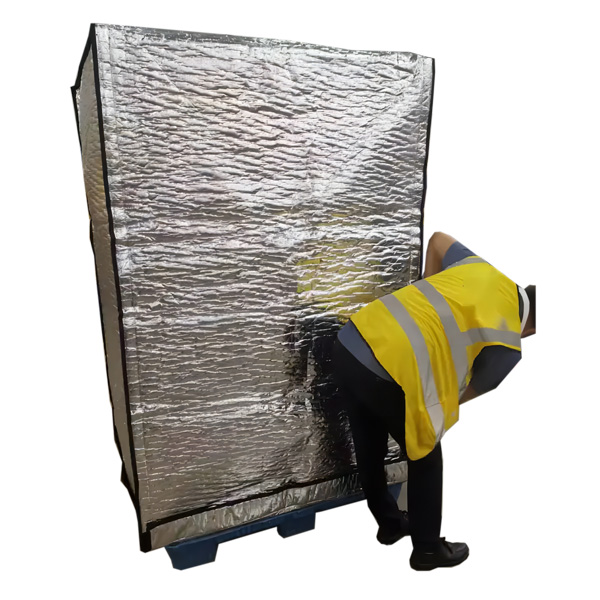
Pallet Thermal Blankets for Biotech: A Control Layer, Not a Shortcut
The safest way to buy a pallet blanket is to assume that its silver surface proves nothing. Pallet thermal blankets for biotech can slow heat movement and reduce direct environmental exposure around a load, especially during staging and handoffs. Their actual contribution depends on construction, fit, payload, starting condition, ambient challenge, and installation. They do not create refrigeration, replace qualified packaging, or decide whether a product remains acceptable after an excursion. Once that boundary is clear, a biotech team can use blankets intelligently: assign a narrow job, build evidence for it, preserve the approved configuration, and operate reuse without losing quality control.
Write the product-and-lane dossier first
The buyer needs a controlled input package before requesting samples. Call it a product-and-lane dossier, packaging brief, or user requirement specification. The name matters less than the content and approvals.
Begin with the product requirement. Record the authorized storage and transport condition, known sensitivities such as freezing or light where applicable, permissible orientation, and which document controls those facts. Do not turn a broad biotech category into a temperature range. Research reagents, clinical supplies, finished biologics, and cellular materials can require completely different systems.
Describe the pallet. Include minimum and maximum footprint and height, weight distribution, carton arrangement, voids, top shape, stretch wrap, straps, projections, pallet type, labels, tamper features, and inspection access. Photographs of normal variation are more useful than a perfect drawing alone.
Map the lane by custody and environment. Identify the last suitable storage point at origin, every staging and transfer zone, controlled equipment, airport or terminal handling, customs risk, unloading, receiving inspection, and first suitable destination storage. Mark where direct sun, wind, rain, cold floors, frequent door opening, or unpredictable dwell may occur.
Finally, define governance. Who owns the product requirement? Who approves packaging? Who installs the blanket? Who confirms vehicle readiness? Who controls monitoring? Who records delays? Who retrieves data? Who can place product on hold and determine disposition? A blanket purchase cannot repair unclear decision authority.
The dossier should state the intended job in bounded language: supplemental protection during a specified transfer, not universal maintenance of a temperature range. It should also list excluded scenarios, such as unconditioned long-term storage or a missed connection without recovery storage.
Decide whether the blanket belongs in the solution
Use a hierarchy rather than jumping from risk directly to product.
First, eliminate exposure where practical. Coordinate vehicle arrival, use an enclosed or temperature-managed dock, keep the pallet in controlled storage until release, prioritize loading, and provide an approved recovery location. These changes can be more reliable than adding insulation to a poorly controlled process.
Second, choose the main thermal system. Depending on the product and lane, that may be controlled transport equipment, an active container, or a qualified passive shipper with a defined packout and thermal buffer. The pallet blanket may supplement this system, but should not interfere with its airflow, securement, sensors, labels, or operation.
Third, consider the blanket for remaining short-duration exposure. It can shield surfaces from direct radiation, reduce air exchange, and add thermal resistance. If the credible event is too severe or prolonged for passive supplemental protection, escalate the system rather than assigning the blanket an unsupported duration.
Fourth, set monitoring and contingency. A logger can record selected conditions, while procedures define response. Monitoring is evidence, not protection. An alarm is information, not an automatic product verdict.
A typical decision makes the hierarchy tangible. A pallet of product leaves approved storage for a preconditioned vehicle through a dock that occasionally experiences outdoor air. Operations first minimize the staging time and verify the vehicle. A fitted blanket is then assessed for the short transfer. If the vehicle is late beyond the approved process, the pallet returns to controlled storage. The blanket is not used to justify an indefinite wait.
Engineer Pallet Thermal Blankets for Biotech Around Failure Modes
Thermal covers combine surfaces, insulation, seams, closures, reinforcement, and shape. Their visible material is only one part of the design.
Conduction transfers heat through layers and contact paths. Convection moves heat with air through gaps and around surfaces. Radiation can heat an exposed surface, particularly in sunlight. Moisture can change material behavior and introduce hygiene, labeling, and inspection problems. The completed assembly must manage the relevant combination.
A reflective exterior may reduce radiant gain but cannot stop conduction through a floor or hot air entering an open skirt. An insulating core may perform well as a flat sample yet compress at corners. A strong reinforcement can prevent tears while creating a thinner thermal bridge. A secure closure can limit gaps but slow inspection and encourage workers to leave it partly open.
Fit determines whether these features work. A blanket should cover the intended surfaces without pooling on the floor, catching equipment, compressing cases, hiding essential labels, or riding above the pallet. Evaluate load extremes and irregular pallets, not only the average configuration.
| Failure mode to design against | Likely contributors | Evidence or control needed |
|---|---|---|
| Outer cartons change condition rapidly | Poor fit, exposed corners, compressed layers, low thermal mass | Representative pallet mapping and fit limits |
| Product is accidentally overcooled | Unsuitable refrigerant interaction or severe cold exposure | Product-specific packout design and cold-profile qualification |
| Blanket is left open after inspection | Difficult closure, hidden labels, unclear ownership | Human-factors trial, access design, and work instruction |
| Moisture remains after return | Condensation, seam ingress, incompatible cleaning, poor drying | Cleaning validation or approval, drying method, and release criteria |
| Qualified configuration is silently changed | Supplier substitution or mixed asset versions | Controlled drawing, unique code, and change notification |
| Reuse claim fails operationally | Asset loss, contamination, damage, or no return route | Closed-loop pilot and life-cycle records |
This table ties design to failure rather than to attractive features. It also helps prioritize evidence. If direct sun is impossible on the route, solar reflectance may be less important than fit at a cold dock. If inspection access happens twice per transfer, closure usability deserves formal attention.
Create an evidence chain that quality can defend
Start with the claim and work backward. A claim such as “adds passive protection during the approved origin transfer” can be evaluated. “Maintains biotech temperatures” is too broad and implies a capability the blanket cannot possess independently.
Material data support component selection. They should include the property, unit, method, specimen condition, and relevant limitations. Finished-assembly tests show how a specific blanket behaves with a stated payload and ambient challenge. Handling trials show whether operators can reproduce the configuration. Lane profiling characterizes real environmental and dwell conditions. Formal qualification evaluates a defined system against approved acceptance criteria. Operational monitoring observes selected conditions during use.
Each layer answers a different question. A reflectance result cannot replace an assembly test. A chamber test cannot reveal every handoff error. A successful lane shipment cannot establish robustness without a protocol. Quality evidence becomes credible when the conclusions remain within scope.
The thermal protocol should identify the exact blanket construction and condition, representative payload or justified surrogate, pallet arrangement, starting state, ambient profile, airflow and radiant conditions where relevant, floor or base arrangement, sensors, calibration context, locations, logging interval, duration, repetitions, acceptance criteria, and deviations. Test both heat and cold challenges when the lane and product warrant them.
Official guidance provides useful structure. WHO materials distinguish temperature-controlled transport operations, route profiling, monitoring, and shipping-container qualification. European Good Distribution Practice expects required storage conditions for medicinal products during transport. IATA’s healthcare-cargo rules and programs connect packaging with booking, labeling, handling, and documentation. ISO 21973 addresses transport of cells for therapeutic use. ISTA thermal profiles support defined package-testing contexts. None of these sources turns an unassessed pallet blanket into a universal biotech solution.
Preserve the meaning of a pass
A study passes only for the approved acceptance criteria under the defined configuration and challenge. It does not prove that every unit, payload, route, season, or aged blanket will pass. Record the boundaries in the specification and training materials so commercial language does not grow beyond the evidence.
When a change occurs, compare it with those boundaries. Product, pallet, refrigerant, blanket layer, seam, closure, route, equipment, carrier, process window, and sensor changes may require assessment. The quality system should determine the action rather than relying on supplier assurances of equivalence.
Translate qualification into a dock procedure
Even strong thermal evidence can be defeated by a cover installed upside down or left open. The dock procedure should make the approved state obvious.
Assign a configuration code that links the physical blanket to the product or service. At issue, scan or verify that code. Inspect for open seams, punctures, delamination, closure failure, wetness, contamination, dimensional distortion, and readable identity. Released and returned assets must be physically separated.
Install the blanket while the pallet remains in the required environment whenever the approved process calls for it. Show orientation, skirt position, closure overlap, label access, and acceptable clearance in photographs. Define when the blanket may be opened and who must reclose it. If the load is restrained after covering, confirm that straps do not crush insulation or compromise vehicle safety.
Set time and event triggers. If collection is delayed, vehicle readiness fails, the blanket is damaged, or monitoring cannot be started, the worker needs a clear next step. That may be returning the load to controlled storage, replacing the asset, contacting the control tower, or placing the shipment on hold. Do not ask handlers to infer thermal margin.
At receiving, preserve the blanket until the approved removal point. Record condition and any unusual exposure. Retrieve monitoring data according to the plan. A quality decision should use the full record rather than the visual condition of the cover alone.
Training should be observed, not only acknowledged. Ask operators to install on the tallest and most awkward approved loads, use labels and scanners, simulate an inspection, and segregate a defective return. Errors reveal where design or instructions need improvement before commercial deployment.
Buy supplier control along with the product
A biotech procurement package should include the user requirement, finished drawing, construction, tolerances, seams, closure, reinforcement, labels, workmanship, delivery packaging, documentation, and approved reference sample. It should identify which attributes are critical to fit, thermal function, cleanliness, and traceability.
Ask the supplier how raw materials and production lots are controlled, how finished dimensions and seams are inspected, and how nonconforming units are handled. Request the context for test reports and confirm that the quoted item matches the tested specimen. If batch traceability or material declarations are required, specify the level rather than asking for “full compliance.”
Advance change notification should cover thermally or operationally significant characteristics. Examples include material composition or source, thickness, coating, adhesive, foam or cellular structure, seam method, closure, reinforcement, dimensions, labeling, and manufacturing site. The buyer then decides whether the change needs review, comparison, or requalification.
Commercial facts should remain in the quotation. Minimum order, lead time, tooling, custom marking, replacement availability, and price can change. Evaluate total operating cost as well: storage cube, installation labor, return freight, cleaning, drying, inspection, repair, loss, administration, and retirement.
Make reuse pass the same quality test as outbound protection
Reusable blankets can support material efficiency on suitable closed loops, but the loop must preserve identity and condition. Begin with a pilot on a route where the receiver agrees to return the assets and where cleaning and inspection can be controlled.
Track issue, return, cycle time, cleaning, failure reason, repair, loss, and retirement. Avoid assigning a universal reuse count. Actual service life depends on construction, handling, contamination, folding, storage, cleaning, and route behavior.
Define the cleaning method and confirm compatibility with every layer. A wipeable exterior does not prove the seam or insulation can tolerate immersion, heat, or aggressive chemicals. Drying and release are separate steps. A blanket that looks dry outside may retain moisture internally.
Cross-use restrictions should follow the risk assessment. Dedicated client or product pools reduce mix-up and contamination risk but require more assets. Shared pools can improve utilization but need stronger identity, cleaning, and allocation controls.
Environmental claims need boundaries. Include manufacturing materials, outbound and return transport, cleaning, repair, avoided packaging, loss, and end-of-life route. The European Union’s current packaging regulation increases attention to waste prevention, recyclability, and reuse, but applicability depends on the format and flow. Legal review and actual operating data are more reliable than a green label on a data sheet.
Frequently asked questions
How long can a biotech pallet remain under a thermal blanket?
No universal duration is responsible. The answer depends on product acceptance criteria, starting condition, payload thermal mass, blanket construction, pallet geometry, ambient profile, wind, radiation, and sensor location. Use test evidence matched to the defined use and maintain an escalation rule for delays beyond the approved process.
Can a blanket replace a refrigerated truck for a short trip?
Not by assumption. A passive blanket does not control temperature or add cooling. Even a short trip can include severe ambient exposure, traffic, loading delays, and an unsuitable starting condition. The product and lane assessment should determine whether controlled equipment, qualified packaging, or both are required.
What is the most important supplier document?
No single document is enough. The most useful set links the controlled drawing and construction to relevant test evidence, production controls, material information, and change notification. A certificate with a broad claim but no specimen or test context is less useful than a complete, bounded technical file.
Should reused blankets be included in thermal testing?
If the approved program relies on aged assets, representative conditioning or reassessment may be appropriate. Folding, abrasion, cleaning, repairs, and closure wear can change the assembly. The protocol should define what aged condition represents and how it relates to inspection and retirement rules rather than assuming new-cover results apply indefinitely.
Who decides whether an excursion is acceptable?
The authorized quality function or other party designated by the product owner should make disposition decisions using stability information and the approved process. A logistics provider supplies records and executes holds or notifications. The blanket manufacturer should not declare product acceptability based only on cover condition.
Conclusion: keep every claim attached to its conditions
Pallet thermal blankets can strengthen biotech handoffs when the load briefly leaves a suitable environment. Their usefulness comes from slowing heat transfer and shielding the pallet, not from creating a controlled temperature. Product requirements, main transport equipment, qualified packaging, monitoring, and quality decisions remain distinct controls.
Build the dossier, eliminate avoidable exposure, engineer the full assembly, test a falsifiable claim, and translate the approved configuration into an executable procedure. Preserve it through supplier change control and manage reuse as a measured closed loop. That is the difference between adding a blanket and adding a defensible control.
About Tempk
Tempk is a B2B cold-chain packaging provider offering insulated pallet and thermal covers together with related temperature-controlled packaging. We help biotech buyers frame discussions around pallet fit, exposed handoffs, construction options, and reusable handling. Final suitability and evidence requirements should be determined for the specific product, route, packout, and quality system.
Share your controlled product requirement, pallet envelope, lane map, operating constraints, and expected evidence with Tempk to prepare a focused cover comparison or sample review.
Pallet Insulation Covers for Distribution Centers: Control

Pallet Insulation Covers for Distribution Centers: Build the Control Plan Before the Purchase Order
If a purchasing specification begins with “silver insulated cover,” it begins too late. Pallet insulation covers for distribution centers should be selected only after the team defines what happens to the load between controlled locations, what temperature-related risk matters, and what operators can execute repeatedly. The cover then becomes a targeted thermal buffer, not a vague substitute for refrigeration. A sound program joins six decisions: use-case boundary, pallet fit, thermal evidence, floor procedure, supplier control, and lifecycle ownership. Leaving any one of them undefined can make an apparently simple accessory unreliable at the exact handoff where it is needed.
Give the Cover One Clear Role
The first control is a sentence that says what the cover is expected to do and what it is not expected to do. For example: “This cover is used during transfer from the controlled staging room to an approved outbound vehicle and during defined dock waits.” The wording can vary, but it should identify the product family, process step, starting condition, exposure, and endpoint.
That boundary prevents three common errors.
First, insulation is not refrigeration. A passive cover slows heat exchange; it does not remove heat continuously or recover a pallet that started outside its required condition. Second, insulation is not monitoring. A logger records selected conditions, while a cover changes the rate of heat flow. Third, one component is not a qualified thermal system. For a sensitive product, the complete solution may also include a vehicle, insulated base, coolant, defined load pattern, procedures, monitoring, test evidence, and quality review.
The boundary should also name exclusions. The cover may not be approved for outdoor waiting, overnight storage, an unrefrigerated line-haul movement, a different pallet height, or a product with another temperature requirement. Explicit exclusions are useful because warehouse improvements often spread informally. A cover that solved one dock problem may be borrowed for another lane without anyone recognizing that the evidence no longer applies.
Use language that operators can understand. “Reduce the rate of temperature drift during the approved transfer” is more accurate than “maintain temperature.” “Keep the cover closed except for the listed scan step” is more actionable than “minimize exposure.” The technical meaning belongs in the supporting documents, but the floor instruction must guide behavior.
Find the Exposure That the Building Average Hides
The average temperature reported for a distribution center rarely describes the pallet’s worst moment. Loads move through microenvironments: a cold-room doorway, a narrow aisle with moving air, a staging lane beside a cycling dock door, a sunlit apron, a trailer with a warm roof, or a quality-hold area whose purpose is not temperature control.
Map the sequence with the people who perform it. Record where the pallet stops, how long exceptions can last, which side faces the door, whether the load sits on a warm or cold floor, and when packaging is opened. Include trailer rejection, late pickup, scanner failure, paperwork correction, security inspection, and shift change. Normal flow may be fast; exceptions determine whether the cover becomes a useful buffer or false confidence.
Seasonal variation matters. A summer heat challenge is obvious, but a product that must not freeze may face equal risk at a cold dock. Airflow can amplify surface heat exchange even when the measured room air does not appear extreme. Direct radiant exposure from sunlight or a hot surface can affect one face more than the rest. A representative assessment should therefore examine direction, duration, and sequence, not only a maximum ambient number.
Product and load properties alter the response. A dense, fully loaded pallet has different thermal inertia from a light, partly filled pallet. Case spacing and overhang change air paths and surface area. Initial product condition supplies or removes margin. None of these facts creates a universal calculation, but they show which configurations should be represented when evidence is generated.
The output of the mapping exercise is a small set of design challenges. Examples are a routine transfer, a plausible maximum approved wait, a cold-season condition, and an opening event for required inspection. A team can then design a cover and test program against actual challenges rather than an undefined “warehouse environment.”
Write a User Requirement That a Supplier Can Answer
The requirement should combine physical fit, thermal purpose, handling, hygiene, identification, and documentation. Avoid specifying a favored material before the function is clear. A supplier may propose different constructions, but each proposal should answer the same operational questions.
Geometry and access
Measure loaded production pallets, not empty pallet decks. Capture footprint, maximum height, overhang, corner boards, stretch wrap, top profile, protrusions, and normal variation. Define whether the cover goes over a separate top cap or insulated base. State which labels, data loggers, case codes, or documents must remain accessible.
A good fit is neither stretched tight nor casually oversized. Tight covers are difficult to apply and may tear or ride upward. Excess material can create gaps, drag, snag, hide labels, or interfere with material-handling equipment. Finished internal dimensions and manufacturing tolerance are more useful than a generic pallet-size name.
Access design should reflect real events. If scanning requires opening a panel, the closure must be repeatable and the work instruction must define how it is restored. If the entire cover must be removed for every inspection, staff will eventually improvise. Document pockets, clear windows, and flaps may help, but they must be reviewed for cleanability, durability, and insulation continuity.
Thermal construction
Ask for the complete layer arrangement, facing, insulation, seams, reinforcements, closure, and base treatment. Material properties are helpful when their test conditions are visible, yet they cannot replace performance information for the finished cover.
Heat enters or leaves by conduction, air movement, and radiation. Fibrous or cellular insulation can slow conductive paths. Closures and compressed corners can bypass them. Reflective surfaces can reduce radiant transfer when used in a geometry that includes an appropriate air space; a bright surface by itself is not a hold-time claim. Loose bottoms and openings can allow air exchange. The specification should make suppliers address all of these paths.
Floor compatibility
State the expected application method, maximum safe cover mass if the organization has one, acceptable lift height, forklift interaction, conveyor restrictions, antistatic or other site-specific needs, cleaning approach, and storage method. These requirements should come from facility safety, engineering, hygiene, and quality personnel. Do not infer them from a thermal-material sheet.
Identification and supply control
Define visible size and orientation marks, ownership, product-status cues, and any barcode or asset identifier. Then require a controlled drawing or specification that links those features to the construction. Establish which material, dimension, seam, adhesive, closure, and process changes require notification or approval.
Use Decision Evidence, Not a Generic Performance Number
A statement that a cover “works for a certain number of hours” is meaningless without its conditions. The relevant result is tied to a starting product state, pallet contents, geometry, ambient profile, base condition, application, openings, sensor plan, and acceptance criterion. Change those inputs and the result may change.
Build a test around a decision. If the decision concerns an approved dock wait, represent that process with a justified load and challenge. If the decision concerns supplier equivalence, compare controlled production-intent units under the same protocol. If the concern is operator variation, include trained operators applying the cover rather than creating one perfect laboratory installation.
| Program decision | Evidence that supports it | Owner of the decision | Response when evidence is missing or fails |
|---|---|---|---|
| Cover fits approved pallet patterns | Measured loads, production-intent sample, documented fit and handling trial | Packaging engineering and warehouse operations | Revise dimensions or restrict the approved load list |
| Cover provides the intended thermal buffer | Preapproved thermal protocol with representative load, exposure, application, sensors, and criteria | Product or quality owner with technical support | Redesign, change the process, or use suitable active/refrigerated control |
| Staff can apply it consistently | Observed application, work instruction, training feedback, exception review | Warehouse operations | Simplify design or workflow before launch |
| Reusable units remain fit for service | Cleaning assessment, defect criteria, inspection and repair rules | Quality, hygiene, and asset owner | Quarantine, repair under an approved method, or retire the unit |
| Production remains equivalent to approved samples | Controlled specification, incoming checks, supplier change agreement | Procurement and quality | Hold affected supply and perform change review |
This framework assigns a person to each conclusion. It also stops the thermal test report from becoming the answer to unrelated questions such as cleanability or recovery. Missing evidence should produce a defined action, not a broader marketing interpretation.
Controlled chambers and field evaluations each have value. A chamber can create repeatable exposure for comparisons. A field assessment captures doors, movement, congestion, and actual behavior. Neither is universally sufficient. The test plan should explain why the chosen method represents the decision and where it does not.
ISTA 7E provides thermal profiles for testing individual packaged products moving through parcel delivery systems. It may inform a study when that environment is relevant, but it is not universal validation for a pallet cover or every freight lane. Pharmaceutical distribution may also use route profiling and shipping-system qualification principles described in World Health Organization and industry guidance. The technical team should select and justify the method rather than putting a standard name on an unmatched trial.
Sensor placement requires the same discipline. A point at the center may respond slowly and miss an exposed edge. A sensor at the cover surface may reflect ambient influence rather than product condition. Use locations that address the risk and document device identity, calibration status, logging configuration, and data treatment. Monitoring records conditions; it does not increase the thermal protection.
Turn the Approved Design Into Warehouse Controls
A cover program needs a status flow, not just an application poster. Define how a unit moves from clean storage to use, handoff, return, inspection, cleaning, quarantine, repair, and retirement.
Before use, the operator confirms the correct cover type and inspects the functional features: insulation continuity where visible, seams, closure, facing, identification, cleanliness, dryness, and shape. A defect list should distinguish cosmetic marks from damage that may affect thermal or hygiene performance. “Use if it looks okay” is not a repeatable criterion.
The product should enter the covered stage under the required condition. The operator applies the cover in its specified orientation, closes the bottom and access features, confirms required labels and monitors, and records the asset or batch if the process calls for it. The covered pallet remains subject to approved staging limits. The cover must never be interpreted as unlimited ambient storage.
Handoffs need a named owner. If the carrier retains the cover on the pallet, the carrier must know whether it can be opened, where it is removed, and who protects the load afterward. If the cover is removed at the dock, the team should define the earliest safe removal point. Receiving staff need to know that an insulated appearance does not prove the load is in specification.
Exception rules protect decision quality. When a wait exceeds the approved condition, a closure is found open, monitoring is missing, or the cover is damaged, staff should move the load to the specified safe state, preserve records, and notify the responsible function. Product disposition belongs to the organization’s approved process and relevant experts; it should not be improvised from a supplier claim.
For medicinal products, applicable Good Distribution Practice guidance may require defined storage conditions to be maintained during transport and supporting controls to be documented. For foods within the scope of the FDA Sanitary Transportation rule, responsibilities may include appropriate vehicles and equipment, sanitation, temperature control when required for safety, communication, training, and records. These obligations are system responsibilities. The cover supports them only within its approved role.
Buy the Production Process as Well as the Sample
The best sample in a sourcing event has little value if production units vary or materials change without review. Procurement should ask how the supplier controls finished dimensions, insulation placement, seams, closures, printing, and visual defects. Any thermal evidence should be traceable to the same construction revision being quoted.
Request enough production-intent units to evaluate normal variation. A flat material swatch cannot demonstrate corner fit, seam quality, label access, or operator effort. Inspect incoming packaging too. Covers compressed or folded incorrectly for shipping may arrive with creases, damaged closures, or unrecovered insulation.
Supplier discussions should separate facts from questions. Material composition, approved drawing, and measured dimensions can be documented facts. Thermal duration for the buyer’s route may remain a question until tested. Cleaning life may remain site-specific until the facility evaluates its chemicals and process. Minimum order quantity, lead time, custom printing, replacement parts, and commercial terms should be confirmed for the actual project rather than reported as fixed industry values.
Change control deserves a clause, not an informal request. A facing film, batting grade, foam density, adhesive, seam overlap, thread, or closure can affect fit, handling, moisture response, or thermal performance even if the outward appearance is similar. Define the notification period and review path appropriate to the buyer’s quality system. Incoming inspection can then verify critical features without trying to recreate supplier manufacturing control.
Make Reuse a Managed Loop
Reusable covers can support material efficiency when the distribution network recovers them, keeps them functional, and uses them repeatedly. Durability alone does not create that outcome. A cover sent into an open network without custody may complete only one movement.
Choose an ownership model: local pool, closed partner loop, customer return, or managed service where available. Define identification, return container, transport, receiving inspection, cleaning, drying, storage, repair, and loss responsibility. Pilot these steps along with the thermal function.
Track completed uses and condition outcomes. Design-life language is less useful than the facility’s record of issued, returned, accepted, repaired, rejected, and missing units. A lifecycle cost model can then include acquisition, application labor, reverse movement, cleaning, inspection, repair, storage, loss, and end of life. Divide by accepted completed uses only after real data is available.
Environmental comparison should cover the whole life cycle. The EPA’s sustainable materials management framework encourages productive material use across production, use, and end of life. For a pallet cover, that means examining material quantity and composition, manufacturing and inbound packing, thermal protection of the product, reuse operations, transport, cleaning, and disposal or recovery. A single attribute such as recycled content or recyclability cannot answer the whole question.
European packaging rules are also increasing attention on prevention, reuse, recyclability, and information. The EU Packaging and Packaging Waste Regulation begins to apply on a phased basis from August 12, 2026. Its precise effect depends on classification, geography, role, and implementing details. Procurement teams serving the EU should verify current obligations for their specific cover and flow rather than copying a general compliance statement into a specification.
End-of-use planning should be local. Multilayer articles may be hard to separate, and a theoretically recyclable component may not be accepted when laminated, contaminated, or oversized. Ask the intended waste or recovery provider what it can actually process. If no route exists, say so clearly and use that information in the design review.
Review the Program When the Network Changes
Approval is conditional on a defined product and process. Review is needed when pallet dimensions, product mix, load density, starting conditions, dock layout, carrier, lane, vehicle, cleaning chemical, cover construction, or regulatory requirement changes. The review may conclude that existing evidence remains applicable, but that conclusion should be documented.
Operational data can reveal early warning signs. Repeated corner tears may point to overhang or a pallet-quality issue. Open closures on arrival may indicate an access need or poor training. Slow return can create inventory shortages that push staff toward unapproved alternatives. Moisture found after storage may show inadequate drying. These signals connect physical design to process performance.
Do not use temperature records as a simplistic scorecard for the cover. Product temperature reflects many factors, including refrigeration, exposure, load, starting state, sensor placement, and handling. Investigate trends with the system boundary intact. Otherwise, a successful refrigerated movement may conceal a poorly applied cover, or an unrelated equipment event may be blamed on the cover.
A periodic cross-functional review can cover deviations, damage, recovery, cleaning, supplier changes, training observations, and whether the use case has expanded. The aim is not paperwork for its own sake. It is to keep the product claim aligned with what the distribution center is actually doing.
Frequently Asked Questions
What information should be sent to a pallet-cover supplier first?
Provide loaded pallet dimensions and variation, photographs or drawings, product sensitivity, the required operating condition, starting state, handling sequence, likely exposure, access needs, cleaning plan, reuse model, and evidence expectations. Separate confirmed requirements from open questions. This gives the supplier a real design problem instead of an invitation to quote a generic size.
How can a buyer compare two covers without a universal insulation rating?
Compare controlled constructions under the same representative protocol. Keep payload, starting condition, ambient exposure, base, application, openings, sensor plan, and acceptance criteria consistent. Also compare fit, handling, damage, cleaning, identification, supply control, and total operating cost. A material value alone cannot rank two finished pallet systems reliably.
When is a pallet cover not enough?
A cover is not enough when the required condition cannot be protected through the intended exposure with justified evidence and controls. Long or severe ambient exposure, a load that starts outside requirement, a need for active recovery, or highly variable handling may call for refrigerated equipment, an active container, coolant, a qualified passive system, or a redesigned route.
Can a cover be called compliant after it passes a thermal test?
Not in a universal sense. A thermal result supports a defined performance decision under stated conditions. Compliance may also depend on product requirements, equipment, sanitation, procedures, monitoring, training, records, qualification, change control, and local rules. Quality and regulatory teams should determine what the result supports for the specific operation.
What makes a reusable-cover pilot worth scaling?
A useful pilot shows more than thermal performance. It demonstrates consistent application, intact identification, acceptable handling, recovery, inspection, cleaning and drying, storage, defect decisions, and a workable ownership model. Scale only after the organization understands both product protection and the resources required to keep the loop functioning.
Conclusion
A reliable program for pallet insulation covers for distribution centers starts with the control plan. Define one use, map the actual exposure, specify the finished assembly, and generate evidence around a real decision. Assign ownership for application, handoff, exceptions, supplier changes, cleaning, and reuse. Keep thermal protection, monitoring, refrigeration, and qualification as separate concepts that work together when the risk requires them. When these boundaries are clear, an insulated cover can be a practical distribution-center buffer rather than an untested promise attached to a pallet.
About Tempk
Tempk supports B2B cold-chain packaging projects with offerings that include insulated pallet and thermal covers and related temperature-controlled packaging. We can use your pallet geometry, operating sequence, expected exposure, and reuse plan to frame a practical product discussion. The right selection still depends on the final system, representative evidence, and the controls required by your logistics and quality teams; no single cover construction should be assumed suitable for every lane.
Share your user requirement or a description of the pallet journey with Tempk before ordering at scale. We can help compare relevant cover options while your team retains the final qualification and compliance decisions.
Insulated Pallet Covers for Supply Chain Management: Playbook
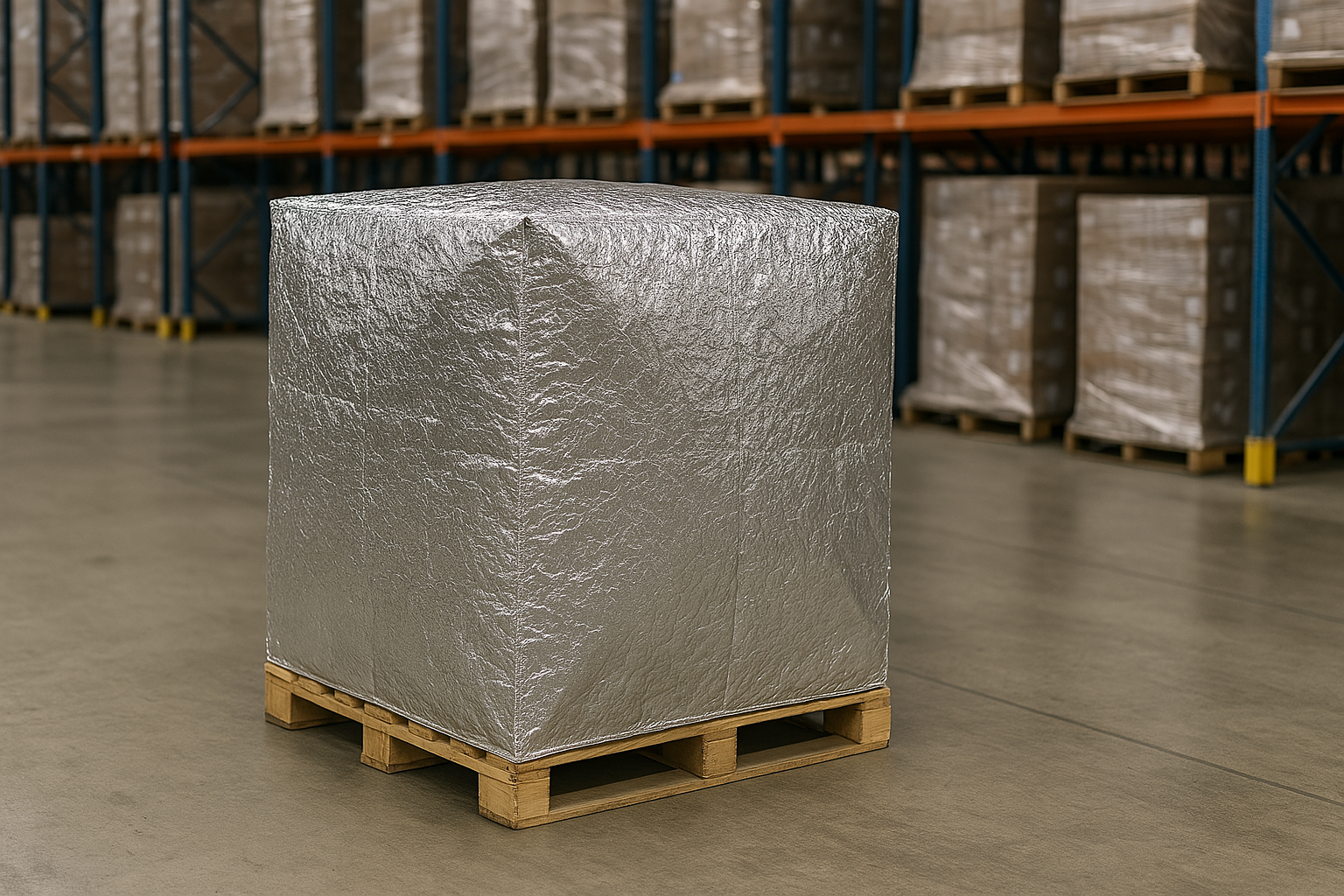
Insulated Pallet Covers for Supply Chain Management: A Stage-Gate Playbook
An insulated pallet cover is easy to buy and surprisingly easy to mismanage. It can be the wrong size, applied after the load is already warm, opened for every scan, left on where airflow is needed, or abandoned at the consignee despite being called reusable. Insulated pallet covers for supply chain management need a governance model as much as a material specification. The most effective model makes five decisions explicit: the exposure being controlled, the thermal boundary, the evidence required, the owner at each handover, and the rule for change. This article presents a stage-gate method that connects those decisions from initial problem definition through scaled deployment.
Gate One: Prove That the Problem Is a Cover Problem
Begin with evidence from the operation. Review shipment milestones, dock dwell, temperature records where available, deviation investigations, carrier feedback, and observations from warehouse teams. The objective is to identify when product protection weakens, not to prove that a requested product is necessary.
A cover is a plausible control when a correctly conditioned unitized load faces a temporary external exposure and the cover can be applied without disrupting another control. Typical candidates include transfer between controlled areas, short outdoor movement, inspection access, mixed-environment cross-docking, and receiving queues.
Other problems demand different action. If the product begins outside its required condition, insulation preserves the wrong condition. If an active container fails, a blanket cannot replace its cooling capacity. If pallets spend hours at a dock because schedules are uncontrolled, process redesign may offer more protection. If the load needs continuous refrigerated airflow, leaving it wrapped can be counterproductive.
Write a problem statement that can be challenged:
“A released pallet at the required starting condition experiences a defined uncontrolled exposure between two named temperature controls. We are evaluating whether a fitted passive cover can reduce that exposure without interfering with handling, airflow, access, or quality review.”
The statement prevents scope drift. It also gives finance and procurement a clear reason for the project.
Gate Two: Design the Boundary and the Workflow Together
The thermal boundary includes panels, seams, closures, top, sides, and possibly the base. The workflow includes the person who installs the cover, the time available, the label that must be scanned, the equipment that moves the pallet, and the event that triggers removal. Designing one without the other creates failure.
Boundary choices
Specify usable internal length, width, and height based on actual production loads. Include overhang, straps, corner boards, bulges, and acceptable variation. State whether the top is integrated, separate, or overlapped. Decide how the lower edge meets the pallet and whether a base component is required.
Describe functional layers rather than accepting a generic material name. The outer face may provide abrasion or moisture resistance and may manage radiant heat. The insulation slows conductive heat flow. The liner protects the core and affects friction and cleaning. Seams and closures join the system but can become thermal or moisture paths.
A reflective face is not active cooling. U.S. Department of Energy guidance on radiant barriers explains that reflective surfaces reduce radiant transfer when facing an air space. On a pallet, that principle is relevant to sun and hot surroundings but does not eliminate warm-air leakage or conductive contact.
Workflow choices
Observe how a pallet moves before choosing doors, flaps, windows, or closures. A document pocket may prevent a full opening. A scan flap may help at a hub but become a snag point during forklift handling. A heavier cover may add thermal resistance but require two operators and more storage space.
Define the sequence: release, identify correct size, apply, close, scan, start exposure, hand over, remove, inspect, and disposition. Add an exception sequence for delay, damage, missing cover, wet cover, and route change. The sequence becomes a design input and later a training tool.
Gate Three: Create an Evidence Ladder
Not every shipment needs the same depth of study. Match evidence to product risk, exposure, business impact, and the novelty of the use. An evidence ladder prevents both under-testing and unnecessary complexity.
Step A: Supplier document assessment. Review the controlled product description, dimensions, materials, intended use, existing test data, cleaning guidance, and limits. Separate raw-material properties from finished-cover performance.
Step B: Operational fit assessment. Trial representative and worst-case acceptable pallets. Observe application time, closure, access, ergonomics, forklift interaction, identification, removal, folding, and storage.
Step C: Controlled thermal assessment. Use a representative payload or justified simulator, documented starting condition, relevant environmental exposure, suitable measurement equipment, and predefined analysis. Compare against a meaningful baseline if the decision requires it.
Step D: Process pilot. Run the cover through named origin, carrier, hub, and destination events. Include the return path for reusable products. Review normal execution and at least the exception handling that can be practiced safely.
Step E: Qualification within the owner’s quality system. Where product risk or regulation calls for formal qualification, the product owner determines the protocol, acceptance criteria, approvals, and change control. The cover supplier’s report can support but does not replace that responsibility.
Evidence must keep its boundaries. ISTA 7E is a standardized thermal test for insulated transport packaging in parcel delivery systems. It should not be presented as automatic validation for a pallet cover in every air, ocean, truckload, or warehouse lane. Standard methods are valuable when their scope matches the use; lane-specific information addresses different uncertainty.
Monitoring is also separate. A data logger records temperature where its sensor is located. It does not insulate the pallet, and an insulated cover does not create a temperature record. Decide monitoring based on product and quality requirements.
Gate Four: Assign Ownership at Every Interface
The cover crosses organizational lines, while accountability often stops at the warehouse door. A responsibility map prevents the physical control from becoming ownerless.
| Process point | Primary decision | Evidence or record | Escalation trigger |
|---|---|---|---|
| Product release | Is the pallet at its approved starting status? | Release record under the applicable process | Load is not ready or status is unclear |
| Cover issue | Is the correct design and condition available? | Asset or stock issue and visual inspection | Wrong size, wet, damaged, or unapproved cover |
| Application | Is coverage complete and access correct? | Operator check or scan event | Closure cannot engage or pallet exceeds limits |
| Carrier handover | Does the next party accept the use instruction? | Shipment instruction or agreed handover record | Carrier cannot maintain the planned handling |
| Delay or inspection | Can the covered exposure continue? | Time and exception record | Reviewed dwell or condition is exceeded |
| Receiving | Is shipment information sufficient for disposition? | Temperature, condition, and receipt review as required | Damage, missing data, or other acceptance concern |
| Cover return | Is the asset accounted for and segregated by status? | Return scan and inspection status | Missing, contaminated, wet, or irreparable item |
The table does not impose one regulatory model. It makes decisions visible so each organization can place them in its own contracts, work instructions, quality agreements, or service levels. Responsibility should be confirmed with third-party logistics providers before launch, especially where they will open, remove, store, or return covers.
Food and medicinal supply chains may have additional obligations. Within its scope, the FDA Sanitary Transportation rule addresses vehicles, transportation operations, training, records, and risks such as inadequate refrigeration and contamination. European good distribution practices address medicinal-product distribution controls in their jurisdiction. A cover can support an approved process, but “compliant cover” is too broad unless a precise claim and applicable requirement are defined.
Gate Five: Turn the Approved Sample Into a Controlled Supply
Sample approval should create a production baseline. Keep a drawing or specification that covers functional layer construction, usable dimensions and tolerances, seams, closures, overlap, access features, labeling, weight if relevant, and packaging for delivery. Retain an approved sample when practical.
Define incoming checks according to risk. Visual, dimensional, and functional inspection may confirm identity, size, closure, seam condition, surface defects, label, and fit. More extensive testing can be triggered by changes or periodic review. Inspection should detect meaningful differences rather than generate paperwork without a decision.
Supplier change control needs a defined threshold. Substituting an outer film, insulation, thread, binding, adhesive, closure, or manufacturing method may affect thermal behavior, stiffness, cleaning, fit, or durability. Require notification for potentially meaningful changes and decide whether the response is document review, sample approval, fit trial, or thermal re-evaluation.
Production consistency also includes labeling. A reusable cover needs a durable identifier and design revision that remain readable through the intended cleaning and handling. A one-way cover needs clear size and orientation so it is applied correctly. Avoid printing unsupported performance or compliance claims on the product.
Operating a Reusable Cover Pool
A reusable cover pool is a small returnable-asset system. It needs inventory rules, status control, reverse logistics, cleaning capacity, repair boundaries, and loss accountability.
Create distinct physical areas for clean available stock, returned uninspected stock, wet items, repair candidates, and retired covers. The digital status should mirror those areas. A cover should not become available merely because it was scanned at the warehouse; it becomes available after the required inspection, cleaning, and drying.
Permanent cover identification should be separate from the pallet’s shipment identity. GS1 standards support identifying logistics units such as pallets; the reusable cover can have its own asset code that associates temporarily with a shipment. This lets one cover serve many pallets without corrupting product traceability.
Plan inventory using observed cycle time, not just trip duration. A cover may spend time waiting at origin, in transit, at destination, in return transport, in cleaning, and in storage. Add realistic buffers for seasonal volume and imbalance. If the route cannot recover assets reliably, reconsider the format before buying a large reusable fleet.
Repair and retirement criteria should be visible. Open seams, failed closures, wet insulation, delamination, contamination that cannot be removed, distorted fit, and unapproved patches may create risk. The supplier may be able to recommend compatible repair methods for limited damage. Do not assume a fixed reuse count unless evidence covers the real cleaning and handling conditions.
Measuring Cost and Sustainability Without Shortcuts
The unit price answers only one part of the business case. For a one-way cover, consider procurement, storage, application labor, destination handling, and material disposition. For a reusable system, add identification, return transport, sorting, cleaning, drying, repair, asset loss, working inventory, and management.
Use scenarios rather than a single optimistic forecast. A closed route with reliable backhaul may support high asset utilization. A fragmented international network may not. Pilot data should replace assumptions about loss, cycle time, and labor as soon as it becomes available.
Environmental evaluation needs the same discipline. EPA’s sustainable materials management approach considers productive material use across the life cycle. Reuse may reduce repeated manufacturing, but it also creates return and cleaning activity. A credible comparison defines the functional unit, system boundary, expected turns, loss, and end-of-life treatment. Specialized life-cycle expertise may be appropriate for public claims.
The European Union’s Packaging and Packaging Waste Regulation generally begins applying from 12 August 2026 and addresses packaging design, composition, recyclability, reuse, and waste prevention through provisions with different scopes and schedules. Businesses operating in the EU should review current official guidance and obtain legal or regulatory advice for their specific role and cover format. Procurement specifications should be capable of evolving as implementation details develop.
Operating Insulated Pallet Covers for Supply Chain Management at Scale
After deployment, measure what the program can responsibly observe. Useful operational indicators may include correct application, missing assets, damage type, cleaning turnaround, wrong-size selection, unplanned openings, delayed handovers, and exception response. Temperature-event review may contribute, but it should respect measurement and product-disposition procedures.
Look for patterns. Repeated corner tears can indicate a design or pallet-overhang problem. High loss at one consignee can indicate unclear ownership. Long cleaning queues can indicate insufficient drying capacity. Frequent label access can justify redesigning a flap. These findings improve the system without requiring exaggerated thermal claims.
Hold a change review when the product, pallet, route, site, carrier, vehicle, exposure, regulation, cover material, or cleaning process changes materially. Decide whether the original evidence still applies. A small administrative change may require no test; a new payload or climate may require more.
Document retirement of the old design when revisions occur. Mixed versions can confuse workers and make evidence hard to interpret. Large visible revision marks and controlled rollout dates can help.
Frequently Asked Questions
Who should own an insulated pallet cover program?
Ownership is usually shared, but one function should coordinate. Logistics may own workflow, packaging engineering the design, quality the product requirements and evidence, procurement the supplier, and warehouse operations execution. Finance and sustainability teams may review cost and life-cycle claims. Define decision rights rather than assuming collaboration will happen automatically.
What is the difference between a thermal cover pilot and qualification?
A pilot tests practical use on a limited route or volume. It can reveal fit, handover, tracking, and return issues. Qualification is a planned, documented demonstration against predetermined requirements under the relevant quality system. A pilot may provide qualification evidence, but the terms are not interchangeable and scope depends on product and organization.
Can a pallet cover correct a temperature excursion?
No. A passive cover slows heat transfer; it does not actively cool or heat the product back into condition. If an excursion is suspected, follow the established product-disposition and quality process. Do not cover the pallet and assume the event has been reversed.
How should a third-party logistics provider be trained?
Provide the intended use, correct size and orientation, application and closure steps, scan access, removal point, delay escalation, damage handling, and return process. Use images and a practical demonstration. Confirm responsibility in operating documents or agreements appropriate to the relationship, then observe early execution.
When should the cover design be requalified or retested?
Consider review after meaningful changes to layers, seams, closures, dimensions, payload, pallet pattern, route, ambient exposure, vehicle, use duration, cleaning, or acceptance criteria. The quality team should decide the level of re-evaluation based on risk. Not every change needs a full study, but no meaningful change should be ignored.
Conclusion
Managing pallet covers is a sequence of gates: confirm the problem, design the thermal boundary with the workflow, build proportionate evidence, assign interface ownership, and control production. Reusable programs add asset status, reverse logistics, cleaning, and retirement. Cost and sustainability need system boundaries rather than labels. When these elements are connected, a passive cover can become a dependable control for a specific exposure without being mistaken for refrigeration, monitoring, or universal compliance.
About Tempk
Tempk is a B2B cold-chain packaging provider offering insulated pallet and thermal covers and related temperature-controlled packaging options. We can help turn a process problem into a focused product brief by reviewing pallet geometry, intended coverage, closures, label access, handling, and reuse intent. Tempk does not define the customer’s product acceptance criteria or regulatory obligations. Those remain within the route owner’s quality and logistics system, supported by suitable evidence and documented use.
Send Tempk the problem statement, pallet drawing, exposure, and handover map for your intended lane. Those inputs support a more relevant sample and supplier discussion before full deployment.
Specify Insulated Cargo Covers for Agriculture
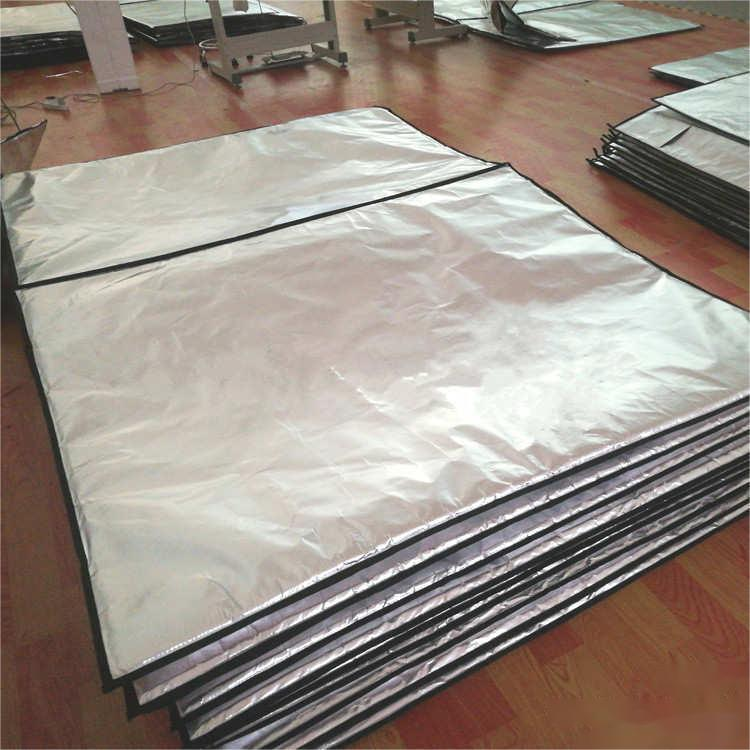
How to Specify Insulated Cargo Covers for Agriculture
The useful question is not whether a pallet cover “works.” The useful question is whether it controls a named exposure without creating another problem. Insulated cargo covers for agriculture can slow heat gain or heat loss around a unitized load during staging, transfer, inspection, or receiving. They cannot remove field heat, power a cold chain, or prove that a commodity remained acceptable. A strong specification therefore starts with a process gap, not a material. It connects the crop requirement, pallet condition, environment, cover design, operating rule, and evidence into one decision that workers can repeat and quality teams can review.
Define One Thermal Gap Before You Define the Product
Start with a sentence that describes the intended use. For example: “Protect pre-cooled palletized produce while it moves from controlled storage across an exposed loading area to refrigerated transport.” This is more valuable than “Provide an insulated cover for export pallets” because it states the starting condition, format, location, and destination control.
Now test the sentence against the route. Does the pallet also wait for inspection? Can loading stop? Is direct sun possible? Does wind lift loose flaps? Will the cover remain in the refrigerated vehicle? Who removes it? If the cover is expected to serve several gaps, document each one separately. A design can be suitable for more than one use, but the approval should not silently expand.
The process-gap approach also exposes situations in which a cover is the wrong first investment. If produce is not pre-cooled adequately, improve heat removal. If reefer airflow is blocked by poor stacking, correct load configuration. If pallets wait because appointment scheduling fails, reduce dwell. If an exposed base is the dominant heat path, side insulation alone will not solve it. Packaging should follow the diagnosed failure mode.
There are three early gates:
Product gate: What condition does the commodity require, and what variations in temperature, humidity, or ventilation can it tolerate?
Route gate: Which uncontrolled exposure is important under normal operation and under a credible delay?
Control gate: Is a passive cover capable of supporting that interval, or is active refrigeration, faster movement, shade, a controlled buffer room, or a different package needed?
Do not proceed to supplier comparison until the three gates are answered well enough for a sample brief.
Preserve Product Condition Without Blocking the Cold Chain
Agricultural temperature management begins before a pallet is covered. Harvest timing, shade, pre-cooling, packing, cold storage, and refrigerated transport establish and maintain product condition. FAO guidance describes the cold chain as linked upstream and downstream activities, while post-harvest guidance emphasizes airflow through produce packages and stacked loads. A cover should be inserted without contradicting those controls.
One recurring error is applying insulation too early. Warm product may continue to respire and release heat, while the cover slows heat removal. Another is leaving the cover around ventilated cartons inside a reefer without confirming the airflow effect. In both cases, a product intended to reduce external exposure can interfere with the planned process.
Write application and removal points into the specification:
The required product-release status before covering
The location where the cover is installed
The maximum pallet geometry allowed
The closure check
The approved locations where the covered pallet may wait
The event that triggers removal
The action taken during a delay
The receiving or return disposition
The cover should not become permission to extend an uncontrolled dwell. A delay rule may direct the pallet back to cold storage, into a temperature-controlled buffer, or through another approved response. The exact action depends on the operation. What matters is that workers do not invent it beside the dock.
Convert Heat Transfer Into Design Choices
Every cover manages a combination of three external heat-transfer paths. Insulating layers slow conduction through the assembly. Closures and overlaps reduce unwanted warm-air exchange. A reflective exterior may reduce radiant heat load when it faces the relevant air space and exposure. The payload, carton stack, pallet base, and internal air determine how those external loads affect product temperature.
No single layer describes the finished result. A thick core with a short skirt can leave lower cartons exposed. A highly reflective face may do little against prolonged warm-air exposure if seams remain open. A snug design may improve coverage but take too long to install or obstruct necessary ventilation. Material selection and geometry must be reviewed together.
The minimum design description should include:
finished usable dimensions and dimensional tolerances;
top, side, corner, and bottom coverage;
functional description of outer face, insulation, and inner liner;
seam and edge construction;
closure type, overlap, and location;
label or scan access where required;
weight, fold size, and handling features;
compatible cleaning and drying method for reusable products;
identification and production lot marking;
approved repair and retirement criteria, if available.
Avoid using “waterproof” or “food grade” without a precise definition and supporting documentation for the intended use. A water-resistant face may still have permeable seams. A cover touching only transport cartons has a different contact situation from material touching unpackaged food. Quality and regulatory teams should evaluate the actual interface.
Specify Insulated Cargo Covers for Agriculture Against Failure Modes
A failure-mode review is more productive than a long list of features. It asks how the intended control could fail and turns the answer into a design, process, or evidence requirement.
| Failure mode | Likely consequence | Specification or operating response |
|---|---|---|
| Product is covered before conditioning is complete | Heat is retained and later cooling may be slowed | Link application to documented product release or pre-cooling status |
| Cover is too small for pallet bulge or overhang | Gaps expose cartons and closures cannot engage | Measure worst-case acceptable production pallets and define usable internal dimensions |
| Top or base is left outside the thermal boundary | Uneven heat load bypasses side protection | State which surfaces must be covered and whether a base solution is part of the system |
| Cover blocks planned ventilation | Refrigerated airflow through cartons or stack is reduced | Define removal point or demonstrate compatibility with the actual airflow plan |
| Sun exposure is represented only by an air-temperature test | Radiant load is not addressed by the evidence | Include relevant radiant exposure or clearly limit the claim |
| Workers lift the cover repeatedly to scan labels | Protection is interrupted and the cover is damaged | Add a correctly placed access feature or revise the scanning sequence |
| Reusable cover returns wet or contaminated | Odor, deterioration, or hygiene risk develops | Establish segregation, cleaning, full drying, inspection, and release steps |
| Supplier changes a layer or closure without review | Fit, durability, cleanability, or thermal behavior may change | Require controlled specifications, notification, and re-evaluation rules |
The response does not always need to be a more complex cover. Sometimes a route change or work instruction is the most effective control. The table also prevents a common procurement problem: asking one material property to solve failures caused by operations.
Build Evidence in Layers
Evidence should become more representative as the purchase moves from idea to deployment. A disciplined program can use four layers.
Layer 1: Document review
Review the proposed construction, dimensions, intended use, handling instructions, material statements, and any existing test report. A useful report identifies the tested item, payload or simulator, starting conditions, environmental profile, duration, measurement setup, and acceptance criteria. Marketing summaries without those details may support screening but not a route decision.
Layer 2: Fit and usability trial
Apply the sample to a representative pallet and the largest acceptable pallet. Include carton overhang, straps, corner boards, and labels. Time application and removal, observe snag points, test closures, check forklift access, and practice storage. Run the trial with actual operators during a realistic work period.
Layer 3: Controlled thermal comparison
Compare the proposed covered configuration with the relevant baseline under documented conditions. The design of the comparison should reflect the decision. A direct-sun transfer requires different exposure than a warm indoor wait. Sensor placement and measurement equipment should be planned, but data interpretation must use the commodity owner’s product criteria.
Layer 4: Route confirmation and exception review
When risk warrants it, review the complete lane or a representative pilot. Include handovers and the delay process, not just normal timing. A successful pilot on one lane does not approve all climates, crops, pallet formats, or seasons. Record the boundaries so later teams know what was established.
ISTA 7E may appear in supplier literature, but it is designed for thermal transport packaging in parcel delivery systems. It is not a universal qualification for pallet covers or agricultural lanes. Use standards whose scope matches the decision, and supplement them with route-specific work when appropriate.
Make the Control Visible at Every Handover
An effective cover program has physical and informational control. The physical control is the correctly fitted cover. The informational control tells the next person what the pallet is, what status it has, when it was covered, where it should go, and what to do if the plan changes.
For a disposable cover, the information may be part of a shipment label and work instruction. For a reusable cover, the item itself may carry a unique asset identifier plus a visible size and status mark. Keep product traceability and cover-asset tracking distinct: the pallet identifier follows the goods, while the asset identifier follows the cover.
At receiving, the consignee should not use cover condition as the sole acceptance signal. A displaced or damaged cover is relevant evidence, but an intact cover does not prove product condition. Review temperature records, shipment history, packaging state, and product inspection according to the established procedure.
If the shipment falls under food-transport requirements, applicable roles and records must be considered separately. In the United States, FDA sanitary transportation requirements address vehicles, operations, training, records, and protection against food-safety risks within their scope. A cover can support the procedure, not substitute for it.
Decide Whether Reuse Fits the Network
Reuse is attractive when agricultural flows are predictable, but harvest season makes asset imbalance especially likely. The economic and environmental case depends on actual returns, not theoretical durability.
Draw the reverse route. Covers may return on the same truck, consolidate at a distribution center, or move through a third-party pool. Each option needs ownership, scan events, cleaning responsibility, drying space, inventory buffers, and loss handling. If no party accepts responsibility at the destination, the intended return loop may never begin.
Life-cycle thinking is more credible than a simple “reusable is sustainable” statement. The EPA’s sustainable materials management framework emphasizes productive material use across the whole life cycle. Apply that idea to the cover by considering material quantity, manufacturing, outbound and return transport, cleaning, repair, loss, utilization, and end of life.
Destination rules also matter. The European Union’s Packaging and Packaging Waste Regulation generally begins applying from 12 August 2026 and introduces requirements across the packaging life cycle, with application depending on the operator and packaging format. Agricultural exporters serving EU markets should obtain current, situation-specific advice. Do not assume that a reusable label or a material declaration establishes compliance.
A one-way product may remain the better operational choice for an open export lane. A durable reusable design may be stronger on a closed domestic route. The correct conclusion comes from the network, not from a universal hierarchy.
Move From Sample to Controlled Production
Before scaling, convert the approved sample into a controlled specification. Keep photographs, drawings, layer descriptions, closure details, labels, and tolerances. Agree on inspection points and change notification. Decide whether the first production lot needs enhanced inspection or a repeat fit trial.
Training should be short and visual. Show the correct orientation, closure sequence, bottom treatment, label access, and removal method. Include defects that require segregation. Supervisors should be able to observe correct use without dismantling the pallet.
Use early deployment data to improve the system. Track missing covers, application time, damage locations, wet returns, size errors, and exceptions. These data reveal whether the design or the process needs attention. They should not be turned into performance claims without a suitable study.
Change control continues after launch. Revisit the decision when there is a new commodity, carton, pallet pattern, route, climate, vehicle, cleaning method, supplier material, or customer requirement. Insulation is part of a living distribution process.
Frequently Asked Questions
How long will an insulated agricultural cargo cover protect a pallet?
There is no responsible universal duration. The result depends on the product’s starting condition, thermal mass, pallet configuration, ambient exposure, sun and wind, cover construction, fit, base, and acceptance criterion. Ask for the full conditions behind any duration claim, then decide whether additional testing is needed for your route.
Is full bottom coverage always necessary?
Not always, but the base must be considered. Heat can enter through contact with a hot surface or air around an open skirt. Some systems use an insulated base, pallet sheet, or controlled staging surface. Define the base condition and include it in evaluation instead of assuming side-and-top coverage represents the whole pallet.
Can the cover stay on during refrigerated transport?
Only if the product, carton ventilation, vehicle airflow, and evaluated configuration support that use. Many fresh-produce loads depend on air moving through aligned package vents and pallet channels. A cover used during outdoor transfer may need to be removed before final loading. Put the removal point in the work instruction.
What is the most important supplier document?
No single document answers every question. The controlled product specification establishes what will be supplied, while a detailed test report explains any thermal evidence. Cleaning instructions, material documentation, change-control terms, and production inspection records may also matter. Together they connect the sample, claim, and production lot.
When should a reusable cover be retired?
Use observable criteria supported by the supplier and your hygiene and quality process. Examples may include damaged closures, open seams, punctured or wet insulation, delamination, contamination that cannot be removed, loss of fit, or an unapproved repair. Avoid assuming a fixed number of trips unless it is supported for the actual conditions.
Conclusion
A defensible agricultural cover specification begins with one process gap and follows it through product condition, airflow, heat transfer, geometry, handling, evidence, and ownership. The cover should preserve a condition established by the cold chain, not hide a missing control. Test in layers, keep claims tied to their setup, and define the delay response before deployment. For reusable designs, prove the return loop as carefully as the physical product. This route-based method produces a smaller, clearer claim and a more dependable operation.
About Tempk
Tempk is a B2B cold-chain packaging provider whose relevant offerings include insulated pallet and thermal covers and related temperature-controlled packaging. We can help buyers turn a route description into a cover discussion that addresses usable dimensions, coverage, closures, handling access, and intended reuse. The agricultural product requirement, qualification strategy, and operating approval remain the responsibility of the shipper and its quality team. Tempk’s most useful starting point is therefore not a generic requested duration, but a representative pallet and a clear description of the exposure the cover is meant to manage.
Share your commodity, pallet geometry, transfer sequence, environmental exposure, and return plan with Tempk. Use that information to request a focused sample and evidence review before scaling.
Insulated Pouch Personalized Grocery Chain Playbook
Insulated Pouch Personalized Grocery Chain: From Branded Bag to Controlled System
The hard part of an insulated pouch personalized grocery chain project is not selecting a logo position. It is making one design work across procurement, brand, food safety, store operations, delivery, and inventory. The pouch may reduce heat exchange during a defined stage, yet it does not generate refrigeration, validate a delivery route, or prove food-contact suitability by appearance. A sound promise and scalable purchase require discipline: define the use boundary, specify the complete construction, control artwork versions, prove the production item, and design its life after handoff.
Decision Zero: Define What the Chain Is Actually Buying
Teams often use “reusable insulated bag,” “cooler pouch,” and “thermal carrier” as if they describe the same operating system. They do not. Before discussing size or artwork, place the proposed item in a precise category.
It may be a shopper-owned carrier for sealed groceries. It may be a store asset used during order staging. It may travel with a driver and return to a hub. It may be part of a managed customer-return pool. In a less common case, it may be intended for direct contact with unpackaged food. Each definition changes material documentation, hygiene, tracking, training, and cost.
Set the thermal boundary at the same time. Passive insulation only slows heat flow. It offers no active heating or cooling and cannot compensate for an uncontrolled starting temperature. If cooling media are used, their selection, conditioning, placement, and separation from products become part of the packout. A temperature data logger, if the chain uses one, records conditions; it does not protect the food. A general-purpose pouch should never be described as qualified for every route simply because it contains insulation.
Then add explicit exclusions. These may include unpackaged food, ambient staging of products that require refrigeration, mixed hot and chilled loads, unapproved cleaning chemicals, or use after the liner is damaged. Exclusions are not a weakness in the product brief. They prevent a convenient bag from being used as evidence for a purpose it was never designed to meet.
One Specification, Five Owners
A grocery-chain pouch sits at the intersection of several functions. If each team approves only its visible concern, the supplier receives an incomplete instruction. The better approach is a set of decision gates with one accountable owner and one required output at each gate.
| Decision gate | Evidence or output needed | Accountable chain function | Failure if skipped |
|---|---|---|---|
| Use and contact boundary | Approved load, handling path, ownership, direct-contact status, and exclusions | Food safety with operations | Misuse, unsupported claims, unsuitable cleaning process |
| Construction freeze | Component specification, critical dimensions, closure, seams, liner, and agreed alternates | Procurement with quality | Sample-to-production drift and unclear defect decisions |
| Artwork release | Print-ready file, substrate proof, revision code, market and store mapping | Brand or packaging owner | Wrong language, obsolete campaign, inconsistent stores |
| Proof of fitness | Representative loading, handling, cleaning, print, and thermal evidence where required | Quality with operations | A catalog sample passes while the store workflow fails |
| Lifecycle launch | Allocation, status flow, return model, replenishment, and retirement rule | Supply planning with store operations | Clean-stock shortages, uncontrolled returns, hidden cost |
The table turns a vague cross-functional project into an auditable sequence. It also prevents “approval” from meaning different things to different teams. Brand approval releases graphics; it does not approve food contact or thermal performance. A quality inspection releases a lot against agreed criteria; it does not decide how stores stage chilled products.
Engineer Around the Pouch’s Weakest Moments
A flat panel rarely represents the moment that creates a failure. Problems appear when a full pouch is lifted by one handle, pressed against a vehicle wall, overfilled so the top remains open, folded through the artwork, wiped while still warm, or stored damp. Review the construction through those moments.
The outer surface carries the brand and receives abrasion. It should be assessed for scuffing, staining, odor pickup, print adhesion, and compatibility with the permitted cleaning method. The insulating core should remain continuous through the useful panel area without unexamined gaps at folds and edges. The inner liner needs to suit the stated contact boundary, resist foreseeable puncture from packaged goods, and allow the condition of corners and seams to be inspected.
Closures deserve a live packing trial. A wide opening can improve staff speed but increases air exchange while open. A close-fitting top can help limit exchange but may encourage overfilling or trap the liner. Measure a pouch in the condition in which it is used, not only when laid flat. Representative baskets should include rigid cartons, bottles, flexible packs, trays with corners, and the order-label method.
Thermal evidence must be attached to a scenario. Heat moves through materials, gaps, and air exchange; a reflective surface addresses only part of that physics. Payload mass, initial temperature, ambient conditions, opening events, coolant configuration, and measurement points all shape a result. If a chain needs a performance duration, it should approve a test method for the full packout. A supplier’s insulation datasheet or an unrelated pouch test cannot establish the result.
Leak language should be equally disciplined. A liner that can be wiped is not necessarily liquid-tight. Stitch holes, bindings, zipper tracks, worn folds, and corners may allow movement of a spill. Sealed primary food packages should remain the first containment layer. If the pouch is expected to contain leakage, test the finished article under a defined orientation, liquid, dwell, and handling method and restrict the claim to that evidence.
Design cleaning access before writing a cleaning instruction. Smooth broad surfaces can hide difficult seam channels. A deep pouch may be hard to invert or dry. A closure can retain debris. The approved process should distinguish soil removal from any sanitation step required by the chain, name compatible chemistry and application conditions, and define inspection and drying. Persistent odor, delamination, exposed insulation, fractured lining, damaged seams, or an unreliable closure should trigger a documented disposition.
Personalize the Network Without Creating Artwork Debt
Personalization should help people recognize and operate the system. A chain logo builds familiarity, but the highest-value graphics may be a service category, return instruction, use boundary, or reserved order-label panel. Design those elements as information architecture, not decoration.
Create a master artwork record for each pouch SKU. It should identify the released file, revision, date, substrate, print method, color reference, panel orientation, language, legal review where relevant, and eligible store group. Keep permanent brand elements separate from content likely to change. Seasonal graphics printed across the full pouch can turn serviceable inventory into obsolete stock; a replaceable card, label, or controlled secondary panel may carry short-lived messaging more efficiently.
Do not let local teams edit source files. Regional variation should come from approved fields in a version matrix. If a market needs another language or a banner uses a sub-brand, create a distinct revision and map its allocation. The supplier should manufacture only from the formally released proof, and outer cartons should show enough information for receiving teams to distinguish similar versions.
Operational identifiers require a separate decision. A static code may identify the pouch type. A lot mark can connect pouches to production records. A unique asset ID can support a return history. None replaces the others. Test any barcode or data carrier through flexing, condensation, abrasion, and cleaning, and provide a readable fallback. A code that cannot be scanned at the store’s normal distance is visual clutter, not traceability.
Prove the Production Item Before Buying the Network
Sampling should narrow uncertainty in stages. Begin with an unprinted construction sample to test geometry, loading, closure, carrying, shelf or tote fit, and cleaning access. Next, review a printed pre-production piece made with the intended substrate and process. Only then should the program move into representative stores.
Record load fit, lifting, closure use, order identity, cleaning, drying, print, code readability, returns, and clean-stock availability. Add thermal testing or contact-document review only when the approved use and market require it. Production control then protects what the pilot approved. Incoming checks verify critical components as appropriate. In-process checks address cutting, layer alignment, assembly, closure placement, print process, and released artwork. Final inspection uses an agreed sampling plan for identity, dimensions, workmanship, function, appearance, odor, packing, quantity, and traceability. The supplier should notify the buyer before relevant material or process changes, even when the finished item is expected to look similar.
For European Union direct-food-contact designs, map the article to the general framework and applicable material-specific rules. Printed-material good manufacturing practice addresses transfer through a substrate or by set-off. For secondary carriers, document the boundary and retain suitable primary packaging; generic “food grade” wording is insufficient.
Design the Life After Handoff
The handoff determines whether the pouch becomes a customer product, a consumed operating supply, or a returning asset. Do not mix these categories in financial or environmental reporting.
If the shopper owns the pouch, the retailer can provide care and use guidance but normally cannot verify how often it is reused. If the driver retains it after delivery, custody may be easier to control, though vehicle storage and depot sorting become important. If shoppers return it to stores, the chain needs collection space, return recognition, incentives if offered, transport to cleaning, status records, and a way to balance stock between locations.
A returnable pouch needs at least four visible states: returned, quarantined, processed, and ready. Some programs may add “in transit” or “retired.” Physical separation matters more than a sophisticated dashboard. A scanned status cannot prevent contamination if dirty and clean pouches share a backroom cart.
Evaluate economics using completed, acceptable uses. Add purchase and personalization, inbound allocation, reverse freight, cleaning, inspection, administration, loss, replacement, and end-of-life handling. Divide the total by the number of service events that actually met the chain’s release criteria. This exposes the cost of assets that are durable but never return, as well as the dwell time of items waiting to be cleaned.
Empty pouches still occupy space. Specify how they fold or nest for return without damaging insulation, closures, or printed surfaces. Set pickup rules based on backroom capacity and cleaning throughput. Replenish from serviceable inventory, not total inventory; a store with many dirty returns can still be short of usable stock.
Environmental claims should rely on the same operating data. Track issues, returns, successful reuses, loss, cleaning inputs, return distance, retirement causes, and the verified end-of-life route, then compare the system with the packaging it replaces. Reusable design can create an opportunity to prevent waste, but it does not guarantee a better outcome under every recovery and cleaning model.
European Union grocery chains should also account for the Packaging and Packaging Waste Regulation, which generally applies from August 2026. Its requirements cover packaging broadly and include provisions relevant to composition and reusable or recoverable design. Scope, duties, timelines, and implementing details must be assessed for the specific packaging and economic operator. A personalized pouch should not be marketed as automatically compliant simply because it is intended for reuse.
Write the Store Playbook Before Launch
The store playbook should show collection, status, spill response, quarantine, cleaning, release authority, and ready-stock replenishment. Defect records should capture SKU, lot or asset ID, condition, store, date, and disposition.
Frequently Asked Questions
How many pouch SKUs should a grocery chain launch?
Use the smallest set that safely and practically separates distinct missions. A chain may need different formats or visual categories for click-and-collect, driver delivery, prepared foods, or shopper sale, but every variant adds forecasting, artwork, inspection, storage, and training work. Pilot representative baskets first. Add a SKU only when a clear operating need cannot be solved through loading instructions or another controlled feature.
Is a declaration for the inner film enough to approve the finished pouch?
Not necessarily. A film declaration covers the item and conditions stated in that document. The finished pouch may also involve adhesives, printing, seams, bindings, closures, and manufacturing or stacking conditions. The chain should map documents to the complete construction and intended contact. For sealed-pack secondary use, record that limitation rather than collecting direct-contact claims that do not match operations.
What is the most important sample-to-production control?
There is no single control, but the combination of a released specification, approved artwork revision, controlled golden sample, agreed inspection method, lot identification, and supplier change notification is powerful. The golden sample alone cannot define hidden materials or measurement tolerances. The written file alone cannot fully capture feel and appearance. Together they give buyer and supplier a common production reference.
Can a reusable pouch be cleaned at each store?
It can be if the design and chain process support safe, repeatable local cleaning, complete drying, inspection, status separation, and records appropriate to the use. Central processing may offer more consistency but adds transport and turnaround. Evaluate actual facilities, approved chemistry, staff time, contaminated-return handling, and release authority before selecting either model. Do not assume a wipe is a complete cleaning program.
How should a chain substantiate a sustainability statement?
Describe the precise system and retain evidence for the claim. Measure successful uses, returns, losses, cleaning, reverse transport, retirement, and the packaging displaced. Verify local recovery options for the complete multilayer item. Avoid broad phrases such as “zero waste” or universal recyclability. A limited statement supported by operating data is more credible and easier to maintain as the network changes.
Conclusion
A personalized insulated pouch becomes a reliable grocery-chain tool only when its promise, construction, artwork, production, and lifecycle describe the same system. Define sealed or direct contact, state the thermal limits, and design around closures, seams, spills, cleaning, and real baskets. Give every artwork a controlled identity, prove the final construction through representative use, and protect it with a golden sample and change control. Finally, choose an ownership model that the chain can recover, clean, replenish, measure, and retire without confusing reusable intent with verified reuse.
About Tempk
Tempk is the brand of Shanghai Tempk Industrial Co., Ltd. We support B2B buyers with cold-chain and insulated packaging selection and related temperature-control packaging products. For a grocery-chain pouch program, we can help frame product selection around the intended load, handling sequence, insulation role, personalization, and procurement requirements. Those inputs allow a more relevant discussion of candidate constructions while leaving food-safety approval, testing criteria, artwork release, and network operating controls with the responsible buyer teams.
Share your contact boundary, basket profiles, store workflow, artwork plan, and return model with Tempk to prepare a focused insulated pouch evaluation before committing to network volume.
Insulated Pouch Bulk Purchase Spain: Planning Guide

Insulated Pouch Bulk Purchase Spain: A Practical Approval Plan
The decisive work in an insulated pouch bulk purchase Spain programme happens before the volume order. A buyer must translate a grocery, meal-delivery, retail, or internal-logistics need into a defined payload, handover map, material specification, evidence plan, and ownership model. Only then can samples and quotations be compared fairly. The pouch should be treated as one component in an operating system: it slows heat flow, while coolant, staging, route control, user behaviour, cleaning, and compliance processes determine whether the system works in Spain.
Gate One: Describe the Service in Operational Language
Replace the request “reusable thermal bag for chilled products” with a short operational statement. Name the packaged goods, typical load, first and last controlled storage points, delivery method, user, return model, and any target condition set by the responsible quality team. Do not insert an unverified number of cold hours.
Next, draw the handover sequence. A grocery order might move from chilled picking to store staging, customer collection, a private vehicle, and a home refrigerator. A restaurant delivery might pass from kitchen to dispatch rack, courier, apartment entrance, and recipient. An internal loop may add return transport, segregation, cleaning, drying, inspection, and redistribution.
This map reveals whether a flexible pouch is appropriate. A short, controlled transfer may need convenience and organisation more than heavy insulation. A long or uncertain route carrying sensitive goods may require a qualified passive packaging system, monitoring, or an active solution. A normal insulated pouch should not be presented as a pharmaceutical shipper or as proof that a commercial food cold chain has been maintained.
Assign an owner at every step. Someone must control coolant conditioning, release, loading, delivery exceptions, returns, sanitation, and product disposition when a time or temperature rule is breached. Packaging cannot fill an accountability gap.
Gate Two: Design the Packout Before the Pouch
Measure the actual primary packages. Record length, width, height, weight, orientation, and whether they can be stacked. Add the intended cold sources, separators, paperwork, and closure clearance. The pouch’s usable internal space matters; nominal volume and external dimensions do not show how much of a flexible gusset remains after thick walls and seams take shape.
Build at least a normal load and a credible difficult load. The difficult case may be a small payload with extra void, an awkward tray, a tall bottle, or the order mix most likely to distort the closure. Do not automatically choose the largest pouch. Excess volume can allow movement, complicate coolant placement, increase surface area and material, and invite users to mix warm items with chilled goods.
Have the actual operators pack a sample. Watch rather than instruct. Do they place coolant where the procedure expects? Can they close the zip without compressing containers? Does the handle tilt the load or pull the top open? Can a courier carry it alongside other equipment? Can the recipient identify the correct unpacking action?
The result should become a packout drawing or photo standard. It should identify contents and positions without turning a typical example into a universal thermal claim. If several product families need materially different arrangements, create more than one configuration or select different pouch sizes.
Gate Three: Control the Multilayer Construction
An insulated pouch is a material stack, not a single resin or fabric. The outside provides handling strength and print. The core slows conduction. The liner supports cleaning, moisture management, and sometimes radiant-heat control. Adhesives, stitching, bindings, zip tape, reinforcement, webbing, coatings, labels, and ink connect the system.
Commercial names are not enough. “Foil liner” might mean aluminium foil, metallised polymer, or another reflective laminate. “Foam” does not identify grade, structure, continuity, or compression behaviour. “Non-woven” does not describe fibre, coating, weight, or durability. Ask the supplier to lock the approved components in a controlled specification.
Inspect the places where the layers stop being flat. Corners, base folds, lid hinges, zip ends, handle anchors, and seam penetrations can become thermal and hygiene weak points. Load the pouch before judging them. A clean empty sample may develop gaps or exposed folds when rigid containers push outward.
Cleaning must be compatible with the assembled article. A chemical may leave the liner unchanged while weakening adhesive, print, foam, or zip. Define the real cleaning and drying process, then obtain supporting care information and test a production-representative sample. Avoid promising a number of reuse cycles unless a defined method and evidence support it.
Gate Four: Make Thermal Evidence Answer the Route
Insulation reduces the rate of heat transfer; it does not create refrigeration. Conductive heat moves through the walls and contact points. Warm air enters through closures and openings. Radiant exposure can add heat, particularly in direct sun. Coolant absorbs heat, and the payload’s starting temperature changes the thermal budget.
This is why a supplier’s duration statement cannot stand alone. Evidence should identify the exact pouch, production construction, ambient profile, payload, coolant and conditioning, starting temperatures, sensors and locations, opening events, test length, and acceptance criterion. Ask whether all units met the criterion and how variation was handled.
The route profile should be credible for the Spanish service. A mild indoor test cannot represent a vehicle in summer sun. A mainland urban route cannot automatically represent an island or remote delivery. At the same time, an unrealistically severe test can add cost and material without reflecting the business. The quality, food-safety, and logistics teams should define the profile from route data and risk.
Treat any test as configuration-specific. If the payload, pouch dimensions, insulation, closure, coolant, or route changes, review whether the evidence remains applicable. A pilot on the actual service is useful for operational learning, but one successful trip is not proof of every season or lane.
Gate Five: Build the Spain and EU Responsibility File
| Approval question | Responsible review | Evidence to connect to the order | Failure to avoid |
|---|---|---|---|
| Will food touch the liner? | Food-contact or quality specialist | Intended-use statement, exact material construction, declarations and supporting evidence as applicable | Relying on “food grade” for an unidentified laminate |
| Is it a consumer product? | Product-safety and legal teams | Risk assessment, technical records, identification, traceability, instructions, and sales information as applicable | Treating a catalogue certificate as the complete GPSR review |
| Does CE legislation apply? | EU product-compliance specialist | Scope assessment for the product’s actual functions | Adding a CE mark as a generic quality logo |
| Who places it on the Spanish market? | Importer, legal, and environmental teams | Operator roles, contracts, registration and reporting plan | Assuming the overseas factory holds every Spanish duty |
| What counts as packaging? | Spanish packaging adviser | Classification and material/weight data for pouch and all packaging levels | Ignoring individual bags, cartons, wrap, or service use |
| Are environmental claims supportable? | Legal and sustainability teams | Claim file defining article, comparison, geography, and evidence | Calling a multimaterial item recyclable based on one layer |
| Will production remain identical? | Procurement and quality teams | Approved sample, specification, lot traceability, and change-notification terms | Accepting visually similar material substitutions |
This approval table prevents one document from being asked to prove unrelated things. Thermal performance, food-contact suitability, general product safety, and packaging responsibility are distinct reviews. The exact scope depends on the pouch’s intended use and sales model.
Where direct food contact is intended, Regulation (EC) No 1935/2004 provides the EU framework for safety and inertness, and Regulation (EC) No 2023/2006 covers good manufacturing practice. Regulation (EU) No 10/2011 contains specific rules for plastic food-contact materials within its scope. Declarations and tests should match the finished contact surface, food types, time, temperature, and repeated-use conditions.
For consumer supply, Regulation (EU) 2023/988 on general product safety may be relevant. Review the product and economic-operator obligations for the actual channel, including distance sales where applicable. Instructions and safety information for Spain should be understandable to the intended user, with local language requirements confirmed.
CE marking is not a universal conformity certificate. EU rules require it only for product categories covered by legislation that mandates the mark, and products outside that scope should not display it. A basic non-powered insulated pouch should be assessed under the rules that genuinely apply. Adding electrical heating, powered cooling, batteries, a toy function, or another regulated feature can change the result.
Gate Six: Resolve Packaging and Waste Duties Before Shipping
Royal Decree 1055/2022 sets Spain’s framework for packaging and packaging waste, including producer registration, reporting, and extended producer responsibility obligations for operators within scope. Official Spanish guidance covers household, commercial, and industrial packaging categories. The party that meets the legal producer definition needs to be identified from the supply chain facts.
Regulation (EU) 2025/40 on packaging and packaging waste entered into force on 11 February 2025 and generally applies from 12 August 2026. Orders placed during the transition need a current review because definitions, responsibilities, information, and implementation details can affect the product and its packaging. Use official guidance and qualified Spanish advice rather than a static checklist copied from an earlier year.
Classify every level. The pouch may be a saleable product, a reusable packaging item, service packaging filled at a point of sale, or part of transport operations depending on the model. Its protective bag, labels, grouped carton, pallet, and wrap can create separate data and responsibilities. Obtain component material and weight information in a form the relevant Spanish operator can retain and report.
Spain’s tax rules for non-reusable plastic packaging may also affect landed cost. Classification, recycled-content evidence, exemptions, and responsibility require specialist review. Do not claim that calling the pouch reusable automatically resolves tax or extended producer responsibility questions; the actual design and operating system matter.
Gate Seven: Pilot the Business Model, Not Just the Bag
A pre-production sample confirms construction but cannot prove the network will use it properly. Run a controlled pilot across representative locations and routes. Include the people who pick, pack, dispatch, carry, receive, return, clean, inspect, store, and report problems.
Collect operational evidence:
- packing time and error patterns;
- closure and handling problems under real loads;
- route exceptions and failed deliveries;
- return rate and time out of circulation;
- cleaning labour, drying capacity, and rejected units;
- loss, damage type, and retirement reason;
- user understanding of instructions;
- temperature information where the approved protocol requires it;
- packaging waste and transport implications relevant to the comparison.
The pilot may show that a lighter pouch is sufficient for a short handover, that a stronger zip prevents early retirement, or that a return scheme is impractical in one channel. It may also reveal that the route, not the bag, needs redesign. Use the results to change the specification and operating procedure before volume pricing makes change expensive.
When production begins, retain the approved sample, construction revision, artwork, documents, and quality criteria. Require advance notice for changes to critical materials, manufacturing site, dimensions, closure, or printing. Inspect delivered lots against the same baseline and quarantine unexplained differences.
Calculate Cost Across the Whole Loop
To compare quotations, put every supplier on the same commercial basis. Identify sampling, artwork, tooling where applicable, testing, inspection, product packaging, master cartons, freight, insurance, customs, duties, taxes, domestic delivery, storage, and payment conditions. Confirm trade terms and which party owns risk at each step.
For reusable programmes, add distribution, collection, reverse transport, cleaning, drying, tracking, administration, replacement, and final treatment. Do not divide purchase price by an invented service-life number. Use pilot data and a range of return and loss assumptions. A pouch with a higher purchase price may perform better, but only measured use can show whether the difference pays back.
Environmental evaluation needs the same system boundary. More durable materials can support reuse but add manufacturing and transport burdens. A light one-way option uses less material per item but creates repeated flows. Product loss, food waste, cleaning, and reverse travel also belong in the comparison where relevant. Document assumptions and avoid a universal claim when the result depends on behaviour.
FAQ
What information should be in the first supplier brief?
Include the use case, Spanish destinations, payload dimensions and weight, packout, coolant, route exposures, food-contact boundary, closure and handling needs, cleaning process, branding, packaging configuration, order forecast, delivery plan, and evidence checklist. Ask suppliers to list assumptions and exclusions.
Should a buyer choose a pouch by insulation thickness?
No. Thickness is only one variable. Material structure, continuity, compression, seams, closure, geometry, payload, coolant, and ambient exposure affect performance. Compare the finished assemblies with evidence relevant to the intended packout and route.
What makes a food-contact declaration useful?
It should identify the supplier and exact article, applicable legal basis, intended foods and contact conditions, restrictions, and supporting evidence as required. It also needs a traceable connection to the delivered construction. A generic resin or film statement is not enough for a changed multilayer pouch.
How should PPWR affect a 2026 order?
Regulation (EU) 2025/40 generally applies from 12 August 2026. Buyers should review current EU and Spanish guidance, classify the pouch and every packaging level, gather material data, assign producer responsibilities, and check claims and markings. Specific obligations and transitions should be confirmed by qualified advisers.
When is a bulk order ready to release?
Release it after the written specification, representative packout, decorated sample, performance evidence where needed, compliance file, packaging-responsibility plan, pilot findings, commercial scope, quality criteria, traceability, and change-control terms are approved by the responsible functions.
Scale Only What Has Been Defined
A Spain-ready insulated-pouch programme connects service design, packout, construction, thermal evidence, legal roles, packaging duties, and operating economics. It does not rely on foil appearance, a generic certificate, or the word “reusable.” By passing each approval gate before volume production, buyers can make supplier quotes comparable, keep documentation tied to the delivered article, and select a system that operators can run across real Spanish routes.
About Tempk
Tempk is a brand of Shanghai Tempk Industrial Co., Ltd. We support B2B buyers selecting cold-chain and insulated packaging and related temperature-control packaging products. Tempk can help organise a pouch discussion around the payload, packout, route, material construction, coolant compatibility, and purchasing evidence. The Spanish importer and buyer should retain qualified legal, food-safety, tax, and environmental advisers for market-specific decisions and claims.
Send Tempk your service map, sample packout, route conditions, return model, and approval checklist to compare insulated packaging before committing to a bulk order.
Insulated Lunch Bag Foil Lined: A Specification Guide

How to Specify an Insulated Lunch Bag Foil Lined
The best way to choose an insulated lunch bag foil lined inside is to write the use case before reading the feature list. State what must fit, where the packed meal travels, the warmest credible exposure, which cold sources will be used, and where refrigeration resumes. Then evaluate the bag as a complete assembly. The reflective liner may help with radiant heat, but the insulation, closure, seams, payload, and user routine decide whether the product is fit for the job. This method turns a vague catalogue purchase into a specification that can be sampled, tested, and repeated.
Write a One-Sentence Performance Brief
A practical brief should name the contents, route, handling, and end point. “Carry one sealed chilled meal, a drink, and two conditioned cold sources from home to an office refrigerator during a normal morning commute” is useful. “Keep lunch fresh all day” is not. The first statement can be measured and observed; the second has no defined temperature, time, environment, or food type.
Build the brief with six inputs:
- List the exact containers and their packed orientation.
- Identify perishables and the food-safety guidance that applies.
- Map each environment, including vehicles, lockers, desks, outdoors, and refrigerators.
- Define the cold sources and how users will condition and place them.
- Describe opening, cleaning, drying, and storage behaviour.
- Decide what evidence is required before an order is approved.
This exercise often changes the product choice. A bag intended only to bridge a short commute may prioritise compact refrigerator fit. A bag for a field crew may need to give way to a more substantial cooler and a controlled storage plan. A school programme may value an intuitive zip and easy-clean interior more than decorative features.
The brief also sets a boundary. An everyday lunch carrier is not automatically a qualified temperature-controlled shipper, a medicine carrier, or a commercial food-transport system. Product-specific and regulated applications may require different packaging, monitoring, qualification, and professional review.
Read the Bag From the Outside In
The outer shell handles abrasion, dirt, branding, and load transfer. Check whether its weave, coating, and seams suit the setting. A soft promotional fabric may be appropriate for an office giveaway but short-lived on a worksite floor. Handles should be anchored into load-bearing areas, and the packed bag should remain balanced when lifted.
Behind the shell is the main insulating layer. It may be foam, fibrous insulation, trapped-air structure, or another material. Its value comes from both material and continuity. Feel around the base, lid, corners, and zip line. Thin, compressed, or missing regions form easier paths for heat. Wall thickness alone cannot predict duration because the material, construction, geometry, and full packout also matter.
The inner face is commonly described as foil, but the word is imprecise. The shiny surface might be aluminium foil, metallised polymer, metallic printing, or a reinforced laminate. Ask for a layer-by-layer description when direct food contact, repeated cleaning, recyclability, or durability affects the purchase. A reflective appearance cannot disclose adhesive type, backing film, puncture resistance, or the way edges are sealed.
Finally, inspect the closure. A full zip can still leave gaps at corners or distort when the bag is packed. A flap needs enough overlap. A roll top needs room to roll correctly. Close the sample with the actual containers and cold sources inside, then look and feel around the perimeter. The loaded inspection is the one that counts.
Understand What the Reflective Liner Can and Cannot Do
Heat reaches a cold meal in three main ways. It conducts through the walls and contact points, moves with air entering and circulating, and transfers by radiation between surfaces. The reflective face addresses part of the radiant component when it faces an air space. Official guidance on radiant barriers notes that an adjacent air space is necessary for that mechanism. When the liner is pressed directly against a container, the conditions differ.
The insulating core slows conduction. The closure limits convective air exchange. Cold sources absorb incoming heat. Starting food temperature sets the initial thermal load. These roles are complementary, which is why one feature cannot establish a safe holding time.
Consider a cold container placed beside a room-temperature drink. The drink adds heat inside the bag. A partly thawed cold pack has less available cold capacity than one conditioned as intended. A zip opened repeatedly allows warm air in. Direct sun adds radiant load at the exterior. The same bag can therefore produce different temperature histories across two ordinary days.
Avoid the phrase “keeps cold for X hours” unless the claim is attached to a defined configuration. The relevant evidence should state the exact bag, ambient profile, payload, coolant, starting temperatures, sensor locations, opening schedule, limit, and pass rule. Without that context, a duration is marketing shorthand rather than a transferable performance result.
Make the Packout Safe and Repeatable
For cold perishable lunches, begin with food already chilled. Insulation is designed to slow change; it should not be expected to cool a warm meal quickly. Use closed food containers, which reduce direct contact with the liner and make cleaning easier. Keep the bag away from heat sources and move it into a refrigerator at the destination whenever one is available.
Official U.S. food-safety guidance advises holding cold perishables at 40°F, about 4°C, or below and using at least two cold sources in an insulated lunch bag. Buyers and users in other markets should follow their responsible local food-safety authority. The number of packs is not the only issue: the sources must be conditioned as intended, fit without forcing the closure, and be placed around the perishable items.
A repeatable sequence could be:
- chill the food and drink in advance;
- condition the cold sources according to their instructions;
- place one source below or beside the perishable container and another above or on the opposite side;
- fill unnecessary voids with the planned contents rather than unrelated warm items;
- close the bag fully and minimise opening;
- refrigerate on arrival when possible;
- clean, dry, and inspect the bag after use.
This routine is more useful than a generic promise because it tells users what to control. It also exposes a size problem immediately. If the bag cannot close with the containers and cold sources in their intended positions, it is too small for that packout regardless of the catalogue volume.
Use a Buyer Scorecard That Rewards Evidence
| Decision area | Approval question | Strong evidence | Reason to pause |
|---|---|---|---|
| Functional fit | Does the loaded bag close and carry comfortably? | Trial with representative containers, drink, utensils, and cold sources | Fit judged from external dimensions or an empty sample |
| Construction | Are insulation and liner continuous at critical points? | Finished sample inspection and controlled material description | Unexplained gaps, exposed foam, or vague “thermal foil” wording |
| Thermal claim | Does evidence match the intended scenario? | Defined test article, packout, ambient profile, measurements, and acceptance rule | Headline duration without conditions |
| Food-contact boundary | Is food loose or inside closed containers? | Intended-use statement and relevant documents for the exact contact surface | Generic “food grade” statement with no article or conditions |
| Hygiene | Can the bag be cleaned and dried by the real user? | Written care method confirmed for the assembled product | Deep inaccessible folds, retained moisture, or unsupported wash claims |
| Repeat order | Will production match the approved sample? | Controlled specification, lot identification, and change notification | Supplier may substitute liner, foam, adhesive, or zip without review |
| Environmental claim | Is the wording supported for the complete product and market? | Specific substantiation and realistic end-of-life instructions | Broad “eco” or “fully recyclable” language based on one component |
The scorecard gives evidence more weight than visual cues. It also keeps different questions separate: thermal performance does not prove food-contact suitability, and food-contact documentation does not prove duration. A supplier may need to answer both, but the records should not be blended into a vague certificate request.
For small personal purchases, not every row needs a formal dossier. For school, workplace, food-service, retail, or promotional programmes, controlled specifications and written answers protect the buyer when the product is reordered or distributed to many users.
Set the Food-Contact Boundary Before Reviewing Documents
The simplest operating choice is to keep food in sealed containers. The bag then acts primarily as secondary containment, reducing the intended direct-contact area. Spills may still occur, so the liner should remain cleanable and appropriate for its stated use, but the lunch bag is not the food vessel.
If loose food is intended to touch the liner, the compliance review becomes more specific. The exact surface, backing layers where migration may be relevant, adhesive, foods, contact duration, temperature, repeated-use condition, and destination market all matter. The supplier’s evidence must cover the finished construction and the intended conditions, not merely a raw film sold under a similar name.
Within the European Union, Regulation (EC) No 1935/2004 establishes general safety and inertness principles for food-contact materials. Regulation (EC) No 2023/2006 covers good manufacturing practice, and specific measures such as Regulation (EU) No 10/2011 may apply to plastic layers. Other jurisdictions use their own frameworks. Procurement teams should have the appropriate quality or regulatory function decide which documents are needed.
Do not treat CE marking as a general food-contact certificate. CE marking is required only for product categories covered by EU rules that specifically mandate it; an ordinary lunch bag does not become compliant merely by displaying the mark. The correct review follows intended use and applicable product rules.
Design Reuse Around Care and Retention
An insulated bag may combine textiles, foam, films, foil or metallisation, adhesive, zip tape, thread, ink, labels, and reinforcements. Bonded multilayer construction can make material separation difficult. Recyclability should never be inferred from the shiny liner, a recycling symbol on one component, or the theoretical recovery of a raw material.
A more credible sustainability plan starts with usefulness. Choose a geometry people will carry, artwork that will not become obsolete after a short campaign, and a closure that survives the intended handling. Remove pockets, decorative layers, and individual packaging that do not serve the performance brief. Provide care instructions that help users keep the bag clean and dry without damaging the laminate.
For an organisation-owned programme, define when bags are inspected and removed from service. Repair may be appropriate for an external strap if it can be performed safely, while a cut food-side liner or inaccessible contamination may require retirement. End-of-life instructions should reflect actual local collection options rather than a universal statement.
Reuse becomes an environmental benefit only when it happens. A more modest bag used regularly can be a better programme choice than an elaborate item that users leave at home. Pilot distribution provides evidence about retention, cleaning, and failure modes before a large order locks in unnecessary material.
Run a Sample-to-Production Gate
Approve three things separately: the construction, the artwork, and the packout. The construction sample confirms dimensions, materials, workmanship, closure, and care. The artwork sample confirms colour, placement, legibility, and any claims. The packout trial confirms that the real meal and cold sources fit and that ordinary users can operate the bag correctly.
Record the accepted sample and specification. Identify critical components that cannot change without review, including liner, insulation, adhesive, shell, closure, and load-bearing stitching. Define visible defect criteria for delamination, exposed edges, odour, contamination, missed stitching, zip operation, and print defects. For performance claims, connect the claim to the exact tested configuration.
At receipt, inspect a reasonable selection from the production order according to the buyer’s quality plan. Compare dimensions and construction with the reference, operate closures under representative load, and check packaging and care labels. If a material or process has changed, pause the release until the effect on performance and documentation is understood.
FAQ
What is the first specification to confirm?
Confirm the internal fit of the complete packout. The food containers, drink, utensils, and intended cold sources must fit in their working orientation while the closure shuts normally. Once fit is proven, compare insulation continuity, liner construction, hygiene, and evidence behind claims.
Is aluminium foil better than metallised film?
Not as a universal rule. The best structure depends on radiant behaviour, backing layers, puncture and flex resistance, cleaning, food-contact conditions, weight, durability, and manufacturing quality. Obtain the layer description and evaluate the finished bag for the intended use rather than choosing by material name alone.
Can the bag safely remain in a car until lunch?
Do not assume so. Vehicle interiors can create severe heat exposure, and a test performed in a mild room may not apply. Use refrigeration or another suitable control where possible, follow local food-safety guidance, and require scenario-relevant evidence before making a duration claim.
How do I verify a “food-grade liner” statement?
Ask which finished surface and construction the statement covers, the intended foods and contact conditions, the applicable jurisdiction, and the supporting declaration or test records. A raw-material certificate may not cover adhesives, printing, seams, or a changed laminate in the assembled bag.
What makes an order genuinely reusable?
The product must be useful enough to retain, durable enough for the intended handling, and cleanable under a method users will follow. The programme also needs inspection and end-of-life guidance. “Reusable” on a product page does not prove that repeated use will occur.
Approve the Job, Not the Shine
A dependable lunch-bag decision follows a clear sequence: define the meal and route, verify the loaded fit, understand the multilayer construction, review claims against test conditions, set the food-contact boundary, and control cleaning and repeat orders. The foil-lined surface can be a useful part of the assembly, but it neither creates cold nor guarantees a duration. When product and routine are designed together, the bag supports safer food handling, better user acceptance, and more credible reuse.
About Tempk
Tempk is the brand of Shanghai Tempk Industrial Co., Ltd. We support B2B buyers with the selection of insulated and cold-chain packaging and related temperature-control packaging products. Our contribution to a lunch-bag project is requirement-focused: clarifying contents, packout, exposure, material questions, and the operational boundary between a convenience carrier and a controlled packaging system. Buyers remain responsible for applying the food-safety, compliance, testing, and claim-review processes appropriate to their markets.
Send Tempk your one-sentence performance brief, container dimensions, cold-source arrangement, cleaning expectations, and order context to begin a practical comparison.
Insulated Delivery Bag Manufacturer UK Selection

Insulated Delivery Bag Manufacturer UK: A Five-Gate Selection Method
An insulated delivery bag manufacturer UK should be selected through evidence, not through a location phrase or a fabric checklist. First prove that the proposed carrier fits the delivery process. Then establish what the supplier actually manufactures, how performance claims were produced, which UK-market duties apply, and how the approved sample will be repeated. The five-gate method below gives procurement, operations, and quality teams a shared path from initial brief to controlled rollout. A supplier advances only when the evidence at each gate is good enough for the risk.
Gate One: Define the Outcome and the Meaning of “UK Manufacturer”
Write two short statements before contacting suppliers. The first describes the operating outcome. The second explains why a UK manufacturer is being requested.
An outcome statement might say that the carrier must hold a defined set of sealed meal containers upright, work on a bicycle route with repeated stops, support the operator’s cleaning process, and display durable fleet identification. If temperature limits are relevant, state that they come from the payload and route, and that the complete packout will require suitable evidence. This is more useful than asking for a “heavy-duty thermal bag.”
The manufacturing statement should distinguish among British production, British ownership, UK stock, local customization, and service into the UK. A bidder can be:
- A UK factory performing the main conversion and assembly steps.
- A UK brand owner controlling manufacture at an overseas factory.
- An importer or distributor with stock and local customer support.
- A print or sewing business finishing a bag made elsewhere.
- A project manager coordinating several production partners.
Each model can solve a real business need. The risk begins when the model is unclear. If British origin is a tender condition, define which transformation steps count and request an origin statement supported to the level your policy requires. If continuity and responsive service matter more, score those capabilities directly rather than using “UK manufacturer” as a rough proxy.
Ask every bidder to name the contracting entity, production country, critical manufacturing sites, UK importer when relevant, stock owner, and party responsible for corrective action. The answers should agree with the quotation and product documentation. A local address confirms presence; it does not by itself confirm manufacture.
Gate decision: proceed only when the requirement and the bidder’s supply-chain role are both unambiguous.
Gate Two: Make the Physical Bag Fit the Work
Observe the process from staging to return. Count neither seconds nor stops unless you have real route data; instead, document the range and pattern your operation actually experiences. Note partial loads, peak orders, open lids, tall containers, steep turns, outdoor waiting, van racks, rider frames, handover delays, leaks, and wet bags awaiting cleaning. These details turn into design requirements.
Capacity should be expressed through usable dimensions and representative payloads. A nominal volume ignores tapered walls, zipper curves, foam intrusion, dividers, and the space consumed by coolant or stabilizing inserts. Ask the supplier to show the smallest and largest common orders in a dimensioned drawing or loaded sample. A bag that works only when perfectly full may encourage poor practice on quiet routes; one designed around a small order may not close during a peak.
Review the carrier as a load system. Handles and straps transmit force into seams. A rigid insert can protect containers but can also stress corners. A motorcycle mount needs a stable interface, while a hand-carry bag needs comfortable lift points and manageable access. Involve the users who load, carry, clean, store, and inspect the product. An executive sample review in a meeting room will miss their problems.
Hygiene needs its own workflow. Specify soils, cleaning agents, wiping or washing method, drying position, and inspection criteria. Smooth liners can still fail if bindings hold liquid or inaccessible folds retain debris. Removable components may improve access but need identification, storage, and loss control. The cleaning instruction must be compatible with the outer fabric, insulation, adhesives, print, liner, seams, and closures.
Branding and traceability should be positioned after the handling study. Keep critical identifiers readable, protect them from high-abrasion folds where possible, and avoid blocking safety or care information. Decide whether a permanent merchant logo makes sense for a shared fleet or whether replaceable identification is operationally safer.
Gate decision: proceed when representative users can load, move, open, close, clean, dry, and identify the sample without workarounds.
Gate Three: Connect Every Performance Claim to Conditions
An insulated bag reduces the rate of heat transfer. It does not produce refrigeration, restore a warm payload to a safe condition, or guarantee a temperature for every route. The assembled outcome depends on starting temperatures, payload mass and geometry, free air, insulation, seams, closure, coolant when used, ambient exposure, openings, and handling.
Material science explains why a brochure description is incomplete. Foam primarily resists conduction, but compression and gaps can weaken the barrier. A reflective face can reduce radiant exchange under suitable conditions, yet it is not a substitute for an insulating core. Openings and poorly seated closures allow convective exchange. Stitch lines, zipper paths, handle anchors, and corners can become thermal bridges. The complete design must therefore be assessed, not just a central panel.
Request the protocol behind any thermal result. It should identify the tested product, conditioning, payload, coolant configuration, ambient or route profile, sensor locations, opening events, observations, acceptance criteria, and design revision. The result is relevant only to the stated setup. If your operation differs, use the report as background and design an application-specific study with competent quality or technical input.
The same context rule applies to mechanical and cleaning statements. “Load tested” should lead to a load arrangement, method, duration or cycle logic, inspection, and pass criteria. “Washable” should lead to a named cleaning process and compatibility limits. “Food safe” should lead to a mapped contact surface, intended conditions, and relevant declaration, not a factory-wide slogan.
| Claim in a quotation | Minimum clarification | Decision risk if left vague |
|---|---|---|
| Keeps products cold or hot | Complete packout, profile, openings, sensors, and limits | A headline result is applied to a different route |
| Foil insulated | Layer construction and role of reflective surface | Surface appearance is mistaken for system performance |
| Food-grade liner | Exact material, contact type, use conditions, and documentation | Secondary-carrier and direct-contact duties are confused |
| Heavy duty | Load method, weak points inspected, and failure criteria | Handles or base fail under the real payload |
| Waterproof | Test boundary, seams, closures, and intended exposure | Water resistance is mistaken for immersion or thermal control |
| Reusable | Cleaning, inspection, repair, return, and retirement process | Durability claim exists without a functioning reuse loop |
This table is a claim-audit tool. It does not prescribe one test method for every project. Its purpose is to make the bidder translate adjectives into a product, method, condition, and limitation that your team can judge.
Gate decision: proceed only when critical claims have evidence relevant to the intended bag and route, or are explicitly scheduled for verification.
Gate Four: Establish Product, Food-Contact, and Market Responsibilities
Compliance starts with classification. Is the bag placed on the consumer market or used exclusively by trained professionals? Is it a simple passive carrier, or does it contain electrical, heating, powered-cooling, or battery functions? Does any component intentionally contact food? Is it supplied in Great Britain, Northern Ireland, or both? Does it perform a packaging function in the relevant supply model?
For consumer products within scope in Great Britain, the General Product Safety Regulations 2005 establish a baseline that products must be safe under normal or reasonably foreseeable use. Northern Ireland has applied the EU General Product Safety Regulation since 13 December 2024. The NI regime brings specific considerations for risk documentation, traceability, safety information, and the responsible economic operator. Product-specific rules may take precedence or add duties. Ask the supplier for its analysis, but have your own competent team verify the conclusion.
An ordinary passive bag should not carry CE or UKCA marking merely as a sign of quality. Those marks arise under particular legislation. If one is shown, request the applicable legal basis and technical documentation. Added electronic or powered functions can change the assessment and should never be treated as a minor accessory change.
Food-contact analysis follows the intended boundary. Sealed food in compliant primary containers does not automatically make every panel of the outer delivery bag a direct-contact material. However, the carrier still needs a suitable hygiene design and controls for foreseeable leakage. If unwrapped food can touch a liner or insert, request documentation for the exact finished component and conditions of use, including any effect of inks, coatings, adhesives, and cleaning.
Packaging classification also deserves a documented decision. UK extended producer responsibility rules require affected organisations to manage relevant packaging data and may create fees based on their role and circumstances. Whether a reusable delivery carrier is packaging cannot be settled by its product name alone. Include surrounding cartons, protective bags, labels, and other supplied materials in the review.
Traceability should connect the market-facing product to the manufacturer or other responsible business, design revision, and production lot. Decide what information appears on the bag or packaging, what remains in records, and how a complaint will be traced. Care and safety instructions should be understandable to the intended user and durable enough for the expected life.
Gate decision: proceed when the applicable markets and intended uses have been classified, responsible parties are identified, and the required records and product information are defined.
Gate Five: Protect the Approved Design Through Production and Reuse
The production order should not be based on an email photograph. Create a controlled approval pack containing the dimensional drawing, construction description, critical materials, artwork version, colour reference, workmanship standard, functional acceptance criteria, care instructions, traceability format, approved sample, and change-notification rule. Identify which attributes can vary cosmetically and which changes require customer review or renewed testing.
Ask how the supplier translates this pack into factory instructions. Critical processes might occur at different locations, including lamination, cutting, sewing, printing, assembly, and final inspection. Establish who controls subcontractors and whether the site or material can change without notice. The importer or brand owner can provide effective control, but it should be able to demonstrate that control rather than relying on the factory’s reputation.
Before shipment, agree how conformity will be checked. At receipt, inspect identity, lot information, dimensions, closure operation, liner and seams, reinforcement, cleanliness, print, and packaging condition according to your risk-based plan. Retain records and, where useful, a sample from the lot. Define containment, investigation, and corrective-action expectations before a defect occurs.
Now extend the control into service. Assign each bag or batch to an owner. Define issue, return, cleaning, drying, routine inspection, repair, and retirement. Damage criteria should cover thermal function and hygiene, not only appearance. A crushed panel, delaminated liner, failed closure, exposed foam, or contaminated seam may matter even when the logo still looks good.
Sustainability must be measured through this operating loop. A nominally reusable product can be lost after one trip; a repairable design can still fail if no one stocks parts; a recyclable component may have no practical collection route. Make claims only at the level supported by design and real practice. Record return, loss, cleaning, repair, and retirement information so the next procurement cycle is based on evidence.
Gate decision: release volume production only when the approved design can be reproduced, received, traced, maintained, and retired through documented processes.
Frequently Asked Questions
What is the fastest way to eliminate unsuitable suppliers?
Send a brief that requests usable dimensions, supply-chain role, manufacturing location, controlled construction, sample stages, evidence behind critical claims, change control, and UK-market responsibilities. Suppliers that answer only with a catalogue and price have not addressed the risk. A transparent importer may be a stronger candidate than a business making an unverified factory claim.
How many samples should be reviewed before production?
There is no universal number. The sequence matters more: functional concept, representative construction, decorated pre-production unit, and any application-specific verification required by risk. Complex designs or failed trials may need further iterations. State which sample becomes the controlled production reference and who has authority to approve it.
Can supplier thermal data replace our route test?
Only when the product, packout, conditioning, payload, profile, openings, sensor positions, and acceptance criteria are sufficiently representative and your quality process accepts that rationale. Often, supplier data is useful screening evidence but not a substitute for application-specific work. Document why the evidence is transferable or why further verification is needed.
What is the difference between a UK supplier and a UK manufacturer?
A UK supplier may import, stock, sell, customize, advise, or manage a contract. A UK manufacturer performs defined manufacturing operations in Britain. Ask which operations occur at which site and how origin is represented. Both models can offer value, but the contract and tender response should use accurate language.
When is an insulated bag not enough?
It is not enough when the required temperature outcome cannot be supported by the complete packout and route evidence, when payloads need active control, when direct food-contact documentation is missing, or when hygiene and handling cannot be managed. In those situations, redesign the system rather than asking the bag to compensate for an uncontrolled process.
Conclusion: Let Each Gate Remove a Different Risk
Gate one removes ambiguity about the job and the supplier. Gate two removes physical and operational mismatch. Gate three converts marketing claims into evidence. Gate four assigns product, contact, and market responsibilities. Gate five protects the design through repeat production and use. Together, they create a more reliable basis for choosing an insulated delivery bag partner than price, foam thickness, or a UK address alone.
About Tempk
Tempk is the brand of Shanghai Tempk Industrial Co., Ltd. We support B2B buyers selecting cold-chain and insulated packaging and related temperature-control packaging products. In a delivery-bag project, we can help structure the discussion around payload, route, packout, handling, and the evidence needed before scale-up. We can also help buyers prepare focused questions for sample comparison and supplier review. The final specification and any compliance or performance conclusion should remain tied to the selected construction and its intended market and use.
Start with the Five-Gate Brief
Share your route, payload, manufacturing-origin requirement, contact boundary, and verification expectations with Tempk. We can help compare practical insulated-packaging options and prepare the right questions for sample approval.
Insulated Delivery Bag Logo Italy Project Plan
Insulated Delivery Bag Logo Italy: From Artwork to Controlled Fleet Asset
An insulated delivery bag logo Italy order should pass four approvals before volume production: the base bag must fit the route, the artwork must be authorized and reproducible, the decorated product must remain safe and functional, and the fleet must have a credible plan for use and return. Treating these as one rushed print approval creates expensive ambiguity. The method below connects them without confusing brand permission with product compliance or a good-looking sample with repeatable production.
Write the Service Promise Before Designing the Carrier
The bag represents a promise at the customer’s door. Define that promise in operational language. A restaurant might need upright meal containers, rapid rider access, separation of incompatible items, and easy cleaning. A grocery chain may prioritize asset identity, mixed-order organization, van-rack fit, and repeated reassignment. A pharmacy service may need restrained claims, traceable handover, and alignment with a product-specific distribution process.
Avoid turning the promise into unsupported thermal wording. An insulated bag reduces heat flow; it does not actively refrigerate or heat its contents. Temperature outcome depends on the payload’s starting condition, bag and closure, available air space, coolant or other components when used, exposure, opening pattern, and route. If the service depends on a temperature limit, define and assess the complete system against the product’s actual requirement.
Observe one realistic cycle before drawing the bag:
- The payload waits in staging.
- A picker loads containers and any inserts.
- A courier closes and mounts or carries the unit.
- The bag encounters movement, weather, stops, and openings.
- The order is handed over and the carrier is retained or returned.
- The unit is cleaned, dried, inspected, stored, and reissued.
At every step, record space, human actions, contamination, abrasion, flexing, and information needs. The logo must stay clear, but it must not displace a handle, weaken a thermal panel, cover an asset code, or make cleaning harder.
Define usable internal dimensions around physical containers. Nominal capacity does not show taper, seams, insulation intrusion, dividers, coolant space, or closure clearance. Test a small routine load and the most demanding expected load. Overfilling can prevent closure; underfilling can allow movement and distort soft logo panels.
Freeze the Base Bag Before Selecting the Print
Decoration depends on the finished surface. A generic material name such as polyester does not reveal the coating, texture, additives, surface energy, or heat sensitivity that determine print compatibility. Ask for the proposed outer-panel specification and identify which attributes are critical to the decoration process.
Review the entire wall. The outer fabric protects against handling and carries the image. The insulation core influences thermal resistance and stiffness. The liner deals with condensation, spills, and cleaning. Laminations and adhesives hold the structure together. Seams, zipper paths, corners, and handle anchors can create mechanical and thermal weak points. Changing one layer to improve printing may affect other functions.
Choose the final bag geometry before placing art. On a folding tote, avoid the main crease unless the chosen graphic is intended to flex there. On a motorcycle carrier, mount the loaded sample and identify panels hidden by the rider, frame, reflectors, straps, or closures. On a hand-carry design, note where hands and clothing rub. Keep fine details away from textured seams and transitions.
If the bag is part of a defined thermal packout, treat significant construction or decoration changes through the project’s technical change process. A large transfer, embroidered patch, or new panel coating may not be thermally significant in every design, but the conclusion should be reviewed rather than assumed.
The base-bag approval should cover payload fit, loaded stability, opening, closure, carry comfort, vehicle interface, liner access, cleaning, drying, identification, and workmanship. Only then should an expensive decorated sample become the production reference.
Turn the Logo into Controlled Manufacturing Data
Collect a vector master, approved brand version, colour references, clear-space rule, minimum readable size, permitted backgrounds, and prohibited alterations. Include fonts or outlined text according to production needs. Identify any gradients, fine rules, transparency, white underbase, special effects, or multilingual wording that could change method selection.
Artwork rights need a named approval owner. If the mark belongs to a restaurant group, franchise, retailer, platform, sponsor, or certification body, secure suitable written authorization before printing. Clarify product, territory, duration, supplier access, campaign versions, and co-branding limits with appropriate legal advice. File ownership and printing permission are not the same thing.
Assign an artwork revision and date. The supplier’s proof should show bag revision, logo size, reference points, orientation, colours, method, and every panel carrying graphics. Brand, procurement, operations, and legal or rights owners can then approve the same object. Changes after physical sampling must return to the controlled file rather than live only in email comments.
Colour should be approved physically when it matters. Displays vary, and the perceived result changes with substrate colour, texture, gloss, ink opacity, lighting, and process. Agree a reference and practical tolerance. If perfect visual identity across paper, app screens, vehicle paint, uniforms, and coated textiles is impossible, the brand owner should decide the acceptable relationship rather than asking the factory to guess.
Select Decoration by Its Weakest Interface
Screen printing, heat transfer, direct digital printing, sublimation, embroidery, and removable panels each create different interfaces. The useful question is not which method is premium, but which failure is most likely in the planned route.
Liquid inks need appropriate wetting, adhesion, drying or curing, and compatibility with the coating. Transfers rely on a film and adhesive bond created under controlled heat and pressure. Sublimation requires a compatible substrate and thermal process. Embroidery adds stitches, backing, compression, and punctures. Replaceable panels add fasteners, edges, and a management process.
| Project condition | Decoration decision | Evidence before release |
|---|---|---|
| Large bold mark on a stable compatible panel | Screen or another direct print may be practical | Decorated production panel, cure control, rub and cleaning review |
| Detailed multicolour artwork | Transfer or supported digital route may preserve detail | Edge adhesion, flexing, colour, heat effect, and use trial |
| Suitable printable polyester panel | Sublimation may integrate the graphic into the panel | Substrate confirmation, colour conversion, distortion check |
| Premium textured identity | Embroidery or badge may fit the brand | Puncture, compression, snag, hygiene, and wall review |
| Multi-merchant or seasonal fleet | Replaceable identity may reduce obsolete base bags | Secure attachment, loss control, cleaning, rights expiry process |
| High-flex or high-abrasion location | Relocate art or redesign the panel before changing ink | Loaded map of folds, grips, vehicle contact, and wear zones |
The table directs testing toward the weakest interface. It is not a claim that one process will always outperform another. Substrate chemistry and factory control can make two visually similar bags behave differently.
Define durability through failure modes: fading, colour transfer, abrasion, cracking, peeling, edge lift, tack, staining, delamination, distortion, snagging, or lost panels. Reproduce relevant flexing, rubbing, moisture, loaded handling, storage, and the intended cleaning method. Agree acceptance criteria before the trial and record materials, process, observations, and approvers.
Avoid unsupported fixed-cycle claims. The meaning of a cleaning cycle depends on chemistry, concentration, temperature, mechanics, drying, and evaluation. Use a controlled test for repeatability and a field-representative trial for operational relevance.
Build One Release File with Separate Compliance Decisions
The release file should bring decisions together while keeping their legal bases separate. At minimum, it should explain trademark authorization, product safety, food-contact boundary, packaging classification, environmental information, artwork approval, and performance evidence.
For consumer products within scope in Italy, Regulation (EU) 2023/988 has applied since 13 December 2024. Relevant businesses may need a product risk analysis and technical documentation, and the product or packaging may need traceability, manufacturer and responsible-economic-operator details, and safety information. Distance offers can carry additional information requirements. Scope depends on the product and channel, while sector-specific rules may add duties.
The merchant logo is not necessarily the legal manufacturer’s identification. A white-label product can display the customer’s brand while still providing the identities and product reference required for traceability. Keep neutral product information permanent when removable campaign or merchant panels are used.
CE marking is not a universal quality badge. Apply it only where legislation governing the actual product requires it. A passive carrier may not be within a CE-marking regime; adding powered cooling, heating, batteries, lights, or electronics can change the legal and technical analysis.
Food-contact rules follow intended and foreseeable contact. A secondary carrier for sealed primary containers differs from a liner intended for loose food. Italy’s MOCA framework is based on EU food-contact rules, including Regulation (EC) 1935/2004 and good manufacturing practice under Regulation (EC) 2023/2006, with specific and national measures relevant to certain materials. Ask for documentation that identifies the exact finished component and conditions of use. Consider inks, coatings, adhesives, set-off, migration pathways, and cleaning where contact can occur.
Chemical and safety review should also consider external exposure. Uncured residues, strong odour, transfer to hands or clothing, loose badges, sharp fasteners, misleading temperature symbols, and cleaning degradation can all become product risks. Brand review alone will not detect them.
Reserve Space for Italian Packaging Information
Classify the branded carrier and its shipment components. The bag may be a product, a reusable transport article, packaging, or perform different roles in different supply arrangements. The carton, sleeve, label, protective film, inserts, and other materials around it must be reviewed separately.
Italian environmental-labelling rules for packaging can require material identification and disposal information according to the applicable case. A recycling icon or customer logo does not replace those requirements. Ensure the graphic layout reserves a legible information area and keeps disposal messages distinct from marketing claims.
Regulation (EU) 2025/40 on packaging and packaging waste entered into force in 2025 and generally applies from 12 August 2026. It covers packaging placed on the EU market and packaging waste, with requirements and transition schedules that need product-specific review. Artwork and packaging specifications should be checked against the rules applicable when the goods are placed on the Italian market, not only when the design was approved.
Treat environmental claims as controlled statements. “Reusable” requires an operating loop; “recycled content” should identify the component and evidence; “recyclable” should account for the composite assembly and real route. Do not let a leaf graphic imply a whole-product benefit that the file supports only for one textile layer.
Protect the Approval Through Production and Reuse
The production specification should connect the approved bag, panel, surface preparation, decoration system, artwork revision, colour reference, position, workmanship, traceability, cleaning instructions, and packaging. Require notice before changes to factory, textile, coating, foam, liner, ink, transfer, adhesive, pretreatment, cure, seams, dimensions, or print method.
At receiving inspection, check function and appearance together. Verify product and lot identity, usable dimensions, closure, seams, reinforcement, liner, cleanliness, logo version, placement, orientation, coverage, obvious adhesion defects, and surrounding packaging. Define segregation and escalation so a branding defect does not circulate while teams debate responsibility.
The fleet process begins after acceptance. Assign each carrier, record issue and return, apply the approved cleaning method, dry it fully, inspect print and construction, repair only within defined limits, and retire units that no longer protect hygiene, handling, or intended thermal function. A bag can look presentable while hidden layers or closures have failed.
Campaign and merchant rights need end dates. Remove obsolete panels and control retired branded bags to prevent unauthorized use. Plan the material route for retired units and avoid calling the complete composite recyclable unless an evidence-based path exists for the intended market.
Measure the operation, not just the material. Returns, losses, cleaning failures, repairs, print damage, and retirement reasons reveal whether the design supports credible reuse. That evidence makes the next order more sustainable and more economical without relying on generic market claims.
Frequently Asked Questions
When should the logo method be chosen?
Choose it after the base bag, panel material, coating, geometry, cleaning, and route exposures are understood. Early artwork can guide panel planning, but final method approval should use a production-representative surface and decorated sample. Selecting print before the substrate is stable creates avoidable retesting and colour risk.
Can a printer alter my logo to make it manufacturable?
Only through the agreed artwork approval process. Technical simplification may be sensible for fine lines, small text, gradients, or low-contrast backgrounds, but the rights holder or authorized brand owner should approve the revision. Keep the altered master, proof, and production file under a new revision.
What makes a print durability test relevant?
It should reproduce likely failures under the intended use: flexing, rubbing, condensation, spills, loaded deformation, storage contact, and the actual cleaning process. The test must identify materials, preparation, decoration, conditions, and acceptance criteria. Combine controlled evaluation with a representative field trial when risk justifies it.
Is the insulated bag considered food packaging in Italy?
Not automatically. Its status depends on function, supply model, and whether it contacts food or serves as packaging. A carrier for sealed primary packages differs from a direct-contact liner. Classify the bag and surrounding packaging separately, then apply the relevant MOCA, packaging, and environmental-information rules.
Who is responsible when a customer logo appears on the bag?
Responsibilities may be shared among the trademark owner, legal manufacturer, importer, EU responsible economic operator, distributor, decorator, and business placing the product on the market. The logo does not replace those roles. Define them contractually, maintain written artwork authorization, and preserve required traceability on the product or packaging.
Conclusion: Four Approvals Create One Reliable Product
Approve the route fit, the rights-controlled artwork, the decorated product, and the operating loop as separate decisions. Freeze the substrate before print selection, test failure modes on a realistic sample, and connect every claim to evidence. Keep GPSR, food contact, Italian environmental labelling, and PPWR classification visible in the release file. Finally, protect the approved combination with change control, receiving inspection, and managed reuse. That is how a logo becomes part of a credible fleet asset instead of a fragile surface treatment.
About Tempk
Tempk is the brand of Shanghai Tempk Industrial Co., Ltd. We support B2B buyers evaluating cold-chain and insulated packaging and related temperature-control packaging products. For an Italian branded-bag project, we can help turn payload, route, thermal role, cleaning, reuse, artwork, and market questions into a focused sample brief. Share your operating cycle and intended Italian channel with Tempk to compare practical options and clarify the evidence to request before production.