


Recyclable Insulated Box Liner Custom: The 2026 Buyer Guide
Recyclable Insulated Box Liner Custom: The 2026 Buyer Guide

recyclable insulated box liner custom should be bought with one question in mind: what is the most reliable way to protect the shipment without creating unnecessary cost or packaging burden? The strongest 2026 programs combine buyer logic, technical evidence, and market awareness. WHO's temperature-mapping supplement treats mapping as a formal control activity. It says labeled temperature spaces should be mapped, hot and cold spots should be identified, and enough electronic data loggers should be used to characterize the area. This guide merges those viewpoints into one practical playbook you can use for sourcing, approval, and continuous improvement.
What this guide will answer
- When recyclable insulated box liner custom is the right answer and when another format may be better.
- How to build a clean specification, test plan, and quote request for recyclable insulated box liner.
- How to compare suppliers on performance, cost, compliance, and scalability at the same time.
- How to reduce waste, storage burden, and operating friction without weakening thermal protection.
When is recyclable insulated box liner custom the right solution?
The right use case for recyclable insulated box liner custom is the one where the format matches the lane risk, payload sensitivity, and operating reality. If the route is short and the operation values speed, a lighter and simpler format may be enough. If the route is regulated, long, or sensitive, you need stronger evidence, tighter packout control, and clearer change management. Buying becomes easier as soon as you segment your lanes instead of asking one product to solve every shipment.
Start with three questions. First, how much temperature margin do you really need? Second, how consistent is the way the box is packed? Third, how much packaging burden can the business tolerate in freight, storage, and disposal? When those answers are clear, the packaging choice usually narrows quickly. You may find that your highest-risk shipments need a more controlled structure, while high-volume commercial shipments need better cube efficiency and faster assembly more than extra thickness.
When is recyclable insulated box liner the best fit for your program?
Use recyclable insulated box liner when it brings a real advantage in fit, repeatability, sustainability story, or storage efficiency for the route you are serving. If another format would be easier to pack, easier to validate, or easier to recover after use, compare them honestly. Optimized buying is not about proving one material family is superior in every case. It is about matching the design to the business problem with the least unnecessary complexity.
| Decision factor | Low-risk lane | Higher-risk lane | How it guides your choice |
| Transit profile | Short, stable, predictable | Long, variable, or seasonal | Determines how much thermal margin you need |
| Packing process | Experienced team and simple flow | High turnover or busy peak operation | Drives need for repeatable format |
| Packaging burden | Storage and disposal matter heavily | Protection dominates the decision | Changes the best balance of materials |
Practical tips you can use now
- Segment lanes before you talk to suppliers. One-size-fits-all buying usually creates hidden cost.
- Document whether the real priority is hold time, cube reduction, labor speed, or sustainability alignment.
- If two designs both pass, choose the one that is easier to operate and easier to re-order consistently.
Practical example: a buyer used one premium packout for every shipment because it felt safer. After segmenting lanes, the team kept the premium design for regulated routes and moved shorter commercial lanes to a leaner spec, cutting cost without weakening the critical program.
How should you build the specification and test plan?
A strong specification turns vague supplier conversations into usable proposals. For recyclable insulated box liner, the spec should define shipper size, payload, refrigerant type, temperature target, transit duration, packaging format, and acceptance window. Once those items are fixed, test data becomes much easier to interpret and quotes become much easier to compare. This is where many packaging projects either become disciplined or stay forever subjective.
The best spec sheets are short but precise. They state what must be protected, what the lane looks like, how the packout is assembled, and what evidence is acceptable. They also list what triggers re-approval, such as a material substitution, size change, or different refrigerant loading. When your RFQ carries that structure, suppliers spend less time guessing and more time solving. That improves both technical quality and commercial clarity.
What should a 2026 RFQ and test plan include for recyclable insulated box liner?
Include five basics: product and payload description, shipper dimensions, transit profile, packout bill of materials, and pass criteria. Then add test expectations: logger location, route profile or chamber profile, and what counts as failure or marginal performance. If the program is highly seasonal or regulated, build in separate summer-risk logic and an excursion-review path. This protects you from approving a design that works only under one friendly scenario.
| RFQ element | What to define clearly | Why it matters | Typical mistake |
| Lane summary | Transit duration, dwell, and season | Shapes the thermal target | Using only average transit time |
| Packout BOM | Liner, shipper, refrigerant, payload | Protects repeatability | Testing one BOM and buying another |
| Change triggers | Material, size, or route changes | Supports ongoing control | Treating any substitute as equivalent |
Practical tips you can use now
- Write the RFQ before you ask for samples. It will improve both sample relevance and quote quality.
- Set pass criteria in plain language so purchasing, operations, and QA all read the same expectation.
- Keep the RFQ and the approved drawing together in one shared folder. Separation creates version drift.
Practical example: after rewriting its RFQ to define the route and pass window clearly, one team received fewer but much better proposals. The resulting shortlist was easier to compare and much easier to explain internally.
How should you compare suppliers, factories, or distributors?
Supplier choice should be made with a balanced scorecard, not a single-price ranking. For recyclable insulated box liner custom, score at least six areas: spec clarity, sample quality, validation logic, replenishment reliability, communication speed, and total landed cost. This approach rewards suppliers who can scale cleanly instead of suppliers who win early only because the first quote was attractive.
A balanced scorecard is especially useful when internal stakeholders disagree. Procurement may focus on price, operations on pack speed, engineering on data, and sustainability on material complexity. The scorecard forces the trade-offs onto one page. It also creates a documented rationale for supplier choice, which becomes valuable when demand rises, a complaint occurs, or a supplier change is proposed later. Consistency in evaluation is itself a form of risk control.
What should a practical supplier scorecard look like for recyclable insulated box liner?
Give each category a simple score from 1 to 5 and weight the score according to lane risk. Critical healthcare or high-value lanes may weight validation and change control more heavily. Commercial food lanes may weight replenishment speed, cube efficiency, and packout labor more heavily. The exact weighting can change, but the decision method should stay consistent across suppliers.
| Scorecard area | What good looks like | Why it matters most | Suggested weighting idea |
| Spec and sample quality | Clear, repeatable, easy-to-check format | Prevents re-order confusion | High for every lane |
| Validation and compliance | Test logic, limits, and revision control | Protects high-risk shipments | Very high for regulated lanes |
| Service and landed cost | Fast response, reliable lead time, real cost view | Supports scaling and margin | High for volume programs |
Practical tips you can use now
- Use the same scorecard for every supplier round. Changing the method midstream creates bias.
- Review scorecard results with operations and QA together so no critical risk is hidden behind price pressure.
- Keep notes on why a supplier lost, not only why one won. That helps in future sourcing rounds.
Practical example: one supplier ranked first on price but low on spec clarity and sampling discipline. The scorecard made the trade-off visible, and the buyer chose the supplier with a slightly higher cost but much lower execution risk.
How do you optimize cost, labor, and sustainability together?
Cost reduction is strongest when you remove waste from the system, not when you simply thin the material. With recyclable insulated box liner, the biggest savings often come from better carton fit, denser empty-package logistics, fewer packing errors, lower tape use, and fewer seasonal emergency changes. That is why packaging optimization should be reviewed across the full workflow, not only on the purchase order.
Look first at the obvious sources of waste: too much unused headspace, too many SKU variants, poor pallet efficiency, and complicated assembly. Then review the less obvious ones: receiving-time confusion, slow training, product shifts inside the box, and overbuilt designs on low-risk routes. If you address these points systematically, you can often keep protection stable while lowering both cost and packaging burden. This is also where sustainability and profitability frequently align.
How do you reduce cost and packaging burden without weakening protection?
Use a four-step review: right-size the carton, simplify the liner or insert format, improve the packout instruction, and compare stored cube per thousand shipments. Then test the revised design against the same route logic as the original. The winning change is the one that lowers waste and still stays inside the target temperature window with enough operational margin. This is far more durable than cutting cost blindly and hoping complaints do not increase.
| Optimization lever | Typical saving area | Main caution | Why it matters |
| Right-sizing | Freight, corrugate, and refrigerant | Can reduce margin if rushed | Often the cleanest first move |
| Format simplification | Labor and error reduction | May change assembly sequence | Improves operating stability |
| Denser supply logistics | Warehouse and inbound freight | Needs packout-ready recovery | Big lever in high-volume programs |
Practical tips you can use now
- Measure savings per protected shipment, not per unit alone.
- Re-test every meaningful optimization change against the same acceptance window so results stay comparable.
- Review waste, cube, and complaint data together. Optimization is strongest when all three improve at once.
Practical example: a brand focused first on unit price and saw little improvement. After switching to a workflow view, it cut empty-package storage, reduced assembly time, and lowered total cost without touching product safety.
How will 2026 trends reshape the buying plan?
The next 12 to 24 months will reward buyers who make their packaging system easier to explain and easier to defend. The European Commission says the PPWR entered into force on February 11, 2025, with general application 18 months later, pushing packaging teams toward lower waste and lower use of primary raw materials. IATA says its Temperature Control Regulations compile the requirements, packaging expectations, and documentation needed to ship compliant temperature-sensitive products. In January 2026, FDA said CBER had approved close to 50 cell and gene therapies over the last decade, a signal that more sensitive products are moving through cold-chain networks. That mix of market pressure and compliance pressure means every important packaging choice should be backed by a clean story: why this design, for which lane, under which limits, with which recovery logic.
That story matters internally as well as externally. Sales teams need clear sustainability language. QA teams need clear change-control rules. Operations teams need fast, visual packout instructions. Procurement needs a real cost model. When those views line up, the packaging program becomes easier to scale and easier to improve over time. In 2026, clarity is increasingly a competitive advantage.
What should your 2026 action plan look like for recyclable insulated box liner?
A useful action plan is short. Rank your lanes by risk and volume, define one approved packaging format for each lane family, set scorecard rules for suppliers, and schedule a post-season performance review. Then decide which sustainability question matters most: smaller packout, simpler materials, or clearer disposal guidance. That plan turns packaging from a reactive purchase into a managed capability.
| 2026 action | What to do now | Expected payoff | Owner |
| Lane ranking | Separate critical and commercial lanes | Sharper specifications | QA and sourcing |
| Supplier discipline | Use one RFQ and one scorecard | Better comparisons | Procurement |
| Optimization review | Audit cube, labor, and complaints after peak season | Lower waste and stronger margin | Operations |
Practical tips you can use now
- Keep the action plan short enough to use monthly, not just at annual strategy meetings.
- Tie sustainability goals to a measurable lever such as box size, mixed-material count, or disposal clarity.
- Do one post-summer review every year. Heat exposure reveals truths that spring pilots often hide.
Practical example: after one structured summer review, a buyer simplified its approved formats, tightened supplier communication, and set clearer re-qualification triggers. The next peak season required less emergency buying and produced cleaner performance data.
2026 developments and trends for recyclable insulated box liner
The best optimized programs now combine people-first content on the sales side with evidence-first packaging on the operations side. In practice, that means better technical storytelling, cleaner specs, clearer disposal guidance, and fewer unsupported claims around recyclable insulated box liner.
Latest developments at a glance
- More buyers will ask for a scorecard-based sourcing process.
- More teams will optimize total protected-shipment cost instead of chasing the lowest unit price.
- More packaging reviews will combine thermal evidence with waste-reduction logic in the same decision.
If you organize your program around lane clarity, disciplined documents, and a repeatable review loop, you will be ready for those changes before they become urgent.
Frequently asked questions
What is the best first step before sourcing recyclable insulated box liner custom?
Write a one-page lane summary with shipper size, payload, refrigerant, transit target, and operating constraints. It will improve every later decision.
How many suppliers should I compare seriously?
Usually two to four. More than that often creates noise unless your RFQ is highly standardized and your review capacity is strong.
Should sustainability and compliance be reviewed separately?
They can be discussed separately, but the final choice should combine them. A greener claim that weakens protection or a compliant design that wastes space are both incomplete answers.
How do I know whether to standardize or split formats by lane?
Split by lane when risk or operating conditions differ enough to change the best design. Standardize where the same format truly serves multiple routes without penalty.
What makes a packaging supplier valuable in 2026?
Clear specifications, honest trade-off discussion, stable production, fast communication, and the ability to connect thermal logic with real operations.
Summary and recommendations
The most complete way to buy recyclable insulated box liner custom in 2026 is to combine route logic, technical validation, supplier discipline, and packaging optimization. That means segmenting lanes, writing a better RFQ, using a balanced supplier scorecard, and reviewing total protected-shipment cost instead of unit price alone.
If you do that well, you can improve protection, simplify operations, and reduce packaging burden at the same time. The result is not just a better liner or insert. It is a stronger cold-chain packaging system.
About Tempk
At Tempk, we build cold-chain packaging programs around real shipping conditions and real buying decisions. We help teams connect the lane, the packaging format, the validation plan, and the supply model so packaging stays practical from pilot stage to bulk production.
Next step: create a lane-based RFQ, score your current suppliers against it, and run one optimization review on cube, labor, and complaints before the next peak season.
Paper Insulated Box Liner Import: The 2026 Buyer Guide

paper insulated box liner import should be bought with one question in mind: what is the most reliable way to protect the shipment without creating unnecessary cost or packaging burden? The strongest 2026 programs combine buyer logic, technical evidence, and market awareness. The European Commission says the PPWR entered into force on February 11, 2025, with general application 18 months later, pushing packaging teams toward lower waste and lower use of primary raw materials. This guide merges those viewpoints into one practical playbook you can use for sourcing, approval, and continuous improvement.
What this guide will answer
- When paper insulated box liner import is the right answer and when another format may be better.
- How to build a clean specification, test plan, and quote request for paper insulated box liner.
- How to compare suppliers on performance, cost, compliance, and scalability at the same time.
- How to reduce waste, storage burden, and operating friction without weakening thermal protection.
When is paper insulated box liner import the right solution?
The right use case for paper insulated box liner import is the one where the format matches the lane risk, payload sensitivity, and operating reality. If the route is short and the operation values speed, a lighter and simpler format may be enough. If the route is regulated, long, or sensitive, you need stronger evidence, tighter packout control, and clearer change management. Buying becomes easier as soon as you segment your lanes instead of asking one product to solve every shipment.
Start with three questions. First, how much temperature margin do you really need? Second, how consistent is the way the box is packed? Third, how much packaging burden can the business tolerate in freight, storage, and disposal? When those answers are clear, the packaging choice usually narrows quickly. You may find that your highest-risk shipments need a more controlled structure, while high-volume commercial shipments need better cube efficiency and faster assembly more than extra thickness.
When is paper insulated box liner the best fit for your program?
Use paper insulated box liner when it brings a real advantage in fit, repeatability, sustainability story, or storage efficiency for the route you are serving. If another format would be easier to pack, easier to validate, or easier to recover after use, compare them honestly. Optimized buying is not about proving one material family is superior in every case. It is about matching the design to the business problem with the least unnecessary complexity.
| Decision factor | Low-risk lane | Higher-risk lane | How it guides your choice |
| Transit profile | Short, stable, predictable | Long, variable, or seasonal | Determines how much thermal margin you need |
| Packing process | Experienced team and simple flow | High turnover or busy peak operation | Drives need for repeatable format |
| Packaging burden | Storage and disposal matter heavily | Protection dominates the decision | Changes the best balance of materials |
Practical tips you can use now
- Segment lanes before you talk to suppliers. One-size-fits-all buying usually creates hidden cost.
- Document whether the real priority is hold time, cube reduction, labor speed, or sustainability alignment.
- If two designs both pass, choose the one that is easier to operate and easier to re-order consistently.
Practical example: a buyer used one premium packout for every shipment because it felt safer. After segmenting lanes, the team kept the premium design for regulated routes and moved shorter commercial lanes to a leaner spec, cutting cost without weakening the critical program.
How should you build the specification and test plan?
A strong specification turns vague supplier conversations into usable proposals. For paper insulated box liner, the spec should define shipper size, payload, refrigerant type, temperature target, transit duration, packaging format, and acceptance window. Once those items are fixed, test data becomes much easier to interpret and quotes become much easier to compare. This is where many packaging projects either become disciplined or stay forever subjective.
The best spec sheets are short but precise. They state what must be protected, what the lane looks like, how the packout is assembled, and what evidence is acceptable. They also list what triggers re-approval, such as a material substitution, size change, or different refrigerant loading. When your RFQ carries that structure, suppliers spend less time guessing and more time solving. That improves both technical quality and commercial clarity.
What should a 2026 RFQ and test plan include for paper insulated box liner?
Include five basics: product and payload description, shipper dimensions, transit profile, packout bill of materials, and pass criteria. Then add test expectations: logger location, route profile or chamber profile, and what counts as failure or marginal performance. If the program is highly seasonal or regulated, build in separate summer-risk logic and an excursion-review path. This protects you from approving a design that works only under one friendly scenario.
| RFQ element | What to define clearly | Why it matters | Typical mistake |
| Lane summary | Transit duration, dwell, and season | Shapes the thermal target | Using only average transit time |
| Packout BOM | Liner, shipper, refrigerant, payload | Protects repeatability | Testing one BOM and buying another |
| Change triggers | Material, size, or route changes | Supports ongoing control | Treating any substitute as equivalent |
Practical tips you can use now
- Write the RFQ before you ask for samples. It will improve both sample relevance and quote quality.
- Set pass criteria in plain language so purchasing, operations, and QA all read the same expectation.
- Keep the RFQ and the approved drawing together in one shared folder. Separation creates version drift.
Practical example: after rewriting its RFQ to define the route and pass window clearly, one team received fewer but much better proposals. The resulting shortlist was easier to compare and much easier to explain internally.
How should you compare suppliers, factories, or distributors?
Supplier choice should be made with a balanced scorecard, not a single-price ranking. For paper insulated box liner import, score at least six areas: spec clarity, sample quality, validation logic, replenishment reliability, communication speed, and total landed cost. This approach rewards suppliers who can scale cleanly instead of suppliers who win early only because the first quote was attractive.
A balanced scorecard is especially useful when internal stakeholders disagree. Procurement may focus on price, operations on pack speed, engineering on data, and sustainability on material complexity. The scorecard forces the trade-offs onto one page. It also creates a documented rationale for supplier choice, which becomes valuable when demand rises, a complaint occurs, or a supplier change is proposed later. Consistency in evaluation is itself a form of risk control.
What should a practical supplier scorecard look like for paper insulated box liner?
Give each category a simple score from 1 to 5 and weight the score according to lane risk. Critical healthcare or high-value lanes may weight validation and change control more heavily. Commercial food lanes may weight replenishment speed, cube efficiency, and packout labor more heavily. The exact weighting can change, but the decision method should stay consistent across suppliers.
| Scorecard area | What good looks like | Why it matters most | Suggested weighting idea |
| Spec and sample quality | Clear, repeatable, easy-to-check format | Prevents re-order confusion | High for every lane |
| Validation and compliance | Test logic, limits, and revision control | Protects high-risk shipments | Very high for regulated lanes |
| Service and landed cost | Fast response, reliable lead time, real cost view | Supports scaling and margin | High for volume programs |
Practical tips you can use now
- Use the same scorecard for every supplier round. Changing the method midstream creates bias.
- Review scorecard results with operations and QA together so no critical risk is hidden behind price pressure.
- Keep notes on why a supplier lost, not only why one won. That helps in future sourcing rounds.
Practical example: one supplier ranked first on price but low on spec clarity and sampling discipline. The scorecard made the trade-off visible, and the buyer chose the supplier with a slightly higher cost but much lower execution risk.
How do you optimize cost, labor, and sustainability together?
Cost reduction is strongest when you remove waste from the system, not when you simply thin the material. With paper insulated box liner, the biggest savings often come from better carton fit, denser empty-package logistics, fewer packing errors, lower tape use, and fewer seasonal emergency changes. That is why packaging optimization should be reviewed across the full workflow, not only on the purchase order.
Look first at the obvious sources of waste: too much unused headspace, too many SKU variants, poor pallet efficiency, and complicated assembly. Then review the less obvious ones: receiving-time confusion, slow training, product shifts inside the box, and overbuilt designs on low-risk routes. If you address these points systematically, you can often keep protection stable while lowering both cost and packaging burden. This is also where sustainability and profitability frequently align.
How do you reduce cost and packaging burden without weakening protection?
Use a four-step review: right-size the carton, simplify the liner or insert format, improve the packout instruction, and compare stored cube per thousand shipments. Then test the revised design against the same route logic as the original. The winning change is the one that lowers waste and still stays inside the target temperature window with enough operational margin. This is far more durable than cutting cost blindly and hoping complaints do not increase.
| Optimization lever | Typical saving area | Main caution | Why it matters |
| Right-sizing | Freight, corrugate, and refrigerant | Can reduce margin if rushed | Often the cleanest first move |
| Format simplification | Labor and error reduction | May change assembly sequence | Improves operating stability |
| Denser supply logistics | Warehouse and inbound freight | Needs packout-ready recovery | Big lever in high-volume programs |
Practical tips you can use now
- Measure savings per protected shipment, not per unit alone.
- Re-test every meaningful optimization change against the same acceptance window so results stay comparable.
- Review waste, cube, and complaint data together. Optimization is strongest when all three improve at once.
Practical example: a brand focused first on unit price and saw little improvement. After switching to a workflow view, it cut empty-package storage, reduced assembly time, and lowered total cost without touching product safety.
How will 2026 trends reshape the buying plan?
The next 12 to 24 months will reward buyers who make their packaging system easier to explain and easier to defend. The European Commission says the PPWR entered into force on February 11, 2025, with general application 18 months later, pushing packaging teams toward lower waste and lower use of primary raw materials. IATA says its Temperature Control Regulations compile the requirements, packaging expectations, and documentation needed to ship compliant temperature-sensitive products. In January 2026, FDA said CBER had approved close to 50 cell and gene therapies over the last decade, a signal that more sensitive products are moving through cold-chain networks. That mix of market pressure and compliance pressure means every important packaging choice should be backed by a clean story: why this design, for which lane, under which limits, with which recovery logic.
That story matters internally as well as externally. Sales teams need clear sustainability language. QA teams need clear change-control rules. Operations teams need fast, visual packout instructions. Procurement needs a real cost model. When those views line up, the packaging program becomes easier to scale and easier to improve over time. In 2026, clarity is increasingly a competitive advantage.
What should your 2026 action plan look like for paper insulated box liner?
A useful action plan is short. Rank your lanes by risk and volume, define one approved packaging format for each lane family, set scorecard rules for suppliers, and schedule a post-season performance review. Then decide which sustainability question matters most: smaller packout, simpler materials, or clearer disposal guidance. That plan turns packaging from a reactive purchase into a managed capability.
| 2026 action | What to do now | Expected payoff | Owner |
| Lane ranking | Separate critical and commercial lanes | Sharper specifications | QA and sourcing |
| Supplier discipline | Use one RFQ and one scorecard | Better comparisons | Procurement |
| Optimization review | Audit cube, labor, and complaints after peak season | Lower waste and stronger margin | Operations |
Practical tips you can use now
- Keep the action plan short enough to use monthly, not just at annual strategy meetings.
- Tie sustainability goals to a measurable lever such as box size, mixed-material count, or disposal clarity.
- Do one post-summer review every year. Heat exposure reveals truths that spring pilots often hide.
Practical example: after one structured summer review, a buyer simplified its approved formats, tightened supplier communication, and set clearer re-qualification triggers. The next peak season required less emergency buying and produced cleaner performance data.
2026 developments and trends for paper insulated box liner
The best optimized programs now combine people-first content on the sales side with evidence-first packaging on the operations side. In practice, that means better technical storytelling, cleaner specs, clearer disposal guidance, and fewer unsupported claims around paper insulated box liner.
Latest developments at a glance
- More buyers will ask for a scorecard-based sourcing process.
- More teams will optimize total protected-shipment cost instead of chasing the lowest unit price.
- More packaging reviews will combine thermal evidence with waste-reduction logic in the same decision.
If you organize your program around lane clarity, disciplined documents, and a repeatable review loop, you will be ready for those changes before they become urgent.
Frequently asked questions
What is the best first step before sourcing paper insulated box liner import?
Write a one-page lane summary with shipper size, payload, refrigerant, transit target, and operating constraints. It will improve every later decision.
How many suppliers should I compare seriously?
Usually two to four. More than that often creates noise unless your RFQ is highly standardized and your review capacity is strong.
Should sustainability and compliance be reviewed separately?
They can be discussed separately, but the final choice should combine them. A greener claim that weakens protection or a compliant design that wastes space are both incomplete answers.
How do I know whether to standardize or split formats by lane?
Split by lane when risk or operating conditions differ enough to change the best design. Standardize where the same format truly serves multiple routes without penalty.
What makes a packaging supplier valuable in 2026?
Clear specifications, honest trade-off discussion, stable production, fast communication, and the ability to connect thermal logic with real operations.
Summary and recommendations
The most complete way to buy paper insulated box liner import in 2026 is to combine route logic, technical validation, supplier discipline, and packaging optimization. That means segmenting lanes, writing a better RFQ, using a balanced supplier scorecard, and reviewing total protected-shipment cost instead of unit price alone.
If you do that well, you can improve protection, simplify operations, and reduce packaging burden at the same time. The result is not just a better liner or insert. It is a stronger cold-chain packaging system.
About Tempk
At Tempk, we build cold-chain packaging programs around real shipping conditions and real buying decisions. We help teams connect the lane, the packaging format, the validation plan, and the supply model so packaging stays practical from pilot stage to bulk production.
Next step: create a lane-based RFQ, score your current suppliers against it, and run one optimization review on cube, labor, and complaints before the next peak season.
Paper Insulated Box Liner Distributors: The 2026 Buyer Guide

paper insulated box liner distributors should be bought with one question in mind: what is the most reliable way to protect the shipment without creating unnecessary cost or packaging burden? The strongest 2026 programs combine buyer logic, technical evidence, and market awareness. WHO's temperature-mapping supplement treats mapping as a formal control activity. It says labeled temperature spaces should be mapped, hot and cold spots should be identified, and enough electronic data loggers should be used to characterize the area. This guide merges those viewpoints into one practical playbook you can use for sourcing, approval, and continuous improvement.
What this guide will answer
- When paper insulated box liner distributors is the right answer and when another format may be better.
- How to build a clean specification, test plan, and quote request for paper insulated box liner.
- How to compare suppliers on performance, cost, compliance, and scalability at the same time.
- How to reduce waste, storage burden, and operating friction without weakening thermal protection.
When is paper insulated box liner distributors the right solution?
The right use case for paper insulated box liner distributors is the one where the format matches the lane risk, payload sensitivity, and operating reality. If the route is short and the operation values speed, a lighter and simpler format may be enough. If the route is regulated, long, or sensitive, you need stronger evidence, tighter packout control, and clearer change management. Buying becomes easier as soon as you segment your lanes instead of asking one product to solve every shipment.
Start with three questions. First, how much temperature margin do you really need? Second, how consistent is the way the box is packed? Third, how much packaging burden can the business tolerate in freight, storage, and disposal? When those answers are clear, the packaging choice usually narrows quickly. You may find that your highest-risk shipments need a more controlled structure, while high-volume commercial shipments need better cube efficiency and faster assembly more than extra thickness.
When is paper insulated box liner the best fit for your program?
Use paper insulated box liner when it brings a real advantage in fit, repeatability, sustainability story, or storage efficiency for the route you are serving. If another format would be easier to pack, easier to validate, or easier to recover after use, compare them honestly. Optimized buying is not about proving one material family is superior in every case. It is about matching the design to the business problem with the least unnecessary complexity.
| Decision factor | Low-risk lane | Higher-risk lane | How it guides your choice |
| Transit profile | Short, stable, predictable | Long, variable, or seasonal | Determines how much thermal margin you need |
| Packing process | Experienced team and simple flow | High turnover or busy peak operation | Drives need for repeatable format |
| Packaging burden | Storage and disposal matter heavily | Protection dominates the decision | Changes the best balance of materials |
Practical tips you can use now
- Segment lanes before you talk to suppliers. One-size-fits-all buying usually creates hidden cost.
- Document whether the real priority is hold time, cube reduction, labor speed, or sustainability alignment.
- If two designs both pass, choose the one that is easier to operate and easier to re-order consistently.
Practical example: a buyer used one premium packout for every shipment because it felt safer. After segmenting lanes, the team kept the premium design for regulated routes and moved shorter commercial lanes to a leaner spec, cutting cost without weakening the critical program.
How should you build the specification and test plan?
A strong specification turns vague supplier conversations into usable proposals. For paper insulated box liner, the spec should define shipper size, payload, refrigerant type, temperature target, transit duration, packaging format, and acceptance window. Once those items are fixed, test data becomes much easier to interpret and quotes become much easier to compare. This is where many packaging projects either become disciplined or stay forever subjective.
The best spec sheets are short but precise. They state what must be protected, what the lane looks like, how the packout is assembled, and what evidence is acceptable. They also list what triggers re-approval, such as a material substitution, size change, or different refrigerant loading. When your RFQ carries that structure, suppliers spend less time guessing and more time solving. That improves both technical quality and commercial clarity.
What should a 2026 RFQ and test plan include for paper insulated box liner?
Include five basics: product and payload description, shipper dimensions, transit profile, packout bill of materials, and pass criteria. Then add test expectations: logger location, route profile or chamber profile, and what counts as failure or marginal performance. If the program is highly seasonal or regulated, build in separate summer-risk logic and an excursion-review path. This protects you from approving a design that works only under one friendly scenario.
| RFQ element | What to define clearly | Why it matters | Typical mistake |
| Lane summary | Transit duration, dwell, and season | Shapes the thermal target | Using only average transit time |
| Packout BOM | Liner, shipper, refrigerant, payload | Protects repeatability | Testing one BOM and buying another |
| Change triggers | Material, size, or route changes | Supports ongoing control | Treating any substitute as equivalent |
Practical tips you can use now
- Write the RFQ before you ask for samples. It will improve both sample relevance and quote quality.
- Set pass criteria in plain language so purchasing, operations, and QA all read the same expectation.
- Keep the RFQ and the approved drawing together in one shared folder. Separation creates version drift.
Practical example: after rewriting its RFQ to define the route and pass window clearly, one team received fewer but much better proposals. The resulting shortlist was easier to compare and much easier to explain internally.
How should you compare suppliers, factories, or distributors?
Supplier choice should be made with a balanced scorecard, not a single-price ranking. For paper insulated box liner distributors, score at least six areas: spec clarity, sample quality, validation logic, replenishment reliability, communication speed, and total landed cost. This approach rewards suppliers who can scale cleanly instead of suppliers who win early only because the first quote was attractive.
A balanced scorecard is especially useful when internal stakeholders disagree. Procurement may focus on price, operations on pack speed, engineering on data, and sustainability on material complexity. The scorecard forces the trade-offs onto one page. It also creates a documented rationale for supplier choice, which becomes valuable when demand rises, a complaint occurs, or a supplier change is proposed later. Consistency in evaluation is itself a form of risk control.
What should a practical supplier scorecard look like for paper insulated box liner?
Give each category a simple score from 1 to 5 and weight the score according to lane risk. Critical healthcare or high-value lanes may weight validation and change control more heavily. Commercial food lanes may weight replenishment speed, cube efficiency, and packout labor more heavily. The exact weighting can change, but the decision method should stay consistent across suppliers.
| Scorecard area | What good looks like | Why it matters most | Suggested weighting idea |
| Spec and sample quality | Clear, repeatable, easy-to-check format | Prevents re-order confusion | High for every lane |
| Validation and compliance | Test logic, limits, and revision control | Protects high-risk shipments | Very high for regulated lanes |
| Service and landed cost | Fast response, reliable lead time, real cost view | Supports scaling and margin | High for volume programs |
Practical tips you can use now
- Use the same scorecard for every supplier round. Changing the method midstream creates bias.
- Review scorecard results with operations and QA together so no critical risk is hidden behind price pressure.
- Keep notes on why a supplier lost, not only why one won. That helps in future sourcing rounds.
Practical example: one supplier ranked first on price but low on spec clarity and sampling discipline. The scorecard made the trade-off visible, and the buyer chose the supplier with a slightly higher cost but much lower execution risk.
How do you optimize cost, labor, and sustainability together?
Cost reduction is strongest when you remove waste from the system, not when you simply thin the material. With paper insulated box liner, the biggest savings often come from better carton fit, denser empty-package logistics, fewer packing errors, lower tape use, and fewer seasonal emergency changes. That is why packaging optimization should be reviewed across the full workflow, not only on the purchase order.
Look first at the obvious sources of waste: too much unused headspace, too many SKU variants, poor pallet efficiency, and complicated assembly. Then review the less obvious ones: receiving-time confusion, slow training, product shifts inside the box, and overbuilt designs on low-risk routes. If you address these points systematically, you can often keep protection stable while lowering both cost and packaging burden. This is also where sustainability and profitability frequently align.
How do you reduce cost and packaging burden without weakening protection?
Use a four-step review: right-size the carton, simplify the liner or insert format, improve the packout instruction, and compare stored cube per thousand shipments. Then test the revised design against the same route logic as the original. The winning change is the one that lowers waste and still stays inside the target temperature window with enough operational margin. This is far more durable than cutting cost blindly and hoping complaints do not increase.
| Optimization lever | Typical saving area | Main caution | Why it matters |
| Right-sizing | Freight, corrugate, and refrigerant | Can reduce margin if rushed | Often the cleanest first move |
| Format simplification | Labor and error reduction | May change assembly sequence | Improves operating stability |
| Denser supply logistics | Warehouse and inbound freight | Needs packout-ready recovery | Big lever in high-volume programs |
Practical tips you can use now
- Measure savings per protected shipment, not per unit alone.
- Re-test every meaningful optimization change against the same acceptance window so results stay comparable.
- Review waste, cube, and complaint data together. Optimization is strongest when all three improve at once.
Practical example: a brand focused first on unit price and saw little improvement. After switching to a workflow view, it cut empty-package storage, reduced assembly time, and lowered total cost without touching product safety.
How will 2026 trends reshape the buying plan?
The next 12 to 24 months will reward buyers who make their packaging system easier to explain and easier to defend. The European Commission says the PPWR entered into force on February 11, 2025, with general application 18 months later, pushing packaging teams toward lower waste and lower use of primary raw materials. IATA says its Temperature Control Regulations compile the requirements, packaging expectations, and documentation needed to ship compliant temperature-sensitive products. In January 2026, FDA said CBER had approved close to 50 cell and gene therapies over the last decade, a signal that more sensitive products are moving through cold-chain networks. That mix of market pressure and compliance pressure means every important packaging choice should be backed by a clean story: why this design, for which lane, under which limits, with which recovery logic.
That story matters internally as well as externally. Sales teams need clear sustainability language. QA teams need clear change-control rules. Operations teams need fast, visual packout instructions. Procurement needs a real cost model. When those views line up, the packaging program becomes easier to scale and easier to improve over time. In 2026, clarity is increasingly a competitive advantage.
What should your 2026 action plan look like for paper insulated box liner?
A useful action plan is short. Rank your lanes by risk and volume, define one approved packaging format for each lane family, set scorecard rules for suppliers, and schedule a post-season performance review. Then decide which sustainability question matters most: smaller packout, simpler materials, or clearer disposal guidance. That plan turns packaging from a reactive purchase into a managed capability.
| 2026 action | What to do now | Expected payoff | Owner |
| Lane ranking | Separate critical and commercial lanes | Sharper specifications | QA and sourcing |
| Supplier discipline | Use one RFQ and one scorecard | Better comparisons | Procurement |
| Optimization review | Audit cube, labor, and complaints after peak season | Lower waste and stronger margin | Operations |
Practical tips you can use now
- Keep the action plan short enough to use monthly, not just at annual strategy meetings.
- Tie sustainability goals to a measurable lever such as box size, mixed-material count, or disposal clarity.
- Do one post-summer review every year. Heat exposure reveals truths that spring pilots often hide.
Practical example: after one structured summer review, a buyer simplified its approved formats, tightened supplier communication, and set clearer re-qualification triggers. The next peak season required less emergency buying and produced cleaner performance data.
2026 developments and trends for paper insulated box liner
The best optimized programs now combine people-first content on the sales side with evidence-first packaging on the operations side. In practice, that means better technical storytelling, cleaner specs, clearer disposal guidance, and fewer unsupported claims around paper insulated box liner.
Latest developments at a glance
- More buyers will ask for a scorecard-based sourcing process.
- More teams will optimize total protected-shipment cost instead of chasing the lowest unit price.
- More packaging reviews will combine thermal evidence with waste-reduction logic in the same decision.
If you organize your program around lane clarity, disciplined documents, and a repeatable review loop, you will be ready for those changes before they become urgent.
Frequently asked questions
What is the best first step before sourcing paper insulated box liner distributors?
Write a one-page lane summary with shipper size, payload, refrigerant, transit target, and operating constraints. It will improve every later decision.
How many suppliers should I compare seriously?
Usually two to four. More than that often creates noise unless your RFQ is highly standardized and your review capacity is strong.
Should sustainability and compliance be reviewed separately?
They can be discussed separately, but the final choice should combine them. A greener claim that weakens protection or a compliant design that wastes space are both incomplete answers.
How do I know whether to standardize or split formats by lane?
Split by lane when risk or operating conditions differ enough to change the best design. Standardize where the same format truly serves multiple routes without penalty.
What makes a packaging supplier valuable in 2026?
Clear specifications, honest trade-off discussion, stable production, fast communication, and the ability to connect thermal logic with real operations.
Summary and recommendations
The most complete way to buy paper insulated box liner distributors in 2026 is to combine route logic, technical validation, supplier discipline, and packaging optimization. That means segmenting lanes, writing a better RFQ, using a balanced supplier scorecard, and reviewing total protected-shipment cost instead of unit price alone.
If you do that well, you can improve protection, simplify operations, and reduce packaging burden at the same time. The result is not just a better liner or insert. It is a stronger cold-chain packaging system.
About Tempk
At Tempk, we build cold-chain packaging programs around real shipping conditions and real buying decisions. We help teams connect the lane, the packaging format, the validation plan, and the supply model so packaging stays practical from pilot stage to bulk production.
Next step: create a lane-based RFQ, score your current suppliers against it, and run one optimization review on cube, labor, and complaints before the next peak season.
Insulated Box Insert Factories: The 2026 Buyer Guide
insulated box insert factories should be bought with one question in mind: what is the most reliable way to protect the shipment without creating unnecessary cost or packaging burden? The strongest 2026 programs combine buyer logic, technical evidence, and market awareness. FDA's 2025 draft Q1 stability guidance says excursion effects can be evaluated using stability studies or suitable statistical modeling, and each excursion should be documented and handled inside the quality system. This guide merges those viewpoints into one practical playbook you can use for sourcing, approval, and continuous improvement.
What this guide will answer
- When insulated box insert factories is the right answer and when another format may be better.
- How to build a clean specification, test plan, and quote request for insulated box insert.
- How to compare suppliers on performance, cost, compliance, and scalability at the same time.
- How to reduce waste, storage burden, and operating friction without weakening thermal protection.
When is insulated box insert factories the right solution?
The right use case for insulated box insert factories is the one where the format matches the lane risk, payload sensitivity, and operating reality. If the route is short and the operation values speed, a lighter and simpler format may be enough. If the route is regulated, long, or sensitive, you need stronger evidence, tighter packout control, and clearer change management. Buying becomes easier as soon as you segment your lanes instead of asking one product to solve every shipment.
Start with three questions. First, how much temperature margin do you really need? Second, how consistent is the way the box is packed? Third, how much packaging burden can the business tolerate in freight, storage, and disposal? When those answers are clear, the packaging choice usually narrows quickly. You may find that your highest-risk shipments need a more controlled structure, while high-volume commercial shipments need better cube efficiency and faster assembly more than extra thickness.
When is insulated box insert the best fit for your program?
Use insulated box insert when it brings a real advantage in fit, repeatability, sustainability story, or storage efficiency for the route you are serving. If another format would be easier to pack, easier to validate, or easier to recover after use, compare them honestly. Optimized buying is not about proving one material family is superior in every case. It is about matching the design to the business problem with the least unnecessary complexity.
| Decision factor | Low-risk lane | Higher-risk lane | How it guides your choice |
| Transit profile | Short, stable, predictable | Long, variable, or seasonal | Determines how much thermal margin you need |
| Packing process | Experienced team and simple flow | High turnover or busy peak operation | Drives need for repeatable format |
| Packaging burden | Storage and disposal matter heavily | Protection dominates the decision | Changes the best balance of materials |
Practical tips you can use now
- Segment lanes before you talk to suppliers. One-size-fits-all buying usually creates hidden cost.
- Document whether the real priority is hold time, cube reduction, labor speed, or sustainability alignment.
- If two designs both pass, choose the one that is easier to operate and easier to re-order consistently.
Practical example: a buyer used one premium packout for every shipment because it felt safer. After segmenting lanes, the team kept the premium design for regulated routes and moved shorter commercial lanes to a leaner spec, cutting cost without weakening the critical program.
How should you build the specification and test plan?
A strong specification turns vague supplier conversations into usable proposals. For insulated box insert, the spec should define shipper size, payload, refrigerant type, temperature target, transit duration, packaging format, and acceptance window. Once those items are fixed, test data becomes much easier to interpret and quotes become much easier to compare. This is where many packaging projects either become disciplined or stay forever subjective.
The best spec sheets are short but precise. They state what must be protected, what the lane looks like, how the packout is assembled, and what evidence is acceptable. They also list what triggers re-approval, such as a material substitution, size change, or different refrigerant loading. When your RFQ carries that structure, suppliers spend less time guessing and more time solving. That improves both technical quality and commercial clarity.
What should a 2026 RFQ and test plan include for insulated box insert?
Include five basics: product and payload description, shipper dimensions, transit profile, packout bill of materials, and pass criteria. Then add test expectations: logger location, route profile or chamber profile, and what counts as failure or marginal performance. If the program is highly seasonal or regulated, build in separate summer-risk logic and an excursion-review path. This protects you from approving a design that works only under one friendly scenario.
| RFQ element | What to define clearly | Why it matters | Typical mistake |
| Lane summary | Transit duration, dwell, and season | Shapes the thermal target | Using only average transit time |
| Packout BOM | Liner, shipper, refrigerant, payload | Protects repeatability | Testing one BOM and buying another |
| Change triggers | Material, size, or route changes | Supports ongoing control | Treating any substitute as equivalent |
Practical tips you can use now
- Write the RFQ before you ask for samples. It will improve both sample relevance and quote quality.
- Set pass criteria in plain language so purchasing, operations, and QA all read the same expectation.
- Keep the RFQ and the approved drawing together in one shared folder. Separation creates version drift.
Practical example: after rewriting its RFQ to define the route and pass window clearly, one team received fewer but much better proposals. The resulting shortlist was easier to compare and much easier to explain internally.
How should you compare suppliers, factories, or distributors?
Supplier choice should be made with a balanced scorecard, not a single-price ranking. For insulated box insert factories, score at least six areas: spec clarity, sample quality, validation logic, replenishment reliability, communication speed, and total landed cost. This approach rewards suppliers who can scale cleanly instead of suppliers who win early only because the first quote was attractive.
A balanced scorecard is especially useful when internal stakeholders disagree. Procurement may focus on price, operations on pack speed, engineering on data, and sustainability on material complexity. The scorecard forces the trade-offs onto one page. It also creates a documented rationale for supplier choice, which becomes valuable when demand rises, a complaint occurs, or a supplier change is proposed later. Consistency in evaluation is itself a form of risk control.
What should a practical supplier scorecard look like for insulated box insert?
Give each category a simple score from 1 to 5 and weight the score according to lane risk. Critical healthcare or high-value lanes may weight validation and change control more heavily. Commercial food lanes may weight replenishment speed, cube efficiency, and packout labor more heavily. The exact weighting can change, but the decision method should stay consistent across suppliers.
| Scorecard area | What good looks like | Why it matters most | Suggested weighting idea |
| Spec and sample quality | Clear, repeatable, easy-to-check format | Prevents re-order confusion | High for every lane |
| Validation and compliance | Test logic, limits, and revision control | Protects high-risk shipments | Very high for regulated lanes |
| Service and landed cost | Fast response, reliable lead time, real cost view | Supports scaling and margin | High for volume programs |
Practical tips you can use now
- Use the same scorecard for every supplier round. Changing the method midstream creates bias.
- Review scorecard results with operations and QA together so no critical risk is hidden behind price pressure.
- Keep notes on why a supplier lost, not only why one won. That helps in future sourcing rounds.
Practical example: one supplier ranked first on price but low on spec clarity and sampling discipline. The scorecard made the trade-off visible, and the buyer chose the supplier with a slightly higher cost but much lower execution risk.
How do you optimize cost, labor, and sustainability together?
Cost reduction is strongest when you remove waste from the system, not when you simply thin the material. With insulated box insert, the biggest savings often come from better carton fit, denser empty-package logistics, fewer packing errors, lower tape use, and fewer seasonal emergency changes. That is why packaging optimization should be reviewed across the full workflow, not only on the purchase order.
Look first at the obvious sources of waste: too much unused headspace, too many SKU variants, poor pallet efficiency, and complicated assembly. Then review the less obvious ones: receiving-time confusion, slow training, product shifts inside the box, and overbuilt designs on low-risk routes. If you address these points systematically, you can often keep protection stable while lowering both cost and packaging burden. This is also where sustainability and profitability frequently align.
How do you reduce cost and packaging burden without weakening protection?
Use a four-step review: right-size the carton, simplify the liner or insert format, improve the packout instruction, and compare stored cube per thousand shipments. Then test the revised design against the same route logic as the original. The winning change is the one that lowers waste and still stays inside the target temperature window with enough operational margin. This is far more durable than cutting cost blindly and hoping complaints do not increase.
| Optimization lever | Typical saving area | Main caution | Why it matters |
| Right-sizing | Freight, corrugate, and refrigerant | Can reduce margin if rushed | Often the cleanest first move |
| Format simplification | Labor and error reduction | May change assembly sequence | Improves operating stability |
| Denser supply logistics | Warehouse and inbound freight | Needs packout-ready recovery | Big lever in high-volume programs |
Practical tips you can use now
- Measure savings per protected shipment, not per unit alone.
- Re-test every meaningful optimization change against the same acceptance window so results stay comparable.
- Review waste, cube, and complaint data together. Optimization is strongest when all three improve at once.
Practical example: a brand focused first on unit price and saw little improvement. After switching to a workflow view, it cut empty-package storage, reduced assembly time, and lowered total cost without touching product safety.
How will 2026 trends reshape the buying plan?
The next 12 to 24 months will reward buyers who make their packaging system easier to explain and easier to defend. The European Commission says the PPWR entered into force on February 11, 2025, with general application 18 months later, pushing packaging teams toward lower waste and lower use of primary raw materials. IATA says its Temperature Control Regulations compile the requirements, packaging expectations, and documentation needed to ship compliant temperature-sensitive products. In January 2026, FDA said CBER had approved close to 50 cell and gene therapies over the last decade, a signal that more sensitive products are moving through cold-chain networks. That mix of market pressure and compliance pressure means every important packaging choice should be backed by a clean story: why this design, for which lane, under which limits, with which recovery logic.
That story matters internally as well as externally. Sales teams need clear sustainability language. QA teams need clear change-control rules. Operations teams need fast, visual packout instructions. Procurement needs a real cost model. When those views line up, the packaging program becomes easier to scale and easier to improve over time. In 2026, clarity is increasingly a competitive advantage.
What should your 2026 action plan look like for insulated box insert?
A useful action plan is short. Rank your lanes by risk and volume, define one approved packaging format for each lane family, set scorecard rules for suppliers, and schedule a post-season performance review. Then decide which sustainability question matters most: smaller packout, simpler materials, or clearer disposal guidance. That plan turns packaging from a reactive purchase into a managed capability.
| 2026 action | What to do now | Expected payoff | Owner |
| Lane ranking | Separate critical and commercial lanes | Sharper specifications | QA and sourcing |
| Supplier discipline | Use one RFQ and one scorecard | Better comparisons | Procurement |
| Optimization review | Audit cube, labor, and complaints after peak season | Lower waste and stronger margin | Operations |
Practical tips you can use now
- Keep the action plan short enough to use monthly, not just at annual strategy meetings.
- Tie sustainability goals to a measurable lever such as box size, mixed-material count, or disposal clarity.
- Do one post-summer review every year. Heat exposure reveals truths that spring pilots often hide.
Practical example: after one structured summer review, a buyer simplified its approved formats, tightened supplier communication, and set clearer re-qualification triggers. The next peak season required less emergency buying and produced cleaner performance data.
2026 developments and trends for insulated box insert
The best optimized programs now combine people-first content on the sales side with evidence-first packaging on the operations side. In practice, that means better technical storytelling, cleaner specs, clearer disposal guidance, and fewer unsupported claims around insulated box insert.
Latest developments at a glance
- More buyers will ask for a scorecard-based sourcing process.
- More teams will optimize total protected-shipment cost instead of chasing the lowest unit price.
- More packaging reviews will combine thermal evidence with waste-reduction logic in the same decision.
If you organize your program around lane clarity, disciplined documents, and a repeatable review loop, you will be ready for those changes before they become urgent.
Frequently asked questions
What is the best first step before sourcing insulated box insert factories?
Write a one-page lane summary with shipper size, payload, refrigerant, transit target, and operating constraints. It will improve every later decision.
How many suppliers should I compare seriously?
Usually two to four. More than that often creates noise unless your RFQ is highly standardized and your review capacity is strong.
Should sustainability and compliance be reviewed separately?
They can be discussed separately, but the final choice should combine them. A greener claim that weakens protection or a compliant design that wastes space are both incomplete answers.
How do I know whether to standardize or split formats by lane?
Split by lane when risk or operating conditions differ enough to change the best design. Standardize where the same format truly serves multiple routes without penalty.
What makes a packaging supplier valuable in 2026?
Clear specifications, honest trade-off discussion, stable production, fast communication, and the ability to connect thermal logic with real operations.
Summary and recommendations
The most complete way to buy insulated box insert factories in 2026 is to combine route logic, technical validation, supplier discipline, and packaging optimization. That means segmenting lanes, writing a better RFQ, using a balanced supplier scorecard, and reviewing total protected-shipment cost instead of unit price alone.
If you do that well, you can improve protection, simplify operations, and reduce packaging burden at the same time. The result is not just a better liner or insert. It is a stronger cold-chain packaging system.
About Tempk
At Tempk, we build cold-chain packaging programs around real shipping conditions and real buying decisions. We help teams connect the lane, the packaging format, the validation plan, and the supply model so packaging stays practical from pilot stage to bulk production.
Next step: create a lane-based RFQ, score your current suppliers against it, and run one optimization review on cube, labor, and complaints before the next peak season.
Foil Bubble Liner Pricing: The 2026 Buyer Guide
foil bubble liner pricing should be bought with one question in mind: what is the most reliable way to protect the shipment without creating unnecessary cost or packaging burden? The strongest 2026 programs combine buyer logic, technical evidence, and market awareness. The European Commission says the PPWR entered into force on February 11, 2025, with general application 18 months later, pushing packaging teams toward lower waste and lower use of primary raw materials. This guide merges those viewpoints into one practical playbook you can use for sourcing, approval, and continuous improvement.
What this guide will answer
- When foil bubble liner pricing is the right answer and when another format may be better.
- How to build a clean specification, test plan, and quote request for foil bubble liner.
- How to compare suppliers on performance, cost, compliance, and scalability at the same time.
- How to reduce waste, storage burden, and operating friction without weakening thermal protection.
When is foil bubble liner pricing the right solution?
The right use case for foil bubble liner pricing is the one where the format matches the lane risk, payload sensitivity, and operating reality. If the route is short and the operation values speed, a lighter and simpler format may be enough. If the route is regulated, long, or sensitive, you need stronger evidence, tighter packout control, and clearer change management. Buying becomes easier as soon as you segment your lanes instead of asking one product to solve every shipment.
Start with three questions. First, how much temperature margin do you really need? Second, how consistent is the way the box is packed? Third, how much packaging burden can the business tolerate in freight, storage, and disposal? When those answers are clear, the packaging choice usually narrows quickly. You may find that your highest-risk shipments need a more controlled structure, while high-volume commercial shipments need better cube efficiency and faster assembly more than extra thickness.
When is foil bubble liner the best fit for your program?
Use foil bubble liner when it brings a real advantage in fit, repeatability, sustainability story, or storage efficiency for the route you are serving. If another format would be easier to pack, easier to validate, or easier to recover after use, compare them honestly. Optimized buying is not about proving one material family is superior in every case. It is about matching the design to the business problem with the least unnecessary complexity.
| Decision factor | Low-risk lane | Higher-risk lane | How it guides your choice |
| Transit profile | Short, stable, predictable | Long, variable, or seasonal | Determines how much thermal margin you need |
| Packing process | Experienced team and simple flow | High turnover or busy peak operation | Drives need for repeatable format |
| Packaging burden | Storage and disposal matter heavily | Protection dominates the decision | Changes the best balance of materials |
Practical tips you can use now
- Segment lanes before you talk to suppliers. One-size-fits-all buying usually creates hidden cost.
- Document whether the real priority is hold time, cube reduction, labor speed, or sustainability alignment.
- If two designs both pass, choose the one that is easier to operate and easier to re-order consistently.
Practical example: a buyer used one premium packout for every shipment because it felt safer. After segmenting lanes, the team kept the premium design for regulated routes and moved shorter commercial lanes to a leaner spec, cutting cost without weakening the critical program.
How should you build the specification and test plan?
A strong specification turns vague supplier conversations into usable proposals. For foil bubble liner, the spec should define shipper size, payload, refrigerant type, temperature target, transit duration, packaging format, and acceptance window. Once those items are fixed, test data becomes much easier to interpret and quotes become much easier to compare. This is where many packaging projects either become disciplined or stay forever subjective.
The best spec sheets are short but precise. They state what must be protected, what the lane looks like, how the packout is assembled, and what evidence is acceptable. They also list what triggers re-approval, such as a material substitution, size change, or different refrigerant loading. When your RFQ carries that structure, suppliers spend less time guessing and more time solving. That improves both technical quality and commercial clarity.
What should a 2026 RFQ and test plan include for foil bubble liner?
Include five basics: product and payload description, shipper dimensions, transit profile, packout bill of materials, and pass criteria. Then add test expectations: logger location, route profile or chamber profile, and what counts as failure or marginal performance. If the program is highly seasonal or regulated, build in separate summer-risk logic and an excursion-review path. This protects you from approving a design that works only under one friendly scenario.
| RFQ element | What to define clearly | Why it matters | Typical mistake |
| Lane summary | Transit duration, dwell, and season | Shapes the thermal target | Using only average transit time |
| Packout BOM | Liner, shipper, refrigerant, payload | Protects repeatability | Testing one BOM and buying another |
| Change triggers | Material, size, or route changes | Supports ongoing control | Treating any substitute as equivalent |
Practical tips you can use now
- Write the RFQ before you ask for samples. It will improve both sample relevance and quote quality.
- Set pass criteria in plain language so purchasing, operations, and QA all read the same expectation.
- Keep the RFQ and the approved drawing together in one shared folder. Separation creates version drift.
Practical example: after rewriting its RFQ to define the route and pass window clearly, one team received fewer but much better proposals. The resulting shortlist was easier to compare and much easier to explain internally.
How should you compare suppliers, factories, or distributors?
Supplier choice should be made with a balanced scorecard, not a single-price ranking. For foil bubble liner pricing, score at least six areas: spec clarity, sample quality, validation logic, replenishment reliability, communication speed, and total landed cost. This approach rewards suppliers who can scale cleanly instead of suppliers who win early only because the first quote was attractive.
A balanced scorecard is especially useful when internal stakeholders disagree. Procurement may focus on price, operations on pack speed, engineering on data, and sustainability on material complexity. The scorecard forces the trade-offs onto one page. It also creates a documented rationale for supplier choice, which becomes valuable when demand rises, a complaint occurs, or a supplier change is proposed later. Consistency in evaluation is itself a form of risk control.
What should a practical supplier scorecard look like for foil bubble liner?
Give each category a simple score from 1 to 5 and weight the score according to lane risk. Critical healthcare or high-value lanes may weight validation and change control more heavily. Commercial food lanes may weight replenishment speed, cube efficiency, and packout labor more heavily. The exact weighting can change, but the decision method should stay consistent across suppliers.
| Scorecard area | What good looks like | Why it matters most | Suggested weighting idea |
| Spec and sample quality | Clear, repeatable, easy-to-check format | Prevents re-order confusion | High for every lane |
| Validation and compliance | Test logic, limits, and revision control | Protects high-risk shipments | Very high for regulated lanes |
| Service and landed cost | Fast response, reliable lead time, real cost view | Supports scaling and margin | High for volume programs |
Practical tips you can use now
- Use the same scorecard for every supplier round. Changing the method midstream creates bias.
- Review scorecard results with operations and QA together so no critical risk is hidden behind price pressure.
- Keep notes on why a supplier lost, not only why one won. That helps in future sourcing rounds.
Practical example: one supplier ranked first on price but low on spec clarity and sampling discipline. The scorecard made the trade-off visible, and the buyer chose the supplier with a slightly higher cost but much lower execution risk.
How do you optimize cost, labor, and sustainability together?
Cost reduction is strongest when you remove waste from the system, not when you simply thin the material. With foil bubble liner, the biggest savings often come from better carton fit, denser empty-package logistics, fewer packing errors, lower tape use, and fewer seasonal emergency changes. That is why packaging optimization should be reviewed across the full workflow, not only on the purchase order.
Look first at the obvious sources of waste: too much unused headspace, too many SKU variants, poor pallet efficiency, and complicated assembly. Then review the less obvious ones: receiving-time confusion, slow training, product shifts inside the box, and overbuilt designs on low-risk routes. If you address these points systematically, you can often keep protection stable while lowering both cost and packaging burden. This is also where sustainability and profitability frequently align.
How do you reduce cost and packaging burden without weakening protection?
Use a four-step review: right-size the carton, simplify the liner or insert format, improve the packout instruction, and compare stored cube per thousand shipments. Then test the revised design against the same route logic as the original. The winning change is the one that lowers waste and still stays inside the target temperature window with enough operational margin. This is far more durable than cutting cost blindly and hoping complaints do not increase.
| Optimization lever | Typical saving area | Main caution | Why it matters |
| Right-sizing | Freight, corrugate, and refrigerant | Can reduce margin if rushed | Often the cleanest first move |
| Format simplification | Labor and error reduction | May change assembly sequence | Improves operating stability |
| Denser supply logistics | Warehouse and inbound freight | Needs packout-ready recovery | Big lever in high-volume programs |
Practical tips you can use now
- Measure savings per protected shipment, not per unit alone.
- Re-test every meaningful optimization change against the same acceptance window so results stay comparable.
- Review waste, cube, and complaint data together. Optimization is strongest when all three improve at once.
Practical example: a brand focused first on unit price and saw little improvement. After switching to a workflow view, it cut empty-package storage, reduced assembly time, and lowered total cost without touching product safety.
How will 2026 trends reshape the buying plan?
The next 12 to 24 months will reward buyers who make their packaging system easier to explain and easier to defend. The European Commission says the PPWR entered into force on February 11, 2025, with general application 18 months later, pushing packaging teams toward lower waste and lower use of primary raw materials. IATA says its Temperature Control Regulations compile the requirements, packaging expectations, and documentation needed to ship compliant temperature-sensitive products. In January 2026, FDA said CBER had approved close to 50 cell and gene therapies over the last decade, a signal that more sensitive products are moving through cold-chain networks. That mix of market pressure and compliance pressure means every important packaging choice should be backed by a clean story: why this design, for which lane, under which limits, with which recovery logic.
That story matters internally as well as externally. Sales teams need clear sustainability language. QA teams need clear change-control rules. Operations teams need fast, visual packout instructions. Procurement needs a real cost model. When those views line up, the packaging program becomes easier to scale and easier to improve over time. In 2026, clarity is increasingly a competitive advantage.
What should your 2026 action plan look like for foil bubble liner?
A useful action plan is short. Rank your lanes by risk and volume, define one approved packaging format for each lane family, set scorecard rules for suppliers, and schedule a post-season performance review. Then decide which sustainability question matters most: smaller packout, simpler materials, or clearer disposal guidance. That plan turns packaging from a reactive purchase into a managed capability.
| 2026 action | What to do now | Expected payoff | Owner |
| Lane ranking | Separate critical and commercial lanes | Sharper specifications | QA and sourcing |
| Supplier discipline | Use one RFQ and one scorecard | Better comparisons | Procurement |
| Optimization review | Audit cube, labor, and complaints after peak season | Lower waste and stronger margin | Operations |
Practical tips you can use now
- Keep the action plan short enough to use monthly, not just at annual strategy meetings.
- Tie sustainability goals to a measurable lever such as box size, mixed-material count, or disposal clarity.
- Do one post-summer review every year. Heat exposure reveals truths that spring pilots often hide.
Practical example: after one structured summer review, a buyer simplified its approved formats, tightened supplier communication, and set clearer re-qualification triggers. The next peak season required less emergency buying and produced cleaner performance data.
2026 developments and trends for foil bubble liner
The best optimized programs now combine people-first content on the sales side with evidence-first packaging on the operations side. In practice, that means better technical storytelling, cleaner specs, clearer disposal guidance, and fewer unsupported claims around foil bubble liner.
Latest developments at a glance
- More buyers will ask for a scorecard-based sourcing process.
- More teams will optimize total protected-shipment cost instead of chasing the lowest unit price.
- More packaging reviews will combine thermal evidence with waste-reduction logic in the same decision.
If you organize your program around lane clarity, disciplined documents, and a repeatable review loop, you will be ready for those changes before they become urgent.
Frequently asked questions
What is the best first step before sourcing foil bubble liner pricing?
Write a one-page lane summary with shipper size, payload, refrigerant, transit target, and operating constraints. It will improve every later decision.
How many suppliers should I compare seriously?
Usually two to four. More than that often creates noise unless your RFQ is highly standardized and your review capacity is strong.
Should sustainability and compliance be reviewed separately?
They can be discussed separately, but the final choice should combine them. A greener claim that weakens protection or a compliant design that wastes space are both incomplete answers.
How do I know whether to standardize or split formats by lane?
Split by lane when risk or operating conditions differ enough to change the best design. Standardize where the same format truly serves multiple routes without penalty.
What makes a packaging supplier valuable in 2026?
Clear specifications, honest trade-off discussion, stable production, fast communication, and the ability to connect thermal logic with real operations.
Summary and recommendations
The most complete way to buy foil bubble liner pricing in 2026 is to combine route logic, technical validation, supplier discipline, and packaging optimization. That means segmenting lanes, writing a better RFQ, using a balanced supplier scorecard, and reviewing total protected-shipment cost instead of unit price alone.
If you do that well, you can improve protection, simplify operations, and reduce packaging burden at the same time. The result is not just a better liner or insert. It is a stronger cold-chain packaging system.
About Tempk
At Tempk, we build cold-chain packaging programs around real shipping conditions and real buying decisions. We help teams connect the lane, the packaging format, the validation plan, and the supply model so packaging stays practical from pilot stage to bulk production.
Next step: create a lane-based RFQ, score your current suppliers against it, and run one optimization review on cube, labor, and complaints before the next peak season.
Cooler Box Liner Bulk Purchase: The 2026 Buyer Guide
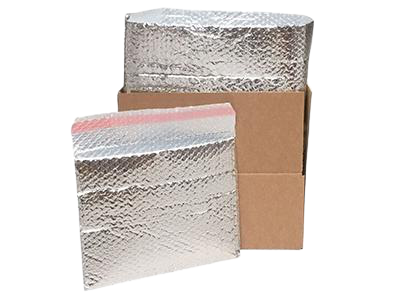
cooler box liner bulk purchase should be bought with one question in mind: what is the most reliable way to protect the shipment without creating unnecessary cost or packaging burden? The strongest 2026 programs combine buyer logic, technical evidence, and market awareness. FDA's 2025 draft Q1 stability guidance says excursion effects can be evaluated using stability studies or suitable statistical modeling, and each excursion should be documented and handled inside the quality system. This guide merges those viewpoints into one practical playbook you can use for sourcing, approval, and continuous improvement.
What this guide will answer
- When cooler box liner bulk purchase is the right answer and when another format may be better.
- How to build a clean specification, test plan, and quote request for cooler box liner.
- How to compare suppliers on performance, cost, compliance, and scalability at the same time.
- How to reduce waste, storage burden, and operating friction without weakening thermal protection.
When is cooler box liner bulk purchase the right solution?
The right use case for cooler box liner bulk purchase is the one where the format matches the lane risk, payload sensitivity, and operating reality. If the route is short and the operation values speed, a lighter and simpler format may be enough. If the route is regulated, long, or sensitive, you need stronger evidence, tighter packout control, and clearer change management. Buying becomes easier as soon as you segment your lanes instead of asking one product to solve every shipment.
Start with three questions. First, how much temperature margin do you really need? Second, how consistent is the way the box is packed? Third, how much packaging burden can the business tolerate in freight, storage, and disposal? When those answers are clear, the packaging choice usually narrows quickly. You may find that your highest-risk shipments need a more controlled structure, while high-volume commercial shipments need better cube efficiency and faster assembly more than extra thickness.
When is cooler box liner the best fit for your program?
Use cooler box liner when it brings a real advantage in fit, repeatability, sustainability story, or storage efficiency for the route you are serving. If another format would be easier to pack, easier to validate, or easier to recover after use, compare them honestly. Optimized buying is not about proving one material family is superior in every case. It is about matching the design to the business problem with the least unnecessary complexity.
| Decision factor | Low-risk lane | Higher-risk lane | How it guides your choice |
| Transit profile | Short, stable, predictable | Long, variable, or seasonal | Determines how much thermal margin you need |
| Packing process | Experienced team and simple flow | High turnover or busy peak operation | Drives need for repeatable format |
| Packaging burden | Storage and disposal matter heavily | Protection dominates the decision | Changes the best balance of materials |
Practical tips you can use now
- Segment lanes before you talk to suppliers. One-size-fits-all buying usually creates hidden cost.
- Document whether the real priority is hold time, cube reduction, labor speed, or sustainability alignment.
- If two designs both pass, choose the one that is easier to operate and easier to re-order consistently.
Practical example: a buyer used one premium packout for every shipment because it felt safer. After segmenting lanes, the team kept the premium design for regulated routes and moved shorter commercial lanes to a leaner spec, cutting cost without weakening the critical program.
How should you build the specification and test plan?
A strong specification turns vague supplier conversations into usable proposals. For cooler box liner, the spec should define shipper size, payload, refrigerant type, temperature target, transit duration, packaging format, and acceptance window. Once those items are fixed, test data becomes much easier to interpret and quotes become much easier to compare. This is where many packaging projects either become disciplined or stay forever subjective.
The best spec sheets are short but precise. They state what must be protected, what the lane looks like, how the packout is assembled, and what evidence is acceptable. They also list what triggers re-approval, such as a material substitution, size change, or different refrigerant loading. When your RFQ carries that structure, suppliers spend less time guessing and more time solving. That improves both technical quality and commercial clarity.
What should a 2026 RFQ and test plan include for cooler box liner?
Include five basics: product and payload description, shipper dimensions, transit profile, packout bill of materials, and pass criteria. Then add test expectations: logger location, route profile or chamber profile, and what counts as failure or marginal performance. If the program is highly seasonal or regulated, build in separate summer-risk logic and an excursion-review path. This protects you from approving a design that works only under one friendly scenario.
| RFQ element | What to define clearly | Why it matters | Typical mistake |
| Lane summary | Transit duration, dwell, and season | Shapes the thermal target | Using only average transit time |
| Packout BOM | Liner, shipper, refrigerant, payload | Protects repeatability | Testing one BOM and buying another |
| Change triggers | Material, size, or route changes | Supports ongoing control | Treating any substitute as equivalent |
Practical tips you can use now
- Write the RFQ before you ask for samples. It will improve both sample relevance and quote quality.
- Set pass criteria in plain language so purchasing, operations, and QA all read the same expectation.
- Keep the RFQ and the approved drawing together in one shared folder. Separation creates version drift.
Practical example: after rewriting its RFQ to define the route and pass window clearly, one team received fewer but much better proposals. The resulting shortlist was easier to compare and much easier to explain internally.
How should you compare suppliers, factories, or distributors?
Supplier choice should be made with a balanced scorecard, not a single-price ranking. For cooler box liner bulk purchase, score at least six areas: spec clarity, sample quality, validation logic, replenishment reliability, communication speed, and total landed cost. This approach rewards suppliers who can scale cleanly instead of suppliers who win early only because the first quote was attractive.
A balanced scorecard is especially useful when internal stakeholders disagree. Procurement may focus on price, operations on pack speed, engineering on data, and sustainability on material complexity. The scorecard forces the trade-offs onto one page. It also creates a documented rationale for supplier choice, which becomes valuable when demand rises, a complaint occurs, or a supplier change is proposed later. Consistency in evaluation is itself a form of risk control.
What should a practical supplier scorecard look like for cooler box liner?
Give each category a simple score from 1 to 5 and weight the score according to lane risk. Critical healthcare or high-value lanes may weight validation and change control more heavily. Commercial food lanes may weight replenishment speed, cube efficiency, and packout labor more heavily. The exact weighting can change, but the decision method should stay consistent across suppliers.
| Scorecard area | What good looks like | Why it matters most | Suggested weighting idea |
| Spec and sample quality | Clear, repeatable, easy-to-check format | Prevents re-order confusion | High for every lane |
| Validation and compliance | Test logic, limits, and revision control | Protects high-risk shipments | Very high for regulated lanes |
| Service and landed cost | Fast response, reliable lead time, real cost view | Supports scaling and margin | High for volume programs |
Practical tips you can use now
- Use the same scorecard for every supplier round. Changing the method midstream creates bias.
- Review scorecard results with operations and QA together so no critical risk is hidden behind price pressure.
- Keep notes on why a supplier lost, not only why one won. That helps in future sourcing rounds.
Practical example: one supplier ranked first on price but low on spec clarity and sampling discipline. The scorecard made the trade-off visible, and the buyer chose the supplier with a slightly higher cost but much lower execution risk.
How do you optimize cost, labor, and sustainability together?
Cost reduction is strongest when you remove waste from the system, not when you simply thin the material. With cooler box liner, the biggest savings often come from better carton fit, denser empty-package logistics, fewer packing errors, lower tape use, and fewer seasonal emergency changes. That is why packaging optimization should be reviewed across the full workflow, not only on the purchase order.
Look first at the obvious sources of waste: too much unused headspace, too many SKU variants, poor pallet efficiency, and complicated assembly. Then review the less obvious ones: receiving-time confusion, slow training, product shifts inside the box, and overbuilt designs on low-risk routes. If you address these points systematically, you can often keep protection stable while lowering both cost and packaging burden. This is also where sustainability and profitability frequently align.
How do you reduce cost and packaging burden without weakening protection?
Use a four-step review: right-size the carton, simplify the liner or insert format, improve the packout instruction, and compare stored cube per thousand shipments. Then test the revised design against the same route logic as the original. The winning change is the one that lowers waste and still stays inside the target temperature window with enough operational margin. This is far more durable than cutting cost blindly and hoping complaints do not increase.
| Optimization lever | Typical saving area | Main caution | Why it matters |
| Right-sizing | Freight, corrugate, and refrigerant | Can reduce margin if rushed | Often the cleanest first move |
| Format simplification | Labor and error reduction | May change assembly sequence | Improves operating stability |
| Denser supply logistics | Warehouse and inbound freight | Needs packout-ready recovery | Big lever in high-volume programs |
Practical tips you can use now
- Measure savings per protected shipment, not per unit alone.
- Re-test every meaningful optimization change against the same acceptance window so results stay comparable.
- Review waste, cube, and complaint data together. Optimization is strongest when all three improve at once.
Practical example: a brand focused first on unit price and saw little improvement. After switching to a workflow view, it cut empty-package storage, reduced assembly time, and lowered total cost without touching product safety.
How will 2026 trends reshape the buying plan?
The next 12 to 24 months will reward buyers who make their packaging system easier to explain and easier to defend. The European Commission says the PPWR entered into force on February 11, 2025, with general application 18 months later, pushing packaging teams toward lower waste and lower use of primary raw materials. IATA says its Temperature Control Regulations compile the requirements, packaging expectations, and documentation needed to ship compliant temperature-sensitive products. In January 2026, FDA said CBER had approved close to 50 cell and gene therapies over the last decade, a signal that more sensitive products are moving through cold-chain networks. That mix of market pressure and compliance pressure means every important packaging choice should be backed by a clean story: why this design, for which lane, under which limits, with which recovery logic.
That story matters internally as well as externally. Sales teams need clear sustainability language. QA teams need clear change-control rules. Operations teams need fast, visual packout instructions. Procurement needs a real cost model. When those views line up, the packaging program becomes easier to scale and easier to improve over time. In 2026, clarity is increasingly a competitive advantage.
What should your 2026 action plan look like for cooler box liner?
A useful action plan is short. Rank your lanes by risk and volume, define one approved packaging format for each lane family, set scorecard rules for suppliers, and schedule a post-season performance review. Then decide which sustainability question matters most: smaller packout, simpler materials, or clearer disposal guidance. That plan turns packaging from a reactive purchase into a managed capability.
| 2026 action | What to do now | Expected payoff | Owner |
| Lane ranking | Separate critical and commercial lanes | Sharper specifications | QA and sourcing |
| Supplier discipline | Use one RFQ and one scorecard | Better comparisons | Procurement |
| Optimization review | Audit cube, labor, and complaints after peak season | Lower waste and stronger margin | Operations |
Practical tips you can use now
- Keep the action plan short enough to use monthly, not just at annual strategy meetings.
- Tie sustainability goals to a measurable lever such as box size, mixed-material count, or disposal clarity.
- Do one post-summer review every year. Heat exposure reveals truths that spring pilots often hide.
Practical example: after one structured summer review, a buyer simplified its approved formats, tightened supplier communication, and set clearer re-qualification triggers. The next peak season required less emergency buying and produced cleaner performance data.
2026 developments and trends for cooler box liner
The best optimized programs now combine people-first content on the sales side with evidence-first packaging on the operations side. In practice, that means better technical storytelling, cleaner specs, clearer disposal guidance, and fewer unsupported claims around cooler box liner.
Latest developments at a glance
- More buyers will ask for a scorecard-based sourcing process.
- More teams will optimize total protected-shipment cost instead of chasing the lowest unit price.
- More packaging reviews will combine thermal evidence with waste-reduction logic in the same decision.
If you organize your program around lane clarity, disciplined documents, and a repeatable review loop, you will be ready for those changes before they become urgent.
Frequently asked questions
What is the best first step before sourcing cooler box liner bulk purchase?
Write a one-page lane summary with shipper size, payload, refrigerant, transit target, and operating constraints. It will improve every later decision.
How many suppliers should I compare seriously?
Usually two to four. More than that often creates noise unless your RFQ is highly standardized and your review capacity is strong.
Should sustainability and compliance be reviewed separately?
They can be discussed separately, but the final choice should combine them. A greener claim that weakens protection or a compliant design that wastes space are both incomplete answers.
How do I know whether to standardize or split formats by lane?
Split by lane when risk or operating conditions differ enough to change the best design. Standardize where the same format truly serves multiple routes without penalty.
What makes a packaging supplier valuable in 2026?
Clear specifications, honest trade-off discussion, stable production, fast communication, and the ability to connect thermal logic with real operations.
Summary and recommendations
The most complete way to buy cooler box liner bulk purchase in 2026 is to combine route logic, technical validation, supplier discipline, and packaging optimization. That means segmenting lanes, writing a better RFQ, using a balanced supplier scorecard, and reviewing total protected-shipment cost instead of unit price alone.
If you do that well, you can improve protection, simplify operations, and reduce packaging burden at the same time. The result is not just a better liner or insert. It is a stronger cold-chain packaging system.
About Tempk
At Tempk, we build cold-chain packaging programs around real shipping conditions and real buying decisions. We help teams connect the lane, the packaging format, the validation plan, and the supply model so packaging stays practical from pilot stage to bulk production.
Next step: create a lane-based RFQ, score your current suppliers against it, and run one optimization review on cube, labor, and complaints before the next peak season.
Best Vacuum Compressed Liner Bulk Order Buyer Guide

Vacuum Compressed Liner Bulk Order is easiest to choose well when you stop treating it like a commodity and start treating it like a cold-chain operating decision. The best option is not automatically the thickest, the cheapest, or the fastest to source. It is the option that matches your lane risk, pack-out method, product sensitivity, and replenishment pattern with fewer surprises. That is why serious buyers in 2026 compare vacuum compressed liner bulk order through a combined lens of materials, proof, service, and total delivered cost.
This optimized guide brings together the product-education view, the technical validation view, and the market-trend view into one decision framework. You will see what to ask first, which data actually matters, how to normalize price, how current guidance should influence your specification, and how to choose a partner that can support scale without creating more complexity on the packing floor.
What this optimized guide will help you decide
- What to look for first when qualifying vacuum compressed liner bulk order
- How to compare material fit, service quality, and total delivered cost on one scorecard
- What proof serious suppliers should show before you scale volume
- How sustainability, compliance, and operational ease fit together in 2026
- Which next steps will help you move from quote collection to confident approval
What should you look for first when qualifying vacuum compressed liner bulk order?
Start with the shipment, not with the sales sheet. The first review should define the box family, payload, target temperature window, transit duration, and coolant approach. Those inputs keep the rest of the conversation honest. Without them, two options can look comparable even though they solve completely different problems. In 2026, the smartest buyers use vacuum compressed liner bulk order as a packaging-system decision from the first conversation onward.
This first-step discipline matters because it immediately filters out weak recommendations. A serious partner will ask about lane severity, handling risk, and pack-out method before recommending a structure. A weaker one will lead with generic premium language or a price ladder. That difference matters. The first approach reduces confusion and rework. The second usually pushes complexity back onto the buyer after the order is placed.
What information should be on your first-page brief?
List the payload type, shipping duration, start condition, box size, coolant format, and any seasonal lanes that behave differently. Also note whether the program is food-facing, healthcare-supporting, or general consumer logistics, because that changes the documentation you may need. This short brief becomes the anchor for every quote, sample, and validation conversation.
- Write one shared shipment brief before you request the first formal quote.
- Separate your common lanes from your hardest lanes so the comparison stays realistic.
- Agree internally on the pass criteria before vendors start recommending different formats.
Best-practice reminder: a simple, shared shipment brief eliminates much of the confusion that buyers mistake for market complexity.
Which material and fit decisions control the outcome for vacuum compressed liner bulk order?
Material selection matters most when it is tied to geometry and handling. Reflective layers, trapped-air structures, paper-forward builds, and compressed formats all create different balances of weight, stiffness, cube, and recovery. But material choice only becomes useful when the liner actually fits the box and stays in the validated position. Fit controls edge closure, coolant proximity, and how much the result depends on operator improvisation.
The best way to simplify this section is to ask one practical question: what is the lightest structure that still protects the shipment under the worst realistic conditions? That framing keeps you from overspecifying a mild route and underspecifying a hard route. It also turns the material discussion into a total-system discussion, which is exactly how vacuum compressed liner bulk order should be evaluated if the goal is fewer failures and a cleaner warehouse process.
What details often separate a strong material choice from a weak one?
Finished dimensions, fold pattern, corner closure, seal quality, and behavior after storage often separate the winning option from the merely acceptable one. If a liner opens awkwardly or leaves air gaps, the theoretical insulation story loses power quickly. In operations, fit and repeatability often matter as much as the nominal layer stack.
| Material build | Typical strength | Best fit | What it means for you |
| Vacuum Compressed Reflective Liners | Lightweight reflective control | Short to medium lanes | Useful when you want low freight weight and quick packing |
| Compressed Foam-Laminate Liners | Balanced insulation and handling | Broader operating windows | Often easier to position as a practical middle-ground option |
| Fold-Flat Thermal Sleeves | Higher structural control | Programs needing better cube use or tighter fit | Can help warehouse efficiency if recovery and fit stay consistent |
- Review the liner in the real carton, not only as a flat sample.
- Ask whether the chosen construction changes freight cube or coolant count in a meaningful way.
- Check recovery after storage if the commercial plan involves compression or high pallet stacking.
Optimized buying principle: the right liner is the lightest design that still survives your real lane, not the thickest one that looks reassuring on paper.
How do you compare commercial options for vacuum compressed liner bulk order fairly?
Use one scorecard and one set of assumptions for every serious option. Commercial comparisons drift when one vendor quotes a different size, different delivery terms, or a different test setup than the others. Lock the assumptions first. Then score the options on fit, proof, service reliability, and total delivered value. This keeps the decision grounded in the shipment rather than in presentation quality.
A fair comparison also respects the business model behind the offer. Some buyers benefit from distributor speed or wholesaler assortment. Others need factory-level repeatability or direct supplier support. There is no single best channel model for every case. The right choice depends on demand rhythm, technical difficulty, and how much flexibility the program needs after launch. That is why vacuum compressed liner bulk order should be compared through both the packaging lens and the supply-model lens.
Which scorecard categories usually make the decision clearer?
Fit and handling should receive the greatest weight because those factors affect both thermal behavior and line speed. Proof and documentation come next because they protect the decision from vague claims. Commercial reliability matters because temperature-sensitive programs do not tolerate stock surprises well. Total value and credible sustainability then complete the picture.
| Score area | What to rate | Weight |
| Fit and handling | Does the liner seat cleanly and pack consistently? | 30 |
| Proof and documentation | Are the test logic, specifications, and change rules clear? | 25 |
| Commercial reliability | Can the partner support samples, replenishment, and continuity? | 20 |
| Total value | Does it improve delivered cost, not just unit price? | 15 |
| Sustainability and compliance | Is the claim credible for the use case and market? | 10 |
- Score each candidate against the same box, payload, coolant, and route assumptions.
- Review one live packing exercise before making the final call.
- Separate nice-to-have catalog features from capabilities that change the daily operation.
- Document why the winning option beat the runner-up so the team can defend the choice later.
Decision rule: if the scorecard discussion sounds clearer than the vendor presentation, your buying process is working.
What proof should a serious bulk order partner provide before you scale vacuum compressed liner bulk order?
Serious proof combines specification clarity, relevant testing, and change-control discipline. You want to see what the material is, how the finished dimensions are controlled, what conditions were used in testing, and what rules govern substitutions or revisions. Without those items, an apparently strong result can erode quickly after the first material adjustment or seasonal spike.
This is where the product-education, technical, and commercial views all meet. The buyer wants a liner that protects the shipment. The technical reviewer wants assumptions that can be defended. The operations team wants a format that packs consistently. Proof is the bridge between those needs. It turns marketing language into something that can survive onboarding, replenishment, and audit-style questioning.
Which proof points are most valuable in practice?
Finished dimensions, material description, pack-out definition, test profile, and documented change rules usually provide the most useful first-pass proof. These items tell you whether the option is clear enough to approve and stable enough to scale. If any one of them is vague, the decision risk rises fast.
| Proof point | What to request | Why it matters |
| Pack-out definition | Box size, payload, coolant type, and target hold time | Makes sure the test reflects your real shipment rather than a generic carton |
| Material specification | Layer description, nominal thickness or weight, and dimensions | Helps you compare like with like across competing quotes |
| Validation summary | Temperature profile, start conditions, and pass/fail logic | Shows whether the claim survives a realistic lane assumption |
- Ask whether the production version is controlled to the same key details as the tested version.
- Ask how substitutions are handled during raw-material shortages or sudden demand spikes.
- Ask who owns follow-up if field performance differs from the original sample-stage expectation.
Scale-up lesson: the most expensive surprises usually come from changes that were never treated as important at quotation stage.
How should you score sustainability and compliance around vacuum compressed liner bulk order?
Treat sustainability and compliance as filters on the full shipment, not as isolated labels. A better liner choice should be safe for the intended use, documentable for the target market, and credible when it makes an environmental claim. That credibility usually comes from a practical benefit: lighter weight, better cube use, less coolant, fewer failures, or simpler handling at end of use.
This approach helps buyers avoid two common mistakes. The first is accepting a green claim that disappears once the hardest lane is tested. The second is treating compliance as an afterthought until launch. In reality, both topics should be discussed early because they influence material choice, documentation needs, and the way the pack-out is explained to internal teams or customers. The best packaging decisions in 2026 are the ones that make these conversations simpler, not harder.
What does a credible claim usually look like now?
A credible claim links a design change to a measurable or observable system effect. It might mean a smaller box, a lower pallet count, a simpler material path, or fewer temperature-related failures. Vague labels without a practical operating benefit are losing persuasive power because buyers have become better at asking what actually changed.
| Claim area | Useful only if | What to ask |
| Lightweight design | It still protects the shipment under your real lane conditions | Can the supplier show what system cost or waste was reduced? |
| Recyclable or simpler disposal | The construction and local disposal path are clear enough to follow | How should operators and end users separate or handle the materials? |
| Lower carbon or lower waste | The claim reflects the whole shipment rather than one material swap | Did the change reduce box size, coolant, transport volume, or reshipment? |
- Confirm the intended use and market before making any broad safety or compliance statement.
- Ask whether the sustainability improvement still holds under your hardest realistic shipping conditions.
- Prefer claims that make the operating method simpler as well as lighter or cleaner.
Credibility test: if the claim cannot be explained clearly to procurement, quality, and warehouse teams at the same time, it probably needs more proof.
2026 best practices for choosing vacuum compressed liner bulk order
In 2026, the strongest cold-chain teams are blending thermal proof, compliance logic, lighter-weight design, and clearer commercial discipline into one packaging decision. Public guidance still points in that direction. Google Search Central keeps emphasizing helpful, people-first content and the use of important terms in prominent locations. FDA sanitary transportation rules continue to focus on equipment, operations, records, and training. FoodSafety.gov still advises shippers of perishable foods to use insulated packaging with dry ice or frozen gel packs and to check arrival temperature against the 40°F threshold. ISTA 7E remains the parcel-thermal reference built from real-world heat and cold profiles, EPA continues to favor lighter and more efficient packaging within a life-cycle view, and the EU packaging regulation that entered into force in 2025 applies broadly from August 12, 2026. For buyers, that means better documentation, better right-sizing, and fewer vague claims.
The best current practice blends the buyer-guide view, the technical-validation view, and the market view into one method. Define the shipment. Compare material and fit. Normalize the commercial assumptions. Review proof and change control. Then score sustainability and compliance in the context of the whole shipment. That sequence works because it follows the real order in which risk enters the system. It also keeps the decision grounded in outcomes instead of marketing language.
Best-practice checklist
- Create one brief that defines the box, payload, coolant, route severity, and pass criteria.
- Shortlist only options that can explain both their strengths and their limits clearly.
- Run a live packing check before final approval, not only a desktop review.
- Preserve the approved specification, test summary, and change rules in one controlled record.
- Review the winning option again before the warmest season or the next major demand spike.
Practical market insight: buyers who use this method usually move faster after the first shortlisting round because the conversation becomes more concrete. Instead of arguing about premium language, the team talks about fit, data, service, and value. That makes vacuum compressed liner bulk order easier to defend internally and easier to manage after rollout.
Frequently Asked Questions
What should you check first before approving vacuum compressed liner bulk order?
Start with lane difficulty, box size, coolant plan, and product sensitivity. Those four inputs keep the rest of the comparison honest.
How do you normalize quotes from different vendors?
Lock the specification, pack-out assumptions, delivery terms, and test conditions before discussing price.
Can sustainability and cost improve together?
Yes. Right-sizing, better cube use, and fewer failures often reduce waste and cost at the same time.
Should you prefer a local stock program or factory-direct supply?
It depends on your demand pattern. A stock program helps speed and flexibility; factory-direct buying can help when volumes are stable and specifications are fixed.
What turns a good trial into a weak rollout?
Poor change control, unclear packing instructions, and no agreement on what data or conditions defined the original approval.
Summary and recommendation
The smartest way to choose vacuum compressed liner bulk order in 2026 is to connect the shipment, the material, the commercial model, and the proof into one clear decision. When those pieces are reviewed together, the buyer sees the real trade-offs earlier and avoids approval by assumption. That usually leads to better temperature control, cleaner pack-outs, stronger documentation, and fewer surprises when volume rises.
Your next step should be to build a shortlist of two or three serious options, score them against one shared brief, and make the final decision only after a live packing review. That process is simple enough to use quickly and strong enough to support a high-confidence approval.
About Tempk
Tempk focuses on cold-chain packaging programs that balance thermal logic, usable design, and operational repeatability. We work on liners, inserts, and supporting packaging decisions with attention to fit, validation thinking, and the day-to-day realities of the packing line.
If you are reviewing a new liner program, a practical next move is to compare your current pack-out against the hardest real route you ship and see whether the approved specification still matches the job you need it to do.
Best Thermal Shipping Liner Suppliers Buyer Guide
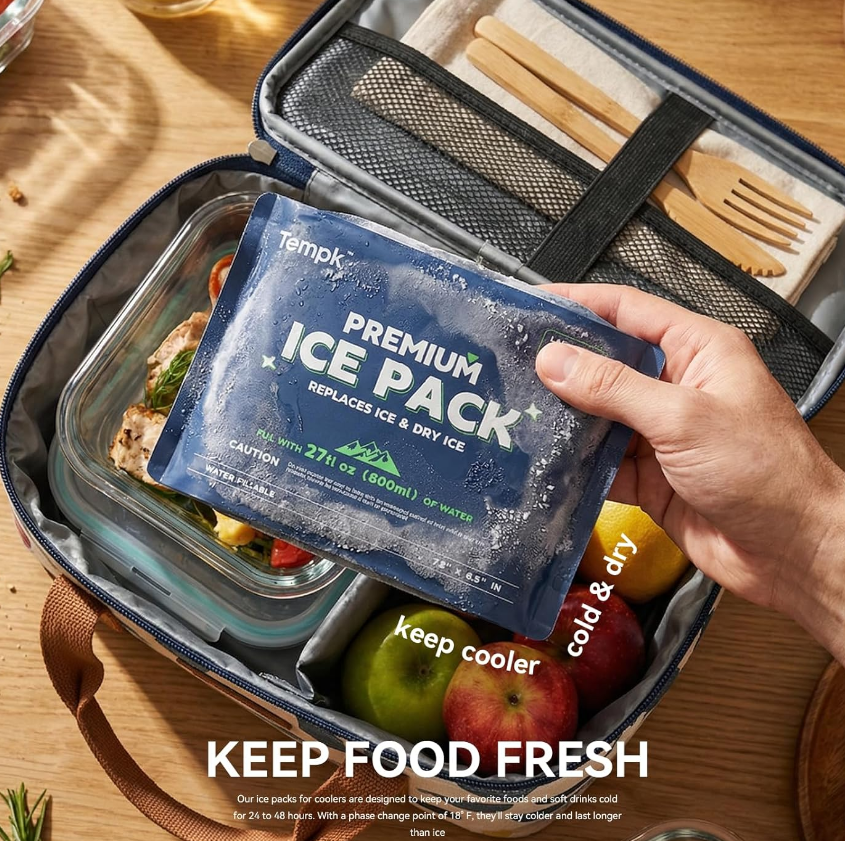
Thermal Shipping Liner Suppliers is easiest to choose well when you stop treating it like a commodity and start treating it like a cold-chain operating decision. The best option is not automatically the thickest, the cheapest, or the fastest to source. It is the option that matches your lane risk, pack-out method, product sensitivity, and replenishment pattern with fewer surprises. That is why serious buyers in 2026 compare thermal shipping liner suppliers through a combined lens of materials, proof, service, and total delivered cost.
This optimized guide brings together the product-education view, the technical validation view, and the market-trend view into one decision framework. You will see what to ask first, which data actually matters, how to normalize price, how current guidance should influence your specification, and how to choose a partner that can support scale without creating more complexity on the packing floor.
What this optimized guide will help you decide
- What to look for first when qualifying thermal shipping liner suppliers
- How to compare material fit, service quality, and total delivered cost on one scorecard
- What proof serious suppliers should show before you scale volume
- How sustainability, compliance, and operational ease fit together in 2026
- Which next steps will help you move from quote collection to confident approval
What should you look for first when qualifying thermal shipping liner suppliers?
Start with the shipment, not with the sales sheet. The first review should define the box family, payload, target temperature window, transit duration, and coolant approach. Those inputs keep the rest of the conversation honest. Without them, two options can look comparable even though they solve completely different problems. In 2026, the smartest buyers use thermal shipping liner suppliers as a packaging-system decision from the first conversation onward.
This first-step discipline matters because it immediately filters out weak recommendations. A serious partner will ask about lane severity, handling risk, and pack-out method before recommending a structure. A weaker one will lead with generic premium language or a price ladder. That difference matters. The first approach reduces confusion and rework. The second usually pushes complexity back onto the buyer after the order is placed.
What information should be on your first-page brief?
List the payload type, shipping duration, start condition, box size, coolant format, and any seasonal lanes that behave differently. Also note whether the program is food-facing, healthcare-supporting, or general consumer logistics, because that changes the documentation you may need. This short brief becomes the anchor for every quote, sample, and validation conversation.
- Write one shared shipment brief before you request the first formal quote.
- Separate your common lanes from your hardest lanes so the comparison stays realistic.
- Agree internally on the pass criteria before vendors start recommending different formats.
Best-practice reminder: a simple, shared shipment brief eliminates much of the confusion that buyers mistake for market complexity.
Which material and fit decisions control the outcome for thermal shipping liner suppliers?
Material selection matters most when it is tied to geometry and handling. Reflective layers, trapped-air structures, paper-forward builds, and compressed formats all create different balances of weight, stiffness, cube, and recovery. But material choice only becomes useful when the liner actually fits the box and stays in the validated position. Fit controls edge closure, coolant proximity, and how much the result depends on operator improvisation.
The best way to simplify this section is to ask one practical question: what is the lightest structure that still protects the shipment under the worst realistic conditions? That framing keeps you from overspecifying a mild route and underspecifying a hard route. It also turns the material discussion into a total-system discussion, which is exactly how thermal shipping liner suppliers should be evaluated if the goal is fewer failures and a cleaner warehouse process.
What details often separate a strong material choice from a weak one?
Finished dimensions, fold pattern, corner closure, seal quality, and behavior after storage often separate the winning option from the merely acceptable one. If a liner opens awkwardly or leaves air gaps, the theoretical insulation story loses power quickly. In operations, fit and repeatability often matter as much as the nominal layer stack.
| Material build | Typical strength | Best fit | What it means for you |
| Foil Bubble Liners | Lightweight reflective control | Short to medium lanes | Useful when you want low freight weight and quick packing |
| Paper-Forward Thermal Liners | Balanced insulation and handling | Broader operating windows | Often easier to position as a practical middle-ground option |
| Compressed Composite Liners | Higher structural control | Programs needing better cube use or tighter fit | Can help warehouse efficiency if recovery and fit stay consistent |
- Review the liner in the real carton, not only as a flat sample.
- Ask whether the chosen construction changes freight cube or coolant count in a meaningful way.
- Check recovery after storage if the commercial plan involves compression or high pallet stacking.
Optimized buying principle: the right liner is the lightest design that still survives your real lane, not the thickest one that looks reassuring on paper.
How do you compare commercial options for thermal shipping liner suppliers fairly?
Use one scorecard and one set of assumptions for every serious option. Commercial comparisons drift when one vendor quotes a different size, different delivery terms, or a different test setup than the others. Lock the assumptions first. Then score the options on fit, proof, service reliability, and total delivered value. This keeps the decision grounded in the shipment rather than in presentation quality.
A fair comparison also respects the business model behind the offer. Some buyers benefit from distributor speed or wholesaler assortment. Others need factory-level repeatability or direct supplier support. There is no single best channel model for every case. The right choice depends on demand rhythm, technical difficulty, and how much flexibility the program needs after launch. That is why thermal shipping liner suppliers should be compared through both the packaging lens and the supply-model lens.
Which scorecard categories usually make the decision clearer?
Fit and handling should receive the greatest weight because those factors affect both thermal behavior and line speed. Proof and documentation come next because they protect the decision from vague claims. Commercial reliability matters because temperature-sensitive programs do not tolerate stock surprises well. Total value and credible sustainability then complete the picture.
| Score area | What to rate | Weight |
| Fit and handling | Does the liner seat cleanly and pack consistently? | 30 |
| Proof and documentation | Are the test logic, specifications, and change rules clear? | 25 |
| Commercial reliability | Can the partner support samples, replenishment, and continuity? | 20 |
| Total value | Does it improve delivered cost, not just unit price? | 15 |
| Sustainability and compliance | Is the claim credible for the use case and market? | 10 |
- Score each candidate against the same box, payload, coolant, and route assumptions.
- Review one live packing exercise before making the final call.
- Separate nice-to-have catalog features from capabilities that change the daily operation.
- Document why the winning option beat the runner-up so the team can defend the choice later.
Decision rule: if the scorecard discussion sounds clearer than the vendor presentation, your buying process is working.
What proof should a serious suppliers partner provide before you scale thermal shipping liner suppliers?
Serious proof combines specification clarity, relevant testing, and change-control discipline. You want to see what the material is, how the finished dimensions are controlled, what conditions were used in testing, and what rules govern substitutions or revisions. Without those items, an apparently strong result can erode quickly after the first material adjustment or seasonal spike.
This is where the product-education, technical, and commercial views all meet. The buyer wants a liner that protects the shipment. The technical reviewer wants assumptions that can be defended. The operations team wants a format that packs consistently. Proof is the bridge between those needs. It turns marketing language into something that can survive onboarding, replenishment, and audit-style questioning.
Which proof points are most valuable in practice?
Finished dimensions, material description, pack-out definition, test profile, and documented change rules usually provide the most useful first-pass proof. These items tell you whether the option is clear enough to approve and stable enough to scale. If any one of them is vague, the decision risk rises fast.
| Proof point | What to request | Why it matters |
| Pack-out definition | Box size, payload, coolant type, and target hold time | Makes sure the test reflects your real shipment rather than a generic carton |
| Material specification | Layer description, nominal thickness or weight, and dimensions | Helps you compare like with like across competing quotes |
| Validation summary | Temperature profile, start conditions, and pass/fail logic | Shows whether the claim survives a realistic lane assumption |
- Ask whether the production version is controlled to the same key details as the tested version.
- Ask how substitutions are handled during raw-material shortages or sudden demand spikes.
- Ask who owns follow-up if field performance differs from the original sample-stage expectation.
Scale-up lesson: the most expensive surprises usually come from changes that were never treated as important at quotation stage.
How should you score sustainability and compliance around thermal shipping liner suppliers?
Treat sustainability and compliance as filters on the full shipment, not as isolated labels. A better liner choice should be safe for the intended use, documentable for the target market, and credible when it makes an environmental claim. That credibility usually comes from a practical benefit: lighter weight, better cube use, less coolant, fewer failures, or simpler handling at end of use.
This approach helps buyers avoid two common mistakes. The first is accepting a green claim that disappears once the hardest lane is tested. The second is treating compliance as an afterthought until launch. In reality, both topics should be discussed early because they influence material choice, documentation needs, and the way the pack-out is explained to internal teams or customers. The best packaging decisions in 2026 are the ones that make these conversations simpler, not harder.
What does a credible claim usually look like now?
A credible claim links a design change to a measurable or observable system effect. It might mean a smaller box, a lower pallet count, a simpler material path, or fewer temperature-related failures. Vague labels without a practical operating benefit are losing persuasive power because buyers have become better at asking what actually changed.
| Claim area | Useful only if | What to ask |
| Lightweight design | It still protects the shipment under your real lane conditions | Can the supplier show what system cost or waste was reduced? |
| Recyclable or simpler disposal | The construction and local disposal path are clear enough to follow | How should operators and end users separate or handle the materials? |
| Lower carbon or lower waste | The claim reflects the whole shipment rather than one material swap | Did the change reduce box size, coolant, transport volume, or reshipment? |
- Confirm the intended use and market before making any broad safety or compliance statement.
- Ask whether the sustainability improvement still holds under your hardest realistic shipping conditions.
- Prefer claims that make the operating method simpler as well as lighter or cleaner.
Credibility test: if the claim cannot be explained clearly to procurement, quality, and warehouse teams at the same time, it probably needs more proof.
2026 best practices for choosing thermal shipping liner suppliers
In 2026, the strongest cold-chain teams are blending thermal proof, compliance logic, lighter-weight design, and clearer commercial discipline into one packaging decision. Public guidance still points in that direction. Google Search Central keeps emphasizing helpful, people-first content and the use of important terms in prominent locations. FDA sanitary transportation rules continue to focus on equipment, operations, records, and training. FoodSafety.gov still advises shippers of perishable foods to use insulated packaging with dry ice or frozen gel packs and to check arrival temperature against the 40°F threshold. ISTA 7E remains the parcel-thermal reference built from real-world heat and cold profiles, EPA continues to favor lighter and more efficient packaging within a life-cycle view, and the EU packaging regulation that entered into force in 2025 applies broadly from August 12, 2026. For buyers, that means better documentation, better right-sizing, and fewer vague claims.
The best current practice blends the buyer-guide view, the technical-validation view, and the market view into one method. Define the shipment. Compare material and fit. Normalize the commercial assumptions. Review proof and change control. Then score sustainability and compliance in the context of the whole shipment. That sequence works because it follows the real order in which risk enters the system. It also keeps the decision grounded in outcomes instead of marketing language.
Best-practice checklist
- Create one brief that defines the box, payload, coolant, route severity, and pass criteria.
- Shortlist only options that can explain both their strengths and their limits clearly.
- Run a live packing check before final approval, not only a desktop review.
- Preserve the approved specification, test summary, and change rules in one controlled record.
- Review the winning option again before the warmest season or the next major demand spike.
Practical market insight: buyers who use this method usually move faster after the first shortlisting round because the conversation becomes more concrete. Instead of arguing about premium language, the team talks about fit, data, service, and value. That makes thermal shipping liner suppliers easier to defend internally and easier to manage after rollout.
Frequently Asked Questions
What should you check first before approving thermal shipping liner suppliers?
Start with lane difficulty, box size, coolant plan, and product sensitivity. Those four inputs keep the rest of the comparison honest.
How do you normalize quotes from different vendors?
Lock the specification, pack-out assumptions, delivery terms, and test conditions before discussing price.
Can sustainability and cost improve together?
Yes. Right-sizing, better cube use, and fewer failures often reduce waste and cost at the same time.
Should you prefer a local stock program or factory-direct supply?
It depends on your demand pattern. A stock program helps speed and flexibility; factory-direct buying can help when volumes are stable and specifications are fixed.
What turns a good trial into a weak rollout?
Poor change control, unclear packing instructions, and no agreement on what data or conditions defined the original approval.
Summary and recommendation
The smartest way to choose thermal shipping liner suppliers in 2026 is to connect the shipment, the material, the commercial model, and the proof into one clear decision. When those pieces are reviewed together, the buyer sees the real trade-offs earlier and avoids approval by assumption. That usually leads to better temperature control, cleaner pack-outs, stronger documentation, and fewer surprises when volume rises.
Your next step should be to build a shortlist of two or three serious options, score them against one shared brief, and make the final decision only after a live packing review. That process is simple enough to use quickly and strong enough to support a high-confidence approval.
About Tempk
Tempk focuses on cold-chain packaging programs that balance thermal logic, usable design, and operational repeatability. We work on liners, inserts, and supporting packaging decisions with attention to fit, validation thinking, and the day-to-day realities of the packing line.
If you are reviewing a new liner program, a practical next move is to compare your current pack-out against the hardest real route you ship and see whether the approved specification still matches the job you need it to do.
Best Thermal Shipping Liner Distributor Buyer Guide
Thermal Shipping Liner Distributor is easiest to choose well when you stop treating it like a commodity and start treating it like a cold-chain operating decision. The best option is not automatically the thickest, the cheapest, or the fastest to source. It is the option that matches your lane risk, pack-out method, product sensitivity, and replenishment pattern with fewer surprises. That is why serious buyers in 2026 compare thermal shipping liner distributor through a combined lens of materials, proof, service, and total delivered cost.
This optimized guide brings together the product-education view, the technical validation view, and the market-trend view into one decision framework. You will see what to ask first, which data actually matters, how to normalize price, how current guidance should influence your specification, and how to choose a partner that can support scale without creating more complexity on the packing floor.
What this optimized guide will help you decide
- What to look for first when qualifying thermal shipping liner distributor
- How to compare material fit, service quality, and total delivered cost on one scorecard
- What proof serious suppliers should show before you scale volume
- How sustainability, compliance, and operational ease fit together in 2026
- Which next steps will help you move from quote collection to confident approval
What should you look for first when qualifying thermal shipping liner distributor?
Start with the shipment, not with the sales sheet. The first review should define the box family, payload, target temperature window, transit duration, and coolant approach. Those inputs keep the rest of the conversation honest. Without them, two options can look comparable even though they solve completely different problems. In 2026, the smartest buyers use thermal shipping liner distributor as a packaging-system decision from the first conversation onward.
This first-step discipline matters because it immediately filters out weak recommendations. A serious partner will ask about lane severity, handling risk, and pack-out method before recommending a structure. A weaker one will lead with generic premium language or a price ladder. That difference matters. The first approach reduces confusion and rework. The second usually pushes complexity back onto the buyer after the order is placed.
What information should be on your first-page brief?
List the payload type, shipping duration, start condition, box size, coolant format, and any seasonal lanes that behave differently. Also note whether the program is food-facing, healthcare-supporting, or general consumer logistics, because that changes the documentation you may need. This short brief becomes the anchor for every quote, sample, and validation conversation.
- Write one shared shipment brief before you request the first formal quote.
- Separate your common lanes from your hardest lanes so the comparison stays realistic.
- Agree internally on the pass criteria before vendors start recommending different formats.
Best-practice reminder: a simple, shared shipment brief eliminates much of the confusion that buyers mistake for market complexity.
Which material and fit decisions control the outcome for thermal shipping liner distributor?
Material selection matters most when it is tied to geometry and handling. Reflective layers, trapped-air structures, paper-forward builds, and compressed formats all create different balances of weight, stiffness, cube, and recovery. But material choice only becomes useful when the liner actually fits the box and stays in the validated position. Fit controls edge closure, coolant proximity, and how much the result depends on operator improvisation.
The best way to simplify this section is to ask one practical question: what is the lightest structure that still protects the shipment under the worst realistic conditions? That framing keeps you from overspecifying a mild route and underspecifying a hard route. It also turns the material discussion into a total-system discussion, which is exactly how thermal shipping liner distributor should be evaluated if the goal is fewer failures and a cleaner warehouse process.
What details often separate a strong material choice from a weak one?
Finished dimensions, fold pattern, corner closure, seal quality, and behavior after storage often separate the winning option from the merely acceptable one. If a liner opens awkwardly or leaves air gaps, the theoretical insulation story loses power quickly. In operations, fit and repeatability often matter as much as the nominal layer stack.
| Material build | Typical strength | Best fit | What it means for you |
| Reflective Bubble Liners | Lightweight reflective control | Short to medium lanes | Useful when you want low freight weight and quick packing |
| Paper-Based Thermal Liners | Balanced insulation and handling | Broader operating windows | Often easier to position as a practical middle-ground option |
| Flat-Packed Insulated Inserts | Higher structural control | Programs needing better cube use or tighter fit | Can help warehouse efficiency if recovery and fit stay consistent |
- Review the liner in the real carton, not only as a flat sample.
- Ask whether the chosen construction changes freight cube or coolant count in a meaningful way.
- Check recovery after storage if the commercial plan involves compression or high pallet stacking.
Optimized buying principle: the right liner is the lightest design that still survives your real lane, not the thickest one that looks reassuring on paper.
How do you compare commercial options for thermal shipping liner distributor fairly?
Use one scorecard and one set of assumptions for every serious option. Commercial comparisons drift when one vendor quotes a different size, different delivery terms, or a different test setup than the others. Lock the assumptions first. Then score the options on fit, proof, service reliability, and total delivered value. This keeps the decision grounded in the shipment rather than in presentation quality.
A fair comparison also respects the business model behind the offer. Some buyers benefit from distributor speed or wholesaler assortment. Others need factory-level repeatability or direct supplier support. There is no single best channel model for every case. The right choice depends on demand rhythm, technical difficulty, and how much flexibility the program needs after launch. That is why thermal shipping liner distributor should be compared through both the packaging lens and the supply-model lens.
Which scorecard categories usually make the decision clearer?
Fit and handling should receive the greatest weight because those factors affect both thermal behavior and line speed. Proof and documentation come next because they protect the decision from vague claims. Commercial reliability matters because temperature-sensitive programs do not tolerate stock surprises well. Total value and credible sustainability then complete the picture.
| Score area | What to rate | Weight |
| Fit and handling | Does the liner seat cleanly and pack consistently? | 30 |
| Proof and documentation | Are the test logic, specifications, and change rules clear? | 25 |
| Commercial reliability | Can the partner support samples, replenishment, and continuity? | 20 |
| Total value | Does it improve delivered cost, not just unit price? | 15 |
| Sustainability and compliance | Is the claim credible for the use case and market? | 10 |
- Score each candidate against the same box, payload, coolant, and route assumptions.
- Review one live packing exercise before making the final call.
- Separate nice-to-have catalog features from capabilities that change the daily operation.
- Document why the winning option beat the runner-up so the team can defend the choice later.
Decision rule: if the scorecard discussion sounds clearer than the vendor presentation, your buying process is working.
What proof should a serious distributor partner provide before you scale thermal shipping liner distributor?
Serious proof combines specification clarity, relevant testing, and change-control discipline. You want to see what the material is, how the finished dimensions are controlled, what conditions were used in testing, and what rules govern substitutions or revisions. Without those items, an apparently strong result can erode quickly after the first material adjustment or seasonal spike.
This is where the product-education, technical, and commercial views all meet. The buyer wants a liner that protects the shipment. The technical reviewer wants assumptions that can be defended. The operations team wants a format that packs consistently. Proof is the bridge between those needs. It turns marketing language into something that can survive onboarding, replenishment, and audit-style questioning.
Which proof points are most valuable in practice?
Finished dimensions, material description, pack-out definition, test profile, and documented change rules usually provide the most useful first-pass proof. These items tell you whether the option is clear enough to approve and stable enough to scale. If any one of them is vague, the decision risk rises fast.
| Proof point | What to request | Why it matters |
| Pack-out definition | Box size, payload, coolant type, and target hold time | Makes sure the test reflects your real shipment rather than a generic carton |
| Material specification | Layer description, nominal thickness or weight, and dimensions | Helps you compare like with like across competing quotes |
| Validation summary | Temperature profile, start conditions, and pass/fail logic | Shows whether the claim survives a realistic lane assumption |
- Ask whether the production version is controlled to the same key details as the tested version.
- Ask how substitutions are handled during raw-material shortages or sudden demand spikes.
- Ask who owns follow-up if field performance differs from the original sample-stage expectation.
Scale-up lesson: the most expensive surprises usually come from changes that were never treated as important at quotation stage.
How should you score sustainability and compliance around thermal shipping liner distributor?
Treat sustainability and compliance as filters on the full shipment, not as isolated labels. A better liner choice should be safe for the intended use, documentable for the target market, and credible when it makes an environmental claim. That credibility usually comes from a practical benefit: lighter weight, better cube use, less coolant, fewer failures, or simpler handling at end of use.
This approach helps buyers avoid two common mistakes. The first is accepting a green claim that disappears once the hardest lane is tested. The second is treating compliance as an afterthought until launch. In reality, both topics should be discussed early because they influence material choice, documentation needs, and the way the pack-out is explained to internal teams or customers. The best packaging decisions in 2026 are the ones that make these conversations simpler, not harder.
What does a credible claim usually look like now?
A credible claim links a design change to a measurable or observable system effect. It might mean a smaller box, a lower pallet count, a simpler material path, or fewer temperature-related failures. Vague labels without a practical operating benefit are losing persuasive power because buyers have become better at asking what actually changed.
| Claim area | Useful only if | What to ask |
| Lightweight design | It still protects the shipment under your real lane conditions | Can the supplier show what system cost or waste was reduced? |
| Recyclable or simpler disposal | The construction and local disposal path are clear enough to follow | How should operators and end users separate or handle the materials? |
| Lower carbon or lower waste | The claim reflects the whole shipment rather than one material swap | Did the change reduce box size, coolant, transport volume, or reshipment? |
- Confirm the intended use and market before making any broad safety or compliance statement.
- Ask whether the sustainability improvement still holds under your hardest realistic shipping conditions.
- Prefer claims that make the operating method simpler as well as lighter or cleaner.
Credibility test: if the claim cannot be explained clearly to procurement, quality, and warehouse teams at the same time, it probably needs more proof.
2026 best practices for choosing thermal shipping liner distributor
In 2026, the strongest cold-chain teams are blending thermal proof, compliance logic, lighter-weight design, and clearer commercial discipline into one packaging decision. Public guidance still points in that direction. Google Search Central keeps emphasizing helpful, people-first content and the use of important terms in prominent locations. FDA sanitary transportation rules continue to focus on equipment, operations, records, and training. FoodSafety.gov still advises shippers of perishable foods to use insulated packaging with dry ice or frozen gel packs and to check arrival temperature against the 40°F threshold. ISTA 7E remains the parcel-thermal reference built from real-world heat and cold profiles, EPA continues to favor lighter and more efficient packaging within a life-cycle view, and the EU packaging regulation that entered into force in 2025 applies broadly from August 12, 2026. For buyers, that means better documentation, better right-sizing, and fewer vague claims.
The best current practice blends the buyer-guide view, the technical-validation view, and the market view into one method. Define the shipment. Compare material and fit. Normalize the commercial assumptions. Review proof and change control. Then score sustainability and compliance in the context of the whole shipment. That sequence works because it follows the real order in which risk enters the system. It also keeps the decision grounded in outcomes instead of marketing language.
Best-practice checklist
- Create one brief that defines the box, payload, coolant, route severity, and pass criteria.
- Shortlist only options that can explain both their strengths and their limits clearly.
- Run a live packing check before final approval, not only a desktop review.
- Preserve the approved specification, test summary, and change rules in one controlled record.
- Review the winning option again before the warmest season or the next major demand spike.
Practical market insight: buyers who use this method usually move faster after the first shortlisting round because the conversation becomes more concrete. Instead of arguing about premium language, the team talks about fit, data, service, and value. That makes thermal shipping liner distributor easier to defend internally and easier to manage after rollout.
Frequently Asked Questions
What should you check first before approving thermal shipping liner distributor?
Start with lane difficulty, box size, coolant plan, and product sensitivity. Those four inputs keep the rest of the comparison honest.
How do you normalize quotes from different vendors?
Lock the specification, pack-out assumptions, delivery terms, and test conditions before discussing price.
Can sustainability and cost improve together?
Yes. Right-sizing, better cube use, and fewer failures often reduce waste and cost at the same time.
Should you prefer a local stock program or factory-direct supply?
It depends on your demand pattern. A stock program helps speed and flexibility; factory-direct buying can help when volumes are stable and specifications are fixed.
What turns a good trial into a weak rollout?
Poor change control, unclear packing instructions, and no agreement on what data or conditions defined the original approval.
Summary and recommendation
The smartest way to choose thermal shipping liner distributor in 2026 is to connect the shipment, the material, the commercial model, and the proof into one clear decision. When those pieces are reviewed together, the buyer sees the real trade-offs earlier and avoids approval by assumption. That usually leads to better temperature control, cleaner pack-outs, stronger documentation, and fewer surprises when volume rises.
Your next step should be to build a shortlist of two or three serious options, score them against one shared brief, and make the final decision only after a live packing review. That process is simple enough to use quickly and strong enough to support a high-confidence approval.
About Tempk
Tempk focuses on cold-chain packaging programs that balance thermal logic, usable design, and operational repeatability. We work on liners, inserts, and supporting packaging decisions with attention to fit, validation thinking, and the day-to-day realities of the packing line.
If you are reviewing a new liner program, a practical next move is to compare your current pack-out against the hardest real route you ship and see whether the approved specification still matches the job you need it to do.
Best Thermal Box Liner Wholesaler Buyer Guide
Thermal Box Liner Wholesaler is easiest to choose well when you stop treating it like a commodity and start treating it like a cold-chain operating decision. The best option is not automatically the thickest, the cheapest, or the fastest to source. It is the option that matches your lane risk, pack-out method, product sensitivity, and replenishment pattern with fewer surprises. That is why serious buyers in 2026 compare thermal box liner wholesaler through a combined lens of materials, proof, service, and total delivered cost.
This optimized guide brings together the product-education view, the technical validation view, and the market-trend view into one decision framework. You will see what to ask first, which data actually matters, how to normalize price, how current guidance should influence your specification, and how to choose a partner that can support scale without creating more complexity on the packing floor.
What this optimized guide will help you decide
- What to look for first when qualifying thermal box liner wholesaler
- How to compare material fit, service quality, and total delivered cost on one scorecard
- What proof serious suppliers should show before you scale volume
- How sustainability, compliance, and operational ease fit together in 2026
- Which next steps will help you move from quote collection to confident approval
What should you look for first when qualifying thermal box liner wholesaler?
Start with the shipment, not with the sales sheet. The first review should define the box family, payload, target temperature window, transit duration, and coolant approach. Those inputs keep the rest of the conversation honest. Without them, two options can look comparable even though they solve completely different problems. In 2026, the smartest buyers use thermal box liner wholesaler as a packaging-system decision from the first conversation onward.
This first-step discipline matters because it immediately filters out weak recommendations. A serious partner will ask about lane severity, handling risk, and pack-out method before recommending a structure. A weaker one will lead with generic premium language or a price ladder. That difference matters. The first approach reduces confusion and rework. The second usually pushes complexity back onto the buyer after the order is placed.
What information should be on your first-page brief?
List the payload type, shipping duration, start condition, box size, coolant format, and any seasonal lanes that behave differently. Also note whether the program is food-facing, healthcare-supporting, or general consumer logistics, because that changes the documentation you may need. This short brief becomes the anchor for every quote, sample, and validation conversation.
- Write one shared shipment brief before you request the first formal quote.
- Separate your common lanes from your hardest lanes so the comparison stays realistic.
- Agree internally on the pass criteria before vendors start recommending different formats.
Best-practice reminder: a simple, shared shipment brief eliminates much of the confusion that buyers mistake for market complexity.
Which material and fit decisions control the outcome for thermal box liner wholesaler?
Material selection matters most when it is tied to geometry and handling. Reflective layers, trapped-air structures, paper-forward builds, and compressed formats all create different balances of weight, stiffness, cube, and recovery. But material choice only becomes useful when the liner actually fits the box and stays in the validated position. Fit controls edge closure, coolant proximity, and how much the result depends on operator improvisation.
The best way to simplify this section is to ask one practical question: what is the lightest structure that still protects the shipment under the worst realistic conditions? That framing keeps you from overspecifying a mild route and underspecifying a hard route. It also turns the material discussion into a total-system discussion, which is exactly how thermal box liner wholesaler should be evaluated if the goal is fewer failures and a cleaner warehouse process.
What details often separate a strong material choice from a weak one?
Finished dimensions, fold pattern, corner closure, seal quality, and behavior after storage often separate the winning option from the merely acceptable one. If a liner opens awkwardly or leaves air gaps, the theoretical insulation story loses power quickly. In operations, fit and repeatability often matter as much as the nominal layer stack.
| Material build | Typical strength | Best fit | What it means for you |
| Foil Bubble Liners | Lightweight reflective control | Short to medium lanes | Useful when you want low freight weight and quick packing |
| Paper Thermal Liners | Balanced insulation and handling | Broader operating windows | Often easier to position as a practical middle-ground option |
| Multi-Depth Box Liner Sets | Higher structural control | Programs needing better cube use or tighter fit | Can help warehouse efficiency if recovery and fit stay consistent |
- Review the liner in the real carton, not only as a flat sample.
- Ask whether the chosen construction changes freight cube or coolant count in a meaningful way.
- Check recovery after storage if the commercial plan involves compression or high pallet stacking.
Optimized buying principle: the right liner is the lightest design that still survives your real lane, not the thickest one that looks reassuring on paper.
How do you compare commercial options for thermal box liner wholesaler fairly?
Use one scorecard and one set of assumptions for every serious option. Commercial comparisons drift when one vendor quotes a different size, different delivery terms, or a different test setup than the others. Lock the assumptions first. Then score the options on fit, proof, service reliability, and total delivered value. This keeps the decision grounded in the shipment rather than in presentation quality.
A fair comparison also respects the business model behind the offer. Some buyers benefit from distributor speed or wholesaler assortment. Others need factory-level repeatability or direct supplier support. There is no single best channel model for every case. The right choice depends on demand rhythm, technical difficulty, and how much flexibility the program needs after launch. That is why thermal box liner wholesaler should be compared through both the packaging lens and the supply-model lens.
Which scorecard categories usually make the decision clearer?
Fit and handling should receive the greatest weight because those factors affect both thermal behavior and line speed. Proof and documentation come next because they protect the decision from vague claims. Commercial reliability matters because temperature-sensitive programs do not tolerate stock surprises well. Total value and credible sustainability then complete the picture.
| Score area | What to rate | Weight |
| Fit and handling | Does the liner seat cleanly and pack consistently? | 30 |
| Proof and documentation | Are the test logic, specifications, and change rules clear? | 25 |
| Commercial reliability | Can the partner support samples, replenishment, and continuity? | 20 |
| Total value | Does it improve delivered cost, not just unit price? | 15 |
| Sustainability and compliance | Is the claim credible for the use case and market? | 10 |
- Score each candidate against the same box, payload, coolant, and route assumptions.
- Review one live packing exercise before making the final call.
- Separate nice-to-have catalog features from capabilities that change the daily operation.
- Document why the winning option beat the runner-up so the team can defend the choice later.
Decision rule: if the scorecard discussion sounds clearer than the vendor presentation, your buying process is working.
What proof should a serious wholesaler partner provide before you scale thermal box liner wholesaler?
Serious proof combines specification clarity, relevant testing, and change-control discipline. You want to see what the material is, how the finished dimensions are controlled, what conditions were used in testing, and what rules govern substitutions or revisions. Without those items, an apparently strong result can erode quickly after the first material adjustment or seasonal spike.
This is where the product-education, technical, and commercial views all meet. The buyer wants a liner that protects the shipment. The technical reviewer wants assumptions that can be defended. The operations team wants a format that packs consistently. Proof is the bridge between those needs. It turns marketing language into something that can survive onboarding, replenishment, and audit-style questioning.
Which proof points are most valuable in practice?
Finished dimensions, material description, pack-out definition, test profile, and documented change rules usually provide the most useful first-pass proof. These items tell you whether the option is clear enough to approve and stable enough to scale. If any one of them is vague, the decision risk rises fast.
| Proof point | What to request | Why it matters |
| Pack-out definition | Box size, payload, coolant type, and target hold time | Makes sure the test reflects your real shipment rather than a generic carton |
| Material specification | Layer description, nominal thickness or weight, and dimensions | Helps you compare like with like across competing quotes |
| Validation summary | Temperature profile, start conditions, and pass/fail logic | Shows whether the claim survives a realistic lane assumption |
- Ask whether the production version is controlled to the same key details as the tested version.
- Ask how substitutions are handled during raw-material shortages or sudden demand spikes.
- Ask who owns follow-up if field performance differs from the original sample-stage expectation.
Scale-up lesson: the most expensive surprises usually come from changes that were never treated as important at quotation stage.
How should you score sustainability and compliance around thermal box liner wholesaler?
Treat sustainability and compliance as filters on the full shipment, not as isolated labels. A better liner choice should be safe for the intended use, documentable for the target market, and credible when it makes an environmental claim. That credibility usually comes from a practical benefit: lighter weight, better cube use, less coolant, fewer failures, or simpler handling at end of use.
This approach helps buyers avoid two common mistakes. The first is accepting a green claim that disappears once the hardest lane is tested. The second is treating compliance as an afterthought until launch. In reality, both topics should be discussed early because they influence material choice, documentation needs, and the way the pack-out is explained to internal teams or customers. The best packaging decisions in 2026 are the ones that make these conversations simpler, not harder.
What does a credible claim usually look like now?
A credible claim links a design change to a measurable or observable system effect. It might mean a smaller box, a lower pallet count, a simpler material path, or fewer temperature-related failures. Vague labels without a practical operating benefit are losing persuasive power because buyers have become better at asking what actually changed.
| Claim area | Useful only if | What to ask |
| Lightweight design | It still protects the shipment under your real lane conditions | Can the supplier show what system cost or waste was reduced? |
| Recyclable or simpler disposal | The construction and local disposal path are clear enough to follow | How should operators and end users separate or handle the materials? |
| Lower carbon or lower waste | The claim reflects the whole shipment rather than one material swap | Did the change reduce box size, coolant, transport volume, or reshipment? |
- Confirm the intended use and market before making any broad safety or compliance statement.
- Ask whether the sustainability improvement still holds under your hardest realistic shipping conditions.
- Prefer claims that make the operating method simpler as well as lighter or cleaner.
Credibility test: if the claim cannot be explained clearly to procurement, quality, and warehouse teams at the same time, it probably needs more proof.
2026 best practices for choosing thermal box liner wholesaler
In 2026, the strongest cold-chain teams are blending thermal proof, compliance logic, lighter-weight design, and clearer commercial discipline into one packaging decision. Public guidance still points in that direction. Google Search Central keeps emphasizing helpful, people-first content and the use of important terms in prominent locations. FDA sanitary transportation rules continue to focus on equipment, operations, records, and training. FoodSafety.gov still advises shippers of perishable foods to use insulated packaging with dry ice or frozen gel packs and to check arrival temperature against the 40°F threshold. ISTA 7E remains the parcel-thermal reference built from real-world heat and cold profiles, EPA continues to favor lighter and more efficient packaging within a life-cycle view, and the EU packaging regulation that entered into force in 2025 applies broadly from August 12, 2026. For buyers, that means better documentation, better right-sizing, and fewer vague claims.
The best current practice blends the buyer-guide view, the technical-validation view, and the market view into one method. Define the shipment. Compare material and fit. Normalize the commercial assumptions. Review proof and change control. Then score sustainability and compliance in the context of the whole shipment. That sequence works because it follows the real order in which risk enters the system. It also keeps the decision grounded in outcomes instead of marketing language.
Best-practice checklist
- Create one brief that defines the box, payload, coolant, route severity, and pass criteria.
- Shortlist only options that can explain both their strengths and their limits clearly.
- Run a live packing check before final approval, not only a desktop review.
- Preserve the approved specification, test summary, and change rules in one controlled record.
- Review the winning option again before the warmest season or the next major demand spike.
Practical market insight: buyers who use this method usually move faster after the first shortlisting round because the conversation becomes more concrete. Instead of arguing about premium language, the team talks about fit, data, service, and value. That makes thermal box liner wholesaler easier to defend internally and easier to manage after rollout.
Frequently Asked Questions
What should you check first before approving thermal box liner wholesaler?
Start with lane difficulty, box size, coolant plan, and product sensitivity. Those four inputs keep the rest of the comparison honest.
How do you normalize quotes from different vendors?
Lock the specification, pack-out assumptions, delivery terms, and test conditions before discussing price.
Can sustainability and cost improve together?
Yes. Right-sizing, better cube use, and fewer failures often reduce waste and cost at the same time.
Should you prefer a local stock program or factory-direct supply?
It depends on your demand pattern. A stock program helps speed and flexibility; factory-direct buying can help when volumes are stable and specifications are fixed.
What turns a good trial into a weak rollout?
Poor change control, unclear packing instructions, and no agreement on what data or conditions defined the original approval.
Summary and recommendation
The smartest way to choose thermal box liner wholesaler in 2026 is to connect the shipment, the material, the commercial model, and the proof into one clear decision. When those pieces are reviewed together, the buyer sees the real trade-offs earlier and avoids approval by assumption. That usually leads to better temperature control, cleaner pack-outs, stronger documentation, and fewer surprises when volume rises.
Your next step should be to build a shortlist of two or three serious options, score them against one shared brief, and make the final decision only after a live packing review. That process is simple enough to use quickly and strong enough to support a high-confidence approval.
About Tempk
Tempk focuses on cold-chain packaging programs that balance thermal logic, usable design, and operational repeatability. We work on liners, inserts, and supporting packaging decisions with attention to fit, validation thinking, and the day-to-day realities of the packing line.
If you are reviewing a new liner program, a practical next move is to compare your current pack-out against the hardest real route you ship and see whether the approved specification still matches the job you need it to do.
















