


Dry Ice Packs for Coolers: How to Keep Your Food and Drinks Cold
Dry Ice Packs for Coolers: How to Keep Your Food and Drinks Cold
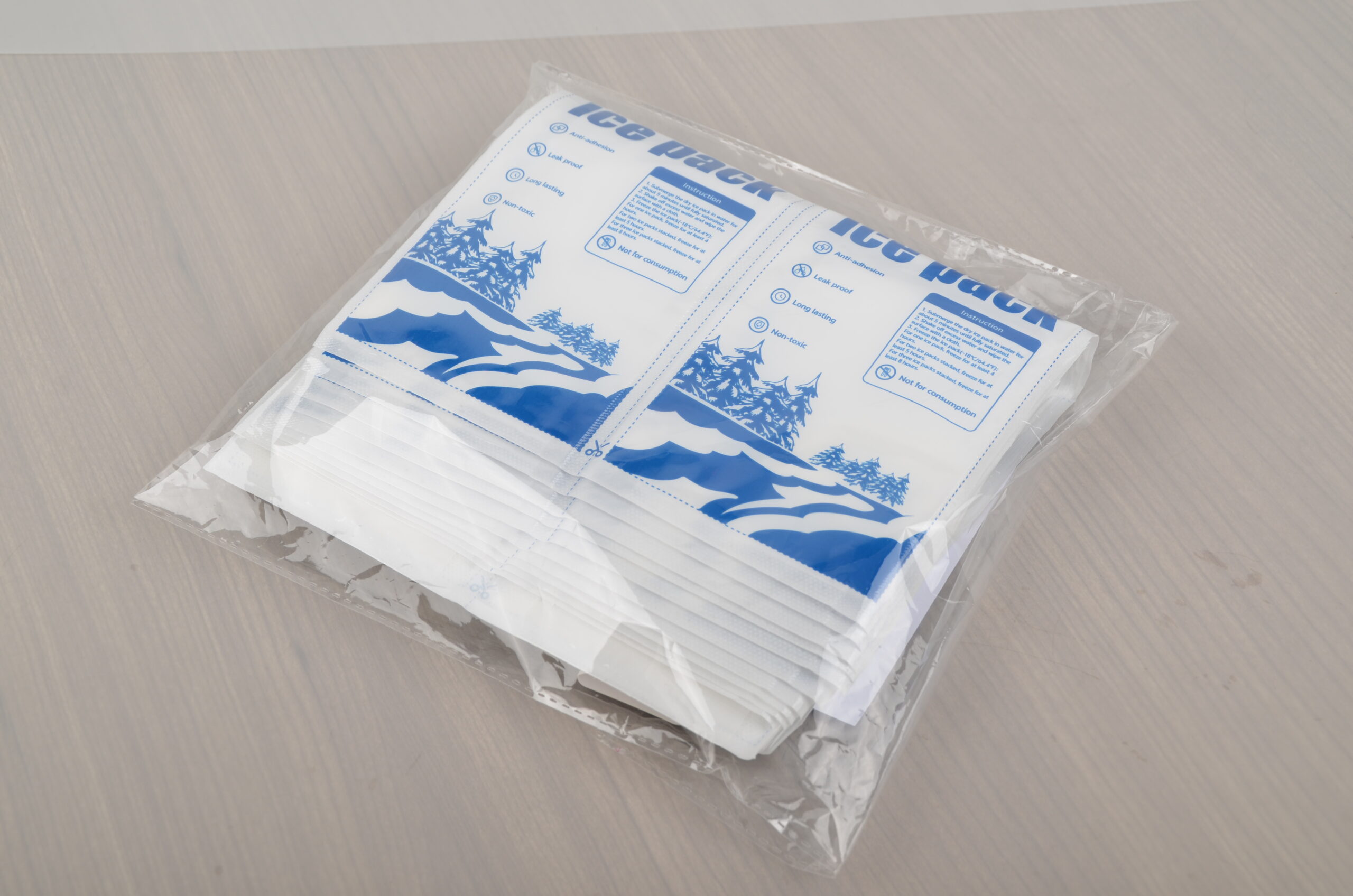
Whether you’re going on a camping trip, shipping a batch of food to a client, or just need to store perishables in a power outage, dry ice packs for coolers are your best bet for maintaining a safe, cold temperature. Dry ice offers an extra layer of protection beyond regular ice packs, ensuring your products stay frozen and fresh for much longer. This guide covers everything from sizing your dry ice to the best packing methods, and all the 2025 shipping compliance updates.
This Guide Will Answer:
How much dry ice do you need to keep food and drinks cold for up to 48 hours?
How to pack dry ice safely in coolers and avoid CO₂ hazards?
What are the latest shipping guidelines for dry ice in coolers (IATA, DOT, WHO)?
How to safely use dry ice in coolers for shipping food and medical items?
What is the best way to avoid dry ice burns and ensure safety?
How to size dry ice packs for coolers?
How Much Dry Ice Do You Need for Coolers?
Short Answer:
For coolers, dry ice typically requires 2–3 pounds of dry ice per cubic foot of cooler space for up to 48 hours. Full coolers maintain cold temps longer, so you’ll need more ice if the cooler is half-full. Dry ice is much colder than regular ice, and its sublimation rate (how quickly it turns to gas) depends on the cooler type, venting, and outside temperatures.
Expanded Explanation:
Dry ice is an excellent choice for coolers because it sublimates directly from solid to gas, absorbing a large amount of heat during the process. It doesn’t leave water behind like regular ice. For most applications, a standard 20–30lb dry ice pack can keep coolers cold for around 48 hours. However, you can adjust the weight depending on factors such as cooler size, insulation quality, and external temperature. Always err on the side of more dry ice, as you can always ventilate excess CO₂, but you can’t “create” dry ice once it’s gone.
Quick Guide to Dry Ice Sizing for Coolers
| Cooler Size | Dry Ice (lbs) | Estimated Hold Time | What this Means for You |
|---|---|---|---|
| 5–10 ft³ cooler | 8–10 lb | ~24–36 hours | Ideal for 1–2 day use, perfect for personal camping trips or food transport. |
| 15–20 ft³ cooler | 20–25 lb | ~36–48 hours | Best for extended trips, larger events, or shipping perishable foods. |
| 30+ ft³ cooler (shipping) | 30–50 lb | ~48 hours | For shipping bulk foods, vaccines, or medical goods, adding more ice ensures safety. |
Pro Tip: Always test your dry ice size in advance, as it can vary based on the cooler’s insulation and opening frequency.
How to Safely Pack Dry Ice in Coolers?
Short Answer:
Ensure the cooler has proper ventilation, never seal dry ice in airtight packaging, and always handle it with insulated gloves or tongs. Dry ice releases carbon dioxide (CO₂) as it sublimates, so it’s important to allow the gas to escape. Sealing it in airtight containers can lead to pressure buildup, which could be dangerous. Make sure you always use vented coolers or packouts.
Expanded Explanation:
Dry ice requires careful packing. The key steps are:
Ventilation: Always use a cooler with vents or leave a crack in the lid to let CO₂ escape.
Layering: Pack dry ice on top of your items, with cardboard or bubble wrap as a barrier. This ensures that items don’t get frozen directly and that the dry ice can release gas freely.
Protection: Handle dry ice using insulated gloves or tongs to avoid frostbite. Never place your bare skin on it.
When packing for shipping purposes, always mark the package with UN 1845 and make sure you label it as containing Dry Ice with a Class 9 hazard label. This ensures safe transport and proper handling by shipping carriers.
Packing Checklist
Vented cooler or pack-out box
Insulated gloves and tongs
Layered packing (bubble wrap, cardboard) between dry ice and food items
Dry ice amount: ~2.5–3 lb per ft³ of cooler volume
Marking: Apply UN 1845, net weight (kg), and Class 9 label on the outer side
Thermometer or data logger for monitoring temperature
How to Ship Dry Ice in Coolers: IATA 2025 Guidelines
Short Answer:
When shipping dry ice, make sure to use vented packaging, label the container with UN 1845 and Class 9 labels, and include the net weight of dry ice in kilograms. Complying with IATA guidelines (Packing Instruction 954) ensures that your shipment is safe, especially in air transport. The 2025 regulations emphasize proper venting, correct documentation, and safe packaging to prevent CO₂ hazards.
Expanded Explanation:
The International Air Transport Association (IATA) regulates the shipping of dry ice under Packing Instruction 954 (PI 954). Here’s what you need to do:
Package Ventilation: Always use packaging that allows CO₂ to escape. This is typically done through vented packaging with holes or relief valves.
Labeling: Mark the container clearly with UN 1845 (“Dry Ice/Carbon dioxide, solid”), and specify the net weight of dry ice in kilograms.
Hazardous Goods Label: Affix the Class 9 label to indicate the presence of hazardous materials.
Shipping Documentation: Complete the Air Waybill and indicate the quantity of dry ice in the appropriate field.
For most air shipments, ensure compliance with the IATA Dangerous Goods Regulations (DGR) to avoid fines and delays. When shipping biologicals or perishables, you may need a specialized dry ice shipping box that meets IATA’s standards.
Best Practices for Air Shipments
Proper documentation: Fill in all details accurately, especially the net dry ice weight and Class 9 label.
Venting is critical: Ensure all coolers have venting, as dry ice expands into CO₂ gas.
Avoid using glass containers: Dry ice can cause glass to crack under pressure.
FAQ
Q1: How much dry ice do I need for a 10 ft³ cooler?
You need about 25–30 lbs of dry ice to keep it cold for 48 hours. Make sure to place dry ice on top of the items for optimal cooling.
Q2: Can dry ice be used for shipping food in coolers?
Yes, dry ice is ideal for shipping perishable items, especially frozen foods. Make sure to label the package with UN 1845 and the correct Class 9 shipping label.
Q3: How do I safely use dry ice in a cooler?
Always handle dry ice with insulated gloves and never seal it in an airtight container. Ensure the cooler has ventilation to allow CO₂ gas to escape.
Q4: Is dry ice safe for shipping medical items?
Yes, dry ice is commonly used for shipping medical items, but ventilation and labeling are required for safety. Follow IATA PI 954 guidelines and mark UN 1845 clearly.
Summary & Recommendations
Key points:
Dry ice packs for coolers offer extended cold retention and are the ideal solution for shipping and storing perishables, food, and medical supplies. Always size your dry ice based on the cooler size, pack it correctly with ventilation, and adhere to 2025 IATA guidelines for shipping. Always use gloves when handling dry ice and ensure proper labeling and ventilation.
Next steps (actionable):
Calculate your dry ice requirement for your cooler or shipment.
Check all coolers for ventilation and ensure compliance with safety regulations.
Label the shipment correctly using UN 1845 and Class 9 labels.
Test and calibrate your dry ice shipping procedures every 6 months.
About Tempk
Tempk is a leading supplier of cold chain packaging solutions. We design and manufacture dry ice packs for coolers and medical shipping solutions that meet IATA standards. Our products are tailored to your needs, ensuring compliance, safety, and temperature control every time.
Contact us today for a consultation on dry ice packs for coolers—we’ll help you determine the best packaging for your needs!
Dry Ice Packs for Camping: Keep Food Fresh & Cold for Longer

Planning a camping trip and worried about keeping your food fresh? Dry ice packs are a game-changer for campers seeking extended freshness without the mess of melting ice. These packs offer superior cooling, are reusable, and are lightweight—ideal for outdoor adventures. In this guide, we’ll show you how dry ice packs elevate your camping experience, ensuring your perishables stay fresh for longer.
Understand how dry ice packs work for camping and why they are more effective than regular ice.
Compare dry ice with traditional ice and see why dry ice is the best choice for longer trips.
Learn how to choose the best dry ice pack for your trip, based on cooler size and trip duration.
Get essential safety tips for handling and storing dry ice during camping.
Explore the latest trends in camping cooling technology and how they integrate with dry ice solutions.
What Are Dry Ice Packs and How Do They Work?
Dry ice packs are reusable cooling solutions made from solidified carbon dioxide (CO₂). These packs are unique because they sublimate directly from solid to gas, meaning they don’t leave behind water, making them ideal for preventing soggy food and wet coolers.
How does this work?
Dry ice packs are much colder than regular ice, with a temperature of -78.5°C (-109.3°F), compared to 0°C (32°F) for regular ice.
They keep your food frozen for a longer duration—up to 2-3 days or more, depending on your cooler and packing method.
Benefits of Using Dry Ice Packs for Camping
Extended Freshness: Keep your food cold for longer without worrying about melting ice.
No Mess: Dry ice sublimates into gas, leaving no liquid residue to ruin your cooler or food.
Space-Efficient: Compact design allows more room in your cooler for other essentials.
Reusable: Most dry ice packs are designed for multiple uses, offering long-term value.
How Dry Ice Packs Compare to Regular Ice
Here’s a quick comparison between dry ice and regular ice for your camping trips:
| Factor | Dry Ice Packs | Regular Ice |
|---|---|---|
| Freezing Point | -78.5°C (sublimates) | 0°C (melts into water) |
| Duration | 2–3 days (or more) | 12–24 hours |
| Messiness | No water residue | Water can soak food and gear |
| Handling & Safety | Requires gloves, vented cooler | Safe, no special handling needed |
Takeaway: Dry ice packs provide long-lasting cooling without the mess of melting water, making them ideal for extended camping trips.
How to Choose the Right Dry Ice Pack for Your Camping Trip
When choosing dry ice packs for camping, consider the following factors:
Trip Duration: For shorter trips, smaller packs will suffice. For longer trips, opt for larger packs or custom-sized bricks.
Cooler Size: A larger cooler will need more dry ice to maintain a low temperature.
Type of Food: If you need to keep meats, frozen meals, or ice cream frozen, dry ice is your best bet. For drinks and less perishable items, regular ice might be enough.
Best Dry Ice Packs for Different Camping Scenarios
Weekend Camping (1-2 Days): 1–2 lb dry ice packs or small bricks work well.
Extended Camping (3+ Days): Larger 5 lb dry ice packs or PCM (phase change material) packs provide longer-lasting cooling.
How to Use Dry Ice Packs Safely While Camping
Safety Tips:
Wear gloves: Always handle dry ice with insulated gloves to prevent frostbite.
Ensure ventilation: Your cooler must allow gas to escape to avoid CO₂ buildup.
Avoid direct contact with food: Use insulation to prevent burns or freezing of food.
Packing Tips:
Pre-chill your cooler before packing it with frozen food and dry ice.
Layer dry ice packs at the bottom and middle of the cooler, with food on top.
Seal your cooler with a vented lid to allow the gas to escape safely.
Common Mistakes When Using Dry Ice for Camping
Avoid these common errors:
Underestimating the amount of dry ice needed for the trip.
Sealing the cooler too tightly, which prevents proper ventilation.
Placing dry ice directly on perishable food without insulation.
Pro Tip: Use Thermafreeze Cryosheets for insulation between dry ice and food to prevent cold burns.
2025 Trends in Camping Cold Chain Solutions
As we head into 2025, camping cooling solutions are becoming more efficient and eco-friendly. The trend is shifting towards using Phase Change Materials (PCMs) alongside dry ice to extend cooling power and reduce environmental impact. These sustainable alternatives are gaining popularity, providing campers with new ways to keep their food fresh for longer.
Latest Trends:
Eco-friendly materials: Companies are introducing biodegradable ice packs and using plant-based gels to reduce plastic waste.
Smart coolers: Some high-end coolers now feature temperature sensors that notify you when to add more cooling material.
Advanced insulation: Coolers with vacuum panels and improved foam materials help extend the lifespan of dry ice packs.
Frequently Asked Questions
Q1: Can I use dry ice packs in any cooler?
Yes, but your cooler should be well-ventilated to allow CO₂ gas to escape. Insulated coolers like YETI work best.
Q2: How long will dry ice packs keep my food cold?
Dry ice packs can keep food cold for 1–3 days, depending on the cooler’s insulation and the size of the pack.
Q3: Are dry ice packs safe for food?
Yes, dry ice packs are food-safe when used correctly with insulation layers to avoid direct contact.
Conclusion
Dry ice packs are a must-have for any camping trip, offering long-lasting cooling without the mess of melting ice. Whether you’re planning a weekend getaway or a week-long adventure, these packs will keep your food fresh and safe. Remember to follow proper packing and safety guidelines to maximize their effectiveness.
About Tempk
Tempk specializes in high-quality dry ice and PCM solutions for camping and outdoor adventures. Our products are designed for durability and efficiency, ensuring your food stays cold for days without hassle.
Call to Action: Explore Tempk’s range of dry ice packs and enhance your camping experience today! Need tailored advice? Request a free consultation now.
Dry Ice for Emergencies & Cold‑Chain Shipping (2025): Safety, Compliance & How‑To
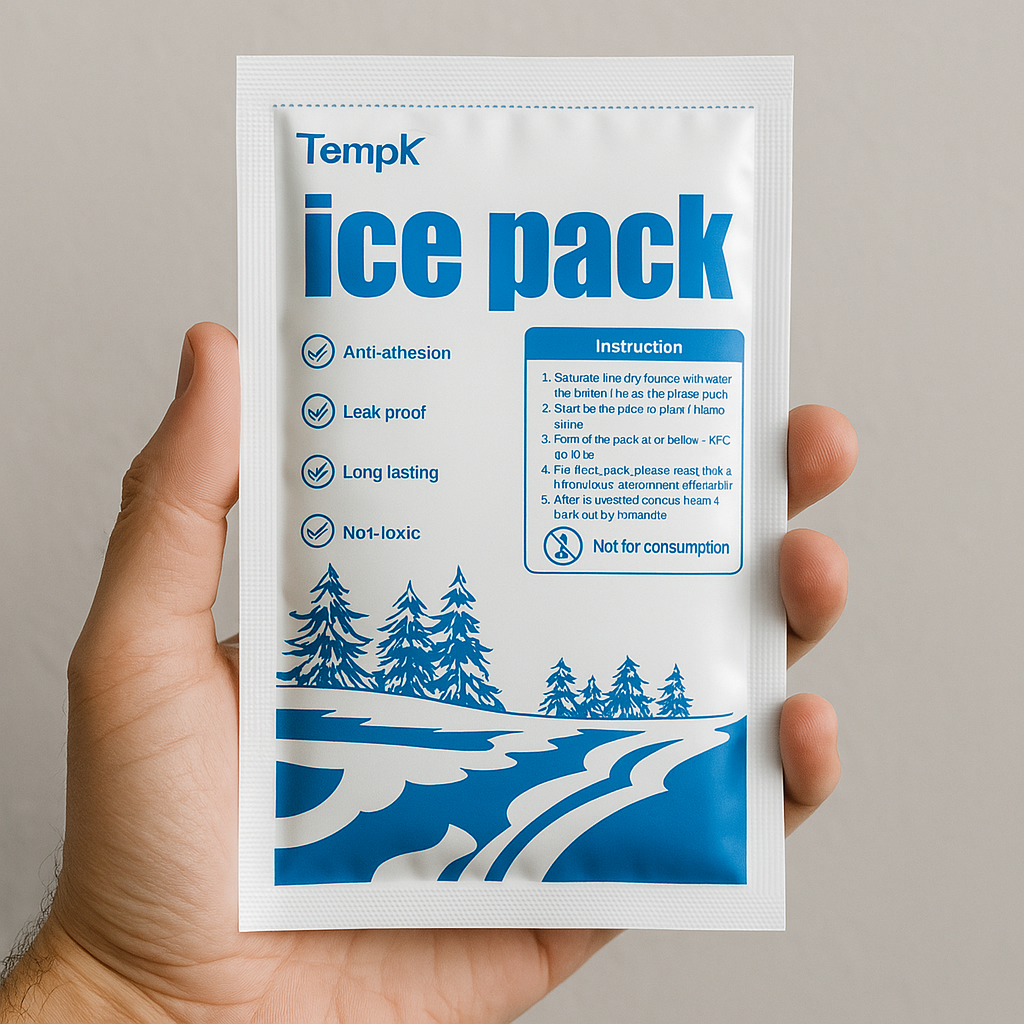
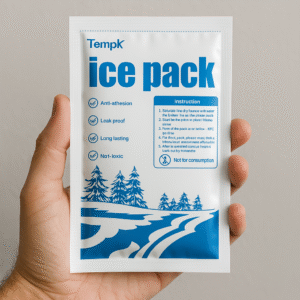
1) What dry ice is—and why it matters in emergencies
Dry ice is solid CO₂ (UN 1845) at about –78.5 °C (–109 °F). As it warms, it sublimates—jumping straight from solid to gas. That’s perfect for emergency cooling (no meltwater mess) and long‑haul cold‑chain—but it also means rapid gas build‑up if you trap it. One pound becomes ~250 liters of CO₂, so ventilation is mandatory.
From a health & safety perspective, plan to stay well below common occupational thresholds (5,000 ppm TWA; 30,000 ppm STEL) and never ride or work in small spaces with active sublimation without airflow.
2) Safety first: 10 non‑negotiables
Vent, don’t seal. Packaging must allow CO₂ to escape (loose‑fitting lid, vent plugs, etc.).
No airtight coolers/rooms/vehicles. CO₂ can displace oxygen. Monitor where practical.
Gloves/tongs & eye protection. Contact can cause instant frost injury.
Keep away from children/pets. Treat as an industrial refrigerant.
Do not put in glass/sealed jars. Pressure can burst containers.
Transport upright; secure loads. Label outside; keep in ventilated cargo area.
No sink, toilet, or trash disposal. Let it evaporate outdoors in a ventilated place.
Carbon‑steel shears for portioning; don’t chisel with kitchen knives.
Never touch edible product directly (freezer burn risk); use liners/cardboard standoffs.
Know your local rules (airport, courier, USPS) before you move anything.
3) Power outage playbook (food & home)
How long is food safe without power?
Refrigerator: ≈ 4 hours (doors closed).
Freezer: ≈ 48 hours full (24 hours half‑full).
These are baseline public‑health timelines—use an appliance thermometer and keep doors shut.
Extending time with dry ice (rule‑of‑thumb)
18 ft³ freezer: ~50 lb dry ice ≈ 2 days of hold time (with doors closed).
For general planning in outages, a common guidance is ~2.5–3 lb per cubic foot of freezer space. Place slabs on the top shelf (CO₂ sinks; cold drops).
Placement tips
Chest freezers: lay cardboard over food, then the dry ice on top.
Upright freezers: split slabs across shelves to avoid warm pockets.
Ventilate the room; crack a window if safe.
When to discard
If refrigerated perishables exceed 40 °F (4 °C) for >2 hours, discard. Don’t taste to check; when in doubt, throw it out.
4) Medical & lab cold chain (vaccines, ULT, specimens)
Do not use dry ice to hold 2–8 °C vaccines. It can freeze and damage many vaccines—CDC explicitly cautions against dry ice for refrigerator‑range products.
ULT shipments are in scope (2025): WHO’s 7th edition (2025) Guidelines for the international packaging and shipping of vaccines adds dedicated guidance for ultra‑cold chain shipments. Use manufacturer‑approved ULT shippers and data loggers.
Specimens on dry ice: multi‑layer (triple) packaging; no direct contact between dry ice and the primary container; surround the secondary with dry ice and absorbent.
5) 2025 shipping rules: air, courier & mail
A) Air cargo (IATA DGR 66th edition, effective Jan 1, 2025)
For Dry ice (Carbon dioxide, solid), UN 1845 packaged by itself or with non‑dangerous goods:
Air Waybill (AWB) must show: UN1845, proper shipping name (“Dry ice”/“Carbon dioxide, solid”), number of packages, and net weight of dry ice (kg).
Packaging must be vented; Class 9 label required; irrelevant marks removed.
Quantity per package: ≤200 kg.
Overpacks: either show all marks/labels through or mark “OVERPACK” and add the total net dry‑ice weight on the overpack.
State/operator variations apply—check your airline’s technical manual.
Pro tip: If the consignment contains infectious substances (e.g., UN3373, Category B), you must add the infectious‑substance markings/labels per IATA—and still mark dry ice as UN1845 with the net weight. CDC reiterates the Class 9 + UN1845 + net weight requirement when dry ice is present.
B) U.S. mail (USPS)
Domestic air: per Packaging Instruction 9A, each mailpiece may contain no more than 5 lb of dry ice; packaging must vent CO₂; follow 49 CFR 173.217. International mailing with dry ice is generally not permitted.
C) Passenger travel (carry‑on/checked)
Up to 2.5 kg (5.5 lb) per passenger if the package vents CO₂ and is properly marked (“Dry ice”/“Carbon dioxide, solid” + net weight or indication ≤2.5 kg). Check airline rules before you fly.
D) U.S. ground (DOT)
Packaging must permit gas release—do not seal dry ice in airtight containers.
Placards: For domestic highway transport, a Class 9 placard is generally not required; however, other Table 2 thresholds and bulk‑package ID number rules apply. Review 49 CFR 172.504 before dispatch.
6) How to pack (step‑by‑step)
6.1 For e‑commerce or home: dry ice pack for shipping food
Goal: keep frozen solid for 24–48 h with carrier handling.
Choose the shipper: rigid foam‑lined corrugated or molded EPS/poly with tight (not airtight) lid.
Pre‑chill everything. Freeze items to ≤ –18 °C; pre‑chill gel packs (for buffer zones).
Line & separate: cardboard layer above products to avoid freezer burn.
Add dry ice: place slabs/pellets on top of the product layer so cold air sinks; leave vent path.
Fill voids to reduce air volume (paper, foam)—less air = slower sublimation.
Close loosely/vent path guaranteed. Tape the outer carton only; never hermetically seal the inner.
Mark & label: “Dry ice” or “Carbon dioxide, solid” + UN 1845 + net dry‑ice weight (kg); add Class 9 label as required by the carrier mode.
Documentation: include UN1845 line on AWB if by air (see Section 5A).
USPS note: domestic air ≤5 lb per mailpiece; check PI 9A for exact marking text and carton ventilation.
6.2 Patient specimens (frozen)
Primary (sealed, leak‑proof).
Secondary (watertight + absorbent).
Outer (rigid, insulated).
Dry ice around the secondary, not touching the primary; secure to prevent shifting.
Marking/labels: infectious substance requirements as applicable plus dry ice UN 1845 + net weight.
6.3 ULT/vaccine kits (manufacturer shippers)
Only use manufacturer‑approved shippers and continuous monitoring (data logger).
Follow WHO 7th ed (2025) guidance for packaging and documentation; never swap components (e.g., unfamiliar vents/absorbers).
7) How much dry ice do I need? (Quick sizing)
Outage: plan ~2.5–3 lb per ft³ of freezer space for ≈ 48 h stabilization (doors closed).
Parcel shipments: a common field range is ~5–10 lb per 24 h for a rigid cooler, depending on insulation and ambient temps. Start at the high end for summer lanes and down‑spec after lane validation with loggers. (Ranges are empirical; validate in your packaging qualification.)
Engineering note: packaging design, fill ratio, ambient, and handling dramatically affect sublimation—verify with a lane trial and a temperature logger.
8) FAQ
Is dry ice food‑safe?
Yes—CO₂ itself is food‑contact safe, but do not place slabs directly on foods you don’t want frozen; use cardboard/liners.
Can I put dry ice in drinks?
No. Ingestion/contact can injure tissue; use standard ice for beverages.
How do I dispose of leftovers?
Let it sublimate outdoors or in a well‑ventilated area, away from people/pets.
Can I mail dry ice internationally with USPS?
No—USPS allows domestic dry‑ice shipments with strict limits (≤5 lb air per piece).
How much dry ice can I carry on a plane?
Generally 2.5 kg (5.5 lb) per passenger if packaged to vent CO₂ and properly marked—always confirm airline rules.
Do I need hazmat placards for a vanload of dry‑ice parcels?
For domestic U.S. highway moves, a Class 9 placard isn’t required in most cases; bulk ID and other Table 2 rules may still apply. Check 49 CFR 172.504 and your specific configuration.
9) Printable compliance checklist (shipments with dry ice)
☐ Package vents CO₂; no airtight seals (49 CFR 173.217).
☐ Marking on each package: “Dry ice” or “Carbon dioxide, solid” + UN 1845 + net dry‑ice weight (kg).
☐ Class 9 label applied and unobscured; irrelevant marks removed.
☐ AWB shows UN1845, name, package count, net dry‑ice weight (if by air).
☐ Overpack: “OVERPACK” if inner marks aren’t visible; show total net dry‑ice weight.
☐ State/operator variations reviewed (airline rules).
☐ USPS: domestic only; ≤5 lb per mailpiece by air; follow PI 9A.
☐ Vaccines: no dry ice for 2–8 °C storage; ULT kits per WHO 7th ed (2025
Dry Ice Packs Coles (2025): Buyer & Shipping Guide
Dry Ice Packs Coles (2025): The Definitive Buyer & Shipping Guide
What “dry ice packs Coles” really means in 2025
In‑store reality: Coles lists gel/ice bricks and slim “ice walls”—handy for lunchboxes and small coolers—not solid CO₂. Example: Smash Gel Ice 3‑pack.
Where to buy real dry ice: For CO₂ (−78.5 °C) choose BOC ICEBITZZZ™ pellets/boxes or Supagas blocks/pellets.
Why the mix‑up: Shoppers often use “dry ice pack” to mean any cold brick; supermarkets stock gel/PCM, while CO₂ dry ice is a regulated refrigerant. Dry ice’s sublimation point is ~−78.5 °C.
Editor’s note for your team: this section aligns with—and replaces overlapping passages across your three drafts to avoid duplication and keyword stuffing.
Choose the right refrigerant (quick picker)
Picnics & grocery runs: Retail gel bricks from Coles, Bunnings, etc. → simple, reusable, low hazard.
2–8 °C lanes (meal kits, pharma): Use +5 °C PCM for narrow‑band control (less freeze damage risk than 0 °C gels).
Frozen or long‑haul: Use −16 °C PCM or CO₂ dry ice (ultra‑cold, no meltwater). Always provide venting and PPE.
Why +5 °C PCM > standard gel for 2–8 °C: WHO guidance and vendor specs show PCMs can be formulated to change phase right around 5 °C, keeping payloads in range more reliably than 0 °C gel packs.
Gel/PCM vs. CO₂ dry ice — at a glance
| Option | Typical source | Working temp | Pros | Watch‑outs |
|---|---|---|---|---|
| Coles gel/ice bricks | Supermarkets | ~0 to 10 °C | Cheap, reusable, easy | Shorter runtime for frozen lanes |
| PCM +5 °C panels | Specialists | Holds ~5 °C | 2–8 °C stability; less freeze risk | Must be preconditioned correctly |
| PCM −16 °C bricks | Specialists | ≤ −10 °C corridors | Frozen holds without DG paperwork | Needs validated pack plan |
| CO₂ dry ice | BOC / Supagas | −78.5 °C | Long frozen runtime, no meltwater | Vented pack, label/limits, PPE |
For consumer cooler use, recent testing shows gel designs often outperform plain water blocks for hold time, while hard bricks win for durability.
Sizing calculator (copy‑paste ready)
Example (day trip): 28 L cooler for 24 h, tightly packed → (28/3.5) × 1 × 1.0 ≈ 8 “mini bricks” or 2–3 medium hard bricks.
Example (frozen 36 h): 35 L shipper → (35/3.5) × 1.5 × 1.0 ≈ 15 minis; substitute 3–4 low‑freeze PCMs + side sheets.
This calculator carries over from your internal draft; I’ve standardized notation and added examples for clarity.
Dry ice rule‑of‑thumb (frozen): ~5–10 kg per 24 h per 30–40 L at room temp; blocks last longer than pellets. Always validate with your insulation and opening profile.
15‑minute pack‑out (works for Coles gel, Tempk PCM, or dry ice)
Precondition: Freeze gels solid; condition PCM to its setpoint; bag dry ice with paper to reduce flash‑freezing. WHO recognizes gels, PCMs and dry ice as valid coolants in passive systems.
Line & layer: Reflective liner → bottom layer of packs → payload centered with small side gap → top layer of packs.
Vent & verify (dry ice): Ensure a vent path—never airtight. Label “Dry Ice/UN1845” with net kg.
Record start time and ambient; use a probe/indicator when possible.
These steps harmonize the strongest how‑to elements across your three drafts.
Flying with dry ice in 2025 (Australia & beyond)
Global baseline (IATA 66th/2025): Up to 2.5 kg per passenger, package must vent CO₂, and checked baggage must be marked Dry ice/Carbon dioxide, solid with net weight (or “≤ 2.5 kg”).
Airline examples: Qantas & Virgin show 2.5 kg limits and venting/marking in their public pages; Jetstar materials show the same limit in DG lists. Always declare at check‑in.
Safety 101 (print for the packing bench)
PPE: Insulated cryogenic gloves + eye protection; avoid bare‑hand contact.
Ventilation: Work in a well‑ventilated area; never store in airtight containers (pressure/oxygen risk).
Food safety basics: Keep cold food ≤ 5 °C, hot ≥ 60 °C; apply the 2‑hour/4‑hour rule for brief hand‑offs outside refrigeration (FSANZ, May 22 2025).
Where to actually buy in Australia (2025)
Supermarket bricks (everyday): Coles listings (e.g., Smash® Gel Ice 3‑pack; Willow® bricks) for day use.
Dry ice (frozen lanes): BOC ICEBITZZZ™ (pellets/boxes) and Supagas (blocks/pellets/slices). Check lead time and pellet diameter.
Why businesses graduate from “dry ice packs Coles” to Tempk
Tempk is engineered for validated, repeatable cold‑chain results: precise PCM setpoints (−16 °C / −5 °C / +5 °C), lane‑based pack plans, and documentation aligned with IATA 2025 acceptance checks—so you reduce excursions and pass airline acceptance first‑time. This positioning merges your drafts’ value props into a single buyer‑focused section.
FAQs
Q1: Does Coles sell “real” dry ice?
No. You’ll mostly find gel bricks/ice walls at Coles. For solid CO₂, use BOC or Supagas.
Q2: What should I use for 2–8 °C shipments?
Use +5 °C PCM rather than 0 °C gel to avoid accidental freezing and hold a tight band.
Q3: Can I fly with dry ice?
Yes—2.5 kg per passenger, vented packaging, declared at check‑in, and marked with UN1845 + net kg.
Q4: Do gel packs last as long as dry ice?
No. Dry ice is far colder (−78.5 °C). That said, controlled tests show gel designs are excellent for coolers when pre‑chilled
Dry Ice Packs Bulk: Buy, Store & Ship in 2025
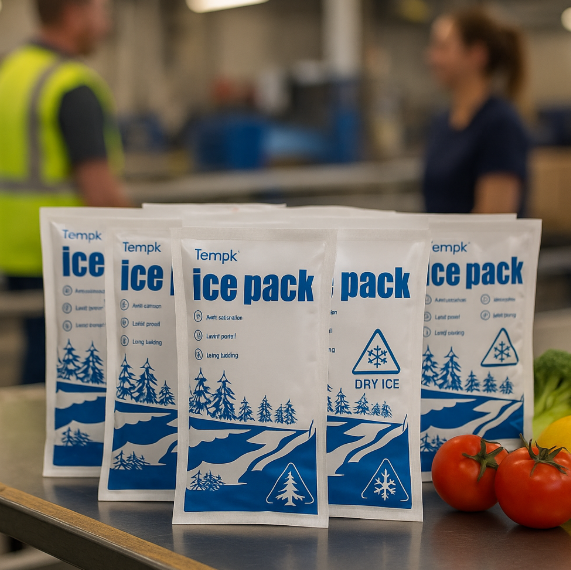
Dry Ice Packs Bulk: 2025 Buying, Storage & Shipping Guide
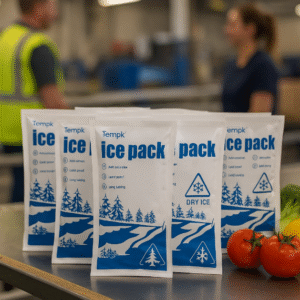
At a glance—what you’ll learn
What “dry ice packs bulk” means (and what it doesn’t).
How to choose pellets vs. blocks and the right insulated container.
A quick estimator for how much dry ice to load.
The exact 2025 labels & paperwork that pass acceptance checks.
Safety limits for CO₂ and the right way to store/vent.
1‑sentence definition (featured snippet‑ready):
Dry ice packs bulk refers to pallet/bin or case quantities of solid CO₂ (pellets/blocks) supplied in vented liners and used with insulated, venting shippers; boxes must be marked “Dry ice”/“Carbon dioxide, solid,” UN 1845, and net dry‑ice mass (kg) per air/ground rules.
What exactly are you buying?
Common formats
Pellets (≈3–16 mm): fast pulldown, even coverage.
Rice/mini pellets (≈⅛–¼″): dense packing around irregular shapes.
Blocks/loaves: slower sublimation, longer holds with fewer openings.
(Choose by lane length and opening frequency.)
Insulated containers
EPS (budget, 24–48 h)
EPP (tough/reusable, 36–72 h)
VIP hybrids (longest hold, 48–96 h+)—often lets you shrink dry‑ice mass and DIM weight due to much lower heat leak. (VIPs deliver ultra‑low conductivity; model cost vs. refrigerant savings.)
How much dry ice do you need?
Two ground‑truth rates from FAA testing are widely used for planning:
Small packages (~5 lb): ~2% of mass per hour
Large/tightly packed (~100 lb): ~1% per hour
Also, 1 lb dry ice → ~8.8 ft³ CO₂ gas (plan ventilation).
Quick estimator (planner’s shortcut)
Prefer metric? 1 lb ≈ 0.454 kg.
Physics cross‑check: Dry ice absorbs ~25–27 kJ/mol on sublimation (≈571–615 kJ/kg); your lane math should make sense against that energy budget.
(The estimator and planning ranges consolidate the calculators you drafted, tightened by FAA/NIST data.)
Starter table (with 25% delay buffer)
| Box (inner L) | Container | Transit (h) | Est. dry ice (kg) | Notes |
|---|---|---|---|---|
| 22 L | EPS 30 mm | 24–36 | 3.5–5.0 | Minimize headspace |
| 30 L | EPP 40 mm | 36–48 | 5.0–7.0 | Add 25% in summer |
| 45 L | VIP hybrid | 48–72 | 6.5–10.0 | Less ice, higher box cost |
Pellets vs. blocks: which lasts longer?
Pellets spread evenly and pull down temperature quickly → best for mixed SKUs & frequent door‑opens.
Blocks/loaves have lower surface‑area‑to‑volume → slower sublimation and longer holds; ideal for long lanes with minimal opening.
(Blend both: blocks for base load + pellet “rim” near hot spots.)
Compliance that passes in 2025 (air & ground)
On the package (air):
Proper shipping name “Dry ice” or “Carbon dioxide, solid”
UN 1845
Net mass of dry ice in kilograms
Class 9 label (no writing inside the diamond)
Use the 2025 IATA Dry Ice Acceptance Checklist; it standardizes what ground crews verify.
Air waybill: include dry‑ice entry with packages × net kg; some operators request net weight at booking to check aircraft limits (66th Ed. addendum).
U.S. ground (DOT): packaging must permit CO₂ release; modes have specific marks (e.g., vessel warnings). See 49 CFR §173.217.
USPS (domestic air mail): ≤5 lb (≈2.27 kg) per mailpiece, no international dry‑ice mail; follow Packaging Instruction 9A.
Pro tip: Print labels with UN 1845 and net kg on the same face as the hazard label when space allows—carriers echo this in 2025 job aids.
Safe storage & handling (people and rooms)
Never airtight. Use vented coolers/liners; do not tape inner foam lids shut.
Ventilate staging areas—CO₂ sinks low; consider floor‑level monitors at bulk volumes.
Gloves + eye protection to avoid cold burns.
Respect occupational exposure limits for CO₂: TWA 5,000 ppm and STEL 30,000 ppm (NIOSH/OSHA).
Container picking (buy the box before the ice)
| Container | Best lane | Ice impact | When to pick |
|---|---|---|---|
| EPS (25–40 mm) | 24–48 h | Higher charge | Budget starter |
| EPP (30–50 mm) | 36–72 h | Moderate charge | Reuse/durability |
| VIP hybrid | 48–96 h+ | Lowest charge | Long/hot lanes; cut DIM |
VIPs often reduce refrigerant mass for 72–144 h routes thanks to ultra‑low thermal conductivity. (Validate with data loggers.)
Buying in bulk (without surprises)
Delivery form: totes/bins (~200–1,400 lb) or palletized cases; set recurring drops and reorder triggers.
Vendor scorecard: grade/spec (SDS, pellet diameter/block size), supply resilience, packaging (ventable liners), and compliance support (sample labels).
Cost control: shrink headspace → place ice on top → improve insulation before adding more ice; VIP may lower total landed cost when lanes go long.
Frequently asked questions
Q1: Are “dry ice packs” the same as gel/PCM packs?
No. Dry ice is solid CO₂ (~−78.5 °C) for frozen lanes; gels/PCMs target chilled temps and aren’t a substitute for UN 1845 dry ice.
Q2: How much dry ice per day should I plan?
Use ~1–2%/h mass‑loss as a starting point (FAA), then add 25–50% buffer for delays and openings. Cross‑check against the sublimation energy budget.
Q3: What must be on the box for air?
“Dry ice”/“Carbon dioxide, solid”, UN 1845, net kg, and Class 9—plus AWB text. Use the IATA 2025 checklist.
Q4: USPS limits for dry ice?
Domestic air mail is capped at ≤5 lb per mailpiece; international mail with dry ice is prohibited.
Q5: Is it okay to seal the inner liner to hold cold longer?
No. Packaging must vent CO₂ to prevent pressure build‑up.
How‑to: pack a frozen box with bulk dry ice (20‑minute SOP)
Assemble shipper (EPS/EPP/VIP) and confirm vent paths.
Bag payload, add a rigid divider/tray to separate from ice.
Top‑load dry ice above product; minimize headspace with fitments.
Apply UN 1845, Class 9, net kg; verify AWB text.
Dry Ice Packs for Shipping Food (2025 Compliance Guide)
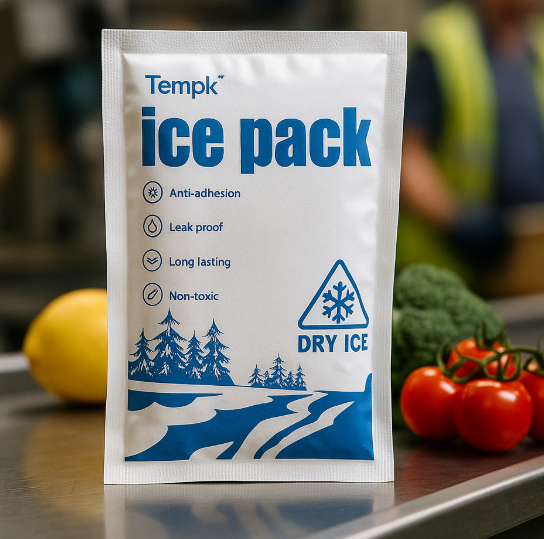
Key takeaways (2025)
Air shipments with real dry ice must follow IATA PI 954 and operator variations; packages must be vented, marked UN 1845, and show net dry‑ice weight in kg. Use the 2025 IATA acceptance checklist.
U.S. ground/air rules require vented packaging under 49 CFR 173.217; passengers carrying dry ice are limited to 2.5 kg (5.5 lb) per person with airline approval.
How much to use: plan on ~5–10 lb (2.3–4.5 kg) per 24 hours in a well‑insulated shipper; adjust for lane/season. (University & government guidance align on this range.)
Page experience affects visibility: in 2025 INP replaced FID in Core Web Vitals; aim for LCP ≤ 2.5 s, INP ≤ 200 ms, CLS ≤ 0.1 at the 75th percentile.
Google spam policies: the March 2024 core update targets scaled content abuse, expired domain abuse, and site reputation abuse—quality and first‑hand expertise win.
What “dry ice pack” really means
In search results, “dry ice pack” can refer to two different things:
Real dry ice (solid CO₂, UN1845)—used to keep products frozen. Must be vented and labeled for transport.
Reusable gel/PCM “ice packs”—colloquially marketed as “dry‑ice alternative,” typically freeze at –15 °C (5 °F) (e.g., Arctic Ice Tundra) and keep items very cold but not as cold as real dry ice. Great for food that only needs to stay frozen/near‑frozen for shorter durations.
This article covers both, but any air shipment with real dry ice must comply with DG (dangerous goods) rules. The packout examples below consolidate the most practical steps from your drafts.
2025 rules at a glance (air & ground)
Air (IATA/ICAO):
Use IATA DGR PI 954 for UN1845 Carbon dioxide, solid (Dry ice). Package must permit CO₂ release; mark “DRY ICE” or “CARBON DIOXIDE, SOLID”, add UN 1845, and the net kg of dry ice. Check your carrier’s operator variations and use the 2025 IATA acceptance checklist.
U.S. domestic (49 CFR):
49 CFR 173.217 requires packaging designed to vent CO₂ gas; general packaging rules apply.
Passenger baggage (reference only):
Limit 2.5 kg (5.5 lb) per passenger with airline approval; package must be vented and marked. (Helpful for staff/customer travel questions.)
Carrier job aids:
FedEx/UPS provide practical label placement and checklist details (Class 9 diamond, UN1845, net kg on the same face as the label when space allows). Always confirm the current operator guidance.
How much dry ice to use (and why)
Rules of thumb from university/agency guidance and industry:
5–10 lb (2.3–4.5 kg) per 24 hours in a well‑insulated cooler/shipper. Expect faster sublimation in hot weather or at altitude.
Translate that into planning:
24 hours (small food parcel): 5 lb (2.3 kg)
48 hours (mid‑size cooler): 10–15 lb (4.5–6.8 kg)
72 hours (large payload/hot lane): 20–25+ lb (9–11+ kg)
Your drafts recommended similar amounts and stressed packout discipline; we kept that guidance and removed any conflicting suggestions.
Packouts that actually work (frozen & chilled)
Below are field‑tested patterns that balance hold time, cost, and compliance. (Adapt per lane and season; validate with ISTA 7E profiles for your lanes.)
A) Frozen food with real dry ice (air or ground)
Outer: Certified insulated shipper or rugged cooler with venting (do not seal airtight).
Liner: 1–2 in (25–50 mm) rigid foam or VIP as required.
Payload bag: Food vacuum‑sealed, placed in a moisture barrier bag.
Dry ice: Split into multiple bricks on top and sides (cold sinks downward).
Void fill: Crumpled kraft/liners to minimize convection.
Marking: “DRY ICE” (or “CARBON DIOXIDE, SOLID”), UN 1845, net kg of dry ice. Class 9 label on the same panel where possible.
B) “Dry‑ice‑alternative” for frozen/near‑frozen (shorter duration)
PCM packs (–15 °C) (e.g., Arctic Ice Tundra) conditioned ≥36 h at the lowest freezer setting; place above and around payload.
Expect performance below real dry ice; ideal for overnight to short‑haul frozen deliveries where DG handling is undesirable.
C) Mixed cold chain (frozen + chilled)
Sandwich payload: dry ice (top) + 0 °C PCMs around sensitive items to prevent over‑freezing. Keep food out of direct contact with dry ice.
For multi‑temp orders, separate with corrugate baffles and distinct inner cartons.
For production rollouts, qualify against ISTA 7E heat/cold profiles for the lane and duration (72–144 h baselines).
Marking, labeling & paperwork (zero‑ambiguity checklist)
Proper shipping name: Dry Ice (or Carbon Dioxide, Solid).
UN number: UN 1845.
Hazard label: Class 9 Miscellaneous (100 × 100 mm minimum per IATA).
Net weight: show kg of dry ice on the package (and on documents when required).
Placement: When space allows, print the proper shipping name/UN1845 on the same side as the Class 9 label (FedEx practice).
Venting: Package must not be airtight; lid taping must allow gas release.
Acceptance: Use the 2025 IATA Dry Ice acceptance checklist for non‑DG‑accompanied, non‑hazardous contents shipments.
Safety (CO₂ venting, handling, food safety)
Ventilation: Dry ice sublimates into CO₂. Respect workplace limits (NIOSH/OSHA: TWA 5,000 ppm; STEL 30,000 ppm). Never confine in sealed spaces; open vans and walk‑ins regularly.
PPE: Insulated gloves; no bare‑skin contact; eye protection when breaking bricks.
Food safety: Keep food out of the 40–140 °F (4–60 °C) “danger zone”; use a calibrated probe at receiving; discard if time/temperature abused.
When to use gel/PCM instead of dry ice
Choose PCM/gel “ice packs” when:
Shipment is overnight/short‑haul, and food can tolerate –15 °C hold rather than –78.5 °C.
You want to avoid DG handling/documentation.
You’re shipping consumer orders where simple reuse and no dry‑ice residue are preferred.
Example: Arctic Ice Tundra packs freeze at –15 °C (5 °F) and are marketed as dry‑ice alternatives for coolers—excellent for consumer food boxes, not for multi‑day deep‑freeze lanes.
(Note on search intent): In AU/NZ retail, searches like “dry ice packs bcf” often surface gel/ice bricks sold by outdoor retailers (BCF), not real dry ice. Align your content and product taxonomy accordingly to capture both intents.
Cost & operational tips
Right‑size your shipper: empty air volume is your enemy—more air = faster dry‑ice loss.
Pre‑condition everything cold (product, PCM, shipper walls).
Lane calendars: summer peaks, weekend holds, and holidays can add 24–48 h; buffer your dry‑ice mass accordingly.
QA & claims: include a simple temp indicator or logger for high‑value shipments.
FAQs
Q1) Can I ship food with dry ice by air?
Yes—within IATA PI 954 limits, using vented packaging, UN 1845 marking, Class 9 label, and net kg of dry ice. Use the 2025 IATA acceptance checklist.
Q2) How much dry ice should I add for a 48‑hour frozen lane?
Start with 10–15 lb (4.5–6.8 kg) and validate with a lane test; hot lanes or larger shippers may require 20 lb+. (Plan on 5–10 lb/24 h.)
Q3) Do I need special labels for UPS/FedEx?
Yes—Class 9 diamond, UN 1845, proper shipping name, and net kg of dry ice. Carriers publish job aids with placement examples.
Q4) Will Google still show FAQ/HowTo rich results if I add schema?
Google heavily restricted FAQ/How‑To rich results (2023). You can keep valid schema for machines and assistive uses, but don’t expect guaranteed FAQ/How‑To visuals. Focus on people‑first content and page experience (Core Web Vitals).
Dry Ice Packs Australia: 2025 Shipping Guide
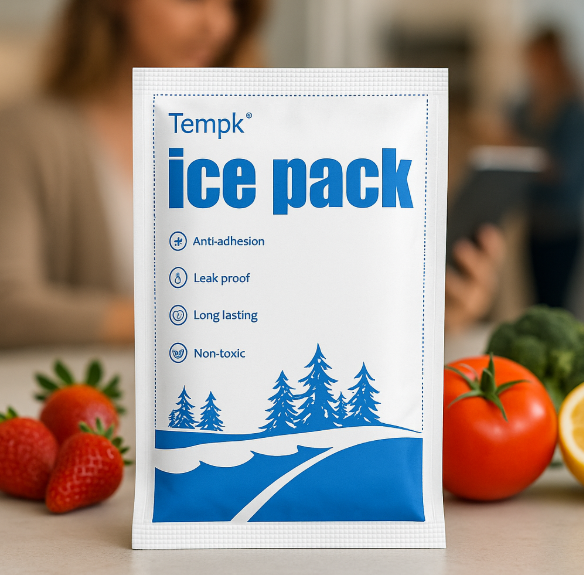
Dry Ice Packs Australia: The 2025 Shipping, Sizing & Safety Playbook
What dry ice packs are and when to use them
2025 compliance in Australia (air, road/rail, post)
How to size dry ice packs (two fast methods)
Pack & label checklist (copy‑ready)
Safety at the workplace (CO₂ & ventilation)
FAQs for shippers (2025 rules)
Structured data (JSON‑LD)
Internal link ideas
1) What dry ice packs are—and when to use them
What they do: Dry ice cools by sublimation at ~−78.5 °C and absorbs heat very efficiently (enthalpy of sublimation ≈ 571 kJ/kg). It keeps products truly frozen with no meltwater, which is ideal for ice cream, seafood, and frozen biologics.
Gas expansion matters: As dry ice turns into CO₂ gas, ~1 kg → ~541 L of gas. That’s why packages must be vented—never airtight.
Pellets vs blocks: Pellets chill faster (more surface area), blocks last longer (lower surface‑area‑to‑volume ratio). Use blocks for long hold; add a top layer of pellets when you need quick pull‑down.
Dry ice vs gel/PCM (quick rule):
Need frozen (≤−18 °C) for 24–72 h? Choose dry ice.
Need chilled (+2–8 °C) or short transits? Choose gel/PCM (simpler compliance).
2) Shipping rules in 2025 (Australia)
Air (IATA DGR 66th, 2025)
Follow Packing Instruction (PI) 954.
Limit: ≤ 200 kg dry ice per package.
Must mark UN1845, “Carbon dioxide, solid” or “Dry ice”, and net weight in kg on the outside.
Add Class 9 hazard label and ensure venting.
Apply state/operator variations and show dry ice details on the air waybill.
Road/Rail (ADG Code 7.9)
ADG 7.9 can be used from 1 Oct 2024 and is mandatory from 1 Oct 2025 (check state commencement notes). Update SOPs, labels and training accordingly.
Postal/Courier (Australia Post / StarTrack)
UN1845 (Dry ice) accepted domestically via StarTrack Premium/Next Flight under conditions; dangerous goods aren’t accepted internationally via Australia Post.
Passenger baggage (not cargo)
Many airlines allow passengers to carry up to 2.5 kg of dry ice if the package is vented and declared at check‑in—separate from cargo rules.
3) How to size dry ice packs (pick your method)
Method A — Energy method (most accurate):
Dry ice needed (kg) ≈ (heat gain kJ/h × transit hours) / 571; then add 20–30% buffer for hot hubs or delays.
Worked example: heat gain 180 kJ/h for 36 h → 180×36=6480 kJ; 6480/571≈11.35 kg; +25% buffer ≈ 14.19 kg (round up and split across multiple packs).
Method B — Rule‑of‑thumb (fast planning):
For small, well‑insulated shippers, plan ~2.3–4.5 kg per 24 h; adjust for insulation quality and heat exposure. Example (48 h, standard insulation): (48/24)×3.2×1.2×1.15 ≈ 8.8 kg. Validate on a pilot lane.
Placement tips: Put packs above and around the payload, fill voids, and avoid partially filled boxes that accelerate sublimation.
4) Pack & label checklist (copy‑ready)
Ventilation: Packaging must release CO₂; never fully airtight.
Marking (outer): UN1845, “Dry Ice/Carbon dioxide, solid”, and net dry ice in kg.
Label: Apply Class 9 label on the same face as the marking when space allows.
AWB line: Include UN1845 + net kg (and package count if required).
Overpack: Repeat marks/labels or mark “Overpack” and show total net dry ice on the overpack.
5) Safety at the workplace (CO₂ & ventilation)
CO₂ exposure: Follow Safe Work Australia workplace exposure limits (TWA and STEL). Ensure room ventilation and consider CO₂ monitoring in small pack‑out rooms and vehicles.
Gas volume: Remember ~541 L CO₂ per kg dry ice; open boxes carefully, ventilate receiving areas, and use insulated gloves/eye protection.
6) FAQs (2025)
Q1: What’s the 2025 air limit per package?
A: 200 kg of dry ice per package under IATA PI 954; packaging must be vented and correctly marked/labeled.
Q2: Do I need a Shipper’s Declaration?
A: Often no when dry ice is used only as a refrigerant with non‑DG contents; however, the AWB must include UN1845 and net kg, and you must meet all acceptance items. Check operator variations.
Q3: Can I post dry ice internationally with Australia Post?
A: No. Australia Post permits dangerous goods domestically only. Use appropriate air cargo channels for exports.
Q4: How do pellets vs blocks affect hold time?
A: Pellets sublimate faster (more surface area), blocks hold longer. Combine (blocks for duration + pellets for fast pull‑down) when needed.
Q5: How much should I add as a buffer?
A: +20–30% over the calculated minimum is common for hot seasons, long hubs, or uncertain handoffs. Validate with a temperature logger.
Dry Ice Packs at Walmart: 2025 Expert Guide
Dry Ice Packs at Walmart: 2025 Expert Guide
What “dry ice packs at Walmart” actually means
At Walmart, the phrase typically refers to reusable phase‑change packs (PCMs), not literal CO₂ dry ice. You’ll commonly see:
Arctic Ice Tundra (~5 °F / −15 °C) for deep‑cold/frozen hold,
Arctic Ice Chillin’ Brew (~28 °F / −2 °C) for drinks/fridge‑cold,
Sheet‑style liners (Techni Ice / Thermafreeze) you hydrate, freeze, and trim to fit.
Real CO₂ dry ice may be stocked only in certain Supercenters; availability varies by store and season—call ahead or use a brand locator.
Why it matters: The freezing point (setpoint) of a pack determines the temperature “floor.” Lower setpoints absorb more heat before thawing, extending hold time—critical for keeping items frozen. Hard HDPE “bricks” stack neatly; flexible sheets wrap odd shapes and eliminate warm voids.
Pick by freezing point & format (quick table)
| Walmart option | Setpoint / Type | Best for | What you get |
|---|---|---|---|
| Arctic Ice Tundra | ~5 °F / −15 °C hard gel brick | Frozen foods, weekend holds, hot climates | Longest frozen window; pre‑freeze 24–36 h for full charge. |
| Arctic Ice Chillin’ Brew | ~28 °F / −2 °C hard gel brick | Beverages, deli, day trips | “Crisp‑cold” without freezing drinks/produce. |
| Igloo MaxCold Ice Block | ~32 °F water‑based block | Lunch boxes, short errands | Low cost, stackable sizes; great everyday add‑on. |
| Techni Ice / Thermafreeze sheets | Hydrate‑freeze sheets | Gap filling, liners, shipping | Conformable coverage; reduce hot spots and leaks. |
Independent, 2025‑era tests generally show gel‑based packs outlasting plain water blocks in like‑for‑like space—especially when contents and cooler are pre‑chilled.
How many packs do you need?
Quick formula (hard‑sided cooler, tight pack):
Packs_needed ≈ (Cooler_volume_L ÷ 3.5) × (Hold_hours ÷ 24) × Load_factor
Where Load_factor = 1.0 (tight) • 1.25 (loose) • 1.5 (soft cooler).
Example: 35 L cooler for 36 h, tightly packed → (35/3.5)×(36/24)×1.0 ≈ 1.5 → two medium bricks + a sheet on top.
Rule‑of‑thumb by duration (frozen focus, 86 °F/30 °C ambient):
≤12 h: packs ≈ 10–15% of cooler volume
24–36 h: 20–30%
48–60 h: 30–40%, favor 5 °F packs and add liners
Adjust up for frequent lid openings or >95 °F ambient.
Pro packing pattern (fast wins): Pre‑chill the cooler overnight, place bricks bottom + top, and line walls with sheets to remove dead air. Mix sizes to fill voids near sensitive items.
Shipping food with Walmart packs (SOP)
For refrigerated (32–40 °F) shipments, standard gel/PCM packs with good insulation suffice. For frozen, anchor a low‑setpoint (~5 °F) brick near the product core, line sidewalls with cryosheets, and keep headspace minimal. Many marketplace sellers run Tundra bottom + side sheets + top brick to mimic lab‑style packouts.
Want a deeper dive? See our dry ice pack for shipping food SOP with pack‑to‑product ratios and hold‑time math. (Internal link suggestion below.)
Find them online vs. in‑store + Marketplace tips
Online: Start at Walmart’s Cooler Ice Packs category to filter by size, pack count, setpoint, and delivery dates. You’ll also see brand hubs (Arctic Ice, YETI, Igloo).
In‑store: Check Sporting Goods (near coolers) or Housewares (lunch boxes). Low‑cost Igloo MaxCold blocks are common shelf staples; premium bricks (Tundra/Chillin’ Brew) may be on end‑caps.
Marketplace vs. Walmart‑shipped: Always check “Sold & shipped by.” Return windows and shipping speed differ for Marketplace sellers. For business purchases, Walmart Business can list dry ice/packaging SKUs by region.
Real dry ice? Availability is store‑specific and often seasonal. Use a brand locator (e.g., Penguin Brand) or call ahead.
Safety: reusable packs vs. real dry ice
Reusable packs (water/gel PCMs): non‑toxic contents; if punctured, discard. Hand‑wash and air‑dry before refreezing.
Real dry ice (solid CO₂, −109 °F / −78.5 °C): Use insulated gloves and eye protection, and never store in sealed containers—pressure can build to rupture. Always ensure ventilation; CO₂ can displace oxygen and create asphyxiation hazards in confined spaces. Authoritative safety guidance from OSHA/CDC reinforces gloves and ventilation as non‑negotiables.
Rule of thumb: 1 lb of dry ice off‑gases a large volume of CO₂; avoid airtight spaces (cars, closets) and dispose by letting it sublimate in open air.
FAQs
Does Walmart sell actual dry ice?
Sometimes. Availability is store‑specific; call ahead or use a brand locator if your local store doesn’t stock it.
Which Walmart pack lasts the longest?
Packs with lower setpoints (e.g., ~5 °F Tundra) and higher mass typically hold longer—assuming a pre‑chilled cooler and tight pack‑out.
Are sheet packs (Techni Ice/Thermafreeze) as cold as dry ice?
No. They’re not −109 °F CO₂, but they’re cold, flexible, and far easier to handle and reuse—great as liners or gap‑fillers.
Can I ship frozen food with Walmart packs?
Yes—for short routes or 24–36 h windows—when you combine low‑setpoint bricks + sheet liners and minimize air gaps. For longer or ultra‑cold needs, evaluate real dry ice and carrier rules.
Dry Ice Packs & Containers for Shipping (2025 Industry Guide)
1) Why dry ice?
Dry ice (solid CO₂) sits at −78.5 °C (−109.3 °F) and sublimes—turns from solid straight to gas—absorbing a lot of heat as it goes (high enthalpy of sublimation ≈ 26 kJ/mol). That’s why it can hold deep‑frozen temps for days when paired with the right shipper.
Safety note: as it sublimates, 1 lb of dry ice produces ~250 L of CO₂ gas, which can quickly displace oxygen in closed spaces—vent every shipper and vehicle.
2) Pick the right containerr
| Container | Best for | Pros | Watch‑outs |
|---|---|---|---|
| EPS foam + carton | Economy frozen food, short routes | Low cost; easy to source | Bulky; lower R‑value than VIP; more dry ice needed |
| PUR / PIR foam | Longer routes, tighter temp control | Better insulation than EPS | More expensive; still bulky |
| VIP (vacuum insulated panel) shippers | High‑value biologics / long hauls | ~5× the thermal resistance per thickness vs conventional foams; smaller footprint | Cost; cannot be cut; handle carefully |
Why VIP matters: Typical VIP center‑of‑panel conductivity is around 0.004–0.008 W/(m·K), giving much higher R‑value per inch than EPS or PUR—hence smaller, lighter packs for the same hold time.
3) How much dry ice to use (for food & pharma)
Your needed load depends on duration, ambient temps, insulation type/thickness, load ratio (product+ice vs internal volume), and how often the box is opened. As a practical starting point for a closed parcel shipment:
Short‑haul (≤24 h): ~5–10 lb for a small EPS cooler (add more for hot lanes or larger volume).
48–72 h: scale linearly and prefer thicker EPS, PUR, or VIP to reduce weight.
>72 h or high heat lanes: move to VIP or split shipments to stay compliant and manageable.
Estimator (rule‑of‑thumb):Dry ice (lb) ≈ (Route days) × (container factor) × 6
container factor ≈ 1.0 (VIP), 1.3 (PUR), 1.6–2.0 (EPS); adjust +10–25% for >30 °C lanes.
Validate with a lane test or a small pilot before scaling. (The physics vary; this is a planning aid—not a certification.)
For aircraft safety planning (CO₂ buildup), FAA data pegs 1 lb → 8.8 ft³ of CO₂; operators use sublimation‑rate and air‑exchange calculations to set safe on‑board limits.
4) Step‑by‑step packout (works for food or specimens)
Pre‑chill: Freeze product solid; cool the shipper if possible.
Line & separate: Place a liner or corrugate between product and dry ice to avoid freezer burn.
Load order: Dry ice around and above product for top‑down cold; avoid only-bottom placement.
Fill voids: Minimize headspace with kraft/bubble (not airtight).
Vent: Do not tape the inner foam lid airtight; leave a vent path for CO₂.
Close outer carton firmly; shake test (no rattles).
Mark & label per section 5 (UN 1845, net kg, Class 9).
Drop‑off: Bring carrier checklist; declare dry‑ice weight on the air waybill.
These fundamentals refine the methods already present in your drafts while aligning to 2025 carrier guidance.
5) Labels, paperwork & rules (US, Air, Carriers)
Core regulations (quick reference)
49 CFR §173.217 (US DOT – aircraft/vessel):
Packages must permit CO₂ to vent; for aircraft, the net mass (kg) of dry ice must be marked on the outside; the shipper must arrange with the operator; special vessel markings apply.IATA (Air) – Packing Instruction 954 & acceptance checks:
Use the 2025 IATA Dry Ice Acceptance Checklist when a DG declaration isn’t required; PI 954 governs packagings and markings. (Typical carrier and university job aids reflect a 200 kg per‑package maximum for dry ice as refrigerant—always confirm operator variations).USPS (Mail):
Dry ice by air is limited to 5 lb per mailpiece; packaging must vent and conform to 49 CFR 173.217; surface mail may exceed 5 lb. See Packaging Instruction 9A and Section 743 for perishables.
Many labs note that dry ice isn’t regulated as hazmat for US ground (truck) shipments, though safe venting/marking is still essential.
Carrier checklists (what staff actually use)
FedEx: Mark “Dry ice” or “Carbon dioxide, solid,” UN 1845, net weight in kg, plus shipper/consignee addresses; affix Class 9 label; follow size rules for characters (e.g., 12 mm when >30 kg package capacity) and use the Dry Ice Job Aid (Jan 2025) and DG checklists at tender.
UPS: Use their coolants/refrigerants guidance; include amount of dry ice (or a statement that it’s ≤ 2.5 kg / 5.5 lb if allowed); never seal airtight; vent the shipper.
Label anatomy at a glance:
Text: Dry ice / Carbon dioxide, solid
UN: UN 1845
Hazard: Class 9 diamond (miscellaneous)
Quantity: Net dry ice (kg) (outside the Class 9 border)
Names/addresses: Shipper & Consignee on the package
6) Food safety notes (0 °F, refreezing)
Keep frozen food at 0 °F (−18 °C) or below; that’s the standard freezer target.
If a parcel arrives partly frozen or ≤ 40 °F (4 °C), it’s typically safe to refreeze or cook, though quality may drop—use a thermometer, not “feel.”
7) Troubleshooting & pro tips
Airtight box? If a lid “pops” or bulges, you’re trapping CO₂—repack with a vent path. (Remember 1 lb → ~250 L CO₂.)
Condensation soggy box? Add a poly liner or corrugate sleeve; never block vents.
Running warm early? Increase load ratio (more product mass relative to voids) and move dry ice above as well as around goods.
Lane hotter than expected? Switch to PUR/VIP or add a top “sacrificial” layer of dry ice.
CO₂ exposure: Work in ventilated areas; follow NIOSH limits (TWA 5,000 ppm; STEL 30,000 ppm).
8) FAQ
Q1) What’s the best dry ice packs and container for shipping food combo for 24–72 h?
For most frozen foods, EPS works up to a couple of days with enough dry ice; PUR gives you a margin; VIP keeps weight down for 3–5+ day routes. Pick based on lane temps and budget, then validate with a small test.
Q2) Can I ship dry ice internationally?
Yes, but air rules (IATA PI 954) and operator variations apply; expect destination‑country restrictions and carrier differences. Always clear with the carrier before tender.
Q3) How do I mark a box?
Write Dry ice (or Carbon dioxide, solid), UN 1845, net kg, plus shipper/consignee. Attach Class 9 label on the same side as the text when possible.
Q4) USPS vs. UPS/FedEx—what’s different?
USPS air caps dry ice at 5 lb per piece; UPS/FedEx follow IATA and their own job aids; ground rules differ.
Q5) Is dry ice allowed with gel packs?
Yes—just separate products from direct contact with dry ice (use corrugate/liners) and keep vents clear.
Q6) What’s UN 1845?
The UN number identifying dry ice in transport. You’ll print it on the package along with the net kg.
Dry Ice Packs Amazon: 2025 Buyer & Shipping Guide
Dry Ice Packs Amazon: 2025 Buyer & Shipping Guide
Table of contents
What “dry ice packs Amazon” really means
Fast chooser: pack type by job
Sizing math (24–72 h) you can trust
Step‑by‑step packout SOP (leak‑ and spike‑resistant)
2025 compliance essentials (IATA/USPS/UPS/FedEx)
Buying on Amazon Business (bulk, regions, reordering)
Disposal & sustainability notes
FAQs (straight to the point)
1) What “dry ice packs Amazon” really means
On Amazon, the term typically covers reusable gel sheets/blocks and phase‑change material (PCM) bricks marketed as “dry‑ice‑like”—safe to store and ship without hazmat. Real dry ice is solid CO₂ (≈ −78.5 °C), regulated as UN1845 and handled differently. Use real dry ice only when you truly need deep‑frozen endurance or recovery from severe heat.
Consumer tests consistently show dense PCM or high‑mass gel packs outperform thin sheets for duration (notably brands like Cooler Shock, Arctic Ice, YETI). That matters when you’re expecting a day‑plus on the road.
2) Fast chooser: “dry ice packs Amazon” options by job
| Goal at delivery | Ambient & time | Insulation | Best choice | Why |
|---|---|---|---|---|
| Refrigerated (2–8 °C) cheese, meal kits | 20–30 °C · 24–48 h | Mailer + liner | Gel sheets + few hard packs | Broad surface coverage; simple; non‑DG |
| Semi‑frozen proteins | 25–30 °C · 24–36 h | EPS ≥30 mm | PCM −8 °C (e.g., slim bricks) | Longer, colder hold vs gel |
| Hard‑frozen steaks/gelato | 25–35 °C · 24–48 h | Cooler shipper | PCM −15 °C to −21 °C | “Dry‑ice‑like” without DG |
| Hard‑frozen 48–72 h+ or weak insulation | Hot route | Rigid cooler | Real dry ice (UN1845) | Deep‑frozen endurance; follow rules |
Pro tip: Pack tight (minimize headspace), layer around & above the payload, and pre‑chill everything. These three moves beat “more packs” 9 out of 10 times.
3) Sizing math you can actually use (start‑point heuristics)
Chilled (gel): ~1 lb gel per ft³ of payload volume per 24 h; scale up in summer or thin walls.
Semi/Hard‑frozen (PCM −8/−15/−21 °C): start with panel mass ≈ 25–40% of payload mass for 24–36 h; add 20–30% in heat waves.
Dry ice for frozen: ~5–10 lb per 24 h depending on insulation and ambient; always vent.
These are industry heuristics to get your first successful run; validate with a test shipment on your worst lane, then lock an SOP.
4) Packout SOP (24–72 h) — copy/paste
Pre‑condition
Chill/freeze product to target.
Freeze PCM to its set point (e.g., −15 °C) for 24–48 h; freeze gel bricks fully, flat.
Build the box
Use EPS 30–40 mm or a rigid cooler shipper + thermal liner.
Line bottom and sides with packs; keep headspace near zero (void fill helps).
Layer & seal
Put a “cold cap” on top (sheet or slab).
Moisture‑sensitive goods: bag gels or choose no‑sweat packs.
If using real dry ice
Use a vented container (never airtight).
Mark “Dry ice” or “Carbon dioxide, solid”, UN1845, and net mass in kg; apply Class 9 diamond. (FedEx font‑height: ≥6 mm (≤30 kg) or ≥12 mm (>30 kg).)
5) 2025 compliance essentials (don’t get flagged)
IATA (air): 2025 DGR 66th edition is in force; use the latest Dry Ice Acceptance Checklist for non‑DG cargo with dry ice (PI 954 context). Ensure marks/labels and net kg are present; overpacks must repeat marks or show totals.
USPS (domestic air): ≤5 lb dry ice per mailpiece; must permit CO₂ venting, follow Pub 52, PI 9A. International mail with dry ice is generally prohibited.
UPS (U.S. domestic air, non‑haz cargo): you may mark the amount or use the statement “2.5 kg or less” in lieu of the exact amount (where applicable).
FedEx: maintain proper UN1845 marks and Class 9 label; minimum character heights apply (6 mm ≤30 kg; 12 mm >30 kg). Don’t write inside the diamond.
6) Buying “dry ice packs Amazon” the smart way (B2B)
Amazon Business: set multi‑user approvals, tax settings, and bulk pricing; create saved lists by lane (e.g., “Frozen 36 h −15 °C kit”).
Regional sourcing: order from the marketplace in the destination region (e.g., EU) to cut lead time and customs friction.
QA checklist: prefer BPA‑free/food‑contact statements, mass per pack (heavier = longer), freeze instructions, and reviews with timed tests (not vibes).
Independent tests in 2024–2025 frequently rate Cooler Shock and Arctic Ice for long holds, with YETI praised for durability—use this as a sanity check against look‑alikes.
7) Disposal & sustainability
Gel/PCM:trash unless the brand explicitly says drain‑safe or recyclable film; avoid sinks unless labeled (some products like “Drain Safe/Enviro” variants exist—follow maker guidance).
Return loops:use reusables for facility‑to‑facility runs; disposables for one‑way D2C. A mixed model often cuts waste and total cost.
8) FAQs
Q1: Are “dry ice packs Amazon” the same as real dry ice?
No. They’re gel/PCM packs that replace dry ice for many lanes without hazmat steps. Real dry ice is UN1845 and must be vented and labeled.
Q2: How many packs do I need for 24–48 h?
Chilled: ~1 lb gel/ft³ per 24 h. Semi/Hard‑frozen: PCM mass ≈ 25–40% of payload for ~24–36 h. For longer/far hotter routes, add mass or switch to real dry ice.
Q3: Can I ship dry ice with USPS/UPS/FedEx without paperwork?
USPS caps air at ≤5 lb and has specific marking rules. UPS (domestic air, non‑haz) accepts a “2.5 kg or less” statement on the box. FedEx enforces UN1845 + Class 9 with font‑height minimums. Always verify your service level and lane.
Q4: Which pack type lasts the longest?
Within non‑DG options, dense PCM (−8/−15/−21 °C) generally beats thin gels for duration; consumer tests back this up. Real dry ice still wins for deep‑frozen endurance.