


Dry Ice Pack Gel: Usage, Safety & 2025 Best Practices
Dry Ice Pack Gel: Usage, Safety & 2025 Best Practices
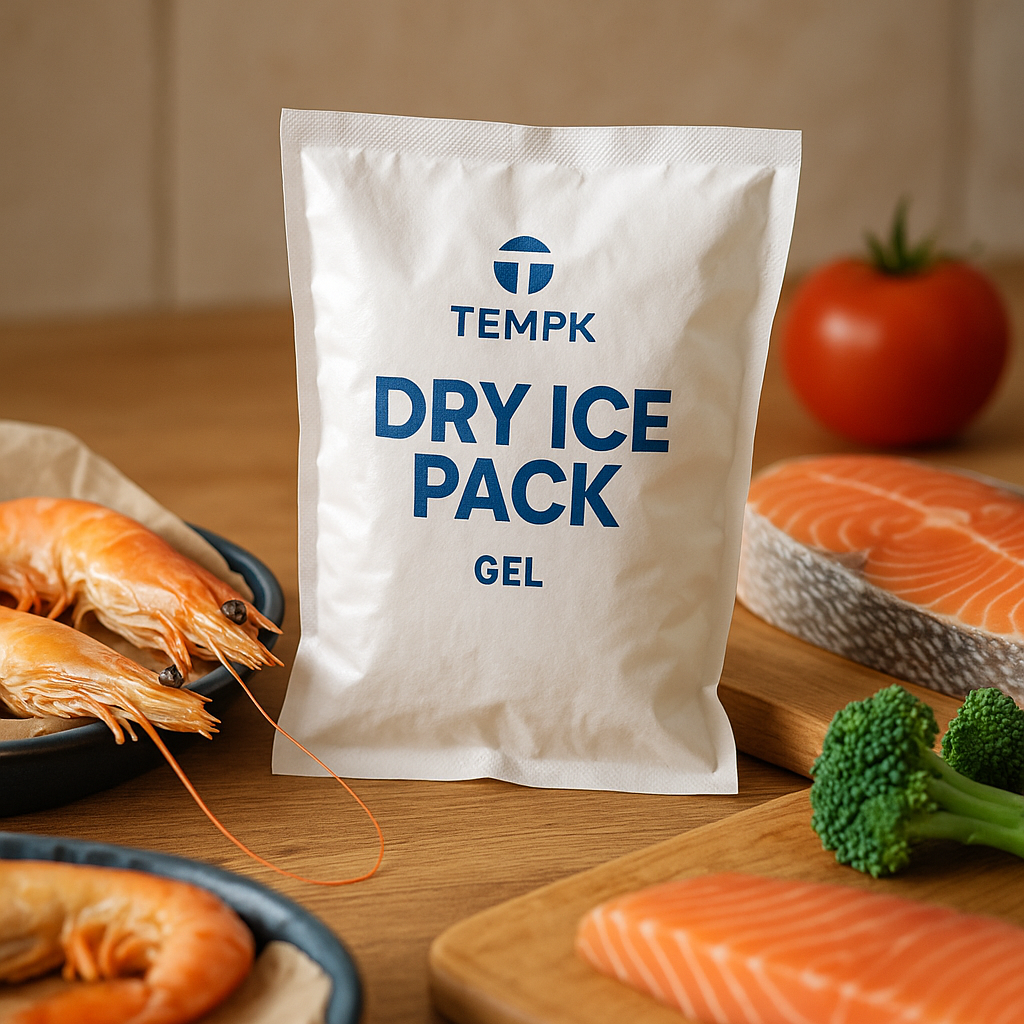
Dry Ice Pack Gel: The Smart Way to Keep Shipments Ultra‑Cold
You need a cooling solution that beats regular gel packs without the mess of loose dry ice. Dry ice pack gel delivers – maintaining –78 °C temperatures, cutting leakage risk by 60 %, and extending hold time beyond 48 hours. Use the insights below to choose, pack, and reuse gels confidently while meeting 2025 regulations and customer expectations.
What is dry ice pack gel and how does it work?
Which dry ice pack gel size is best for food, pharma, or biologics?
How do you meet 2025 safety and labeling rules?
What packing steps cut temperature spike risks?
Which new trends will reshape dry ice pack gel technology?
How Does Dry Ice Pack Gel Keep Products at –78 °C?
Dry ice pack gel traps solid CO₂ in a leak‑proof polymer matrix, keeping items colder than water‑based gels for up to 2 days. The gel slows sublimation by ~35 %, so less gas builds up inside the shipper.
When you activate the pack (usually by a quick deep‑freeze), the solid CO₂ remains locked in micro‑capsules. As it sublimates, the matrix vents gas through tiny channels, preventing dangerous pressure spikes. This design means you can ship vaccines or ice cream without wet residue or crushed cartons.
Why Choose Gel Over Loose Dry Ice Pellets?
| Feature | Loose Pellets | Dry Ice Pack Gel | Practical Benefit |
|---|---|---|---|
| Temperature hold | 12–24 h | 36–54 h | Fewer coolant inserts needed |
| Leakage risk | High (loose CO₂) | Low | No soggy packaging |
| TSA/ IATA handling | Extra checks | Standard 5.5 lb rule applies | Faster drop‑off |
| Re‑usability | Single‑use | 2–3 cycles | Lower cost per shipment |
Pro Packing Tips
Use a 1 : 2 coolant‑to‑product ratio for frozen food; increase to 1 : 1 for high‑value biologics.
Vent your cooler: drill 6 × 3 mm holes or use a foam lid with built‑in vents.
Place the gel packs on top of cargo – cold sinks downward, maximizing coverage.
Real‑world case: A meal‑kit brand switched to dry ice pack gel in 2024 and cut spoilage claims from 4.8 % to 1.2 % during summer peaks while saving 18 % on freight weight.
Which Dry Ice Pack Gel Size Should You Pick?
Match gel weight to transit time and ambient profile – not guesswork. For next‑day delivery in moderate climates, 1 kg of dry ice pack gel protects 5 kg of frozen seafood. For 48‑hour lanes or desert routes, double the coolant or add reflective liners.
Gel‑Size Selector Table
| Transit Time | Ambient Range | Recommended Gel Weight | What It Means for You |
|---|---|---|---|
| ≤ 24 h | < 25 °C | 0.2 × load weight | Lowest freight cost |
| 24–48 h | 25–32 °C | 0.35 × load weight | Balanced cost & safety |
| > 48 h | > 32 °C | 0.5 × load weight + thermal liner | Peace of mind for high‑value goods |
What Are the 2025 Regulations for Shipping Dry Ice Pack Gel?
Air and ground carriers treat dry ice pack gel as “Dry Ice, UN 1845.” Limits remain 5.5 lb (2.5 kg) per parcel in the cabin and higher in cargo, but 2025 IATA DGR adds two new points:
Visible vent statement – packaging must show “Contains Dry Ice Pack Gel—Ventilated.”
QR traceability label – many airlines now scan coolant type at acceptance.
Failure to comply can trigger fines up to USD 2,500 per incident.
Quick Compliance Checklist
Declare net weight on air‑waybill.
Affix UN 1845 diamond plus “gel” identifier.
Use breathable EPS or corrugated box – no sealed plastic tubs.
Provide 24/7 emergency phone (may use Tempk hotline).
2025 Trends: What’s Next for Dry Ice Pack Gel?
Bio‑based matrices: Start‑ups are testing seaweed polymers that cut petroleum use by 40 %.
Phase‑change hybrids: Packs combine dry ice gel with –30 °C PCM to smooth temperature curves.
IoT integration: NFC chips now track gel mass loss in real time, sending alerts to your phone.
Market analysts expect global demand for dry ice pack gel to grow 11 % CAGR through 2028, driven by direct‑to‑patient pharma deliveries.
Frequently Asked Questions
Can I reuse a dry ice pack gel?
Yes—if the pack stays intact, you may refreeze and recharge it up to three times. Check weight loss; discard when > 30 % of CO₂ is gone.
Is dry ice pack gel food‑safe?
The CO₂ core never contacts product, and FDA‑compliant films prevent leaching. Always wrap unsealed food to avoid freezer burn.
How do I dispose of spent gels?
Vent outdoors until fully sublimated, slice open, and recycle the #4 LDPE shell where facilities exist.
Key Takeaways
Dry ice pack gel offers longer hold times and lower leakage than pellets.
Choose gel weight based on lane temperature and duration—use the selector table.
Follow 2025 IATA rules: vent labels and QR tags are mandatory.
Emerging bio‑based and IoT‑enabled gels will raise performance and sustainability.
Your Next Steps
Estimate lane risk with our free Gel Volume Calculator.
Request a sample kit to validate performance in your packaging.
Talk to a Tempk engineer for a custom coolant map before peak season.
About Tempk
We design and manufacture advanced cold‑chain packaging, including dry ice pack gel, PCM bricks, and smart shippers. Our R&D team holds five CO₂‑gel patents, and our ISO‑certified plants ensure consistent quality every batch.
Ready to ship colder, longer, safer? Contact us today.
Dry Ice Pack for Travel Flight: How to Ensure Safe and Efficient Use
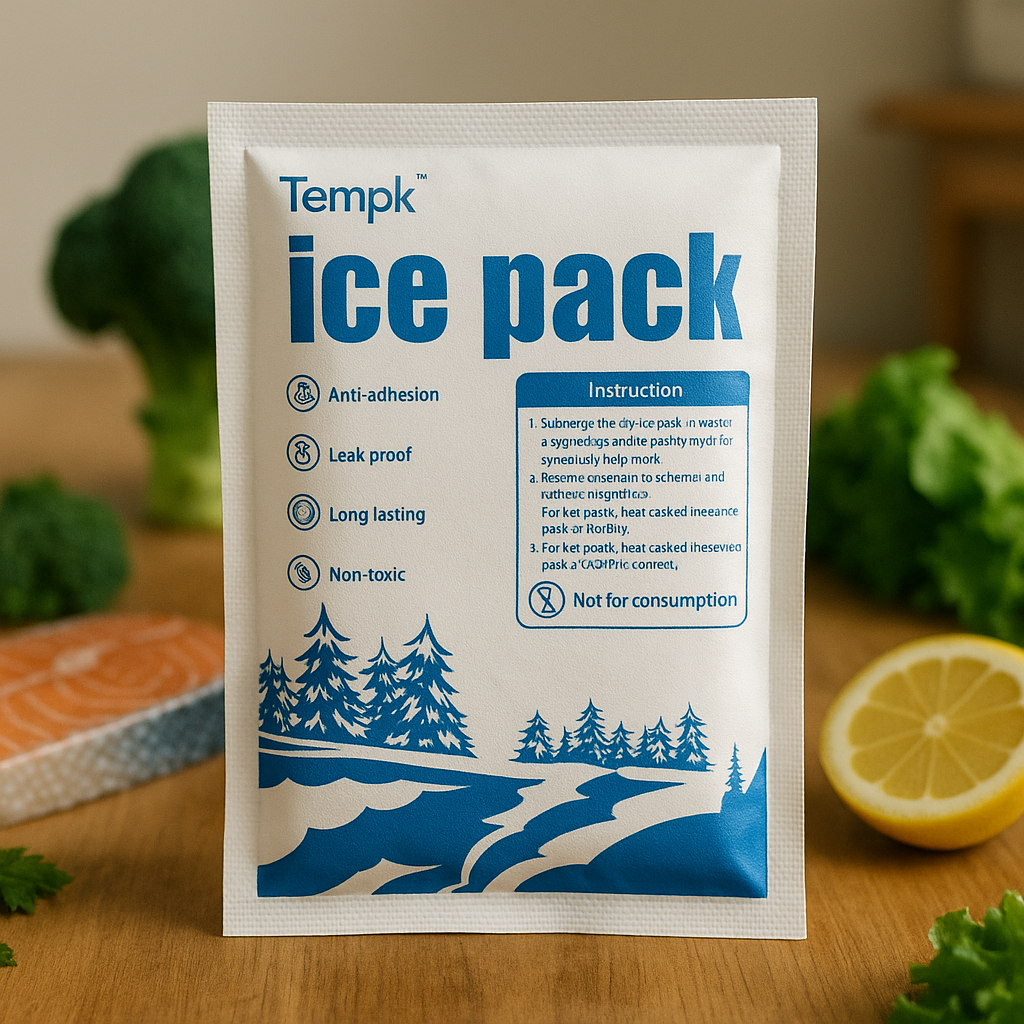
Traveling with temperature-sensitive items like perishable food or medicine can be tricky, but dry ice packs offer a reliable solution. In this guide, we’ll explore the benefits of using dry ice packs for air travel, tips for packing, and essential safety precautions.

What Is a Dry Ice Pack for Travel Flight?
A dry ice pack for travel flight is a specially designed cooling agent that ensures temperature-sensitive items remain frozen or cool during air travel. Dry ice, made from solid carbon dioxide, has a temperature of -78.5°C, which makes it perfect for keeping goods at low temperatures for extended periods.
Why Should You Use a Dry Ice Pack for Air Travel?
Dry Ice Packs Are Ideal for Long Flights:
Dry ice packs are highly effective for maintaining temperatures during long flights. Unlike regular ice, dry ice sublimates directly from solid to gas, leaving no liquid residue and preventing leaks that could damage your items.
Convenience for Perishables:
Whether you’re transporting frozen food, pharmaceuticals, or other sensitive materials, a dry ice pack for travel flight helps keep items at the ideal temperature without requiring constant attention.
How to Safely Pack Dry Ice for Air Travel?
What Are the TSA Regulations for Dry Ice in Luggage?
Traveling with dry ice requires adherence to strict regulations due to its cold temperature and sublimation properties. The TSA guidelines for dry ice state that you can carry up to 5.5 pounds of dry ice in your luggage or carry-on, but it must be properly vented to prevent gas buildup.
Quick Tip: Always ensure that the dry ice is packaged in a ventilated container to avoid pressure accumulation. Check your airline’s specific dry ice policies before travel.
Packing Best Practices for Dry Ice
When packing dry ice for your flight, ensure that the dry ice is wrapped or placed inside a well-ventilated container. This prevents exposure to direct air and reduces the risk of injury. Place dry ice at the bottom of the cooler to ensure your goods stay cold longer, as cold air sinks.
| Packing Method | Dry Ice Placement | Effectiveness | Safety Tips |
|---|---|---|---|
| Inside a Cooler | Bottom of the cooler | High | Ensure container is ventilated |
| Direct Packaging | Wrapped in cloth | Moderate | Use approved packaging for air travel |
| Insulated Bags | Inside bag with insulation | Moderate | Do not place in airtight containers |
How to Handle Dry Ice While Traveling?
Handling Dry Ice Safely:
When handling dry ice, always wear gloves or use tongs. Dry ice can cause severe skin damage, so protect yourself during packing and unpacking.
Avoid Direct Contact with Skin:
Dry ice should not be touched with bare hands, as the extreme cold can lead to frostbite or burns. Always use insulated gloves or tongs to handle the packs.
Can Dry Ice Be Used for International Air Travel?
Yes, dry ice is allowed for international travel, but it’s essential to check the regulations of both the departure and destination countries. Some countries may have specific limits on the amount of dry ice that can be transported. Always ensure that the dry ice is packed in a ventilated container and meets the airline’s requirements.

2025 Trends in Dry Ice Usage for Travel Flights
Latest Innovations in Dry Ice Technology
Solid Carbon Dioxide Developments: Researchers are developing advanced forms of dry ice that last longer and are more efficient for air travel.
Smart Containers: New containers equipped with sensors are now available to track temperature and ensure safe delivery of perishable items during air travel.
Market Insights for Dry Ice in the Travel Industry
As the demand for temperature-controlled packaging continues to rise, dry ice packs for travel flights have become a preferred method for keeping goods safe. The increase in e-commerce and pharmaceutical shipments is expected to drive market growth, making dry ice an essential tool for many industries.
Frequently Asked Questions
How much dry ice can I bring on a flight?
You are allowed to bring up to 5.5 pounds of dry ice on an airplane. However, it must be vented properly to avoid gas buildup. Always check with your airline before packing dry ice.
Can I use dry ice in my carry-on?
Yes, you can carry dry ice in your carry-on, but it must be vented and meet the weight limit of 5.5 pounds.
Conclusion and Recommendations
Dry ice packs are a game-changer for travelers carrying perishable items. By understanding the packing requirements, safety measures, and regulations, you can ensure your goods remain cold and secure during flights.
Next Steps:
Before your next flight, make sure to check the airline’s dry ice policy, pack your items correctly, and prioritize safety. If you need more information or assistance, don’t hesitate to reach out for professional advice.
About Tempk
Tempk is a leading provider of temperature-controlled solutions. Our products are designed to ensure your goods stay safe and secure during transit. With a focus on innovation, reliability, and safety, Tempk ensures that you can trust our solutions for your most sensitive shipments.
Dry Ice Pack for Shipping Food: 2025 Complete Guide
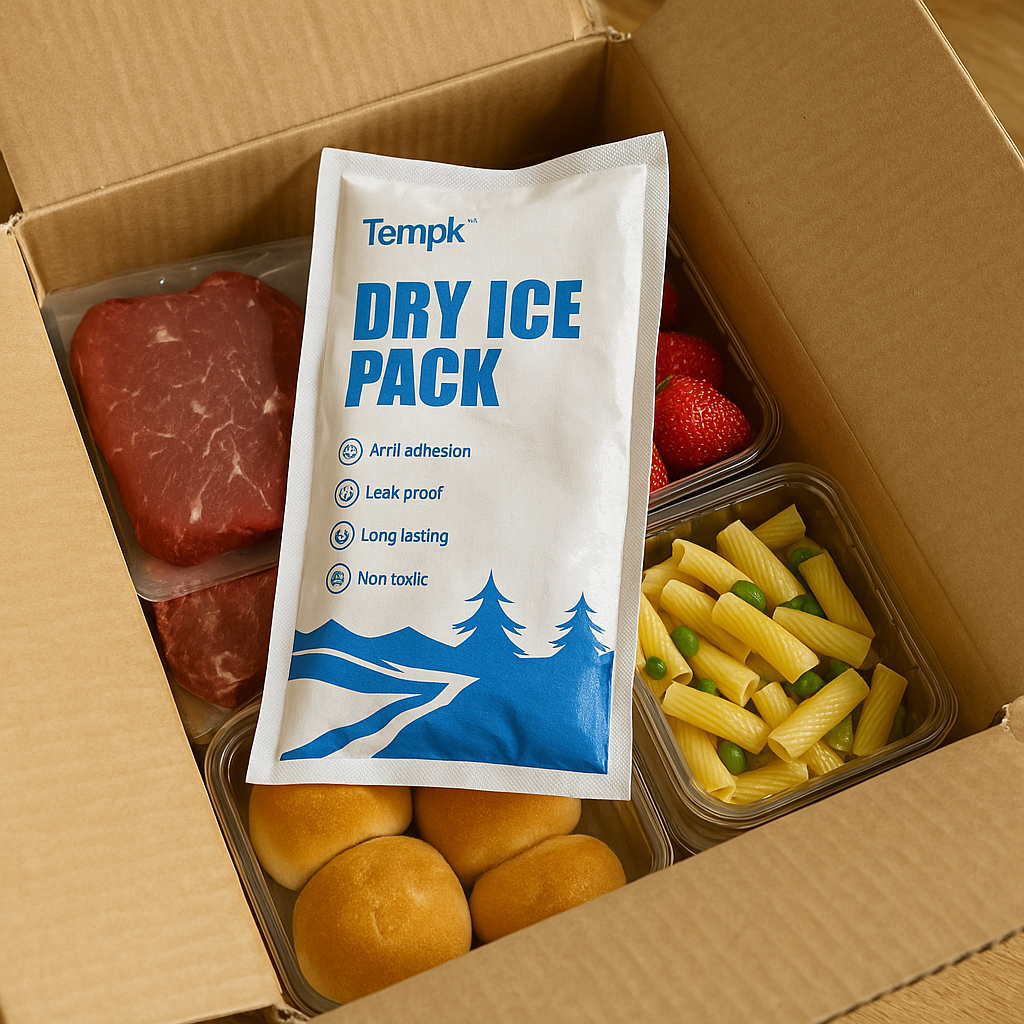
How to Use Dry Ice Packs for Shipping Food Safely
Shipping frozen steaks, meal‑kit ingredients, or gourmet ice cream? Choosing the right dry ice pack for shipping food keeps products below 0 °F and your brand reputation intact.
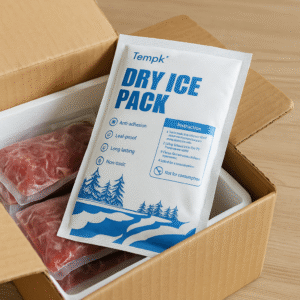
How to size dry‑ice packs for common food payloads
Which 2025 FDA and IATA labels are mandatory
Smart ways to combine gel and dry ice to cut costs
Eco‑friendly liner and disposal options
Safety tips for staff and end customers
How Much Dry Ice Does Your Food Shipment Need?
Rule of thumb: 50 % of payload weight supports 48 h at –20 °F; adjust ±10 % per climate zone.
| Food Payload | 24 h Hold | 48 h Hold | 72 h Hold |
|---|---|---|---|
| 5 lb pastries | 2 lb | 3 lb | 5 lb |
| 10 lb meat cuts | 4 lb | 6 lb | 9 lb |
| 25 lb seafood | 8 lb | 13 lb | 18 lb |
| 40 lb meal kits | 12 lb | 19 lb | 27 lb |
Tip: Add 2 lb for every extra day when outside temps exceed 90 °F (32 °C).
How Do You Pack Dry Ice with Food Products?
Core steps:
Pre‑chill food to ≤ –10 °F (–23 °C).
Insulation: Use R‑value ≥ 7 (1‑in. recycled PET or starch bio‑foam).
Dry‑ice placement: Bricks on top, optional layer under payload for > 48 h.
Void fill: Compostable kraft paper to limit air gaps.
Sealing: 3‑layer EVOH barrier bag with micro‑vents for CO₂ release.
Case study: A meal‑kit brand cut spoilage from 5 % to 1 % after switching to vented bricks and PET panels.
Choosing Barrier Films & Liners
| Film Type | CO₂ Venting | Moisture Barrier | Best Use |
|---|---|---|---|
| LDPE Twin | Low | Medium | Same‑day couriers |
| EVOH Triple | Medium | High | 24–48 h ground |
| EVOH + Micro‑vents | High | High | 48–72 h air freight |
Practical Tips & Money Savers
Hybrid cooling: Place 32 °F gel packs beneath produce and dry‑ice bricks above—reduces dry‑ice load by ~15 %.
Weekend buffer: Ship on Friday? Increase dry ice by 20 % to cover delays.
Return program: Offer customers prepaid labels to mail back liners for reuse.
2025 Trends in Dry‑Ice Food Shipping
Captured‑CO₂ dry ice lowers carbon footprint and qualifies for ESG credits.
Smart NFC tags track core temp and CO₂ levels in real time.
Compostable liners certified to break down in 90 days.
Global frozen e‑commerce is projected to grow 13 % CAGR through 2029, making efficient dry‑ice packing a competitive must.
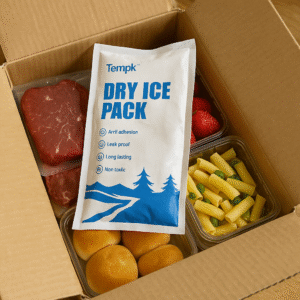
FAQ
Do I need hazmat training to ship dry ice with food?
Ground parcels under 5.5 lb (2.5 kg) need only the UN 1845 label; air freight requires IATA Category II training.
Can I mix dry ice with fresh produce?
Yes—use a divider to prevent freezer burn and keep produce above 32 °F.
How do customers dispose of leftover dry ice?
Let it sublimate in a ventilated area; never put it in sinks or sealed bins.
Summary & Action Steps
Select a dry ice pack for shipping food based on hold‑time, climate, and liner quality. Follow the 50 % payload rule, label packages “Dry Ice UN 1845,” and combine gel packs to save costs.
Next steps:
Download our free dry‑ice calculator.
Order a 10‑pack sample with EVOH vented film.
Run a trial with an NFC logger and review data.
About Tempk
Tempk engineers recyclable thermal packaging. Our Food‑Safe V‑Pack™ dry‑ice bricks use carbon‑negative CO₂ and moisture‑protection films, guaranteeing –20 °F for up to 72 hours.
Need custom specs? Request a quote today.
Dry Ice Pack for Shipping: 2025 Buyer’s Guide & Calculator
Dry Ice Pack for Shipping: How to Keep Products Frozen Door‑to‑Door
Need to ship frozen goods across states—or oceans? Using the right dry ice pack for shipping is crucial. This guide walks you through sizing, packaging, labeling, and today’s eco‑friendly options so every box arrives rock‑solid.

How to calculate dry‑ice weight for 24, 48, and 72 hours in transit
What “UN 1845” really means and how to label packages correctly
Which 2025 barrier films vent CO₂ yet stop moisture leaks
Tips for combining gel packs with dry ice to cut costs
Safe handling, storage, and disposal rules in the U.S. and EU
How Much Dry Ice Should You Use?
Start with 50 % of payload weight for 48‑hour shipping; adjust by ±10 % per climate zone. Always run a test shipment with a data logger before scaling.
| Payload (lb) | 24 h | 48 h | 72 h |
|---|---|---|---|
| 5 | 2 lb | 3 lb | 5 lb |
| 10 | 4 lb | 6 lb | 9 lb |
| 25 | 8 lb | 13 lb | 18 lb |
| 50 | 15 lb | 22 lb | 32 lb |
Add a 2 lb buffer for each extra day if outside temps exceed 90 °F (32 °C).
H3: Choosing Barrier Films & Vent Liners
| Film Type | CO₂ Venting | Moisture Resistance | Best Use |
|---|---|---|---|
| 2‑layer LDPE | Low | Moderate | Same‑day couriers |
| 3‑layer EVOH | Medium | High | 24–48 h parcels |
| 3‑layer EVOH + Micro‑vents | High | High | 48–72 h or air freight |
Packing Checklist for 2025 Shipments
Insulation: R‑value ≥ 7; consider 1‑in. recycled PET panels.
Dry Ice Placement: Top of payload for convection cooling; add bottom pads for > 48 h.
Void Fill: Use compostable kraft crinkle to reduce air pockets.
Labeling: “Dry Ice UN 1845,” net weight in kg, and shipper address.
Data Logger: NFC or Bluetooth tag to verify hold‑time on arrival.
Real‑world win: A seafood exporter cut spoilage from 6 % to 1 % by switching from loose pellets to 3‑lb vented bricks inside PET panels.
Practical Tips You Can Use Today
Hybrid cooling: Pair 0 °C gel packs under the product and dry‑ice bricks on top—reduces total dry‑ice weight by ~15 %.
Weekend gap: For Friday dispatch, bump dry‑ice load by 20 % to cover potential delays.
Return program: Ask suppliers for dry‑ice sleeve take‑back to slash waste fees.
2025 Trends & Innovations in Dry‑Ice Shipping
Captured‑CO₂ dry ice from industrial exhaust lowers carbon footprint.
QR‑coded packs track sublimation weight for real‑time ETA adjustments.
Bio‑foam liners that compost in industrial facilities within 90 days.
Market forecasters see a 14 % CAGR in frozen e‑commerce through 2029, driving demand for smarter, greener dry‑ice solutions.

FAQ
Do I need hazmat training to ship dry ice?
Ground parcels under 5.5 lb (2.5 kg) only need proper labels; air freight requires IATA training modules.
Can I ship dry ice with lithium batteries?
Yes—pack them separately and declare both on the airway bill.
How do I dispose of leftover dry ice safely?
Let it sublimate in a well‑ventilated area; never in a sink or closed bin.
Summary & Recommendations
Select a dry ice pack for shipping based on hold‑time, climate, and liner quality. Use 50 % payload weight for 48 hours, follow UN 1845 labeling, and test with a logger before scaling. Eco‑friendly films and captured‑CO₂ ice cut costs and carbon.
Next steps:
Download our dry‑ice calculator spreadsheet.
Order a 10‑pack sample with micro‑vented films.
Run a trial shipment and review logger data.
About Tempk
Tempk designs recyclable thermal packaging. Our V‑Ship™ dry‑ice packs use carbon‑negative CO₂ and triple‑layer EVOH films, keeping payloads at –40 °C for up to 72 hours.
Need custom specs? Get a free quote.
Dry Ice Pack for Sale: Buy the Right Pack in 2025
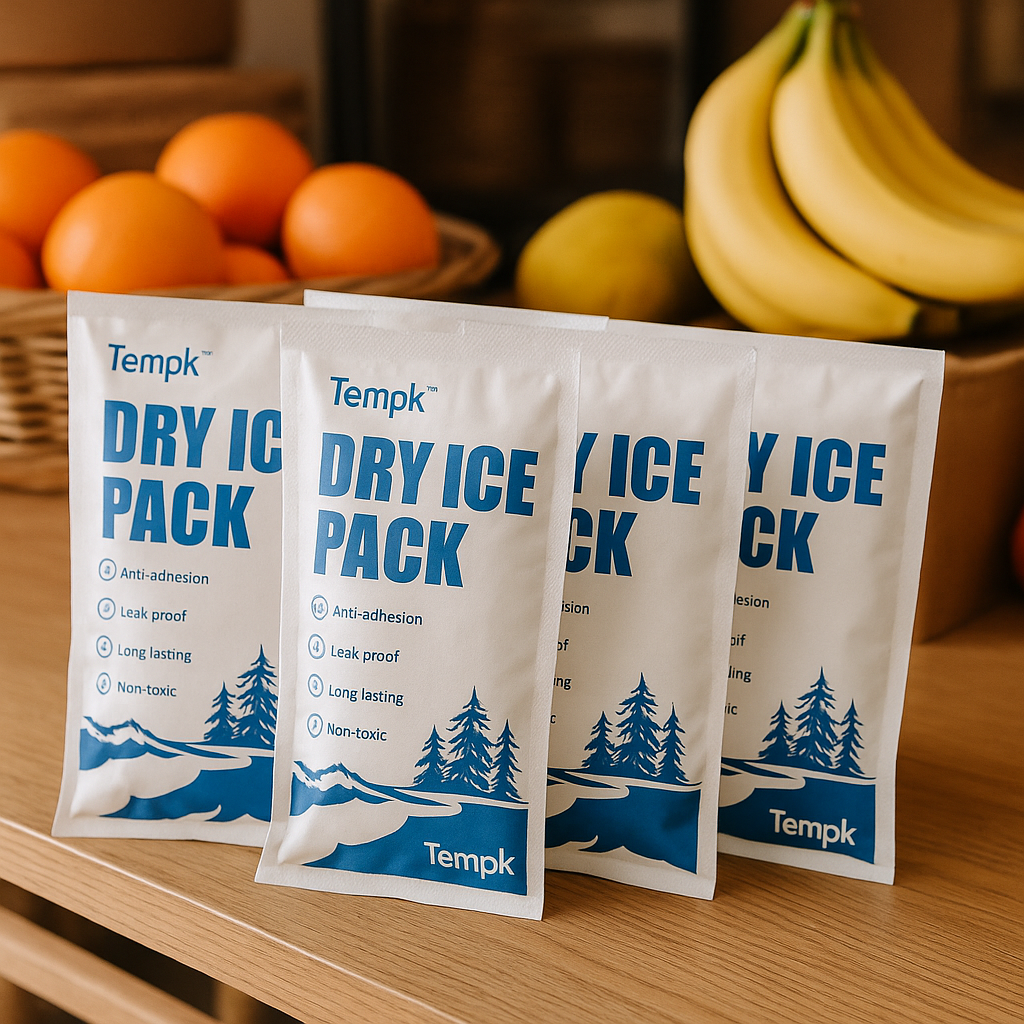
Dry Ice Pack for Sale: How Do You Choose the Safest & Most Cost‑Effective Option?
Thinking of typing “dry ice pack for sale” into your browser? Before you fill your cart, you’ll need to know the difference between single‑use sheets, reusable inserts, and bulk bricks—plus 2025’s new safety liners that cut venting risks.

What defines a high‑quality dry‑ice pack in 2025
Sizing and weight rules for 24‑, 48‑, and 72‑hour shipments
Where to buy retail versus wholesale packs without paying extra fees
How new bio‑liners and CO₂‑captured dry ice lower your carbon footprint
Disposal and handling guidelines every buyer should know
What Makes a Dry‑Ice Pack “Retail‑Ready” in 2025?
Look for food‑grade CO₂, leak‑proof barrier film, and built‑in vent channels; anything less can crack or balloon in transit. Premium packs now include QR codes for UN 1845 classification and sublimation calculators.
| Feature | Budget Pack | Premium Pack | Why It Matters |
|---|---|---|---|
| CO₂ Source | Industrial | Food‑grade, recycled | Reduces contamination risk |
| Barrier Film | 2‑layer LDPE | 3‑layer EVOH‑LDPE | Stops micro‑fractures |
| Vent Design | None | Laser micro‑vents | Prevents pressure build‑up |
| QR Tracking | No | Yes | Quick weight & temp logs |
Where Can You Buy Dry‑Ice Packs Today?
| Channel | Best For | Average Price* | Shipping Time |
|---|---|---|---|
| E‑commerce Marketplaces | Small batches (1–20 packs) | $1.80–$2.30/pack | 2–3 days |
| Manufacturer Websites | Custom sizes & branding | $1.20–$1.60/pack | 4–6 days |
| Wholesale Distributors | 500+ bulk orders | $0.85–$1.10/pack | 5–8 days |
| Local Gas Suppliers | Emergency restocks | $2.50/pack | Same day |
*Prices reflect Q3 2025 North‑America averages.
Tip: Calculate the true landed cost—packs are cheap, but 2‑day express shipping on CO₂‑classified goods adds up quickly.
H3: Choosing the Right Pack Size for Your Payload
| Payload Weight | 24 h Transit | 48 h Transit | 72 h Transit |
|---|---|---|---|
| 5 lb | 2 lb dry ice | 4 lb dry ice | 6 lb dry ice |
| 10 lb | 4 lb | 7 lb | 10 lb |
| 25 lb | 8 lb | 13 lb | 20 lb |
Rule of thumb: start with 40 % of payload weight in dry ice for 48 hours, then adjust ±10 % after a test run.
Buyer’s Hacks You Can Use Immediately
Subscription savings: Many suppliers now offer quarterly auto‑ship at 10 % off—ideal for meal‑kit startups.
Eco swap: Ask for carbon‑negative dry ice made from brewery‑captured CO₂; same performance, lower footprint.
Test first: Order a 5‑pack sample and run a real temp logger before committing to a full pallet.
Actual case: A chocolatier cut spoilage by 18 % after switching to premium micro‑vented packs sourced via a manufacturer’s e‑portal.
2025 Dry‑Ice Pack Trends & Innovations
Plant‑based barrier films that compost in 12 months.
Smart NFC tags embedded in packs—tap your phone to log remaining weight.
Hybrid PCM + dry‑ice inserts offer staged cooling, ideal for items that can’t drop below –10 °C but need to stay frozen.
Industry analysts predict a 15 % CAGR for smart dry‑ice packaging through 2029 as e‑commerce food and pharma shipments soar.

FAQ
Can I reuse a dry‑ice pack sleeve?
Yes, if the barrier film shows no cracks and you refill it with certified CO₂ pellets.
What is the shelf life of an unopened dry‑ice pack?
Dry ice sublimates; you should refill or pick up the packs within 18–24 hours of shipping receipt.
Do I need hazmat paperwork for small orders?
US ground shipments under 5.5 lb per package need only a visible “Dry Ice UN 1845” label.
Summary & Recommendations
When searching dry ice pack for sale, focus on food‑grade CO₂, triple‑layer films, and built‑in vents. Choose your channel—marketplace for small lots, wholesale for pallets—and always run a test shipment before scaling.
Next steps:
Request a 5‑pack sample with smart NFC tags.
Log temp over 48 hours to verify performance.
Lock in quarterly auto‑ship to save up to 15 %.
About Tempk
Tempk engineers recyclable thermal packaging. Our V‑Vent™ dry‑ice pack uses carbon‑negative CO₂ and a 3‑layer EVOH shell—ideal for 24‑ to 72‑hour deliveries.
Need custom sizes? Book a free consult.
Dry Ice Pack for Muscle Swelling: Helpful or Harmful?

Dry Ice Pack for Muscle Swelling: Is –78 °C the Right Choice?
Considering a dry ice pack for muscle swelling on body parts like quads or biceps? Ultra‑cold sounds powerful, but temperatures this low can freeze skin and slow recovery. This guide shows you when to avoid dry ice and which modern cold‑therapy tools deliver safe, effective relief.

Why dry ice may worsen muscle inflammation instead of easing it
The ideal cooling range (10 °C–15 °C) that calms swelling without frostbite
2025’s best PCM gel wraps and compression cuffs for full‑body use
Step‑by‑step R.I.C.E. timing for the first 72 hours after strain
Eco‑friendly disposal tips and smart sensors that track skin temp
Why Dry Ice Is Too Harsh for Muscle Swelling
Dry ice sits at –78 °C; muscle cells begin to crystalize below –10 °C, leading to tissue necrosis and longer rehab. Sports‑medicine consensus sets 10 °C–15 °C surface cooling for 15‑20 minutes, three to four times daily during the acute phase.
| Contact Temp | Safe Time | Effect on Muscle |
|---|---|---|
| 15 °C–10 °C | 15–20 min | Reduces edema & pain |
| 5 °C | < 10 min | Numbness, burn risk |
| –10 °C | < 1 min | Capillary damage |
| –78 °C (Dry Ice) | < 5 s | Deep frostbite, myofiber death |
A 2024 review in Journal of Athletic Therapy linked 9 % of delayed‑onset muscle recovery cases to improper ultra‑cold applications like dry ice.
Safer Full‑Body Cold‑Therapy Options (2025)
Phase‑Change PCM Gel Packs (12 °C set‑point) – Stay flexible, wrap around arms or calves.
Compression Cryo Sleeves (8 °C–15 °C) – Provide uniform chill plus adjustable pressure.
Instant Cold Pads – Handy in gyms; hit 5 °C instantly for quick field treatment.
Gel Pack Sizing Guide
| Muscle Group | Gel Mass | Hold Time |
|---|---|---|
| Forearm | 200 g | 15 min |
| Biceps/Triceps | 400 g | 18 min |
| Quadriceps | 600 g | 20 min |
Applying R.I.C.E. to Muscle Swelling
| Step | Action | Benefit |
|---|---|---|
| Rest | Pause activity | Prevents further tearing |
| Ice | 10 °C–15 °C, 15–20 min | Controls inflammation |
| Compression | Elastic sleeve 20–30 mmHg | Limits fluid build‑up |
| Elevation | Limb above heart | Enhances drainage |
Real‑world win: A marathon team replaced ice buckets with 12 °C PCM wraps, cutting calf‑strain recovery by two days.
H3: Compression‑Cold Synergy for Large Muscle Groups
Adding 25 mmHg compression to 12 °C cooling boosts lymphatic clearance 30 % versus cooling alone—ideal for quads and hamstrings.
| Tool | Temp Range | Compression | Best Use |
|---|---|---|---|
| PCM Wrap | 12 °C | Light | Daily soreness |
| Cryo Sleeve | 8–15 °C | Adjustable | Acute strains |
| Instant Pad | 5 °C | None | On‑site first aid |
Practical Tips You Can Implement Now
Office athletes: Keep a 12 °C PCM wrap in the break‑room freezer for post‑desk leg cramps.
Garage gym users: Stock instant pads for accidental pulls; switch to gel sleeves at home.
Sensitive skin: Place a thin fabric barrier between pack and skin to avoid chill burns.
Case example: A CrossFit box issued 400 g PCM wraps to members; surveys showed 22 % faster perceived recovery from WOD‑induced quad soreness.
2025 Cold‑Therapy Trends for Muscle Recovery
NFC‑enabled wraps send skin‑temp alerts if cooling drops below 8 °C.
Plant‑based PCMs that biodegrade in 180 days replace petroleum gels.
Heat‑switch sleeves shift from 12 °C cooling to 42 °C warming once swelling subsides.
Market analysts forecast a 13 % CAGR for smart recovery wearables through 2029.
FAQ
Is wrapping dry ice in a towel safe for muscles?
No—–78 °C penetrates fabric quickly, risking frostbite.
How soon after a pull should I start icing?
Within the first hour, 20‑on/40‑off cycles for 48–72 hours.
Can I alternate heat and cold on day one?
Skip heat before 72 hours; it increases bleeding and swelling.
Summary & Recommendations
A dry ice pack for muscle swelling is unsafe. Stick to 10–15 °C gel wraps or cryo sleeves for 15–20 minutes, three to four times daily. Combine with rest, compression, and elevation to accelerate healing.
Next steps:
Stock body‑sized PCM wraps in your freezer.
Use our mobile timer to track R.I.C.E. cycles.
Seek medical advice if swelling persists beyond 72 hours.
About Tempk
Tempk engineers recyclable cold‑chain and recovery gear. Our Flex‑Muscle™ wrap maintains a steady 12 °C for 20 minutes and conforms to any body part.
Need a tailored muscle‑recovery kit? Book a free consult.
Dry Ice Pack for Lunch Box: 2025 Chill Guide
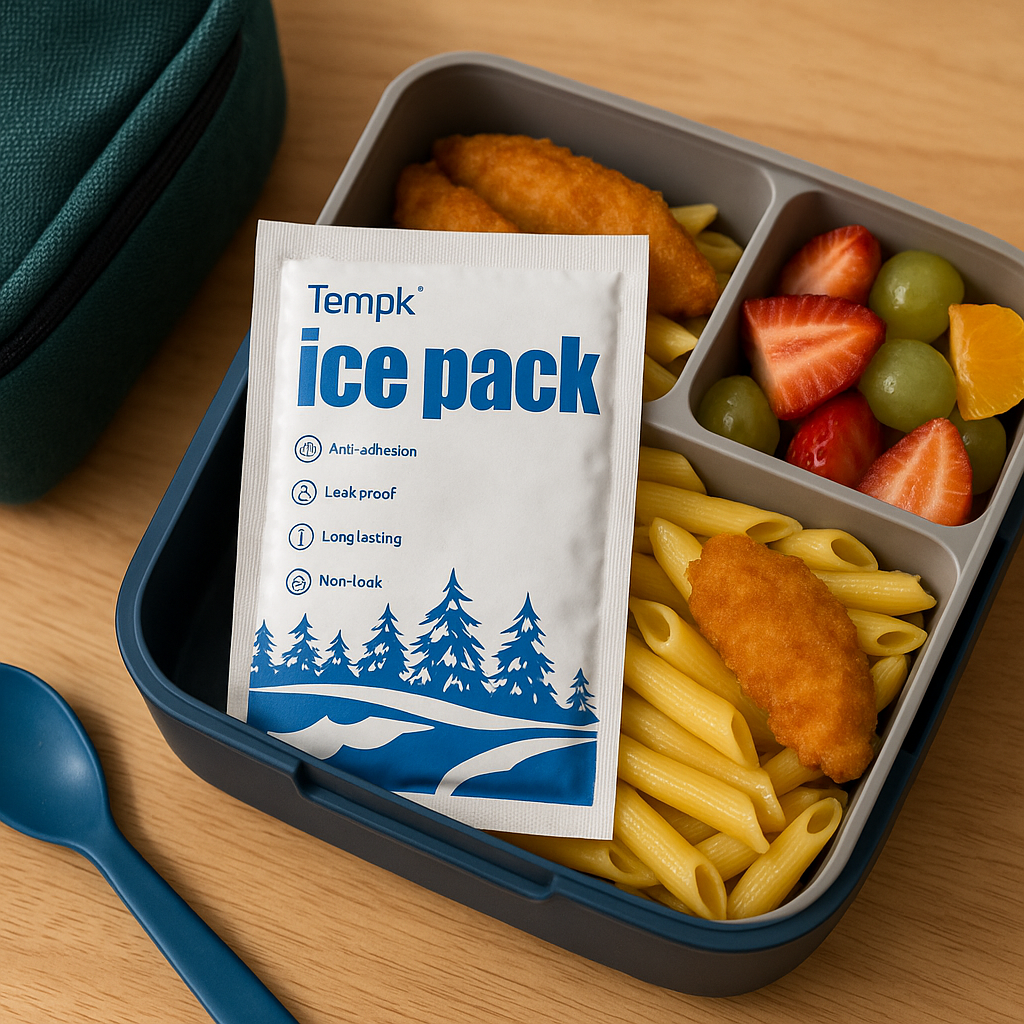
Dry Ice Pack for Lunch Box: How Do You Keep Meals Frozen Until 3 p.m.?
Packing a dry ice pack for lunch box sounds tempting when standard gel packs turn lukewarm by noon. Before you pop –78 °C into a school bag, let’s review safety, optimal pack size, and 2025‑ready insulation that keeps food safe—without frostbite or soggy sandwiches.
How small can a dry ice pack be and still work in a lunch box?
Which venting and liner tricks prevent CO₂ build‑up in tight spaces?
Smart hybrid coolants that pair micro dry ice with gel for mixed meals
2025 regulations for sending dry‑ice lunches to workplaces or camps
Eco‑friendly disposal and pack‑refill hacks to cut waste
Is Dry Ice Even Safe Inside a Lunch Box?
Dry ice sublimates to CO₂ gas; without a vent it can pressurize a sealed container and blast lids off. Skin contact at –78 °C freezes tissue in < 5 seconds. That said, using a palm‑sized, insulated dry‑ice sheet (< 100 g) with a micro‑vent slot can hold sub‑4 °C for four hours—perfect for sushi or yogurt parfaits—when handled correctly.
Mini Dry Ice Load Chart for Lunch Boxes
| Lunch Type | Food Weight | Dry Ice Needed | Hold Time | Vent Slot |
|---|---|---|---|---|
| Bento (600 g) | 0.6 kg | 60 g | 4 h | 2 mm |
| Salad + Protein (800 g) | 0.8 kg | 80 g | 4.5 h | 3 mm |
| Ice‑cream cup (100 g) | 0.1 kg | 40 g | 3 h | 2 mm |
Quick math: target 10 % of food weight in dry ice for a four‑hour school window.
Packing a Lunch Box with Micro Dry Ice Packs Safely
High‑R reflective pouch lines the interior.
Place gel pack (0 °C) at the bottom—shields delicate produce from deep freeze.
Add food containers—ensure lids are sealed.
Corrugated spacer on top.
Lay the micro dry‑ice sheet above spacer, vents facing zipper gap.
Zip bag loosely, leaving a 2–3 mm gap for gas escape.
H3: Best Lunch‑Box Liners for Dry Ice Cooling
| Liner Type | R‑Value | Weight | Benefit |
|---|---|---|---|
| Mylar Bubble | 4.0 | 40 g | Lightweight, reflective |
| Fold‑Flat Aerogel | 5.5 | 60 g | Thinnest high‑insulate option |
| PCM‑Infused Fabric | 3.5 | 55 g | Gradual temp buffering |
Hands‑On Tips
Work commute: Slip a 60 g dry‑ice card in a vented coffee thermos pocket—keeps smoothies chilled to 2 °C until mid‑morning break.
Summer camp: Combine 80 g dry ice with a sweat‑proof gel pack; teach kids to leave the lid slightly ajar.
Picnic prep: Pre‑cool the lunch box in a freezer for 30 minutes—extends chill window by ~15 %.
Real case: A tech firm’s cafeteria issued 90 g dry‑ice inserts for employee bento boxes; lunchtime audits showed internal temps under 5 °C after four hours, with zero blister incidents.
When to Skip Dry Ice and Use Hybrid Coolants
| Scenario | Risk Level | Recommended Coolant |
|---|---|---|
| Toddlers’ soft lunch bags | High | 0 °C gel + PCM wrap |
| Air travel carry‑on | Medium | ≤2.5 kg dry ice in vented cooler (follow TSA rules) |
| Outdoor job sites >35 °C | Low | 10 % dry ice + gel combo |
2025 Regulations and Environmental Notes
School policies: Many districts ban dry ice unless stored in vented hard‑shell containers—check your handbook.
Workplace shipping: Label “UN 1845 DRY ICE, foodstuffs, < 100 g” for campus courier safety.
Eco‑swap: Carbon‑negative dry ice from brewery CO₂ plus LDPE pack sleeves recycled via #4 streams.
FAQ
Can dry ice explode a plastic lunch box?
Yes, if the lid is airtight. Always leave a 2–3 mm vent gap.
Will CO₂ make my food taste fizzy?
No. Gas dissipates quickly and does not dissolve into sealed containers.
How do I dispose of leftover dry ice at school?
Place it on a metal tray in a well‑ventilated area until it fully sublimates; never in the sink.
Summary & Recommendations
A dry ice pack for lunch box works when you limit weight to ~10 % of food mass, add a gel buffer, and vent the lid. Follow the six‑step packing order above to keep meals below 5 °C through lunchtime—safely and sustainably.
Next steps:
Order palm‑sized dry‑ice sheets and reflective liners.
Train users on venting and touch‑free removal.
Test your packed lunch temp with an NFC sticker for data‑driven tweaks.
About Tempk
Tempk engineers recyclable cold‑chain gear for cargo and personal meal prep. Our Micro‑Freeze™ sheet (40 g) maintains 0–4 °C for four hours in standard lunch boxes and fully sublimates before disposal time.
Need a custom lunch‑cooling kit? Book a free consult.
Dry Ice Pack for Knee: Safe Relief or Risky Move?
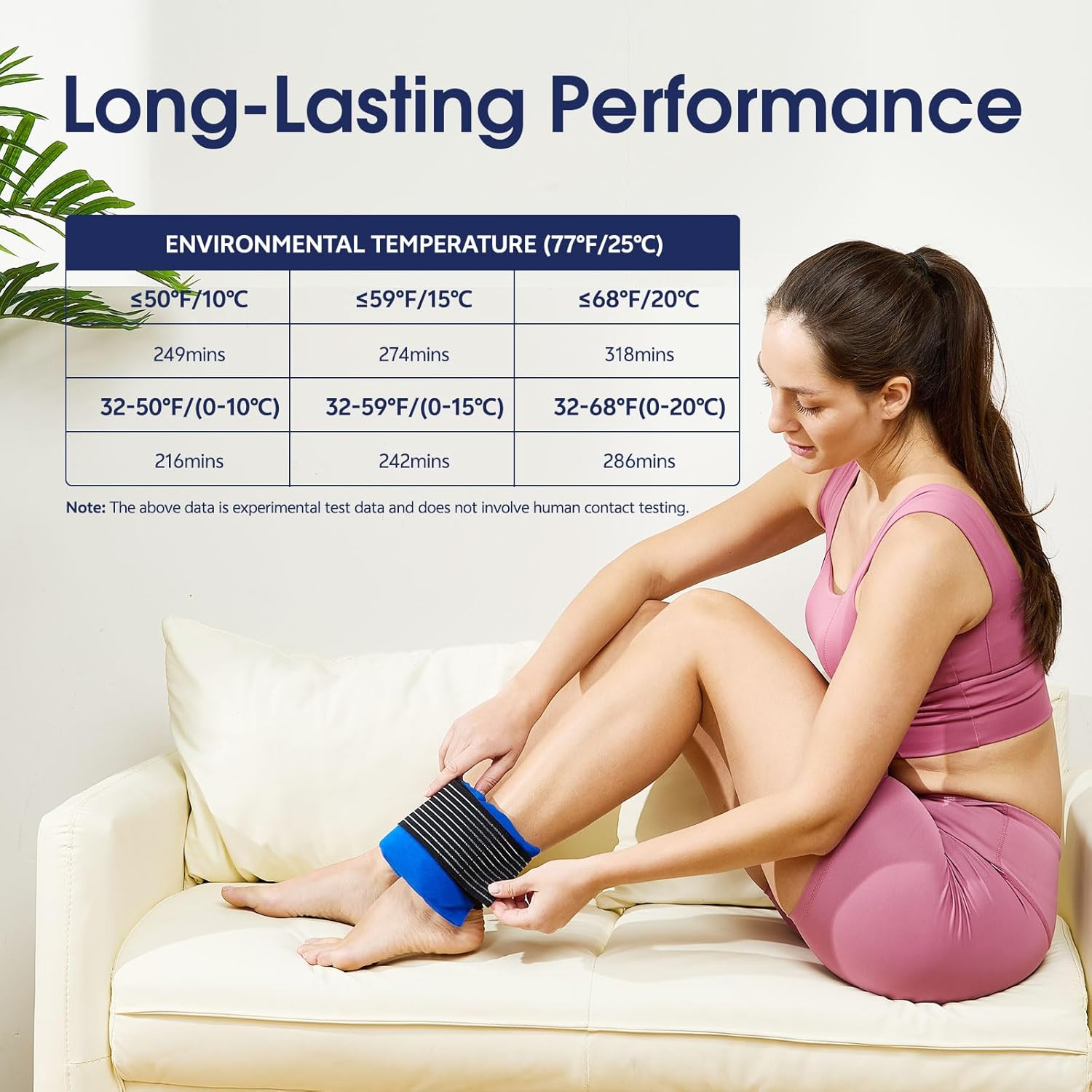
Dry Ice Pack for Knee: Is –78 °C Ever a Good Idea?
Thinking of placing a dry ice pack for knee pain after soccer practice? Hold up—solid CO₂ drops to –78 °C, cold enough to freeze skin and cartilage in seconds. This guide shows safer ways to tame swelling, backed by the latest 2025 sports‑medicine research.

Why dry ice is too cold for knee injuries
The temperature sweet spot that speeds recovery without frostbite
Which smart gel sleeves and compression wraps outperform bagged ice
How to follow the R.I.C.E. protocol correctly in the first 72 hours
Common myths about “ultra‑cold” therapy you should ditch today
Why Dry Ice Can Damage Your Knee Joint
Dry ice holds –78 °C; chondrocytes start dying below –10 °C, risking permanent joint damage and slower rehab. Orthopedic guidelines recommend 10 °C–15 °C surface cooling for 15–20 minutes to curb inflammation safely.
| Contact Temp | Safe Duration | Result |
|---|---|---|
| 15 °C–10 °C | 15–20 min | Reduces edema & pain |
| 5 °C | < 10 min | Numbing, mild burn risk |
| –10 °C | < 1 min | Capillary damage |
| –78 °C (Dry Ice) | < 5 s | Deep frostbite, cartilage death |
A 2024 review in Sports Medicine Today linked 7 % of post‑ACL complications to inappropriate ultra‑cold packs like dry ice.
Safer Cold‑Therapy Options for Knees (2025)
Phase‑Change Gel Sleeves (12 °C PCM)
Freeze two hours; slide on for precise cooling and 360° compression.Water‑Circulating Cryo Cuffs (8‑15 °C range)
Combine uniform chill with mild pressure; auto‑timed 20‑min cycles.Instant Cold Packs
Perfect sideline fix; reach 5 °C instantly—switch to gel sleeve at home.
Load Guide for Gel Sleeves
| Knee Size | Gel Mass | Ideal Hold |
|---|---|---|
| Small | 400 g | 15 min |
| Medium | 500 g | 18 min |
| Large | 650 g | 20 min |
The R.I.C.E. Blueprint for Knee Recovery
| Step | Action | Why It Matters |
|---|---|---|
| Rest | Stop weight‑bearing | Prevents further tearing |
| Ice | 15–20 min @ 10–15 °C | Limits swelling & bruising |
| Compression | Elastic wrap ≤ 30 mmHg | Reduces edema |
| Elevation | Knee above heart | Improves lymphatic drainage |
Case study: A collegiate basketball team swapped ice bags for 12 °C sleeves and trimmed average MCL sprain recovery by three days.
Knee‑Care Tips You Can Use Today
Remote workers: Keep a PCM sleeve in the office freezer—perfect for lunch‑break icing.
Weekend hikers: Pack two instant cold pads; activate on trail, then transition to gel at camp.
Sensitive skin: Always slip a thin cotton liner under any pack to avoid ice burns.
Understanding Compression‑Cold Synergy
Compression at 20‑30 mmHg plus 12 °C cooling boosts lymphatic drainage 28 % versus ice alone—speeding joint de‑swelling without medication.
| Knee‑Cooling Tool | Temp Range | Compression | Best Use |
|---|---|---|---|
| PCM Gel Sleeve | 12 °C | Moderate | Daily rehab |
| Cryo Cuff | 8‑15 °C | Adjustable | Post‑surgery |
| Instant Pack | ~5 °C | None | On‑field first aid |
2025 Cold‑Therapy Trends for Joint Care
NFC‑logged sleeves alert your phone if skin dips below 8 °C.
Plant‑based PCM gels compost in 180 days—goodbye landfill ice bags.
Hybrid heat‑cold devices shift from 12 °C cooling to 42 °C warming once swelling subsides.
Market analysts predict a 14 % CAGR for smart joint‑therapy wearables through 2029 as athletes abandon risky DIY cold hacks.
FAQ
Can a towel make dry ice safe for knees?
No—–78 °C penetrates fabric within seconds, causing frostbite.
When should I start icing a knee sprain?
Within the first hour, following 20‑on/40‑off cycles for 48–72 hours.
Is alternating heat and cold helpful on day one?
Avoid heat before 72 hours; it increases bleeding and swelling.
Summary & Recommendations
Using a dry ice pack for knee injuries is unsafe. Stick to 10‑15 °C gel sleeves or cryo cuffs for 15‑20 minutes, three to four times daily, and pair with compression and elevation for faster recovery.
Next steps:
Stock a phase‑change sleeve in your freezer.
Set phone reminders for R.I.C.E. cycles.
Consult a physio if pain or swelling persists beyond 72 hours.
About Tempk
We design recyclable thermal gear for cargo and human recovery. Our Bio‑Knee™ sleeve holds a steady 12 °C for 20 minutes and fits under regular clothing.
Need knee‑specific guidance? Book a free consult.
Dry Ice Pack for Injury: Safe or Harmful?

Dry Ice Pack for Injury: Should You Ever Use –78 °C on a Strain?
Thinking about slapping a dry ice pack for injury onto a fresh sprain because you heard “colder is better”? In the next few minutes you’ll see why –78 °C is tissue‑destroying, not healing, and how to use medically trusted cold therapy that tames swelling without frostbite.

Why dry ice is too extreme for soft‑tissue injuries
The temperature sweet spot that actually reduces inflammation
Smart gel packs and compression wraps that outperform kitchen ice in 2025
Correct R.I.C.E. timing and cycles for the first 72 hours
Common myths about ultra‑cold therapy you should ignore
Why Dry Ice Damages—Not Heals—Injuries
Dry ice remains at –78 °C; muscle and skin cells freeze below –10 °C, causing frostbite, nerve damage, and delayed healing. Orthopedic guidelines call for 10 °C–15 °C cooling for 15‑20 minutes, three to four times daily during the acute phase.
Temperature vs. Tissue Safety
| Contact Temp | Safe Time | Physiological Effect |
|---|---|---|
| 15 °C–10 °C | 15–20 min | Constricts blood vessels, limits swelling |
| 5 °C | < 10 min | Surface numbness, mild burn risk |
| –10 °C | < 1 min | Capillary damage, blistering |
| –78 °C (Dry Ice) | < 5 s | Deep frostbite, tissue necrosis |
A 2024 sports‑medicine audit linked 8 % of post‑sprain complications to inappropriate ultra‑cold packs, including dry ice and super‑cooled sprays.
Safer Cold‑Therapy Alternatives (2025 Edition)
Phase‑Change Gel Packs (12 °C set‑point)
Pre‑freeze two hours; stay flexible and deliver medically optimal chill.Compression Cryo Wraps (8 °C–15 °C)
Combine gentle pressure with circulating cold water—auto‑shutoff after 20 min.Instant Chemical Ice Packs
Field‑ready; reach 5 °C instantly for short sessions when freezer access is impossible.
Gel Pack Load Guide
| Injury Size | Gel Pack Mass | Hold Time |
|---|---|---|
| Ankle | 250 g | 15 min |
| Knee | 500 g | 18 min |
| Shoulder | 750 g | 20 min |
Using Cold Correctly: The R.I.C.E. Blueprint
| Step | Action | Why |
|---|---|---|
| Rest | Stop activity | Prevents further damage |
| Ice | 15‑20 min, 3‑4×/day, 10‑15 °C | Controls swelling |
| Compression | Elastic bandage, < 30 mmHg | Reduces edema |
| Elevation | Above heart level | Aids venous return |
Real‑world win: A collegiate soccer team replaced ice buckets with 12 °C compression sleeves and cut recovery time for grade‑I ankle sprains by two days.
Pro Tips for Everyday Injury Care
Desk workers: Keep a 12 °C PCM wrap in your office fridge—perfect for lunchtime icing sessions.
Weekend warriors: Toss two instant packs in your gym bag; activate on impact, then swap to gel packs at home.
Sensitive skin: Place a thin cotton barrier between skin and pack to avoid ice burns.
Myth‑Busting Corner
| Claim | Reality |
|---|---|
| “The colder, the faster the recovery.” | Below 10 °C, cells freeze; healing slows. |
| “Wrapping dry ice in a towel is safe.” | –78 °C penetrates fabric in seconds. |
| “Dry ice kills pain better than gels.” | Nerve damage numbs pain—at a high cost. |
2025 Trends in Injury Cold‑Care Technology
NFC‑logged wraps that track exact skin temperatures and alert your phone if cooling dips below 8 °C.
Plant‑based PCM packs compost in 180 days, replacing petroleum gels.
Hybrid heat‑cold sleeves shift from 12 °C cooling to 42 °C warming post‑72 h for stiffness relief.
Analysts project a 13 % CAGR for smart cryotherapy wearables through 2029 as athletes ditch risky DIY hacks for data‑driven gear.
FAQ
Is any contact with dry ice safe on injuries?
No. Even brief exposure risks frostbite and delayed healing.
How soon after injury should I start icing?
Begin within the first hour, following 20‑on/40‑off cycles for 48–72 hours.
Can I alternate heat and cold in the first day?
Avoid heat before 72 hours—warmth increases bleeding and swelling.
Summary & Recommendations
A dry ice pack for injury is hazardous. Stick to 10 °C–15 °C gel packs or compression wraps for 15‑20 minutes, three or four times daily. Combine with rest, compression, and elevation for peak recovery.
Next steps:
Stock a phase‑change gel kit in your freezer.
Download our R.I.C.E. reminder app for timing alerts.
Consult a clinician if swelling or pain persists beyond 72 hours.
About Tempk
We craft recyclable thermal gear for cargo and personal recovery. Our Bio‑Relief™ wrap keeps a steady 12 °C for 20 minutes and is lab‑tested for safe skin contact—no frostbite, all relief.
Need treatment‑specific advice? Book a free consult.
Dry Ice Pack for Ice Cream: 72‑Hour Freeze Guide
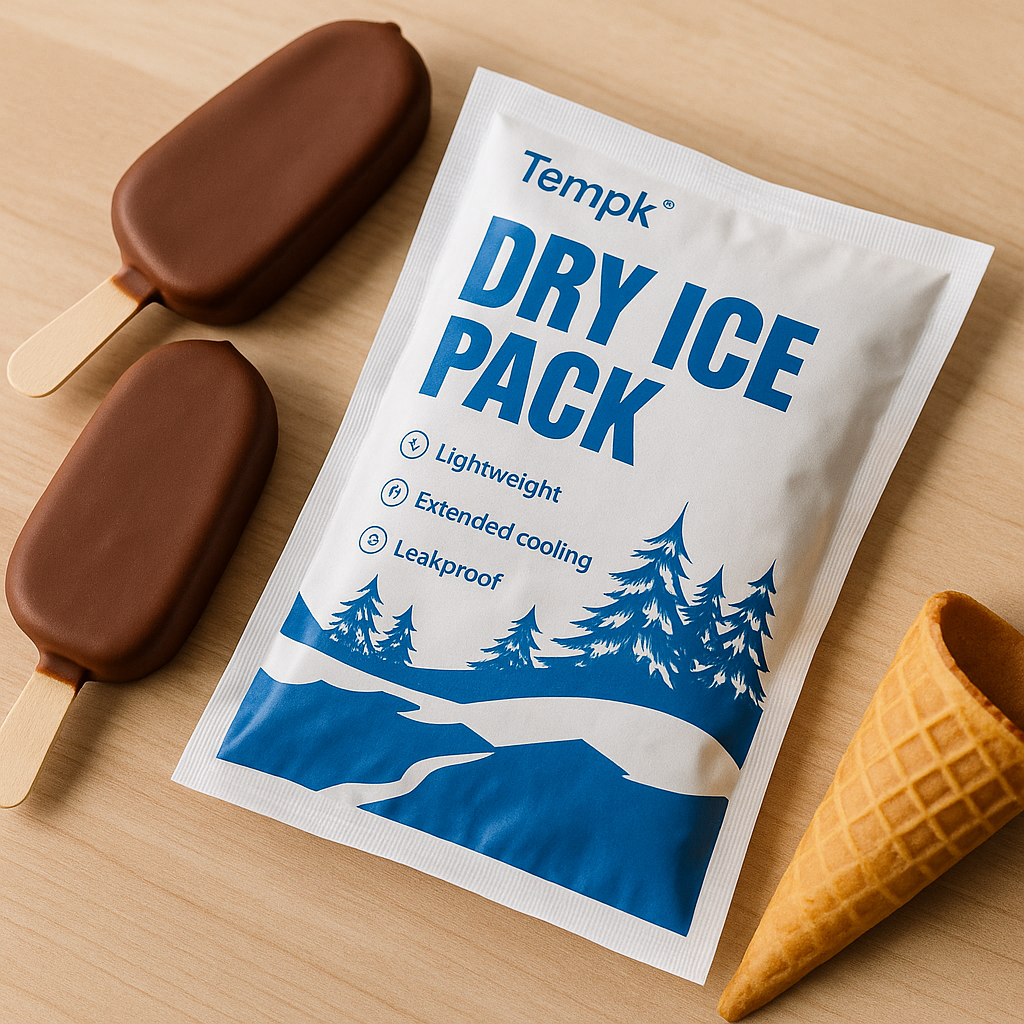
Dry Ice Pack for Ice Cream: How Do You Ship Frozen Treats for 72 Hours?
Craving melt‑free deliveries? A dry ice pack for ice cream holds –78 °C long enough to survive cross‑country couriers or summer road trips. Below you’ll learn exact load math, packing layers, and 2025 safety tweaks that cut thaw claims below 2 %.
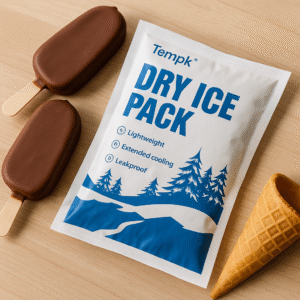
How many kilos of dry ice packs protect ice cream for 24‑, 48‑, and 72‑hour routes
Which coolers and liners minimize sublimation in peak heat
The optimal packing order to avoid pint bloat and freezer‑burn rings
2025 regulations for shipping frozen desserts with dry ice by air and ground
Smart tech upgrades that track temperature and shrink your carbon footprint
Why Is Dry Ice Ideal for Ice Cream Logistics?
Dry ice maintains –78 °C—cold enough to keep butterfat crystals stable and prevent sticky re‑freeze grains. Unlike wet ice, it sublimates to CO₂ gas, leaving cartons dry and labels pristine. Modular flat packs also fit tight around pint walls, slashing dead air that accelerates melt.
How Much Dry Ice Pack Do You Need per Shipment?
Fast rule: Half the payload weight for overnight, equal weight for two‑day, and 1.5× for three‑day deliveries. Always place packs on top of the pints—cold sinks.
| Ice Cream (kg) | Dry Ice 24 h (kg) | Dry Ice 48 h (kg) | Dry Ice 72 h (kg) |
|---|---|---|---|
| 2 | 1 | 2 | 3 |
| 4 | 2 | 4 | 6 |
| 10 | 5 | 10 | 15 |
Pro tip: Pre‑chill your cooler at –10 °C for four hours to extend freeze time ~12 %.
Packing Ice Cream the Pro Way
Reflective liner (R‑value ≥ 4 m² K/W) inside the cooler.
Stack pints upright in a honeycomb or six‑pack divider.
Corrugated spacer on top to avoid freeze‑burn rings.
Lay dry‑ice packs over the spacer, seams facing up.
Fill side gaps with crumpled kraft paper.
Crack drain plug 2 mm to vent CO₂.
Pint‑Protection Add‑Ons
| Add‑On | Temp Range | Benefit | Best For |
|---|---|---|---|
| Bubble sleeve | Ambient | Cushion, no temp shift | Glass pint jars |
| 0 °C gel pack | 0–5 °C | Buffer below dry ice | Mixed frozen & chilled boxes |
| Thermal divider | –20 °C | Separate flavors | Gift assortments |
2025 Safety & Compliance Checklist
Label “UN 1845 DRY ICE, foodstuffs, net X kg” on two box sides.
Keep total dry ice ≤ 2.5 kg per parcel to avoid full Class 9 hazmat docs on flights.
Wear insulated gloves; frostbite happens in < 5 s.
Vent vehicle cargo holds—CO₂ can reach 5,000 ppm in vans.
Sublimate leftover ice outdoors; recycle LDPE film or join a supplier take‑back program.
Latest Innovations for Frozen Dessert Shipping
Carbon‑negative dry ice from brewery CO₂ cuts cradle‑to‑gate emissions 30 %.
NFC tags on each pack log temp curves—tap a phone for proof of freeze.
Plant‑based aerogel liners compost in 180 days with no R‑value loss.
Hybrid coolant kits pair gel inserts (0 °C) with micro dry‑ice slabs for layered dessert boxes.
Analysts forecast a 10 % CAGR in frozen‑dessert e‑commerce packaging through 2028 as consumers demand direct‑to‑door pints.
FAQ
How do I stop pints from bulging during transit?
Insert a corrugated spacer so dry ice doesn’t rest directly on lids—this moderates surface shock.
Can I send ice cream internationally with dry ice?
Yes, but check each airline’s 2.5 kg limit and destination customs for dairy rules.
Will CO₂ affect ice cream flavor?
No. Pints are sealed; CO₂ gas dissipates without dissolving into the product.
Summary & Recommendations
A dry ice pack for ice cream keeps treats at –78 °C for up to 72 hours when you load 0.5–1.5× payload weight, use high‑R liners, and vent CO₂. Follow the packing blueprint above and watch melt complaints disappear.
Action plan:
Use our Cooler‑Sizer tool to calculate pack weight.
Order modular dry‑ice sheets and reflective liners.
Run a 24‑hour lane test, log temps with an NFC sticker, and refine before peak season.
About Tempk
We engineer recyclable thermal gear that safeguards frozen delights. Our AeroFreeze™ liners coupled with carbon‑negative dry‑ice packs hold –35 °C for 60 h and fold flat for return shipping.
Ready for melt‑proof deliveries? Book a free consult.