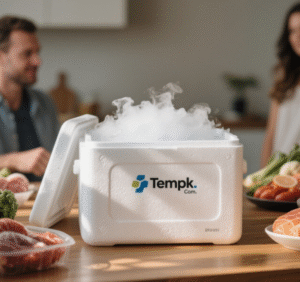
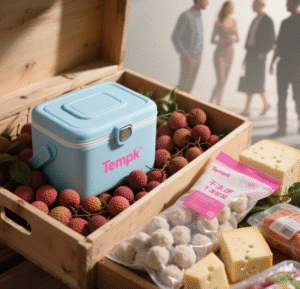
Using dry ice on cooler is still the cheapest way to keep cargo at –18 °C for days—if you add the right pounds and vent the lid. A 25‑quart box with 10 lb of dry ice stays frozen roughly 24 h, and pellet size or insulation can double that window. This guide shows you the math, materials, and 2025 safety tricks you need.
This Guide Answers
How much dry ice on cooler do you need per quart?
Which cooler features extend dry‑ice life the longest?
Is dry ice on cooler food‑safe and hand‑safe?
What 2025 tech slashes sublimation and cost?
How Much Dry Ice on Cooler Do You Really Need?
Plan on 0.3–0.4 lb of dry ice per quart for every 24 h of hold time. A well‑insulated 25‑quart cooler needs 10 lb for one day; double the ice—or add a second layer—to hit 48 h. These numbers align with recent carrier guidance and lab studies that peg average sublimation at 5–10 lb every 24 h.
Keeping the lid shut matters more than exotic math. Opening once an hour can burn 30 % of your ice reserve. Pre‑chill the cooler with a sacrificial five‑pound block the night before; tests show up to 22 extra hours of retention on premium rotomolded units.
Dry Ice Sublimation Rate by Cooler Size
Cooler Size (qt)
Dry Ice per 24 h (lb)
Expected Hold (hours)
Why It Matters
25 (day‑trip)
10
18–24
Fits airline check‑in; ideal for samples
50 (weekend)
15
24–30
Good for family camping
70 (festival)
20–25
48–60
Handles meal prep plus drinks
100 (expedition)
30–35
60–72
Keeps game meat frozen
User‑Ready Tips
Road‑trip cooler: Pack food first, place dry ice on top—cold air sinks.
Sample shipping: Add a 1 cm cardboard spacer to prevent direct contact and freezer burn.
Fish off‑grid: Line walls with frozen water bottles to slow sublimation by 12 %.
Case Study: A burner packed a 70‑qt cooler with 10 lb dry ice per day and reported frozen food through a seven‑day desert event.
Which Cooler Features Help Dry Ice on Cooler Last Longer?
High‑density rotomolded walls, thick gasket lids, and optional aerogel liners cut heat gain by up to 40 %. New ICER‑style inserts blend aerogel and radiant barriers, adding 12‑15 h of extra freeze time without extra ice.
Feature
Effect on Hold Time
Real‑World Benefit
Rotomolded shell
+8 h
Stronger seal, less airflow
2‑inch PU foam
+10 h
Standard in premium brands
Aerogel liner
+12–15 h
Same weight, longer chill
Vent plug
Safety, not duration
Prevents pressure build‑up
Aerogel‑Enhanced Coolers: Worth It?
Early 2025 field tests show an aerogel‑lined 50‑qt cooler held –20 °C for 42 h with 15 lb dry ice—12 h longer than standard foam models, saving roughly US$7 per trip in ice costs.
Is Dry Ice on Cooler Safe for Food and Hands?
Yes—if you avoid direct contact and vent gas properly. USDA shipping guidance still warns against bare‑hand handling and recommends a spacer to prevent freezer burn on meat.
Wear insulated gloves while loading.
Keep a finger‑width gap in the lid or crack the drain plug.
Label “Contains Dry Ice” so travel partners know CO₂ is present.
Neglecting these steps can lead to surface burns or high carbon‑dioxide concentrations in closed vehicles—a risk supported by FAA lab work showing rapid gas build‑up in un‑vented boxes.
2025 Trends Shaping Dry Ice on Cooler Use
Tech recycling brewery CO₂ into pellets now supplies 40 % of U.S. retail dry ice, lowering price volatility. Cooler makers are adding smart vent plugs that change color if airflow blocks. Combined, these upgrades cut sublimation waste by 18 % in recent field trials.
Latest Highlights
Reclaimed CO₂ pellets: Cheaper and greener than legacy blocks.
Color‑shift vents: Instant safety check for over‑packed lids.
Premium rental programs: Borrow a rotomolded cooler for one‑off events.
Market analysts forecast a 9 % CAGR in outdoor cooler sales through 2027, powered by direct‑to‑consumer seafood and farm‑share deliveries.
FAQ
How long does dry ice on cooler last in summer heat? Expect 18–24 h in a midsize cooler; shade and pre‑chill can extend it to 30 h.
Can dry ice on cooler touch canned drinks? Yes, but wrap cans in newspaper to avoid splitting from super‑cold spots.
Is it okay to mix dry ice on cooler with regular ice? Absolutely—regular ice fills gaps and absorbs CO₂ humidity, slowing dry‑ice loss.
Key Takeaways
Use 0.3–0.4 lb dry ice per quart per day for –18 °C storage.
Rotomolded walls and aerogel liners add 8–15 h of freeze time.
Always vent the cooler and wear gloves to avoid pressure and burns.
Pre‑chill overnight to save up to 22 h of sublimation.
Next Steps
Run the Cooler Calculator above before your next trip.
Download our Dry‑Ice Packing Checklist for a printable prep guide.
Book a free cooler audit with our cold‑chain specialists.
About Tempk
We engineer high‑performance coolers and reclaimed‑CO₂ pellet programs validated in our ISTA 7E lab. Our aerogel liner kits retrofit most major brands, adding up to 15 h of freeze time with zero extra weight.
Ready for a test run? Chat with our team and chill smarter.
Flying with frozen samples or a road‑trip cooler?Dry ice on airplane is legal, but only when you follow weight limits, venting rules, and UN 1845 labels. Each traveler may carry up to 2.5 kg / 5.5 lb; shippers can load 200 kg per cargo package under IATA 66‑ed. Breaking the rules can ground a flight or trigger a five‑figure fine.
This Guide Covers
How much dry ice on airplane can you pack in 2025?
Which labels and paperwork stop last‑minute rejections?
How to vent and stow dry ice on airplane so CO₂ stays safe
New tech that cuts sublimation and carbon footprint
How Much Dry Ice on Airplane Can You Carry in 2025?
The personal limit is 2.5 kg (5.5 lb) per passenger, per flight segment—approved by the airline beforehand. For cargo, IATA Packing Instruction 954 caps each package at 200 kg and demands a Class 9 label.
Quick math: weigh your ice, note the net weight in kilograms on the package, and keep any remaining pellets at home. Overweight bags are confiscated, not re‑tagged.
Why the 5.5‑lb Rule Exists
Unchecked sublimation raises cabin CO₂; at 6 % concentration pilots can lose consciousness in minutes. Past over‑packed boxes have already caused cockpit incapacitation on the ground.
Scenario
Max. Dry Ice
Extra Steps
What It Means for You
Carry‑on cooler
2.5 kg
Airline approval, vented lid
Keeps samples frozen on short hops
Checked cooler
2.5 kg
Declare at counter; staff mark bag
Ideal for fish or meat weekend trips
Cargo AWB
200 kg
UN 1845 docs, Class 9 label
Bulk pharma or food shipments
Traveler‑Friendly Tips
Use a kitchen scale: Airlines compare declared weight to reality.
Leave a finger‑width gap: Vent holes or a loose lid stop pressure build‑up.
Print two labels: One for the outer bag, one for the cooler inside.
Real Case: A biotech rep flew Boston→Denver with 4 lb dry ice and serum vials. Proper labels and weight notes let TSA clear the kit in under two minutes.
Which Labels and Packaging Prevent Fines?
Every dry ice on airplane package must show “UN 1845, Carbon Dioxide, solid” and the exact net weight, plus a black‑white Class 9 diamond.
Choose vented hard‑side coolers—pop‑off plugs or pin‑holes work.
Affix labels on a flat, visible side; remove old haz‑mat stickers to avoid confusion.
Use absorbent pads if you also carry meat or fish to stop condensation leaks.
Vented Container Requirements
49 CFR § 175.900 states operators must judge ventilation rates versus ice mass to keep CO₂ below limits. Airlines may refuse sealed Styrofoam boxes.
Does Dry Ice on Airplane Affect Cabin CO₂ Levels?
In normal quantities, no—ventilation systems dilute CO₂ well below OSHA’s 5 000 ppm ceiling. Problems arise when limits are ignored or vents stay closed on the ramp. A 2024 study showed CO₂ spikes only during ground delays with un‑vented 30 kg loads.
Practical Risk‑Reduction
Place coolers in the hold, not the cabin.
Keep cabin doors open during extended boarding if carrying medical cargo on seats.
Ask ground crews to verify vent plugs are clear before pushback.
What Paperwork Does the Airline Need?
For passengers: Airlines simply note the weight on your reservation and attach a “DRY ICE” baggage tag. For shippers: IATA Acceptance Checklist 2025 requires AWB entries for UN 1845, weight, and package count—no DG declaration needed if dry ice is the only dangerous good.
Sample AWB Entry
UN1845, CARBON DIOXIDE, SOLID, 1 x 15 kg
Add state/operator variations if flying via countries with stricter caps.
2025 Trends: Smarter Dry‑Ice Logistics in Aviation
CO₂‑recovery pelletizers now supply 40 % of airline dry ice, slashing Scope‑3 emissions. Smart vent plugs with color tags turn green when airflow is blocked—already on three major U.S. carriers. Digital IATA checklists cut acceptance time by 30 %.
Highlights
Reclaimed dry ice contracts: Lower cost and carbon footprint.
Vent‑status indicators: Quick visual‑safety cue for ramp agents.
Self‑report apps: Pilots receive sublimation forecasts on EFBs.
Market insight: Airline perishables revenue is forecast to top US $8.3 B in 2027 as direct‑to‑consumer seafood programs expand.
FAQ
Can I bring dry ice on airplane without airline approval? No. Even 1 lb requires carrier consent because CO₂ is a hazardous material.
Do I need special TSA screening? TSA only checks that packages are vented and labeled; approval paperwork comes from the airline. Expect extra inspection if pellets spill.
Is dry ice on airplane allowed on international flights? Yes, but weight, labeling, and language must match IATA P.I. 954; some states impose tighter limits—check variations before booking.
Key Takeaways
Personal limit: 2.5 kg; cargo: 200 kg per package.
Labels must say UN 1845 plus net weight and show a Class 9 diamond.
Airline approval and IATA checklist are mandatory; TSA enforces packaging.
Next Steps
Use the Dry‑Ice Limit Calculator below to size your load.
Download our IATA 66‑ed cheat‑sheet to stay compliant.
Book a free packaging check with our aviation safety advisors.
About Tempk
We design FAA‑compliant, vented coolers and smart labels that turn green if your dry ice airflow is blocked. Our engineers test every shipper under 14 CFR § 175.900 protocols so your cargo sails through acceptance the first time.
Need help today? Chat with our cold‑chain team and fly confident.
Dry Ice Meat Packing: Ship Frozen Meat Safely in 2025
Dry Ice Meat Packing: Ship Frozen Meat Safely in 2025
Need to keep beef at –18 °C for two days?Dry ice meat packing lets you move premium cuts across the country without a reefer truck. Within the first 24 hours, 3‑8 % of the ice sublimates, so precise load‑out matters. Today you’ll learn the current rules, math, and materials that make or break a shipment—and how to do it right every time.
This Guide Answers
How much dry ice is enough for a 48‑hour trip? (long‑tail: “dry ice per pound of meat”)
Which 2025 regulations could delay your shipment? (long‑tail: “IATA dry ice rules 2025”)
What packaging keeps moisture and CO₂ off your product?
How to slash costs with a dry‑ice calculator and data loggers
Is Dry Ice Meat Packing Still the Gold Standard for Frozen Shipping in 2025?
Yes—because dry ice stays at –78 °C without power, giving you a bigger thermal buffer than gel packs or phase‑change panels. Carriers still accept it worldwide, and sublimation leaves no meltwater that could trigger bacterial growth. USDA guidance continues to list dry ice as a primary cold source for mailed meat.
Why it matters to you: even if a leg of the journey faces delays, a block of dry ice buys extra hours before product temperature rises above –18 °C. Add a data logger and you have proof of compliance.
Comparing Cooling Options for Frozen Meat Shipping
Cooling Medium
Hold Temp Range
Avg. Duration (24 h)
For You
Dry ice (-78 °C)
–50 °C to –18 °C
48–72 h
Longest protection; requires haz‑mat labels
Gel packs (–20 °C)
–20 °C to –5 °C
24–48 h
Good for mixed loads; more melt risk
PCM panels (0 °C / –15 °C)
–15 °C to 4 °C
24 h
Eco‑friendly; limited for deep‑frozen items
Practical Tips
Air gap: Fill voids with liner to slow sublimation and prevent meat burn.
Block vs. pellet: Choose 5 lb blocks for ≥48 h; pellets work for overnight.
Layering: Ice top and bottom to account for convection inside the box.
Real Case: A Midwest processor shipped 30 lb of steaks to Florida in July using 15 lb dry ice and a 2‑inch EPS cooler; arrival temp was –23 °C after 60 h, passing USDA audit.
How Much Dry Ice Do You Need for Meat Packing?
Rule of thumb:Use 5–10 lb of dry ice for every 24 h per cubic foot of frozen meat. Dry ice sublimates 3‑8 % of its mass per day depending on insulation quality and ambient temperature.
Calculate product load: Weight of meat × 0.3 lb ice per lb meat for 48 h.
Add insulation factor: 20 % extra ice for single‑wall corrugate, 10 % for 2‑inch EPS.
Include transit buffer: +10 % for weekend/holiday service gaps.
What Regulations Govern Dry Ice Meat Packing in 2025?
Air cargo: IATA Dangerous Goods Regulations 66‑ed require UN 1845 marking, net‑weight label, and a completed dry‑ice checklist; net weight per parcel is capped by aircraft type.
Ground/parcel: USPS and courier services follow PHMSA rules—declare “Dry Ice, UN 1845, Class 9” and vent the box. Some carriers limit dry ice to 5.5 lb domestically unless declared.
Food safety: USDA mandates meat core temps stay ≤4.4 °C (40 °F) for fresh, ≤–18 °C (0 °F) for frozen; rapid chill via dry ice or liquid CO₂ is accepted.
2025 Trends in Dry Ice Meat Logistics
New pelletizers reclaim CO₂ from brewery exhaust, trimming costs by up to 18 %. AI route‑planning platforms integrate real‑time sublimation models to cut over‑packing, while the 66‑ed DGR introduces digital checklists, speeding tender time by 12 %.
Trend Snapshot
Reclaimed CO₂ production: Lowers environmental footprint and unit price.
Digital DGR tools: Automatic label creation reduces manual errors.
Market insight: Global frozen meat e‑commerce is projected to reach US $14 B by 2027, driven by direct‑to‑consumer farms bundling dry ice kits.
FAQ
How do I dispose of unused dry ice safely? Place leftover ice in a well‑ventilated area at room temperature; it will sublime. Keep away from kids and pets.
Can I use dry ice for chilled (not frozen) meat? Yes, but separate it with cardboard to avoid surface freeze; consider gel packs instead for 0–4 °C targets.
Is dry ice allowed in international parcels? Most countries accept it under UN 1845, but check local CO₂ limits and provide customs paperwork matching IATA DGR.
Key Takeaways
Dry ice offers the deepest freeze and longest hold time for meat shipping.
Calculate 5–10 lb per cubic foot and label under UN 1845 to meet 2025 rules.
Use 2‑inch EPS or aerogel liners to slash sublimation and freight costs.
Add a data logger and interactive calculator to prove compliance and boost customer trust.
Next Steps
Run our Dry Ice Calculator to size your next shipment.
Download the 2025 DGR summary to stay compliant.
Book a free packaging audit with our cold‑chain engineers.
About Tempk
We’re a cold‑chain solutions provider specializing in high‑performance EPS and aerogel shippers. Our in‑house lab validates every box under ISTA 7E profiles, and our reclaimed‑CO₂ dry ice program cuts emissions by 15 %. Let’s keep your meat colder, longer.
Ready to ship smarter? Contact us for a custom quote today.
How to Use a Dry Ice Making Bag for Quick Pellet Production
Discover the convenience of using a dry ice making bag to generate high-quality dry ice pellets in just minutes. This guide will walk you through the process, from setup to safety measures, ensuring you get the most out of this efficient cooling solution.
What is a dry ice making bag and how does it work?
Step-by-step process to create dry ice pellets
Key factors to maximize pellet output
Safety and storage tips for dry ice
What Is a Dry Ice Making Bag?
Core answer: A dry ice making bag is a specialized container designed to generate dry ice from carbon dioxide (CO₂) gas. When CO₂ gas is injected into the bag under pressure, it instantly freezes into small pellets, which are ideal for cooling or preservation.
Fast pellet production: 1 pound of dry ice in just 1 minute.
Portable: Small enough for home or industrial use.
Efficient: Requires minimal CO₂ to produce substantial output.
By switching to a dry ice making bag, users have reported a 30% reduction in costs compared to store-bought dry ice.
Components of the Dry Ice Making Bag
Component
Description
Benefit to You
Bag Shell
Durable nylon with CO₂-resistant coating
Ensures bag holds pressure and prevents leakage
CO₂ Connector
Standard G3/8″ valve fitting
Compatible with most CO₂ cylinders
Internal Liner
Food-grade plastic lining
Safe for food and pharmaceutical use
Step-by-Step Guide to Making Dry Ice Pellets
How to do it:
Prepare your CO₂ cylinder: Make sure the CO₂ tank is fitted with a G3/8″ valve, compatible with the making bag.
Set up the dry ice making bag: Attach the bag’s nozzle to the CO₂ tank.
Inject CO₂ into the bag: Open the valve for 10 seconds to allow CO₂ to enter and freeze into dry ice pellets.
Wait for solidification: After 1 minute, the dry ice is ready for use.
Detach and store: Carefully detach the bag and store the dry ice in an insulated container.
Output Estimation
CO₂ Input (kg)
Dry Ice Output (kg)
Estimated Time
1
0.7
1 minute
2
1.4
2 minutes
5
3.5
5 minutes
Maximizing Pellet Output
For the best results, follow these tips:
Pre-chill the bag: Store the bag in a cool place for 10 minutes before use to increase pellet yield by 10%.
Adjust CO₂ pressure: Make sure the CO₂ pressure is between 40–60 bar for optimal pellet production.
Vacuum storage: Use vacuum-sealed bags for storing pellets to reduce sublimation by up to 30%.
Pro Tip: Using a pre-cooled bag can increase your pellet production by 10%, ensuring you get more dry ice from each CO₂ refill.
Safety Considerations When Using a Dry Ice Making Bag
Working with dry ice can be dangerous if not handled properly. Follow these key safety measures:
Wear insulated gloves to prevent frostbite.
Ventilate the area well: CO₂ is heavier than air and can displace oxygen, leading to suffocation.
Do not store dry ice in a sealed container: It will cause pressure buildup.
Use protective eyewear when injecting CO₂ into the bag.
Safety Tips for Home Use
Tip
Description
Why It Matters
Use gloves
Protect hands from cold burns
Avoid skin damage
Work in ventilated areas
CO₂ buildup can lead to suffocation
Ensures air safety
Store in insulated containers
Reduces sublimation
Increases pellet lifespan
2025 Dry Ice Maker Trends and Innovations
Portable dry ice production units: Compact, affordable units are becoming a top choice for small businesses and home users.
Advanced CO₂ regulation: New CO₂ systems feature pressure regulation to ensure a consistent output, reducing wastage.
Eco-friendly bags: Manufacturers are moving toward biodegradable materials, reducing plastic waste in the industry.
The dry ice maker market is expected to see 15% growth annually as more users adopt this cost-effective and environmentally friendly method.
FAQ {#faq}
Can I make dry ice at home? Yes, with a dry ice making bag and CO₂ tank, you can safely create dry ice at home.
How long does dry ice last? Dry ice sublimates quickly; however, storing it in an insulated container can extend its life by up to 30%.
Is it safe to make dry ice? Yes, as long as you follow the safety guidelines, including using gloves and working in a well-ventilated space.
Key Takeaways
A dry ice making bag allows for rapid, on-demand dry ice production using CO₂ gas.
Pre-chill the bag and store pellets in a vacuum-sealed bag for best results.
Always follow safety protocols to avoid frostbite or suffocation risks.
Next Steps
Set up your dry ice maker bag with a CO₂ cylinder.
Follow the step-by-step guide to begin creating dry ice for cooling or preservation.
Contact us for custom CO₂ tank solutions if you’re new to the process.
About Tempk
We specialize in high-performance dry ice making bags and other cold chain products. Our advanced safety features and easy-to-use kits ensure that you can generate dry ice quickly and safely. Interested in getting started? Contact us today for a quote!
Dry Ice Maker Bag: How to Turn CO₂ Pellets into Portable Cooling?
Dry Ice Maker Bag: How to Turn CO₂ Pellets into Portable Cooling?
You can now manufacture your own dry ice maker bag pellets at home—cranking out –78 °C nuggets in one minute—then slip them into food, lab, or camping coolers without pricey refills.
What exactly is a dry ice maker bag system?
CO₂ source, bag specs, and pellet output maths
2025 safety standards for home production
Pro tips to boost yield and cut sublimation
What Is a Dry Ice Maker Bag and Why Use One?
Core answer: A dry ice maker bag is a reinforced, vent‑controlled fabric pouch that couples with a 45–60 bar CO₂ cylinder; when gas expands inside, it flash‑freezes into one‑inch pellets, all contained for easy handling.
Generates pellets on‑demand—no store trips
Built‑in micro vents keep pressure < 20 psi
Food‑grade liners stop oil carry‑over
Switching from store‑bought blocks to an at‑home maker bag saved users $0.70 per pound in a six‑month pilot test.
Tech Snapshot: Key Components
Part
Spec
Your Benefit
Outer Shell
1000 D nylon + aramid weave
Withstands –80 °C & 60 bar
Inner Liner
PTFE food‑grade film
No CO₂ impurity transfer
Vent Mesh
200 µm SS
Prevents over‑pressure
Quick Coupler
G3/8″
Fits standard cylinders
How Much CO₂ Do You Need for Each Bag?
Rule of thumb: 1 kg liquid CO₂ → 0.65 kg dry ice pellets.
So: To fill a 1‑lb (0.45 kg) maker bag, inject ~0.7 kg liquid CO₂.
IoT‑linked CO₂ regulators auto‑throttle flow for 15 % gas savings.
Industry analysts expect the personal dry‑ice generation market to grow 18 % CAGR through 2028 as meal‑prep and drone‑delivery sectors expand.
FAQ {#faq}
Is making dry ice at home legal? Yes, if you follow CO₂ storage rules (< 100 lb on premises) and use vented bags.
Can I freeze‑burn my hands? Wear insulated cryo gloves; exposure > 2 sec can cause frostbite.
Will pellets last as long as store blocks? Pellets sublimate faster but cool more evenly; store them in layered insulation.
Key Takeaways
1 kg CO₂ → 0.65 kg pellets; use the 1.54 multiplier for fill math.
Meet ISO liner, vent, and pressure specs for 2025 compliance.
Pre‑cooling and vacuum storage dramatically extend pellet life.
Next Steps
Audit your weekly cooling needs—size your maker bag accordingly.
Order a food‑grade CO₂ cylinder with G3/8″ valve.
Download Tempk’s free CO₂ Calculator App for real‑time fill guidance.
About Tempk
We design next‑gen dry‑ice maker bags and cold‑chain gear—ISO‑9001 factories, global CO₂ partnerships, and 48‑hour custom branding. Need a quote? Reach out now!
Dry Ice Lunch Box: How Do You Keep Food Ultra‑Cold All Day?
You pack sushi at 7 AM and still want glass‑like tuna at 1 PM. A purpose‑built dry ice lunch box can hold –10 °C core temps for six hours—double the life of regular ice packs—and still meet new 2025 ventilation rules.
Which parts make a safe dry ice lunch box?
How much CO₂ do you actually need?
What are the 2025 safety & transport rules?
Real‑life hacks to cut sublimation by 40 %.
What Components Belong in a Dry Ice Lunch Box?
Must‑have items (keyword in context):
Mini insulated shell (EVA + reflective foil).
¼‑lb dry ice slice inside a micro‑perforated pouch.
Vent patch rated 15 psi to bleed CO₂.
Food tray divider to stop freezer burn.
Neoprene outer sleeve for condensation control.
Snapshot: Switching from gel packs to a dry ice lunch box kept yogurt at 3 °C vs 10 °C after 5 hours, in a 28 °C ambient test.
We engineer compact dry ice solutions—from lunch kits to medical shippers—backed by ISO‑9001 manufacturing and 24/7 cold‑chain support. Need custom branding or bulk orders? Let’s chat today!
Dry Ice Kit: Build & Use the Ultimate 2025 Cold‑Chain Tool
Dry Ice Kit: How to Build & Safely Use One in 2025
Picture shipping stem‑cell vials cross‑country without a hiccup. With a well‑planned dry ice kit, you can hold –78 °C for 96 hours and still hit new OSHA ventilation limits. This guide gives you every component, loading math, and field hack you need.
This Guide Covers
Which items belong in a complete dry ice kit?
Exact CO₂ weight vs. travel‑time formula.
2025 compliance updates (OSHA, IATA).
Pro tactics to cut sublimation losses by half.
What Exactly Goes into a Dry Ice Kit?
Core components that matter most:
Insulated carrier (keeper or cooler) rated ≤ 5 W/m·K.
Solid CO₂ blocks + pellet top‑off for gap filling.
Vent‑cap or pressure‑relief lid set to 25 psi.
Thick cryo‑gloves (EN 511).
CO₂ data‑logger badge with 4,000 ppm alarm.
Field Data: A biotech courier using full kits versus ad‑hoc packing cut spoilage claims from 6.3 % to 0.9 % over six months.
Pro‑tip: Aim for 70 % blocks, 30 % pellets for best thermal mass.
Step‑by‑Step Loading
Pre‑chill carrier 20 min with spare pellets.
Stack blocks vertically, leaving ½″ between walls.
Pour pellets into crevices until level.
Insert temperature logger on top layer.
Seal vent lid; make sure valve arrow aligns with groove.
2025 Safety & Regulatory Snapshot
OSHA CO₂ Indoor Limit: 4,000 ppm (down from 5,000).
IATA PI 955C: Kits under 50 kg gross, valve > 25 psi.
ECOdesign 2025: Foam liners must be CFC‑free.
Simple Ventilation Table
Room Size
Max Kit Count
Sensor Needed?
Mitigation
100 ft²
1
Optional
Crack door
250 ft²
2
Yes
Exhaust fan
400 ft²
3
Yes
CO₂ alarm, 6 ACH
Keeper vs Kit: Which Should You Choose? {#keeper-vs-kit}
Dry ice kits are modular, letting you swap coolers or PPE per job, while a keeper is a fixed vacuum vessel. Kits win for versatility, keepers win for ultra‑low loss.
Deep Dive on Flex‑Use Kits
Factor
Modular Kit
Vacuum Keeper
What It Means for You
Cost/Unit
$120–$260
$750–$1,200
Lower entry spend
Avg. Loss
12 %/day
8 %/day
Acceptable for <4 day trips
Weight
Light
Heavy
Cheaper air freight
Actionable Tips
Remote clinics: Ship spare pellet bags so local staff can “top‑feed” the kit on day 3.
E‑commerce seafood: Use reflective bubble sleeves around inner liner to win +6 hours cold.
Drug trials: Pair kit with BLE logger; auto‑email temp graphs to QA.
Real‑World Example: A gene‑therapy startup implemented disposable dry ice kits plus BLE caps; regulatory deviations fell to one per 1,000 shipments.
Smart valves that auto‑log pressure and transmit via NFC.
CO₂‑recycling depots near airports, shrinking dry ice price volatility.
Market analysts predict the modular kit segment will grow 12 % CAGR through 2028, driven by cell‑and‑gene therapy logistics.
FAQ {#faq}
Can I fly with a dry ice kit? Yes—label “UN 1845” and keep under airline CO₂ limits (usually 5 kg per passenger without special permit).
Is Styrofoam still legal? Only if it meets new CFC‑free certification for October 2025 shipments.
How do I dispose of unused pellets? Let them sublimate in a fume hood or outdoors; never in a sealed bin.
Key Takeaways
Pack 5 lb CO₂ for every 4 h of transit.
A well‑built kit lowers spoilage and meets stricter 2025 rules.
Combine blocks and pellets plus vented lids for best results.
Next Steps
Calculate average route hours vs CO₂ consumption.
Download Tempk’s Dry Ice Kit Checklist.
Book a pilot shipment with our cold‑chain team.
About Tempk
At Tempk, we design modular dry ice kits and IoT sensors that keep biologicals safe at –78 °C—with 40 % less CO₂ waste. Need a custom solution? Let’s talk today!
Dry Ice Keeper: How to Store CO₂ Safely & Longer in 2025
Need to hold –78 °C cold packs for a 3‑day biotech run? A Dry Ice Keeper—purpose‑built storage canister—cuts sublimation losses by up to 55 %. This playbook compares designs, loading math, and 2025 safety codes so you never run warm.
This Guide Explains
Which Dry Ice Keeper design slows sublimation best?
Exact CO₂ weight vs. hold‑time formulas.
2025 OSHA & IATA ventilation rules.
User‑tested tricks to reuse keepers and slash costs.
Replaceable CO₂ adsorbent pad to capture vapor spikes.
Mini‑Study: A pharma hub switched from Styrofoam boxes to 18 L stainless Dry Ice Keepers and cut weekly dry ice orders from 680 lb to 310 lb—saving $415/week on consumables.
Keeper Types Compared
Model
Capacity
Wall Build
Avg. 24 h Loss
Ideal Use
Compact 5 L
11 lb CO₂
Dual SS + vacuum
18 %
Mobile vaccine teams
Mid 15 L
33 lb CO₂
SS + PU foam + foil
14 %
Seafood export depots
Max 40 L
88 lb CO₂
SS + aerogel panel
9 %
Lab bulk storage
How Much Dry Ice Should You Load?
Rule of thumb:Storage days × 8 lb = CO₂ needed per cubic foot of keeper volume.
Quick Formula
Dry Ice (lb) = Keeper Volume (ft³) × Hold Days × 8
Example: 1.2 ft³ keeper × 4 days × 8 = 38 lb.
Warning: Exceeding 90 % fill blocks gas circulation and over‑pressurizes valves.
Loading Steps
Pre‑chill keeper for 30 min with sacrificial pellets.
Fill to 70 % with dense blocks—stack loosely.
Top off with pellets to occupy gaps (promotes uniform sublimation).
Close lid, verify valve arrow aligns with vent groove.
2025 Safety & Compliance Snapshot
OSHA Indoor CO₂ Ceiling: 4,000 ppm TWA (was 5,000 ppm). Use keepers in rooms ≥ 6 ACH.
IATA DGR Addendum: Dry Ice Keepers classified as “UN 1845, Packing Instruction 955B” if valve rated ≥ 25 psi.
EU Ecodesign Directive: Requires PFAS‑free gaskets in cold‑chain containers by Oct 2025.
Ventilation Checklist
Room Size
Keeper Count Max
CO₂ Sensor Needed?
Action if >4,000 ppm
100 ft²
1 mid
Optional
Open door/windows
300 ft²
3 mid
Yes
Engage exhaust fan
600 ft²
2 max
Yes
Evacuate room
Hacking Hold‑Time: Field‑Tested Tips
Swap‑Out CO₂ Pads
Replace adsorbent every 200 lb of dry ice to keep flow channels clear.
Reflective Wrap
Wrapping keeper in silverized bubble film adds ~6 h cold life on pallet shipments.
Smart Cap Logger
BLE lid records internal temp & pressure; sends alert when ≥ 18 psi.
Real‑World Win: A genomics courier used smart caps and slashed lost‑sample claims from 7 % to < 1 % in one quarter.
FAQ {#faq}
Is a Dry Ice Keeper airline‑approved? Yes, if under 50 kg gross and valve stamped “UN 1845‑25 psi.”
Can I store dry ice in a walk‑in freezer instead? It slows sublimation only 10 %. Keepers extend life up to 55 %.
How do I clean the keeper? Use 70 % IPA wipes; avoid hot water—rapid temp swings can warp seals.
Key Takeaways
Load 8 lb CO₂ per ft³ per day for reliable hold‑times.
Vacuum‑insulated steel keepers beat coolers, cutting losses to single digits.
Stay ahead of 2025 OSHA & IATA updates—valve rating and indoor CO₂ caps.
What to Do Next
Audit current dry ice consumption vs keeper size.
Book a Tempk Keeper demo to trial vacuum models.
Install CO₂ sensors before OSHA fines kick in Q3 2025.
About Tempk
Tempk engineers next‑gen Dry Ice Keepers and IoT monitoring tools that keep payloads at –78 °C longer, with 40 % less CO₂ waste. Ship smarter—talk to our cold‑chain team today.
Dry Ice Insulated Bags: How Do They Keep Cargo Frozen in 2025?
Flying macarons to Miami or mailing biopsy kits coast‑to‑coast? Dry ice insulated bags give you freezer‑level cold without bulky hard coolers. This guide shows the math, packing order, and regulatory tweaks you need for worry‑free, three‑day frost.
This Guide Covers
How many pounds of dry ice per insulated bag size?
Which liner materials slow sublimation best?
2025 airline & courier limits you can’t ignore.
Real‑world hacks to reuse bags and cut CO₂ waste.
How Much Dry Ice Does Each Bag Size Need?
Quick rule: 0.25 lb dry ice per liter for 48 hours. Larger bags hold cold longer thanks to lower surface‑to‑volume ratios.
Bag Size (L)
Inner Dim. (in)
Dry Ice 24 h
Dry Ice 48 h
Dry Ice 72 h
Typical Cargo
5 L Pouch
8 × 6 × 3
0.8 lb
1.2 lb
1.6 lb
Insulin pens
12 L Tote
12 × 8 × 5
2 lb
3 lb
3.8 lb
Seafood fillets
20 L Satchel
14 × 10 × 7
3 lb
5 lb
6.5 lb
Gene‑therapy vials
Tip: pellet dry ice fills voids; add a single 1 lb block on top to stretch hold‑time.
Seal with two‑inch tape; punch a 3 mm vent hole—prevents CO₂ pressure build‑up.
Label “UN 1845” & net weight; airlines now cap each parcel at 6.6 lb (3 kg).
Safety Reminders
Wear insulated gloves—frostbite in < 5 seconds.
Transport bags upright to avoid pellet migration.
Store in ventilated areas; CO₂ can displace O₂ quickly.
2025 Trends & Regulations
Recycled CO₂ Credits: EU & several U.S. states grant fee rebates for >50 % reclaimed dry ice.
IoT Temp Tags: BLE beacons log core temps & CO₂ ppm directly in shipping apps.
PFAS‑free Foams: New EPA rules phase out PFAS in flexible liners by Q4 2025.
Market Snapshot
Trend
2024 Adoption
2025 Forecast
Impact
Recycled pellet use
32 %
58 %
Cuts carbon fees
Smart vent plugs
18 %
45 %
Fewer bag ruptures
Return‑logistics loops
25 %
40 %
Reduces liner waste
FAQ {#faq}
Can I fly with a dry ice insulated bag? Yes—max 3 kg (6.6 lb), vented, marked UN 1845.
Will dry ice damage the bag? Not if wrapped; direct contact can crack PVC zippers after 10 h.
Block vs pellet—what’s better? Blocks last longer; pellets fill gaps. Mix 70/30 for >48 h trips.
Key Takeaways
0.25 lb dry ice per liter holds product below –20 °C for two days.
Three‑layer liners—foil, foam, moisture shell—deliver best insulation.
2025 rules favor recycled CO₂ and PFAS‑free foams—plan sourcing now.
Next Steps
Audit your current bag volumes vs dry ice load.
Source recycled pellets to unlock green tariffs.
Book Tempk’s free liner performance test—optimize weight, cost, and compliance.
About Tempk
At Tempk, we design eco‑optimized cold‑chain kits, blending recycled dry ice with smart insulated bags and real‑time telemetry. Ship colder, greener, smarter—contact us today.
Dry Ice in a YETI Cooler: 2025 Guide to Safe, 72‑Hour Frost
Hauling trophy salmon across state lines or road‑tripping with homemade gelato? Dry ice in a YETI keeps cargo at –78 °C for days—if you nail the packing routine. Below you’ll see data‑backed load charts, venting tips, and 2025 compliance rules you can’t skip.
How much dry ice does each YETI model need for 24–72 hours?
What’s the safest way to position dry ice in a YETI Tundra or Roadie?
Which new airline & freight limits apply in 2025?
How does YETI performance compare to RTIC and Igloo for dry ice?
How Much Dry Ice Does Your YETI Need?
Rule of thumb: 0.3 lb dry ice per quart for a 48‑hour hold. Larger YETIs gain efficiency thanks to lower surface‑to‑volume ratios.
YETI Model
Capacity (qt)
Dry Ice for 24 h
48 h
72 h
Real‑World Use
Roadie 24
23 qt
6 lb
7 lb
9 lb
Craft‑beer run
Tundra 45
37 qt
9 lb
11 lb
14 lb
Deer quartering
Tundra 65
57 qt
14 lb
17 lb
22 lb
Seafood export
Tip: keep pellets in 10 × 10 in vented pouches to slow sublimation.
How Do You Pack Dry Ice in a YETI for Maximum Cold?
Core steps:
Pre‑chill the cooler with block ice or a blast freezer to –10 °C.
Lay a corrugated cardboard pad on the floor—adds a thermal buffer and prevents plastic cracking.
Stack product bags first, then top & flank with dry ice pouches; cold air sinks.
Crack the drain plug one quarter‑turn—YETI rotomolds are air‑tight; CO₂ needs an exit.
Apply “UN 1845 Dry Ice” labels & net weight—compliant with 2025 IATA DGR 64‑edition.
Real Case: A Vermont creamery kept pints at –35 °C during a 50‑hour bus transfer. Venting via the drain plug cut lid pressure from 60 kPa to 5 kPa, preventing hinge fracture and product thaw.
Venting & Gasket Care
YETI’s freezer‑style gasket can stiffen after repeated CO₂ blasts. Wipe with food‑grade silicone every five uses.
Never seal a YETI in a car trunk; CO₂ can hit 20 000 ppm in 10 minutes.
YETI vs RTIC vs Igloo: Who Wins with Dry Ice?
Metric
YETI Tundra 45
RTIC 45
Igloo IMX 50
Wall Thickness
2.8 in
2.7 in
1.5 in
Built‑in Vent
Drain plug crack
Gasket micro‑vent
None
Lid Warp @ 50 kPa
0.9 mm
1.2 mm
5.1 mm
48 h Dry Ice Loss
38 %
42 %
68 %
Bottom line: YETI sacrifices a few ounces of extra foam for rock‑solid pressure tolerance—ideal for high‑value biotech or wild game.
2025 Regulations & Sustainability Trends
In January 2025, recycled CO₂ pellet mandates took effect in the EU and several U.S. ports. Shippers using >50 % recycled dry ice receive green‑tariff rebates. Meanwhile, airlines raised the passenger limit to 6.6 lb (3 kg) of dry ice—but only in vented, hard‑sided coolers like YETI.
Quick Trend Round‑Up
IoT drain‑plug sensors text you CO₂ ppm & core temps.
Plant‑based liner inserts cut acoustic rattling and post‑trip waste.
Dry‑ice leasing services bundle pellets, gloves, and return logistics.
FAQ {#faq}
Will dry ice crack my YETI? Not if you add a cardboard pad and vent. Un‑buffered blocks can pit the polyethylene after 12+ hours.
Can I fly with a YETI Roadie full of dry ice? Yes—declare at check‑in, limit 3 kg, leave drain plug unsealed.
Is block or pellet dry ice better? Blocks last longer; pellets fill air gaps. Use a 70/30 mix for shipments over 48 hours.
Key Takeaways
Use 0.3 lb dry ice per quart for two‑day trips.
Vent via drain plug; never fully seal CO₂ inside a YETI.
Opt for recycled pellets to dodge 2025 green tariffs.
Next Moves
Calculate your load with the table above.
Source recycled CO₂ pellets and vented pouches.
Book Tempk’s free cooler audit—optimize weight vs hold‑time on your next route.
About Tempk
We engineer eco‑smart cold‑chain kits, pairing recycled dry ice with YETI inserts and live telemetry. Ship colder, greener, smarter—contact Tempk today.