


Insulated Lunch Bag Wool Bulk: An Approval Blueprint
Insulated Lunch Bag Wool Bulk: An Approval Blueprint

Insulated Lunch Bag Wool Bulk: An Approval Blueprint From Brief to Reorder
The risky moment in an insulated lunch bag wool bulk project is not the first sample review. It is the reorder, when the original developer has moved on, the supplier proposes a "similar" wool pad, and nobody can explain which sample supported the thermal or marketing claim. Prevent that problem by building an approval dossier before mass production. The dossier should define the user, packed lunch, complete bag, applicable claims, production controls, and change rules in a form that procurement, quality, compliance, marketing, and the supplier can all follow.
This approach treats approval as a chain of evidence. User fit establishes the design. Complete-bag testing bounds performance. Material and labeling records support claims. A production-representative sample connects development to the purchase order. Incoming inspection and change control keep later lots within the approved state.
Define Success at the Moment the User Opens the Bag
Imagine the intended user at lunch. Which containers, drink, utensils, and cold sources must come out? Has the zipper remained closed? Did the bag fit in a locker, commuter tote, office refrigerator, or delivery crate? Can the lining be cleaned after a leak? Is the bag still dry and comfortable to carry? These questions create more useful requirements than a nominal capacity and a logo position.
Build a payload kit with the actual largest and smallest containers. Add the cold sources that instructions will recommend, then include realistic accessories. Measure the kit and weigh the intended loaded condition. Use it for supplier discussions, sample trials, and photographs in the packing instruction. A supplier's internal-volume calculation cannot reveal whether a rectangular glass container catches a curved zipper or whether the cold-source pocket blocks the lid.
Set the user group before selecting features. An adult commuter may value a removable shoulder strap and subtle branding. A child-focused school bag may need smaller proportions, simple hardware, clear identification, and a specific safety and certification review. A meal-service bag may prioritize stackability, quick wiping, and standardized container orientation. Do not create one feature list by combining all three.
Write intended-use limits. State whether the bag holds only closed food containers or may have direct food contact. Identify whether it is designed for cold lunches, shelf-stable items, or another use. Explain that insulation slows temperature change but does not actively cool food. If perishable lunches are within scope, instructions should be consistent with applicable food-safety guidance. In the United States, USDA guidance recommends using an insulated bag and at least two cold sources for a cold perishable lunch.
Cleaning must fit normal behavior. If the complete bag cannot be immersed, do not use a laundry symbol or phrase that implies machine washing. If only a removable liner is washable, show its removal and drying. Define what happens when liquid penetrates to the wool. A wet hidden pad is a condition decision, not merely a cosmetic complaint.
Translate these observations into pass criteria: the full kit fits without excessive compression; the closure engages completely; the loaded bag can be carried as intended; approved surfaces can be cleaned; the insulation stays located; instructions are understandable; and the final decoration does not interfere with labels or use.
Engineer the Packout Before Making a Time Claim
Wool's crimped fiber network can trap air and slow conductive heat transfer. That mechanism is useful but incomplete. Heat also travels through lining, shell, base reinforcements, seams, zipper, handles, and air gaps. Warm air enters when the bag is opened. Sunlight and hot surrounding surfaces add radiant exposure. The food and cold sources determine thermal capacity.
Specify the wool pad as an engineered component. Record fiber composition, including any supporting fiber or binder; whether recycled or other content is claimed; relevant treatments; finished mass; thickness under a defined measurement pressure; density or compression condition; panel shape; coverage; and retention. A supplier may manage process settings internally, but the output attributes must be verifiable.
Avoid using building-insulation data as a lunch-bag claim. Laboratory studies help explain why wool can insulate and why density, compression, and moisture affect behavior. A flat specimen has no zipper, rounded corner, payload, or cold source. Use material data to compare and control pads, then test the assembled bag.
The complete-bag protocol starts with a decision. If marketing wants to state a duration, define the lunch or simulant, cold sources, starting temperatures, ambient profile, bag orientation, opening schedule, sensor placement, measurement endpoint, and acceptance limit that make the statement meaningful. If the purpose is internal selection rather than a public claim, the same clarity allows candidates to be compared fairly.
Test low and high payloads. The low case may have little thermal mass and more air; the high case may squeeze the lid and displace coolant. Include the final lining, outer shell, zipper, printing, pockets, and handles because construction details can create heat paths. Use production-representative units and repeat builds according to the project's risk and quality rationale.
Treat cold sources as part of the configuration. Record type, unit geometry, quantity, conditioning, and placement. Prevent accidental substitutions among similar-looking packs. The bag should generally maintain a correctly prepared meal rather than cool warm food through an uncontrolled process. Instructions should tell users to start with appropriately chilled perishable food and follow current local guidance.
When a test fails, preserve the assembly. Check starting conditions, curve shape, sensor position, zipper closure, panel location, base compression, dampness, coolant contact, and payload movement. A thicker pad is not always the best correction; it may consume the space needed for cold sources or complete closure.
Review the Finished Product Through Four Compliance Lenses
The first lens is food contact. FDA considers substances that contact food under intended use within its food-contact framework. A lunch bag holding sealed containers is not the same exposure as a lining intended to touch an unwrapped sandwich. State the intended contact, identify the actual surface and relevant components, and retain documentation that matches the use. "Food safe bag" is too broad if the evidence covers only one lining resin.
The second lens is wool and textile labeling. FTC rules generally require covered wool products to disclose fiber content, country information, and the manufacturer or marketer identity. Textile requirements may also apply, subject to scope and exemptions. Determine whether the finished lunch bag is covered and how hidden wool insulation should be described. The legal analysis should be completed for the target market, not copied from a garment label or another supplier's bag.
The third lens is origin. Raw-fiber source, wool processing, fabric manufacture, printing, and final assembly may happen in different countries. The finished-product marking must follow the applicable origin standard. Marketing language about local wool or domestic manufacture needs separate substantiation. Keep bills of materials, supplier declarations, production records, and import documentation aligned.
The fourth lens is consumer product safety. If the bag is designed or intended primarily for children twelve or younger in the United States, CPSC requirements for children's products may apply, including applicable rule compliance, third-party testing, certification, and tracking information. Classification depends on the final design, statements, promotion, and other factors. Child-focused artwork or accessories should be reviewed before approval, not added after testing.
Other markets have different rules for food-contact materials, consumer products, textiles, chemical restrictions, packaging, and waste. The dossier should contain a destination-market matrix owned by a competent compliance function. Supplier certificates can support the review, but a certificate title is not enough; confirm the issuing body, product, model, materials, standards, dates, and current validity.
Care instructions and environmental claims also need legal review. "Wipe clean," "machine washable," "compostable," "biodegradable," "recyclable," "plastic-free," and "reusable" each describe different evidence. A claim about wool should not silently expand to the film, coated shell, zipper, webbing, printing, and coolant.
Make the Approval Dossier the Center of the Purchase
Each approval gate should have an owner, required evidence, and a defined change trigger. The following table can serve as the dossier index.
| Approval gate | Evidence required for release | Owner's decision | Change that reopens the gate |
|---|---|---|---|
| User and capacity | Payload kit, loaded sample, carry and cleaning observations, approved instructions | Product or operations accepts intended use | Container family, user group, strap, size, cleaning method |
| Thermal configuration | Final bag identity, wool specification, cold-source packout, protocol, raw data, report | Technical or quality function approves bounded use or claim | Bag size, pad, lining, closure, coolant, payload, exposure |
| Label and claims | Fiber and origin records, market review, artwork, care and environmental substantiation | Compliance and brand approve exact wording | Composition, source, artwork, market, intended age or use |
| Production reference | Controlled bill of materials, drawing, decorated preproduction sample, workmanship criteria | Procurement and quality release mass production | Supplier, material grade, process, assembly site, decoration |
| Lot acceptance | Sampling plan, inspection results, traceability, nonconformance disposition | Quality accepts, contains, or rejects lot | New lot risk, repeated defect, supplier corrective action |
| Reorder control | Current specification, approved changes, complaint review, retained reference | Cross-functional owner confirms approved state | Substitution, revised claim, new market, accumulated field issue |
This table prevents approval from becoming a single signature on a sample tag. Marketing owns its exact words. Compliance owns applicability analysis. Technical staff own the performance boundary. Procurement owns the contracted configuration. Quality owns lot disposition. The supplier provides evidence and controlled production but should not be asked to make the buyer's regulatory or product-release decisions.
The dossier needs version control. Give the specification, artwork, label, instruction, protocol, report, and sample a common configuration identifier. A change log should state what changed, why, which risks were assessed, what verification occurred, and who approved it. Retain superseded versions according to the organization's record policy so an older production lot can be investigated.
Physical reference samples need care. A wool-filled soft bag can compress or age in storage, so the document should carry measurable criteria rather than asking inspectors to match loft by eye. Store a buyer and supplier reference where practical, sealed or marked against unintended use. Photograph construction details and include an approved cross-section sample if it helps verify hidden layers.
Prove Sample-to-Production Consistency
Begin with an engineering sample to resolve geometry. Declare temporary materials so no one mistakes it for an approved unit. After fit is stable, create an artwork sample to review color, print method, logo position, odor, rub, and cleaning. The final preproduction sample must combine intended production materials, decoration, hardware, labels, care instructions, and assembly.
Compare the preproduction sample with the controlled bill of materials line by line. Confirm wool composition and treatments, pad converter, lining, shell, coating, zipper, thread, webbing, buckle, printing, labels, individual packaging, and master carton. Measure functional dimensions and pad attributes using agreed methods. Load the sample with the payload kit and cold sources.
Ask the supplier to explain process controls for receiving wool pads, cutting, panel placement, sewing or sealing, decoration, final inspection, and packing. Natural-fiber variation does not excuse uncontrolled output. Suitable checks may include composition records, mass, thickness, panel dimensions, coverage, complete-bag weight as a screen, and destructive audit of selected units.
Inspect the first production run before the entire quantity is shipped when the project risk and logistics allow. Pull samples across production times and cartons. Verify dimensions, closure, straps, cleanliness, odor, stitching, hidden insulation through approved inspection methods, artwork, labels, and packaging. If thermal verification is part of the quality plan, use the approved configuration and criteria rather than an improvised quick test.
Define defects before inspection. Missing or false labels, contamination, exposed insulation, unsafe hardware, failed straps, or nonclosing zippers may require severe treatment. Dimensional deviations, shifted panels, open seams, color errors, and print defects need agreed classification. An inspection company cannot invent the brand's risk tolerance at the factory gate.
Contractual change control should cover wool source or blend, treatment, binder, pad construction, thickness, lining, shell, coatings, zipper, hardware, ink, supplier, subcontractor, process, and assembly site. The supplier should request approval before implementation. The buyer should respond through a risk-based path, which may require records, a sample, targeted testing, label revision, or complete requalification.
At receipt, preserve traceability by lot and carton. Quarantine units if required evidence is missing. A deadline is not a reason to distribute bags with an unresolved fiber label or an unapproved pad. The cost of controlled containment is usually lower than correcting a dispersed bulk program.
Pilot the Service, Then Design the Reorder
A chamber test cannot reveal every behavior. Run a bounded user pilot with representative lunch containers, cold sources, commutes or storage, cleaning habits, and intended age group. Observe packing without coaching. Record failure modes: omitted cold sources because they do not fit, incomplete closure, awkward carrying, condensation, spills, damp storage, print damage, odor, and confusing instructions.
Do not ask users to judge microbial safety by touching or smelling food. If the pilot studies temperature, use a defined measurement plan and qualified interpretation. Separate user-preference feedback from performance evidence. A participant saying "it stayed cold" is useful perception data, not a calibrated result.
For institutional reuse, pilot the reverse flow as carefully as the bag. Track issue, return, dirty segregation, cleaning, drying, inspection, repair, release, and loss. Determine whether staff and space can support peak inventory. A folding return design may save cube but must not permanently compress or displace wool.
For consumer-owned bags, test care and disposal instructions. Can a recipient identify the wool insert? Can it be removed without cutting? Is the stated recycling or composting route available locally? If the answer is no, revise the design or claim. Do not make users responsible for solving a multi-material product the brand did not design for separation.
The first reorder review should combine complaints, returns, inspection records, material changes, actual use, and claim performance. It is an opportunity to correct the specification, not merely repeat the purchase order. If the product expands to a new size, market, user group, or artwork theme, reopen the relevant approval gates.
Make Environmental Value Verifiable
Wool can contribute renewable fiber and may use grades that have limited apparel demand. The complete bag still has a lifecycle. Map processing, other materials, assembly, freight, use, cleaning, replacement, and end of life. Compare options by the service delivered, such as an acceptable packed lunch across a defined number of uses, rather than per empty bag.
Product protection belongs in the environmental calculation. A bag that does not fit cold sources or encourages unsafe use can increase food waste. Overspecification also has a cost: excess insulation, large shipping cartons, and unused features consume resources. The best design is the smallest practical system that meets its intended function with an appropriate margin.
Reuse should be measured through completed uses, not a laboratory cycle claim. Track whether recipients actually use the bag, whether institutional units return, and why bags retire. Include cleaning inputs and reverse transport. A high design durability cannot offset widespread loss or nonuse.
End-of-life statements must identify the component and destination. Wool may biodegrade under suitable conditions, but treatments, synthetic binders, films, contamination, and local facility policies affect acceptance. If separation is required, make it visible and easy. If no recovery route is credible, prioritize durable use, repair where practical, and accurate disposal guidance.
Packaging and waste obligations vary by region and continue to evolve. Review how the lunch bag, its retail wrap, shipping carton, and promotional distribution are classified in each market. The European Union's packaging framework, for example, reflects greater attention to lifecycle, labeling, reuse, and recyclability, but exact duties depend on the item and the business's role. Avoid global claims based on one jurisdiction.
An evidence-led environmental statement is narrower and stronger: it identifies verified wool content, other major components, intended reuse, and available care or end-of-life instructions. It does not promise that every user will achieve the same outcome.
Approve for Use, Production, and Truth
An insulated lunch bag wool bulk purchase is ready when three things align. The bag works for the defined user and packed lunch. The production specification can reproduce the tested construction. The label and marketing describe only what the material and evidence support. An approval dossier keeps those decisions connected through the first shipment and every reorder.
About Tempk
Tempk supplies thermal bags, including insulated lunch, takeaway, and delivery formats, along with gel packs, ice bricks, cooler boxes, and custom support. Buyers can discuss size, lining, closure, branding, dividers, and production-representative samples. For a wool-insulated bag, the available pad composition and construction should be confirmed, and any thermal claim should be evaluated on the final bag with the intended payload and cold sources.
Give Tempk your payload kit, quantity range, target user and markets, artwork, care method, and approval evidence list. Request a staged sample plan that your product, procurement, quality, and compliance teams can sign off together.
Insulated Backpack Packaging for Frozen Food Systems
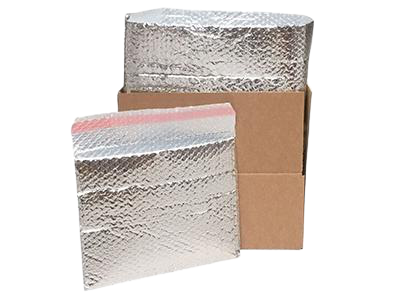
Insulated Backpack Packaging for Frozen Food: Specify the System, Not Just the Bag
A frozen order can leave the dispatch freezer in perfect condition and still arrive softened because the packaging decision began with bag size instead of the route. Effective insulated backpack packaging for frozen food is a defined system: product, primary packs, insulation, refrigerant, loading pattern, handling, monitoring, and acceptance criteria. The backpack slows heat entering the load. It does not create an unlimited frozen environment, and it cannot repair a warm starting product. Buyers who define the full system can test a meaningful promise, train riders to reproduce it, and know when a different container or route is required.
The work begins by replacing "How long does this bag stay cold?" with a better set of decisions.
Define What the Food Must Be at Handover
"Still cold" is not a specification. Neither is "looks frozen." The product owner and quality team should establish an arrival condition that accounts for safety, quality, shelf life, and the customer promise. Ice cream may lose texture before it approaches a general food-safety threshold. Frozen dough can perform differently after partial thawing. Seafood glaze, individually frozen pieces, and sealed meal components each show different signs of temperature abuse.
US federal consumer guidance identifies 0°F, or about -18°C, as the reference for freezer storage. That is a useful orientation point, but it does not eliminate the need for a product-specific delivery limit. A commercial program should state the starting condition, maximum acceptable condition at handover, maximum route time, and action after a deviation. The decision may consider product temperature, package condition, time history, and approved quality procedures.
Separate three concepts in the specification:
- Frozen-storage target: the normal condition in controlled storage before and after delivery
- Delivery acceptance limit: the measurable condition the product must meet at handover
- Safety disposition limit: the point and exposure history that trigger evaluation or rejection under the food-safety plan
These values may not be identical. Treating them as one number can lead to either needless disposal or an overly permissive frozen-delivery promise. Local rules and customer requirements also vary. The FDA Food Code is a model offered for adoption by jurisdictions, so the adopted code and the establishment's own plan should be confirmed.
The acceptance statement should cover physical condition as well. A frozen product can be too crushed, wet, leaking, or contaminated for acceptance even when its temperature reading is within range. Conversely, no employee should taste a questionable item to decide whether it is safe.
Use Five Decision Gates Before Approving a Backpack
A gate-based review prevents attractive features from bypassing basic suitability. Each gate asks for a decision and a piece of evidence.
| Gate | Decision to make | Evidence that closes the gate | Typical reason to stop |
|---|---|---|---|
| Product | What arrival condition protects this food and customer promise? | Approved start, acceptance, and deviation criteria | "Frozen" has not been defined for the product |
| Route | What credible time, ambient exposure, openings, delays, and handovers must be covered? | Mapped route with minimum, normal, and severe-but-credible cases | Unattended dwell or route time remains uncontrolled |
| Packout | Which bag, refrigerant, payload range, and loading pattern can meet the challenge? | Production-intent configuration with illustrated SOP | Cold source, capacity, or closure is still generic |
| Verification | Does the complete system work with realistic variation? | Controlled thermal study plus representative field pilot | Evidence uses a different payload or unopened bag |
| Control | Can people reproduce, inspect, clean, monitor, and change the system safely? | Training, incoming checks, operating limits, and change control | Success depends on one expert packer or perfect conditions |
Failure at a gate is useful information. It may point to a shorter route, different service promise, smaller order zone, more robust passive shipper, refrigerated vehicle, or active container. The objective is not to force every lane into a backpack format.
Translate the Route Into a Thermal Challenge
Measure route time from removal from controlled frozen storage to placement in suitable storage or final accepted handover. Include order assembly, dispatch queues, rider loading, traffic, parking, security access, elevators, failed delivery attempts, and receiving delays. A fifteen-minute ride can become a forty-minute exposure before the food reaches a freezer.
Ambient temperature is only part of the challenge. Direct sunlight, a motorcycle box above a warm engine, a closed car, dark pavement, and an outdoor staging rack can expose the backpack to localized heat. Record where the bag rests and how it is restrained. If the same bag is used in winter, include low-temperature flexibility and condensation in the assessment rather than assuming cold weather removes all risk.
Count openings. A shared backpack used for six deliveries experiences a different process from six closed modules removed one at a time. The last order is exposed to every earlier opening and search. Route sequence, label visibility, and compartment design therefore affect thermal performance.
Define payload range. Minimum load often has less stored cold and more empty air. Maximum load may compress insulation, block coolant sleeves, bend dividers, or prevent the closure from sealing. Use internal dimensions after the liner and panels are installed, then subtract space occupied by refrigerants, shelves, and dividers. Gross catalog volume is not usable food volume.
Document normal and exception cases. A severe-but-credible challenge might include a late dispatch, one extended building handover, and high solar exposure. It should not combine every imaginable failure unless that combination can occur. A test protocol is most valuable when it represents an operating decision rather than a theatrical stress demonstration.
Build a Packout Around Heat Flow and Access
The backpack wall slows conduction, convection, and radiation. Heat also enters through closures, seams, structural components, and open lids. The finished assembly matters more than the advertised conductivity of one foam layer.
Ask for the complete construction: exterior, insulation type and nominal thickness, panel coverage, liner, base, lid overlap, closure, seams, reinforcement, and hardware. Check for compressed corners and gaps. A stiff base can protect meals and stabilize the carrier, but it can also form a thermal bridge if poorly insulated. A reflective liner may help manage radiant exchange in an appropriate assembly, yet its shine does not prove whole-bag performance.
The closure is both a thermal and behavioral feature. Riders need to open the correct zone quickly, retrieve one order, and close it completely. Long zipper paths, overfilled compartments, and hidden labels lengthen exposure. A lid that seals when the sample is empty may bow when a real order presses against it. Evaluate it fully loaded and while worn or mounted as intended.
The liner should resist the defined cleaning process and remain flexible at service temperatures. Seams must be visible enough to inspect and shaped to avoid trapping liquid. Sealed primary food packages should provide the first barrier against leakage; the backpack is secondary containment, not a replacement for correct food packaging. If a liner or other component is intended for direct food contact, verify its regulatory status for the actual food and conditions of use in the destination market.
Select refrigerant against the product requirement. A water-based frozen gel pack may add useful thermal mass for a short route, but its phase behavior near the freezing point of water may not support a product that must remain deeply frozen in a difficult lane. Other phase-change materials can be selected around different transition regions. Whatever the format, request thermal data, conditioning instructions, pack durability information, and packout-specific test evidence.
Dry ice, solid carbon dioxide at about -78.5°C, can serve demanding frozen applications. It also creates risks that change the packaging and operation. Contact can injure skin or damage some packages, while sublimated gas can build up in poorly ventilated spaces. The package must not be gas-tight. Workers need appropriate handling procedures, and air shipments require current dangerous-goods review, markings, documentation, and carrier acceptance. A standard restaurant backpack should never be assumed dry-ice compatible without a complete safety and transport assessment.
Place cold sources where the thermal load occurs and secure them against shifting. Dedicated sleeves can improve repeatability. Use barriers where direct contact could damage food packages. Manage voids without crushing the product or forcing the lid open. The approved loading diagram should show product order, refrigerant locations, divider positions, and closure check.
Condition every component as specified. A warm bag and divider absorb cold on loading. Refrigerants need a verified preparation method, not merely "leave overnight." Product must enter at the approved dispatch condition. A passive packout is designed to maintain a starting state for a limited challenge; it is not a substitute for blast freezing or controlled storage.
Generate Evidence That Resembles the Real Delivery
A supplier report is useful only when its conditions are visible. Request the backpack revision, payload, starting temperatures, refrigerant type and conditioning, ambient profile, sensor positions, opening schedule, test duration, acceptance criterion, raw data, and deviations. Confirm that the tested unit represents production construction.
Controlled testing can use an environmental chamber or another justified setup. Standardized approaches such as ISTA 7E can inform thermal packaging development for parcel distribution. A rider-operated, repeatedly opened backpack has additional behaviors, so route-specific trials remain necessary. A standard profile is a reference, not a guarantee for every lane.
Use actual product when practical or a justified thermal surrogate that represents its mass and behavior. Test minimum, normal, and maximum payloads. Include multiple production-intent bags because materials and assembly vary. If reuse is planned, evaluate aged or mechanically challenged units as well as new samples.
Sensor location should reveal risk. A probe in the protected center will not show a warm upper corner. Place calibrated sensors near the lid, closure, outer walls, bottom, and vulnerable products, with a representative core point for comparison. Record ambient exposure separately. Distinguish air, surface, and product-simulating readings because they respond differently.
The full time series is more useful than a final reading. A step after each lid opening points to access control. A continuously rising edge with a stable core suggests insufficient coverage or a thermal bridge. A rapid rise from dispatch can signal warm components or incorrect refrigerant conditioning. A single unusually cold location may show direct refrigerant contact rather than superior control.
Follow laboratory work with a field pilot. Observe packing speed, label visibility, rider comfort, bag orientation, closure discipline, coolant movement, handover delays, and cleaning. Include different trained employees; a system that works only when the designer packs it is not ready for scale.
Imagine a grocery service with five frozen orders in one carrier. Chamber testing passes with the bag closed. During the pilot, the last order warms faster because riders open the whole lid and move packages at every stop. Adding more coolant may increase weight while leaving the access problem intact. Order modules, visible external identification, revised delivery sequence, or fewer drops address the actual cause. Testing should help choose among those controls.
Operate the Chain From Freezer to Receiver
Create a short dispatch check that can be completed under real workload. Confirm released product, starting condition, correctly conditioned cold sources, clean and dry backpack, intact liner, complete insulation, working closure, installed dividers, readable identity, and approved payload. Load according to the diagram and close immediately.
During transport, keep the bag away from avoidable heat and secure it in the approved orientation. Do not combine hot meals with frozen food in an uncontrolled compartment. Riders should open only the zone required for the current delivery and should never remove refrigerant to create space for an extra order. Dispatch needs an escalation path for route overruns, vehicle problems, missing customers, damaged bags, and monitor alarms.
At handover, the receiver or rider follows the defined acceptance process. That might include confirming seals, visible product condition, temperature evidence, and transfer to frozen storage. If a limit is missed, segregate the product and follow the approved disposition process. Refreezing is not a universal corrective action; product history and the food-safety plan determine what is permitted.
For covered US motor or rail operations, the FDA Sanitary Transportation rule assigns sanitary-practice responsibilities among parties such as shippers, loaders, carriers, and receivers. Written agreements can affect who controls particular tasks and how temperature conditions are demonstrated. Companies should confirm coverage, exemptions, and roles rather than printing "FSMA compliant" on a bag. Equipment condition, prevention of contamination, training, records, and operating communication remain central.
After use, separate dirty returns from released stock. Follow the approved cleaning chemistry and method, rinse when required, and dry the backpack fully open. Inspect liners, seams, panels, closures, straps, and bases before release. Remove units with contamination, trapped moisture, odor, cracked liners, compressed insulation, failed zippers, or structural damage until repaired or retired.
Track causes of deviations. Categories such as warm dispatch, missing refrigerant, wrong packout, late route, excessive openings, failed closure, damaged insulation, monitor error, and cleaning hold lead to action. A single "temperature failure" category hides whether the investment should go into freezers, equipment, routing, training, or staffing.
Buy for Production Consistency and Total Ownership
Procurement should compare suppliers on the evidence and controls behind the backpack, not only unit price. Issue a brief containing product condition, route, payload range, refrigerant, access pattern, hygiene needs, ergonomics, expected reuse model, test expectations, and destination markets. Ask suppliers to identify assumptions and exclusions.
Review a production-intent sample with all inserts and cold sources installed. Confirm internal and external dimensions, usable payload, loaded weight, closure alignment, layer stack, panel coverage, liner seams, base stability, harness adjustment, label locations, and vehicle restraint. Have packers, riders, cleaning staff, quality, and receiving representatives use it.
The purchase specification should identify critical materials and construction, tolerances, inspection methods, approved sample, lot traceability, and notification before changes. A substitute foam, thinner liner, revised adhesive, different zipper, relocated strap anchor, or new cold-source film may affect thermal or hygiene performance even if the product name stays the same. Define which changes require review and retesting.
Calculate ownership beyond the purchase price. Include cold-source inventory, freezer space and energy for conditioning, labor to pack, monitoring, cleaning, drying area, repairs, spare components, reverse logistics, loss, thermal testing, product waste, and end-of-life handling. A low-cost bag that takes too long to clean or fails early can be expensive in daily service. A durable design also loses value if the network cannot bring it back.
Reusable packaging should be evaluated across its life cycle. Reuse can reduce repeated purchasing when bags complete enough safe trips, but washing, return transport, and replacement parts carry impacts. Right-size the carrier, minimize unnecessary materials, design for repair, and verify that claimed recycling pathways exist where units will be retired. Multilayer structures can be difficult to separate even when each material sounds recyclable.
Businesses placing packaging on the European Union market should include Regulation (EU) 2025/40 in their packaging review. The regulation generally applies from August 2026 and introduces requirements and measures concerning packaging composition, recyclability, reuse, and waste prevention. Specific obligations depend on the packaging and the company's role, so qualified legal or compliance review is necessary. Reuse alone is not proof of conformity.
Know When the Backpack Is the Wrong Answer
An insulated backpack is well suited to controlled last-mile work where walking access, stairs, bicycles, or motorcycles make mobility important and where route conditions fit a verified packout. It may be the wrong format for long unattended delivery, very heavy loads, unpredictable return times, severe ambient exposure, high dry-ice quantities, frequent mixed-temperature access, or routes that cannot tolerate passive-system variability.
Do not solve every exception by adding refrigerant. More cold source reduces food space and increases weight; it may also create cold spots or new handling hazards. Alternatives include a smaller service radius, route caps, separate order modules, intermediate frozen storage, a rigid passive shipper, refrigerated vehicle, powered container, or revised customer promise.
The key management decision is the operating envelope. State what the approved backpack can carry, how it is packed, which route and exposure it covers, how it is monitored, and what triggers escalation. When the business changes the menu, payload, cold source, supplier, bag construction, route, vehicle, cleaning chemical, or delivery promise, review whether the evidence still applies.
The best frozen-food backpack is not the one with the most impressive material list. It is the system your team can define, test, reproduce, inspect, and improve. Begin with the product's arrival condition, map the whole handover path, design the bag and cold source as one packout, and challenge it under credible variation. Preserve the result through supplier controls and daily SOPs. If the route falls outside that envelope, change the system instead of stretching the claim.
About Tempk
Tempk manufactures cold-chain packaging products, including insulated takeaway backpacks, thermal bags, gel packs, ice bricks, and related materials for food distribution. Our role in a frozen-delivery project can begin with the operating brief: product condition, payload geometry, route exposure, openings, cleaning, and reuse. From there, we can discuss construction, compartment, closure, and cold-source options for a production-intent sample. Your team should verify the final configuration through a protocol and field pilot that reflect its actual delivery conditions.
Share the frozen-food requirement, route map, minimum and maximum load, planned cold source, and receiving criteria with Tempk. Ask for a configuration that your procurement, operations, and quality teams can evaluate together before scale-up.
Insulated Backpack Distributor Meat Packing System

Insulated Backpack Distributor Meat Packing: From Product Brief to Controlled Fleet
The most expensive mistake in an insulated backpack distributor meat packing project is buying capacity before defining control. A bag may fit twelve sealed meat packs yet fail when coolant is added. It may pass an unopened test but lose control during four restaurant stops. It may survive the route but take too long to sanitize for the next shift. An insulated backpack is a passive secondary carrier, not refrigeration, primary meat packaging, or automatic regulatory compliance. The right purchase is a controlled system whose product limits, construction, refrigerant, packout, route, cleaning, evidence, and supplier responsibilities remain connected from sample to daily use.
This is how a procurement team can build that connection without asking the bag to do work that belongs elsewhere in the cold chain.
Write a Meat-Specific Use Statement
Begin with one sentence that defines the approved job. For example: the carrier will move sealed, chilled retail cuts from a controlled dispatch room to restaurant receivers on a defined local route, using a specified cold-source layout and no more than the approved number of openings. That sentence is not the final specification, but it exposes ambiguity.
Does "meat" mean raw beef, cooked sliced poultry, frozen sausage, marinated pork, or a mixed order? Are products in vacuum pouches, lidded trays, cartons, or flexible bags? Can sharp bones or clips contact the liner? Does the load contain allergens? Who owns the product at handover? Where does temperature-controlled storage resume?
Clarify the packaging boundary. The primary package should contain and protect the meat. Secondary order packaging can provide segregation and physical organization. The backpack provides insulation, mobility, and secondary containment for a limited interval. Refrigerants add cold reserve. None of those layers should silently replace another. Exposed meat should not be placed against a backpack liner unless the entire intended contact use has received appropriate regulatory and food-safety review.
Define the starting and arrival conditions through the quality team. USDA consumer information uses 40°F or below as a common refrigerated reference and 0°F or below for freezer storage. A commercial program may set different or tighter operating limits for a specific meat, process, shelf life, and customer promise. The approved standard should state what is measured, where it is measured, the allowed time, and the response to a deviation.
Include physical acceptance. Leaking seals, punctured pouches, crushed trays, contaminated cartons, missing labels, or evidence of tampering can make a delivery unacceptable regardless of a favorable temperature reading. A cold carrier is not proof that every package is sound.
Finally, state exclusions. The backpack may not be approved for exposed product, carcass sections, payloads beyond the safe carry limit, mixed raw and ready-to-eat food in one zone, dry ice, unattended delivery, long intercity transport, or use as storage. Exclusions protect the program from gradual misuse.
Convert the Use Statement Into Seven Proof Points
The following review connects each buyer decision with evidence. It also shows when the distributor's answer is incomplete.
| Proof point | Decision that must be made | Evidence to retain | Unresolved answer |
|---|---|---|---|
| Product | Which sealed meat formats and conditions are approved? | Product list, package drawings, dispatch and arrival criteria | "Any meat, hot or cold" |
| Payload | What minimum, routine, and maximum loads fit safely? | Loaded-fit review with coolant and a loaded-weight limit | Capacity based on an empty bag |
| Route | Which time, ambient exposure, openings, and handovers are covered? | Route map and severe-but-credible challenge | Duration stated without a route |
| Packout | Which bag revision, refrigerant, divider, and loading pattern are used? | Controlled bill of materials and illustrated SOP | Components can be swapped freely |
| Hygiene | How are leaks contained, bags cleaned, dried, and released? | Liner data, cleaning trial, damage criteria, and segregation flow | "Wipe clean" as the whole procedure |
| Performance | Does the production-intent system meet the approved limit? | Thermal protocol, full data, repetitions, and field pilot | One center reading from one closed sample |
| Supply | How will bulk production stay consistent? | Approved sample, tolerances, lot checks, change notice, and corrective action | Visual similarity is considered sufficient |
A project is ready to scale only when all seven points join. A technically sound carrier without a return-and-cleaning process is not operationally ready. A cleanable bag with no route-relevant thermal evidence is not thermally ready. A passing sample with uncontrolled production substitutions is not commercially ready.
Design the Carrier Around Packed Meat
Start inside. Measure actual primary packs and secondary cartons. Include protruding seals, clips, labels, absorbent pads, and irregular shapes. Determine whether products are stacked flat or upright and whether orientation matters. Add clearance for loading without scraping the liner.
Finished internal dimensions should be measured after insulation, liner, base, and lid are installed. Usable volume is what remains after cold sources, dividers, shelves, and closure clearance. Evaluate minimum load as carefully as maximum load. A few packs in an oversized cavity can shift and warm differently; a full load can crush packages and bow the closure.
The liner should support visual inspection, the approved cleaning chemistry, low-temperature flexing, and practical drying. Look for soil traps at corners, zipper tapes, edge binding, divider attachments, and seams. If bone-in or rigid packs are common, consider abrasion shields or secondary trays. A claim that fabric is water resistant does not prove the finished carrier will contain a primary-package leak.
Choose insulation as an assembly. Ask for core material, nominal thickness, panel map, density where relevant, compression points, seams, lid overlap, and base construction. Thermal resistance at a flat panel says little about a gap beside the zipper. Strap anchors and structural inserts can create bridges. A supplier drawing and finished-bag test together are more informative than a swatch certificate alone.
Closures must work under load. Test zippers, flaps, or other systems with gloved employees and real cartons. Check whether overfill distorts the lid and whether the closing motion transfers soil from the exterior to the liner. External order identification can shorten openings, but label windows and pockets must not create cleaning or thermal problems.
Harness and base design require an ergonomic trial. Meat is dense; refrigerants add weight. Set a safe approved load through the relevant workplace-safety and operations process, not from the bag's tear strength. If the route demands more, select a wheeled or vehicle-mounted insulated carrier. A procurement success should not create an employee injury risk.
Color and branding can help control. Dedicated colors may distinguish raw from ready-to-eat service or chilled from frozen fleets. Branding can identify custody. Yet embroidery, rivets, windows, and patches may puncture layers or complicate cleaning. Approve artwork on the functional sample, not after thermal review.
Make the Cold Source a Controlled Component
Passive insulation only slows heat transfer. For many chilled or frozen routes, a conditioned cold source is part of the packout. Treat it with the same discipline as the backpack.
Water-based gel packs and ice bricks can absorb heat as they warm and change phase. Their usefulness depends on mass, geometry, conditioning, placement, ambient challenge, and product requirement. A frozen pack does not guarantee a deeply frozen payload; many water-based formats change phase near 0°C. Select based on documented behavior and route testing rather than the word "ice."
Other phase-change materials may target different transition regions. Ask for technical data, conditioning instructions, packaging film, leak response, and production consistency. Confirm whether the cold source can touch the primary package or needs a barrier. Position it in retained sleeves or defined zones so riders cannot move it casually.
Conditioning needs infrastructure. Identify freezer set point and monitoring, loading pattern, minimum preparation, confirmation method, ready-stock storage, rotation, and handling after return. If the forecast calls for hundreds of routes, confirm that the facility can condition enough packs without overloading freezers or shortening the procedure during peaks.
Dry ice is a separate design choice. It is solid carbon dioxide at about -78.5°C, can injure skin, may damage packaging by extreme cold, and releases gas as it sublimates. Poorly ventilated storage or vehicles can become hazardous, and the package must allow gas release. Air shipments face current dangerous-goods rules and carrier requirements. Do not insert dry ice into a standard backpack unless a competent safety, transport, materials, and packout review has approved the use.
Keep chilled and frozen loads separate unless a verified multi-zone system exists. A divider does not create two stable temperature regions. Likewise, do not combine hot prepared food with chilled raw meat in one uncontrolled carrier.
Test the Complete System, Including Human Use
Write the protocol before collecting data. Name the production-intent bag revision, primary packs or justified surrogate, payload level, cold-source identity and conditioning, loading sequence, start condition, ambient profile, orientation, opening schedule, sensors, logging interval, duration, and acceptance criteria. Record deviations rather than adjusting the protocol after results appear.
Use sensors that are suitable and calibrated or verified for the range of interest. Position them near likely warm zones: lid, zipper, outer wall, base, and last-order location. Include a representative protected core. Separate the ambient sensor from payload sensors. Mark whether each measurement represents air, package surface, or a product-simulating medium.
The temperature curve tells the story. A rapid increase at the start may indicate warm bag components or incorrect conditioning. A step after every opening shows an access problem. A warm edge with a stable core suggests coolant distribution or a thermal bridge. A cold sensor beside a gel pack can conceal warmer product elsewhere.
Test low fill and full load. Use multiple bags and repetitions as risk warrants. If reuse is planned, include a bag that has experienced representative cleaning and handling. Inspect package seals, labels, condensation, liner integrity, and cold-source movement after each run.
Then move to the field. A laboratory or chamber cannot reproduce every packing shortcut, vehicle position, staircase, receiving queue, or customer absence. Train more than one packer and rider. Observe whether workers can load the diagram, close the bag, identify orders externally, carry it safely, and respond to delays.
Consider a foodservice distributor delivering chilled vacuum-packed cuts to three restaurants. The test bag passes a closed ambient profile. On route, a driver opens the full lid at each stop and rests the carrier near a kitchen exhaust. The last order approaches the acceptance limit. The correct redesign may combine external order labels, removable zones, a different vehicle position, and a delivery appointment. More refrigerant alone could increase weight without controlling the exposure.
Complete the pilot by returning, cleaning, drying, inspecting, and reusing the bag. If it cannot be ready for the next dispatch without skipping a step, the fleet count, cleaning capacity, or design must change.
Place Regulatory Responsibilities With the Right Parties
An equipment supplier can document materials and tests. It cannot make the buyer's entire meat operation compliant. US jurisdiction varies by species, formulation, establishment, and activity. USDA's Food Safety and Inspection Service oversees many meat and poultry products. FDA oversees other foods and parts of transportation and retail systems. State, local, import, and customer rules may add requirements.
The FDA Food Code is a model for retail and food-service safeguards, not identical federal law in every location. The FDA Sanitary Transportation rule covers many qualifying food movements by motor or rail, but coverage, exemptions, written agreements, and duties must be assessed for the actual operation. FSIS guidance addresses protection and defense of meat, poultry, and egg products in transportation and distribution.
The careful procurement statement is not "USDA approved backpack" or "HACCP compliant bag." It is a precise claim about construction and test conditions, followed by the operator's own determination of suitability. The establishment should integrate the carrier into its sanitation procedures, hazard controls, product-protection methods, temperature plan, traceability, and deviation response as appropriate.
Raw and ready-to-eat products require controlled separation. Seasoned or marinated meat may bring allergen concerns. Primary packages need intact seals and labels. Dirty returns should remain segregated from released carriers. If a leak occurs, hold affected food and remove the carrier from service. A quick wipe during a route is not a substitute for the approved response.
Traceability features can support the process. Bag identification, seal points, lot labels, and custody scans may help link a route to a product lot and carrier. They do not replace the business records required by the relevant system. Decide which identifiers must survive moisture, cold, cleaning, and repeated use.
Contract With the Distributor for Consistency
The distributor relationship should have a technical layer and a commercial layer. On the technical side, control the critical material and construction specification, approved sample, tolerances, inspection plan, lot identity, nonconformance process, and prior notice of changes. On the commercial side, define included components, quantities, pricing basis, samples, customization, production timing, packing, shipping terms, warranty, spare parts, and forecast process.
Ask how the distributor controls upstream manufacturers. Who approves foam, liner, zipper, straps, printing, and cold sources? How are revisions identified? What final checks occur before shipment? How are mixed lots prevented? Who investigates a defect that crosses component suppliers?
No distributor needs to disclose every proprietary detail to be useful, but it should provide enough information for the buyer to control performance-critical features. A refusal to identify even the liner construction, insulation thickness, or test setup is a risk signal.
Approve a production-intent sample. A hand-made prototype can demonstrate geometry, but bulk production introduces cutting, stitching, lamination, and assembly variation. A pre-production or first-article review can confirm the design before full release. Retain a reference sample and controlled drawings or photographs.
Incoming inspection should sample across cartons and positions. Verify identity, internal dimensions, panel presence, liner seams, closure alignment, reinforcements, straps, cleanliness, odor, branding, cold-source fit, and loaded performance checks defined in the plan. When internal construction cannot be seen, occasional destructive evaluation may be justified.
Critical substitutions need review. A different foam, liner, adhesive, zipper, seam, base plate, or refrigerant can change thermal or sanitation behavior. Define what needs document review, a new sample, or retesting. Change control should also cover buyer-side changes such as a new carton, product, cleaning chemical, route, or load.
Operate and Maintain the Fleet
At dispatch, release only clean, dry, intact carriers. Verify product identity and starting condition, primary-pack seals, correct refrigerants, divider placement, route label, and approved load. Follow the illustrated packout and close the bag promptly. Keep filled carriers in controlled staging until collection.
During delivery, secure the backpack in the approved orientation and protect it from avoidable heat. Open only for the intended order. Do not store personal items in the meat compartment. Do not remove cold sources, add unplanned products, or force the closure over an excessive load. The escalation plan should address delays, leaks, damaged bags, lost custody, and monitoring alarms.
At receipt, confirm identity, seals, physical condition, and required temperature evidence. Transfer accepted goods to appropriate storage without delay. Segregate deviations for authorized assessment. Rechilling or refreezing should never be treated as automatic correction without evaluating product history and the food-safety plan.
After return, move dirty bags to the defined area. Remove inserts as instructed, clean using the approved chemistry and method, rinse if required, and dry fully open. Inspect liner, seams, closures, insulation condition, base, harness, pockets, and odor. Repair or retire units that cannot meet the release criteria.
Track fleet health. Useful metrics include missing bags, cleaning holds, liner damage, closure failure, repair type, rejected product, temperature deviation, route overrun, packout error, and actual completed reuse. Trend by route and bag revision. The data shows whether the next improvement belongs in packaging, dispatch, training, cleaning, or network design.
Total cost should include far more than purchase price: refrigerants, conditioning freezer capacity, labor, monitoring, testing, cleaning, drying space, returns, repairs, spares, losses, product disposal, and end-of-life handling. A reusable fleet has value only when it returns and remains fit for service.
Make Reuse and End of Life Credible
Design for the actual loop. A local restaurant route with daily bag returns may support reuse well. A one-way consumer shipment may not. Model return distance, loss, washing, drying, repair, and replacement before choosing a heavier reusable construction.
Prefer right-sized carriers and replaceable high-wear parts where feasible. Avoid unnecessary pockets, mixed materials, and branding elements that add failure points without operational value. Ask whether liner, strap, panel, or closure components can be serviced without compromising the approved build.
End-of-life descriptions must match available infrastructure. A multilayer backpack can be difficult to recycle even if individual foam, film, or textile components are theoretically recyclable. Determine whether parts separate, whether local programs accept them, and whether the distributor offers a recovery route. Avoid unqualified "eco-friendly" claims.
Packaging policy is also changing. Companies placing packaging on the European Union market should assess Regulation (EU) 2025/40, which generally applies from August 2026 and addresses packaging composition, recyclability, reuse, and waste prevention. Specific duties depend on the packaging and market role. A qualified review is needed; neither reuse nor recycled content alone demonstrates compliance.
Product protection remains part of the sustainability equation. Losing meat because a light carrier cannot control the route wastes the product and all resources invested before delivery. The goal is the least material system that reliably performs, completes its intended cycles, and has a realistic next step at retirement.
Approve Only the Operating Envelope You Can Defend
An insulated meat-delivery backpack is appropriate when hands-free mobility has operational value, the payload is safe to carry, the product remains sealed, the route is bounded, and the complete packout passes relevant tests. It is not the default for long distances, heavy bulk meat, exposed product, uncontrolled waiting, complex mixed temperatures, or any lane that requires powered refrigeration.
Approval should identify the product family, bag revision, cold source, payload range, loading pattern, route conditions, monitoring, cleaning, and acceptance process. That boundary gives dispatchers a clear answer when an order changes. It also gives the distributor a real specification to manufacture.
When a parameter moves outside the boundary, pause and assess. Shortening the route, separating orders, changing the cold source, adding controlled staging, using a rigid shipper, moving to a wheeled carrier, or selecting a refrigerated vehicle may be safer and more economical than stretching the backpack claim.
The purchase succeeds when ordinary trained employees can reproduce the approved result and when the distributor preserves the build that produced it. That is the difference between buying insulated bags and establishing a controlled packed-meat delivery fleet.
About Tempk
Tempk is a Shanghai-based cold-chain packaging manufacturer. Its official range includes insulated food-delivery backpacks, thermal bags, gel packs, ice bricks, and custom choices for dimensions, insulation, lining, closures, straps, dividers, colors, and branding. Tempk also offers sample support for payload fit, carrying comfort, cleaning, and route checks. For packed meat, these options can form a production-intent candidate; the buyer remains responsible for product limits, sanitation, thermal verification, and applicable regulatory decisions.
Provide Tempk with your sealed meat-pack formats, chilled or frozen criteria, route and opening pattern, cold-source plan, cleaning method, and distributor requirements to request a controlled sample and bulk proposal.
Cooler Backpack Distributor Restaurant Supply Plan
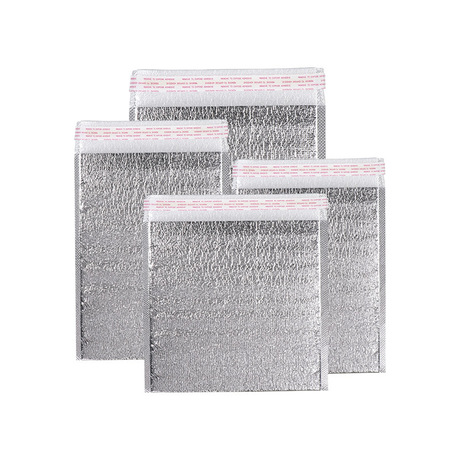
Cooler Backpack Distributor Restaurant Supply: From Route Brief to Rollout
A bulk cooler backpack order should begin with a service blueprint, not a fabric choice. The buyer first defines what the restaurant moves, which conditions must be controlled, how the route behaves, who carries the load, and how the bag returns. A cooler backpack distributor restaurant supply program can then convert that blueprint into a stable specification, a meaningful sample, and a controlled replenishment plan.
This sequence prevents a common procurement failure: approving an attractive bag and discovering later that containers do not fit, riders avoid it, the liner cannot dry between shifts, or a thermal claim has no connection to the real packout.
Write a One-Page Service Envelope
The service envelope is the set of conditions within which the backpack must work. It should be short enough for operations, food safety, purchasing, and the supplier to review together. Begin with the menu or product family. List the primary container footprints, normal stack combinations, drink or sauce formats, package orientation, and the maximum credible load. Use physical containers or controlled drawings; menu names do not define geometry.
Next, state the thermal objective. Is the bag carrying hot food, chilled time/temperature control for safety food, frozen product, ambient bakery items, or a combination that should be separated? Record the required starting and receiving conditions according to the establishment's approved procedures and applicable rules. Do not ask a distributor to choose a universal temperature target on the buyer's behalf.
Describe the route as a sequence. Include staging, waiting, vehicle or walking segment, stops, openings, handoffs, and receipt. Note a typical condition and a credible challenging condition. Direct sun, a warm vehicle, winter exposure, elevator delays, and repeated access can be more influential than the straight-line distance.
Add the human and facility constraints. Identify carrying mode, staff height range, stairs, vehicle racks, counter space, cleaning chemicals, wash area, drying time, storage, and return logistics. A bag that passes a thermal test but cannot be handled or sanitized in the available system is not fit for the service envelope.
Finally, define ownership. Name who loads, releases, transports, receives, cleans, inspects, quarantines, repairs, and replaces each unit. This simple exercise exposes gaps that no insulation material can solve.
Translate Operations Into a Controlled Backpack Specification
The specification should express required functions and measurable characteristics without locking the buyer into an unnecessary marketing label. Internal dimensions and opening dimensions protect payload fit. External dimensions protect vehicle, rack, and storage fit. Both are needed. Gross cavity volume alone can hide lost space around tapered walls, seams, insulation, dividers, and zipper lips.
Describe the assembly at a level that protects performance. This can include outer fabric or coating type, insulation structure, inner lining, base reinforcement, lid and closure, seams, strap attachment, handles, dividers, identification features, color, artwork, and accessory set. Critical tolerances should be agreed where variation could affect containers or racks.
Cleanability belongs in the product definition. Require access to corners and beneath removable inserts, a surface compatible with the approved cleaning method, and a design that can remain open for drying. If unwrapped food may directly touch any component, request food-contact documentation specific to the material, intended conditions, and target market. If food will always remain in sealed primary packaging, record that boundary rather than requesting an ambiguous blanket claim.
| Specification line | Operational reason | Approval method |
|---|---|---|
| Internal footprint and usable height | Prevents crushing, tilt, and unusable nominal capacity | Load the normal and maximum container sets |
| Opening and closure geometry | Controls loading speed, air exchange, and cleanability | Timed loading check and repeated opening inspection |
| Insulation continuity | Reduces weak zones at lid, corners, seams, and base | Section drawing, physical inspection, relevant thermal trial |
| Liner and seam construction | Supports spill control, cleaning, and drying | Cleaning cycle, liquid challenge if needed, visual inspection |
| Base and carrying system | Protects package orientation and staff handling | Loaded route trial with representative users |
| Dividers and coolant positions | Makes the packout repeatable | Packout drawing and shift observation |
| Identification and artwork | Prevents SKU or temperature-role confusion | Production-intent proof and sample approval |
| Carton and change controls | Protects multi-site receipt and future reorders | Approved master data and written notification terms |
The approval method is as important as the requirement. "Durable straps" is open to interpretation; a loaded handling trial and defined inspection point create a shared decision. The table also keeps the buyer from demanding documentation that does not relate to the intended use.
Separate Thermal Evidence From Sales Language
A soft insulated backpack slows heat transfer. It does not actively refrigerate the food, and it does not have a meaningful hold time apart from a tested system. Payload mass, starting temperature, coolant type and conditioning, placement, empty space, ambient exposure, openings, container construction, and acceptance limits all influence the result.
When a supplier states that a bag keeps food cold or hot for a period, request the test conditions before using the statement in a specification or catalog. The evidence should identify the complete bag construction, sample conditioning, payload or simulant, coolant, sensor type and location, ambient profile, opening schedule, and definition of success. A closed bag tested in a mild room does not establish performance on a multi-stop summer route.
The monitoring method must answer the operational question. Internal air temperature can reveal openings or local conditions, but it may change faster than the food and vary depending on whether the sensor is near a zipper or coolant pack. Product or representative simulant measurements can give different information. The food-safety or quality lead should decide what is measured, what limit applies, how instruments are checked, and how an excursion is assessed.
Mechanical claims also need scope. Water-resistant, leak-resistant, washable, and food-contact suitable are not synonyms. Ask whether a liquid test includes seams and tilting; whether cleaning instructions cover the actual chemicals; and whether a material declaration applies to the named supplier and intended use. Evidence should travel with the approved SKU so a later reorder does not inherit an unsupported claim.
Design a Pilot That Can Expose the Wrong Choice
A pilot is valuable when it creates a realistic opportunity to fail before the large order. Start with a production-intent sample, not a display prototype with different foam, hardware, or stitching. Mark the sample, photograph its construction, measure critical dimensions, and record the proposed packout.
The first trial is container fit. Load the common order, a drink-heavy order, and the maximum credible stack. Check lid pressure, tipping, empty space, divider movement, and access to the first delivery. Put the loaded bag into the actual vehicle rack or footwell and on the intended storage shelf.
The second trial is handling. Include staff of different body sizes and ask them to lift from the floor, adjust straps, walk, turn, climb stairs, enter the vehicle, and place the bag at a handoff. Observe workarounds. If staff leave the closure partly open to gain height or remove the base because it feels awkward, the design has failed even if the survey says it is acceptable.
The third trial covers the defined thermal objective. Reproduce loading temperature, payload, coolant conditioning, route stages, openings, and challenging exposure. Record the method and results. A trial should not be stretched into a promise for other seasons, payloads, or routes. Material changes after approval may also require review or retesting.
The fourth trial is sanitation. Apply the approved cleaning and drying procedure repeatedly. Inspect the liner, seam bindings, zipper track, base insert, pockets, print, and underside. Measure whether the unit can dry before it is needed again. Persistent moisture, trapped residue, delamination, or inaccessible soil is a design finding, not merely a staff-training issue.
Run the pilot at more than the flagship site when the network varies. Include a high-volume shift, a difficult route, and a location with constrained cleaning or storage. Gather structured observations from operations, food safety, and users. Procurement can then approve the bag with documented conditions or reject it for a stated reason that informs the next sample.
Place the Backpack Inside the Food-Safety Plan
In the United States, the FDA Food Code is a model offered for adoption by jurisdictions, so restaurant requirements must be checked against the applicable local code. The 2022 model generally references cold holding of time/temperature control for safety food at 41°F, or 5°C, or less and hot holding at 135°F, or 57°C, or above, with detailed provisions and exceptions. Those values describe food control; they are not insulation ratings.
The dispatch procedure should connect the approved packout to the food-safety plan. It can cover bag identity, cleanliness and dryness, physical condition, food packaging, separation, starting condition, coolant placement, closure, label, and release record where required. Hot and chilled products should use separate thermal spaces. Raw animal foods, ready-to-eat foods, and allergens require separation appropriate to the establishment's process; a flexible divider should not be assumed to form a sanitary barrier.
Receiving needs an equally clear decision path. Staff check identity, damage, contamination, elapsed time, and any required temperature or monitoring result. A torn liner, failed closure, missing label, or questionable load should enter a defined hold or escalation process. The delivery person should not invent an acceptance rule at the door.
FDA sanitary transportation requirements may apply to defined shippers, loaders, carriers, and receivers involved in certain U.S. motor or rail transportation. They focus on practices that prevent food from becoming unsafe, including appropriate temperature control, sanitary equipment, and protection from contamination. Coverage and responsibilities depend on the activity and available exemptions or waivers. A commercial backpack is equipment within a process, not a stand-alone compliance certificate.
Cleaning closes the loop. Write the method, approved chemicals, frequency, drying, storage, and inspection criteria. Define when a unit may be repaired and when damage requires retirement. Exposed foam, open seams, persistent odor, a punctured lining, unstable base, or damaged carrying attachment may create different risks, but none should remain in service by default.
Build the Distribution Contract Around Consistency
Once the sample works, the commercial program must preserve it. The purchase file should identify the approved sample, drawing, construction, accessories, artwork, care instructions, carton configuration, inspection points, and required documents. If private labeling is involved, confirm color and print tolerances, trademark approvals, packaging text, and treatment of obsolete inventory.
Ask the distributor which materials or subcomponents might change and what notification process applies. Foam, liner film, coating, zipper, thread, seam tape, reinforcement, baseboard, and adhesive can influence fit, cleaning, appearance, or performance. A change may be reasonable, but the buyer needs enough notice to decide whether documents, a sample, or a repeat trial are required.
Plan order quantity around demand and service risk. A low unit price can be offset by excess branded stock, warehouse volume, or container changes before the inventory is used. Conversely, ordering too little may create emergency substitutions. Review minimum order, lead time, case pack, freight, destination labeling, spare parts, sample charges, and reorder stability as connected variables. Where a distributor holds stock, confirm exactly which approved specification that stock represents.
Receiving inspection can be risk-based. Measure critical dimensions on an agreed sample, confirm labels and accessories, inspect liner and seam continuity, operate closures, and check strap attachment and print. Define how nonconforming cartons are isolated, reported, and resolved. For a multi-site drop shipment, provide each location with a short visual guide and a central escalation contact.
The distributor should also support SKU restraint. A new color or minor size change creates master data, storage, training, and replenishment work. Add a model only when it serves a distinct delivery job. A disciplined assortment makes it easier to keep the right backpack available and to analyze field performance.
Measure Total Cost and Reuse With the Same Honesty
Total program cost includes acquisition, customization, freight, duties, storage, inspection, coolant, cleaning labor, drying space, repair, loss, replacement, and training. The relevant denominator might be completed delivery cycles, operating days, or another unit the buyer can measure consistently. Do not assign an assumed reuse count simply to make a preferred option look inexpensive.
Track why backpacks leave service. Zipper failure, strap damage, liner puncture, odor, delamination, lost units, and obsolete branding suggest different solutions. A replaceable base insert may extend life; an inaccessible seam may require redesign; high loss may require an identification and return process rather than a stronger fabric.
Reuse can support source reduction when the assets are actually returned and used repeatedly. Its environmental case should account for cleaning, repair, reverse transport, and end of life. Multilayer bags may be difficult to recycle in practice even if individual materials are technically recyclable. Request material identification, remove unnecessary mixed components where feasible, and verify local recovery options before publishing a recyclability claim.
A compact post-launch scorecard can combine safety, service, finance, and sustainability: route exceptions, relevant temperature deviations, cleaning failures, user issues, returns, repairs, losses, completed cycles, and retirement reasons. Review it before the next reorder. Observed data gives the distributor a better improvement brief and gives finance a more credible cost comparison.
Know When a Backpack Is the Wrong Format
A cooler backpack is well suited to hands-free movement through urban routes, stairs, and compact vehicles when containers can remain stable inside a soft cavity. It may be wrong for heavy liquid loads, wide pans, fragile decoration, products that must remain precisely level, or routes that demand a qualified rigid thermal system. It is also a weak fit when staff cannot clean and dry it or when the return loop is unreliable.
Compare alternatives without treating them as failures. A hand-carried insulated tote may offer faster access. A rigid box may protect delicate payloads and support a more controlled packout. A wheeled carrier can reduce carrying strain. A heated cabinet, refrigerated vehicle, or other active system may be necessary for longer or higher-risk routes. Monitoring records conditions; it does not replace thermal protection.
The right distributor decision is sometimes to decline the backpack and specify another tool. That judgment protects the restaurant from scaling a convenient form factor beyond its safe operating envelope.
Approve a Process, Not Just a Product
The strongest restaurant cooler backpack programs have a traceable line from route need to product specification, evidence, pilot, operating procedure, and reorder. Each link narrows uncertainty. The service envelope prevents vague shopping. The controlled sample turns material choices into something staff can test. Food-safety rules establish the operating boundary. Commercial and change controls preserve the decision at scale. Field data shows whether cost and reuse expectations hold.
Before placing the bulk order, ask one final question: can a new employee at a new location receive this backpack, load it correctly, use it on the approved route, clean it, inspect it, and know when to remove it from service? If the answer is documented and practical, the program is ready to scale.
About Tempk
Tempk offers thermal delivery bags, including insulated backpack formats for food and grocery routes. A project can be discussed around container dimensions, lining, insulation, closures, straps, dividers, logo, color, carton packing, and compatible coolant options. Tempk also supports samples for checks such as payload fit, carrying comfort, cleaning, and route handling. Buyers should define the required food conditions and validate the complete packout in their own operating context rather than relying on the bag alone.
Share your one-page service envelope with Tempk to compare suitable designs and prepare a production-intent sample. Include the payload, route stages, temperature objective, carrying mode, cleaning method, documentation needs, and expected rollout volume.
Cold Chain Insulated Bag Wool: A Route-First Buying Plan
Cold Chain Insulated Bag Wool: Build the System Backward From Delivery
A receiver opens a parcel and must decide whether its contents are acceptable. That decision is the right starting point for a cold chain insulated bag wool project. The wool layer matters, but it cannot answer the receiving question by itself. Acceptance depends on product-specific limits, elapsed time, evidence of temperature exposure, packaging condition, and a predefined excursion process. Design backward from that moment. Define what must be true at delivery, identify the route events that threaten it, and only then specify the bag, insulation, coolant, payload arrangement, and operating controls.
This route-first method prevents an attractive sample or a broad sustainability claim from becoming the specification. It also produces a packout that procurement can source, quality can approve, warehouse staff can repeat, and receivers can evaluate.
Start With the Receiver's Decision
Before contacting suppliers, write a short acceptance statement. It should identify the product, the conditions it must experience during transport, the evidence used at receipt, and who has authority to release or reject it. For food, the statement should connect to the organization's food-safety plan and applicable transportation practices. For medicines, diagnostics, or other regulated products, it should come from approved product information and the quality system. Do not assign a familiar refrigerated range simply because it appears in other cold-chain programs.
The receiving process may use a data logger, a time-temperature indicator, product-temperature measurement, delivery timestamps, physical inspection, or a justified combination. Each tool has limits. A logger records conditions at its sensor location; it does not protect the payload. Surface temperature can differ from product core temperature. Air warms quickly when the bag is opened. A cool carton does not prove that conditions were maintained earlier in the route. Select evidence before testing so the qualification protocol and receiving procedure measure the same thing.
Next, define the decision path for a deviation. A temperature alarm should not force an untrained receiver to improvise. The procedure should say how to quarantine the product, preserve the record, inspect the packaging, notify the product owner, and document the final disposition. Some excursions may require a stability-based assessment; others may have a clear rejection rule. The bag supplier is not the authority for product release.
Map the receiving environment as well. Will the shipment be opened immediately in a warehouse, left at a restaurant door, processed in a laboratory accession queue, or delivered to a consumer? Does the recipient return the bag, separate its components, or discard it? If a proposed recovery instruction is incompatible with the destination, the sustainability strategy is incomplete before the first unit ships.
Build a Failure Budget for the Whole Journey
A passive package has a finite ability to resist and absorb heat. Instead of asking only how long a bag "keeps cold," list where that ability can be consumed. A warm payload consumes coolant capacity during pull-down. A large temperature difference across the wall increases heat flow. Depot dwell, sun on a vehicle, repeated opening, a compressed base, and a partly closed zipper add exposure. An unexpected delay extends the period over which all losses operate.
Create a route timeline from preconditioning through receipt:
- Storage of empty bags and insulation components
- Coolant conditioning and staging
- Product retrieval and time on the packing bench
- Packout assembly and closure
- Waiting for carrier pickup
- Line-haul, depot, cross-dock, or customs events
- Last-mile delivery and unattended dwell
- Receiving, inspection, data review, and unpacking
For each stage, record expected duration, credible delay, ambient exposure, handling action, and responsible party. The goal is not to invent one dramatic worst case that can never occur. It is to identify a defensible challenge based on the route and seasonal evidence. WHO route-profiling guidance highlights that transport temperatures fluctuate through time, season, elevation, loading, and unloading. For parcel networks, ISTA 7E profiles can provide a standardized challenge when they fit the distribution mode. A project team may use those references, lane data, or a justified combination.
Heat risk is only one part of the budget. A frozen coolant can create a cold spot next to a freeze-sensitive product. Condensation can damage labels or soften cartons. Leaking primary packaging can contaminate the inner surface. Overpacking can compress wool panels and prevent full closure. Rough handling can shift a flexible liner. The route plan should identify both warm and cold risk, as well as sanitation, mechanical, and documentation failures.
Payload extremes often reveal the true design boundary. Test the smallest credible order because it may have less thermal mass and more empty air. Test the largest because it may displace coolant, press on the closure, or compress the insulation. If those cases cannot share one robust configuration, define separate sizes or packout families. Operational simplicity is valuable, but false universality creates hidden variation.
Give the Wool Layer a Precise Job
Wool is useful as a thermal insulation material because its crimped fibers form a structure containing many small air spaces. In a shipping bag, the required performance comes from the finished insulation pad and assembly, not the fiber name. Specify the wool percentage or blend, supporting fibers and binders, treatments, panel mass, nominal thickness, density or compression state, dimensions, and coverage. Include the conditioning state used for measurements.
Thickness must survive use. A wool panel that looks substantial on a bench may flatten under a dense payload or long-term stacking. Compression changes geometry and can change thermal resistance. Panel migration can create a thin corner even when total wool mass remains correct. A retention method, base support, or segmented construction may be needed, but every stitch and joint can also create a heat path. The design should control location without producing large uninsulated bridges.
Wool's ability to exchange water vapor with the surrounding environment is often presented as a condensation solution. Treat it as a material behavior, not a promise. The finished laminate determines whether vapor reaches the fiber, liquid is excluded, or moisture becomes trapped. Assess dry and credible damp conditions, define a leak response, and state whether wet insulation can be dried, replaced, or must be retired. A water-resistant shell does not automatically make seams or the full bag waterproof.
The wool also needs a hygiene boundary. In most food-shipping designs, product remains in appropriate primary packaging and a cleanable inner layer separates it from the insulation. Confirm suitability of the actual food-contact surface where contact is intended. Under the FDA sanitary transportation framework, temperature control, suitable and cleanable equipment, sanitation, and communication may all matter depending on the operation. A natural fiber claim does not replace those controls.
Composition has a labeling boundary too. If a finished bag falls under wool, textile, country-of-origin, or responsible-company labeling rules in a target market, verify the required fiber-content and origin disclosures for that product category. Do not assume that industrial packaging is treated exactly like apparel, and do not print "pure wool" when binders, support fibers, or blended pads are present.
Convert the Design Into a Controlled Configuration
The approved unit should be reproducible from a single configuration record. A photograph is helpful but insufficient. The record connects the bill of materials, dimensions, coolant, payload, assembly, test evidence, and change status.
| Configuration element | Definition needed before approval | Common ambiguity to eliminate |
|---|---|---|
| Bag and closure | Model, finished dimensions, shell, liner, seams, zipper or flap, closure method | External size presented as usable capacity |
| Wool insulation | Composition, treatment, binder, panel mass, thickness, density, coverage, retention | "Natural wool" with no finished-pad specification |
| Coolant | Type, unit size, quantity, conditioning equipment and method, placement | Similar-looking packs substituted by staff |
| Payload | Product family, primary packaging, minimum and maximum load, starting condition | Average order used to represent every shipment |
| Void control | Approved filler, divider, buffer, and orientation | Packers improvising with available material |
| Monitoring | Device, calibration status, start method, interval, placement, alarm or review limits | Logger added without a data-review procedure |
| Thermal challenge | Ambient profile, duration, sensor locations, run plan, acceptance criteria | Headline hold time detached from test conditions |
| Release status | Report version, approving functions, effective date, permitted lanes and seasons | One successful test assumed to cover all routes |
This record also defines procurement's request for quotation. Every bidder should price the same system, including barriers, printing, dividers, coolant, sample work, and requested testing. Otherwise, a low unit price may reflect missing components rather than an efficient design.
The supplier's report should make the tested article traceable to the proposed production unit. Retain drawings, materials, lot information, assembly photographs, instrument records, raw data, and deviations. A conductivity result from a flat wool specimen can support material control. It cannot replace a whole-pack test with representative seams, closure, coolant, and payload. Conversely, a passing chamber run does not remove the need to control wool thickness, mass, placement, and moisture state in routine production.
For medicinal products, EU Good Distribution Practice and other applicable quality requirements may expect manufacturer-defined conditions to be maintained and deviations to be investigated. These responsibilities belong to the distribution system, not to a wool pad. Use careful language such as "evaluated for the defined packout and lane" instead of "globally compliant."
Challenge the Process, Not Just the Prototype
Begin thermal development with controlled chamber work. Predefine product limits, ambient exposure, duration, payload cases, coolant conditions, sensor locations, and acceptance criteria. Instrument both likely warm points and locations at risk of overcooling. Record the starting temperature of every relevant component. If a test fails, keep the unit intact long enough to inspect coolant state, panel position, compression, moisture, closure, and product movement.
Repeatability matters. One favorable run may be an outlier or a carefully assembled ideal. Multiple builds can reveal unit variation and packer effects. The test plan should be proportionate to product risk and the organization's quality system, but the rationale must be documented. Do not average a clear failure out of view.
After the design passes the selected thermal challenges, hand the draft instruction to warehouse staff who did not develop it. Observe without coaching. Do they identify the correct coolant? Can they distinguish the minimum and maximum load diagrams? Do they position the buffer correctly? Does the zipper close without pushing the payload down? Which step causes hesitation?
Revise the instruction until the critical steps are visible and measurable. Use photographs of correct and incorrect conditions. Define maximum staging time where justified, and state what to do if the payload or coolant is outside its starting condition. Simple go/no-go gauges may help verify panel or packout geometry. Color coding can reduce substitutions, provided it remains controlled across suppliers and sites.
Then run a limited distribution pilot. Include representative handovers and monitor handling as well as temperature. Useful observations include time out of controlled storage, missed scans, bag inversion, abrasion, opening at intermediate points, wet weather, recipient delay, return behavior, and cleaning rejects. A pilot is not a marketing case study; it is a source of operational evidence and corrective actions.
Challenge credible deviations deliberately where safe. What happens if pickup is late, the order is at the low payload limit, or the bag is opened for a defined period? What if a reusable unit has completed several cleaning and handling cycles? Robustness work reveals safety margin and procedural sensitivity, but it should not be used to normalize unauthorized practices. Approved limits remain the limits.
Seasonal approval must follow the route rationale. A summer challenge may focus on heat entry, while a winter route can create freezing risk. New destinations, carriers, payloads, coolant suppliers, or staging practices should go through change assessment. Qualification is a maintained state, not a certificate stored after launch.
Buy the Production State, Not the Golden Sample
Bulk purchasing begins after technical feasibility, not before it. Include critical attributes and tolerances in the purchase specification. Require lot identification for major materials, in-process controls for insulation placement, final checks for dimensions and closure, and workmanship criteria for seams, exposed fibers, contamination, and damage. Agree on sampling methods and how nonconforming lots are contained.
Natural raw materials vary, so the supplier should explain how wool input is converted into a consistent finished pad. The control might focus on composition, mass per area, thickness under a stated method, density, moisture conditioning, and visual uniformity. Procurement does not need to dictate the supplier's process, but it needs objective acceptance criteria tied to performance risks.
Sample-to-production consistency should be demonstrated with preproduction units made using intended materials, tooling, and assembly methods. Compare them with an approved reference. If printing or branding changes the shell construction, include the final artwork process in the representative sample. Heavy coatings, additional stitch lines, pockets, and handles are not always thermally neutral.
The quality agreement or purchasing terms should require advance notice for changes to wool source or blend, treatment, binder, barrier film, fabric, zipper, thread, panel dimensions, assembly site, or key process. Define a risk-based review path. Some changes may need document review and dimensional checks; others may require partial or full thermal requalification. Substitution without assessment is especially dangerous when a product looks unchanged from the outside.
Ask about lead time, minimum order, custom options, replacement components, and sample support as commercial questions rather than assumed facts. Clarify ownership of designs and test reports. If the program is reusable, agree on spare liners, repair permissions, and retirement criteria. Total delivered cost should include coolant, packing labor, storage cube, product loss, cleaning, returns, replacement, monitoring, and waste handling, not just the bag price.
Apply the Same Evidence Standard to Sustainability
Wool is renewable and can offer a valuable use for fiber that may not suit apparel. Those attributes justify investigation, not an automatic environmental victory. The finished bag may contain polymer films, coated textiles, synthetic binders, hook-and-loop material, zippers, ink, labels, and coolant packs. State claims by component and mass where possible.
Evaluate the package against a functional unit: delivery of an acceptable payload over the defined route. Include product losses, inbound and outbound transport, bag weight and cube, coolant, manufacturing, cleaning, reverse logistics, repairs, and end of life. For a reusable system, use observed completed trips and loss rates from the network. A laboratory flex test is not the same as real reuse.
Destination infrastructure determines whether a pathway is credible. Ask whether households or business receivers can separate the wool pad, whether contamination prevents recovery, and whether local composting or textile programs accept the material and its treatments. "Biodegradable" should specify the component and conditions. "Recyclable" should reflect collection and processing, not only theoretical material compatibility.
Regulatory expectations for packaging and waste differ and continue to develop. The European Union's Packaging and Packaging Waste Regulation is one example of a lifecycle-oriented framework, but its obligations depend on packaging type, actor, market, and application date. Review current requirements with qualified specialists before finalizing labels or environmental claims in any region.
Sustainability performance should join the operating dashboard. Track acceptable deliveries, temperature deviations, material use per shipment, bag returns, completed trips, cleaning rejects, repairs, losses, and actual destination recovery. The strongest environmental improvement may come from a smaller qualified packout, fewer delivery failures, better coolant conditioning, or higher return participation rather than from changing one insulation material.
Approve a System That Ordinary People Can Run
A well-designed cold chain insulated bag wool program begins at receipt and works backward. It defines product acceptance, maps route exposure, gives wool a precise material specification, qualifies the complete packout, challenges human repeatability, and contracts for production control. It treats sanitation, monitoring, deviations, and environmental claims as operating responsibilities. Wool may be the right insulation layer, but evidence and execution make it a cold-chain solution.
About Tempk
Tempk supplies temperature-control products including insulated bags, lunch and delivery bag formats, gel packs, ice bricks, and cooler boxes. Custom discussions can cover bag size, lining, closure, branding, dividers, and sample evaluation. For a wool-insulated project, we recommend confirming the available fiber construction and documenting the proposed payload, coolant, route, and test conditions before approval. We do not treat a material name as a performance guarantee.
Share your receiving criteria, route timeline, minimum and maximum payloads, and target-market requirements with Tempk. Ask for a sample configuration and an evidence plan that your procurement, operations, and quality teams can review together.
Single Bubble Insulated Liner Germany: Release Plan

Single Bubble Insulated Liner Germany: From Candidate to Released Packout
A liner should reach the packing station only after the business can answer four questions: What must the product survive? Which complete configuration was tested? Who owns the German packaging duties? Which material and process changes would trigger review? That is the release standard for a single bubble insulated liner Germany programme. Single-layer air-cell insulation can be lightweight, compact, and useful inside a parcel carton, but those features have value only within a controlled system. The following release plan joins thermal engineering, route operations, LUCID data, PPWR preparation, and supplier control into one approval file.
Release Page One: State the Job and the Boundary
Write the protection job without naming a preferred liner. This prevents material selection from driving the requirement.
The statement should identify the product, approved conditions, payload range, starting condition, planned transport time, credible delay, route family, and receiving process. It should distinguish a mandatory product limit from a commercial quality target. If an excursion has a defined allowable duration or disposition process, cite the controlled internal source in the project file.
Set a boundary as well. A packout may be approved only for next-business-day domestic parcels, for orders dispatched before a cutoff, or for deliveries to staffed addresses. Longer cross-border services, weekends, high-risk medicines, or unattended drops may require another configuration. A useful approval is narrow enough to be true.
Define failure before testing
A "pass" could mean every product simulant remains within specified limits, no primary pack leaks, the liner retains closure after mechanical stress, and the monitoring record is complete. A failure could include a cold spot beside coolant even if the average temperature looks acceptable.
Agree these rules before seeing data. Post-test adjustment of the acceptance window destroys the credibility of the exercise. Quality, product, logistics, and packaging owners should sign the requirement appropriate to their roles.
Decide whether passive packaging is sensible
Passive systems use insulation and thermal mass without powered control. They can be effective on bounded parcel lanes. As variability, duration, product sensitivity, or consequence of failure rises, the design may require higher-performance insulation, more robust passive qualification, refrigerated transport, or an active container.
A single-bubble option deserves screening when it offers enough room for payload and coolant, can close reliably, and may meet the defined route with lower storage or material burden. It should exit the project early if calculations and preliminary tests show inadequate margin. Continuing because samples are inexpensive usually shifts cost into failed tests and operational complexity.
Release Page Two: Freeze the Physical Architecture
The physical architecture is more than "silver liner in a box." Give every component an identity and a function.
The outer corrugated carton provides structure, stacking capability, and a surface for closure and labels. The liner adds air-cell and reflective layers. Coolant or phase-change material supplies thermal capacity. Dividers maintain spacing, absorbent pads manage leakage, and primary packs protect the product. A temperature logger may document conditions. Tape and flaps close the thermal and physical boundary.
The single-bubble laminate should be described by carrier film, cell geometry, facing material, bonding, converted seams, flap construction, nominal dimensions, tolerances, and unit mass. If the reflective layer is metallised film, say so. If it is actual foil, identify it accurately. This distinction affects mechanical behaviour, German material reporting, and end-of-life assessment.
Design around heat paths
Heat can conduct through films, trapped gas, carton, seams, and compressed points. Air can circulate inside the payload cavity and exchange through gaps. Surfaces radiate energy across spaces. Payload and coolant store energy and change temperature over time.
The liner can slow some of these paths. Enclosed cells restrict air motion and add resistance. A suitable low-emittance facing can reduce radiant exchange when it faces an air space. A fitted closure limits open exchange. The design still has thermal bridges and finite capacity.
That is why centre-panel thickness is not the release criterion. Inspect the top, corners, seam, and tape junction. Load the heaviest and lightest order. Confirm that coolant does not flatten cells or hold flaps open. Measure usable payload after all components are installed.
Make coolant reproducible
Record the coolant item, number, position, conditioning method, permitted starting state, and maximum time between conditioning and final seal. If packs must be separated from the product, specify the barrier. If different seasons use different configurations, give each one a separate code and prevent operators from mixing them.
Warehouse capability is part of design. Freezers, refrigerators, or conditioning areas must support peak volume. A packout that passes only when coolant is prepared with laboratory precision may not be suitable for routine fulfilment.
Release Page Three: Build an Evidence Ladder
Do not jump from a material brochure to a national launch. Each level should retire a different uncertainty.
Identity evidence confirms the sample and production construction. It includes the drawing, layer statement, mass, tolerances, surface identity, and storage conditions.
Material evidence can include flat-specimen thermal transmission, surface properties, puncture, seal, or other relevant tests. Methods and conditions must be stated. ASTM C518, for example, can measure steady-state heat transfer through a flat specimen, but does not predict parcel duration.
Assembly evidence comes from fit checks and complete thermal tests. ISO 22982 provides requirements and test methods for temperature-controlled parcel packages. ISTA 7E offers standard parcel heat and cold profiles. Choose a framework that answers the project question and document any route-specific supplement.
Distribution evidence checks whether vibration, drop, compression, and moisture alter the configuration. The sequence matters. A thermal test performed after relevant handling stress may reveal cell damage or component movement hidden by a pristine chamber run.
Operational evidence comes from a controlled pilot using production instructions, trained packers, the intended carrier service, and receiving inspection. It tests reproducibility, not just material physics.
Release board
| Approval question | Evidence required for release | Reason to pause | Owner |
|---|---|---|---|
| Is the product target controlled? | Approved limits, payload extremes, excursion and disposition rules | Target is generic or copied from another product | Product and quality teams |
| Does the liner fit production cartons? | Drawing, tolerances, minimum/maximum load fit record | Gap, buckling, crushed cells, or uncertain closure | Packaging and operations |
| Does the complete packout pass? | Protocol and report with exact components, profile, sensors, and acceptance | Coupon data or unrelated duration claim only | Packaging and quality |
| Does handling change performance? | Relevant mechanical stress and post-test inspection | Seams, coolant, or product move during distribution | Logistics and packaging |
| Is the German obligated party known? | Role map for seller, importer, brand owner, and fulfilment parties | Contract assumes responsibility without legal analysis | Legal and compliance |
| Are LUCID and system duties complete? | Registration, participation, and matching reports where applicable | Missing registration, contract, or material-mass data | EPR compliance owner |
| Is the design ready for PPWR transition? | Material map, minimisation rationale, recyclability work plan | Blanket compliance claim with no staged analysis | Sustainability and legal |
| Can production stay equivalent? | Incoming checks, work instruction, training, supplier change control | Hand sample is the only approved reference | Procurement and operations |
The board creates stop conditions. A project can continue development while one item is open, but commercial release should reflect the risk and applicable requirements. Owners should record why a gap is acceptable, when that is legitimately the decision.
Release Page Four: Map German Responsibility Before Market Entry
Under the Packaging Act framework in force before 12 August 2026, German packaging law focuses on packaging filled with goods. That law defines the obligated producer through the act of first commercially placing the filled packaging on the German market, and the producer must register in the LUCID Packaging Register before market placement. PPWR and Germany's implementing framework change definitions and some responsibilities from 12 August 2026, so a release file should identify which rules apply on its launch date.
When packaging is subject to system participation, additional duties include a contract with a system operator and matching volume reports to the system and LUCID. The material type and mass of the packaging are operational data, not an annual estimate invented by finance.
Shipment packaging used to deliver goods to final consumers includes its components. Official ZSVR guidance identifies cartons, bags, tape, labels, and filler and says shipment packaging is almost always subject to system participation where it typically accumulates as waste with private final consumers. "Almost always" still requires classification. The official product catalogue and guidance are designed to support that decision.
Draw the role map
The role map should show:
who fills the final shipment carton;
whose name or brand appears on relevant packaging;
who sells to the German customer;
whether goods enter Germany already packed;
who bears legal responsibility at border crossing under the applicable arrangement;
whether a domestic intermediary retailer is involved;
who commissions any fulfilment provider;
who registers, participates, reports, and retains evidence.
Do not rely on physical possession. A fulfilment provider may seal the carton while the client remains responsible for duties. A foreign seller may never touch German soil yet be the relevant producer. An importer may carry responsibility based on the import structure.
The transition on 12 August 2026 is especially important. PPWR begins general application, and ZSVR has announced changes for certain own-brand and import system-participation responsibilities. Businesses should test their role map against the current rules at launch rather than relying on a previous-year memo.
Keep reporting tied to the tested design
Create a packaging SKU record that includes the carton, liner, tape, label, coolant pouch, absorbent, and other relevant pieces. Store material and mass data with the revision. If the supplier changes a metallised film to foil, or modifies film gauge, the event may affect thermal evidence, system reporting, and recyclability analysis at once.
Reconcile planned and actual volumes according to the applicable reporting process. A mismatch between the system operator report and LUCID is not a design issue, but the design team can prevent bad source data.
Release Page Five: Make PPWR Readiness an Engineering Activity
The EU Packaging and Packaging Waste Regulation is directly applicable across Member States according to its timelines. It entered into force in 2025 and generally applies from 12 August 2026, while specific requirements and methods arrive in stages. The honest product statement is therefore not "PPWR approved." It is a dated assessment of applicable provisions, open implementing details, and planned design actions.
Recyclability begins with a complete material map
PPWR establishes recyclability requirements and moves toward design-for-recycling grades, later adding recycled-at-scale criteria. The exact timelines, delegated acts, categories, and exceptions need monitoring. Germany's ZSVR minimum standard remains a current reference for packaging subject to system participation and considers sorting, separability, material compatibility, and recycling infrastructure.
For a single-bubble liner, examine whether the facing and air-cell film form a compatible stream, can be separated, or interfere with sorting. Review adhesives, inks, coatings, tape, and labels. A mono-material claim should include every layer that materially affects recovery. A reflective layer can be extremely thin and still influence recognition or recycling behaviour.
Minimisation needs a functional justification
The PPWR moves toward the minimum weight and volume necessary for functionality. The project should document thermal protection, product safety, logistics, hygiene, and legal functions. Use testing to show why the liner size, flap, coolant spacing, and carton clearance exist.
Challenge legacy excess. A broad carton range may allow closer product fit and less liner area. Better coolant placement may reduce void. A fitted insert may eliminate loose filler. Yet removal must stop before it damages thermal margin or mechanical protection.
Later e-commerce empty-space limits add another reason to control drawings and SKU fit. The applicable calculation methodology, listed filler treatment, dates, and exceptions must be checked at the time of design. Do not assume all air cells inside functional insulation are treated one way without reviewing the final rules.
Environmental claims need a destination
"Recyclable" should specify the market, construction, collection route, and evidence. "Reusable" should specify the return loop, cleaning, inspection, and supported use pattern. "Less material" should state the comparison basis and confirm that coolant, carton, and product loss were included.
German consumers may separate the corrugated carton from the liner, but the instruction must match local collection and the actual laminate. If no credible recovery route exists, say so internally and prioritise a design change rather than relying on a logo.
Release Page Six: Transfer the Design to Operations
The best packout is one a new operator can reproduce during peak volume.
Create a visual work instruction with the exact product order, coolant positions, liner orientation, flap sequence, tape placement, label position, and maximum time outside controlled storage. Show common errors. Use German-language operating or receiving information where the workforce and customer need it.
Train with final materials and observe unassisted packing. If operators regularly reverse the liner, create an orientation mark or a construction that removes ambiguity. If the top flap springs open, redesign it. Training should not compensate indefinitely for poor physical design.
Receiving instructions should state who opens the parcel, what to inspect, where to put the product, how monitor data are handled, and whom to contact after damage or a temperature alert. For medicinal products, follow the controlled GDP process rather than a general consumer message.
Use deviations to improve the right part of the system
Classify events:
thermal design failure;
material or conversion defect;
incorrect coolant conditioning;
packing instruction deviation;
carrier service exception;
receiver delay;
monitor or data problem;
reporting or packaging-role issue.
Adding insulation will not resolve a missing LUCID report. Updating a legal memo will not close a warm corner. Clear categories keep corrective action with the correct owner.
Review the packout when product mass, carton, coolant, route, carrier, service level, destination mix, or supplier construction changes. Seasonal data can support refinement, but do not invent universal "summer" and "winter" packouts without representative evidence.
Release Page Seven: Decide When to Use Something Else
Single bubble is a useful option, not a goal. Move to another system when the evidence says it should.
Choose a higher-resistance passive shipper when long duration or severe exposure consumes the available margin. Consider a rigid solution when crush and puncture dominate. Use a reusable container when there is a controlled return loop with cleaning and inspection. Consider refrigerated or active control when passive packaging cannot manage uncertainty at an acceptable risk.
Route segmentation is often more efficient than one oversized packout. A single-bubble configuration may serve short predictable German lanes, while another system covers cross-border, weekend, or high-risk shipments. The order-management system must select the correct option automatically and block unsupported services.
Commercial comparison should include packaging, coolant, carton, storage, pack labour, usable payload, carrier charges, qualification, system-participation fees, product loss, reshipment, recovery, and returns. A low unit price can hide a high operating cost; a technically stronger system can be unnecessary overprotection.
Frequently Asked Questions
How much temperature protection does a single-bubble liner provide?
No category-wide duration is defensible. Performance depends on the exact laminate, seams, closure, carton, payload, coolant, starting conditions, ambient profile, handling, and acceptance limits. Use material data for screening and a complete-pack test for the defined route decision.
Does the empty-liner supplier need a LUCID registration?
It cannot be decided from the supplier label alone. Under the Packaging Act framework before 12 August 2026, the duties discussed for shipment packaging generally attach to the legally defined producer of packaging filled with goods, not automatically to an empty-packaging supplier. From that date, PPWR and German implementation change definitions and can create distinct duties for some empty-packaging businesses and foreign sellers. All parties should map the actual German responsibility chain using current guidance.
What changes on 12 August 2026?
Regulation (EU) 2025/40 generally begins applying, subject to its exceptions, and ZSVR highlights changes in producer and system-participation responsibility for certain own-brand and import arrangements. Many design requirements continue on staged timelines. Companies should review official current guidance for their role rather than treating the date as one universal switch.
Should a German buyer prefer mono-material insulation?
Lower material complexity can support sorting and recycling, but the design must still protect the product and satisfy applicable technical needs. Compare verified recyclability, thermal performance, coolant, carton, and product loss. A nominal mono-material claim is not enough if adhesives, coatings, labels, or actual infrastructure undermine recovery.
Conclusion: Release One Configuration With Named Owners
A German liner programme is ready when the team can point to one controlled requirement, one bill of materials, one reproducible pack instruction, and one body of evidence linked to the route. It also needs a named owner for LUCID registration, system participation and reports where applicable, plus a dated PPWR readiness review.
Single-bubble insulation can then do the modest but valuable job it was selected for: slowing heat transfer in a compact passive packout. It should never be asked to substitute for route control, qualification, legal analysis, or a credible recycling system.
About Tempk
Tempk is the B2B temperature-controlled packaging brand of Shanghai Tempk Industrial Co., Ltd. Our product categories include insulated liners, bags, and boxes, gel and water ice packs, and phase-change materials. We serve pharmaceutical, food, and cold-chain buyers. Any product considered for a German route should be evaluated with the intended carton, payload, coolant, operating method, and evidence plan. The buyer's teams retain control of qualification, operational release, and German and EU obligations.
Create the release brief: Send Tempk the product limits, payload range, carton drawing, route boundary, coolant plan, and required evidence. Request a configuration that your technical and compliance owners can evaluate together.
Foil Bubble Liner for E-Commerce: Five Buyer Decisions
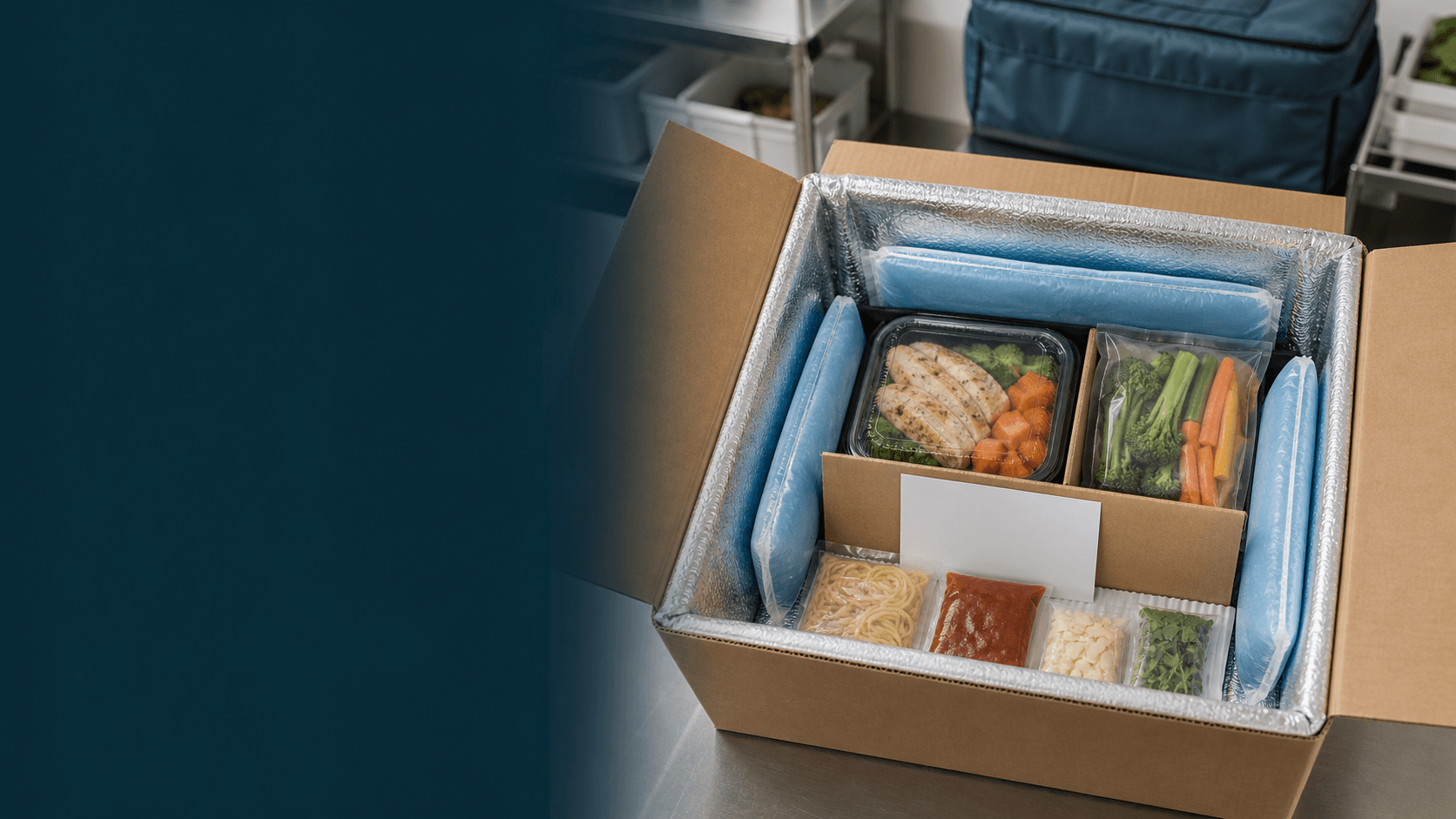
Foil Bubble Liner for E-Commerce: A Five-Decision Framework
A foil bubble liner for e-commerce should be chosen through five connected decisions: what the product must avoid, what the delivery channel can impose, how the complete packout manages heat, what evidence is needed, and what happens after unboxing. This order matters. Starting with a liner sample or a price per piece encourages teams to treat packaging as an isolated accessory. Starting with the shipment reveals whether a flexible reflective liner is appropriate, which other components it needs, and where a different enclosure would be safer.
The framework below is designed for merchants, packaging engineers, procurement teams, fulfillment leaders, quality managers, and sustainability specialists. It does not assume that every shipment is pharmaceutical or that every parcel requires active cooling. It also does not assume that a reflective appearance proves performance. The aim is to turn a broad packaging category into a controlled e-commerce system that can be piloted, measured, and improved.
Decision One: Define the Product Boundary Before Selecting Packaging
Every design begins with a condition that matters to the product. For one item, brief warmth may only affect texture. For another, freezing may damage an emulsion. A diagnostic product may have a defined labeled range, while a luxury cosmetic may need protection from visible deformation rather than a regulated temperature band. These are different problems even if the cartons look similar.
Write a short product boundary for each SKU family. It should state the acceptable condition, the planned delivery duration, the credible delay case, initial product condition, intended destination season, and consequence of failure. Avoid language such as "keep cool" unless the business has translated it into a measurable acceptance rule. A vague target cannot produce a defensible packout.
Product mass and geometry are part of the boundary. A dense multipack carries more thermal mass than a small vial. A nearly full carton exchanges heat differently from a large enclosure with one small item. Glass, pouches, trays, and jars also impose different physical-protection needs. Order history should therefore be grouped into repeatable profiles rather than averaged into an imaginary typical order.
Ask whether the product can touch a cold component. Direct contact with a frozen pack can create a local cold spot even while the carton average looks acceptable. A divider, conditioned coolant, or phase change material may be needed, depending on the product requirement. The answer comes from the product and test plan, not from the liner category.
Then define the decision consequence. If a failure creates only a cosmetic complaint, the business may tolerate more risk than when safety, efficacy, or legal obligations are involved. High-consequence products need quality ownership, documented evidence, release controls, and deviation procedures. A reflective liner may still form part of the solution, but it cannot replace those controls.
Decision Two: Map the Real E-Commerce Channel
The route begins before carrier pickup. Product may wait in chilled storage, move to a warm packing bench, sit in a staging cage, load into a trailer, pass through hubs, ride in a delivery vehicle, and remain at a doorstep. The hottest or coldest point may occur during any of these stages. Mapping only the published transit promise misses operational dwell.
Build the channel map from timestamps and observations. Record order cut-off, pick time, pack time, dock dwell, pickup, hub movement, delivery window, weekend exposure, and customer retrieval. Identify whether service is local courier, national parcel, marketplace fulfillment, retailer fulfillment, subscription delivery, or a mixed network. Each channel may justify a separate profile.
Climate must be paired with season and handling. An outdoor daily average does not describe a closed vehicle in sunlight, and a winter minimum does not describe the temperature inside a heated facility. Use measured lane data when available. When it is not, choose a justified test profile and state what uncertainty remains.
The route also imposes mechanical hazards. Cartons drop, vibrate, compress, tilt, abrade, and encounter sharp neighboring objects. A thermal-only trial cannot show whether a seam opens after vibration or whether a frozen pack damages the liner after repeated impacts. ISTA separates thermal development procedures from physical distribution testing for good reason: the questions are related, but they are not the same.
A checkout promise is not a test condition. "Next day" can become two days because of a missed cut-off or weather interruption. Design teams should include a delay case that reflects the business risk. The goal is not to claim protection for every conceivable event. It is to define a useful operating window and decide what happens beyond it.
Use a lane matrix instead of one global assumption
A small lane matrix can reveal where a flexible liner belongs. Classify routes by duration, seasonal exposure, handoffs, delivery control, payload class, and consequence. One packout may suit short urban orders with same-day retrieval. Another may combine the liner with conditioned thermal storage media for parcel service. Long, uncertain, or high-consequence routes may require a more robust insulated box.
Keep exceptions visible. Remote postal codes, weekend orders, heat waves, severe cold, and large mixed baskets can be routed to another packout or temporarily suspended. An exception rule is a sign of control, not a weakness in the product.
Decision Three: Build the Smallest Functional Thermal System
Once the product and channel are known, design the complete assembly. A foil-bubble liner is usually a flexible laminate with a low-emittance reflective face and an enclosed-cell or bubble structure. Exact layer materials, thicknesses, seams, and surface construction vary. Buyers should evaluate the specified build rather than relying on the category name.
Heat reaches the payload by conduction, convection, and radiation. The bubble structure and enclosed air can resist some conductive and convective transfer. A low-emittance surface can reduce radiant exchange when it faces an adjacent air space. U.S. Department of Energy guidance explains this principle for reflective insulation and radiant barriers in buildings. It also makes the essential point that an adjacent air space is needed. In a parcel, that principle is relevant, but the building guidance is not a parcel-performance rating.
This distinction affects packing. Crushing the cells, wrapping the reflective face tightly against another solid layer, leaving seams open, or creating large conductive bridges can change the intended behavior. A shiny surface alone does not establish how long a shipment will remain within its target.
Coolant, when required, is part of the energy balance. Gel packs, water-based ice packs, or phase change materials absorb heat as their temperature changes and, for phase-changing components, as they transition. Their quantity, phase-change range, conditioning method, placement, and contact with the product influence results. More coolant is not automatically better because excess frozen mass can create cold damage, increase freight, and reduce usable volume.
Right-sizing is a system exercise. The carton must fit the liner, product, coolant, dividers, absorbent, and closure without crushing components or leaving unnecessary volume. Liner folds consume space. Coolant needs repeatable placement. The top must close without reopening. A nominal carton dimension is not the same as usable internal space.
Use the following matrix during early design reviews. It does not select a product by itself; it shows what must be decided and verified.
| Decision signal | Likely design direction | Evidence to collect | Common mistake to avoid |
|---|---|---|---|
| Short, controlled local route with moderate product consequence | Right-sized carton and liner; add thermal storage only if trials show it is needed | Lane duration, staging time, pilot temperature data, damage results | Assuming every local order experiences the same dwell |
| Seasonal parcel route with variable exposure | Liner plus a defined coolant and placement plan | Hot- and cold-season profiles, delay case, physical distribution test | Treating coolant quantity as the only design variable |
| Small payload in a large standard carton | Develop a smaller packout or governed size portfolio | Dimensional order data, usable volume, pack-time trial | Filling avoidable volume with loose material |
| Freeze-sensitive product | Use conditioned components and separation as appropriate | Product limit, local sensor placement, cold-case test | Placing frozen packs directly against the product |
| High-consequence or long-uncertainty shipment | Consider a stronger insulated enclosure and formal quality controls | Qualified protocol, repeats, deviations, release criteria | Extending a low-risk pilot claim to a critical shipment |
| Subscription route with reliable recovery | Explore a returnable configuration with inspection and retirement rules | Return rate, rotations, cleaning, damage, reverse-logistics impact | Calling an item reusable without operating a return loop |
| Customer destination lacks a verified laminate-recovery route | Give component-specific, location-aware disposal guidance | Material declaration and local collector acceptance | Using a recycling symbol as proof of collection |
Reduce volume without deleting necessary protection
The smallest package is not automatically the best package. Necessary space may separate a product from cold packs, provide cushioning, allow liner closure, or accommodate permitted product movement. Remove avoidable void, not functional protection.
European Union packaging rules make this distinction important for sellers placing packaging on that market. Regulation 2025/40 introduces staged packaging-minimisation provisions and a future maximum empty-space ratio for grouped, transport, and e-commerce packaging. Filling materials are counted in the empty-space calculation. The law also preserves packaging functionality and product protection, and its detailed method and relevant dates must be followed as they become operative.
That is an EU-specific legal framework, not a global carton formula. Teams should not apply a remembered percentage without confirming applicability, timing, methodology, and operator duties. The sound engineering practice is broader: document why each component and space exists, then reduce what is not needed.
Decision Four: Demand Evidence That Matches the Claim
A useful thermal report describes a complete packout. It identifies the carton and liner construction, payload, coolant, component conditioning, starting temperatures, ambient profile, sensor positions, duration, repetitions, acceptance limits, and deviations. If any of these are missing, it becomes hard to determine whether the result applies to a live order.
Sensor placement deserves special attention. A single probe in the carton center may miss a hot wall, a cold spot beside a frozen pack, or variation among products. The measurement plan should reflect product risk and geometry. Instruments should be suitable for the range and used under the organization's calibration controls.
ISTA Standard 7E provides standardized external temperature exposure profiles for parcel delivery system shipments and can support development and comparison. Other ISTA procedures address different e-commerce and physical-distribution contexts. Selecting a named procedure should follow the distribution channel and objective. Passing a thermal exposure does not establish resistance to drops or vibration, and passing a physical test does not prove thermal duration.
ASTM C1224 is sometimes mentioned around reflective materials. Its official scope concerns reflective insulation used in building applications, with low-emittance surfaces facing enclosed air spaces. It can help a technical reader understand building-product specifications, but it is not an e-commerce parcel certification. A supplier should not use it to imply that a shipping configuration has been validated.
Evidence must also survive production. Record the approved material stack, dimensions, seam design, closure, and workmanship criteria. Inspect multiple units across a lot rather than one presentation sample. Define which changes require notification and retesting, such as a reflective film, bubble geometry, adhesive, seam, size, carton, coolant, or packout revision.
Run a pilot that tests people as well as materials
Laboratory work shows what happens under controlled conditions. A fulfillment pilot shows whether people can reproduce the packout. Give trained packers clear visual instructions, then observe size selection, liner orientation, coolant conditioning, placement, closure, labeling, and staging. Record time and errors without blaming individuals; recurrent errors usually reveal a design or instruction problem.
Include ordinary variation. Test minimum and maximum payloads, not only the easiest full carton. Use production cartons and labels. Include a realistic pack-bench dwell and handoff. If the top flap repeatedly springs open or coolant slides to one side, solve that before volume launch.
Set launch gates in advance. Possible gates include product temperature acceptance, physical integrity, closure success, damage rate, pack accuracy, cycle time, material usage, and customer instruction comprehension. The exact thresholds are business-specific. Writing them before results prevents the team from redefining success after a convenient trial.
Decision Five: Plan the Customer and Recovery Experience
The package remains part of the brand after the product arrives. The recipient must be able to open it without damaging the goods, understand which components separate, and know what to do with each one. If those actions are unclear, a technically promising recovery idea will fail at the doorstep.
Start with a material map. List the carton, liner, coolant pouch and contents, divider, absorbent, tape, label, and any accessory. For each, record its material identity, whether it separates cleanly, contamination concerns, intended collection route, and the instruction presented to the customer. A general statement about the whole parcel is rarely accurate when the components follow different paths.
Reflective bubble laminates need careful wording. The reflective layer may be aluminum foil or a metallized film; the core and sealants may be polymers; adhesives may make separation impractical. The recyclability of an individual raw material does not prove that the bonded finished liner is accepted. Ask for a construction declaration, then check the actual collection and processing route.
In the United States, Environmental Protection Agency guidance emphasizes that recycling programs vary locally. Plastic bags, wraps, and films often require separate store or drop-off collection instead of a household curbside bin. Even such programs may accept only specified clean, dry films. Therefore, a seller should not instruct customers to place a reflective laminate in a film bin until the collector confirms that exact structure is eligible.
For packaging placed on the European Union market, Regulation 2025/40 creates staged recyclability requirements. Design-for-recycling criteria and later recycled-at-scale assessments depend on future dates, delegated acts, and methods. A present material description can support preparation, but it should not be turned into an unsupported promise about a future recyclability grade. Applicable responsibilities should be reviewed for the seller's exact role and market.
Reuse deserves the same evidence discipline. A durable-looking liner is only functioning as reusable packaging when an operating system returns it, checks it, prepares it for another cycle, and records retirement. Define who owns the component, how the customer returns it, how it is cleaned and dried if appropriate, what damage causes rejection, and how many successful rotations occur. Compare the benefit with the transport and materials used by reverse logistics.
Returns of products are a separate risk. A customer may omit coolant, leave a parcel at a drop point, or use slower service. Do not imply that the original outbound validation covers this uncontrolled return. Give clear disposition instructions and involve quality personnel where product condition matters.
Govern the Packout as a Living Product
A good e-commerce packout changes with evidence, but it should not drift silently. Assign an owner and revision number. Store the bill of materials, packing instruction, training record, approved test evidence, supplier declaration, lane rules, and customer guidance together. When a component or route changes, the owner can evaluate the effect across the system.
Procurement should contract against the approved specification rather than a generic phrase. Dimensions, construction, workmanship, pack quantity, and change notification can be discussed with the supplier, but the final requirements must match what the buyer has tested. Current MOQ, lead time, customization, and commercial terms should be confirmed in a quotation; they should never be inferred from a category page.
Fulfillment data provides early warnings. Track wrong-size selections, incomplete closures, coolant-conditioning errors, crushed cells, damaged cartons, pack time, and staging delays. Customer service adds signals about warm arrivals, condensation, leaks, confusing disposal instructions, and excessive packaging. Quality data adds excursions and deviations. Sustainability data adds packaging mass, volume, recovery participation, and retirement reasons.
Review these measures by packout profile, not only in aggregate. A high overall success rate can hide one remote lane or small payload that performs poorly. Conversely, one difficult exception should not force unnecessary materials into every short route. Segment-level evidence supports targeted correction.
Seasonal review is essential. A summer configuration may overcool a freeze-sensitive product in winter. Carrier networks, fulfillment locations, and order mixes also change. Revisit the lane assumptions before peak seasons and after meaningful operational changes.
The program should include a controlled response to excursions. Define who receives the alert, how shipment records are retrieved, who evaluates product disposition, what customers are told, and when the packout is paused. Packaging is only one control within a broader quality and service process.
Frequently Asked Questions
Does a reflective liner work without coolant?
It can slow some heat transfer, but whether that is enough depends on the product boundary, starting condition, payload, route, ambient exposure, closure, and allowable duration. A short, low-risk route may not need thermal storage, while another shipment may need conditioned gel packs, water ice packs, phase change material, or a stronger insulated enclosure. Test the complete packout against the intended case.
Is more bubble thickness always better?
No single dimension proves shipment performance. Cell geometry, enclosed air, reflective surfaces, material layers, seams, fit, compression, closure, coolant, payload, and route all interact. A thicker sample can still perform poorly if it is crushed, badly fitted, or used with an unsuitable packout. Compare specified constructions in a controlled test.
Can a supplier's ASTM C1224 reference qualify an e-commerce shipment?
No. ASTM C1224 addresses reflective insulation in building applications. It does not qualify a parcel, coolant plan, payload, or delivery lane. Use packaging-relevant thermal and physical procedures, with conditions that represent the intended distribution system.
What should trigger retesting?
Retesting should be considered when a change could affect the result. Examples include the liner material stack, bubble structure, seam, size, carton, coolant type or quantity, conditioning, product load, pack orientation, fulfillment site, carrier channel, route duration, seasonal profile, or packing process. A documented change assessment should determine the required scope rather than assuming equivalence.
How can a seller make credible environmental statements?
Describe the actual material and program, state the geographic scope, verify local collection, and measure any return system. Avoid treating technical recyclability as proof of curbside acceptance, or potential reuse as evidence of repeated use. For EU sales, distinguish current duties from staged future requirements and monitor the official methods that complete the regulatory framework.
Conclusion: Make Five Decisions, Then Approve the System
The best liner decision does not begin with reflectivity, thickness, or unit price. It begins with a defined product boundary and a realistic e-commerce channel. From there, the team can build the smallest functional thermal system, demand evidence that matches the claim, and design a customer and recovery experience that can operate in the destination market.
This five-decision sequence keeps attractive material features in perspective. Reflective surfaces can reduce radiant exchange when the assembly preserves an adjacent air space. Bubble structures can contribute thermal resistance. Coolant can add thermal capacity. Yet only the tested combination of payload, enclosure, components, packing process, route, and operating controls establishes suitability. Approve that system, monitor it by profile, and revise it when evidence changes.
About Tempk
Tempk, a brand of Shanghai Tempk Industrial Co., Ltd., presents B2B temperature-controlled packaging categories for pharmaceutical, food, and cold-chain buyers. Its categories include insulated liners, bags and boxes, gel or water ice packs, and phase change materials. Buyers can compare flexible insulation, more substantial enclosures, and thermal storage components. Any proposed configuration should be assessed against the buyer's product limits, parcel channel, packout evidence, fulfillment controls, destination rules, and customer recovery pathway.
CTA: Send Tempk one defined SKU profile, its delivery lane, temperature boundary, and delay case to begin a focused packout comparison and pilot discussion.
Foil Bubble Liner Dubai: Four-Gate Selection Method
Foil Bubble Liner Dubai: The Four-Gate Selection Method
There is no universal "Dubai-rated" foil-bubble liner. A suitable design is one that passes four gates: the product has clear limits, the route exposure is understood, the complete packout is engineered, and the evidence matches real operations. Skip any gate and a liner may look protective while leaving the main risk untouched. The foil bubble liner Dubai buyers need for a short grocery transfer may be inappropriate for a pharmaceutical parcel, a multi-stop van, or an unattended delivery. This method helps packaging, quality, logistics, and procurement teams reach one defensible decision.
Gate One: Define the Product Truth
Packaging starts with the condition the product must maintain, not the material you intend to buy. Collect the approved storage and transport statement, stability or shelf-life information available to your team, sensitivity to heat and cold, moisture concerns, physical fragility, and the consequence of an excursion. If the instruction says only "keep cool," resolve the ambiguity before evaluating samples.
For regulated products, use the registered label, approved procedures, and quality or regulatory interpretation. Do not replace them with a commonly quoted temperature band. Different medicines, diagnostics, foods, ingredients, and specialty goods can have different limits. Even products that share a nominal range may have different allowable excursion time and documentation needs.
Define the payload boundary as well. Record the smallest and largest intended load, primary-pack dimensions, mass, starting condition, arrangement, and usable carton volume. A liquid-filled payload has a different thermal response from a small lightweight item. A nearly empty packout can warm quickly and allow coolant to move; an overfilled one can compress bubbles and prevent a reliable closure.
The final part of this gate is the failure decision. Who has authority to accept, quarantine, or reject a shipment? What information will that person need at receipt? If the organization cannot answer, adding a logger or liner will produce data without a controlled response.
Gate-one output: a short user requirement that states product limits, load range, starting conditions, acceptance criteria, and required records.
Gate Two: Turn the Route Into a Heat Map
Dubai weather matters, but the package does not experience a citywide average. It experiences a sequence of places and delays. Map the route from the moment product and coolant leave controlled storage until the receiver places the goods into their next approved environment.
Break the lane into segments:
component storage and preparation;
packing and sealing;
dispatch queue;
movement across the loading bay;
vehicle or air-cargo handling;
consolidation and transfers;
building access, security, or customs processes where relevant;
final handover and receiving.
For each segment, identify whether it is controlled, shaded, merely indoor, or exposed; the expected duration; a credible delay; and who owns the process. Include vehicle door openings and stop sequence. Direct solar load on an exposed parcel is different from shaded ambient exposure and should be represented when it is a realistic event.
Avoid designing only for the longest driving time. A short city route can include a long lobby wait, while an international shipment may remain inside controlled infrastructure for much of its journey. Handover time often matters more than distance.
A useful lane profile contains normal and challenge cases. The normal case represents planned operations. The challenge adds a defensible seasonal or delay condition, not an arbitrary extreme chosen to make the package pass or fail. Actual observations, carrier processes, historical records, and warehouse time studies can inform it.
Gate-two output: a time-and-exposure profile with named handovers, normal and delayed durations, and operational owners.
Gate Three: Build the Thermal System Around the Liner
The liner's task is to resist heat flow. It does so through its enclosed bubble structure, reflective surface, continuous walls, and closure, but the actual result depends on how those features interact with the carton and payload.
Heat crosses the package through solids, moving air, and radiant exchange. Enclosed cells impede a direct conductive path and restrict air movement. A low-emittance face can reduce radiant transfer when it borders a suitable air space. Seams, crushed areas, open flaps, and direct contacts can bypass those benefits. Therefore, the relevant object is the assembled enclosure, not a square of silver material.
If the requirement needs passive cooling or warming, add a finite thermal reservoir. Gel packs, water-based ice packs, or phase change materials can absorb or release heat, but their type, preparation, quantity, separation, and placement must suit the product. Insulation slows heat transfer; the prepared payload and coolant supply the thermal capacity. Neither role should be attributed to the other.
Design the physical packout in this order:
Choose an outer carton that provides the required handling, stacking, marking, and carrier interface.
Fit the liner to the carton's internal dimensions and confirm usable space after folds and closure.
Arrange the primary payload so its minimum and maximum configurations are defined.
Add coolant only where the product and route require it, with conditioning and barriers specified.
Control void space and movement without creating an untested heat bridge.
Close the liner with a repeatable flap or seal, then close the outer carton as intended for shipment.
Position temperature monitors according to the study or approved routine rather than wherever they are easiest to reach.
Packers should be able to reproduce this sequence during a busy shift. If success depends on one experienced employee adjusting folds by instinct, the system is not ready to scale.
Gate-three output: a bill of materials, drawing or photo instruction, load diagrams, coolant preparation, monitor positions, closure method, and defined packout variants.
Gate Four: Match the Proof to the Consequence
Evidence should rise with product risk and route uncertainty. A visual sample may be enough to reject a poor fit, but it cannot approve a temperature-sensitive pharmaceutical lane. Conversely, not every short transfer requires the same qualification burden as a high-value medicine shipment. The evidence plan should be proportionate and explicit.
| Decision zone | Typical conditions | Minimum sensible evidence | Decision |
|---|---|---|---|
| Green: low consequence, controlled short transfer | Stable payload, brief exposure, trained handover, no strict transport claim | Material and dimension check, closure trial, representative packed comparison | Pilot with operating limits and observe performance |
| Amber: moderate sensitivity or variable last mile | Multi-stop route, seasonal heat, recipient delay, coolant used | Instrumented complete-packout tests with realistic minimum and maximum loads and a delay case | Approve only the tested configuration and monitor early production |
| Red: strict limits or high consequence | Pharmaceutical, diagnostic, high-risk food, long or uncertain uncontrolled exposure | Quality-approved protocol, calibrated instrumentation, documented qualification tied to route, payload, conditioning, limits, and contingency | Use only after formal approval; consider stronger passive or active control |
| Out of scope for a simple liner | Requirement exceeds passive design, exposure cannot be controlled, or evidence is unavailable | Comparison with rigid insulation, temperature-controlled vehicle, or active container | Redesign the transport system before ordering liners |
This table prevents two opposite errors: overengineering every shipment and using a low-evidence packout for a high-consequence product. It also makes escalation legitimate. Deciding that a liner is not enough is a successful outcome of the method, not a failed purchase.
For parcel thermal qualification, ISTA Standard 20 and the ISTA 7E profiles can provide a structured path for specific insulated shipping containers. The method and scope still need review. A parcel thermal profile does not automatically address a different transport mode, solar exposure, vibration, compression, or every Dubai lane.
WHO guidance for time- and temperature-sensitive pharmaceuticals likewise evaluates the passive container as a full system. Assembly, ancillary materials, coolant, conditioning, payload volume and mass, route, ambient profile, and monitor placement are all part of the evidence. This is the correct model for any high-risk claim: make the result traceable to a defined configuration.
Gate-four output: an approved report or pilot record, stated operating envelope, deviations, decision owner, and retest triggers.
Audit the Supplier Claim Before You Audit the Price
The commercial name of a liner does not reveal enough to compare quotations. Begin with material identity. Ask whether the reflective layer is true foil, metallized film, or another laminate; identify the bubble-film polymer; and obtain the number of faces and cell layers. Request finished dimensions and tolerances, not only roll width or flat size.
Then examine conversion. How are seams joined? How wide are overlaps? Does the lid cover the full opening without crushing the payload? Are the corners continuous? What defects are screened during production? A sound material can become a weak liner through inconsistent sealing or folding.
Every thermal claim should arrive with context:
test method and report owner;
exact specimen or package construction;
box and liner dimensions;
payload or simulant and its thermal mass;
starting temperatures;
coolant type, quantity, preparation, and placement;
ambient profile and duration;
sensor type, calibration status, and positions;
stated acceptance criteria;
number of test repetitions and deviations.
Treat an R-value with care. Reflective-system resistance depends on the installation, including air spaces and heat-flow conditions. A result developed for a building cavity or a material coupon cannot simply be assigned to a folded transport liner. Similarly, a hold-time graph is not portable across payloads and routes.
Procurement can compare MOQ, current lead time, customization, packing density of empty liners, and price after the technical baseline is clear. Frame unknown capabilities as questions. Do not infer production capacity, testing services, or regulatory certifications from a polished sample.
Finally, request change notification. A different reflective film, bubble geometry, adhesive, seam, converter, or sub-supplier can alter fit, durability, end-of-life, and thermal behavior while the product name remains unchanged. The purchasing agreement should identify changes that require review.
Dubai Compliance: Keep Four Boundaries Separate
Food packaging and transport
Dubai food requirements address safe packaging, protection from contamination, appropriate transport and storage conditions, and monitoring. A shipping liner normally sits outside sealed primary packs, but the intended contact status should be written down. If direct food contact is possible, review the complete contact surface and supporting evidence with the food-safety team. Thermal protection does not establish food-contact suitability, and a clean-looking reflective face is not proof.
Pharmaceutical distribution
Medical-product movement in the UAE is governed by applicable Ministry of Health and Prevention requirements, product conditions, and the shipper's quality system. A liner can be a component in an approved passive package. It is not "GDP compliant" on its own. Quality personnel should approve the requirement, qualification, instructions, monitoring, excursion process, and change control.
Air cargo
Time- and temperature-sensitive healthcare cargo may be subject to current IATA booking, labeling, acceptance, handling, and documentation rules. Confirm the carrier service and device restrictions before dispatch. A package that performs thermally can still be unacceptable if the shipment process or documentation is wrong.
Single-use products and waste
Dubai has phased restrictions on specified single-use bags and consumer items and has a waste-management framework aimed at waste reduction, recycling, and circular resource use. These developments justify a careful packaging review, not a blanket conclusion. Determine whether the specific liner and use fall within current rules, keep a material declaration, and verify the receiving operation's waste route.
Recyclability depends on the whole laminate and local acceptance. Reusability depends on repeated safe use. If reuse is proposed, define collection, cleaning, drying, inspection, traceability, storage, and retirement. A liner returned with punctures, delamination, contamination, crushed cells, or an unreadable identity may need to leave the program.
Move From Sample to Scale Without Losing the Design
The transition from a hand-built sample to daily production is where many packouts drift. Use a controlled sequence.
First, freeze the reference. Approve a liner revision, outer carton, components, drawing, and instruction. Retain a reference sample if appropriate.
Second, challenge the workflow. Have more than one trained operator build the minimum- and maximum-load arrangements. Observe time, errors, strain on seams, coolant movement, and closure.
Third, run the evidence plan. Test normal and delayed profiles with justified sensor placement. For formal qualification, use the protocol and documentation required by the quality system.
Fourth, define receiving inspection. Check critical dimensions, seam closure, bubble integrity, delamination, punctures, cleanliness, odor, reflective-surface damage, and lot identification. Establish sampling and escalation rules appropriate to the risk.
Fifth, train dispatch and receiving. The dispatch team controls component preparation, packing, staging, and handoff. The receiving team controls immediate inspection, data handling, quarantine, and transfer to storage. Both sides need the same definition of a conforming shipment.
Sixth, monitor early production. Compare real pack time, defects, temperature records where used, delivery deviations, returns, and complaints with the pilot assumptions. Correct the process before volume hides the pattern.
Seventh, govern changes. Review new carton sizes, payloads, coolant sources, routes, carriers, seasons, liner materials, and packing locations. A change that appears commercial may alter thermal performance.
Plan for Deviations Before the First Dispatch
No package prevents traffic, equipment faults, customs delays, or recipient errors. A resilient system defines what happens next.
Give dispatch staff a maximum staging time and a clear action if it is exceeded. They may need to return the product or coolant to controlled storage, rebuild the packout, or escalate to a supervisor. Do not reset the clock informally.
Drivers and couriers need instructions for vehicle failure, extended delay, and unsuccessful delivery. The correct action depends on the product and packout; it may be return, transfer to controlled storage, or contact with a responsible person. An improvised addition of ice can create a cold risk and invalidate the configuration.
Receivers should inspect seals, liner and carton condition, arrival time, product or indicator status, and logger data when required. Define quarantine triggers and who assesses excursions. "The box felt cold" is not an acceptance method for a product with documented limits.
For reusable components, deviation handling includes condition. A liner that returns wet should be isolated until it is cleaned and fully dried under the approved process. A repaired seam should not re-enter a qualified application unless repair is part of the approved system.
Frequently Asked Questions
How do I know whether a foil-bubble liner is enough for my route?
Pass the shipment through the four gates. Confirm product limits and load, map every controlled and uncontrolled segment, define the complete carton-liner-coolant packout, and obtain evidence under a representative profile. If the requirement is strict, the exposure is highly variable, or the evidence is weak, move to a stronger passive system, controlled vehicle, or active solution.
Should I choose single-bubble or double-bubble construction?
Do not decide from the label alone. Confirm the actual layer stack, finished thickness and tolerances, usable dimensions, seam design, compression, weight, storage cube, and complete-packout performance. A multilayer option may add resistance but also reduce payload space or affect folding. Test candidates in the same box, payload, closure, and exposure.
Where should the reflective face point?
Use the orientation in the tested assembly or supplier instruction. Radiant performance depends on the reflective surface facing an appropriate space and on the overall geometry. If the face is compressed against another material, its role changes. An unverified instruction to "put the shiny side out" is not a substitute for packout evidence.
Can I add more gel packs when Dubai weather becomes hotter?
Only through controlled review. More or colder packs can create local freezing, condensation, reduced payload volume, and a different airflow pattern. Coolant type, conditioning, quantity, separators, and placement are part of the packout. Use a tested seasonal configuration or requalify the change as required by the product risk.
What should I ask about environmental performance?
Ask for the complete material composition, packaging mass, expected use model, return plan if reusable, cleaning and rejection criteria, and confirmation from the intended local recovery route. Also compare product loss and transport volume. Avoid treating a "recyclable" or "reusable" label as a lifecycle result without operational evidence.
Conclusion: A Liner Is Suitable Only When the Four Gates Agree
The strongest selection decision connects product truth, route exposure, packout design, and proof. A foil-bubble liner can be an efficient thermal component, particularly when it fits the carton closely and closes without gaps. Coolant and payload provide finite thermal capacity; monitoring provides evidence; operations preserve the tested configuration. Dubai heat, diverse handovers, and evolving circularity expectations make those distinctions important. Buy only after all four gates point to the same operating answer.
About Tempk
Tempk is a temperature-controlled packaging brand of Shanghai Tempk Industrial Co., Ltd. Its B2B product categories include insulated liners, bags and boxes, gel or water ice packs, and phase change materials for pharmaceutical, food, and cold-chain buyers. Those categories can be considered separately or as components of a passive packout, depending on the shipment requirement. A request to Tempk should state the product, route, payload, box, and handling conditions so proposed components can be evaluated within the buyer's own testing and approval process.
CTA: Send Tempk your four-gate brief-product limits, payload, Dubai route profile, and required evidence-to begin a focused comparison of suitable packaging components.
Double Bubble Insulated Liner Brazil: Selection Plan
Double Bubble Insulated Liner Brazil: A Six-Gate Selection Plan
Approve a liner only after it clears six gates: product, route, packout, evidence, Brazil requirements, and production control. This sequence prevents a common reversal in packaging projects, where a team buys attractive material and later tries to invent a use for it. For a double bubble insulated liner Brazil shipment, the flexible laminate may offer compact storage and useful thermal resistance inside a carton. It may also be the wrong level of protection. The six-gate method gives procurement, operations, and quality teams one decision path without assuming a temperature range, duration, or compliance status that has not been demonstrated.
Gate One: Define the Protection Target
Start with a product statement that can be accepted or rejected. "Keep cold," "protect from heat," and "cold-chain ready" are not test criteria.
The product owner should provide the allowed temperature conditions, including whether they apply to product temperature, surrounding air, or another defined measurement. Confirm starting conditions at packing and any permitted excursion rules. For a regulated medicine, use approved product information and the quality system. For food, separate safety limits from quality preferences. For a cosmetic or ingredient, use stability evidence rather than copying a refrigerated range from an unrelated product.
Then define the commercial consequence of failure. A low-value item with visible softening may support a different risk posture from a medicine that requires formal disposition after a temperature deviation. Risk affects how much evidence, monitoring, redundancy, and contingency planning the program needs.
Record the payload as a thermal component
Payload is not simply the item placed inside the box. Record its total mass, dimensions, primary and secondary packaging, starting temperature, arrangement, and minimum and maximum order configurations. The product absorbs or releases energy, so a nearly empty order may behave differently from a full carton. Void space also lets coolant and products move during handling.
If several order sizes share one carton, test the thermal and physical extremes. The largest order may crowd the coolant and crush the liner. The smallest may have less thermal mass and more internal air. One "typical" load can miss both problems.
Before moving forward, write the acceptance statement in one sentence. For example: "The complete parcel must keep the defined product simulant within the product-approved limits through the stated test profile, including the specified safety margin and sensor locations." The actual limits and margin must come from the product and quality teams, not from the liner supplier.
Gate Two: Convert the Brazilian Route Into Stress
A country name is not an ambient profile. Brazil includes short metropolitan lanes, long regional services, air transfers, road networks, coastal humidity, inland heat, controlled facilities, and unconditioned handovers. Even within one city, a scheduled business delivery and an unattended residential drop create different risks.
Map the route by time and custody:
product release to packing;
coolant removal from conditioning equipment;
time at the packing bench;
wait for carrier collection;
origin sortation and line haul;
intermediate hubs or airport transfers;
destination sortation;
last-mile vehicle and delivery attempt;
time until the receiver opens and stores the product.
For each segment, note likely duration, worst credible delay, temperature-control status, exposure to sun-loaded surfaces, opening events, and who owns an exception. Use measured lane information where risk justifies it. A general parcel thermal profile can provide a consistent development reference, but the project team should explain why it represents the intended Brazilian service or what route-specific work supplements it.
Plan for tail events, not unlimited delay
The objective is not to make a parcel survive every imaginable event. It is to identify credible exceptions and choose controls. A failed delivery may call for extra packaging capability, customer communication, a no-safe-drop rule, or an automatic return. A missed collection may call for holding the sealed parcel in controlled storage and reassessing coolant condition. A customs delay may require an active solution or a recovery partner rather than more gel packs.
Define the boundary clearly. If economy delivery beyond a certain lane cannot be supported, restrict that service. Operational rules are part of thermal protection.
Gate Three: Design the Whole Packout
Only now should the team choose the liner. A typical double-bubble construction uses two air-cell layers with a reflective facing, but that category allows major variation. Confirm the carrier films, cell pattern, facing type, lamination, seams, dimensions, closure, and tolerances of the offered version.
The material can slow heat through enclosed gas cells and polymer layers. A reflective surface can reduce radiant exchange when placed in a suitable assembly, especially when it faces an air space. Neither mechanism eliminates heat flow. Compressed corners, seams, exposed openings, and solid contact paths can bypass the best center panel.
This is why "double" cannot be converted into "twice the insulation." Heat moves by conduction, convection, radiation, and air exchange. The full response also depends on surface area, temperature difference, time, payload mass, and coolant. A second cell layer changes the construction, but the performance must be measured.
Close the top before optimizing the walls
Assemble a liner in the real corrugated carton and inspect it as a packer would see it. Does the liner reach every corner without bunching? Do the top flaps overlap under load? Does tape adhere to the intended surface? Are there channels beside the product? Can the liner rotate or collapse when coolant is added?
Top closure and seams are frequent weak points because they create discontinuities. A material with a favorable coupon result may lose its advantage if the converted insert leaves a gap. Ask the supplier for a dimensional drawing and critical tolerances, then measure production samples in the assembled state.
Integrate coolant rather than adding it later
Gel packs, water-based packs, and phase-change materials are thermal components with their own starting conditions and placement needs. Select them according to the product limits and test design. More frozen coolant is not automatically safer; direct contact can create a cold spot for a freeze-sensitive product. Separators, trays, and conditioned coolant states may be necessary.
Document each pack's identity, position, and conditioning method. Verify that peak-order operations have enough equipment and time to prepare the required quantity consistently. The most sophisticated packout is not robust if the warehouse cannot reproduce it.
Moisture protection, absorbency, primary containment, labels, and a temperature monitor may also belong in the system. A monitor records conditions but does not extend thermal duration. Its placement and data process should support a defined decision.
Gate Four: Demand Evidence at the Right Level
Evidence should move from inexpensive screening to risk-appropriate qualification. Do not ask one report to answer a question it was not designed to answer.
| Decision gate | Pass evidence | Warning sign | Action if evidence is missing |
|---|---|---|---|
| Material identity | Layer description tied to the sample and production code | "Foil bubble" with no facing or polymer detail | Obtain a controlled construction declaration |
| Center-panel behavior | Recognized method, specimen thickness, orientation, and temperature conditions | A bare R-value with no test context | Use only for preliminary screening or retest |
| Converted-liner fit | Drawing, tolerances, and fit trial at payload extremes | Hand-cut sample with no production dimensions | Create production-intent samples before thermal work |
| Complete thermal packout | Defined carton, liner, payload, coolant, ambient profile, sensors, and acceptance criteria | Duration claim with no protocol | Run a controlled package test |
| Handling robustness | Relevant vibration, drop, compression, or moisture assessment | Thermal test on pristine parcels only | Apply distribution stress and reassess critical features |
| Route readiness | Comparison between test profile and intended service, plus pilot where appropriate | One profile presented as universal Brazil proof | Add lane evidence or restrict approved routes |
| Ongoing consistency | Incoming checks, work instruction, training, deviation and supplier-change controls | Sample approval with no release specification | Establish controls before scale-up |
The table is a go-or-fix tool, not a way to accumulate points. A missing material report may be manageable early in screening. A missing complete-pack test is a stop condition when product risk requires thermal proof. Teams should assign each row to an owner and record the decision.
Understand three levels of testing
Material-level testing can compare flat specimens. A steady-state heat-flow method can measure thermal transmission under controlled conditions, but results depend on thickness, temperature, moisture, orientation, and specimen history. This level does not include gaps, coolant, payload, or carton geometry.
Package-level testing evaluates the assembly. ISO standards for temperature-controlled parcel packaging and ISTA thermal profiles offer recognized structures for general requirements or testing. State exactly which standard, version, profile, and configuration were used. Passing one packout does not approve a different bill of materials.
Route-level evaluation asks whether the controlled evidence represents actual use. Pharmaceutical guidance emphasizes shipping-system qualification and route understanding. A field pilot can expose packing and carrier issues, but uncontrolled success on a few shipments is not a substitute for a protocol. Combine controlled and operational evidence according to risk.
Make the report reproducible
A useful report identifies product simulant, mass, starting temperatures, coolant state, carton, liner code, assembly method, ambient curve, sensors, calibration status, sampling interval, test duration, acceptance rule, results, deviations, and photographs. It should also state what the test does not cover.
Replicates matter when variability is important. If results differ widely, investigate liner dimensions, packer technique, coolant conditioning, chamber setup, and sensor location. Selecting the best curve hides the real process capability.
Gate Five: Clear the Brazil Requirements
The Brazil gate has three separate reviews: product regulation, packaging end of life, and truthful claims. None should be compressed into the word "compliant."
Pharmaceutical distribution
Anvisa good-practice requirements for medicine distribution, storage, and transport address maintaining the conditions specified for the medicine. Official explanations discuss monitoring transport conditions with calibrated instruments and using passive or active controls as necessary, together with route and process understanding. The regulated company's quality and regulatory teams should determine the exact requirements for the product and lane.
A double-bubble insert can be part of a passive temperature-controlled packout. It does not become a qualified shipping system until the defined system and use have been assessed under the applicable process. It does not replace a calibrated logger, route review, packing procedure, deviation evaluation, or training.
Food contact and hygiene
If the payload is sealed in suitable primary packaging and never contacts the liner, document that use. If direct contact is intended or foreseeable, evaluate the exact contact layer under Brazilian food-contact requirements, many of which are harmonized through Mercosur. General packaging registration status does not remove the need to comply with applicable technical rules.
Also address condensation, coolant leakage, absorbency, odor, dirt, and pest or warehouse controls. A material can be chemically acceptable for a stated contact and still be operationally unsuitable if it cannot be kept clean.
Plastic packaging reverse logistics
Brazil's National Solid Waste Policy establishes shared responsibility across product life cycles. The federal decree issued in 2025 created a reverse-logistics system for plastic packaging and states that its scope includes primary, secondary, and tertiary packaging, subject to detailed provisions and exclusions. Manufacturers, importers, distributors, and merchants have roles under the framework. Implementation and related rules continue to require careful, current review.
Do not decide applicability from the word "liner." Obtain a bill of materials and determine whether the facing is aluminum foil, metallized polymer, another film, or a composite. Identify layer mass and separability. Consult qualified Brazilian environmental and legal personnel about the company's role, reporting, recovery, and any state or municipal requirements.
Environmental marketing must follow actual infrastructure. A polymer may be recyclable in theory yet not accepted in the collection and sorting route available to the receiver. Multilayer bonding, adhesives, tape, labels, food residue, and coolant contamination may limit recovery. Use precise instructions and avoid nationwide claims that have not been demonstrated.
Gate Six: Prove That People and Production Can Repeat It
Thermal development occurs in small batches. Commercial performance occurs when different operators pack many orders with production lots under time pressure. Scale-up should test the process, not only the parcel.
Run a production-intent pilot with final cartons, liners, coolant, labels, work instructions, and packing equipment. Include minimum and maximum payloads. Time the work without coaching. Watch for liners installed in the wrong orientation, incomplete flap overlap, coolant placed directly against sensitive products, or barcodes hidden by reflective material.
Simplify mistakes out of the design. Use distinct component sizes, orientation marks, fitted features, and visual standards. If a critical step depends on an operator remembering a subtle exception, add a physical control or verification.
Release a packout specification
The approved file should identify every component and critical attribute. For the liner, that may include overall and panel dimensions, facing, layer construction, seam and flap design, tolerances, unit identification, and acceptance defects. For coolant, include product identity, quantity, conditioning, position, and permissible state. For the carton, include board specification and closure.
Incoming inspection should focus on attributes that could change performance. Look for missing or collapsed cells, delamination, punctures, poor seals, contamination, incorrect size, or weak closure. Sampling and acceptance rules should reflect risk and supplier history.
Supplier change control is essential. A different resin, film gauge, bubble geometry, adhesive, metallization, seam process, plant, or converting method may affect thermal or mechanical behavior. Require notification, assess equivalence, and retest when the risk review indicates it.
Keep the route inside the evidence
After launch, monitor delivery times, deviations, damaged parcels, temperature records where used, customer complaints, reships, and waste outcomes. Review the program when a carrier, service level, carton, product, coolant, destination mix, or seasonal exposure changes. Silent operational drift can invalidate an otherwise controlled design.
For closed-loop reuse, add asset tracking, cleaning, drying, inspection, and rejection. A stated reuse intention is not enough. Test whether the liner still closes, retains cell integrity, and meets hygiene needs after the proposed process. Include return transport in the environmental comparison.
Decide Between a Liner and the Alternatives
A double-bubble liner is one point on a spectrum. It often deserves evaluation when compact storage, low weight, flexible sizing, and integration with corrugated cartons matter. It may lose the comparison when the route demands higher thermal resistance, strong structural protection, frequent reuse, simple material recovery, or formal system qualification already available in another format.
Alternatives can include single-bubble liners, thicker flexible composites, fiber-based insulation, molded foam shippers, rigid reusable boxes, high-performance panels, refrigerated vehicles, or active temperature-controlled containers. Compare them on the complete job:
protection against the required route;
usable payload after insulation and coolant;
packing complexity and labor;
mechanical durability;
storage and inbound transport volume;
condensation and hygiene control;
evidence and qualification burden;
product loss and reship risk;
reuse logistics or verified end-of-life route;
total operating cost, not material price alone.
Avoid a false binary between cheap flexible liners and expensive premium systems. The right answer may be route segmentation. Use a simpler packout for controlled short lanes and a higher-capability system for longer or less predictable services. The order-management system must then prevent the wrong packout from being selected.
Frequently Asked Questions
How long can a double-bubble liner maintain temperature?
There is no category-wide duration. Time depends on the liner construction, box, payload, coolant, starting conditions, ambient profile, closure, and acceptance limits. Request a report for the complete offered configuration or run a relevant test. A duration claim without those conditions should not be used to approve a Brazilian route.
Is double bubble suitable for a medicine shipment in Brazil?
It may be one component of a passive system, but suitability depends on the medicine's specified conditions, route, qualification evidence, monitoring plan, and the organization's Anvisa-related quality responsibilities. A liner by itself is not pharmaceutical compliance, active temperature control, or proof of qualification.
Which side of the reflective liner should face the product?
Use the orientation defined for the exact converted design. Reflective behavior depends on surface properties and whether the facing sees an appropriate air space; moisture, contact, and folding can alter the assembly. Confirm the supplier instruction and validate the finished packout instead of relying on a universal inward-or-outward rule.
Should the liner be described as recyclable in Brazil?
Only when the statement is specific and supported by an actual collection, sorting, and recovery route for that construction. Identify all layers and attachments, check local acceptance, and account for contamination. Brazil's reverse-logistics obligations and municipal infrastructure require more care than a generic resin symbol or theoretical recyclability statement.
What is the most important supplier question?
Ask, "Which evidence applies to this exact production construction and our complete packout?" That question connects material identity, test configuration, and change control. Follow it with requests for drawings, tolerances, protocol details, production consistency controls, and notification before material or process changes.
Conclusion: Six Gates, One Controlled Decision
A liner should not advance because it looks substantial, carries a familiar material name, or passed an unrelated test. It should advance because the product target is clear, the Brazilian route is understood, the full packout is reproducible, the evidence matches the claim, regulatory and environmental questions are owned, and production can repeat the design.
If one gate remains open, identify the missing work rather than filling the gap with an assumption. That discipline makes the final choice easier to defend and easier for packers, carriers, receivers, procurement, and quality teams to execute.
About Tempk
Tempk is a B2B temperature-controlled packaging brand of Shanghai Tempk Industrial Co., Ltd. Its relevant product categories span insulated liners, bags, and boxes, along with gel or water ice packs and phase change materials for pharmaceutical, food, and cold-chain buyers. Buyers contacting Tempk should provide the six-gate inputs: product requirement, payload, carton, coolant approach, route, and evidence needed. Any candidate configuration remains an option to test, not proof of universal performance for the liner category.
Move to a testable shortlist: Send Tempk your approved product limits, route map, payload extremes, carton details, and operational constraints. Request a packaging discussion built around those facts.
Cooler Box Liner OEM: Complete RFQ-to-Release Playbook

Cooler Box Liner OEM: A Commissioning Playbook From RFQ to Controlled Release
Do not release a cooler box liner because a sample fits and a temperature graph looks good. Release it when the approved production liner, outer box, payload, coolant, packout method, and route assumptions form a controlled system with evidence proportionate to the risk. That is the central rule of a cooler box liner OEM project. It turns a vague custom-packaging request into a sequence of decisions that procurement, packaging engineering, operations, quality, and the supplier can all understand. It also shows where a liner's responsibility ends and the product owner's responsibility begins.
Commission the Packout, Not the Liner
A flexible liner is a component. It can resist heat flow, reflect radiant energy, provide a protective internal face, help separate the payload from the outer carton, and simplify assembly. It does not define the product's required temperature, generate cooling energy, monitor the shipment, or make the finished package compliant with every rule.
Those functions belong to different parts of the system:
The product owner defines acceptable transport conditions based on the product and applicable requirements.
The liner and outer box provide insulation, geometry, physical support, and closure interfaces.
Gel packs, water packs, or phase change materials provide thermal mass when included in the approved design.
Spacers and dividers control contact and position.
A data logger observes conditions at selected locations; it does not protect the payload.
The packout instruction makes a tested configuration repeatable.
Qualification and operating records support the decision to use the system for defined conditions.
"OEM" describes the custom development and supply relationship. It does not settle who designs the thermal system, owns drawings, approves materials, conducts tests, releases production, reviews deviations, or manages later changes. Put those responsibilities in writing before the first sample. Otherwise, each party can reasonably believe the other owns a critical decision.
Three Decisions Before the RFQ
The strongest projects answer three questions before requesting a price.
1. What consequence follows a failure?
A delayed meal-kit delivery and a temperature-sensitive pharmaceutical shipment can both benefit from insulation, but their evidence needs may be very different. Classify the consequence in practical terms: product loss, consumer safety, patient risk, regulatory investigation, customer claim, service disruption, or brand damage. The classification should drive design margin, testing, documentation, supplier oversight, and monitoring.
Avoid turning this into a universal risk score. Each organization has its own quality system and product knowledge. The useful output is a written statement of which failures are unacceptable and who can accept residual risk.
2. Is the liner a replacement component or part of a new system?
If it replaces an existing liner in an approved shipper, the project needs a comparability and change assessment. Matching length, width, and appearance is not enough; layer construction, seams, lid overlap, compression, and material properties can affect behavior.
If the program is new, the team has more freedom but must define the entire packout. A new liner cannot be qualified without a chosen outer box, payload case, thermal components, assembly, and test boundaries. Procurement should avoid locking volume or artwork before those technical decisions stabilize.
3. What claim must the evidence support?
Write the intended claim in restrained language. Examples include "fits the approved outer box revision," "meets the dimensional drawing," "constructed from the approved bill of materials," or "the defined packout met the protocol acceptance criteria under the applied profile." Do not start with "keeps everything cold," "food safe worldwide," or "compliant with all pharmaceutical standards."
Once the claim is clear, the team can choose the appropriate evidence. A fit claim may need measurement and an assembly trial. A temperature-control claim may need a production-representative system test. A direct-food-contact use may need market- and condition-specific documentation for every relevant layer and converted feature.
The Eight-Gate OEM Roadmap
| Gate | Required input | Release decision | Record to retain |
|---|---|---|---|
| 0. User requirement | Product condition, lane, load range, box, contact status, handling, and business constraints | The problem and risk owner are clear | Approved requirement brief and responsibility map |
| 1. Interface freeze | Measured box, payload envelope, coolant concept, closure, and tolerance assumptions | The liner can be designed around controlled interfaces | Interface drawing and configuration list |
| 2. Concept selection | Candidate constructions and failure-mode review | One or more concepts justify prototyping | Trade-off record with open questions |
| 3. Engineering prototype | Production-representative materials where possible and draft packout | Fit, assembly, and early functional risks are acceptable | Sample revision, measurements, photos, and trial observations |
| 4. Verification or qualification | Approved protocol, load cases, ambient challenge, instruments, and criteria | Evidence supports the intended use within stated limits | Complete report, raw data, deviations, and approved packout |
| 5. Production readiness | Final drawing, bill of materials, control plan, tooling, packaging, and change rules | The supplier can reproduce the approved design | First-article report and signed specification |
| 6. Operational pilot | Trained packers, actual station, shipment plan, and receiving procedure | The design works in normal operations | Pilot data, errors, feedback, and corrective actions |
| 7. Lifecycle control | Lot records, complaints, lane data, supplier notices, and change triggers | Continued use remains justified | Reviews, investigations, approvals, and requalification decisions |
The gates stop commercial momentum from outrunning evidence. A project can move backward when a test exposes a design weakness or when a production sample differs from the engineering build. That is normal. The expensive error is to hide the difference and continue as if every sample represented the same configuration.
Gate 0 and Gate 1: Freeze Reality Before Geometry
The user requirement should describe the shipment in operational terms. Record the product-defined transport condition, minimum and maximum payload, product dimensions and mass, primary and secondary packaging, allowed orientation, and sensitivity to direct coolant contact. Identify origin, destination region, transport modes, transfer hubs, customs exposure, weekend delay, pre-pickup staging, and receiving hours.
Then document the intended contact boundary. Will the liner touch unpackaged food, sealed food packaging, pharmaceutical cartons, a specimen's approved inner packaging, or only the outer box? Direct and foreseeable food contact can make base films, adhesives, inks, coatings, and seam structures relevant to regulatory review. A generic "food grade" statement is not a substitute for intended-use evidence. If there is no direct contact, cleanliness, odor, particles, and contamination may still matter.
The interface freeze converts these facts into dimensions and ownership. Measure the outer box internally in the assembled state and define its tolerance. Show the maximum payload envelope after coolant, dividers, and spacers. Decide whether the top is a fitted lid, overlapping flap, separate pad, or another closure. State how the finished liner is measured, because flattened and assembled dimensions can be confused.
Usable volume deserves its own line. Gross box volume is not payload capacity. Insulation thickness, folds, coolant, and required clearances consume space. A design that looks efficient in a catalog may increase outbound cartons when placed around the real payload.
If the outer box, coolant, or payload is not yet controlled, keep the interface gate open. Provisional inputs can support concept work, but they should be visibly marked so that no one treats early results as final.
Gate 2: Select Construction by Failure Mode
Material selection is most effective when tied to the heat and handling paths that can cause failure.
For heat transfer through a panel, the team may compare insulating cores, thicknesses, and compression behavior. For radiant exchange, a reflective surface and its orientation may matter. For circulating air at the lid, overlap and closure geometry may matter more than another layer in the sidewall. For sharp payload corners, puncture resistance or a protective insert may be the priority. For humid food delivery, seam layout and moisture exposure may shape the construction.
This failure-mode method avoids several common shortcuts:
A reflective face does not stop conduction through a bridge or convection through a gap.
A thicker liner is not automatically the best system if it compromises closure or usable volume.
A material datasheet describes a material under specified conditions, not the duration of a shipment.
Insulation slows heat flow but does not replace coolant capacity.
Waterproof or wipeable surfaces do not establish temperature control, food-contact suitability, or pharmaceutical compliance.
A durable liner is not reusable until inspection, cleaning, tracking, return, and retirement are defined.
Review seams and closures as engineered features. Specify location, overlap, bonding method, visual limits, and any mechanical or functional test that reflects the expected failure. If a property matters only at low temperature or after folding, evaluate it under those conditions. Avoid copying a tensile value or peel value into the specification without the method, direction, sample preparation, and relevance.
The concept record should explain why a construction moved forward, what remains unproven, and which alternative was rejected. This is valuable when cost reduction is proposed later; the team can see which feature was deliberate rather than decorative.
Gate 3: Prototype the Work, Not Just the Object
An engineering prototype must be packed by the people who will use it. Give the draft instruction to operators, provide normal tools, and observe without coaching at first. Watch for reversed orientation, missed flaps, excessive force, inconsistent coolant placement, long assembly time, and accidental puncture.
Use representative boxes from normal supply, not one carefully selected carton. Check the maximum load for fit and closure. Check the minimum load for positioning and excess void. If several SKUs share the design, define an approved packout family rather than allowing any product that happens to fit.
Record the prototype revision, material status, dimensions, seam arrangement, photos, outer box lot, payload, coolant, and any temporary handwork. If the sample came from laboratory conversion rather than intended production equipment, say so. The next gate must decide whether production-representative samples are needed before formal testing.
At this stage, comparative thermal screens can identify promising concepts or warm locations. They should use consistent boundary conditions and be labeled as development work. An empty-box curve cannot establish commercial payload performance, and a water-based simulant must be justified if it stands in for a different product.
Gate 4: Build an Evidence Package With Defined Limits
The verification plan should begin with a question and end with a claim of the same size. For example: can the specified liner, box, coolant, and minimum or maximum representative payload meet the buyer-defined acceptance criteria during the selected ambient challenge when packed according to the draft instruction?
The protocol should lock:
Test articles and their production or prototype status.
Payload identity, load cases, thermal properties if simulated, and starting condition.
Coolant identity, quantity, arrangement, and conditioning.
Outer box, liner revision, spacers, and closure.
Ambient profile, duration, and rationale.
Sensor type, calibration status, placement, and data interval.
Assembly sequence, orientation, timing, and operator controls.
Acceptance criteria, deviation handling, and invalid-test rules.
ASTM D3103 is one recognized method concerned with thermal insulation performance of distribution packages. ISTA Standard 20 and 7E provide a specific insulated-container design and qualification framework. WHO technical guidance describes design, operational, and performance qualification for time- and temperature-sensitive pharmaceutical shipping systems. These resources can inform method selection, but no name should be used as a broad claim unless the exact test, certification, or qualification relationship is documented.
Physical hazards require their own evidence. ASTM D4169 and ISTA distribution tests can address selected shock, vibration, compression, and handling conditions. A good thermal curve does not show that a package will survive a drop; a successful vibration test does not show temperature control. If physical damage could open a seam or displace coolant, the study sequence should reflect that risk.
For pharmaceutical distribution, route risk, temporary storage, qualification, monitoring, cleaning, training, and excursion handling may all be relevant. EU GDP guidance and WHO resources illustrate this system view. For temperature-sensitive air cargo, the shipper should verify the current IATA Temperature Control Regulations, carrier rules, refrigerant restrictions, labels, and documentation. For WHO vaccine programs, only products that meet the relevant performance specification and listing process should be represented as prequalified; a generic liner is not a vaccine cold box by association.
The report should include raw data, plots, sample identities, photographs, calibration information, deviations, results, and an explicit conclusion. Preserve failed trials as learning records. Deleting them makes future design decisions harder to explain.
Gate 5: Convert the Tested Build Into a Repeatable Product
The final product specification is the bridge between the test article and routine supply. It should include the approved drawing, dimensional tolerances, bill of materials, layer orientation, seam and closure details, workmanship criteria, markings, unit packaging, and referenced test methods. Identify the revision on orders and receiving records.
A first article should come from the intended production process and materials where feasible. Compare it with the approved construction through measurement and agreed functional checks. A retained physical sample can help, but it should not replace written controls. Flexible samples age, compress, and become ambiguous when revisions change.
The supplier control plan should answer four questions:
How are incoming materials identified and released?
Which dimensions, seams, and visual features are checked during production?
How are nonconforming units segregated and investigated?
Which changes require buyer notification or approval before shipment?
Change triggers can include material source, formulation where relevant, facing or core construction, adhesive, tape, thickness, tooling, seam process, production site, dimensions, and packing format. The buyer's technical owner should assess impact. Some changes may need only document review and a fit check; others can affect thermal, contact, mechanical, or environmental claims and justify additional testing.
For higher-risk regulated programs, a quality agreement or equivalent controlled document can assign responsibility for specifications, communication, deviations, investigations, audits where applicable, records, and change control. Commercial terms such as price and lead time still matter, but they do not replace quality responsibilities.
Gate 6: Pilot the Operational System
Move the approved components to the real pack station before full rollout. Train operators with a concise visual instruction, then observe normal shifts. Record assembly errors, pack time, closure difficulty, liner damage, coolant staging, box availability, label placement, and any workarounds.
The pilot should include receiving. Can the destination open the shipper without damaging the product? Can personnel identify and handle coolant correctly? Do they know what to do with a logger, if used? Are disposal or return instructions accurate for that location? Does the returnable liner come back clean, dry, and identifiable?
Field temperature monitoring can compare actual lane behavior with qualification assumptions and support investigations. It does not add cooling and does not automatically validate every future shipment. Define logger placement, configuration, calibration expectations, data retrieval, alarm or review rules, ownership, and action on excursions.
The release team should review both technical performance and process capability. A design that passes a chamber test but requires an unrealistic conditioning step is not ready. Modify the system or control the operation before scale.
Gate 7: Manage Cost, Sustainability, and Change Together
After launch, purchasing pressure often targets the liner because its unit price is easy to see. Review changes using total system cost instead:
Liner, box, coolant, closure, print, inbound freight, and inspection.
Usable payload volume, dimensional weight, pallet utilization, and outbound freight.
Assembly labor, conditioning equipment, staging space, and training.
Product damage, temperature investigations, replacement shipments, and service failures.
Disposal, producer-responsibility obligations, return freight, cleaning, loss, and retirement.
This broader model also supports credible sustainability work. Start with source reduction and protection, then evaluate material composition, separation, local collection, reuse, and recovery. A multilayer flexible liner may not be accepted in every recycling program. A reusable liner may not reduce waste if it is rarely returned. A lighter design may increase product loss or coolant demand. Measure the actual route rather than awarding a winner by material name.
Environmental claims should be specific and substantiated. The FTC Green Guides are relevant to marketing claims in the United States. In the European Union, the Packaging and Packaging Waste Regulation generally applies from 12 August 2026, with obligations that depend on the packaging and operator. Buyers serving multiple markets should confirm applicability, labeling, material, and responsibility requirements rather than requesting a universal compliance statement.
Use lifecycle review to connect these issues. Complaints, field data, supplier notifications, product changes, new box lots, different coolants, new packing sites, route expansion, and regulatory changes can all trigger assessment. Define the review cadence and event triggers in the launch plan.
Red-Team the Program Before Volume Commitment
Ask a team member who did not lead the design to challenge the release package. Useful questions include:
Does the tested liner match the production bill of materials and seam construction?
Were both low-load and full-load cases addressed or technically justified?
Could a packer assemble the system correctly from the instruction alone?
Does a reflective or material claim exceed what the evidence shows?
Are product and air temperatures being confused in the report?
Is food-contact documentation specific to the intended surface and use condition?
Does an ISTA, ASTM, WHO, IATA, FDA, or GDP reference accurately describe its scope?
Could a material substitution invalidate thermal, contact, or recovery claims?
Does the environmental statement match real collection or return conditions?
Can receiving trace a delivered liner lot to its approved revision?
The red-team review is not a search for perfection. It is a final check that the claim, evidence, specification, and operating process align. Unresolved items can be accepted only by the authorized risk owner and documented with an action plan.
Frequently Asked Questions
Who should own the thermal performance of an OEM liner project?
The contract should state responsibilities, but the product owner generally must decide whether the finished shipping system is suitable for its product, lane, and obligations. A supplier may provide design input, samples, data, or testing support only if agreed and verified. Thermal performance belongs to the defined packout, not the liner component alone.
How should buyers compare two liner quotations?
Normalize the scope first. Compare finished dimensions and tolerances, approved material construction, seams, closure, print, unit packaging, inspection, documentation, sample status, tooling, commercial assumptions, and change controls. Then compare each liner inside the same box and packout. Unit price without usable volume, labor, coolant, freight, and evidence requirements can be misleading.
Is a chamber test enough to release the package?
It depends on product risk and the test's purpose. A well-designed chamber test can support thermal verification or qualification of a defined configuration. Release may also require physical-distribution evaluation, supplier first-article approval, operational packing trials, route assessment, quality review, and field monitoring. The organization should define the evidence package before testing.
Can the OEM supplier change an equivalent material without approval?
Only under the agreed specification and change process. "Equivalent" should not be based on appearance or a single datasheet value. A substitution can affect heat transfer, seams, dimensions, odor, food-contact status, print, mechanical behavior, recovery claims, or qualification. The technical owner should assess the change before use when those attributes are controlled.
What makes a sustainability claim defensible?
The claim should name the attribute, scope, calculation or test basis, and relevant market limitations. Examples might concern verified material reduction, stated recycled content, an actual reuse program, or a locally valid recovery instruction. Broad words such as green, eco-friendly, or recyclable everywhere require caution because buyers and consumers may infer more than the evidence supports.
Conclusion: Release a Controlled Configuration
A cooler box liner OEM project is ready when the requirement, interfaces, construction, evidence, production controls, and operating process agree. Begin with the product and route, not a catalog material. Engineer the seams and lid as seriously as the panels. Test the liner inside the real packout with representative loads and predefined criteria. Translate the tested build into a controlled production specification, pilot it at the pack station, and protect it with traceability and change review. That disciplined sequence gives procurement a stronger basis for cost decisions and gives quality teams a claim they can defend.
About Tempk
Tempk is the temperature-controlled packaging brand of Shanghai Tempk Industrial Co., Ltd. It supplies B2B product categories that include insulated liners, bags, and boxes, together with gel or water ice packs and phase change materials for pharmaceutical, food, and cold-chain buyers. In an OEM discussion, a buyer-provided requirement brief should define the component and packout context. Performance, contact status, qualification, and market suitability should be approved for the exact production configuration through the buyer's defined review process.
Send Tempk your requirement brief and identify which gate you have reached, from initial box fit to production release. Request product information that your technical and quality teams can assess against the evidence still needed.