


Thermal Cargo Covers For Temperature-Controlled Warehousing: Complete 2026 Guide
Thermal Cargo Covers For Temperature-Controlled Warehousing: Complete 2026 Guide
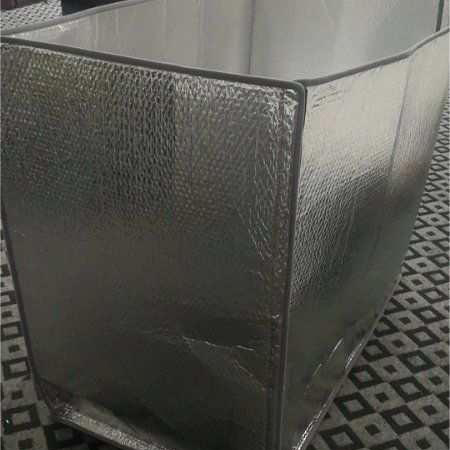
Thermal Cargo Covers For Temperature-Controlled Warehousing matter in 2026 because short temperature spikes are still where many losses begin, yet buyers also need faster handling, better validation, and smarter material choices. If you move chilled food, frozen food, and pharma pallets, the right cover can reduce risk from door openings, staging at ambient, and temperature shock between zones, support more consistent quality, and fit a repeatable operating model. This optimized guide combines buyer advice, materials insight, compliance thinking, and market trends into one practical decision framework.
What this article will help you solve
- How thermal cargo covers for temperature-controlled warehousing fit the real risks in temperature-controlled warehousing
- What to compare beyond unit price, including fit, closure, durability, and reuse
- How to validate performance with lane data, not just a marketing hour claim
- How to combine buyer logic, engineering logic, and sustainability logic in one decision
- What a fast self-check looks like before you launch or replace a cover program
Why are thermal cargo covers for temperature-controlled warehousing worth the investment in 2026?
Thermal Cargo Covers For Temperature-Controlled Warehousing are worth the investment when the cost of one failure is higher than the cost of building a repeatable passive protection step. That failure may be product spoilage, appearance damage, stability risk, a delayed release, or a customer complaint. In 2026, more teams are making this decision with total operating value in mind, not just purchase price. They want fewer losses, faster handling, better proof, and a clear sustainability story.
For you, the key question is simple: where is the pallet exposed today, and what does that exposure cost when it goes wrong? If the answer involves door openings, staging at ambient, and temperature shock between zones, a well-chosen cover can be one of the fastest ways to improve control without redesigning the whole cold chain. The biggest gains usually come from protecting repeat risk points such as dock staging, marshalling lanes, pick-and-pack zones, and truck loading. This is where passive packaging often delivers a strong return. In warehousing, the cover's value often comes from protecting the transition points that fixed refrigeration cannot fully control.
What business case usually supports thermal cargo covers for temperature-controlled warehousing?
A strong business case combines avoided loss, labor fit, reuse potential, and easier claims defense. That means you should compare more than cover price. Review the cost of rejected goods, the labor seconds needed to install the cover, the expected number of trips, and the ability to generate data that supports QA or customer conversations. When those elements line up, the cover becomes a measurable process improvement.
| Value driver | What to measure | Why it matters | Typical result |
| Loss reduction | Claims or spoilage avoided | Protects product value | Lower hidden cost |
| Labor fit | Seconds per install | Drives real compliance | Better daily execution |
| Reuse logic | Trips per unit | Changes true unit economics | Smarter procurement |
Practical tips and recommendations
- Build the business case around one high-risk lane first so savings are easier to prove.
- Count customer complaints and rejected pallets, not only temperature events.
- Use actual shift feedback to confirm the cover is fast enough for your operation.
Typical scenario: A team shipping chilled food and frozen food used a thermal cover during pick-and-pack zones. The cover did not replace refrigeration, but it reduced exposure during the waiting window that usually triggered door openings and staging at ambient. That is where passive protection often earns its value.
How do thermal cargo covers for temperature-controlled warehousing reduce risk across docks, transport, and storage?
A good cover reduces risk by smoothing the harsh transitions that fixed systems cannot fully eliminate. It slows radiant heat, cuts direct airflow, and helps manage moisture exposure while a pallet moves between protected points. That makes it useful across dock staging, line-haul handoffs, warehouse moves, and short waiting periods before delivery or storage. The result is a more stable product environment around the load.
This is especially valuable because temperature abuse often begins outside the main refrigeration asset. The truck may be fine, but the pallet may wait too long before loading. The warehouse may be controlled, but the marshalling lane may not be. When you place thermal cargo covers for temperature-controlled warehousing at the exact transition where risk starts, you create a practical buffer that supports quality, shelf life, stability, or appearance. Automation and higher throughput make it more important to control the minutes pallets spend outside their intended zone.
Which weak points should you map before selecting thermal cargo covers for temperature-controlled warehousing?
Map the lane from the last protected point to the next protected point. Note dwell time, sunlight, humidity, product mass, pallet shape, and how many times the load is touched. Then ask which moment is most likely to create the first failure. This simple exercise often reveals that the cover does not need to protect every hour of the trip. It only needs to protect the critical window you can actually improve.
| Network point | Common failure | How the cover helps | Why you care |
| Dock or ramp | Sudden heat spike | Adds thermal buffer time | Less excursion risk |
| Warehouse move | Zone transition and condensation | Keeps load protected between zones | Better packaging condition |
| Delivery wait | Unplanned delay | Stabilizes the pallet until handoff | Fewer quality surprises |
Practical tips and recommendations
- Map the risk window in minutes, not vague descriptions such as 'sometimes delayed.'
- Use the same map across procurement, QA, and operations so everyone solves the same problem.
- Focus first on the transition where quality loss begins, not on the easiest place to collect data.
Typical scenario: A team shipping chilled food and frozen food used a thermal cover during truck loading. The cover did not replace refrigeration, but it reduced exposure during the waiting window that usually triggered door openings and staging at ambient. That is where passive protection often earns its value.
What design, validation, and sustainability features should you compare in thermal cargo covers for temperature-controlled warehousing?
Design, validation, and sustainability should be compared together because they shape the real outcome as one system. Design tells you whether the cover fits the pallet, closes quickly, and resists handling damage. Validation tells you whether performance is proven for the actual lane. Sustainability tells you whether the program reduces total waste through reuse, right-sizing, and less damaged product.
This three-part comparison reflects how packaging decisions are changing. The European Union's Packaging and Packaging Waste Regulation entered into force in 2025 and generally applies from August 12, 2026, which is increasing attention on packaging efficiency and circularity. At the same time, quality teams still need strong data and operations teams still need speed. So the best thermal cargo covers for temperature-controlled warehousing balance material choice, performance proof, and daily usability in one package. Warehouse teams increasingly use covers as a simple buffer that protects quality without redesigning the full facility.
What comparison framework helps you shortlist thermal cargo covers for temperature-controlled warehousing quickly?
Use a simple grid with three columns: does the cover fit the lane, does it fit the workflow, and does it fit the material strategy. Under each column, score closure speed, fit, validation evidence, reuse cycle, cleaning need, and storage footprint. This stops you from overvaluing one attractive feature while missing a hidden operational problem. It also gives procurement a clearer basis for comparing suppliers.
| Decision lens | Good | Better | Best-practice question |
| Design | Basic fit | Fast, repeatable fit | Will operators use it correctly every time? |
| Validation | Generic data | Lane-specific evidence | Can QA defend this choice? |
| Sustainability | Lower material weight | Right-sized reuse strategy | Does it cut total waste in reality? |
Practical tips and recommendations
- Score covers with real operators in the room, not only on a specification sheet.
- Avoid choosing a reusable model if your return, storage, and inspection loop is weak.
- Include avoided product loss in sustainability reviews, not only packaging mass.
Typical scenario: A team shipping chilled food and frozen food used a thermal cover during dock staging. The cover did not replace refrigeration, but it reduced exposure during the waiting window that usually triggered door openings and staging at ambient. That is where passive protection often earns its value.
Which decision tool helps you choose the right thermal cargo covers for temperature-controlled warehousing faster?
A practical decision tool is a five-question self-check. First, what is the exact product temperature requirement? Second, where is the highest-risk exposure window? Third, how repeatable is the lane? Fourth, how fast must operators install the cover? Fifth, do you have a realistic reuse loop? If you answer these questions clearly, you can eliminate many poor options before a supplier presentation even begins.
This self-check is useful because it turns selection into a structured process. It prevents over-buying, under-buying, and confusing thermal marketing language. It also helps align QA, operations, and procurement, since each group can see where its priorities enter the decision. For complex networks, this is often the fastest route to a shortlist that makes sense.
How should you score your thermal cargo covers for temperature-controlled warehousing shortlist?
Give each option a simple score from one to five for lane fit, thermal evidence, handling speed, durability, and material strategy. Then weight the score according to your business goal. If product value is very high, lane evidence may deserve the highest weight. If shipment volume is extreme, handling speed may matter more. The scoring model does not need to be complicated to be effective.
| Self-check question | What to confirm | Low score sign | High score sign |
| Lane risk | Known exposure window | Vague assumptions | Measured dwell profile |
| Handling fit | Fast installation | Teams likely skip it | Simple repeatable use |
| Reuse logic | Return and inspect loop | No clear process | Closed-loop discipline |
Practical tips and recommendations
- Weight the score by business risk so the matrix reflects reality.
- Use the same scorecard for every supplier to avoid bias.
- Review the score after the pilot, not only before it.
Typical scenario: A team shipping chilled food and frozen food used a thermal cover during dock staging. The cover did not replace refrigeration, but it reduced exposure during the waiting window that usually triggered door openings and staging at ambient. That is where passive protection often earns its value.
How do you launch a thermal cargo covers for temperature-controlled warehousing program that sticks?
A program sticks when the cover is easy to find, easy to fit, easy to inspect, and easy to justify. That means you need standard work, simple visuals, pilot data, and clear ownership for reuse or replacement. Once those pieces are in place, the cover becomes part of normal operations instead of a special instruction used only by the most careful shift.
The final step is continuous review. Track exceptions, seasonal shifts, wear condition, and any changes in pallet profile or route design. If the network changes, the validation logic should change as well. When you keep the program connected to real lane data, thermal cargo covers for temperature-controlled warehousing continue to deliver value instead of becoming background packaging that nobody questions.
What does a durable operating routine for thermal cargo covers for temperature-controlled warehousing include?
It includes lane assignment, storage point, training pictures, inspection rules, and a review cadence. If the cover is reusable, the routine should also define cleaning, return, and retirement criteria. These details may sound operational, but they are exactly what turn a good product into a good system. The system is what protects quality at scale.
| Routine element | What it covers | Owner | Why it matters |
| Standard work | When and how to use the cover | Operations | Prevents missed steps |
| Inspection | Condition and reuse decision | QA or supervisors | Keeps performance reliable |
| Review cycle | Data and exception analysis | Cross-functional team | Supports ongoing improvement |
Practical tips and recommendations
- Put the cover at the point of use, not in a distant storage area.
- Use picture-based work instructions so training stays simple across shifts.
- Schedule review after the hottest, busiest, or most difficult weeks of the season.
- Build reuse and material decisions around less spoilage during staging.
Typical scenario: A team shipping chilled food and frozen food used a thermal cover during pick-and-pack zones. The cover did not replace refrigeration, but it reduced exposure during the waiting window that usually triggered door openings and staging at ambient. That is where passive protection often earns its value.
2026 trends in temperature-controlled warehousing
In 2026, the best decisions around thermal cargo covers for temperature-controlled warehousing are being shaped by a mix of buyer discipline, validation logic, and sustainability pressure. The European Commission says the Packaging and Packaging Waste Regulation, Regulation (EU) 2025/40, entered into force on February 11, 2025 and will generally apply from August 12, 2026. GS1 says its traceability standards are used by more than one million companies worldwide. That combination is why cover programs are being reviewed more strategically and with clearer success metrics.
Latest developments at a glance
- Selection is moving from unit-cost focus to cost-per-successful-trip thinking.
- Validation, reuse, and traceability are being discussed together instead of as separate projects.
- The strongest suppliers are offering both product and operating guidance, not product alone.
The practical lesson is that a strong 2026 program makes the cover easy to approve, easy to use, and easy to review later with data. When those three elements are present, the cover earns trust across the organization and creates more durable value.
Frequently Asked Questions
Are thermal cargo covers for temperature-controlled warehousing the same as active refrigerated packaging?
No. Thermal Cargo Covers For Temperature-Controlled Warehousing are passive protection. They slow temperature change and help buffer exposure, but they do not create active cooling on their own. They work best when you use them to protect a real risk window between controlled points.
How long can thermal cargo covers for temperature-controlled warehousing protect a pallet?
There is no honest single answer because protection depends on payload, starting temperature, ambient stress, sunlight, humidity, fit, and dwell time. The best question is whether the cover keeps your load inside target for your actual lane and pass criteria.
Can thermal cargo covers for temperature-controlled warehousing be reused?
Many can, but reuse only creates value when you have an inspection rule, a realistic return loop, and a way to retire damaged units. If your network is irregular, a simpler one-way or limited-reuse model may work better.
Do thermal cargo covers for temperature-controlled warehousing help with compliance and audits?
They can, when they are part of a documented process. A cover becomes much more useful in audits when you can show why it was selected, how it is used, what data supports it, and what happens when there is an exception.
What should you ask a supplier before buying thermal cargo covers for temperature-controlled warehousing?
Ask about lane assumptions, test method, payload used in testing, closure design, pallet fit, reuse guidance, and training support. Those answers tell you far more than a broad brochure claim.
Summary and Recommendations
Thermal Cargo Covers For Temperature-Controlled Warehousing create value when you match them to the real exposure window, the real product sensitivity, and the real way your team works. The best program combines correct fit, practical handling, useful data, and a clear validation logic. If you compare covers with those factors in mind, you will make a better decision than if you focus on thickness or price alone.
Your next step is to profile one high-risk lane, define the pass criteria that matter to your product, and run a small pilot with loggers and operator feedback. That simple process will tell you whether thermal cargo covers for temperature-controlled warehousing are the right control and which design gives you the best operating value.
About Tempk
At Tempk, we focus on practical thermal protection for real shipping conditions. We design pallet cover solutions around fit, repeatable handling, and measurable performance so your team can protect quality without adding unnecessary complexity. We also support discussions around validation, reusability, and lane-specific application.
Share your lane profile, pallet size, and target temperature range with us, and we can help you compare the right options for thermal cargo covers for temperature-controlled warehousing.
Thermal Cargo Covers For Last Mile Delivery: Complete 2026 Guide
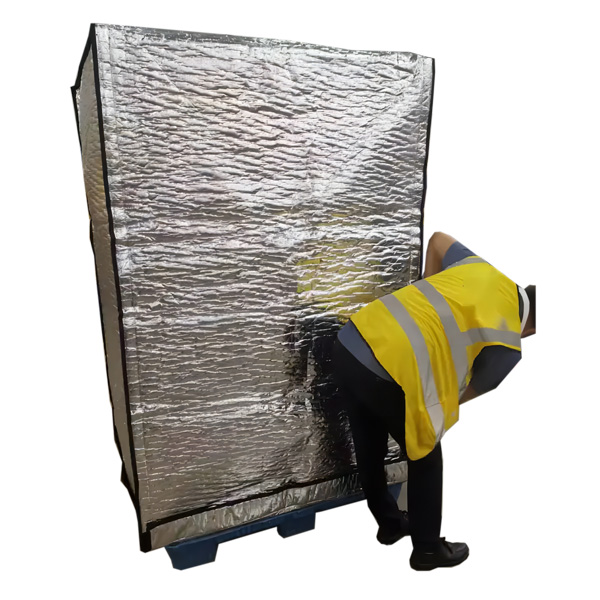
Thermal Cargo Covers For Last Mile Delivery matter in 2026 because short temperature spikes are still where many losses begin, yet buyers also need faster handling, better validation, and smarter material choices. If you move chilled groceries, meal kits, and fresh produce, the right cover can reduce risk from frequent door openings, driver workflow delays, and short but repeated heat spikes, support more consistent quality, and fit a repeatable operating model. This optimized guide combines buyer advice, materials insight, compliance thinking, and market trends into one practical decision framework.
What this article will help you solve
- How thermal cargo covers for last mile delivery fit the real risks in last mile cold chain delivery
- What to compare beyond unit price, including fit, closure, durability, and reuse
- How to validate performance with lane data, not just a marketing hour claim
- How to combine buyer logic, engineering logic, and sustainability logic in one decision
- What a fast self-check looks like before you launch or replace a cover program
Why are thermal cargo covers for last mile delivery worth the investment in 2026?
Thermal Cargo Covers For Last Mile Delivery are worth the investment when the cost of one failure is higher than the cost of building a repeatable passive protection step. That failure may be product spoilage, appearance damage, stability risk, a delayed release, or a customer complaint. In 2026, more teams are making this decision with total operating value in mind, not just purchase price. They want fewer losses, faster handling, better proof, and a clear sustainability story.
For you, the key question is simple: where is the pallet exposed today, and what does that exposure cost when it goes wrong? If the answer involves frequent door openings, driver workflow delays, and short but repeated heat spikes, a well-chosen cover can be one of the fastest ways to improve control without redesigning the whole cold chain. The biggest gains usually come from protecting repeat risk points such as urban van routes, micro-fulfillment dispatch, store-to-home delivery, and dark store transfers. This is where passive packaging often delivers a strong return. Last mile operations win when the cover is simple enough for drivers to use correctly every single time.
What business case usually supports thermal cargo covers for last mile delivery?
A strong business case combines avoided loss, labor fit, reuse potential, and easier claims defense. That means you should compare more than cover price. Review the cost of rejected goods, the labor seconds needed to install the cover, the expected number of trips, and the ability to generate data that supports QA or customer conversations. When those elements line up, the cover becomes a measurable process improvement.
| Value driver | What to measure | Why it matters | Typical result |
| Loss reduction | Claims or spoilage avoided | Protects product value | Lower hidden cost |
| Labor fit | Seconds per install | Drives real compliance | Better daily execution |
| Reuse logic | Trips per unit | Changes true unit economics | Smarter procurement |
Practical tips and recommendations
- Build the business case around one high-risk lane first so savings are easier to prove.
- Count customer complaints and rejected pallets, not only temperature events.
- Use actual shift feedback to confirm the cover is fast enough for your operation.
Typical scenario: A team shipping chilled groceries and meal kits used a thermal cover during dark store transfers. The cover did not replace refrigeration, but it reduced exposure during the waiting window that usually triggered frequent door openings and driver workflow delays. That is where passive protection often earns its value.
How do thermal cargo covers for last mile delivery reduce risk across docks, transport, and storage?
A good cover reduces risk by smoothing the harsh transitions that fixed systems cannot fully eliminate. It slows radiant heat, cuts direct airflow, and helps manage moisture exposure while a pallet moves between protected points. That makes it useful across dock staging, line-haul handoffs, warehouse moves, and short waiting periods before delivery or storage. The result is a more stable product environment around the load.
This is especially valuable because temperature abuse often begins outside the main refrigeration asset. The truck may be fine, but the pallet may wait too long before loading. The warehouse may be controlled, but the marshalling lane may not be. When you place thermal cargo covers for last mile delivery at the exact transition where risk starts, you create a practical buffer that supports quality, shelf life, stability, or appearance. As delivery density rises, operators want protection that saves labor seconds at every stop.
Which weak points should you map before selecting thermal cargo covers for last mile delivery?
Map the lane from the last protected point to the next protected point. Note dwell time, sunlight, humidity, product mass, pallet shape, and how many times the load is touched. Then ask which moment is most likely to create the first failure. This simple exercise often reveals that the cover does not need to protect every hour of the trip. It only needs to protect the critical window you can actually improve.
| Network point | Common failure | How the cover helps | Why you care |
| Dock or ramp | Sudden heat spike | Adds thermal buffer time | Less excursion risk |
| Warehouse move | Zone transition and condensation | Keeps load protected between zones | Better packaging condition |
| Delivery wait | Unplanned delay | Stabilizes the pallet until handoff | Fewer quality surprises |
Practical tips and recommendations
- Map the risk window in minutes, not vague descriptions such as 'sometimes delayed.'
- Use the same map across procurement, QA, and operations so everyone solves the same problem.
- Focus first on the transition where quality loss begins, not on the easiest place to collect data.
Typical scenario: A team shipping chilled groceries and meal kits used a thermal cover during store-to-home delivery. The cover did not replace refrigeration, but it reduced exposure during the waiting window that usually triggered frequent door openings and driver workflow delays. That is where passive protection often earns its value.
What design, validation, and sustainability features should you compare in thermal cargo covers for last mile delivery?
Design, validation, and sustainability should be compared together because they shape the real outcome as one system. Design tells you whether the cover fits the pallet, closes quickly, and resists handling damage. Validation tells you whether performance is proven for the actual lane. Sustainability tells you whether the program reduces total waste through reuse, right-sizing, and less damaged product.
This three-part comparison reflects how packaging decisions are changing. The European Union's Packaging and Packaging Waste Regulation entered into force in 2025 and generally applies from August 12, 2026, which is increasing attention on packaging efficiency and circularity. At the same time, quality teams still need strong data and operations teams still need speed. So the best thermal cargo covers for last mile delivery balance material choice, performance proof, and daily usability in one package. Parcel-style thermal testing is influencing how teams qualify passive protection for direct delivery networks.
What comparison framework helps you shortlist thermal cargo covers for last mile delivery quickly?
Use a simple grid with three columns: does the cover fit the lane, does it fit the workflow, and does it fit the material strategy. Under each column, score closure speed, fit, validation evidence, reuse cycle, cleaning need, and storage footprint. This stops you from overvaluing one attractive feature while missing a hidden operational problem. It also gives procurement a clearer basis for comparing suppliers.
| Decision lens | Good | Better | Best-practice question |
| Design | Basic fit | Fast, repeatable fit | Will operators use it correctly every time? |
| Validation | Generic data | Lane-specific evidence | Can QA defend this choice? |
| Sustainability | Lower material weight | Right-sized reuse strategy | Does it cut total waste in reality? |
Practical tips and recommendations
- Score covers with real operators in the room, not only on a specification sheet.
- Avoid choosing a reusable model if your return, storage, and inspection loop is weak.
- Include avoided product loss in sustainability reviews, not only packaging mass.
Typical scenario: A team shipping chilled groceries and meal kits used a thermal cover during dark store transfers. The cover did not replace refrigeration, but it reduced exposure during the waiting window that usually triggered frequent door openings and driver workflow delays. That is where passive protection often earns its value.
Which decision tool helps you choose the right thermal cargo covers for last mile delivery faster?
A practical decision tool is a five-question self-check. First, what is the exact product temperature requirement? Second, where is the highest-risk exposure window? Third, how repeatable is the lane? Fourth, how fast must operators install the cover? Fifth, do you have a realistic reuse loop? If you answer these questions clearly, you can eliminate many poor options before a supplier presentation even begins.
This self-check is useful because it turns selection into a structured process. It prevents over-buying, under-buying, and confusing thermal marketing language. It also helps align QA, operations, and procurement, since each group can see where its priorities enter the decision. For complex networks, this is often the fastest route to a shortlist that makes sense.
How should you score your thermal cargo covers for last mile delivery shortlist?
Give each option a simple score from one to five for lane fit, thermal evidence, handling speed, durability, and material strategy. Then weight the score according to your business goal. If product value is very high, lane evidence may deserve the highest weight. If shipment volume is extreme, handling speed may matter more. The scoring model does not need to be complicated to be effective.
| Self-check question | What to confirm | Low score sign | High score sign |
| Lane risk | Known exposure window | Vague assumptions | Measured dwell profile |
| Handling fit | Fast installation | Teams likely skip it | Simple repeatable use |
| Reuse logic | Return and inspect loop | No clear process | Closed-loop discipline |
Practical tips and recommendations
- Weight the score by business risk so the matrix reflects reality.
- Use the same scorecard for every supplier to avoid bias.
- Review the score after the pilot, not only before it.
Typical scenario: A team shipping chilled groceries and meal kits used a thermal cover during micro-fulfillment dispatch. The cover did not replace refrigeration, but it reduced exposure during the waiting window that usually triggered frequent door openings and driver workflow delays. That is where passive protection often earns its value.
How do you launch a thermal cargo covers for last mile delivery program that sticks?
A program sticks when the cover is easy to find, easy to fit, easy to inspect, and easy to justify. That means you need standard work, simple visuals, pilot data, and clear ownership for reuse or replacement. Once those pieces are in place, the cover becomes part of normal operations instead of a special instruction used only by the most careful shift.
The final step is continuous review. Track exceptions, seasonal shifts, wear condition, and any changes in pallet profile or route design. If the network changes, the validation logic should change as well. When you keep the program connected to real lane data, thermal cargo covers for last mile delivery continue to deliver value instead of becoming background packaging that nobody questions.
What does a durable operating routine for thermal cargo covers for last mile delivery include?
It includes lane assignment, storage point, training pictures, inspection rules, and a review cadence. If the cover is reusable, the routine should also define cleaning, return, and retirement criteria. These details may sound operational, but they are exactly what turn a good product into a good system. The system is what protects quality at scale.
| Routine element | What it covers | Owner | Why it matters |
| Standard work | When and how to use the cover | Operations | Prevents missed steps |
| Inspection | Condition and reuse decision | QA or supervisors | Keeps performance reliable |
| Review cycle | Data and exception analysis | Cross-functional team | Supports ongoing improvement |
Practical tips and recommendations
- Put the cover at the point of use, not in a distant storage area.
- Use picture-based work instructions so training stays simple across shifts.
- Schedule review after the hottest, busiest, or most difficult weeks of the season.
- Build reuse and material decisions around returnable cover loops.
Typical scenario: A team shipping chilled groceries and meal kits used a thermal cover during urban van routes. The cover did not replace refrigeration, but it reduced exposure during the waiting window that usually triggered frequent door openings and driver workflow delays. That is where passive protection often earns its value.
2026 trends in last mile cold chain delivery
In 2026, the best decisions around thermal cargo covers for last mile delivery are being shaped by a mix of buyer discipline, validation logic, and sustainability pressure. ISTA says Standard 7E uses heat and cold profiles developed from real-world transport data for thermal package testing. The European Commission says the Packaging and Packaging Waste Regulation, Regulation (EU) 2025/40, entered into force on February 11, 2025 and will generally apply from August 12, 2026. That combination is why cover programs are being reviewed more strategically and with clearer success metrics.
Latest developments at a glance
- Selection is moving from unit-cost focus to cost-per-successful-trip thinking.
- Validation, reuse, and traceability are being discussed together instead of as separate projects.
- The strongest suppliers are offering both product and operating guidance, not product alone.
The practical lesson is that a strong 2026 program makes the cover easy to approve, easy to use, and easy to review later with data. When those three elements are present, the cover earns trust across the organization and creates more durable value.
Frequently Asked Questions
Are thermal cargo covers for last mile delivery the same as active refrigerated packaging?
No. Thermal Cargo Covers For Last Mile Delivery are passive protection. They slow temperature change and help buffer exposure, but they do not create active cooling on their own. They work best when you use them to protect a real risk window between controlled points.
How long can thermal cargo covers for last mile delivery protect a pallet?
There is no honest single answer because protection depends on payload, starting temperature, ambient stress, sunlight, humidity, fit, and dwell time. The best question is whether the cover keeps your load inside target for your actual lane and pass criteria.
Can thermal cargo covers for last mile delivery be reused?
Many can, but reuse only creates value when you have an inspection rule, a realistic return loop, and a way to retire damaged units. If your network is irregular, a simpler one-way or limited-reuse model may work better.
Do thermal cargo covers for last mile delivery help with compliance and audits?
They can, when they are part of a documented process. A cover becomes much more useful in audits when you can show why it was selected, how it is used, what data supports it, and what happens when there is an exception.
What should you ask a supplier before buying thermal cargo covers for last mile delivery?
Ask about lane assumptions, test method, payload used in testing, closure design, pallet fit, reuse guidance, and training support. Those answers tell you far more than a broad brochure claim.
Summary and Recommendations
Thermal Cargo Covers For Last Mile Delivery create value when you match them to the real exposure window, the real product sensitivity, and the real way your team works. The best program combines correct fit, practical handling, useful data, and a clear validation logic. If you compare covers with those factors in mind, you will make a better decision than if you focus on thickness or price alone.
Your next step is to profile one high-risk lane, define the pass criteria that matter to your product, and run a small pilot with loggers and operator feedback. That simple process will tell you whether thermal cargo covers for last mile delivery are the right control and which design gives you the best operating value.
About Tempk
At Tempk, we focus on practical thermal protection for real shipping conditions. We design pallet cover solutions around fit, repeatable handling, and measurable performance so your team can protect quality without adding unnecessary complexity. We also support discussions around validation, reusability, and lane-specific application.
Share your lane profile, pallet size, and target temperature range with us, and we can help you compare the right options for thermal cargo covers for last mile delivery.
Pallet Thermal Blankets For Wholesale: Complete 2026 Guide
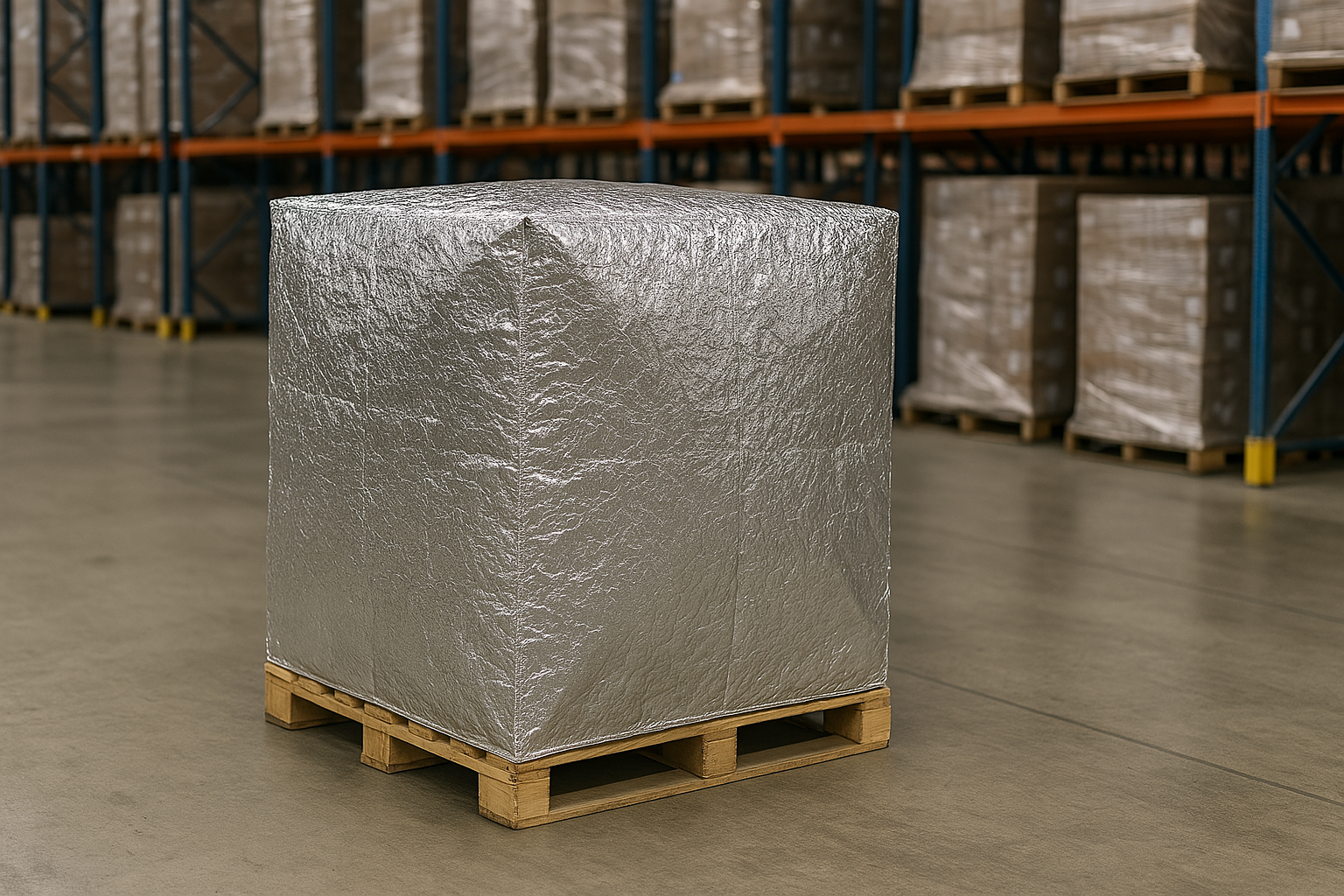
Pallet Thermal Blankets For Wholesale matter in 2026 because short temperature spikes are still where many losses begin, yet buyers also need faster handling, better validation, and smarter material choices. If you move mixed grocery SKUs, health products, and seasonal items, the right cover can reduce risk from long staging windows, mixed-load exposure, and dock door openings, support more consistent quality, and fit a repeatable operating model. This optimized guide combines buyer advice, materials insight, compliance thinking, and market trends into one practical decision framework.
What this article will help you solve
- How pallet thermal blankets for wholesale fit the real risks in wholesale distribution
- What to compare beyond unit price, including fit, closure, durability, and reuse
- How to validate performance with lane data, not just a marketing hour claim
- How to combine buyer logic, engineering logic, and sustainability logic in one decision
- What a fast self-check looks like before you launch or replace a cover program
Why are pallet thermal blankets for wholesale worth the investment in 2026?
Pallet Thermal Blankets For Wholesale are worth the investment when the cost of one failure is higher than the cost of building a repeatable passive protection step. That failure may be product spoilage, appearance damage, stability risk, a delayed release, or a customer complaint. In 2026, more teams are making this decision with total operating value in mind, not just purchase price. They want fewer losses, faster handling, better proof, and a clear sustainability story.
For you, the key question is simple: where is the pallet exposed today, and what does that exposure cost when it goes wrong? If the answer involves long staging windows, mixed-load exposure, and dock door openings, a well-chosen cover can be one of the fastest ways to improve control without redesigning the whole cold chain. The biggest gains usually come from protecting repeat risk points such as wholesale replenishment, cross-dock operations, regional DC transfers, and bulk buyer shipments. This is where passive packaging often delivers a strong return. In wholesale, the best thermal blanket is usually the one that fits daily operations, not just the one with the thickest insulation.
What business case usually supports pallet thermal blankets for wholesale?
A strong business case combines avoided loss, labor fit, reuse potential, and easier claims defense. That means you should compare more than cover price. Review the cost of rejected goods, the labor seconds needed to install the cover, the expected number of trips, and the ability to generate data that supports QA or customer conversations. When those elements line up, the cover becomes a measurable process improvement.
| Value driver | What to measure | Why it matters | Typical result |
| Loss reduction | Claims or spoilage avoided | Protects product value | Lower hidden cost |
| Labor fit | Seconds per install | Drives real compliance | Better daily execution |
| Reuse logic | Trips per unit | Changes true unit economics | Smarter procurement |
Practical tips and recommendations
- Build the business case around one high-risk lane first so savings are easier to prove.
- Count customer complaints and rejected pallets, not only temperature events.
- Use actual shift feedback to confirm the cover is fast enough for your operation.
Typical scenario: A team shipping mixed grocery SKUs and health products used a thermal cover during regional DC transfers. The cover did not replace refrigeration, but it reduced exposure during the waiting window that usually triggered long staging windows and mixed-load exposure. That is where passive protection often earns its value.
How do pallet thermal blankets for wholesale reduce risk across docks, transport, and storage?
A good cover reduces risk by smoothing the harsh transitions that fixed systems cannot fully eliminate. It slows radiant heat, cuts direct airflow, and helps manage moisture exposure while a pallet moves between protected points. That makes it useful across dock staging, line-haul handoffs, warehouse moves, and short waiting periods before delivery or storage. The result is a more stable product environment around the load.
This is especially valuable because temperature abuse often begins outside the main refrigeration asset. The truck may be fine, but the pallet may wait too long before loading. The warehouse may be controlled, but the marshalling lane may not be. When you place pallet thermal blankets for wholesale at the exact transition where risk starts, you create a practical buffer that supports quality, shelf life, stability, or appearance. Wholesale operators are under pressure to cut spoilage and claims without adding labor-heavy packaging steps.
Which weak points should you map before selecting pallet thermal blankets for wholesale?
Map the lane from the last protected point to the next protected point. Note dwell time, sunlight, humidity, product mass, pallet shape, and how many times the load is touched. Then ask which moment is most likely to create the first failure. This simple exercise often reveals that the cover does not need to protect every hour of the trip. It only needs to protect the critical window you can actually improve.
| Network point | Common failure | How the cover helps | Why you care |
| Dock or ramp | Sudden heat spike | Adds thermal buffer time | Less excursion risk |
| Warehouse move | Zone transition and condensation | Keeps load protected between zones | Better packaging condition |
| Delivery wait | Unplanned delay | Stabilizes the pallet until handoff | Fewer quality surprises |
Practical tips and recommendations
- Map the risk window in minutes, not vague descriptions such as 'sometimes delayed.'
- Use the same map across procurement, QA, and operations so everyone solves the same problem.
- Focus first on the transition where quality loss begins, not on the easiest place to collect data.
Typical scenario: A team shipping mixed grocery SKUs and health products used a thermal cover during cross-dock operations. The cover did not replace refrigeration, but it reduced exposure during the waiting window that usually triggered long staging windows and mixed-load exposure. That is where passive protection often earns its value.
What design, validation, and sustainability features should you compare in pallet thermal blankets for wholesale?
Design, validation, and sustainability should be compared together because they shape the real outcome as one system. Design tells you whether the cover fits the pallet, closes quickly, and resists handling damage. Validation tells you whether performance is proven for the actual lane. Sustainability tells you whether the program reduces total waste through reuse, right-sizing, and less damaged product.
This three-part comparison reflects how packaging decisions are changing. The European Union's Packaging and Packaging Waste Regulation entered into force in 2025 and generally applies from August 12, 2026, which is increasing attention on packaging efficiency and circularity. At the same time, quality teams still need strong data and operations teams still need speed. So the best pallet thermal blankets for wholesale balance material choice, performance proof, and daily usability in one package. Buyers now compare not only purchase price, but also reuse cycles, cleaning time, and storage footprint.
What comparison framework helps you shortlist pallet thermal blankets for wholesale quickly?
Use a simple grid with three columns: does the cover fit the lane, does it fit the workflow, and does it fit the material strategy. Under each column, score closure speed, fit, validation evidence, reuse cycle, cleaning need, and storage footprint. This stops you from overvaluing one attractive feature while missing a hidden operational problem. It also gives procurement a clearer basis for comparing suppliers.
| Decision lens | Good | Better | Best-practice question |
| Design | Basic fit | Fast, repeatable fit | Will operators use it correctly every time? |
| Validation | Generic data | Lane-specific evidence | Can QA defend this choice? |
| Sustainability | Lower material weight | Right-sized reuse strategy | Does it cut total waste in reality? |
Practical tips and recommendations
- Score covers with real operators in the room, not only on a specification sheet.
- Avoid choosing a reusable model if your return, storage, and inspection loop is weak.
- Include avoided product loss in sustainability reviews, not only packaging mass.
Typical scenario: A team shipping mixed grocery SKUs and health products used a thermal cover during regional DC transfers. The cover did not replace refrigeration, but it reduced exposure during the waiting window that usually triggered long staging windows and mixed-load exposure. That is where passive protection often earns its value.
Which decision tool helps you choose the right pallet thermal blankets for wholesale faster?
A practical decision tool is a five-question self-check. First, what is the exact product temperature requirement? Second, where is the highest-risk exposure window? Third, how repeatable is the lane? Fourth, how fast must operators install the cover? Fifth, do you have a realistic reuse loop? If you answer these questions clearly, you can eliminate many poor options before a supplier presentation even begins.
This self-check is useful because it turns selection into a structured process. It prevents over-buying, under-buying, and confusing thermal marketing language. It also helps align QA, operations, and procurement, since each group can see where its priorities enter the decision. For complex networks, this is often the fastest route to a shortlist that makes sense.
How should you score your pallet thermal blankets for wholesale shortlist?
Give each option a simple score from one to five for lane fit, thermal evidence, handling speed, durability, and material strategy. Then weight the score according to your business goal. If product value is very high, lane evidence may deserve the highest weight. If shipment volume is extreme, handling speed may matter more. The scoring model does not need to be complicated to be effective.
| Self-check question | What to confirm | Low score sign | High score sign |
| Lane risk | Known exposure window | Vague assumptions | Measured dwell profile |
| Handling fit | Fast installation | Teams likely skip it | Simple repeatable use |
| Reuse logic | Return and inspect loop | No clear process | Closed-loop discipline |
Practical tips and recommendations
- Weight the score by business risk so the matrix reflects reality.
- Use the same scorecard for every supplier to avoid bias.
- Review the score after the pilot, not only before it.
Typical scenario: A team shipping mixed grocery SKUs and health products used a thermal cover during cross-dock operations. The cover did not replace refrigeration, but it reduced exposure during the waiting window that usually triggered long staging windows and mixed-load exposure. That is where passive protection often earns its value.
How do you launch a pallet thermal blankets for wholesale program that sticks?
A program sticks when the cover is easy to find, easy to fit, easy to inspect, and easy to justify. That means you need standard work, simple visuals, pilot data, and clear ownership for reuse or replacement. Once those pieces are in place, the cover becomes part of normal operations instead of a special instruction used only by the most careful shift.
The final step is continuous review. Track exceptions, seasonal shifts, wear condition, and any changes in pallet profile or route design. If the network changes, the validation logic should change as well. When you keep the program connected to real lane data, pallet thermal blankets for wholesale continue to deliver value instead of becoming background packaging that nobody questions.
What does a durable operating routine for pallet thermal blankets for wholesale include?
It includes lane assignment, storage point, training pictures, inspection rules, and a review cadence. If the cover is reusable, the routine should also define cleaning, return, and retirement criteria. These details may sound operational, but they are exactly what turn a good product into a good system. The system is what protects quality at scale.
| Routine element | What it covers | Owner | Why it matters |
| Standard work | When and how to use the cover | Operations | Prevents missed steps |
| Inspection | Condition and reuse decision | QA or supervisors | Keeps performance reliable |
| Review cycle | Data and exception analysis | Cross-functional team | Supports ongoing improvement |
Practical tips and recommendations
- Put the cover at the point of use, not in a distant storage area.
- Use picture-based work instructions so training stays simple across shifts.
- Schedule review after the hottest, busiest, or most difficult weeks of the season.
- Build reuse and material decisions around multi-trip reuse.
Typical scenario: A team shipping mixed grocery SKUs and health products used a thermal cover during regional DC transfers. The cover did not replace refrigeration, but it reduced exposure during the waiting window that usually triggered long staging windows and mixed-load exposure. That is where passive protection often earns its value.
2026 trends in wholesale distribution
In 2026, the best decisions around pallet thermal blankets for wholesale are being shaped by a mix of buyer discipline, validation logic, and sustainability pressure. The European Commission says the Packaging and Packaging Waste Regulation, Regulation (EU) 2025/40, entered into force on February 11, 2025 and will generally apply from August 12, 2026. That combination is why cover programs are being reviewed more strategically and with clearer success metrics.
Latest developments at a glance
- Selection is moving from unit-cost focus to cost-per-successful-trip thinking.
- Validation, reuse, and traceability are being discussed together instead of as separate projects.
- The strongest suppliers are offering both product and operating guidance, not product alone.
The practical lesson is that a strong 2026 program makes the cover easy to approve, easy to use, and easy to review later with data. When those three elements are present, the cover earns trust across the organization and creates more durable value.
Frequently Asked Questions
Are pallet thermal blankets for wholesale the same as active refrigerated packaging?
No. Pallet Thermal Blankets For Wholesale are passive protection. They slow temperature change and help buffer exposure, but they do not create active cooling on their own. They work best when you use them to protect a real risk window between controlled points.
How long can pallet thermal blankets for wholesale protect a pallet?
There is no honest single answer because protection depends on payload, starting temperature, ambient stress, sunlight, humidity, fit, and dwell time. The best question is whether the cover keeps your load inside target for your actual lane and pass criteria.
Can pallet thermal blankets for wholesale be reused?
Many can, but reuse only creates value when you have an inspection rule, a realistic return loop, and a way to retire damaged units. If your network is irregular, a simpler one-way or limited-reuse model may work better.
Do pallet thermal blankets for wholesale help with compliance and audits?
They can, when they are part of a documented process. A cover becomes much more useful in audits when you can show why it was selected, how it is used, what data supports it, and what happens when there is an exception.
What should you ask a supplier before buying pallet thermal blankets for wholesale?
Ask about lane assumptions, test method, payload used in testing, closure design, pallet fit, reuse guidance, and training support. Those answers tell you far more than a broad brochure claim.
Summary and Recommendations
Pallet Thermal Blankets For Wholesale create value when you match them to the real exposure window, the real product sensitivity, and the real way your team works. The best program combines correct fit, practical handling, useful data, and a clear validation logic. If you compare covers with those factors in mind, you will make a better decision than if you focus on thickness or price alone.
Your next step is to profile one high-risk lane, define the pass criteria that matter to your product, and run a small pilot with loggers and operator feedback. That simple process will tell you whether pallet thermal blankets for wholesale are the right control and which design gives you the best operating value.
About Tempk
At Tempk, we focus on practical thermal protection for real shipping conditions. We design pallet cover solutions around fit, repeatable handling, and measurable performance so your team can protect quality without adding unnecessary complexity. We also support discussions around validation, reusability, and lane-specific application.
Share your lane profile, pallet size, and target temperature range with us, and we can help you compare the right options for pallet thermal blankets for wholesale.
Pallet Thermal Blankets For Bulk Shipping: Complete 2026 Guide
Pallet Thermal Blankets For Bulk Shipping matter in 2026 because short temperature spikes are still where many losses begin, yet buyers also need faster handling, better validation, and smarter material choices. If you move ingredient pallets, finished goods, and consumer packaged goods, the right cover can reduce risk from long staging queues, container or trailer loading delays, and high labor pressure, support more consistent quality, and fit a repeatable operating model. This optimized guide combines buyer advice, materials insight, compliance thinking, and market trends into one practical decision framework.
What this article will help you solve
- How pallet thermal blankets for bulk shipping fit the real risks in bulk pallet shipping
- What to compare beyond unit price, including fit, closure, durability, and reuse
- How to validate performance with lane data, not just a marketing hour claim
- How to combine buyer logic, engineering logic, and sustainability logic in one decision
- What a fast self-check looks like before you launch or replace a cover program
Why are pallet thermal blankets for bulk shipping worth the investment in 2026?
Pallet Thermal Blankets For Bulk Shipping are worth the investment when the cost of one failure is higher than the cost of building a repeatable passive protection step. That failure may be product spoilage, appearance damage, stability risk, a delayed release, or a customer complaint. In 2026, more teams are making this decision with total operating value in mind, not just purchase price. They want fewer losses, faster handling, better proof, and a clear sustainability story.
For you, the key question is simple: where is the pallet exposed today, and what does that exposure cost when it goes wrong? If the answer involves long staging queues, container or trailer loading delays, and high labor pressure, a well-chosen cover can be one of the fastest ways to improve control without redesigning the whole cold chain. The biggest gains usually come from protecting repeat risk points such as FTL dispatch, container loading, regional DC transfers, and bulk promotions. This is where passive packaging often delivers a strong return. In bulk shipping, storage footprint and speed on the loading dock can matter almost as much as insulation thickness.
What business case usually supports pallet thermal blankets for bulk shipping?
A strong business case combines avoided loss, labor fit, reuse potential, and easier claims defense. That means you should compare more than cover price. Review the cost of rejected goods, the labor seconds needed to install the cover, the expected number of trips, and the ability to generate data that supports QA or customer conversations. When those elements line up, the cover becomes a measurable process improvement.
| Value driver | What to measure | Why it matters | Typical result |
| Loss reduction | Claims or spoilage avoided | Protects product value | Lower hidden cost |
| Labor fit | Seconds per install | Drives real compliance | Better daily execution |
| Reuse logic | Trips per unit | Changes true unit economics | Smarter procurement |
Practical tips and recommendations
- Build the business case around one high-risk lane first so savings are easier to prove.
- Count customer complaints and rejected pallets, not only temperature events.
- Use actual shift feedback to confirm the cover is fast enough for your operation.
Typical scenario: A team shipping ingredient pallets and finished goods used a thermal cover during bulk promotions. The cover did not replace refrigeration, but it reduced exposure during the waiting window that usually triggered long staging queues and container or trailer loading delays. That is where passive protection often earns its value.
How do pallet thermal blankets for bulk shipping reduce risk across docks, transport, and storage?
A good cover reduces risk by smoothing the harsh transitions that fixed systems cannot fully eliminate. It slows radiant heat, cuts direct airflow, and helps manage moisture exposure while a pallet moves between protected points. That makes it useful across dock staging, line-haul handoffs, warehouse moves, and short waiting periods before delivery or storage. The result is a more stable product environment around the load.
This is especially valuable because temperature abuse often begins outside the main refrigeration asset. The truck may be fine, but the pallet may wait too long before loading. The warehouse may be controlled, but the marshalling lane may not be. When you place pallet thermal blankets for bulk shipping at the exact transition where risk starts, you create a practical buffer that supports quality, shelf life, stability, or appearance. High-volume shipping teams increasingly score pallet covers on total cost per successful trip, not unit purchase price.
Which weak points should you map before selecting pallet thermal blankets for bulk shipping?
Map the lane from the last protected point to the next protected point. Note dwell time, sunlight, humidity, product mass, pallet shape, and how many times the load is touched. Then ask which moment is most likely to create the first failure. This simple exercise often reveals that the cover does not need to protect every hour of the trip. It only needs to protect the critical window you can actually improve.
| Network point | Common failure | How the cover helps | Why you care |
| Dock or ramp | Sudden heat spike | Adds thermal buffer time | Less excursion risk |
| Warehouse move | Zone transition and condensation | Keeps load protected between zones | Better packaging condition |
| Delivery wait | Unplanned delay | Stabilizes the pallet until handoff | Fewer quality surprises |
Practical tips and recommendations
- Map the risk window in minutes, not vague descriptions such as 'sometimes delayed.'
- Use the same map across procurement, QA, and operations so everyone solves the same problem.
- Focus first on the transition where quality loss begins, not on the easiest place to collect data.
Typical scenario: A team shipping ingredient pallets and finished goods used a thermal cover during bulk promotions. The cover did not replace refrigeration, but it reduced exposure during the waiting window that usually triggered long staging queues and container or trailer loading delays. That is where passive protection often earns its value.
What design, validation, and sustainability features should you compare in pallet thermal blankets for bulk shipping?
Design, validation, and sustainability should be compared together because they shape the real outcome as one system. Design tells you whether the cover fits the pallet, closes quickly, and resists handling damage. Validation tells you whether performance is proven for the actual lane. Sustainability tells you whether the program reduces total waste through reuse, right-sizing, and less damaged product.
This three-part comparison reflects how packaging decisions are changing. The European Union's Packaging and Packaging Waste Regulation entered into force in 2025 and generally applies from August 12, 2026, which is increasing attention on packaging efficiency and circularity. At the same time, quality teams still need strong data and operations teams still need speed. So the best pallet thermal blankets for bulk shipping balance material choice, performance proof, and daily usability in one package. Buyers want proof that a cover can survive repeated handling without losing closure quality.
What comparison framework helps you shortlist pallet thermal blankets for bulk shipping quickly?
Use a simple grid with three columns: does the cover fit the lane, does it fit the workflow, and does it fit the material strategy. Under each column, score closure speed, fit, validation evidence, reuse cycle, cleaning need, and storage footprint. This stops you from overvaluing one attractive feature while missing a hidden operational problem. It also gives procurement a clearer basis for comparing suppliers.
| Decision lens | Good | Better | Best-practice question |
| Design | Basic fit | Fast, repeatable fit | Will operators use it correctly every time? |
| Validation | Generic data | Lane-specific evidence | Can QA defend this choice? |
| Sustainability | Lower material weight | Right-sized reuse strategy | Does it cut total waste in reality? |
Practical tips and recommendations
- Score covers with real operators in the room, not only on a specification sheet.
- Avoid choosing a reusable model if your return, storage, and inspection loop is weak.
- Include avoided product loss in sustainability reviews, not only packaging mass.
Typical scenario: A team shipping ingredient pallets and finished goods used a thermal cover during FTL dispatch. The cover did not replace refrigeration, but it reduced exposure during the waiting window that usually triggered long staging queues and container or trailer loading delays. That is where passive protection often earns its value.
Which decision tool helps you choose the right pallet thermal blankets for bulk shipping faster?
A practical decision tool is a five-question self-check. First, what is the exact product temperature requirement? Second, where is the highest-risk exposure window? Third, how repeatable is the lane? Fourth, how fast must operators install the cover? Fifth, do you have a realistic reuse loop? If you answer these questions clearly, you can eliminate many poor options before a supplier presentation even begins.
This self-check is useful because it turns selection into a structured process. It prevents over-buying, under-buying, and confusing thermal marketing language. It also helps align QA, operations, and procurement, since each group can see where its priorities enter the decision. For complex networks, this is often the fastest route to a shortlist that makes sense.
How should you score your pallet thermal blankets for bulk shipping shortlist?
Give each option a simple score from one to five for lane fit, thermal evidence, handling speed, durability, and material strategy. Then weight the score according to your business goal. If product value is very high, lane evidence may deserve the highest weight. If shipment volume is extreme, handling speed may matter more. The scoring model does not need to be complicated to be effective.
| Self-check question | What to confirm | Low score sign | High score sign |
| Lane risk | Known exposure window | Vague assumptions | Measured dwell profile |
| Handling fit | Fast installation | Teams likely skip it | Simple repeatable use |
| Reuse logic | Return and inspect loop | No clear process | Closed-loop discipline |
Practical tips and recommendations
- Weight the score by business risk so the matrix reflects reality.
- Use the same scorecard for every supplier to avoid bias.
- Review the score after the pilot, not only before it.
Typical scenario: A team shipping ingredient pallets and finished goods used a thermal cover during regional DC transfers. The cover did not replace refrigeration, but it reduced exposure during the waiting window that usually triggered long staging queues and container or trailer loading delays. That is where passive protection often earns its value.
How do you launch a pallet thermal blankets for bulk shipping program that sticks?
A program sticks when the cover is easy to find, easy to fit, easy to inspect, and easy to justify. That means you need standard work, simple visuals, pilot data, and clear ownership for reuse or replacement. Once those pieces are in place, the cover becomes part of normal operations instead of a special instruction used only by the most careful shift.
The final step is continuous review. Track exceptions, seasonal shifts, wear condition, and any changes in pallet profile or route design. If the network changes, the validation logic should change as well. When you keep the program connected to real lane data, pallet thermal blankets for bulk shipping continue to deliver value instead of becoming background packaging that nobody questions.
What does a durable operating routine for pallet thermal blankets for bulk shipping include?
It includes lane assignment, storage point, training pictures, inspection rules, and a review cadence. If the cover is reusable, the routine should also define cleaning, return, and retirement criteria. These details may sound operational, but they are exactly what turn a good product into a good system. The system is what protects quality at scale.
| Routine element | What it covers | Owner | Why it matters |
| Standard work | When and how to use the cover | Operations | Prevents missed steps |
| Inspection | Condition and reuse decision | QA or supervisors | Keeps performance reliable |
| Review cycle | Data and exception analysis | Cross-functional team | Supports ongoing improvement |
Practical tips and recommendations
- Put the cover at the point of use, not in a distant storage area.
- Use picture-based work instructions so training stays simple across shifts.
- Schedule review after the hottest, busiest, or most difficult weeks of the season.
- Build reuse and material decisions around multi-trip use.
Typical scenario: A team shipping ingredient pallets and finished goods used a thermal cover during regional DC transfers. The cover did not replace refrigeration, but it reduced exposure during the waiting window that usually triggered long staging queues and container or trailer loading delays. That is where passive protection often earns its value.
2026 trends in bulk pallet shipping
In 2026, the best decisions around pallet thermal blankets for bulk shipping are being shaped by a mix of buyer discipline, validation logic, and sustainability pressure. The European Commission says the Packaging and Packaging Waste Regulation, Regulation (EU) 2025/40, entered into force on February 11, 2025 and will generally apply from August 12, 2026. That combination is why cover programs are being reviewed more strategically and with clearer success metrics.
Latest developments at a glance
- Selection is moving from unit-cost focus to cost-per-successful-trip thinking.
- Validation, reuse, and traceability are being discussed together instead of as separate projects.
- The strongest suppliers are offering both product and operating guidance, not product alone.
The practical lesson is that a strong 2026 program makes the cover easy to approve, easy to use, and easy to review later with data. When those three elements are present, the cover earns trust across the organization and creates more durable value.
Frequently Asked Questions
Are pallet thermal blankets for bulk shipping the same as active refrigerated packaging?
No. Pallet Thermal Blankets For Bulk Shipping are passive protection. They slow temperature change and help buffer exposure, but they do not create active cooling on their own. They work best when you use them to protect a real risk window between controlled points.
How long can pallet thermal blankets for bulk shipping protect a pallet?
There is no honest single answer because protection depends on payload, starting temperature, ambient stress, sunlight, humidity, fit, and dwell time. The best question is whether the cover keeps your load inside target for your actual lane and pass criteria.
Can pallet thermal blankets for bulk shipping be reused?
Many can, but reuse only creates value when you have an inspection rule, a realistic return loop, and a way to retire damaged units. If your network is irregular, a simpler one-way or limited-reuse model may work better.
Do pallet thermal blankets for bulk shipping help with compliance and audits?
They can, when they are part of a documented process. A cover becomes much more useful in audits when you can show why it was selected, how it is used, what data supports it, and what happens when there is an exception.
What should you ask a supplier before buying pallet thermal blankets for bulk shipping?
Ask about lane assumptions, test method, payload used in testing, closure design, pallet fit, reuse guidance, and training support. Those answers tell you far more than a broad brochure claim.
Summary and Recommendations
Pallet Thermal Blankets For Bulk Shipping create value when you match them to the real exposure window, the real product sensitivity, and the real way your team works. The best program combines correct fit, practical handling, useful data, and a clear validation logic. If you compare covers with those factors in mind, you will make a better decision than if you focus on thickness or price alone.
Your next step is to profile one high-risk lane, define the pass criteria that matter to your product, and run a small pilot with loggers and operator feedback. That simple process will tell you whether pallet thermal blankets for bulk shipping are the right control and which design gives you the best operating value.
About Tempk
At Tempk, we focus on practical thermal protection for real shipping conditions. We design pallet cover solutions around fit, repeatable handling, and measurable performance so your team can protect quality without adding unnecessary complexity. We also support discussions around validation, reusability, and lane-specific application.
Share your lane profile, pallet size, and target temperature range with us, and we can help you compare the right options for pallet thermal blankets for bulk shipping.
Insulated Pallet Covers For Perishable Export: Complete 2026 Guide
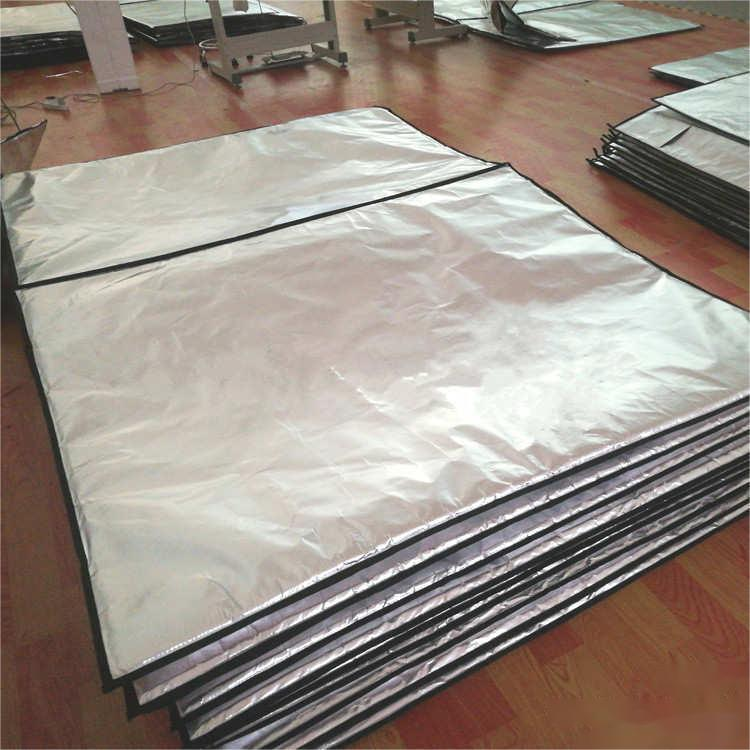
Insulated Pallet Covers For Perishable Export matter in 2026 because short temperature spikes are still where many losses begin, yet buyers also need faster handling, better validation, and smarter material choices. If you move fresh produce, chilled foods, and seafood, the right cover can reduce risk from customs holds, airport ramp exposure, and documentation delays, support more consistent quality, and fit a repeatable operating model. This optimized guide combines buyer advice, materials insight, compliance thinking, and market trends into one practical decision framework.
What this article will help you solve
- How insulated pallet covers for perishable export fit the real risks in perishable export logistics
- What to compare beyond unit price, including fit, closure, durability, and reuse
- How to validate performance with lane data, not just a marketing hour claim
- How to combine buyer logic, engineering logic, and sustainability logic in one decision
- What a fast self-check looks like before you launch or replace a cover program
Why are insulated pallet covers for perishable export worth the investment in 2026?
Insulated Pallet Covers For Perishable Export are worth the investment when the cost of one failure is higher than the cost of building a repeatable passive protection step. That failure may be product spoilage, appearance damage, stability risk, a delayed release, or a customer complaint. In 2026, more teams are making this decision with total operating value in mind, not just purchase price. They want fewer losses, faster handling, better proof, and a clear sustainability story.
For you, the key question is simple: where is the pallet exposed today, and what does that exposure cost when it goes wrong? If the answer involves customs holds, airport ramp exposure, and documentation delays, a well-chosen cover can be one of the fastest ways to improve control without redesigning the whole cold chain. The biggest gains usually come from protecting repeat risk points such as air export, sea-air combinations, cross-border trucking, and airport consolidation. This is where passive packaging often delivers a strong return. Export quality is often lost at origin handoff points, so passive covers are most valuable in the waiting periods many teams underestimate.
What business case usually supports insulated pallet covers for perishable export?
A strong business case combines avoided loss, labor fit, reuse potential, and easier claims defense. That means you should compare more than cover price. Review the cost of rejected goods, the labor seconds needed to install the cover, the expected number of trips, and the ability to generate data that supports QA or customer conversations. When those elements line up, the cover becomes a measurable process improvement.
| Value driver | What to measure | Why it matters | Typical result |
| Loss reduction | Claims or spoilage avoided | Protects product value | Lower hidden cost |
| Labor fit | Seconds per install | Drives real compliance | Better daily execution |
| Reuse logic | Trips per unit | Changes true unit economics | Smarter procurement |
Practical tips and recommendations
- Build the business case around one high-risk lane first so savings are easier to prove.
- Count customer complaints and rejected pallets, not only temperature events.
- Use actual shift feedback to confirm the cover is fast enough for your operation.
Typical scenario: A team shipping fresh produce and chilled foods used a thermal cover during cross-border trucking. The cover did not replace refrigeration, but it reduced exposure during the waiting window that usually triggered customs holds and airport ramp exposure. That is where passive protection often earns its value.
How do insulated pallet covers for perishable export reduce risk across docks, transport, and storage?
A good cover reduces risk by smoothing the harsh transitions that fixed systems cannot fully eliminate. It slows radiant heat, cuts direct airflow, and helps manage moisture exposure while a pallet moves between protected points. That makes it useful across dock staging, line-haul handoffs, warehouse moves, and short waiting periods before delivery or storage. The result is a more stable product environment around the load.
This is especially valuable because temperature abuse often begins outside the main refrigeration asset. The truck may be fine, but the pallet may wait too long before loading. The warehouse may be controlled, but the marshalling lane may not be. When you place insulated pallet covers for perishable export at the exact transition where risk starts, you create a practical buffer that supports quality, shelf life, stability, or appearance. Exporters are planning for longer documentation and handoff windows, not just pure transit time.
Which weak points should you map before selecting insulated pallet covers for perishable export?
Map the lane from the last protected point to the next protected point. Note dwell time, sunlight, humidity, product mass, pallet shape, and how many times the load is touched. Then ask which moment is most likely to create the first failure. This simple exercise often reveals that the cover does not need to protect every hour of the trip. It only needs to protect the critical window you can actually improve.
| Network point | Common failure | How the cover helps | Why you care |
| Dock or ramp | Sudden heat spike | Adds thermal buffer time | Less excursion risk |
| Warehouse move | Zone transition and condensation | Keeps load protected between zones | Better packaging condition |
| Delivery wait | Unplanned delay | Stabilizes the pallet until handoff | Fewer quality surprises |
Practical tips and recommendations
- Map the risk window in minutes, not vague descriptions such as 'sometimes delayed.'
- Use the same map across procurement, QA, and operations so everyone solves the same problem.
- Focus first on the transition where quality loss begins, not on the easiest place to collect data.
Typical scenario: A team shipping fresh produce and chilled foods used a thermal cover during air export. The cover did not replace refrigeration, but it reduced exposure during the waiting window that usually triggered customs holds and airport ramp exposure. That is where passive protection often earns its value.
What design, validation, and sustainability features should you compare in insulated pallet covers for perishable export?
Design, validation, and sustainability should be compared together because they shape the real outcome as one system. Design tells you whether the cover fits the pallet, closes quickly, and resists handling damage. Validation tells you whether performance is proven for the actual lane. Sustainability tells you whether the program reduces total waste through reuse, right-sizing, and less damaged product.
This three-part comparison reflects how packaging decisions are changing. The European Union's Packaging and Packaging Waste Regulation entered into force in 2025 and generally applies from August 12, 2026, which is increasing attention on packaging efficiency and circularity. At the same time, quality teams still need strong data and operations teams still need speed. So the best insulated pallet covers for perishable export balance material choice, performance proof, and daily usability in one package. Trade partners increasingly expect digital temperature evidence when quality claims are disputed.
What comparison framework helps you shortlist insulated pallet covers for perishable export quickly?
Use a simple grid with three columns: does the cover fit the lane, does it fit the workflow, and does it fit the material strategy. Under each column, score closure speed, fit, validation evidence, reuse cycle, cleaning need, and storage footprint. This stops you from overvaluing one attractive feature while missing a hidden operational problem. It also gives procurement a clearer basis for comparing suppliers.
| Decision lens | Good | Better | Best-practice question |
| Design | Basic fit | Fast, repeatable fit | Will operators use it correctly every time? |
| Validation | Generic data | Lane-specific evidence | Can QA defend this choice? |
| Sustainability | Lower material weight | Right-sized reuse strategy | Does it cut total waste in reality? |
Practical tips and recommendations
- Score covers with real operators in the room, not only on a specification sheet.
- Avoid choosing a reusable model if your return, storage, and inspection loop is weak.
- Include avoided product loss in sustainability reviews, not only packaging mass.
Typical scenario: A team shipping fresh produce and chilled foods used a thermal cover during cross-border trucking. The cover did not replace refrigeration, but it reduced exposure during the waiting window that usually triggered customs holds and airport ramp exposure. That is where passive protection often earns its value.
Which decision tool helps you choose the right insulated pallet covers for perishable export faster?
A practical decision tool is a five-question self-check. First, what is the exact product temperature requirement? Second, where is the highest-risk exposure window? Third, how repeatable is the lane? Fourth, how fast must operators install the cover? Fifth, do you have a realistic reuse loop? If you answer these questions clearly, you can eliminate many poor options before a supplier presentation even begins.
This self-check is useful because it turns selection into a structured process. It prevents over-buying, under-buying, and confusing thermal marketing language. It also helps align QA, operations, and procurement, since each group can see where its priorities enter the decision. For complex networks, this is often the fastest route to a shortlist that makes sense.
How should you score your insulated pallet covers for perishable export shortlist?
Give each option a simple score from one to five for lane fit, thermal evidence, handling speed, durability, and material strategy. Then weight the score according to your business goal. If product value is very high, lane evidence may deserve the highest weight. If shipment volume is extreme, handling speed may matter more. The scoring model does not need to be complicated to be effective.
| Self-check question | What to confirm | Low score sign | High score sign |
| Lane risk | Known exposure window | Vague assumptions | Measured dwell profile |
| Handling fit | Fast installation | Teams likely skip it | Simple repeatable use |
| Reuse logic | Return and inspect loop | No clear process | Closed-loop discipline |
Practical tips and recommendations
- Weight the score by business risk so the matrix reflects reality.
- Use the same scorecard for every supplier to avoid bias.
- Review the score after the pilot, not only before it.
Typical scenario: A team shipping fresh produce and chilled foods used a thermal cover during air export. The cover did not replace refrigeration, but it reduced exposure during the waiting window that usually triggered customs holds and airport ramp exposure. That is where passive protection often earns its value.
How do you launch a insulated pallet covers for perishable export program that sticks?
A program sticks when the cover is easy to find, easy to fit, easy to inspect, and easy to justify. That means you need standard work, simple visuals, pilot data, and clear ownership for reuse or replacement. Once those pieces are in place, the cover becomes part of normal operations instead of a special instruction used only by the most careful shift.
The final step is continuous review. Track exceptions, seasonal shifts, wear condition, and any changes in pallet profile or route design. If the network changes, the validation logic should change as well. When you keep the program connected to real lane data, insulated pallet covers for perishable export continue to deliver value instead of becoming background packaging that nobody questions.
What does a durable operating routine for insulated pallet covers for perishable export include?
It includes lane assignment, storage point, training pictures, inspection rules, and a review cadence. If the cover is reusable, the routine should also define cleaning, return, and retirement criteria. These details may sound operational, but they are exactly what turn a good product into a good system. The system is what protects quality at scale.
| Routine element | What it covers | Owner | Why it matters |
| Standard work | When and how to use the cover | Operations | Prevents missed steps |
| Inspection | Condition and reuse decision | QA or supervisors | Keeps performance reliable |
| Review cycle | Data and exception analysis | Cross-functional team | Supports ongoing improvement |
Practical tips and recommendations
- Put the cover at the point of use, not in a distant storage area.
- Use picture-based work instructions so training stays simple across shifts.
- Schedule review after the hottest, busiest, or most difficult weeks of the season.
- Build reuse and material decisions around cutting export rejection and waste.
Typical scenario: A team shipping fresh produce and chilled foods used a thermal cover during airport consolidation. The cover did not replace refrigeration, but it reduced exposure during the waiting window that usually triggered customs holds and airport ramp exposure. That is where passive protection often earns its value.
2026 trends in perishable export logistics
In 2026, the best decisions around insulated pallet covers for perishable export are being shaped by a mix of buyer discipline, validation logic, and sustainability pressure. FDA said in February 2026 that it proposed moving the Food Traceability Rule compliance date to July 20, 2028 and that it intends not to enforce the rule before that date, following Congressional direction. GS1 says its traceability standards are used by more than one million companies worldwide. UNEP and FAO report that about 14 percent of food produced for human consumption is lost before retail, and lack of effective refrigeration caused the loss of 12 percent of total food production in 2017. That combination is why cover programs are being reviewed more strategically and with clearer success metrics.
Latest developments at a glance
- Selection is moving from unit-cost focus to cost-per-successful-trip thinking.
- Validation, reuse, and traceability are being discussed together instead of as separate projects.
- The strongest suppliers are offering both product and operating guidance, not product alone.
The practical lesson is that a strong 2026 program makes the cover easy to approve, easy to use, and easy to review later with data. When those three elements are present, the cover earns trust across the organization and creates more durable value.
Frequently Asked Questions
Are insulated pallet covers for perishable export the same as active refrigerated packaging?
No. Insulated Pallet Covers For Perishable Export are passive protection. They slow temperature change and help buffer exposure, but they do not create active cooling on their own. They work best when you use them to protect a real risk window between controlled points.
How long can insulated pallet covers for perishable export protect a pallet?
There is no honest single answer because protection depends on payload, starting temperature, ambient stress, sunlight, humidity, fit, and dwell time. The best question is whether the cover keeps your load inside target for your actual lane and pass criteria.
Can insulated pallet covers for perishable export be reused?
Many can, but reuse only creates value when you have an inspection rule, a realistic return loop, and a way to retire damaged units. If your network is irregular, a simpler one-way or limited-reuse model may work better.
Do insulated pallet covers for perishable export help with compliance and audits?
They can, when they are part of a documented process. A cover becomes much more useful in audits when you can show why it was selected, how it is used, what data supports it, and what happens when there is an exception.
What should you ask a supplier before buying insulated pallet covers for perishable export?
Ask about lane assumptions, test method, payload used in testing, closure design, pallet fit, reuse guidance, and training support. Those answers tell you far more than a broad brochure claim.
Summary and Recommendations
Insulated Pallet Covers For Perishable Export create value when you match them to the real exposure window, the real product sensitivity, and the real way your team works. The best program combines correct fit, practical handling, useful data, and a clear validation logic. If you compare covers with those factors in mind, you will make a better decision than if you focus on thickness or price alone.
Your next step is to profile one high-risk lane, define the pass criteria that matter to your product, and run a small pilot with loggers and operator feedback. That simple process will tell you whether insulated pallet covers for perishable export are the right control and which design gives you the best operating value.
About Tempk
At Tempk, we focus on practical thermal protection for real shipping conditions. We design pallet cover solutions around fit, repeatable handling, and measurable performance so your team can protect quality without adding unnecessary complexity. We also support discussions around validation, reusability, and lane-specific application.
Share your lane profile, pallet size, and target temperature range with us, and we can help you compare the right options for insulated pallet covers for perishable export.
Insulated Pallet Covers For Chocolate: Complete 2026 Guide

Insulated Pallet Covers For Chocolate matter in 2026 because short temperature spikes are still where many losses begin, yet buyers also need faster handling, better validation, and smarter material choices. If you move full-pallet bar shipments, bagged confectionery, and truffle cartons, the right cover can reduce risk from softening, fat bloom, and shape loss, support more consistent quality, and fit a repeatable operating model. This optimized guide combines buyer advice, materials insight, compliance thinking, and market trends into one practical decision framework.
What this article will help you solve
- How insulated pallet covers for chocolate fit the real risks in palletized chocolate distribution
- What to compare beyond unit price, including fit, closure, durability, and reuse
- How to validate performance with lane data, not just a marketing hour claim
- How to combine buyer logic, engineering logic, and sustainability logic in one decision
- What a fast self-check looks like before you launch or replace a cover program
Why are insulated pallet covers for chocolate worth the investment in 2026?
Insulated Pallet Covers For Chocolate are worth the investment when the cost of one failure is higher than the cost of building a repeatable passive protection step. That failure may be product spoilage, appearance damage, stability risk, a delayed release, or a customer complaint. In 2026, more teams are making this decision with total operating value in mind, not just purchase price. They want fewer losses, faster handling, better proof, and a clear sustainability story.
For you, the key question is simple: where is the pallet exposed today, and what does that exposure cost when it goes wrong? If the answer involves softening, fat bloom, and shape loss, a well-chosen cover can be one of the fastest ways to improve control without redesigning the whole cold chain. The biggest gains usually come from protecting repeat risk points such as DC transfers, retail replenishment, summer truck routes, and dock staging. This is where passive packaging often delivers a strong return. For palletized chocolate, repeatability at the dock and in the DC often matters more than extreme insulation thickness.
What business case usually supports insulated pallet covers for chocolate?
A strong business case combines avoided loss, labor fit, reuse potential, and easier claims defense. That means you should compare more than cover price. Review the cost of rejected goods, the labor seconds needed to install the cover, the expected number of trips, and the ability to generate data that supports QA or customer conversations. When those elements line up, the cover becomes a measurable process improvement.
| Value driver | What to measure | Why it matters | Typical result |
| Loss reduction | Claims or spoilage avoided | Protects product value | Lower hidden cost |
| Labor fit | Seconds per install | Drives real compliance | Better daily execution |
| Reuse logic | Trips per unit | Changes true unit economics | Smarter procurement |
Practical tips and recommendations
- Build the business case around one high-risk lane first so savings are easier to prove.
- Count customer complaints and rejected pallets, not only temperature events.
- Use actual shift feedback to confirm the cover is fast enough for your operation.
Typical scenario: A team shipping full-pallet bar shipments and bagged confectionery used a thermal cover during summer truck routes. The cover did not replace refrigeration, but it reduced exposure during the waiting window that usually triggered softening and fat bloom. That is where passive protection often earns its value.
How do insulated pallet covers for chocolate reduce risk across docks, transport, and storage?
A good cover reduces risk by smoothing the harsh transitions that fixed systems cannot fully eliminate. It slows radiant heat, cuts direct airflow, and helps manage moisture exposure while a pallet moves between protected points. That makes it useful across dock staging, line-haul handoffs, warehouse moves, and short waiting periods before delivery or storage. The result is a more stable product environment around the load.
This is especially valuable because temperature abuse often begins outside the main refrigeration asset. The truck may be fine, but the pallet may wait too long before loading. The warehouse may be controlled, but the marshalling lane may not be. When you place insulated pallet covers for chocolate at the exact transition where risk starts, you create a practical buffer that supports quality, shelf life, stability, or appearance. Retail replenishment teams want pallet covers that protect chocolate while staying easy to fit during peak season.
Which weak points should you map before selecting insulated pallet covers for chocolate?
Map the lane from the last protected point to the next protected point. Note dwell time, sunlight, humidity, product mass, pallet shape, and how many times the load is touched. Then ask which moment is most likely to create the first failure. This simple exercise often reveals that the cover does not need to protect every hour of the trip. It only needs to protect the critical window you can actually improve.
| Network point | Common failure | How the cover helps | Why you care |
| Dock or ramp | Sudden heat spike | Adds thermal buffer time | Less excursion risk |
| Warehouse move | Zone transition and condensation | Keeps load protected between zones | Better packaging condition |
| Delivery wait | Unplanned delay | Stabilizes the pallet until handoff | Fewer quality surprises |
Practical tips and recommendations
- Map the risk window in minutes, not vague descriptions such as 'sometimes delayed.'
- Use the same map across procurement, QA, and operations so everyone solves the same problem.
- Focus first on the transition where quality loss begins, not on the easiest place to collect data.
Typical scenario: A team shipping full-pallet bar shipments and bagged confectionery used a thermal cover during retail replenishment. The cover did not replace refrigeration, but it reduced exposure during the waiting window that usually triggered softening and fat bloom. That is where passive protection often earns its value.
What design, validation, and sustainability features should you compare in insulated pallet covers for chocolate?
Design, validation, and sustainability should be compared together because they shape the real outcome as one system. Design tells you whether the cover fits the pallet, closes quickly, and resists handling damage. Validation tells you whether performance is proven for the actual lane. Sustainability tells you whether the program reduces total waste through reuse, right-sizing, and less damaged product.
This three-part comparison reflects how packaging decisions are changing. The European Union's Packaging and Packaging Waste Regulation entered into force in 2025 and generally applies from August 12, 2026, which is increasing attention on packaging efficiency and circularity. At the same time, quality teams still need strong data and operations teams still need speed. So the best insulated pallet covers for chocolate balance material choice, performance proof, and daily usability in one package. Buyers are comparing cost per delivered pallet in good visual condition, not only unit price.
What comparison framework helps you shortlist insulated pallet covers for chocolate quickly?
Use a simple grid with three columns: does the cover fit the lane, does it fit the workflow, and does it fit the material strategy. Under each column, score closure speed, fit, validation evidence, reuse cycle, cleaning need, and storage footprint. This stops you from overvaluing one attractive feature while missing a hidden operational problem. It also gives procurement a clearer basis for comparing suppliers.
| Decision lens | Good | Better | Best-practice question |
| Design | Basic fit | Fast, repeatable fit | Will operators use it correctly every time? |
| Validation | Generic data | Lane-specific evidence | Can QA defend this choice? |
| Sustainability | Lower material weight | Right-sized reuse strategy | Does it cut total waste in reality? |
Practical tips and recommendations
- Score covers with real operators in the room, not only on a specification sheet.
- Avoid choosing a reusable model if your return, storage, and inspection loop is weak.
- Include avoided product loss in sustainability reviews, not only packaging mass.
Typical scenario: A team shipping full-pallet bar shipments and bagged confectionery used a thermal cover during dock staging. The cover did not replace refrigeration, but it reduced exposure during the waiting window that usually triggered softening and fat bloom. That is where passive protection often earns its value.
Which decision tool helps you choose the right insulated pallet covers for chocolate faster?
A practical decision tool is a five-question self-check. First, what is the exact product temperature requirement? Second, where is the highest-risk exposure window? Third, how repeatable is the lane? Fourth, how fast must operators install the cover? Fifth, do you have a realistic reuse loop? If you answer these questions clearly, you can eliminate many poor options before a supplier presentation even begins.
This self-check is useful because it turns selection into a structured process. It prevents over-buying, under-buying, and confusing thermal marketing language. It also helps align QA, operations, and procurement, since each group can see where its priorities enter the decision. For complex networks, this is often the fastest route to a shortlist that makes sense.
How should you score your insulated pallet covers for chocolate shortlist?
Give each option a simple score from one to five for lane fit, thermal evidence, handling speed, durability, and material strategy. Then weight the score according to your business goal. If product value is very high, lane evidence may deserve the highest weight. If shipment volume is extreme, handling speed may matter more. The scoring model does not need to be complicated to be effective. For chocolate pallets, preventing temperature cycling is critical because repeated warm-cool swings drive bloom and appearance defects.
| Self-check question | What to confirm | Low score sign | High score sign |
| Lane risk | Known exposure window | Vague assumptions | Measured dwell profile |
| Handling fit | Fast installation | Teams likely skip it | Simple repeatable use |
| Reuse logic | Return and inspect loop | No clear process | Closed-loop discipline |
Practical tips and recommendations
- Weight the score by business risk so the matrix reflects reality.
- Use the same scorecard for every supplier to avoid bias.
- Review the score after the pilot, not only before it.
Typical scenario: A team shipping full-pallet bar shipments and bagged confectionery used a thermal cover during retail replenishment. The cover did not replace refrigeration, but it reduced exposure during the waiting window that usually triggered softening and fat bloom. That is where passive protection often earns its value.
How do you launch a insulated pallet covers for chocolate program that sticks?
A program sticks when the cover is easy to find, easy to fit, easy to inspect, and easy to justify. That means you need standard work, simple visuals, pilot data, and clear ownership for reuse or replacement. Once those pieces are in place, the cover becomes part of normal operations instead of a special instruction used only by the most careful shift.
The final step is continuous review. Track exceptions, seasonal shifts, wear condition, and any changes in pallet profile or route design. If the network changes, the validation logic should change as well. When you keep the program connected to real lane data, insulated pallet covers for chocolate continue to deliver value instead of becoming background packaging that nobody questions.
What does a durable operating routine for insulated pallet covers for chocolate include?
It includes lane assignment, storage point, training pictures, inspection rules, and a review cadence. If the cover is reusable, the routine should also define cleaning, return, and retirement criteria. These details may sound operational, but they are exactly what turn a good product into a good system. The system is what protects quality at scale.
| Routine element | What it covers | Owner | Why it matters |
| Standard work | When and how to use the cover | Operations | Prevents missed steps |
| Inspection | Condition and reuse decision | QA or supervisors | Keeps performance reliable |
| Review cycle | Data and exception analysis | Cross-functional team | Supports ongoing improvement |
Practical tips and recommendations
- Put the cover at the point of use, not in a distant storage area.
- Use picture-based work instructions so training stays simple across shifts.
- Schedule review after the hottest, busiest, or most difficult weeks of the season.
- Build reuse and material decisions around reusable pallet programs on repeat lanes.
Typical scenario: A team shipping full-pallet bar shipments and bagged confectionery used a thermal cover during dock staging. The cover did not replace refrigeration, but it reduced exposure during the waiting window that usually triggered softening and fat bloom. That is where passive protection often earns its value.
2026 trends in palletized chocolate distribution
In 2026, the best decisions around insulated pallet covers for chocolate are being shaped by a mix of buyer discipline, validation logic, and sustainability pressure. Confectionery guidance commonly points to stable storage near 12 to 18 degrees Celsius to reduce softening and bloom in chocolate. The European Commission says the Packaging and Packaging Waste Regulation, Regulation (EU) 2025/40, entered into force on February 11, 2025 and will generally apply from August 12, 2026. That combination is why cover programs are being reviewed more strategically and with clearer success metrics.
Latest developments at a glance
- Selection is moving from unit-cost focus to cost-per-successful-trip thinking.
- Validation, reuse, and traceability are being discussed together instead of as separate projects.
- The strongest suppliers are offering both product and operating guidance, not product alone.
The practical lesson is that a strong 2026 program makes the cover easy to approve, easy to use, and easy to review later with data. When those three elements are present, the cover earns trust across the organization and creates more durable value.
Frequently Asked Questions
Are insulated pallet covers for chocolate the same as active refrigerated packaging?
No. Insulated Pallet Covers For Chocolate are passive protection. They slow temperature change and help buffer exposure, but they do not create active cooling on their own. They work best when you use them to protect a real risk window between controlled points.
How long can insulated pallet covers for chocolate protect a pallet?
There is no honest single answer because protection depends on payload, starting temperature, ambient stress, sunlight, humidity, fit, and dwell time. The best question is whether the cover keeps your load inside target for your actual lane and pass criteria.
Can insulated pallet covers for chocolate be reused?
Many can, but reuse only creates value when you have an inspection rule, a realistic return loop, and a way to retire damaged units. If your network is irregular, a simpler one-way or limited-reuse model may work better.
Do insulated pallet covers for chocolate help with compliance and audits?
They can, when they are part of a documented process. A cover becomes much more useful in audits when you can show why it was selected, how it is used, what data supports it, and what happens when there is an exception.
What should you ask a supplier before buying insulated pallet covers for chocolate?
Ask about lane assumptions, test method, payload used in testing, closure design, pallet fit, reuse guidance, and training support. Those answers tell you far more than a broad brochure claim.
Do insulated pallet covers for chocolate stop chocolate from blooming or melting?
They can reduce the risk, especially during handoffs and short hot exposures, but they are not a cure-all. Chocolate quality depends on stable temperature, limited cycling, and avoiding condensation when moving between cold and warm environments.
Summary and Recommendations
Insulated Pallet Covers For Chocolate create value when you match them to the real exposure window, the real product sensitivity, and the real way your team works. The best program combines correct fit, practical handling, useful data, and a clear validation logic. If you compare covers with those factors in mind, you will make a better decision than if you focus on thickness or price alone.
Your next step is to profile one high-risk lane, define the pass criteria that matter to your product, and run a small pilot with loggers and operator feedback. That simple process will tell you whether insulated pallet covers for chocolate are the right control and which design gives you the best operating value.
About Tempk
At Tempk, we focus on practical thermal protection for real shipping conditions. We design pallet cover solutions around fit, repeatable handling, and measurable performance so your team can protect quality without adding unnecessary complexity. We also support discussions around validation, reusability, and lane-specific application.
Share your lane profile, pallet size, and target temperature range with us, and we can help you compare the right options for insulated pallet covers for chocolate.
Insulated Pallet Covers For Bulk Orders: Complete 2026 Guide
Insulated Pallet Covers For Bulk Orders matter in 2026 because short temperature spikes are still where many losses begin, yet buyers also need faster handling, better validation, and smarter material choices. If you move bulk retail replenishment, wholesale orders, and industrial temperature-sensitive goods, the right cover can reduce risk from high pallet counts in short windows, pack-out bottlenecks, and inconsistent handling across shifts, support more consistent quality, and fit a repeatable operating model. This optimized guide combines buyer advice, materials insight, compliance thinking, and market trends into one practical decision framework.
What this article will help you solve
- How insulated pallet covers for bulk orders fit the real risks in high-volume order fulfillment
- What to compare beyond unit price, including fit, closure, durability, and reuse
- How to validate performance with lane data, not just a marketing hour claim
- How to combine buyer logic, engineering logic, and sustainability logic in one decision
- What a fast self-check looks like before you launch or replace a cover program
Why are insulated pallet covers for bulk orders worth the investment in 2026?
Insulated Pallet Covers For Bulk Orders are worth the investment when the cost of one failure is higher than the cost of building a repeatable passive protection step. That failure may be product spoilage, appearance damage, stability risk, a delayed release, or a customer complaint. In 2026, more teams are making this decision with total operating value in mind, not just purchase price. They want fewer losses, faster handling, better proof, and a clear sustainability story.
For you, the key question is simple: where is the pallet exposed today, and what does that exposure cost when it goes wrong? If the answer involves high pallet counts in short windows, pack-out bottlenecks, and inconsistent handling across shifts, a well-chosen cover can be one of the fastest ways to improve control without redesigning the whole cold chain. The biggest gains usually come from protecting repeat risk points such as promotional builds, seasonal orders, contract manufacturing releases, and big-box retail replenishment. This is where passive packaging often delivers a strong return. For bulk orders, the best cover is the one that keeps quality stable while keeping the dispatch line moving.
What business case usually supports insulated pallet covers for bulk orders?
A strong business case combines avoided loss, labor fit, reuse potential, and easier claims defense. That means you should compare more than cover price. Review the cost of rejected goods, the labor seconds needed to install the cover, the expected number of trips, and the ability to generate data that supports QA or customer conversations. When those elements line up, the cover becomes a measurable process improvement.
| Value driver | What to measure | Why it matters | Typical result |
| Loss reduction | Claims or spoilage avoided | Protects product value | Lower hidden cost |
| Labor fit | Seconds per install | Drives real compliance | Better daily execution |
| Reuse logic | Trips per unit | Changes true unit economics | Smarter procurement |
Practical tips and recommendations
- Build the business case around one high-risk lane first so savings are easier to prove.
- Count customer complaints and rejected pallets, not only temperature events.
- Use actual shift feedback to confirm the cover is fast enough for your operation.
Typical scenario: A team shipping bulk retail replenishment and wholesale orders used a thermal cover during promotional builds. The cover did not replace refrigeration, but it reduced exposure during the waiting window that usually triggered high pallet counts in short windows and pack-out bottlenecks. That is where passive protection often earns its value.
How do insulated pallet covers for bulk orders reduce risk across docks, transport, and storage?
A good cover reduces risk by smoothing the harsh transitions that fixed systems cannot fully eliminate. It slows radiant heat, cuts direct airflow, and helps manage moisture exposure while a pallet moves between protected points. That makes it useful across dock staging, line-haul handoffs, warehouse moves, and short waiting periods before delivery or storage. The result is a more stable product environment around the load.
This is especially valuable because temperature abuse often begins outside the main refrigeration asset. The truck may be fine, but the pallet may wait too long before loading. The warehouse may be controlled, but the marshalling lane may not be. When you place insulated pallet covers for bulk orders at the exact transition where risk starts, you create a practical buffer that supports quality, shelf life, stability, or appearance. Order spikes force operations to simplify packaging steps, so buyers prefer covers that are hard to misuse.
Which weak points should you map before selecting insulated pallet covers for bulk orders?
Map the lane from the last protected point to the next protected point. Note dwell time, sunlight, humidity, product mass, pallet shape, and how many times the load is touched. Then ask which moment is most likely to create the first failure. This simple exercise often reveals that the cover does not need to protect every hour of the trip. It only needs to protect the critical window you can actually improve.
| Network point | Common failure | How the cover helps | Why you care |
| Dock or ramp | Sudden heat spike | Adds thermal buffer time | Less excursion risk |
| Warehouse move | Zone transition and condensation | Keeps load protected between zones | Better packaging condition |
| Delivery wait | Unplanned delay | Stabilizes the pallet until handoff | Fewer quality surprises |
Practical tips and recommendations
- Map the risk window in minutes, not vague descriptions such as 'sometimes delayed.'
- Use the same map across procurement, QA, and operations so everyone solves the same problem.
- Focus first on the transition where quality loss begins, not on the easiest place to collect data.
Typical scenario: A team shipping bulk retail replenishment and wholesale orders used a thermal cover during seasonal orders. The cover did not replace refrigeration, but it reduced exposure during the waiting window that usually triggered high pallet counts in short windows and pack-out bottlenecks. That is where passive protection often earns its value.
What design, validation, and sustainability features should you compare in insulated pallet covers for bulk orders?
Design, validation, and sustainability should be compared together because they shape the real outcome as one system. Design tells you whether the cover fits the pallet, closes quickly, and resists handling damage. Validation tells you whether performance is proven for the actual lane. Sustainability tells you whether the program reduces total waste through reuse, right-sizing, and less damaged product.
This three-part comparison reflects how packaging decisions are changing. The European Union's Packaging and Packaging Waste Regulation entered into force in 2025 and generally applies from August 12, 2026, which is increasing attention on packaging efficiency and circularity. At the same time, quality teams still need strong data and operations teams still need speed. So the best insulated pallet covers for bulk orders balance material choice, performance proof, and daily usability in one package. Teams now compare the labor minutes saved per pallet alongside thermal performance.
What comparison framework helps you shortlist insulated pallet covers for bulk orders quickly?
Use a simple grid with three columns: does the cover fit the lane, does it fit the workflow, and does it fit the material strategy. Under each column, score closure speed, fit, validation evidence, reuse cycle, cleaning need, and storage footprint. This stops you from overvaluing one attractive feature while missing a hidden operational problem. It also gives procurement a clearer basis for comparing suppliers.
| Decision lens | Good | Better | Best-practice question |
| Design | Basic fit | Fast, repeatable fit | Will operators use it correctly every time? |
| Validation | Generic data | Lane-specific evidence | Can QA defend this choice? |
| Sustainability | Lower material weight | Right-sized reuse strategy | Does it cut total waste in reality? |
Practical tips and recommendations
- Score covers with real operators in the room, not only on a specification sheet.
- Avoid choosing a reusable model if your return, storage, and inspection loop is weak.
- Include avoided product loss in sustainability reviews, not only packaging mass.
Typical scenario: A team shipping bulk retail replenishment and wholesale orders used a thermal cover during promotional builds. The cover did not replace refrigeration, but it reduced exposure during the waiting window that usually triggered high pallet counts in short windows and pack-out bottlenecks. That is where passive protection often earns its value.
Which decision tool helps you choose the right insulated pallet covers for bulk orders faster?
A practical decision tool is a five-question self-check. First, what is the exact product temperature requirement? Second, where is the highest-risk exposure window? Third, how repeatable is the lane? Fourth, how fast must operators install the cover? Fifth, do you have a realistic reuse loop? If you answer these questions clearly, you can eliminate many poor options before a supplier presentation even begins.
This self-check is useful because it turns selection into a structured process. It prevents over-buying, under-buying, and confusing thermal marketing language. It also helps align QA, operations, and procurement, since each group can see where its priorities enter the decision. For complex networks, this is often the fastest route to a shortlist that makes sense.
How should you score your insulated pallet covers for bulk orders shortlist?
Give each option a simple score from one to five for lane fit, thermal evidence, handling speed, durability, and material strategy. Then weight the score according to your business goal. If product value is very high, lane evidence may deserve the highest weight. If shipment volume is extreme, handling speed may matter more. The scoring model does not need to be complicated to be effective.
| Self-check question | What to confirm | Low score sign | High score sign |
| Lane risk | Known exposure window | Vague assumptions | Measured dwell profile |
| Handling fit | Fast installation | Teams likely skip it | Simple repeatable use |
| Reuse logic | Return and inspect loop | No clear process | Closed-loop discipline |
Practical tips and recommendations
- Weight the score by business risk so the matrix reflects reality.
- Use the same scorecard for every supplier to avoid bias.
- Review the score after the pilot, not only before it.
Typical scenario: A team shipping bulk retail replenishment and wholesale orders used a thermal cover during promotional builds. The cover did not replace refrigeration, but it reduced exposure during the waiting window that usually triggered high pallet counts in short windows and pack-out bottlenecks. That is where passive protection often earns its value.
How do you launch a insulated pallet covers for bulk orders program that sticks?
A program sticks when the cover is easy to find, easy to fit, easy to inspect, and easy to justify. That means you need standard work, simple visuals, pilot data, and clear ownership for reuse or replacement. Once those pieces are in place, the cover becomes part of normal operations instead of a special instruction used only by the most careful shift.
The final step is continuous review. Track exceptions, seasonal shifts, wear condition, and any changes in pallet profile or route design. If the network changes, the validation logic should change as well. When you keep the program connected to real lane data, insulated pallet covers for bulk orders continue to deliver value instead of becoming background packaging that nobody questions.
What does a durable operating routine for insulated pallet covers for bulk orders include?
It includes lane assignment, storage point, training pictures, inspection rules, and a review cadence. If the cover is reusable, the routine should also define cleaning, return, and retirement criteria. These details may sound operational, but they are exactly what turn a good product into a good system. The system is what protects quality at scale.
| Routine element | What it covers | Owner | Why it matters |
| Standard work | When and how to use the cover | Operations | Prevents missed steps |
| Inspection | Condition and reuse decision | QA or supervisors | Keeps performance reliable |
| Review cycle | Data and exception analysis | Cross-functional team | Supports ongoing improvement |
Practical tips and recommendations
- Put the cover at the point of use, not in a distant storage area.
- Use picture-based work instructions so training stays simple across shifts.
- Schedule review after the hottest, busiest, or most difficult weeks of the season.
- Build reuse and material decisions around multi-use protection across order waves.
Typical scenario: A team shipping bulk retail replenishment and wholesale orders used a thermal cover during big-box retail replenishment. The cover did not replace refrigeration, but it reduced exposure during the waiting window that usually triggered high pallet counts in short windows and pack-out bottlenecks. That is where passive protection often earns its value.
2026 trends in high-volume order fulfillment
In 2026, the best decisions around insulated pallet covers for bulk orders are being shaped by a mix of buyer discipline, validation logic, and sustainability pressure. The European Commission says the Packaging and Packaging Waste Regulation, Regulation (EU) 2025/40, entered into force on February 11, 2025 and will generally apply from August 12, 2026. That combination is why cover programs are being reviewed more strategically and with clearer success metrics.
Latest developments at a glance
- Selection is moving from unit-cost focus to cost-per-successful-trip thinking.
- Validation, reuse, and traceability are being discussed together instead of as separate projects.
- The strongest suppliers are offering both product and operating guidance, not product alone.
The practical lesson is that a strong 2026 program makes the cover easy to approve, easy to use, and easy to review later with data. When those three elements are present, the cover earns trust across the organization and creates more durable value.
Frequently Asked Questions
Are insulated pallet covers for bulk orders the same as active refrigerated packaging?
No. Insulated Pallet Covers For Bulk Orders are passive protection. They slow temperature change and help buffer exposure, but they do not create active cooling on their own. They work best when you use them to protect a real risk window between controlled points.
How long can insulated pallet covers for bulk orders protect a pallet?
There is no honest single answer because protection depends on payload, starting temperature, ambient stress, sunlight, humidity, fit, and dwell time. The best question is whether the cover keeps your load inside target for your actual lane and pass criteria.
Can insulated pallet covers for bulk orders be reused?
Many can, but reuse only creates value when you have an inspection rule, a realistic return loop, and a way to retire damaged units. If your network is irregular, a simpler one-way or limited-reuse model may work better.
Do insulated pallet covers for bulk orders help with compliance and audits?
They can, when they are part of a documented process. A cover becomes much more useful in audits when you can show why it was selected, how it is used, what data supports it, and what happens when there is an exception.
What should you ask a supplier before buying insulated pallet covers for bulk orders?
Ask about lane assumptions, test method, payload used in testing, closure design, pallet fit, reuse guidance, and training support. Those answers tell you far more than a broad brochure claim.
Summary and Recommendations
Insulated Pallet Covers For Bulk Orders create value when you match them to the real exposure window, the real product sensitivity, and the real way your team works. The best program combines correct fit, practical handling, useful data, and a clear validation logic. If you compare covers with those factors in mind, you will make a better decision than if you focus on thickness or price alone.
Your next step is to profile one high-risk lane, define the pass criteria that matter to your product, and run a small pilot with loggers and operator feedback. That simple process will tell you whether insulated pallet covers for bulk orders are the right control and which design gives you the best operating value.
About Tempk
At Tempk, we focus on practical thermal protection for real shipping conditions. We design pallet cover solutions around fit, repeatable handling, and measurable performance so your team can protect quality without adding unnecessary complexity. We also support discussions around validation, reusability, and lane-specific application.
Share your lane profile, pallet size, and target temperature range with us, and we can help you compare the right options for insulated pallet covers for bulk orders.
Insulated Cargo Covers For Perishable Goods: Complete 2026 Guide
Insulated Cargo Covers For Perishable Goods matter in 2026 because short temperature spikes are still where many losses begin, yet buyers also need faster handling, better validation, and smarter material choices. If you move fresh produce, dairy, and seafood, the right cover can reduce risk from microbial growth, shortened shelf life, and drip loss, support more consistent quality, and fit a repeatable operating model. This optimized guide combines buyer advice, materials insight, compliance thinking, and market trends into one practical decision framework.
What this article will help you solve
- How insulated cargo covers for perishable goods fit the real risks in perishable food logistics
- What to compare beyond unit price, including fit, closure, durability, and reuse
- How to validate performance with lane data, not just a marketing hour claim
- How to combine buyer logic, engineering logic, and sustainability logic in one decision
- What a fast self-check looks like before you launch or replace a cover program
Why are insulated cargo covers for perishable goods worth the investment in 2026?
Insulated Cargo Covers For Perishable Goods are worth the investment when the cost of one failure is higher than the cost of building a repeatable passive protection step. That failure may be product spoilage, appearance damage, stability risk, a delayed release, or a customer complaint. In 2026, more teams are making this decision with total operating value in mind, not just purchase price. They want fewer losses, faster handling, better proof, and a clear sustainability story.
For you, the key question is simple: where is the pallet exposed today, and what does that exposure cost when it goes wrong? If the answer involves microbial growth, shortened shelf life, and drip loss, a well-chosen cover can be one of the fastest ways to improve control without redesigning the whole cold chain. The biggest gains usually come from protecting repeat risk points such as dock staging, reefer loading, airport transfer, and retail replenishment. This is where passive packaging often delivers a strong return. When margins are thin, preventing one rejected pallet can pay for a large part of a passive cover program.
What business case usually supports insulated cargo covers for perishable goods?
A strong business case combines avoided loss, labor fit, reuse potential, and easier claims defense. That means you should compare more than cover price. Review the cost of rejected goods, the labor seconds needed to install the cover, the expected number of trips, and the ability to generate data that supports QA or customer conversations. When those elements line up, the cover becomes a measurable process improvement.
| Value driver | What to measure | Why it matters | Typical result |
| Loss reduction | Claims or spoilage avoided | Protects product value | Lower hidden cost |
| Labor fit | Seconds per install | Drives real compliance | Better daily execution |
| Reuse logic | Trips per unit | Changes true unit economics | Smarter procurement |
Practical tips and recommendations
- Build the business case around one high-risk lane first so savings are easier to prove.
- Count customer complaints and rejected pallets, not only temperature events.
- Use actual shift feedback to confirm the cover is fast enough for your operation.
Typical scenario: A team shipping fresh produce and dairy used a thermal cover during airport transfer. The cover did not replace refrigeration, but it reduced exposure during the waiting window that usually triggered microbial growth and shortened shelf life. That is where passive protection often earns its value.
How do insulated cargo covers for perishable goods reduce risk across docks, transport, and storage?
A good cover reduces risk by smoothing the harsh transitions that fixed systems cannot fully eliminate. It slows radiant heat, cuts direct airflow, and helps manage moisture exposure while a pallet moves between protected points. That makes it useful across dock staging, line-haul handoffs, warehouse moves, and short waiting periods before delivery or storage. The result is a more stable product environment around the load.
This is especially valuable because temperature abuse often begins outside the main refrigeration asset. The truck may be fine, but the pallet may wait too long before loading. The warehouse may be controlled, but the marshalling lane may not be. When you place insulated cargo covers for perishable goods at the exact transition where risk starts, you create a practical buffer that supports quality, shelf life, stability, or appearance. Food businesses are giving more attention to time-above-limit data instead of relying on a simple average temperature.
Which weak points should you map before selecting insulated cargo covers for perishable goods?
Map the lane from the last protected point to the next protected point. Note dwell time, sunlight, humidity, product mass, pallet shape, and how many times the load is touched. Then ask which moment is most likely to create the first failure. This simple exercise often reveals that the cover does not need to protect every hour of the trip. It only needs to protect the critical window you can actually improve.
| Network point | Common failure | How the cover helps | Why you care |
| Dock or ramp | Sudden heat spike | Adds thermal buffer time | Less excursion risk |
| Warehouse move | Zone transition and condensation | Keeps load protected between zones | Better packaging condition |
| Delivery wait | Unplanned delay | Stabilizes the pallet until handoff | Fewer quality surprises |
Practical tips and recommendations
- Map the risk window in minutes, not vague descriptions such as 'sometimes delayed.'
- Use the same map across procurement, QA, and operations so everyone solves the same problem.
- Focus first on the transition where quality loss begins, not on the easiest place to collect data.
Typical scenario: A team shipping fresh produce and dairy used a thermal cover during retail replenishment. The cover did not replace refrigeration, but it reduced exposure during the waiting window that usually triggered microbial growth and shortened shelf life. That is where passive protection often earns its value.
What design, validation, and sustainability features should you compare in insulated cargo covers for perishable goods?
Design, validation, and sustainability should be compared together because they shape the real outcome as one system. Design tells you whether the cover fits the pallet, closes quickly, and resists handling damage. Validation tells you whether performance is proven for the actual lane. Sustainability tells you whether the program reduces total waste through reuse, right-sizing, and less damaged product.
This three-part comparison reflects how packaging decisions are changing. The European Union's Packaging and Packaging Waste Regulation entered into force in 2025 and generally applies from August 12, 2026, which is increasing attention on packaging efficiency and circularity. At the same time, quality teams still need strong data and operations teams still need speed. So the best insulated cargo covers for perishable goods balance material choice, performance proof, and daily usability in one package. Cold-chain visibility is becoming part of quality, traceability, and waste reduction programs.
What comparison framework helps you shortlist insulated cargo covers for perishable goods quickly?
Use a simple grid with three columns: does the cover fit the lane, does it fit the workflow, and does it fit the material strategy. Under each column, score closure speed, fit, validation evidence, reuse cycle, cleaning need, and storage footprint. This stops you from overvaluing one attractive feature while missing a hidden operational problem. It also gives procurement a clearer basis for comparing suppliers.
| Decision lens | Good | Better | Best-practice question |
| Design | Basic fit | Fast, repeatable fit | Will operators use it correctly every time? |
| Validation | Generic data | Lane-specific evidence | Can QA defend this choice? |
| Sustainability | Lower material weight | Right-sized reuse strategy | Does it cut total waste in reality? |
Practical tips and recommendations
- Score covers with real operators in the room, not only on a specification sheet.
- Avoid choosing a reusable model if your return, storage, and inspection loop is weak.
- Include avoided product loss in sustainability reviews, not only packaging mass.
Typical scenario: A team shipping fresh produce and dairy used a thermal cover during dock staging. The cover did not replace refrigeration, but it reduced exposure during the waiting window that usually triggered microbial growth and shortened shelf life. That is where passive protection often earns its value.
Which decision tool helps you choose the right insulated cargo covers for perishable goods faster?
A practical decision tool is a five-question self-check. First, what is the exact product temperature requirement? Second, where is the highest-risk exposure window? Third, how repeatable is the lane? Fourth, how fast must operators install the cover? Fifth, do you have a realistic reuse loop? If you answer these questions clearly, you can eliminate many poor options before a supplier presentation even begins.
This self-check is useful because it turns selection into a structured process. It prevents over-buying, under-buying, and confusing thermal marketing language. It also helps align QA, operations, and procurement, since each group can see where its priorities enter the decision. For complex networks, this is often the fastest route to a shortlist that makes sense.
How should you score your insulated cargo covers for perishable goods shortlist?
Give each option a simple score from one to five for lane fit, thermal evidence, handling speed, durability, and material strategy. Then weight the score according to your business goal. If product value is very high, lane evidence may deserve the highest weight. If shipment volume is extreme, handling speed may matter more. The scoring model does not need to be complicated to be effective.
| Self-check question | What to confirm | Low score sign | High score sign |
| Lane risk | Known exposure window | Vague assumptions | Measured dwell profile |
| Handling fit | Fast installation | Teams likely skip it | Simple repeatable use |
| Reuse logic | Return and inspect loop | No clear process | Closed-loop discipline |
Practical tips and recommendations
- Weight the score by business risk so the matrix reflects reality.
- Use the same scorecard for every supplier to avoid bias.
- Review the score after the pilot, not only before it.
Typical scenario: A team shipping fresh produce and dairy used a thermal cover during dock staging. The cover did not replace refrigeration, but it reduced exposure during the waiting window that usually triggered microbial growth and shortened shelf life. That is where passive protection often earns its value.
How do you launch a insulated cargo covers for perishable goods program that sticks?
A program sticks when the cover is easy to find, easy to fit, easy to inspect, and easy to justify. That means you need standard work, simple visuals, pilot data, and clear ownership for reuse or replacement. Once those pieces are in place, the cover becomes part of normal operations instead of a special instruction used only by the most careful shift.
The final step is continuous review. Track exceptions, seasonal shifts, wear condition, and any changes in pallet profile or route design. If the network changes, the validation logic should change as well. When you keep the program connected to real lane data, insulated cargo covers for perishable goods continue to deliver value instead of becoming background packaging that nobody questions.
What does a durable operating routine for insulated cargo covers for perishable goods include?
It includes lane assignment, storage point, training pictures, inspection rules, and a review cadence. If the cover is reusable, the routine should also define cleaning, return, and retirement criteria. These details may sound operational, but they are exactly what turn a good product into a good system. The system is what protects quality at scale.
| Routine element | What it covers | Owner | Why it matters |
| Standard work | When and how to use the cover | Operations | Prevents missed steps |
| Inspection | Condition and reuse decision | QA or supervisors | Keeps performance reliable |
| Review cycle | Data and exception analysis | Cross-functional team | Supports ongoing improvement |
Practical tips and recommendations
- Put the cover at the point of use, not in a distant storage area.
- Use picture-based work instructions so training stays simple across shifts.
- Schedule review after the hottest, busiest, or most difficult weeks of the season.
- Build reuse and material decisions around reducing food loss.
Typical scenario: A team shipping fresh produce and dairy used a thermal cover during airport transfer. The cover did not replace refrigeration, but it reduced exposure during the waiting window that usually triggered microbial growth and shortened shelf life. That is where passive protection often earns its value.
2026 trends in perishable food logistics
In 2026, the best decisions around insulated cargo covers for perishable goods are being shaped by a mix of buyer discipline, validation logic, and sustainability pressure. FDA said in February 2026 that it proposed moving the Food Traceability Rule compliance date to July 20, 2028 and that it intends not to enforce the rule before that date, following Congressional direction. FAO says the food cold chain is responsible for about 4 percent of global greenhouse gas emissions. UNEP and FAO report that about 14 percent of food produced for human consumption is lost before retail, and lack of effective refrigeration caused the loss of 12 percent of total food production in 2017. That combination is why cover programs are being reviewed more strategically and with clearer success metrics.
Latest developments at a glance
- Selection is moving from unit-cost focus to cost-per-successful-trip thinking.
- Validation, reuse, and traceability are being discussed together instead of as separate projects.
- The strongest suppliers are offering both product and operating guidance, not product alone.
The practical lesson is that a strong 2026 program makes the cover easy to approve, easy to use, and easy to review later with data. When those three elements are present, the cover earns trust across the organization and creates more durable value.
Frequently Asked Questions
Are insulated cargo covers for perishable goods the same as active refrigerated packaging?
No. Insulated Cargo Covers For Perishable Goods are passive protection. They slow temperature change and help buffer exposure, but they do not create active cooling on their own. They work best when you use them to protect a real risk window between controlled points.
How long can insulated cargo covers for perishable goods protect a pallet?
There is no honest single answer because protection depends on payload, starting temperature, ambient stress, sunlight, humidity, fit, and dwell time. The best question is whether the cover keeps your load inside target for your actual lane and pass criteria.
Can insulated cargo covers for perishable goods be reused?
Many can, but reuse only creates value when you have an inspection rule, a realistic return loop, and a way to retire damaged units. If your network is irregular, a simpler one-way or limited-reuse model may work better.
Do insulated cargo covers for perishable goods help with compliance and audits?
They can, when they are part of a documented process. A cover becomes much more useful in audits when you can show why it was selected, how it is used, what data supports it, and what happens when there is an exception.
What should you ask a supplier before buying insulated cargo covers for perishable goods?
Ask about lane assumptions, test method, payload used in testing, closure design, pallet fit, reuse guidance, and training support. Those answers tell you far more than a broad brochure claim.
Summary and Recommendations
Insulated Cargo Covers For Perishable Goods create value when you match them to the real exposure window, the real product sensitivity, and the real way your team works. The best program combines correct fit, practical handling, useful data, and a clear validation logic. If you compare covers with those factors in mind, you will make a better decision than if you focus on thickness or price alone.
Your next step is to profile one high-risk lane, define the pass criteria that matter to your product, and run a small pilot with loggers and operator feedback. That simple process will tell you whether insulated cargo covers for perishable goods are the right control and which design gives you the best operating value.
About Tempk
At Tempk, we focus on practical thermal protection for real shipping conditions. We design pallet cover solutions around fit, repeatable handling, and measurable performance so your team can protect quality without adding unnecessary complexity. We also support discussions around validation, reusability, and lane-specific application.
Share your lane profile, pallet size, and target temperature range with us, and we can help you compare the right options for insulated cargo covers for perishable goods.
Cold Chain Pallet Covers For Transport: Complete 2026 Guide

Cold Chain Pallet Covers For Transport matter in 2026 because short temperature spikes are still where many losses begin, yet buyers also need faster handling, better validation, and smarter material choices. If you move food pallets, pharma pallets, and consumer goods, the right cover can reduce risk from tarmac heat, customs delay, and cross-dock exposure, support more consistent quality, and fit a repeatable operating model. This optimized guide combines buyer advice, materials insight, compliance thinking, and market trends into one practical decision framework.
What this article will help you solve
- How cold chain pallet covers for transport fit the real risks in multi-modal cold chain transport
- What to compare beyond unit price, including fit, closure, durability, and reuse
- How to validate performance with lane data, not just a marketing hour claim
- How to combine buyer logic, engineering logic, and sustainability logic in one decision
- What a fast self-check looks like before you launch or replace a cover program
Why are cold chain pallet covers for transport worth the investment in 2026?
Cold Chain Pallet Covers For Transport are worth the investment when the cost of one failure is higher than the cost of building a repeatable passive protection step. That failure may be product spoilage, appearance damage, stability risk, a delayed release, or a customer complaint. In 2026, more teams are making this decision with total operating value in mind, not just purchase price. They want fewer losses, faster handling, better proof, and a clear sustainability story.
For you, the key question is simple: where is the pallet exposed today, and what does that exposure cost when it goes wrong? If the answer involves tarmac heat, customs delay, and cross-dock exposure, a well-chosen cover can be one of the fastest ways to improve control without redesigning the whole cold chain. The biggest gains usually come from protecting repeat risk points such as air freight, road transport, ocean transload, and domestic distribution. This is where passive packaging often delivers a strong return. Transport covers work best when they are treated as one control inside a full lane design, not as a stand-alone guarantee.
What business case usually supports cold chain pallet covers for transport?
A strong business case combines avoided loss, labor fit, reuse potential, and easier claims defense. That means you should compare more than cover price. Review the cost of rejected goods, the labor seconds needed to install the cover, the expected number of trips, and the ability to generate data that supports QA or customer conversations. When those elements line up, the cover becomes a measurable process improvement.
| Value driver | What to measure | Why it matters | Typical result |
| Loss reduction | Claims or spoilage avoided | Protects product value | Lower hidden cost |
| Labor fit | Seconds per install | Drives real compliance | Better daily execution |
| Reuse logic | Trips per unit | Changes true unit economics | Smarter procurement |
Practical tips and recommendations
- Build the business case around one high-risk lane first so savings are easier to prove.
- Count customer complaints and rejected pallets, not only temperature events.
- Use actual shift feedback to confirm the cover is fast enough for your operation.
Typical scenario: A team shipping food pallets and pharma pallets used a thermal cover during air freight. The cover did not replace refrigeration, but it reduced exposure during the waiting window that usually triggered tarmac heat and customs delay. That is where passive protection often earns its value.
How do cold chain pallet covers for transport reduce risk across docks, transport, and storage?
A good cover reduces risk by smoothing the harsh transitions that fixed systems cannot fully eliminate. It slows radiant heat, cuts direct airflow, and helps manage moisture exposure while a pallet moves between protected points. That makes it useful across dock staging, line-haul handoffs, warehouse moves, and short waiting periods before delivery or storage. The result is a more stable product environment around the load.
This is especially valuable because temperature abuse often begins outside the main refrigeration asset. The truck may be fine, but the pallet may wait too long before loading. The warehouse may be controlled, but the marshalling lane may not be. When you place cold chain pallet covers for transport at the exact transition where risk starts, you create a practical buffer that supports quality, shelf life, stability, or appearance. Shippers are focusing more on lane-based validation than on generic hour claims.
Which weak points should you map before selecting cold chain pallet covers for transport?
Map the lane from the last protected point to the next protected point. Note dwell time, sunlight, humidity, product mass, pallet shape, and how many times the load is touched. Then ask which moment is most likely to create the first failure. This simple exercise often reveals that the cover does not need to protect every hour of the trip. It only needs to protect the critical window you can actually improve.
| Network point | Common failure | How the cover helps | Why you care |
| Dock or ramp | Sudden heat spike | Adds thermal buffer time | Less excursion risk |
| Warehouse move | Zone transition and condensation | Keeps load protected between zones | Better packaging condition |
| Delivery wait | Unplanned delay | Stabilizes the pallet until handoff | Fewer quality surprises |
Practical tips and recommendations
- Map the risk window in minutes, not vague descriptions such as 'sometimes delayed.'
- Use the same map across procurement, QA, and operations so everyone solves the same problem.
- Focus first on the transition where quality loss begins, not on the easiest place to collect data.
Typical scenario: A team shipping food pallets and pharma pallets used a thermal cover during domestic distribution. The cover did not replace refrigeration, but it reduced exposure during the waiting window that usually triggered tarmac heat and customs delay. That is where passive protection often earns its value.
What design, validation, and sustainability features should you compare in cold chain pallet covers for transport?
Design, validation, and sustainability should be compared together because they shape the real outcome as one system. Design tells you whether the cover fits the pallet, closes quickly, and resists handling damage. Validation tells you whether performance is proven for the actual lane. Sustainability tells you whether the program reduces total waste through reuse, right-sizing, and less damaged product.
This three-part comparison reflects how packaging decisions are changing. The European Union's Packaging and Packaging Waste Regulation entered into force in 2025 and generally applies from August 12, 2026, which is increasing attention on packaging efficiency and circularity. At the same time, quality teams still need strong data and operations teams still need speed. So the best cold chain pallet covers for transport balance material choice, performance proof, and daily usability in one package. The same pallet may face warehouse, ramp, truck, and customs conditions in one trip, so transport protection has to be practical across nodes.
What comparison framework helps you shortlist cold chain pallet covers for transport quickly?
Use a simple grid with three columns: does the cover fit the lane, does it fit the workflow, and does it fit the material strategy. Under each column, score closure speed, fit, validation evidence, reuse cycle, cleaning need, and storage footprint. This stops you from overvaluing one attractive feature while missing a hidden operational problem. It also gives procurement a clearer basis for comparing suppliers.
| Decision lens | Good | Better | Best-practice question |
| Design | Basic fit | Fast, repeatable fit | Will operators use it correctly every time? |
| Validation | Generic data | Lane-specific evidence | Can QA defend this choice? |
| Sustainability | Lower material weight | Right-sized reuse strategy | Does it cut total waste in reality? |
Practical tips and recommendations
- Score covers with real operators in the room, not only on a specification sheet.
- Avoid choosing a reusable model if your return, storage, and inspection loop is weak.
- Include avoided product loss in sustainability reviews, not only packaging mass.
Typical scenario: A team shipping food pallets and pharma pallets used a thermal cover during domestic distribution. The cover did not replace refrigeration, but it reduced exposure during the waiting window that usually triggered tarmac heat and customs delay. That is where passive protection often earns its value.
Which decision tool helps you choose the right cold chain pallet covers for transport faster?
A practical decision tool is a five-question self-check. First, what is the exact product temperature requirement? Second, where is the highest-risk exposure window? Third, how repeatable is the lane? Fourth, how fast must operators install the cover? Fifth, do you have a realistic reuse loop? If you answer these questions clearly, you can eliminate many poor options before a supplier presentation even begins.
This self-check is useful because it turns selection into a structured process. It prevents over-buying, under-buying, and confusing thermal marketing language. It also helps align QA, operations, and procurement, since each group can see where its priorities enter the decision. For complex networks, this is often the fastest route to a shortlist that makes sense.
How should you score your cold chain pallet covers for transport shortlist?
Give each option a simple score from one to five for lane fit, thermal evidence, handling speed, durability, and material strategy. Then weight the score according to your business goal. If product value is very high, lane evidence may deserve the highest weight. If shipment volume is extreme, handling speed may matter more. The scoring model does not need to be complicated to be effective.
| Self-check question | What to confirm | Low score sign | High score sign |
| Lane risk | Known exposure window | Vague assumptions | Measured dwell profile |
| Handling fit | Fast installation | Teams likely skip it | Simple repeatable use |
| Reuse logic | Return and inspect loop | No clear process | Closed-loop discipline |
Practical tips and recommendations
- Weight the score by business risk so the matrix reflects reality.
- Use the same scorecard for every supplier to avoid bias.
- Review the score after the pilot, not only before it.
Typical scenario: A team shipping food pallets and pharma pallets used a thermal cover during ocean transload. The cover did not replace refrigeration, but it reduced exposure during the waiting window that usually triggered tarmac heat and customs delay. That is where passive protection often earns its value.
How do you launch a cold chain pallet covers for transport program that sticks?
A program sticks when the cover is easy to find, easy to fit, easy to inspect, and easy to justify. That means you need standard work, simple visuals, pilot data, and clear ownership for reuse or replacement. Once those pieces are in place, the cover becomes part of normal operations instead of a special instruction used only by the most careful shift.
The final step is continuous review. Track exceptions, seasonal shifts, wear condition, and any changes in pallet profile or route design. If the network changes, the validation logic should change as well. When you keep the program connected to real lane data, cold chain pallet covers for transport continue to deliver value instead of becoming background packaging that nobody questions.
What does a durable operating routine for cold chain pallet covers for transport include?
It includes lane assignment, storage point, training pictures, inspection rules, and a review cadence. If the cover is reusable, the routine should also define cleaning, return, and retirement criteria. These details may sound operational, but they are exactly what turn a good product into a good system. The system is what protects quality at scale.
| Routine element | What it covers | Owner | Why it matters |
| Standard work | When and how to use the cover | Operations | Prevents missed steps |
| Inspection | Condition and reuse decision | QA or supervisors | Keeps performance reliable |
| Review cycle | Data and exception analysis | Cross-functional team | Supports ongoing improvement |
Practical tips and recommendations
- Put the cover at the point of use, not in a distant storage area.
- Use picture-based work instructions so training stays simple across shifts.
- Schedule review after the hottest, busiest, or most difficult weeks of the season.
- Build reuse and material decisions around reusable systems on repeat lanes.
Typical scenario: A team shipping food pallets and pharma pallets used a thermal cover during ocean transload. The cover did not replace refrigeration, but it reduced exposure during the waiting window that usually triggered tarmac heat and customs delay. That is where passive protection often earns its value.
2026 trends in multi-modal cold chain transport
In 2026, the best decisions around cold chain pallet covers for transport are being shaped by a mix of buyer discipline, validation logic, and sustainability pressure. ISTA says Standard 7E uses heat and cold profiles developed from real-world transport data for thermal package testing. The European Commission says the Packaging and Packaging Waste Regulation, Regulation (EU) 2025/40, entered into force on February 11, 2025 and will generally apply from August 12, 2026. GS1 says its traceability standards are used by more than one million companies worldwide. That combination is why cover programs are being reviewed more strategically and with clearer success metrics.
Latest developments at a glance
- Selection is moving from unit-cost focus to cost-per-successful-trip thinking.
- Validation, reuse, and traceability are being discussed together instead of as separate projects.
- The strongest suppliers are offering both product and operating guidance, not product alone.
The practical lesson is that a strong 2026 program makes the cover easy to approve, easy to use, and easy to review later with data. When those three elements are present, the cover earns trust across the organization and creates more durable value.
Frequently Asked Questions
Are cold chain pallet covers for transport the same as active refrigerated packaging?
No. Cold Chain Pallet Covers For Transport are passive protection. They slow temperature change and help buffer exposure, but they do not create active cooling on their own. They work best when you use them to protect a real risk window between controlled points.
How long can cold chain pallet covers for transport protect a pallet?
There is no honest single answer because protection depends on payload, starting temperature, ambient stress, sunlight, humidity, fit, and dwell time. The best question is whether the cover keeps your load inside target for your actual lane and pass criteria.
Can cold chain pallet covers for transport be reused?
Many can, but reuse only creates value when you have an inspection rule, a realistic return loop, and a way to retire damaged units. If your network is irregular, a simpler one-way or limited-reuse model may work better.
Do cold chain pallet covers for transport help with compliance and audits?
They can, when they are part of a documented process. A cover becomes much more useful in audits when you can show why it was selected, how it is used, what data supports it, and what happens when there is an exception.
What should you ask a supplier before buying cold chain pallet covers for transport?
Ask about lane assumptions, test method, payload used in testing, closure design, pallet fit, reuse guidance, and training support. Those answers tell you far more than a broad brochure claim.
Summary and Recommendations
Cold Chain Pallet Covers For Transport create value when you match them to the real exposure window, the real product sensitivity, and the real way your team works. The best program combines correct fit, practical handling, useful data, and a clear validation logic. If you compare covers with those factors in mind, you will make a better decision than if you focus on thickness or price alone.
Your next step is to profile one high-risk lane, define the pass criteria that matter to your product, and run a small pilot with loggers and operator feedback. That simple process will tell you whether cold chain pallet covers for transport are the right control and which design gives you the best operating value.
About Tempk
At Tempk, we focus on practical thermal protection for real shipping conditions. We design pallet cover solutions around fit, repeatable handling, and measurable performance so your team can protect quality without adding unnecessary complexity. We also support discussions around validation, reusability, and lane-specific application.
Share your lane profile, pallet size, and target temperature range with us, and we can help you compare the right options for cold chain pallet covers for transport.
Cold Chain Pallet Covers For Cosmetics: Complete 2026 Guide
Cold Chain Pallet Covers For Cosmetics matter in 2026 because short temperature spikes are still where many losses begin, yet buyers also need faster handling, better validation, and smarter material choices. If you move serums, cream jars, and ampoules, the right cover can reduce risk from formula separation, fragrance drift, and label wrinkling, support more consistent quality, and fit a repeatable operating model. This optimized guide combines buyer advice, materials insight, compliance thinking, and market trends into one practical decision framework.
What this article will help you solve
- How cold chain pallet covers for cosmetics fit the real risks in temperature-sensitive cosmetics logistics
- What to compare beyond unit price, including fit, closure, durability, and reuse
- How to validate performance with lane data, not just a marketing hour claim
- How to combine buyer logic, engineering logic, and sustainability logic in one decision
- What a fast self-check looks like before you launch or replace a cover program
Why are cold chain pallet covers for cosmetics worth the investment in 2026?
Cold Chain Pallet Covers For Cosmetics are worth the investment when the cost of one failure is higher than the cost of building a repeatable passive protection step. That failure may be product spoilage, appearance damage, stability risk, a delayed release, or a customer complaint. In 2026, more teams are making this decision with total operating value in mind, not just purchase price. They want fewer losses, faster handling, better proof, and a clear sustainability story.
For you, the key question is simple: where is the pallet exposed today, and what does that exposure cost when it goes wrong? If the answer involves formula separation, fragrance drift, and label wrinkling, a well-chosen cover can be one of the fastest ways to improve control without redesigning the whole cold chain. The biggest gains usually come from protecting repeat risk points such as plant to 3PL transfer, summer truck routes, airport staging, and cross-border wholesale replenishment. This is where passive packaging often delivers a strong return. Beauty supply chains increasingly use mixed-SKU pallets and fast promotional cycles, so covers must protect quality without slowing picking.
What business case usually supports cold chain pallet covers for cosmetics?
A strong business case combines avoided loss, labor fit, reuse potential, and easier claims defense. That means you should compare more than cover price. Review the cost of rejected goods, the labor seconds needed to install the cover, the expected number of trips, and the ability to generate data that supports QA or customer conversations. When those elements line up, the cover becomes a measurable process improvement.
| Value driver | What to measure | Why it matters | Typical result |
| Loss reduction | Claims or spoilage avoided | Protects product value | Lower hidden cost |
| Labor fit | Seconds per install | Drives real compliance | Better daily execution |
| Reuse logic | Trips per unit | Changes true unit economics | Smarter procurement |
Practical tips and recommendations
- Build the business case around one high-risk lane first so savings are easier to prove.
- Count customer complaints and rejected pallets, not only temperature events.
- Use actual shift feedback to confirm the cover is fast enough for your operation.
Typical scenario: A team shipping serums and cream jars used a thermal cover during plant to 3PL transfer. The cover did not replace refrigeration, but it reduced exposure during the waiting window that usually triggered formula separation and fragrance drift. That is where passive protection often earns its value.
How do cold chain pallet covers for cosmetics reduce risk across docks, transport, and storage?
A good cover reduces risk by smoothing the harsh transitions that fixed systems cannot fully eliminate. It slows radiant heat, cuts direct airflow, and helps manage moisture exposure while a pallet moves between protected points. That makes it useful across dock staging, line-haul handoffs, warehouse moves, and short waiting periods before delivery or storage. The result is a more stable product environment around the load.
This is especially valuable because temperature abuse often begins outside the main refrigeration asset. The truck may be fine, but the pallet may wait too long before loading. The warehouse may be controlled, but the marshalling lane may not be. When you place cold chain pallet covers for cosmetics at the exact transition where risk starts, you create a practical buffer that supports quality, shelf life, stability, or appearance. Premium beauty brands are spending more on product stability, presentation, and packaging appearance during transit.
Which weak points should you map before selecting cold chain pallet covers for cosmetics?
Map the lane from the last protected point to the next protected point. Note dwell time, sunlight, humidity, product mass, pallet shape, and how many times the load is touched. Then ask which moment is most likely to create the first failure. This simple exercise often reveals that the cover does not need to protect every hour of the trip. It only needs to protect the critical window you can actually improve.
| Network point | Common failure | How the cover helps | Why you care |
| Dock or ramp | Sudden heat spike | Adds thermal buffer time | Less excursion risk |
| Warehouse move | Zone transition and condensation | Keeps load protected between zones | Better packaging condition |
| Delivery wait | Unplanned delay | Stabilizes the pallet until handoff | Fewer quality surprises |
Practical tips and recommendations
- Map the risk window in minutes, not vague descriptions such as 'sometimes delayed.'
- Use the same map across procurement, QA, and operations so everyone solves the same problem.
- Focus first on the transition where quality loss begins, not on the easiest place to collect data.
Typical scenario: A team shipping serums and cream jars used a thermal cover during plant to 3PL transfer. The cover did not replace refrigeration, but it reduced exposure during the waiting window that usually triggered formula separation and fragrance drift. That is where passive protection often earns its value.
What design, validation, and sustainability features should you compare in cold chain pallet covers for cosmetics?
Design, validation, and sustainability should be compared together because they shape the real outcome as one system. Design tells you whether the cover fits the pallet, closes quickly, and resists handling damage. Validation tells you whether performance is proven for the actual lane. Sustainability tells you whether the program reduces total waste through reuse, right-sizing, and less damaged product.
This three-part comparison reflects how packaging decisions are changing. The European Union's Packaging and Packaging Waste Regulation entered into force in 2025 and generally applies from August 12, 2026, which is increasing attention on packaging efficiency and circularity. At the same time, quality teams still need strong data and operations teams still need speed. So the best cold chain pallet covers for cosmetics balance material choice, performance proof, and daily usability in one package. Teams are pairing pallet covers with data loggers to prove that summer lanes stayed inside an internal quality target.
What comparison framework helps you shortlist cold chain pallet covers for cosmetics quickly?
Use a simple grid with three columns: does the cover fit the lane, does it fit the workflow, and does it fit the material strategy. Under each column, score closure speed, fit, validation evidence, reuse cycle, cleaning need, and storage footprint. This stops you from overvaluing one attractive feature while missing a hidden operational problem. It also gives procurement a clearer basis for comparing suppliers.
| Decision lens | Good | Better | Best-practice question |
| Design | Basic fit | Fast, repeatable fit | Will operators use it correctly every time? |
| Validation | Generic data | Lane-specific evidence | Can QA defend this choice? |
| Sustainability | Lower material weight | Right-sized reuse strategy | Does it cut total waste in reality? |
Practical tips and recommendations
- Score covers with real operators in the room, not only on a specification sheet.
- Avoid choosing a reusable model if your return, storage, and inspection loop is weak.
- Include avoided product loss in sustainability reviews, not only packaging mass.
Typical scenario: A team shipping serums and cream jars used a thermal cover during airport staging. The cover did not replace refrigeration, but it reduced exposure during the waiting window that usually triggered formula separation and fragrance drift. That is where passive protection often earns its value.
Which decision tool helps you choose the right cold chain pallet covers for cosmetics faster?
A practical decision tool is a five-question self-check. First, what is the exact product temperature requirement? Second, where is the highest-risk exposure window? Third, how repeatable is the lane? Fourth, how fast must operators install the cover? Fifth, do you have a realistic reuse loop? If you answer these questions clearly, you can eliminate many poor options before a supplier presentation even begins.
This self-check is useful because it turns selection into a structured process. It prevents over-buying, under-buying, and confusing thermal marketing language. It also helps align QA, operations, and procurement, since each group can see where its priorities enter the decision. For complex networks, this is often the fastest route to a shortlist that makes sense.
How should you score your cold chain pallet covers for cosmetics shortlist?
Give each option a simple score from one to five for lane fit, thermal evidence, handling speed, durability, and material strategy. Then weight the score according to your business goal. If product value is very high, lane evidence may deserve the highest weight. If shipment volume is extreme, handling speed may matter more. The scoring model does not need to be complicated to be effective. Cosmetics are often more sensitive to appearance and texture than to a strict regulatory cold chain, so the right cover is about quality protection as much as temperature control.
| Self-check question | What to confirm | Low score sign | High score sign |
| Lane risk | Known exposure window | Vague assumptions | Measured dwell profile |
| Handling fit | Fast installation | Teams likely skip it | Simple repeatable use |
| Reuse logic | Return and inspect loop | No clear process | Closed-loop discipline |
Practical tips and recommendations
- Weight the score by business risk so the matrix reflects reality.
- Use the same scorecard for every supplier to avoid bias.
- Review the score after the pilot, not only before it.
Typical scenario: A team shipping serums and cream jars used a thermal cover during cross-border wholesale replenishment. The cover did not replace refrigeration, but it reduced exposure during the waiting window that usually triggered formula separation and fragrance drift. That is where passive protection often earns its value.
How do you launch a cold chain pallet covers for cosmetics program that sticks?
A program sticks when the cover is easy to find, easy to fit, easy to inspect, and easy to justify. That means you need standard work, simple visuals, pilot data, and clear ownership for reuse or replacement. Once those pieces are in place, the cover becomes part of normal operations instead of a special instruction used only by the most careful shift.
The final step is continuous review. Track exceptions, seasonal shifts, wear condition, and any changes in pallet profile or route design. If the network changes, the validation logic should change as well. When you keep the program connected to real lane data, cold chain pallet covers for cosmetics continue to deliver value instead of becoming background packaging that nobody questions.
What does a durable operating routine for cold chain pallet covers for cosmetics include?
It includes lane assignment, storage point, training pictures, inspection rules, and a review cadence. If the cover is reusable, the routine should also define cleaning, return, and retirement criteria. These details may sound operational, but they are exactly what turn a good product into a good system. The system is what protects quality at scale.
| Routine element | What it covers | Owner | Why it matters |
| Standard work | When and how to use the cover | Operations | Prevents missed steps |
| Inspection | Condition and reuse decision | QA or supervisors | Keeps performance reliable |
| Review cycle | Data and exception analysis | Cross-functional team | Supports ongoing improvement |
Practical tips and recommendations
- Put the cover at the point of use, not in a distant storage area.
- Use picture-based work instructions so training stays simple across shifts.
- Schedule review after the hottest, busiest, or most difficult weeks of the season.
- Build reuse and material decisions around reusable cover programs for repeated lanes.
Typical scenario: A team shipping serums and cream jars used a thermal cover during summer truck routes. The cover did not replace refrigeration, but it reduced exposure during the waiting window that usually triggered formula separation and fragrance drift. That is where passive protection often earns its value.
2026 trends in temperature-sensitive cosmetics logistics
In 2026, the best decisions around cold chain pallet covers for cosmetics are being shaped by a mix of buyer discipline, validation logic, and sustainability pressure. The European Commission says the Packaging and Packaging Waste Regulation, Regulation (EU) 2025/40, entered into force on February 11, 2025 and will generally apply from August 12, 2026. GS1 says its traceability standards are used by more than one million companies worldwide. That combination is why cover programs are being reviewed more strategically and with clearer success metrics.
Latest developments at a glance
- Selection is moving from unit-cost focus to cost-per-successful-trip thinking.
- Validation, reuse, and traceability are being discussed together instead of as separate projects.
- The strongest suppliers are offering both product and operating guidance, not product alone.
The practical lesson is that a strong 2026 program makes the cover easy to approve, easy to use, and easy to review later with data. When those three elements are present, the cover earns trust across the organization and creates more durable value.
Frequently Asked Questions
Are cold chain pallet covers for cosmetics the same as active refrigerated packaging?
No. Cold Chain Pallet Covers For Cosmetics are passive protection. They slow temperature change and help buffer exposure, but they do not create active cooling on their own. They work best when you use them to protect a real risk window between controlled points.
How long can cold chain pallet covers for cosmetics protect a pallet?
There is no honest single answer because protection depends on payload, starting temperature, ambient stress, sunlight, humidity, fit, and dwell time. The best question is whether the cover keeps your load inside target for your actual lane and pass criteria.
Can cold chain pallet covers for cosmetics be reused?
Many can, but reuse only creates value when you have an inspection rule, a realistic return loop, and a way to retire damaged units. If your network is irregular, a simpler one-way or limited-reuse model may work better.
Do cold chain pallet covers for cosmetics help with compliance and audits?
They can, when they are part of a documented process. A cover becomes much more useful in audits when you can show why it was selected, how it is used, what data supports it, and what happens when there is an exception.
What should you ask a supplier before buying cold chain pallet covers for cosmetics?
Ask about lane assumptions, test method, payload used in testing, closure design, pallet fit, reuse guidance, and training support. Those answers tell you far more than a broad brochure claim.
Summary and Recommendations
Cold Chain Pallet Covers For Cosmetics create value when you match them to the real exposure window, the real product sensitivity, and the real way your team works. The best program combines correct fit, practical handling, useful data, and a clear validation logic. If you compare covers with those factors in mind, you will make a better decision than if you focus on thickness or price alone.
Your next step is to profile one high-risk lane, define the pass criteria that matter to your product, and run a small pilot with loggers and operator feedback. That simple process will tell you whether cold chain pallet covers for cosmetics are the right control and which design gives you the best operating value.
About Tempk
At Tempk, we focus on practical thermal protection for real shipping conditions. We design pallet cover solutions around fit, repeatable handling, and measurable performance so your team can protect quality without adding unnecessary complexity. We also support discussions around validation, reusability, and lane-specific application.
Share your lane profile, pallet size, and target temperature range with us, and we can help you compare the right options for cold chain pallet covers for cosmetics.
















