


Gel Brick Cooler Box Selection for Real Transport Routes
Gel Brick Cooler Box Selection for Real Transport Routes
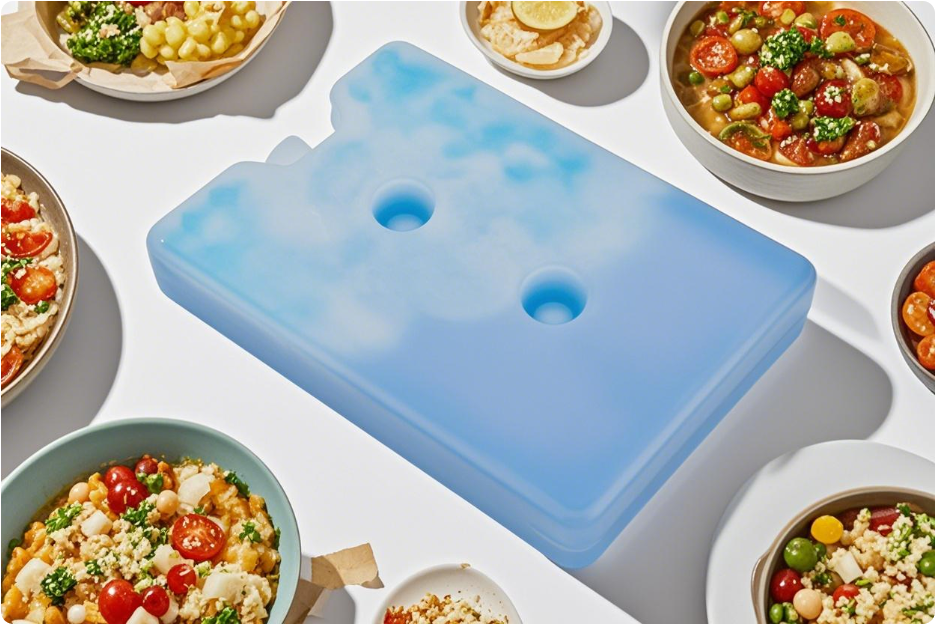
Gel Brick Cooler Box Selection for Real Transport Routes
A gel brick cooler box should be selected for a defined job, not for a broad promise that it keeps things cold. Its performance comes from the pairing of enclosure and coolant, plus the payload, brick condition, internal spacing, closure, handling, and journey. The same insulated box can be adequate for a short food-delivery loop and unsuitable for a controlled medical shipment.
Start by naming the use category and mapping the complete operating cycle. Then measure the loaded cavity, protect the product from warm and cold extremes, and test the commercial packout. This prevents a common mistake: buying a cooler first and forcing the route and payload to fit it later.
Name the Cooler Category in the Purchase Brief
“Cooler box” covers products with very different evidence and operating expectations. A consumer beverage cooler is designed for convenience. A reusable delivery tote may be managed within a closed grocery, catering, pharmacy, or service route. A passive parcel shipper may be designed around a sealed journey. A qualified medical transport system is tied to specified components, preparation, payloads, challenges, and acceptance criteria.
These categories can share materials and appearance without being interchangeable. Adding frozen bricks to an everyday cooler does not turn it into a qualified system. Current CDC vaccine guidance distinguishes a qualified container and packout, tested under controlled conditions, from ordinary food or beverage coolers. Vaccine programs should follow their current product and program instructions; other healthcare products require their own quality assessment.
A useful purchase brief identifies:
The product and its approved or justified condition
Whether freezing, direct cold contact, moisture, or light is a concern
Minimum and maximum product loads
Total time from packing until controlled storage at receipt
Seasonal exposure, stops, handovers, and credible delays
Whether the lid remains closed or opens during the route
Required handling strength, cleaning, return, and storage process
Monitoring, traceability, and receiving responsibilities
This brief lets a supplier propose a format for an actual duty rather than comparing unrelated catalog capacities.
The Usable Cavity Matters More Than Nominal Volume
A capacity label does not show where products and bricks can safely sit. Molded wall taper, rounded corners, hinges, handles, lid recesses, drain features, baskets, and dividers reshape the interior. Insulation and liners consume additional space. A brick may also change slightly in shape after conditioning.
Build a payload envelope that remains clear after the complete brick array, separators, logger, and closure clearance are added. Measure a production-intent sample at the base, middle, and lid. Check the lowest and highest permissible brick dimensions rather than assuming the nominal drawing represents every unit.
The lid deserves a physical trial. If the top layer requires force, it can crush product, bow a brick, compress insulation, or prevent full engagement. A package that looks closed while a corner gap remains has a different heat path from the tested assembly.
Cooler size also changes heat flow. A small box has a different relationship between external surface and payload volume from a large one. A tall cavity can develop vertical gradients; a wide lid presents a large upper boundary. Doubling volume and brick count does not recreate the same thermal behavior.
| Cooler duty | Enclosure features to examine | Coolant and payload concern | Evidence that supports a decision |
|---|---|---|---|
| Sealed one-way parcel | Low external cube, secure closure, outer protection | Duration, shifting, and minimum-load headspace | Full packout thermal and distribution test |
| Repeated local delivery | Durable body, accessible cleaning, easy handling | Reconditioning, lid openings, recovery, and inspection | Route simulation plus asset-control procedure |
| Controlled healthcare transport | Fixed bill of materials, tamper control, traceability | Freeze protection, monitoring, and change control | Product-specific qualification and quality approval |
| Food distribution | Hygiene, containment, stacking, rapid loading | Product prechill, liquid, crushing, and variable fills | Food-safety review and representative route trials |
| Field collection | Portable closure, secondary containment, custody | Warm additions, changing load, and sample protection | Procedure-specific evaluation and monitoring plan |
The table is not a material ranking. A reusable rigid box can be efficient where vehicles return to one depot and burdensome for distant one-way delivery. A light parcel shipper may reduce freight but require stronger control of damage and disposal. Match the format to the operating loop.
Arrange Bricks to Control Both Ends of the Range
The brick array influences temperature distribution as much as total coolant mass. Side channels can create a clear central cavity, but bricks must be restrained from falling inward. A top layer can address lid exposure and make counting simple, yet it may overcool upper products. Top-and-bottom layers offer compact coverage while increasing cold-contact and pressure risks. A full perimeter occupies more payload space and can create a cold boundary around sensitive contents.
There is no universally correct position. Select an initial arrangement from the likely heat-entry paths and the product’s lower and upper limits, then map the actual result.
Manage early cold exposure
A frozen water-rich brick can leave the freezer with a surface below the allowable condition of some chilled products. Direct contact may produce a local cold excursion even when the average air temperature looks acceptable. Use a defined spacer, basket, sleeve, or alternate conditioning method when testing shows it is needed. The buffer’s material, thickness, coverage, and placement become controlled parts.
Lowering the freezer set point to correct a late warm result can make this early risk worse. Likewise, adding bricks without data may increase freight and displace payload while creating more cold surface area.
Preserve late-route capacity
Warm performance depends on the rate of heat entry, the brick’s stored cooling capacity, product thermal mass, and elapsed time. Start product within its approved condition unless a validated process intentionally uses the shipper for pull-down. Warm products can consume reserve before the carrier collects the box.
Use void control to keep the load in the mapped position. A minimum order often presents the harder case because it has less thermal mass and more room for movement. Approve a defined low-load insert or another cooler size rather than leaving drivers to improvise with spare packaging.
Design Around the Whole Use Cycle
The thermal journey begins before vehicle departure and may continue after proof of delivery. Document brick conditioning, box preparation, product loading, dispatch staging, transport, openings, receipt, unloading, return, cleaning, and storage.
Multi-drop routes deserve their own design. Every lid opening exchanges internal air with the environment, exposes the upper layer, and changes product mass. The final stop may combine the longest elapsed time with the lightest load. A sealed-lid duration cannot be transferred to that workflow without assessment.
Reproduce the expected opening pattern during development. Specify frequency, opening duration, product removal, ambient condition, and whether bricks move. Organize orders so the driver does not search with the lid open. Smaller route modules or an inner flap may be useful, but they must be evaluated as part of the configuration.
Consider a pharmacy delivery route with several stops. The first packout uses one large cavity, and staff remove dividers as orders leave. By the final stop, two bricks have fallen toward the remaining product. The correct response is not necessarily more coolant. A fixed compartment system, stop-specific modules, or separate smaller boxes may preserve geometry and reduce lid-open time. The proposed correction still needs mapped testing.
Failed delivery and return are also boundary conditions. Define whether the box returns to controlled storage, remains in a vehicle, or is delivered later. Packaging reserve cannot replace a named escalation contact and a recovery procedure.
Build Evidence for the Exact Box-and-Brick Pair
Development testing should use the quoted cooler, brick part, separators, payload or justified simulant, closure, and actual conditioning process. Place calibrated sensors at suspected warm and cold product locations, not only at the center. Include minimum and maximum loads and relevant hot and cold exposure.
WHO technical guidance describes design, operational, and performance qualification for passive shipping containers. ISTA Standard 20 offers a structured process for insulated-container design and qualification, while ISTA 7E provides parcel thermal profiles. These references can support a protocol, but the chosen challenge still needs to reflect the product, route, openings, and delay risk.
Mechanical evaluation should represent expected drops, vibration, compression, and handling. A cooler that performs while stationary may develop a lid gap after impact or allow bricks to migrate under vibration. Reusable assets should be tested and inspected in a condition representative of permitted wear, not only when new.
Field trials then test the surrounding operation. Link logger traces to departure, stops, openings, delays, package condition, and receipt. A logger records exposure; it does not actively cool the product. Its accuracy, calibration, interval, placement, activation, and review process should support the intended quality decision.
Receipt should be part of the protocol, not an informal handoff. Identify who checks the seal and box condition, stops or retrieves the logger, transfers the payload to controlled storage, and reports a deviation. A box left unopened at a reception desk is still consuming its thermal reserve. The receiving record helps separate packaging performance from a late internal handoff and gives the quality team context when a temperature trace requires assessment.
Reuse Is a Managed Return Loop
A durable box does not create a reuse program by itself. The program needs ownership of returns, cleaning capacity, drying space, inspection, released inventory, replacement parts, and a retirement decision. Unknown handling outside organizational control can compromise cleanliness or the qualified geometry.
Inspect sealing surfaces, lid engagement, hinges or latches, wall and base damage, drain features, labels, and internal dimensions. Check bricks for cracks, leakage, swelling, deformation, contamination, and loss of identification. Keep dirty returns, cleaned assets, quarantined items, and released stock separated.
Cleaning instructions should identify compatible agents, concentration, contact time, rinsing where required, and complete drying. Chemicals or heat can damage plastics, coatings, adhesives, gaskets, or printing. Difficult seams and hardware may need special attention.
Track completed dispatches and successful returns rather than assuming a service life from material type. Lifecycle cost and environmental value depend on actual recovery, inspection rejection, cleaning, empty transport, asset loss, and product protection. A reusable label is a design intention, not operational evidence.
Supplier Questions That Expose Hidden Assumptions
Ask box and brick providers to respond to the same duty statement. Request internal and external drawings, manufacturing tolerances, insulation construction, closure details, brick filled-mass limits, refrigerant functional data, conditioning instructions, and safety or transport documentation relevant to the exact formulation.
Any thermal duration should come with its boundaries: exact box, bricks, payload, starting conditions, ambient profile, sensor positions, acceptance criteria, and point from which time was measured. A result from a different size or empty-box test can guide early screening but should not be treated as qualification for the proposed packout.
Review cleaning compatibility, leak and mechanical test methods, lot or asset identification, incoming packaging, supply continuity, and change-notification terms. A cheaper brick with matching dimensions can still differ in fill mass, phase behavior, shell conductivity, expansion, or sealing. Assess substitutions through the buyer’s change process before routine use.
The sample-to-production handoff is critical. Use samples from the intended commercial specification and site where possible. Confirm that production tolerances leave enough assembly clearance and that the supplier will identify the first changed lot after an approved revision.
Frequently Asked Questions
How long will a gel brick cooler box remain within range?
There is no responsible universal duration. Performance depends on the cooler construction, brick formulation and condition, payload, starting temperatures, internal layout, external profile, openings, and allowed product range. Ask for test conditions and qualify the exact commercial configuration for the intended journey and delay allowance.
Can an ordinary cooler be used for medicine transport?
Do not assume that it can. The medicine’s approved conditions, route, monitoring, quality process, and applicable program guidance determine suitability. Vaccine programs should follow current public-health and product instructions, which distinguish qualified packouts from ordinary food or beverage coolers. Other medicines require a product-specific decision.
Should the box itself be preconditioned?
Preconditioning may be part of some tested packouts, but it should not be added informally. It changes labor, moisture, and starting thermal load. If the qualification used a specified box condition, operations should reproduce it. If not, assess the proposed step before changing the approved process.
When should a reusable cooler be removed from service?
Use defined rejection criteria for cracks, panel damage, deformation, failed lid or gasket engagement, contamination, odor, illegible identity, and dimensional change. Cycle count may support inspection planning, but actual condition and periodic performance evidence are more useful than appearance or age alone.
Conclusion: Select the Operating System, Not the Empty Box
The right gel brick cooler box has physical fit, thermal fit, and process fit. Its cavity accepts a stable coolant-and-payload layout; its insulation and closure address the route; its condition can be reproduced; and its daily handling remains inside the tested design. Qualification and field monitoring then provide evidence for a defined use rather than a broad material claim.
Before comparing bulk quotations, assemble one production-intent sample with the real load. Measure clearance, carry it as operators will, open it according to the route, and identify every choice a packer or driver could make differently.
About Tempk
At Tempk, we offer gel ice packs and insulated formats that include cooler boxes, bags, and other temperature-control packaging. We can help buyers compare brick geometry with the usable cavity and discuss standard or customized component options for development. Product limits, route conditions, cleaning, monitoring, and final qualification remain specific to the buyer’s application.
Send Tempk your payload dimensions, required condition, journey and opening pattern, conditioning resources, and return plan to discuss a cooler-and-brick sample for evaluation.
Gel Brick Box Liner Design for Consistent Parcel Packouts
Gel Brick Box Liner Design for Consistent Parcel Packouts
A gel brick box liner is useful only after it is folded, fitted, loaded, and closed. On a material sheet, the insulation may appear uniform. Inside a shipping carton, corner gaps, compressed panels, misordered flaps, and moving bricks can create a very different thermal boundary. The liner slows heat entry; it does not cool the product or regulate a set point.
This format can be efficient for one-way parcels because components may store flat and work with corrugated cases. Its main advantage is adaptability, and its main risk is assembly variation. Treat the installed carton, liner, bricks, buffers, payload, closure, and packing method as the product that must be evaluated.
Decide Whether the Liner Format Fits the Distribution Model
Lined cartons are often considered when pre-use storage space, outbound weight, familiar parcel handling, and one-way delivery matter. They may suit foods, ingredients, cosmetics, laboratory materials, and other temperature-sensitive goods when the complete packout meets the applicable product requirements.
A molded cooler can be a better choice when rigid geometry, repeated handling, cleaning, and return dominate. A high-performance panel system may be appropriate where wall thickness and heat leakage are critical, provided edges and panels are protected. Active equipment or temperature-managed transport may be more suitable when a passive reserve cannot reasonably cover a long or highly uncertain route.
Make the choice after defining payload, required condition, total duration, seasonal exposure, handling, moisture, and acceptance criteria. A liner selected only because it is easy to store can create extra coolant, filler, labor, or risk at the packing line.
The format also needs an owner. Carton, liner, brick, and spacer may come from different suppliers, but the buyer needs one controlled bill of materials and one person or function responsible for their interfaces.
Four Interface Zones Determine Performance
Panel to panel
Flexible faces can meet as butt joints, overlaps, gussets, or nested folds. Heat and air tend to follow easier routes, so an aligned gap from base to lid can matter more than the broad panel material. Map every corner, edge, slot, and top closure. Specify overlap order and how the carton holds it in place.
Do not assume that metallic facing solves a seam problem. A reflective surface can reduce radiant transfer in an appropriate assembly, but its effect depends on orientation, adjacent space, compression, moisture, and the other modes of heat flow. Evaluate the completed liner rather than choosing by shine or layer count.
Liner to carton
The corrugated case gives the flexible system shape, closure, labeling surface, and much of its mechanical protection. Carton dimensions vary within manufacturing limits and can change under compression or humidity. A liner developed in one hand-cut box may buckle in a smaller production case or leave a channel in a larger one.
Review internal case dimensions, board construction relevant to the load, liner tolerances, and closure together. Gel bricks add mass, while condensation or leakage can weaken a moisture-sensitive carton. Tape type and pattern are controlled components when they affect closure and distribution strength.
Brick to liner
Rigid brick corners, seams, caps, or distorted surfaces can abrade a flexible liner during vibration. A close fit may improve geometry but damage the liner or stop the lid from closing. Excess clearance allows the brick to fall away from its mapped location.
Specify length, width, thickness, filled mass, edge form, and allowed dimensional variation in the condition used for packing. WHO prequalification information for vaccine carriers emphasizes that coolant packs need the correct size and fit for their insulated container. The practical principle applies broadly: the coolant should be designed into the cavity, not tossed in as an accessory.
Brick to product
Compact liners can press frozen coolant against the payload. That may be unacceptable for products sensitive to freezing. Use a defined tray, separator, secondary pack, or controlled gap where evidence shows it is needed. The separator’s material, thickness, coverage, and position must remain consistent with testing.
Build the Cavity From the Product Outward
Start with the minimum and maximum product arrangements. Add required secondary containment and a monitoring position. Establish where bricks can sit without crushing the payload or blocking liner closure. Only then choose liner thickness and the outer carton.
This sequence avoids buying a stock case that leaves a large uncontrolled void or discovering that the liner has consumed the space reserved for coolant. It also makes usable payload space visible. External dimensions and nominal carton volume do not describe the rectangular cavity left after insulation and bricks.
| Design decision | A useful verification question | Risk if it remains vague |
|---|---|---|
| Corner construction | Do all permitted carton and liner tolerances close the corner? | Direct heat path or assembly rework |
| Lid sequence | Which flap closes first, and can the top brick remain in place? | Spring-back, gap, or compressed insulation |
| Brick geometry | What are the packed dimensions after conditioning? | Puncture, shifting, or forced closure |
| Payload band | How is the minimum load restrained without improvisation? | Excess headspace and inconsistent thermal mass |
| Separator | Is cold-contact protection complete at all product positions? | Local lower-temperature excursion |
| Moisture control | Is liquid from condensation or leakage contained? | Weak carton, label loss, or payload contamination |
| Outer closure | Which tape or fastening pattern was evaluated? | Mechanical opening and air exchange |
The table should become a prototype review, not a paperwork exercise. Assemble commercial-intent combinations near their permitted dimensional limits. If a control relies on the packer pushing, folding, or guessing in a particular way, redesign the physical cue or document the exact operation.
Several payload sizes need explicit solutions
One liner and carton can sometimes support several loads, but folding excess liner material or adding loose filler can change seams, compression, and air spaces. A small order may warm faster because it has less product thermal mass. Define a low-load insert, a second packout size, or another controlled configuration rather than allowing each shift to solve the space differently.
One large brick can simplify counting and cover a broad face. Several smaller bricks provide placement flexibility but add handling and omission opportunities. Compare the options on external box size, payload clearance, assembly time, cold-contact area, and mapped temperature distribution. There is no universal brick-to-carton ratio.
Treat Moisture as a Design Input
Condensation and leakage can both produce a wet package, but they have different causes. Condensation forms when humid air meets cold surfaces. Leakage means the brick enclosure has lost integrity. Receipt and deviation procedures should distinguish them rather than labeling every wet area as normal sweating.
Choose a moisture strategy appropriate to the payload. It may include a liquid-resistant inner face, a separate product bag, controlled absorbent material, or another form of secondary containment. Do not claim that a liner is watertight unless its seams and closure have been evaluated for that purpose. A moisture barrier can also change heat transfer and end-of-life handling, so include it in the tested build.
For packaged food, verify which materials have direct or indirect food contact and obtain documentation with the correct scope. For laboratory or medical contents, a thermal liner does not replace required primary or secondary containment. Coolant choice cannot satisfy dangerous-goods or specimen-packaging requirements that belong to the payload.
Inspect bricks for punctures, leakage, swelling, contamination, damaged seals, and deformation before use. Protect thin or high-performance liner faces from sharp product edges and brick movement. If a wet package arrives, inspect the coolant and carton structure before releasing components for reuse.
Make the Fold Sequence Production-Proof
Flat storage shifts work from the supplier to the packing line. Measure that work at normal speed and peak volume. Spring-back, static, cold wet bricks, gloves, carton variation, and limited bench space can all change assembly quality.
A visual instruction should show the empty carton, liner orientation, bottom and corner formation, lower bricks, separator, payload band, logger, upper brick, liner lid, and outer closure. If the inside and outside faces have different functions, use identifiers that remain clear under condensation and handling.
Observe both experienced and newly trained staff. Record reversed panels, incomplete overlaps, stressed corners, omitted spacers, overfilled lids, damaged liners, and time from brick removal to final closure. Repeated mistakes usually signal an ambiguous design or workstation, not simply careless people.
Pre-kitting can reduce selection errors. Separate seasonal or payload-specific components physically and by part number. Protect flat liners from crushing, moisture, dirt, and mixed revisions. A final scan, weight check, or photograph may support verification in standardized systems, but the method should be tested against normal tolerances so it can actually detect a missing or incorrect component.
Test the Weakest Credible Commercial Build
Qualification evidence belongs to the precise carton-liner-brick-payload combination. WHO technical guidance describes design, operational, and performance qualification stages for passive shipping containers. Use those principles according to product risk and the organization’s quality system.
Operational testing should include justified hot and cold exposure, minimum and maximum payloads, the full door-to-door duration with delay allowance, allowed conditioning variation, and sensor locations near likely warm seams and cold interfaces. Do not use the average of several probes to hide one failing product location.
ISTA Standard 20 provides a structured process for designing and qualifying insulated shipping containers, while ISTA 7E offers thermal profiles for parcel systems. The selected test still needs to represent the product and lane. A standard profile is not a promise for every season, destination, or carrier process.
Mechanical evaluation matters because drops, vibration, compression, and moisture can open folds, tear faces, shift bricks, or weaken the carton. Inspect the packout after relevant physical challenges and assess whether thermal retesting is warranted in the altered condition.
Performance shipments can then confirm routine assembly and handoffs. Record component identity, conditioning, packing timestamps, logger location, carrier events, arrival condition, and receiving time. If a top corner warms while bricks remain partly conditioned, investigate flap closure and local heat paths before increasing coolant mass.
Procurement Controls Across Multiple Suppliers
For the liner, request construction, dimensions and tolerances, fold design, moisture response, puncture protection, storage, part identification, and change notification. For the carton, confirm internal dimensions, relevant strength characteristics, closure, production tolerance, and humidity considerations. For the bricks, review dimensions, filled-mass limits, functional refrigerant information, conditioning, enclosure and seal controls, safety documentation, and lot traceability.
Thermal reports should identify the exact components, payload, profiles, duration, sensors, and acceptance criteria. A material test or a report for another carton size is not proof for the proposed commercial packout. Treat supplier claims according to their scope.
Agree on how changes are communicated. Carton board or dimensions, liner layers or adhesive, reflective facing, brick formulation, fill mass, enclosure resin, spacer grade, tape, tooling, or manufacturing site can affect the system. The buyer should assess impact and decide whether fit verification, focused testing, or broader requalification is appropriate.
Compare cost at parcel level. Include component price, storage cube, assembly labor, conditioning, external dimensions, packed mass, quality checks, product-loss exposure, and realistic disposal or recovery. A liner that saves warehouse space but produces frequent pack errors may not be the lower-cost system.
Frequently Asked Questions
Is an insulated liner equivalent to a molded cooler?
Not automatically. A lined carton may offer flat storage and a compact parcel, while a molded cooler usually provides more rigid geometry. Performance depends on the complete construction, coolant, payload, closure, handling, and test conditions. Compare finished systems under the same acceptance criteria rather than comparing material names.
Which way should a reflective liner face?
Follow the supplier’s controlled instruction and the tested packout. Radiant performance depends on orientation, adjacent air space, compression, moisture, and the rest of the construction. Appearance does not provide a universal rule. Mark the approved orientation clearly if reversing it can affect assembly or performance.
How many gel bricks belong in a lined carton?
There is no universal count. Quantity and location depend on brick properties and condition, liner heat leakage, payload, starting temperatures, headspace, external exposure, duration, and the allowed product range. Develop a candidate layout, map warm and cold locations, and qualify the final configuration.
Does changing the corrugated box require review?
Yes, when the change can affect fit, closure, mechanical strength, moisture behavior, or internal geometry. A documented impact assessment should determine the appropriate verification. Even a small dimensional change can open a liner seam, compress a panel, or move a brick toward the payload.
Conclusion: Close the Interfaces Before Adding Coolant
Effective gel brick box liner design depends on fold continuity, carton fit, controlled brick geometry, protected payload contact, moisture management, and a repeatable closing sequence. Qualify the commercial build at its weakest credible payload and tolerance conditions, then preserve it through clear instructions and supplier change control.
Begin with a physical fit review using production-intent parts. Mark every open corner, compressed face, moving brick, ambiguous flap, and wet zone. Correcting those interfaces before formal thermal work produces a packout that is easier to test, operate, and investigate.
About Tempk
At Tempk, we provide gel ice packs and insulated packaging categories that include box, bag, and pallet-level formats. For a lined-carton project, we can discuss brick dimensions, conditioning, insulation fit, and component samples using the buyer’s carton and payload information. Suitability and performance should be confirmed for the completed commercial packout and its intended route.
Share your carton drawing, payload range, required condition, route duration, moisture risks, and packing method with Tempk to discuss a fit-focused sample configuration.
Gel Brick Bag Design for Controlled Last-Mile Routes
Gel Brick Bag Design Starts With the Delivery Shift
A gel brick bag is a good fit when portability, frequent handling, and organized access matter as much as insulation. It is not simply a soft cooler box. The walls flex, the closure opens, the payload changes, and coolant can move each time the bag is lifted. Reliable performance therefore comes from a defined operating loop: condition the bricks, load an approved arrangement, control openings, protect the product from direct cold, monitor when required, and return the bag for inspection. Buyers should evaluate that whole loop before comparing colors, nominal capacity, or an unsupported hold-time claim.
Define the Job Before Selecting the Bag
Start with one product and follow it from controlled storage to the point where the receiver places it in the correct destination condition. Include time spent waiting at dispatch, walking to a vehicle, traveling, searching for an address, completing a handover, and returning undelivered goods. The route clock is usually broader than driving time.
Next, identify the operating pattern. A sealed point-to-point transfer is thermally different from a grocery route that opens at every stop. A specimen-collection bag has the opposite payload pattern: relatively warm items may be added during the route instead of cold items being removed. These uses should not share a generic duration or packing instruction.
Decide which product category you actually need:
A general insulated carrier can support lower-risk, controlled local work.
A reusable delivery bag can be managed as a depot-owned asset with defined loading, cleaning, and return.
A passive temperature-controlled package is a documented combination of insulation, coolant, payload, conditioning, and assembly.
A qualified transport system has evidence for specified conditions, loads, and procedures.
An ordinary food or beverage bag should not be treated as a qualified healthcare container because it accepts frozen bricks. Vaccine and pharmaceutical programs may require approved packouts, monitoring, and quality review. The product's labeled conditions and current program guidance take priority over the bag's marketing description.
Engineer the Bag in Its Loaded Shape
Soft construction is useful for storage and carrying, but it makes the thermal boundary variable. A side panel can compress against a product corner. A full bag can pull the zipper apart at a curve. A low-fill bag can collapse, creating an air channel and letting bricks fall to the base. Evaluate prototypes with minimum, typical, and maximum approved payloads.
| Design area | Failure to look for | Practical buyer check |
|---|---|---|
| Insulated panels | Compression, thin spots, or exposed seam paths | Load and carry the bag, then inspect wall separation around the payload |
| Closure | Zipper gap, worn flap, or excessive tension | Confirm one person can close it fully with the maximum packout |
| Brick pocket | Abrasion, stretching, trapped moisture, or coolant movement | Test filled bricks after conditioning and tilt the loaded bag |
| Product bay | Crushing, mixed orders, or direct cold contact | Model every approved payload and remove items in route order |
| Base | Sagging, tipping, or heat transfer from a vehicle floor | Set down the fully loaded bag on representative surfaces |
| Handle and straps | Poor balance or overloaded attachment points | Assess complete packed mass and the actual carry distance |
| Inner lining | Inaccessible soil, torn coating, or liquid retention | Inspect seams and corners after the approved cleaning method |
| Identification | Lost route, status, or asset information | Check label readability after condensation, cleaning, and abrasion |
This table connects thermal design with daily handling. A high-specification insulation layer provides little value if the bag cannot close or the brick pocket fails after routine carrying. Review the system after movement and cleaning, not only when a new sample is flat on a table.
Usable volume is the volume left after coolant
Headline bag capacity can be misleading. Bricks, pockets, dividers, a logger, secondary containment, and closing clearance all reduce payload space. Request internal dimensions, then build the intended configuration. A smaller bag with controlled placement may work better than a large bag filled unpredictably with dunnage.
Conditioned dimensions matter too. Rigid bricks may bow or expand, while flexible packs can freeze into uneven forms. Check the actual product state used on the route. If staff must force a brick into a sleeve, the tolerance or pocket design needs correction.
Make Access Part of the Thermal Plan
Every opening exchanges internal air with the surrounding environment and disturbs the packout. As orders leave, thermal mass falls and headspace changes. The last delivery may face the longest exposure with the smallest remaining payload.
For a multi-drop route, arrange orders so a driver can remove the next item without unloading the bag. Numbered compartments, inner modules, or one-bag-per-order methods can reduce search time. The right choice depends on vehicle space, asset availability, return efficiency, and product risk. One bag per customer reduces openings but increases fleet size and cleaning work.
Write the opening pattern into development tests. Define how often the lid opens, how far it opens, how long it remains open, what payload is removed or added, and where the bag sits during the stop. A closed-chamber duration should not be applied to that route without evidence.
Design around the final stop
Low payload is not automatically easy. With less product mass, the bag may respond faster to exterior conditions. Loose bricks can migrate into the empty space and contact the remaining order. Test the final-stop configuration and the failed-delivery return, not just the full bag leaving the depot.
Staging also consumes protection. Coordinate packing with dispatch and define where loaded bags wait. Adding coolant is a poor substitute for correcting a routine delay at the loading door.
Restrain Coolant and Manage Cold Contact
Rigid bricks are useful in bags because they are countable and can fit fixed pockets. Side positions keep the center accessible; a lid pocket can address a vulnerable closure; a base position may support some layouts. None is universally correct. Heat paths, bag orientation, product sensitivity, and access pattern determine placement.
Secure each brick so carrying does not move it to the lowest point. The restraint must accommodate conditioned dimensions and remain inspectable. Pocket corners and seams need enough durability to tolerate repeated insertion, walking, and vibration. A removable cassette can simplify counting and exchange, but it becomes another component to clean, identify, and control.
Frozen coolant may create a local condition below the lower limit of a chilled product. Use an approved separator or controlled spacing when direct contact is unsuitable. Specify the separator material and position; “wrap the product” leaves too much room for interpretation. The goal is not to make the bag as cold as possible. It is to keep the product within its approved condition through the defined journey.
Hot and chilled items generally need separate thermal zones. A flexible divider does not prevent all heat transfer, especially when staff repeatedly open the same cavity. Laboratory samples may also require primary and secondary containment, absorbent material, orientation, and labeling independent of the temperature-control layer. The bag cannot replace those requirements.
Condition Bricks as a Controlled Production Step
The coolant state at packing affects both cooling capacity and freeze risk. “Put it in the freezer overnight” is not a complete instruction. Define the exact brick, conditioning equipment, loading arrangement, readiness method, released status, and maximum interval between removal and bag closure.
Verify the process at peak load. A crowded freezer with frequent door openings may prepare bricks unevenly. Warm returns should not be mixed with released stock. A simple flow can use separate locations for returned, conditioning, ready, and rejected units, with labels that remain readable in cold and wet conditions.
Inspect bricks before conditioning. Quarantine leaking, cracked, swollen, punctured, contaminated, or badly distorted units. A compromised shell reduces coolant mass and can soil the bag or payload.
Product should enter the bag in the condition required by the approved process. Passive packaging is normally designed to maintain a starting condition for a limited journey, not to cool a warm load quickly. Control time out of storage during packing and verify that the line can meet its procedure during busy periods.
Prove Performance With a Route Simulation
The most informative trial combines thermal mapping, handling, and worker behavior. Begin with production-intent bags and bricks. Pack low, normal, and high payloads; carry the bag by every intended handle; place it in the actual rack or vehicle position; and confirm that the closure, pockets, dividers, and sensors stay where intended.
Use a justified hot and cold challenge and measure likely warm and cold locations. Sensor placement may include areas near the zipper, base, brick interface, and representative product. A logger floating loose in the cavity can migrate and produce data that describe the wrong location.
Then reproduce the opening schedule. Remove orders in the planned sequence or add representative collection loads. Include a credible delay and the return of an undelivered item. Mechanical checks should cover carrying, setting down, tipping where foreseeable, base abrasion, strap loading, and pocket wear. If cleaning is part of reuse, expose trial units to the approved method and reassess them.
Imagine a pharmacy courier uses one large bag for several stops. During observation, staff leave the lid open while checking paperwork and move a side brick to reach the next order. A better design may use external manifests, numbered inner sections, and captive brick pockets. The revised system should still be evaluated against product requirements, but the improvement addresses the actual failure path rather than merely adding coolant.
Monitoring supports a decision; it does not protect temperature. Define the required device range and accuracy, calibration status, recording interval, location, activation, data review, and excursion process according to product risk. Multi-drop data are easier to interpret when delivery or opening times are recorded. For healthcare use, the authorized quality function should decide product disposition.
Run Reusable Bags as a Controlled Fleet
Closed local routes can make bag and brick reuse practical because vehicles return to a depot. Physical reusability alone is not enough. The program needs asset ownership, return checks, dirty-to-clean separation, compatible washing, complete drying, inspection, and retirement.
Soft bags can trap residue in seams, pockets, zipper tracks, hook-and-loop closures, and removable boards. Follow a material-compatible method and avoid immersion unless the construction permits it. Moisture left inside insulation can affect odor, hygiene, weight, and performance.
Inspect bags for torn lining, delamination, compressed panels, broken zipper teeth, failed stitching, damaged handles, deformed bases, persistent contamination, and unreadable identifiers. Define which repairs are allowed and whether a repair can affect thermal evidence. Track bags and bricks separately because they may fail or disappear at different rates.
A credible sustainability assessment includes return rate, completed uses, loss, washing and drying, freezer energy, reverse transport, repair, end of life, and product waste. A bag labeled reusable but lost after one route has not delivered a reuse benefit. Right-sizing and reliable product protection often provide more defensible gains than a broad environmental claim.
What Buyers Should Confirm Before Scaling
Move from sample to production with a controlled checklist:
internal and external dimensions in a loaded condition;
insulation construction, seams, closure, and base details;
filled and conditioned brick dimensions with tolerances;
pocket strength, retention, cleaning access, and replacement method;
complete loaded mass and handle or strap evidence relevant to use;
approved cleaning, drying, inspection, and retirement guidance;
thermal-report scope, including payload, coolant layout, profile, openings, sensors, and acceptance criteria;
product and material information required for the intended market;
production sample consistency, lot identification, and change notification;
custom artwork, pocket tooling, order quantities, lead time, and replacement availability.
Ask the supplier to separate component facts from system results. A material declaration does not establish thermal duration, and a closed-bag test does not establish multi-stop performance. Final approval should use the exact commercial configuration and a route method accepted by the responsible quality or food-safety team.
Frequently Asked Questions
How long can a gel brick bag maintain temperature?
There is no transferable duration for every bag. Performance depends on insulation and closure, brick type and condition, payload mass and starting state, headspace, external exposure, surface contact, and openings. Review the test configuration behind any claim, then evaluate your complete commercial packout over the full operating cycle, including staging and delay.
Is a rigid gel brick better than a flexible gel pack?
Rigid bricks offer predictable shape, counting, and pocket fit. Flexible packs conform around irregular payloads but may freeze in variable shapes or move more easily. Either can be suitable when the bag, product, conditioning, and restraint are designed around it. Treat a change in coolant format as a packout change that may need reassessment.
Can the same bag carry food, medicine, and specimens?
Shared use may create hygiene, documentation, and process conflicts. Each product group can have different containment, cleaning, labeling, temperature, and quality requirements. Use separate fleets unless a documented risk assessment and validated cleaning and segregation process support sharing. Color coding can help identification, but it is not sufficient control by itself.
When should a bag be replaced?
Retire or quarantine it when damage, contamination, closure failure, compressed insulation, or loss of identification means it no longer meets the approved criteria. Do not use a universal trip count without evidence. Base retirement on inspection, use history, material compatibility, and periodic performance review appropriate to the application.
A Dependable Bag Is Easy to Use Correctly
The best gel brick bag is not the thickest or the one carrying the most coolant. It is the one that keeps its loaded shape, restrains every brick, protects the product from hot and cold extremes, closes without struggle, and supports the real opening pattern. Qualification establishes the operating boundary; training, cleaning, inspection, and monitoring keep routine work inside it.
Before volume purchase, simulate a complete shift with the people who pack, carry, receive, and clean the system. Their actions will reveal risks that a stationary sample cannot.
About Tempk
We supply rigid ice bricks, reusable gel packs, insulated bags, box liners, EPP and cold shipping boxes, water-injection packs, and pallet covers for temperature-controlled packaging applications. For a mobile bag project, Tempk can discuss coolant geometry, pocket fit, payload organization, and standard or custom packaging options using the buyer's route and handling requirements. The final configuration should be evaluated with the intended product, load, opening pattern, conditioning process, and cleaning routine.
Share your bag dimensions, payload, required condition, route time, opening schedule, carrying method, cleaning process, and freezer capability with Tempk. Ask for production-representative options that can be assessed in a monitored route simulation before scaling.
Cool Brick Supplier Selection for Consistent Reorders
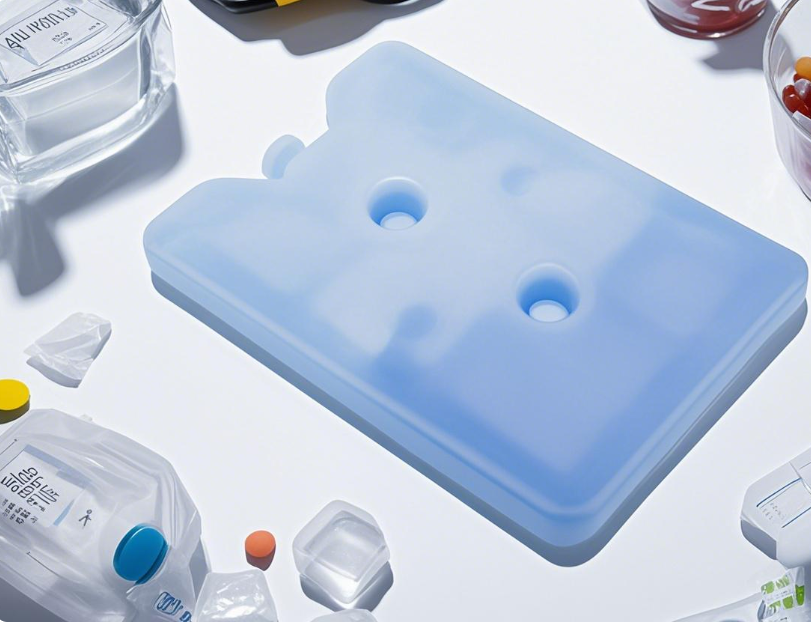
A Cool Brick Supplier Must Preserve the Approved Part
A dependable cool brick supplier does more than deliver coolant in the right color and nominal size. It preserves the identity of the approved part from quotation through every reorder, provides current documents, plans stock and lead time honestly, traces complaints to manufacturing lots, and warns you before a change reaches the packing line. The supplier may be a factory, distributor, exporter, or packaging integrator; any model can work when responsibilities are visible. The cooling brick remains one component of a larger system, so final performance must still be established with the intended insulation, payload, conditioning, route, and assembly.
Map the Supply Channel Behind the Quote
Ask who manufactures the shell or film, prepares the coolant, fills and seals the brick, releases the lot, holds inventory, exports it, and owns the customer complaint. The legal seller may not control all of these steps. That is not automatically a problem, but hidden handoffs create substitution and traceability risk.
A direct manufacturer can offer detailed process access and customization. It may require larger orders, longer planning, or direct import capability. A regional distributor can provide local inventory, smaller releases, consolidated freight, and same-time-zone service. It should retain original manufacturer and lot identity, store the product appropriately, and pass through technical updates.
An exporter or trading company can coordinate factories and international documents, but buyers should know which approved site makes each part. A packaging integrator may supply bricks with an enclosure and test support; clarify who owns the bill of materials and who may authorize substitutions. A spot supplier can help during a shortage only when an approved alternate process exists. Urgency does not make similar-looking bricks equivalent.
Document at least:
contracting company and manufacturing site;
supplier and buyer part numbers and revisions;
ship-from location and inventory owner;
importer, customs, and delivery responsibilities;
technical, quality, logistics, and emergency contacts;
warranty, complaint, and corrective-action route;
rules for factory, material, or product substitution.
This channel map should remain connected to the packout approval. If the production site changes, the technical impact should be reviewed before the new source is used.
Issue an RFQ That Produces Comparable Offers
“Quote a blue cool brick” invites different products under one price comparison. Send a use brief that explains the product condition, freeze sensitivity, payload range, insulated container, cavity dimensions, brick positions, route and openings, conditioning equipment, reuse plan, demand, delivery markets, labels, and documentation needs. Ask suppliers to state assumptions and deviations explicitly.
Then normalize the bid:
| Decision area | Information to compare on the same basis | Why it affects program value |
|---|---|---|
| Technical identity | Filled dimensions and tolerances, mass, construction, coolant family, closure, conditioning | Similar catalog names can behave and fit differently |
| Application support | Payload and enclosure assumptions, test scope, contact limits | A component claim may not apply to the intended packout |
| Quality controls | Lot code, inspection, release, nonconformance, complaint process | Consistency protects the approved bill of materials |
| Documents | Exact part, site, market, revision, issuer, and availability | Generic files can delay approval or misstate scope |
| Commercial quantity | Samples, pilot, order minimum, case and pallet quantities | Low tier pricing may create excess inventory or obsolescence |
| Delivery | Production, stock location, freight term, transit, customs, and inspection | Quoted lead time and unit price may omit major steps |
| Change control | Notice, sample, approval, and changed-lot identification | Unseen changes can invalidate fit or thermal evidence |
| Lifecycle support | Cleaning, inspection, retirement, material, and disposal guidance | Reuse and recovery need operational information |
| Service | Named contacts, response quality, forecast, and escalation | Fast, accurate decisions reduce launch and deviation risk |
Use the same currency, quantity, delivery point, freight basis, and specification. Add tooling, artwork, sample freight, duties, brokerage, incoming inspection, qualification work, inventory, rejects, and emergency freight. If a candidate is technically different, show it as an alternative instead of forcing it into the base-item column.
Weight the categories before opening final prices. A local food-delivery fleet may prioritize replenishment and return support. A healthcare shipper may place more weight on traceability, document control, and notification. Mandatory gates should be separate from weighted preferences; a missing safety document cannot be offset by an attractive case price.
Verify Evidence by Scope and Purpose
Request a controlled specification or drawing that identifies the filled brick, dimensions and tolerances, mass, material construction, coolant description appropriate to the application, seal or closure, conditioning, lot identification, storage, and inbound packing. Confirm that the same item code appears on the quote, sample, invoice, case label, and supporting documents.
Safety Data Sheets, transport statements, food-contact declarations, restricted-substance information, quality certificates, inspection records, and thermal reports answer different questions. The required set depends on formulation, use, mode, and market. Check the issuer, exact part or material, site, jurisdiction, date, revision, and conditions. A management-system certificate does not establish package duration. A food-contact statement does not qualify a shipment. A recycling claim may not apply where the receiver lacks an appropriate collection stream.
Read any test report rather than accepting its headline. Identify the brick, quantity, condition, insulation, payload, external profile, duration, sensor positions, openings, and acceptance criteria. Supplier results can screen a candidate, but your commercial packout needs evidence appropriate to its product and lane.
For parcel development, ISTA 7E provides standardized thermal profiles, and ISTA Standard 20 describes a structured insulated-container process. WHO technical guidance also addresses passive shipping-system qualification and monitoring concepts. These sources support system design; they do not give every cool brick a universal hold time or compliance status.
Treat labels such as non-toxic, food-safe, eco-friendly, approved, or certified as prompts for scope questions. Ask what precise document and use condition support the statement. Gel bricks and dry ice are not interchangeable coolant classifications, and payload rules must be reviewed separately from the brick.
Use Samples to Protect Future Reorders
Sampling should progress from fit to commercial consistency.
Desk and fit review: Confirm identity, documentation, filled dimensions, conditioned shape, closure, handling, and fit in the actual bag, liner, box, or holder.
Development work: Use enough traceable units to compare positions, separation, coolant quantity, and relevant hot and cold challenges. Refine the packout and purchasing specification together.
Production-intent pilot: Order a realistic lot from the proposed factory, line, material, labeling, and case pack. Inspect variation across cases and use commercial units for final evaluation as required. Review delivery accuracy and documents at the same time.
Record the approved manufacturer, site, part, revision, lot, and packout bill of materials. A polished hand-made prototype is not a dependable reorder standard. Retained samples may help with appearance, but measurable requirements and methods should govern acceptance.
Imagine a distributor runs out of the approved brick and sends a same-size alternative without notice. At room temperature, packers see no difference. After conditioning, the substitute bows, compresses a separator, and touches a freeze-sensitive product. The temperature alarm appears to be a coolant-performance problem, but the root failure occurred in order fulfillment. Locked part numbers, no-substitution terms, manufacturing identity, conditioned-fit limits, and incoming checks prevent that path.
Dual sourcing also requires control. Two bricks with matching outer dimensions may differ in formulation, mass, shell, phase behavior, bowing, and conditioning. Approve each source through appropriate document, fit, and system assessment. If they require different instructions, manage them as two packouts rather than calling them drop-in equivalents.
Build Availability Around Conditioning, Not Delivery Alone
Lead time should be decomposed into order review, material procurement, production queue, manufacture, inspection, export handling, booking, transit, customs, inland delivery, incoming release, and conditioning. Determine when the quoted clock starts. Artwork, tooling, deposit, forecast commitment, or sample approval may precede it.
Use observed demand and replenishment variation to set inventory. A generic percentage or arbitrary number of weeks is not a reliable safety-stock method. Include the consequence of shortage, storage space, minimum order, product change, and obsolescence. Check whether local stock is dedicated or shared and how the supplier rotates and protects it.
Freezer throughput can be the real constraint. A large ambient delivery does not become ready stock immediately. Model daily demand, return timing, rack space, maximum freezer batch, equipment recovery, and inspection. A supplier can package bricks to support airflow and handling, but the buyer must verify the facility process.
Ask for a continuity plan that names bottlenecks and controlled backups. A second line, tool, ingredient, or factory is useful only if it produces the approved part or enters the change process. Agree on forecast status, buffer ownership, call-off rules, planned shutdowns, peak communication, and emergency decision owners.
Compare total cost at the packing line and successful-shipment level:
landed brick price and inbound packaging;
storage, freezer equipment, energy, and labor;
outbound freight mass and dimensional effect;
packing efficiency and missing-part risk;
inspection, quarantine, and documentation work;
leaks, damage, and emergency replacement;
requalification after an alternate or material change;
return, cleaning, loss, and retirement for reusable units;
product investigation and replacement exposure.
A higher unit price may be economical when fit reduces carton size or local stock prevents emergency freight. Premium pricing is not proof of low risk either. Evidence and the buyer's own operating data should decide.
Contract for Identity, Change, and Response
Purchase and quality terms should reference the approved drawing, part number, revision, factory, tolerances, inspection, lot code, documents, case pack, storage, delivery basis, and complaint process. Define notice requirements for formulation, material source or grade, dimensions, fill mass, shell or film, closure, colorant, tooling, process, test method, label, manufacturing site, subcontractor, and outbound packing where relevant.
When a notice arrives, the buyer assesses safety, transport status, fit, conditioning, thermal behavior, cleaning, and qualification. The response may be a document review, comparison inspection, focused test, or full requalification. Not every change needs the same work, but no impact should be a reasoned conclusion.
Receiving controls should verify supplier, manufacturer, part, revision, lot, quantity, case condition, labels, leakage, required documents, and selected physical attributes under an approved sampling plan. Segregate released, quarantine, returned, dirty, ready, and rejected stock. Preserve photographs and labels when freight arrives damaged.
Test the complaint process before launch. Ask what happens if one leaking brick and an unreadable lot code are found. A useful supplier explains immediate containment, the information it needs, traceability, affected-stock review, investigation, corrective action, and communication. Replacing a case without finding the process cause is not a complete response.
Track on-time delivery, order accuracy, document completeness, damage, leakage, dimensional variation, complaint response, corrective-action effectiveness, and change-notification performance. Review frequency should follow product risk, volume, change, and performance rather than a fixed calendar alone.
Make Reuse and Sustainability Specific
A supplier can provide material information, compatible cleaning guidance, inspection points, and retirement criteria. The buyer controls whether returned bricks are actually collected, cleaned, reconditioned, identified, and reused. Count completed cycles, losses, wash and freezer energy, reverse transport, damage, and end-of-life handling rather than relying on a reusable label.
Source reduction may be the most direct improvement. Better brick geometry can reduce dunnage or permit a smaller shipper. Consolidated inbound orders can improve freight efficiency. Any change that affects thermal performance or product contact should be reviewed before use.
End-of-life claims must reflect the whole component and destination. A plastic shell may not be accepted with residual coolant, cap, label, or mixed materials. Buyers serving regulated markets should confirm current packaging, chemical, transport, and waste responsibilities for their role. Ask suppliers for accurate data rather than universal environmental language.
Frequently Asked Questions
Is a local cool brick supplier always more reliable?
No. Local inventory can shorten replenishment and simplify communication, while a direct or overseas source may offer stronger process access, customization, or capacity. Compare manufacturing control, dedicated stock, landed lead time, traceability, technical support, document scope, and continuity. Location is one risk factor, not proof of reliability.
What documents should be mandatory in an RFQ?
The set depends on formulation, product, mode, market, and buyer quality system. It may include a controlled specification, drawing, conditioning instructions, part-specific safety or handling information, transport statement, scoped material declarations, lot documentation, storage and reuse guidance, and change terms. Require each document to identify its product and revision.
Should a supplier guarantee a cooling duration?
Only a statement tied to a fully defined configuration is meaningful. Ask which brick quantity, conditioning, enclosure, payload, ambient profile, sensor placement, openings, and acceptance range produced the result. Your route may differ. The supplier can provide component data and relevant tests, while the buyer verifies the exact final system.
How should an emergency substitute be handled?
Quarantine or assess it before use in a controlled packout. Compare identity, documents, dimensions, mass, conditioned shape, formulation behavior, closure, product contact, and thermal effect. The authorized quality and product owners should determine the required verification and identify affected shipments. A purchasing urgency should not bypass change control.
Reliable Supply Is Part of Thermal Control
The right cool brick supplier maintains the exact component and the information around it. Map the channel, issue a technical RFQ, compare landed program cost, evaluate production-intent lots, preserve traceability, plan conditioning capacity, approve alternates, and contract for change. These controls keep commercial reorders aligned with the packout that was actually tested.
Supplier service becomes most valuable when conditions change or something goes wrong. Choose a partner whose answers remain specific under pressure, not one whose catalog makes the broadest promise.
About Tempk
We supply reusable gel packs, rigid ice bricks, water-injection packs, insulated bags, box liners, EPP boxes, cold shipping boxes, and pallet covers for temperature-controlled packaging. Tempk can discuss standard and custom coolant formats, packout compatibility, samples, order planning, and available product information from a buyer's defined use case. Buyers should confirm that the quoted part, production route, documentation, and final shipping system meet their own technical and quality requirements.
Send Tempk your cavity dimensions, required product condition, payload, coolant position, conditioning process, annual and peak demand, delivery markets, document checklist, lot controls, and change-notification terms. Request a proposal tied to a specific part and production sample so your team can compare total supply value.
Cool Brick Manufacturer Audit and Approval Guide
Cool Brick Manufacturer Approval Depends on Repeatability
A cool brick manufacturer should be judged by its ability to reproduce the approved component, not by the appearance of one hand-selected sample. Fill mass, formulation, conditioned dimensions, shell or film, closure integrity, labeling, and inbound packing can all affect the final packout. A capable factory defines those attributes, controls the production steps that create them, traces each lot, and communicates changes before they reach your shipping line. Your team then verifies the production brick inside the complete insulated system. Factory approval and packout qualification are connected, but they are not the same decision.
Convert the Application Into Measurable Requirements
Terms such as cool brick, ice brick, gel brick, and phase-change pack are used inconsistently. Begin with a controlled description of the item you want to purchase. If development is still open, call the document a design input; after evaluation, convert it into an approved specification.
Define the product and route context first:
product condition and sensitivity to freezing or direct contact;
payload size and approved load range;
insulated bag, box, liner, or pallet geometry;
intended brick location and restraint;
door-to-door exposure, openings, and credible delay;
conditioning equipment and warehouse workflow;
cleaning, reuse, labeling, and traceability needs;
markets of use and required technical documents;
normal demand, peaks, order pattern, and delivery sites.
Translate that context into component attributes. These may include nominal length, width, thickness, flatness, filled mass, overall mass, corner and cap envelope, material construction, formulation family or functional behavior, seal or closure, color and printing, conditioned state, lot code, case pack, and relevant integrity criteria. Each tolerance should have a measurement method and measurement condition.
A room-temperature brick can fit a pocket and then bow after conditioning. A flexible pouch may not have one obvious thickness point. A functional fit gauge can be more useful than a nominal drawing when the packout has a narrow channel. Agree on these details before comparing quotations; otherwise a lower price may simply represent a different product.
Separate component evidence from shipping performance
The manufacturer is responsible for the brick it makes. It may provide thermal characterization or data from a representative package. It cannot establish a universal hold time for every enclosure, payload, ambient profile, and route. The buyer's complete-system evaluation covers the exact coolant quantity and condition, insulation, spacers, payload, assembly, external challenge, monitoring, and acceptance criteria.
Maintain two approvals: one for the manufacturing organization and process, and another for the exact part in the intended packout. An approved factory should not be free to send an unassessed alternative, and a qualified part should not silently move to an unapproved site.
Use the Audit to Follow One Lot
Factory presentations are useful orientation, but records reveal whether the process operates as described. Select one finished lot and trace it backward to incoming materials, then forward through release, storage, and shipment.
Incoming materials and formulation
Review how resin, film, caps, plugs, additives, gel ingredients, colorants, labels, and shipping materials are identified, sampled, released, stored, and segregated. Ask what prevents an available but unapproved grade from entering production. For confidential formulations, the buyer does not need every recipe detail, but the factory should show controlled ingredient identity, authorization, weighing, mixing, homogeneity, and change review.
If several coolants share a line, examine line clearance and cross-mix prevention. Water quality, mixing order, time, temperature, or other variables may matter depending on formulation. Ask how the manufacturer detects drift and what it does with material produced since the previous acceptable check.
Shell forming, filling, and closure
Rigid shells can vary with tooling, cavity, material condition, forming parameters, and wear. Flexible products depend on film conversion and seal quality. Review first-piece approval, in-process dimensions, tool maintenance, cavity identification where relevant, and response to an out-of-trend result.
Filling determines coolant mass and headspace. Check the metering method, verification frequency, calibration or equipment checks, and trend review. A few final weights do not show whether the process remains centered through a long run.
At the closure step, ask which parameters are controlled. Heat, pressure, time, alignment, torque, welding, adhesive condition, or contamination at the interface may matter according to construction. Examine the detection method for channels or weak closures and the physical control of rejected units. A final visual glance alone may not find defects that appear after conditioning or transport.
Inspection, release, and outbound protection
The release plan should match risk and specification. It may cover identity, appearance, mass, dimensions, closure integrity, leakage, label, count, and case condition. Review sampling logic, defect definitions, nonconforming segregation, rework authorization, retained records, and release responsibility.
Then follow the lot into the warehouse. Heavy filled bricks can deform in an overpacked case or damage one another during inbound freight. Pallet pattern, compression, heat exposure, stacking, and label durability influence what reaches the buyer. Production control includes delivery packaging, not only the filling line.
Score What the Factory Can Demonstrate
| Approval area | Useful evidence | Warning sign |
|---|---|---|
| Specification control | Part-specific drawing, limits, methods, and revision history | Description based only on size, color, or photograph |
| Material identity | Approved sources, receiving status, and lot linkage | Substitution based on availability without review |
| Formulation and fill | Authorized batch record, equipment checks, and trend data | Broad “standard gel” claim with no controlled attributes |
| Closure integrity | Defined process window, challenge method, and defect response | Visual inspection presented as the only leak control |
| Dimensional consistency | Measurement method for filled and conditioned units | Tolerances stated without measurement condition |
| Traceability | Raw material through finished lot and shipment | Customer complaint cannot be tied to production records |
| Change control | Notification criteria, examples, and approval workflow | Factory decides equivalence without informing the buyer |
| Capacity and continuity | Bottleneck model, maintenance, peak plan, and controlled backup | Annual output claim with no process-level support |
| Technical documentation | Current, scoped records mapped to the exact part | Unrelated certificates used as product-performance proof |
| Corrective action | Containment, root cause, action, and effectiveness evidence | Replacement offered without investigation |
Weight the categories according to product and program risk, then score evidence rather than promises. A management-system certificate can support the review, but it does not prove that a specific brick meets its drawing, survives the intended conditioning, or works in the buyer's shipper. The table should guide both remote assessment and an on-site audit.
Review Test Methods, Not Marketing Test Names
“Drop tested,” “freeze-thaw tested,” and “leak tested” are incomplete statements. For each report, identify the sample construction, production lot, preconditioning, equipment, method, orientations, exposure, sample quantity, acceptance criteria, deviations, raw observations, and conclusion.
Leak methods can use pressure, vacuum, immersion, dye, mass change, compression, or other approaches. Each detects different defects and has a practical limit. The chosen method should challenge the complete seal path and credible failure modes. Repeated conditioning can stress a shell or seam through expansion and contraction; if reuse is claimed, inspect the test sequence, cleaning exposure, inspections, and failure definition rather than accepting a cycle number in isolation.
Mechanical work should reflect how bricks are cased, delivered, frozen, inserted, carried, and shipped. An individual drop does not show what happens when a rigid corner rubs against a liner for an entire route. Component thermal measurements can compare lots or formulations, but “hours cold” is not a meaningful component property without a defined package and range.
ISTA Standard 20 can support a structured insulated-container development and qualification process, while ISTA 7E provides profiles associated with parcel thermal testing. WHO technical guidance describes design, operational, and performance qualification concepts for passive shipping systems. These frameworks apply to the complete container program; they do not certify an isolated brick for every use.
For safety, transport, food-contact, restricted-substance, or environmental claims, verify scope. Ask which component, formulation, jurisdiction, use condition, test method, and document revision are covered. A Safety Data Sheet communicates hazard and handling information; it does not establish thermal duration. “Non-toxic” does not automatically mean edible, approved for direct food contact, harmless after release, or unrestricted in every country.
Control the Path From Sample to Commercial Production
Early prototypes are useful for geometry, but they may be hand-filled or made with temporary materials. Final qualification should use production-intent units from the proposed site, tooling, line, formulation, packaging, and tolerances. Record their lot identity and inspect variation across more than one convenient sample.
Use staged approval:
screen documents and the manufacturing route;
inspect samples and test conditioned fit;
compare relevant component attributes;
evaluate the complete shipper under approved thermal and physical methods;
place a realistic pilot order and inspect case-to-case variation;
release the final part number, drawing, quality terms, and incoming plan.
A common customization risk is the interface no one drew. Imagine a buyer requests a thin brick for a sewn side pocket. The prototype body fits, but the cap catches and the conditioned shell bows into the zipper path. The drawing should be revised to include cap envelope, frozen-state thickness, grip clearance, and pocket tolerance before tooling and qualification. Custom geometry creates value only when it reduces void, prevents packing errors, or supports a repeatable process enough to justify tooling and single-source exposure.
Control reference samples carefully. They can help describe appearance, but measurable limits should govern acceptance. A perfect retained sample must not override a drawing that permits excessive bowing or a seal method that is not capable.
Treat Capacity, Continuity, and Change as Technical Risks
An annual capacity figure can hide a constraint at one mixer, mold, filler, seal line, labeler, inspector, or raw-material source. Ask for normal utilization, demonstrated output, shift flexibility, maintenance, yield, changeover, utility dependence, and the planned response to equipment failure. Share your order pattern and peak demand, not only annual volume.
Business continuity must preserve the approved product. A second line, alternate ingredient, backup tool, or another factory helps only when it is assessed for the same specification and quality controls. Moving production can be a qualification-relevant change.
A quality agreement should identify changes requiring notice and possible buyer approval, including formulation, material grade or source, dimensions, fill mass, closure, tooling, critical process range, test method, label, case pack, manufacturing site, and subcontractor. Define advance information, production samples, first changed lot identity, and emergency handling. The buyer determines whether a notice needs document review, fit testing, focused comparison, or full requalification.
After approval, track incoming defects, leakage, dimensions, lot documents, delivery, complaints, corrective-action effectiveness, and change-notification performance. Trend by lot, line, tool, or time where the data allow. Transparent investigation is often more valuable than a factory claiming a perfect defect record with no detection evidence.
Ask Sustainability Questions the Process Can Answer
Environmental review should begin with accurate materials and actual use. Ask whether the brick can be right-sized to reduce packaging volume, which cleaning methods are compatible, how damage is detected, what ends useful life, which components can be separated, and what destination-specific disposal limitations apply.
The manufacturer controls durability, material choice, production scrap, and guidance. The operator controls returns, washing, conditioning energy, asset loss, completed cycles, and end of life. A product described as reusable does not prove that a network reuses it enough to create an advantage.
Avoid claims such as recyclable everywhere or zero waste. Recovery depends on material combinations, residual gel, collection, and local infrastructure. For goods placed on regulated markets, buyers and manufacturers should verify current packaging, chemical, food-contact, transport, and waste obligations for their roles. A careful statement with defined scope is more useful than a page of unsupported logos.
Frequently Asked Questions
Is a factory certificate enough to approve a cool brick manufacturer?
No. A valid certificate may provide evidence about a management system or specified test scope, but it does not prove product identity, process capability, conditioned fit, seal integrity, capacity, or performance in your packout. Confirm the issuer and scope, then review the factory's part-specific process, records, and production samples.
How should different manufacturing lots be compared?
Use the approved specification, consistent measurement methods, lot records, and risk-based incoming checks. Compare critical dimensions, mass, integrity, identification, and relevant thermal characteristics. Trend data rather than waiting for a failure. Periodic complete-system verification may be appropriate when component drift could affect qualification.
Can two factories make interchangeable bricks?
Not by appearance or nominal dimensions alone. Formulation, mass, shell, closure, bowing, conditioning response, and thermal behavior may differ. Treat the second factory as a controlled source, obtain production-intent samples, review documents and process capability, and repeat fit or system testing according to risk before approval.
What information should accompany a leak complaint?
Preserve the brick, outer case, labels, lot code, photographs, quantity affected, receipt condition, conditioning history, packout position, and related shipment information where practical. Quarantine potentially affected stock under your procedure. This evidence helps distinguish manufacturing, inbound freight, freezing, and use-related causes and supports effective containment.
Approve the Process That Will Make the Next Lot
The right cool brick manufacturer can state what it makes, demonstrate control of formulation, fill, dimensions, and closure, trace the lot, plan capacity honestly, investigate deviations, and notify changes. The right buyer defines the component interface and tests commercial product in the complete shipping system.
Before awarding volume, audit the path that the next production lot will follow. That is a better predictor of long-term performance than a perfect sample, a low unit quote, or an unspecific certificate.
About Tempk
We manufacture and supply rigid ice bricks, reusable gel packs, water-injection packs, insulated bags, box liners, EPP boxes, cold shipping boxes, and pallet covers for temperature-controlled packaging. Tempk can discuss standard and custom brick formats using the buyer's drawing, conditioning process, packout, documentation needs, and order pattern. Buyers should verify the quoted production scope and evaluate production-representative units under their supplier-approval and complete-system qualification procedures.
Send Tempk the dimensional envelope, filled-mass requirement, coolant application, contact restrictions, conditioned state, packout drawing, test expectations, forecast, delivery markets, traceability, and change-notification requirements. Request a part-specific manufacturing proposal and production-intent samples before volume approval.
Wholesale Dry Ice Pack for Milk Transport: Leak-Control Plan
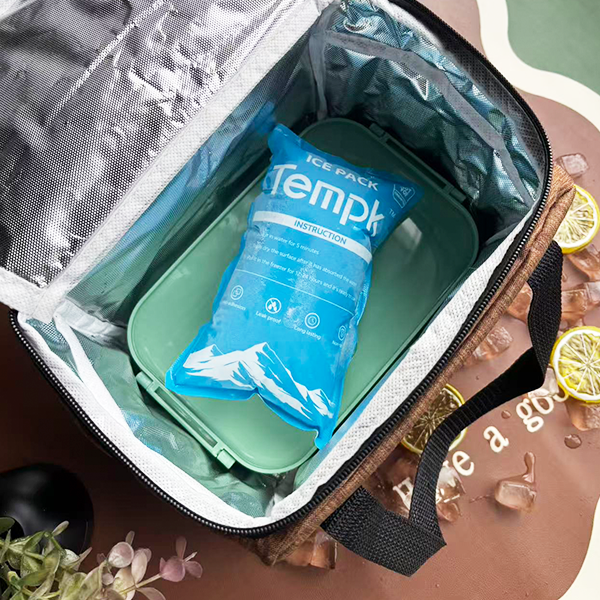
A Control Framework for Wholesale Dry Ice Pack for Milk Transport
A wholesale dry ice pack for milk transport should enter purchasing only after milk, package, route, and receiving requirements are defined. The pack in this framework is a water-activated coolant sheet that is hydrated and frozen. It is not solid carbon dioxide dry ice, and it is not a cooling system for bulk milk tankers. For packaged milk inside insulated boxes or totes, the sheet can absorb route heat. Reliable use depends on controlling product starting condition, sheet preparation, direct cold contact, liquid-package movement, leakage, secondary containment, monitoring, supplier consistency, and handover time. The framework below turns those dependencies into decision gates.
Gate 1: Define the Milk and Legal Scope
Identify:
- Raw, pasteurized, aseptic, or other processing category.
- Refrigerated, frozen, or shelf-stable condition.
- Grade or program status where relevant.
- Package format and fill volume.
- Distribution market and responsible authority.
- Product temperature and exposure criteria.
- Receiving and disposition procedure.
This gate determines whether hydration sheets are relevant. Specialized bulk raw-milk transport follows different equipment and regulatory controls. A sheet may fit packaged retail or institutional milk but should not be proposed as a tanker solution.
In the United States, the Grade "A" Pasteurized Milk Ordinance is used through the cooperative milk-safety framework and jurisdictional adoption. Current requirements and product applicability should be verified. Sanitary transportation requirements may also apply, with milk-program waivers or other arrangements relevant in some situations. International routes require separate review.
Gate 2: Establish Product Identity and Boundaries
The item description should name the water-activated hydration sheet and distinguish it from solid carbon dioxide. Obtain construction, dry and hydrated dimensions, cell layout, activation instructions, freezing and storage, item and lot identification, intended contact condition, defects, and change notification.
This boundary avoids three mistakes:
1. Applying solid-dry-ice temperatures or duration claims to a water sheet.
2. Ignoring carbon dioxide safety and transport rules if actual solid dry ice is used.
3. Treating gel packs, phase-change materials, and hydration sheets as interchangeable because their shapes are similar.
The product's role should be written plainly: passive heat absorption inside a specified insulated packout. It does not pasteurize milk, correct warm loading, sanitize equipment, or decide product acceptance.
Gate 3: Design Around Fluid Packages
Milk packages carry mobile liquid mass. Braking, drops, and orientation changes load caps, seals, pouch edges, carton corners, dividers, and coolant cells.
| Design risk | Packout response to evaluate | Evidence |
|---|---|---|
| Cap or seal leakage | Upright restraint and clearance | Vibration and orientation check |
| Pouch puncture | Smooth divider and fixed sheet position | Compression and sharp-edge trial |
| Glass breakage | Cell separation and impact protection | Distribution simulation |
| Carton wetting | Drainage, liner, and moisture-tolerant support | Post-exposure strength |
| Local milk freezing | Buffer or controlled spacing | Interface and product data |
| Load shifting | Right-sized insert and void control | Before-and-after geometry |
| Large leak | Secondary containment and segregation | Defined leak scenario |
The chosen response becomes part of the controlled bill of materials. A divider is not optional dunnage if it holds the cold spacing or protects caps.
Define a leakage pathway
Assume that one primary package can fail. Decide where milk goes, which components it contacts, how much the containment can manage, how the leak becomes visible, and how the receiver handles it. A liner should not merely hide wetness.
Assess the effect of milk on insulation, labels, logger retrieval, neighboring food, and reusable components. Cleaning and product disposition should already exist in procedures.
Protect against local freezing
Frozen water-based sheets can be colder than the appropriate condition for chilled milk. A package-wall sensor and representative product measurement help reveal contact risk. The buffer or gap must remain stable during route vibration and condensation.
Gate 4: Control Starting Conditions
Define milk release and packing:
- Storage location and condition.
- Sampling or measurement method.
- Picking and consolidation time.
- Ambient packing exposure.
- Hold rule for nonconforming milk.
- Time from sheet freezer to closure.
- Pre-dispatch staging.
Warm milk consumes coolant capacity and creates spatial gradients. Passive packaging should not be used to turn an uncontrolled pull-down process into an apparently compliant shipment.
Use the same starting conditions in development, qualification, and operation. Record reasonable evidence so deviations can be investigated.
Gate 5: Qualify Hydration and Freezing
The dry sheet changes at the user site. Make activation a controlled process.
Receive: Confirm item, lot, cell layout, dry dimensions, count, cleanliness, and integrity.
Hydrate: Follow item-specific instructions with controlled water, equipment, batch, and acceptance.
Drain: Remove free water consistently and inspect seams.
Freeze: Prove rack pattern, batch size, airflow, freezer recovery, status, and release at peak demand.
Stage: Keep released sheets identified and limit warm exposure.
Assemble: Verify the correct sheet and position against the packout revision.
Underhydration can reduce thermal mass; excessive or uneven expansion can compress milk packages and change spacing. Measure attributes that affect use, including hydrated fit.
Gate 6: Build the Packout Evidence
Use an evidence ladder.
Component review
Confirm documents, preparation, hydrated geometry, seam condition, leakage, handling, and material use.
Packout development
Compare box, tote, liner, restraint, containment, buffer, sheet placement, and load tiers. Use actual packages. Map likely hot and cold locations.
Route-relevant qualification
Challenge the final bill of materials with defined product and coolant starting conditions, a justified ambient profile, sensor locations, repetitions, and acceptance criteria. Include package and leakage observations.
Operational verification
Run normal staff, hydration equipment, freezers, assembly line, vehicle, and receiving steps. Observe peak workload.
Ongoing verification
Review monitoring, leaks, damaged packages, route delays, complaints, supplier lots, and process changes.
Never accept a duration number without its box, payload, starting condition, coolant preparation, ambient profile, sensors, and pass criterion.
Gate 7: Create the Route and Receiving Agreement
Map dispatch through receipt:
1. Closed packout enters staging.
2. Loader places it by stop sequence.
3. Vehicle or carrier maintains agreed conditions.
4. Driver limits openings and reports delays.
5. Receiver accepts within the planned window.
6. Receiver inspects and moves milk to correct storage.
For covered sanitary transportation, communication among shipper, loader, carrier, and receiver can be an important responsibility. Define instructions and records according to the operation and applicable rules.
Exception decisions
Warm milk, partial sheets, leaking packages, damaged totes, vehicle failures, route extensions, failed delivery, and monitor alerts each need a preassigned response. Drivers maintain closure and communicate; authorized quality or food-safety personnel decide disposition.
For home routes, tell customers to retrieve promptly, inspect for leaks or damage, follow label storage, and contact support when delivery is delayed or questionable. Do not promise that visible ice proves acceptability.
Gate 8: Approve Wholesale Production Supply
Create an approved supplier specification that includes:
- Product identity and revision.
- Construction and material information.
- Dry and hydrated geometry.
- Cell and seam layout.
- Preparation and storage.
- Lot and carton marking.
- Defect criteria.
- Packaging and pallet configuration.
- Change notification.
- Complaint and nonconformance response.
Confirm production against the sample through incoming and periodic functional checks. Trend uneven hydration, seam failures, leaks, and fit changes by lot.
Review commercial continuity: minimum order, lead time, forecast, surge capacity, safety stock, and alternate-source strategy. Qualify backup items before an interruption. Similar color or size is not equivalence.
Gate 9: Close the Return Loop
Reusable totes and sheets require clean and dirty separation.
At return:
- Place used items in closed, identified bins.
- Inspect and segregate milk-contaminated components.
- Clean or handle according to material-compatible procedures.
- Check tears, seams, stains, odors, deformation, and identification.
- Release, quarantine, refreeze, or dispose through status control.
Milk residue should never enter a clean freezer flow. Open consumer returns may not provide enough hygiene control for reuse. Evaluate the actual network.
Track retrieval and acceptance rates. A reusable label does not establish repeated successful use.
Gate 10: Review Cost, Sustainability, and Change Together
Calculate cost per successfully delivered milk order, including sheet, freight, hydration, freezer use, restraint, containment, monitoring, labor, returns, cleaning, leaks, rejects, and reshipment.
Use the same system boundary for environmental review. Dry inbound storage may reduce transport volume, but water and freezing add impacts. Reuse can reduce purchases but adds reverse logistics. Milk loss carries upstream production, processing, refrigeration, and distribution burdens.
Changes should trigger review:
- Milk formulation, processing, package, or fill.
- Order quantity.
- Sheet material, cells, dimensions, site, or instructions.
- Box, liner, restraint, or containment.
- Hydration station or freezer.
- Route, vehicle, carrier, stops, or receiving.
- Return and cleaning process.
Document whether each change needs a file review, fit test, focused comparison, or requalification. Update the controlled work instruction before launch.
Know When Passive Packaging Is Not Enough
A hydration-sheet packout should be rejected or escalated when its operating boundaries do not match the milk route. Warning signs include routine delays beyond the tested profile, uncontrolled product release, inability to freeze peak volume, repeated opening of the same tote, inadequate leak containment, uncertain receiving, or a requirement for active temperature regulation.
Alternative controls may include a right-sized refrigerated vehicle, active container, improved cold staging, revised route, shorter delivery window, appointment receiving, or a different coolant and insulation system. The correct alternative depends on milk, package, scale, and jurisdiction.
Do not force a passive design to absorb a recurring process failure. Extra sheets can increase cold-contact risk and payload pressure while leaving the underlying delay or sanitation problem unchanged. Likewise, a thicker box cannot correct milk that begins outside its release condition.
Record the fit decision and its assumptions. If operations later exceed them, require reassessment. Knowing when not to use the sheet is part of responsible wholesale sourcing and prevents a low-cost component from becoming an expensive source of milk rejection.
A Practical End-to-End Example
A distributor plans home delivery of refrigerated milk cartons in an insulated reusable tote. Development shows that center cartons warm slowly, but corner cartons touching side sheets become excessively cold and the bottom paperboard weakens from condensation.
The team introduces a fixed moisture-tolerant side spacer, improves drainage, and uses secondary containment that keeps liquid away from the tote insulation. It tests full and partial loads because the partial load shifts more. Sensors are placed at the cold interface, central product, and warm lid corner. The route trial includes repeated van openings and a defined doorstep handover.
Operations then verifies peak hydration and freezer capacity. Drivers receive delay and failed-delivery rules; receivers receive inspection instructions. Production lots are checked against the approved hydrated geometry. The solution comes from coordinated controls, not a larger coolant count.
Frequently Asked Questions
What is the first gate in selecting a hydration sheet for milk?
Define the milk category, package, required condition, route, and legal or program scope. Then confirm that the quoted coolant is a water-activated frozen sheet. Without those boundaries, sheet size, count, and price cannot be compared meaningfully.
Should a bottle touch the frozen sheet?
Do not assume direct contact is acceptable. It can create local freezing and pressure against the bottle or cap. Evaluate the exact package, milk, sheet condition, and route. A controlled spacer may be needed, but it must also allow adequate heat transfer.
How should partial milk loads be handled?
Treat them as defined configurations. Lower mass and more void can change warming and allow packages or sheets to move. Use a right-sized insert, smaller tote, or separately tested placement rather than filling the space informally.
Who decides whether milk with a temperature alert can be accepted?
The authorized quality or food-safety role should interpret the data against product-specific and applicable program criteria. The decision may consider sensor location, duration, package condition, and other evidence. A driver, coolant supplier, or customer should not make an unsupported determination.
What is the strongest supplier evidence?
A controlled production specification, item-specific preparation and hydrated geometry, relevant material documentation, lot identification, defect controls, change notification, and production consistency are stronger than a context-free cooling-duration claim. The buyer still needs complete-packout route evidence.
Conclusion
A control framework makes a wholesale dry ice pack for milk transport part of a traceable system. Define packaged milk and jurisdiction, confirm the hydration-sheet identity, manage fluid packages and leaks, control starting temperature and activation, qualify the route, prepare receiving, approve production supply, and manage returns and changes. The sheet absorbs heat; the operating system protects the milk. Keeping those roles distinct produces safer decisions and clearer wholesale specifications.
About Tempk
Tempk, the cold-chain packaging brand of Shanghai Tempk Industrial Co., Ltd., offers hydration coolant sheets and insulated packaging. Packaged-milk operators can provide Tempk with milk category, package drawing, load tiers, tote or box, route, peak activation volume, and containment plan to discuss component samples. The buyer's qualified teams remain responsible for milk criteria, regulatory scope, food safety, testing, route approval, receiving, and disposition.
CTA: Provide Tempk with one complete packaged-milk design input to begin a controlled sample, fit, and route evaluation.
Wholesale Dry Ice Pack for Insulin Logistics: Controlled Scale-Up
Wholesale Dry Ice Pack for Insulin Logistics: From Product Label to Controlled Scale-Up
Buying a wholesale dry ice pack for insulin logistics should begin with a terminology check and end with an approved operating system. In this context, the product is a water-activated sheet that is hydrated and frozen. It is not solid carbon dioxide. The frozen sheet can supply cooling inside an insulated package, but it can also create a cold spot beside freeze-sensitive insulin.
The purchasing objective is therefore precise: source a consistent coolant component, integrate it into a packout designed around the exact insulin label, prove the complete configuration under justified conditions, and preserve that state during routine distribution.
Decision One: Confirm What Must Be Protected
Insulin is not a single logistics specification. Many unopened products are labeled for refrigerated storage around 2°C to 8°C and include a do-not-freeze warning, but the current instructions for the exact formulation and presentation control. In-use storage, approved excursions, and handling may differ.
Create a product requirement brief before contacting suppliers. It should identify:
- Product name and presentation
- Labeled storage and transport conditions
- Approved internal guidance for excursions, if available
- Shipment unit and payload range
- Origin and destination storage
- Route, handovers, and credible delays
- Seasonal exposure
- Required monitoring and records
- Receiving and quarantine procedure
This brief separates three responsibilities. The medicine manufacturer or product owner defines the product requirement. Packaging engineering develops the system. Quality approves evidence and disposition procedures. The coolant supplier provides a controlled component and relevant information; it does not authorize insulin use after an excursion.
A direct answer for buyers
A frozen hydration sheet can be considered for an insulin packout, but it should not be placed in direct contact by assumption. A separator, controlled coolant condition, and qualified arrangement are usually central to evaluating freeze-sensitive payloads. More cooling is not automatically safer.
Decision Two: Separate the Component From the System
A hydration sheet begins as a dry cellular pack. After it absorbs clean water and freezes, it becomes a flexible heat sink. This format may simplify inbound storage and allow placement around a payload. It also makes on-site preparation part of the controlled process.
The sheet cannot establish a refrigerated range alone. System behavior depends on insulation, closure, coolant quantity, prepared state, separation, payload, void space, initial conditions, ambient challenge, and time. A hold-time claim that does not identify these variables cannot be applied responsibly to insulin.
The language used in purchasing documents should reflect this boundary:
- Coolant component: the prepared hydration sheet
- Insulated shipper: the box, liner, or container that resists heat transfer
- Passive temperature-controlled system: the defined combination of shipper, coolant, payload, and packing method
- Qualified configuration: a specific system supported by documented testing for defined conditions
- Temperature logger: a device that records evidence but does not protect the payload
Solid carbon dioxide belongs outside this equivalence. It has different physical behavior, transport controls, and very-low-temperature use cases. Never substitute it for a water-based sheet, or substitute a sheet for it, based on the shared words "dry ice."
Decision Three: Control the Cold Boundary
Heat enters a passive shipper through walls, seams, lids, and openings. Frozen coolant absorbs that heat as it warms and melts. At the same time, the coolant draws heat from nearby objects. This second path is what creates insulin freeze risk.
Direct conduction can overcool the carton next to a frozen sheet even while central air remains within the expected range. Overlapping sheets can create another concentrated cold region. A small payload can be more vulnerable than a full load because it has less thermal mass relative to the coolant.
Design controls may include:
- A defined spacer or thermal barrier
- A controlled coolant-conditioning method
- Fixed sheet pockets or orientation
- Separate packouts for minimum and maximum payloads
- Void-fill rules
- Limits on packing time and coolant exposure before closure
- Seasonal variants supported by evidence
Each control must appear in both the test configuration and the warehouse instruction. Replacing a separator with whatever corrugated sheet is available can change heat transfer. Adding a "safety pack" during hot weather can create freezing. Removing a pack from a partial order can create late-route warming. Controlled systems avoid such improvisation.
Why sensor placement is part of design
A single central sensor answers a narrow question about that location. It may not detect a carton surface against coolant or a warm region near the lid. Qualification should place sensors where thermal reasoning predicts cold and warm hazards. Routine monitoring placement can then follow the evidence and risk plan.
A Five-Gate Path From Inquiry to Wholesale Release
Wholesale purchasing works best when commercial approval follows technical gates rather than running ahead of them.
| Gate | Evidence to produce | Stop condition |
|---|---|---|
| 1. Product and route definition | Current insulin requirements, payload cases, route map, acceptance criteria | Exact product or required condition is unclear |
| 2. Component screening | Product identity, specification, activation method, prepared fit, integrity observations | Sheet is confused with solid CO2 or cannot be prepared consistently |
| 3. Packout development | Defined insulation, separators, coolant positions, payload, closure, sensor rationale | Direct-contact or minimum-load risk remains unresolved |
| 4. Qualification and operational trial | Approved protocol, thermal results, packing instruction, trained-user observations | Evidence does not represent intended conditions or staff cannot reproduce it |
| 5. Production release | Approved specification, incoming checks, lot control, change notification, contingency path | Production material differs materially from the evaluated sample |
The gates prevent an attractive unit quote from becoming an uncontrolled system commitment. They also create a common language for procurement, engineering, quality, operations, and the supplier.
Write the Supplier Request Around Prepared-State Performance
Dry dimensions are important for storage and handling, but insulin packouts use the product after hydration and freezing. The request for quotation should address both states.
Component information
Ask for dimensions and tolerances, cell pattern, construction description, dry packaging, storage instructions, hydration method, freezing guidance, lot identification, inspection criteria, and change-notification practice. If customization is discussed, identify which attributes will change and how new material will be evaluated.
Prepared-state information
Ask how hydration is controlled, what preparation variation users should watch for, how the sheet should be arranged in a freezer, and what handling can damage it. Review hydrated fit, thickness, flexibility, seam stress, and condition after thawing.
System evidence
If the supplier provides thermal data, determine whether it covers the complete proposed shipper. The report should make the insulation, payload, coolant arrangement, preparation, ambient profile, duration, sensor positions, and success criteria understandable. A generic chart without those details is not a basis for release.
Commercial and quality controls
Clarify order packaging, sampling, lot traceability, acceptance of nonconforming goods, corrective-action communication, and scale-up. Treat minimum order quantity and lead time as quoted commercial variables rather than permanent product properties. Ask what happens if a raw material, seal process, cell geometry, or production location changes.
Make Hydration and Freezing Reproducible
The operating site adds water and removes heat, so the final coolant state depends partly on local execution. Build preparation controls before the first commercial shipment.
A workable instruction covers:
1. Release status of the dry sheet lot
2. Clean preparation area and water source
3. Batch size and hydration arrangement
4. Drainage or handling after activation
5. Freezer loading pattern and identification
6. Verification that preparation is complete
7. Conditioning method if required
8. Maximum handling time before packing
9. Segregation of damaged or questionable sheets
10. Storage and rotation of prepared inventory
Training should explain why these steps matter. A packer who understands that overlapped frozen sheets can create a cold spot is less likely to "improve" a configuration during a busy shift. Visual aids can show correct orientation, separator placement, and payload variants, but the controlled written instruction remains the reference.
Freezer capacity should be evaluated at peak demand, not average volume. Sheets need the qualified arrangement and adequate time to reach their required state. Maintenance, defrost cycles, and power interruption belong in contingency planning. If the site cannot prepare the coolant consistently, a different component or supply model may be more appropriate.
Qualify the Lane Without Pretending It Is Predictable
Route information is essential, but a route profile is not a guarantee. It describes observed or expected conditions that help build a justified challenge.
Map the stages: packing room, collection dock, first vehicle, sort center, line-haul, transfer, destination depot, delivery vehicle, and receiving area. Include missed connections, late delivery, weekend closure, and external cold as relevant. Identify who has custody and whether temperature-controlled storage is actually available at each handover.
Qualification should define acceptance criteria in advance and represent the intended packout precisely. It should consider both warm and cold challenges, relevant payload extremes, and operating variation. Instrumentation must be suitable and placed to examine predicted hot and cold spots.
The final report should link to an approved packing instruction. If the test team used careful manual adjustments that do not appear in the instruction, routine shipments will not reproduce the result.
Shipment monitoring then checks actual journeys according to a risk-based plan. Set device configuration, placement, data association, retrieval, alarm review, escalation, and product disposition responsibilities. Temperature data are evidence; only an authorized process decides what an excursion means for the insulin.
Control Scale, Change, and Exceptions
Moving from pilot to wholesale volume changes the process even if the sheet stays the same. More shifts, larger hydration batches, fuller freezers, multiple payload variants, and additional sites can introduce variation.
Before scale-up:
- Confirm that each site has suitable preparation and freezer capacity
- Compare prepared-state output across equipment and shifts
- Verify production lots against the approved sample
- Train packers and receiving staff
- Establish batch and shipment records
- Define periodic review of defects, excursions, and packing deviations
- Approve backup components or packouts where necessary
Change control should cover the sheet, insulation, separator, outer carton, logger, payload arrangement, instructions, and route. Not every change requires the same response, but every material change deserves assessment. A new sheet with the same footprint may absorb water differently. A new carrier may alter dwell and handover conditions. A new pharmacy order pattern may increase minimum-load shipments.
Exceptions need a simple workflow. If a sheet leaks, the wrong payload variant is packed, a collection is missed, or a logger alarms, staff should know whether to stop, quarantine, escalate, or re-pack. Speed comes from predefined authority, not from bypassing review.
Cost and Sustainability Follow Control
Hydration sheets can reduce inbound water weight and dry-storage volume. Those potential efficiencies should be weighed against hydration labor, water, freezer energy, preparation losses, separators, damaged material, and operating controls.
Compare alternatives at the shipment-system level:
- Material and outer packaging
- Preparation and packout labor
- Equipment and freezer use
- Monitoring and data handling
- Expected reverse-logistics burden
- Waste from damage or incorrect preparation
- Cost of qualification and controlled changes
- Consequence of delay or excursion
Reuse may make sense on a closed, predictable loop, but only with inspection, hygiene, traceability, rehydration, storage, and retirement rules. An open parcel network may not return enough sheets to justify that model. Do not claim environmental benefit solely from the word "reusable." Measure material flow and preserve the same thermal acceptance criteria.
Frequently Asked Questions
What is the first question to ask a dry ice pack wholesaler?
Ask the supplier to confirm whether the product is a water-activated hydration sheet or actual solid carbon dioxide. Then provide the exact insulin requirements and intended packout. Product identity must be settled before price, quantity, or thermal claims can be compared.
Why is direct contact risky for insulin?
Many insulin labels warn against freezing. A frozen water-based sheet can pull heat rapidly from an adjacent carton, creating a local cold condition that a central air logger may not show. Use the separator, conditioning, placement, and payload arrangement established by the approved packout.
Can one qualified box cover every order size?
Only if evidence supports the defined range of configurations. Minimum payload may be severe for freezing, while a larger load can challenge warm-side protection. Do not improvise with coolant count or void fill. Qualify the payload cases and name each approved configuration clearly.
Which supplier changes matter most?
Changes to cell geometry, dimensions, absorbent structure, film, seals, preparation instructions, or production process may affect hydration, fit, integrity, and thermal behavior. Packaging and logistics changes can also matter. Require notification and assess each change through the customer's quality process.
Does a temperature logger make an unqualified packout acceptable?
No. A logger records conditions at its location; it does not prevent heat transfer or freezing. Use qualification to establish the packout and monitoring to provide shipment evidence. Connect alarms and excursions to a defined review and disposition process.
Conclusion: Approve the Process, Not Just the Pack
A hydration dry ice pack can be a practical coolant component for some insulin routes, but its commercial name does not establish suitability. Confirm that it is not solid CO2, follow the exact insulin label, prevent uncontrolled frozen contact, and qualify the entire shipping configuration.
Wholesale success comes from reproducibility. Control hydration, freezing, packing, monitoring, production lots, and changes with the same care used to select the sheet. That is how a sample becomes a dependable operating system.
About Tempk
Tempk provides hydration coolant sheets and insulated cold-chain packaging options for business buyers. For insulin logistics, we can review the physical pack format, preparation method, proposed insulation, payload layout, route conditions, and wholesale handling needs to support a focused sample evaluation. We avoid treating one component as a universal solution. Final configuration, thermal qualification, monitoring, and product release should follow the customer's approved requirements and quality system.
CTA: Send Tempk your product condition, payload cases, packout drawing, route profile, and preparation constraints to plan a technically useful wholesale sample review.
Wholesale Dry Ice Pack for Flowers Packaging: Program Control
A Controlled Wholesale Dry Ice Pack for Flowers Packaging Program
A sound wholesale dry ice pack for flowers packaging program is built on two agreements. The commercial agreement covers quantity, price basis, packaging unit, forecast, delivery, and support. The technical agreement defines the actual product, preparation, lot identity, evidence, change control, and limits of use. The hydration sheet discussed here arrives dry, takes up water, and is frozen before packing; it is not solid carbon dioxide. Keeping those agreements aligned lets a wholesaler serve varied flower customers without presenting a passive coolant component as a guaranteed flower-temperature system.
Principle One: Sell the Product That Is Actually Supplied
Begin with an identity statement that can survive translation across manufacturer, wholesaler, customer, warehouse, and recipient:
This product is a water-activated absorbent coolant sheet supplied dry and frozen after hydration. It is not solid carbon dioxide.
The technical file should then specify dry size, cell and seam layout, functional materials, activation, drainage, freezer guidance, trimming boundaries, defect criteria, storage, lot coding, end-of-use instructions, and change notification.
Avoid undefined category labels. "Ice pack," "dry ice pack," "gel pack," and "PCM pack" are sometimes used broadly. A buyer needs to know what is inside and what work is required before use. The identity determines warehouse design, worker training, carrier conversations, and environmental claims.
Control wording across all documents. A catalog may be brief, but it should not contradict the instruction. A quotation should use the controlled item code. A repacked wholesale unit should retain identity and lot. A recipient notice should not call the product solid dry ice.
This first principle is simple, yet it prevents many downstream errors.
Principle Two: Define the Customer's Flower Problem
The wholesaler supplies a component; the customer supplies the application context.
Flowers differ in cold tolerance, chilling sensitivity, ethylene sensitivity, water status, maturity, and physical fragility. Some tropical ornamentals require warmer handling than many temperate flowers. Mixed bouquets can bring several requirements into one carton.
Before recommending a sample, collect:
- flower species or commercial groups;
- wet or dry shipping method;
- departure condition and precooling;
- current quality failure;
- carton, insulation, liner, and supports;
- bouquet density and orientation;
- route, handoffs, and seasonal exposure;
- allowable delivery delay;
- arrival inspection;
- customer hydration and freezer capacity.
Ask what the customer is trying to fix. Warm arrival, wilt, condensation, petal discoloration, bent stems, carton softening, and delivery delay have different mechanisms. Adding frozen mass does not solve them all. Ethylene damage, for example, requires source and segregation controls.
If the customer cannot define the flower requirement, involve its postharvest or quality team before specifying a packout.
Principle Three: Build a Catalog with Boundaries
The wholesale catalog should make selection easier without implying that selection is complete.
Organize products by controlled format rather than broad promises. Describe cell layout, dry dimensions, activation, and practical placement characteristics. Then present application questions: intended carton, insulation, flower sensitivity, and route.
Use explicit boundaries:
- The sheet must be hydrated and frozen according to instructions.
- Direct contact with flowers should not be assumed safe.
- Insulation and retention are part of the packout.
- Stated tests apply only to their documented conditions.
- Customers should verify the configuration with representative flowers.
- Local transport, plant-health, material, and waste requirements must be confirmed.
Avoid listing an unsupported temperature range or duration. If the source provides a complete test, summarize its boundary accurately and make the underlying conditions available to qualified buyers.
Product Record Versus Application Record
Maintain two linked records. The product record follows the sheet across all customers. The application record belongs to a customer's specific packout and route.
| Controlled product record | Customer application record |
|---|---|
| Item identity and revision | Flower species and sensitivity |
| Dry dimensions and cell layout | Carton, insulation, and payload geometry |
| Hydration and freezing instruction | Customer preparation and freezer release |
| Trimming and defect rules | Sheet count, position, and retention |
| Manufacturer and wholesale lot | Route, ambient exposure, and handoffs |
| Material declarations | Temperature and flower-quality criteria |
| Change-notification status | Trial, deviations, and approval status |
| End-of-use instruction | Receiving, return, or disposal process |
The separation prevents one customer's successful route from becoming a product-wide claim. It also lets product changes be assessed against every affected application.
Principle Four: Shortlist Suppliers Through Evidence
Start with a request that describes product identity and wholesale service needs. Ask each source for controlled samples and current instructions. Confirm whether samples represent the proposed production construction.
Review the specification for functional clarity. Can the supplier explain how water enters, how cells are retained, how the sheet may be divided, and what damage looks like? Are lot and packaging controls visible? Will the supplier notify functional changes?
Audit performance claims. For every duration or temperature statement, ask about the complete packout, payload, insulation, sheet preparation, quantity, placement, ambient profile, sensor positions, and acceptance criteria. Evidence for food or medical samples may help understand the component but does not automatically establish flower suitability.
Review production and problem response. Ask how dimensions, seams, contamination, packaging, and lot coding are controlled. Determine what records or samples are available for complaints. Strong answers acknowledge conditions and uncertainty.
Finally, compare business continuity. Ask how forecasts are communicated, how urgent demand is handled, and whether substitutions can occur. No alternate material should reach customers without technical review.
Principle Five: Approve the Path from Sample to Catalog
Wholesale approval should use staged decisions.
Identity check. Confirm that the sample matches the hydration-sheet definition and documentation.
Preparation check. Have normal operators hydrate, drain, freeze, separate, and inspect several sheets. Identify local process controls and equipment limits.
Packout screen. Use representative flowers, insulation, barriers, and cartons. Examine temperature distribution, direct cold, condensation, movement, and flower quality.
Customer pilot. Let the intended user execute the process under realistic workload and route conditions. Record deviations.
Production comparison. Review lot-linked production samples against the approved specification and preparation behavior.
Catalog release. Publish only claims supported at the product level. Keep customer-specific results in application records.
Do not place a product in the wholesale catalog merely because one sample became cold. Commercial availability should follow a controlled technical identity.
Principle Six: Prepare the Wholesale Operation
The wholesaler's warehouse can preserve or break control.
Protect dry sheets from moisture, dirt, compression, puncture, and unapproved repacking. Use clear item differentiation. Maintain manufacturer lot and wholesale status when outer cartons are split. Keep released, held, returned, damaged, and obsolete stock separate.
Follow supplier storage instructions and dating controls. Do not invent life based on appearance. Rotate stock accordingly. When customers return unopened product, assess storage history before returning it to saleable stock.
Issue current instructions with every relevant unit. If printed instructions are impractical, ensure customers have a controlled version and can identify its revision. Train sales, customer service, and warehouse staff on the same product identity and escalation points.
Forecast by customer channel, not only total units. A parcel customer and a grower-carton customer may use the same sheet at different rates. Seasonal shifts can change the mix. Keep enough visibility to avoid uncontrolled substitutions and unnecessary obsolescence.
Principle Seven: Price the Whole Wholesale Service
Normalize supplier quotations before comparing them. Confirm sheet construction, dimensions, cell count, packaging unit, labels, lot documents, samples, technical support, delivery basis, and customization scope.
Treat minimum order quantity, price tiers, lead time, tooling, private labeling, and payment terms as variables to confirm. They should not be presented as fixed industry facts.
Model the wholesaler's operating cost:
- inbound handling and inspection;
- storage and repacking;
- lot labeling and document control;
- sales training and technical qualification;
- customer samples;
- complaint investigation;
- damaged, returned, or obsolete stock;
- backup-source assessment;
- end-of-use support.
Also consider the customer's use cost: hydration labor, water handling, freezer load, separators, insulation, rejects, pack time, flower damage, and replacement delivery. A commercial offer that ignores these costs may be hard to retain even if the sheet price is low.
Do not promise savings without a defined comparison and customer data. A useful sales conversation helps the buyer identify which costs to measure.
Principle Eight: Control Claims and Sustainability
Every claim should belong to one of four levels:
1. Component fact: supplied dry, cell layout, dimensions, activation method.
2. Supplier evidence: a test conducted under stated conditions.
3. Customer application evidence: a packout assessed with defined flowers and route.
4. System comparison: commercial or environmental result across a stated boundary.
Do not move a claim upward without evidence. A dry-supplied sheet may reduce inbound water mass relative to a prefilled alternative, but that does not prove lower total impact. The system includes activation water, freezer energy, insulation, flower loss, returns, cleaning, and disposal.
Reuse claims require a closed process: collection, quarantine, cleaning, inspection, water retention, traceability, refreezing, and rejection. Open consumer routes may not support this. Recyclability and biodegradability claims need material scope and realistic local conditions.
The most defensible sustainability service may be helping customers right-size packouts by lane and prevent flower loss. Both need representative evidence.
Principle Nine: Turn Complaints into Controlled Learning
A complaint should connect manufacturer, wholesaler, customer process, route, and flower outcome.
Collect product and wholesale lots, instruction version, storage, hydration, freezer arrangement, packout, flowers, route events, sensor locations, photographs, and receiving observations as appropriate. Do not demand irrelevant paperwork; gather information that tests possible causes.
Classify the symptom. A dry-sheet defect differs from incomplete hydration. Warm flowers can result from departure condition, insulation, staging, route delay, or insufficient frozen mass. Cold marks point toward direct contact or movement. Wet cartons indicate a moisture path. Wilt can occur despite acceptable temperature. Petal drop may require an ethylene review.
Trend issues across customers while respecting application differences. If several customers report the same seam failure in one lot, investigate the component. If only one packout shows cold injury, examine its geometry. Feed confirmed findings into supplier corrective action, instructions, catalog boundaries, and customer training.
Close temporary controls. A quarantine, substitute, or extra inspection introduced during an issue should have an owner and an end condition.
Rehearse the Commercial Launch
Before release, select a representative order and rehearse the complete wholesale flow. Sales prepares the quotation using the controlled item description. Technical support issues a traceable sample and current instructions. The warehouse receives a simulated production lot, splits an outer carton, preserves identity, and picks a customer unit. Customer service receives a mock question about hydration and an unsupported request for a universal cooling duration.
The rehearsal should expose gaps without relying on a real complaint. Check whether the quotation and label use the same name, whether staff can find the current specification, whether held stock is separated, and whether escalation contacts are clear. Include a scenario in which the customer changes flowers or carton after sample approval. Staff should recognize that the application record needs review rather than treating the original result as transferable.
Record actions and repeat the rehearsal after significant document, supplier, or warehouse changes. This keeps commercial speed from outrunning technical control.
Establish Program Governance
Assign owners for product specification, supplier approval, wholesale labeling, application records, claims, complaints, and change communication. Meet at a frequency proportionate to activity and risk to review open changes, customer deviations, obsolete stock, and complaint patterns. Decisions should identify affected lots and customers. Governance need not be heavy, but it must prevent a material change or sales claim from moving through the channel without the right review.
Frequently Asked Questions
What belongs in the technical agreement with a wholesale source?
Include product identity, controlled specification, preparation instructions, lot coding, packaging, defect criteria, approved sample, available evidence, material declarations, change notification, complaint response, and end-of-use guidance. Keep customer packout approval separate.
Can a wholesaler provide a starting sheet quantity?
It can suggest a screening configuration after learning the flowers, payload, carton, insulation, route, and customer process. Final quantity and placement should be confirmed in the complete packout. Avoid universal quantities by carton size alone.
How can one product serve several customer channels safely?
Keep the component specification fixed while maintaining distinct application records and packout rules. Use clear customer segmentation, controlled modular layouts, and route-specific confirmation. Do not transfer evidence automatically between channels.
When should wholesale stock be placed on hold?
Hold stock when identity, lot, packaging condition, specification equivalence, material change, contamination, damage, or complaint evidence creates unresolved risk. The quality process should define release authority and documentation.
What is a defensible environmental statement?
State a specific attribute with scope, such as the sheet being supplied dry before activation. Broader comparisons require a defined boundary that includes materials, transport, activation, freezing, packout, flower loss, return, cleaning, and disposal.
Conclusion
A controlled wholesale program keeps commercial scale and technical evidence in the same conversation. Identify the water-activated sheet accurately, define flower and route questions, separate product records from customer applications, shortlist suppliers through evidence, release samples in stages, preserve lot control, price the service honestly, and keep claims within scope. This structure gives varied flower customers flexibility without erasing the limits that protect arrival quality.
About Tempk
In wholesale flower programs, Tempk's role is limited to discussing cold-chain packaging and water-activated coolant sheets against stated packout needs. That discussion can clarify component format, preparation, product-record needs, sample boundaries, and the questions downstream customers should answer. We keep recommendations tied to stated flowers, insulation, operating process, and route because those conditions determine packout suitability. The customer's quality and logistics teams remain responsible for final acceptance.
Send Tempk your customer segments, catalog requirements, and proposed evaluation path to begin a controlled wholesale review.
Wholesale Dry Ice Pack for Dairy Delivery: Route-to-Receipt
A Route-to-Receiving Framework for Wholesale Dry Ice Pack for Dairy Delivery
The decision to buy a wholesale dry ice pack for dairy delivery should follow the order from cold room to receiver. The specified product is a water-activated coolant sheet that is hydrated and frozen before packing, not solid carbon dioxide dry ice. Its role is to absorb heat inside an insulated packout. Its limits are equally important: it cannot define the correct condition for every dairy item, correct unsafe upstream handling, prevent contamination, or guarantee a delivery duration. A reliable program therefore links product segmentation, local cold-contact control, preparation capacity, route handovers, receiving, supplier consistency, and change control.
Step 1: Segment the Dairy Portfolio
List products by relevant behavior, not only merchandising category.
Consider:
- Chilled fluid or semi-fluid products.
- Cultured cups and pouches.
- Fresh or soft cheese.
- Hard or aged cheese.
- Butter and fat-rich products.
- Cream-based desserts.
- Frozen dairy.
- Shelf-stable dairy.
For each, document required storage and transport conditions, starting state, freezing sensitivity, package type, leakage risk, and applicable requirements. Use product and regulatory specialists to define limits.
Mixed orders should be approved combinations. A shelf-stable carton may need a dry compartment; a frozen item may not share a zone with a freeze-sensitive cultured cup. Packaging convenience should not overrule product compatibility.
Step 2: Define the Delivery Promise as a Thermal Route
A service promise such as same-day or next-day does not describe exposure. Map:
1. Picking from storage.
2. Consolidation and waiting.
3. Coolant preparation and retrieval.
4. Pack assembly.
5. Pre-dispatch staging.
6. Vehicle or carrier handover.
7. Stops, hubs, or transfer.
8. Delivery location and unattended dwell.
9. Receiving inspection.
10. Transfer to storage.
For each step, assign time, expected condition, responsible party, and exception. Include seasonal conditions and the most likely delay.
This route definition decides whether passive hydration sheets are appropriate. A route with routine uncontrolled dwell may need a different service or temperature-controlled transport. Adding frozen mass is not the only design lever.
Step 3: Write the Packout Configuration
The packout should be a controlled recipe.
| Element | Specification question | Failure if uncontrolled |
|---|---|---|
| Dairy payload | Which products and quantities are approved together? | Incompatible conditions |
| Primary packaging | Can cups, pouches, tubs, and seals tolerate pressure and moisture? | Leaks or presentation damage |
| Insulated container | Which exact item and condition are approved? | Unexpected heat gain |
| Hydration sheet | Which item, prepared state, count, and orientation? | Too little cooling or cold contact |
| Buffer or insert | Does it hold spacing under vibration and moisture? | Sheet movement or freezing |
| Moisture layer | Where does condensation or leakage go? | Weak carton or cross-contamination |
| Void management | Does every order tier remain stable? | Shifting payload and uneven temperature |
| Closure | Can staff reproduce it at speed? | Heat leakage or tampering concern |
| Monitor | What risk does its location measure? | Misleading evidence |
Name every element in the bill of materials. Show layer sequence and orientation in a visual work instruction. Build separate versions for order tiers that behave differently.
Control cold interfaces
Frozen sheets create local cold surfaces. A center logger can miss freezing at a foil lid or pouch wall. Use sensor placement and product evaluation to test the nearest packages. If a buffer is added, verify that it remains positioned after vibration, resists moisture, and still allows adequate heat transfer.
Account for hydrated expansion
Measure fit after hydration and freezing. Expanded cells may reduce usable volume, compress cups, or close an air gap. Supplier drawings should include hydrated-state information, and production checks should confirm that performance-critical geometry remains consistent.
Step 4: Prove the Preparation Process
Hydration and freezing occur at the dairy operator or fulfillment site, making them internal process steps.
Receiving: Verify item, lot, cell layout, dry dimensions, count, packaging, and visible integrity.
Hydration: Use item-specific instructions, clean equipment, a controlled water source, and a defined hydrated-state acceptance check.
Drainage: Remove free surface water consistently and inspect seams.
Freezing: Establish rack, batch, airflow, time, freezer recovery, status, and release through site-specific evidence.
Staging: Limit exposure between freezer and closure. Keep ready, partial, quarantined, and returned stock separate.
Assembly: Verify item and configuration at normal line speed.
Peak volume is the proper challenge. A process that works with a half-empty freezer and one trained technician may fail during seasonal demand.
Step 5: Build Evidence That Matches the Decision
Different questions need different evidence.
Component fit trials answer whether the sheet hydrates, freezes, folds, and fits. Material documents support review of the supplied construction for a defined contact use. Thermal development compares placement, buffers, containers, and configurations. Route-relevant qualification assesses the final packout under justified conditions. Operational verification shows that normal people and equipment can reproduce it. Routine monitoring detects drift.
Do not turn a component test into a route claim. If a supplier states a duration, ask:
- Which insulated box?
- Which payload and amount?
- What starting conditions?
- How was the sheet prepared?
- How many sheets and where?
- What ambient profile?
- Which sensor locations?
- What pass criterion?
Differences make the result nontransferable without further assessment.
A mixed-dairy development example
Imagine a delivery box containing fresh cheese tubs, cultured cups, and butter. Initial tests meet center-temperature criteria, but the top cultured cups show surface freezing during the first route segment. A top frozen sheet sits directly on flexible lids.
The development team tests a rigid moisture-tolerant spacer and redistributes coolant to side locations while preserving total thermal capacity. It measures the cold interface, center, and warm corner and reviews product quality after a representative recovery period. The approved design is the one that balances both extremes, not the one with the coldest center.
Step 6: Connect Food Safety and Sanitation
A hydration station is a wet process near food packaging. Include water vessels, racks, carts, gloves, drains, freezers, and damaged-sheet response in sanitation programs. Separate dirty return flow from new and released stock.
Dairy manufacturing, storage, and transport requirements vary by product and jurisdiction. In the United States, the Pasteurized Milk Ordinance framework is relevant to Grade "A" milk and milk products through the applicable regulatory program, while sanitary transportation requirements may affect covered operations. Program arrangements, waivers, and local adoption require qualified review.
The coolant sheet does not establish compliance. Safe processing, product cooling, sanitation, vehicle suitability, contamination prevention, communication, receiving, training, and records remain part of the broader system.
For material evidence, document the real contact. A sheet touching a sealed yogurt cup has a different use description from a sheet touching unwrapped cheese. Verify the exact construction, printing, temperature, duration, and market.
Step 7: Design the Last-Mile Playbook
Assign actions for foreseeable exceptions.
Warm product at packing: Hold and escalate. Do not compensate with extra coolant.
Incomplete frozen sheets: Quarantine them or follow a validated recovery process.
Late dispatch: Use the approved staging condition and cutoff.
Vehicle breakdown: Maintain closure, document time, and follow a preplanned transfer procedure.
Missed home delivery: Follow service rules; do not leave where the design prohibits it.
Wet or damaged package: Segregate and inspect for contamination or package failure.
Temperature alert: Preserve data and send disposition to the authorized role.
Drivers and customer-service agents should understand boundaries. They should not decide food safety from touch, remaining ice, or a generic hours claim.
Step 8: Qualify Wholesale Supply
A bulk supplier must reproduce the approved item.
Agree on:
- Functional identity and item revision.
- Construction and material information.
- Cell and seam layout.
- Dry and hydrated dimensions.
- Preparation and storage instructions.
- Lot and carton identification.
- Defect criteria.
- Packaging and pallet configuration.
- Change notification.
- Complaint and nonconformance handling.
Compare production receipts with the approved sample through risk-based incoming and functional checks. Trend leakage, uneven cells, lost marking, or fit issues by lot.
Commercial continuity also matters. Confirm minimum order, lead time, forecast window, peak capacity, safety stock, and backup-item strategy. Never authorize an unassessed alternate because it looks similar.
Step 9: Make Reuse and Sustainability Measurable
If the sheet and program permit reuse, define return, segregation, inspection, cleaning compatibility, refreezing, release, and disposal. Closed delivery loops generally offer more control than consumer returns.
Calculate actual return and acceptance rates. Count transport, sorting, labor, sanitation, freezer use, losses, and replacement. A nominally reusable sheet that rarely returns should not support an ambitious reuse claim.
Compare environmental options across a delivered-order boundary: packaging materials, inbound freight, hydration water, freezer energy, vehicle route, reverse transport, cleaning, and dairy loss. Protecting product remains central. Reducing packaging while increasing rejected dairy shifts, rather than solves, the burden.
Step 10: Review Data and Control Change
Link complaints and monitoring to packout revision, route, season, product mix, operator, sheet lot, and delivery stop. Investigate patterns.
Changes that deserve review include:
- Dairy formulation or primary package.
- Order quantity or product combination.
- Sheet construction, dimensions, or instructions.
- Insulated container or liner.
- Hydration station or freezer.
- Route, carrier, vehicle, or delivery policy.
- Return and cleaning process.
Use a documented risk assessment to decide whether review, fit testing, focused thermal comparison, or requalification is needed. Remove obsolete work instructions and train users before the new configuration begins.
Assemble a Procurement-to-Operations Handoff File
The wholesale purchase should end with a usable control package, not a folder of disconnected quotations. Build one handoff file that contains the approved sheet specification and revision, supplier and manufacturing identity, current instructions, relevant material documents, approved sample reference, incoming checks, and change-notification agreement.
Connect that supplier file to the operational packout: the dairy assortment tier, box and liner item codes, hydration and freezer procedure, visual assembly instruction, route profile, test report, sensor map, acceptance criteria, training record, receiving procedure, and exception contacts. State which documents are controlled and who approves revisions.
This handoff prevents information loss when procurement, quality, warehouse, and delivery teams use different systems. It also improves complaint investigation. If a receiver reports frozen yogurt or a wet carton, the team can identify the exact sheet lot, preparation batch, packout version, operator, route, and monitoring record rather than relying on memory.
Review the file at a defined cadence and after meaningful change. Confirm that supplier instructions still match floor practice, production items still match the approved state, and route assumptions remain realistic. A well-maintained handoff file makes wholesale scaling auditable without turning paperwork into a substitute for observation.
Assign a document owner and a backup. Archive superseded revisions without leaving them at workstations. During routine floor walks, compare the written sequence with actual hydration, staging, assembly, and return handling. Close any gap through investigation, correction, and retraining rather than quietly editing the record after the fact.
Frequently Asked Questions
What is the biggest difference between dairy delivery and fluid-milk transport?
Dairy delivery may combine cheeses, cultured products, butter, cream desserts, frozen items, and shelf-stable products in varied packages and last-mile channels. Fluid-milk transport focuses more narrowly on liquid packages, time-temperature control, leakage, secondary containment, and milk-specific receiving. Both require product-specific controls.
Can a hydration sheet be folded around dairy products?
It may be folded along designed seams if the product instructions allow it. Do not cut through cells or create sharp folds that stress the enclosure. Test the actual orientation because folded cells can concentrate pressure and cooling against packages.
Should a packout be tested with real dairy?
Representative surrogates can support development if technically justified, but actual packages and product behavior may matter for freezing, condensation, texture, and fit. The responsible team should decide when representative product is needed for final confirmation.
How should a new delivery area be added?
Map the route, season, service, handovers, and receiving conditions. Compare them with the approved profile. Use a documented assessment and test when differences could affect performance. A matching distance alone does not establish equivalence.
What evidence is most useful from a wholesale supplier?
A controlled specification, preparation instructions, dry and hydrated geometry, item and lot identification, relevant material documents, defect criteria, quality controls, and change notification are more useful than a context-free cooling-hours statement.
Conclusion
A route-to-receiving framework makes a wholesale dry ice pack for dairy delivery a controlled component instead of a generic cold promise. Segment the dairy portfolio, map the last mile, manage cold interfaces and moisture, prove activation capacity, develop route evidence, qualify production supply, and assign exception and receiving decisions. Keep the product identity clear: a hydration sheet is not solid carbon dioxide, and no coolant replaces safe dairy processing or distribution controls.
About Tempk
Hydration coolant sheets and insulated packaging sit within the Tempk range from Shanghai Tempk Industrial Co., Ltd. Dairy delivery teams can bring Tempk an assortment matrix, packout drawing, route profile, daily volume, and preparation process to discuss samples. The buyer's qualified teams should define product requirements, approve food-contact use, design and interpret testing, manage sanitation, and decide shipment acceptance.
CTA: Give Tempk one approved dairy order tier and its route conditions to start a focused sample-to-production evaluation.
Supplier Dry Ice Pack for Vaccine Packaging: Risk-Based Scale-Up

Supplier Dry Ice Pack for Vaccine Packaging: A Risk-Controlled Path to Scale
Sourcing a supplier dry ice pack for vaccine packaging is not a search for the coldest component. It is a process for matching a precisely identified coolant to an exact vaccine, a defined insulated shipper, and a reproducible movement. Tempk's hydration dry ice pack is activated with water and frozen before use; it is not solid carbon dioxide.
That distinction is the first control. The second is freeze prevention. Many refrigerated vaccines are managed around 2°C to 8°C, and several can be damaged by freezing, while other products have different frozen or ultra-cold requirements. Always follow the current manufacturer instructions and applicable program procedures.
Frame the Assignment in One Page
Before requesting samples, create a packaging assignment that procurement, operations, quality, and the supplier can read the same way.
Identify the vaccine and presentation, including any diluent that travels with it. Record the required condition exactly as approved. Describe the movement: routine replenishment, outreach, emergency relocation, interfacility transfer, or another use. Define minimum and maximum payloads, route stages, credible delays, seasonal exposures, monitoring, and receiving.
Do not write "keep vaccines cold." That phrase hides the two-sided problem of warming and freezing. Do not write "use dry ice" unless actual solid carbon dioxide is intended and authorized for the product-specific system.
A useful assignment also identifies decisions that remain with the product owner:
- Acceptance criteria
- Approved excursion assessment
- Required qualification
- Monitoring and data review
- Product disposition
- Applicable regulatory or program procedure
The coolant supplier can support component definition and packout discussion. It cannot replace those authorities.
Confirm the Refrigerant Before Comparing Suppliers
A hydration sheet is shipped dry, absorbs water, and becomes a frozen flexible pack. Solid CO2 is a very-low-temperature material that becomes gas. A gel pack or temperature-selected PCM has another formulation and phase behavior. These are separate categories.
Ask each supplier to state:
1. What is inside the pack after preparation?
2. Who performs preparation?
3. How is the prepared state defined?
4. Where is the pack intended to sit?
5. What direct-contact restrictions apply?
6. What does any thermal evidence actually test?
This six-question check eliminates a surprising amount of ambiguity. If a quotation treats a sheet-level duration as proof of complete vaccine protection, pause the process.
Design Against the Most Credible Failure Modes
For a refrigerated, freeze-sensitive vaccine, likely failures include direct contact with frozen coolant, sheet overlap, unconditioned packs, minimum payload, wrong separator, prolonged packing time, external cold, and a missed delivery. Warm-side failures include inadequate coolant, poor insulation, lid leakage, hot payload, long dock exposure, or a route beyond the design.
The packout can address these risks through geometry and procedure:
- Fixed coolant locations
- Defined separators
- Prohibited overlap zones
- Controlled hydration, freezing, and conditioning
- Named payload variants
- Void-fill rules
- Logger placement
- Closure sequence
- Dispatch timing
- Seasonal configuration controls
The separator is not generic packing material. It affects conductive heat transfer and spacing. Its material and geometry should match the evaluated configuration.
Minimum load is not a minor variation
A low payload can have less thermal mass and more exposure to coolant. In some designs, it is the critical freeze case. A full payload may be more severe for warming. Include both where they represent routine use.
Repeated access creates a different system
An outreach carrier opened throughout a session is not the same as a sealed delivery shipper. Opening changes air exchange, arrangement, and payload. Qualify or approve the intended use rather than extending evidence from a different workflow.
Use a Sourcing Matrix That Keeps Claims in Scope
| Decision area | Acceptable supplier evidence | Buyer verification | Red flag |
|---|---|---|---|
| Identity | Clear water-activated sheet specification | Compare label, sample, and preparation | Ambiguous use of "dry ice" |
| Preparation | Written hydration and freezing instructions | Trial with site equipment and staff | Reliance on feel or guesswork |
| Integrity | Defined construction and inspection approach | Examine dry, frozen, and thawed samples | No response for leaks or damaged cells |
| Packout fit | Drawing or placement guidance | Test hydrated dimensions and handling | Dry dimensions treated as final fit |
| Thermal claim | Full test context and configuration | Compare with intended vaccine, load, and route | Duration without profile or payload |
| Production control | Lot coding, tolerances, change notice | Incoming checks and sample-to-production comparison | Uncontrolled substitutions |
| Scale readiness | Quoted packaging, order, and supply terms | Check hydration and freezer capacity | Commercial volume approved before technical gates |
The matrix separates what a supplier can document from what the customer must prove. It also prevents compliance-sounding language from outranking relevant evidence.
Convert a Dry Sample Into a Controlled Coolant
Sample evaluation needs four physical states: as received, hydrated, frozen or conditioned, and thawed after handling.
As received, inspect dimensions, cells, packaging, seals, labeling, and lot identity. During hydration, observe water access and batch uniformity. After freezing, examine thickness, flexibility, fit, orientation, and mechanical stress. After the simulated packout, check for leakage, splitting, or permanent deformation.
Use the actual preparation environment. A laboratory basin and freezer may not represent a district depot. Crowded hydration containers, stacked sheets, variable drainage, and overloaded freezers can produce different prepared states.
Write the work instruction while developing the process. It should control batch arrangement, release status, freezer loading, conditioning where required, prepared inventory rotation, damaged-material segregation, and time to pack closure. If staff cannot perform the instruction consistently, change the process before thermal qualification.
Qualify the Complete Packout
Qualification should start with approved acceptance criteria and a justified challenge. The tested object includes the insulated container, hydration sheets, separators, payload or justified simulant, void fill, monitoring devices, closure, and packing steps.
Sensor positions should test the thermal model. Place measurement points beside likely coolant cold spots, near likely warm paths, and within justified payload locations. Explain whether each sensor measures air, surface, or simulant response.
The protocol should address relevant payload extremes and environmental profiles. Route data can help define conditions, but historical trips do not promise future exposure. Credible delays and handovers deserve attention.
Development trials compare options. Formal qualification supports the chosen configuration. Operational trials confirm that staff, equipment, carrier interfaces, and receiving can execute it. Keep these evidence types distinct.
The final report must connect to an approved packing instruction. A successful test assembled by engineers is not transferable if routine packers rely on unwritten adjustments.
Build a Packout Record That Can Survive a Busy Shift
The approved configuration should be recognizable without relying on the memory of the person who developed it. Give each packout and payload variant a controlled identifier. The record can include a bill of materials, drawing or photographs, component status, coolant preparation, loading order, separator orientation, logger position, closure, and dispatch limits.
Write decision points explicitly. If a payload falls between two defined cases, staff need a rule or an escalation path. If one sheet leaks, the instruction should say whether the packout stops, restarts with a released component, or follows another approved action. "Use judgment" is not adequate for a critical thermal step.
Line clearance helps prevent components from adjacent configurations entering the box. This is particularly important where the site handles refrigerated and frozen vaccines or keeps several coolant formats. Clearly marked preparation and staging areas can reduce mix-ups between dry sheets, hydrated sheets, conditioned coolant, damaged material, and unused returns.
The batch or shipment record should capture the information needed to reconstruct execution under the customer's quality plan. That may include component lot, packout identifier, payload case, preparation status, packer check, monitor identity, and close time. The exact fields depend on the program, but they should support investigation without creating records that staff cannot complete accurately.
Periodically observe packing rather than reviewing paperwork alone. Workarounds often appear when the instructed sequence is slow, freezer inventory is hard to find, or a separator does not fit. Correct the system and retrain as needed; do not allow an unofficial method to become routine.
Join Monitoring to a Response
Temperature monitoring has operational value when an abnormal reading reaches an authorized person and leads to a defined action. Establish:
- Device and calibration requirements
- Configuration and sampling approach
- Qualification-informed position
- Association with vaccine and shipment identity
- Start, stop, and data-retrieval method
- Alarm or review criteria
- Quarantine and escalation
- Product-disposition authority
- Record handling
One sensor cannot describe every point in a box. Routine placement is a risk-based compromise informed by qualification. A monitor also cannot declare a vaccine potent or unusable. Follow manufacturer information and the applicable excursion process.
For remote clinics, test the data handoff before launch. Confirm that staff can identify the device, retrieve or transmit the record, and maintain the required product status while review occurs.
Plan Routine, Outreach, and Emergency Use Separately
Routine routes benefit from repeatable schedules and payload families. Outreach involves repeated access and return. Emergency relocation requires speed under stress. A single physical component may appear in more than one plan, but each use needs its own defined arrangement and instructions.
Emergency planning deserves particular care. CDC guidance warns that frozen packs from original vaccine shipments can freeze refrigerated vaccines when reused for transport. Maintain an approved emergency container, coolant method, monitor, alternate destination, contact list, and drill. Do not build the packout during a power failure.
Where frozen or ultra-cold vaccines are handled, separate procedures and storage prevent confusion with refrigerated products. Actual solid CO2, if used for a specific approved system, brings gas-related transport and handling controls. It should never be added to a hydration-sheet configuration casually.
Scale Through Change Control
Wholesale supply introduces new lots, shifts, sites, and volume. Verify that production material matches approved samples and that each site can hydrate, freeze, condition, identify, and store sheets at peak demand.
Require notification for changes that may affect:
- Cell pattern or dimensions
- Film or seam
- Absorbent structure
- Preparation instructions
- Manufacturing process or site
- Dry packaging and folding
- Component labeling
The customer should assess whether a change requires records review, prepared-state comparison, engineering testing, or requalification. The same process should cover changes to insulation, separators, payloads, loggers, routes, and site equipment.
Exceptions also need authority. Staff should know what to do with a leaking sheet, wrong packout, missed collection, monitor alarm, or closed destination. Predetermined stop and escalation rules protect vaccines better than a rushed judgment.
Evaluate Cost and Environmental Impact at System Level
Dry hydration sheets may reduce inbound water weight and storage space. The use site adds hydration labor, water, freezer energy, preparation equipment, and process controls. Total cost also includes insulation, separators, monitoring, training, quality review, defects, and failed dispatches.
Sustainability assessment follows the same boundary. Count the materials and energy in the complete system. Preventing vaccine waste is the first priority. Reuse may be practical on closed depot-to-clinic loops, but it requires return, hygiene, inspection, traceability where needed, rehydration, and retirement. One-way routes may not support it.
Use actual operating indicators instead of broad claims: preparation yield, damage, leakage, returns, retirement reasons, unused frozen inventory, repacking, and avoidable excursions. Improve what the evidence identifies while preserving the qualified configuration.
Frequently Asked Questions
What should be confirmed before requesting a vaccine coolant sample?
Confirm the exact vaccine and presentation, manufacturer-required condition, movement type, payload range, route, seasonal exposure, monitoring, and receiving process. Also confirm that the requested product is a hydration sheet rather than solid carbon dioxide.
Can a supplier certify a sheet for all vaccine shipments?
No single component establishes universal suitability. The supplier can define and control the sheet. The customer must assess it in a complete packout against product-specific requirements and applicable procedures. Claims should remain within the tested configuration.
Why do qualification tests need cold-spot sensors?
Frozen coolant can overcool nearby vaccine even if central air is acceptable. Sensors placed at predicted cold boundaries examine direct-contact, overlap, separator, and minimum-load risks. Their locations should be justified in the protocol.
How should an alternate hydration-sheet supplier be approved?
Compare specifications and samples through dry, hydrated, frozen, and handled states. Assess geometry, preparation, integrity, and packout fit. Then determine through risk review what thermal work is needed. Keep alternatives separately identified and tied to approved instructions.
Is a reusable coolant always more sustainable?
No. The outcome depends on return rate, transport, cleaning, inspection, damage, storage, and retirement. Evaluate the actual route and complete packaging system. A reliable single-use design can be preferable to an uncontrolled reuse program that loses components or risks product.
Conclusion: Control the Evidence From Supplier to Clinic
A hydration dry ice pack can contribute cooling to a vaccine shipper, but only as a clearly identified and controlled component. The exact vaccine requirement sets the target; packout design manages heat and freeze risk; qualification defines the supported conditions; operations reproduce the configuration.
Keep solid CO2 on a separate product-specific path, plan emergency use before it is needed, and use supplier change control as volume grows. A strong sourcing decision is one that remains understandable at the packing bench and at the receiving clinic.
About Tempk
Tempk supplies water-activated hydration coolant sheets and insulated cold-chain packaging options. We can review the proposed sheet format, activation workflow, freezer preparation, payload layout, insulation, and purchasing plan to support a focused component evaluation. For vaccines, final selection and use must remain tied to manufacturer instructions, a defined complete packout, and the customer's applicable quality or immunization-program requirements.
CTA: Share your vaccine movement type, required product condition, payload cases, and current packaging process with Tempk to structure a sample and supplier review.