A Practical Framework for Choosing a Temperature-controlled Corrugated Plastic Crate Company for Vaccine Design
A crate project fails when one team buys a feature while another team inherits the consequences. A corrugated plastic crate is not a vaccine shipper by itself. Vaccine transport requires product-specific temperature instructions, appropriate insulation and refrigerant, protection from freezing where relevant, monitoring, handling controls, and qualification for the intended route. The framework below combines design, procurement, validation, and operational controls into one decision path.
Create the Decision Boundary Before the Shortlist
Write the job of the temperature-controlled corrugated plastic crate in one sentence: protect and organize vaccine cartons, diluents, ancillary supplies, temperature monitors, and protected secondary packs while moving through refrigerated storage, refrigerant conditioning, packout, dispatch, air or ground handover, delivery, temperature review, quarantine decision if needed, and component return. Then write what it must not be assumed to do. Depending on the route, that may include sterility, food-contact approval, leak containment, dangerous-goods packaging, or temperature control. This two-line boundary prevents the project from collecting incompatible expectations under one product name.
Rank the credible consequences for development of a passive vaccine transport system using a corrugated plastic outer crate, insulation, conditioned refrigerant, and monitoring. Consider product damage, contamination, unstable stacking, worker injury, missing traceability, delayed receiving, thermal excursion, route rejection, and loss of the reusable asset. The highest consequence is not always the most frequent event. A practical specification gives priority to the combination of severity, likelihood, and detectability rather than the feature that is easiest to quote.
Set red lines before comparing suppliers. A red line might be an unsupported thermal duration, no material traceability, an uncleanable joint, no production change notice, an unstable mixed-load stack, or a design that cannot be returned economically. Red lines speed the shortlist because they separate disqualifying uncertainty from features that can be optimized later. The supplier review should define how change notification remains controlled after scale-up.
Verification Evidence for the Production-Intent Temperature-controlled Corrugated Plastic Crate
The temperature-controlled corrugated plastic crate should be described by function, not by adjectives. Its verified functions may include carrying, stacking, nesting or folding, resisting defined handling, supporting labels, accepting inserts, and presenting surfaces for cleaning. Claims such as waterproof, medical, food grade, pharmaceutical, thermal, or temperature controlled require additional definitions and evidence. The term should never be allowed to imply a broader system approval than the supplier can demonstrate.
For vaccine programs, begin with the manufacturer's approved storage and transport instructions. A 2°C to 8°C condition is common for many refrigerated vaccines, but it is not universal, and freeze exposure can be damaging for certain products. WHO, CDC, GDP, and IATA materials can guide the quality and handling framework; the proposed packout still needs product- and lane-specific assessment. Use opening and handover trial where it represents the intended route, load, and failure mode.
Use standards as tools inside the evidence plan. Compression, stacking, vibration, drop, and thermal profiles can make supplier results comparable when the sample, payload, conditioning, and acceptance criteria are the same. A standard name on a brochure is not enough, and a passing result does not guarantee a different route. The buyer's quality or engineering team should decide how the test supports the intended use. The report should connect packout repeatability to a written acceptance rule.
A Specification That Links Benefits to Side Effects
Build the specification in five blocks: payload, geometry, environment, operation, and evidence. Payload covers dimensions, weight, fragility, contact, and temperature sensitivity. Geometry covers usable space, closure, stack, handling, and interfaces. Environment covers time, temperature, moisture, chemicals, and UV. Operation covers packing, transport, cleaning, return, and retirement. Evidence covers drawings, declarations, tests, inspection, and change control. Connect the requirement to tamper evidence and a representative payload.
Translate the design discussion into the features that matter here: outer-shell stiffness, sealed edges, insulated panel retention, vial-carton support, tamper evidence, and document and logger access. For each feature, record the intended benefit and a possible side effect. A vent may improve airflow but reduce containment. A taper may improve nesting but reduce volume. A gasket may control seepage but add cleaning and replacement. An insulated insert may improve thermal performance but reduce payload and complicate loading. The controlled specification should also make coolant batch traceability visible.
Keep material questions equally specific: corrugated sheet construction, insulation material, PCM or gel-pack enclosure, cleanable liner, cold-impact behavior, and print and label durability. Ask for the finished-product evidence that matches the claim. A resin name supports material identification; it does not prove a handhold, hinge, weld, edge seal, label, or assembled lid. Likewise, a dimensional drawing supports fit; it does not establish stack life, leakage, cleanability, or a temperature profile. Apply the requirement to the actual development of a passive vaccine transport system using a corrugated plastic outer crate, insulation, conditioned refrigerant, and monitoring workflow.
| Gate | Approval question | Minimum output | Owner |
|---|---|---|---|
| 1. Use case | What job and boundary are defined? | Approved requirement brief | Operations and quality |
| 2. Design | Does the sample fit and handle the payload? | Drawing and sample review | Engineering |
| 3. Evidence | Are claims tied to test conditions? | Reports and material documents | Quality |
| 4. Pilot | Does it work in the actual loop? | Pilot record and open-issue list | Operations |
| 5. Production | Does production match the approved sample? | Inspection plan and change control | Procurement and supplier |
| 6. Lifecycle | How are cleaning, repair, loss, and retirement controlled? | Fleet SOP and metrics | Program owner |
Treat each gate for development of a passive vaccine transport system using a corrugated plastic outer crate, insulation, conditioned refrigerant, and monitoring as a decision record. Progress only when the owner, evidence, and unresolved risks are visible to the cross-functional team.
When the Route Needs More Than a Handling Crate
First decide whether temperature control belongs to the crate project. If the vehicle or room already provides reliable control and the payload is protected through every handover, the crate may need only airflow and mechanical compatibility. If gaps exist, an insulated liner, cooler, pallet cover, conditioned gel pack, PCM pack, dry ice system, or active solution may be required. The answer should follow the product specification and lane risk. Keep the result traceable through coolant batch traceability.
If passive protection is required, define manufacturer-defined vaccine range, freeze sensitivity, refrigerant conditioning, payload configuration, hot and cold ambient profiles, and logger placement and alarm review before selecting components. The design must account for payload starting temperature, empty space, insulation bridges, coolant conditioning, product separation, ambient exposure, and opening. Any change in those variables can alter performance. A supplier's tested configuration is useful only when the proposed packout is genuinely comparable. Use drop and vibration if it represents the intended operating risk.
Qualification and routine monitoring serve different purposes. Development testing establishes whether a controlled packout can meet the acceptance criterion under a defined profile. Route monitoring checks what happened in use. A logger can support release or investigation, but it cannot compensate for a missing coolant pack, a warm payload, an open lid, or an unqualified route. Receiving instructions must connect the data to a clear decision process. Apply the point to the approved temperature-controlled corrugated plastic crate in development of a passive vaccine transport system using a corrugated plastic outer crate, insulation, conditioned refrigerant, and monitoring.
Failure Modes That Matter in Development of a Passive Vaccine Transport System Using a Corrugated Plastic Outer Crate, Insulation, Conditioned Refrigerant, and Monitoring
Shortlist the company by the quality of its evidence. Request an approved drawing, material declaration, critical-dimension report, production-intent sample, relevant test reports, cleaning or packout instructions, batch identification, and change-control terms. For this application, also review qualification protocol and report, packout instructions, material and drawing control, coolant batch traceability, change notification, and training support. Documents should identify the configuration and conditions, not simply repeat a marketing claim. The review should explicitly include the listed risk: treating 2°C to 8°C as universal for every vaccine.
Use an evidence hierarchy. A verbal statement is lowest. A generic datasheet is better but may not match the assembly. A supplier test on the proposed configuration is stronger. An independent or accredited-laboratory report may add confidence when the method and sample are relevant. The highest practical evidence is a controlled pilot in the buyer's route, supported by traceable production units and a plan for ongoing inspection. Convert the failure mode 'placing frozen packs beside freeze-sensitive cartons' into an owned verification item.
Challenge the failure modes directly: treating 2°C to 8°C as universal for every vaccine, placing frozen packs beside freeze-sensitive cartons, using a logger as if it prevents excursions, changing payload without reassessment, and assuming an ISTA test guarantees every lane. Ask what design feature prevents each event, how that feature was tested, and how production checks preserve it. If the supplier cannot answer, convert the uncertainty into a sample test or remove the claim from the specification. This keeps the commercial negotiation tied to risk rather than feature count. For development of a passive vaccine transport system using a corrugated plastic outer crate, insulation, conditioned refrigerant, and monitoring, decide what control addresses the failure mode 'using a logger as if it prevents excursions'.
Helpful decision tools
Check the details before you choose packaging
These quick tools can help you compare route risk, sizing needs, coolant choices, and packaging details before you request a quote.
Dry Ice Calculator
Estimate dry ice needs for frozen or ultra-cold shipments before packing.
Estimate dry icePackaging Selector
Compare insulated packaging options by product, route, and temperature need.
Find packagingRoute Risk Checker
Review lane conditions before selecting packaging for real operating requirements.
Check route riskFrom Sample to Controlled Service
Use four approval gates. Gate one is fit: the payload loads, closes, unloads, and remains identifiable. Gate two is controlled testing: mechanical, cleaning, leakage, or thermal trials address the defined risks. Gate three is an operational pilot: normal staff use the production-intent units through the full loop. Gate four is production release: incoming inspection and change control show that scaled units match the approved design. The fleet review should show how component inspection affects cost and reliability.
The pilot record should include exceptions, not only averages. Note the heaviest and lightest loads, difficult openings, wet returns, delayed handovers, mixed stacks, missing accessories, damage, rewash, and any temperature excursion. Exceptions reveal design margin and training gaps. A program that records only successful trips can scale a hidden weakness. Before scale-up, assign ownership for controlled reuse.
After launch, manage the container as an asset. Assign IDs where appropriate, record damage reasons, separate repairable components, define wash and inspection status, maintain replacement stock, and retire unsafe units. Review field data before approving supplier or component changes. Lifecycle control is the step that turns a reusable idea into a dependable program. Use field records to verify whether documented retirement supports the business case.
Turn Warning Signs into Review Items
Assumption one: the stated volume equals payload space. It may not after taper, lids, dividers, insulation, and coolant. Assumption two: a material name proves performance. It does not prove the finished geometry. Assumption three: a stack rating covers every duration and temperature. It may come from a different test. Each assumption should be replaced by a drawing, sample, and relevant test condition. The supplier discussion should connect the failure mode 'assuming an ISTA test guarantees every lane' to a feature, test, and disposition.
Assumption four: a reusable format is automatically sustainable. The return distance, loss, cleaning, repair, and retirement route determine the outcome. Assumption five: a thermal label proves temperature control. The complete system, starting conditions, ambient profile, packout, and operating discipline determine the result. These assumptions are expensive because they usually fail after tooling or fleet purchase. The review should explicitly include the listed risk: treating 2°C to 8°C as universal for every vaccine.
The project-specific warning signs are treating 2°C to 8°C as universal for every vaccine, placing frozen packs beside freeze-sensitive cartons, using a logger as if it prevents excursions, changing payload without reassessment, and assuming an ISTA test guarantees every lane. Put them on the sample-review checklist. A cross-functional team is more likely to catch them because operations, quality, engineering, sanitation, and logistics see different parts of the risk. The checklist should be short, owned, and tied to a disposition: accept, revise, test, quarantine, or reject. Convert the failure mode 'placing frozen packs beside freeze-sensitive cartons' into an owned verification item.
Verification Evidence for the Production-Intent Temperature-controlled Corrugated Plastic Crate
A cross-functional workshop for development of a passive vaccine transport system using a corrugated plastic outer crate, insulation, conditioned refrigerant, and monitoring can be completed around one production-intent sample. Place the representative payload, labels, dunnage, thermal components if needed, and handling tools on the table. Ask operations to pack it, logistics to move and stack it, quality to inspect the evidence, and sanitation to clean and dry it. Record where the process depends on judgment or workaround.
Then simulate a credible deviation: a delayed handover, partial load, wet return, cold impact, missing lid, or unexpected inspection. The team should decide whether the design contains the event, whether the condition is detectable, and what instruction follows. This exercise often exposes a more useful requirement than another generic durability claim. For this temperature-controlled corrugated plastic crate, keep the conditions for opening and handover trial traceable to the approved sample.
Close the workshop with named actions, revised drawing points, tests, owners, and acceptance dates. The supplier receives a controlled list rather than conflicting comments from different departments. When the next sample arrives, the same team can verify the changes and decide whether the design is ready for a route pilot. The verification matrix should show who reviews the result of packout repeatability.
Frequently Asked Questions
What is the first document to prepare before contacting a temperature-controlled corrugated plastic crate company for vaccine design?
Prepare a concise use-case brief covering payload, usable dimensions, maximum load, route, environmental exposure, handling, cleaning, return, identification, and any temperature requirement. Add the claims that must be supported and the conditions that would disqualify a design. This gives suppliers a common basis for quotation. For development of a passive vaccine transport system using a corrugated plastic outer crate, insulation, conditioned refrigerant, and monitoring, verify manufacturer-defined vaccine range in the tested configuration.
How do I separate a crate requirement from a cold-chain requirement?
Assign mechanical handling, stacking, closure, hygiene, and identification to the crate. Assign insulation, refrigerant, active cooling, packout, preconditioning, monitoring, and thermal qualification to the temperature-control system. They must interface correctly, but one should not be used as evidence for the other. For this vaccine design project, confirm the answer on a production-intent sample rather than assuming catalog equivalence.
Which supplier evidence should carry the most weight?
Give more weight to configuration-specific drawings, material documents, production-intent samples, test reports with full conditions, and a successful route pilot than to generic brochures. Independent testing can add confidence when the method and sample are relevant. Change control is essential so the evidence remains connected to production. For this project, keep material and drawing control traceable to the approved sample.
How many samples are needed before a fleet purchase?
There is no universal number. Use enough samples to check fit, production variation, handling, cleaning, and the credible failure modes. A pilot should include production-intent units and normal operators. The sample plan should be risk based and agreed by engineering or quality rather than chosen only for convenience. Base the decision on packout repeatability under the intended route and load.
What should happen after the container enters service?
Control identification, cleaning status, inspection, repair, accessory replacement, damage coding, loss, and retirement. Review field data and supplier changes periodically. Reusable packaging remains reliable only when the operating system preserves the condition and configuration that were originally approved. For this vaccine design project, confirm the answer on a production-intent sample rather than assuming catalog equivalence.
Final Decision
Select a temperature-controlled corrugated plastic crate company for vaccine design through a controlled sequence: define the job and red lines, verify usable geometry and material evidence, decide whether thermal control is needed, test the relevant failure modes, pilot the full operating loop, and preserve the approved design through inspection and change control. Keep every claim tied to its conditions and owner.
About Tempk
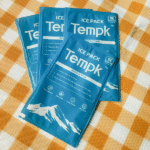
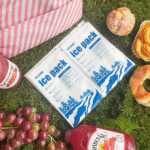
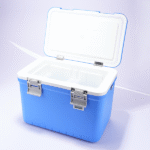
Tempk supplies cold-chain packaging components such as gel packs, ice bricks, PCM packs, insulated liners and bags, EPP and other insulated boxes, cold shipping boxes, and thermal pallet covers. Here, the practical focus is supporting vaccine and pharmaceutical packaging with gel packs, PCM packs, insulated boxes, VIP and EPP solutions, liners, and temperature monitoring components. Product-specific requirements, route qualification, and customer quality review remain the basis for any final selection.
Request a Practical Review
For an integrated container-and-cold-chain review, share the vaccine manufacturer’s storage instructions, payload, route, ambient risks, and qualification expectations to discuss an appropriate system design.