Updated On: June 8, 2026
Supplier Dry Ice Pack for Candy Shipping: A Practical Supplier Guide for B2B Buyers
A supplier dry ice pack for candy shipping can help protect temperature-sensitive goods, but it should not be treated as a shortcut around product specifications, packout testing, or supplier verification. For candy shipping, the best decision is usually a controlled balance: enough cooling to protect the payload, enough buffering to avoid over-cooling, and enough documentation to make repeat orders dependable.
What this means for the buyer
You are not only choosing a cold source. You are choosing a pack type, an insulation method, a loading map, a supplier process, and a documentation level that must fit candy, gummies, filled sweets, coated confectionery, and heat-sensitive retail packs. The right supplier dry ice pack for candy shipping is the one that controls the route risk without damaging the payload or creating a compliance gap.
Clarify the refrigerant before approving the quote
The phrase "dry ice pack" is used in more than one way in B2B sourcing. Some buyers mean actual dry ice, which is solid carbon dioxide. Others mean a reusable dry-ice-style pack, a hydrated pack, or a low-temperature PCM pack that is frozen before use. Those products are not automatically the same from a transport, safety, or documentation perspective. True dry ice is extremely cold, releases carbon dioxide gas as it sublimates, and requires ventilation and transport checks. A reusable pack may avoid carbon dioxide sublimation, but it still has to be matched with the product, insulation, and route.
For candy, gummies, filled sweets, coated confectionery, and heat-sensitive retail packs, the distinction matters because the shipment failure mode is not always simple warming. The risk may be heat deformation, sticky surfaces, condensation, cracked coatings, package staining, and inconsistent customer experience. A pack that is colder than necessary can create condensation or freeze-sensitive damage. A pack that is too weak may protect the carton for the first handover but fail during last-mile delivery. A supplier should be able to explain the product boundary clearly, not only say that the pack is "cold" or "long lasting."
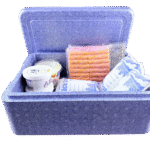
The safest buying language is specific. Ask whether the product is real solid carbon dioxide, a hydrated dry-ice-style pack, a gel pack, or a PCM pack. Ask how it is frozen or conditioned. Ask whether the supplier is recommending the pack alone or a complete packout with a shipper, separator, liner, carton, loading map, and monitoring plan. This avoids a common purchasing mistake: comparing two pack names while ignoring the system around them.
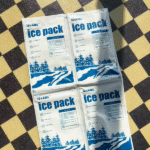
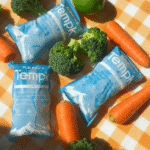
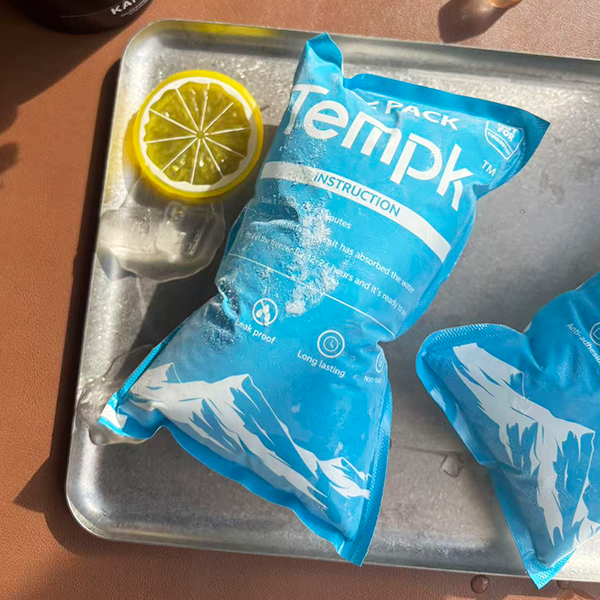
In this topic, Tempk's public product information positions hydrate dry ice packs as reusable cooling packs for cold-chain shipments and describes them as PCM-based packs that absorb water and are frozen before use. That product boundary is useful for buyers who want a cold source that is cleaner to handle than loose ice, but it does not remove the need to verify the target temperature, payload layout, route profile, and acceptance criteria.
Start with the product condition, not the pack name
The key decision for candy shipping is the product condition that must be protected at arrival. If the product is frozen, the packout must limit thawing. If it is refrigerated, the packout must avoid both warming and freezing. If it is shelf-stable but heat sensitive, the objective may be quality protection rather than strict cold-chain compliance. Those distinctions change the right pack choice.
For candy and chocolate, the correct target is product-specific. Many teams focus on avoiding heat spikes and surface condensation rather than creating a deep-frozen environment.
This is why a buyer should describe the payload before asking for price. Include the product type, package size, acceptable condition at delivery, shipment duration, season, route, and receiving process. A good supplier can then discuss the cold source, insulation, separator, carton, and evidence. A weak supplier will quote the pack alone and leave the risk with you.
Supplier Questions That Prevent a Bad Sample Approval
A supplier conversation should move beyond unit price and ask how samples are built, how pack materials are specified, and what changes before repeat orders.
Start with the sample. A sample is useful only if it represents production supply. Confirm the pack material, fill or hydration structure, sealing method, freezing instruction, packaging carton, and any customization before approving the sample. If the production version uses different film, different cell geometry, different absorbent material, or different outer carton quantity, your test result may not represent later shipments.
Then review handling. The warehouse team must know how long to freeze or condition the pack, how to identify a fully prepared pack, where to place it in the box, whether it can touch the payload, and how to handle returns or disposal. A supplier that gives only a unit price leaves the buyer to solve these operational details alone.
Finally, review evidence. For low-risk food or candy routes, you may need a simple sample test and receiving checklist. For medical or pharmaceutical routes, you may need controlled qualification, temperature logger data, change-control discipline, and quality-team approval. The pack supplier does not replace your quality process, but a capable supplier makes that process easier to run.
| Buyer question | Why it matters | Good supplier response |
|---|---|---|
| What exactly is the pack type? | Avoids confusing solid dry ice with hydrated, gel, or PCM packs. | Clear product boundary and handling instructions. |
| How should the pack be conditioned? | Thermal performance depends on freezing or pre-conditioning. | Written instruction for preparation, storage, and loading. |
| Can the pack touch the payload? | Direct contact may over-cool or damage sensitive products. | Specific separator or layout recommendation. |
| What changes from sample to bulk order? | Small changes can invalidate a sample test. | Material and production consistency controls. |
| What documentation can support the claim? | Evidence is needed before higher-risk lanes scale. | Datasheet, sample test data, or qualification support as appropriate. |
Separate real dry ice rules from dry-ice-style pack selection
Actual dry ice is solid carbon dioxide. It is extremely cold and changes directly from solid to gas. That is why a package with true dry ice must not be airtight, and why air transport requires dry ice marking and documentation steps. A hydrated dry-ice-style pack or PCM-style pack does not behave the same way, but it still needs thermal evaluation.
This distinction can prevent both compliance mistakes and performance mistakes. If you use real dry ice, check carrier acceptance, package venting, net weight marking, and Class 9 requirements for air. If you use a reusable dry-ice-style pack, check freezing instructions, pack placement, payload contact risk, and whether the pack is strong enough for the route. The buyer's job is to clarify the product type before approving either solution.
Helpful decision tools
Check the details before you choose packaging
These quick tools can help you compare route risk, sizing needs, coolant choices, and packaging details before you request a quote.
Packaging Selector
Compare insulated packaging options by product, route, and temperature need.
Find packagingRoute Risk Checker
Review lane conditions before selecting packaging for real operating requirements.
Check route riskCoolant & PCM Reference
Compare coolant and PCM options when a route needs added temperature support.
Compare optionsDo not let naming shortcut the review. A product marketed as a dry ice pack may not be appropriate for every frozen shipment, and it may be too cold for many refrigerated or quality-sensitive products. The approval basis should be the route, payload, evidence, and handling process.
A typical route problem to solve before ordering
A confectionery buyer may send mixed boxes with gummies, chocolate-coated pieces, and hard candy in the same parcel. The gummies need heat control, the chocolate coating needs protection from both heat and condensation, and the hard candy mainly needs dry packaging and impact protection. The packout should not be designed only around the warmest item or only around the coldest refrigerant.
In that situation, the buyer should build the packout around the most vulnerable handover point. It may be a warm warehouse dock, an airport hold, a courier van, or the receiving delay after delivery. For a parcel, the pack must protect the product during the worst realistic exposure, not only during the average transit time shown on a carrier website.
A practical sample test should record how the pack was prepared, how the carton was loaded, where the logger was placed, what the ambient conditions were, and how the shipment was inspected on arrival. If the test is repeated later, the same details should be repeatable. This is the difference between a useful buyer trial and a one-time demonstration that cannot support purchasing decisions.
When the sample result is mixed, do not immediately add more cooling. First check whether the problem was insulation, void space, product pre-cooling, pack location, loading discipline, or receiving delay. More cold source can solve warming but can also create over-cooling. For many products, better buffering and a clearer loading map do more than simply increasing pack quantity.
Approval checklist before volume purchasing
| Approval item | What to confirm | Why it matters |
|---|---|---|
| Pack identity | Real dry ice, hydrated pack, gel pack, or PCM-style pack. | Determines handling, transport rules, and thermal behavior. |
| Product fit | Acceptable temperature or quality range from product owner. | Prevents over-cooling and unsupported claims. |
| Packout map | Exact pack location, separator, liner, and payload arrangement. | Makes warehouse loading repeatable. |
| Evidence | Sample test, datasheet, or qualification data matched to route risk. | Supports purchasing and quality review. |
| Scale control | Sample-to-production consistency and change communication. | Protects repeat orders from hidden construction changes. |
Common mistakes that increase cost after launch
The first mistake is buying by pack count instead of packout performance. Two suppliers may recommend the same number of packs, but one design may use better insulation, less void space, and clearer separation. The arrival result can be different even when the purchase order looks similar.
The second mistake is testing a perfect sample but launching a messy warehouse process. If staff cannot identify the correct pack condition or load the box consistently, the route becomes unstable. Written instructions, photos of the loading map, and a short receiving checklist are simple controls that often prevent disputes.
The third mistake is ignoring product differences within one category. Not all candy behaves like chocolate. Not all vaccines are refrigerated. Not all dairy products tolerate the same cold exposure. Not all pharmaceutical shipments require or allow the same refrigerant. A supplier should help you narrow the recommendation instead of treating the category as one generic cold-chain problem.
FAQ
Is a supplier dry ice pack for candy shipping the same as real dry ice?
Not always. Some suppliers use the phrase for true solid carbon dioxide, while others use it for hydrated, gel, or PCM-style packs that are frozen before use. The difference affects handling, labeling, carrier acceptance, and safety. Ask the supplier to define the pack type clearly before you approve a sample or compare prices.
Can the pack touch the product directly?
Direct contact should not be assumed safe. For candy, gummies, filled sweets, coated confectionery, and heat-sensitive retail packs, contact can create local over-cooling, condensation, surface damage, or packaging marks. Use a separator, liner, buffer, or loading map when the product is sensitive. The supplier should explain the intended placement, not only provide the pack size.
How should I compare supplier claims about hold time?
Compare the test conditions behind the claim. Ask for the shipper size, payload, pack quantity, ambient profile, logger location, acceptance criteria, and whether the result was a lab test or a real shipment check. Hold time without context is not a reliable purchasing parameter.
Do I need a temperature data logger?
A data logger is recommended when the shipment value, product sensitivity, customer requirement, or quality procedure requires evidence. The logger does not control temperature; it records what happened. For lower-risk food or candy lanes, a sample test and receiving checklist may be enough. For medical and pharmaceutical routes, documentation expectations are usually higher.
Is colder always better for food or confectionery shipments?
No. More cooling can reduce heat exposure, but it can also create freezing, condensation, texture loss, or retail package damage. The best packout holds the product inside its acceptable quality range for the actual route, not simply at the lowest possible temperature.
Conclusion
A supplier dry ice pack for candy shipping is useful when it is selected as part of a complete packout rather than as a stand-alone answer. The most important decisions are product range, route exposure, payload layout, insulation, pack conditioning, supplier evidence, and receiving inspection. If any of those are missing, a cold pack can create a false sense of protection.
For candy shipping, start with the product's acceptable condition, then work backward to the packout. Confirm whether you are using true dry ice or a dry-ice-style reusable pack. Define the packing map. Test the sample in a way that can be repeated. Before buying volume, make sure the supplier can support the same construction, documentation, and handling instructions that your team approved.
About Tempk
Tempk is the cold-chain packaging brand of Shanghai Tempk Industrial Co., Ltd. For candy shipping, we help buyers compare cold source options, insulated packaging, and packout layout based on product type, target condition, route exposure, and purchasing stage. Our public product range includes gel ice packs, water-filled ice packs, hydrate dry ice packs, ice bricks, insulated liners, insulated bags, EPP and VIP box options, and related cold-chain packaging materials. The useful starting point is simple: share the payload, route, target range, and handling constraints so the recommendation can match the shipment instead of only the keyword.
Share your product type, target temperature range, payload, route, and transit time with Tempk to compare suitable options before ordering a supplier dry ice pack for candy shipping in volume.