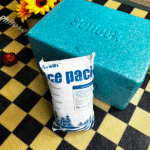
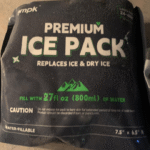
Water Injection Ice Pack Eco-friendly Wholesale matters because it affects product safety, landed cost, customer experience, and even the credibility of your sustainability claims, all in one small packaging component. Because the pack starts as a lightweight empty pouch, it can reduce inbound storage pressure and simplify custom sizing compared with pre-filled coolant formats. Film choice matters because the pack sees stress when frozen, handled, dropped, compressed, and squeezed into insulated shippers. A tougher multilayer film often costs more but usually saves money by reducing failures. FDA says a food contact substance that is a food additive must be authorized before it is marketed for that intended use in the United States. In everyday terms, you want a pack that behaves predictably: it freezes when expected, fits the carton, stays intact, and does not create cleanup work.
Updated for March 24, 2026, this article follows a people-first structure with clear headings, specific use cases, and practical guidance so you can evaluate Water Injection Ice Pack Eco-friendly Wholesale with less guesswork and more confidence.
What this article will help you answer
- How to match Water Injection Ice Pack Eco-friendly Wholesale to the right cold chain packaging workflow.
- What performance signals separate a dependable pack from a risky low-cost offer.
- Which eco-friendly ice pack and quality checks matter before you approve volume.
- How to connect thermal design, documentation, and day-to-day operations.
- What 2026 changes in delivery patterns, packaging rules, and claim language mean for you.
Why does Water Injection Ice Pack Eco-friendly Wholesale matter more than many buyers expect?
Water Injection Ice Pack Eco-friendly Wholesale works best when you buy it as a defined operating component instead of a commodity line item. Because the pack starts as a lightweight empty pouch, it can reduce inbound storage pressure and simplify custom sizing compared with pre-filled coolant formats. Most failures do not come from the idea of the pack itself. They come from uncontrolled filling, brittle film choice, weak corner design, or a pack-out built without real lane data. For you, that means fewer surprises at receiving, fewer customer complaints, and a colder product with less trial-and-error.
Water Injection Ice Pack Eco-friendly Wholesale works best when you buy it as a defined operating component instead of a commodity line item. For buyers, the main attraction is control: you can match pack size, fill weight, print, and case count to the exact lane and product risk you manage. FDA says the sanitary transportation rule is meant to prevent food safety risks such as failure to refrigerate, inadequate cleaning between loads, and poor protection during transit. The weak points are also clear. Poor seal quality causes leaks, uneven fill ratios create inconsistent hold time, and vague green claims can create compliance headaches. The value is not only thermal. A better pack also improves line speed, labeling clarity, and confidence when you scale from pilot to national rollout.
Selection detail: cold chain packaging
A good first test for Water Injection Ice Pack Eco-friendly Wholesale is whether everyone on your team can describe its job in one sentence. That sentence should define the product being protected, the temperature risk being controlled, the transit window, and the acceptable failure level. When teams cannot state that clearly, they often compare samples on feel rather than on outcomes, which leads to expensive rework later. For you, that means fewer surprises at receiving, fewer customer complaints, and a colder product with less trial-and-error.
| Decision area | Basic option | Stronger option | What it means for you |
|---|---|---|---|
| Product definition | Generic pack name | Named lane-and-use spec | Easier approvals and fewer ordering mistakes |
| Cooling role | Added by habit | Linked to target temperature risk | Less over-packing and better consistency |
| Supplier choice | Price-first | Quality-and-document balance | Fewer failures after rollout |
Practical tips and recommendations
- Write one line describing the exact job the pack must do before requesting any quote.
- Use the same sample approval sheet for procurement, QA, and operations so decisions stay aligned.
- Reject vague performance language and ask for the condition behind every claim.
Representative example: A buyer sourcing Water Injection Ice Pack Eco-friendly Wholesale for regional depots stopped comparing packs by unit price alone and created a one-page lane brief first. The next sample round exposed one low-cost option with unstable fill weight and weak corner seals, which would likely have created leakage complaints after rollout.
How do you design Water Injection Ice Pack Eco-friendly Wholesale for dependable thermal performance?
For Water Injection Ice Pack Eco-friendly Wholesale, sizing is not only about how heavy the pack is. It is about where the cold sits around the product during the full distribution cycle. Use peak-season scenarios when you validate. Summer spikes, line delays, and porch dwell are what expose under-designed pack-outs. Thermal performance is never about the coolant alone. Insulation thickness, product load, airflow gaps, pre-freezing discipline, and the order of assembly can change the result dramatically. This is especially important for lighter pack-out redesigns, regional depots, and waste-reduction pilots, where a short delay can change the temperature profile more than buyers expect.
For Water Injection Ice Pack Eco-friendly Wholesale, sizing is not only about how heavy the pack is. It is about where the cold sits around the product during the full distribution cycle. Freezer capacity matters too. A large pack may hold cold longer, but it also takes more freezer space, more pull-down time, and more ergonomic effort on the line. Thermal performance is never about the coolant alone. Insulation thickness, product load, airflow gaps, pre-freezing discipline, and the order of assembly can change the result dramatically. This is especially important for waste-reduction pilots, retail ESG reporting, and regional depots, where a short delay can change the temperature profile more than buyers expect.
Performance detail: insulated shipping solution
For Water Injection Ice Pack Eco-friendly Wholesale, try a three-part sizing method: define the worst lane, choose a target pack-out, then test a lighter and heavier option around that baseline. This shows whether you are paying for useful safety margin or for habit. It also exposes when the real weakness is not coolant mass but poor product placement, weak insulation, or late handoff in the final mile. In everyday terms, you want a pack that behaves predictably: it freezes when expected, fits the carton, stays intact, and does not create cleanup work.
| Sizing lever | Lean setting | Higher-buffer setting | What it means for you |
|---|---|---|---|
| Pack mass | Lower coolant weight | Higher reserve cooling | Trade cost against temperature buffer |
| Pack layout | One large pouch | Two-point contact layout | Better product contact in many cartons |
| Freeze condition | Shorter pull-down | Full conditioning window | More repeatable shipment performance |
Practical tips and recommendations
- Use two pack-out options to test both lean and high-buffer layouts on your hottest likely lane.
- Freeze samples in the same orientation and time window you expect in production.
- Track both product temperature and package condition; a cold but leaking shipment is still a failure.
Representative example: In a validation run for lighter pack-out redesigns, the team compared one large pouch against two smaller pouches placed on opposite sides of the product. The two-pack layout gave better surface contact and more stable temperatures without increasing total coolant weight.
Which material choices improve Water Injection Ice Pack Eco-friendly Wholesale reliability?
Material selection shapes whether Water Injection Ice Pack Eco-friendly Wholesale survives freezing, compression, abrasion, and thaw without leaking or looking damaged. The core material conversation usually starts with the coolant and ends with the film. In practice, the film often decides whether a shipment succeeds cleanly or fails messily. A gelled system does not magically create more cold, but it can change how that cold is delivered. It reduces slosh, improves surface contact after partial thaw, and often makes the pack easier to handle on fast packing lines. In everyday terms, you want a pack that behaves predictably: it freezes when expected, fits the carton, stays intact, and does not create cleanup work.
Material selection shapes whether Water Injection Ice Pack Eco-friendly Wholesale survives freezing, compression, abrasion, and thaw without leaking or looking damaged. Seal design deserves as much attention as film gauge. A thick film with a poor seal can fail sooner than a balanced structure with stable sealing parameters. A gelled system does not magically create more cold, but it can change how that cold is delivered. It reduces slosh, improves surface contact after partial thaw, and often makes the pack easier to handle on fast packing lines. For you, that means fewer surprises at receiving, fewer customer complaints, and a colder product with less trial-and-error.
Material detail: reusable gel ice pack
In Water Injection Ice Pack Eco-friendly Wholesale, film and seal choices should be discussed together because they fail together in real operations. Ask how the pouch behaves after repeated freeze-thaw cycles, after drop handling, and after compression in a full shipper. If the answer is only a general marketing statement, request a more concrete explanation of test method, conditions, and pass criteria. The value is not only thermal. A better pack also improves line speed, labeling clarity, and confidence when you scale from pilot to national rollout.
| Material lever | Lower-spec choice | Higher-spec choice | Operational meaning |
|---|---|---|---|
| Film toughness | Basic flexible film | Puncture-resistant multilayer | Lower leak risk under compression |
| Seal margin | Narrow process window | Wider validated seal window | More stable output during production |
| Coolant texture | Free-flowing liquid | Controlled water-based gel | Cleaner handling after partial thaw |
Practical tips and recommendations
- Ask for film structure guidance in plain language, not only a gauge number.
- Test print, seal, and corner strength after full freezing and after partial thaw.
- Store retains from each pilot batch so you can recheck performance if complaints appear later.
Representative example: During pilot checks for lighter pack-out redesigns, a basic film looked acceptable when unfrozen but showed edge damage after compression in a full carton. Switching to a tougher pouch structure reduced handling damage and cut cleanup incidents on the packing line.
Which materials, claims, and compliance checks protect your brand?
Compliance around Water Injection Ice Pack Eco-friendly Wholesale is usually practical rather than dramatic: the right declarations, the right claim language, and records that stay easy to retrieve. For export or multinational use, align terminology carefully. A claim that sounds acceptable in one market may need qualification, extra documentation, or different disposal language in another. The European Commission says Regulation (EC) No 1935/2004 sets the general EU safety and inertness framework for food contact materials, while GMP Regulation (EC) No 2023/2006 controls manufacturing practice. The EU packaging regulation 2025/40 covers all packaging, requires recyclability by design, sets recyclability performance grades from 2030, and says reusable packaging must be designed for multiple rotations. The value is not only thermal. A better pack also improves line speed, labeling clarity, and confidence when you scale from pilot to national rollout.
Compliance around Water Injection Ice Pack Eco-friendly Wholesale is usually practical rather than dramatic: the right declarations, the right claim language, and records that stay easy to retrieve. Quality paperwork should be easy to retrieve, not hidden behind repeated email requests. Good suppliers usually provide a standard document set with revision control. The European Commission says Regulation (EC) No 1935/2004 sets the general EU safety and inertness framework for food contact materials, while GMP Regulation (EC) No 2023/2006 controls manufacturing practice. The FTC says recyclable claims should be qualified when suitable recycling facilities are not available to at least 60 percent of consumers or communities. If you manage cost, quality, or operations, the right pack should reduce exception handling rather than creating a new hidden workload.
Risk-control detail: reuse-first packaging
Claim discipline matters with Water Injection Ice Pack Eco-friendly Wholesale because vague wording can create more risk than it removes. If you say reusable, define the loop. If you say recyclable, define the local reality. If you say non-toxic, make sure the evidence supports the exact wording you plan to use. That level of specificity makes your product information stronger for auditors, resellers, and end users alike. If you manage cost, quality, or operations, the right pack should reduce exception handling rather than creating a new hidden workload.
| Compliance area | What to confirm | Better control | What it means for you |
|---|---|---|---|
| Food-adjacent use | Material declaration | Declaration plus intended-use clarity | Safer customer communication |
| Claims | Broad wording | Qualified evidence-based wording | Lower legal and reseller risk |
| Traceability | Lot number | Lot plus revision-controlled documents | Faster issue response |
Practical tips and recommendations
- Match every claim to evidence and keep the latest revision in a shared folder.
- Separate internal technical notes from external marketing wording so no one overstates the pack.
- For cross-border business, confirm which declaration format is accepted by each customer or market.
Representative example: A reseller preparing Water Injection Ice Pack Eco-friendly Wholesale for wholesale produce hubs rewrote its claim language from broad eco wording to precise, evidence-based statements tied to the actual material and disposal route. The result was cleaner approval with less back-and-forth from customers.
How can you lower waste and total cost with Water Injection Ice Pack Eco-friendly Wholesale?
Sustainability is relevant to Water Injection Ice Pack Eco-friendly Wholesale, but only when it is attached to real operational choices. The smartest eco decision is often to reduce total material and failure first. A leaky, overbuilt, or over-packed shipment is rarely a sustainability win. In 2026, buyers are looking at coolant packs through a wider lens. They still care about temperature control, but now they also ask how the pack fits reuse, recycling, claims compliance, and ecommerce fulfilment reality. The EU packaging regulation 2025/40 covers all packaging, requires recyclability by design, sets recyclability performance grades from 2030, and says reusable packaging must be designed for multiple rotations. Eco-friendly buying usually improves when you reduce over-packing, right-size film, and support reuse only where a repeat loop actually exists.
Sustainability is relevant to Water Injection Ice Pack Eco-friendly Wholesale, but only when it is attached to real operational choices. Recyclability depends on local collection and sorting reality, not only on the chemistry of the pouch. That is why claim wording matters as much as material selection. Regulators are also changing the conversation. Food safety, packaging waste, traceability, and environmental marketing claims all shape what a sensible buying decision looks like. The FTC says recyclable claims should be qualified when suitable recycling facilities are not available to at least 60 percent of consumers or communities. Eco-friendly buying usually improves when you reduce over-packing, right-size film, and support reuse only where a repeat loop actually exists.
Efficiency detail: eco-friendly ice pack
The most credible sustainability story for Water Injection Ice Pack Eco-friendly Wholesale usually starts with less waste and fewer failures, not with the biggest headline claim. A pack that prevents spoilage, fits the carton efficiently, and avoids leaks can improve both environmental and economic performance at the same time. Once that baseline is stable, you can evaluate reuse cycles, easier-to-sort materials, or improved disposal communication without guessing. The value is not only thermal. A better pack also improves line speed, labeling clarity, and confidence when you scale from pilot to national rollout.
| Sustainability lever | Common shortcut | Better practice | What it means for you |
|---|---|---|---|
| Reuse | Claim without loop | Claim with refreeze/return workflow | More credible savings story |
| Recyclability | Chemistry-only claim | Claim matched to collection reality | Fewer misleading messages |
| Material use | Overbuilt pack-out | Right-sized system design | Less waste and lower freight |
Practical tips and recommendations
- Treat reuse as an operational workflow, not as a slogan.
- Qualify recyclable wording when real collection access is limited.
- Measure total material, failure rate, and spoilage together before calling a design more sustainable.
Representative example: A packaging review for retail ESG reporting showed that a slightly smaller pack-out, combined with better product placement, maintained performance while reducing total material and freight burden. The improvement came from system design, not from a louder green claim.
What trends will shape Water Injection Ice Pack Eco-friendly Wholesale decisions through 2026?
In 2026, the strongest trend around Water Injection Ice Pack Eco-friendly Wholesale is convergence: food safety, thermal validation, packaging claims, and cost control are being discussed together. The last mile is now one of the hardest parts of the cold chain. Parcels wait on porches, in parcel lockers, in vans, and on sorting belts, so a pack that looked fine in a lab may fail in daily operations if it lacks buffer. A reuse-first design often works best when the customer already has a return, wash, or refreeze loop. Without that loop, a reusable claim may sound good but deliver little real benefit. The FTC says non-toxic claims need competent and reliable scientific evidence showing the product is safe for people and the environment. Google Search Central continues to emphasize helpful, reliable, people-first content, clear page titles, and visible main headings.
In 2026, the strongest trend around Water Injection Ice Pack Eco-friendly Wholesale is convergence: food safety, thermal validation, packaging claims, and cost control are being discussed together. The last mile is now one of the hardest parts of the cold chain. Parcels wait on porches, in parcel lockers, in vans, and on sorting belts, so a pack that looked fine in a lab may fail in daily operations if it lacks buffer. Sustainability claims should be specific. Reusable, recyclable, recycled-content, refillable, and non-toxic each mean different things operationally and legally. The EU packaging regulation 2025/40 covers all packaging, requires recyclability by design, sets recyclability performance grades from 2030, and says reusable packaging must be designed for multiple rotations. Google Search Central continues to emphasize helpful, reliable, people-first content, clear page titles, and visible main headings.
2026 planning detail: sustainable cold chain packaging
The next phase for Water Injection Ice Pack Eco-friendly Wholesale is better evidence, not louder claims. Buyers are becoming more comfortable asking for lane logic, quality records, and precise wording around sustainability and safety. Suppliers that can explain performance in plain language will have an advantage over suppliers who rely on broad promises without context. In everyday terms, you want a pack that behaves predictably: it freezes when expected, fits the carton, stays intact, and does not create cleanup work.
| 2026 signal | What is changing | Operational effect | What you should do |
|---|---|---|---|
| Food safety focus | More attention on transport and last mile | Temperature control is scrutinized earlier | Validate pack-outs before scaling |
| Packaging policy | More detail on recyclability and reuse | Claim language needs precision | Review wording and materials |
| Buying behavior | Teams compare total cost, not only unit price | Weak documentation stands out faster | Build one approval scorecard |
Practical tips and recommendations
- Review your titles, headings, FAQs, and structured content together so the page stays easy to scan.
- Keep trend language specific and date-stamped instead of using empty future-facing claims.
- Update buyer-facing packaging guidance when policy or routing assumptions change.
Representative example: A buyer updating Water Injection Ice Pack Eco-friendly Wholesale for retail ESG reporting combined clearer documentation, more specific titles and FAQs, and a date-stamped trend section. The page became easier to scan internally and stronger as a customer-facing resource.
2026 developments and trends for Water Injection Ice Pack Eco-friendly Wholesale
In 2026, the strongest trend around Water Injection Ice Pack Eco-friendly Wholesale is convergence: food safety, thermal validation, packaging claims, and cost control are being discussed together. In 2026, buyers are looking at coolant packs through a wider lens. They still care about temperature control, but now they also ask how the pack fits reuse, recycling, claims compliance, and ecommerce fulfilment reality. Sustainability claims should be specific. Reusable, recyclable, recycled-content, refillable, and non-toxic each mean different things operationally and legally. The FTC says recyclable claims should be qualified when suitable recycling facilities are not available to at least 60 percent of consumers or communities. Google Search Central continues to emphasize helpful, reliable, people-first content, clear page titles, and visible main headings.
Recent developments at a glance
- Food safety and last-mile temperature control are being discussed together much earlier in procurement.
- Packaging policy is pushing buyers to ask sharper questions about recyclability, reusable design, and material efficiency.
- Content that explains the product in plain language with real use cases is outperforming generic catalog copy for both buyers and search visibility.
Sustainability is relevant to Water Injection Ice Pack Eco-friendly Wholesale, but only when it is attached to real operational choices. The smartest eco decision is often to reduce total material and failure first. A leaky, overbuilt, or over-packed shipment is rarely a sustainability win. The last mile is now one of the hardest parts of the cold chain. Parcels wait on porches, in parcel lockers, in vans, and on sorting belts, so a pack that looked fine in a lab may fail in daily operations if it lacks buffer. The EU packaging regulation 2025/40 covers all packaging, requires recyclability by design, sets recyclability performance grades from 2030, and says reusable packaging must be designed for multiple rotations. Eco-friendly buying usually improves when you reduce over-packing, right-size film, and support reuse only where a repeat loop actually exists.
Web-grounded reference set used in this article
- FDA sanitary transportation rule and online delivery guidance
- FoodSafety.gov meal kit and shipped food temperature guidance
- ISTA 7E parcel thermal transport standard overview
- FDA food contact substance framework
- EU food contact materials framework and GMP rules
- EU Packaging and Packaging Waste Regulation (PPWR)
- EPA sustainable materials management hierarchy
- FTC environmental marketing guidance on recyclable and non-toxic claims
Frequently asked questions
How long should Water Injection Ice Pack Eco-friendly Wholesale stay cold?
There is no single universal number because hold time depends on pack mass, freeze condition, insulation, payload temperature, ambient exposure, and delivery pattern. Treat supplier claims as starting points, then validate on your own lanes. For most buyers, a documented pack-out test is more useful than a marketing hold-time promise.
Is Water Injection Ice Pack Eco-friendly Wholesale better than dry ice?
It depends on your temperature target and handling rules. Water-based or gel-based packs are easier to handle for many food and general cold-chain applications, while dry ice runs much colder and brings different labelling, handling, and transport considerations. Choose the coolant around the product requirement, not habit.
Can Water Injection Ice Pack Eco-friendly Wholesale be reused?
Many formats can be reused if the film remains intact, the pack is cleaned when needed, and the workflow supports collection and refreezing. Reuse only creates real value when you have a practical loop, clear inspection rules, and a reason the pack should rotate more than once.
What documents should I ask for before buying Water Injection Ice Pack Eco-friendly Wholesale in volume?
Ask for specifications, material descriptions, leakage or seal-test information, quality controls, batch traceability details, storage guidance, and any relevant food-contact or claim-supporting declarations. If you sell across borders, also ask which documents are standard for export and which are market-specific.
How do I compare suppliers for Water Injection Ice Pack Eco-friendly Wholesale without wasting time?
Use one scorecard. Compare sample quality, fill consistency, sealing quality, print durability, lead time, carton efficiency, response speed, and documentation quality against the same criteria. A structured scorecard reveals weak suppliers much faster than comparing quotes line by line.
Can I market Water Injection Ice Pack Eco-friendly Wholesale as recyclable or non-toxic?
Only if the evidence and local conditions support the claim. Recyclable wording should match actual collection availability, and non-toxic wording should be backed by reliable scientific evidence for the intended claim context. Precise language protects both trust and compliance.
Summary and recommendation
Water Injection Ice Pack Eco-friendly Wholesale delivers the most value when you define the lane, select the right pack-out, confirm the right film and fill controls, and align the wording of any safety or sustainability claims with real evidence. The strongest programs treat the pack as part of a cold-chain system, not as a generic commodity.
Your next move should be simple: write a one-page specification, test at least two validated pack-outs, compare suppliers with one scorecard, and keep the approval file ready for customers and auditors. If your team is still buying by habit, shift to a lane-based approach. It quickly shows where you are over-packing, under-packing, or using the wrong film grade.