vacuum insulated box for fda compliant packaging: Technical Selection Notes
A vacuum insulated box for fda compliant packaging is a thermal system, not only a container with advanced insulation. Vacuum insulated panels reduce heat transfer by using an evacuated core inside a protective barrier, but finished packaging performance still depends on panel protection, lid design, coolant conditioning, payload mass, air gaps, route exposure, and handling discipline. For regulated or quality-sensitive shipments, the deeper question is how the box supports documented control. This article explains the technical trade-offs in plain English and shows which parameters should be verified rather than assumed.
Inside the Thermal Logic of a vacuum insulated box for fda compliant packaging
The core technical advantage of a vacuum insulated panel is the reduction of gas conduction inside the panel. In simple terms, the panel removes much of the air path that normally carries heat through insulation. Many VIP constructions use a porous core protected by a high-barrier envelope. This is why VIP panels can offer strong thermal resistance in a compact wall. The finished container, however, is not only a sum of panel values. Heat can still enter through the lid, corners, gaps, seams, payload loading pattern, and every moment the box is open.
This is where thermal bridges matter. A thermal bridge is a path where heat can bypass the strongest insulation layer. It can appear at the junction between panels, around a loose lid, through a handle insert, or where coolant placement creates uneven conditions. If the payload is freeze-sensitive, the problem can also run in the opposite direction: a cold source placed too close to the product may cause local freezing even while the average chamber temperature looks acceptable. Technical selection therefore needs both insulation review and packout design.
A second technical issue is the life of the panel inside a reusable workflow. VIP panels are efficient but can be more vulnerable to puncture than thick foam. A reusable system needs a practical inspection method. Buyers should ask what visible damage matters, whether panels can be removed or replaced, how the outer shell shields edges, and whether the packout instructions change after cleaning or repeated return cycles. These questions are more useful than asking for a single performance number without knowing the condition of the box.
The Finished Packout Matters More Than Panel Claims
A vacuum insulated box for fda compliant packaging generally refers to a passive insulated container that uses vacuum insulated panel technology to reduce heat transfer around a temperature-sensitive payload. Passive means the container does not create cold by itself. It works with conditioned gel packs, PCM packs, dry ice when appropriate, or another refrigerant strategy. The phrase refrigerated, when used in this context, usually means that the shipping system is designed for refrigerated-range cargo, not that the box contains an electric refrigeration unit.
This difference matters because buyers sometimes compare boxes as if insulation alone were the controlling factor. In practice, the box is one part of a packout. The coolant must be conditioned correctly, the payload must fit without crushing airflow or separators, and the lid must close consistently. If the shipment is part of a pharmaceutical, diagnostic, biotech, or hospital workflow, your quality team may also need documented procedures, temperature records, deviation rules, and evidence that the chosen system is suitable for the product and lane.
A useful way to evaluate the packaging is to separate three questions. First, what must the product experience during transport? Second, what can the packaging system demonstrate under relevant test or operating conditions? Third, what must your team verify at dispatch and receipt? Keeping these questions separate prevents broad claims from replacing practical evidence. It also helps you compare suppliers without assuming that every VIP box behaves the same after it is packed, handled, returned, and reused.
Parameters That Need Verification
| Parameter to verify | Why it should not be assumed | Practical verification method |
|---|---|---|
| Panel condition | A punctured or bent VIP panel may lose insulation value. | Inspect surface, edge protection, and panel fit before reuse. |
| Lid and closure design | A weak closure can create heat leakage even with strong panels. | Check closure repeatability, gasket or overlap, and handling instructions. |
| Coolant compatibility | Wrong coolant can freeze sensitive payloads or fail to hold the range. | Match gel pack or PCM selection to product range and route profile. |
| Test profile | A stated hold time is meaningful only under defined conditions. | Review payload, ambient profile, acceptance criteria, and packout diagram. |
| Documentation | Regulated workflows may require written procedures and records. | Confirm what datasheets, instructions, and supporting documents are available. |
The table is intentionally built around verification rather than fixed numbers. Many values that look simple in a datasheet, such as hold time, volume, or temperature range, can change when the payload, coolant mass, ambient profile, and handling conditions change. For quality-sensitive shipments, a supplier's answer should lead to a packout decision and a record your team can repeat.
Regulatory and Quality Boundaries
For FDA-regulated products, the phrase FDA compliant packaging should be used carefully. A passive insulated box is not automatically compliant simply because it is made from VIP panels or marketed for medicines. FDA-related packaging and distribution expectations are connected to written procedures, product protection, material suitability, storage conditions, distribution records, and quality review. The packaging may support those procedures, but the shipper or product owner still has to confirm that the system fits the product and process.
This is why a vacuum insulated box for fda compliant packaging should be evaluated as a support tool for an FDA-regulated workflow, not as a standalone regulatory solution. Buyers should verify the product's required temperature range, whether the proposed packout has been tested under relevant conditions, how the packaging material is controlled, and what records will be available after shipment. If a supplier uses compliance language, ask what exactly is covered: material information, manufacturing controls, packout validation support, test data, or only general suitability for cold-chain use.
In everyday procurement, this means asking for documents that match the risk level of the shipment. A low-risk food or internal sample route may need simple packout instructions and receiving checks. A pharmaceutical or diagnostic workflow may need more formal evidence, change control, and quality approval. The phrase 'compliant' should always lead to a follow-up question: compliant with which procedure, product requirement, test basis, route, and market?
Coolant, Freeze Risk, and Logger Placement
A packout should be written so a new operator can follow it under time pressure. It should show which coolant goes where, whether a buffer layer is needed, how the payload is oriented, where any temperature logger is placed, and how the lid is closed. If the box is reused, the instruction should also show what to inspect before packing. Do not rely on verbal training alone for shipments that carry high-value or quality-sensitive goods.
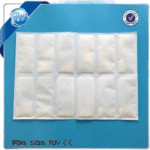
Conditioning is equally important. Gel packs and PCM packs may need a specific preparation process before they are placed in the box. If they are too warm, they may not protect the payload long enough. If they are too cold or placed incorrectly, they may create local freeze risk. This is why the coolant is part of the packaging system, not an accessory added at the last minute.
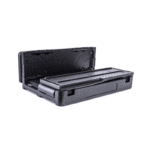
Receiving procedures complete the loop. The receiver should know whether to open immediately, where to find any logger or indicator, what package condition to record, and who to contact if damage, delay, or temperature concern appears. A well-designed vacuum insulated box with a protective outer shell, VIP panels, coolant, dividers, and optional temperature logger gives the receiver fewer decisions to improvise. That reduces the chance that a borderline shipment is accepted, rejected, or stored incorrectly without review.
Where Technical Specifications Can Mislead Buyers
Several purchasing mistakes appear again and again when teams evaluate a vacuum insulated box for fda compliant packaging. The first is asking for a long hold time before describing the actual lane. A supplier can only give a meaningful answer when it knows the product range, payload, coolant type, ambient exposure, and acceptance criteria. The second is ignoring freeze sensitivity. Many refrigerated products are damaged by freezing, so a system that stays cold is not necessarily safe if the coolant is too aggressive or placed too close to the payload.
Another mistake is buying by box volume rather than packout volume. A box can be large enough for the product and still too small for the product plus coolant plus separators plus paperwork. Return programs create a further risk: a box that looks reusable may have hidden panel damage, worn closures, label residue, or contamination concerns. Build a basic inspection process before scale-up, not after the first failed return cycle.
Helpful decision tools
Check the details before you choose packaging
These quick tools can help you compare route risk, sizing needs, coolant choices, and packaging details before you request a quote.
Packaging Selector
Compare insulated packaging options by product, route, and temperature need.
Find packagingDry Ice Calculator
Estimate dry ice needs for frozen or ultra-cold shipments before packing.
Estimate dry iceCoolant & PCM Reference
Compare coolant and PCM options when a route needs added temperature support.
Compare optionsFinally, do not let a data logger create false confidence. Monitoring is valuable because it gives evidence after shipment, but it is not a cooling system. If the packout is poorly designed, the logger will only document the failure. Use monitoring to verify and improve a packaging process, not as a substitute for thermal design.
Common mistake: using hold time as a universal promise. Hold time is meaningful only with a defined ambient profile, payload, coolant load, and acceptance limit. The better approach is to turn the issue into a pre-order question and make sure the answer appears in the packout instruction or supplier record.
Common mistake: ignoring freeze risk. Refrigerated shipments can fail from overcooling if a payload touches frozen coolant or lacks a buffer layer. The better approach is to turn the issue into a pre-order question and make sure the answer appears in the packout instruction or supplier record.
Common mistake: buying by gross volume. Gross internal dimensions can be misleading once coolant, separators, and documents are placed inside. The better approach is to turn the issue into a pre-order question and make sure the answer appears in the packout instruction or supplier record.
Common mistake: forgetting handover points. The package may be exposed during packing, carrier pickup, customs, receiving, or internal transfer. The better approach is to turn the issue into a pre-order question and make sure the answer appears in the packout instruction or supplier record.
From Engineering Sample to Controlled Use
A practical supplier review for a vacuum insulated box for fda compliant packaging should be specific enough that two vendors cannot answer with the same generic brochure. Ask for internal and external dimensions, usable payload space after coolant, compatible refrigerant options, closure and lid design, cleaning guidance, reuse inspection points, and available documentation. If a supplier gives a hold-time claim, ask what test profile, payload, coolant load, and acceptance criteria were used. If the answer is not available, treat the claim as a starting estimate rather than a purchasing decision.
For sample evaluation, pack the sample with the actual product or a realistic surrogate. Use the intended coolant conditioning process. Let the people who will pack and receive the shipment handle the box, not only the engineering team. They may notice practical issues that a datasheet does not show: a lid that is hard to close, a payload cavity that encourages wrong placement, a label area that is too small, or a return-cleaning step that is unrealistic for daily operations.
Before scaling from sample to production, confirm change-control expectations. Will the supplier notify you if panel structure, outer shell material, coolant specification, or dimensions change? Are replacement parts available? Can production units match the approved sample? For regulated or quality-sensitive cargo, small changes in packaging components can affect thermal behavior. Procurement should therefore work with quality, operations, and logistics before approving bulk orders.
FAQ
Is a vacuum insulated box for fda compliant packaging automatically suitable for all refrigerated shipments?
No. It may be suitable for some refrigerated shipments, but the product range, payload, coolant, route, and acceptance criteria must be confirmed. A passive VIP box slows heat transfer; it does not define the required temperature range or remove the need for packout validation. Buyers should ask for documentation that matches their product and lane.
Can a passive insulated box be called FDA compliant by itself?
Use that language carefully. FDA-regulated workflows depend on written procedures, material suitability, storage conditions, distribution controls, records, and quality review. A box can support those controls, but it is not automatically compliant in isolation. Ask the supplier what documentation or packout support is available and have your quality team review the intended use.
Should I use gel packs, PCM packs, or dry ice with a VIP box?
The choice depends on the product range and route. Gel packs may fit many refrigerated or chilled applications; PCM packs are useful when a tighter phase-change point is needed; dry ice is used for some frozen applications but creates separate handling and labeling considerations. The coolant must be matched to product sensitivity and tested packout assumptions.
Where should a temperature logger be placed?
Logger placement should reflect what your quality team needs to know. It should not be placed where it creates a misleading reading, blocks the lid, or touches coolant in a way that does not represent the payload. For high-risk shipments, define logger position in the packout instruction and keep the approach consistent.
How do I compare suppliers without relying on marketing claims?
Give each supplier the same shipment scenario and ask for the same information: usable volume, coolant configuration, route assumptions, test basis, available documentation, inspection steps, and change-control expectations. A clear, limited answer is often more useful than a broad claim that promises performance for every route.
Conclusion
A vacuum insulated box for fda compliant packaging can be a strong cold-chain option when it is treated as part of a system. The box slows heat transfer; the coolant manages the thermal source; the packout controls layout; the route defines exposure; and the receiving process decides whether the shipment can be accepted. Buyers who separate these roles make better decisions than teams that rely on broad product labels.
Before ordering, confirm the product's required range, usable payload space, coolant plan, route conditions, evidence needs, and reuse or recovery process. For quality-sensitive products, involve operations and quality early. The most reliable packaging choice is usually the one your team can repeat, inspect, and document under normal working conditions.
About Tempk
Tempk works with cold-chain packaging components including vacuum insulated panel cooler boxes, medical cool boxes, EPP solutions, gel packs, and PCM packs. In technical packaging discussions, Tempk's role is to help buyers translate requirements into a workable system: insulation structure, coolant layout, payload fit, and handling instructions. For regulated or sensitive shipments, customers should still review the final packout with their own quality and logistics teams before production use.
Ask Tempk for a technical packaging discussion if you need to match a vacuum insulated box for fda compliant packaging with coolant, usable payload space, and documentation requirements.