VIP Shipping Case for Returnable Packaging: Worth It?
Last updated: December 10, 2025
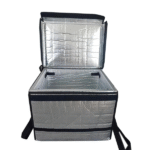
If you ship products that hate heat, cold, or surprises, a VIP shipping case for returnable packaging is one of the safest upgrades you can make. “VIP” means vacuum insulated panel—think of it like a thermos wall, but in a sturdy box. Many pharma and biotech lanes must hold 2–8°C, while frozen programs often target -20°C. A reusable case can also survive 30+ trips when your process is set up well.
This article will answer for you:
-
How a VIP shipping case for returnable packaging protects temperature-sensitive payloads on real lanes
-
What “temperature hold time” really means, and how to avoid overbuying insulation
-
How to run a returnable packaging reverse logistics program without delays and missing assets
-
How to estimate reusable cold chain packaging cost per trip with a simple break-even method
-
What to validate and document for pharma GDP compliant returnable packaging in 2025
What problem does a VIP shipping case for returnable packaging solve?
A VIP shipping case for returnable packaging solves three problems at once: temperature stability, damage risk, and packaging waste. The insulation slows heat flow, so your payload stays in range longer. The hard shell protects against drops, stacking, and rough handling. And because it’s returnable, you stop “buying a new box every time” and start paying per use.
In plain terms, it turns a fragile, one-time shipper into a repeatable system. That system matters when you ship high-value medicines, specialty foods, or diagnostics. It also matters when lanes get unpredictable in 2025: tighter delivery windows, more parcel handoffs, and more temperature scrutiny.
Where you feel the impact fastest
A VIP shipping case for returnable packaging is most valuable when you have at least one of these conditions:
-
You ship the same lanes again and again (predictable origin and destination)
-
Your product value is high, and a single excursion is expensive
-
You see crushed corners, coolant leaks, or “mystery warming” in transit
-
Sustainability targets are real, and single-use packaging is under pressure
-
You need a clearer audit trail than “we used a box and hoped”
Practical example: If you ship two pallets of biologics weekly on the same lane, a returnable program can cut packaging waste dramatically while improving temperature consistency.
How does a VIP shipping case for returnable packaging keep temperature stable?
A VIP shipping case for returnable packaging keeps temperature stable by slowing down heat transfer. The VIP panels are thin but powerful insulators because the “air” inside is removed, which limits heat movement. Combine that with tight seals and properly placed coolants, and the internal space changes temperature much more slowly.
The goal is not “cold forever.” The goal is “cold long enough for your lane,” including delays. That’s why you should talk about lane duration and worst-case weather, not just the label on a shipper.
Which temperature ranges matter most in 2025 cold chain?
In 2025, most lanes still fall into a few common targets. A VIP shipping case for returnable packaging can be configured for each, but you should be clear about your true requirement.
-
Controlled ambient: often 15–25°C for many healthcare products
-
Refrigerated: commonly 2–8°C for biologics and vaccines
-
Frozen: commonly around -20°C for many frozen formulations
-
Ultra-cold: can be -60°C to -90°C for some advanced therapies
If your spec is 2–8°C, don’t buy a -80°C solution “just in case.” You’ll pay for weight and coolant you don’t need. Instead, choose a design that matches your product’s stability profile and your lane risk.
| Feature you’re choosing | Typical options | Trade-off | What it means for you |
|---|---|---|---|
| Insulation core | VIP panels, foam, hybrid | VIP costs more, saves space | More payload volume without a bigger outer case |
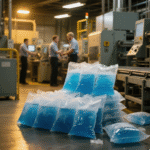
| Coolant strategy | Gel packs, PCM bricks, dry ice | PCM is stable, dry ice is powerful | Less temperature swing, fewer surprises at delivery |
| Monitoring | None, single-use indicator, data logger | Better data can add cost | Faster root-cause analysis and easier audits |
| Shell and handling | Soft bag, hard case | Hard case is heavier | Less damage, more consistent performance trip-to-trip |
A simple way to explain “hold time”
Hold time is like a phone battery rating. It’s measured under specific conditions, but your real life is messier. A VIP shipping case for returnable packaging rated for 96 hours might do less if the truck sits in the sun. It might do more if the weather is mild and handoffs are smooth.
To keep your decision grounded, match hold time to:
-
Your planned transit time
-
Your likely delay time
-
Your seasonal temperature profile
Practical tips you can apply immediately
-
If your lane is 24–48 hours: choose a VIP shipping case for returnable packaging with margin, not maximum insulation.
-
If summer delays happen: add performance in coolant layout and sealing before you add bigger VIP walls.
-
If you do parcel handoffs: reinforce corner protection and add “this side up” handling features that actually work.
Real-world scenario: A diagnostics shipper moved from single-use foam to a VIP shipping case for returnable packaging and stopped seeing “edge warming” after long handoffs at regional hubs.
How to choose the right VIP shipping case for returnable packaging size?
Choosing the right VIP shipping case for returnable packaging size is mostly about payload geometry and workflow. Bigger is not always better. A large empty air space warms faster and makes coolant placement harder. A case that is too tight creates packing errors and slows fulfillment.
Start with the product you actually ship most. Then design around “the normal shipment,” not the one-off outlier.
Payload fit: think like a grocery bag, not a suitcase
If your items rattle, shift, or leave big gaps, you will lose performance. A VIP shipping case for returnable packaging works best when the payload is snug and the coolant has clear contact zones.
Use dunnage (padding) that is consistent and easy to pack. If your team has to “invent a new pack-out” each day, your program will drift.
| Sizing choice | What you might do | Risk | What it means for you |
|---|---|---|---|
| Oversize the case | “Future-proof” for bigger orders | Higher cost, worse thermal efficiency | You pay more per trip and still see variability |
| Right-size for the median | Design for the most common order | Rare shipments need a second option | Stable pack-out and fewer packing mistakes |
| Two-size strategy | One small + one medium | More SKU management | High consistency across lanes and seasons |
A quick sizing checklist
Use this checklist before you buy any VIP shipping case for returnable packaging:
-
What is your top 3 shipment size (units and dimensions)?
-
Do you need space for paperwork, labels, or tamper seals?
-
What is the maximum weight your team can lift safely?
-
Will the case fit on your conveyor, cart, and vehicle racks?
-
Can you stack it without crushing labels or vents?
Practical example: Many teams discover their “ideal” case is smaller than expected once they standardize order size and pack-out.
Is a VIP shipping case for returnable packaging worth the cost?
A VIP shipping case for returnable packaging is worth the cost when your cost per trip drops below your single-use spend, or when the reduction in temperature excursions pays for the program. The trick is to stop comparing purchase price to purchase price. Compare total landed cost per shipment.
Think of it like buying a durable suitcase for frequent travel. The upfront price is higher, but the “cost per flight” becomes low.
The break-even method you can do in 5 minutes
To estimate if a VIP shipping case for returnable packaging makes sense, use this simple model:
-
Single-use packaging cost per shipment (materials + disposal + labor)
-
Returnable program cost per trip (rental or depreciation + reverse logistics + cleaning + handling)
-
Expected trips per year on that lane
If your single-use spend is $60 per shipment and your returnable cost is $25 per trip, you “save” $35 each trip. Multiply by annual trips, then compare to setup costs.
Interactive self-check: Returnable Fit Score
Give yourself 1 point for each “Yes.” Total your score at the end.
-
Do you ship the same lane at least weekly?
-
Do you have temperature requirements like 2–8°C or -20°C?
-
Have you had at least one costly excursion in the last 12 months?
-
Can you store empty cases for pickup without blocking operations?
-
Do you have a partner who can manage cleaning and redeployment?
-
Do you need better shipment data for audits or investigations?
-
Are you under pressure to cut packaging waste in 2025?
Score guide:
-
0–2: Start with better single-use controls and monitoring.
-
3–5: Pilot a VIP shipping case for returnable packaging on one lane.
-
6–7: Build a program. You’re likely leaving money and risk on the table.
Practical example: Many companies get the biggest ROI when they start with their “repeatable lanes,” then expand once the reverse flow is stable.
How do you run reverse logistics for a VIP shipping case for returnable packaging?
A VIP shipping case for returnable packaging only works if it comes back—on time, in usable condition, and in the right location. Reverse logistics is the part many teams underestimate. It’s not complicated, but it must be designed.
Treat the return flow like a product line, not a favor.
The simplest return loop that still works
A reliable VIP shipping case for returnable packaging loop usually includes:
-
Delivery and confirmation (proof of delivery + “case received” scan)
-
Quarantine and inspection (quick check for damage or missing parts)
-
Cleaning and drying (consistent method, documented)
-
Reconditioning (replace seals, labels, or worn handles as needed)
-
Redeployment (send back to origin or to the next best lane)
If any one step is unclear, cases vanish into warehouses and you lose availability.
Cleaning, drying, and smell control in plain language
You don’t need to overthink it, but you must standardize it. Moisture left inside a VIP shipping case for returnable packaging can lead to odor, label failure, or mold risk in extreme situations. A consistent dry-out step prevents 80% of “this case feels gross” complaints.
Practical rules:
-
Use cleaning agents compatible with plastics and seals.
-
Dry completely before closing and storing.
-
Track cycles so you can service cases before they fail.
| Reverse logistics KPI | What “good” looks like | Why it matters | What it means for you |
|---|---|---|---|
| Turnaround time | A predictable target window | Faster redeployment reduces fleet size | Lower total program cost |
| Loss rate | Low and falling over time | Loss kills ROI | Better asset visibility and fewer urgent buys |
| Damage rate | Stable and manageable | Predictable repair budget | Higher confidence in lane coverage |
Real-world scenario: A team reduced “missing cases” by adding a scan at receipt and a simple exception process within 24 hours.
What compliance does a VIP shipping case for returnable packaging need in 2025?
A VIP shipping case for returnable packaging should support your compliance needs, not create new gaps. In 2025, auditors still care about the same fundamentals: defined processes, documented evidence, and risk-based validation.
If you ship healthcare products, align your program with Good Distribution Practice (GDP) expectations. If you ship by air, align with airline and dangerous goods rules when applicable (especially if dry ice is involved). If you operate in multiple regions, keep your documentation consistent and easy to retrieve.
How to validate a VIP shipping case for returnable packaging without drowning in paperwork
Validation does not have to be painful. It should prove one thing: your VIP shipping case for returnable packaging keeps product within spec under realistic extremes.
A practical validation approach often includes:
-
Design qualification (DQ): define lane needs, temperature range, and payload
-
Operational qualification (OQ): test in lab profiles (hot/cold, summer/winter)
-
Performance qualification (PQ): confirm performance in live shipments
Keep it simple and repeatable. Use the same pack-out, same coolant conditioning, and a clear pass/fail rule.
What monitoring is “enough”?
Not every shipment needs a premium logger, but every program needs visibility. Many teams use a tiered approach:
-
Pilot lanes: full data logging to learn and tune pack-out
-
Mature lanes: sampling plan plus exception logging
-
High-risk lanes: always-on monitoring
A VIP shipping case for returnable packaging becomes more powerful when you use data to improve, not just to store files.
Practical example: If you see repeated “warm at delivery” events, data helps you distinguish “lane delay” from “packing error.”
How do you prevent packing errors with a VIP shipping case for returnable packaging?
A VIP shipping case for returnable packaging fails most often because of human variation, not insulation. Good design reduces the chance of mistakes. Great design makes the wrong pack-out hard to do.
If your team needs a 20-step instruction manual, your process will drift. Aim for pack-out that feels like assembling a simple meal kit: everything has a place.
Build a pack-out that is hard to mess up
Use these design moves:
-
Color-coded coolant positions (visual cues beat text)
-
One orientation for payload (no “either side is fine”)
-
Pre-sized dunnage that locks in place
-
A closing system that “feels wrong” if misaligned
Add a quick photo guide at the packing station. Pictures reduce errors far more than paragraphs.
| Error type | Why it happens | How to prevent it | What it means for you |
|---|---|---|---|
| Wrong coolant amount | Rushing or unclear instructions | Pre-kitted coolant sets | More consistent hold time |
| Unconditioned coolant | Freezer/fridge timing confusion | Simple conditioning labels | Fewer temperature swings |
| Poor sealing | Lid not fully seated | Positive latch feedback | Less warm air infiltration |
Real-world scenario: A site cut packing deviations after switching from “written SOP only” to a three-photo pack-out card.
What should you ask suppliers before buying a VIP shipping case for returnable packaging?
Before you select a VIP shipping case for returnable packaging, ask questions that reveal real performance, not marketing. You want proof that the case performs with your payload, your lane, and your handling reality.
Supplier questions that save you pain later
Ask these questions and insist on clear answers:
-
What payload size and configuration was used in performance tests?
-
What ambient profiles were used (hot and cold), and for how long?
-
How many reuse cycles is the case designed for, and what parts wear out?
-
What is the recommended cleaning method, and what is not allowed?
-
What happens if a case is damaged—repair, replace, or refurbish?
A VIP shipping case for returnable packaging is not just a box. It’s a system. Your supplier should support the system.
A short “don’t get trapped” warning
Avoid programs that only work if everything is perfect. In real logistics, things get delayed, scanned late, and stacked wrong. Choose a VIP shipping case for returnable packaging that still performs when real life shows up.
Practical example: A case that passes lab tests but cracks at hinges after repeated handling will cost you more than it saves.
2025 developments and trends in VIP shipping case for returnable packaging
In 2025, the biggest shift is that returnables are no longer just a “sustainability project.” They are becoming an operational strategy for cost control and risk reduction. Companies want fewer packaging SKUs, more standard pack-outs, and better shipment visibility. At the same time, more teams are dealing with higher-value therapies that demand tighter temperature control.
A VIP shipping case for returnable packaging fits this shift because it offers strong insulation without massive size. That means you can protect the payload while keeping dimensional weight under control.
Latest advances you should watch
-
Smarter tracking: more programs use QR or RFID scans to reduce loss and improve turnaround time.
-
Better payload density: thinner VIP walls can free up space without enlarging the outer footprint.
-
Cleaner workflows: standardized cleaning validation is becoming a competitive advantage, not a burden.
Market reality that affects your decision
Returnable fleets are being managed more like shared pools, especially for multi-site shippers. That trend reduces your need to “own” every case at every location. It also increases the importance of clear labeling, asset IDs, and consistent pack-out across sites.
If you want to adopt a VIP shipping case for returnable packaging in 2025, plan for data and process, not just hardware.
Common questions (FAQ)
Q1: What is a VIP shipping case for returnable packaging, in plain English?
It’s a reusable shipping case that uses vacuum insulated panels to slow heat transfer. You reuse it many times to reduce risk and waste.
Q2: How many times can a VIP shipping case for returnable packaging be reused?
Many programs plan for dozens of trips, but the real number depends on handling, cleaning, and service. Track cycles and inspect wear parts.
Q3: Do you need data loggers with a VIP shipping case for returnable packaging?
Not always for every shipment, but you should use them in pilots, high-risk lanes, and investigations. Data turns guesswork into improvement.
Q4: Is a VIP shipping case for returnable packaging only for pharma?
No. It also fits specialty food, seafood, and diagnostics—any shipment where temperature swings cause quality loss.
Q5: What is the biggest reason returnable programs fail?
Reverse logistics. If cases don’t return reliably, you lose availability and ROI. Design the return loop from day one.
Summary and next steps
A VIP shipping case for returnable packaging helps you stabilize temperature, protect shipments, and reduce single-use waste—especially on repeatable lanes. Choose the right design by matching hold time to your lane, right-sizing the payload space, and building a pack-out that prevents human errors. Run reverse logistics like a process, with scanning, inspection, cleaning, and redeployment. Validate performance with realistic profiles, and use monitoring data to continuously improve.
Next step (CTA): Pick one repeatable lane and run a 30-day pilot with a VIP shipping case for returnable packaging. Track temperature performance, turnaround time, and cost per trip. Then scale only after your return loop is stable.
About Tempk
We build cold chain packaging solutions designed for repeatable performance, not one-off shipments. Our team focuses on practical thermal protection, durable case design, and program support that helps your VIP shipping case for returnable packaging come back, get cleaned, and ship again. We also help you pilot lanes, standardize pack-out, and document what matters for audits—without making your team drown in complexity.
Call to action: If you want to reduce temperature excursions and packaging waste, start with a lane review and a small pilot. A focused test will tell you quickly whether a VIP shipping case for returnable packaging is the right fit.