


Blog Detail
Pharmaceutical Cold Chain Growth Creates New Demand for Visibility and Resilience
Pharmaceutical Cold Chain Moves Beyond Temperature Control Toward Supply Chain Resilience
What Happened
The pharmaceutical cold chain market continues expanding as demand increases for biologics, specialty medicines, vaccines and advanced therapies.
However, industry analysis highlights that growth is occurring alongside increasing supply chain complexity.
Modern pharmaceutical logistics networks now face challenges including:
- geopolitical disruptions
- transportation instability
- regulatory changes
- limited shipment visibility
The industry is shifting from a traditional focus on maintaining temperature toward a broader objective:
protecting product integrity across the entire supply network.
How It Works
A modern pharmaceutical cold chain involves multiple connected stages:
- manufacturing facilities
- packaging operations
- GDP warehouses
- airports
- transportation providers
- hospitals and healthcare facilities
Each transition creates potential risk.
Traditional cold chain management focused mainly on:
- maintaining temperature range
- recording shipment history
New-generation systems increasingly combine:
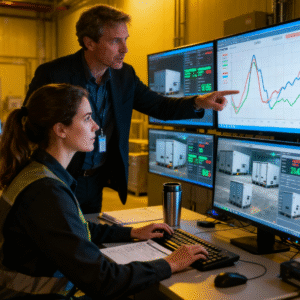
Real-Time Monitoring
Including:
- temperature sensors
- location tracking
- shipment status
Predictive Analytics
Used to identify:
- delay risks
- temperature excursion probability
- route problems
Supply Chain Visibility
Extending beyond direct suppliers to include:
- subcontractors
- airports
- ports
- logistics hubs
Why It Matters
Pharmaceutical products are becoming increasingly sensitive.
Examples include:
- monoclonal antibodies
- vaccines
- cell therapies
- gene therapies
These products often require:
- strict temperature ranges
- validated packaging
- controlled handling procedures
A shipment failure may result in:
- product loss
- regulatory investigation
- delayed patient treatment
At the same time, global logistics networks are becoming more vulnerable.
A product may remain within temperature limits but still face risk from:
- transportation delays
- customs issues
- route disruptions
Therefore, temperature control alone is no longer enough.
B2B Impact
For pharmaceutical manufacturers:
Future supply chains will require:
- broader supplier visibility
- alternative logistics routes
- stronger contingency planning
For logistics providers:
Healthcare customers increasingly require:
- GDP compliance
- digital monitoring
- proactive intervention
For cold storage operators:
Demand continues increasing for:
- pharmaceutical-grade warehouses
- multi-temperature storage
- digital monitoring
For packaging suppliers:
Growth opportunities include:
- PCM shippers
- reusable containers
- smart temperature indicators
For technology companies:
Future pharma cold chains will depend on:
- AI prediction
- digital twins
- connected monitoring systems
Final Insight
The pharmaceutical cold chain is evolving.
The industry is moving from:
“maintaining temperature”
toward:
“managing risk across the entire supply chain.”
Future cold chain leaders will combine:
- thermal protection
- digital visibility
- predictive analytics
- operational resilience
into one integrated healthcare logistics ecosystem.




