What makes this seafood box leak-resistant?
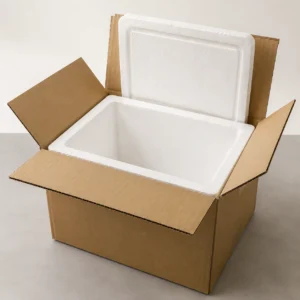
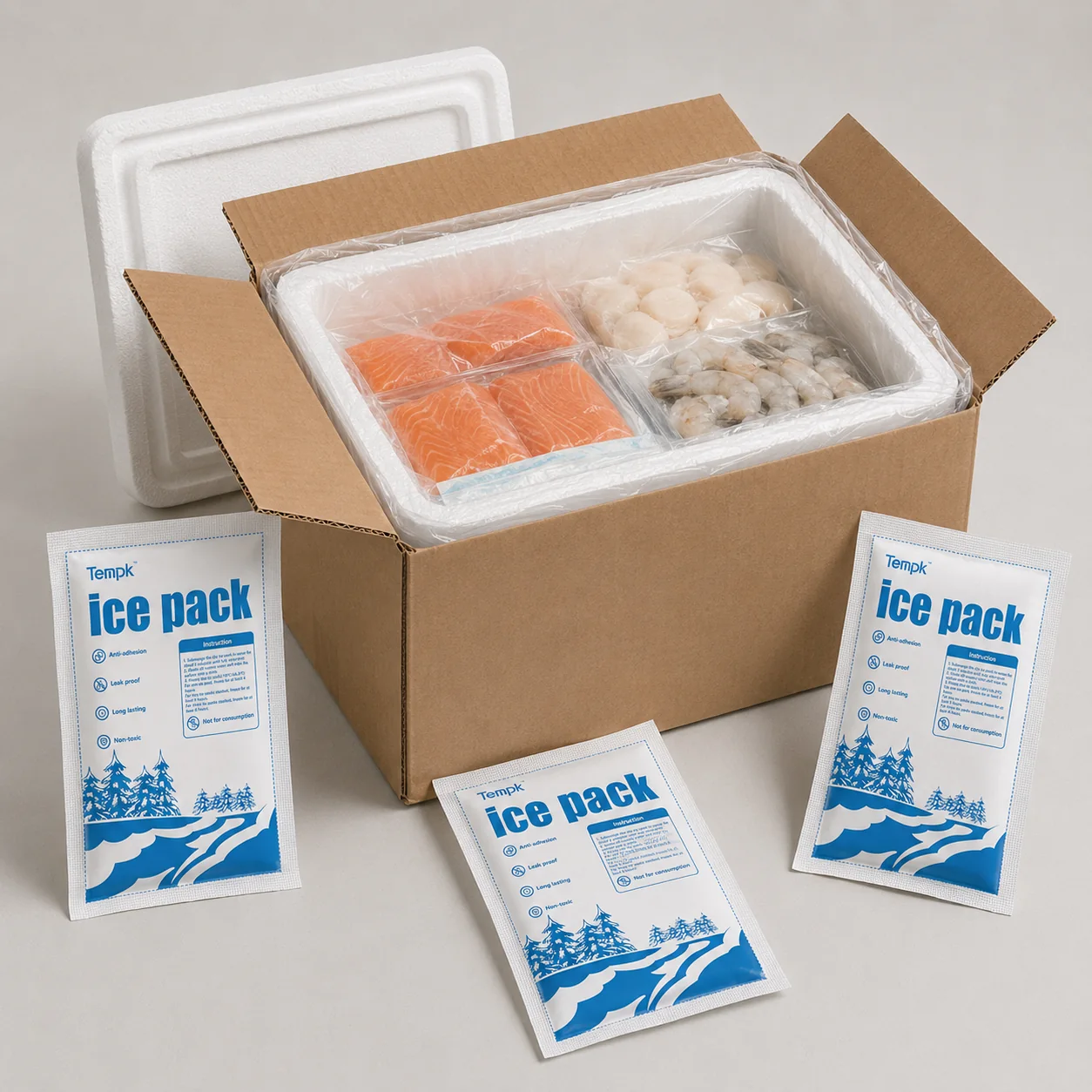
Leak resistance comes from several layers: sealed primary seafood packaging, an intact secondary liner, absorbent material, a fitted EPS container and consistent outer-carton closure. The finished packout should be checked for the expected liquid volume and handling orientation.
Is leak-resistant the same as leak-proof?
No. Leak-resistant describes a design intended to reduce and contain leakage. Actual containment depends on the product bags, liner material and closure, absorbent capacity, packout quality and handling. A buyer should test the complete packed system before shipment.
What temperature should chilled or frozen seafood use?
Chilled seafood programs are commonly developed around 0–4 °C, while frozen seafood is commonly handled at −18 °C or below. The seafood species, product form, buyer specification and destination rules determine the final limits.
Can I use gel packs, wet ice or dry ice?
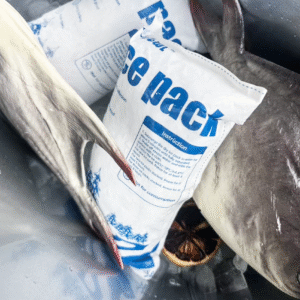
Gel or PCM packs are common for clean chilled packouts. Wet ice may be used only when meltwater can be contained and the carrier accepts it. Dry ice is generally used for frozen programs and requires ventilation, separation, marking, documentation and carrier acceptance.
How long can the box keep seafood cold?
There is no single duration for an empty shipper. Payload mass, starting temperature, coolant type and quantity, EPS thickness, ambient exposure and handling all affect performance. Overnight and 24–48-hour lanes are common development starting points, followed by testing.
What EPS wall thickness should I choose?
Many parcel projects begin within a 25–60 mm range. Short chilled routes may use a thinner wall, while long, hot or frozen routes may require thicker insulation and more refrigerant. Tempk selects a starting design after reviewing the shipment profile.
Does seafood touch the EPS or liner directly?
Seafood should normally remain in sealed, food-suitable primary packaging. Where a liner or other component may contact food, the required material declaration should be specified for the destination market.
Can this shipper be used for live seafood?
It is intended primarily for packed chilled or frozen seafood. Live aquatic shipments may need species-specific oxygen, water, temperature, containment and carrier arrangements and should be developed as a separate packout.
Can Tempk provide custom sizes and printed cartons?
Yes. Tempk can adjust the usable cavity, EPS wall thickness and density, carton strength, liner, absorbent system, dividers, coolant layout and printing, subject to tooling and order requirements.
Should the completed seafood packout be tested?
Yes. Test representative seafood, coolant mass, starting condition, ambient profile, vibration, drop, compression and leakage risk before routine, long-distance, air-freight or seasonal shipments.