Dry Ice Pack for Shipping: How to Keep Products Frozen Door‑to‑Door
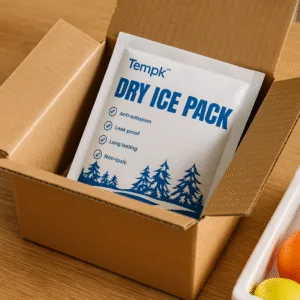
Need to ship frozen goods across states—or oceans? Using the right dry ice pack for shipping is crucial. This guide walks you through sizing, packaging, labeling, and today’s eco‑friendly options so every box arrives rock‑solid.
How to calculate dry‑ice weight for 24, 48, and 72 hours in transit
What “UN 1845” really means and how to label packages correctly
Which 2025 barrier films vent CO₂ yet stop moisture leaks
Tips for combining gel packs with dry ice to cut costs
Safe handling, storage, and disposal rules in the U.S. and EU
How Much Dry Ice Should You Use?
Start with 50 % of payload weight for 48‑hour shipping; adjust by ±10 % per climate zone. Always run a test shipment with a data logger before scaling.
| Payload (lb) | 24 h | 48 h | 72 h |
|---|---|---|---|
| 5 | 2 lb | 3 lb | 5 lb |
| 10 | 4 lb | 6 lb | 9 lb |
| 25 | 8 lb | 13 lb | 18 lb |
| 50 | 15 lb | 22 lb | 32 lb |
Add a 2 lb buffer for each extra day if outside temps exceed 90 °F (32 °C).
H3: Choosing Barrier Films & Vent Liners
| Film Type | CO₂ Venting | Moisture Resistance | Best Use |
|---|---|---|---|
| 2‑layer LDPE | Low | Moderate | Same‑day couriers |
| 3‑layer EVOH | Medium | High | 24–48 h parcels |
| 3‑layer EVOH + Micro‑vents | High | High | 48–72 h or air freight |
Packing Checklist for 2025 Shipments
Insulation: R‑value ≥ 7; consider 1‑in. recycled PET panels.
Dry Ice Placement: Top of payload for convection cooling; add bottom pads for > 48 h.
Void Fill: Use compostable kraft crinkle to reduce air pockets.
Labeling: “Dry Ice UN 1845,” net weight in kg, and shipper address.
Data Logger: NFC or Bluetooth tag to verify hold‑time on arrival.
Real‑world win: A seafood exporter cut spoilage from 6 % to 1 % by switching from loose pellets to 3‑lb vented bricks inside PET panels.
Practical Tips You Can Use Today
Hybrid cooling: Pair 0 °C gel packs under the product and dry‑ice bricks on top—reduces total dry‑ice weight by ~15 %.
Weekend gap: For Friday dispatch, bump dry‑ice load by 20 % to cover potential delays.
Helpful decision tools
Check the details before you choose packaging
These quick tools can help you compare route risk, sizing needs, coolant choices, and packaging details before you request a quote.
01Route riskRoute Risk Checker
Review lane conditions before selecting packaging for real operating requirements.
Check route risk02Ice pack estimateIce Pack Calculator
Estimate gel ice pack quantity for chilled shipments and practical route planning.
Estimate ice packs03Coolant choiceCoolant & PCM Reference
Compare coolant and PCM options when a route needs added temperature support.
Compare optionsReturn program: Ask suppliers for dry‑ice sleeve take‑back to slash waste fees.
2025 Trends & Innovations in Dry‑Ice Shipping
Captured‑CO₂ dry ice from industrial exhaust lowers carbon footprint.
QR‑coded packs track sublimation weight for real‑time ETA adjustments.
Bio‑foam liners that compost in industrial facilities within 90 days.
Market forecasters see a 14 % CAGR in frozen e‑commerce through 2029, driving demand for smarter, greener dry‑ice solutions.
FAQ
Do I need hazmat training to ship dry ice?
Ground parcels under 5.5 lb (2.5 kg) only need proper labels; air freight requires IATA training modules.
Can I ship dry ice with lithium batteries?
Yes—pack them separately and declare both on the airway bill.
How do I dispose of leftover dry ice safely?
Let it sublimate in a well‑ventilated area; never in a sink or closed bin.
Summary & Recommendations
Select a dry ice pack for shipping based on hold‑time, climate, and liner quality. Use 50 % payload weight for 48 hours, follow UN 1845 labeling, and test with a logger before scaling. Eco‑friendly films and captured‑CO₂ ice cut costs and carbon.
Next steps:
Download our dry‑ice calculator spreadsheet.
Order a 10‑pack sample with micro‑vented films.
Run a trial shipment and review logger data.
About Tempk
Tempk designs recyclable thermal packaging. Our V‑Ship™ dry‑ice packs use carbon‑negative CO₂ and triple‑layer EVOH films, keeping payloads at –40 °C for up to 72 hours.
Need custom specs? Get a free quote.